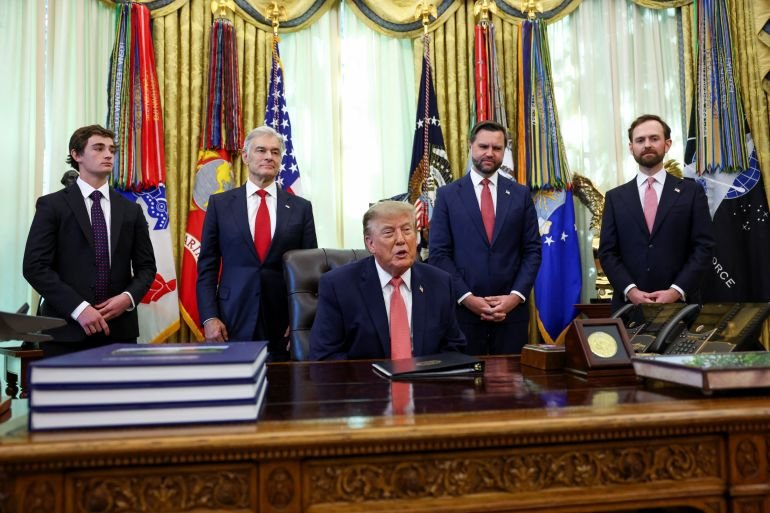
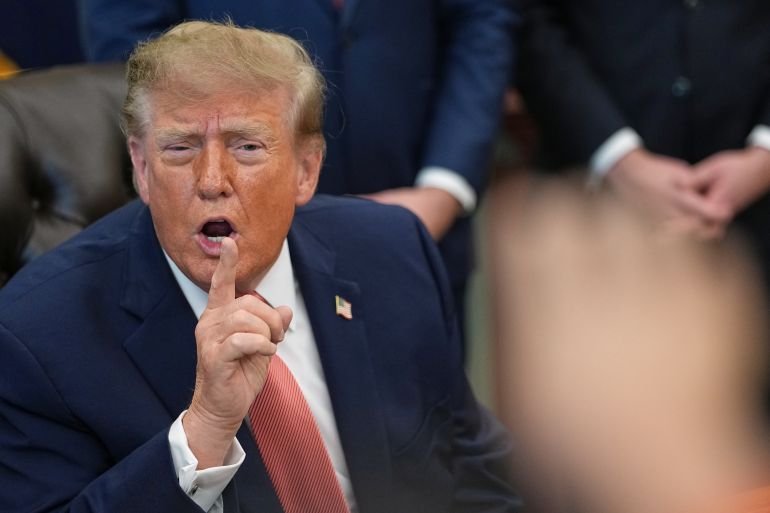
United States President Donald Trump has announced he plans to spend more than $400m to help Republican candidates win the November 3 midterm elections as his party fights to maintain its grip on Congress.
In a post on his Truth Social platform on Tuesday, Trump wrote that much of that total had already been spent on campaign outreach.
Recommended Stories
list of 4 itemsend of list
“More than 300 Million Dollars has already been spent on Advertising, Direct and Indirect Voter Contact, Rallies, Rally Arenas, Telerallies, Get Out the Vote Programs, Election Integrity, and more,” Trump said.
“It is my Great Honor to do so on behalf of the Republican Party, which has done so much to bring our Country back from the Edge of Oblivion.”
He added that the November vote was “the Most Important Midterm Elections in our Country’s History”.
The president offered no detailed breakdown of the spending, including how much would reach individual races.
But the promised influx of spending comes as Trump’s Republican Party faces headwinds ahead of the election, including pushback over the economy and the protracted US-Israeli war against Iran.
In the lead-up to the vote, Trump’s approval ratings have tumbled to record lows. A poll this week from the news agency Reuters and the research firm Ipsos found that only 31 percent of Americans approved of Trump’s job performance so far.
Some Republicans have sought to distance themselves from the president as a result. Others have pushed for greater support, particularly for close races with Democrats.
Questions have swirled over whether Trump and his allies would tap into the war chest amassed by MAGA Inc, the super PAC named for his “Make America Great Again” movement.
As a super PAC — or political action committee — MAGA Inc can raise unlimited sums from donors to support or oppose federal candidates. But its spending is legally required to remain independent of their campaigns.
Last month, the Campaign Legal Center (CLC), a campaign finance watchdog, accused Trump of violating those rules by claiming control over MAGA Inc’s expenditures.
The group cited the president’s public statements, including an exchange with reporters in the Oval Office on September 4, when Trump was asked when the money would start flowing to Republican candidates.
He replied that he would spend “whatever amount of money necessary” to help his party. He then added: “This is money from MAGA Inc. This is my money that I control.”
According to its latest federal filing, MAGA Inc entered September with $415.8m in cash reserves, making it one of the most consequential financial resources in the Republican campaign arsenal.
But Trump has questioned why the super PAC’s hefty outlay has not improved Republican polling in key races, including in Ohio, according to Reuters.
Other Trump-aligned groups have also ramped up their political advertising, including two newly formed organisations linked to MAGA Inc, the No Going Back PAC and the Safety and Affordability PAC.
The advertisement tracker AdImpact found that the No Going Back PAC contributed $68.7m in political ads last month alone.
Another Trump ally, tech entrepreneur Elon Musk, has reportedly spent $366m since last year on Republican campaigns through his group, America PAC, and other Republican and conservative groups.
In the final weeks of the midterms, Trump himself has hit the campaign trail, forging ahead with a 32-day campaign blitz. Upcoming stops include South Carolina and Iowa.
The stakes of this year’s election are considerable. Control of Congress hangs in the balance.
Currently, the Republican Party holds slim majorities in both legislative chambers, but Democrats are seeking to leverage Trump’s declining popularity to flip the Senate and the House of Representatives.
If they are successful, they could stymie Trump’s legislative agenda for the final two years of his presidency.
Amid escalating tensions with Ukrainian leader Volodymyr Zelenskyy, United States President Donald Trump has increased pressure on the Eastern European country to make a deal that would end the war with Russia.
Speaking at the White House on Tuesday, Trump doubled down on his efforts to blame the Ukrainian president for holding up peace efforts that would bring the years-long conflict to a close.
Recommended Stories
list of 3 itemsend of list
“Zelenskyy has to want to settle this war, and if he doesn’t, I think it’s going to be a very bad thing,” Trump said as he talked about Russia having an “unlimited” supply of people to send in the fight.
Moments later, the US president referenced a contentious Oval Office meeting he held with Zelenskyy in February 2025, shortly after returning to power.
Zelenskyy, Trump said, could have made a “better deal” then. “He’s going to have to want to make a deal, because I don’t think his people are going to stand for it any longer,” Trump told reporters.
On Tuesday, the Ukrainian president met US special envoy Steve Witkoff and European leaders in Oslo, Norway, to discuss ending Russia’s war.
In a post on social media after the meeting concluded, Zelenskyy said, without providing specifics, that his country has “some clear ideas on how to get to peace”.
“We are united with our European partners in this effort, and we want the Americans to take these ideas to the Russians,” Zelenskyy wrote. “One of the important ideas is to move to a potential trilateral meeting of the leaders to address the issues that only the leaders can do.”
The Ukrainian leader added that Witkoff would head to Russia on Wednesday, where peace discussions are expected to continue.
“Let’s see what Putin has to say,” Zelenskyy said.
When asked whether Russian President Vladimir Putin should meet Zelenskyy, Trump said there was “tremendous” hatred between the two leaders.
“It’s hard for them to be in the same room,” Trump said. “I don’t care how it’s done.”
Starlink controversy
Trump’s remarks come as the White House continues to squeeze Ukraine in order to force the country to cut a deal with Russia.
Last week, Ukrainian officials reported slowdowns with Starshield, the military-grade version of the Starlink satellite system, run by the aerospace company SpaceX.
Ukraine relies on the technology for communications and intelligence to prevent Russian attacks.
It is unclear who ordered restrictions that limit Ukraine’s access to Starshield. SpaceX CEO and Trump ally Elon Musk pointed a finger at the White House.
“Starshield systems are owned and controlled by the US government. Any limits on speed or usage are decided by the US military and ultimately POTUS,” he wrote on October 14.
The news agency Reuters also reported that the order came from inside the White House, citing two US officials and a Western official.
But a report in The Wall Street Journal on Tuesday claimed US officials had blamed Musk himself for the slowdown, saying the SpaceX CEO ordered it last week. Trump and US Defence Secretary Pete Hegseth have both denied that the government directed the restrictions, with Hegseth pushing responsibility towards SpaceX.
Building ties with Putin
Trump, meanwhile, has sought to ease the historically tense relations between Russia and the US.
In August 2025, Trump invited Putin to Alaska, the Russian leader’s first visit to US soil in a decade.
More recently, Trump has expressed openness this month to meeting with Putin and Chinese President Xi Jinping, as part of a trilateral discussion on denuclearisation.
Trump also announced this month that he struck a deal to obtain diesel from Russia, marking a stunning reversal of years of US pressure on Moscow’s economy.
The US president also waived new economic restrictions that would have been imposed under the Lindsey Graham Sanctioning Russia and Iran Act, a bipartisan law he signed one month earlier, in honour of a late senator.
It would have imposed sanctions on Russian officials, banks and tankers, as well as tariffs on countries that purchase Russian oil.
US Secretary of State Marco Rubio defended the decision on Tuesday, saying the law allowed the waiver through a provision embedded in the legislation.
“The president chose to use a national security waiver to not immediately implement those [sanctions and restrictions], because he recognises that these things have to be looked at in their totality,” Rubio said in an interview with India’s News18.
Rubio argued that Trump was engaged in a “balancing act” in deciding the extent of US-imposed economic restrictions and how they could impact the rest of the world.
“When you do that pressure, sometimes it spills over and has a negative impact on other countries,” Rubio said.
The death was added to the federal tally, as the US records more than 4,400 measles cases nationwide.
Published On 20 Oct 202620 Oct 2026
The Centers for Disease Control (CDC) has reported that a third person has died due to measles in the United States, as the country grapples with its largest measles outbreak in decades.
The CDC did not specify on Tuesday in which state the death occurred. The agency’s national tally remains lower than the number of measles-related deaths reported by state officials, particularly in Pennsylvania, the state hardest hit by the outbreak. Pennsylvania had reported 1,286 cases and five deaths as of Monday.
The CDC confirmed a death on Tuesday after the National Center for Health Statistics verified that measles was listed as the underlying cause of death on a death certificate.
The CDC reported 4,410 measles cases nationwide as of October 15. The agency has said its death count could change as further reviews are completed. The outbreak in Pennsylvania has spread well beyond its initial epicentre in Lancaster County, with 42 counties now reporting cases.
The federal government’s approach to counting measles deaths has drawn scrutiny after the CDC shifted to relying on mortality data from the National Center for Health Statistics (NCHS) rather than state health departments’ reports.
The CDC has previously told Al Jazeera that it is working with the Council of State and Territorial Epidemiologists to establish a standardised definition for measles deaths. In the meantime, they will use NCHS mortality data as their measure.
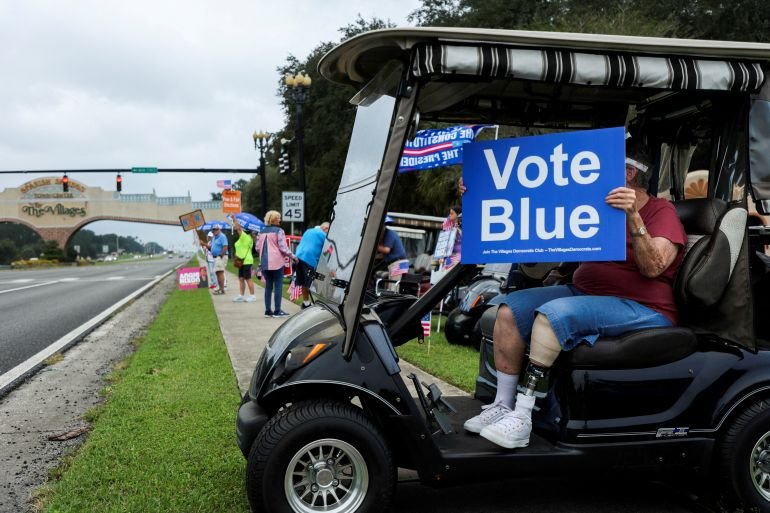
The United States midterms on November 3 are dominating national and international headlines.
The stakes of the election are high. The midterm race will determine which party controls the US Congress, and in turn, shape the direction of Trump’s final two years in office. It will also decide key state and local positions.
Recommended Stories
list of 3 itemsend of list
But notching big wins in the midterm election may not be enough to shake up the balance of power in Washington, DC.
To understand the implications of this year’s midterm election and what may come next, Al Jazeera has put together this simple primer.
Here’s why the US midterms matter at the federal level.
Battle for the US House of Representatives and US Senate
Midterm elections fall at the halfway point of a president’s term, meaning the executive office will not be on the ballot.
Front and centre will be the battle for control of Congress. Two chambers make up the US legislature: the House of Representatives and the Senate.
Because members of the House serve two-year terms, all 435 seats in the chamber are up for election on November 3. However, most races are already considered formalities, with a clear frontrunner.
That leaves only a handful of races — about 50 — to decide who will win the House majority.
While subject to change, nearly every reputable election prognosticator has predicted that Democrats will win control of the House, some by as many as 15 seats.
The Democrats have a slimmer chance of winning a majority in the Senate, however.
That chamber has only 100 seats. But because senators have staggered six-year terms, only 35 seats are up for election. Only about a dozen of those races are considered competitive.
Still, Democrats have seen their odds of seizing the Senate increase, as the number of competitive races has grown.
Left-wing candidates have made inroads in deep-red states like Texas and Kansas, creating more opportunities for the Democratic Party to claim a Senate majority this election cycle.
Because the US vice president breaks ties in the Senate, Democrats would need 51 seats to control the chamber.
What does party control mean?
Congress passes laws and approves federal budgets. But even if a party secures a majority in both chambers of Congress, it may not be enough to control the country’s legislative agenda.
Laws can pass by a simple majority in the House, but they typically need a supermajority of 60 votes in the Senate to overcome a process known as the filibuster. That process can allow a minority group to stall legislation indefinitely, barring a supermajority.
Therefore, unless a party wins more than 60 seats in the Senate, most legislation will still require at least some level of bipartisan support to pass.
Even if legislation passes both chambers, the president can veto any bill that comes across his desk. Overriding a presidential veto requires a two-thirds supermajority in both the House and the Senate.
Achieving the broad bipartisan support needed to overcome a presidential veto is exceedingly rare.
The last time it happened was in January 2021, during Trump’s first term. At the time, the US president had lost the 2020 election, and he saw his support from Republican lawmakers dissipate when he attempted to veto a defence spending bill.
Still, there are instances when bipartisan support overcomes presidential objections. A bill to increase the housing supply passed both the House and Senate with veto-proof majorities earlier this year, despite Trump’s stated opposition.
So what happens if Republicans maintain control of Congress?
Republicans currently hold two majorities in Congress, with 53 seats in the Senate and 218 in the House.
With Trump in the White House, that means the party has held a so-called government “trifecta” over the last two years, with three levers of power under its command.
The Republican majorities in Congress have helped Trump pass some of his signature legislation, including surging funding to Immigration and Customs Enforcement (ICE) and cleaving back some forms of publicly funded healthcare as part of a sweeping 2025 tax bill.
But Republicans’ numbers have not been enough to pass Trump’s entire legislative wishlist. Notably, he has been unable to pass his signature federal voter identification law, dubbed the “SAVE America Act“, amid Democratic opposition.
There have also been a handful of issues where Republicans have defied Trump, particularly on tariffs. A few Republicans have also voted to assert congressional authority over the US-Israel war with Iran.
If the Republican Party maintains control of both the House and Senate in November’s race, its majorities could continue to help Trump’s legislative agenda. But there is an important caveat.
Lawmakers will be keeping an anxious eye on voter sentiment as the 2028 elections approach. With Trump unable to seek a third term, some Republicans may have more appetite to publicly oppose the lame-duck president during the next two years, in order to boost their election prospects.
If Republicans maintain control of the Senate but lose the House, they would still be able to help Trump confirm his nominees for key federal roles.
Hundreds of federal positions require approval from a simple majority in the Senate, including roles in the judiciary, including Supreme Court justices.
What if Democrats take control?
The party in control of Congress, with a few exceptions, can determine what legislation is brought to a vote and when.
But for Democrats, the most significant outcome of winning a majority in one or both chambers would be the ability to block Trump from legislating his agenda over the next two years.
That said, analysts expect a Democrat-led Congress to take a largely defensive stance, batting down Trump’s proposals.
Going on offence — and passing their own legislative agenda — will be far more difficult, even if the party wins a majority in both the House and Senate. Democrat-led laws would still face Trump’s veto power.
However, holding majorities would help Democratic members slip policy priorities into “need-to-pass” funding legislation. The spectre of a government shutdown could pressure Republicans to pass budget bills, even if they do not agree on all the terms.
Democrats can also bring topics to a vote to force congressional Republicans to oppose popular policies or simply take a public stance on divisive issues.
House Minority Leader Hakeem Jeffries has laid out a 100-day plan for if Democrats take control of the chamber. Topping the agenda are votes on Trump-backed healthcare funding cuts, asserting congressional authority over the US-Israel war with Iran and rolling back Trump’s tariff programme.
Those issues have split the Republican base and would pose thorny dilemmas for lawmakers already posturing for the 2028 vote.
Will Democrats impeach Trump?
As Trump rallies on behalf of Republicans in the run-up to November’s vote, he has repeatedly expressed concern that Democratic control of Congress could lead to one eventuality: his third impeachment.
Trump was already impeached twice during his first term. “If we don’t win, they’ll end up impeaching me,” he told a rally in Durant, Oklahoma, in early October.
If Democrats do take control of the House or the Senate, they will take over leadership of dozens of committees. Through those committees, they can launch investigations — with subpoena power — into an array of subjects.
Some Democrats have already said probing allegations of Trump family corruption will be a top priority.
House lawmakers can also introduce articles of impeachment and ultimately vote to impeach federal officials, including the president, with a simple majority.
However, the Senate would need to vote to convict the official with a two-thirds majority before they can be removed from office.
Perhaps more significantly, if Democrats win control of the Senate, they would be able to block the confirmation of Trump appointees in key roles during his final two years in office.
So what will change on the war with Iran and the economy?
A Democratic surge is likely to signal discontent with the Trump administration, but there will not be a swift, tangible change on many of the issues that have defined the election season.
For example, if Democrats secure both majorities in Congress, they could assert their leverage to seek to address affordability issues, drilling into topics like housing, healthcare and the cost of living.
But they can do little to immediately change the myriad factors that led to the high price of petrol and groceries. Any gains would most likely be hard-fought, slow-coming and incremental.
The same is true for the US-Israel war with Iran.
Under the US Constitution, only Congress can declare war, something it has not done since World War II. Presidents have long used various legal arguments to circumvent that constitutional requirement.
Most recently, the Trump administration argued that the US-Israel war with Iran did not require authorisation from Congress because the president has a duty to protect the American people.
Trump has also argued that the war has started and stopped several times, each time renewing the 60-day window he has to receive Congress’s authorisation.
To reassert Congress’s authority to declare war, Democrats could pass a legally binding “war powers resolution” to rein in Trump, but they would need two-thirds support to overcome the presidential veto.
Even if a resolution were able to overcome the veto, experts say it is unclear how the US judiciary would respond if Trump were to flout Congress’s will.
Still, Democrats could use control of Congress to attempt to stifle any funding for the war.
The lawsuit argues Trump bypassed Congress and misused a century-old law to impose sweeping tariffs on Canadian imports.
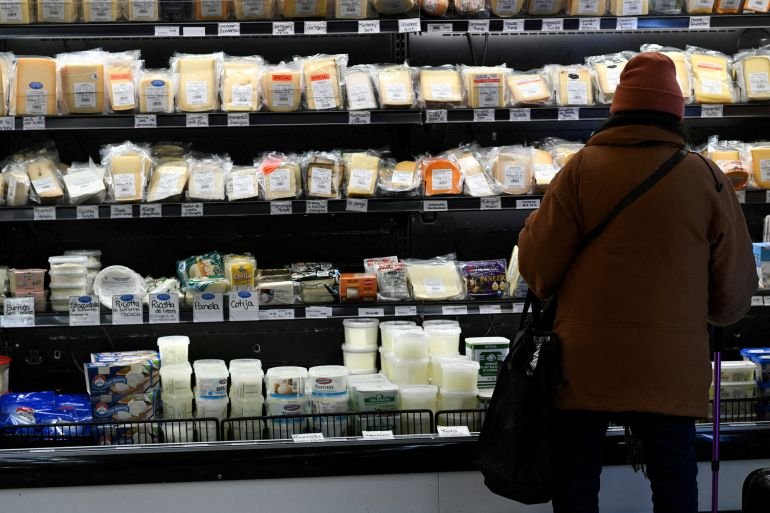
A US food importer is suing US President Donald Trump over his 50 percent tariffs on Canadian goods, arguing he lacks the legal authority to impose sweeping tariffs without congressional approval.
Gellert Global Group, a New Jersey-based company that imports Canadian cheese, filed the lawsuit on Tuesday in the US Court of International Trade in New York.
Recommended Stories
list of 4 itemsend of list
The company says the tariffs are driving up its costs and disrupting its relationships with suppliers on both sides of the border. Between September 16 and October 11, Gellert had paid more than $520,000 in duties, according to the complaint.
“Gellert Global Group has spent generations building trusted relationships with suppliers, customers and partners across the food industry,” said Thomas Gellert, the company’s co-chief executive officer, in a press release. “These tariffs disrupt those relationships overnight and create costs and uncertainty that ripple through the entire supply chain.”
The lawsuit challenges Trump’s decision to use a Depression-era law to impose tariffs on a wide range of Canadian products, including dairy products, furniture, clothing and wine.
The lawsuit argues that the law doesn’t apply to the Canadian policies the Trump administration says are discriminatory, since two of them “arose in response to the president’s own tariffs, while the third involves Canadian dairy policy governed by the US-Mexico-Canada Agreement (USMCA)”.
It also questions why Canadian cheese is being taxed over disputes involving alcohol and cars.
“No president should have the power to pull a dormant statute off the shelf and use it to impose sweeping tariffs or import bans without the limits Congress required,” said Sara Albrecht, chairman and CEO of the Liberty Justice Center, a nonprofit legal organisation that filed the suit on Gellert’s behalf.
The White House did not immediately respond to a request for comment, according to the Reuters news agency.
At the centre of the case is Section 338 of the Smoot-Hawley Tariff Act of 1930, which allows the president to impose tariffs of up to 50 percent on imports from countries found to discriminate against American businesses.
The provision had never been used until Trump invoked it this year.
The lawsuit argues that newer laws passed by Congress since then, such as Section 301 of the Trade Act of 1974, require investigations, public comment and other safeguards that Gellert says the Trump administration has bypassed, and that these override Section 338.
“The administration cannot skip those protections by reaching for a 1930 statute that no president had ever used to impose a tariff,” said Jeffrey Schwab, the Liberty Justice Center’s senior counsel and director of litigation.
In addition, the lawsuit says that even if Trump is allowed to use the older law, he hasn’t met its requirements, including waiting 30 days before tariffs can be collected on new products added to the list.
The administration only waited seven days to start collecting tariffs on cheese in September, according to the lawsuit.
Gellert is asking the court to declare the tariffs illegal, stop them from being collected, and order refunds with interest for importers who have been impacted.
The lawsuit marks the fourth major legal challenge to Trump’s tariffs.
In February, the US Supreme Court struck down most of the tariffs he imposed in 2025, and a trade court later ruled against a temporary 10 percent global tariff. A separate challenge to tariffs imposed over alleged forced labour in international trade is still pending.
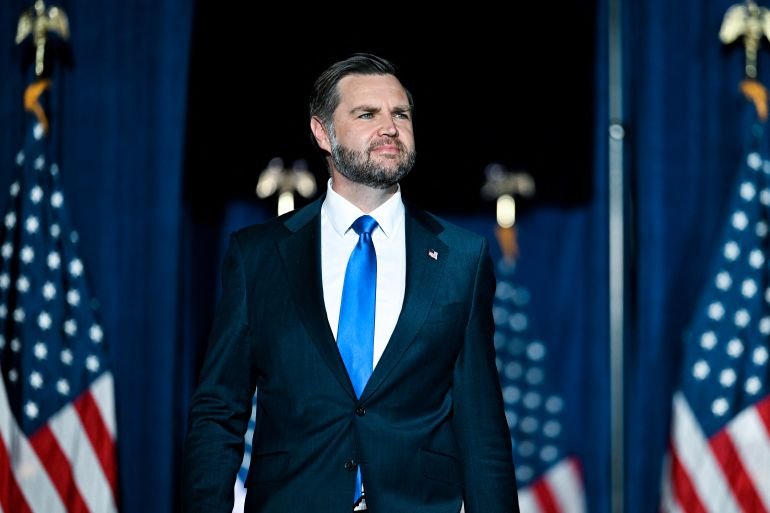
JD Vance’s comments follow Donald Trump’s backing of Israeli prime minister ahead of October 27 elections.
Published On 20 Oct 202620 Oct 2026
United States Vice President JD Vance has declined to endorse Israeli Prime Minister Benjamin Netanyahu ahead of elections this month, saying he would prefer to stay on the sidelines and focus on midterm polls in the US.
Vance’s comments during an interview on Monday with journalist Mark Halperin came just a day after US President Donald Trump explicitly endorsed Netanyahu.
Recommended Stories
list of 3 itemsend of list
“I’m not anti-endorsing him. I’m not pro-endorsing him. I’m not getting involved in Israeli elections,” Vance said.
“I endorse American candidates and that’s where I’m focused on is the midterms,” he added.
Vance last threw his weight behind a foreign leader in April, when he backed Hungary’s former right-wing Prime Minister Victor Orban, who lost in a landslide to Peter Magyar.
Over his two terms, Trump has cultivated a close relationship with Netanyahu and his right-wing government.
In his first term, Trump moved the US embassy to west Jerusalem, recognised Israel’s annexation of the Golan Heights, withdrew from the 2015 Iran nuclear deal and spearheaded a series of normalisation agreements with Arab countries that sidelined the Israel-Palestine issue.
Since taking office again in January 2025, the Trump administration has continued to sell weapons to Israel despite its genocidal war on Gaza, entered a conflict with Iran and escalated a crackdown on the International Criminal Court (ICC).
For his part, Vance, considered a likely 2028 presidential contender, has become emblematic of growing discontent within the Republican party over Washington’s unconditional support for Israel. That sentiment has deepened with the impact of the US-Israel war on Iran, which has raised costs for US consumers.
While the vice president has said US support for Israel should continue, he has faced scepticism from Jewish Republicans about his commitment to the alliance.
In June, amid Israeli opposition to an Iran ceasefire plan, Vance told Israel: “You can’t just kill your way out of solving every single national security problem that you have”.
He also warned Netanyahu’s cabinet against alienating Trump, calling the president “the only powerful ally” Israel has left.
It remains unclear whether Trump’s endorsement will boost Netanyahu’s Likud party ahead of the vote, with some opinion polls indicating wariness of the US president over his perceived attempts to restrain Israeli operations in Lebanon and resistance to further escalation in Iran.
Polls have shown the Yashar party leading Likud ahead of the October 27 vote. Its leader, former Israeli military chief of staff Gadi Eisenkot, has said he will seek to build an opposition bloc to form a government.
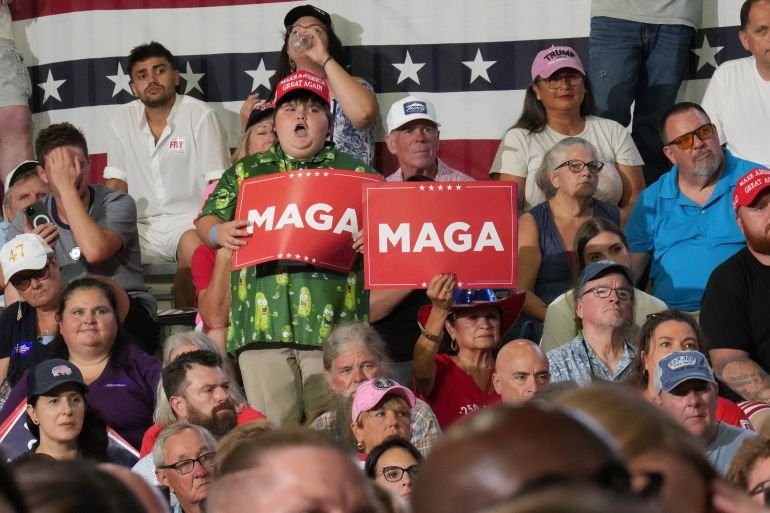
McConnellsburg, Pennsylvania, USA – Calvin Ott, the owner of a landscaping business in a consistent stronghold for United States President Donald Trump, is one of several so-called “MAGA voters” whose support has not wavered – even as life has gotten a lot more expensive since the president returned to office last year.
“I’m 75 years old, and I’m still working,” Ott says as he sips his Coors Light beer under the dim lights of Fulton Pub in McConnellsburg.
Recommended Stories
list of 3 itemsend of list
The pub, which serves as a watering hole for the town’s approximately 1,000 residents, is where Ott unwinds after his doctor’s appointment before making the one-hour drive back through the Appalachian Mountains to his home in Shippensburg.
“I had quadruple bypasses. I’ve had skin cancer. I have my fingers cut off. I’ve had several heart issues”, Ott said with a bit of pride, showing off his right hand that has fallen victim to decades of chainsaw and lawnmower accidents.
Despite rising medical costs – his medications have more than doubled in price since last year – and his inability to retire as he approaches his 80s, the three-time Trump voter said he will continue to vote for Republicans in next month’s US midterm elections.
“I support him 100 percent,” Ott told Al Jazeera as Foreigner’s song Urgent played in the background of the pub.
In 2016, less than 6,000 people in Fulton County, where the town is located, supported Trump’s presidential campaign. That number rose to more than 7,000 eight years later, helping to fuel Trump’s return to the White House.
For Ott, his support is less a reflection of what Trump has done than what Democrats would do if they were in power.
“He’s the only president that made a promise that he kept,” Ott said. “He hates wars, even though we’re in one. But he’s for America.”
“What the hell did Biden ever give out?” he railed about the economic policies of Trump’s Democratic predecessor, Joe Biden, which included a $1,400 stimulus cheque to Americans through legislation during the COVID-19 pandemic.
Who deserves the blame?
The unrelenting support for Trump among his most loyal supporters runs through Republican strongholds like McConnellsburg.
MAGA voters like Ott make up the backbone of the president’s support: working-class, white, without college degrees, and angry with Washington.
A poll conducted last month by the Associated Press-NORC Center for Public Affairs Research found that just 17 percent of US adults approve of Trump’s handling of the cost of living, while slightly more than a quarter of those surveyed approve of his handling of the economy overall.
President Donald Trump’s most fervent supporters do not blame him for their economic woes [File: Alex Brandon/AP Photo]
Trump’s most fervent supporters say their frustrations – and economic burden – have only grown since Trump’s re-election. But unlike most Americans, they don’t blame the president for the country’s economic woes. Instead, they point to Biden, who left office last year in January.
Seated at the bar next to Ott is Rebecca Lashley, a retired nursing assistant who said Trump deserves the benefit of the doubt after Biden’s policies.
“It took Biden four years of screwing up. How’s [Trump] gonna fix it in two years?” Lashley asked.
Ott agreed.
“Do you realise what Biden left that man? He left that man a hell of a big plate”, he said.
It’s a familiar line frequently touted by the White House.
Since his return to power for a second presidential term in 2025, Trump and members of his administration have regularly claimed they aren’t to blame for the nation’s cost-of-living issues. In social media posts last month, the president wrote that “price increases throughout America were caused by Sleepy Joe Biden and the Biden Administration, not by ‘TRUMP.’”
“We’re coming out of years of energy subtraction,” US Energy Secretary Chris Wright said in a recent Fox News interview as he blamed the Biden administration for rising fuel prices.
Five hours south of Pennsylvania, in ruby red Amelia County, Virginia, Terry Williams largely agreed with Trump.
After cooking up a Sunday breakfast, the delivery driver sank deep into his well-worn, waterfall-back couch to prepare for a full afternoon of football viewing. But before the day’s first kickoff, he issued a blunt, expletive-laden rant about a “bullshit” economy that larger “deep state” forces were preventing the president from fixing.
“I think that Trump just [blames Biden] because he just can’t come out and tell people the truth,” the self-described “Trump-lican” said as smells of bacon grease emanated from his kitchen. “The reason why I say that is the Federal Reserve. Their answer to everything is to print money.”
“The Federal Reserve Bank, the stockholders of the Federal Reserve, whoever the hell these people are, they’re creating more currency because they don’t have no choice.”
Williams, who voiced support for Trump’s second-term pressure tactics on the Fed to lower interest rates, said policies created by the US central bank have left the country with currency that has no real intrinsic value.
“I just believe that this economy is an illusion and we’re using fake money,” he said.
‘I have to sacrifice’
After Trump campaigned on a promise to bring down stubborn inflation wrought by the pandemic, his second term has consisted of a range of broadly unpopular initiatives that have forced higher prices on much of the country.
His tariff policies, instituted during a “Liberation Day” event at the White House last year, have minimal support. The AP found that nearly 65 percent of Americans blame Trump’s policies for high costs.
The nonpartisan Tax Foundation estimates tariffs put in place under Trump resulted in an average tax increase of more than $1,000 for US households last year. After the US Supreme Court rendered most of the president’s tariffs illegal in January, that estimate is slightly lower at $820 for 2026.
The policy’s impact is felt even more acutely in Virginia, which, according to the National Taxpayers Union Foundation, has paid an estimated $6.2bn extra since Trump’s tariffs were implemented. That breaks down to just under $1,800 per family.
But some of the state’s MAGA voters, like Williams, say despite the extra cost, they “believe” in Trump’s tariff policy, arguing it should be expanded.
“I love the thought of a tariff system. That way, the American people do not get taxed,” Williams said. “I love that concept.”
But it is the war in Iran that could prove to be the most consequential for Trump and Republicans when Americans make their midterm picks.
As the conflict stretches into its eighth month, just 27 percent of registered US voters said last month that they approve of it, according to a New York Times/Siena poll. That number, however, is much higher among Trump’s most loyal supporters: 65 percent.
“If it needs to happen to save our republic, absolutely,” Williams said of Trump’s war on Iran. But he expressed unease at increasing petrol prices wrought by the president’s war.
Since the first US-Israeli attack on Iran was launched in late February, fuel prices in the US have skyrocketed. The national average for regular petrol is $4.29 a gallon (3.8 litres), up more than $1.30 from last September, according to the American Automobile Association (AAA).
Trump has begun to acknowledge the war — and its resulting economic impacts — could cost his party control of Congress.
“Well, it’s possible,” Trump told reporters earlier this month. “Because Iran will not have a nuclear weapon. So when you say, ‘Is it OK for Iran to have a nuclear weapon?’, I would say 100 percent of the people say ‘no’, including worldwide. So, when you say it that way, it would help. If you don’t say that, it could hurt.”
Petrol prices are seen in Alhambra, California, the United States [File: Frederic J Brown/AFP]
For the sake of US security, most MAGA voters say they’re willing to bear the cost of Trump’s Iran decision — and America, they believe, should, too.
“What would happen if he wouldn’t have done that? What would happen? Nothing good,” Lashley said. “We have to sacrifice to make things better. I don’t care who you are. We’re with him to make that sacrifice.”
Ott explained how the war’s higher fuel prices have forced changes to his landscaping business. He’s had to tack a fuel surcharge onto his customers’ bills and lay off more than a dozen employees.
“I don’t have a problem with it,” Ott said about the war. “I have a business, and I have to sacrifice.”
Trump promises
President Trump has repeatedly promised that Americans will eventually reap the rewards of his policies.
After launching what turned out to be a trade war with US allies, Trump last year promised to use tariff revenue to give Americans what he described as a $2,000 “dividend” payment.
“People that are against Tariffs are FOOLS!” Trump posted to his Truth Social account on November 9, before adding, “A dividend of at least $2000 a person (not including high income people!) will be paid to everyone.”
The Trump administration had refunded more than $100bn as of late August following the Supreme Court ruling. But that money went to businesses, not directly to ordinary Americans.
In the lead-up to the midterms, Trump has made promises of more cash payments. During his speech at the Republican National Committee midterm convention in September, the US president said US adults would receive a $5,000 “Trump dividend” if his party “wins” next month’s elections.
Most Americans say US President Donald Trump’s economic policies have burdened them [File: Kent Nishimura/AFP]
Polling indicates that proposal has backfired, with 45 percent of unaffiliated voters telling NBC News they would be less likely to support a candidate who’s in agreement with it.
But it plays well — extremely well, even — with Trump’s base, whose members believe they’re entitled to a form of compensation from the government.
“I think it’s great if the president can help all people that need it,” Lashley said. “I mean, we got the money. We all contributed in our life to our country.”
“I paid tax all my life. I deserve something back”, Ott said. “They never give me nothing.”
Lashley stood up and replied, “That’s right!”
‘They’re taking everything’
Most Americans say Trump’s economic policies have burdened, rather than benefitted, them.
About seven in 10 Americans, including more than half of Republicans, believe his handling of the cost of living has been “worse than expected”, according to the AP poll.
But MAGA voters say they are sticking firmly with the president, even as his economic agenda faces growing criticism across the country.
To understand why his most hardcore supporters remain loyal, it is important to understand how Trump built his political coalition in the first place.
A study by New America found that Trump’s coalition has been closely bound and heavily driven by resentment towards opposing cultural and political groups. Lashley reflected that sentiment when she blamed immigrants for the country’s cost-of-living crisis.
“They’re taking over the businesses in our country. They’re taking everything,” she said. “I’m not on board with giving people who come here more than what we get. No!”
Lashley went even further, saying she wished Trump could remain president for the rest of his life.
“I wish he could be our president until he died,” she said. “What is going to happen when he’s gone? That’s what really worries me.”
“I trust Trump with my life,” Ott said.
Rising prices alone have not been enough to sever the bond between Trump and some of his most loyal voters.
For many of them, the choice is not simply between an expensive economy and a cheaper one. It is about what – and who – might come after Trump.
“I’m afraid that somebody’s going to get in there that’s not gonna do the job, and then we’re gonna go downhill again,” Ott said. “I worry about the Democrats”.
“Me too. They’re crazy,” Lashley replied.
“What they’re gonna do to this country. We’re gonna be suffering,” Ott said. “We might as well be living in South Africa or somewhere like that.”
That loyalty could prove important in November.
In this year’s Republican primaries, Trump has demonstrated that the GOP primary electorate will follow his lead. A string of victories by candidates he endorsed in the US states of Indiana, Kentucky and Texas has further solidified his grip on the party.
While the president’s political instinct for activating his loyal, but often low-propensity, voters in critical elections has generally been effective, it is less clear whether they can hold back a rising wave of Democratic support.
Abdul El-Sayed, a progressive candidate in the Democratic primary for US Senate in Michigan, speaks during a campaign rally in Detroit, Michigan, the US [File: Julia Demaree Nikhinson/AP Photo]
Progressive and liberal-leaning candidates have coalesced around a message of affordability and lower prices – an approach that has resonated with voters who feel increasingly squeezed by Trump’s policies.
A Reuters/Ipsos poll conducted in August showed that US voters gave Democrats a 36 to 28 percent advantage over Republicans on cost-of-living issues.
While Lashley acknowledged that the issue resonated with her, she said there were no circumstances in which she would consider voting against the president.
More than 70 percent of US voters who identify with MAGA indicated in a September PBS News/NPR/Marist poll that they were voting in this election to support Trump.
For Williams, who said he plans to vote a straight Republican ticket in November, the economy is not his priority. The choice, he said, boils down to a battle he described as good versus evil.
“Look at the s*** that they’re trying to shove down our kids’ throats with these drag shows and the gender changes,” Williams vented as he described some Democrats’ positions on transgender rights. “Now I don’t know about you, but that’s evil right there. And I have a huge problem with that.”
But Ott said he was sticking with Republicans because of his optimism that economic conditions in the US would improve during the second half of the president’s term.
“[Trump] is gonna do more,” he said. “This economy is going to be so much better.”
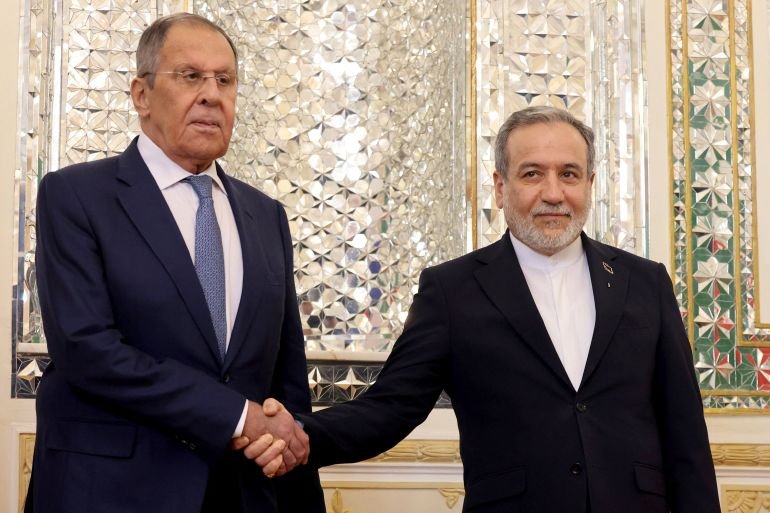
Russia’s Foreign Minister Sergey Lavrov pledged Moscow’s support for Iran when he met his counterpart, Abbas Araghchi, and President Masoud Pezeshkian in Tehran on Monday.
On Tuesday, Araghchi wrote on X: “Never in our history have Iran and Russia worked as closely as now.”
Recommended Stories
list of 4 itemsend of list
But Russia’s position is not straightforward.
The war on Iran, launched by the United States and Israel on February 28, has pushed up oil prices and handed Moscow a windfall. Washington has now also eased sanctions on Russian energy to bring down fuel costs – a major complaint from consumers in the US, who will shortly vote in mid-term elections.
So how close are Moscow and Tehran, and does Russia really want the US-Iran crisis to end? Here’s what you need to know:
Why has Lavrov visited Tehran now?
To shore up a wartime partnership, and to shape what happens next.
Nader Hashemi, an associate professor of Middle East politics at Georgetown University, told Al Jazeera that with both countries fighting wars, Lavrov’s “primary motive is to solidify that alliance”.
He said the aim is to advance each side’s war goals: “Russia against Ukraine, Iran against the United States.”
But Hashemi said the main reason is that the US-Israeli attack has left the Middle East regional order unravelling, and Moscow wants a say in what replaces it.
“I suspect there’s a longer-term agenda here,” he said.
How close are Russia and Iran?
They have a strategic partnership, though their treaty stops short of a military alliance.
Putin and Pezeshkian signed a 20-year Comprehensive Strategic Partnership Treaty in Moscow in January 2025.
It came into force that October, but unlike Russia’s pact with North Korea, it has no mutual defence clause.
Ties deepened after Russia’s full-scale invasion of Ukraine in 2022, with Iran sharing Shahed drone technology that enabled Russia to build its own version.
In 2024, Washington accused Tehran of also sending Russia ballistic missiles.
In Tehran, Lavrov said Russian specialists who had left Iran’s Bushehr nuclear power plant – heavily damaged in US strikes – would gradually return.
Other countries are aware of the closeness of their relationship.
On Sunday, Lavrov was in Bahrain for a strategic dialogue session between Russia and the Gulf Cooperation Council (GCC), and he was urged by its members to use Moscow’s influence with Tehran to press for “serious dialogue” and restore shipping through the Strait of Hormuz, the strategic Gulf waterway that Iran effectively closed shortly after the war began earlier this year.
Has Russia helped Iran in the war against the US?
Not openly.
The Russian Foreign Ministry has condemned what it called the “unlawful aggression” of the US and Israel, but Moscow has not intervened militarily.
US media outlets, citing intelligence reports, have said Russia and China supplied Iran with satellite imagery and weapons components. US President Donald Trump has dismissed those reports.
Iran’s Foreign Minister Abbas Araghchi, left, and Russia’s President Vladimir Putin in St Petersburg, Russia [File: Dmitri Lovetsky/AP]
How has Russia benefitted from the US-Iran war?
Significantly.
After Iran effectively closed Hormuz, through which one-fifth of global oil and natural gas supplies are shipped during peacetime, the price of Brent crude rose from around $72 a barrel to as high as $120 a barrel in March and April. On Tuesday, Brent – the global benchmark – was trading at above $109 a barrel.
By April, revenue from Russia’s biggest oil tax had roughly doubled to about $9bn, according to Reuters calculations, as buyers unable to get supplies from the Gulf switched.
Since March, the US Treasury has issued waivers allowing sales of Russian oil already loaded at sea. This month, it waived sanctions on Russian diesel until April 2027.
On Friday, Trump suspended newly passed sanctions on Russia and on buyers of its oil and gas. The move has sparked outrage among members of his own Republican Party who backed the sanctions bill.
On Sunday, he claimed he did not want to “drive, foolishly, Russia away from the bargaining table” in Ukraine talks.
“The Kremlin is using this opportunity to align Russian and American interests on Ukraine to try to stop Ukraine from continuing its attacks on Russian refineries,” John Lough, an associate fellow of the Russia and Eurasia Programme at Chatham House and a senior research fellow at the New Eurasian Strategies Centre, told Al Jazeera.
“This has led to the breakdown of relations between Trump and Zelenskyy, which suits Moscow’s purposes because it is putting US policy in conflict with Europe’s policy on Ukraine,” he said.
So, does Russia really want the US-Iran war to end?
For now, Russia would appear to have every reason to want the stand-off between Washington and Tehran to continue, as it is “benefiting from higher oil prices and from the diesel squeeze that has encouraged Trump to lift sanctions and allow Russia to supply diesel to the US market,” Lough said.
But Nikita Smagin, an analyst on Russia’s role in the Middle East, told Al Jazeera on Monday that while Russia certainly has a partial interest in the conflict continuing, on balance, it likely does not want to see it escalate, as the consequences could be unpredictable.
Moscow talks to all sides caught up in this conflict, which Hashemi said gives it an edge over Washington. Much of the region has been affected as Iran has launched strikes against US military assets and energy infrastructure in the countries hosting US assets. These include Bahrain, Kuwait, Oman, Jordan and the United Arab Emirates.
Hashemi said Russia is “perfectly situated to shape a future new Middle East regional order” as “a major power that has direct diplomatic relations with all of the parties” in the region.
“The United States can’t make that claim because the United States has no relationship with Iran,” he said.
Putin has already acted as a channel with Washington, stating he relayed Iran’s views on ending the conflict to Trump in a phone call on October 9.
But Hashemi said he did not think “Trump is looking to Putin to help solve the Iran war”.
Trump’s Iran policy is shaped, he said, “first and foremost by Trump’s personal idiosyncrasies”, and then by his relationship with Israel, reflected among close advisers including Jared Kushner, Steve Witkoff and Mike Waltz, the US ambassador to the United Nations.
Still, with Trump “in a quagmire”, Hashemi added: “I suspect that there are intense discussions between Russia and the United States.”
That could come to a head at a possible three-way summit.
Last month, the Kremlin said Putin and Trump had discussed meeting China’s President Xi Jinping to talk about the Ukraine war, at the Asia-Pacific Economic Cooperation (APEC) summit in Shenzhen in November, but the White House has not confirmed whether Trump will attend.
If such a meeting on Ukraine goes ahead, Hashemi said he suspects “the Iran war will also be part of the discussion”, with Trump looking to China and Russia “to see whether there’s any room there to help him negotiate an end to the war”.
What happens next?
On Monday, Lavrov said Moscow expects Pezeshkian to attend the Gas Exporting Countries Forum summit in Moscow at the end of October.
Meanwhile, US and Iranian forces continue to fight for control of Hormuz ahead of the US midterm elections on November 3.
Trump has threatened to “soon finish the job” with Iran, but Araghchi responded by saying, “We have unfinished jobs, too.”
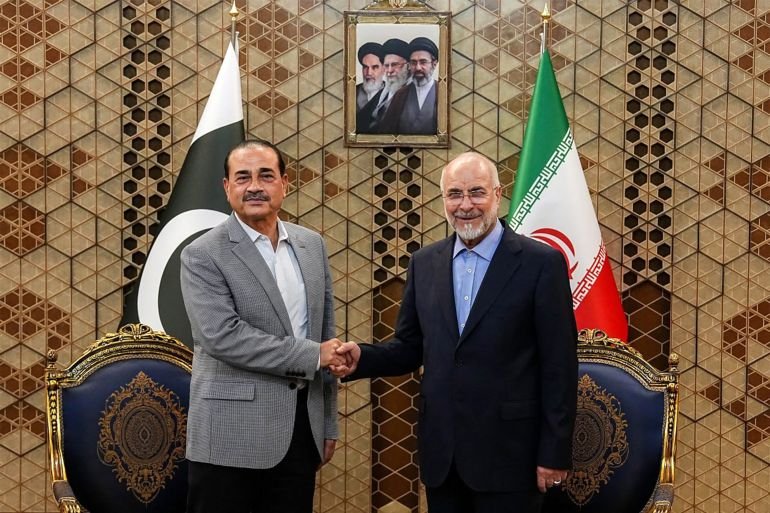
Islamabad, Pakistan –Pakistan’s army chief, Field Marshal Asim Munir, arrived in Tehran on Tuesday evening for talks with Iranian officials, as diplomatic efforts ramp up to prevent a new round of fighting with the United States and Israel.
Munir’s visit is his fifth to Iran since the April ceasefire between Tehran and Washington, which was brokered by Islamabad. Pakistan’s Interior Minister Mohsin Naqvi is accompanying Munir, Iran’s state news agency IRNA reported. The Pakistani army chief is expected to meet Iranian Foreign Minister Abbas Araghchi first, IRNA said.
Recommended Stories
list of 4 itemsend of list
The visit comes a day after Russian Foreign Minister Sergey Lavrov held talks in Tehran, and two weeks after Pakistan and its allies agreed to accelerate the deployment of forces to Saudi Arabia, which has come under repeated attacks from the Iran-backed Houthi armed group in Yemen.
Lavrov’s visit on Monday was his first to Tehran since the start of the US-Israel war on Iran in February. The Russian foreign minister met Araghchi and President Masoud Pezeshkian, and the talks covered the war, the Strait of Hormuz and efforts to end the fighting.
“The timing of [Munir’s] visit, following Lavrov’s presence in Tehran, suggests that Iran prefers to keep multiple diplomatic channels open, rather than relying exclusively on a single mediator,” Seyed Mojtaba Jalazadeh, a Tehran-based foreign policy analyst, told Al Jazeera.
But the Munir visit also comes at a time when some experts have warned of growing signs that United States President Donald Trump might be preparing for a return to fighting with Iran. Trump rejected an Iranian proposal to end the war on September 26. Since then, the US has deployed an additional aircraft carrier to the Middle East, which is expected to arrive by late November. Trump has endorsed Israeli Prime Minister Benjamin Netanyahu in Israel’s upcoming October 27 election, referring to their shared mission in attacking Iran. Trump said that if Netanyahu were not re-elected, the US would need to attack Iran on its own.
Analysts say these developments add urgency to diplomatic efforts to sidestep a potential military escalation. In recent weeks, Qatar has played a key role in channeling proposals between the US and Iran. Andreas Krieg, an associate professor in security studies at King’s College London, told Al Jazeera that while Qatar increasingly provides the diplomatic machinery behind the talks, Doha still values Islamabad’s access to Washington and Tehran.
“Pakistan offers political access, particularly through Field Marshal Asim Munir, while Qatar does much of the detailed negotiating,” Krieg said.
The Islamabad MoU
Pakistan has mediated between Washington and Tehran since the US and Israel began striking Iran on February 28.
A roadside billboard displaying portraits of Pakistan’s Chief of Army Staff Field Marshal Asim Munir and Prime Minister Shehbaz Sharif, following a deal between the US and Iran, in Islamabad, Pakistan, June 16, 2026. [Akhtar Soomro/Reuters]
In June, the two sides agreed to a 14-point memorandum of understanding (MoU).
Under the agreement, the US was to lift its naval blockade within 30 days, the Strait of Hormuz was to reopen, and about $24bn in estimated frozen Iranian assets was to be released in phases over 60 days of further talks, including negotiations on Iran’s nuclear programme.
That period expired in mid-August without either side agreeing to extend it. Iran says the US failed to meet its commitments, and Tehran has kept the Strait of Hormuz closed, insisting that Washington first lift the blockade.
Pakistan’s Foreign Office has continued to point to the agreement and its utility.
“The Islamabad MoU is already in place, and some of the points currently under discussion are fully aligned with it,” spokesman Sajjad Haider Khan told a weekly briefing on October 9.
Deputy Prime Minister and Foreign Minister Ishaq Dar said on October 2 that Iran’s seven-day plan was drawn from the MoU.
Analysts, however, disagree on whether the agreement can still provide a basis for negotiations.
“On the Islamabad MoU, I think it’s done from both sides and perhaps a new mechanism is required to start negotiations,” Umer Karim, an associate fellow at the King Faisal Centre for Research and Islamic Studies in Riyadh, told Al Jazeera.
Krieg said that while the Islamabad MoU was “politically alive”, it was “operationally dead”.
“The circumstances under which it was signed have fundamentally changed,” he said.
But Muhammad Faisal, a South Asia security researcher at the University of Technology Sydney, said the agreement could still be used.
“The Islamabad MoU remains usable, even if the political and security environment has deteriorated,” he told Al Jazeera. “It is still the minimum agreed benchmark between Washington and Tehran, and neither side has an obvious alternative framework for addressing the issues related to maritime access, sanctions relief and nuclear talks.”
Pakistan’s Saudi commitment
Meanwhile, Pakistan, Saudi Arabia and Turkiye signed the Mecca Joint Defence Agreement on August 7.
It was Pakistan’s second defence pact with Saudi Arabia, after the Strategic Mutual Defence Agreement the two countries signed in September 2025.
At an emergency meeting in Riyadh on October 5, the three countries agreed to expedite the deployment of forces and capabilities under the pact.
Within days, Houthi missiles and drones struck Riyadh’s King Khalid international airport more than once, as well as targets in Abha, Yanbu and Shaybah.
Lieutenant-General Ahmed Sharif Chaudhry, the Pakistani military’s spokesman, discussed the defence pact and the importance of protecting holy sites in Mecca and Medina in an interview with Independent Arabia on October 18.
“The security of the Harmain Sharifain is paramount. It’s non-negotiable,” he said, referring to Islam’s two holiest mosques. “Whatever support is needed to do that is being provided and will be provided.”
He declined to provide details, citing operational confidentiality.
Chaudhry said Pakistan wanted a negotiated end to the conflict. “If we are unable to come to a negotiated outcome and we turn into a military conflict, then this collective deterrence, this instrument of collective deterrence of Mecca Alliance will definitely come into play, as it is coming into play,” he said.
Turkish Foreign Minister Hakan Fidan (R), Saudi Defence Minister Khalid bin Salman and Pakistani deputy foreign minister Ishaq Dar attend a meeting of the Strategic Political and Defence Committee, established under the Mecca Joint Defence Agreement, in Riyadh, Saudi Arabia on October 5, 2026. [Mustafa Hatipoğlu/Anadolu Agency]
Asked at the October 9 briefing whether Pakistani forces in Saudi Arabia would engage the Houthis, Foreign Office spokesman Khan said they would not.
“These forces would not cross the border into Yemen to launch attacks against the Houthis,” he said.
On Monday, a day before leaving for Tehran, Munir met Saudi ambassador to Pakistan, Rajeh Tami Albugamy. A statement said the two expressed satisfaction with progress under the pact, but made no mention of the Houthis or Iran.
Tehran’s public response to the agreement has largely been restrained. On October 11, Araghchi told his Saudi counterpart, Prince Faisal bin Farhan, that Tehran was ready to provide “any possible assistance” to start a dialogue between Saudi Arabia and Yemen, IRNA reported.
Saudi state media said that the two only discussed the “recent escalation in violence in the region”.
After meeting Iranian leaders in New York last month, Dar said they had told him Iran had nothing to do with the Houthis and had suggested engaging them politically rather than militarily.
But Krieg said Pakistan’s two roles were becoming harder to reconcile.
“Pakistan remains an important intermediary, but its credibility as a neutral actor is increasingly compromised by its security commitments to Saudi Arabia,” he said.
Jalazadeh said Tehran’s concern was more limited.
“Iran does not necessarily perceive stronger defence cooperation between Pakistan and Saudi Arabia as an immediate threat, but it does regard it as a complicating and constraining factor,” he said.
Mixed signals from Washington
But it’s not just Pakistan facing competing pressures — or sending seemingly mixed signals.
In Washington, Trump has pledged not to strike Iran before the US midterm elections.
US President Donald Trump speaks with Israeli Prime Minister Benjamin Netanyahu at the Israeli parliament, the Knesset, in Jerusalem on October 13, 2025. [AFP]
“We will not be attacking Iran at any time prior to the Midterm Elections to be held in the US on November 3rd,” he wrote on his Truth Social platform on October 8. In the same post, he said the US was having productive discussions with Iran. The naval blockade has remained in place.
Ten days later, though, Trump endorsed Netanyahu. “If Israel has the wrong Leader, which would be anyone other than Bibi, America will have to do this work ourselves, and I am not inclined to do so,” Trump wrote.
On Monday, US Defense Secretary Pete Hegseth met Netanyahu at Ovda airbase in southern Israel during an unannounced visit, Axios reported. The outlet said the visit came amid US-Israeli discussions about potentially resuming major combat operations against Iran.
“Threats of military strikes, combined with the blockade and indirect negotiations, undermine Iran’s confidence in Washington’s intentions and make stronger security guarantees one of the central issues in any potential agreement,” Jalazadeh said.
Faisal told Al Jazeera that the timing of the two votes, a week apart, made major concessions difficult for both sides and raised the risk of escalation.
Krieg said the elections were among the strongest constraints on another major war, but warned that the risk could grow once they had passed.
“The immediate danger is that Iran overplays its hand,” he said. “A major attack causing American casualties could override electoral calculations altogether.”
Doha, Qatar — The United States is moving away from its traditional security-for-oil relationship with the Middle East and no longer seeks to dominate the region, senior US diplomat Tom Barrack has said.
However, it was not abandoning the Middle East, he added, speaking at the Global Security Forum in Doha on Tuesday — but rather reassessing its role, after years of attempts to reshape governments across the region.
Recommended Stories
list of 3 itemsend of list
“The US no longer wants to own,” said Barrack, who serves as US Ambassador to Turkiye and Special Envoy for Syria. “The bargain is not to control, but to not leave. We’re not leaving.”
Barrack acknowledged that regional countries were increasingly recognising the limits of US involvement.
“Everybody is saying: OK, I can’t rely on America to solve all my problems,” he said.
Barrack questioned the effectiveness of previous interventions, saying that the US had been involved in 23 regime changes across the wider Middle East.
“Every time we try and intervene, change the person or the regime, it seems to have been a mistake,” he said.
His comments come as Washington and Tehran try to negotiate an end to the US-Israeli war on Iran that has destabilised the region and disrupted global energy supplies.
Political analyst Luciano Zaccara described Barrack as probably “the most realistic of Trump’s allies” in his assessment of US involvement in the Middle East.
He told Al Jazeera that Barrack had effectively acknowledged that regime change, one of Trump’s stated objectives in the war on Iran, was unlikely to succeed.
Zaccara said Barrack’s reference to regime changes in the Middle East was an acknowledgement “that what the US has been doing in the region has not been working, regardless of which administration it was”.
According to Zaccara, Barrack had stopped just short of suggesting that Trump needed to retreat from “the maximalist demands” he had made of Iran.
US-Iran negotiations ongoing
Qatar says negotiations between Tehran and Washington are continuing despite growing fears of renewed fighting.
Ministry of Foreign Affairs spokesperson Majed al-Ansari, speaking separately at the Global Security Forum, said mediators were continuing to exchange messages between the warring parties, with regional partners involved in efforts to reach a deal.
“We are working between the parties, continuing our job as mediator with our partners and others in the region,” he said.
Al-Ansari said the lack of public information about the negotiations should not be interpreted as a lack of progress.
“The fact that we’re not hearing about it is a good sign that we’re doing our job properly,” he said.
The diplomatic efforts come as Iran’s seven-day proposal to end the war remains on the table, with the US yet to give its response.
The plan envisages reopening the Strait of Hormuz and resuming nuclear negotiations in exchange for US concessions, including lifting the naval blockade on Iranian ports and easing economic sanctions on Tehran.
Analyst Negar Mortazavi said the diplomatic door remained open, but negotiations were stalled over the terms and sequencing of an agreement.
“Tehran wants to end the war, but it is not prepared to surrender under military or economic pressure,” she told Al Jazeera on the sidelines of the forum in Doha.
The Strait of Hormuz remains a major flashpoint, with attacks on commercial shipping raising concerns over global energy supplies. Before the US-Israeli war on Iran, one-fifth of the world’s oil and gas supplies transited through the strait.
Mortazavi said the escalation was part of Tehran’s strategy to maintain leverage against Washington despite its military disadvantages.
“Iran’s leverage has diminished but has not disappeared,” she said. “Moving tankers is not the same as restoring safe, predictable and normal maritime traffic.”
According to Mortazavi, Tehran wants to increase the economic and political costs of the war for Trump, while signalling to future US administrations that military action against Iran carries consequences.
But she warned that continued escalation posed serious risks to Iran and the wider region.
“Ultimately, neither military escalation nor economic pressure is likely to produce Iranian capitulation,” she said.
Fighting in Yemen
Qatar’s Ministry of Foreign Affairs spokesperson also reaffirmed Doha’s support for Riyadh in the fighting against Yemen’s Houthi armed group, saying it backed Saudi Arabia in “defending their sovereignty against this attack”.
Fighting intensified in September after the Houthis seized areas along Yemen’s Red Sea coast, including the port city of Mocha. In response, forces loyal to Yemen’s internationally recognised government launched an offensive, dubbed “Dawn of Yemen”, on October 4, backed by Saudi air strikes.
The Houthis have retaliated with missile and drone attacks on Saudi airports, oil facilities and military installations. Strikes on Riyadh’s King Khalid international airport earlier this month killed at least 14 people and wounded hundreds.