Tag: Al Jazeera

  • What is the history behind Trump’s LeBron blast over US national anthem?

    What is the history behind Trump’s LeBron blast over US national anthem?

    What led to LeBron James being labelled a disgrace by US President Donald Trump, who says NBA star disgraced anthem?

    President Donald Trump on Thursday accused LeBron James of disrespecting the United States after the NBA star appeared to continue his warm-ups while the national anthem was performed before Philadelphia’s season opener on Tuesday.

    “I said right from the beginning that he’s no good, a TOTAL DISGRACE,” Trump said of James in a social media post sharing the video.

    Recommended Stories

    list of 4 itemsend of list

    “LeBron James should apologize to all of those Great American Warriors and Heroes who died for the American Flag, and all that our Country stands for!”

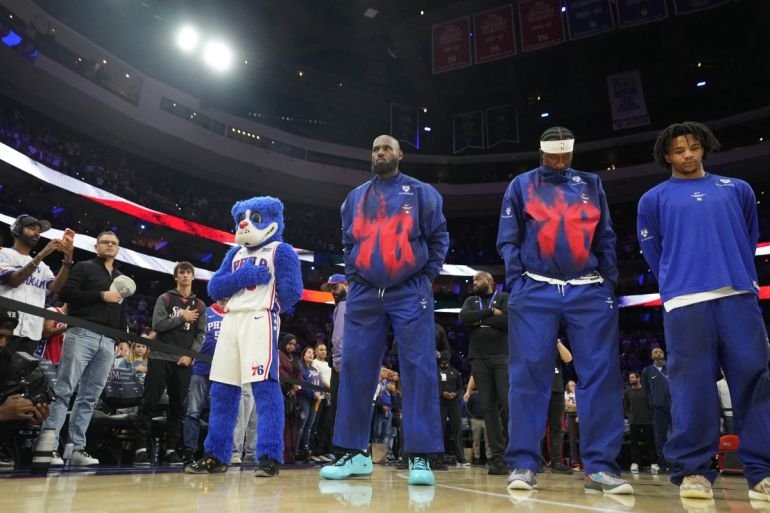
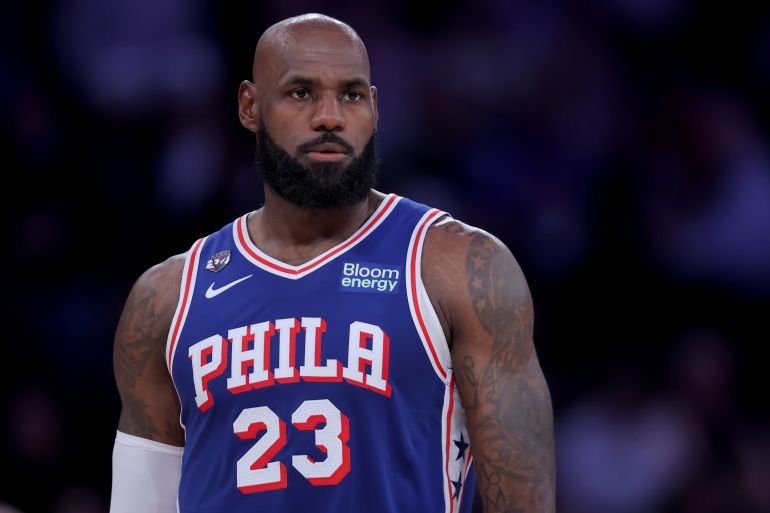
    James appeared to practise a golf swing and jump shot as The Star-Spangled Banner was performed at Tuesday’s game in New York. James, starting his first season with Philadelphia, was lined up alongside teammates who mostly stood still during the anthem.

    Trump and James have been critical of each other for years, occasionally trading public swipes.

    James had not made a public comment or a social media post as of Thursday evening about Trump’s gripe.

    The 41-year-old James, in his record 24th NBA season, was set to make his home debut for the Sixers Thursday night against Cleveland.

    Among some of the more notable times James became entangled with the president or politics:

    LeBron wears one black shoe, one white shoe

    James was with Cleveland in 2017 when he made a statement during an NBA game with his shoes — one black, one white, with the word “equality” in capital gold letters on the back of each.

    Then, after the game, James made a statement about Trump, saying: “This is a beautiful country and we’re never going to let one person dictate how beautiful and how powerful we are.”

    James had called Trump  “a bum” on Twitter and also said earlier that season about the president: “He doesn’t understand how many kids, no matter the race, look up to the president of the United States for guidance, for leadership, for words of encouragement. He doesn’t understand that, and that’s what makes me more sick than anything.”

    Shut up and dribble

    James showed determination to speak out on social issues and the nation’s political climate after Fox News host Laura Ingraham criticised the four-time NBA champion for his 2018 comments about social issues.

    “We will definitely not shut up and dribble,” James said. “I will definitely not do that. I mean too much to society. I mean too much to the youth. I mean too much to so many kids that feel like they don’t have a way out and they need someone to help lead them out of the situation they’re in.”

    James referenced Muhammad Ali, Jim Brown, Bill Russell and Jackie Robinson as athletes who previously spoke up for equality and change with no concerns about the consequences or any rewards.

    “We know it’s bigger than us,” James said.

    Get people to the polls

    James was named The Associated Press’s Male Athlete of the Year in 2020 in large part for leading the Los Angeles Lakers to a championship and, at the peak of the Black Lives Matter movement, helping convince many who had never voted to finally head to the polls.

    “I still know what I do on the floor and obviously, I give everything to the game,” James said. “But I can make a greater impact off the floor right now, more than I can on the floor. And I want to continue to inspire people with the way I play the game of basketball. But there’s so many more things that I can do off the floor to help cultivate people, inspire people, bring people together, empower them.”

    James rejects Zlatan’s criticism of activist athletes

    AC Milan striker and former LA Galaxy star Zlatan Ibrahimovic blasted socially conscious athletes in a 2021 interview. Ibrahimovic called it “a mistake” for James and other athletes to get involved in political causes, saying they should “just do what you do best, because it doesn’t look good”.

    James, naturally, rejected the criticism.

    “I would never shut up about things that are wrong,” James said.

  • Trump slams NBA star LeBron James for disrespecting US national anthem

    Trump slams NBA star LeBron James for disrespecting US national anthem

    NBA superstar LeBron James criticised by US President ⁠Donald ⁠Trump for disrespectful behaviour during national anthem.

    US President Donald ⁠Trump criticised ⁠National Basketball Association (NBA) superstar LeBron James on Thursday for what he called disrespectful behaviour during the singing of the ⁠US national anthem at a recent NBA game.

    “While listening to our National Anthem, LeBron James disrespects our Country,” Trump ⁠said in a Truth Social post accompanied by a video showing James moving his body during the anthem.

    Recommended Stories

    list of 4 itemsend of list

    “LeBron James should apologize to all of those Great American Warriors ‌and Heroes who died for the American Flag, and all that our Country stands for!”

    The clip Trump shared showed James standing in line with the members of the Philadelphia 76ers, swinging his arms in a warm-up-type stretch and performing basketball shooting movements.

    A representative for the 76ers ⁠did not immediately respond to a ⁠request from Al Jazeera for comment.

    Trump has repeatedly criticised athletes for their behaviour during pre-game renditions of the US national anthem, notably beginning with NFL quarterback Colin Kaepernick’s ⁠kneeling protest in support of racial justice.

    Trump cancelled the planned White House visit of ⁠the Super Bowl champions Philadelphia Eagles ⁠in 2018 after the team disagreed with his call for players to stand during the anthem.

    James became a leading voice in the Black Lives ‌Matter movement in 2020 and has frequently supported progressive issues as he ascended to the top of the NBA’s all-time ‌scoring ‌list.

  • White evangelical support for Trump slips but still strong as midterms near

    White evangelical support for Trump slips but still strong as midterms near

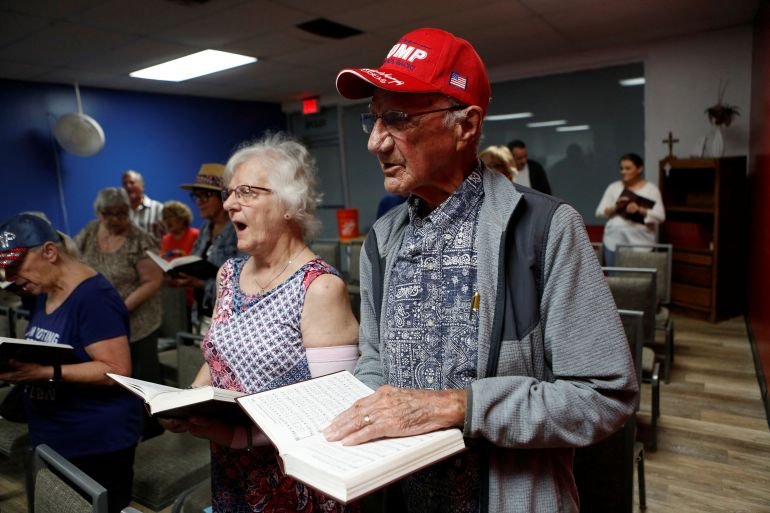
    United States President Donald Trump’s support among white evangelical Protestant voters remains strong but has slipped since he retook office in January 2025, according to a new poll.

    A survey released this month by the news agency Reuters and research firm Ipsos found that Trump’s support among the group had tumbled to 63 percent, down from 77 percent at the time of his second inauguration.

    Recommended Stories

    list of 3 itemsend of list

    The shift comes as Trump’s approval rating drops to an all-time low of 31 percent.

    White evangelicals are considered a key Republican demographic, and the decline could prove significant during the midterm elections on November 3, when the right-wing party will seek to defend its majorities in Congress.

    Democrats remain widely favoured to take control of the US House of Representatives in the election. Their chances of flipping the Senate too are increasing amid widespread discontent over affordability and the US-Israeli war on Iran.

    But experts say Republicans are counting on their base to counter signs of a Democratic surge at the polls.

    On Wednesday, Trump campaigned in South Carolina, located in the southern “Bible Belt”, where exit polls found six in 10 Republican voters were white evangelicals in the 2024 presidential primary.

    Trump carried the state by nearly 18 percentage points in the 2024 presidential election, but polls have shown Republican Senate candidate Darline Graham holding only a narrow lead over Democratic challenger Annie Andrews just two weeks ahead of the midterm vote.

    As with many of his campaign appearances, Trump focused his South Carolina speech on several social issues that resonate with conservative Christians, including policies related to transgender people. During the rally, he referred to Andrews with an anti-transgender slur.

    “She’s a fanatical transgender activist,” Trump said at a different point in his speech, despite Andrews skewing moderate on the issue within the Democratic Party. “How the hell do you run in South Carolina? Am I in a different state?”

    Long a key demographic in Trump’s coalition, white evangelicals accounted for nearly a third of Trump’s winning coalition in 2024, according ⁠to a Public Religion Research Institute (PRRI) survey and a validated-voter analysis by the nonpartisan Pew Research Center.

    The US president has been able to maintain support from key evangelical leaders despite a series of scandals at odds with the conservative values they espouse. Trump has faced allegations of sexual misconduct and extramarital affairs, which he denies.

    All told, about 80 percent of white evangelical voters cast their ballots for Trump in the 2024 general election. The demographic makes up about 13 percent of the overall US population.

    Beyond states like South Carolina, evangelicals in the Midwestern states of Iowa and Kansas, as well as the Southern state of Texas, could be key to the Republican Party maintaining its hold on the US Senate.

    Christian faith leaders are challenging Republicans in several top races, including Adam Hamilton, a United Methodist Church pastor, in Kansas, and James Talarico, a Presbyterian seminarian, in Texas.

    Both Hamilton and Talarico represent mainline Protestant denominations, not evangelical ones.

    White evangelicals’ voter trends are distinct from other evangelical groups. For example, Black Protestant evangelicals, a vanguard of the US civil rights movement, have remained a key Democratic voting bloc.

    Still, support for Trump among evangelicals remains strong compared with other demographic groups.

    It remains unclear if shifting attitudes towards Trump would affect conservative turnout during the midterm elections, in which the US president is not on the ballot.

    The Reuters news agency noted that white evangelicals were the only demographic it tracks that surpassed 60 percent support for Trump in the final stretch of the midterms.

    The drop in support among the group was less pronounced than for Trump’s overall approval rating, tumbling 14 percentage points compared with a 16-point decline among Americans overall.

  • Epstein, Iran and ‘drain the swamp’: Have Republicans shifted before vote?

    Epstein, Iran and ‘drain the swamp’: Have Republicans shifted before vote?

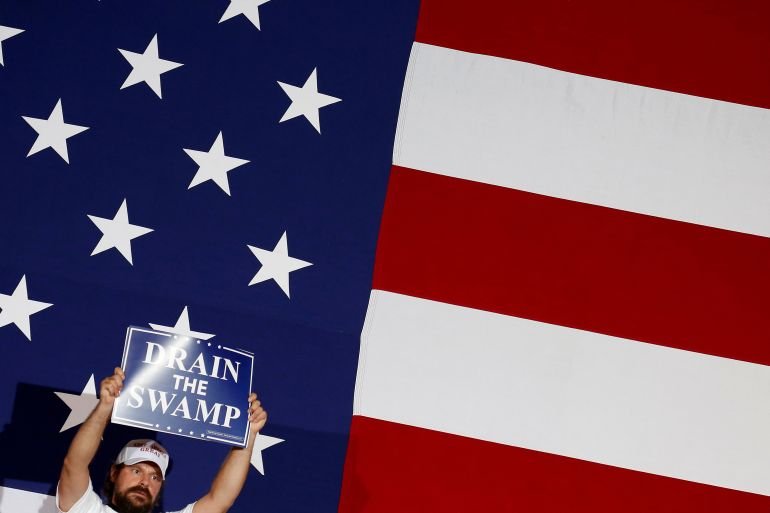
    United States President Donald Trump has long touted himself as a political outsider, someone who would expose the elites’ abuse of power and shift government focus from far-off conflicts to problems at home. Phrases like “drain the swamp” and “America first” have proved to be powerful rallying cries, sparking a whole cadre of “Make America Great Again” (MAGA) Republicans.

    Halfway through his final term as president, though, Trump has backpedalled on many of those ideas, cosying up to the ultra-wealthy, sidelining investigations into convicted sex trafficker Jeffrey Epstein, and launching an ongoing war with Iran.

    Recommended Stories

    list of 3 itemsend of list

    That about-face appears to be having a real impact on Republicans running in the US midterm elections in November, said Rina Shah, a geopolitical adviser and strategist and a former senior GOP congressional aide.

    “In competitive races, some are quietly distancing,” Shah said, adding that they are “talking about gas prices, local issues, or [saying] ‘I’m focused on my district’ – because the Iran war and the Epstein drip are already showing up in attack ads and soft polling.”

    Here’s what you need to know about whether the Republican Party has softened its stance on these issues.

    Which Republicans have broken with Trump over the Epstein files?

    During his 2024 presidential campaign, Trump said he would declassify troves of files kept by the Federal Bureau of Investigation (FBI) about Epstein and his global network of contacts. Trump’s future cabinet members, too, were enthusiastic about this, with Kash Patel, now head of the FBI, saying it was time to “put on your big boy pants and let us know who the pedophiles are”.

    Yet a few months after taking office, Trump began dragging his feet, sparking a backlash from influential MAGA figures. Trump began calling the entire issue a “hoax” and saying Republicans were being duped by Democrats into calling for an investigation into Epstein’s network.

    Rep. Ro Khanna, D-Calif., from left, Rep. Thomas Massie, R-Ky., and Rep. Marjorie Taylor-Greene, R-Ga., speak during a news conference as the House prepares to vote on the Epstein Files Transparency Act, at the Capitol in Washington, Tuesday, Nov. 18, 2025, as they are joined by survivors and family members who recounted their personal stories of Epstein. (AP Photo/J. Scott Applewhite)
    US Congressional Representatives Ro Khanna, Thomas Massie, and Marjorie Taylor Greene speak during a news conference as the US House of Representatives prepares to vote on the Epstein Files Transparency Act, at the US Capitol in Washington, DC, the United States on November 18, 2025 [File: J Scott Applewhite/AP]

    Congress did eventually force the release of the files, with help from a handful of Republicans who broke with Trump. The Trump administration has released batches of the heavily redacted files, but has continued to withhold some. Meanwhile, all the Republican lawmakers who voted to mandate releases have paid a price for their insubordination, with three even losing their offices.

    US Representative Marjorie Taylor Greene left her Georgia seat in January 2026, after publicly clashing with Trump over Epstein. Nancy Mace, a Republican from South Carolina, lost her bid to become the party’s candidate in her home state after Trump refused to endorse her. Colorado’s Lauren Boebert barely won the primary in her own contest after angering Trump by supporting calls for transparency from Thomas Massie, another Republican bent on exposing what the files held. Massie, of Kentucky, also drew Trump’s ire, which likely cost him the primary.

    Republican presidential nominee Donald Trump participates in a fireside chat with media host Tucker Carlson at the Desert Diamond Arena, in Glendale, Arizona, the US, October 31, 2024
    Republican presidential nominee Donald Trump participates in a fireside chat with media host Tucker Carlson at the Desert Diamond Arena, in Glendale, Arizona, the US, October 31, 2024 [File: Brendan McDermid/Reuters]

    No more foreign wars

    Trump had long said he would be reducing foreign military involvement, breaking with the interventionist tendencies of other recent Republican presidents. Now he and his party face tough questions about the US-Israel war on Iran, which influential figures in the MAGA movement like political commentator Tucker Carlson have called a mistake, saying, “This is Israel’s war. This is not the United States’ war.”

    Amongst disgruntled MAGA supporters, a narrative has emerged of Trump using the war to also distract from the Epstein issue. Massie, the former congressman, summed up the sentiment by saying, “Bombing a country on the other side of the globe won’t make the Epstein files go away.”

    Trump has tried to downplay the war’s impact, but voters, even in the Republican Party, think he broke his own promise, driving the overall approval rating for the ratings-obsessed president down to record lows. “Seven months into an open-ended campaign with shifting goals,” said Shah, “that promise looks different to a lot of his voters.”

    Few Republicans, however, have responded to that public sentiment with their votes in Congress, where Democrats have tried repeatedly to curtail Trump’s war on Iran by passing resolutions pointing out he failed to get the body’s approval.

    In September, just seven Republican House members joined Democrats to pass an anti-war bill. In the Senate, similar efforts have been supported by just a handful of Republicans. Trump called the Republican lawmakers supporting the anti-war bills “unpatriotic,” and said, “They should be ashamed of themselves.”

    As with the Epstein files, Trump took action against rebellious Republicans over the Iran war, for instance backing a rival of Senator Bill Cassidy, who voted in favour of the anti-war bill, in a primary in Louisiana that the Republican senator ended up losing.

    What happened to Trump’s promise to ‘drain the swamp’?

    One of Trump’s most appealing promises had been to purge the government of a “deep state” establishment he says is running the country without being accountable to the public on social issues, and fiscal and foreign policy.

    Priscilla Chan, Meta founder Mark Zuckerberg, Lauren Sanchez, Amazon founder Jeff Bezos, Google CEO Sundar Pichai and Tesla CEO Elon Musk attend Donald Trump’s inauguration ceremony on January 20, 2025
    Priscilla Chan, Meta founder Mark Zuckerberg, Lauren Sanchez, Amazon founder Jeff Bezos, Google CEO Sundar Pichai and Tesla CEO Elon Musk attend Donald Trump’s inauguration ceremony on January 20, 2025 [Chip Somodevilla/POOL/AFP]

    In a way, Trump did keep that promise. An entire federal government division – the Department of Government Efficiency (DOGE) – forced tens of thousands of federal workers out of their jobs and dismantled institutions like the US Agency for International Development (USAID). The military threw out notions of racial, gender, and economic diversity. Everything from universities to the Smithsonian Institution was subjected to a campaign against an unqualified, diversity-obsessed elitist class.

    But lobbying groups, including some supporting foreign governments, have been given a free hand, and ethics rules and watchdogs who would tackle political corruption have been weakened, said Shah, the Republican strategist.

    At his presidential inauguration, Trump literally surrounded himself with the wealthiest people in the world, some of whom have gone on to play some part in his administration.

  • Iran says seven ships hit in Hormuz Strait, warns US of wider response

    Iran says seven ships hit in Hormuz Strait, warns US of wider response

    The US has pushed back on the IRGC’s claims, dismissing them as an attempt to increase oil prices ahead of US elections.

    Iran says that seven oil tankers have been struck and sustained damage in the Strait of Hormuz, the largest single-day toll for the waterway since the United States and Israel started their war against Iran on February 28.

    Iran’s Islamic Revolutionary Guard Corps (IRGC) said in a statement on Thursday that four of the vessels were transferring oil when they were targeted and caught fire overnight. The other three were disabled after striking mines.

    Recommended Stories

    list of 3 itemsend of list

    The claims could not be independently verified, and the report did not provide details about possible casualties or the tankers’ flags.

    The IRGC also warned that it could strike US bases across the Middle East if Washington moves to help tankers transit other parts of the strait.

    “The US military must know that if this trend continues, the conflict will extend to its bases in the region,” the IRGC said in a statement on its Sepah News website. “This is a serious warning.”

    Iran claims control over Hormuz, a strategic shipping route through which one-fifth of the world’s oil supplies passed before war broke out. It regularly attacks ships that attempt to navigate the strait without its authorisation.

    But the US military has been escorting vessels through the waterway in increasing numbers, with Iran responding by stepping up attacks.

    US President Donald Trump said on Thursday that “Iran is doing everything they can to drive up the price of oil prior to the US Midterm Election”.

    In a post on his Truth Social platform, he added: “They are making up fake hits, mines, and everything else because more oil is coming through the Hormuz Strait now than it did even prior to the beginning of the conflict.”

    A US Central Command spokesperson, speaking anonymously to Al Jazeera, also called Iran’s mine claims incorrect.

    The spokesperson said US forces have cleared the international shipping lanes of mines and that Iran is using missiles and drones.

    The strait remains open, the spokesperson said, with 95 percent of vessels getting through.

    The attacks, the spokesperson added, show Tehran’s “desperation” under the US blockade, which cuts Iran off from the resources it needs to rebuild the military capabilities the US has said it destroyed.

    Americans want ‘relief’ from war costs

    “The number of ships and tankers attacked every single day is increasing, and Iran is saying it is continuing to do this because they are not going to allow any change in that situation,” said Al Jazeera’s Mohamed Vall, reporting from Tehran.

    “They have full control over the Strait of Hormuz right now, they say.”

    Vall said there is also talk in Tehran about an imminent escalation in the war, with the Iranians expecting the US to attack even before US midterm elections in early November.

    “The IRGC army chief has boasted that Iran is more ready than anytime before, and has produced enough weapons and equipment to wage a symmetrical war against the United States,” he said.

    Reporting from the US White House, Al Jazeera’s Kimberly Halkett said: “Striking Iran does not appear to serve any Republican interests”, adding that pre-election polls tell the same story for Trump’s political party.

    “What we’ve seen in surveys in recent months, and as of today, is that most Americans want relief from their tax money going to pay for any potential war with Iran that is ramped up,” Halkett said.

    “There is real frustration over the rising cost for everyday Americans, given the rising fuel prices that have occurred as a result of this conflict  … As a result, the US president is having to make the case.

    “The pressure is on the president, and it’s not just from the opposition party,” she said. “It is also from within the Republican Party as well.”

  • Carney, Erdogan launch ‘strong and resilient’ Canada-Turkiye partnership

    Carney, Erdogan launch ‘strong and resilient’ Canada-Turkiye partnership

    On trade, investment and innovation, leaders will work towards conclusion of a Canada-Turkiye Free Trade Agreement.

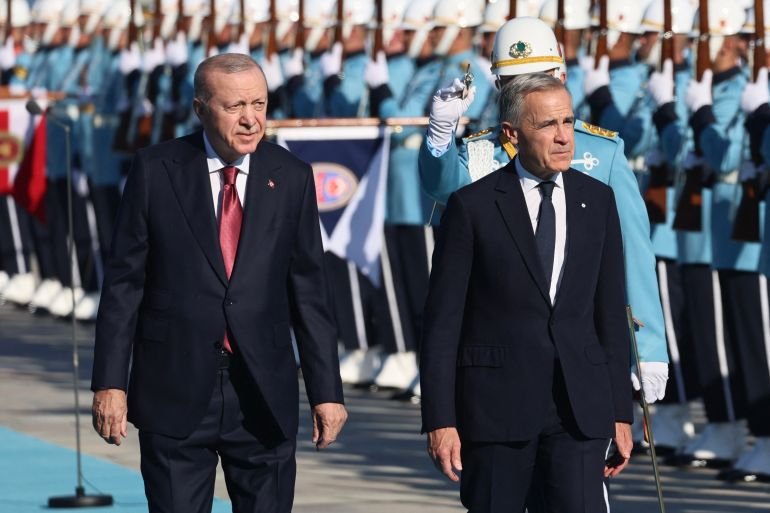
    Canadian Prime Minister Mark Carney and Turkish President Recep Tayyip Erdogan have announced the launch of a Canada-Turkiye Strategic Partnership, backed by a three-year action plan.

    “In an increasingly complex global security environment, rising geopolitical uncertainties, and evolving humanitarian challenges, a strong and resilient Canada-Turkiye partnership is essential, providing a foundation to mitigate shared threats and capitalise on new opportunities,” said a statement by the two leaders on Thursday.

    This comes as Carney is on a two-day visit to Turkiye, seeking to forge a new partnership as Canada looks to reduce its dependence on the United States.

    The partnership’s three-year action plan rests on four pillars: trade and investment; defence and security; energy; and ties between people, the statement said.

    On trade, investment and innovation, the two leaders agreed to “work toward successful conclusion of a Canada-Turkiye Free Trade Agreement”, it said. They will also expand bilateral trade and investments in priority sectors, including energy supply, defence production, aerospace, and artificial intelligence (AI).

    On defence and security, the leaders “underlined their intent to deepen bilateral and multilateral cooperation”. They also agreed to “strengthen cooperation in support of peace and security in the Euro-Atlantic region and beyond including Ukraine, South Caucasus, and the Middle East, in particular Gaza”.

    Meanwhile, energy ministers from both countries will work on areas such as liquefied natural gas, nuclear energy and critical minerals.

    ‘Launching a new era’

    Speaking to reporters in Ankara alongside Carney on Thursday, Erdogan said the two countries “hope to increase our trade volume, which currently stands at around $3bn, to $5bn initially and then to $10bn through the steps we will take”.

    He said the two sides had agreed to begin free trade agreement negotiations before the end of the year to boost trade and investment, adding that elevating Turkiye-Canada relations to the level of a strategic partnership would not be merely a symbolic step on paper.

    Canadian and Turkish leaders will convene next month in Ankara for the first round of trade talks, the joint statement said.

    “We have today overcome the disconnect that had persisted between Turkiye and Canada for many years. Now, we are launching a new era between Turkiye and Canada,” Erdogan said.

    Relations between the two countries will expand “for generations to come”, Carney said alongside Erdogan.

    “Our goal is not self-sufficiency; it is collective resilience, and that’s why Canada is building deeper partnerships with reliable partners that create new opportunities for us both, and in Turkiye, we have an exceptional partner,” he added.

    Carney is on the first bilateral visit by a Canadian prime minister to Turkiye, although he travelled to Ankara in July to attend the NATO summit.

    He was scheduled to meet Erdogan and other officials before travelling to Istanbul for talks with Turkish business groups as the two countries seek to deepen trade ties.

    The Canadian prime minister has sought to diversify partnerships and reduce reliance on the US amid an escalating trade war with US President Donald Trump, marked by US tariffs on Canadian goods, followed by retaliatory measures from Canada, as well as Trump’s statements questioning Canadian sovereignty.

  • Rising costs and tight budgets strain Americans ahead of midterm elections

    Rising costs and tight budgets strain Americans ahead of midterm elections

    Stacy Eichel, an empty nester in Florida, spent years balancing two jobs. One was in healthcare; the other was her own venture: a small business making custom-branded merchandise for corporate clients, such as coffee mugs and T-shirts that companies hand out at conferences and holiday parties.

    For Eichel, the business was more than a paycheque. It was a side hustle for a woman who couldn’t sit still, who was always hungry for the next opportunity. It was the kind of business that thrived when companies had a little extra to spend on small branded trinkets to make an otherwise mundane corporate conference something memorable.

    Recommended Stories

    list of 4 itemsend of list

    In September 2025, Eichel lost her job in marketing for a healthcare company after a merger. Suddenly, the business she had run on the side had to shoulder more of the burden of supporting her. Yet just as she needed it to provide more, the market for her products was shrinking.

    Faced with uncertainty over trade policy and tariffs, alongside the growing use of artificial intelligence across the economy, companies have been tightening their spending. Custom-branded merchandise was becoming one more expense they could do without.

    “The economy is such that fewer people are buying custom-branded swag because it’s more of a luxury item. When they have extra money in the budget, that’s what they’ll use it for, but now their budgets are very tight,” Eichel, who has cut back on her expenses, told Al Jazeera.

    Eichel’s experience reflects a broader strain in the US labour market, where a paycheque does not necessarily translate into financial security. The headline unemployment rate captures people actively looking for work, but it does not tell the whole story of people who are working fewer hours than they want or juggling jobs that do not provide enough income.

    The Department of Labor documents this through what is called the U-6 rate, a broader measure of unemployment and underemployment. It stands at an elevated 7.6 percent. While that’s down from 8.1 percent a year ago, having a job does not necessarily mean Americans are getting ahead financially.

    The U-6 measure includes people who are working part-time because they cannot find full-time jobs, as well as those who want to work but have stopped looking for a job recently.

    Wallet strains

    Even people who are employed full-time are finding that their earnings do not stretch as far as they once did. An estimated 4.5 million Americans were working part-time because they could not find full-time work. Meanwhile, nine million Americans held multiple jobs, accounting for 5.5 percent of all employed workers, according to the most recent jobs report.

    “Underemployment is one of the most misunderstood economic problems in America because it doesn’t always look like unemployment. It looks like a college graduate working retail despite having a degree, a former executive accepting a position paying half their previous salary, or a parent working two jobs because neither provides enough hours, benefits or income to support their family,” Tara Furiani, a workforce strategist based in Richmond, Virginia, told Al Jazeera.

    Average hourly wages rose 3 percent over the past year, while consumer prices increased 3.7 percent, according to the latest Consumer Price Index (CPI) report released by the US Labor Department.

    That means prices have risen faster than wages, leaving many workers with less purchasing power. Overall, prices rose 0.6 percent from the previous month, while average hourly wages increased by just 0.1 percent, adding to the financial pressure on households like Eichel’s.

    Eichel has cut back on expenses and scaled down some of her usual spending, including dining out and takeout, and dropped her cable service.

    “I never used to think before ordering in, and now we cook everything,” Eichel said.

    With the midterm elections approaching, the cost of living is becoming a greater concern for voters. A Reuters/Ipsos poll found that the cost of living was the most important issue for voters, leading the next-closest issue by a double-digit margin, at 47 percent compared with 22 percent for “democratic norms and values”.

    A separate Washington Post–ABC News–Ipsos poll found that voters trust Democrats over Republicans to handle the economy, 40 percent to 33 percent, marking the first time in 12 years that Democrats have held an advantage on the issue.

    This comes as 44 percent of Americans said they had struggled to pay for at least one basic necessity over the past year, including transportation, rent or mortgage payments, medical care and food, according to a Pew Research Center poll released earlier this month.

    Twenty percent of respondents said they had received food from a food bank or pantry over the past year.

    Joshua Teicher, a New York City-based video producer in the advertising industry, said work began drying up after the COVID-19 pandemic, with opportunities dwindling further in recent years as companies tightened their budgets. Even the slow trickle of work has nearly dried up entirely.

    Teicher told Al Jazeera that his financial circumstances have changed so significantly that he is now on Medicaid, government-subsidised healthcare for people in lower-income brackets. He said he is struggling to afford prescriptions and food.

    “I’m having to go into my savings. Specifically, sometimes I don’t want to get a second cup of coffee because it’s like five bucks for an espresso or something like that. It’s also been harder to eat healthy. Grocery shopping, apples are just ridiculous. I find myself walking a couple of extra blocks to a cheaper store because they have cheaper apples, those sorts of things,” Teicher said.

    He told Al Jazeera that his tight budget also prevents him from affording the knee surgery he needs. Cartilage in both knees has worn down. He was able to undergo surgery on his right knee to correct the problem, but cannot afford the same procedure on his left. As a result, one leg is now slightly longer than the other.

    Petrol prices are another expense weighing on consumers. The average price for a gallon of gasoline (3.78 litres) on Monday was $4.29, according to the American Automobile Association (AAA), which tracks fuel prices daily. By comparison, the average price was $2.98 when the US and Israel first struck Iran in late February, leading to ongoing disruptions in the global market.

    Market pressures

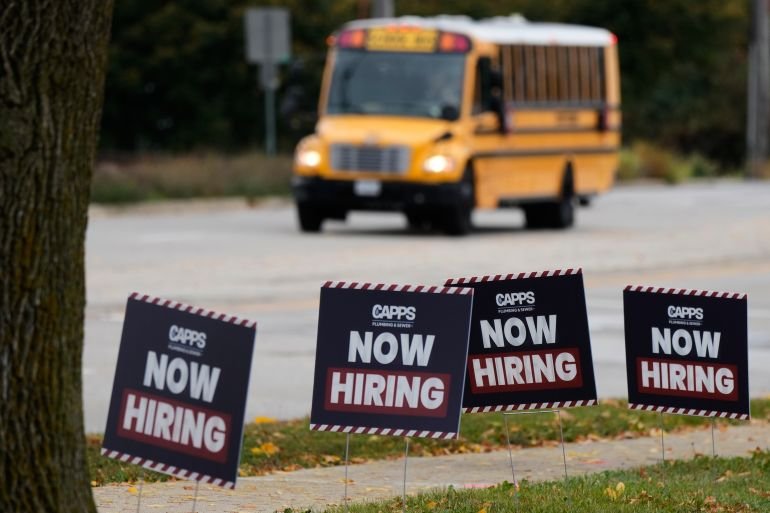
    Even for Americans who have jobs, finding a better-paying position can be difficult. Although some industries have continued to add jobs, uncertainty about economic policy has contributed to what economists call a “low-hire, low-fire” labour market.

    Employers are pulling back on hiring even as layoffs remain relatively low. The latest Job Openings and Labor Turnover Survey (JOLTS) from the Bureau of Labor Statistics showed that job openings and the number of workers quitting their jobs were largely unchanged.

    “I have seen highly qualified people who have not been able to find a job for 12-18 months,” Babak Hafezi, a professor of international business at American University, told Al Jazeera.

    With fewer opportunities available, workers who already have jobs may be reluctant to leave them, even if they are unhappy or want higher pay. Those looking for work face more competition for available positions, while people who are already employed may have less leverage to negotiate better salaries. That can make it harder for workers to improve their financial situations as everyday expenses continue to rise. This is leading some people who already work full-time to add on part-time jobs.

    “We have people come in all the time who are teachers looking for a part-time job, or who are in other fields asking, ‘Do you know anyone hiring part-time? I just need 15–20 hours a week to make ends meet.’ At what point does this end?” Debbie Louis, who owns a coffee shop in Brooklyn, New York, told Al Jazeera.

    Although industries such as hospitality and healthcare have added jobs over the last year, Hafezi said that growth could slow or reverse over the next year. He pointed to the potential impact of the Big Beautiful tax legislation, which could reduce funding for programmes that support rural hospitals, as well as immigration policies that have discouraged international travel to the US over the past year, hitting businesses that benefit from those revenues.

    At the same time, US consumers are also dealing with the reality of reduced purchasing power.

    “Tariffs and economic pressures from high inflation are affecting Americans’ purchasing power. As prices increase, unit consumption decreases [they buy less as] their paycheques don’t go as far,” Hafezi said.

    “This ultimately leads Americans to feel poorer and less able to consume. That is the environment that many Americans in the ‘K-shaped’ economy are in.”

    In a so-called K-shaped economy, wealthier US consumers continue to prosper while lower- and middle-income households fall behind. The Conference Board’s most recent consumer confidence report found that higher-income households, often supported by investment gains and greater financial reserves, are more optimistic than those in other income brackets.

    “Ahead of the midterms, policymakers and employers should be examining not simply how many Americans are working, but whether available employment provides adequate wages, sufficient hours, predictable schedules, benefits and genuine opportunities for advancement. Because a paycheque and economic security are, again, not the same thing,” Furiani, the workforce strategist, added.

  • FIFA announces USA to host first Women’s Club World Cup in 2028

    FIFA announces USA to host first Women’s Club World Cup in 2028

    FIFA to stage inaugural Women’s Club World Cup, with 16 of football’s top teams, in United States in 2028.

    The United States will host the inaugural women’s football Club World Cup in 2028, FIFA announced Thursday.

    “The decision was taken in view of its experience in organising FIFA tournaments, the maturity of its infrastructure and services and the level of stakeholder interest in women’s football in the country,” world football’s governing body said.

    Recommended Stories

    list of 4 itemsend of list

    The US has a proven track record of staging large sporting events, notably cohosting the men’s World Cup earlier this year.

    The first women’s Club World Cup will be staged from January 5-30, 2028.

    It will bring together 19 top-tier clubs from all six continental confederations.

    The AFC (Asia), CAF (Africa), CONCACAF (North America) and CONMEBOL (South America) will be represented by three clubs apiece at the competition, one team will fly the flag for the OFC (Oceania) and six of Europe’s best sides will represent UEFA.

    Seven clubs have already secured their berths at the tournament: Arsenal (England), Club America Femenil (Mexico), Barcelona (Spain), Gotham (United States), Naegohyang (North Korea), Corinthians (Brazil) and Wuhan Jiangda (China).

    “These seven clubs, and a dozen more, will come together to show the strength and depth of women’s club football to a global audience,” said FIFA chief women’s football officer Sarai Bareman.

    “They will have the opportunity to tell their story, expand their fan base and represent their club on the world stage. They have thoroughly earned this opportunity to be part of history in the United States.”

    FIFA said the introduction of the tournament marked “a major milestone for the professionalisation and global expansion of the women’s club game, giving elite club sides a true world stage to compete on every four years”.

    Initially slated for 2026, FIFA pushed the inaugural tournament back by two years so it enjoys a clear window following the 2027 women’s World Cup and before the 2028 Summer Olympics in Los Angeles.

    The US has a proven track record of hosting large sporting events, notably staging the men’s 2026 World Cup, which was won by Spain earlier this year.

    Chelsea are the reigning men’s FIFA Club World Cup holders, after beating Paris St Germain in the 2025 final, which was also staged in the US.

  • Ilhan Omar home raid, Haines attack: Inside rise in violence on officials

    Ilhan Omar home raid, Haines attack: Inside rise in violence on officials

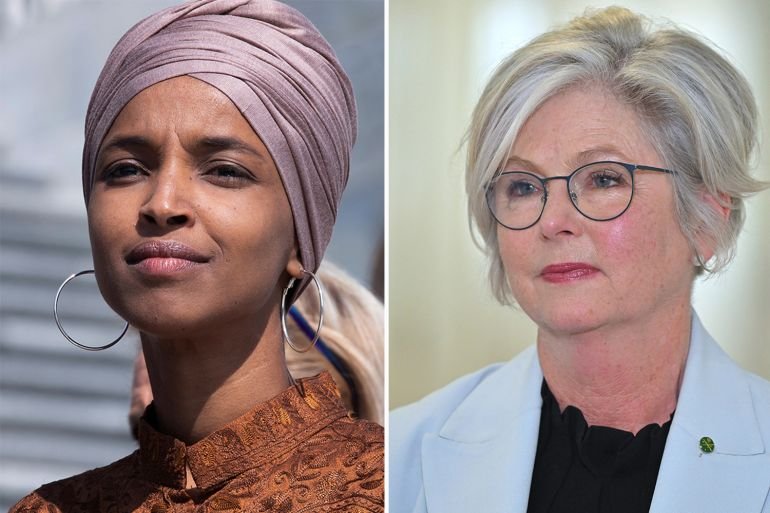
    United States Congresswoman Ilhan Omar has been forced to move out of her Washington, DC residence because of safety concerns after her home was raided, amid growing threats of violence against politicians.

    Last week, US federal agents searched Omar’s home with what a Justice Department spokesperson described as a “judicially authorised search warrant”, adding that the raid was part of an “ongoing federal criminal investigation”.

    Recommended Stories

    list of 4 itemsend of list

    According to NBC News, which cited one person familiar with the matter, charges against Omar may include conspiracy and making false statements in her immigration paperwork.

    For years, Somalia-born Omar, who is Muslim, has been the target of right-wing conspiracy theories about her immigration status, including allegations that she had married her brother.

    The Minnesota congresswoman has repeatedly denied the allegations as “disgusting lies”.

    She has drawn the particular ire of US President Donald Trump, who views her as a thorn in his side and has threatened to deport her.

    Omar came to the US in 1995 at age 12 and was naturalised as a US citizen in 2000. Since January 2019, she has served as a congressional representative for the state of Minnesota.

    But on Wednesday, she told the US news outlet MS NOW that following the raid on her Washington apartment, she could no longer live there.

    “Because our address has been public and with the death threats that I deal with, it’s no longer going to be feasible to be in that house and have my kids visiting off and on, having people track them,” she said.

    The raid on Omar’s home comes as violent attacks on politicians have grown more frequent.

    She, herself, has been physically assaulted. In January this year, Omar was sprayed with an unknown substance by an assailant while calling for the abolition of the US Immigration and Customs Enforcement (ICE) agency at a town hall meeting in Minneapolis.

    On Monday this week, Australian independent MP Helen Haines, who has championed climate action and advocated for improved working conditions as a lawmaker, was hit by a car outside her electorate office, resulting in the amputation of both of her legs.

    Australian police said it was a “targeted attack” and warned of growing “online extremism” and recorded a rise in abuse, threats and intimidation targeting lawmakers.

    ‘Dangerous escalation’

    The violent attack on Haines was particularly shocking. Her attacker, identified as Brendan Nugent, 43, allegedly drove past her before turning his car around and veering towards Haines, pinning her against her car.

    Australia’s Home Affairs Minister Tony Burke said the driver then reversed before ramming her again.

    Sofia Collignon, a reader in comparative politics and director of the Mile End Institute of Research at Queen Mary University London, said instances of physical violence, such as the attack on Haines, are still “relatively rare in terms of numbers”.

    “It’s very upsetting to see that more and more people in public life are paying a very high price for doing something that is a public good,” Collignon told Al Jazeera.

    Abuse online often comes before physical attacks, however.

    She said that women – and, in particular, women of colour in politics – are facing high levels of abuse on social media, and this is taking a worrying toll.

    “We are seeing from research that this is having an effect on how they [women] behave in politics, or whether they change the way that they campaign, change the type of issues that they advocate or sometimes completely refrain from participating on social media,” she said.

    According to a 2023 report by the Centre for Economic Policy Research (CEPR), which assessed 12 years of data on attacks against Italian politicians, “marginally elected women are approximately three times more likely to experience an attack” than marginally elected men.

    The Princeton School of Public and International Affairs Bridging the Gap initiative, which tracks political violence in the US, found that there has been a “dangerous escalation in the political violence risk environment in the US, including a series of high-profile assassinations and aggressive federal immigration operations”, in 2025

    “Incidents of threats and harassment spiked, and leading community safety practitioners reported that the demand for de-escalation support surged to new heights,” it added.

    In the case of Omar, Trump has repeatedly targeted the congresswoman since his first term of office over her Somali origins.

    He has called her a “sick person”, an “extremist”, and “garbage”, among other inflammatory language.

    Other Muslim or progressive congresswomen have also been subjected to Trump’s rhetoric. In February, he wrote in a post on his Truth Social platform that Omar and Palestinian American congresswoman Rashida Tlaib should be sent “back from where they came from”.

    But Trump himself has also contended with political violence. In 2024, during his campaign rally, Trump was shot in the ear by a spectator attending the rally.

    Then, Trump ally Charlie Kirk was killed in 2025 by a man named Tyler Robinson, who said he had carried out the attack because he had “enough of his [Kirk’s] hatred”.

    ‘Fierce political polarisation’ to blame

    Online threats of attacks on politicians have led to real-life killings for some time.

    In 2016, British MP Jo Cox was killed in her constituency while campaigning to remain in the European Union ahead of the referendum by a man named Thomas Mair, who had shouted: “This is for Britain.”

    In 2021, Conservative British MP David Amess was killed by a man named Ali Harbi Ali, who claimed that he had targeted the representative over his vote for air strikes on Syria.

    In 2026, former Conservative MP and spokesperson for the far-right Reform UK party, Ann Widdecombe, was killed by a man named Joshua Kerry, who has been charged with engaging in conduct in preparation for “acts of terrorism”, including against Reform UK leader Nigel Farage.

    Collignon said she believes social media has “lowered the bar” for bad-faith actors to threaten politicians, which explains the increase in the volume of threats.

    “For example, what people consider to be acceptable ways of referring to politicians or to talk to them are more and more aggressive. They can find it acceptable to use more aggressive terms, partly because of the polarisation in politics,” she said.

    “It’s not an issue that we observed only on the right or on the left, but we observe it very often on the fringes of the spectrum. They find that it is acceptable to use unacceptable language or behaviour in the pursuit of their political goals. So that means intimidating a politician is something that they kind of condone.”

    According to an Armed Conflict Location & Event Data (ACLED) 2026 annual report, local officials faced a “persistent and evolving threat of violence in 2025” in an analysis of 2,653 incidents of violence that targeted local officials globally.

    The data show that the recorded incidents worldwide have spread from 88 countries and territories in 2025 to 97 in 2024.

    “Over the past five years, ACLED records at least 13,900 incidents in 138 countries and territories,” said the report. “Local officials often become lightning rods for broader societal grievances. Large-scale protest movements in recent years have directed their frustration and anger at local authorities, viewed as the nerve endings of a failing or corrupt state.

    “Especially in Europe and the United States, a pernicious mix of fierce political polarisation and unchecked competition for political dominance exposes politicians, and especially local elected officials, to a growing trend of harassment, abuse and violence.”

    Clionadh Raleigh, ACLED CEO, told Al Jazeera that while public officials can be challenged and voted out, “violence against them should never be ignored or excused”.

    “Political violence is not exclusive to the left or right, and both extremes show greater openness to violence. These attacks are not simply isolated threats to individuals, but part of a wider pattern of political intimidation,” Raleigh said.

    A 2026 report by the Inter-Parliamentary Union, a global international organisation of national parliaments, revealed that of the 519 parliamentarians who participated in research across five national case studies and joined a global survey, 71 percent of all respondents reported having “experienced violence by the public, whether online, offline or both”.

    “Violence is heavily concentrated online, with between 65 percent and 77 percent of MPs across the case studies reporting online abuse,” it found. 

    However, Collignon said the line between online threats of violence and being physically assaulted has become increasingly blurred.

    “Let’s say that I check my social media accounts at home, a place where I should feel safe,” she said. “But then, if my phone is showing me constant abuse, threats of violence, very nasty behaviour, then I am receiving all of these attacks in my living room.

    “We currently are operating in a space where lines are blurry, and I think we shouldn’t be thinking about online violence as something that just happens in the digital sphere. It’s something that has consequences for the individual in their daily lives, and the way in which they are involved in politics.”
  • Trump heads to South Carolina to boost Senator Darline Graham in race

    Trump heads to South Carolina to boost Senator Darline Graham in race

    United States President Donald Trump is set to travel to South Carolina to boost the campaign of Darline Graham, the sister of his close ally, the late Senator Lindsey Graham.

    The visit on Wednesday, which will include a rally alongside Graham, comes as the Senate race in deep-red South Carolina has grown uncomfortably close for Republicans.

    Recommended Stories

    list of 3 itemsend of list

    Lindsey Graham, long one of the most hawkish members of the Senate who was an outspoken supporter of the US-Israel war on Iran, had been expected to sail to victory in the November 3 vote. But his unexpected death in July upended the race.

    South Carolina’s governor tapped Darline Graham to finish her brother’s term. Trump then made the surprise move of endorsing Graham in a new Republican primary, helping her to claim the party’s nomination. The president said the endorsement was “in honour of her brother”.

    In a video message last week, Trump again said Graham had his unconditional support.

    “I’m asking everyone in South Carolina to get out and vote for a wonderful person, a great woman … a woman that Lindsey Graham said is the greatest person he’s ever met,” Trump said.

    Democratic challenger Annie Andrews, a medical doctor and paediatrician, has seized on Graham’s inexperience and her unorthodox route to the Republican nomination.

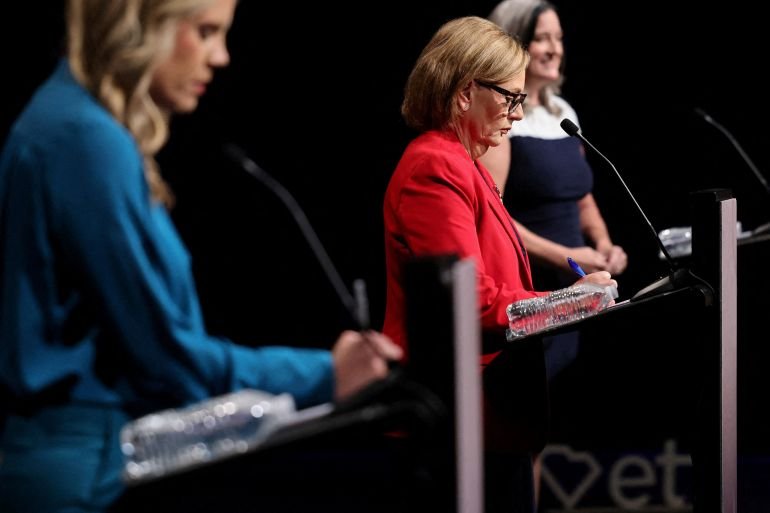
    Speaking to a local Fox News affiliate before Trump’s rally in Pendleton, South Carolina, Andrews pointed to Graham’s lacklustre debate performance, including one instance where she said she was “not that informed on national security”.

    “My opponent needs the highest level of federal government politicians to speak for her. On the debate stage, it was really clear,” Andrews said.

    Graham, meanwhile, has called Andrews “the most radical liberal that’s ever run for state office in South Carolina”.

    Polls have shown Graham leading by about 2.7 percentage points, according to a Real Clear Politics average. Trump carried the state by 18 percentage points in 2024.

    Tensions on Russia

    Trump’s visit comes after the president issued an executive order waiving most sanctions and tariffs on Russia, established by a law named after Lindsey Graham and passed with bipartisan support in 2026.

    The move prompted a tempered rebuke from Darline Graham.

    “Personally, I would choose to put the ⁠pressure on Russia to end the war and get gas prices down,” she told The Associated Press news agency on Saturday.

    “I don’t trust Putin, and I don’t trust Russia,” she said.

    The executive order on sanctions has been part of a wider Trump administration shift in its approach to ending the war with Ukraine, which began with Russia’s invasion in February 2024.

    Trump and his allies have heaped pressure on Ukraine, framing its leader, President Volodymyr Zelenskyy, as the main impediment to peace. In turn, Washington has offered several concessions to Russia, including a deal to buy Russian diesel.

    Lindsey Graham had been a staunch supporter of Ukraine. His death came shortly after he returned from his 10th visit to the country since the war began.

    Political headwinds

    The tightening race in South Carolina underscores the harsh political reality for Republicans heading into the final stretch of the midterms.

    Trump has sought to use his political clout to bring party loyalists out to vote, campaigning in strongholds across the country. But the president heads into the vote with the lowest approval ratings of his career, with voters expressing dismay about affordability and the knock-on effects of the US-Israel war with Iran.

    Beyond South Carolina, other one-time Republican strongholds have shown signs of shifting towards Democrats.

    That includes Kansas, where polls suggest Republican Ashley Hinson is effectively tied with Democrat Joshua Turek. The state, where farmers have been particularly hard hit by rising prices on fuel and equipment, has not sent a Democrat to the Senate since 1939.

    Trump also broke from the Republican establishment to endorse Attorney General Ken Paxton over Senator John Cornyn in the Texas primary. Polling averages show Paxton, whose career has been marred by a procession of scandals, trailing behind Democratic challenger Talarico by 1.7 percentage points. The race is widely considered a toss-up.

    A Republican has not won statewide office in Texas since 1994.