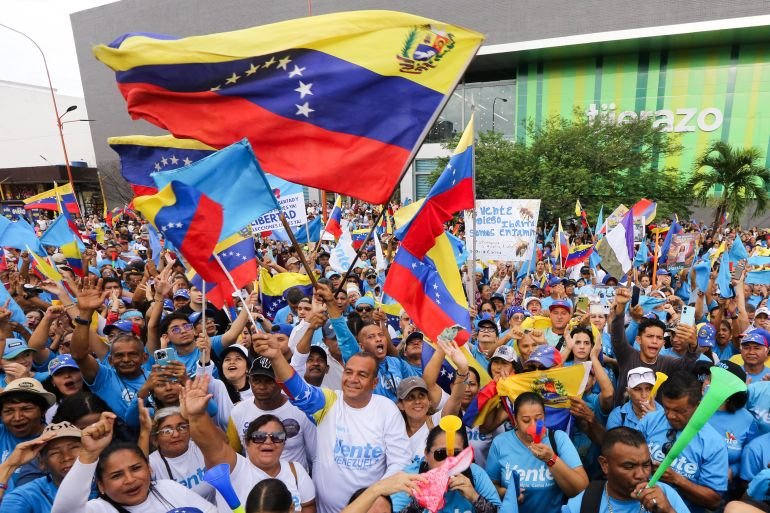
Thousands of Venezuelans have taken to the streets in several cities to demand free elections and other political changes, in the first nationwide opposition protest in nearly two years.
US President Donald Trump and acting President Delcy Rodriguez have said there would be elections, but no date has been set for a vote to decide on a successor for Nicolas Maduro, after the former Venezuelan president was captured by US forces in a military raid in January.
Recommended Stories
list of 4 itemsend of list
Opposition leader and Nobel Peace Prize winner Maria Corina Machado, who has been outside the country for nearly a year after living in hiding following a contested 2024 election, has said elections must take place by July 2027.
Her Vente Venezuela movement organised the protest, which took place in the capital Caracas and other cities, including Valencia, Maracay, San Cristobal and Maracaibo.
“Seeing this makes me happy because I know change is possible,” said 18-year-old cosmetology student Leosmary Hernandez, as she gathered with hundreds of others in northern Maracay. “I’ve been through so many hardships, so many problems because of the dollar, and difficulties studying. I have high hopes for my country and for our next leader and president, Maria Corina.”
“I went out to protest before, when things were much tougher, and I’m even less afraid today because I want my voice to be heard,” she added.
Since January 3, the country has been led by interim President Delcy Rodriguez of the long-governing United Socialist Party of Venezuela (PSUV).
PSUV leaders have been accused of carrying out human rights abuses against political dissidents, including arbitrary arrest, imprisonment and torture.
After the United States launched a military operation to abduct and jail former President Nicolas Maduro, the PSUV remained in power with the support of the White House.
US President Trump has backed Rodriguez’s leadership, despite her having been Maduro’s vice president.
A supporter of Venezuela’s opposition waves a flag over a highway at a demonstration in Caracas to demand elections in 2027 [Fausto Torrealba/Reuters]
Minimal security presence
Venezuela’s socialist movement, in power since 1999 under late President Hugo Chavez and then Maduro, has in the past deployed security forces against protesters, but government forces had minimal presence at protest sites on Thursday, and in many smaller cities demonstrators dispersed before dark.
The ruling Socialist Party called for its supporters to march from Caracas’ Plaza Venezuela, the same place the opposition planned to gather two hours later, to a location near the presidential palace to commemorate Breast Cancer Awareness Month.
Interior Minister Diosdado Cabello, known for his close ties to the security services, was pictured on state television attending the march, while the opposition supporters moved their protest to a nearby location.
The negotiations, backed by the US, do not include Machado’s political movement, though she has said she will not stand in the way of their progress.
Machado’s proxy Edmundo Gonzalez Urrutia claims to have won the 2024 election according to vote tallies by the opposition. But the government, which never released full counts, backed Maduro, as did the country’s legal and electoral institutions.
Machado has for years sought US support, aligning with hawks in the Trump team who argued that Maduro, through alleged links to drug gangs, represented a direct threat to US national security. Maduro and his wife, Cilia Flores, are facing drug and torture charges in the US. They have pleaded not guilty.
Tech-heavy Nasdaq falls 2.6 percent as debate rages over whether AI is a bubble.
Published On 23 Oct 202623 Oct 2026
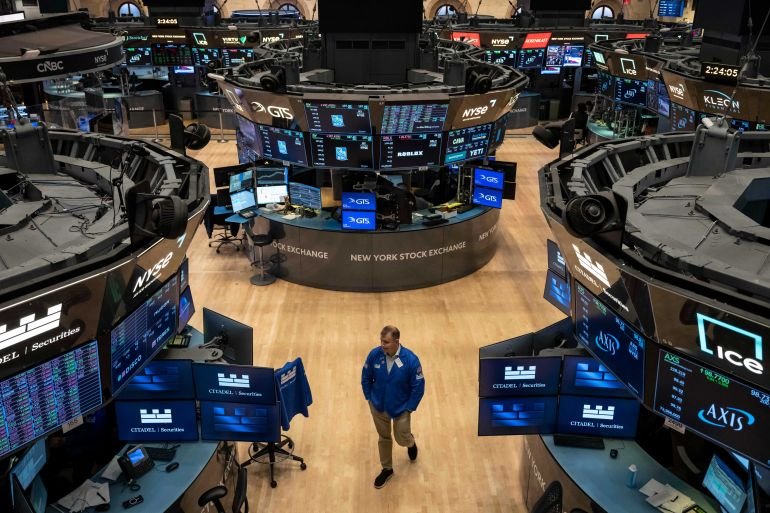
US tech stocks have dropped sharply amid market jitters over the sustainability of companies’ enormous capital investments in AI.
The Nasdaq Composite, which is dominated by tech firms linked to the AI boom, fell 2.6 percent on Thursday, its steepest fall since the index tumbled 4.2 percent on June 5.
Recommended Stories
list of 4 itemsend of list
The broader S&P 500 slid 1.2 percent, the benchmark’s biggest drop since a 1.5 percent decline on July 29.
Apart from Apple, each of the “Magnificent 7”, which make up more than one-third of the overall market, saw substantial losses.
Meta dropped nearly 7 percent after it raised its projected capital spending for this year to $135bn to $145bn in its latest earnings report, even as the Facebook parent company’s net profit fell short of expectations.
Amazon fell 4.6 percent, while Nvidia dropped 4.4 percent.
Tesla and Alphabet both fell 3.1 percent, while Microsoft declined 2.2 percent.
Apple rose 1.2 percent.
The sell-off extended to other major tech players, including Intel and Advanced Micro Devices, both of which fell about 8 percent, and Broadcom, which slid 4.3 percent.
After the losses, the Nasdaq is about 5.8 percent off its all-time high, reached on October 6.
Rising oil prices since February, due to the fallout of the US-Israel war on Iran, added to the downbeat mood.
Brent crude futures rose 4 percent on Thursday and continued to climb on Friday morning, taking the international benchmark above $114.20 a barrel, its highest since May.
Stocks slip in Asian trading
Major stock markets in Asia had a choppy session on Friday.
Japan’s benchmark Nikkei 225 fell more than 2 percent in morning trading before recouping some losses to close 0.3 percent lower.
South Korea’s KOSPI dropped as much as 3.5 percent before finishing up 0.3 percent.
The Hang Seng Index in Hong Kong gained 0.7 percent after earlier dropping about 0.5 percent.
Jay Goldberg, a senior analyst at Seaport Research Partners in San Francisco, said the swings in the market appeared to be driven more by sentiment than underlying fundamentals.
“In short, nothing has changed. Investors have just decided to be afraid this week. Everyone I speak to points to a different cause for the downfall … It’s just a giant wall of worry,” Goldberg told Al Jazeera.
“There are legitimate concerns about the AI trade, but this level of shift in the markets is driven much more by investor sentiment than any tangible reason.”
US tech companies’ huge investments in AI have stoked intense debate about whether a market bubble is forming similar to the one that preceded the 2000 dot-com crash.
While some Wall Street analysts view current levels of investment in datacentres and graphics processing units as unsustainable, others argue that AI will revolutionise society to a degree that justifies the eye-watering sums involved.
Global AI investment is forecast to reach $2.7 trillion in 2026 and $3.6 trillion in 2027, according to technology insights company Gartner.
High winds propelled the blaze across the army base in Wainwright, killing four soldiers and injuring dozens more.
Published On 23 Oct 202623 Oct 2026
A fire that killed four soldiers at a western Canadian military base was sparked by an exercise using live grenades, a military official said.
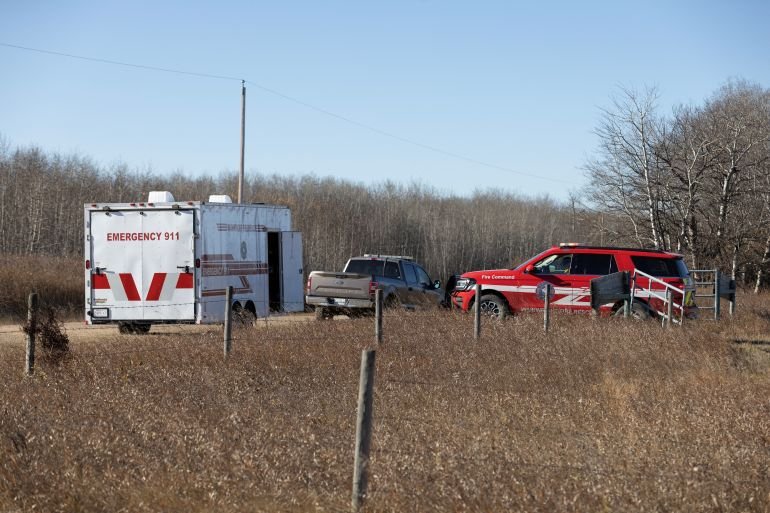
The deadly fire broke out on a grenade launcher range during military exercises on Saturday, with high winds propelling it across the base, Brigadier-General Vanessa Hanrahan, commander of the Canadian Forces Military Police Group, told reporters on Thursday.
“A subsequent change in wind direction and velocity significantly increased the fire’s intensity,” she added, with the flames spreading to a training area at the Wainwright military base in Alberta.
Due to the blaze being in the “permanent danger area” of the range, firefighters were unable to directly combat it, Hanrahan added.
The fire spread on Saturday afternoon during high-intensity combat training involving Charlie Company of the 3rd Battalion, Princess Patricia’s Canadian Light Infantry.
The military base lies in the prairies, a landscape of wide, open grasslands, rolling plains and scattered groves of trees.
About 84 soldiers were split between a grenade range and an area where they practised attacks on simulated enemy positions. The fire swept into the second training area.
Four soldiers died and 39 were injured, with 27 requiring hospitalisation. The incident was one of the worst peacetime tragedies for Canada’s military.
The soldiers and reserve members were participating in exercises ahead of a planned deployment to Latvia, where Canadian forces have their largest international military operation.
The Wainwright base is one of the largest bases operated by the Canadian Armed Forces. It regularly hosts training exercises involving military personnel from NATO countries.
During the final months of World War II and for several months in 1946, the base was used as an internment centre for German prisoners of war.
The US president has declined to comment on the process that led Starlink to lift speed and access restrictions on Ukraine.
Published On 23 Oct 202623 Oct 2026
United States President Donald Trump has said that tech mogul Elon Musk has restored Ukraine’s access to Starlink, a satellite internet service that plays a key role in Kyiv’s war effort and air defences.
On Thursday, Trump declined to discuss a report from The Wall Street Journal that he had called Musk and instructed him to end restrictions on Ukraine’s connection.
Recommended Stories
list of 3 itemsend of list
The news outlet reported that Starlink services returned to normal following the call.
“I don’t want to comment on it, whether I called or whether somebody else called, doesn’t make any difference, I guess. The bottom line, he put it back,” Trump told reporters when asked about the report.
On October 13, Ukrainian officials announced that sudden restrictions on Starlink services had left the country’s military scrambling.
Though the system came back online, connectivity has reportedly remained spotty.
Questions have persisted about where the decision to restrict access came from, with Musk and the Trump administration officials trading blame.
Trump has denied ordering restrictions on Ukraine’s access to Starlink.
“Well, I don’t know if it was anybody, but it wasn’t me, and I don’t think it was Elon,” he said on Friday. “And from what I understand, it’s the same as it’s always been.”
US Secretary of State Marco Rubio also said this week that decisions about Starlink’s speed and access belong to Musk.
“The bottom line is that that is governed by a private commercial contract as to how their stuff can be used and what speeds they’ll allow it to be used at,” Rubio said on Wednesday.
But Musk has denied any responsibility, stating that Starshield, the military-grade version of Starlink, is “owned and controlled by the US government”.
“Any limits on speed or usage are decided by the US military and ultimately POTUS,” he said in a social media post on October 14, using the acronym for “president of the United States”.
The Starlink speed caps and restrictions have also raised concerns that Trump, or the president’s right-wing allies, might seek to leverage such technology to pressure Ukraine into complying with US demands.
Trump has had a contentious relationship with Ukrainian President Volodymyr Zelenskyy, repeatedly calling him “difficult” in comparison to his Russian counterpart, Vladimir Putin.
Ukraine has been locked in a slow-grinding war with Russia since February 2022, after Putin launched a full-scale invasion of the Eastern European country.
While Europe has backed Ukraine’s defence against the invasion, Trump has suggested Ukraine itself could be to blame for the conflict.
In 2025, for instance, Trump blamed Ukraine’s ambitions of joining NATO. “ I actually think that that was the thing that caused the start of the war,” he said at the time.
More recently, Trump posted on Truth Social that it was Zelenskyy’s fault the war had not yet ended. “He doesn’t want to end this war, and probably never did,” Trump wrote.
As the war continues, Trump has been criticised by Democrats and some members of his own Republican Party for easing US pressure on Russia.
Recently, his administration issued a series of announcements to buy Russian diesel and ease restrictions on Russia’s energy sector.
Those decisions come as Trump is struggling with the political fallout of high fuel prices caused by his decision to join Israel in launching a war on Iran.
He has also suggested he would be open to a trilateral meeting with Putin and Chinese President Xi Jinping, which would be a first for the three leaders.
Since returning to office for a second term, United States President Donald Trump has embarked on a campaign to root out and deport the country’s undocumented immigrants.
Spearheading that campaign is Immigration and Customs Enforcement (ICE), a federal agency housed in the Department of Homeland Security.
Recommended Stories
list of 3 itemsend of list
Under Trump, the agency has grown substantially, boasting 22,000 officers and agents as of January, a staffing increase of 120 percent.
Thanks to recent spending packages, ICE is also considered the best-funded federal law enforcement agency in the US.
But the agency, founded in 2003, has come under increased scrutiny for its aggressive tactics and expedited hiring techniques.
Immigration agents, under the authority of ICE and other agencies, have been responsible for at least 25 shootings since the start of Trump’s second term, six of which have been fatal. At least 60 people have also died in ICE custody since January 2025.
That track record has made democracy advocates and human rights groups worried about ICE’s activities in the lead-up to the November 3 midterm elections.
Organisations like Human Rights Watch and the American Civil Liberties Union (ACLU) have voiced concern that the Trump administration could use ICE to intimidate voters.
The threat of encountering ICE agents could also keep some voters away from the ballot box, the groups say. One national poll, conducted in September by the University of California, San Diego, found that 40 percent of respondents expected ICE agents to be present near polling stations on election day.
Can ICE agents legally operate at or near polling stations?
Federal law prohibits the use of armed federal agents at polling stations. Some states have similar provisions.
The federal prohibition dates back to 1865. The law reads that it is illegal for anyone “engaged in the civil, military or naval service of the United States” to order or bring “any troops or armed men” to election sites.
There is, however, a loophole if such force is needed “to keep peace at the polls” or “to repel armed enemies of the United States”.
Another federal law prohibits members of the military from interfering with elections, and several other laws prohibit efforts to “intimidate” voters.
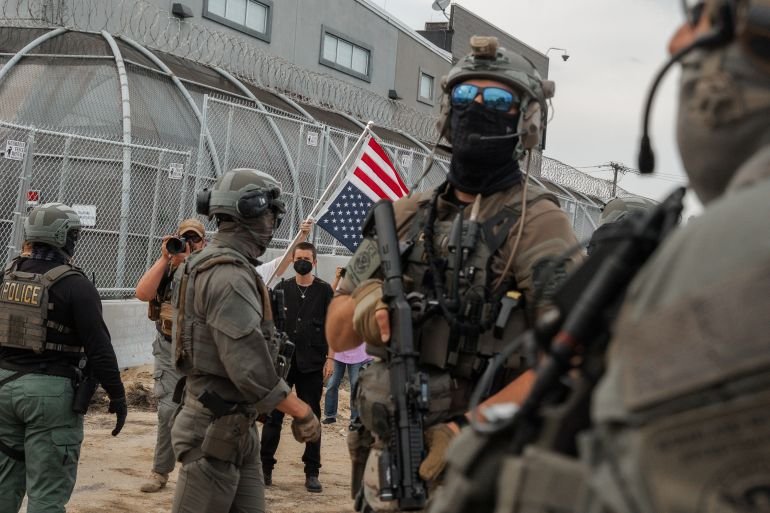
Those measures have been tested this year. During the primary elections for the midterms, there were at least two incidents – one in San Antonio, Texas, and another in Ventura County, California – where ICE agents reportedly conducted routine operations near polling stations.
In both cases, the ICE agents left after being asked to do so by local police.
How has the Trump administration used ICE agents before the election?
Though there are prohibitions against law enforcement near polling stations, advocacy groups say the Trump administration has nevertheless used ICE agents for election-related matters.
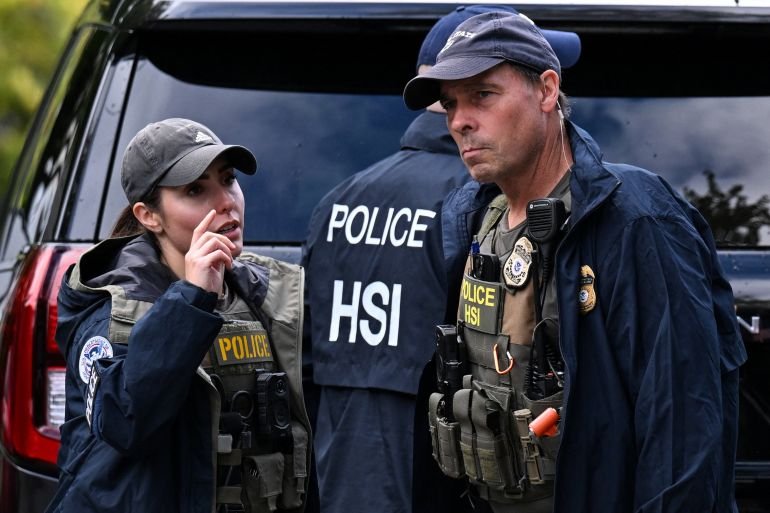
ICE has different offices under its control, one of which is Homeland Security Investigations (HSI).
In the months leading up to this year’s midterm elections, HSI has reportedly been ordered to prioritise its investigations of non-citizen voting, an illegal act. Only US citizens are allowed to vote in federal elections.
Starting in August, the Department of Homeland Security deployed HSI agents for “field investigations” in at least nine states to probe questions of voter eligibility.
Some have reportedly gone door to door, asking residents if they are citizens and if they plan to vote.
This week, a federal judge ordered the Department of Homeland Security to pause those investigations, citing the risk that a US citizen could be “wrongly swept up” and “subjected to intimidation”.
The judge also noted a “high likelihood of error” in how the federal agents were identifying alleged non-citizens.
Trump has pointed to non-citizen voting as support for his false claims of pervasive voter fraud.
Experts, though, say such fears are unfounded, with tiny numbers of non-citizens actually taking part in elections, despite Trump’s depictions of the issue as a widespread problem.
What has the Trump administration said about deploying ICE during the midterms?
Trump officials have refused to rule out using ICE agents to stop illegal voting, an effort that could extend to election day itself.
In May, Trump was asked by reporters: “For the midterm elections, would you send the National Guard or ICE to voting locations in November?”
Trump declined to answer directly. “I’d do anything necessary to make sure we have honest elections. We have to have honest elections,” he replied.
Other leaders in his administration have issued similar statements. In September, for instance, Homeland Security Secretary Markwayne Mullin affirmed that ICE would not “patrol” polling stations, but he suggested its agents could be there for other reasons.
“The only reason why we would be at polling places is if there is a threat to that polling place or we’re serving a warrant on someone that we have been actively tracking down,” Mullin said.
Another member of Trump’s cabinet, Attorney General Todd Blanche, has questioned the uproar over the issue, framing it as misguided.
“Why is there an objection to sending ICE to polling stations?” he asked in March at a conservative conference. “Illegals can’t vote. It doesn’t make any sense.”
What has been the response from advocacy groups?
The Trump administration’s rhetoric has raised alarm with a number of rights groups, who fear an ICE presence on election day could dampen voter turnout.
On Tuesday, Human Rights Watch called on the Trump administration to order ICE agents not to deploy near polling stations or other midterm election sites.
“ICE officers’ abuses have already seriously affected US citizens who have been stopped, beaten, detained, deported and even killed,” said Philippe Bolopion, the executive director at Human Rights Watch. “Voters should not have to fear being caught in an ICE dragnet when they head to the polls.”
On October 16, the rights group Amnesty International issued a similar appeal.
“Eligible voters must have the meaningful opportunity to participate in elections without discriminatory and arbitrary barriers, intimidation by armed forces, or fear of harm when seeking to exercise their rights,” the group said.
Last week, US federal agents raided Omar’s home as part of an investigation into alleged immigration fraud.
Published On 23 Oct 202623 Oct 2026
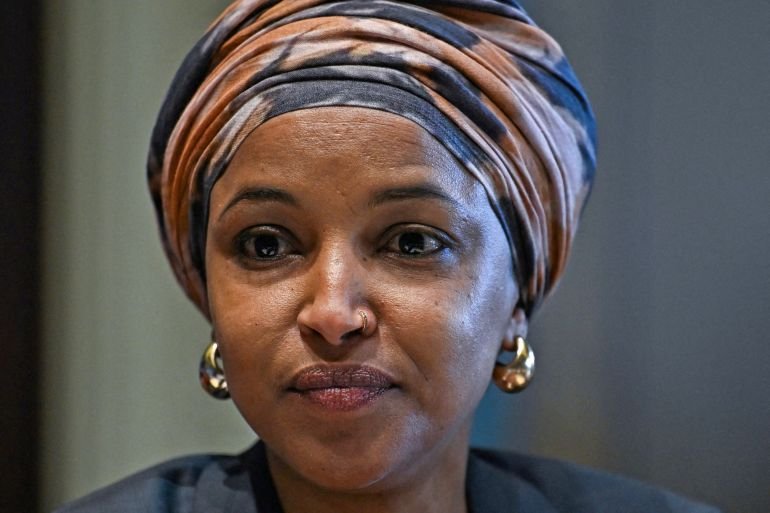
US Congresswoman Ilhan Omar says she will move out of her home in Washington, DC, citing safety concerns following a recent raid of the property by US federal agents.
In an interview with MS NOW on Wednesday, Omar spoke for the first time about the raid, noting that the incident has made her feel unsafe there.
Recommended Stories
list of 3 itemsend of list
Last week, officers searched Omar’s home with what a Justice Department spokesperson described as a “judicially authorised search warrant”, adding that the raid was part of an “ongoing federal criminal investigation”.
According to NBC News, which cited one person familiar with the matter, potential future charges against Omar may include conspiracy and making false statements in her immigration paperwork. Omar denies wrongdoing and accuses the administration of political intimidation.
Omar, who was born in Somalia and is a naturalised US citizen, said she is “confident in the fact that I didn’t do anything wrong”.
The progressive Minnesota Democrat has been a frequent critic and target of US President Donald Trump, who has on multiple occasions pushed for the prosecution of his perceived political enemies.
Earlier this week, Trump called the congresswoman “sick” and “dishonest” and slammed her birthplace as a “real s—house”.
For years, Omar, who is Muslim, has been the target of right-wing conspiracy theories about her immigration status, including allegations that she had married her brother.
The Minnesota congresswoman has repeatedly denied the allegations as “disgusting lies”.
Five-hour search
In the interview with MS NOW, Omar said she was rattled by the search weeks out from the November 3 midterm elections, which will decide control of the House and Senate. She is running for re-election in a deep blue district in Minneapolis and is expected to retain her seat.
Omar recalled waking up at about 6am to Homeland Security investigators banging on her door with a warrant. They searched for four or five hours and seized 17 items, including phones, notebooks, a Somali-language children’s book and a vintage camera that her husband had received as a gift, she said.
Omar came with her family to the US at age 12, after they obtained asylum. She became a US citizen five years later, in 2000.
“It would be a huge undertaking to, I suppose, indict a 12-year-old for so cleverly conspiring to defraud immigration services to come to the United States. I’m sure there are a lot of smart 12-year-olds, but that seems like a leap,” she said in the interview.
The search drew sharp condemnation from congressional Democrats, who also questioned the timing. The Justice Department has historically avoided overt investigative actions involving candidates in the immediate run-up to an election.
Omar said the agents were “intrusive but polite”, logging the items they took and putting back everything else in its place.
Homeland Security targets nine states in a push to identify voting fraud, a move critics denounce as tantamount to voter intimidation.
Published On 22 Oct 202622 Oct 2026
A United States federal judge has ordered the Department of Homeland Security (DHS) to halt operations aimed at finding non-citizen voters in nine states ahead of the midterm elections.
The ruling by US District Court Judge Araceli Martinez-Olguin said the investigations likely violate a provision of the Voting Rights Act that prohibits voter intimidation. She further said the DHS may have relied on flawed data in its investigations.
Recommended Stories
list of 3 itemsend of list
That leads to “an objectively reasonable fear of law enforcement entanglements that intimidates citizens from urging or aiding others in exercising their right to vote”, she wrote.
The order applies to federal efforts targeting California, Connecticut, Georgia, Missouri, Nevada, New York, Pennsylvania, Washington and Wisconsin.
The DHS has publicised what it has described as a push to identify individuals who have committed voter fraud, with some local offices posting photos of agents knocking on the doors of suspects.
The operations come as the administration of US President Donald Trump has sought to highlight instances of voter fraud ahead of the November 3 midterm vote.
While there are recorded instances of fraud in every election cycle, such isolated cases remain exceedingly rare.
There has been no evidence to indicate that non-citizen voters have influenced the outcome of any election at any level in the country.
In a statement following Thursday’s ruling, the DHS maintained that its investigations were aimed at “removing aliens who vote and dilute the votes of US citizens”.
“We have no plans to question or investigate people we believe to be US citizens,” it said.
In their lawsuit challenging the DHS’s efforts, the California Nurses Association and National Nurses United, along with the Voto Latino Foundation, San Francisco and Santa Clara County, said that some US citizens felt they were wrongly identified and questioned as part of the investigations.
A lawyer representing the groups said it was “clear from the start that DHS built its lists on bad data, never checked how often it was wrong, and recklessly sent agents to people’s homes weeks before an election”.
Benjamin Farley, the supervisory counsel for democracy defense at the National Immigration Law Center, said the ruling sent a strong message about voter intimidation ahead of the midterm vote.
“Yesterday’s decision is a clear rebuke of the government’s efforts to scare voters away from the polls this November and a reminder that all US citizens – regardless of color, place of birth, or the nationality of their family members – have the right to participate in American elections free of intimidation,” he said.
“No armed federal agent is going to stop us from casting our vote.”
The prize comes less than two weeks after US President Donald Trump announced sanctions against the court.
Published On 22 Oct 202622 Oct 2026
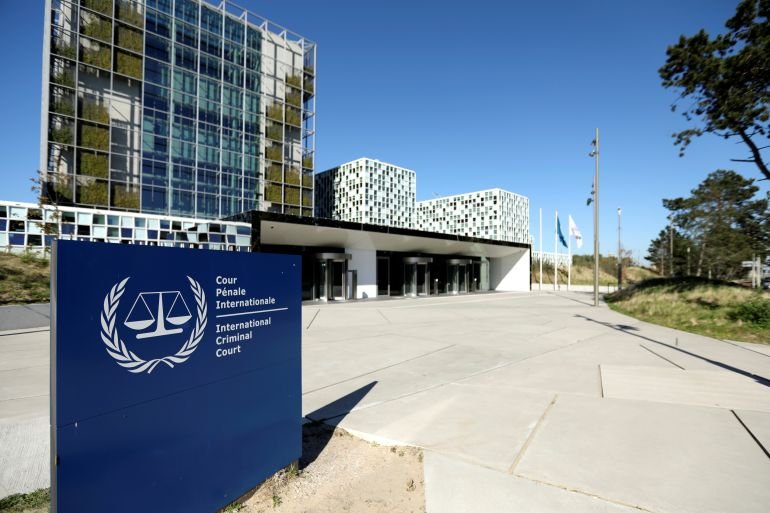
The European Union has awarded the International Criminal Court (ICC) its top human rights award, two weeks after US President Donald Trump vowed to dismantle the court through new sanctions.
Thursday’s Sakharov Prize is the second international recognition for the war crimes tribunal this month, with former ICC Judge Navi Pillay awarded the Nobel Peace Prize for her work to promote peace and international law.
Recommended Stories
list of 4 itemsend of list
“The European Union is built on respect for multilateralism and international institutions, and this prize recognises the important work of the court in upholding international law and justice,” said European Parliament President Roberta Metsola in announcing the award.
The ICC thanked the European Parliament for the honour “at a time when the Court and its officials face unprecedented challenges”.
“Against this backdrop, the Sakharov Prize carries particular significance, reaffirming the importance of independent judicial institutions and of those who work to uphold international law,” ICC President Tomoko Akane said.
The Hague-based ICC has long been a target of Trump, whose campaign against it has escalated since the court announced in 2024 arrest warrants against Israeli Prime Minister Benjamin Netanyahu and his former Defence Minister Yoav Gallant.
‘Brick by brick’
The Trump administration has promised to dismantle the court “brick by brick”, recently announcing sanctions aimed at crippling its day-to-day operations. The ICC tries individuals for war crimes, crimes against humanity and genocide.
“We will ban transactions with this rogue court, cutting off their resources and crippling their ability to operate against us because our message is clear: the United States and the American people are not subject to the jurisdiction of this fake ICC,” US Secretary of State Marco Rubio said in a video posted on social media when the sanctions were announced.
Washington has also sanctioned ICC judges and prosecutors, as well as a UN special rapporteur focusing on the occupied Palestinian territories and Palestinian rights groups that have provided evidence to the court.
EU backs ICC
The EU has already thrown its support behind the ICC in the face of the US sanctions, which are due to come into force in six months, and has said it is “ready to take any necessary measures” to make sure the court can continue functioning.
“The International Criminal Court must be free to pursue its mission, independently, and without pressure or intimidation,” EU chief Ursula von der Leyen posted online after the prize was announced.
Brussels is hoping to use the delay before the sanctions are applied to try to talk the US down, but according to EU officials is also eyeing implementing a “blocking statute” to shield the ICC from Washington.
Decades after it was officially declared eliminated in the United States, measles has made a resurgence, with the US Centers for Disease Control and Prevention (CDC) announcing the third death of the year from the virus.
Matt Ferrari, director of Pennsylvania State University’s Center for Infectious Disease Dynamics, said the US was so successful at wiping out measles that it had “the luxury to forget” it was a serious problem.
Recommended Stories
list of 3 itemsend of list
“It’s been a long time, and for many of us in the United States, and in fact, throughout the Western Hemisphere, we have been able to forget how nasty measles is,” Ferrari told Al Jazeera.
Pennsylvania has been hit especially hard in the most recent outbreak. In September, the state sought emergency support from the CDC to control the spread, even as state and federal health officials quarrelled over the measles-associated death tally — differing over how deaths should be classified. State officials have recorded more than 1,200 cases and over 240 hospitalisations in 42 counties so far this year.
This spike in cases has raised concerns in neighbouring US states. On October 5, New York Governor Kathy Hochul declared a state disaster emergency in response to rising cases in rural areas, expanding the number of health professionals authorised to vaccinate and test people for measles.
“No one should get seriously ill or die from a vaccine-preventable disease,” Hochul said.
But experts warn that the risks extend far beyond US state borders. The US resurgence comes as measles cases increase globally, particularly in communities that are vaccine-sceptical or where there are gaps in healthcare access.
Vaccination coverage among US kindergartners has decreased from 95.2 percent during the 2019-2020 school year to 92.4 percent in the 2025-2026 school year. Experts warn that declining vaccination rates in one geographic location can leave people thousands of miles away vulnerable, making measles prevention a shared global responsibility.
Building trust in vaccine-sceptical communities
Pennsylvania reported in August that two unvaccinated people died of measles in Lancaster County, which is located in the South Central part of the state. Lancaster is considered the centre of Pennsylvania Dutch Country and home to the nation’s oldest Amish and Mennonite communities, both of which have under-vaccinated populations.
In Pennsylvania, public health officials have worked with community leaders to share information and expand access to vaccination. Joshua Good, principal of Ephrata Mennonite School in Lancaster County, where two students contracted measles earlier this year, worked with state officials to organise a pop-up vaccination clinic at the school.
He said officials also provided communication materials that the school adapted for its community and helped identify at-risk families.
A flyer is displayed at a Pennsylvania Department of Health measles vaccination clinic located in Lancaster County in Peach Bottom, Pennsylvania, the US, October 20, 2026 [Matt Rourke/AP]
While Good said the response was productive, he told state officials that the Mennonite community still holds a lot of vaccine scepticism.
“I said, look, if we do this, keep in mind, our community by and large…made that decision not because they don’t have access to the vaccines. They made the decision based on their own best judgement,” he told Al Jazeera.
Good, who is vaccinated and vaccinated his children, sees himself as an advocate within the community. If families have questions about measles shots, he will answer them as best he can.
“I have honest conversations with people, try to engage in respectful, charitable ways,” he said. “I’ll try to understand what their hesitancies are. That said, I respect their concerns.”
Although multiple community members received the measles vaccine at the Ephrata clinic, vaccination rates remain below the threshold for herd immunity.
An Amish buggy travels through farm country on March 8, 2026, in Lancaster County, Pennsylvania, the US [Robert F Bukaty/AP]
Public health officials advocate for investing in robust community outreach before outbreaks happen.
“You can’t just show up in a community in an emergency– an emergency in which they might feel like you’re there to kind of blame them or shame them,” Jennifer Nuzzo, director of the Pandemic Center at the Brown University School of Public Health, told Al Jazeera. “You need to know them so that they see public health as a resource rather than law enforcement.”
She said low vaccination coverage and distrust of the government allow measles to spread even when vaccines are available. But that shouldn’t stop governments from building rapport with vaccine-sceptical communities.
“I worry that by framing it around their demographics, it lets governments off the hook in terms of what they’re supposed to be doing, which is stopping the spread of this dangerous disease,” Nuzzo said.
Experts explain that declining vaccination rates put not only these communities but also immunocompromised people at greater risk for disease. Herd immunity in the wider population formerly helped shield those most vulnerable to infection.
“Those are communities that have been at risk for years,” Ferrari said. “But higher rates of vaccination in the communities surrounding them offered a barrier.”
Vendors sell produce at the Lancaster Central Market, March 7, 2026, in Lancaster County, Pennsylvania, the US [Robert F Bukaty/AP]
A shared global risk
The continental Americas was the first World Health Organization (WHO) region to eliminate endemic measles transmission in 2016. Maintaining that status requires high and consistent vaccination coverage. The Pan American Health Organization (PAHO) says coverage across the region remains below the target for both doses of the measles vaccine, contributing to noticeable consequences.
PAHO holds an annual RVC Measles Elimination Status Conference where an independent technical body of international experts monitors and reviews whether countries in the Americas have successfully eliminated measles, rubella, and congenital rubella syndrome. A country can lose its “elimination status” when the same measles virus genotype has circulated continuously for at least 12 months.
Last year, Canada became the first country in the continental Americas to lose its status after an outbreak that began in 2024. Some have warned that the US may be on track to lose its status this year.
But Dr Daniel Salas, executive manager of the Special Program for Comprehensive Immunisation at PAHO, told Al Jazeera that it’s not just the US that will be under review.
“We have Mexico, we have Bolivia that is going to be closely assessed because they could potentially lose status as well,” he said.
US Health and Human Services Secretary Robert F Kennedy Jr has repeatedly defended the US response to measles.
“We’re doing a better job than any country in the world at controlling the measles outbreak,” Kennedy said at an August 26 event in Florida. He cited higher case numbers in Mexico, Canada and Britain.
But Nuzzo said the repeated outbreaks across the US point to a country struggling to contain transmission.
“We have not seen it this bad,” she said. “It’s like this perpetual game of Whac-A-Mole. As long as there are vulnerable communities, as long as we don’t have strategies for early detection and rapid response and containment, measles will just keep on happening over and over and over again.”
Dr Salas told Al Jazeera that action within the first three days after a suspected case is critical, and health authorities should begin investigating and taking response measures without waiting for laboratory confirmation. Delays of a week or more can allow the highly contagious virus, marked by fever, coughing, and a whole-body rash, to spread further.
Experts warn that outbreaks cannot be treated as isolated local events. Scientific journals have found evidence that the virus strain in Canada’s latest measles outbreak was genetically linked to cases reported in US Mennonite communities. This was the same outbreak that resulted in Canada losing its measles elimination status.
“The spread of measles in the United States imperils other countries,” said Nuzzo. “It’s easy to kind of point to other countries and say that they’re the problem, but the reality is we’re all dependent on each other, and it’s very hard to protect ourselves when measles is spreading elsewhere.”
Judge says Trump must sit for questioning from a BBC lawyer by December 11 or face possible dismissal of lawsuit.
Published On 22 Oct 202622 Oct 2026
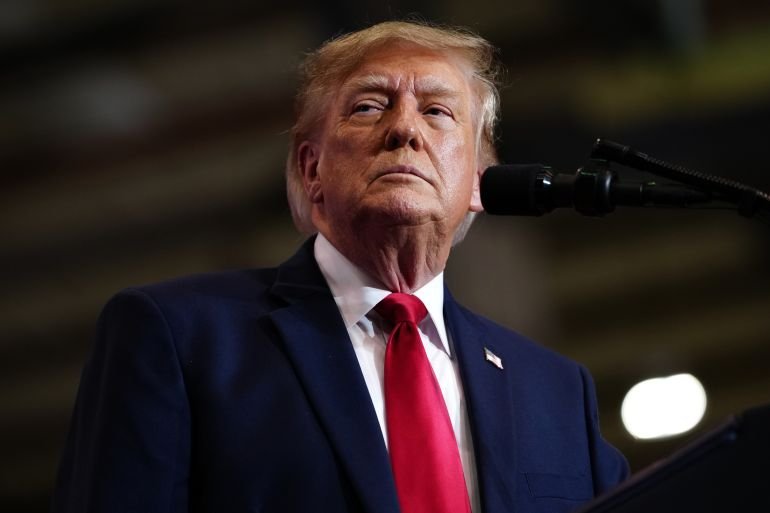
A federal judge in the United States has ordered President Donald Trump to sit for a deposition as part of his $10bn defamation lawsuit against the British broadcaster BBC.
On Thursday, US Magistrate Judge Enjolique Lett ruled that Trump would be required to answer questions under oath in a session with the BBC‘s lawyers.
Recommended Stories
list of 3 itemsend of list
The deposition is scheduled to take place no later than December 11, or Trump could face sanctions, including the possible dismissal of the lawsuit.
Trump had previously been scheduled to sit for deposition on October 16 but had cancelled due to a “matter of national importance”.
Charles Tobin, a lawyer for the BBC, said that the president was in fact campaigning in the state of Georgia on that day.
“He was participating in party politics and prioritised that over sitting for the deposition,” Tobin said.
The BBC lawsuit is one of several he has launched against news outlets over coverage he dislikes or casts as unfair.
Trump is currently enmeshed in another $10bn defamation lawsuit against The Wall Street Journal that he refiled in May after it was previously dismissed. Another defamation case seeks $15bn in damages from The New York Times and Penguin Random House, a book publisher.
That streak of litigation has alarmed press freedom advocates who say that the president frequently uses government pressure and legal threats to shape coverage in his favour.
His case against the BBC centres on a documentary it aired, titled Trump: A Second Chance.
The documentary features clips of a speech Trump made on January 6, 2021, the day that Trump supporters later attacked the US Capitol.
Trump has said that a clip from his speech was misleadingly edited to suggest he encouraged attendees to storm the Capitol, the seat of the US Congress. Legislators inside had been in the process of certifying Trump’s 2020 election defeat at the time of the riot.
The British broadcaster has acknowledged that filmmakers spliced together different segments of Trump’s remarks on January 6.
The head of the BBC and its top news executive both resigned, and the outlet issued an apology. But the network has denied Trump’s defamation claims.
Trump has maintained that he never told his supporters to commit violence in a bid to prevent the peaceful transition of power.
Trump, however, has long pushed the false claim that his loss in the 2020 race was due to election-rigging.
On January 6, 2021, Trump had gathered his supporters on the Ellipse outside the White House to reiterate his unsubstantiated assertions.
During his speech, he encouraged them to “fight like hell” and refused to concede to what he falsely portrayed as an election stolen through “fraud”.
Trump and his allies oversaw a multifaceted effort to stay in power despite his loss, one that included the alleged recruitment of “false electors” to cast fraudulent Electoral College votes on his behalf.
He later faced federal charges of attempting to overturn the 2020 election, which were dropped upon his re-election in 2024.
Separately, a state-level case in Georgia accused Trump of engaging in a criminal conspiracy to subvert the 2020 election. The case was dismissed in November 2025 after a replacement prosecutor took over following the disqualification of Fani Willis, who brought the charges against Trump.
A congressional probe into the events around January 6 concluded that the president had been reluctant to call on his supporters to stand down after they stormed the Capitol.