Democrat Anna Gomez warns broadcasters against yielding to Trump-era FCC’s claims of fake polls and news distortions.
Published On 23 Oct 202623 Oct 2026
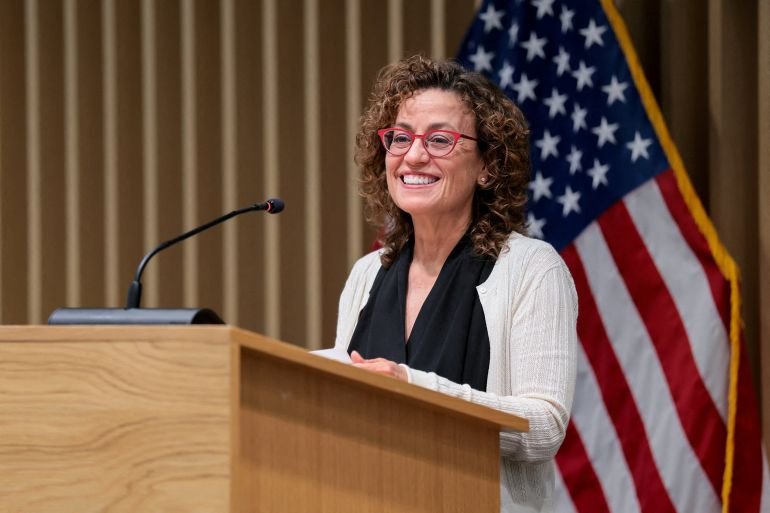
Anna Gomez, the sole Democratic member of the United States Federal Communications Commission (FCC), called on the National Association of Broadcasters (NAB) to ramp up its response to pressure from the administration of US President Donald Trump on major news networks and broadcast television stations in advance of the midterm elections on November 3.
“I would not be doing my job if I did not say plainly that the volume of that response has not yet matched the scale of what your members are facing,” Gomez said in a four-page letter to the industry group’s CEO and President Curtis LeGeyt on Thursday.
Recommended Stories
list of 4 itemsend of list
Gomez pointed to a recent assertion by Trump-appointed Brenden Carr, who claimed that administration channels could violate their regulatory obligations by airing “entirely fake polls” before the consequential midterm elections, which may determine which political party controls both houses of the US Congress.
“Many journalists and broadcasters have been amplifying or airing these Polls without regard to basic journalistic ethics and without informing the public that those Polls lack a scientific, accurate, or even real basis,” Carr said in a post on the social media platform X.
Al Jazeera reached out to the FCC for clarity on which journalists and broadcasters allegedly aired fake polls and which polls he was referring to, but the agency did not address Al Jazeera’s inquiry.
Seth Stern, the chief of advocacy at the Freedom of the Press Foundation, criticised Carr’s comments.
“Brendan Carr is not the journalism police. And he is just about the least qualified person in the country to lecture the press about journalistic ethics. The tell is that literally every time he attacks the press, it’s because of reporting that was unfavorable to his boss,” Stern said in a statement.
Carr said in his social media post that “Broadcasters are advised to avoid engaging in News Distortions or running Broadcast Hoaxes”.
“This Administration is running a coordinated, government-wide effort to reshape the media into its sanctioned messenger, and the Federal Communications Commission has become one of its most active instruments. That is playing out across several fronts. One of the most brazen efforts involves how this Commission has recently suggested that broadcasters who air polling that does not align with this Administration’s preferred narrative could face an FCC news distortion or broadcast hoax investigation,” Gomez said in her letter.
Gomez added that there is a high barrier for proof of news distortion for it to be actionable, saying that it only applies when a broadcaster “knowingly airs false information about a crime or catastrophe and that broadcast directly causes immediate and substantial harm to public safety or property”.
Gomez added that the agency does not have the authority to act unless there is clear evidence.
“Reporting the results of a poll this Administration happens to dislike does not come close to meeting those standards,” Gomez said.
The Justice Department lawsuit raises concerns the administration may be looking to meddle in some of this midterm cycle’s races.
Published On 23 Oct 202623 Oct 2026
With just more than a week until the pivotal US midterm elections, the US Department of Justice has filed a lawsuit to block certification of the results in Alaska’s hotly contested Senate race.
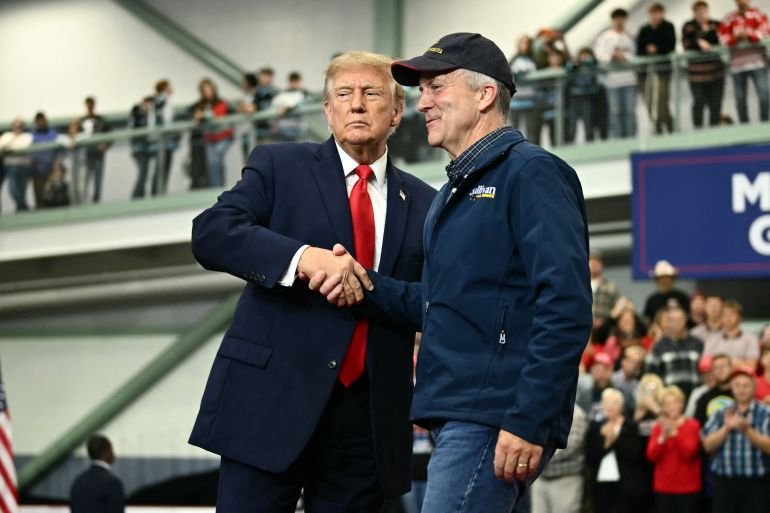
In a lawsuit filed on Thursday, the Justice Department argued that an independent candidate with the same name as the state’s incumbent Republican Senator Dan Sullivan, who is currently running for re-election, is purposefully running to mislead voters.
Recommended Stories
list of 3 itemsend of list
“Given the substantial likelihood that the inclusion of Daniel J Sullivan will confuse or mislead voters looking to cast a vote for Senator Sullivan, and thus distort the will of Alaskan voters, there is a substantial likelihood that a certification of the election will reflect an electoral process that lacked integrity,” the Trump administration’s filing read.
The Justice Department is asking a federal judge to delay certification to allow time for an investigation into “whether votes cast for Daniel J Sullivan were meant to be cast for Senator Sullivan”.
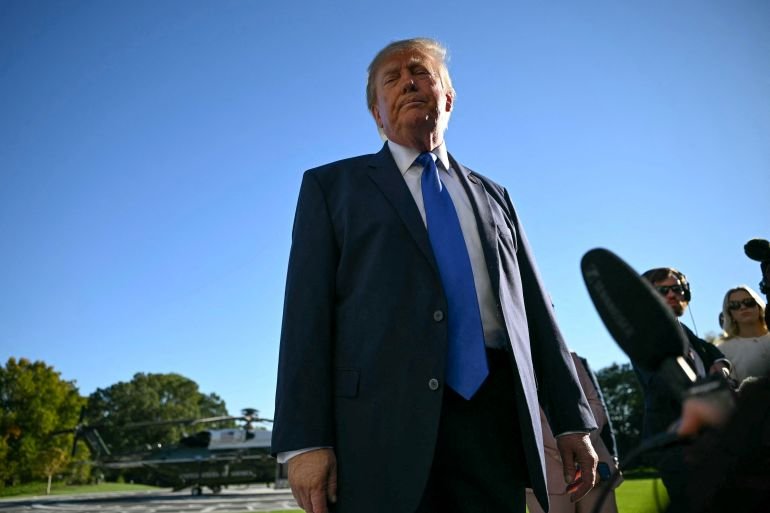
During a visit to Florida on Friday, Trump took credit for the lawsuit after reporters asked about it.
“I’m the one that said ‘do it,’” he told reporters in Fort Myers, Florida.
A Justice Department spokesperson did not respond to Al Jazeera’s request for comment.
The lawsuit raises concerns among Democrats and voting rights groups that the Trump administration may be looking to meddle in some of the upcoming midterm races as Republicans across the United States struggle to push back a growing wave of Democratic support.
The Justice Department, as of late, has taken several actions against Democratic critics of President Donald Trump that have bolstered those worries, including charging a high-ranking Virginia lawmaker, state Senator L Louise Lucas, in a public corruption case and launching a probe into Democratic Representative Ilhan Omar over allegations of immigration fraud. Both have said the actions are politically motivated.
Trump critics have long expressed worries that the Justice Department could seek to block certification of elections the US president’s party loses.
On Wednesday, as Lucas’s indictment was announced, US Attorney General Todd Blanche told reporters his agency would not do so unless extreme circumstances warranted such action.
“It is not DOJ’s intention to – and it’s never our intention to – improperly interfere with elections or the state certification process,” Blanche said.
The Brennan Center for Justice’s senior counsel, Lauren Miller Karalunas, said in a statement that election certification is handled by US states and the federal government has “no role” in it.
“Rest assured, state certification processes were created to meet this moment,” Karalunas said. “Centuries ago, state legislatures recognized that bad actors could use the process to manipulate election outcomes. They built in safeguards specifically designed to stop that from happening.”
The Alaska state Supreme Court in June rejected a previous Republican effort to remove Daniel J Sullivan from the ballot. He will appear without a party designation by his name, while Senator Sullivan will be listed as the Republican candidate.
However, under Alaska’s ranked-choice voting system, voters can select both Sullivans if they are unsure.
Which party controls the US Senate after November 3 could, ultimately, come down to Alaska’s Senate race, where Senator Sullivan is engaged in a challenging re-election fight against former US Democratic Congresswoman Mary Peltola.
Polling of the race has consistently shown a race that is well within the margin of error. A survey conducted by Public Policy Polling earlier this month suggested Peltola had a narrow one-point lead.
The campaign teams for both Sullivans and Peltola did not immediately return requests for comment.
Independent voters’ economic anxieties highlight political implications of plummeting US consumer sentiment.
Published On 23 Oct 202623 Oct 2026
Consumer sentiment in the United States hit a near-record low in the final reading before the consequential midterm elections as cost-of-living issues weigh on US consumers.
The University of Michigan’s Surveys of Consumers said its Consumer Sentiment Index dropped on Friday as continuing tensions between the US and Iran drove up prices at the grocery store and the petrol pump.
Recommended Stories
list of 4 itemsend of list
The reading dropped to 48.0 this month from a final reading of 48.1 in September, leading to the second-lowest reading on record. The lowest was only a few months ago in May, when it stood at 44.8 points.
The report measures how consumers feel about their personal finances at present and how they expect it will change over the next 12 months; whether they feel it is a good time to make major household purchases; and their expectations for the US economy over the next 12 months, as well as five years.
“Purchasing power continues to dominate consumer views of the economy,” said Joanne Hsu, the director of the Surveys of Consumers. “Sentiment is now 10 percent below a year ago and 15 percent less than February, just prior to the Iran conflict.”
Political pressure
Crucially, weaker sentiment was fuelled by self-identified political independents. The group’s sentiment dropped to 42.4 points, slightly above the all-time low of 40.6 points, which it reached in May.
Since January, the number of independents pointing to inflation pressures hurting their financial situation rose by 27 percent. Republicans referencing the same issue rose by 52 percent, and the figure rose by 15 percent among Democrats.
Households with no or limited exposure to the stock market — which until recently had been soaring on enthusiasm for the artificial intelligence investment boom — have also cited high prices as a drag on their finances more frequently than at the start of the year.
Consumers’ expectations for inflation over the next five years rose to 3.5 percent from 3.4 percent in September and 3.2 percent in March.
“Consumers broadly expect inflation to accelerate, and this year’s increases in inflation expectations are not limited to one part of the political spectrum,” Hsu wrote. “The fact that aggregate consumer spending has been relatively resilient despite negative views of the economy provides another reason for caution. If part of consumption currently reflects precautionary spending to avoid future price hikes, disinflation may be even more difficult to achieve.”
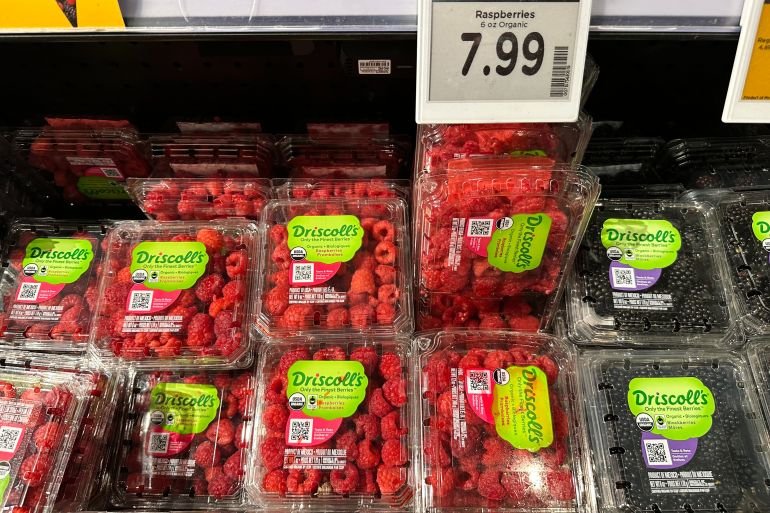
The sentiment comes amid heightened prices for consumers. Inflation rose by 3.7 percent year on year last week, according to the recent consumer price index report, and petrol prices remain high, although lower than a month ago.
The average price for a gallon of petrol is $4.29 ($1.13 per litre) on Friday, down from $4.47 ($1.18 per litre) this time last month, according to the American Automobile Association (AAA), which tracks daily petrol prices.
Friday’s report comes in advance of the final monetary policy decision before the midterm elections. On Wednesday, the Federal Reserve is largely expected to maintain rates at 3.75–4.00 percent after raising rates by 25 basis points in September. CME FedWatch, which tracks the likelihood of certain monetary policy decisions, forecasts an 89.5 percent chance that rates will remain unchanged.
Moscow and Kyiv have confirmed that trilateral talks between Russia, Ukraine and the United States have been scheduled for November.
The planned negotiations, aimed at ending Russia’s war on its neighbour, will be held in the United Arab Emirates, the Kremlin’s spokesperson said on Friday.
Recommended Stories
list of 3 itemsend of list
US-brokered talks were held earlier this year, but made little progress. The meetings then lapsed as the Trump administration was focused on its war on Iran.
However, Russia signalled its willingness to reengage after US special envoy Steve Witkoff travelled to meet with President Vladimir Putin in St Petersburg this week.
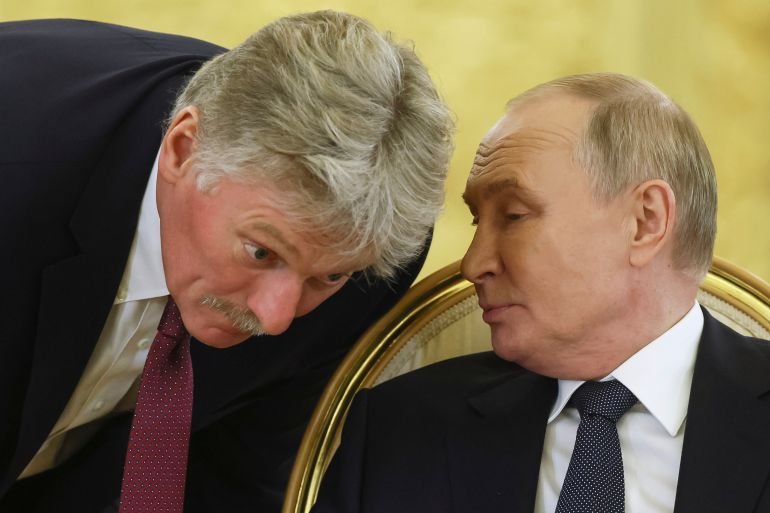
The next round of talks is now “planned for the first half of November in Abu Dhabi” and “will take place in a trilateral format,” Kremlin spokesperson Dmitry Peskov told reporters.
Ukrainian President Volodymyr Zelenskyy told the Hudson Institute think tank on Friday that he spoke with Witkoff after the envoy’s meeting with Putin, and that technical negotiations will take place “in the first half of November, and as early as possible”.
But much would depend on Russia, he warned, noting that a similar meeting expected earlier this month never materialised.
Hopes of making significant progress are slim. Previous talks have struggled to produce results, with Russia maintaining a list of hardline demands, including that Ukraine hands over large parts of its territory and agrees not to join NATO.
In a televised interview aired late on Thursday, Putin said that any trilateral talks should focus on the long-term security arrangements for a final peace deal, not a “short” truce.
Zelenskyy, for his part, said that any peace agreement would need strong security guarantees for Ukraine and funding for 10 years to maintain the Ukrainian army. He also called for Europe to be involved in the talks.
Shifting ties
Confirmation of the November talks comes amid growing strain on relations between Kyiv and members of the US government, and signs of improving ties between US President Donald Trump and Putin.
Trump, whose war on Iran has provoked rising energy prices that have dented his political support in the run-up to midterm elections, has criticised Ukraine’s targeting of Russian energy infrastructure and given Russia several key concessions in his administration’s latest diplomacy push.
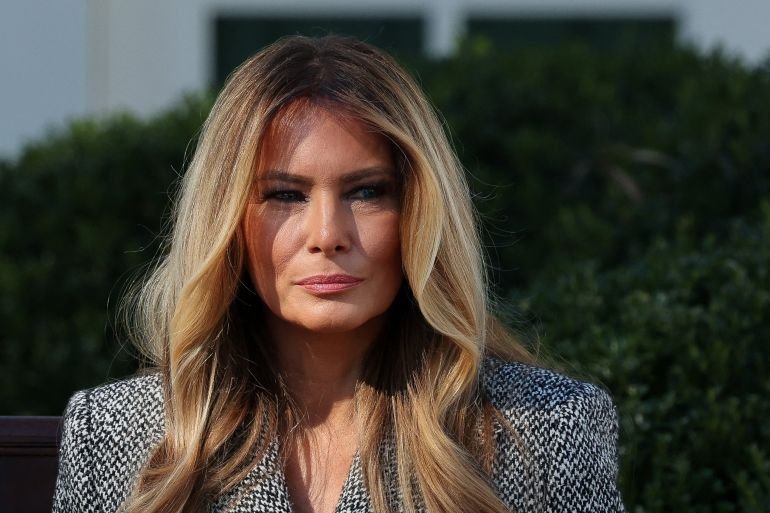
The White House said on Friday that First Lady Melania Trump brokered a “localised ceasefire” between Moscow and Kyiv in the southern Ukrainian city of Oleshky, which has been occupied by Russia since February 2022.
Meanwhile, Trump has eased sanctions on Moscow and made a deal to buy 300,000 tonnes of Russian diesel. Moscow announced on Friday that the first shipment was on its way to New York.
European leaders have said that the deal made peace between Ukraine and Russia harder to achieve by giving Russia “hope”.
Ukraine is also waiting for shipments of air defence interceptors that had been previously promised, Zelenskyy said, making Ukrainian defensive efforts against near-daily Russian drone and missile attacks more difficult.
Such attacks have killed more than 19,000 Ukrainian civilians – including 762 children – since Russia launched its full-scale war more than four years ago, Ukraine’s acting prosecutor general, Anton Kovalsky, said Friday.
So far this year, prosecutors have confirmed the deaths of 2,960 civilians, including 668 children, Kovalskyi added.
Separately on Friday, Russia’s Ministry of Defence announced that Moscow and Kyiv had each exchanged 270 prisoners of war.
The ministry was quoted by state media as saying that the freed Russian servicemen were in Belarus and would be transported to Russia once they had received psychological and medical assistance.
Prisoner swaps are rare ground on which Russia and Ukraine have maintained contact throughout the conflict, with thousands exchanged since the full-scale invasion of Ukraine in February 2022.
United States President Donald Trump must answer questions under oath in the discovery stage of his $10bn lawsuit against the BBC, a federal judge has ruled, warning that failure to cooperate could lead to the dismissal of his case.
The dispute centres on a BBC documentary which combined separate excerpts from a speech he gave before the January 6, 2021 attack on the US Capitol.
Recommended Stories
list of 4 itemsend of list
The broadcaster has apologised for the edit but denies that Trump has grounds for a defamation claim. Here is what the ruling means and how the case reached this point.
What has the judge ordered?
Trump has been ordered to make himself available for questioning by the BBC’s lawyers by December 11, unless the judge overseeing the case extends the time frame for gathering evidence. That process is currently scheduled to end on December 18.
The ruling comes after the president’s legal team sought to postpone questioning until January. Judge Enjolique Lett also rejected his lawyers’ attempt to prevent the session from being filmed. Access to the recording will initially be restricted to lawyers involved in the case.
Separately, she gave Trump’s side 30 days to hand over relevant documents requested by the BBC.
What is a deposition?
A deposition is a formal interview under oath, usually conducted outside the courtroom before a trial. Lawyers question a witness and the answers are recorded in a transcript. The testimony can later be used in court, including to challenge a witness whose account changes.
It forms part of “discovery” – the stage of a US civil lawsuit in which both sides are given time to obtain relevant evidence through examining documents, submitting written questions and taking witness testimony. The process allows each side to examine the other’s claims and prepare its case.
Trump’s deposition is expected to last up to seven hours.
Why is Trump suing the BBC?
Trump filed his lawsuit against the British broadcaster in federal court in Florida on December 15, 2025, over a Panorama documentary which was broadcast shortly before the 2024 US presidential election.
His complaint seeks at least $5bn for alleged defamation and another $5bn for alleged violations of Florida’s Deceptive and Unfair Trade Practices Act. He alleges that the programme damaged his reputation and business interests by falsely portraying him as directly encouraging violence at the Capitol.
The BBC, which has apologised for the way the programme was edited, however, disputes those allegations and has sought to have the case dismissed. It also challenges the Florida court’s jurisdiction, arguing that the documentary was produced in London and was never broadcast in the US.
Trump’s lawyers contend that viewers in Florida could have accessed the programme through BritBox or by using a virtual private network (VPN), which can disguise a user’s location. The BBC says the documentary was not available on BritBox International or its international website.
How was Trump’s speech edited?
The documentary combined remarks from separate sections of Trump’s January 6 speech into what appeared to be a continuous statement: “We’re going to walk down to the Capitol and I’ll be there with you… And we fight. We fight like hell and if you don’t fight like hell, you’re not going to have a country anymore.”
Two quotes that make up the excerpt used by the BBC were delivered roughly 54 minutes apart. The programme also left out his appeal for supporters to “peacefully and patriotically make your voices heard”, Trump’s lawyers say.
The BBC acknowledged that the edit created the mistaken impression that Trump had made a direct call for violent action. It apologised, while rejecting his demand for compensation and denying a legal basis for the defamation claim.
The controversy was followed by the resignations of BBC director-general Tim Davie and its news chief, Deborah Turness.
Trump has also suggested, without evidence, that artificial intelligence was used to put words into his speech.
Why has the deposition been delayed?
Trump had agreed to be questioned on October 16, but his lawyers cancelled that date, citing a matter of national importance.
Trump’s lawyers subsequently proposed dates between January 11 and 22 of next year.
At Thursday’s hearing, BBC lawyer Charles Tobin said Trump had instead been campaigning in Georgia and asked the court to compel Trump to attend the deposition sooner, arguing that waiting until January would push the questioning beyond the existing deadline for gathering evidence.
Lett upheld the BBC’s complaint that Trump’s team had been too slow to hand over internal documents. Charles Tobin, on behalf of the BBC, told the Miami court: “We still have a completely lopsided [situation] here on discovery. They have produced absolutely nothing of any substance”.
What happens if Trump does not comply?
Lett warned that failure to cooperate could lead to sanctions, including dismissal of the lawsuit altogether. That would mean Trump’s own attempt to recover damages could end because he would have failed to fulfil his obligations as the person bringing the case.
Under federal civil procedure rules, discovery sanctions can also include ordering a party to pay legal expenses caused by noncompliance, preventing it from introducing certain evidence or striking out parts of its case. These are possible penalties, rather than sanctions already imposed on Trump.
White House says ‘localised’ ceasefire to take effect, as Russia and Ukraine say timing being determined.
The White House has said United States First Lady Melania Trump has “secured a ceasefire” between Russia and Ukraine in the southern Ukrainian city of Oleshky, which has been occupied by Russia since February 2022.
Following the announcement on Friday, a senior Ukrainian official said the ceasefire in Oleshky would begin on October 27. A Kremlin spokesman said the military was working on coordinating the timing.
Recommended Stories
list of 3 itemsend of list
The upate comes as the administration of US President Donald Trump has renewed diplomacy aimed at ending the war. The approach has included upping pressure on Ukraine and handing several recent concessions to Russia.
“The situation in Oleshky is dire. Oleshky is a front line war city on the brink of disaster,” Melania Trump said in a statement released by the White House.
“The people of Oleshky have limited electricity, live amid mined roads, and endure regular military attacks. It was abundantly clear that without my intervention, the possibility to bring humanitarian aid into the city and to evacuate the elderly would be impossible,” she said.
The first lady added that her representatives worked directly with “Russian and Ukrainian leadership to define the terms of the localised ceasefire” and that civilian leaders from both countries will work together to grant humanitarian access to civilians in the city.
Oleshky, which had a population of 24,000 people before the war, sits along the southeastern front of the conflict. It was captured by Russia during the first day of the full-scale invasion in February 2022 and experienced heavy shelling.
While most residents have fled, those who remain have faced dire food and medical shortages. Both sides have accused the other of staunching the flow of supplies.
In her statement, Melania Trump said the truce will allow the estimated 2,000 remaining residents who wish to be evacuated to be transported to their “preferred destination” in Russia or Ukraine.
The first lady added that “an impartial American media organisation” will accompany Russian and Ukrainian teams on the ground. She did not identify the organisation.
“This will play a significant role in ensuring that the wishes of each family are faithfully respected,” she said.
Melania Trump had previously worked to reunify children seized by Russia during the war.
Ukraine confirms talks
The announcement comes after the Kremlin said it had agreed to resume US-mediated talks with Ukraine next month, although both sides remain far apart on terms of a possible deal.
On Friday, Ukrainian President Volodymyr Zelenskyy confirmed the country’s negotiators would take part in the talks in Abu Dhabi in the first half of November.
Zelenskyy said he spoke with US envoys Jared Kushner and Steve Witkoff, adding that any peace agreement would need strong security guarantees and funding for 10 years to maintain its army.
The Trump administration said its recent concessions to Moscow, which include purchasing diesel from Russia and waiving some sanctions, are aimed at reducing high fuel costs spurred by the US-Israel war on Iran.
Meanwhile, Ukraine has complained of disruptions to its Starshield military satellite system, which it relies on for much of its air defence.
Starshield is a military-grade version of the Starlink system operated by Elon Musk’s SpaceX.
Ukrainian officials on Friday said they were still experiencing speed restrictions on Starlink communications system, despite Trump saying a day earlier that services had been fully restored.
Trump said he would speak to Musk if the problem persisted.
“If there is a problem, I’ll get it straightened out,” Trump said.
The head of the Asian Football Confederation (AFC) says the body is endorsing Gianni Infantino for another term as FIFA president.
The AFC has 47 member confederations. Even if all the members do not follow Friday’s direction from Sheikh Salman bin Ibrahim Al Khalifa, those that do could be key to guaranteeing another mandate for Infantino, who leads the governing body of world football and is seeking a fourth term.
Recommended Stories
list of 4 itemsend of list
The FIFA election is in March. The deadline for candidates to file against Infantino is November 18, and so far, none has filed.
Sheikh Salman, speaking at the AFC’s extraordinary congress in Tokyo on Friday, embraced Infantino with a large hug in front of the membership as he delivered his endorsement.
“We affirm our full commitment to supporting you and your leadership as you seek a new mandate as the FIFA president.” Sheikh Salman said.
“You’ve visited a lot of countries in Asia. I’ve spoken to a lot of members within this continent. I know your feeling, and I think your commitment is clear as well.”
Addressing his remarks to Infantino, Sheikh Salman indicated not every AFC member would go along with the endorsement but most will.
“My feeling is, I’m sure, the feeling of most of my members,” the AFC president said. “And I’ve said that to you.”
A sudden about-face by AFC
This is an abrupt turnaround for Sheikh Salman. Just over two months ago, the AFC joined the football governing bodies of Europe and that of North and Central America in saying Infantino had committed a “fundamental breach of trust”.
Infantino apologised last week in Zurich to FIFA’s 37-member ruling council, which he chairs, for “mistakes” he made in assembling a now-scrapped $4.2bn plan to sell a stake in FIFA events, including the World Cup, to private investors.
Sheikh Salman referenced the differences with Infantino in his speech but glossed over any details.
“Gianni, I want to make it clear: Yes, we had some issues we spoke about in the past,” Sheikh Salman said. “But let’s not relate the two things together. I think the last few days we met in Zurich, you made it clear that there’s a true understanding between us.”
“The past I’m sure is part of our history,” he added, “We’ve all, I’m sure, learned important lessons from it. What matters now is how we move forward together. I think everyone has questions, and I’m sure the answers will be available, whether to us in Asia or the rest of the world. ”
Infantino’s electioneering around the globe
FIFA’s media office has been promoting Infantino’s travels around the world, seeking votes in exchange for millions of more dollars in financial support for small and large football countries.
“Thank you for being here,” Sheikh Salman said to Infantino. “I know you have been everywhere. I don’t know how you can do it. But I’m sure that you set a record for being in almost every country.”
Sheikh Salman then joked that, perhaps, Infantino had a “clone”.
That drew a laugh. But the largest applause came at the end of his brief address when he again repeated his support for Infantino.
“As one Asian family, we are ready to move forward, united in your support, Gianni,” Sheikh Salman added. “I want to make that clear today.”
Infantino accepts AFC’s support
Infantino took the podium after Sheikh Salman and kept his remarks light. But he did acknowledge some errors.
“When you do many things, you do – hopefully, as we did, many good things – you do some mistakes as well,” Infantino said. “The important, however, is, as you said, to learn, to learn always from the experience, from the mistakes, to apologise, to move ahead, to come together, to unite, to build for our future, for your future.”
The largest applause came as he mentioned how, under his leadership, millions more are flowing to FIFA’s patronage network.
“Before I started as FIFA president, each of you – some of you are still [here] and still remember that time – each of you was receiving $1m every four years” Infantino said. “As of the first of January of next year, it will be $25m.”
Oil prices have climbed towards their highest levels in five months as attacks on tankers in and around the Strait of Hormuz mount and efforts to end the United States-Israel war on Iran are deadlocked.
Brent crude, the international benchmark, rose by more than $2 to $110.85 a barrel on Wednesday, close to a five-month peak.
Recommended Stories
list of 4 itemsend of list
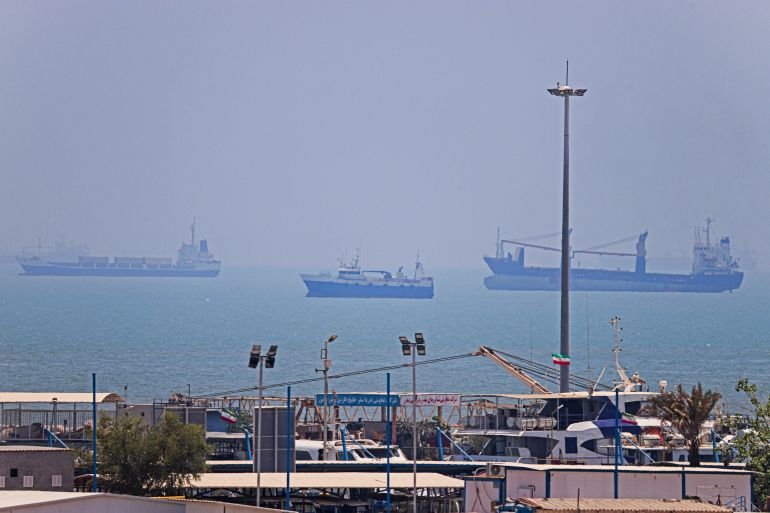
A day earlier, Iran’s Islamic Revolutionary Guard Corps (IRGC) said two tankers were “set ablaze” after hitting mines at what it called an illegal crossing point in the strait. Then, on Thursday, the IRGC said it hit seven more tankers although Washington dismissed the claim. In a statement, the IRGC said four of the vessels were transferring oil when they were targeted and caught fire overnight.
In September, the Houthis, an armed group also known as Ansar Allah (Arabic for Supporters of God), seized territory in Yemen close to the Bab al-Mandeb strait, a critical chokepoint into and out of the Red Sea and a gateway to Egypt’s Suez Canal.
The escalation came as the world’s emergency oil stocks, already tapped heavily since the Iran war began on February 28, sit at their lowest levels in decades.
Al Jazeera put a question to analysts: If fighting resumes in full, the Strait of Hormuz is shut off completely and Houthi attacks choke off Bab al-Mandeb, how long could the world’s reserves last?
Here’s what you need to know:
What emergency oil reserves are there?
Strategic oil reserves are stockpiles of crude oil and fuel held by governments or by companies on their behalf for use in a supply emergency.
The International Energy Agency (IEA), which was established in 1974 after the Arab oil embargo, coordinates most of them. Its importing members must hold at least 90 days of net imports. China and India are not members.
How much of the reserves has already been released this year?
A record amount.
On March 11, days after the start of the US-Israel war on Iran, the IEA’s 32 members agreed to make 400 million barrels available from emergency supplies, more than double the volume released after Russia’s full-scale invasion of Ukraine in 2022.
The US pledged 172.2 million barrels from its Strategic Petroleum Reserve (SPR) and Japan 79.8 million, according to IEA figures.
The SPR has since fallen to 283 million barrels, its lowest level since October 1982, according to the US Department of Energy.
Much of that oil was lent rather than sold and must be returned with extra barrels, according to the US Energy Information Administration.
How much oil is left?
Far less than before the war began in February, and not all of it can be used.
Aaron Kildow, a senior crude oil analyst at Sparta Commodities, told Al Jazeera that global strategic stocks excluding China and Iran have fallen by nearly 327 million barrels since the end of December 2025 with the US, Europe and Japan accounting for about 95 percent of the draw.
He estimated that leaves only about 400 million barrels of usable reserves worldwide, excluding China’s stockpile, which is unlikely to be exported, and Gulf stocks, which could be cut off by a total closure of Hormuz.
Nearly half of these available stocks are in Japan.
Europe has about 76 million barrels uncommitted, but members such as Germany are holding some back for a local emergency, Kildow said.
“Europe is the real wildcard, both on timing and willingness,” Kildow said.
Meanwhile, China’s onshore crude stocks stand at 1.13 billion barrels, down from 1.23 billion in late February but still enough for about 80 days of refinery intake, Muyu Xu, a senior crude oil analyst at the analytics firm Kpler, told Al Jazeera.
India’s reserves cover just eight days of its imports, the Reuters news agency reported.
What would a full closure of Hormuz and Bab al-Mandeb mean?
Before the war, about one-fifth of the world’s oil and liquefied natural gas supplies, or roughly 20 million barrels of oil a day, passed through the Strait of Hormuz.
Saudi Arabia has increased the amount of crude it transports from its oilfields in the east to its Red Sea port of Yanbu in the west via the East-West Pipeline, thereby bypassing Hormuz.
But there have been strikes on that pipeline, and tankers heading south from Yanbu must pass through Bab a-Mandeb, where the Iran-backed Houthis declared a blockade on Saudi shipping in July.
Only a confirmed 373,000 barrels a day of Saudi crude have transited Bab al-Mandeb so far this month, the lowest level since February, Xu said, with most Yanbu cargoes now heading north via Egypt instead.
If Hormuz were shut and the Houthis blocked all Saudi tankers, Gulf producers could export only through a few pipelines and Yanbu’s northbound route, Xu said.
That would leave about 7.5 million barrels a day of Middle Eastern crude, against 16.8 million now, a shortfall of about 9.3 million barrels a day, she estimated.
“If such attacks occur, the supply disruption could be even more severe and prolonged,” Xu said, referring to strikes on oilfields, terminals and pipelines.
[Al Jazeera]
So how long would reserves last?
Not for long – possibly just weeks, according to experts.
If Kpler’s estimated shortfall had to be covered entirely from the roughly 400 million usable barrels that Kildow identified, they could not, in practice, be released that fast. Japanese and South Korean reserves can move quickly, Kildow said, but US barrels are staged over three months, and Europe’s contribution is uncertain.
Chris Beauchamp, chief market analyst at IG Group, said the world was fortunate after the first closure. “The salient feature of March and beyond was how a crisis didn’t actually develop. We got away with it,” he said.
“I don’t think the global economy will be as lucky next time if there is a protracted conflict,” Beauchamp said. “A month or two is all we have.”
The world would not literally run out of oil. Instead, prices would rise until enough demand disappeared. “One hundred fifty dollars [per barrel] becomes a very distinct possibility, which then sees significant demand destruction,” Beauchamp said.
The sharpest squeeze would be on diesel, which is already nearly double the price of crude, the IEA said.
Refiners would compete for crude grades rich in diesel, “a cost that ultimately lands on consumers,” Kildow said.
Who would feel it first?
Asian importers with thin reserves.
Most Gulf exports in September and October went to Asian buyers, and India and Pakistan are among the most exposed, Kildow said, adding that their nearest alternative supply, from West Africa, is 25 to 28 days away by sea, compared with two days from Fujairah in the United Arab Emirates.
“The squeeze won’t hit uniformly. It lands fastest and hardest where reserves are thinnest and substitute supply is farthest away,” Kildow said.
Who would gain?
Oil producers far from the Gulf.
In the second quarter of this year, as the US-Iran war was under way, ExxonMobil reported earnings of $14.5bn, its highest in four years while Chevron posted $12bn, its best in six years and Shell more than doubled its earnings to nearly $10bn. Their profits are largely down to the high oil prices.
A second shock would send refiners scrambling for supplies from the US, Latin America, West Africa and Russia, Xu said.
“This would allow non-Middle Eastern producers to benefit from higher crude prices, potentially alongside lower transportation costs,” she said.
In August, US President Donald Trump said companies such as ExxonMobil and Chevron were “making too much money based on a shortage”.
LeBron James enjoys 114-106 NBA victory over Cleveland Cavaliers, hours after US president calls him a ‘disgrace’.
Published On 23 Oct 202623 Oct 2026
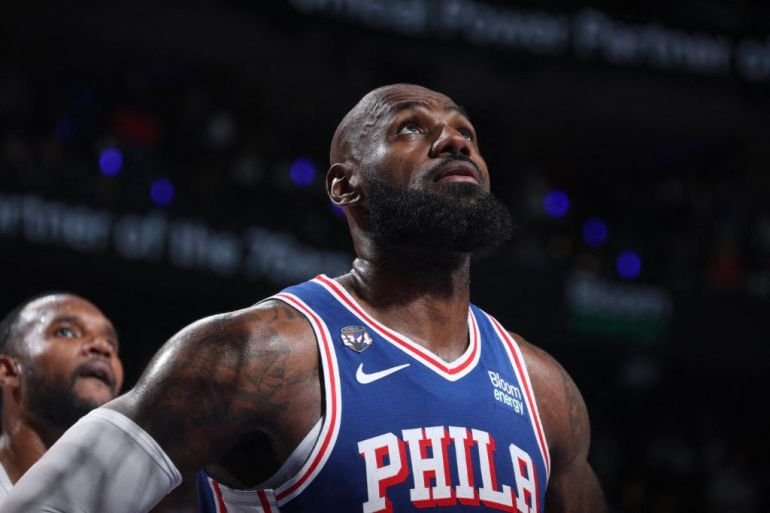
The Philadelphia 76ers have erased a 29-point deficit to stun the Cleveland Cavaliers 114-106 in NBA superstar LeBron James’s first home game since landing in Philly as a free agent.
The victory on Thursday came hours after LeBron was slammed by US President Donald Trump, who accused the NBA legend of disrespecting the national anthem of the United States in a game earlier this season.
Recommended Stories
list of 3 itemsend of list
Tyrese Maxey scored 32 points and Joel Embiid added 24, including a jump shot with 6:54 left to play, which gave the Sixers their first lead of the night, one they wouldn’t relinquish on the way to an epic comeback.
Former Celtics star Jaylen Brown, the Sixers’ other big off-season acquisition, scored 21 points and pulled down eight rebounds, and four-time NBA champion James added 17 points, 10 rebounds and five assists to help the 76ers author their biggest comeback of the play-by-play era, which started in 1996.
It was also the biggest comeback of James’s storied career. The league’s all-time leading scorer called it a good win – but not a position he wants to be in often.
“You don’t want to rely on that,” he said. “I think it’s great to know, deep down, we’re not going to have that quit mentality. You never want to look around and say guys gave up.
“But you don’t want to put yourself in too many of those situations.”
Al Jazeera has requested a response from the Philadelphia 76ers to Trump’s criticism of their star, who appeared to practise basketball and golf shots during the anthem before Tuesday’s game against the New York Knicks.
LeBron has not made any statement or offered any response himself.
LeBron enjoys greatest comeback as Cleveland make life tough
Cleveland, disappointed not to have landed hometown hero James after he announced he was leaving the Los Angeles Lakers after eight seasons, appeared to be on a mission to show him what he is missing.
Donovan Mitchell scored 22 of his 32 points in the first half as the Cavs seized control against a 76ers team struggling to find a rhythm and protect the ball.
Philadelphia centre Joel Embiid looked creaky, and James had five of the Sixers’ 15 first-half turnovers – which led to 22 Cavs points and provoked boos from Philly fans whose hopes of a title run have been raised by the arrivals of James and Brown.
The boos turned to raucous cheers as the re-energised 76ers opened the third quarter on an 11-0 run. They cut the Cavs’ lead to single digits on back-to-back baskets from Maxey that pulled them within 80-73.
The Cavs struggled to regroup. Maxey reduced the deficit to two points with a running finger roll layup with 2:33 left in the third before Cleveland reeled off six straight points to take a 90-82 lead into the fourth quarter.
But the 76ers, who beat the reigning champion Knicks at Madison Square Garden on Tuesday, kept coming. They outscored the Cavaliers 60-37 in the second half, clamping down defensively and giving up just two turnovers.
Evan Mobley scored 18 points for Cleveland but had just three in the second half. Jarrett Allen scored 14 but was held scoreless after the break.
“We stayed together. That’s the main thing,” Sixers guard VJ Edgecombe said. “When it got worse, we could have given up. We didn’t. It’s an early season test, early season adversity, and we overcame it.”
Thunder win as SGA streak ends with Denver Nuggets
In Oklahoma City, the Thunder pulled away late for a 96-84 victory over the Denver Nuggets despite a rough shooting night for two-time reigning Most Valuable Player Shai Gilgeous-Alexander, who saw his streak of games with at least 20 points end at 141.
Gilgeous-Alexander missed all seven of his first-half shots and was just 2-of-13 from the floor through three quarters. Nevertheless Oklahoma City, led by Jalen Williams’s game-high 21 points, took a 70-64 lead into the fourth quarter.
Gilgeous-Alexander connected on four of his six attempts for 10 points in the final frame for a respectable total of 17 points – his first regular-season contest with fewer than 20 since October 30, 2024, when he scored 18 against San Antonio.
Denver’s three-time MVP Nikola Jokic also had a quiet night, connecting on five of 19 attempts for 13 points with seven rebounds and five assists. Aaron Gordon led the Nuggets with 20 points.
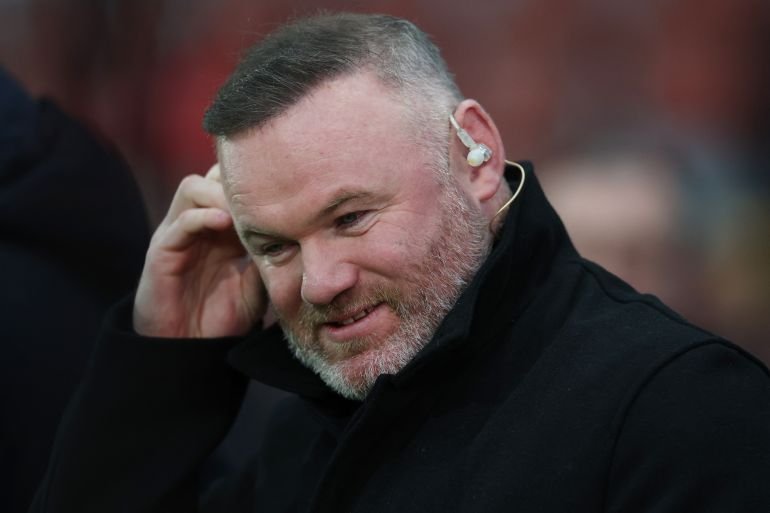
Manchester United manager Michael Carrick is under growing pressure, but club legend Wayne Rooney takes aim at players.
Published On 23 Oct 202623 Oct 2026
Manchester United great Wayne Rooney has labelled the current squad “babies” and “selfish” after a humiliating Champions League capitulation and post-match criticism by Bruno Fernandes of manager Michael Carrick.
Carrick’s men are 13th in the Premier League before Sunday’s visit by Bournemouth and could drop into the bottom three if results go against them this weekend.
Recommended Stories
list of 3 itemsend of list
With the club beset by infighting and off to their worst domestic league start for decades, Carrick was left clinging to his job after the 4-1 defeat at Como on Wednesday.
Deepening the sense of crisis, the captain Fernandes afterwards took aim at his manager’s tactics, saying United had to be more “brave”.
Defender Lisandro Martinez criticised the club’s board last week for not investing enough in the transfer market.
Rooney, United’s all-time leading goalscorer, said he was in “shock” and “disbelief” at the Como display.
A friend and ex-teammate of Carrick, former striker Rooney pointed the finger at the players.
“When Martinez came out, I said this is an absolute nightmare because it will rip the dressing room apart,” Rooney told The United Stand podcast on Thursday.
“That was the start. We’ve seen it now with Bruno and you’re going to see it with more players because these players, they don’t want to take responsibility.
“You can say whether Bruno was right or wrong in what he said but you have to take responsibility on the pitch. You have to take responsibility as a group of players.”
He added: “These players, they’re selfish. They don’t care about their teammates, don’t care about the manager, the staff or the fans; they care about themselves.
“If they’re not getting what’s right for them, they’re like babies and just throw their toys out of the pram and go and deflect the blame on to anyone else but themselves.”