SPOILER ALERT: This story contains spoilers from the two episode-premiere of Season 5 of “Welcome to Wrexham.”
Wrexham AFC’s path towards the Premier League has been lined with victories, and one of the biggest among them is last month’s news that FX has ordered an additional three seasons of the hit docuseries “Welcome to Wrexham.” Premiering in 2022, the Emmy-winning “Welcome to Wrexham” chronicles the North Wales team’s rise through the ranks of football, brought on by the team’s change in ownership after Hollywood A-listers Ryan Reynolds and Rob Mac (formerly known as Rob McElhenney of “It’s Always Sunny in Philadelphia” fame) bought the club in 2021.
Over the past five years, in a series of consecutive promotions, Wrexham AFC went from being a fifth-tier team in Season 1 to making it to the English Football League’s Championship for the first time in more than four decades in the Season 4 Finale.
Since the cameras went down in April 2025, much has happened in the world of Wrexham.
Now one promotion away from the Premier League, Wrexham AFC advanced to the Fifth Round of the FA Cup for the first time in 29 years in February; the Wrexham Women’s team beat Cardiff City and secured the Adran Premier title in March; construction began on the hometown 7,500-seat Kop stand, expanding overall capacity to over 18,000; major roster changes were implemented — and fans were heartbroken by the death of footballer and two-time European Cup winner Joey Jones (affectionately dubbed Mr. Wrexham) in July 2025.
Season 5 — which follows Wrexham AFC’s 2025-2026 football season — sees the Red Dragons adjust to competing on a higher level, joined by a new set of players and increasing pressure as fans wait to see whether the Welsh team will get the fairytale ending it’s always aimed for, and make it all the way to the Premier League.
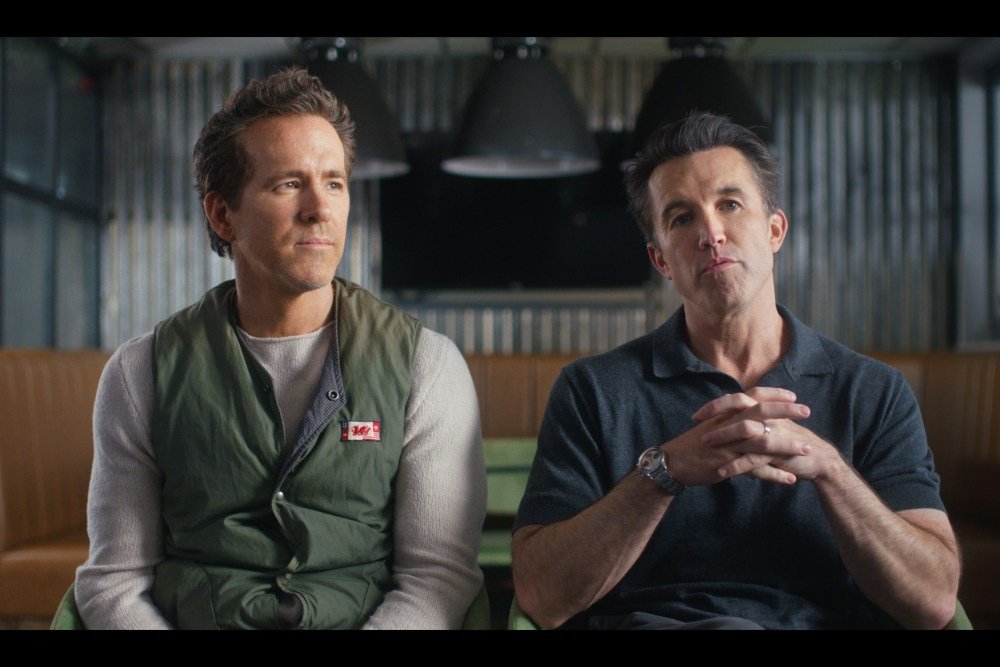
Below, Reynolds and Mac spoke with Variety about filming their recent successes, what the future holds — and why the people of Wrexham’s trust matters most.

FXX
I wanted to start off by congratulating you on your three consecutive promotions. Wrexham is now one level away from the Premier League, which has been a long-term goal. Did that affect your approach to filming and producing the season? What has the reception in Wrexham been like?
Rob Mac: Has it really affected the way that we approach it? There seems to be a plethora of people who want to tell their story, and I think in the beginning, there was some trepidation, which was totally fair. They didn’t know what kind of story we were telling. They didn’t know if it was going to be a comedy. They didn’t know if it was going to be about the two of us, and us being clowns and coming in and ruining their club. We promised them that’s not what we were doing, but you can’t really tell until you see –
Ryan Reynolds: — until you actually watch what we do, and know what we say. If I were to pick one thing I’m most proud of — and I could assume this is something you’re probably most proud of as well [nods to Mac] — is that we’ve really earned the community’s trust over the years. And it’s something we don’t take for granted, and certainly something we don’t take lightly.
Earlier this month, it was announced that the show has been renewed for three more seasons so fans can follow along into at least Season 8. Did you expect it to carry on for so long when you first started? What are you most looking forward to doing with the rest of the show?
Mac: Well, I’ve got another television show that’s gone for 18 seasons, [“It’s Always Sunny” premiered in 2005 and is currently in development for Season 18] so to me, I feel like with Wrexham, we’re just sort of a third of the way through the run, right?
Reynolds: I mean, “Sabrina the Teenage Witch” was not picked up for another season, and I was in the pilot of that.
Mac: You were?!
Reynolds: I was, yeah.
Mac: Just the pilot?
Reynolds: Just the pilot, yep. And so, I don’t have the same experience as you, so I was probably a little bit less bullish on this. If we were picked up for 40 more seasons, I don’t think that we would ever scratch the surface of telling all these stories, and getting into the nuance of them. The more trust we’ve generated with this community, the more willingness we are finding for people to open up, share something, and everybody has a story. If you took a camera crew and you were patient enough — and you were willing to wait and earn the trust of a community — you’re going to find that any place you go, anywhere in the world, there is a wellspring of stories of humanity and people who are just trying to make sense of us all, and make this work. This thing we call life, it’s not easy for most people, and it’s been a privilege to be a part of that storytelling process.
You’ve always emphasized that the people of Wrexham are at the center of the story you’re telling. The Season 5 premiere introduces viewers to Bailey Jones, a young passionate Wrexham fan who passed away in 2023 of a brain bleed. How did you decide that telling Bailey’s story was where you wanted to start Season 5? Has his family seen it?
Mac: Oh yes, they have seen the episode. We always try to make sure that we’re very respectful when it comes to stories like that, that we have the family or the central protagonist of the story watch it before it airs, just in case there’s anything sensitive that they want to make adjustments about. Because this is the kind of show that wants to celebrate those stories, and never feel exploitative. In that particular circumstance, they reached out to us, which is also the benefit of having four seasons of the show out. They know the spirit by which we’re trying to make the show, and they asked if we would tell their story. Once it was told to us, we jumped at the opportunity to celebrate Bailey, his family and his love for Wrexham and Red Dragons.
The second episode is similarly heavy, featuring the beloved Welsh football player Joey Jones, who died in 2025. What did you focus on when paying tribute to him?
Reynolds: I was just grateful we got to meet him. He’s such a landmark there. He’s bigger than a legend. He’s kind of is Wrexham, in life and death. You still feel him, you know, even when Chelsea came to town for the FA Cup; that was a big moment, and the first thing Wrexham did was flash their Joey Jones signs. It’s interesting what comes out of people when you’re suddenly on the world stage or feeling that spotlight and that spotlight can be hot. What is it that you want to use that moment for? You could use it for anything. Everyone’s looking right now, “What are you going to do?” And they chose Joey Jones, and that’s a testament, and a legacy, if you ask me — that’s one to be really proud of.
Just to switch gears for a second, the 2025-2026 season had some huge roster changes. How did you go about building trust and relationships with a new set of players every season?
Mac: That’s really easy for us, because we trust in Phil [Parkinson, the club manager]. Whoever he tells us to trust, we trust, and whatever he does, we go along with and support 100%. We have very little, if any, oversight over who he brings into the club, and we trust that he’s going to bring people of high character that will fit into that locker room as leaders and as teammates, and then ultimately for us as friends.
Reynolds: Phil Parkinson would say no to probably the greatest footballer on the planet if their character was in question, or he didn’t feel like they would be team players and in the locker room, day in and day out. We have an immense amount of respect for that process, and the knowledge that someone like Phil Parkinson’s acquired over decades and decades of being in this industry. We don’t make football decisions, and that turns out to be the greatest strategic move you could ever make around a club like this, when we’re hands off, and we allow the people to make the decisions, people who have real authorship and a real understanding of the nuance of this game, to make all those important decisions.
Amazing things happen because they feel like they have the faith of the folks that are stewards for this club, and the town sees it right away, because we never walk in there saying we know better. We always say, “I don’t know.” And in doing so, it allows us to have relationships with the players and to be there for them when they need us, because they know we don’t make football decisions. They know Rob and I are not going to be responsible for their contract extension or cancellation or anything like that, and then are able to lean on us in other ways, and sometimes it’s emotional. We can create that emotional investment, which is, I’d argue, more valuable than financial or even personnel. The emotional investment is kind of what keeps you sustained and keeps you moving day in day out.
There are moments that end up on the cutting floor due to a variety of reasons, either personnel on screen asking for privacy or the fact that there’s a very quick turnaround time. Are there any moments looking back at Season 5 that you wish you could have included in the show?
Mac: That’s a good question. There are moments yet to be written, because we don’t know how it’s going to end, and that’s always the tricky thing. As you’re making a show in real-time — at the quality level that we’re trying to turn it out — we don’t want to just record something quickly, edit it and turn it back out. We want to tell really rich narrative stories. In filmmaking, you’re always finding ways to trim it and get it to whatever the rhythm of that particular story is. So, there’s lots of different sequences, I could say that wound up on the cutting room floor, but nothing that we didn’t wind up coming back to or finding another place in a different episode.
The Wrexham women’s team has been doing amazing. Can fans expect to see more of the story behind their Adran Premier win this season?
Reynolds: Oh my gosh. What a story. The women’s team has almost — in so many ways — more at stake and has pushed harder than the men’s club, because they’ve never really been given that kind of equitable playing ground. We’ve done everything we can to look at that through the same lens as you would the men’s club — getting them a field that is theirs, a place where you can congregate a community that’s their own home turf, their own home stadium at the Rock has been a huge priority since day one. Just watching them scrap and fight and kick and punch their way out of the very bottom of this pyramid, which exists for them as well, all the way up to winning the entire league this year, is just a true fairy tale story. It’s something that I think is also emblematic of the tide shifting all over the world, and people are watching women’s sports now more than ever. I’ve always been obsessed with the Canadian women’s national football team. The World Cup comes around, and I’m always watching in complete rapture. I don’t know why I find it more exciting than anything else on grass.
To tease a little bit of the upcoming season, what are some of the biggest challenges that you tackle as you’re rising through the ranks of football and competing with bigger clubs?
Mac: A lot of it is the heartache and heartbreak of losing some of the players and their families that we love so much. When they move on to other teams, it’s almost like they take it better than we do, because it’s a part of the business. We’ve got some players who play for 13, 14, 15 different teams, and when they leave, that’s just the nature of the business. Ryan and I are devastated, because we’re so close to them. And then, of course, they want to continue along the journey, but they also want to play, and they recognize that they can play more on another team, and so they give us a hug and say, “We’ll keep in touch,” which we do, and it winds up being more devastating for us than it is for them.
Reynolds: We’re messes when they leave. But I think there’s a common ground there, because I feel like athletes that are this elite, the window for their careers is shorter than even people in our industry. But both industries know one thing: they will always, without fail, take our names down — from the marquee in the entertainment industry. That is an inevitable fact, and so I think we can relate in that sense, where you know something is coming for them. Thankfully, most of the time it’s just a transition. They’re moving on to another club or another team. But we all know that these things eventually come to an end. And your life is about new beginnings, really. That’s the hope. So, there’s some kind of common ground there.
We all understand each other, that we’re all really lucky to do this incredibly challenging thing that so many people wish they could do or be a part of. We get a front row seat to it. We get to live in the backstage of it. We get to understand the ins and outs of it, and it’s a real privilege that we’re lucky to experience, and something we have in common with the footballers.
This interview has been edited and condensed.
Leave a Reply