Following Olivia Rodrigo’s statement in support of the Jane Doe at the center of the Cornell 7 lawsuit on Sunday, Megyn Kelly is firing off at the singer, calling her a “know-nothing moron” who should “sit down and be quiet.”
“Olivia, in sum, you don’t know what the fuck you’re talking about. Shut up and stick to singing,” Kelly said on a Monday episode of her YouTube show. “I liked you better when you were in front of a microphone singing your weird little depressing songs.” She continued: “It’s better to keep your mouth shut and let people suspect you’re an idiot than to open it and prove them right. Ever hear that saying? It applies to you, sweetheart… We don’t need the participation of know-nothing morons who have been auto-tuned into fame and suddenly think they have something profound to say on the culture wars.”
The previous day, Rodrigo had shared a post to her Instagram story writing: “Shame on Cornell and on every institution who protects rapists and abusers over women. I stand with Jane Doe. Her bravery reverberates across the country and the crimes against her will not go unpunished. What she lived through matters, and so does the failure of those who could have intervened but chose not to. She deserves answers, consequences, and lasting change.”
The Cornell 7 lawsuit refers to the legal document filed by an unnamed Cornell University student who accused seven men of raping and drugging her at a frat house party in October 2024 — and faced no legal consequences. Her lawsuit filed against the university claimed that the school failed to protect her and prevent the alleged assault.
Following an investigation by the university at the time, two of the men were expelled, while the other five received lesser punishment. The lawsuit claims that some of them wrote essays to the school to reduce their disciplinary action, according to her attorney.
People for the Ethical Treatment of Animals euthanized approximately 67% of the animals that it took in during the year 2024.
Rating:
Context
According to data provided by the state of Virginia, where the U.S. branch of PETA is headquartered, the figure is correct. The specific figure, according to Snopes’ own calculation of the data provided, is 66.7%. A spokesperson for PETA said via email that the statistics reflect it being the last shelter in its area to provide “free end-of-life services” for suffering animals, resulting in a high number of referrals from other shelters and vet clinics.
In October 2026, a rumor circulated online that animal welfare nonprofit organization People for the Ethical Treatment of Animals put down 67% of the animals it took in during the year 2024.
Social media users claimed that PETA euthanized 2,213 out of the 3,317 animals it took in that year.
The assertion appears to have originated from a popular Facebook page called Rack Junkies that focuses on hunting and fishing.
In short, the claim is true, according to data provided by the state of Virginia, where the organization is headquartered.
The Virginia Department of Agriculture and Consumer Services’ database of animal custody record reports for PETA in the year 2024 shows a total of 3,317 companion animals taken in, including 1,374 dogs and 1,885 cats. Of the total number, the data shows 2,709 of the animals were classified as “surrendered by owner.”
Of those 3,317 animals, 2,213 were euthanized, making the percentage of animals euthanized by PETA that year 66.7% (which rounds up to 67%).
Among the companion animals euthanized, 875 were dogs (63.7% of dogs taken in) and 1,299 were cats (68.9% of cats taken in). A separate figure for wildlife taken in throughout 2024 shows that 32 of 38 wild animals were euthanized (84.2%).
According to PETA’s explanatory notes, also available in the report, the organization’s shelter is “the last in the region to still provide free end-of-life services” and that “dozens of Virginians were referred to PETA for end-of-life help” for animals by most of the area’s shelters and veterinary clinics, which the nonprofit says had a “significant impact” on the statistics.
The notes also say the euthanized wildlife animals “were critically injured/dying.”
(Virginia Department of Agriculture and Consumer Services)
A spokesperson for PETA said via email that the organization is appreciative for “the opportunity to respond even though it’s to a social media post that deliberately misrepresents PETA’s work and is written by a man who makes a hobby and career of killing animals, which is what PETA works against every day,” referencing Rack Junkies’ hunting content.
Snopes contacted Stephen Ziegler — whose name is in the biography of the Rack Junkies Facebook account — for a response to the PETA spokesperson’s comments. We will update this article if we receive a reply.
The spokesperson provided several examples of nearby pet owners and their companions who were referred to PETA for euthanasia, calling this “a small fraction” of cases. The spokesperson wrote:
PETA’s services also span 260 localities across Virginia and North Carolina. So naturally, our intake—and by extension our euthanasia figures—will be higher than shelters that serve only their specific locality, because we are assisting exponentially more animals, including those from communities far beyond Norfolk’s borders.
PETA’s spokesperson reiterated the same points seen in the explanatory notes and added, “While other shelters in and around PETA’s headquarters in Norfolk, Virginia, have adopted restrictive ‘no-kill’ policies aimed at keeping animals out of their shelters and often turn away animals, PETA takes in all comers without discrimination, without admission fees, appointments, waiting lists, or other obstacles.”
PETA’s intake policy notes that its “shelter does not have a waiting list or charge a surrender fee, and our staff is available 24/7, including to respond to after-hours emergencies and pick up and transport surrendered animals. We often take in aggressive or feral animals rejected by other shelters as unadoptable.”
The policy further states that some of the “dangerous” canines who were euthanized had been previously adopted out by other shelters that later declined to take them back “when families attempted to return them due to aggression” and that “more than 100 behaviorally unsound, ailing, and even actively dying animals were referred to PETA by area shelters and veterinary clinics.”
In 2012, PETA was the subject of an expose from news magazine The Atlantic, titled, “PETA’s Terrible, Horrible, No Good, Very Bad History of Killing Animals.” That article says that in 2011, the nonprofit’s adoption rate was only “2.5 percent for dogs and 0.4 for cats.”
A spokesperson for PETA reportedly told the outlet that “euthanasia is a product of love for animals who have no one to love them” and that animals sometimes “need the comfort of being put out of their misery.”
Video from a political rally authentically shows U.S. President Donald Trump saying he has an IQ of 1,775.
Rating:
Context
The clip as presented in some social media posts lacked context that made it clear Trump was not referring to his IQ when he mentioned the number 1,775 during a campaign rally speech. Rather, he was speaking about the “warrior dividend” his administration promised U.S. service members.
In early October, a claim (archived) circulated online that U.S. President Donald Trump said his IQ was 1,775.
IQ, or intelligence quotient, is a measure of a person’s relative intelligence. There are many different tests for IQ that usually assign the taker a number score. An IQ score of 1,775 would be remarkable, given that the Guinness World Records holder for highest IQ held a score of 228 before Guinness retired the record in 1990.
One Facebook user who shared the claim included a clip of Trump saying:
I’m a high-IQ person, unlike some other people I can tell you about. Very, the, among the highest IQs anywhere in the world, 1,775. And I said, you know, if we can scrap up $1 more we’ll be at 1,776, and that’s what we did.
The Facebook user captioned the video “Trump thinks his IQ is 1775.”
The clip of Trump speaking and his purported claim about his intelligence also circulated on X (archived) and Instagram (archived). Snopes readers contacted us, asking whether Trump really claimed his IQ was 1,775.
Trump did not claim to have an IQ of 1,775. Social media users appeared to misrepresent a portion of the president’s campaign rally appearance in Vandalia, Ohio, on Oct. 3, where he talked about the $1,776 “warrior dividend” his administration promised U.S. service members in December 2025.
The clip was authentic, meaning not generated with artificially intelligence or otherwise edited; Trump did say he had a “very high” IQ and that it was “among the highest IQ’s anywhere in the world,” immediately followed by saying “1,775.” However, the number referred to the amount federal officials initially suggested for the warrior dividend, not Trump’s IQ. This was clear when watching that section of Trump’s speech in full.
Therefore, we find social media users miscaptioned authentic footage.
Speaking in Vandalia on Oct. 3, Trump said (at 2:17:38, emphasis ours, archived)
And remember just recently, I, just to give you an example, just recently, I gave all members of the military $1,776. And everyone said that couldn’t be done and I did it. And you know, Bernie, that, when they put the number I said, “What would be the right amount? What would be something we can afford for our great military?” They came back with 1,775 and they put it on my desk. “Sir, we can do 1,7—” Can you believe this? “We can do 1,775.” they said. I said, “Wow.” Nobody saw it but me, I’m very proud of this, very intelligent. I’m a high-IQ person, unlike some other people I can tell you about. Very, the, among the highest IQ’s anywhere in the world, 1,775. And I said, you know, if we can scrap up $1 more we’ll be at 1,776, and that’s what we did, 1,776.
Considering the full context of Trump’s speech, it was obvious he was not referring to his IQ when he said the number 1,775.
Though Trump often calls himself a “high-IQ individual” (in fact, he did so while telling the same story at a rally on Sept. 16) his actual IQ is unconfirmed. Snopes has previously debunked rumors that he scored 73 on an IQ test during his time at the New York Military Academy as well as an article claiming the president’s IQ was 156.
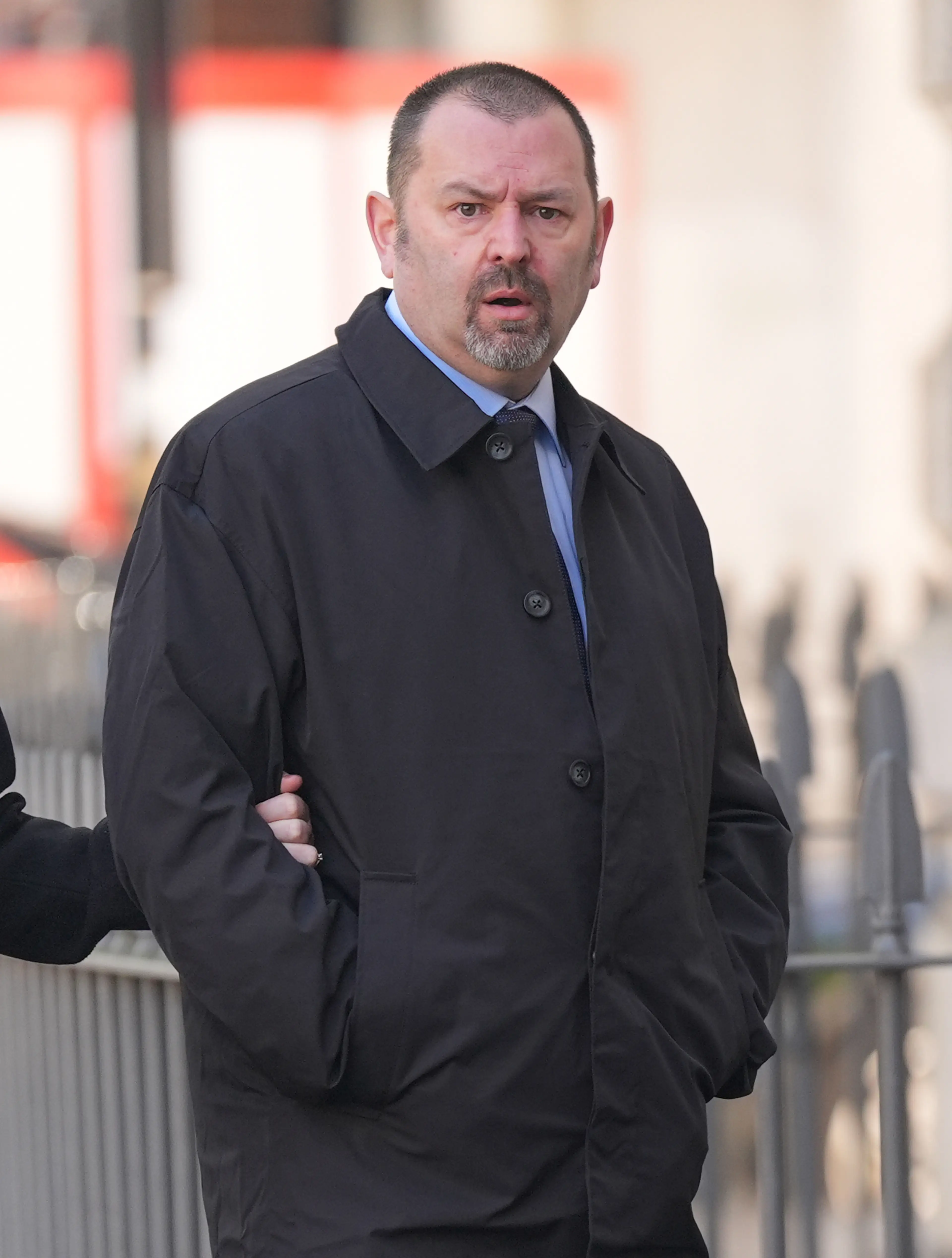
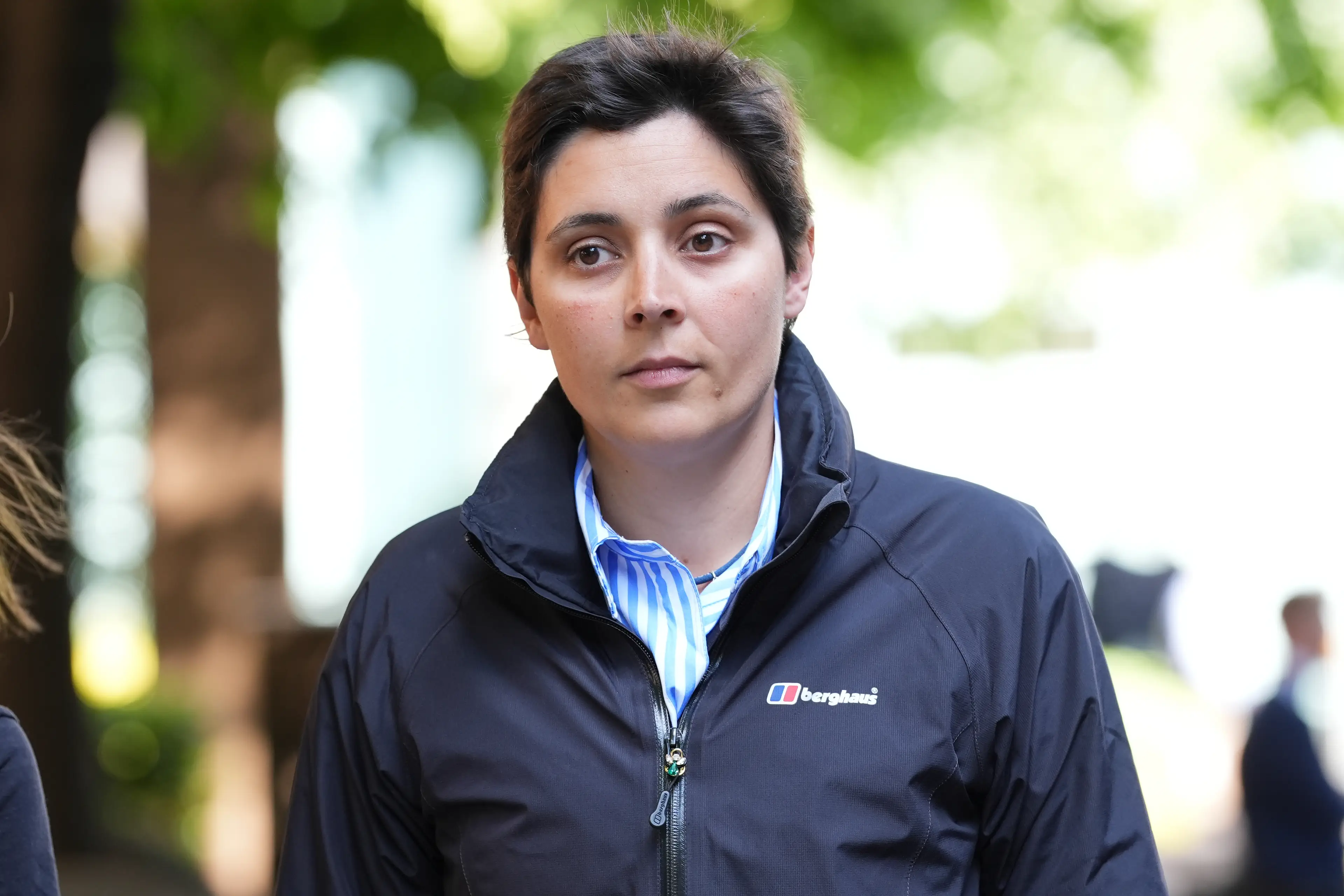
Two police officers who used a Taser, baton and synthetic pepper spray on a 92-year-old amputee have been sacked.
PCs Stephen Smith and Rachel Comotto responded to a call at a care home in St Leonards, East Sussex, on June 21 2022, following a report of resident Donald Burgess holding a knife and threatening to stab staff.
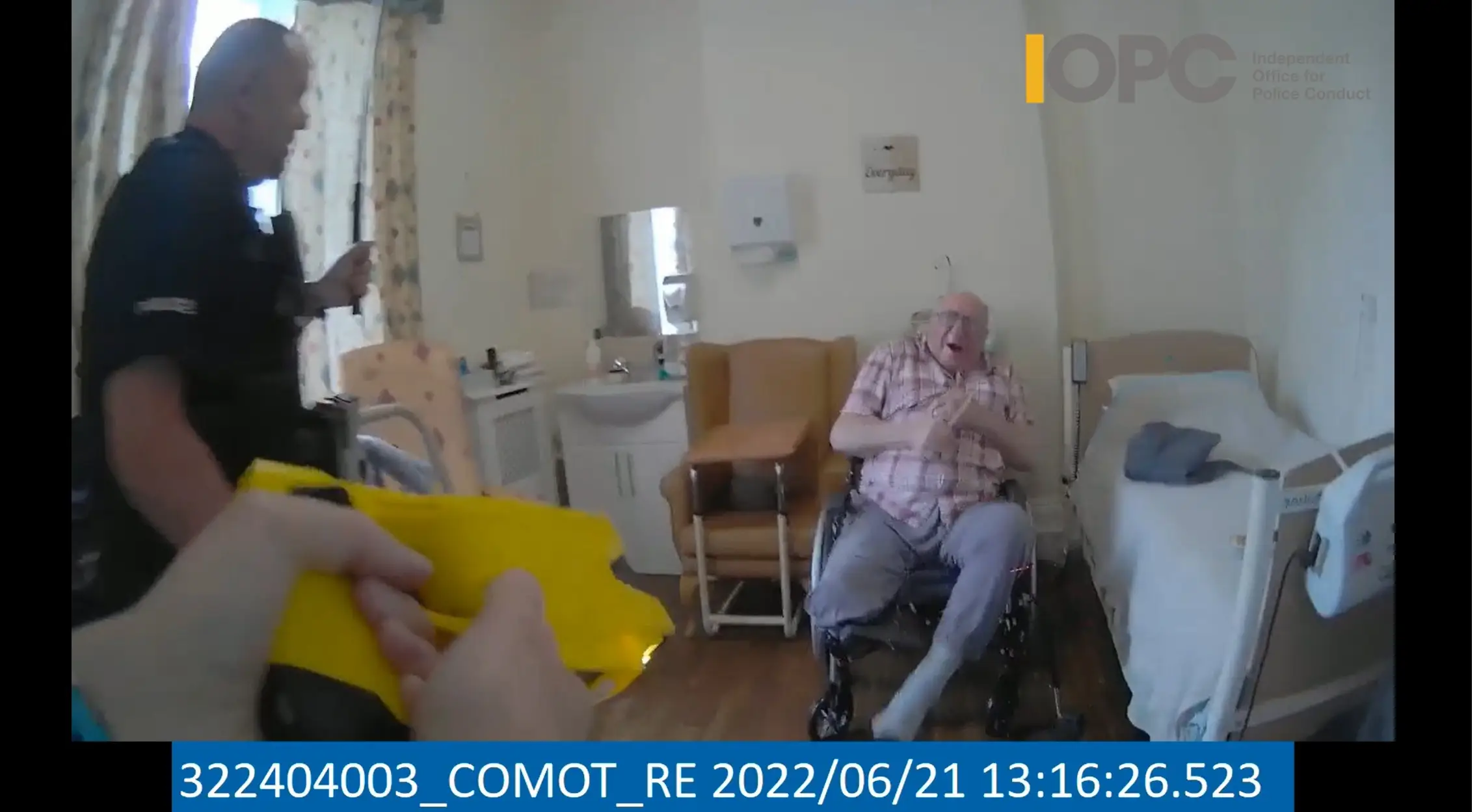
Police bodycam footage showed the two officers entering a room where Donald, who was in a wheelchair due to having an amputated leg, had been isolated.
The 92-year-old was holding a cutlery knife as the PCs approached him.
The Independent Office for Police Conduct (IOPC) said that within a minute-and-a-half of them entering the room, both officers used force on Donald.
PC Smith was seen using Pava spray in the elderly man’s face and struck the arm holding the knife with a baton.
PC Stephen Smith and his colleague PC Rachel Comotto have been fired (Lucy North/PA Wire)
PC Comotto then used a Taser on Donald.
In a ruling on Tuesday (6 October), the IOPC said both officers used ‘excessive force’ on Donald.
Following the incident, PC Comotto was also found to have shared an inappropriate comment about it on Facebook.
The misconduct hearing was told PC Comotto received a Facebook comment that read: “Happy birthday, the care home is getting closer and closer” with wink and laugh emojis.
To which she replied: “We all know what happens in care homes,” adding with a lightning bolt emoji.
On PC Comotto accepted writing the comment on the day of the incident.
After the two officers used inappropriate force against him, Donald was taken to hospital and later contracted Covid-19.
He died 22 days later, aged 93.
Sussex Police said the evidence did not indicate the officers’ actions caused or contributed to the death.
PC Rachel Comotto also admitted to making an inappropriate comment on Facebook (Lucy North/PA Wire)
PC Smith and PC Comotto were cleared of assault after a Southwark Crown Court trial in May 2025, but were dismissed without notice on Tuesday, the IOPC said.
They will also be put on the College of Policing’s barred list, banning them from working in policing.
IOPC director of engagement Emily Barry said: “We know that footage of this incident showing the force used by the officers on Mr Burgess has caused widespread concern and anger.
“This was not a fast-paced incident where the officers or other care home residents were in immediate danger.
“Mr Burgess, who was wheelchair-bound and holding a cutlery knife, was isolated from other residents and clearly posed little risk to the officers.
The Independent Office for Police Conduct said the pair used ‘excessive force’ (IOPC/PA Wire)
“Any use of force should have been a last resort and only used when necessary.
“Rather than de-escalating the situation they immediately threatened Mr Burgess with force and then discharged Pava spray, struck him with a baton and tasered him when he didn’t drop the knife.
“Their actions were clearly excessive and unreasonable, and PC Comotto then displayed further poor judgment by joking about tasering Mr Burgess on social media afterwards.
“Their actions have damaged the public’s trust and confidence in policing and they have been held accountable and dismissed from policing.”
Donald’s family said they welcomed the decision, but their solicitor has asked for the inquest into his death to be resumed, saying there are unanswered questions about the force used by the officers and the actions of the care home.
“We remain concerned that opportunities to de-escalate the situation were missed, including the fact that family members who lived nearby were not contacted by the staff at Park Beck nursing home before the police were called,” the family said.
“Donald was a much-loved family man. We want him to be remembered for the life he lived, not simply for the events that brought us to this point.”
Flash loan attacks caused $1.211 billion in losses across 72 incidents between February 2020 and July 2024, according to a study in the Journal of Financial Crime.
That was 18.44% of the $6.568 billion lost to all DeFi attacks in the period, with more than 80% of flash loan losses on Ethereum.
Attacks exploiting flaws in protocol logic were rarer but costlier, and grew in significance as platforms patched exploited weaknesses and attackers moved on.
Flash loan attacks drained $1.211 billion from decentralized finance platforms between February 2020 and July 2024, according to newly published research in the Journal of Financial Crime.
The study, by Professor Tim Hall of the University of Winchester and Remo Stieger, a former partner at Swiss risk intelligence firm SyntiFi, identified 72 flash loan attacks among 254 successful attacks on DeFi over the period. Those 254 attacks caused $6.568 billion in losses, 18.44% of which came from flash loan attacks.
Hall said in a statement that “we now are seeing crimes that we have never seen before,” some “capable of stealing mind-boggling sums of money, often in the tens of millions of dollars.”
Flash loans let users borrow assets from a liquidity pool without collateral, provided the loan is repaid within the same blockchain transaction. Attackers use them to access the large sums needed to execute an exploit.
More than 80% of flash loan attack losses occurred on Ethereum, the study found. Individual attacks ranged from $80,000 to $197 million, and those that stole $10 million or more accounted for over 88% of losses.
The researchers identified 14 types of flash loan attack, falling into two broad groups: those that manipulate price feeds, and those that exploit flaws in a protocol’s underlying logic. Logic exploits were less frequent but caused higher average losses.
Logic exploits accounted for 28% of flash loan attack losses between February 2020 and January 2022, and 55% from February 2022 to July 2024, according to the paper.
Four attack types accounted for more than 81% of losses: price oracle attacks, donate function logic exploits, reentrancy attacks and a single governance attack, which cost $181 million.
Flash loan attackers
Attack activity moved through phases of growth and consolidation, which the authors write suggests platforms improved their security after attacks while attackers found new vulnerabilities.
The study drew on an interview with one platform that suffered a major flash loan attack, granted anonymity at its request. The bug exploited had passed “ourselves and several of the auditors,” the platform’s representative said, and went unnoticed on-chain for more than a year.
The attacker began “taunting” the platform on social media afterward, Hall said, which “led to some victims engaging with the attacker and outlining the devastating impacts that the loss of this money had on them.”
The representative divided attackers into “hobbyist individual researchers” and professional state-level or organized crime groups, citing North Korea. From a blockchain security perspective, the professionals’ attacks “are not at all advanced,” the representative said.
The representative also described the toll on teams that suffer attacks, saying that “most often it ends up fracturing them and destroying them,” even when funds are recovered.
Losses exceeded 0.5% of the value borrowed through flash loans in only one six-month period, and flash loan use kept growing, the paper found.
The authors characterize the attacks as significant, increasingly sophisticated and unpredictable “but not existential” threats to DeFi.
Since the study period ended, decentralized exchange Bunni shut down in October 2025 after an $8.4 million exploit that used flash loans, saying it could not afford the cost of a secure relaunch.
“We are keen that this isn’t seen just as a piece of academic research,” Hall said. “The analysis we did has a host of applications for the cryptocurrency industry, for regulators and for legal and law enforcement agencies.
Daily Debrief Newsletter
Start every day with the top news stories right now, plus original features, a podcast, videos and more.
Christa Pike is conscious and speaking after surviving an execution attempt, her lawyers have said.
In a new statement, her legal team said: “Against all odds, Christa Pike is conscious, speaking, and continues to receive critical medical care.
“Despite the severe damage she endured to her arms, she is still handcuffed and shackled to the bed. Her recovery is medically unprecedented. Her prognosis remains unclear but, at a minimum, we expect a long recovery.”
Her lawyers said they are grateful for the first responders and the medical team at the hospital ‘who treated Christa like a human and have provided exceptional care to her’.
They added: “We also want to thank thousands from all over the world who sent messages offering prayers and support for Christa.”
Christa Pike survived a botched execution attempt last week (Tennessee Department of Corrections)
The statement was the first indication that Pike has improved since an ambulance took her from a Nashville prison last Wednesday.
Pike survived two doses of pentobarbital as Tennessee officials attempted to put her to death.
Pike, 50, was set to become the first woman put to death in the state of Tennessee for around 200 years for the murder of Colleen Slemmer in 1995.
Her execution was scheduled for 30 September and, as planned, Pike was taken into the death chamber and shared what she thought would be her final words.
Members of the press who were witness to the execution attempt said that shortly after the first dose was administered, Pike said: “My arm feels like it’s about to burst open.”
Her lawyers later confirmed that Pike had been rushed into hospital where she was receiving ‘life-saving’ care.
In a statement after the execution attempt, the Tennessee Department of Correction said it had followed ‘every step’ of the standard protocol.
“The Tennessee Department of Correction followed every step of the state’s lawful, established execution protocol approved by the Attorney General’s Office,” the statement said.
Christa Pike is still alive, having survived her lethal injection (Tennessee Department of Corrections)
“The lethal injection chemical in the protocol has consistently been effective, and the protocol does not allow for additional procedures beyond what was carried out this evening. Christa Pike has been transported to an off-site medical facility.”
In an update earlier this week, her legal team said she was on life-support and were unsure if she would recover.
Her lawyer Stephen Ferrel told CNN of her current status: “She is guarded. I’m not sure who may have seen her.
“I know I have not seen her. The state of Tennessee has not yet said whether it will ultimately try to execute her again.”
The incident prompted the state of Tennessee to announce it was halting all executions until an investigation could be carried out.
It also led to the resignation of Tennessee Department of Correction Commissioner Frank Strada.
Strada will leave his role this month after being the residing commissioner of Tennessee’s Department of Correction for the past three years, and also in the role when the May execution of Tony Carruthers, was called off due to problems finding a vein for his lethal injection.
Why was Christa Pike given the death penalty?
Pike was sent to death row for the murder of 19-year-old Colleen Slemmer in 1995.
Pike was sentenced to death for the murder of Colleen Slemmer (Find a Grave)
On 12 January 1995, an 18-year-old Pike, her then-boyfriend Tadaryl Shipp and friend Shadolla Peterson lured Slemmer to a secluded woodland in Knoxville.
According to court documents, Pike and Shipp then brutally attacked Slemmer, while Peterson kept watch.
The beating lasted around 30 minutes, and saw them carve a pentagram into Slemmer’s chest, before Pike then killed the 19-year-old by delivering a fatal blow to the head, court documents claimed.
During her incarceration, Pike’s legal team argued that she should not have been given the death penalty due to her age when committing the crime and her troubled background.
Assistant Federal Defender Stephen Ferrell said she was abused as a child and was later diagnosed with bipolar disorder and post traumatic stress disorder.
In her clemency petition, Pike wrote: “I was a mentally ill 18-year-old kid. It took me numerous years to even realise the gravity of what I’d done. Even more to accept how many lives I affected. I took the life of someone’s child, sister, friend. It sickens me now to think I had the ability to commit such a crime.”
Zcash and Monero were the two best performers among the largest coins over 24 hours, while Bitcoin gained just 0.59% and Ethereum 0.34%.
Zcash still trades about 19% below its late-September high of $1,698, and Grayscale’s Zcash ETF saw $30.25 million in outflows on Sept. 30.
Macro is holding everything still: the Fed hiked to 3.75%-4.00% on Sept. 16, then September payrolls came in at 29,000 against 84,000 expected.
After weeks of Bitcoin turning heads and climbing the charts, the top of the crypto market is now barely moving. Bitcoin trades at $86,264.06, up 0.59% over 24 hours. Ethereum sits at $2,714.39, up just 0.34%.
The whole market is worth just north of $3 trillion, essentially flat for the day, according to CoinGecko data. The rest of the 12 largest coins are drifting in roughly the same way. Solana gained 1.4% and XRP 1.07%, while BNB lost 0.41% and Tron 0.22%.
Most traditional coins are flat, and then there’s privacy coins.
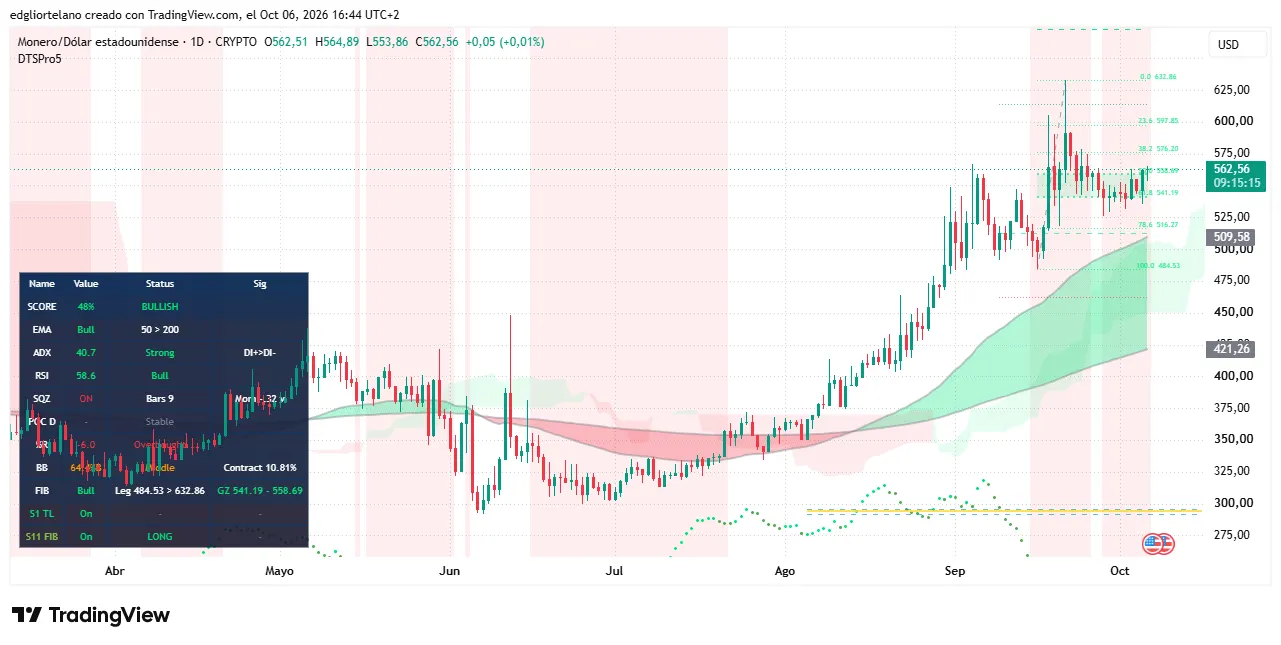
Zcash, perhaps the best known privacy coin, has been on a tear over the last year, and today is up 3%, recovering from a pullback off its recent peak near $1,600. Monero, meanwhile, is up 2.14% at $562.32 over the last 24 hours, making the privacy coins the standout performers on the day.
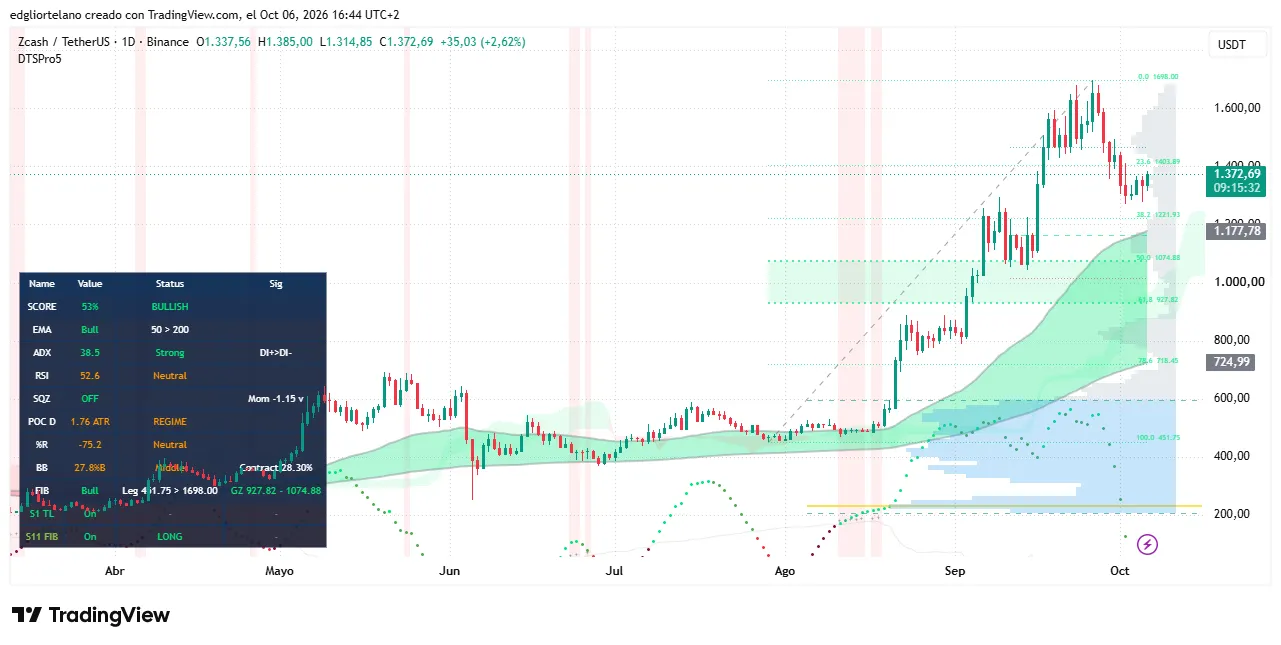
The daily charts tell the two coins apart. Zcash is up 2.62% on Binance since the day’s candle opened, so its move is still running. Monero is riding a spike that began yesterday and kept running during the last 24 hours..
The overall flat tape for the crypto market has a reason. The Federal Reserve raised rates to 3.75%-4.00% on Sept. 16, its first hike since July 2023. Then the September jobs report landed with just 29,000 new jobs against the 84,000 economists expected, and unemployment ticked up to 4.2%.
That weak print cut the odds of an October hike to about 22% right after the report, according to CME FedWatch. The likelihood that interest rates do not increase again is a good sign for risk assets, so the September rate hike combined with odds of another hike sinking is essentially a wash—hence, a flat market.
Bitcoin, though, continues to show bullish momentum. Yesterday, it flashed a second golden cross, with its 100-day exponential moving average crossing above the 200-day. It is still sitting below resistance at $87,354. But even the most sustained bull runs need time to breathe.
Now, here’s the caveat on Zcash. A green day is not a trend reversal. ZEC still sits about 19% below its late-September high of $1,698, and one day of buying does not close that gap.
Zcash slid to $1,333.50 intraday on October first as Grayscale’s Zcash ETF lost $30.25 million. Even after that outflow, the fund has taken in about $268 million in net inflows since it launched on Aug. 25.
Zoom out, and Zcash is its own story. The coin has gained about 2,500% over the previous 12 months, and it still not showing signs of a serious trend reversal.
The latest leg was a 253% climb from a $480.72 base to the $1,698 high in late September. It came with two big events: Grayscale’s Zcash ETF launched on Aug. 25, and coinholders voted 98.9% on Sept. 17 to keep Bitcoin-style halvings (and keep the coin’s inflation in check).
A cooldown is not out of character for this coin. ZEC dropped 38% when the Ironwood counterfeiting scare hit earlier this year, then recovered past $1,600. Against that, the current slide of about 19% from the September high is mild.
Monero is in a similar spot. XMR trades about 11% below its September high of $632.86. Its market cap is $10.57 billion, less than half of Zcash’s $23.18 billion.
BitcoinBTC · USD
$85,520+2.22%
Sep 30Oct 1Oct 3Oct 5Oct 6
$86.8k$85.6k$84.3k$83.0k
24h HighHigh$86,648
24h LowLow$85,122
VolVol$1.1B
Market projectionsOdds by Myriad
→
Based on the daily charts, both privacy coins are in consolidation, not breakout. On Zcash’s daily chart, price is at $1,372.69, stuck just under the resistance zone at $1,403.89, measured from the $451.75 low to the $1,698 high. Today’s high of $1,385 did not reach it. The 38.2% level at $1,221.93 sits below as the next marker.
A faster gauge disagrees on Monero, which is deep in overbought territory, but is showing a more constrained movement, trading sideways since late September.
Here are the levels to watch in the near term: Bitcoin needs to clear $87,354, Zcash faces $1,403.89 overhead, and Monero needs to keep holding above $558.69.
Disclaimer
The views and opinions expressed by the author are for informational purposes only and do not constitute financial, investment, or other advice.
Daily Debrief Newsletter
Start every day with the top news stories right now, plus original features, a podcast, videos and more.
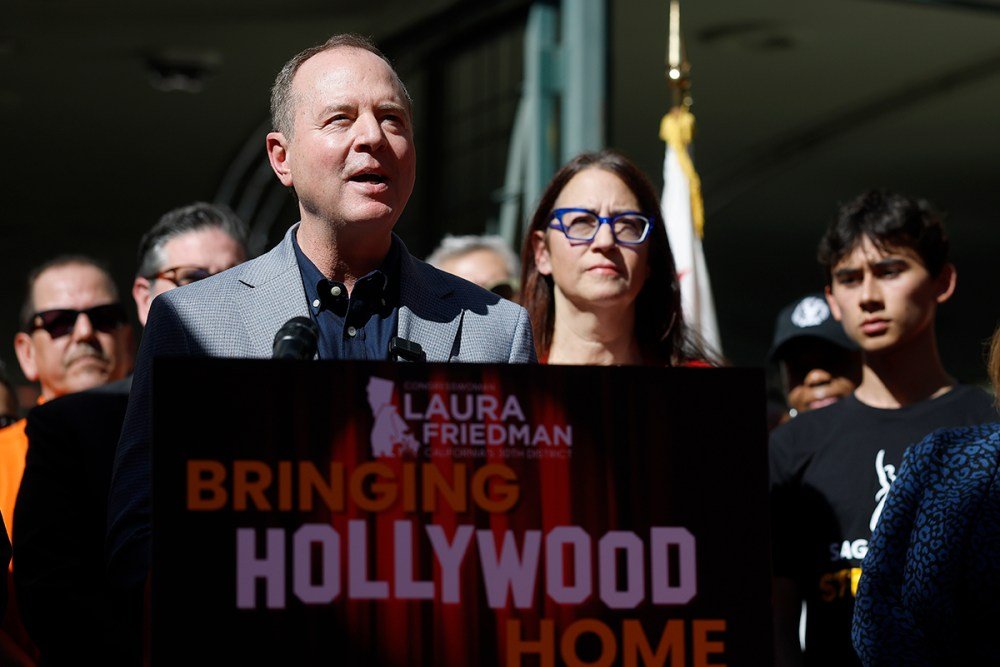
A delegation of California Democrats campaigned with union leaders on Tuesday for a federal film incentive as they seek to build momentum to pass the measure by the end of the year.
Sen. Adam Schiff and eight Democratic representatives from Southern California argued that the U.S. must counter incentives from 65 other countries that have lured American production jobs overseas.
“We are so close to getting this done,” Schiff said in 100-degree heat outside the Alex Theatre in Glendale. “Whatever we can do to get this done, that is job No. 1. It just can’t wait. It’s too important. The losses so far have been too extraordinary.”
Lawmakers introduced a bill last month that would create a 20%-30% transferable tax credit for U.S. labor costs on films and TV shows. Schiff said that 12 senators are on board — six Democrats and six Republicans. The latest to join as cosponsors are Sens. Thom Tillis, R-N.C., and Chris Coons, D-Del., according to Schiff’s office.
They will have about five weeks during the lame-duck session of Congress after the election to try to pass the bill. Rep. Laura Friedman, whose office organized Tuesday’s press conference, said she is “cautiously, guardedly optimistic.”
“We need to have this on the president’s desk by mid-December, as far as I’m concerned,” she said in an interview, adding that she hopes the bill will pass in essentially its current form as part of a larger tax package. “This has been almost two years of constant work. It hasn’t just come together in the last few weeks. It’s been a snowball effect. It started out as this idea, and then we just kept building and building and building. So I feel like we have a great momentum.”
The proposal includes a 5% bonus for filming in a disaster area, which would apply to the entirety of Los Angeles County until January 2030, due to last year’s fires. There are also bonuses for independent films and for filming in rural opportunity zones. The total tax credit could rise to 50% or more when combined with state incentives in places like California and New York — easily surpassing the incentives offered by other countries.
“It is fair to say that these other countries they recognize the quality of these jobs — that’s why they put these measures in place,” said Duncan Crabtree-Ireland, the executive director of SAG-AFTRA. “That’s why they are eating not only our lunch, but our breakfast and our dinner as well. And we have to change that. This is our opportunity to do it.”
A coalition of industry unions published a report on Monday documenting the erosion of U.S. production as a share of global spending over the past 25 years. According to the report, the U.S. share fell from 74% to 42% in film and from 94% to 64% in television, though both industries have also grown considerably over that time period.
In August, President Donald Trump called on Congress to “immediately” pass an incentive and pronouncing that “Hollywood is a Complete and Total Disaster!”
The Motion Picture Association, representing the studios, has sought to emphasize that the bill would benefit not only California and New York, but all 50 states. The MPA has also been more cautious about the timing, saying that while it’s important to move quickly, it’s also important to “get this right.”
But union leaders said Tuesday that their members can’t afford to wait.
“When this passes in this lame-duck session, it will immediately impact production in 2027,” said Mike Miller, vice president of IATSE. “And there are hundreds of thousands of entertainment industry workers that are counting on it.”
Co-workers of the 28-year-old Russian lab technician who died of pneumonia say she became ill after working with ‘plague-infected squirrels’ prior to her death.
The death of Daria Shipilova, who worked at the Irkutsk Anti-Plague Institute in Siberia, has sparked fears of a possible deadly pneumonic plague outbreak.
According to several local media reports, Shipilova became infected after ‘breaking a test tube containing a pathogen’.
She was taken to hospital with severe pneumonia symptoms and placed on a ventilator on 29 September but sadly died two days later.
However, Shipilova’s co-workers and friends say that she actually became ill after a trip to Buryatia, on Russia’s border with Mongolia plague-infested squirrels.
Russian outlet Mash, had previously reported that the lab tech had been sent to Buryatia, where ‘an outbreak of the plague had previously been recorded near the Mongolian border’.
In a new interview with independent Siberian outlet The Baikal Journal, co-workers of Shipilova, who was known as Dasha, shared new details about her illness.
“There was no fever, but then her condition worsened, and swelling developed,” they said.
The 28-year-old’s death has sparked fears of a plague outbreak (The Irkutsk Anti-Plague Research Institute of Siberia and Far East via AP/PA Images)
“Dasha was extremely afraid of infecting anyone if something happened. This was clear from how often she washed her hands, even outside of work.”
Meanwhile, her mother Svetlana, who is a doctor, has refuted claims her daughter broke a test tube.
“‘Only an amateur would say something like that,” she said.
“It’s simply impossible to spill or break it. They are so heavily protected.”
Her words echo Russian epidemiologist Mikhal Favorov who said the idea of someone falling ill from breaking a test tube was ‘laughable’.
Speaking to The Moscow Times, he said: “It’s laughable. Someone working at the Anti-Plague Institute in Irkutsk wears a protective anti-plague suit.
“If you break a test tube, the likelihood of infection is actually very low. In short, it doesn’t matter to the general public – they’ll believe the ‘broken test tube’ story.”
Svetlana also accused doctors of failing to save her daughter after she was put on a ventilator.
“I saved more than one patient like that, but they didn’t save my daughter,” she said.
“They simply let my daughter die.”
She said that four days on from her daughter’s death she’s still waiting for answers.
“I’m waiting for it to become official,” she added.
Plague bacteria Yersinia pestis (Getty)
“It has to be an official document. It’s very hard for me right now. This whole spectacle drags on.”
Shipilova’s death prompted several hospitals and colleges to go into lockdown while almost 200 people who came into contact with her have been quarantined.
Governor of Irkutsk Igor Kobzev said that at present there does not appear to be any other individuals who are currently showing signs of infection.
In a statement shared with the HuffPost, Chris Lewis, Director of Global Health Protection at UKHSA, said: “UKHSA is aware of media reports that emergency containment measures have been introduced in Russia’s Irkutsk region following the death of an employee at the Irkutsk Anti-Plague Institute.
“We are seeking information through the International Health Regulations channels to further understand the circumstances and verify the accuracy of these reports.”
What is pneumonic plague?
Pneumonic plague is one of three kinds of plague, alongside bubonic and septicaemic.
It is caused by the bacteria Yersinia pestis, usually found in small mammals and their fleas and can be contracted by humans via bites from infected fleas, unprotected contact with infected bodily fluids, or the inhalation of particles from a patient with pneumonic plague.
According to the World Health Organisation, pneumonic – or lung-based – plague is the most virulent form of plague.
“Incubation can be as short as 24 hours,” WHO writes.
“Any person with pneumonic plague may transmit the disease via respiratory particles to other humans. Untreated pneumonic plague, if not diagnosed and treated early, can be fatal.”
However, the organisation also notes that recovery rates are ‘high’ if the disease is detected and treated within 24 hours of onset symptoms.
$NEAR’s Chain Abstraction and intent-based execution could also reduce the steps required for agents to transact across blockchains.
Source: Grayscale
Moreover, co-founder Illia Polosukhin co-authored the research that introduced the Transformer architecture, now widely used in AI systems.
That background lends credibility to $NEAR’s AI ambitions. However, its long-term position depends on whether agents actually use the network.
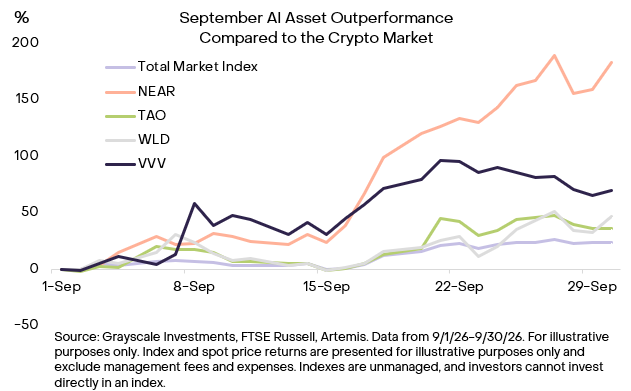
$NEAR gained 183% in September, compared with 54% for Grayscale’s AI crypto sector. Growing interest could help $NEAR attract more capital, but sustained agent activity would give that interest firmer backing.
$NEAR shifts users to new wallets
As $NEAR’s AI narrative broadens, its existing users face a more immediate change.
MyNearWallet announced its planned sunset for the 31st of October, with users directed toward alternatives including Meteor Wallet and near.com.
The migration timeline scheduled guided tools for August and September, followed by reduced functionality from October.
Source: X
Since migration can create friction that may result in temporary interruptions of activity despite the funds remaining on-chain, this will become apparent post deadline.
Thus, stable active addresses and continued staking participation would indicate that the migration was successful. Conversely, decreased activity could demonstrate that there are retention issues.
A smooth migration process would add credibility to $NEAR’s ecosystem and further reinforce their AI growth story. Disruption would detract from the narrative.
Can AI activity trigger another $NEAR season?
Meanwhile, $NEAR’s price action presented a separate test for buyers following September’s rally.
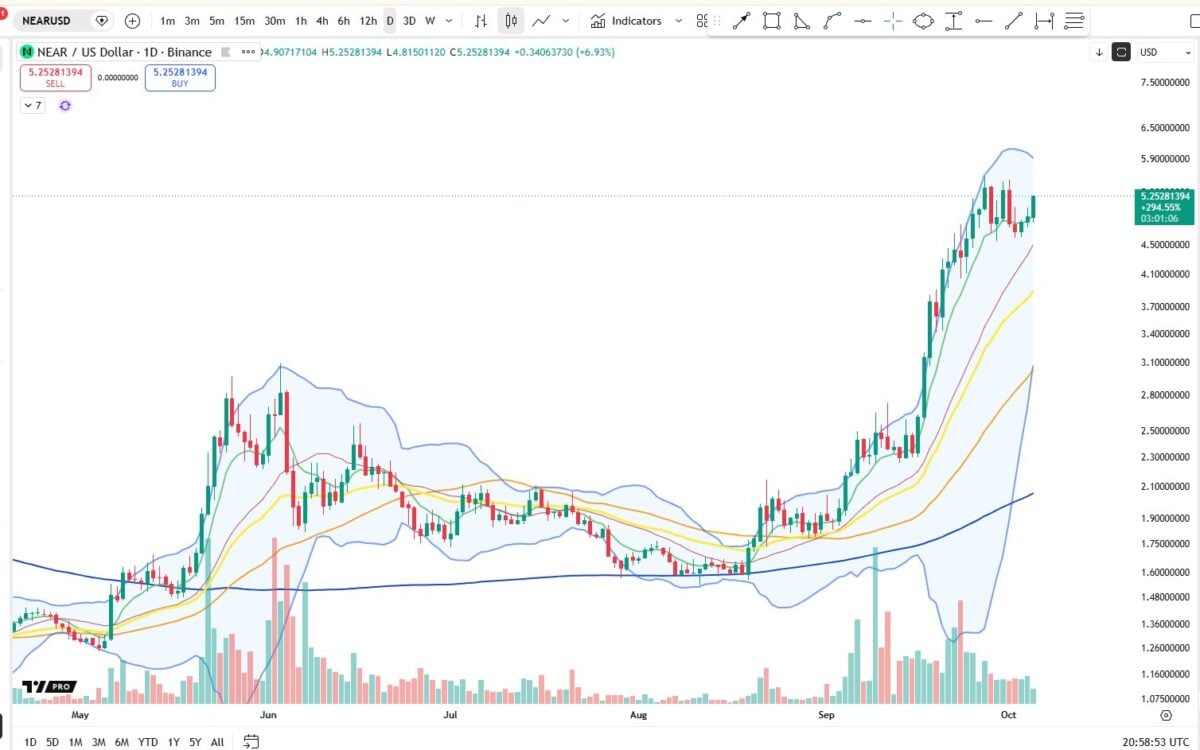
The token had climbed above $5 after breaking out of its summer trading range. At press time, $NEAR traded near $5.25 after rebounding from $4.70–$4.80 on Monday, the 5th of October.
The rebound followed September’s strong advance, while rising Trading Volume supported the bullish view. Expanding volatility bands indicated larger price swings, leaving room for sharp moves in either direction.
Source: TradingView
However, resistance near $5.39–$5.44 now limits the next advance, while $5.13 offers immediate support. A decisive close above resistance could extend momentum toward $5.56 and $6.00.
Conversely, losing $5.13 could trigger a deeper reset toward $4.70. Therefore, sustained AI activity and capital flows must support the rally beyond speculation.
Final Summary
$NEAR Protocol gains AI momentum as Grayscale highlights agentic commerce and $NEAR’s 183% September surge.
MyNearWallet’s sunset requires users to change interfaces while their tokens and staking positions remain on-chain.