There is precedent for much larger holdings reaching the market. Galaxy confirmed in July 2025 that it sold more than 80,000 $BTC for an early investor as part of an estate-planning strategy. Wednesday’s transfer is far smaller, and its records do not establish a sale.
100 bitcoin mined for pennies in 2010 moves after 16 years. (Shaurya Malwa/CoinDesk)
Old coins, active address
The alert prompted questions online because the address had spent other bitcoin between 2011 and 2018.
Bitcoin records incoming payments separately, allowing a wallet to spend one payment while leaving another untouched. Those unspent payments are called UTXOs. An address can therefore remain active while some of its coins sit still for years, as happened here.
The address spent 200 $BTC across two transactions in August 2015, another 100 $BTC in December 2017 and 249 $BTC in March 2018. The separate 100.02 $BTC payment from July 2010 remained unspent throughout.
“This address has been somewhat active in the past, but these specific coins have not moved since 2010. We track the coins,” Galaxy Research said on X.
CoinDesk traced that payment directly to two mining rewards created in July 2010, one worth 50 $BTC and the other 50.02 $BTC, including fees. Miners, the computers competing to add transactions to Bitcoin, received 50 newly created coins per block at the time.
Amazon data can tell a lot about you, especially if you regularly use its shopping, streaming, or other services. Launched back in May, the About You page details what Amazon thinks it has learned about you through your habits, and a recent viral post showed some odd assumptions.
In a post on Threads, Amazon user Megan Montgomery found the section in the app said they had “flat buttocks,” along with other, more typical shopping habits. Montgomery isn’t sure where the detail came from, but another user suggested it may have been ripped from a product review posted on Amazon.
The original post went viral, with many other users beginning to dig into what Amazon thinks about them.
The section often shows knowledge such as which devices you own, where you live, how many people are in your home, what pets you have, and what you buy regularly. The same user had a section that said they “prepared for a Bluey-themed 2nd birthday celebration.”
Other users posting to social media shared facts from their own profiles, such as “systematically expanding tool collection,” “prefers high-performance computer components,” and “reads fantasy romance novels extensively.”
What Does Amazon Know About You?
To check what Amazon has learned about you, you’ll need to have used its services regularly. One account that PCMag uses only intermittently for shopping returned zero results, as it hasn’t learned enough about the user.
Head to the desktop version of Amazon, click Account, and look for the section titled Ordering and shopping preferences > Your Shopping preferences. At the bottom of the page is a section called Manage your information that should list multiple entries.
Recommended by Our Editors
The mobile app makes it even easier to find: go to Account > Shopping preferences > About you, and you’ll find the full list there.
This data isn’t new for Amazon, but sharing it directly with buyers is a refreshing strategy for the online retailer. Amazon first launched the feature in May to help users edit their personal information and improve the retailer’s recommendations.
About Our Expert
Experience
I’ve been a journalist for over a decade after getting my start in tech reporting back in 2013. I joined PCMag in 2025, where I cover the latest developments across the tech sphere, writing about the gadgets and services you use every day. Be sure to send me any tips you think PCMag would be interested in.
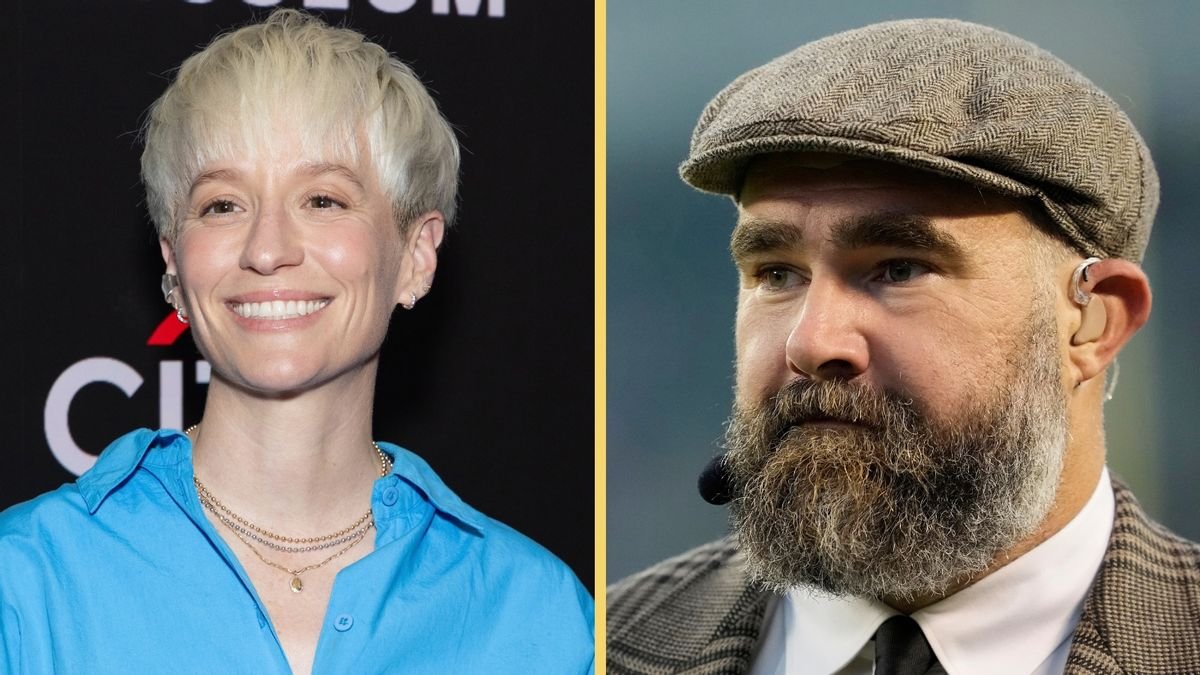
Retired professional U.S. soccer star Megan Rapinoe called for Super Bowl champion and ESPN analyst Jason Kelce’s firing after he said the Washington Commanders’ former team name on TV.
Rating:
A claim that retired professional U.S. soccer star Megan Rapinoe called for Super Bowl champion and ESPN analyst Jason Kelce’s firing began circulating online this week.
Snopes readers searched for references to Rapinoe and Kelce on this website, which led us to consult search engines DuckDuckGo and Google for basic details about why the two names were making the rounds together. We located a popular Facebook post (archived) that appeared on the Empire Sports Facebook page on Oct. 5, reading in part:
MEGAN RAPINOE: Calls for Jason Kelce to be FIRED..
Megan Rapinoe criticized Jason Kelce after he used Washington’s former team name during a live broadcast.
“I know Jason Kelce said that racist name on purpose to create division. He should be fired immediately.”
— Megan Rapinoe
The comments under Empire Sports’ post indicated some people believed Rapinoe truly called for Kelce’s firing.
Other users shared the rumor on Facebook (archived) and Threads (archived), though the original Empire Sports Facebook post earned far more likes, comments and shares than other examples.
In sum, while it’s true Kelce mentioned the old Washington Redskins’ team name during a TV broadcast, Rapinoe did not call for his firing.
The Empire Sports page displays a disclaimer acknowledging it publishes fabricated content of a parodical and satirical nature, reading, “Delivering the Finest of Sports Parodies / Satire / Updates / Insider News & much MORE.” In other words, Empire Sports does not publish authentic news reports.
The aforementioned searches of DuckDuckGo and Google located no news media outlets credibly reporting Rapinoe said any such things about Kelce. Rapinoe’s active Instagram page also did not feature any content about him.
Snopes emailed representatives for Rapinoe and Kelce to ask if either wished to address the popular made-up story. The Empire Sports page didn’t display a Messenger button or any other contact methods.
Purveyors of misinformation and fabricated stories — whether labeled as parody and satire or not — have long wielded Rapinoe’s name and image as politically-fueled engagement bait, whether for social media posts or website traffic, sometimes thinly disguised as satire. Part of the reason for the firestorm of controversy in this instance stems from U.S. President Donald Trump’s comments about Rapinoe, and vice versa.
What Kelce said
On Oct. 4, Kelce served as an analyst during the ESPN-owned NFL Network TV broadcast of the Indianapolis Colts’ 30-13 victory over the Washington Commanders, which took place in London.
A video from that broadcast shows Kelce apologizing to the Washington Commanders after he used the team’s former name. In the clip, Kelce breaks down the Commanders’ defensive coverage, saying, “The Redskins right now are doing a great job of not only staying tight but making the play when the ball is in the receiver’s hand and keeping it short of the sticks.”
Announcer Dave Pasch laughs, telling Kelce he accidentally said Redskins, to which Kelce responds, “Oh my gosh! I almost made it out.” Pasch then says he, Kelce and former Super Bowl MVP Kurt Warner, also working as an analyst, all had a “gentleman’s bet” regarding who would slip up first. Kelce replies, “Well, sorry Washington.”
@awfulannouncing. “Jason Kelce Slips up When Referring to the Washington Commanders.” X, 4 Oct. 2026, https://x.com/awfulannouncing/status/2106779876548288747.
ESPN News Services. “Regulators OK ESPN’s Deal for NFL Network, RedZone Rights from NFL.” ESPN, 31 Jan. 2026, https://www.espn.com/espn/story/_/id/47793895/regulators-ok-espn-purchase-nfl-network-redzone-rights-nfl-equity-stake.
“Kurt Warner.” Pro Football Hall of Fame, https://www.profootballhof.com/players/kurt-warner.
Mangan, Dan. “Trump Says World Cup Soccer Star Megan Rapinoe ‘should Never Disrespect Our Country’ after She Scoffs at Idea of White House Visit.” CNBC, 26 June 2019, https://www.cnbc.com/2019/06/26/trump-criticizes-world-cup-star-megan-rapinoe.html.
O’Kane, Caitlin. “Megan Rapinoe Says She’s Never Going to the White House — Unless She’s Inaugurated.” CBS News, 29 July 2019, https://www.cbsnews.com/news/megan-rapinoe-says-shes-never-going-to-the-white-house-unless-shes-inaugurated/.
“Tea Time as Jonathan Taylor Runs for 2 TDs and Colts Beat Commanders 30-13 in London.” ESPN, The Associated Press, 4 Oct. 2026, https://www.espn.com/nfl/recap/_/gameId/401872965.
“U.S. Women’s National Team Legend Megan Rapinoe Announces Retirement From Professional Soccer At End Of 2023 NWSL Season | U.S. Soccer Official Website.” U.S. Soccer, 8 July 2023, https://ussoccer.com/stories/2023/07/us-womens-national-team-legend-megan-rapinoe-will-retire-at-end-of-2023-nwsl-season.
Brett McGurk‘s new book Brink: Inside the Race to Free the October 7th Hostages offers an insider account of the diplomatic rollercoaster to secure a ceasefire and hostage release in the war in Gaza.
The book, published this week, also offers a glimpse at White House messaging about the conflict, including two figures the president turned to in delivering a key speech: Jeffrey Katzenberg and Steven Spielberg.
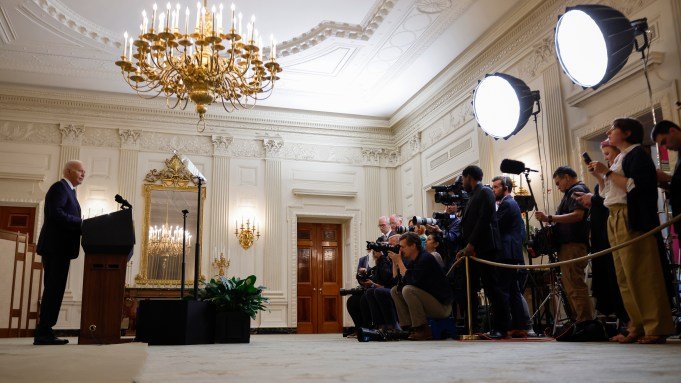
McGurk, who served as deputy assistant for national security affairs to Biden, wrote of the scene as they prepared the president for his address on May 31, 2024. While Katzenberg and Spielberg’s role have been reported before, McGurk gave a first-hand account in the room, for a speech focused on a proposal to end the fighting and to secure a release of the hostages.
By that point, the Gaza conflict had created divisions within the Democratic coalition, protests at college campuses and presidential appearances and concerns over its impact on the November elections. There was pressure from the campaign for the president to make an address on the crisis, per McGurk.
McGurk wrote of the rehearsal, “In the Map Room, Biden peered at two screens behind me. ‘Jeffrey, Steven, welcome,’ he said. I turned around to see Jeffery Katzenberg and Steven Spielberg on Zoom. They greeted Biden warmly, Spielberg saying this was the speech they wanted to hear.
“It was a reminder that while I saw this speech as a policy address with a functional aim, it had a political purpose, too,” McGurk wrote.
He added, “The speech was timed for Friday night in Israel, when much of the country shuts down, allowing time for us to shape its reception there and around the world. Notably, we did not inform Netanyahu that we were making the speech until shortly before Biden delivered it, as we knew the address would lock Netanyahu into the terms of the deal now on the table.
“Biden said he was ready.
“Katzenberg advised, ‘Remember, slow Joe, let the audience hear every word.’
“Biden smiled, ‘Slow Joe? Don’t let Jill hear that.’
“He read through the draft, pausing at times to ask questions about the text, which we addressed with rewrites.”
McGurk wrote that he found Biden “fully engaged, leaning forward on the podium.”
He wrote, “The moguls told him he looked strong, and he did. There was no sign of the Biden we’d all see on a debate stage with Trump only four weeks later.”
The latter was a reference to Biden’s disastrous debate performance against Trump. What followed were weeks of calls on Biden to drop out, coming from some elected Democrats and prominent donors, until he exited the race on July 19. Katzenberg had played a prominent role as a top adviser to Biden’s re-election campaign.
While the Biden speech focused on a peace proposal, as it turned out, it would take until the next year, a week before Trump returned to office, for a ceasefire agreement to be reached.
A wrestler in Mexico has been arrested after allegedly using a banned move on a 75-year-old referee during the match.
El Hijo de Fishman, whose real name is a matter of secrecy as is tradition with masked wrestlers in Mexico, was in the main event against Mascara Sagrada for El Patron Espectaculous on Wednesday morning in Hidalgo.
The 36-year-old, who is the son of former professional wrestler Fishman, was detained by police after Gerardo German Pineda aka El Buho tragically died in the ring.
Inexplicably, it is being reported that Fishman Jr. performed a ‘double underhook piledriver’ on the elderly referee during the match, with Pineda left unmoving on the floor for several minutes before someone came to check on him.
The move is banned across all major promotions like WWE and restricted elsewhere because of the obvious risk of head, neck and spinal injuries.
It is suggested that there were no health care professionals in attendance and once an ambulance was finally called, the paramedics who arrived could do little but pronounce Pineda dead at the scene.
El Buho passed away during the fight (Superluchas)
A hearing is now due to decide Fishman Jr’s fate, and should he face a manslaughter charge, he could face a significant period behind bars.
El Patron Espectaculos later released a statement to express its regret about the shocking incident, addressing fans and the general public.
It read: “Given the regrettable events that occurred during the early hours of this Wednesday, October 7, in Mineral de la Reforma, Hidalgo, during a Lucha Libre event in which independent wrestler Hijo de Fishman and referee Gerardo Germán Pineda, “El Búho,” participated, who unfortunately lost his life, El Patrón Espectáculos informs:
“Our company is attentive to the development of the situation and has arranged accompaniment and legal assistance for Hijo de Fishman, so that the corresponding process is carried out in accordance with the law and before the competent authorities.
“The lawyer and legal representative of the company maintains contact with the family of Mr. Gerardo Germán Pineda, “El Búho,” and with their legal representatives, to handle the case in the best way and guarantee respect for all parties involved.
“The legal process continues, so, in respect for the authorities and due process, this company will refrain from issuing additional information that could interfere with or prejudge the facts.
“We ask the fans, media, and members of the guild to act with prudence, discretion, and respect, and to avoid the dissemination of rumors or unconfirmed information, so as not to hinder the investigations and out of respect for all parties involved and their families.
“We deeply regret the loss of a life and express our solidarity to his family, friends, and colleagues in the Lucha Libre guild.”
It is only the latest shocking incident to occur in a wrestling or MMA ring, with Raja Jackson attacking Syko Stu with multiple punches live on a Kick stream late last year.
The claim that an image of U.S. Secretary of Defense Pete Hegseth standing in front of an eagle emblem with his arms raised closely resembles a real image of Nazi leader Adolf Hitler is unfounded.
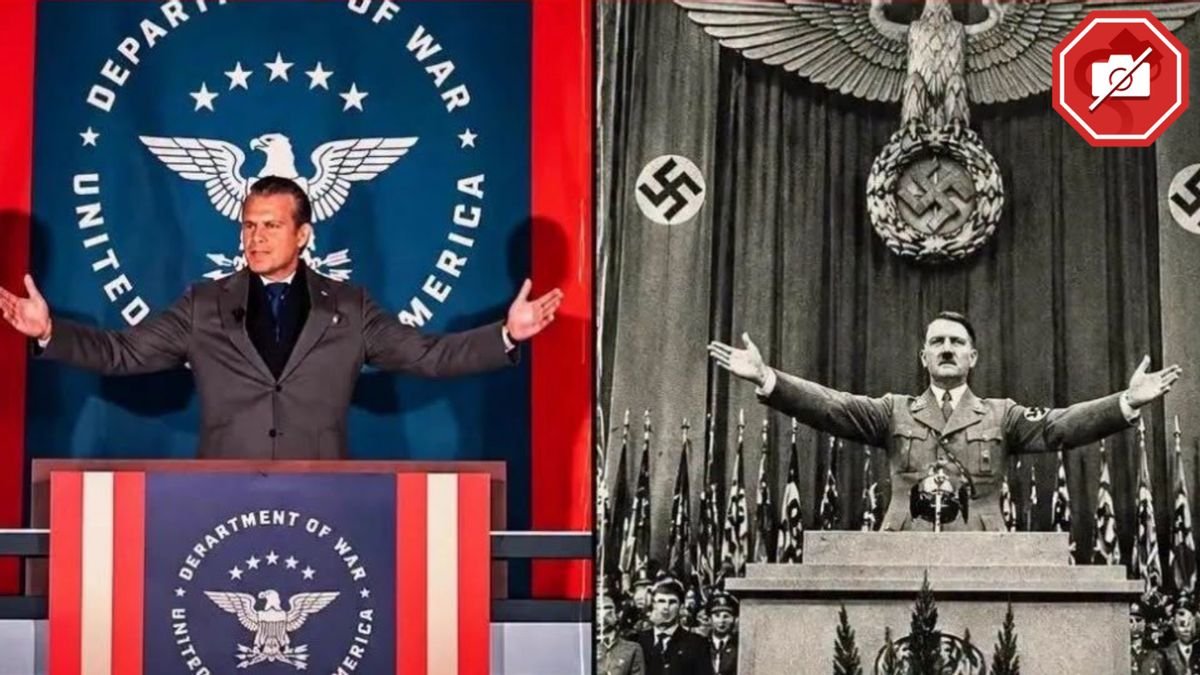
The image of Hitler has strong indications of artificial intelligence generation. The image of Hegseth also has signs pointing to AI editing, although real video footage from an Oct. 3 speech authentically shows that the changes were minor and that Hegseth did raise his arms in front of a stylized version of the Department of Defense’s eagle seal.
The eagle emblem in the image of Hitler matches the “Reichsadler” symbol Hitler’s Nazi regime used — but it’s worth noting that the emblem was a highly stylized version of an eagle symbol used in Germany both before and after the Nazi Party came to power. The DOD has since 1949 used a seal featuring an eagle holding arrows above an olive branch; the version on display during Hegseth’s Oct. 3 speech omitted the olive branch and had a more stylized design.
We’ve reached out to the DOD to ask about the reason for the redesign and whether any similarities to the Reichsadler were intentional. The DOD denied any similarities existed.
On Oct. 3, U.S. Secretary of Defense Pete Hegseth delivered a speech at the U.S. Air Force Academy. Images from the speech of Hegseth with his arms spread wide in front of the Department of Defense’s eagle seal went viral, drawing comparisons to Nazi leader Adolf Hitler and an official Nazi symbol.
Snopes readers shared the images with us, asking to confirm whether such comparisons were accurate. One Facebook meme showed Hegseth in front of a simplified version of the DOD’s eagle seal without its traditional olive branch. Next to him, in a similar pose with his arms outstretched is Hitler in front of the “Reichsadler,” the eagle emblem of Nazi Germany. The accompanying caption stated:
On Saturday, Hegseth traveled to the U.S. Air Force Academy in Colorado Springs to address the cadets.
As he walked on stage, the Department of War seal was visible behind him and on the podium in front of him.
Before he began, he raised both arms out to the side and told the cadets to take their seats.
That was all it took.
Within hours, critics were posting side-by-side images comparing the staging of the speech to old photos of Adolf Hitler speaking in front of an eagle emblem.
(Facebook user “Really American”)
The image of Hegseth showed signs of artificial intelligence editing in the form of garbled letters in the seals behind and in front of him, but video footage of the Oct. 3 speech shows that the content was not meaningfully altered. The accompanying image of Hitler, however, carries signs of heavy manipulation and was likely entirely generated by AI.
That said, there are still other authentic photographs of Hitler that show him standing in front of a Nazi eagle emblem that in some ways resembles the new DOD one.
Given the heavy manipulation of the Hitler image, we found the claim that the image of Hegseth closely resembled a real image of Hitler unfounded.
We reached out to the DOD to ask about the reason for the redesign and whether any resemblance to the Reichsadler was intentional. Deputy Pentagon Press Secretary Joel Valdez said to us over email: “The American bald eagle is an icon of our country and used on many state and federal seals, including the seal of the Department of War. If for some reason you see imagery of a bald eagle and begin having delusions about Nazi Germany, then you may need to get your head checked for serious brain damage.”
The moment where Hegseth raised his arms wide occurred in the very beginning of his speech at the 5-second mark on the official DOD YouTube video. We captured a screenshot below:
(YouTube user “Department of War”)
The image of Hegseth in the Facebook post appears to have been edited or manipulated. The color is much brighter and the “M” behind Hegseth’s right arm appears misshapen. Hegseth’s face also appears different. The image itself is similar to its original YouTube video.
There are several indications of AI generation in the purported photograph of Hitler. Firstly, the individuals on either side of him on the bottom left and right of the frame all have incomplete facial features, with sections of their heads cut off or blurred. The flags behind him also have inconsistent patterns that show signs of heavy editing or cropping.
Real photographs of Hitler standing in front of flag poles show that, even on draped flags, the swastikas are recognizable. The two swastikas on either side of Hitler’s head are almost perfectly round circles. Considering they are placed over what could either be rounded pillars or curtains, they are clearly overlaid or heavily edited.
We compared the image to realphotographs of speeches Hitler made, and found none that resemble the room in the image from the meme. One authentic 1939 image on Getty Images shows Hitler speaking to the Reichstag, or German parliament, with a much larger eagle symbol and the Nazi symbols farther apart. Images of Hitler speaking at Nuremberg rallies do not align with the one in the above meme. Videos show that Hitler often spoke with his arms held wide, but there are no specific videos corresponding with the image in the above meme.
Despite the above image of Hitler being heavily manipulated, Hegseth’s backdrop still has loose similarities to other realphotographs of Hitler speaking in front of an eagle emblem.
During Hegseth’s speech, many online noted the simplified (archived) version of the DOD seal, which removed the traditional olive leaves below the eagle, made the eagle’s design more angular and replaced the 13 stars above the eagle with five stars.
We should note that the eagle symbol was used in Germany before and after the Nazi Party came to power. The DOD has been using the eagle seal since 1949. The DOD website, which still showed the version of the seal containing the olive branch as of this writing, explains its meaning thus: “The American bald eagle, long associated with symbolism representing the United States of America and its military establishment, has been selected as an emblem of strength. In facing to the right, the field of honor is indicated.”
Hegseth has also been in the news for his Sept. 30 “State of the Force” address, in which he announced he was creating an Office of Religious Affairs at the Pentagon and initiating “Project Meridian,” which he described as “an effort led by America’s best minds to study the future of warfare.”
“29th March 1938, German Chancellor and Nazi Dictator Adolf Hitler Is…” Getty Images, 8 Feb. 2008, https://www.gettyimages.com/detail/news-photo/29th-march-1938-german-chancellor-and-nazi-dictator-adolf-news-photo/79665902. Accessed 6 Oct. 2026.
“April 28, 1939; Hitler Makes an Address to the Reichstag, Answering…” Getty Images, 23 July 2015, https://www.gettyimages.com/detail/news-photo/april-28-1939-hitler-makes-an-address-to-the-reichstag-news-photo/566456303. Accessed 6 Oct. 2026.
Barton, Laura. “Is the Eagle a Nazi Symbol?” The Guardian, 20 June 2007. Money. The Guardian, https://www.theguardian.com/money/2007/jun/20/business.secondworldwar. Accessed 6 Oct. 2026.
“Brand Guide.” Department of War, https://www.war.gov/Brand-Guide/. Accessed 6 Oct. 2026.
Cartwright, Mark. “Nuremberg Rally.” World History Encyclopedia, Oct. 2024. www.worldhistory.org, https://www.worldhistory.org/Nuremberg_Rally/. Accessed 6 Oct. 2026.
Deng, Rae. “12 Rumors about Defense Secretary Pete Hegseth.” Snopes, 30 Apr. 2025, https://www.snopes.com//collections/pete-hegseth-rumors-collection/. Accessed 6 Oct. 2026.
“Hegseth Speaks to Cadets Ahead of Air Force, Navy Football Game.” Department of War, 3 Oct. 2026, https://www.war.gov/News/News-Stories/Article/Article/4618565/hegseth-speaks-to-cadets-ahead-of-air-force-navy-football-game/. Accessed 6 Oct. 2026.
“Hitler, Adolf – Politician, NSDAP, Germany *20.04.1889-+ Hitler After…” Getty Images, 16 Apr. 2015, https://www.gettyimages.com/detail/news-photo/hitler-adolf-politician-nsdap-germany-20-04-1889-hitler-news-photo/548866885. Accessed 6 Oct. 2026.
Izzo, Jack. “21 Claims We’ve Investigated about Hegseth’s Department of Defense.” Snopes, 4 Apr. 2026, https://www.snopes.com//collections/hegseth-department-of-defense-rumors/. Accessed 6 Oct. 2026.
“Le Chancelier Adolf Hitler Prononçant Un Discours à Karlsruhe,…” Getty Images, 30 Apr. 2018, https://www.gettyimages.com/detail/news-photo/le-chancelier-adolf-hitler-pronon%C3%A7ant-un-discours-%C3%A0-news-photo/953408810. Accessed 6 Oct. 2026.
Rascouët-Paz, Anna. “Hegseth Named Musk, Gingrich to Lead ‘Project Meridian.’ Here’s What We Know about the Plan.” Snopes, 1 Oct. 2026, https://www.snopes.com//news/2026/10/01/hegseth-musk-gingrich-project-meridian/. Accessed 6 Oct. 2026.
Rascouët-Paz, Anna. “Pentagon’s New Office of Religious Affairs under Hegseth: What We Know.” Snopes, 2 Oct. 2026, https://www.snopes.com//news/2026/10/02/hegseth-religious-affairs-office/. Accessed 6 Oct. 2026.
Google launched Playground on Oct. 7, a browser-based tool where U.S. adults describe a game in plain language and get a playable, shareable version, with creation access tiered by Google AI subscription.
Google’s announcement did not name the AI models behind Playground or give pricing, and it calls the tool “an early experiment.”
Unity Spark, a more advanced tool with 3D graphics and professional-level mechanics, will plug into Playground; Google and Unity say it arrives later this year.
Google launched Playground on Wednesday, a web platform where anyone can describe a game in plain language and get a playable version back without writing code. Users then refine the result by chatting, asking for different physics, rules, characters or settings, and can share it with a link, per Google.
“Today, we’re introducing Playground, an experimental gaming platform that lets you create, play, and share custom games,” Google wrote. “Playground lowers the barriers to creation, so bringing game ideas to life can now be as easy as describing it through a few prompts—no coding experience required.”
Playground is live for U.S. users 18 and older, with tiered creation access rolling out based on a user’s Google AI subscription. Google’s announcement did not include prices or say which AI models power the tool.
Games run in a web browser on phones and laptops. Creators can keep them private or publish them to a community gallery, where every game goes through a safety screening, and some genres support leaderboards and multiplayer.
Google calls Playground “an early experiment designed to make game creation more approachable.” It preaches the gospel of vibe coding. “If you can think it, you can play it.”
That said, Playground goes beyond the simple things you can do vibe coding on your Google Gemini session. It seems to be capable of using some of the same tools and resources that experienced game makers use in their daily jobs.
The upgrade path runs through Unity Spark, which Google says Playground will soon integrate for creators who want professional-level mechanics and high-fidelity 3D. Unity makes a game engine, the software toolkit studios build games with, and its then-CEO predicted in 2023 that generative AI would cut the time needed to build game worlds by five to ten times.
DeepMind, Google’s AI research lab, unveiled Genie in 2024, a model trained on more than 200,000 hours of gameplay video that could turn an image or text prompt into a simple 2D platformer. It had 11 billion parameters, the adjustable values where an AI stores what it learned.
In January, Google opened Project Genie to AI Ultra subscribers in the U.S., built on Genie 3, a so-called world model that generates an interactive world in real time as you move through it. Sessions were capped at 60 seconds, and Google warned that worlds might not follow prompts or real-world physics.
BitcoinBTC · USD
$82,632−1.52%
Oct 1Oct 3Oct 5Oct 6Oct 8
$86.8k$85.4k$84.0k$82.6k
24h HighHigh$83,812
24h LowLow$82,318
VolVol$1.4B
Market projectionsOdds by Myriad
→
Game stocks sank the next day, with Unity closing down about 24% and Roblox and others also dropping, as investors worried AI could displace traditional game tools. Roblox, where users build and play each other’s games, had told investors in 2023 it was moving toward letting anyone make avatars and clothing entirely through text prompts.
For someone who has never touched a code editor, Playground turns a game idea into a conversation rather than a career change, though only adults in the U.S. can try it for now. Anything generated this way will likely resemble a prototype before it resembles a hit, after all, Google itself says this is merely experimental.
Google and Unity said in a joint release that Spark arrives later this year, and Google says a closed beta is coming soon.
Daily Debrief Newsletter
Start every day with the top news stories right now, plus original features, a podcast, videos and more.
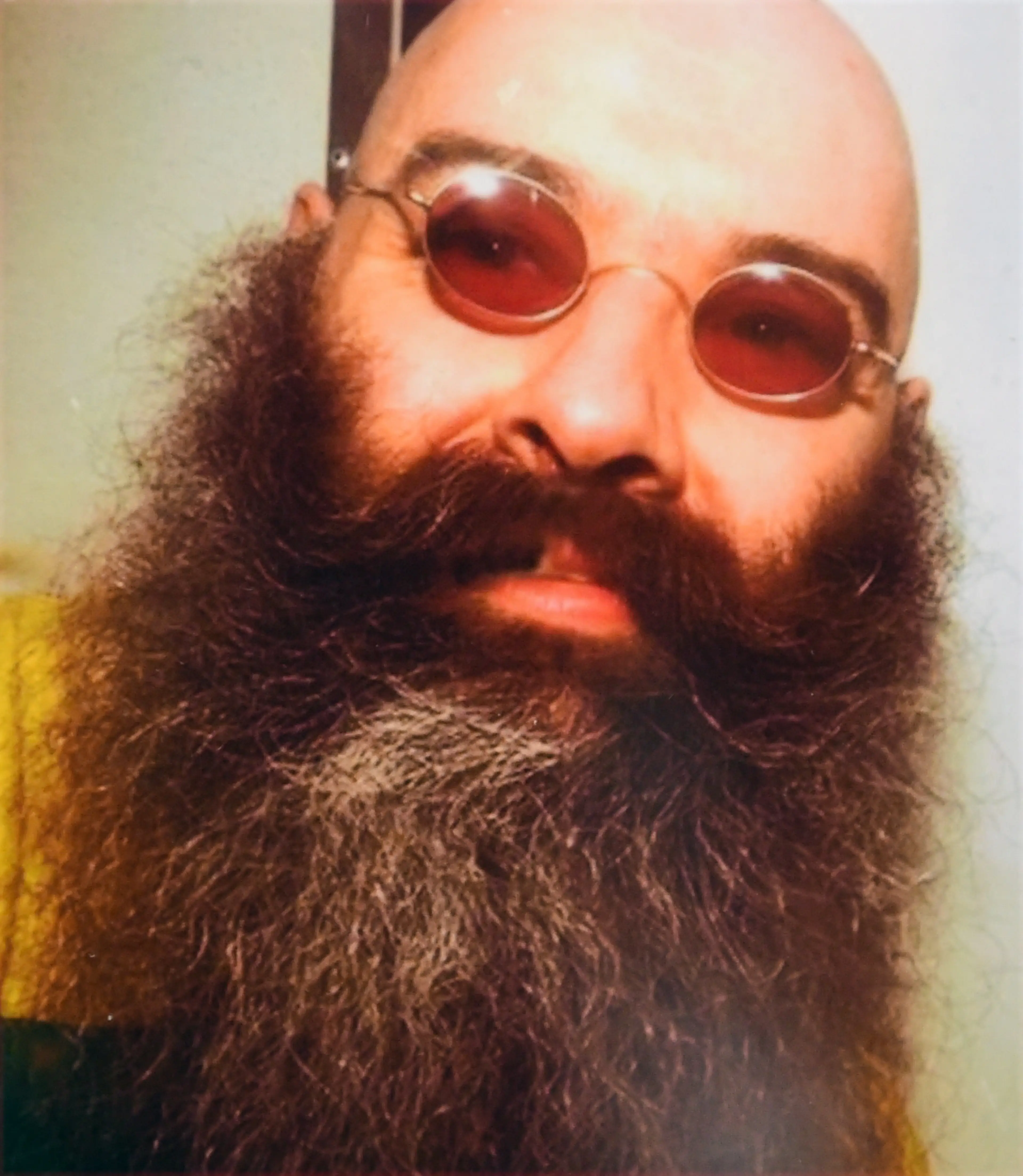
Charles Bronson is bracing for his next parole bid – and if it succeeds, he could be a free man by December.
The 73-year-old, who is one of the UK‘s most infamous and longest-serving prisoners, might be out by Christmas if his upcoming hearings go well.
He’s spent more than five decades in custody and is said to be ‘delighted’ with the progress of his fight for freedom, although after repeated knock backs, his solicitor said he ‘is under no illusions’.
Bronson is considered to be one of Britain’s most violent offenders due to his antics behind bars, but now ‘wants to show the world he is not the person he was’, his lawyer Gurdeep Singh told the Daily Star.
The inmate, who now goes by the name Charles Salvador, hopes to convince the Parole Board that he can safely be released into the community next month at a two-day oral hearing.
Bronson seen on the roof of Broadmoor Hospital while staging a protest in June 1983 (Hart/Mirrorpix/Getty Images)
The Luton-born criminal is set to reel off a list of reasons for why he deserves to walk the streets again. On 2 November, the proceedings will begin and officials will examine whether Bronson is eligible for freedom.
He was locked up in 1974 for armed robbery at the age of 22, but his initial seven-year sentence continued to increase after he committed several attacks on other prisoners and guards.
Bronson was released from behind bars in 1987, before being locked up again after he was found guilty of a second armed robbery the following year.
He was then handed a discretionary life sentence with a minimum term of four years after holding a prison teacher hostage for almost 48 hours in 1999.
Singh said of his client’s latest bid for parole: “Mr Salvador is delighted with the fact he has been progressed to a full hearing but he is under no illusions; this is just the start of the fight for his release.
He could be out by Christmas if the Parole Board grant him freedom (Universal History Archive/Universal Images Group via Getty Images)
“He wants to show the world he is not the person he was, he hopes to convince the panel that he is a changed man intent on living a simple life in the outside world,” Singh said.
“He has high hopes he can see his 95-year-old mother this year.”
Bronson could also be moved to a lower security prison or onto a wing with other prisoners to see how he adapts after being in and out of solitary confinement for countless years.
A Parole Board spokesman told the Star: “The Parole Board is an independent body whose members make judicial decisions on whether people who have committed serious offences or are assessed as potentially dangerous need to stay in public for the protection of the public.
“The parole process is focussed solely on risk and public protection is always our key consideration.”
LADbible has contacted the Parole Board for further comment.
$NEAR Intents, a cross-chain trading protocol, has handled over $31 billion in cumulative transaction volume, according to the $NEAR Intents Explorer.
$NEAR’s rise in the rankings also follows the Sept. 29 launch of the first US spot exchange-traded product tracking the token. The Bitwise fund trades on NYSE Arca under the ticker NRR, offering investors exposure to $NEAR without directly holding the crypto.
$NEAR Intents suffered a $3.8 million exploit involving its deposit and withdrawal infrastructure last week. On Oct. 2, General Manager Alex Shevchenko said that all stolen funds had been returned, a day after the breach was disclosed.
Yoido Full Gospel Church in Seoul said Wednesday that data tied to 850,000 members may have been compromised, including names, birth dates and a log of changes to ID numbers, phone numbers and addresses.
Security firm Oasis Security found the data on an overseas server alongside attack logs that referenced AI sub-agents and looked machine-generated, though AI’s exact role is unclear.
Sarang Church, a second Seoul megachurch, reportedly lost records on about 89,000 members and 286 employees, as South Korea also probes suspected AI-assisted hacks at banks including Shinhan.
Yoido Full Gospel Church, the Seoul megachurch Guinness once recognized as the largest congregation in the world, said Wednesday that personal data tied to 850,000 members may have been stolen.
The church’s initial review found names and dates of birth, plus a log of changes members had made to their records. “The file contained 2,629 changes to resident registration numbers, 3,964 changes to phone numbers and 7,202 changes to addresses,” the church said in a statement.
South Korea’s internet security agency, KISA, flagged the suspected breach to the church on Tuesday afternoon. The church has since blocked outside access to its systems, changed its server passwords and begun notifying members.
Oasis Security, a cybersecurity company, found the data on an overseas server that also held attack logs and account details linked to Yoido and a second Seoul megachurch, Sarang Church. The firm came across it in September while tracing internet addresses tied to suspected attacks.
Sarang’s haul is smaller: about 89,000 member records and 286 employee records, including the senior pastor’s. The logs suggest that data was stolen in August, and the church has formed an emergency task force and reported the incident to authorities.
BitcoinBTC · USD
$82,640−1.54%
Oct 1Oct 3Oct 5Oct 6Oct 8
$86.8k$85.4k$84.0k$82.6k
24h HighHigh$83,812
24h LowLow$82,318
VolVol$1.4B
Market projectionsOdds by Myriad
→
Oasis said the attack records show activity of AI sub-agents, meaning helper programs that an AI model launches to handle separate chunks of a job, along with long attack reports that look machine-written. The churches are still working out how the intruders got in, and AI’s role remains unclear.
President Lee Jae Myung confirmed Tuesday that AI is believed to have been used in recent hacks on South Korean commercial banks. Shinhan Bank’s breach exposed names, phone numbers, annual income and borrowing limits for about 25,000 customers, according to local news reports, and the financial regulator opened an emergency on-site inspection.
Yoido Full Gospel Church said it plans to replace its firewall, the filter that blocks unwanted traffic into a network, and bring in security firms to hunt for other weaknesses while it notifies the 850,000 members whose data may be affected.
Daily Debrief Newsletter
Start every day with the top news stories right now, plus original features, a podcast, videos and more.

















.svg)