Blog

  • Coldcard Bitcoin Exploit Balloons to $88 Million as Attackers Keep Draining Wallets

    Coldcard Bitcoin Exploit Balloons to $88 Million as Attackers Keep Draining Wallets

    In brief

    • The Coldcard exploit is ongoing, with Galaxy Research now tracking about $88.6 million stolen across 4,585 addresses in three waves.
    • Galaxy’s Alex Thorn described the sweeps as deliberate and likely LLM-orchestrated, warning that every single-sig Coldcard address created after the March 2021 firmware flaw will eventually be drained.
    • The breach has spurred an unusual reversal of the “not your keys, not your coins” ethos as users move Bitcoin back to exchanges.

    The theft of Bitcoin from compromised Coldcard hardware wallets is still underway, with researchers now tracking losses of roughly $88 million and warning that every vulnerable device will eventually be emptied.

    Galaxy Research said Saturday it has identified a third wave of thefts, in which 207.73 BTC was drained, lifting its observed tally to about 1,367 BTC—around $88.6 million—across 4,585 addresses. The firm called the exploit ongoing and urged anyone holding single-signature funds on a Coldcard to move them at once. Galaxy said it has flagged roughly 600 suspected attacker addresses to federal investigators, compliance firms and cross-industry cyber investigators, crediting victims who shared transaction details for helping map the on-chain patterns.

    “I continue to investigate and add new Coldcard victim and attacker addresses to our investigation database,” Galaxy’s head of research Alex Thorn posted to X. “The attack is ongoing—move your funds off Coldcard-generated addresses immediately if you have not done so.”

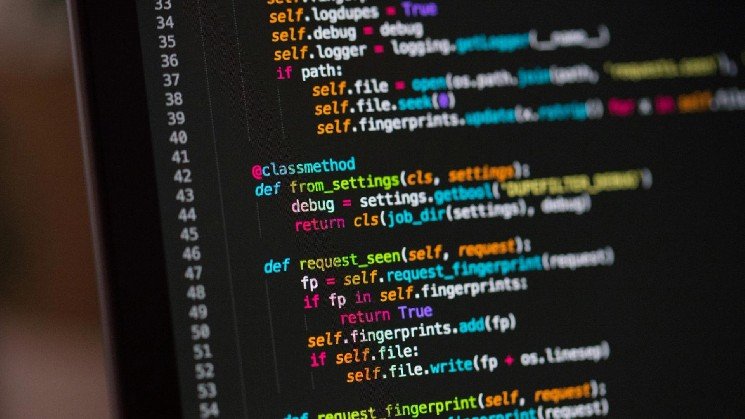
    The flaw, as Decrypt previously reported, stems from a March 2021 firmware build error on Coinkite’s devices that caused seed phrases to be generated with far too little randomness, leaving private keys guessable. Thorn wrote that the sweeps look deliberate and programmatic, probably orchestrated with a large language model, and cautioned that every single-sig Coldcard address created after that 2021 update will eventually be drained, saying it is only a matter of time.

    Thorn noted the stolen coins had sat untouched for years before being taken—an average dormancy of 3.18 years—underscoring that the victims were long-term holders. The funds from the three documented waves remain parked in attacker addresses and have not moved.

    The fallout has driven a panicked response from affected users, with security experts urging caution when moving funds to new addresses. Many of the affected users are racing to move Bitcoin off self-custody and back onto centralized crypto exchanges, such as Coinbase or Binance, or freshly generated addresses—an inversion of the industry’s usual “not your keys, not your coins” ethos.

    For some, the warnings came too late. Canadian coach Jonathan Goodman said in a post on X that 18.25 BTC, worth about $1.6 million Canadian, was swept from his wallets in a seven-minute span on July 29, despite his keys sitting in a safety deposit box that never touched the internet. “Perhaps the hardest part about this is that I did everything right,” he wrote, adding that he is filing reports with police and the Ontario Securities Commission.

    Daily Debrief Newsletter

    Start every day with the top news stories right now, plus original features, a podcast, videos and more.

  • Cardano whales buy 240M ADA – Is it enough to fuel a $0.20 breakout?

    Cardano whales buy 240M ADA – Is it enough to fuel a $0.20 breakout?

    Cardano [$ADA] climbed 8.74% over the past 24 hours, extending bullish momentum after breaking out of its multi-week consolidation.

    After establishing a firm base near $0.1531, $ADA gradually regained strength, setting the stage for a decisive breakout. Buyers then reclaimed the $0.1750 mid-range level before pushing through the key $0.1812 resistance.

    At press time, the altcoin traded around $0.1860, reflecting a strong recovery from late-July lows. Moreover, the breakout candle printed 3.49 million $ADA in volume, confirming genuine buying interest rather than a weak rally.

    Source: $ADA/USDT on TradingView

    This improving structure strengthens bullish momentum. However, the rapid gains may create opportunities for short-term pullbacks after the breakout. If $ADA can maintain the support at $0.1812, the next leg up will likely be towards $0.2000 resistance.

    Consequently, losing that level would increase the likelihood of a healthy retest before another advance.

    Market rotation reinforces Cardano’s rally

    Such an improving technical structure also appears to reflect a broader shift across the altcoin market rather than Cardano alone. The Altcoin Season Index climbed 5.77% over the past 24 hours to 55, moving further above the neutral 50 threshold.

    This suggests capital is gradually rotating from Bitcoin [BTC] into higher-beta altcoins. Meanwhile, the altcoin market cap stabilized near $900 billion after recovering from its late-June lows, reinforcing improving risk appetite.

    Source: CoinMarketCap

    That broader backdrop strengthens Cardano’s breakout above $0.1812, indicating buyers are responding to favorable market positioning alongside project-specific demand.

    Although the Altcoin Season Index remains far short of the 75 altcoin season threshold. This suggests that broader participation must continue before a sustained sector-wide rally becomes more convincing.

    Derivatives reinforce the breakout

    That broader optimism is also becoming visible in Cardano’s derivatives market. After whales accumulated more than 240 million $ADA over the past five days, Santiment data shows the token rallied 22%, encouraging more leveraged participation.

    Source: X

    As confidence improved, futures trading volume jumped 61.06% to $639.62 million, while Open Interest climbed 13.91% to $485.58 million. Those gains suggest traders are opening fresh positions instead of closing existing ones, reinforcing the breakout above $0.1812.

    Source: CoinGlass

    Meanwhile, short liquidations continued outpacing longs, showing bearish positions helped fuel the rally. However, options volume fell 92.94%, while options open interest eased 0.27%. Sustained whale accumulation and rising futures participation would provide stronger confirmation that the breakout remains well supported.


    Final Summary

    • Cardano broke above multi-week resistance as improving market sentiment strengthened its bullish breakout.
    • $ADA must hold $0.1812 to sustain its rally, while continued derivatives participation could support a move toward $0.2000.
  • ‘House of the Dragon’: Gayle Rankin on That ‘F — ed Up’ Aemond-Alys-Alicent Scene, ‘Unbearable’ Family Dinner and Dragon Egg Plans

    ‘House of the Dragon’: Gayle Rankin on That ‘F — ed Up’ Aemond-Alys-Alicent Scene, ‘Unbearable’ Family Dinner and Dragon Egg Plans

    SPOILER ALERT: This article contains spoilers for Season 3, Episode 7 of “House of the Dragon,” now streaming on HBO Max.

    Gayle Rankin‘s Alys Rivers has dealt with an Oedipus complex before during her time at Harrenhal, but this week’s “House of the Dragon” marked the first time Alys was directly dragged into the Targaryens’ incestuous scene herself.

    At the beginning of Episode 7, Season 3 of “House of the Dragon,” we see Alicent Hightower (Olivia Cooke) has already carried out the mission given to her by Rhaenyra (Emma D’Arcy) and arrived at Harrenhal. Sent there in an attempt to lure Aemond (Ewan Mitchell) out so Rhaenyra’s men can finally kill him and properly secure Rhaenyra the Iron Throne, Alicent greets her son with maternal love and praise about his superiority to his siblings, which appears to be a tactic for lulling him into submission. But Alicent’s actions quickly turn much more intimate and soon the mother and son are having sex.

    It’s a jarring scene until it’s revealed Aemond has been hallucinating visions of his mother while having sex with his lover, Alys (Rankin), as part of a new plan to breed more Targaryens and build their own dynasty.

    Theo Whiteman/HBO

    Theo Whiteman/HBO

    “It was very intimate and very odd but very professional,” Rankin says of filming the sex scene between mother, son and son’s new girlfriend. “We tried to like make jokes, just to keep it lighthearted because those scenes are not easy and they’re complicated and very technical. So it was also just like it was another day at the office for being like a very odd, fucked-up scene.”

    From there, the episode’s mommy-issues plot thickens as the real Alicent does show up at Harrenhal and Alys tries (and fails) to convince Aemond his mother is not there to help him. Though they first have to go through what Rankin calls an “unbearable” family dinner, the episode ends with Alys being proven right: Alicent steals away in the night after poisoning Aemond and “idiot” Aemond comes crawling to a very annoyed Alys looking for help.

    Meanwhile, unbeknownst to everyone at Harrenhal and King’s Landing, Aemond’s brother Aegon (Tom Glynn-Carney) has been reunited with his very much alive dragon, Sunfyre, while Aemond’s dragon, Vhagar, is still MIA. This could prove to be a problem for Alys and Aemond, who are currently sitting on a supply of dragon eggs, but have no full-grown dragon to defend themselves with should Aegon or Rhaenyra choose to come their way on next week’s Season 3 finale.

    See below for more from Variety’s interview with Rankin about Episode 7 and what comes next.

    Do you think Alys’s feelings for Aemond are genuine?

    Yeah, I do. I think they’re not uncomplicated, like anyone, you know. Especially if you’re going through a war and you want a castle and you are a witch. But like those things aside, I think they really are.

    So if that’s the case, what is it about Aemond that she is so interested in? This is a very complicated woman who has been around for we’re not sure how long — so what is it about Aemond that appeals to her?

    I think he’s pretty unabashedly himself. I think that refreshing to her. I think that he’s, in some ways, very misunderstood. In some ways. And he has behaved horrendously but he’s also gotten, in some ways, what he’s wanted and I think she respects that. And I think they’re kind of like a dark power couple.

    Alys has revealed the dragon eggs to Aemond. She had Daemon there for quite a while and never chose to show him. What do you think drove her to decide that Aemond was the one to show them to? She had been asking Daemon for Harrenhal and wanted that castle, but still only chose to reveal the eggs to Aemond.

    I don’t think Daemon ever really let his guard down with Alys. Really, really, really. And then he broke her heart. And she’s prophetic and she also can read people like a book. So she knew that Daemon was never going to get there with her, and Daemon was not her answer. I think Aemond is a different story, and I think she knows that instinctively.

    The fact Alys even knows about the dragon eggs that have been hidden away for decades means she might have actually been around Harrenhal for as long as she claims she has. Just how old do you think Alys actually is?

    I think she’s like 400 years old. I mean, give or take. I think we’re gonna like find out more soon, but she could be 400 years old. Like, I believe her, that’s the thing. I think there’s a lot of skepticism about, is she telling the truth? Is she manipulating? I’m like, believe the woman.

    The opening scene for this one, what was it like for you all shooting that and figuring out what that would look like, because we transition from Aemond in bed with his mother to Aemond with Alys? And it’s the trippy Harrenhal hallucination kind of scene, but also seems very specific to what Aemond is actually thinking.

    It was very intimate and very odd but very professional. We tried to like make jokes, just to keep it lighthearted because those scenes are not easy and they’re complicated and very technical. So it was also just like it was another day at the office for being like a very odd, fucked-up scene.

    It seems like Alys takes this pretty well. Like, she takes it in stride when Aemond talks to her about how much he loves his mother when his mother actually does appear, and she’s like, “All you Targaryen boys want the same thing,” and is very clearly referring to these mother issues with Aemond here and Daemon before. What do you think makes it so that she is willing to put up with this dynamic? Is it because she sees that Alicent’s going to leave and how — and she’s just trying to get through this time as quickly as possible?

    I think she sees everything. I don’t think she sees everything, but she can see a lot. So there is a prophetic nature to who she is, and so she’s just like, “Wow! So we have to go through this? OK, here we go.”

    Ollie Upton/HBO

    Ollie Upton/HBO

    During that dinner sequence, it’s so weird that they’re all sitting on the same side and they’re on either side, surrounding him. What was it like filming that family dinner? Because as awkward as the first scene was, that dinner was very hard to watch.

    Oh, terrible! I mean awful, but I kind of loved it. I think Alys is in her element but also kind of terrified at the same time. But I think she feels like the stakes are very high, and I think Alys thrives in that. I think she intentionally wants it to feel unbearable. You know, because she wants her to go.

    She is ultimately proven right. We have Aemond come to her and he’s drugged by his mother or poisoned by his mother, and she just says “Idiot” before coming around to help him. Is this said with love? Is it said with resignation? Is it a combination of things?

    A combination. I think many people, and certainly many women, can probably relate to the tone.

    Going into the Season 3 finale, what do you think is the most likely way that we will see Alys eventually go? She’s lived for 400 years, so do you think she’ll make it to the end of this season at the very least? She doesn’t seem in immediate danger right now.

    I don’t feel like she’s in immediate danger of dying. I think she’s in immediate danger always, and maybe in immediate danger of something more emotionally profound happening, but not of dying. I think we have more time.

    Alys doesn’t know this year and neither does Aemond, but the audience finds out by the end of the episode that Sunfyre is still alive and reunited with Aegon. So now Aegon has Sunfyre back and Vhagar is still nowhere to be seen. You’ve said a lot now that you think Alys is often telling the truth, so does she genuinely not know where Vhagar is? Does she know when Vhagar might be coming back? Because they might need her with Sunfyre back in play.

    Girl, I know. Low-key, for real, I don’t think she knows. Like I don’t even know where Vhagar is. I, Gayle, do not even know where Vhagar is. You know what I mean? So I’m like, girl, where are you? Vhagar went to Crumbl Cookies and she needs to get back.

    I think it shows a lot of actual dedication to Aemond that she’s with him when he doesn’t have a dragon.

    Right? He has no dragon. I have dragon eggs. That’s the thing, I don’t really need him. But I think she might want him. I think it’s complicated.

    This interview has been edited and condensed.

  • Bitcoin, Ethereum, XRP, Dogecoin Gain After Trump Holds Off Iran Strikes: Analyst Sees ‘Strong and Vital Move’ by BTC if This Happens

    Bitcoin, Ethereum, XRP, Dogecoin Gain After Trump Holds Off Iran Strikes: Analyst Sees ‘Strong and Vital Move’ by BTC if This Happens

    Leading cryptocurrencies edged higher on Sunday as investors weighed President Donald Trump’s remarks about a potential Iran peace agreement.


    Crypto Market Consolidates

    Bitcoin wobbled within a range of $62,890 to $63,700, with trading volume surging 19% over the 24-hour period. Ethereum also remained stuck within $1,800, while XRP and Dogecoin traded in the green.

    Nearly $150 million was liquidated from the cryptocurrency market in the last 24 hours, predominantly in bearish short positions, according to Coinglass data.

    Bitcoin’s open interest rose 0.31% over the last 24 hours. Retail and whale derivatives traders remained net long on $BTC, but trimmed their exposure from the day before.

    “Fear” sentiment prevailed in the market, according to the Crypto Fear & Greed Index.

    Top Gainers (24 Hours)

    The global cryptocurrency market capitalization stood at $2.17 trillion, following an increase of 0.82% over the last 24 hours.

    Stock Futures Lift on Peace Hopes

    Stock futures climbed overnight on Sunday. The Dow Jones Industrial Average Futures rose 205 points, or 0.39%, as of 8:41 p.m. EDT. Futures tied to the S&P 500 spiked0.42%, while Nasdaq 100 Futures rallied 0.65%.

    The upsurge came after Trump after being “asked” by Tehran and other Middle East nations to “hold off” to allow a deal to be reached.

    $BTC’s ‘Strong and Vital Move’ Incoming?

    Michaël van de Poppe, a widely followed cryptocurrency analyst and trader, noted record-low Bitcoin sentiment and high net negative positioning in the current cycle

    He predicted that a sustained breakout above the $67,000-$68,000 resistance would trigger a “strong and vital move” due to liquidations, “accelerating” the move upward.

    On-chain analytics firm Santiment also spotlighted Bitcoin’s lowest positive-to-negative commentary on major social platforms, with just 0.58 bullish comments for every 1 bearish comment.

    “This panic reading is larger than the peak war fears earlier this year, as well as the other aforementioned events from crypto’s past,” Santiment added.

    Photo Courtesy: vinnstock on Shutterstock.com

  • Paramount Pitches Judge On November Start Of WBD Merger Antitrust Trial, While State AGs & WGA Propose April

    Paramount Pitches Judge On November Start Of WBD Merger Antitrust Trial, While State AGs & WGA Propose April

    Paramount wants a trial to start in November in the antitrust lawsuit brought by a dozen state attorneys general and the Writers Guild America. Not surprisingly, the state AGs and the guild want an April start to the proceedings.

    The sides outlined their proposals in a joint filing Friday, with the ultimate decision on scheduling left to the federal judge in the case, Araceli Martinez-Olguin.

    “The parties have discussed the trial schedule, but they have not reached agreement,” the parties wrote.

    The trial dates are hugely important for the transaction, and even Paramount’s proposed date likely will cost the company hundreds of millions. After September 30, Paramount will be on the hook for about $7 million for every day that the transaction doesn’t close, under an agreement with WBD that was a sweetener to the deal.

    A Paramount spokesperson said, “Our request for a November trial date is more than sufficient to give both sides the time they need to conduct discovery, gather evidence, and prepare for trial. Plaintiffs’ request to delay proceedings until April is nothing more than a stonewalling tactic that goes well beyond the timelines sought in similar prior proceedings and ignores the substantial evidence plaintiffs have already received in this matter. Delay will also harm the many individuals outside this courtroom who will be denied the expanded content offerings and industry stability that a combined Paramount-WBD promises to bring.”

    California Attorney General Rob Bonta, who is leading 12 states in the lawsuit, said in a statement, “Our challenge to the unlawful Warner Bros./Paramount merger is a clean-cut antitrust challenge through and through: it’s about protecting the vibrancy of an industry, the pockets of consumers, and the quality of films and television programs that take center stage in many of our lives. This challenge deserves careful and thorough review and today my office and attorneys general across the country asked the court for a trial date next spring. We are eager to continue to make our case and look forward to a final determination of the schedule by the court.”

    Last week, Paramount said it would not close the merger until June 1, 2027, or until days after the legal issues are resolved, and indicated it wanted to go directly to trial. Its announcement came just days after the judge granted the state AGs a temporary restraining order that prohibited the transaction from closing for 14 days, an order that was later extended to 28 days.

    The company spokeswoman said a trial “on the merits is the best and most direct way for us to prove what we’ve said from the start — this transaction is lawful, pro-competitive, and raises no antitrust concerns.”

    In the filing Friday, Paramount proposed a 12-day trial starting November 4 that would encompass the cases brought by the states and the WGA.

    Paramount also noted that the later date would give the judge “much less time to decide” the case by June, the outside date it had set for the merger to close, as well as time for the company to appeal.

    Among other things, they noted that the DOJ’s antitrust case seeking to block AT&T’s merger with Time Warner went to trial on March 19, 2018, four months after the federal government brought the case. Makan Delrahim, who is Paramount’s chief legal officer, was then the chief of the DOJ’s antitrust division; on the other side was attorney Daniel Petrocelli, representing Time Warner, and now representing WBD in this case.

    The company also noted that Bonta had last week favored a January trial start, but now was proposing a date four months later.

    “Given the stakes of this case, there is no basis and no time to delay for the sake of delay, particularly when delay significantly prejudices Defendants and the Hollywood ecosystem more broadly,” Paramount’s legal team wrote in the filing.

    The company also argued that Paramount and the WGA will have had sufficient time for discovery.

    Paramount’s legal team wrote, “State Plaintiffs had six-plus months before they filed their complaint to conduct unilateral discovery regarding the proposed transaction. State Plaintiffs also had the benefit of waivers granted by Defendants to enable the U.S. Department of Justice (DOJ) to share with State Plaintiffs all information and materials that Defendants produced to the DOJ. In sum, the discovery that State Plaintiffs received many months ago includes over two million documents from more than 80 of Defendants’ employees.”

    The company’s legal team noted that the later date would require them to refile merger materials with the Justice Department, which has already cleared the transaction, and that it would leave the creative community in a period of uncertainty, as Paramount plans to boost production to 30 films per year.

    The state AGs and WGA proposed a start of April 5, 2027, lasting at least 12-15 days, with each plaintiff presenting their cases sequentially.

    The state plaintiffs wrote that extensive discovery is needed, including of “the definition of the relevant product and geographic markets, the nature and scope of harm in those markets, whether expansion by other firms will prevent harm in those markets, and whether the merger will produce verifiable, merger-specific efficiencies sufficient to outweigh harm in those markets.”

    They pointed specifically to areas like Paramount’s assertion that the merger will generate billions in synergies, “a claim that Plaintiff States are entitled to test in discovery, including discovery of Defendants’ integration plans for their merged company.”

    The states noted that Paramount’s document productions “largely cut off” before the merger agreement was signed in February, leaving the plaintiffs with few internal documents about post-closing plans.

    The state AGs wrote, “Defendants’ pre-complaint productions also do nothing to address the need for discovery from third party customers and competitors. Importantly, no depositions of percipient fact witnesses from Defendants or third parties have occurred.”

    The states also contended that their schedule was “reasonable,” claiming that the 402 days from the signing of the merger agreement on February 27 to the proposed trial date “moves this case to trial more rapidly than virtually every merger case in recent history.” The AT&T-Time Warner trial started 513 days after the merger deal was signed, they noted, as opposed to when the DOJ lawsuit was filed. The state AGs also wrote that an April trial would still leave the judge with time to decide the case by June.

    The state AGs also called Paramount’s proposed schedule “one-sided,” arguing, “Their extraordinarily truncated schedule unfairly favors Defendants because they (1) have information Plaintiff States need to prove their case and (2) do not bear the burden of persuasion.”

  • Paramount Pitches Judge On November Start Of WBD Merger Antitrust Trial, While State AGs & WGA Propose April

    Paramount Pitches Judge On November Start Of WBD Merger Antitrust Trial, While State AGs & WGA Propose April

    Paramount wants a trial to start in November in the antitrust lawsuit brought by a dozen state attorneys general and the Writers Guild America. Not surprisingly, the state AGs and the guild want an April start to the proceedings.

    The sides outlined their proposals ina joint filing Friday, with the ultimate decision on scheduling left to the federal judge in the case, Araceli Martinez-Olguin.

    “The parties have discussed the trial schedule, but they have not reached agreement,” the parties wrote.

    The trial dates are hugely important for the transaction, and even Paramount’s proposed date likely will cost the company hundreds of millions. After September 30, Paramount will be on the hook for about $7 million for every day that the transaction doesn’t close, under an agreement with WBD that was a sweetener to the deal.

    A Paramount spokesperson said, “Our request for a November trial date is more than sufficient to give both sides the time they need to conduct discovery, gather evidence, and prepare for trial. Plaintiffs’ request to delay proceedings until April is nothing more than a stonewalling tactic that goes well beyond the timelines sought in similar prior proceedings and ignores the substantial evidence plaintiffs have already received in this matter. Delay will also harm the many individuals outside this courtroom who will be denied the expanded content offerings and industry stability that a combined Paramount-WBD promises to bring.”

    California Attorney General Rob Bonta, who is leading 12 states in the lawsuit, said in a statement, “Our challenge to the unlawful Warner Bros./Paramount merger is a clean-cut antitrust challenge through and through: it’s about protecting the vibrancy of an industry, the pockets of consumers, and the quality of films and television programs that take center stage in many of our lives. This challenge deserves careful and thorough review and today my office and attorneys general across the country asked the court for a trial date next spring. We are eager to continue to make our case and look forward to a final determination of the schedule by the court.”

    Last week, Paramount said it would not close the merger until June 1, 2027, or until days after the legal issues are resolved, and indicated it wanted to go directly to trial. Its announcement came just days after the judge granted the state AGs a temporary restraining order that prohibited the transaction from closing for 14 days, an order that was later extended to 28 days.

    The company spokeswoman said a trial “on the merits is the best and most direct way for us to prove what we’ve said from the start — this transaction is lawful, pro-competitive, and raises no antitrust concerns.”

    In the filing Friday, Paramount proposed a 12-day trial starting November 4 that would encompass the cases brought by the states and the WGA.

    Paramount also noted that the later date would give the judge “much less time to decide” the case by June, the outside date it had set for the merger to close, as well as time for the company to appeal.

    Among other things, they noted that the DOJ’s antitrust case seeking to block AT&T’s merger with Time Warner went to trial on March 19, 2018, four months after the federal government brought the case. Makan Delrahim, who is Paramount’s chief legal officer, was then the chief of the DOJ’s antitrust division; on the other side was attorney Daniel Petrocelli, representing Time Warner, and now representing WBD in this case.

    The company also noted that Bonta had last week favored a January trial start, but now was proposing a date four months later.

    “Given the stakes of this case, there is no basis and no time to delay for the sake of delay, particularly when delay significantly prejudices Defendants and the Hollywood ecosystem more broadly,” Paramount’s legal team wrote in the filing.

    The company also argued that Paramount and the WGA will have had sufficient time for discovery.

    Paramount’s legal team wrote, “State Plaintiffs had six-plus months before they filed their complaint to conduct unilateral discovery regarding the proposed transaction. State Plaintiffs also had the benefit of waivers granted by Defendants to enable the U.S. Department of Justice (DOJ) to share with State Plaintiffs all information and materials that Defendants produced to the DOJ. In sum, the discovery that State Plaintiffs received many months ago includes over two million documents from more than 80 of Defendants’ employees.”

    The company’s legal team noted that the later date would require them to refile merger materials with the Justice Department, which has already cleared the transaction, and that it would leave the creative community in a period of uncertainty, as Paramount plans to boost production to 30 films per year.

    The state AGs and WGA proposed a start of April 5, 2027, lasting at least 12-15 days, with each plaintiff presenting their cases sequentially.

    The state plaintiffs wrote that extensive discovery is needed, including of “the definition of the relevant product and geographic markets, the nature and scope of harm in those markets, whether expansion by other firms will prevent harm in those markets, and whether the merger will produce verifiable, merger-specific efficiencies sufficient to outweigh harm in those markets.”

    They pointed specifically to areas like Paramount’s assertion that the merger will generate billions in synergies, “a claim that Plaintiff States are entitled to test in discovery, including discovery of Defendants’ integration plans for their merged company.”

    The states noted that Paramount’s document productions “largely cut off” before the merger agreement was signed in February, leaving the plaintiffs with few internal documents about post-closing plans.

    The state AGs wrote, “Defendants’ pre-complaint productions also do nothing to address the need for discovery from third party customers and competitors. Importantly, no depositions of percipient fact witnesses from Defendants or third parties have occurred.”

    The states also contended that their schedule was “reasonable,” claiming that the 402 days from the signing of the merger agreement on February 27 to the proposed trial date “moves this case to trial more rapidly than virtually every merger case in recent history.” The AT&T-Time Warner trial started 513 days after the merger deal was signed, they noted, as opposed to when the DOJ lawsuit was filed. The state AGs also wrote that an April trial would still leave the judge with time to decide the case by June.

    The state AGs also called Paramount’s proposed schedule “one-sided,” arguing, “Their extraordinarily truncated schedule unfairly favors Defendants because they (1) have information Plaintiff States need to prove their case and (2) do not bear the burden of persuasion.”

  • Bitcoin Price Rebounds as Trump Calls Off Iran Strikes and Hints at a Deal

    Bitcoin Price Rebounds as Trump Calls Off Iran Strikes and Hints at a Deal

    Bitcoin’s price is on the move today, prompted by the latest developments on the US-Iran war front, but this time in the opposite direction.

    After it slipped to another multi-week low yesterday evening, the cryptocurrency has rebounded by approximately $1,500 and now sits at around $63,500. The reason for this is the major de-escalation announced by the POTUS hours ago.

    US President Trump announced on his social media platform, Truth Social, that although his country’s military remains “locked and loaded” to continue attacking Iran, they were asked by the Middle Eastern country and other nations in the region to pause the strikes for now.

    He added that those countries are working on a new deal that would include the “immediate, complete and total opening of the Hormuz Strait, and an end to Iran’s nuclear threat.”

    “Based on this request, I have agreed, for the future benefit of the WORLD and, likewise, the survival of a successful and prosperous Iran, to cancel the attack, subject to being able to rapidly make a DEAL. The Country of Israel joins me in this commitment. Get to work, everybody, and get it DONE.”

    As mentioned above, $BTC reacted immediately with a notable rebound. It had dipped to an 18-day low at $62,200 yesterday evening as the tension between the two had increased once again, with new planned strikes. In addition, there are other factors, such as ETF exodus and technical indicators, that suggested the cryptocurrency could face another leg down soon.

    For now, though, the war developments appear to have the most significant impact on bitcoin’s price moves, and essentially every de-escalation brings back hope to the market. The actual impact is likely to be experienced on Monday morning, as it has happened numerous times in the past several weeks.

    BTCUSD Aug 2. Source: TradingView
  • Nicole Kidman and Sandra Bullock Surprise Fans at ‘Practical Magic’ Screening in Hollywood Forever Cemetery for L.A.’s Cinespia

    Nicole Kidman and Sandra Bullock Surprise Fans at ‘Practical Magic’ Screening in Hollywood Forever Cemetery for L.A.’s Cinespia

    Sandra Bullock and Nicole Kidman made a surprise appearance at a screening of “Practical Magic” on Saturday night in L.A.

    Attendees came to the place, the Hollywood Forever Cemetery, for magic — and many, many Midnight Margaritas — but few expected an appearance by the Owens sisters themselves to introduce the 1998 cult classic.

    “Thank you so much for coming out tonight. Perfect movie to show in a cemetery,” Bullock, who stars as Sally Owens, said over the crowd’s roar of enthusiasm. “We should also thank the spirits that are floating around us as well because you’re on their seats.”

    Kidman, who plays Gilly, added: “Thank you for all your support for getting this 2nd film made that’s coming to you.”

    Then, Bullock introduced the “next generation” of Owens sisters: Joey King and Maisie Williams, who play Sally’s adult daughters in Warner Bros.’ sure-to-be-spellbinding sequel, in theaters Sept. 11. The duo sauntered on the screen with margaritas in hand. 

    “To the coven,” Kidman said, proposing that the crowd — clad in all types of 90s witchy attire, from flowy black robes and pointy hats “Practical Magic” t-shirts — raise their glasses. 

    “Maisie and I are so excited to be joining the coven as Kylie and Antonia,” King told the crowd. “We really hope you enjoy the new movie as much as we did making it.”

    “Practical Magic 2,” directed by Susanne Bier, “returns to a world steeped in moonlit mischief and powerful ancestral magic, as the Owens sisters must confront the dark curse that threatens to unravel their family once and for all in a must-see cinematic event of fun, magic and mayhem.”

    The new movie follows 28 years later, as Sally bakes cakes and avoids men, while Gilly attracts men named Chad on Tinder. But the Owens family’s 300-year-old curse carries one generation forward, striking Sally daughter Kylie’s and her lover (Xolo Maridueña), who gets hit by a car while bicycling with several bouquets of roses. Kylie is determined to reverse the curse by any means necessary, forcing Sally and Gillian to band together to keep her away from the darkness and break the spell for good. Lee Pace also stars in the film, with Stockard Channing and Dianne Wiest returning and Frances and Jet Owens, Sally and Gilly’s aunts. 

    Akiva Goldsman and Georgia Pritchett wrote the script for the sequel, which is based on the 2021 novel “The Book of Magic” by Alice Hoffman, the fourth in her “Practical Magic” book series. Denise DiNovi, Bullock and Kidman produced the Warner Bros. film. Andrew Kosove, Broderick Johnson, Donald Sabourin and Hoffman serve as executive producers.

    The special “Practical Magic” screening was part of Cinespia‘s annual lineup of exhibitions at the Hollywood Forever Cemetery. The outdoor screening series, which is celebrating its 25th anniversary, has “The Mummy,” a double feature of Mia Goth’s “X” and “Pearl,” “Coming to America” and a 40th anniversary showing of “Labyrinth” scheduled for the month of August. Cinespia is presented by Amazon MGM Studios and Prime Video.

  • Michael Saylor: “We Never Said We’d Never Sell Bitcoin”

    Michael Saylor: “We Never Said We’d Never Sell Bitcoin”

    Strategy Chairman Michael Saylor said the company had never made a commitment to never sell its Bitcoins, but expected to remain a net Bitcoin buyer in the long term.

    Saylor’s statement came after reports that Strategy had received new authorization allowing it to sell up to $5 billion worth of Bitcoin. Responding to these claims, Saylor stated that the sales authorization was not new and had been announced on June 29th as part of the company’s capital management framework.

    Saylor stated, “Old news is being presented as new. Strategy announced this authorization on June 29th as part of its capital management framework. This arrangement permits the sale of $BTC for the stated purposes but does not compel the company to sell. No new authorization has been announced, and we expect to continue to be a net Bitcoin buyer over time.”

    Related News Michael Saylor Announced That the Bitcoin Update He Opposed Is Now Impossible to Pass

    Saylor stated that Strategy’s Bitcoin monetization program does not require the company to sell its $BTC holdings, and noted that the company has never officially adopted a “$BTC will never be sold” policy.

    *This is not investment advice.