Blog

  • Decibel goes live on Aptos with a $58 million war chest and a secret weapon from Stripe’s Bridge

    Decibel goes live on Aptos with a $58 million war chest and a secret weapon from Stripe’s Bridge

    Decibel, a fully onchain perpetuals exchange incubated by Aptos Labs, is now live on the Aptos mainnet, the Decibel Foundation said Wednesday.

    The debut follows a public testnet that drew more than 700,000 unique accounts and 132,000 daily active users, according to the foundation. Users executed over 1 million trades per day during testing, and more than $58 million was committed through a pre-deposit campaign ahead of mainnet activation.

    Decibel’s debut comes during an intensifying race among onchain perpetuals exchanges. The past year has seen a surge of competition, led by Hyperliquid, which remains the category’s dominant venue by volume.

    Other contenders, including Aster and Lighter, briefly gained traction before fading from the spotlight. Decibel now enters that increasingly crowded field with plans to gain market share from a sector that racked up $920 billion in trading volume over the past 30 days, according to DeFiLlama.

    Decibel operates a central limit order book where order placement, matching, settlement and risk management occur entirely onchain. The model replaces the offchain risk engines and discretionary controls common in traditional and crypto exchanges with predefined smart contract rules visible to users.

    The protocol will become the first perpetual exchange built on Aptos, a layer-1 blockchain with sub-50 millisecond block times and sub-500 millisecond finality. Decibel’s matching engine, margin requirements and liquidation logic execute onchain.

    Users can fund accounts from Aptos, Ethereum, Solana or centralized exchanges. Roughly 40% of pre-deposit capital originated from Ethereum and Solana, the foundation said. The platform uses a dollar-denominated stablecoin, usDCBL, issued by Bridge, a Stripe company, as default collateral.

    The Decibel Foundation said it plans to add spot markets, multi-collateral accounts and tokenized real-world assets, with the aim of expanding beyond crypto derivatives over time.

  • Mentalist Oz Pearlman Tapped As Entertainer for This Year’s White House Correspondents Dinner

    Mentalist Oz Pearlman Tapped As Entertainer for This Year’s White House Correspondents Dinner

    The White House Correspondents Association is swapping a comedy act for mindreading at this year’s dinner.

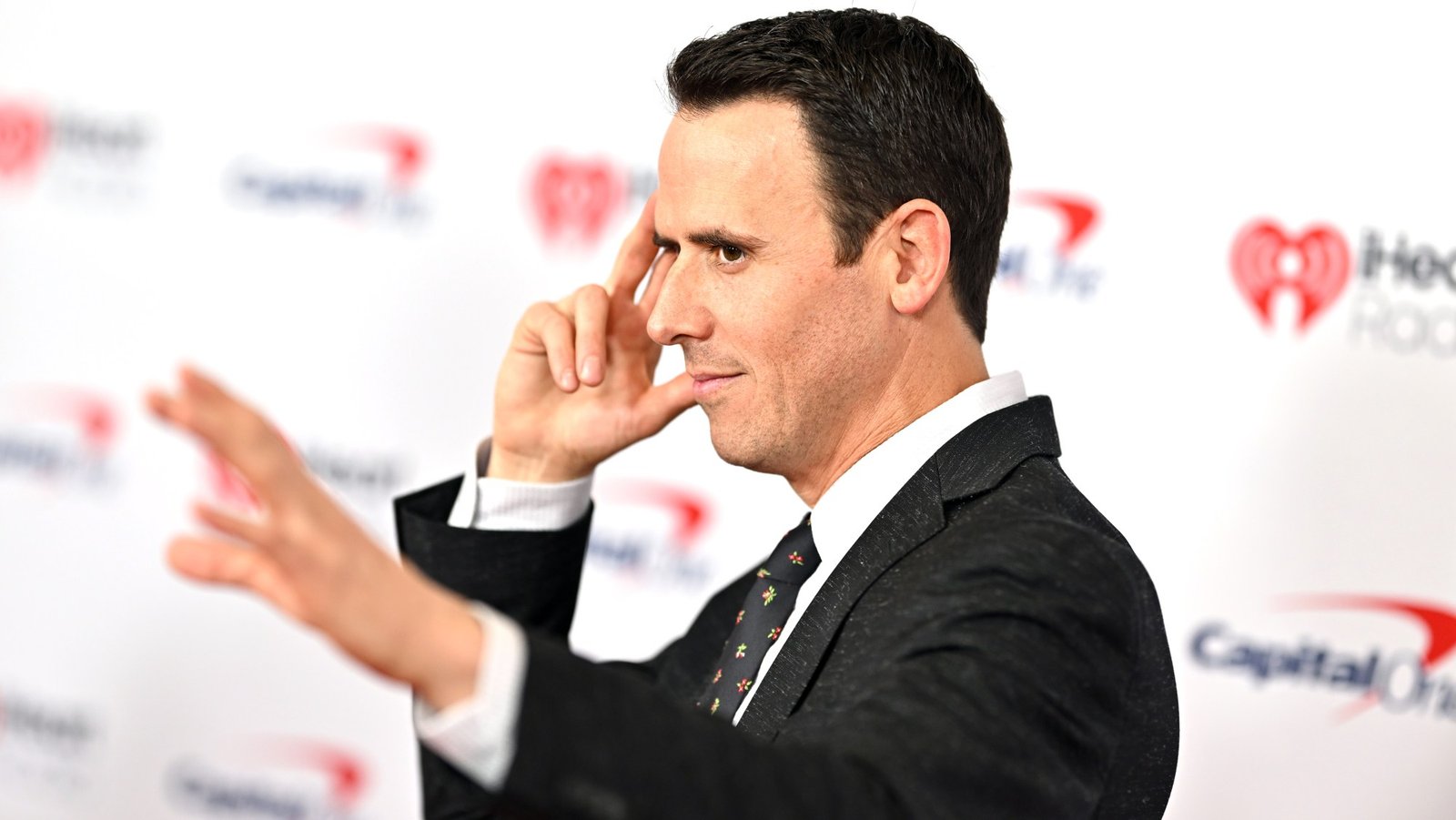
    The WHCA said Thursday that mentalist Oz Pearlman, whose exploits have gone viral on TikTok and YouTube and have made him a frequent guest on channels like CNBC and Fox News, will be this year’s featured entertainer at the White House Correspondents Dinner.

    “As the world’s most celebrated mentalist, Oz Pearlman will offer a fascinating glimpse into what’s truly on the minds of Washington’s newsmakers,” said CBS News correspondent Weijia Jiang, president of the association. “We look forward to an exciting, fresh, and interactive evening as we celebrate the First Amendment and Washington news coverage together.”

    The WHCD, of course, is typically attended by the White House press corp and members of the administration, including the President of the United States. That being said, President Trump has not attended most of the dinners in his time in office, which shouldn’t be too surprising given the frequent sparring between the journalists that cover the White House and his administration.

    Last year’s event was no exception, and in fact the WHCA had to cancel the planned appearance from comic Amber Ruffin, who had been targeted for criticism by the White House. Pearlman’s act is not about politics, but he does cater it to the audience, as his appearances on CNBC and in front of NFL teams show.

    “I am thrilled to be the featured entertainer at this year’s WHCA dinner and join the ranks of Frank Sinatra, Jay Leno and Conan O’Brien, among many other legends,” said Pearlman. “This is a rare opportunity to gather so many accomplished, perceptive people in one place and invite them to share moments of wonder, surprise and awe.”

  • Anthropic, OpenAI Dial Back Safety Language as AI Race Accelerates

    Anthropic, OpenAI Dial Back Safety Language as AI Race Accelerates

    In brief

    • TIME reports Anthropic dropped a pledge to halt training without guaranteed safeguards.
    • OpenAI also removed “safely” from its mission after restructuring into a for-profit entity.
    • Experts say the shift reflects political, economic, and intellectual changes.

    Anthropic has dropped a central safety pledge from its Responsible Scaling Policy, according to a report by TIME. The changes loosen a commitment that once barred the Claude AI developer from training advanced AI systems without guaranteed safeguards in place.

    The move reshapes how the company positions itself in the AI race against rivals OpenAI, Google, and xAI. Anthropic has long cast itself as one of the industry’s most safety-focused labs, but under the revised policy, Anthropic no longer promises to halt training if risk mitigations are not fully in place.

    “We felt that it wouldn’t actually help anyone for us to stop training AI models,” Anthropic’s chief science officer, Jared Kaplan, told TIME. “We didn’t really feel, with the rapid advance of AI, that it made sense for us to make unilateral commitments … if competitors are blazing ahead.”

    The change comes as Anthropic finds itself embroiled in a public dispute with U.S. Defense Secretary Pete Hegseth over refusing to grant the Pentagon full access to Claude, making it the only major AI lab among Google, xAI, Meta, and OpenAI to take that stance.

    Edward Geist, a senior policy researcher at the RAND Corporation, said the earlier “AI safety” framing emerged from a specific intellectual community that predated today’s large language models.

    “As of a few years ago, there was the field of AI safety,” Geist told Decrypt. “AI safety was associated with a particular set of views that came out of the community of people who cared about powerful AI before we had these LLMs.”

    Geist said early AI safety advocates were working from a very different vision of what advanced artificial intelligence would look like.

    “They ended up conceptualizing the problem in a way that, in some respects, was envisioning something qualitatively different from these current LLMs, for better or worse,” Geist said.

    Geist said the language change also sends a signal to investors and policymakers.

    “Part of it is signaling to various constituencies that a lot of these companies want to give the impression that they are not holding back in the economic competition because of concerns about ‘AI safety,’” he said, adding that the terminology itself is changing to fit the times.

    Anthropic is not alone in revising its safety language.

    What defines AI safety?

    A recent report by the non-profit news organization, The Conversation, noted how OpenAI also changed its mission statement in its 2024 IRS filing, removing the word “safely.”

    The company’s earlier statement pledged to build general-purpose AI that “safely benefits humanity, unconstrained by a need to generate financial return.” The updated version now states its goal is “to ensure that artificial general intelligence benefits all of humanity.”

    “The problem with the term AI security is that no one seems to know what that means exactly,” Geist said. “Then again, the AI safety term was also contested.”

    Anthropic’s new policy emphasizes transparency measures such as publishing “frontier safety roadmaps” and regular “risk reports,” and says it will delay development if it believes there is a significant risk of catastrophe.

    Anthropic and OpenAI’s policy shifts come as the companies look to strengthen their commercial position.

    Earlier this month, Anthropic said it raised $30 billion at a valuation of about $380 billion. At the same time, OpenAI is finalizing a funding round backed by Amazon, Microsoft, and Nvidia that could reach $100 billion.

    Anthropic and OpenAI, along with Google and xAI, have been awarded lucrative government contracts with the U.S. Department of Defense. For Anthropic, however, the contract appears in doubt as the Pentagon weighs whether to cut ties to the AI firm over access complaints.

    As capital pours into the sector and geopolitical competition intensifies, Hamza Chaudhry, AI and National Security Lead at the Future of Life Institute, said the policy change reflects shifting political dynamics rather than a bid for Pentagon business.

    “If that were the case, they would have just backed down from what the Pentagon said a week ago,” Chaudhry told Decrypt. “Dario [Amodei] wouldn’t have shown up to meet.”

    Instead, Chaudhry said the rewrite reflects a turning point in how AI companies talk about risk as political pressure and competitive stakes rise.

    “Anthropic is now saying, ‘Look, we can’t keep saying safety, we can’t unconditionally pause, and we’re going to push for much lighter-touch regulation,’” he said.

    Daily Debrief Newsletter

    Start every day with the top news stories right now, plus original features, a podcast, videos and more.

  • ‘Scream 7’ Review: Neve Campbell Returns for a Back-to-Basics Sequel That’s a Little Too Basic

    ‘Scream 7’ Review: Neve Campbell Returns for a Back-to-Basics Sequel That’s a Little Too Basic

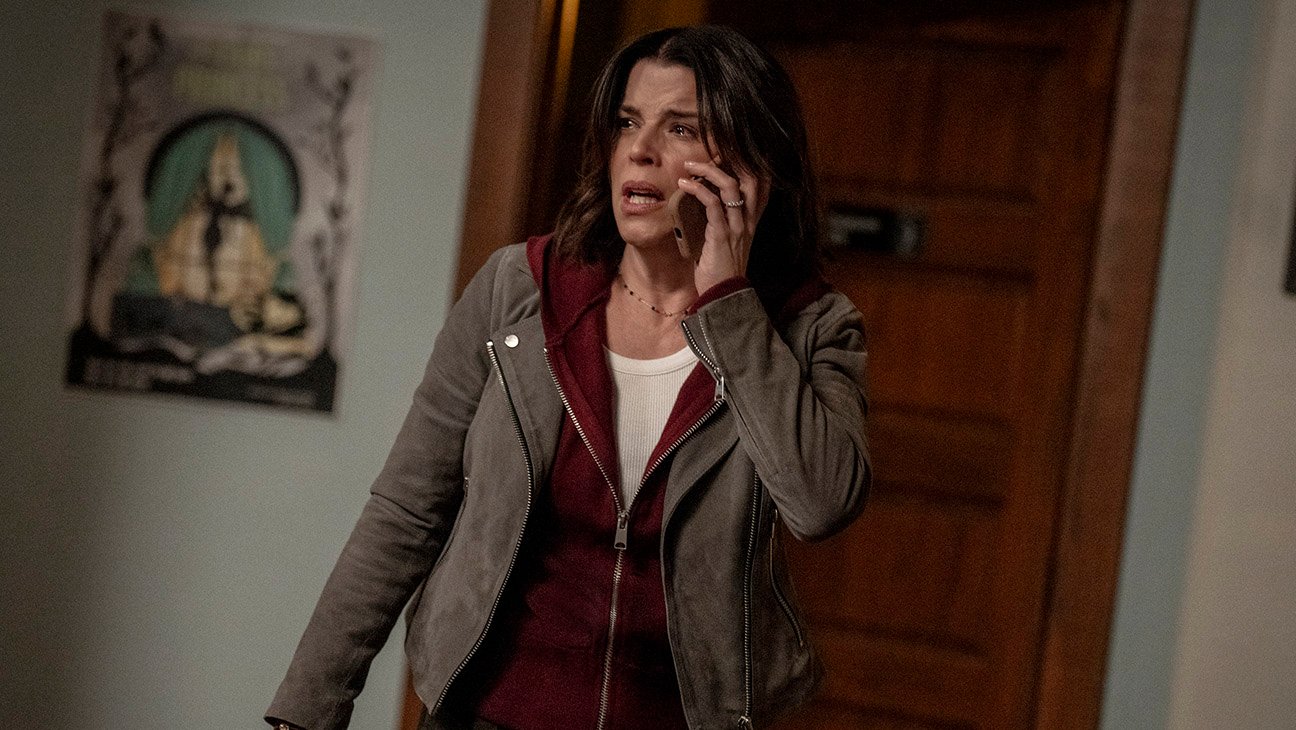
    The “Scream” movies, at their best, are delectable booby-trapped entertainments, and part of that is how cleverly they stay a step ahead of us. But there’s a moment in “Scream 7” that typifies the sensation this new movie gives you: that it’s leading the audience and lagging behind it at the same time.

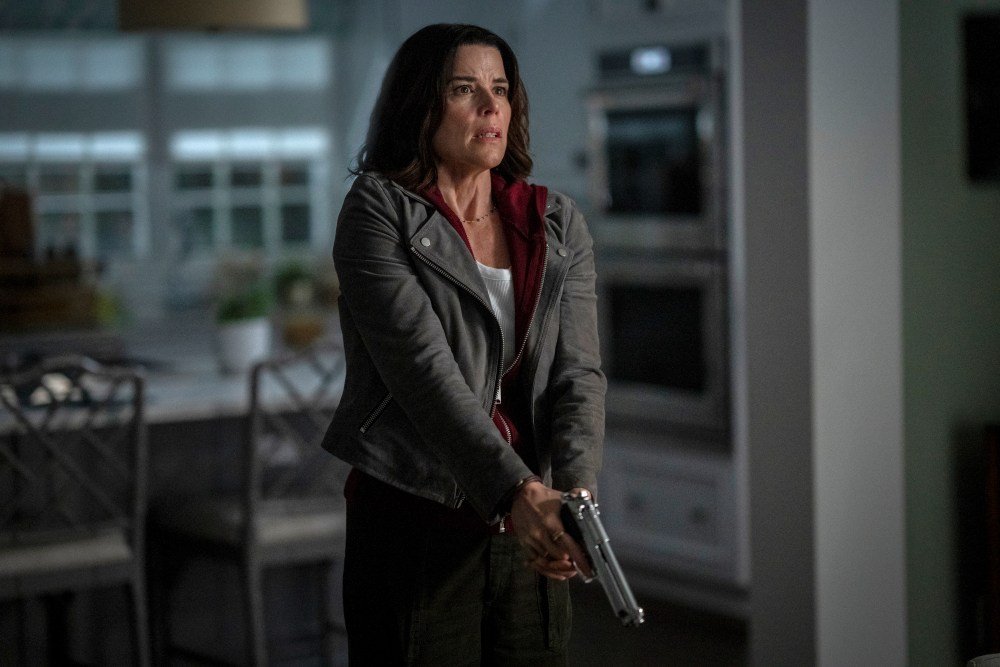
    We’re watching a homicidal pursuit through the home of Sidney Prescott (Neve Campbell), who is not only back but once again the central character (let’s call her the Final Girl as Mom). Sidney and her teenage daughter, Tatum (Isabel May), a kind of Final Girl in Training, are attempting to elude the blade of Ghostface. There’s a good bit where they inch along a catwalk behind the living-room wall, with Ghostface stabbing it from the other side. He misses, and they wind up on the street outside, where the killer gets smashed by a car that comes barreling out of nowhere (the driver, in fact, turns out to be an old friend). 

    The killer’s costume-shop Edvard Munch mask gets pulled off, revealing his identity, and this is followed by some chatter about how Ghostface often turns out to be more than one person. You don’t say! Considering that we’re only 45 minutes into the movie, that’s kind of a super duh. “Scream 7” is inadvertantly revealing its true theme, which is: Does anyone even care anymore who Ghostface is? Once all the obvious suspects have been eliminated, the answer is destined to be as arbitrary as it is forgettable.

    The last two “Scream” films were nothing if not busy — nearly antic at times, stuffed to the bloody gills with backstory and mythology and schlock trivia. Yet there’s no denying that that was part of what kept the pulse of the series alive. In the lead-up to “Scream 7,” however, the busy quality seemed to transfer over to the drama offscreen: the firing of Melissa Barrera after comments she made that some judged to be antisemitic; the bowing out of Jenna Ortega; the fight over Neve Campbell’s salary (she sat out “Scream VI”); the fact that the directors who’d taken over the franchise, Matt Bettinelli-Olpin and Tyler Gillett, opted out, and their replacement, Christopher Landon, then quit after he started getting death threats over Barrera’s firing.

    As if to calm the waters, the reins were handed back to Kevin Williamson, who 30 years ago wrote and created the original “Scream.” He was the series’ true auteur: the one who devised the whole concept of a meta slasher movie, a trash thriller maze that would be equal parts straight horror and a hack-’em-up version of Trivial Pursuit.

    But Williamson returns to the “Scream” franchise, now directing one of the films for the first time, with a weirdly restricted agenda. The whole slaughter-movie scholarship side of the “Scream” films — “Look! We’re deconstructing the prospect of our own deaths like horror-film-class geeks!” — has basically been played out. And the series is all too aware of that. Williamson knows that he can’t just go back to that age-of-VHS ’90s drawing board. So what he’s done instead is to return the series to its “roots” in a straightforward, analog, Jamie Lee Curtis-in-the-rebooted-“Halloween”-franchise sort of way. “Scream 7” has enough shocks and yocks to keep the product churning and the audience, at least for a weekend, turning out. Williamson has gone back to basics, but the result is a “Scream” sequel that, while it nods in the direction of being seductively convoluted, is really just…basic.

    The teenage Tatum, named for Sidney’s late lamented bestie (the Rose McGowan character from the original “Scream”), has a boyfriend, Ben (Sam Rechner) who smirks too much, along with a minor circle of friends who could all, theoretically, be suspects. But they get bumped off with a regularity that lets us know the mystery is elsewhere. One of the murders is a grisly piece of showmanship: Hannah (Mckenna Grace), flying around on a harness as she rehearses the high-school play, gets slashed with Ghostface’s knife until her innards fall out. But that scene is the exception to the film’s rule of routine “sensational” killings. Simply put, “Scream 7” isn’t very scary, and it isn’t very inventively gory (which some of the sequels have been).

    The film opens with a fun variation on the ritual Ghostface phone call: Scott and Madison (Jimmy Tatro and Michelle Randolph) are visiting the former home of Stu Macher, which has been turned into a slasher museum. Among the nostalgic artifacts is a life-size Ghostface model that turns its head via movement sensors. Roger L. Jackson is once again the voice of Ghostface (the aggro psycho as AM radio DJ), and all of this erupts into a satisfyingly incendiary prelude.

    But once “Scream 7” settle into its main story, Williamson adopts a tone of mordant sincerity regarding Sidney and the trauma she can’t seem to outrun. Courteney Cox’s Gale Weathers shows up, and she too becomes a major player, though the “media” commentary is strictly pro forma. The film has better luck reviving Matthew Lillard’s Stu, a character we were certain was dead‚ and he may in fact be. But then how is Stu, with mottled skin, calling up Sidney and conducting threatening live video-phone chats with her? Lillard’s raging performance could almost be his answer to Quentin Tarantino’s dis of him. The actor, like the character, is saying, “I’m still here,” and that’s true even if Stu is just a deepfake.

    As Mindy, the aspiring TV news reporter who’s working for Gale, Jasmin Savoy Brown gets to deliver the film’s few token snippets of horror-snob geekery, and she’s so good at it that she made me wish Williamson had included more of it. Maybe the reason this stuff got so played out is that the series, creatively speaking, could actually use a more expansive vision of what horror movies are. But that’s not about to happen, because the “Scream” films are so successful they’re now effectively trapped in a genre that can’t risk being too smart about playing dumb.

  • Prime Video’s ‘The Gray House’ Is a Frustrating Depiction of Espionage During the Civil War: TV Review

    Examining the Civil War gives us true insight into the United States’ past and present. Created by Leslie Greif, Darrell Fetty and John Sayles — and executive produced by Kevin Costner and Morgan Freeman — Prime Video’s latest historical drama, “The Gray House,” is a harrowing and high-octane depiction of several unlikely heroines who turned the tide of the war in favor of the Union. Inspired by true events, the show chronicles the bloody and vicious war through the eyes of two Southern socialites, a formerly enslaved woman and a daring sex worker. Though sprawling and highly detailed, “The Gray House” becomes so clunky and overrun with extraneous characters and narratives that the women at its center nearly get lost in the chaos.

    “The Gray House” opens in Richmond, Virginia, on the fourth of July in 1860, nine months before the Civil War officially begins. Still, there is a great deal of tension in the city as Southern states are beginning to secede. Yet, at the Van Lew’s sprawling estate, it’s business as usual. Regal and elegant, Eliza Van Lew (Mary-Louise Parker) is hosting a lavish Independence Day party and trying to stop some of the most esteemed politicians, especially Virginia Governor Henry Wise (Mark Perry), from talking shop at her soiree. Meanwhile, her drunken son John Van Lew (Ewan Miller) is in a continued fight with his flirtatious, attention-seeking wife, Laurette (Catherine Hannay). However, the real belle of this ball is Elizabeth Van Lew (Daisy Head), Eliza’s unmarried daughter. Elizabeth’s beauty has enchanted men across the South, including the debonair New Orleanian, Hamton Arsenault (Colin Morgan), who has come to the party bearing gifts.

    The Van Lews would fit perfectly in a frame from “Gone With the Wind,” but appearances are deceiving. Working closely with their free Black staff, including the unassuming Uncle Isham (Ben Vereen) and Mary Jane (Amethyst Davis), who has just returned in secret from Liberia, the Van Lews’ plantation is a safe house on the Underground Railroad. Though the work they are doing is already deadly and dangerous, Mary Jane and the Van Lews decide to dial it up a notch when the war breaks out and newly appointed Confederate President Jefferson Davis (Sam Trammell) arrives in Richmond to establish his residence and the Confederate headquarters. The women, alongside baker Thomas McNiven (Christopher McDonald), decide to expand their network, forming a spy organization that gathers information directly from the Jefferson estate, The Gray House, delivering it to the Union Army.

    Across the eight-episode limited series, there is a lot that “The Gray House” gets right. Parker, Head and Davis are particularly effective at illustrating the dangers of their abolition work. And yet, especially after Elizabeth recruits sex worker Clara Parish (Hannah James) into the fold, the consequences for everyone involved differ depending on their status in society. While the Van Lews are able to hide behind whiteness and wealth. Mary Jane and Clara, who readily put their bodies and lives at risk, have no recourse if they are exposed. To infiltrate the Davis’ home, the Van Lews give Mary Jane to Mrs. Davis (Laura Morgan) as a lady’s maid. Though she has been freed since Mr. Van Lew’s death, Mary Jane willingly places herself back in captivity for the sake of the greater good. Clara isn’t quite as vulnerable as Mary Jane, but she is also a woman in the world with only her wits and her body to barter with.

    Though these women’s contributions to safeguarding American democracy and the abolition of slavery are vividly depicted, “The Gray House” overwhelms itself with unnecessary characters and added storylines, as well as melodramatic acting. Espionage requires discretion. However, the exaggerated looks, loud whispers and waving of freedom papers and passes in the faces of staunch Confederates and degenerate racists are preposterous even for a fictional adaptation. Moreover, the depictions of the heinous lawman Stokely Reeves (Paul Anderson) and slave catcher Bully Lumpkin (Robert Knepper) play out more like caricatures from the past instead of real-life men whose ideals and sentiments about race and America still echo in the minds of many of our present-day leaders and everyday people.

    Accurate depictions of the antebellum South remain essential, specifically in a society that seeks to deny history. “The Gray House” accurately portrays the vicious cruelty, violence and brutality of the era and the people who risked everything to change it. Yet the show gets lost within itself. The point of the series is to highlight these heroes, particularly the women who risked everything so that America may have a different, more equal future. Unfortunately, in trying to accommodate everyone’s perspective, including soldiers on the battlefield and even the assassin John Wilkes Booth (Charles Craddock), the narrative becomes uneven and exasperating.

    All eight episodes of “The Gray House” premiere Feb. 26 on Prime Video.

  • NVIDIA updates Shield TV after pledging further support

    NVIDIA updates Shield TV after pledging further support

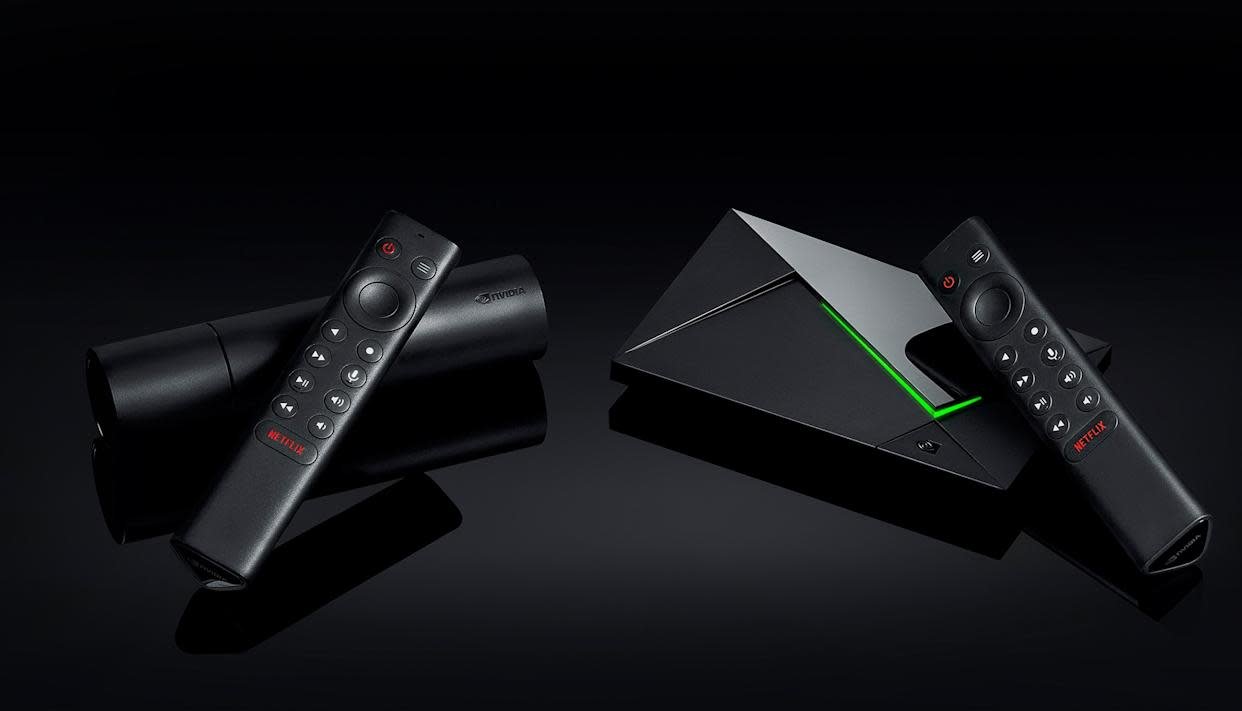
    NVIDIA is a very busy company, and between all the graphics cards and AI-chasing, it wouldn’t be wholly surprising to see the company forget about its more niche offerings, such as the Android-powered NVIDIA Shield TV. Happily for all those who own one of these powerful set-top boxes, that doesn’t appear to be the case.

    Not only is NVIDIA continuing to support its Shield devices, but it’s just rolled out its first proper update in nearly a year. The Shield Experience Upgrade 9.2.4, to give it its proper name, applies to both the Shield and Shield Pro boxes. It’s admittedly light on new features, instead being focused on updating security and fixing various issues, but is nice to see all the same. Here’s the full list of changes.

    Enhancements:

    • Security patches are updated to Jan 2026.

    Resolved Bugs:

    • Resolved Disney+ playback issue.

    • Resolved 3rd party remote connection issue with Xbox after sleep mode.

    • Resolved a crash issue which turns on SHIELD and CEC devices during sleep mode.

    • Resolved 3rd party Bluetooth remote frequent disconnect issue.

    • Resolved Settings page closes when triggering NVIDIA share on top of settings page.

    NVIDIA hasn’t given any strong indication that it’s preparing to launch a new Shield TV, but in a a recent interview with ArsTechnica, Andrew Bell, the company’s senior VP of hardware engineering, said it has no plans to end support any time soon, teasing that it had “played with new concepts.” Bell also said that a first Shield refresh since 2019 would likely support codecs like AV1 and HDR10+, as well as the latest Dolby Vision profiles.

    The existing NVIDIA Shield Android TV Pro remains our pick of the best streaming devices for gamers, thanks to its ability to stream in native 4K and effectively upscale lower-resolution content. And with NVIDIA’s GeForce Now cloud gaming service going from strength to strength, the Shield retains a unique position in the PC gaming ecosystem.

  • STS Digital raises $30 million to expand crypto options platform

    STS Digital raises $30 million to expand crypto options platform

    STS Digital, a trading firm specializing in crypto options, said it raised $30 million in a strategic round backed by CMT Digital, crypto exchange Kraken’s parent company Payward, and other investors.

    The company plans to use the funds to scale its institutional trading platform and solidify its role as a liquidity provider in digital asset markets, according to a statement shared with CoinDesk.

    Based in Bermuda, STS Digital allows institutions to trade more than 400 cryptocurrencies across spot, vanilla and exotic options, and structured products through a single interface that supports web, API and voice.

    Options are a growing part of institutional crypto portfolios as firms use them to hedge risk and generate yield during volatile market conditions. Open interest is currently around $40 billion, according to TheTie, with the lion’s share on Deribit.

    “This investment enables us to meet the explosive demand from institutional investors for our spot, options and structured product pricing,” said chairman and co-founder Gideon Hyams. “As banks, asset managers and financial intermediaries rush to integrate our pricing engine, this funding ensures we stay ahead of demand.”

    In the statement, CMT Digital, the round’s lead investor, said it sees STS as being positioned to become “a foundational liquidity layer for crypto derivatives.”

  • Bitcoin’s bounce fails to convince options traders

    By Omkar Godbole (All times ET unless indicated otherwise)

    Bitcoin’s $BTC$67,871.86 price bounce sparked optimism on social media, with X users declaring the bottom is in and a new rally is underway. Options market activity, however, reveals savvy traders remain skeptical, hedging against the risk of a potential slide below $60,000.

    “While the bounce triggered some call buying in the $85,000 to $90,000 strikes, downside skew remains more elevated than upside, suggesting caution,” Sidrah Fariq, head of retail at Deribit, told CoinDesk in a Telegram chat.

    The demand for call options, or bullish bets, indicates that bitcoin’s Wednesday bounce to $70,000 has some traders chasing upside. However, skew, which measures prices for calls relative to puts, remains negative across all time frames. It shows that traders remain worried about price drops and are still seeking puts for downside protection.

    Underlying that theme, on Deribit, the $60,000 put remains the most popular position, with notional open interest (OI) of $1.48 billion. In contrast, the most popular call option, the $90,000 strike, has OI of $1.12 billion. Clearly, the overall positioning remains bearish.

    That said, there could be some consolidation, as dealer positioning — net exposure of those who make markets by providing liquidity — has flipped positive between $60,000 and $70,000. This means dealers could buy low and sell high to maintain a net-neutral exposure, capping swings as they do so.

    “Dealer positioning has shifted to neutral to slightly positive gamma, suggesting compressed volatility and range-bound price action,” Fariq said.

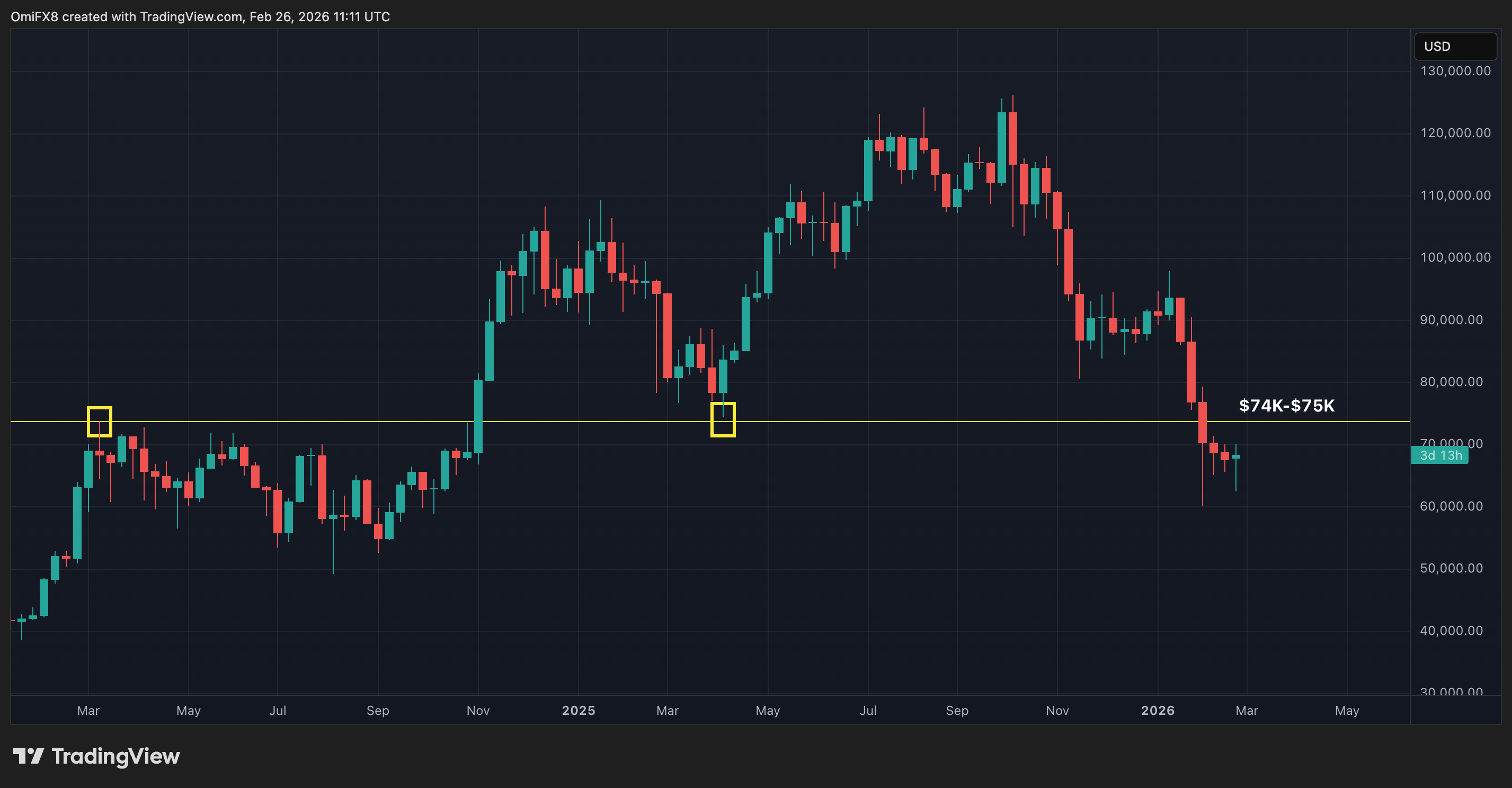
    Other analysts are looking at the $74,000-$75,000 range as the level to beat for confirming a renewed uptrend.

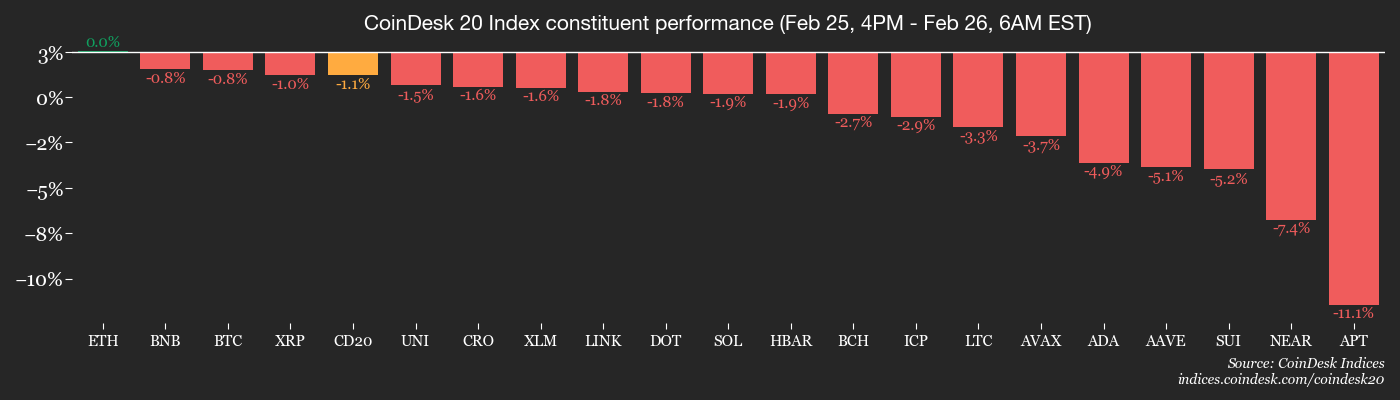
    Bitcoin was recently trading near $68,500, up 4.6% on the day, while the broader market posted bigger gains, as evidenced by the CoinDesk 20 (CD20) index’s 5.8% advance. Ether ($ETH) has risen over 8%, and $XRP ($XRP) and solana (SOL) both rose more than 6%.

    In traditional markets, futures tied to the S&P 500 and Nasdaq 100 were little changed despite the AI giant Nvidia (NVDA) posting a blowout fourth-quarter earnings report. Gold and the Dollar Index ticked higher as investors awaited details on the U.S.-Iran talks scheduled for later in the day. Stay alert!

    Read more: For analysis of today’s activity in altcoins and derivatives, see Crypto Markets Today

    What to Watch

    For a more comprehensive list of events this week, see CoinDesk’s “Crypto Week Ahead”.

    • Crypto
    • Macro
      • Feb. 26, 8:30 a.m.: U.S. initial jobless claims for week ending Feb. 21 (Prev. 206K)
      • Feb. 26, 10:00 a.m.: U.S. Fed Vice Chair for Supervision Michelle Bowman to testify before the U.S. Senate Committee on Banking, Housing and Urban Affairs.
    • Earnings (Estimates based on FactSet data)

      • Feb. 26: American Bitcoin (ABTC), pre-market, $0.01
      • Feb. 26: MARA Holdings (MARA), post-market, -$0.11
      • Feb 26: TeraWulf (WULF), post-market, -$0.15
      • Feb. 26: Figure Technologies (FIGR), post-market,$0.20
      • Feb. 26: Sui Group (SUIG), post-market, $0.01
      • Feb. 26: Block (XYZ), post-market, $0.49

    Token Events

    For a more comprehensive list of events this week, see CoinDesk’s “Crypto Week Ahead”.

    • Governance votes & calls
      • Feb. 26: Lido DAO to host a tokenholder update call.
      • Feb. 26: Maple Finance to host an investor call.
      • Unlock DAO is voting to delegate 2,000,000 UP from the treasury to seven active community members to reliably secure quorum on future proposals. Voting ends Feb. 26.
    • Unlocks
    • Token Launches
      • Feb. 26: FET$0.1633 and Injective INJ$3.2237 to be listed on OKX.

    Conferences

    For a more comprehensive list of events this week, see CoinDesk’s “Crypto Week Ahead”.

    • Day 4 of 4: Strategy World 2026 (Las Vegas)
    • Day 3 of 4: GFTN Forum Japan (Tokyo)

    Market Movements

    • $BTC is down 0.52% from 4 p.m. ET Wednesday at $68,590.57 (24hrs: +4.67%)
    • $ETH is down 1.16% at $2,075.97 (24hrs: +8.36%)
    • CoinDesk 20 is down 1.27% at 2,011.66 (24hrs: +5.83%)
    • Ether CESR Composite Staking Rate is up 2 bps at 2.85%
    • $BTC funding rate is at 0.0005% (0.5595% annualized) on Binance
    • DXY is unchanged at 97.75
    • Gold futures are down 0.41% at $5,204.60
    • Silver futures are down 3.98% at $87.99
    • Nikkei 225 closed up 0.29% at 58,753.39
    • Hang Seng closed down 1.44% at 26,381.02
    • FTSE is up 0.17% at 10,824.61
    • Euro Stoxx 50 is up 0.25% at 6,188.91
    • DJIA closed on Wednesday up 0.63% at 49,482.15
    • S&P 500 closed up 0.81% at 6,946.13
    • Nasdaq Composite closed up 1.26% at 23,152.08
    • S&P/TSX Composite closed up 0.46% at 34,127.33
    • S&P 40 Latin America closed up 0.68% at 3,826.41
    • U.S. 10-Year Treasury rate is up 0.4 bps at 4.052%
    • E-mini S&P 500 futures are unchanged at 6,958.75
    • E-mini Nasdaq-100 futures are unchanged at 25,380.75
    • E-mini Dow Jones Industrial Average Index futures are down 0.13% at 49,471.00

    Bitcoin Stats

    • $BTC Dominance: 58.55% (+0.12%)
    • Ether-bitcoin ratio: 0.03023 (-0.12%)
    • Hashrate (seven-day moving average): 1,058 EH/s
    • Hashprice (spot): $29.79
    • Total fees: 2.91 $BTC / $194,801
    • CME Futures Open Interest: 112,135 $BTC
    • $BTC priced in gold: 13.2 oz.
    • $BTC vs gold market cap: 4.57%

    Technical Analysis

    $BTC‘s weekly price chart. (TradingView)

    • The chart shows bitcoin’s weekly price swings in candlestick format since mid-2024.
    • While prices have bounced strongly this week, they remain well below the $73,000-$74,000 zone that is a former support-turned-resistance.
    • The broader outlook, therefore, remains bearish. Prices need to overcome that resistance to confirm a trend reversal higher.

    Crypto Equities

    • Coinbase Global (COIN): closed on Wednesday at $183.94 (+13.52%), +0.95% at $185.69 in pre-market
    • Circle Internet (CRCL): closed at $83.14 (+35.47%), +0.71% at $83.73
    • Galaxy Digital (GLXY): closed at $22.83 (+5.99%), +1.40% at $23.15
    • Bullish (BLSH): closed at $32.89 (+6.92%), -1.03% at $32.55
    • MARA Holdings (MARA): closed at $8.57 (+6.46%), unchanged in pre-market
    • Riot Platforms (RIOT): closed at $17.08 (+3.52%), -0.12% at $17.06
    • Core Scientific (CORZ): closed at $18.08 (+1.18%), -0.22% at $18.04
    • CleanSpark (CLSK): closed at $10.45 (+0.97%), +0.29% at $10.48
    • CoinShares Valkyrie Bitcoin Miners ETF (WGMI): closed at $42.34 (-0.87%)
    • Exodus Movement (EXOD): closed at $10.63 (+8.91%)

    Crypto Treasury Companies

    • Strategy (MSTR): closed at $135.65 (+8.86%), -0.18% at $135.41
    • Strive (ASST): closed at $8.54 (+19.19%), -1.41% at $8.42
    • SharpLink Gaming (SBET): closed at $7.44 (+13.59%), +0.27% at $7.46
    • Upexi (UPXI): closed at $0.83 (+35.86%), +4.53% at $0.86
    • Lite Strategy (LITS): closed at $1.18 (+6.31%)

    ETF Flows

    Spot $BTC ETFs

    • Daily net flows: $506.6 million
    • Cumulative net flows: $54.56 billion
    • Total $BTC holdings ~1.26 million

    Spot $ETH ETFs

    • Daily net flows: $157.2 million
    • Cumulative net flows: $11.67 billion
    • Total $ETH holdings ~5.64 million

    Source: Farside Investors

    While You Were Sleeping

    • The $1.6 trillion meltdown that swept through software stocks (The Wall Street Journal): Investors question whether software firms that sell to businesses can withstand competition from AI-powered rivals. Lately, the selloff has intensified with each new announcement from AI developers.
    • A Deal or War? Crucial Talks Begin Between U.S. and Iran (The New York Times): The U.S. and Iran are in a high-stakes round of nuclear talks in Geneva. The outcome may determine whether they go to war or strike a deal.
    • Three companies add Strategy’s STRC to treasury as shares return to par (CoinDesk): Strategy said Prevalon Energy and Anchorage Digital added its perpetual preferred equity, Stretch (STRC), to their portfolios as the security returns to its $100 par value.
  • ‘Scream 7’ Review: Put a Knife in It — This Franchise Is (or Should Be) Done

    ‘Scream 7’ Review: Put a Knife in It — This Franchise Is (or Should Be) Done

    There’s plenty of suspense in the seventh installment of the venerable Scream horror movie franchise. Unfortunately, most of it involves the backstory and corporate intrigue. Did Melissa Barrera deserve to be fired? What was the real reason Jenna Ortega departed? What kind of hardball did Neve Campbell play to be enticed back to the series? Will series creator Kevin Williamson do a good job directing one of the films for the first time? Which veteran franchise performers, representing characters both living and dead, return for cameos? And most importantly, why did the title switch back to an Arabic numeral after they used a Roman one the last time?

    Sorry, but you need to have something to think about during this latest edition of a franchise that is dead creatively if certainly not commercially. You can rest assured that Ghostface, sporting that perennially creepy mask and dependably voiced by Roger L. Jackson, will slash his way through most of the cast, whose survival will depend on contract negotiations. There will be fake-out scares, followed by real ones, and plenty of self-referential discussions in which the characters comment ironically on their situation. “It’s always someone you know,” one observes about the real identity of the killer behind the mask. “This was too easy,” another comments after Ghostface is seemingly dispatched at one point. “There’s always more than one.”  

    Scream 7

    The Bottom Line

    Dead creatively, if not commercially.

    Release date: Friday, February 27
    Cast: Neve Campbell, Isabel May, Jasmin Savoy Brown, Mason Gooding, Anna Camp, David Arquette, Roger L. Jackson, Michelle Randolph, Jimmy Tatro, Mckenna Grace, Asa Germann, Celeste O’Connor, Sam Rechner, Mark Consuelos, Tim Simons, Matthew Lillard, Joel McHale, Courteney Cox
    Director: Kevin Williamson
    Screenwriters: Kevin Williamson, Guy Busick

    Rated R,
    1 hour 54 minutes

    By now the mechanics of the series have become so numbingly familiar that the films have the stale feel of Pink Floyd cover bands. The big news about Scream 7, of course, is the return of Campbell as Sidney Prescott, who was sorely missed in the last one. Not surprisingly, screenwriters Williamson and Guy Busick make sure to let us know we’re in on the joke when Courteney Cox’s intrepid television reporter Gale Weathers, who was seriously injured in Scream VI (but of course survived), tells Sidney, “You were missed in New York, it’s not the same without you,” adding, “You’re lucky you sat that one out. It was brutal.” And Sidney is naturally described as a “scream queen,” on par with Jamie Lee Curtis of the Halloween films. 

    Sidney has made a new life for herself in another town: She’s now happily married to local cop Mark (Joel McHale) and has a teenage daughter, Tatum (Isabel May), named after Sidney’s friend, who met an untimely end in Scream. Tatum’s boyfriend (Sam Rechner) has just the sort of devilish looks to make him a suspect when Ghostface returns to wreak havoc. Not that Ghostface seems to be shy about revealing his identity, since Sidney receives a series of taunting, threatening videos from Stu (Matthew Lillard), Ghostface’s accomplice in the first film, who supposedly died.

    Or did he? Hard to tell, since the series is so fond of resurrecting former characters despite their deceased status that you practically need a spreadsheet to keep track of them all. You can rest assured that there are many more of them on display in this installment, with only Paramount’s threats of sending Ghostface to my home preventing me from revealing them. But it’s hopefully not too much of a spoiler to say that the series has kept up with modern technology, AI proving a key element in this go-around.

    Other new characters who may or may not survive include Sidney’s solicitous neighbor Jessica (Anna Camp); her son Lucas (Asa Germann), who’s obsessed with the previous Ghostface murders; Tatum’s perky friend Hannah (Mckenna Grace); and mental institution employee Marco (Ethan Embry), who provides useful information about some of the former inhabitants. Feel free to place your bets as to which of them, or whomever else, is the person, or persons, behind the mask, but you can rest assured it’s a letdown.

    The overfamiliarity would be more palatable if the dialogue were as fresh and funny as it was in the early installments, or if the kills were more creatively staged. But there’s a rote quality to the proceedings that makes Scream 7 feel like a slog despite its high body count and copious gore. The supporting players, particularly the younger ones, lack the flair of their predecessors, with Campbell and Cox picking up the slack to fine but unsurprising effect. Although it must be said that the latter gets to make one hell of an entrance.

  • ‘Heated Rivalry’ Season 2 Is Shooting This Summer, Expected to Air in Spring 2027

    Heated Rivalry is likely to return to television screens in the spring of 2027.

    Show creator Jacob Tierney and executive producer Brendan Brady joined Gayle King on CBS Mornings Thursday, where the pair talked about the highly anticipated second season of the show. Tierney said they’re writing the second season now and are shooting in August. King revealed that the show is expected to return in April 2027.

    “There will be more Heated Rivalry on your TVs, like, truly, as soon as humanly possible,” Tierney said. Brady added that “like the best parts of this show” that fans should “enjoy the yearn” of waiting for the show’s next season.

    Tierney and Brady also spoke about making the show with Crave, the Canadian streamer that they’d worked with previously for shows like Letterkenny and Shoresy. “They trusted me, but they also trusted the material and the audience already loved this,” Tierney said. “What struck me was that there’s a lot of people who think that they’re smarter than the audience that loves the book, and I don’t think they are.”

    The writer, director and producer also added that he felt Heated Rivalry was a “very faithful adaptation” of Rachel Reid’s source material. “This was a Canadian book. We’re Canadian producers,” Tierney told King earlier in the segment.

    Tierney and Brady have long been advocating for taking the story and the fans of the story seriously. “This is what I told Rachel [Reid] — the thing I want to do with it is take it seriously, which is to say I don’t want to do what I think a lot of people do when they look at adapting romance, which is simplify, truncate, shorten,” Tierney told The Hollywood Reporter ahead of the show’s premiere in November. Added Brady, “[We] wanted to elevate this to the level that it deserved.”

    Heated Rivalry, hailing from Canadian streamer Crave and airing on HBO Max in the U.S., centers on a fictional hockey universe based on Reid’s books. The show focuses on two rival professional players — Canada-born Shane Hollander (Hudson Williams) of the fictitious Montreal Metros and Russia-born Ilya Rozanov (Connor Storrie) of the fictitious Boston Raiders — as they navigate a near-decade-long situationship-turned-relationship.

    Crave renewed Heated Rivalry for a second season, and HBO Max confirmed it will continue to air the series. Reid announced earlier this year that she’ll be publishing her seventh book in the Game Changers series, which Heated Rivalry and its sequel The Long Game belong to. The book, Unrivaled, will be the next chapter in Shane and Ilya’s story. She announced Tuesday that she’d be pushing the book to a 2027 release date.

    The show has made certifiable stars out of Williams and Storrie. The leading men have also seemingly snagged their first post-Heated Rivalry roles with Williams joining the Crave series Yaga and Storrie, who is hosting Saturday Night Live this week, eyeing a role in the A24 film Peaked.