Punxsutawney Phil, Staten Island Chuck predict 6 more weeks of winter
Feb. 2 (UPI) — Famed Pennsylvania groundhog Punxsutawney Phil saw his shadow Monday morning, predicting six more weeks of winter — as did Staten Island Chuck.
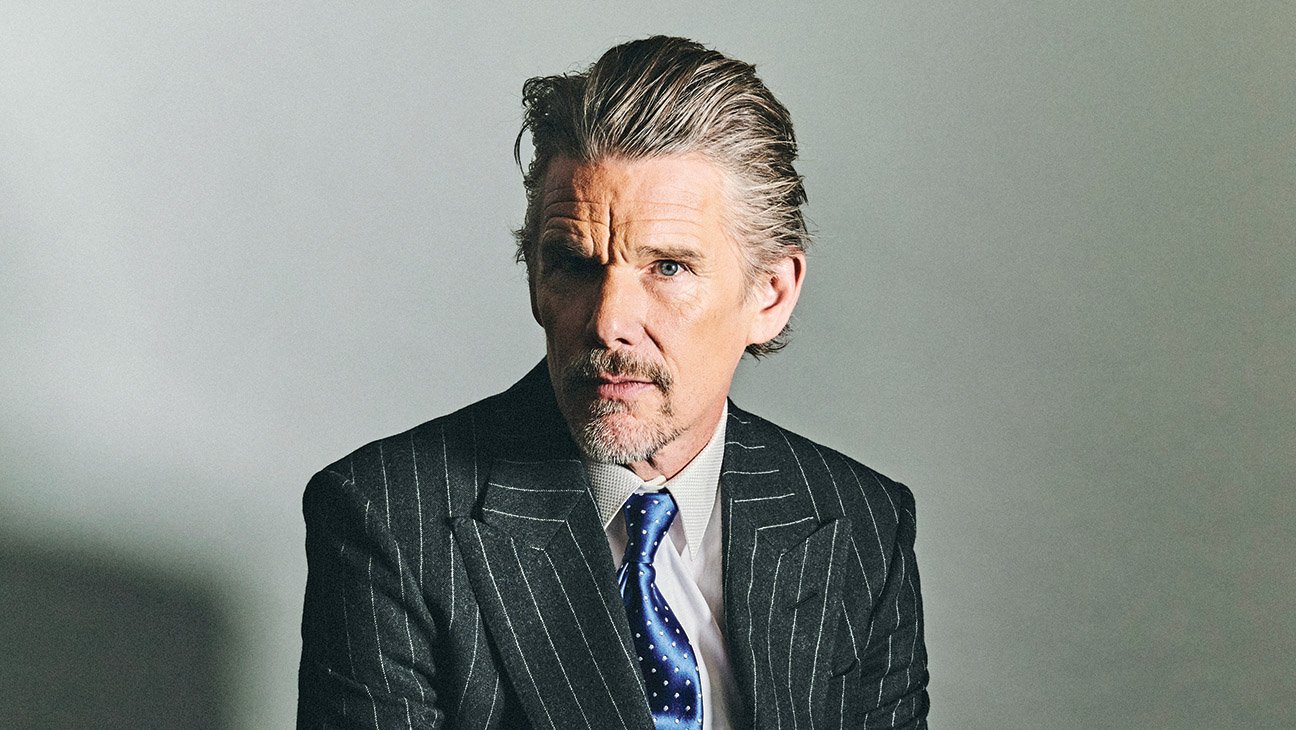
After getting an Oscar nomination for his role as famed Broadway composer Lorenz Hart in Blue Moon, Ethan Hawke couldn’t help but reminisce on his long-lasting friendship with the film’s director, Richard Linklater. “I have to express my gratitude to Linklater because my first acting award I ever won was a bong from High Times magazine for my performance in Tape as the best stoned performance of the year. And, Rick just keeps giving me these things, so I’m incredibly grateful,” Hawke says.
In the indie film, Hawke transforms himself into the diminutive composer, who regales attendees at Sardi’s bar with anecdotes about his career highs in the theater and bemoans the loss of his former partnership with Richard Rodgers. Set during the opening-night party for Oklahoma!, the film almost always trains the camera on Hawke as he vacillates between charm and pleas for continued relevance in the theater world.
Hawke, who calls the role one of the hardest he’s taken on in his long career, speaks about becoming Hart and why the physical transformation was akin to skiing down a hill that makes you think, “Holy shit, I’m going to die.”
What keeps drawing you back to working with Richard Linklater?
Oh, that’s totally uncomplicated. It’s just friendship. We met in ’93, I think, and we just started talking and talking. We’ve been talking for 30 years, and every now and then these movies grow out of that friendship.
He pitched this movie to you more than a decade ago and waited for you to age into the role. But was there more that happened over that decades-plus process?
I think his intuition was that we weren’t ready to make it. And I don’t know if he could have articulated exactly why. Part of it had to do with me getting older. Part of what happened in the last decade is that I’ve gotten more and more interested in what people call character acting, and I’ve gotten better at it, and so the time wasn’t wasted. We also knew what a razor’s edge the film walks. A movie set in real time, in one party. It’s a very difficult filmmaking accomplishment, and it needed a lot of meditation about how to pull something like that off.
What made you become more interested in character acting?
It’s just life’s relationship to this profession. I’d probably say my friendship with [Philip Seymour] Hoffman had a lot to do with it, but a lot of it was continuing to try to grow. You’ve got to figure out, “Well, all right, what if I did something totally different?” and you start pushing the boundaries of the box.
You worked on this character during a series of workshops over several years. What did you learn through that process?
It really all comes back to my friendship with Linklater. We would just read it and work on it. We would talk about Larry, about the people we know that were like this, or what the film is about, and what do we think he’s thinking about that? Then we’d send each other records and be like, “That’s an interesting line, where does that line come from?” And we started kind of seeing the movie as a Rodgers and Hart song, like, “What if we made a movie that was a 90-minute Rodgers and Hart song?” In a lot of ways, Rick’s job was to create the architecture and skeleton and musculature the way that Richard Rodgers would for the song, and my job was the lyrics to sit on top of it and dance and play. Because what’s so powerful about their music is that it has all the strength and gravitas and, at the same time, it’s completely silly. And when you can be silly and strike a note that’s profound, it’s a magic trick.
Ethan Hawke in his Oscar-nominated role as Broadway composer Lorenz Hart in Blue Moon.
Sabrina Lantos/Sony Pictures Classics
You’ve called this the hardest role you’ve ever done. Why is that?
There have been a handful that have been extremely challenging. It’s just one of the few jobs that’s used everything I’ve learned over the years, from the physical stuff, to the vocal work, to the movement work, to the verbiage, to the text, to the ideas that we’re trying to communicate. It was not a light lift.
How did you find his voice?
When you become a professional actor, there’s a great push to just always stay in the same box. You stop letting yourself play as much, and the play is where really good things happen. So in that way, I love that Rick was giving me a chance to really jump out of the normal sandbox … so I could really find a voice that matched his wit and his energy and his soul, for lack of a better word, and making all that language feel like it was my own.
You also had a big physical transformation to become Lorenz Hart, including shaving your head, wearing a comb-over and adjusting your posture to help appear about a foot shorter. How did it feel taking that on?
If you’ve ever skied, and you ski down a slope that’s way too difficult, while you’re doing it, you’re absolutely miserable. And when it’s over, you’re like, “Wow, that was fun.” Once you survive, you’re like, “That was pretty interesting. I love that.” But while you’re doing it, it’s like, “Holy shit, I’m going to die.”
You’re a big theater person. Is that what drew you to this story?
Absolutely. The legend of Broadway looms large in my psyche. So any time you get to touch those myths — and even some of the final shots of all the portraits of the artists on the Sardi’s wall — it’s like the way the baseball player feels about the Hall of Fame. You want to know what they were thinking, and what they were doing, and how did they do that? How did they feel about it? Trying to make all that come alive for the audience is a game I find thrilling.
You have been doing a lot of campaigning for this movie. Do you now see this as the end of the campaign trail or is there more to come?
Ask me in a couple of months. It was amazing to get the nomination, and it was even sweeter that [writer] Robert Kaplow was nominated because that makes me feel like people really saw the movie. Because if you see the movie, it’s one of the most staggering pieces of writing Rick and I’ve ever come across in 30 years of working, and it’s just an absolutely brilliant screenplay. I really feel my job is like an ambassador of independent film. I want movies like this to get made. I want there to be a future in my life and other people’s lives for movies like this to exist, so people have choices in what they’re seeing.
This story appeared in the Feb. 23 issue of The Hollywood Reporter magazine. Click here to subscribe.
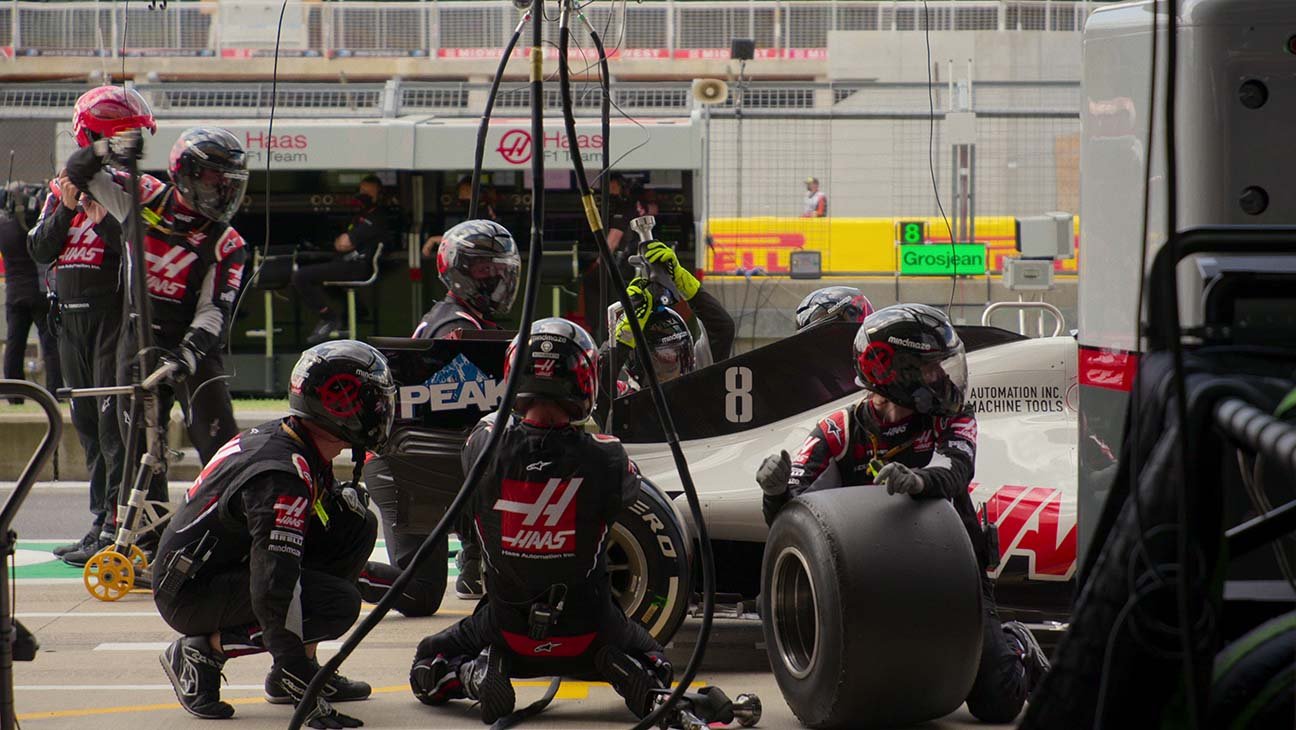
In a surprise deal, Apple and Netflix are teaming up for select Formula 1 programming.
The deal will include Netflix simulcasting the F1 Canadian Grand Prix May 22-24 (it will also be on Apple TV, of course), and with Apple TV getting streaming rights to season eight of Drive to Survive alongside Netflix.
Drive to Survive will land on Apple TV at midnight tonight, the same day it debuts on Netflix.
Eddy Cue, Apple’s senior VP of services, announced the deal in a conference call with reporters Thursday.
The OCC opened a 60-day comment period on draft rules implementing the GENIUS Act.
The proposal prohibits anyone other than a “permitted payment stablecoin issuer” from issuing a payment stablecoin in the U.S.
AML and sanctions rules will follow separately, with the Act taking effect the earlier of 18 months after enactment or 120 days after final regulations.
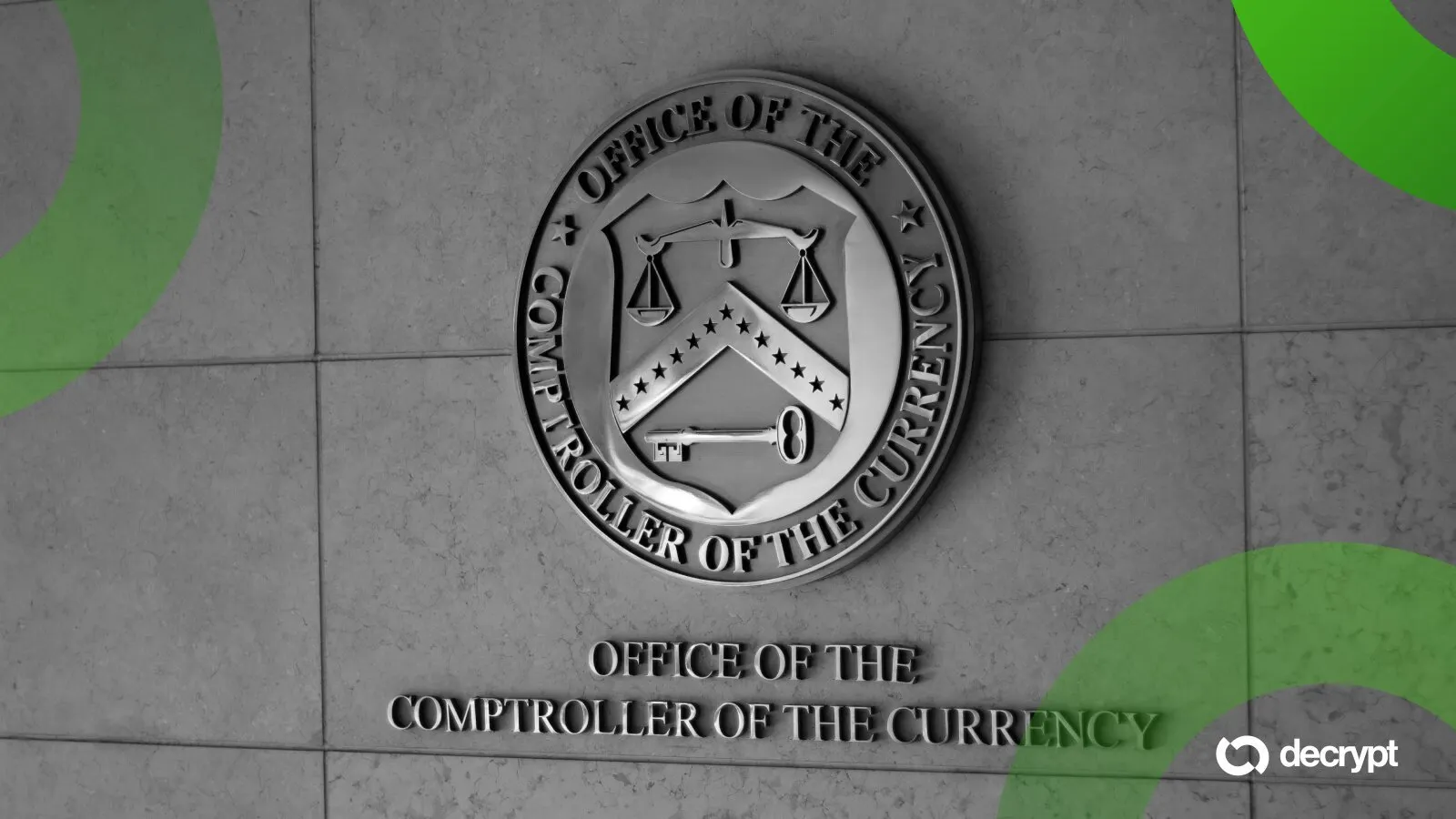
The Office of the Comptroller of the Currency on Wednesday proposed rules to implement the GENIUS Act, laying out how payment stablecoins would be issued and supervised under the agency’s jurisdiction.
In a notice of proposed rulemaking issued Wednesday, the OCC said it is launching a 60-day public comment period to determine how payment stablecoins are issued, backed, supervised, and potentially shut down under federal oversight.
Wednesday’s move aims to operationalize the Guiding and Establishing National Innovation for U.S. Stablecoins (GENIUS) Act, the first federally established stablecoin framework that passed into law last July.
The law generally prohibits anyone other than a “permitted payment stablecoin issuer” from issuing a payment stablecoin in the U.S. and bars digital asset service providers from offering non-compliant stablecoins to U.S. users.
“The regulations effectively bring the industry into the traditional finance world with significant oversight and connectivity with the banking industry,” Musheer Ahmed, founder and managing director of Finstep Asia, told Decrypt.
The U.S. market is expected to see a host of “regulated stablecoins from non-banks, payments, and crypto institutions” for “tokenized TradFi use cases.”
The OCC’s draft covers reserve asset standards, mandatory redemption at par, liquidity and risk management controls, audits, supervisory examinations, custody requirements, and application pathways for new issuers.
It also introduces a “capital and operational backstop” and amends existing capital adequacy and enforcement rules.
The agency said it “will have regulatory or enforcement authority over certain permitted payment stablecoin issuers,” including subsidiaries of national banks and federal savings associations, Federal qualified payment stablecoin issuers, and certain State qualified issuers.
“In addition, the OCC will have regulatory authority over foreign payment stablecoin issuers,” the proposal says, an expansion that could pull offshore issuers seeking U.S. access into federal oversight.
Notably absent are Bank Secrecy Act and sanctions rules, which the OCC said will be addressed separately with the Treasury Department.
The new stablecoin regime is expected to kick in no later than January 2027, but could begin as soon as 120 days after regulators finalize implementing rules, shortening the transition window if rulemaking moves faster than the statutory 18-month deadline.
Last August, the banking groups wrote to Congress demanding closure of “several loopholes” in the GENIUS Act, warning that third-party yield offerings on stablecoins could still trigger major deposit flight.
OCC Chief Jonathan Gould has previously dismissed fears of a sudden deposit crisis, telling ABA conference attendees in October that any material deposit flight “would not happen in unnoticed fashion” and “would not happen overnight.”
To that end, Ahmed said regulated stablecoins could be “potentially safer than traditional banks” in stress events, noting banks operate on 10–20% capital ratios while stablecoin issuers are mandated to hold 100% reserves for 1:1 redemptions, making them “fairly solvent” if rules are maintained.
In an extreme market scenario, Ahmed said, “one could say that the lender of the last resort will be the U.S. Fed,” not by directly backstopping issuers, but by “supporting the underlying assets that form stablecoin reserves — largely US treasuries and cash equivalents.”
Daily Debrief Newsletter
Start every day with the top news stories right now, plus original features, a podcast, videos and more.
After the beginning of Trump’s second term, the connections between capitalism, white supremacy and imperial domination became increasingly clear. These have been highlighted through ICE raids as modern-day slave patrols, global criminal operations such as the kidnapping of Venezuelan President Nicolas Maduro and his wife Cilia Flores, and United States assistance to Israel’s genocide in Gaza as a bipartisan US and transnational corporate experiment.
The growing understanding that people in the Global South, along with Black, Indigenous and other People of Colour (BIPOC) within the imperial core, face a common enemy has galvanised an anti-colonial, revolutionary movement committed to radical transformation.
And then the release of the Epstein files flooded public discourse.
Jeffrey Epstein was a financier convicted of sex crimes involving minors. After renewed federal charges in 2019, he died in jail (officially ruled a suicide). The case triggered public outrage about ruling class impunity, media focus on unsavoury associations between the political and corporate class and a plethora of conspiratorial narratives about cover-ups.
The Epstein case became far more than a criminal proceeding; it reflects a symbolic exposure of ruling class impunity and concentrated power and a spectacle of corruption within an empire in deep crisis and decline.
The Epstein case exposed ruling class criminality while simultaneously displacing structural accountability.
Importantly, “spectacle” does not mean “fake”; it means the organisation of politics through symbolic drama that displaces structural political analysis. With spectacle, social contradictions (inequality, social crises and instability) are dramatised rather than structurally challenged.
The enduring media and public fixation on the Epstein files, particularly as their release proceeds with little accountability and continued narratives that discredit and isolate survivors, serves less as accountability and more as a political diversion from systemic injustices: Racism, capitalism, the growth of the police state and ongoing international impunity.
More troubling still, it marks another step in the erosion of democracy and the consolidation of expansionist, war-driven fascism.
Fascist spectacle
In work by Walter Benjamin, Hannah Arendt, Guy Debord, Umberto Eco and others, fascist spectacle involves anti-intellectual and emotionally driven mass mobilisation around simple moral binaries (pure people v the corrupt ruling class), where action is revered while thought is reviled; the replacement of institutional process with symbolic imagery and drama; and mythic narratives of national decay and rebirth. Political theorist Roger Griffin calls this rebirth “palingenic ultranationalism”, that is, destruction as a precondition for rebirth.
The function of spectacle is to subvert principled analysis and resistance to oppression with emotion – outrage, disgust, despair and helplessness.
Conspiracy theories are the narrative engine of spectacle. They transform systemic crisis and social instability into simple, emotionally gripping stories of social taboo-breaking, centred on hidden and untouchable enemies, laying the groundwork through which authoritarian solutions are marketed as necessary and even redemptive.
When structural violence becomes visible, but accountability remains absent, public anger often seeks explanation through personalised and conspiratorial narratives rather than systemic analysis.
Amid growing distrust and corruption in mainstream media and the rise of citizen-driven and alternative social media ecosystems, conspiracy theories surrounding the Epstein case have blossomed: Claims of secret global cabals engaged in immoral sexual criminality, ritualistic fantasies involving human sacrifice, cannibalism and ancient symbolic structures and explicitly racist and anti-Semitic tropes about hidden rulers, among others.
Theories like these, whether wholly true, partially true or false, are not new; fascist movements have historically mobilised around the idea that the nation is being secretly corrupted by a degenerate ruling class, with a radical cleansing necessary to return to a righteous path.
These narratives do not expose a corrupt system; they obscure and mystify it. By sensationalising corruption into myth and providing explicit, though untouchable, targets for public outrage, they displace rigorous anti-colonial and material analyses of structural exploitation, greed and state violence with collective authoritarian longing for a strongman and the suppression of dissent to restore order.
The criminality of Epstein and the powerful figures who orbited him and participated in his abuses have come to symbolise a degenerate ruling class with identifiable names and faces, targets who could be exposed and jailed, thereby clearing the narrative space for a heroic white knight to ride in with promises of salvation.
As Hannah Arendt warned, conspiracy thinking thrives when trust in institutions collapses. The Epstein scandal intensified the sense of a ruling class operating above the law and of a justice system which protects its own, conditions ideal for authoritarian movements to exploit by insisting the system is irredeemably rigged and that only a strong leader can tear it down.
As such, the spectacle of the Epstein scandal can absorb and manipulate public outrage, redirecting it away from necessary structural accountability in the form of decolonisation and redistribution of wealth, ultimately reinforcing the very systems it appears to challenge.
In doing so, it promotes the aesthetics of politics – the spectacle – rather than grounded critiques of capitalism and imperial power. Further, it serves to distract from failures ultimately promoting oppression and war. According to Federico Caprotti, various forms of fascist spectacle produce a “collage” which both expresses and obscures the syncretic ideology of the regime.
The grand spectacle: War
When politics becomes theatre rather than collective progress dependent on accountability, transformation or reform, crisis becomes emotional drama, drama demands release (internal resolution) or escalation and escalation inevitably finds its expression in externalised war, in which the nation performs a grand spectacle of unity and sacrifice on the largest possible stage.
War acts as a stabilising force when internal contradictions cannot be resolved through collective mobilisation. With its uniforms and marches, war channels discontent by uniting a fragmented, outraged population against an externalised enemy, transforming righteous anger at the violence, oppression and greed of a ruling class into manufactured unity, heroism and meaning through violence against “the other”.
These dynamics, outlined by Benjamin decades ago, feel alarmingly familiar in the present moment, including in the spectacle surrounding the Epstein scandal.
In this context, external conflict functions not only as policy but as emotional consolidation, redirecting internal disillusionment towards collective national purpose.
Fascist forces deploy such spectacles to distract and mobilise, and are doing so presently; accelerating the dismantling of what remains of US democracy and the post-war international order, to be replaced by a system ruled by force and naked self-interest.
Spectacle politics does not require loyalty to specific leaders but to the emotional narrative they embody, rendering individual figures ultimately expendable.
In this logic, even Trump could be discarded, sacrificed to clear the way for a “purer” white male strongman (Vance? Pence? Carlson?) who promises to cleanse the ruling class and by extension its foreign so-called “handlers” (enemies like Russia, China and Iran or even allies like Israel and Europe, the latter already being threatened by Trump), of its unsavoury elements, particularly if Trump’s baggage with Epstein proves politically irredeemable.
By contrast, liberation and reconciliation and an end to capitalist oppression, with its accompanying genocidal violence and planetary destruction, require a steadfast structural framework aligned with broader leftist, antiracist and anti-colonial principles. Such a framework prioritises systemic transformation over spectacle. Within this view, the Epstein scandal is not treated as the disease itself, but as a symptom of capitalism’s inherent corruption.
The views expressed in this article are the author’s own and do not necessarily reflect Al Jazeera’s editorial stance.
After months of a crippling oil blockade on Cuba imposed by the United States, the fuel-starved country may now see some relief after the US government said it would begin authorising companies to resell Venezuelan oil, even as tensions between the two reach a head.
On Wednesday, the US Department of the Treasury said it would allow the resale of Venezuelan oil for “commercial and humanitarian use” in Cuba as the small island nation faces one of its worst fuel crises in decades.
Recommended Stories
list of 4 itemsend of list
Venezuela is the largest provider of oil to Cuba. However, since US forces abducted Venezuelan President Nicolas Maduro in January and imprisoned him to face drugs and weapons charges in a New York court, the Donald Trump administration has taken control of Caracas’s oil and halted exports to Havana.
Washington has long had frosty relations with Cuba, but Trump’s administration is specifically seeking regime change there by the end of 2026, US media has reported.
The US’s policy shift this week, however, comes after Caribbean leaders sounded the alarm about the dire situation in Cuba, an island nation of 10.9 million people.
At a regional meeting of Caribbean Community (CARICOM) countries on Wednesday, attended by US Secretary of State and Cuban-American Marco Rubio, Jamaica’s Prime Minister Andrew Holness called on Washington to ease the pressure.
“Today, many Cubans are facing serious economic hardship, energy shortages, and growing humanitarian challenges,” Holness said. Cuba is not a CARICOM member but shares close ties.
“We are sensitive to their struggles. But we must also recognise that a prolonged crisis in Cuba will not remain there. It can impact migration, security and economic stability across the Caribbean, including Jamaica,” he added.
A man carries pork rinds to sell as Cubans brace for fuel scarcity measures after the US tightened its oil supply blockade, in Havana, Cuba, February 6, 2026 [Norlys Perez/Reuters]
What’s the situation in Cuba now?
Cuba’s state-dominated economy was already struggling under a US embargo which has been in place since 1962, dating back to Havana’s alliance with the Soviet Union during the Cold War.
Since then, sanctions on Cuba have eased and tightened under various US administrations.
The long-running sanctions have severely weakened Cuba, causing the country to become highly dependent on imports, and high inflation routinely leads to food and energy shortages. Mass emigration of Cuba’s skilled labour force, particularly during the COVID-19 pandemic, has added to the country’s difficulties.
With Trump’s latest oil embargo, the US has added a severe energy crisis to the mix. Widespread power blackouts of up to 20 hours at a time are now being reported across Cuba, impacting hospitals, businesses and households alike.
Surgeries have been suspended, schools have cancelled classes, and waste trucks are parked as rubbish piles up in the streets.
Four United Nations special rapporteurs warned in early February that the situation is contributing to a severe public health problem in the country and said it could lead to a “severe humanitarian” crisis.
Cuba has lost 90 percent of its fuel supply, and despite shutting beach resorts and restricting aviation fuel sales, the country could experience a total blackout as early as late February, according to Ignacio Seni, a risk analyst writing for the US-based intelligence firm Crisis 24.
The Mexican government dispatched humanitarian aid to the people of Cuba on board two ships of the Mexican Navy, Veracruz, Mexico, February 9, 2026 [Mexico Ministry of Foreign Affairs via Anadolu Agency]
Why has the US blocked oil deliveries to Cuba?
Cuba produces crude oil but does not have the capacity to refine enough to meet domestic demand.
Venezuela was providing as much as 50 percent of Cuba’s oil before the US government took control of its oil industry at the start of this year, about 35,000 barrels per day.
Under a special barter agreement in place since 2000, Cuba provides support for education, healthcare, and security services in return for discounted Venezuelan fuel. Indeed, about 30 members of Maduro’s security detail who were killed in the operation to abduct him in January were from Cuba.
Then, days after Maduro was abducted, Trump turned his aim at Cuba itself, warning Havana to “make a deal before it is too late”. He did not, however, give details about what type of deal he wanted.
On January 29, Trump issued an executive order imposing new trade tariffs on any countries selling oil to Cuba because of what he called the “policies, practices and actions” of the Cuban government, which, he said, pose an “extraordinary threat” to the US.
Trump also claimed, without evidence, that Havana funds “terrorism”.
Besides Venezuela, Cuba was also sourcing oil from Mexico, Russia and Algeria, but all oil imports into the country ceased. Trump’s order, therefore, effectively amounted to a blockade.
The US has also reportedly seized fuel tankers in open waters transferring oil to Cuba, according to a New York Times investigation into ship movements in the Caribbean Sea published last week.
The US began building up its naval presence in the area in September last year as it prepared to attack Maduro, and its troops continue to patrol the waters.
In mid-February, one tanker loaded with Colombian oil was intercepted by the US Coast Guard as it came within 70 miles of Cuba, the Times reported. The vehicle, called the Ocean Mariner, was previously used to covertly transport oil between Venezuela and Iran.
Before Maduro’s capture, US forces also struck multiple Venezuelan boats in the eastern Pacific and Caribbean that the US claimed – without evidence – were trafficking drugs.
How have Cuba and others reacted to the US blockade?
Cuban authorities under President Miguel Diaz-Canel have accused the US of imposing collective punishment on the country.
On Wednesday, it also accused the US of links to armed men who entered the country’s waters on a Florida-tagged speedboat. Four Americans of Cuban origin were killed in the altercation, and two were injured.
In the past, Havana has said it is open to “reciprocal dialogue” with Washington, but Diaz-Canel has also said Cubans will “defend the Homeland to the last drop of blood”.
Meanwhile, on February 12, a UN expert panel condemned the US’s directive as illegal and said the claim that Havana funds terrorism “lacks credibility and appears designed to justify the use of extraordinary and coercive powers”.
“It is an extreme form of unilateral economic coercion with extraterritorial effects, through which the United States seeks to exert coercion on the sovereign state of Cuba and compel other sovereign third States to alter their lawful commercial relations,” the panel said.
Other countries are trying to help. Mexico has sent two deployments of humanitarian aid to Havana between mid-February and this week, while Russia has floated the possibility of sending fuel to Cuba.
On Wednesday, Canada pledged food aid with 8 million Canadian dollars ($6.7m).
Venezuela’s interim president Delcy Rodriguez and Cuban Foreign Minister Bruno Rodriguez Padilla attend the ceremony honouring Venezuelan and Cuban military and security personnel who died during the US operation to capture Venezuela’s President Nicolas Maduro and his wife Cilia Flores, in Caracas, Venezuela, on January 8, 2026 [File: Leonardo Fernandez Viloria/Reuters]
What relief has the US announced now, and will it change anything?
Washington said on Wednesday it would issue companies with special licences to resell Venezuelan oil to Cuba “in solidarity” with the Cuban people.
That came after Washington announced $6m in humanitarian aid to Cuba to be distributed by the Catholic Church in early February.
However, “persons or entities associated with the Cuban military, intelligence services, or other government institutions” will be barred from obtaining oil sales licences, the US Treasury Department said this week.
Transactions should only support “exports for commercial and humanitarian use”, the statement added.
It is unclear if the new order will allow Havana to continue buying Venezuelan oil at a heavily subsidised rate as it was previously doing. If it does not, the situation may not ease significantly for Cuba, experts say.
“Without significant oil imports or a relenting of US pressure, Cuba’s economy is unlikely to recover, and the degradation of conditions is likely to accelerate,” Seni, the Crisis 24 risk analyst, wrote.
Chinese producers are positioning microdramas as a key export vehicle while accelerating U.K. co-production partnerships, speakers said at the “Chinese Drama Trends” forum at Mip London, underscoring a dual-track strategy of global expansion and format diversification.
Opening the session, Bi Haibo, minister counsellor for press and public affairs at the Chinese Embassy in the U.K., said Chinese television has made “remarkable progress in thematic innovation, production quality and global distribution,” with more series “reaching audiences here in the U.K. and across the global serving as cultural bridges that connect people and foster mutual understanding.”
Bi also referenced agreements signed during U.K. Prime Minister Keir Starmer’s recent visit to China, including partnerships between China Media Group and British counterparts that he said had “expanded collaboration in the media and cultural sectors.”
Bi noted that since Feb. 17, China has implemented a unilateral visa free policy for U.K. nationals, “which will further facilitate people to people exchanges and practical cooperation between our two countries,” urging industry players to “take full advantage of this policy.”
Rupert Daniels, director of services and skills at the U.K. Department for Business and Trade, pointed to the scale of Britain’s creative economy – employing nearly 3 million people and exporting roughly £60 billion ($81 billion) globally – and cited existing collaborations such as the Chinese-language adaptation of “Inside No. 9” and co-productions involving BBC Studios, Tencent, Bilibili and Phoenix TV.
Qiu Yuanyuan, secretary-general of the Jiangsu International Communication Center at Jiangsu Broadcasting Corporation, moderated the discussion, which focused on how Chinese content can travel more effectively in international markets.
Gary Woolf, executive VP of strategic development at All3Media International, said globally viable projects require strong production partners and universal storytelling. “We’re looking at the quality of the production company… the quality of the idea… how universal some of the themes of that show might be,” he said, adding that distributors also weigh budget levels and commissioning broadcasters.
Guo Feng, chair of Yulele Media Group, said his company’s slate blends Chinese cultural specificity with universal themes. His wartime-set project “Tile Cat,” he said, centers on “family bonding… generational love… struggles between lovers and reconciliations,” arguing that “the theme is universal.”
While traditional long-form Chinese-language dramas face hurdles in Europe, Roy Lu, general manager of Linmon Media International, argued that microdramas present a more agile export pathway.
“We Chinese [are] very good at microdramas,” Lu said, noting that “roughly every day, we have 200 to 300 titles becoming available” in China. He added that the format’s rapid turnaround allows companies to test audience response and adjust quickly for overseas markets.
Qiu Zhengyang, deputy general manager of Hangzhou Jiaping Pictures, said his company now operates separate long-form drama and microdrama divisions. “I don’t think they will fight each other. I think they can be two parts of the future,” she said, arguing the formats will coexist rather than compete.
Liyanne Marie Manning, head of casting at Onset Octopus, described the production pace of U.K.-based vertical drama shoots, emphasizing the need for immediate audience engagement. “If you don’t get that on your screen in 30 seconds and that doesn’t hit then… I’ve not done a good job,” she said.
Qiu Qianyi, chief representative (Office of Hong Kong & Macau SAR) at Shenzhen Media Group, promoted Shenzhen as a growing hub for short-form production, highlighting the China International New Media Short Film Festival, which she said has received 60,000 short films from more than 200 countries and supported nearly 300 directors. She described the city as building “an ecosystem for the microdrama studio.”
Despite language and market-entry barriers, the overarching message was one of expansion – with microdramas emerging as a strategic tool for global reach alongside deepening U.K.–China production ties.
Google has launched its new image generation model, the Nano Banana 2, which is powered by Gemini 3.1 Flash Image. The company says the new model has the capabilities, world knowledge and reasoning of Nano Banana Pro, but it can accomplish tasks at “lightning-fast speed.” That enables rapid editing and the quick creation of various iterations using a single prompt.
Nano Banana 2 will give more people access to capabilities that were previously exclusive to the Pro model. That includes Pro’s ability to pull real-time information and images from web searches to create, say, infographics and diagrams. It will also be able to generate texts on images for marketing materials and greeting cards.
Google says Nano Banana 2 can maintain character resemblance for up to five characters in a single workflow, which could be especially valuable if you’re using it to create storyboards or visual stories. It can follow precise instructions for complex requests, as well, and can generate input with up to 4K in resolution with richer textures and sharper details than its predecessors could.
Nano Banana Pro could already generate images so realistic, it’s almost impossible to tell that they were AI-generated. Google even had to limit its use due to high demand. Whether Nano Banana 2 can generate images that are markedly better than what Pro could create — and whether we could still tell if an image was made by AI — remains to be seen. The new model will replace Nano Banana Pro in the Gemini app, but Google AI Pro and Ultra subscribers will retain access to Nano Banana Pro for specialized tasks. It will also be the default model in Search for AI Mode and Lens, as well as in Google’s Flow AI creative studio.
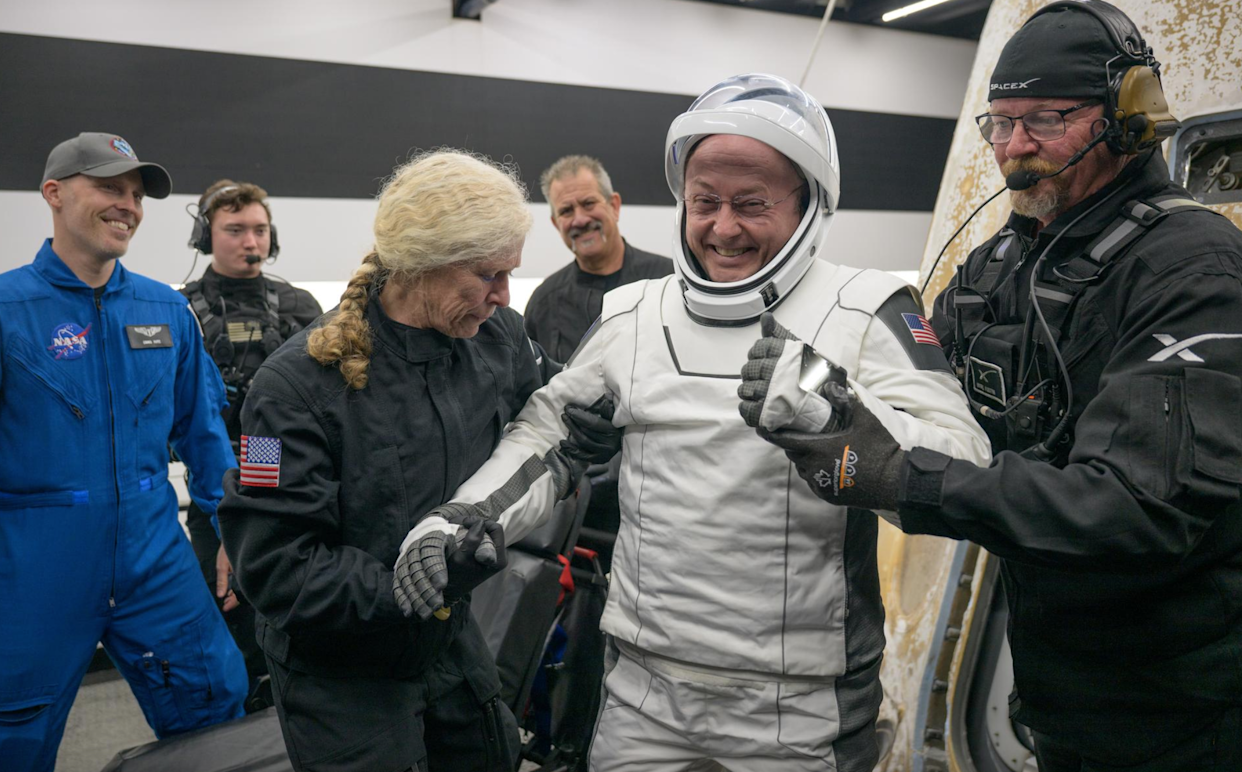
NASA recently ended a manned mission to the International Space Station (ISS) a month early, citing a medical issue with one of the astronauts. The space agency just revealed that the impacted astronaut was Mike Fincke. This was the first medical evacuation in the history of the ISS.
NASA wrote a statement saying that the astronaut experienced an unknown medical event on January 7 “that required immediate attention” from his fellow crew members. Fincke added that his “status quickly stabilized” thanks to the “quick response and the guidance” of the flight surgeons.
However, the incident did force NASA to cancel a spacewalk planned for January 8. Soon after that, the agency announced it would be ending the Crew-11 mission a month early. The four-person crew included Fincke, NASA astronaut Zena Cardman, Japanese astronaut Kimiya Yui and Russian cosmonaut Oleg Platonov.
They had been living and working aboard the ISS since August and were expected to stay until February. The crew returned on January 15, which was a decision made by NASA’s chief health and medical officer. Once the crew had landed, administrator Jared Isaacman said it was a “serious situation” but didn’t go into any detail.
Fincke has said he is currently “doing very well” and still participating in standard post-flight reconditioning at NASA’s Johnson Space Center in Houston. “Spaceflight is an incredible privilege, and sometimes it reminds us just how human we are,” he said. “Thank you for all your support.”
We don’t know what medical issue Fincke is going through, and it’s certainly his business and not ours. In any event, we wish for a speedy recovery.
NASA also moved up the launch of Crew-12 to replace the prematurely-returned astronauts. That team docked at the ISS on February 14 and are scheduled to stay on the space station for around eight months.
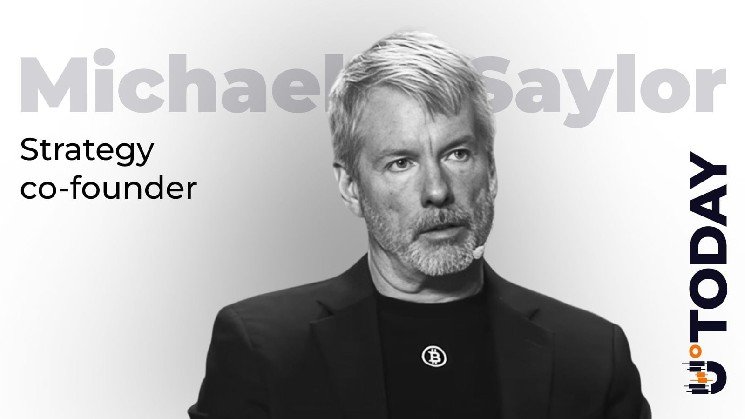
As Bitcoin tries to stabilize at $67,000, Michael Saylor, Chairman of Strategy, continues to demonstrate his trademark optimism on social media. In a new post on X, Saylor not only depicted himself carrying a large orange bag covered with Bitcoin logos but also added an intriguing caption suggesting he might need a “bigger” one.
The message to the market is clear: Saylor & Co. are prepared to keep absorbing supply and buying more Bitcoin.
Why Michael Saylor сalling for “bigger bag” amid MSTR stock turbulence
At present, Strategy holds 718,722 $BTC, equivalent to approximately $48 billion in value. However, given an average purchase price near $76,000, Saylor and the company are sitting on an unrealized loss of about 12% on their position. Despite this, the company’s mNAV ratio remains around 1, while its adjusted enterprise value multiple is even higher: 1.256.
In other Strategy-related developments, this week, the company hosted Strategy World 2026, where Saylor reiterated his thesis that Bitcoin represents digital capital. According to him, Bitcoin’s core value is not in abstract portability narratives but in the practical reality that one billion dollars in $BTC can be transferred anywhere in the world, whereas moving a billion dollars in traditional assets is far more complex.
Need a bigger orange bag. pic.twitter.com/DoVuklGMFr
— Michael Saylor (@saylor) February 26, 2026
At the same time, he acknowledged that Bitcoin’s primary challenge is price volatility, arguing that large-scale capital inflows are held back mainly by fluctuations, not by any structural flaw in the network itself. From Saylor’s perspective, corrections are a normal part of the model. His message remains consistent: if you invest in $BTC, be prepared to hold it for 7-10 years.
All of this comes as Strategy’s stock, MSTR, is reportedly the most shorted stock in the market, according to Goldman Sachs. The shares are currently trading at $132.8, down 12.6% year-to-date in 2026. Compared to the all-time high of $542, the stock is off by 75.8%.
How much Saylor needs an even bigger orange bag may become clearer next week, as Strategy continues to report its Bitcoin activity on a weekly basis when transactions occur. One thing is certain: Saylor remains openly optimistic, even amid the current turbulence on the crypto market.