Blog

  • What the Iran Conflict Means for Bitcoin’s Price

    What the Iran Conflict Means for Bitcoin’s Price

    In brief

    • Bitcoin has steadied after an initial weekend selloff tied to Middle East tensions, holding up better than U.S. equity-index futures.
    • Funding rates in Bitcoin futures have turned sharply negative, signaling crowded short positioning in derivatives markets.
    • Oil and gold have rallied on fears of supply disruption and inflation risk, underscoring a broader risk-off tone across global markets.

    Bitcoin has so far absorbed the latest escalation in the Middle East, following a spike in volatility in U.S. futures on Sunday, as traders continue to parse the impact on global energy markets.

    U.S.-led strikes on Iranian targets have prompted retaliatory missile and drone attacks, raising fears of a wider regional conflict after reports that Ayatollah Ali Khamenei’s 36-year rule as Iran’s supreme leader had ended. 

    Iran has warned of further retaliation, while shipping and aviation disruptions across the Gulf have sharpened concerns that the conflict could extend beyond a limited exchange.

    Bitcoin is down 0.4% on the day to $66,600 after reclaiming ground lost over the weekend, when its price fell to as low as $63,000. The asset is down roughly 2.8% on the week, according to CoinGecko data. 

    The decline was relatively smaller than losses implied by equity-index futures, which were down more than 1% across the Nasdaq, Dow, and S&P 500. Losses in equity-index futures suggests investors are marking down risk broadly in response to overnight macro and geopolitical developments ahead of the U.S. open.

    “Bitcoin’s initial sell-off was almost textbook; markets hate uncertainty more than bad news, and the moment the Iran conflict looked contained, the reflexive bid came back fast,” Ryan McMillin, chief investment officer at Merkle Tree Capital, told Decrypt.

    The expert pointed to a Fear and Greed index reading of 11, alongside Bitcoin futures funding rates swinging to -6%, indicating shorts are paying a significant premium to maintain a bearish bias in a situation not seen since Bitcoin traded at $16,000 back in 2022.

    “The market is mechanically paying you to be long; it’s time to get long, McMillin said.

    Echoing that sentiment, Pratik Kala, head of research at Apollo Crypto, told Decrypt Bitcoin’s price action suggested much of the initial shock had already been reflected. 

    “Bitcoin would’ve sold off by now if it had to—the tape through the event over the weekend was very positive. CME futures have also opened, and if Bitcoin were to dump or follow equities, it would have by now,” Kala said.

    Broader markets have focused on the potential for disruption around the Strait of Hormuz, the narrow shipping lane that carries roughly one-fifth of global oil supply.

    Oil prices have surged sharply on the Iran conflict, with Brent crude jumping roughly 8–10% toward $80 a barrel and U.S. WTI up about 7–8%. 

    “If oil stays elevated, there will be a risk to a higher inflation print, which is negative for risk assets—and Bitcoin,” Kala said. “However, I don’t expect that to be the base case.”

    Kala cited large oil supplies from OPEC countries that could seek to “plug the gap” and President Donald Trump doing “things in his power” to keep prices low, as “he knows that will turn the sentiment of Americans most.”

    Safe-haven gold, meanwhile, has leapt more than 2% to $5,388 per troy ounce. 

    “The ongoing Middle East conflict is set to further fuel gold’s tailwinds, likely triggering a knee-jerk price spike on rising safe haven demand.” Han Tan, chief market analyst at Bybit Learn, told Decrypt.

    “Still, seasoned market watchers would be well aware that geopolitical risk premiums are often faded out swiftly, once market and economic risks are digested and appear to be contained,” he added.

    Daily Debrief Newsletter

    Start every day with the top news stories right now, plus original features, a podcast, videos and more.


  • Hyperliquid’s Token Rises as Weekend Iran Shock Finds Few Open Markets

    Hyperliquid’s Token Rises as Weekend Iran Shock Finds Few Open Markets

    In brief

    • HYPE rose about 6% even as Iran headlines drove weekend volatility.
    • Hyperliquid absorbed early volume as price moves formed before traditional futures reopened.
    • Weekend shocks may turn always-on perps into a repeat venue for early risk pricing and fee growth, Decrypt was told.

    As tensions escalated over Iran-related headlines this weekend, Hyperliquid’s HYPE token rose about 6% as traders turned to the always-on decentralized perpetuals platform to express risk while many traditional markets were closed.

    Bitcoin and other risk assets fell as Iran-related tensions escalated, while oil and gold moved higher amid a broader risk-off shift. Volatility rose, and funding rates turned negative across crypto derivatives markets as traders adjusted positioning.

    Hyperliquid is a decentralized exchange that lets traders buy and sell perpetual futures contracts directly on-chain without using a centralized intermediary.

    Its native token, HYPE, fell to about $26.2 at the end of February, in line with the broader market pullback, before surging to roughly $32 as volatility picked up on Sunday.

    The token is up about 25% year to date, though it remains well below its September peak near $58, per CoinGecko data.

    Trading volume over the last 24 hours for the exchange reached a near one-month high on Saturday, rising to a peak of $200 million before dissipating as traders digested the risk premium to global energy markets.

    Always-on trading

    Hyperliquid was one of the few venues open and liquid as volatility picked up over the weekend, drawing trading activity at a time when equity futures and many centralized crypto platforms were either closed or operating with thinner books.

    “As a decentralized perpetuals platform, it was one of the few venues actually open and liquid when the Iran headlines hit, and in a weekend event where centralized venues are closed off to face thin liquidity,” Ryan McMillin, chief investment officer at Merkle Tree Capital, told Decrypt.

    Geopolitical shocks “make the case for non-custodial, always-on trading infrastructure,” McMillin added, noting how HYPE appears to sit “at an interesting intersection.”

    Hyperliquid’s token “benefits both from volume-driven fee revenue during chaos events and from any broader rotation away from centralised exchange risk,” he said. “It’s worth watching whether weekend crisis volume is becoming a structural tailwind rather than a one-off.”

    For HYPE, this ties geopolitical shocks directly to trading volume and fee activity, supporting the view that off-hours crises may become a repeat source of demand.

    First response

    Decentralized platforms like Hyperliquid’s are increasingly serving as “the first-response venue for geopolitical risk,” Dominick John, analyst at Kronos Research, told Decrypt.

    “Institutions leverage these always-on markets to anticipate moves in conventional venues, using on-chain perpetuals to hedge before broader markets open,” John explained, adding that such a function positions decentralized venues “for early risk pricing.”

    Weekend geopolitical shocks provide decentralized perpetuals exchanges “a structural edge” that captures “risk-driven flow while TradFi sleeps,” he added.

    While platforms like Hyperliquid could serve that purpose, most other perpetual decentralized exchanges, including its own HIP-3 markets, would still need to “achieve much deeper order book liquidity to onboard institutional traders,” Siwon Huh, researcher at Four Pillars, told Decrypt.

    On Hyperliquid, new markets require HYPE to be staked, and much of the platform’s fees go toward HYPE buybacks, meaning volatility and trading growth can directly increase demand for the token, which has also shown lower correlation to Bitcoin than many other altcoins, he explained.

    “For now, they appear to have already established themselves as highly useful exchanges at the retail level,” Huh said, adding that the weekend geopolitical shocks are likely to “capture demand from liquidity providers requiring hedging at a much larger scale.”

    Daily Debrief Newsletter

    Start every day with the top news stories right now, plus original features, a podcast, videos and more.
  • What to expect at Apple’s product launch event on March 4

    What to expect at Apple’s product launch event on March 4

    Apple has scheduled a product launch event, dubbed an “Apple Experience”, for March 4 at 9AM ET. The company is reportedly holding this event in NYC, London and Shanghai.

    Everyone loves shiny new products, so what can we expect to see at Apple’s first launch event of 2026? We don’t know anything for certain, but we have plenty of educated guesses that have been sourced from industry reports and speculation from analysts.

    Editor’s Note (on March 2 at 9:45AM ET): Apple has officially announced the iPhone 17e and iPad Air (M4). It’s expected to continue to unveil new hardware in the following days, per the rest of this article.

    Budget-friendly MacBook

    There have been rumors swirling that Apple is preparing to launch a cheaper alternative to the MacBook Air. Bloomberg reported on this all the way back in November. Industry rumors indicate that Apple will be stuffing this laptop with an iPhone processor, the A18 Pro, to keep the price down.

    It’s also been suggested that this laptop will only include 8GB of RAM, which kind of flies against the company’s recent stance to outfit all Macs with at least 16GB of RAM. However, that would certainly help with the cost. You might have heard about a little thing called AI that chomp chomps on all RAM it can find.

    TechRadar has reported that this could be Apple’s biggest laptop launch in years, with potential initial shipments hitting 8 million units. The price is likely to be somewhere in the $699 to $799 range, which is pretty nifty. However, I’d still go for an Air at $999. They are absolute workhorses.

    MacBook Pro with M5 Pro and Max chips

    It’s likely that Apple will release more powerful MacBook Pro models this year and the timing seems to match up. Bloomberg’s Mark Gurman has suggested a March launch and the event is on March 4.

    The company has already released a MacBook Pro with an M5 chip, but both the M5 Pro and Max are likely on the horizon. We could be getting new laptops outfitted with these chips in various display sizes.

    A laptop on a table.

    Devindra Hardawar for Engadget

    There have also been reports that both of the higher-end M5 chips are getting a redesign to help improve heat dissipation and reduce defective chip rates. Additionally, the new chiplet design would allow the M5 Pro and Max to raise the total number of CPU and GPU cores. The Max is expected to have more cores than the Pro.

    This idea is helped along by the fact that MacBook Pro M4 Max orders are currently delayed. This is typically the case with an outgoing model as stock dries up to make room for new releases. Also, the Pro and Max variants typically get announced in the Fall, so we are due.

    New iPads

    Rumors have been circulating that we are about to get new iPads, including an update to the base model and the Air. The standard model, which would be the 12th-gen release, is expected to upgrade the A16 chip to an A18. This should also allow for the integration of Apple Intelligence tools, if that’s your bag.

    An iPad.

    Nathan Ingraham for Engadget

    As for that iPad Air, rumors suggest an upgrade to the M4 chip from the M3. An extremely light tablet with an M4 would be fairly notable in my estimation, as only the newest iPad Pro has that chip.

    iPhone 17e

    It was almost exactly a year ago that Apple announced the iPhone 16e, so you know what that means. It’s time for a refresh. Recent reports have suggested that an announcement regarding the iPhone 17e is imminent, so this launch event seems like as good a place as any to reveal the latest “budget-friendly” smartphone.

    As for specs, Mark Gurman has suggested that it’ll be getting an upgrade to the A19 chip, which is nice. Also, it could be getting MagSafe support. That sounds like an iterative upgrade, but the price is expected to remain steady at $599.

    Other Possibilities

    The following stuff is less likely, though certainly possible. There have been rumors that Apple is currently preparing a revamped Studio Display and Mac Studio desktop. The reports suggest a release sometime in the first half of the year, and March is right in the middle of that timeframe.

    It’s also possible that the company will reveal an upgrade to the MacBook Air with the M5 chip. Reports indicate that this is unlikely to happen during this event, but it is worth noting that the M4 Air came out in March of last year. In other words, it’s a toss up.

    What’s not a toss up? You shouldn’t expect anything regarding the long-anticipated Siri refresh. This looks to be a hardware event, so any software updates will likely have to wait until WWDC this summer. In any event, Engadget will be on hand to report on all of Apple’s new products.

    Update, March 2 2026, 9:45AM ET: This story has been updated to add an Editor’s Note with the latest news from Apple this week.

  • Banking Regulator Floats New Stablecoin Yield Rules—Do They Hurt Coinbase?

    Banking Regulator Floats New Stablecoin Yield Rules—Do They Hurt Coinbase?

    In brief

    • The OCC proposed rules that would restrict certain stablecoin rewards programs under the GENIUS Act.
    • The language could affect Coinbase’s USDC rewards arrangement with Circle, some industry experts said.
    • But the rules are changeable, and not final, and others believe they won’t outlaw top stablecoin rewards programs.

    A key Treasury Department bureau released preliminary rules this week detailing how it will implement the stablecoin-focused GENIUS Act—and industry experts are split about whether the proposal could impact America’s top stablecoin rewards program.

    On Thursday, the Office of the Comptroller of the Currency, the nation’s top banking regulator, released a massive, 376-page proposed rulemaking detailing how it intends to implement the GENIUS Act, which was signed into law by President Donald Trump last summer.

    Among the proposed rules—which are subject to a 60-day public comment period—are multiple sections prohibiting certain types of stablecoin rewards. The prohibitions appear to outlaw certain arrangements between stablecoin issuers and third parties in which the third parties pass yield onto stablecoin holders in connection with their “holding, use, or retention” of the tokens.

    That sounds not so far from the current arrangement between USDC issuer Circle and Coinbase. Both companies share revenue from the yield generated on USDC’s reserves, and Coinbase currently offers users roughly 4% yield, essentially a type of interest payment, on their USDC deposits.

    Multiple crypto policy leaders told Decrypt they think the OCC’s proposed language could impact Coinbase’s current USDC rewards program, but emphasized the complexity of the proposed rule and the possibility that it could be worked around.

    One of the policy leaders said Coinbase was likely always going to need to adjust its USDC rewards program at least somewhat after the implementation of the GENIUS Act. Coinbase did not immediately respond to Decrypt’s request for comment on this story.

    Last year, Coinbase reported $1.3 billion in stablecoin revenue. The company cited its USDC rewards program as its key growth driver in 2025.

    Some crypto executives have denounced the OCC’s proposed rulemaking, deeming it regressive.

    Scott Johnsson, a finance lawyer and crypto-focused venture capitalist, told Decrypt he thinks the language “most likely does” impact Coinbase’s USDC rewards program. But he also expects the rule will be challenged, and changed.

    But others have taken a different tune. Circle’s head of global policy, notably, commended the OCC on its proposed regulations—a sentiment echoed by Circle’s CEO, Jeremy Allaire.

    “This is all part of accelerating U.S. leadership in transforming the economic and financial system and rebuilding it natively on the internet,” Allaire said.

    Perhaps underscoring the possibility that Coinbase and Circle needn’t worry too much about the proposed rules, a banking industry source told Decrypt that the OCC’s announcement does not give them much comfort. The banking lobby has been pushing for months to restrict stablecoin rewards, which it worries could siphon customers away from traditional, low-yield bank accounts. 

    “It really doesn’t solve the problem,” the banking industry source said, alluding to potential loopholes in the OCC’s proposed restrictions. The source emphasized that rulemakings “can always be changed.”

    The banking industry would rather have restrictions on stablecoin yield permanently enshrined in law, the source said. For over a month, banking and crypto representatives have gone back and forth negotiating the issue of stablecoin yield, as part of negotiations on crypto’s stalled market structure bill. The meetings, led by the White House, were intended to arrive at a deal by this weekend—but a deal is unlikely to materialize so soon, Decrypt reported earlier Friday.

    “This doesn’t fix the debate,” Todd Phillips, a law professor at Georgia State focused on bank regulation, said of the OCC’s proposed rules. “This is not going to satisfy the two warring sides.”

    Daily Debrief Newsletter

    Start every day with the top news stories right now, plus original features, a podcast, videos and more.
  • Bitcoin Recovers Following Plunge as US, Israel Begin Bombing Iran

    Bitcoin Recovers Following Plunge as US, Israel Begin Bombing Iran

    The price of Bitcoin rapidly fell overnight as the United States and Israel began joint “major combat operations” in Iran, bombing numerous military targets in what officials said were attempts to end the country’s nuclear and ballistic missile programs, as well as take out key military leaders.

    But while Bitcoin plunged from a price of $65,572 to $63,176 in about an hour overnight following word of the strikes, the leading cryptocurrency has mostly recovered that ground in the hours since.

    It’s currently trading for $65,051, according to data from CoinGecko, still showing an approximately 0.8% loss on the day and 5.2% fall over the last seven days.

    Major altcoins like Ethereum, XRP, and Solana also fell sharply following the overnight attacks, but have similarly made up most of that ground as of this writing, showing daily losses of less than 2% each.

    Crypto liquidations surged overnight amid the rapid market plunge, with CoinGlass showing about $490 million worth of positions liquidated over the past 24 hours, led by Bitcoin and Ethereum longs. Overall, Bitcoin positions make up $196 million worth of the liquidations, with Ethereum following at $132 million.

    At its overnight low, Bitcoin was approximately 50% down from its all-time high mark above $126,000 set last October. The leading cryptocurrency has fallen sharply over the last month, about 23% during that span. Bitcoin started the year at a price around $87,000.

    Crypto prices have historically been impacted by geopolitical turmoil, and this time around is no different. For example, the price of Bitcoin and other assets fell sharply after Russia invaded Ukraine in 2022.

    The overnight strikes led Iran to launch retaliatory attacks against U.S. military assets across the Middle East, while Iran reckons with the fallout from the bombings. News agencies have reported mass civilian casualties in Iran, including a reported 85 deaths after a girls school was struck in the Minah province.

    Users on Myriad—a prediction market operated by Decrypt‘s parent company, Dastan—increasingly believe that the Iranian regime will collapse before October, currently penciling in a 51% chance of that happening. Those odds rose 20% over the last day.

    Daily Debrief Newsletter

    Start every day with the top news stories right now, plus original features, a podcast, videos and more.

  • Magical-Realist Comedy ‘The Fisherman’ Literally Tells a Fish-Out-of-Water Story: ‘I Want People to See the Ghanaian Sense of Humor Shine’

    Magical-Realist Comedy ‘The Fisherman’ Literally Tells a Fish-Out-of-Water Story: ‘I Want People to See the Ghanaian Sense of Humor Shine’

    On a continent beset by problems and challenges, Zoey Martinson‘s colorful, postcard-beautiful indie “The Fisherman” literally tells a fish-out-of-water story – with the magical-realist comedy representing a courageous leap that she feels African film needs to take.

    Martinson will unpack her journey as part of the next generation of African storytellers shaping the future of the continent’s cinema as a JBX Talks panellist at this week’s 8th Joburg Film Festival in South Africa.

    She tells Variety that the continent’s new crop of filmmakers need to be bold, creative and undeterred in the beautiful and joyful stories from this vast continent they want to tell and also get in front of global audiences.

    For “The Fisherman,” which she wrote and directed as an independent film, Martinson first did eight shorts before teaming with Kofi Owusu-Afriyie and Korey Jackson to bring the whimsical feature to screen as a vibrant depiction of Ghanaian culture, filled with laughter, African joy and a colorful visual style.

    Filmed over 20 days, together with some help from Ghana’s navy who appear as fishermen, the feature originated from a short Martinson made in response to the clearing of Jamestown’s fishing community for a new seaport.

    The comedic tale follows an ageing traditional fisherman in Ghana, Atta Oko Sackey, played by Ricky Adelayitar, who is unexpectedly forced into retirement, but finds his life upended by a talking fish.

    Together with two orphans and a strong-willed young woman, the four embark on a journey from their fishing village to Ghana’s capital, Accra, to buy their own fishing boat.

    Vibrantly lensed, “The Fisherman’s” narrative highlights the struggle of maintaining traditional fishing practices in the face of rapid urban development and commercial seaports, and uses the magical realism of a talking fish to humorously dramatize real-world issues like displacement and environmental degradation.

    With “The Fisherman,” Martinson, who lived in Keta, a fishing town in Ghana’s Volta region, wanted to depict an African story of change.

    ” ‘The Fisherman’ is this whimsical story of a traditional fisherman who gets a talking fish and the fish helps him cope with change. It’s a human story,” she says.

    She admits the process was hard.

    “It was independently financed. I think ignorance is bliss. Because it was our first feature we made, we were courageous. We entered it into a lab in Venice to just get notes on it, and then I had to go write the script. We pitched it at Venice and we ended up getting a grant to make it from the Italian government, but it came with restrictions that you couldn’t put money on top of the grant.”

    “So it ended up being quite a low budget to make a film with, but, you know, you just make it work. Everybody kind of stepped in to help, and obviously, we paid everyone, and so that’s how we got it done.”

    “I think the thing that’s harder when you make an independent film might not be the actual making of it, because the making of it we kind of all know how to do because we’ve been trained and built careers in that side of it,” she explains.

    “It was the taking it out. Like, how do you get it distributed? That was the biggest learning curve that we had to go through. We thought: Okay, we made this film, but now how do we get it out for people to see it? We had no clue about that process, really.”

    But Martinson says African filmmakers – even without distribution – should persevere, keep pushing and knocking on doors.

    “Don’t give up. Just be blindly courageous and if you think you have a good idea, keep knocking on the doors. Just start. I made eight short films before I made a feature, and I think that journey was crucial.

    “They’re less expensive, they’re lower risk, you make connections with crew, you learn about yourself as a storyteller, and you also make mistakes – and they’re safer places to make mistakes. You learn as you move through it all, so that when you get to a feature film, for my team, this didn’t feel that hard because we had done so many shorts together.”

    “With ‘The Fisherman,’ I felt like we were ready when it came to production. Then the next learning curve was, ‘now how do we take a feature and sell a feature?’ And getting it out is different from the short film. So you keep pushing and keep learning. I would tell everyone to start with shorts. Even if you’re going to make them, knowing you’re going to maybe just put them on YouTube, just make them. Just start making things and you’re going to learn.”

    On capturing the vivid colours and sounds of Ghana, Martinson says the aperture needs to be opened wider for a bigger gaze at Africa’s joy, beauty and laughter.

    “I’ve always thought Ghana was very beautiful. I always say I don’t not see the struggle. I don’t not see the hardships. I lived in a very rural village, so it wasn’t like we had running water or constant electricity, but I still found myself laughing daily.”

    “I just had so much joy in a community that had much less, and there’s something really beautiful about the culture that has that ability to find the love, and lean into a value system that is based in our humanity as opposed to materialism.”

    “Ghanaians are super funny and I felt like that was something that sometimes gets put into the local films but doesn’t really get out into the world. So, tonally, I wanted to keep comedy in ‘The Fisherman.’”

    Martinson says, “The film talks about bigger things and issues, but I really want people to see just the Ghanaian sense of humor shine through the wit, the sarcasm and the joy.”

    “Cinematically, I come from a photography background. I knew we didn’t have a lot of money for the lights, so I thought, let’s capture this film, and make it as beautiful as possible. I knew it could look incredibly beautiful and rich with color, and have an intentionality, so we did a lot of prep to get it to look like it did.”

    She says “The Fisherman” is part of African filmmaking activism, to present a different type of story coming from the continent.

    “It’s part of offering a different voice in the canon of African cinema that’s lighter, that’s funny, and that people really do see themselves in.”

  • Paramount Says It Will Release 15 Warner Bros. Movies a Year in Theaters, Reaffirms 45-Day Theatrical Window

    Paramount Says It Will Release 15 Warner Bros. Movies a Year in Theaters, Reaffirms 45-Day Theatrical Window

    David Ellison reaffirmed his pledge to release 30 films theatrically once Paramount merges with Warner Bros. Discovery.

    “As we have said consistently, we are committed to delivering a broad pipeline of high quality storytelling, including 15 theatrical films per year per studio, for a total of at least 30 films annually,” Ellison told analysts during a conference call on Monday.

    “We really believe that movies should be seen in theaters,” he added.

    Ellison argued the company has “already demonstrated our ability to increase output,” noting that Paramount will release at least 15 films in 2026. That’s up from eight films in 2025. Warner Bros. also fell short of the mark that Ellison set for the studio, releasing 11 films last year.

    Ellison praised the year that Warner Bros. had in 2025, calling it “a powerhouse slate,” while crediting such hits as “Superman” and “Minecraft” with “propelling” the company to $4 billion in box office revenue. He did not namecheck “Sinners” or “One Battle After Another,” two films from Warners that have dominated the awards season.

    Netflix, which previously had a deal to acquire Warner Bros. Discovery until Paramount blew its offer out of the water with its $110 billion pact, faced opposition from theater owners who worried the streamer would undermine their business and release fewer films in cinemas. The company’s chief Ted Sarandos tried to assuage their concerns, maintaining that Netflix would honor its commitments, but many exhibitors doubted his sincerity.

    Ellison framed his commitment to theatrical in personal terms, noting that as head of the production company Skydance, he had seen firsthand the power of a traditional big screen release.

    “When you look at the theatrical space, which is something we deeply, deeply believe in, large franchises and big pieces of intellectual property are launched in theaters, period,” Ellison said. “I personally learned this lesson in 2022. We basically had the largest theatrical box office film with ‘Top Gun: Maverick,’ which became a cultural phenomenon, grossing $1.5 billion.”

    “At the same time,” Ellison added, “we released ‘The Adam Project’ that summer on Netflix, which, at the time of its release, was the most successful film in Netflix… [it] previewed incredibly well with audiences but did have a different cultural resonance.”

    How a theatrical release can propel a film into the cultural conversation influenced Ellison’s thinking when it came to overseeing Paramount and — if the deal is consummated — Warner Bros. Pictures.

    “We said from Day 1 when we acquired Paramount that we weren’t going to be in the business of making movies directly for streaming,” Ellison said.

    Ellison’s team hasn’t always been as enamored with the theatrical experience. Jeff Shell, who serves as Paramount’s president, pushed to reduce the theatrical window (the term for the amount of time a film plays exclusively in cinemas) from several months to 17 days when he served as head of NBCUniversal during the pandemic. But Ellison said the combined Paramount and Warner Bros. will honor a 45-day theatrical window before their films debut on home entertainment platforms.

    Despite Ellison’s promises, there is skepticism about his ability to find and develop enough films to, in his words, “pierce the zeitgeist,” particularly given the more than $78 billion in debt that the combined companies will shoulder.

    “If any studio could release more than 15 wide releases per year — a little more than one per month — and be successful, they would,” David A. Gross, who runs the movie consulting firm Franchise Entertainment Research, recently told Variety. “In the course of one year, there aren’t more than 15 broad-appeal stories that a studio can develop, produce, market and distribute effectively around the world; 30 wide releases is extremely unrealistic.”

  • Apple introduces the $599 iPhone 17e with MagSafe and twice the storage

    Apple introduces the $599 iPhone 17e with MagSafe and twice the storage

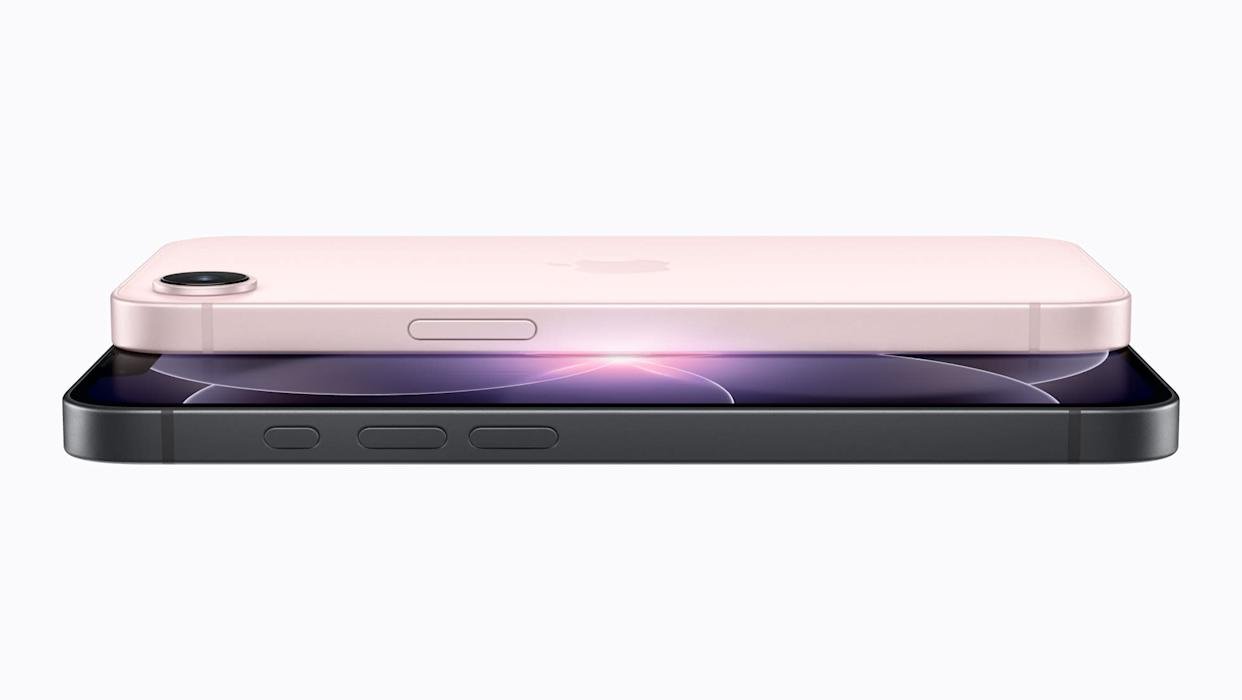
    Apple has just announced the addition of the iPhone 17e to its smartphone lineup. This model is kitted with the same A19 chip that powers the base iPhone 17, and it will support the Apple Intelligence suite of AI tools. As the rumors suggested, the iPhone 17e will indeed be priced at $599, same as last year’s iPhone 16e. The base model will come with 256GB of storage, and also be available in a new pink color.

    The iPhone 16e was missing a few elements that are now being added to the 17e, most notably MagSafe charging at Qi2 speeds. This means it can charge wirelessly at 15W compared to the 7.5W.

    Apple also gave the iPhone 17e its C1X cellular modem, which it said is “up to 2x faster than C1 in iPhone 16e.” This year’s entry-level iPhone also has Ceramic Shield 2 on its 6.1-inch Super Retina display, which Apple says offers “3x better scratch resistance than the previous generation and reduced glare.”

    Most of the other specs appear similar to the iPhone 16e, including the 48-megapixel Fusion camera that uses one single hardware sensor to provide two dedicated camera pipelines. It’s not yet clear whether there are specific changes here, but to use Apple’s words in its press release, “[The Fusion camera] also enables an optical-quality 2x Telephoto — like having two cameras in one.”

    The iPhone 17e is rated IP68 for dust and water resistance, and will also support Emergency SOS, Roadside Assistance, Messages and Find My via satellite. From the outside, the device looks very similar to its predecessor, with the same shape, notch and buttons as before. We’ll of course have to wait for a review unit and more information to know for sure, but Apple continues to state that the iPhone 17e delivers “all-day battery life,” though adding this time it’s aided by the C1X modem “and the advanced power management of iOS 26.”

    Apple unveiled most of its iPhone 17 roster back in September, but its budget models usually are introduced a few months later. We’re also still waiting on the official news of what’s colloquially being calling the iPhone Fold, which is rumored to arrive in the back half of this year.

    The iPhone 17e will be available for pre-order on March 4, and will start arriving in stores on March 11.

  • The Samsung Wallet can now hold your house keys

    The Samsung Wallet can now hold your house keys

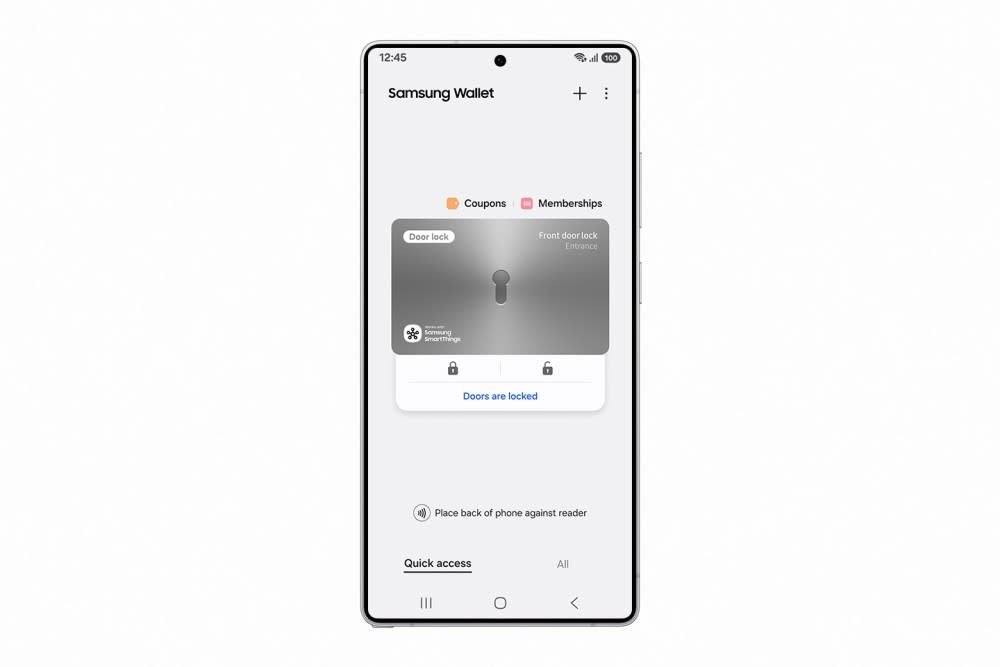
    Samsung’s newest feature turns your phone into your house keys. The company has created the Digital Home Key, a feature inside of the Samsung Wallet that should let you unlock any compatible smart door with your phone. The Samsung Wallet already offered digital car keys.

    “As we continue to evolve Samsung Wallet, delivering trusted mobile experiences remains at the core of our innovation,” Woncheol Chai, EVP and head of Digital Wallet Team, Mobile eXperience (MX) Business at Samsung Electronics, said in a statement. “Through close collaboration with our partners and in alignment with the Aliro standard, Digital Home Key brings the same level of security and ease Samsung Galaxy users expect from Samsung Wallet to their homes.”

    Created by the Connectivity Standards Alliance (CSA), Samsung calls Aliro an “industry-standardized communication protocol.” The Digital Home Key will also get support from smart lock brands like Nuki and Schlage. It’s also designed to meet EAL6+ security certification.

    According to Samsung, you’ll also need biometrics or a PIN to use the Digital Home Key. You should be able to remotely manage or remove the tool through Samsung Find if you lose your phone.

    Samsung is rolling out the Digital Home Key in select regions starting this month. It plans to expand its range as compatible smart lock brands become available in more locations.

  • Iranian crypto outflows jump 700% minutes after U.S.-Israeli airstrikes, Elliptic says

    Iranian crypto outflows jump 700% minutes after U.S.-Israeli airstrikes, Elliptic says

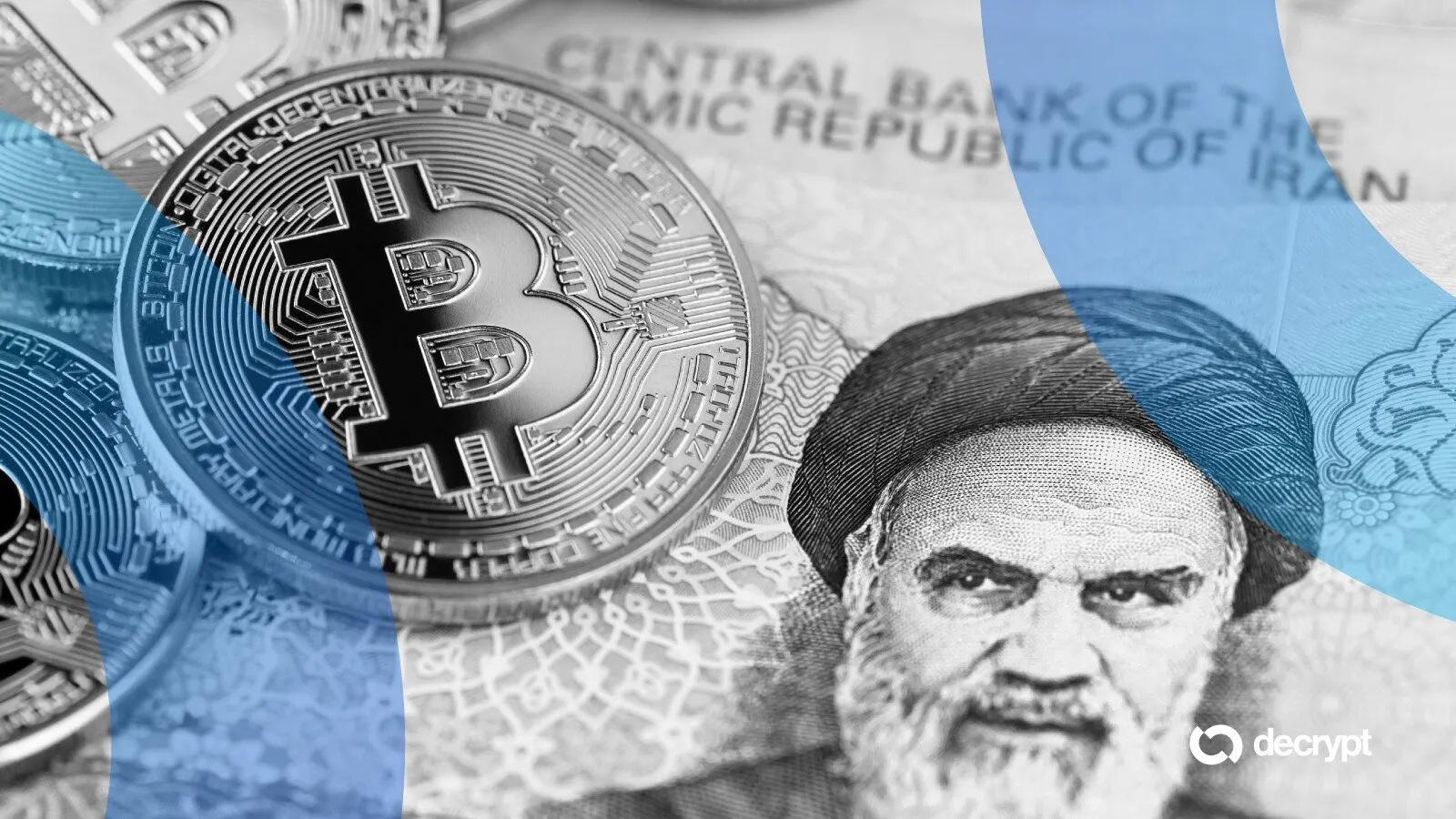
    Crypto outflows from Iran’s largest exchange jumped 700% within minutes of the first U.S.-Israeli airstrikes on Tehran, blockchain analytics firm Elliptic said in a Monday blog post.

    Elliptic said transaction volumes leaving Nobitex spiked almost immediately after the strikes, suggesting a rush to move funds offshore. Initial blockchain tracing indicates the crypto was sent to overseas exchanges that have historically received significant inflows from Iran.

    The activity “potentially represents capital flight from Iran that bypasses the traditional banking system,” according to Dr. Tom Robinson, Elliptic’s co-founder and chief scientist.

    Over the weekend, coordinated U.S. and Israeli airstrikes struck multiple targets in Iran, killing Supreme Leader Ayatollah Ali Khamenei and escalating a wider Middle East conflict. The attacks stoked market volatility as investors priced in potential disruptions to oil supplies through the strategic Strait of Hormuz, sending global crude prices sharply higher and triggering broad sell-offs in equities and safe-haven buying across assets.

    Nobitex allows users to convert Iranian rials into crypto and withdraw funds to external wallets, offering a route around traditional banking channels.

    The exchange processed $7.2 billion in crypto transactions in 2025 and claims more than 11 million users, making it central to Iran’s digital asset ecosystem, Robinson said.

    Elliptic has previously linked the exchange to IRGC-aligned financial activity and reported in January that Iran’s central bank appeared to use Nobitex in efforts to support the weakening rial.

    Iran’s crypto ecosystem

    Previous reports have detailed Iran’s growing use of cryptocurrencies as a hedge against a weakening rial and as a potential workaround to international sanctions, with U.S. authorities probing whether digital-asset platforms have enabled state-linked actors to move funds and access hard currency outside the traditional banking system. Blockchain research cited in those reports estimates that Iran-linked crypto activity has reached into the billions of dollars annually, spanning retail users as well as, according to officials, sanctioned entities.

    Robinson also flagged additional surges in Iranian crypto outflows earlier this year. The largest came on Jan. 9, following widespread anti-regime demonstrations and a subsequent government-imposed internet blackout.

    Two additional surges followed U.S. sanctions announcements targeting Iranian actors, the report said, suggesting crypto may be used to mitigate the impact of sanctions.

    Bitcoin $BTC$65,525.47 and major altcoins dropped sharply in the immediate aftermath of the strikes, with $BTC briefly falling below $64,000 before recovering to the mid-$60,000s, underscoring crypto’s sensitivity to geopolitical tensions. Ether (ETH) and other tokens also declined, though several remained above pre-strike levels, pointing to a relatively swift rebound after the initial sell-off.

    The world’s largest cryptocurrency was over 2% lower at publication time, trading around $65,500. Ether, the second-largest crypto by market cap, was 3.8% lower at around $1,930.

    Read more: Iran crisis puts the regime’s $7.8 billion crypto shadow economy in spotlight