Blog

  • Ayatollah Ali Khamenei’s assassination will likely backfire. Here is why

    Ayatollah Ali Khamenei’s assassination will likely backfire. Here is why

    A favourite tactic of war is to try to decapitate the enemy leadership. While such strategies might work in certain contexts, in the Middle East, they have proven to be a disastrous choice.

    For sure, the assassination of an enemy leader might give a quick boost of popularity amid war. Certainly, United States President Donald Trump and Israeli Prime Minister Benjamin Netanyahu are basking in the limelight of their perceived “success” in assassinating Iranian Supreme Leader Ali Khamenei.

    But killing an 86-year-old man who had already been planning his succession due to his ill health is not that much of a feat considering the overwhelming firepower that the US and Israel together possess. More importantly, eliminating him does not necessarily mean that what follows would be a leadership or a regime that would accommodate Israeli and US interests.

    That is because leadership assassinations do not lead to peaceful outcomes in the Middle East. They can open the door for much more radical successors or for chaos that leads to violence and upheaval.

    A brief glance at recent history shows that whenever Israel and the US have tried the idea of leadership “decapitation” in various conflicts in the region, the results have been disastrous. In the case of Iraq, its leader Saddam Hussein was captured by US forces and handed over to allied Iraqi forces who executed him. This ended a regime that was openly antagonistic to Israel, but it also opened the doors for pro-Iranian forces to take power.

    As a result, in the following two decades, Iraq served as a launching pad for Iran’s regional proxy strategy, which saw it build a powerful network of nonstate actors that threatened US and Israeli interests.

    The security vacuum created by the US invasion triggered various insurgencies, the most devastating of which was the rise of ISIL (ISIS), which swept through the Middle East, killing thousands of innocent people, including US citizens, and triggering a massive refugee wave towards US and Israeli allies in Europe.

    Another case in point is Hamas. Since the early 2000s, Israel has repeatedly tried to assassinate its leaders. In 2004, it succeeded in killing its founder Sheikh Ahmed Yassin and then his successor Abdel Aziz Rantisi, who was considered a moderate. A few assassinations later, Yahya Sinwar was elected head of Hamas in Gaza and went on to plan the October 7, 2023, attack.

    Hezbollah has a similar history. Its late leader Hassan Nasrallah, who successfully led the expansion of the group to a formidable nonstate power, ascended to its leadership after Israel assassinated his predecessor Abbas al-Musawi.

    Two and half years of war and mass killing of leadership may now have devastated both armed groups, but Israel has failed to assassinate the idea behind them: resistance to occupation. The current lull in fighting may be the quiet before another storm.

    In the Iranian case, it is highly unlikely that whoever replaces Khamenei would be as open to negotiations as he was. The statements by the Omani interlocutors during the talks in Muscat and Geneva pointed to major concessions on the nuclear issue that Iran under Khamenei was prepared to make. It is unlikely that his replacement would have the political space to follow suit.

    If Israel and the US continue their campaign and really push for state collapse in Iran, what comes out of that ensuing chaos could be anyone’s guess. But if we are to go by recent experiences in Iraq and Libya, a security vacuum in Iran would have devastating consequences for US allies in the region and in Europe.

    That raises the pertinent question of what Israel and the US stand to gain from their “decapitation” strategy in Iran.

    For Netanyahu, the assassination of Khamenei is a major success. Facing crucial elections that could mean the possible end of his political life and maybe his imprisonment over four corruption charges, the short-term gain in popularity and votes is worth it. Israeli leaders do little thinking and planning on the mid- to long term and do not have to bear the consequences of military adventurism abroad. After all, Israeli society is very much in favour of it.

    But for Trump, the gains are not as apparent. He gets to brag about killing an 86-year-old ailing leader of a faraway country to a public that has no appetite for war. At a time of a continuing cost-of-living crisis in the US, he is spending billions of taxpayer dollars to fight a war against a country that posed no imminent threat, a war that many Americans are increasingly identifying as “Israel’s war”.

    Instead of projecting power, Trump risks showing weakness and being seen as a US president fooled into starting a costly war to ensure the political survival of the prime minister of a foreign country.

    It is clear for now that the US president has drawn a line at putting US boots on the ground. At some point, he will have to end the bombardment campaign and pull US troops. He will leave behind a disaster that US allies in the region will have to bear the brunt of. US regional alliances are sure to suffer. Domestic audiences are sure to ask questions.

    This will be yet another US military adventure in the region that will cost US taxpayers’ money, US soldiers’ lives and foreign policy clout and offer no return. The hope is that Washington may finally learn its lesson that assassinations and decapitation strategies don’t work.

    The views expressed in this article are the author’s own and do not necessarily reflect Al Jazeera’s editorial stance.

  • Iran death toll reaches 555 as US, Israel escalate attacks

    Iran death toll reaches 555 as US, Israel escalate attacks

    Civilian deaths are growing as more attacks are reported in the capital and other parts of the country.

    At least 555 people have been killed in US-Israeli strikes across 131 counties in Iran, the Iranian Red Crescent Society says, amid another wave of intensive attacks and Iranian counterstrikes on Israel and US assets in the Middle East region.

    At least 35 people were killed on Monday morning in southern Iran’s Fars province, according to the Mehr news agency. The outlet also reported more than 20 people killed in an attack on Niloofar Square in Tehran.

    Recommended Stories

    list of 3 itemsend of list

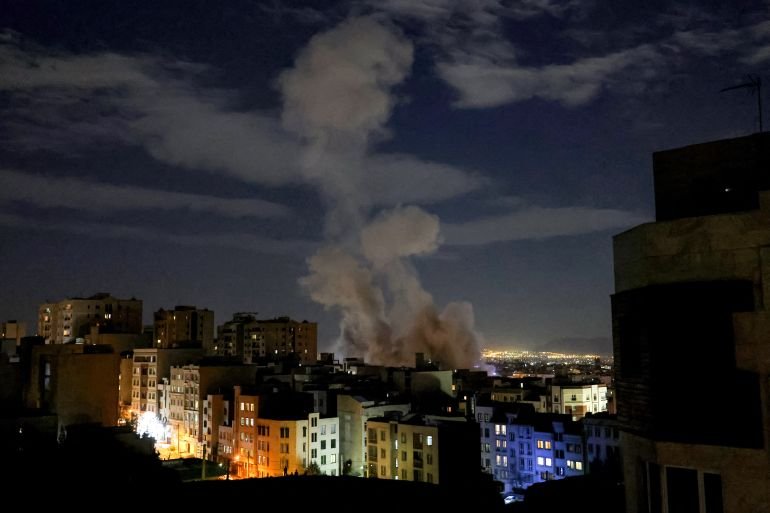
    The Fars news agency said at least two people were killed in the central city of Sanandaj as several residential buildings next to the city’s police station were destroyed. The Tasnim news agency said US and Israeli forces dropped six missiles on different parts of the city, including densely populated neighbourhoods.

    Reza Najafi, Iran’s ambassador to the International Atomic Energy Agency (IAEA), the United Nations nuclear watchdog, told reporters that US-Israeli air strikes had targeted Iran’s Natanz nuclear enrichment site on Sunday.

    “Their justification that Iran wants to develop nuclear weapons is simply a big lie,” Najafi said, describing the facility as “peaceful”.

    Israel and the US have not issued any statements confirming strikes at the site, which the United States bombed during the 12-day war between Iran and Israel in June.

    Al Jazeera’s Tohid Asadi, reporting from the Iranian capital, said the latest strikes were indicative.

    “This shows the scope of the attacks on Iran, with raids targeting not just political centres and military headquarters,” he said. “We are witnessing damage to civilian buildings, with some of them fully demolished in some cases. And this is concerning because the civilian fatalities are growing.”

    Videos verified by Al Jazeera also showed huge clouds of smoke billowing behind buildings near the international airport in the central Iranian city of Kermanshah.

    Iranian authorities reported that the death toll from an Israeli attack on a girls’ school in Minab on Saturday rose to 180.

    Hossein Kermanpour, the head of public relations at Iran’s Ministry of Health, added that the “same type” of missile was used to attack the Gandhi Hospital in Tehran on Sunday. The hospital was badly damaged, and patients were evacuated.

    The Israeli military on Monday said Iran had launched more missiles and that air defences were operating to intercept the projectiles. It called on residents to take shelter and remain in protected spaces until informed.

    Israeli police said nine people were killed after an Iranian missile attack on the central city of Beit Shemesh. Eleven people were reported missing as rescuers searched for survivors.

    Iran continued with its retaliatory strikes on Qatar, Bahrain, Jordan, Oman, Kuwait, Saudi Arabia and the United Arab Emirates, with attacks reported on airports, residential buildings and hotels.

    Countries in the Gulf have pledged to defend themselves against Iranian attacks, including by “responding to the aggression”.

    Iranian Foreign Minister Abbas Araghchi stressed that Tehran was not seeking confrontation with its Gulf neighbours but aimed to attack US assets in the region.

  • Banking Giant Barclays Mulls Crypto Payments Push: Bloomberg

    Banking Giant Barclays Mulls Crypto Payments Push: Bloomberg

    In brief

    • Barclays has requested information from technology providers regarding a potential push into blockchain, according to Bloomberg.
    • The banking giant is said to be considering tokenized deposits and stablecoin payments.
    • Earlier this year, the firm made an investment in stablecoin settlement firm, Ubyx.

    Publicly traded banking institution Barclays (BCS) is reportedly gathering information for a potential push into blockchain, according to a Friday report from Bloomberg

    Sources familiar with the matter said the firm has requested information from “technology suppliers” while it considers a path forward. Its utilization of blockchain may include tokenized deposits and stablecoins, the report said.

    The U.K.-based banking institution appears to be warming to crypto, investing in stablecoin settlement startup Ubyx after being named as one of a number of leading international banks exploring the joint issuance of a stablecoin last fall. 

    “Specialist technology will play a pivotal role in delivering connectivity and infrastructure to enable regulated financial institutions to interact seamlessly,” Barclays Head of Digital Assets Ryan Hayward said at the time of the Ubyx investment. 

    Now the firm is further investigating those technologies and could ultimately decide on a provider by April, according to Bloomberg. 

    If the firm ultimately decides to offer tokenized deposits or experiment with stablecoins, it would join a list of major banking institutions that have already entered the crypto space. 

    Last year, JPMorgan launched its tokenized deposit token—JPMD—to the Coinbase-incubated Ethereum scaling network, Base, letting institutional clients make payments using a digital representation of their JPMorgan deposits. The firm expanded the token to the Canton Network earlier this year. 

    That decision followed a report that JPMorgan was working on a framework to allow its clients to use Bitcoin and Ethereum as collateral for loans. Plus, publicly traded US Bank began testing its own stablecoin on the Stellar Network, while Citi and Bank of America have registered their own interest as well. 

    Barclays’ potential involvement in the space has not made a splash with shareholders on Friday, as shares in the firm are trading down nearly 4% as the broader market slides. Nevertheless, shares have risen around 54% in the last year of trading.

    Daily Debrief Newsletter

    Start every day with the top news stories right now, plus original features, a podcast, videos and more.

  • Trump Orders Federal Agencies to Dump ‘Woke’ Anthropic AI After Pentagon Dispute

    Trump Orders Federal Agencies to Dump ‘Woke’ Anthropic AI After Pentagon Dispute

    In brief

    • Trump ordered federal agencies to “immediately cease” using Anthropic’s AI technology.
    • The order follows a dispute between Anthropic and the Pentagon over the use of Claude for unrestricted military use.
    • Trump has given agencies six months to phase out Anthropic systems.

    President Donald Trump has directed all U.S. federal agencies to stop using artificial intelligence technology developed by Anthropic, escalating a dispute between the AI company and the Pentagon over how the military uses the technology.

    In a Truth Social post on Friday, Trump said agencies must “immediately cease” using Anthropic products, with a six-month phase-out period for departments that already use the company’s technology.

    “The United States of America will never allow a radical left, woke company to dictate how our great military fights and wins wars!” Trump wrote. “That decision belongs to your commander-in-chief and the tremendous leaders I appoint to run our military.

    The directive follows Anthropic’s refusal on Thursday to remove safeguards preventing Claude from being used for “mass domestic surveillance” or “fully autonomous weapons,” after Pentagon officials demanded contractors allow their systems to be used for “any lawful use.”

    “The left-wing nut jobs at Anthropic have made a disastrous mistake trying to strong-arm the Department of War and force them to obey their terms of service instead of our Constitution,” Trump wrote.

    President Trump called the situation a threat to U.S. troops and national security.

    “Their selfishness is putting American lives at risk, our troops in danger, and our national security in jeopardy,” Trump said.

    Anthropic has resisted Pentagon demands to grant unrestricted military use of its models, while also recently walking back safety language in its Responsible Scaling Policy.

    On Friday, CNBC reported that OpenAI CEO Sam Altman said he is working to “help de-escalate” the situation. De-escalating the tension could be a heavy lift, however.

    In his post, Trump said decisions affecting U.S. military operations must remain under presidential authority rather than “some out-of-control, radical left AI company run by people who have no idea what the real world is all about,” he said.

    “Anthropic better get their act together and be helpful during this phase-out period, or I will use the full power of the presidency to make them comply, with major civil and criminal consequences to follow,” Trump said.

    Defense Secretary Pete Hegseth chimed in on the matter following Trump’s post, offering similar comments regarding the decision and calling Anthropic’s move a “a master class in arrogance and betrayal as well as a textbook case of how not to do business with the United States Government or the Pentagon.”

    “I am directing the Department of War to designate Anthropic a Supply-Chain Risk to National Security,” Hegseth wrote on X. “Effective immediately, no contractor, supplier, or partner that does business with the United States military may conduct any commercial activity with Anthropic. Anthropic will continue to provide the Department of War its services for a period of no more than six months to allow for a seamless transition to a better and more patriotic service.”

    “America’s warfighters will never be held hostage by the ideological whims of Big Tech,” he added. “This decision is final.”

    Following Trump’s announcement, the nonprofit Center for Democracy and Technology commented on the move in a statement sent to Decrypt.

    “The President is wielding the full weight of the federal government to blacklist a company for taking a narrowly-tailored, principled stance to restrict some of the most extreme uses of AI you could imagine—fully autonomous weapons and the mass surveillance of Americans,” said CDT President and CEO Alexandra Givens.

    “This action sets a dangerous precedent. It chills private companies’ ability to engage frankly with the government about appropriate uses of their technology, which is especially important in national security settings that so often have reduced public visibility,” she added. “Retaliating against a company for setting tailored, principled conditions on its product’s use undermines basic market freedoms and makes us all less safe.”

    Editor’s note: This story was updated after publication to include comments from Hegseth and the CDT.

    Daily Debrief Newsletter

    Start every day with the top news stories right now, plus original features, a podcast, videos and more.

  • Tilly Norwood Creator Plans ‘Rapid Expansion’ With the ‘Tillyverse,’ Where Norwood and Other AI Actors ‘Will Live, Collaborate and Build Careers’

    Tilly Norwood Creator Plans ‘Rapid Expansion’ With the ‘Tillyverse,’ Where Norwood and Other AI Actors ‘Will Live, Collaborate and Build Careers’

    Tilly Norwood creator Eline van der Velden is planning a “rapid expansion” for her digital creation including building an entire universe around her.

    As part of the expansion Van der Velden has tapped Prime Video’s Mark Whelan as head of strategy and operations at her new AI talent studio Xicoia.

    Whelan will be tasked with helping Van der Velden create the “Tillyverse,” described in a press release as a “dynamic, constantly evolving digital universe where Tilly and a new generation of AI characters will live, collaborate and build careers.”

    It is set to launch later in 2026.

    According to the press release, Xicoia is not just “experimenting” with AI but “building IP at scale and redefining how talent is created, developed and experienced in the AI era.”

    It will also create “bespoke AI talent” for third parties.

    Van der Velden caused a storm in 2025 after revealing during a panel in Zurich that Norwood, an entirely fictional twenty-something actor rendered in AI, was set to sign with an agency. Her comments immediately prompted outrage on both sides of the Atlantic, from actors unions SAG-AFTRA and Equity as well as stars such as James Cameron, who called the idea of AI actors “horrifying” and Emily Blunt, who said it was “really scary.”

    In the press release unveiling her new plans, Van der Velden said: “Tilly Norwood isn’t just an AI character — she’s a personality, a brand, and a future global superstar with a compelling narrative arc. Mark will help us craft and shape every layer of her world, from her humour, daily life and career choices to how she interacts with fans across various platforms. It all promises to be bold, playful, a little chaotic – and impossible to ignore.”

    Whelan said: “Tilly already has the momentum, an audience and the cultural spark. Now we’re writing her story and building her universe. It’s a huge responsibility — but an incredibly exciting one. I think the world is going to have a lot of fun watching what happens next.”

    At Prime Video, Whelan was responsible for social strategy for projects including “The Grand Tour” and “Clarkson’s Farm.” He was previously a comedy producer and also had a short stint at Van der Velden’s other company Particle6.

  • ‘Pinocchio Unstrung’ Trailer: Wooden Doll Turns Homicidal in Next IP Bludgeoning From ‘Winnie-the-Pooh: Blood and Honey’ Team (EXCLUSIVE)

    ‘Pinocchio Unstrung’ Trailer: Wooden Doll Turns Homicidal in Next IP Bludgeoning From ‘Winnie-the-Pooh: Blood and Honey’ Team (EXCLUSIVE)

    As everyone knows, Pinocchio just wants to be a real boy.

    In the trailer for “Pinocchio Unstrung,” the next blood-splattered battering of beloved children’s IP by the creators of 2024’s micro-budget smash hit “Winnie-the-Pooh: Blood and Honey,” he wants to be a real boy so bad he’ll go on a gory murderous rampage to get there.

    Arguably the most twisted take on the much-adapted classic story sees Geppetto’s (Richard Brake) famed creation, having discovered that the difference between wooden dolls and boys is “organs and stuff,” look to acquire the necessary body parts in the most slasher-friendly way imaginable.

    We see him use his razor sharp wooden nose to impale a girl’s foot as she comes out of the shower, rip the skin from the face of a screaming man and appear to collect a load of intestines from another casualty. All the while, Pinocchio is goaded on by probably cinema’s most evil Jimmy Cricket (voiced by Robert Englund, best known for playing Freddie Krueger).”Piece by piece, we’ll take everything you need to be real,” he tells him.

    If anyone thought Guillermo del Toro’s Pinocchio was a little on the dark side and perhaps not something for their children, that film was basically Disney compared to this.

    “Pinocchio: Unstrung” is directed by Rhys Frake-Waterfield and produced by Scott Jeffrey, the duo behind “Winnie-the-Pooh: Blood and Honey” and their prolific horror banner Jagged Edge Productions.

    Alongside Brake and Englund, the cast also includes Cameron Bell, Jessica Balmer, Jack Art Gray and Peter De Souza-Feighoney, while Emmy winner Todd Masters oversees the the practical animatronics. ITN Distribution is overseeing the release, with theatrical date currently being scheduled worldwide. Premiere Entertainment Group is repping sales.

    “We built Pinocchio as a fully practical animatronic because I wanted him to feel real,” said Frake-Waterfield. “This is a twisted coming-of-age story told from the puppet’s perspective: a creation struggling for autonomy while being manipulated by the sinister forces around him, from Robert Englund’s sinister ‘Jiminy Cricket’ to Richard Brake’s obsessive Geppetto.”

    “Pinocchio Unstrung” is the latest standalone addition to Jagged Edge’s growing low-budget Twisted Childhood Universe, which currently includes “Blood and Honey” and its sequel, “Bambi: The Reckoning” and “Peter Pan’s Neverland Nightmare.” A third “Blood and Honey” is set to shoot soon, while “Poohniverse Monsters Assemble,” the Avengers-esque crossover film bringing all the characters together for an IP bloodbath is in development.

    Added Frake-Waterfield: “Our Twisted Childhood Universe continues to grow in darker and more ambitious ways as we’re gearing up for Poohniverse Monsters Assemble!”

    See the “Pinocchio Unstrung” trailer below:

  • Sony faces a $2.7 billion antitrust lawsuit in the UK

    Sony faces a $2.7 billion antitrust lawsuit in the UK

    Another major antitrust lawsuit has launched in the UK. This time its against Sony, which could be on the hook for almost £2 billion ($2.7 billion) for overcharging PlayStation users.

    A class action case for about 12.2 million users argues that Sony “occupies a dominant position in relation to the digital distribution of PlayStation games and in-game content and that it has been unfairly charging its UK customers too much for digital games and in-game content purchased through the PlayStation Store.”

    It argues that Sony “has a near monopoly” on add-on content and digital games through the PlayStation store, allowing it to set the prices and take a 30 percent commission.

    The class action encompasses anyone in the UK who owned a PlayStation console and purchased digital games or made in-game purchases through the PlayStation store between August 19, 2016 and February 12, 2026. It’s being run as an opt-out lawsuit, so anyone meeting the criteria can qualify without taking any action. If the lawsuit is successful then each person could receive about £162 ($217).

    Sony has argued that allowing downloads from third-party stores could bring security and privacy risks, according to the Financial Times. It further states that the digital sales commission makes up profits lost for selling their consoles with minimal profit.

    This lawsuit follows the success of a similar class action decided in October. The UK’s Competition Appeal Tribunal found that Apple had been abusing its dominant market position and overcharging App Store users. In December, Apple filed an appeal against the £1.5 billion ($2 billion) fine.

  • Vivo’s X300 Ultra goes global and gets a huge 400mm Zeiss telephoto lens

    Vivo’s X300 Ultra goes global and gets a huge 400mm Zeiss telephoto lens

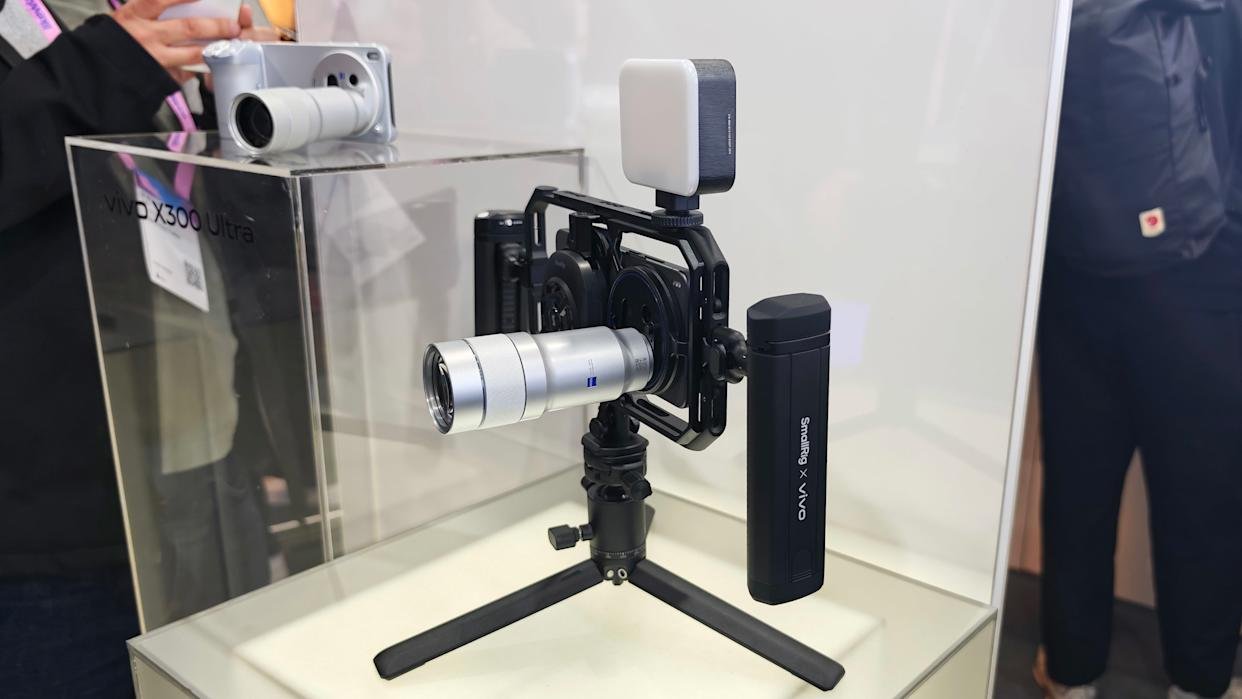
    Vivo barely has a presence outside of China but that seems to be changing with the company’s next flagship phone. At Mobile World Conference 2026, the company unveiled the X300 Ultra smartphone that comes with a 200MP telephoto sensor, along with multiple accessories designed for pro photographers and content creators, including a SmallRig video cage and 400mm Zeiss telephoto extender lens.

    Vivo didn’t go into detail about the phone’s specs, but you can likely expect a high-end processor, screen, battery and other internal components when it’s fully unveiled later on. Vivo did say that like the X300 Pro, the X300 Ultra will have an impressive 200MP telephoto sensor, and is likely to offer features like 4K 120fps Dolby Vision HDR recording. Vivo’s Daniel Goetz said it couldn’t yet reveal the specs for its primary camera sensor — which will likely be deeply involved with the new device’s push into video.

    Vivo's X300 Ultra will launch globally with pro camera accessories

    Mat Smith for Engadget

    Another thing Vivo revealed is that you’ll be able to get the Vivo X300 Ultra with a 400mm equivalent lens accessory called the Vivo Zeiss Telephoto Extender Gen 2 Ultra. That will allow about an 8x zoom compared to the native field-of-view, plus much more when combined with the high-quality digital zoom. It will also offer “gimbal-grade” optical image stabilization and motion-tracking focus technology, Vivo says.

    The device’s camera mount is part of an ecosystem that remains consistent with the X200 Pro, so the camera automatically reads the connected lens. This means the first-gen telephoto extender will also work with Vivo’s newest flagship. The large 1/1.4-inch telephoto sensor and high megapixel count allow shooting up to 30x zoom (roughly 800mm) while retaining high levels of detail, according to Vivo.

    Along with the lens, Vivo is introducing a “pro-grade camera cage” designed by the well-known accessory company SmallRig. It’s expandable and offers multiple cold shoe mounts and quick-release ports so you can easily add things like handles, lights and microphones. It also comes with dedicated physical buttons for tactile shutter and zoom adjustment, plus a multi-level piezo cooling fan to keep the phone running cool. You also get an “External Lens Expansion Frame” to accommodate the X300 Ultra Telephoto Extender. Other SmallRig collaborations include Bluetooth connected gri controllers, which you can see above, mounted on the X300 Pro.

    During a brief teaser presentation, we learned a few more details. The telephoto camera will include three degrees of optical image stabilization, and you’ll be able to shoot video in Log with your favorite LUT active in the X300 Ultra’s preview view. The video you record, however, will still be an unedited Log file. Color grading will also be available inside the device.

    For videographers, it will also natively support ACES (Academy Color Science), making it easier to fit into professional workflows in DaVinci Resolve or Final Cut Pro without requiring specific color conversion.

    Vivo's X300 Ultra will launch globally with pro camera accessories

    Mat Smith for Engadget

    Vivo showed off the phone at MWC 2026 in Barcelona to a fair amount of enthusiasm. The company emphasized that the X300 Ultra will be the first device in the series to reach international markets, including all European regions in which it already does business. It didn’t specify the price. The X300 Pro costs about €1,400 in Europe. Availability in the US is still TBC.

    The move, Vivo said, “signals Vivo’s more proactive and confident approach to expanding its presence in the global premium smartphone segment.” Given the likely price, though, it’s debatable if pro creators will want to buy this instead of, say, a pretty nice mirrorless camera and lens.

  • Option Whales Turn Bullish on Bitcoin (BTC) After Five-Month Decline! This Price is Expected in March!

    Option Whales Turn Bullish on Bitcoin (BTC) After Five-Month Decline! This Price is Expected in March!

    Bitcoin (BTC), which has been fluctuating between $70,000 and $63,000 since February, experienced a sharp drop over the weekend due to the US-Iran conflict, but subsequently recovered.

    While Bitcoin remains around the $66,000 level, Singapore-based cryptocurrency analysis platform QCP Capital has shared its latest analysis for Bitcoin.

    According to QCP analysts, the cryptocurrency market remained within a narrow range amid escalating US-Iran tensions. Following the US attack on Iran, Bitcoin and Ethereum fell to $63,000 and $1,910 respectively before recovering.

    Saturday’s US attack on Iran resulted in the liquidation of approximately $300 million in long positions, but this was subsequently brought under control.

    According to the analysis, options reacted moderately. 1-day implied volatility rose to 93% but then retreated to below 60%.

    In particular, even as the conflict between the US and Iran escalated, option buyers continued to purchase Bitcoin call options with strike prices of $74,000 and $75,000 for the March expiry.

    This suggests that some investors are positioning themselves for a rebound in March after five consecutive months of decline.

    QCP analysts emphasize that the market is currently able to tolerate the fact that the Donald Trump administration has indicated that the military operation against Iran will last “approximately four weeks.”

    *This is not investment advice.

  • Bitcoin outperforms equities in risk-off session as Iran conflict enters third day

    Bitcoin outperforms equities in risk-off session as Iran conflict enters third day

    Bitcoin BTC$66,299.23 is trading near $66,500 after adding 1.1% since midnight UTC and more than 5% from the weekend low of $63,000.

    The crypto market is back in the middle of a trading range that has persisted since the start of February, with a volatile past week testing $70,000 to the upside and $62,500 to the downside.

    Weekend price action was driven by the military strikes that killed Iran’s Supreme Leader Ayatollah Khamenei, triggering retaliatory attacks and raising concerns about potential disruption to traffic in the Strait of Hormuz.

    According to trading firm QCP, the strike sparked roughly $300 million in long liquidations — but the scale of forced selling was relatively contained, suggesting markets were already positioned for a volatile weekend.

    The escalation pushed investors toward traditional havens, sending gold and silver to their highest levels in more than a month. Oil surged 13% to $82 a barrel, the highest price since July 2024.

    U.S. equity index futures fell, with the S&P 500 futures and Nasdaq 100 down 1.1% and 1.5%, respectively, since midnight UTC.

    The crypto market showed resilience, with most of the losses occurring on Saturday when U.S. markets were closed.

    Derivatives positioning

    • The fallout from the Iran war has been more contained than might have been expected. While cumulative crypto futures open interest has dropped 2% to $93.78 billion, it remains above the recent low of $92.40 billion.
    • Over $300 million in leveraged bets have been liquidated by centralized exchanges in 24 hours, with bullish bets accounting for most of the tally.
    • Annualized perpetual funding rates for major cryptocurrencies, including bitcoin and ether, are little changed to negative, indicating a slightly bearish bias.
    • Still, the market isn’t showing signs of panic, as evidenced from the bitcoin 30-day annualized implied volatility index, BVIV. It remains steady at around 58.8%, well within the price range seen last week. The same is true for the ether volatility index.
    • On Deribit, short-term bitcoin puts traded at an 8%-10% volatility premium to calls, a sign of heightened downside worries. The $60,000 put, or bearish bet, remains the most popular on the exchange.
    • Block flows featured demand for bitcoin put spreads.

    Token talk

    • The altcoin market largely tracked bitcoin over the weekend, but one of the fastest to recover was lending token MORPHO, which continued its impressive two-week streak with a 5% jump over the past 24 hours having risen by 2.6% since midnight UTC.
    • Decentralized finance (DeFi) tokens JUP, AAVE and LDO are all in the black as speculative appetite remains relatively strong despite a global shift to haven investments.
    • Hyperliquid’s HYPE token surged by more than 29% on Saturday to snap February’s downtrend. While it lost 3.8% on Monday, losing 3.8% it remains above the crucial $30 level of support.
    • WLFI$0.1051, the DeFi token linked to U.S. President Donald Trump’s family, exentended declines, falling 2.5% of its value since midnight. It is now down by more than 44% since mid-January following a series of lower highs and lower lows.
    • CoinDesk’s DeFi Select (DFX) Index is the only benchmark that is positive over the past 24 hours. The worst performing was the CoinDesk Computing Select Index (CPUS) and the CoinDesk Smart Contract Platform Select Capped Index (SCPXC), down by 1.87% and 1.71%, respectively.