Blog

  • Christina Applegate Opens Up About Having an Abortion at 19 Amid an Abusive Relationship in Memoir

    Christina Applegate Opens Up About Having an Abortion at 19 Amid an Abusive Relationship in Memoir

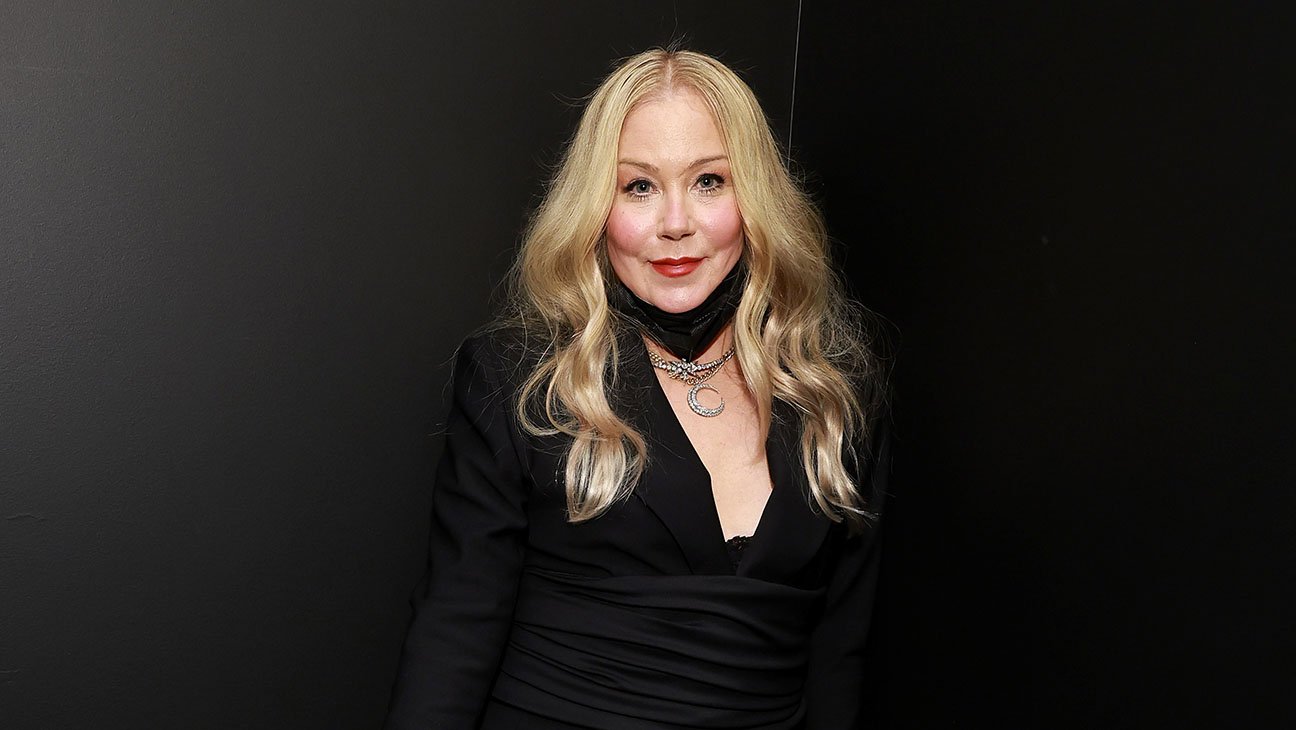
    Christina Applegate is opening up about her life, career and battle with MS thus far in her memoir, You With the Sad Eyes, published on Tuesday. One revelation from the memoir is that she had an abortion when she was 19 amid an abusive relationship

    “In late April 1991, I fell pregnant,” she writes in her memoir per Entertainment Weekly. “I want to turn away from what happened, but it’s all recorded in my diary. There are moments in my life that are too painful to force into narrative or meaning, so I’ll let my voice from back then speak.”

    Her memoir includes excerpts from old journals, one of which reportedly details the moment she learned she was 6 1/2 weeks pregnant at the time. “Two days before I found out, I got into a car accident on the way to the gynecologist. My car didn’t survive, but luckily, I did,” she wrote, as detailed by EW. “I knew I was pregnant. I couldn’t understand why even though I was watching my eating I still felt fat. I couldn’t understand why sex made me sick and I cried at the drop of a hat. Now I know. I always felt that if I ever got pregnant when I knew it was the wrong time, I wouldn’t have any problem having an abortion. ‘Oh, whatever, it isn’t even a baby yet.’ That’s bulls—, this creature is incredible. It makes me feel whole, safe…”

    Of her boyfriend, Applegate writes of their emotionally abusive relationship: “My boyfriend said I was a disgusting, self-obsessed, eating-disordered fat pig today (not in so many words). That opened my eyes a great deal. … I don’t really understand my relationship anymore. It isn’t good. Sometimes I don’t think it’s worth it. … I feel I have lost myself somewhere, and I can’t find her for the life of me.”

    “His family will hate me when they find out that I killed their family member because they don’t believe in it. But I can’t have this baby because I have work to do to entertain this fucking world. Besides, I can’t… now,” she writes of having an abortion.

    In an entry dated June 13, 1991, Applegate reportedly writes, “it’s over.” Then she adds, “I feel pretty okay. Just kind of woozy. That gives me no time to realize what I have done. Which is most likely the best right now.”

    She continues, “I was looking over what I’d written yesterday and just have to laugh. My emotions were extremely warped (I really don’t feel that way. Honestly, I think when you’re pregnant you tend to feel that way about the male figure in your life). My life is pretty wild. I could seriously write a book. I guess this kind of is.”

    In addition to her early life and career, Applegate also writes about her MS diagnosis and the “excruciating agony” of the disease in her memoir. In 2021, Applegate publicly revealed that she had been diagnosed with multiple sclerosis, described by the National Multiple Sclerosis Society as “an unpredictable, often disabling disease of the central nervous system that disrupts the flow of information within the brain, and between the brain and body.”

    “I wish I could say that I am a miracle,” Applegate writes in her memoir per the NY Post. “Though most days it’s very hard to believe, and in any case, I don’t want to minimize what this disease does to a human body and soul.”

    In her memoir, Applegate shares the struggles she has with simple movements: “When I wake up, I often can’t get my arm to move far enough to grab the cup of water by my bed or my phone from its charger. My stomach frequently slows to a halt, leaving me to regularly rush to the emergency room in agony.”

    When looking back at the first signs of MS, which she learned while filming the final season of Netflix’s Dead to Me, Applegate recalled asking her chiropractor why her toes were twitching: “I’ll never forget the look he gave me,” she writes. After numbness crept into her extremities, she was tested. Results from a brain scan showed 30 lesions across its surface and the MS diagnosis.

    “I remember trying to get down the stairs of my house at six o’clock in the morning, and I could make it to only the ninth stair,” she recalls while filming at the time.

    She also reveals that she’s had to wear adult diapers due to “incontinence issues” because of the illness.

    Her current treatment plan consists of her getting steroid infusions every six months to slow the disease. However, the drugs have side effects, including wiping out her B cells, leaving her vulnerable to infection, and weight gain.

    The weight gain made receiving her star on the Hollywood Walk of Fame bittersweet, as Applegate writes, “Once people stared at my boobs; then they stared at my broken foot. But now I knew they were staring not only because I was disabled; they were staring because I was fat, forever an unacceptable fate for women in Hollywood.”

    “I didn’t look in the mirror for a year,” Applegate, who has been open about her struggles with an eating disorder in the past, writes. She eventually dropped more than 50 pounds after being put on a liquid diet to manage her stomach issues.

    Per the LA Times, Applegate also writes about her father leaving the family when she was a baby and her mother’s struggles with drug and alcohol abuse. She also reveals that at age 5, a female “caregiver” forced her to perform oral sex on her.

    Overall, with her memoir, Applegate writes with bluntness and no sugarcoating. “This book is not cathartic for me — let’s just go there,” Applegate told The Los Angeles Times of her memoir. “I just needed to dump this shit out somewhere. It’s almost like you guys are now my therapists in the world.”

  • How many countries has the US bombed since 2001, and how much has it cost?

    How many countries has the US bombed since 2001, and how much has it cost?

    Despite promising to end United States involvement in costly and destructive foreign wars, President Donald Trump, together with Israel, has launched a massive military assault on Iran, targeting its leadership and nuclear and missile infrastructure.

    Much like his predecessors, Trump has relied on military force to pursue US strategic interests, continuing a pattern that has defined US foreign policy for more than two decades.

    Since the September 11, 2001, attacks on New York and the US capital, the US has engaged in three full-scale wars and bombed at least 10 countries in operations ranging from drone strikes to invasions, often multiple times within a single year.

    The graphic below shows all the countries the US has bombed since 2001.

    These may not include all military strikes, particularly covert or special operations.

    INTERACTIVE - US ATTACKS ON COUNTRIES SINCE 2001 bomb attack war iran iraq afghanistan-1772551549
    The US has bombed at least 10 countries: Afghanistan, Iraq, Yemen, Pakistan, Somalia, Libya, Syria, Venezuela, Nigeria and Iran since 2001. [Al Jazeera]

    The cost of decades of war

    In the aftermath of the September 11, 2001, attacks, President George W Bush launched what he called a “war on terror”, a global military campaign that reshaped US foreign policy and triggered wars, invasions and air strikes across numerous countries.

    According to an analysis by Brown University’s Watson Institute of International & Public Affairs, US-led wars since 2001 have directly caused the deaths of about 940,000 people across Afghanistan, Pakistan, Iraq, Syria, Yemen and other conflict zones.

    This does not include indirect deaths, namely those caused by loss of access to food, healthcare or war-related diseases.

    INTERACTIVE-COST OF WAR-The human cost of US-led wars Afghanistan Iraq Syria Yemen-1750770943
    (Al Jazeera)

    The US has spent an estimated $5.8 trillion funding its more than two decades of conflict.

    This includes $2.1 trillion spent by the Department of Defense (DOD), $1.1 trillion by Homeland Security, $884bn to increase the DOD base budget, $465bn on veterans’ medical care and an additional $1 trillion in interest payments on loans taken out to fund the wars.

    In addition to the $5.8 trillion already spent, the US is expected to have to lay out at least another $2.2 trillion for veterans’ care over the next 30 years.

    This would bring the total estimated cost of US wars since 2001 to $8 trillion.

    Afghanistan war (2001-2021)

    The first and most direct response to 9/11 was the invasion of Afghanistan to dismantle al-Qaeda and remove the Taliban from power.

    On October 7, 2001, the US launched Operation Enduring Freedom.

    The initial invasion succeeded in toppling the Taliban regime within just a few weeks. However, armed resistance groups mounted a prolonged resistance against US and coalition forces.

    The war went on to become the longest conflict in US history, spanning four presidencies and lasting 20 years until the final withdrawal in 2021, after which the Taliban regained control of Afghanistan.

    An estimated 241,000 people died as a direct result of the war, according to an analysis from Brown University’s Costs of War project. Hundreds of thousands more people, mostly civilians, died due to hunger, disease and injuries caused by the war.

    INTERACTIVE-Afghanistan claimed lives

    At least 3,586 soldiers from the US and its NATO allies were killed in the war, which is estimated to have cost $2.26 trillion for the US, according to the Cost of War project.

    Iraq war (2003-2011)

    On March 20, 2003, Bush launched a second war, this time in Iraq, claiming that President Saddam Hussein possessed weapons of mass destruction – a claim that proved to be false.

    On May 1, 2003, Bush declared “mission accomplished” and the end of major combat operations in Iraq.

    Bush USS Abraham Lincoln
    Bush on board the USS Abraham Lincoln aircraft carrier, where he declared combat operations in Iraq over on May 1, 2003 [Larry Downing/Reuters]

    However, the subsequent years were defined by violence from armed groups and a power vacuum that fuelled the rise of ISIL (ISIS).

    In 2008, Bush agreed to withdraw US combat troops, a process completed in 2011 under President Barack Obama.

    The drone wars: Pakistan, Somalia and Yemen

    Although not declared wars, the US has also expanded its air and drone campaigns.

    Beginning in the mid-2000s, the CIA launched drone strikes inside Pakistan’s tribal areas along the Afghan border, targeting al-Qaeda and Taliban figures believed to be operating there. These strikes marked the early expansion of remote warfare.

    Obama dramatically expanded the drone strikes in Pakistan, particularly in the early years of his presidency.

    At the same time, the US conducted air strikes in Somalia against suspected al-Qaeda affiliates, later targeting fighters linked to al-Shabab as that armed group grew in strength.

    In Yemen, US forces carried out missile and drone strikes against al-Qaeda leaders.

    Libya intervention

    In 2011 during an uprising against Libyan leader Muammar Gaddafi, the US joined a NATO-led intervention in Libya. American forces launched air and missile strikes to enforce a no-fly zone.

    Gaddafi was overthrown and killed, and Libya descended into prolonged instability and factional fighting.

    Iraq and Syria

    From 2014 onwards, the US intervened in the Syrian war with the stated goal of defeating ISIL. Building on its campaign in Iraq, the US conducted sustained air strikes in Syria while supporting local partner forces on the ground.

    In Iraq, US forces advised Iraqi troops, fought ISIL remnants and tried to counter Iranian influence, highlighted by a Trump-ordered 2020 strike that killed Iranian General Qassem Soleimani.

  • Circle Stock Extends Double-Digit Gains Amid Broader Crypto Rally

    Circle Stock Extends Double-Digit Gains Amid Broader Crypto Rally

    In brief

    • Circle shares rose another 15% Monday, extending gains to roughly 60% since last week’s Q4 earnings.
    • Analysts point to short covering, accelerating USDC growth, and regulatory clarity under the GENIUS Act.
    • The rally comes as Bitcoin steadies near $68,000 amid the rising U.S.–Iran tensions.

    Stablecoin issuer Circle’s shares jumped another 15% Monday, extending gains to roughly 60% since last week’s fourth-quarter earnings release, as investors poured into stablecoin-linked equities while broader crypto markets held firm.

    The move follows the company’s announcement of 72% growth in its stablecoin USDC to $75.3 billion and 77% revenue growth to $770 million, despite a net loss tied to IPO-related compensation in the fourth quarter.

    CRCL is trading at $96, marking a 71% advance in its stock in just over a month, according to Google Finance data. It’s still down by more than 10% since its debut on the New York Stock Exchange back in June of last year.

    It comes as broader crypto markets digest geopolitical and regulatory crosscurrents, with Bitcoin hovering near $68,372, after recovering from a brief selloff triggered by a U.S.-led strike on Iran, per CoinGecko data.

    President Donald Trump said Monday on X the U.S. had launched “Operation Epic Fury,” calling it “one of the largest, most complex, most overwhelming military offensives the world has ever seen.”

    On Myriad, a prediction market owned by Decrypt’s parent company Dastan, users now see a 51% likelihood of a U.S.–Iran ceasefire happening before April 1.

    Oil and gold have risen on supply concerns, and for equity investors, attention has shifted to stablecoin fundamentals, positioning, and regulation.

    “Demand for stablecoins as well as the medium-to-long-term positive forecasts have made CRCL and stablecoin projects in general the real flavour of the month,” Sean Dawson, head of research at Derive, told Decrypt.

    “Regulatory momentum (Genius Act) as well as the obvious product market fit have made CRCL a relatively stable and reliable place to invest as the digital asset market has languished over the last several months,” he said.

    Last week, the Office of the Comptroller of the Currency released a proposal detailing how it intends to implement the stablecoin-focused GENIUS Act, which Trump signed into law last summer.

    The proposal would restrict certain stablecoin rewards programs, and multiple crypto policy leaders told Decrypt it could affect Coinbase’s USDC rewards structure, though the rule remains subject to a 60-day public comment period and is not final.

    At the same time, some analysts say the rally points to a shift in how investors view Circle, not as a token proxy, but as a payments infrastructure tied to artificial intelligence.

    “We’ve started a new era in the AI story,” Pav Hundal, lead analyst at Australian crypto exchange Swyftx, told Decrypt. “Investors are starting to pick winners and losers, and, rightly or wrongly, Circle is seen as a big winner in the AI narrative.”

    “USDC isn’t a crypto bet anymore, it’s a payments infrastructure and agentics bet,” he added. 

    He described a future where AI agents transact autonomously on behalf of users and businesses, “naturally route around high fees” and select the “cheapest settlement rails available,” with stablecoins already “positioned for that role.”

    On an earnings call last week, Circle CEO Jeremy Allaire tied the company’s future to artificial intelligence, saying it will “drive the greatest acceleration of economic activity we’ve ever seen in human history.”

    USDC’s year-to-date supply growth of +0.1% has outpaced Tether’s stablecoin USDT’s -2%, driven partly by increased usage on Polymarket, Peter Chung, head of research at Presto Labs, told Decrypt, highlighting “the importance of tying up with the right distribution channel.” 

    He noted that if the pending CLARITY Act ultimately forbids distributors from revenue sharing, “it could ironically benefit Circle by shielding its revenue base from competitive pressure.”

    Daily Debrief Newsletter

    Start every day with the top news stories right now, plus original features, a podcast, videos and more.

  • Four Headwinds Stalling Bitcoin’s $70K Breakout

    Four Headwinds Stalling Bitcoin’s $70K Breakout

    In brief

    • Bitcoin is trading around $67,000 after testing $70,000 Monday, while spot Bitcoin ETFs recorded over $9B in net outflows over the past four months.
    • The Middle East conflict has pushed oil prices higher, complicating the Fed’s March rate decision.
    • Experts say tariff uncertainty and the BLS jobs data revision could further curb risk appetite.

    Bitcoin’s consolidation has extended for weeks, with experts highlighting four key headwinds suppressing the leading crypto’s potential bottom formation and recovery, ranging from institutional outflows to geopolitical tensions and labor market uncertainty.

    The top crypto has increasingly behaved like a risk asset through late 2025 and early 2026, correcting sharply as investors’ risk-off behavior spikes amid rising macro and geopolitical uncertainties.

    Bitcoin is currently trading around $67,000, down 4% from Monday’s $70,000 retest after U.S. President Donald Trump’s comments on “large-scale operations” in Iran. The top crypto is up 1.1% over the past 24 hours and 6% over the past week, according to CoinGecko.

    Until crypto market headwinds clear, analysts expect extended consolidation or deeper corrections, testing whether Bitcoin’s four-year cycle remains intact or if structural damage is taking hold.

    Crypto market headwinds

    The most prominent headwind is persistent institutional selling. Spot Bitcoin ETFs have recorded over $9 billion in net outflows over the past four months, Andri Fauzan Adziima, research lead at Bitrue, told Decrypt. These outflows have “fueled fragile short-covering bounces rather than genuine fresh buying,” keeping Bitcoin “trapped in a high-equity-correlation, risk-off environment.”

    “Long-term holder selling has dropped 87% since early February, and whale wallets have absorbed roughly 270,000 BTC over the past month,” Shawn Young, chief analyst at MEXC Research, told Decrypt. “Historically, that combination of capitulation fading while large players accumulate has preceded stabilization, not further collapse.”

    “We’re not seeing aggressive buying from large players, and without that, rallies tend to fade quickly,” Georgii Verbitskii, founder of crypto investor app TYMIO, told Decrypt, echoing demand concerns. “Capital continues to rotate into other areas—gold, metals, selective equities—while Bitcoin remains relatively weak,” he said.

    Geopolitical tensions add another layer of pressure and complexity.

    Escalating conflict in the Middle East has driven oil prices higher, reigniting inflation concerns ahead of the Federal Reserve’s March 18 interest rate decision. Following recent U.S.-led attacks on Iran, crude prices spiked, adding to an already sticky inflation outlook.

    Users on prediction market Myriad, owned by Decrypt’s parent company Dastan, assign a 49% chance to a U.S.-Iran ceasefire before April, reflecting the uncertainty.

    Nick Ruck, director of LVRG Research, told Decrypt these geopolitical headwinds are “driving up oil prices and inflation risks” while combining with “potential renewed trade wars via tariffs” to curb risk appetite. However, the Middle East conflict has so far had “limited direct impact on crypto,” with  Bitcoin continuing to trade “more like a risk asset than a hedge,” Verbitskii said.

    President Trump’s recent imposition of 15% global tariffs—upheld through alternative legal statutes after a Supreme Court ruling—has injected fresh uncertainty into trade policy.

    The tariffs risk escalating into broader trade wars that could continue to keep global risk appetite suppressed.

    Ruck pointed to “potential renewed trade wars via tariffs” as a key variable, while Adziima noted that tariff uncertainty compounds the broader risk-off environment, keeping Bitcoin rangebound between $65,000 and $70,000.

    The final piece of the puzzle is the Bureau of Labor Statistics’ upcoming revision of January jobs data and whether it will show softer conditions than initially reported, potentially impacting investor behavior.

    “Softening labor market signals, including BLS revisions and rising unemployment forecasts,” as factors that could “pressure Trump’s standing ahead of the midterms” and further curb risk appetite, Ruck highlighted.

    While a meaningful reversal in ETF flows is essential for any sustained upside toward higher levels, experts added that Bitcoin’s recovery rally will be kept in check, leading to local tops and bottoms, until all these headwinds are cleared.

    Daily Debrief Newsletter

    Start every day with the top news stories right now, plus original features, a podcast, videos and more.

  • ‘Little House on the Prairie’ Reboot Sets Release Date, Netflix Renews Show for Season 2

    ‘Little House on the Prairie’ Reboot Sets Release Date, Netflix Renews Show for Season 2

    Netflix has set an official premiere date for its “Little House on the Prairie” series, with the streamer also announcing the show has already been renewed for Season 2.

    The new “Little House on the Prairie,” based on the beloved Laura Ingalls Wilder book series, will launch on July 9. The show was first announced with a series pickup in January 2025.

    The logline states, “Part hopeful family drama, part epic survival tale, and part origin story of the American West, this fresh adaptation of Laura Ingalls Wilder’s iconic semi-autobiographical ‘Little House’ books offers a kaleidoscopic view of the struggles and triumphs of those who shaped the frontier.”

    The cast includes Alice Halsey as Laura Ingalls, Skywalker Hughes as Laura’s older sister, Mary, Luke Bracey as Pa, aka Charles Ingalls, and Crosby Fitzgerald as Ma, Caroline Ingalls.

    Rebecca Sonnenshine will serve as showrunner and executive producer on “Little House on the Prairie.” Joy Gorman Wettels of Joy Coalition will also executive produce along with Trip Friendly for Friendly Family Productions, Dana Fox, and Susanna Fogel. CBS Studios and Anonymous Content Studios will produce for Netflix. Directors on the series are Sarah Adina Smith (101), Julie Anne Robinson (102, 103), Kat Candler (104, 105), Erica Tremblay (106), Sydney Freeland (107, 108)

    Friendly is the son of Ed Friendly, who executive produced the original “Little House on the Prairie” TV series.

    “I’m incredibly grateful to our wonderful cast and crew, who put their hearts and hard work into making our first season come alive,” Sonnenshine said. “We can’t wait to share this new adaptation of the ‘Little House’ books with the world, and we’re thrilled that Netflix is giving us the opportunity to continue the story.”

    Ingalls Wilder released eight “Little House” books in the 1930s and ’40s, while a ninth was published posthumously in 1971. The books are based on her childhood in the American Midwest in the late 1800s. More than 73 million copies of the books have been sold to date.

    “We are delighted to renew this beautiful reimagining of ‘Little House on the Prairie’ for a second season ahead of its Netflix debut,” said Jinny Howe, Netflix’s head of US and Canada scripted series. “The exceptional work by Rebecca Sonnenshine and the entire cast and crew on Season 1 has established a rich foundation of storytelling for years to come. With its hopeful spirit and emotional authenticity, we’re confident that Little House will deliver even more of what fans truly love.”

  • ‘Suddenly Amish’ Mentor James Is TV’s Best Villain: Breaking Down His Wildest Moments, From Chasing a Contestant With an Ax to Cuddling His Cousin

    ‘Suddenly Amish’ Mentor James Is TV’s Best Villain: Breaking Down His Wildest Moments, From Chasing a Contestant With an Ax to Cuddling His Cousin

    TLC’s newest show about an insular religious community, “Suddenly Amish,” has almost wrapped its eight-episode first season, and despite the conservative reputation of the religious sect, it stars a churchgoing diva named James who delivers more drama than a whole season of “Real Housewives.” Below, I attempt to explain why this reality series — and James — have me riveted.

    OK, what is this crazy show?

    The premise of the reality series is that six English (Amish slang for “non-Amish people”) head to an Amish community in Lancaster, Pennsylvania, because they want to consider joining the lifestyle for…reasons? It’s all very unclear, but each one of them seems to have done a laughably poor job at even the most basic research, which would tell them the lifestyle is incompatible with their personalities.

    To wit: Judah is bisexual, but that isn’t OK in Amish communities; Aaron’s hearing aids are bluetooth enabled by his cell phone, but cell phones aren’t allowed; Esme feels uncomfortable without makeup and fake nails, which aren’t a part of Amish life; Matt is divorced, which is forbidden; Kendra wears clothes with cleavage, which is a no-no; and Billie Jo says she’s an Amish fangirl, but also packed a sex toy in her luggage, which, wouldn’t you know, is not allowed in Amish culture.

    Despite these extremely bumpy starts, Bishop Vernon, the patriarch of the community, is worried about the shrinking Amish population, so he wants to invite these people (and cameras) in to see that their way of life is calm and honest in an increasingly complex world.

    Meet James (and his straw hat)

    Amazingly, Vernon tasks James to be a leader for these curious English, and the journey is set to be his own redemption tale. Before the show, James was shunned from the community for cell phone use, so he’s working on proving that he’s godly enough to be seen as a positive influence and get back in good graces.

    Seems simple, right? Brace yourself, because it quickly becomes clear that James is vindictive, conniving and stuck in a love triangle between one of the English and his third cousin.

    James starts to unravel quickly, as it’s clear he has eyes for Kendra, a former dancer whose body he sees dressed immodestly one too many times. While her outfits are par for the course for an L.A.-based content creator, she inadvertently hypnotizes James, who takes special care in overseeing her journey and advocating for her.

    James grabs an ax

    Unfortunately for him, Matt quickly starts flirting more overtly with Kendra, which James clocks. During a group dinner in Episode 2, Matt mentions that he is divorced, which James notes is forbidden in the community, and he has to leave immediately. (“I’m not going to let them bring any evil in here … They could cause enough disharmony to the point that it topples the church,” James said, with a smirk, while discussing it in a testimonial.)

    From there, James grabs an ax and, swinging it absentmindedly in his left hand, escorts his romantic rival off the property. It’s the kind of moment that likely made producers cheer, as well as pray that no one would get murdered with an ax during their shoot.

    Once James returns to the dinner, Judah has the most sober analysis of the situation, saying in another testimonial: “James is crazy. James is a psycho.” Allen, a kind, older mentor in the community, agreed that James’ behavior wasn’t called for. “James driving Matt off … he should not have the ax in his hand. That gives Matt a very nasty picture of the Amish way of life.”

    Twerking at the Rumspringa tailgate

    Matt’s departure upsets Kendra, which James leverages by allowing her to use her hidden cell phone to call her mother. At this point, the English, Allen and James’ live-in third cousin Emma start regularly discussing his crush on Kendra.

    It doesn’t take much longer for secrets to start spilling out from under James’ straw hat, as Matt returns to the community at the end of Episode 4 in order to see Kendra again. Things come to a head at a Rumspringa tailgate party, where young Amish people leave the community and temporarily live English in order to confirm they want to stay religious.

    James drinks to excess and shows too much interest in Kendra twerking in her Amish garb, which upsets a jealous Emma. This causes the cousins to spend much of the evening play wrestling and caressing in ways that I personally avoid with family members. It’s gross, but although they claim they’ve never hooked up, they’ve done the math and confirm that they can.

    As the cast notes the hypocrisy of James’ drinking and his PDA with Emma — both of which are not allowed for the Amish — blurry footage is shown of the cousins running around the house late at night, up to some funny business in both the bedroom and the bathroom.

    Breakups and departures

    The next day, Matt takes Kendra on a date and, after another confrontation with James, he decides to leave again, and she opts to stay with him at a motel for the night before he goes. James furiously grabs a lantern, a horse and a buggy and heads to the motel in order to confront the pair.

    “There are many ways to be tempted: Serving the flesh, serving self … Kendra is somebody I want to protect. Kendra has a future here. Kendra has great potential. I don’t want her to be defiled,” James says, chillingly.

    Despite James’ nonstop knocking, the pair doesn’t open the door, and when James arrives back home, Emma is angered by the stunt. This causes the relatives to finally get real in their testimonials, as both Matt and Kendra leave for good.

    James, on Kendra: “She has this potential to be a good Amish wife. It would have been nice to have her around longer. There’s natural chemistry.”

    Emma’s rebuttal: “If Matt and Kendra would have been given an honest chance, if we would have treated them right, they would have stayed. The biggest reason why they left is because of the way we didn’t do our part. We’ve done something extremely wrong, and there should be no reason why they want to leave.”

    This disconnect causes Emma to flee the house and move out entirely due to James’ actions, but she’s hesitant to describe them at length — except via a late-night hidden camera, which catches her talking furiously with James.

    “You want Kendra,” she says. “I can’t associate myself with people who lie, with people who deceive … I’ve never heard so much bullshit in my entire life.” (Note: Profanity is, of course, not looked highly upon by the Amish.)

    The biggest blow? When the cousins are in testimonial together, and Emma looks at James and says, “I feel like I did my best in setting a good example, but I need a better leader.” Ouch!

    Lurching towards the finale

    After sending his cousin fleeing, banishing two of the contestants, and quickly losing the trust of the elders that could help him get un-shunned, James is still acting like a villain to the remaining four English. The night before their Reckoning Day, when they determine if they’ll stay in the Amish community or not, James continues to toy with their emotions at a group dinner.

    “Me and Allen could put in a good word — if we desire to,” James says, wiggling his eyebrows.

    “There’s only one night left, and James is still playing games, playing with our emotions. When does it ever end?” Judah laments in a testimonial.

    “I am very disappointed with James dealing with the English that way,” Allen says in his testimonial. “His viewpoints on the Amish lifestyle are very different from mine or my brothers. He can be very, very hard.”

    Ultimately, James makes a compelling case for nature versus nurture when it comes to reality show villains. Unless he’s sneaking a smart TV into the communal phone shanty, he doesn’t realize he was born for this shit. Manipulative, mean, self-righteous — and that’s just in his first season!

    Ultimately, while Allen is the sincere soul who makes the Amish lifestyle seem calm and forgiving, it’s great to know that, however secluded the community is, there are hot messes like James everywhere.

    Watch James confront Matt before he grabs his ax in the scene below.

    “Suddenly Amish” streams on HBO Max, and its first season finale — which includes Reckoning Day! — airs tonight on TLC.

  • Nearly Half of Colorectal Cancers Now Occur in Younger People. Here’s Why

    Nearly Half of Colorectal Cancers Now Occur in Younger People. Here’s Why

    Younger female with her eyes closed as sun streams onto her faceShare on Pinterest
    A new report from the ACS shows that nearly half of colorectal cancer cases are occurring in adults under 65. Image Credit: Westend61/Getty Images
    • The American Cancer Society reports that the incidence of colorectal cancer cases in U.S. adults ages 20 to 49 has been rising about 3% per year.
    • Experts say there may be a number of factors for this increase, including unhealthy diets, sedentary lifestyles, and the impact of microplastics on the human body.
    • They recommend that most adults start colorectal cancer screenings at age 45.

    A new report from the American Cancer Society (ACS) highlights what’s being described as an alarming increase in colorectal cancer cases in young adults.

    In their findings, published in CA: A Cancer Journal for Clinicians, officials at the ACS report that the overall incidence of colorectal cancer in adults in the United States decreased by nearly 1% annually between 2013 and 2022.

    The decline was mostly driven by a 2.5% annual decrease in colorectal cancer cases among U.S. adults ages 65 years and older.

    However, the report found that colorectal cancer cases have increased by 0.4% annually in U.S. adults ages 50 to 64.

    More alarming, the authors said, was the 3% annual increase in colorectal cancer cases in U.S. adults ages 20 to 49.

    They project that 45% of colorectal cancer diagnoses this year will be in individuals younger than 65, up from 27% in 1995. They predict that one-third of the expected 55,000 colorectal cancer deaths in the United States this year will be in people younger than 65.

    The findings also show that rectal cancer cases now represent 32% of all colorectal cancer cases, up from 27% two decades ago.

    Nikita Wagle, PhD, a principal scientist in cancer surveillance research at the ACS and second author of the new report, said the trend is a call to action for the medical community.

    “Despite decades of progress in the fight against cancer, colorectal cancer death rates are increasing among younger men and women,” Wagle told Healthline. “It is important that we intensify research to uncover the causes as well as take action to prevent these deaths.”

    In their report, ACS officials state that colorectal cancer is the third most commonly diagnosed cancer in both males and females in the United States.

    They say it’s the second most common cancer-related death in the United States overall. It’s the number one cause of cancer-related death in U.S. adults under 50 years of age.

    The ACS estimates there will be 158,850 new cases of colorectal cancer in the United States in 2026, including 108,860 colon tumors and 49,990 rectal tumors.

    In its report, the ACS states that more than one-half of colorectal cancer cases are attributable to modifiable risk factors, such as:

    Nilesh Vora, MD, a medical oncologist and medical director of the MemorialCare Todd Cancer Institute at Long Beach Medical Center, has witnessed an uptick in colorectal cancer patients and said the numbers didn’t surprise him. Vora wasn’t involved in the report.

    “It doesn’t change the concern I already have about this trend,” he told Healthline.

    Geoffrey Buckle, MD, a gastrointestinal medical oncologist at the University of California, San Francisco, said the new ACS statistics align with what he and his colleagues have noticed in their practices. Buckle wasn’t involved in the report.

    “We are seeing a growing incidence of colorectal cancer that is indeed alarming,” said Buckle. “The statistics reflect what we see in our clinics every day.”

    Buckle told Healthline that there are various factors driving the increase in early onset colorectal cancer cases, including:

    Some research has indicated that an overabundance of microplastics in the bodies of younger adults may be another factor, Buckle said.

    Another theory suggests that toxins produced by the bacteria E. coli, which damage DNA, could be contributing to rising colorectal cancer cases.

    Wagle agreed there may be new factors affecting younger adults’ risk of colorectal cancer.

    “Since the late 20th century, there have been many newer exposures, such as ultra-processed food and microplastics, that may influence cancer risk, and to which younger generations have had greater cumulative exposure than older adults, who have had a lifetime of cumulative exposures,” she explained.

    Vora echoed that there may be some credence to these theories. “Other environmental factors need to be considered,” he said.

    The issue came to the forefront in August 2020, when Chadwick Boseman, the star of the film “Black Panther,” died from colon cancer at 43.

    In 2024, a study presented at the Digestive Disease Week conference reported that colorectal cancer cases had tripled among U.S. teens from 1999 to 2020.

    In October 2025, researchers reported that rectal bleeding is a strong indication of early onset colorectal cancer in adults under 50.

    The issue was highlighted again in early February when James Van Der Beek, an actor best-known for his role on the television series “Dawson’s Creek,” died from colon cancer at the age of 48.

    The trends prompted the U.S. Preventive Services Task Force to revise its guidelines for colorectal cancer screening. The agency now recommends that these screenings begin at age 45 for most adults.

    There are different options for colorectal cancer screening that range from a colonoscopy to at-home stool-based tests.

    Buckle said screening is the most important tool in the prevention of colorectal cancer. He added that young adults should be aware of the early warning signs of the disease, such as:

    Buckle said that adults in their late 40s and 50s have become increasingly aware of the risk of colorectal cancer and the potential symptoms.

    However, he said that adults under 45 aren’t as attuned to the issues. “There is a definitive lack of recognition,” Buckle said.

    Buckle noted that younger adults should also be aware of their family history of colorectal cancer.

    He recommended regular exercise as well as a diet that avoids ultra-processed foods, sugar, and red meat and includes plenty of fresh vegetables and fruits.

    Wagle recommended that younger adults avoid smoking, limit their alcohol use, and maintain a healthy weight.

    Vora said it’s important for younger adults to be diligent in monitoring symptoms and getting screened.

    “You should get screened on time for colorectal cancer even if you don’t have symptoms,” said Vora. “And if you have symptoms, seek medical care as soon as possible.”

  • X to require AI labels on armed conflict videos from paid creators, citing ‘times of war’

    X to require AI labels on armed conflict videos from paid creators, citing ‘times of war’

    X will suspend creators from its revenue sharing program if they post AI-generated videos depicting armed conflicts without disclosing they were made with AI. Head of product Nikita Bier announced the policy change on March 3, saying first-time violators will be cut off for 90 days and repeat offenders would be permanently removed from the program.

    The policy is notably narrow, applying only to creators enrolled in the platform’s revenue sharing program and only to AI-generated videos of armed conflicts, not AI content in general or non-monetized accounts. Violations will be flagged through Community Notes, X’s crowd-sourced fact-checking system, or by detecting metadata from generative AI tools. Bier framed the change as necessary “during times of war,” though the current conflict unfolding between the United States, Israel and Iran has not been formally, or at least not legally, declared a war. Of course, the US has not formally declared war since 1942.

    The quality of AI video generation has progressed at a rapid pace, and generated content has become almost indistinguishable from real footage for most viewers. X already watermarks images and videos generated by its Grok chatbot but has not previously required users to disclose AI-generated content. The platform is separately testing a broader AI labeling toggle that would let users mark any post as containing synthetic content, as first reported by Social Media Today, though X has not shared a timeline for that feature.

  • MacBook Air M5 vs. MacBook Air M4: What’s changed beyond the Apple silicon

    MacBook Air M5 vs. MacBook Air M4: What’s changed beyond the Apple silicon

    Apple unveiled a new MacBook Air today, and apart from the new M5 chip, things don’t look remarkably different. Sure, it’s getting a mild refresh, but maybe not in the way most people would want. Namely, it’s more expensive — a $100 price bump across all models. In exchange, the MacBook Air M5 does get faster performance and double the storage.

    If you placed the MacBook Air M4 and the M5 in front of me, I wouldn’t be able to tell which was which. The M5 offers an overall CPU/GPU performance boost, along with some extra storage and double the file transfer speeds. Still, I didn’t expect a radical change, but I wish we got more for that extra $100.

    It’s not worth jumping to the MacBook Air M5 if you’ve got the M4 unit already, but if you’re working with an older model, then it may be worth the switch, especially if you’re a professional. Like the rest of Apple’s new suite of products, pre-orders start at 9:15AM ET on March 4. I’d wait until full reviews are published before committing to spending money, though. Still, if all you care about are the specs and what they mean, we’ve got a pretty good idea of all that.

    MacBook Air M5 vs. MacBook Air M4: Performance and battery life

    Naturally, the biggest difference between the MacBook Air M5 and the MacBook Air M4 is their chipsets. While the price did go up, we also got double the storage in the MacBook Air M5, jumping from 256GB to 512GB at the base configuration for both sizes. Upgraded configurations start at 1TB.

    According to Apple, the MacBook Air M5’s unified memory is 28 percent faster than the M4’s, and the AI performance is 4x faster. Casual users likely won’t feel the impact of the overall performance gains. (You could potentially get more use out of it compared with an M4 chip.) But Apple claims that folks who are rendering 3D in Blender will see a 50 percent increase in speed. That’s pretty significant if you’re a professional looking for a relatively affordable premium laptop with some oomph.

    The MacBook Air got double the storage, but what you might overlook is that it also got double the speed. In theory, the read and write performance should be much faster. In real-world use, you won’t have to wait as long when you’re copying files, importing photos or videos and doing AI-enabled tasks. It could also potentially decrease boot times, meaning your MacBook might be faster at waking up after shutting down, but if so, the improvement may be negligible.

    The MacBook Air M5 is also equipped with Apple’s new N1 chip. This enables the latest standards in connectivity, like Wi-Fi 7 and Bluetooth 6. Unless you’re a power user, it’s unlikely you’ll be using this chip to its full capacity, which can take up 46 gigabits per second of internet speed. If you’re paying your ISP for those rates, you can probably afford a MacBook Pro, which might better suit your needs (you speed demon).

    The battery life of the MacBook Air M5 remains the same as its predecessor. In my experience reviewing laptops, Apple has been killing it with its battery life scores (with the M4 lasting over 18 hours on Engadget’s battery test), so I wouldn’t be too shocked if its claims are accurate. Those are: 18 hours of video streaming and 15 hours of wireless web surfing. I’ve also tested the MacBook Air M4, and that latter time is on point.

    MacBook Air M5 vs. MacBook Air M4: Design, display, audio

    Similar to the iPad Air M4 announcement this week, the MacBook Air M5’s design, display and audio remain unchanged despite the overall price increase. Apart from being frustrated by the higher cost, I was satisfied that everything that’s here is already pretty solid.

    There’s a decent array of colors, with the MacBook Air available in either blue, silver, beige and black. Although, I will always advocate for more, and brighter, colors especially since these hues are so tame.

    The MacBook Air M5 continues to live up to its name with a thin and light design. The 13-inch model comes in at 11.97 x 8.46 x 0.44 inches and 2.7 pounds, while the 15-inch stacks up to 13.4 x 9.35 x 0.45 inches and 3.3 pounds. Unfortunately, since there’s no change in design, we’re stuck with only two Thunderbolt 4 ports and a headphone jack.

    I’d like to complain that the MacBook Air still doesn’t have an OLED panel, but I can’t, since even the Pro MacBooks still have yet to feature one. (There are laptops, like the ZenBook 14, that cost around the same as the MacBook Air and manage to sport an OLED display, so it’s not unreasonable.)

    Despite that, the MacBook Air’s displays are plenty vibrant. Both models come with a Liquid Retina LED panel at 224 ppi, and emit up to 500 nits of brightness. It makes working outdoors possible, but since it’s a glossy panel, I’d still recommend staying inside (or finding shade). The MacBook Air 13 has a 13.6-inch, 2,560 x 1,664 panel, while the 15 is equipped with a 15.3-inch, 2,880 x 1,864 screen. I’ve seen both the 13-inch and 15-inch versions of the MacBook Air M4 in person and they’re pleasantly bright.

    The speakers on both the MacBook Air M4 models produced loud and clear sound, albeit with middling bass. The MacBook Air M5 features the same speaker system, with the 13-inch supporting four speakers and the 15-inch carrying six, so it stands to reason the new laptops will deliver similar experiences on sound.

    macOS Tahoe and Apple Intelligence

    No changes to macOS Tahoe here. Everything you get with the MacBook Air M4 you’ll get on the M5. That includes the controversial Liquid Glass design and Apple Intelligence features like Live Translation in Messages. Speaking of Apple Intelligence, like I said earlier, you will likely benefit from faster processing thanks to the M5 chip. Apple claims AI tasks will be 4x faster, so even those who casually use AI may notice the difference.

    If you’d like to compare for yourself exactly what changes the MacBook Air M5 brings over its predecessor, we’ve compiled this table to make it easier on your eyes.

    MacBook Air M5 vs. MacBook Air M4: Specs at a glance

    Spec

    MacBook Air M5

    MacBook Air M4

    Price

    $1,099 (13-inch), $1,299 (15-inch)

    $999 (13-inch), $1,199 (15-inch)

    Processor

    M5

    M4

    Display

    13.6-inch: Liquid Retina, LED, 2,560 x 1,664, 224 ppi

    15.3-inch: Liquid Retina, LED, 2,880 x 1,864, 224 ppi

    13.6-inch: Liquid Retina, LED, 2,560 x 1,664, 224 ppi

    15.3-inch: Liquid Retina, LED, 2,880 x 1,864, 224 ppi

    RAM

    16GB, 24GB, 32GB

    16GB, 24GB, 32GB

    Storage

    512GB, 1TB, 2TB, 4TB

    256GB, 512GB, 1TB, 2TB

    Battery

    18 hours (video streaming), 15 hours (wireless web)

    18 hours (video streaming), 15 hours (wireless web)

    Dimensions

    13-inch: 11.97 x 8.46 x 0.44 inches

    15-inch: 13.4 x 9.35 x 0.45 inches

    13-inch: 11.97 x 8.46 x 0.44 inches

    15-inch: 13.4 x 9.35 x 0.45 inches

    Weight

    13-inch: 2.7 pounds

    15-inch: 3.3 pounds

    13-inch: 2.7 pounds

    15-inch: 3.3 pounds

  • Will Bitcoin Pass the Big “Macro Test”? Three Experts Weigh In: What Lies Ahead for BTC?

    Will Bitcoin Pass the Big “Macro Test”? Three Experts Weigh In: What Lies Ahead for BTC?

    The cryptocurrency market has reached a critical juncture amidst global geopolitical tensions and macroeconomic uncertainties. In the program “The Wolf Of All Streets,” experts assessed Bitcoin’s biggest “macro test” and the market’s direction.

    FOX Business reporter Eleanor Terrett approached the debate from the perspective of Washington and regulation. According to Terrett, the US election process and the candidates’ approach to cryptocurrencies are part of a macro test for the market. Regulatory clarity will determine Bitcoin’s permanence in the mainstream financial system.

    Terrett noted that institutional interest is still fresh, and the entry of spot Bitcoin ETFs into the market has increased the asset’s macro resilience.

    Strategist Andrew Parish highlighted the dilemma of whether Bitcoin is a “risky asset” or a “safe haven.” He stated that tensions in the Middle East and the risk of global conflict are putting pressure on liquidity, and that Bitcoin’s correlation with traditional markets is being tested during this period.

    Parish argued that the market squeeze would eventually lead to a sharp breakout, but the direction of that move would be determined by global cash flow.

    Investment expert Tillman Holloway focused on the market’s technical cycles and investor psychology. Holloway stated that Bitcoin’s current price movements show similarities to past cycles, but this time the macroeconomic backdrop (inflation and interest rates) is much more complex.

    Holloway stated that investors are currently undergoing a “test of patience,” adding that a major move is on the horizon but that they should be prepared for volatility.

    *This is not investment advice.