Blog

  • Binance TR Introduces New Launchpool Project: What is Opinion (OPN)?

    Binance TR Introduces New Launchpool Project: What is Opinion (OPN)?

    Cryptocurrency exchange Binance TR has introduced its new Launchpool project, Opinion ($OPN). This event will be the exchange’s ninth Launchpool.

    Users will be able to qualify for the $OPN airdrop by staking their BNB holdings on Binance TR starting Tuesday, March 3rd at 03:00. The launchpool event will continue until Thursday, March 5th at 02:59, after which the $OPN token will be listed on the exchange at 16:00 on the same day.

    Opinion, a new cryptocurrency project, is being promoted as an ecosystem that provides infrastructure for the global trading of trading signals, opinions, and predictions.

    According to the announced plan, the project aims to activate the governance mechanism in the second quarter of the year, while planning to enter the large-scale adoption process after the fourth quarter. The roadmap defines the first quarter of 2026 as the “Expansion Phase.” During this period, the goals include launching the $OPN token, beginning the construction of the ecosystem infrastructure, and expanding the community and early-stage partners.

    The second quarter will see the transition to the “Ecosystem Growth Phase.” This phase plans to deepen network implementations, expand signaling and use cases, and initiate token holder participation in decentralized governance.

    The third quarter of 2026 is positioned as the “Protocol Maturity” period. This phase will focus on infrastructure updates, improvements to governance mechanisms, and increased support for integration with more applications.

    The project aims to enter a “mass adoption phase” in the fourth quarter and beyond. In this context, it was stated that training activities and ecosystem support programs will be implemented to spread the “multi-user internet” vision to a wider user base.

    The developers also detailed the $OPN token supply distribution and unlock schedule. 23.5% of the total supply was allocated for the airdrop. Of this, 3.5% will be distributed unlocked during the TGE (Token Generation Event), and the remaining portion will remain locked for 7 months. It was stated that users who locked their tokens for certain periods after the first airdrop could earn additional airdrop rewards.

    *This is not investment advice.

  • Stranded swan rescued from frozen river in Connecticut

    Stranded swan rescued from frozen river in Connecticut

    Odd News // 4 weeks ago

    Man uses $10 in lottery winnings to score $100,000 jackpot

    Feb. 3 (UPI) — A Maryland man coming off an overnight work shift used $10 in lottery winnings to buy another ticket — and scored a $100,000 top prize.

  • Police arrested suspect East Bay serial donut robber

    OAKLAND — A city resident has been arrested and charged with being one half of a local bandit crew that targeted donut shops almost exclusively, court records show.

    The 20-year-old Oakland man has been charged with four counts of second degree robbery in connection with store hold-ups that occurred between Dec. 30, 2025 and last Jan. 16, court records show. But police say he’s a suspect in six such incidents, including four that occurred on Jan. 16. All but one targeted donut shops in San Leandro and Oakland.

    He was identified from cellphone records, surveillance footage, and victim statements, authorities said. When police came to arrest him last month, he was wearing shoes that looked similar to one of the robbers’ outfits.

    Police allege that the man and an uncharged accomplice would typically jump over the shops’ counters and raid the cash registers, or simply grab the cash registers and run. In one robbery of a shop on Market Street in Oakland, the employee “employee armed herself with a knife and confronted them, prompting both suspects to flee,” but they threw a coffee pot at her and caused $810 in damage during the incident, police said. Later that day, they showed up at a donut shop on Broadway, armed themselves with a coffee pot inside the store, and used it to commit a $100 robbery, authorities said.

    The 20-year-old man has pleaded not guilty and is being held in lieu of $100,000 bail, court records show.

  • Scientists Turn Milk Protein Into a Biodegradable Plastic Alternative—Here’s How

    Scientists Turn Milk Protein Into a Biodegradable Plastic Alternative—Here’s How

    In brief

    • Scientists created a biodegradable packaging film from milk protein, starch, and volcanic clay.
    • The material reduces water vapor permeability by nearly 1,000x compared to similar biopolymer films.
    • It fully degrades in soil in about 13 weeks—far faster than petroleum-based plastics.

    The protein that keeps your yogurt thick and your cheese stretchy just got a new job: replacing plastic wrap.

    Researchers from Colombia and Australia have published a study in Polymers detailing a biodegradable film made primarily from calcium caseinate—the same protein that makes up roughly 80% of cow’s milk—blended with starch, a dash of clay, and a synthetic binder to hold everything together. The result is a packaging film that degrades completely in soil in about 13 weeks, compared to conventional plastics that can take centuries.

    Casein—the milk protein—naturally forms dense molecular networks when dissolved and dried, giving films a decent baseline structure. But on its own, pure casein film contracts and becomes brittle after drying, like a piece of dried glue. The researchers found that glycerol, a common food-grade plasticizer, acts like a lubricant inside the polymer, keeping it flexible.

    Image: Polymers
    Image: Polymers

    They then blended in modified starch to bulk it up and PVA—a biodegradable polymer—to dramatically improve strength and compatibility between the other ingredients, and voilà.

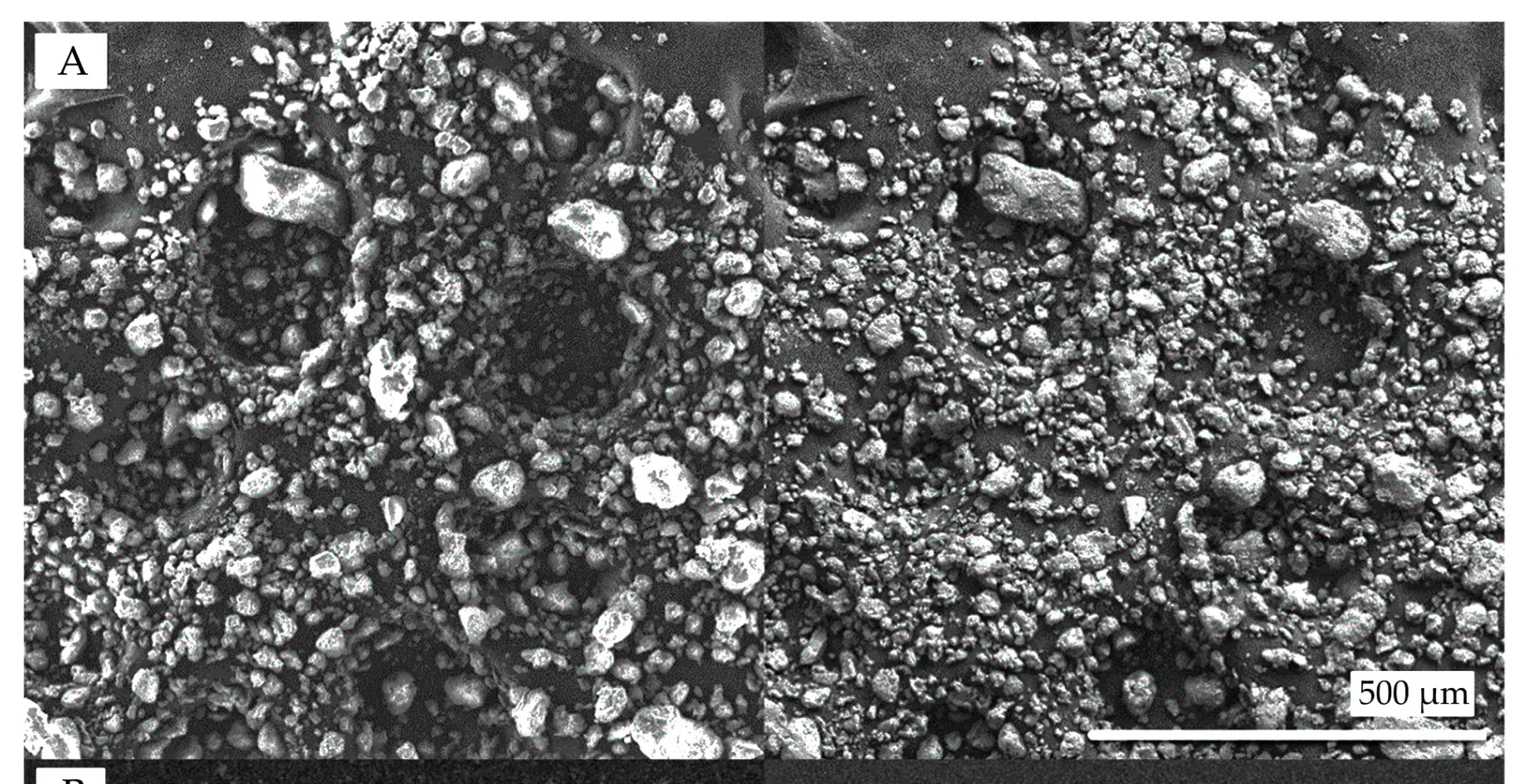
    But the key of the concoction is bentonite: a volcanic clay mineral ground down to nanoscale particles and suspended in the mixture. When the film dries, those tiny clay platelets arrange themselves in flat, overlapping layers inside the material—like a wall of stacked cards running through the film.

    Water vapor trying to cross the packaging can’t go straight through anymore—it has to navigate a maze of these clay barriers, following a longer, winding path. That “tortuous diffusion” effect is why the film’s water vapor permeability dropped by nearly three orders of magnitude compared to conventional casein-starch films reported in the literature. That’s a thousand-fold reduction.

    The final film stretches more than double its original length before tearing. Comparable casein-starch films without PVA or bentonite are a lot more rigid. Such improvement in strength comes from bentonite’s silicate layers acting as internal reinforcement, distributing stress more evenly across the material when it’s being pulled or bent. Think of it less like a standard plastic bag and more like a fiber-reinforced composite—just made from food ingredients instead of carbon fibers.

    On the microbiology front, bacteria colonies on the film remained below the threshold set by ISO standards for non-sterile packaging applications. This means that these films don’t have explicit antimicrobial properties, but they don’t create a petri dish environment either. The researchers flagged this as a direction for future work, noting that incorporating silver nanoparticles or other active agents could push the film into genuinely antibacterial territory.

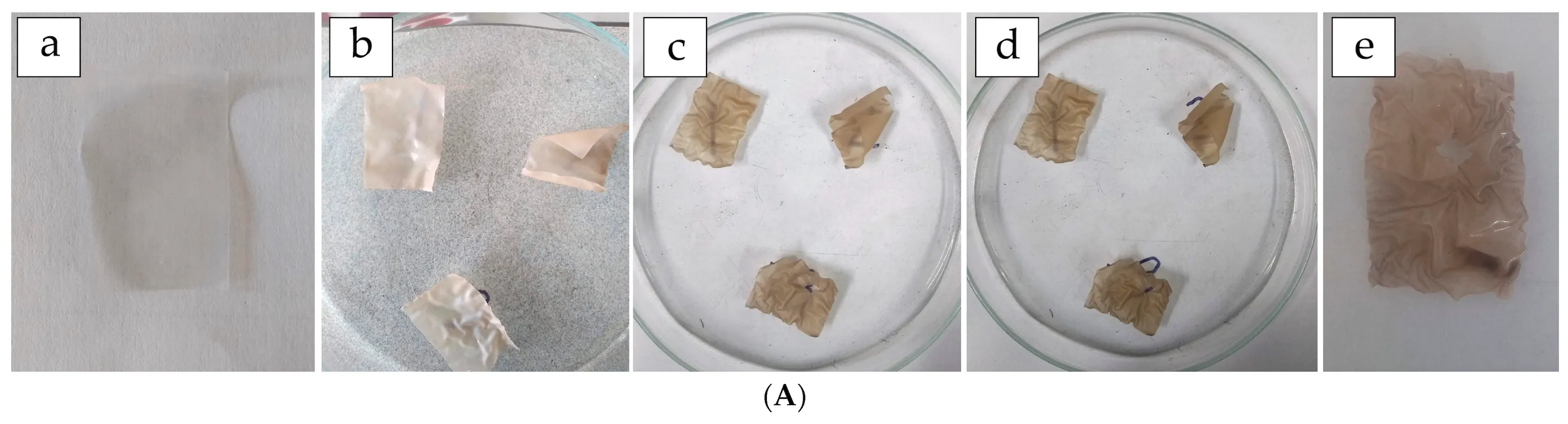
    Biodegradation was tracked by burying rectangular film samples in soil for nine days and weighing them daily. The most aggressive breakdown happened in the first 72 hours—the casein and starch begin absorbing moisture quickly, swelling and fragmenting. After that, degradation continued at a steadier pace.

    Extrapolating the curve puts full disintegration at around 13 weeks, which is longer than simpler casein-only films but significantly shorter than anything petroleum-based. That’s much shorter than the whole millenia it may take a plastic bag to go through the same process.

    Image: Polymers
    Image: Polymers

    The researchers used a solution casting method to produce the films, essentially pouring the liquid mixture into molds and letting it dry in an oven at 38°C (about 100°F). It’s low-tech enough to scale without exotic equipment, which matters for adoption in developing countries where plastic waste management infrastructure is often limited.

    There’s still work ahead. Thermal stability testing hasn’t been done, antimicrobial performance needs deeper validation, and the optical clarity drops slightly with bentonite added—though the researchers say the change is imperceptible to the naked eye.

    These aren’t dealbreakers. They’re the kind of engineering problems that get solved as the formulation moves from lab to pilot production. The core proof of concept—that you can build a functional, genuinely biodegradable food packaging film out of milk protein and volcanic clay—is sitting right there in the data.

    Daily Debrief Newsletter

    Start every day with the top news stories right now, plus original features, a podcast, videos and more.

  • Tether, Anchorage Tap Deloitte for First USAT Stablecoin Reserve Report

    Tether, Anchorage Tap Deloitte for First USAT Stablecoin Reserve Report

    In brief

    • Deloitte penned USAT’s first attestation report on behalf of issuer Anchorage Digital.
    • The Big Four accounting firm began working for Circle in 2023.
    • Tether signaled last year that it’s pursuing a full, independent audit.

    Anchorage Digital tapped Deloitte for USAT’s first attention report, linking the Big Four accounting firm with Tether’s efforts to offer a regulated stablecoin in the U.S.

    The report showed that USAT’s reserves were valued in excess of the stablecoin’s circulating supply, totaling $17.6 million and $17.5 million, respectively, as of Jan. 31. That meant the token had a cushion of around $100,000 a few days after its debut last month.

    USAT’s reserves consist of cash and U.S. Treasuries, which are held at financial institutions based in the country, the report showed. It was prepared under a framework established by the world’s largest member association for certified professional accountants last year.

    In a blog post, Tether USAT noted that its token combines Tether’s ability to operate at a global scale with Anchorage’s “strong track record operating under a clear U.S. federal framework.” Anchorage became the first federally chartered digital asset bank in 2021.

    “Anchorage Digital Bank is establishing a clear standard of accountability and financial strength,” Tether CEO Paolo Ardoino said in a statement. “We intend to help define the next chapter of digital dollars in the United States.”

    Tether USAT is led by CEO Bo Hines, former executive director of the White House’s digital assets working group, who initially signed on as a strategic advisor to Tether in August.

    USAT’s debut followed the passage of the GENIUS Act last year, a framework for stablecoins requiring companies operating in the U.S. to abide by reserve requirements that don’t align with Tether’s $183 billion stablecoin, which is partially backed by Bitcoin and gold.

    Deloitte’s role in USAT’s attestation report highlights Tether’s bifurcated approach: building a wall of federal compliance around its U.S. stablecoin to win over institutional players who might remain wary of the company’s broader international business.

    Tether’s reserves have never undergone a full audit, and its flagship USDT stablecoin has previously faced scrutiny for its role in facilitating criminal activity. The company announced that it was relocating its headquarters to El Salvador in January of last year. 

    Months later, Ardoino told DL News that “none of the Big Four companies will audit us” because they are afraid of damage that it may cause to their reputations. Nonetheless, he said that securing a firm like Deloitte for a full, independent audit was a “top priority.”

    Decrypt has reached out to Tether for comment.

    The attestation report produced by Deloitte did not judge how Anchorage manages USAT’s reserves day-to-day, only that the money was there when a snapshot was taken. Additionally, Deloitte did not determine whether the stablecoin reserves “complied with federal, state or local laws or regulations.”

    Anchorage declined to comment to Decrypt.

    Circle, Tether’s biggest rival, appointed Deloitte as its independent auditor in its 2022 fiscal year. That means the Big Four accounting firm has been also producing attestation reports for USDC’s reserves since January 2023.

    Daily Debrief Newsletter

    Start every day with the top news stories right now, plus original features, a podcast, videos and more.

  • Trump admin offers scant evidence on Iranian threat in ‘America First’ war

    Trump admin offers scant evidence on Iranian threat in ‘America First’ war

    Washington, DC – As the US and Israeli militaries expand their strikes on Iran, the administration of US President Donald Trump has alternated its justification for the war between preventing immediate attacks and countering the long-term existential threat of a nuclear Tehran.

    This was on full display on Monday, with Trump and Pentagon chief Pete Hegseth appearing to make the case that the culmination of Iran’s regional policies in the 47 years since the Islamic revolution, coupled with the future of its ballistic and nuclear programmes, represented an immediate threat to the US.

    Recommended Stories

    list of 3 itemsend of list

    US Secretary of State Marco Rubio, meanwhile, argued that Washington’s close ally Israel was planning to attack Iran. In which event, the administration expected Iran to strike US assets, therefore justifying launching a preemptive attack, he said.

    To date, the administration has offered little clear evidence to support any of its claims, according to advocates and analysts, as well as Democratic lawmakers who have recently attended classified briefings.

    “The reality is, they’ve put forth very little evidence, and that’s a huge problem,” Emma Belcher, the president of Ploughshares, a group that advocates for denuclearisation, told Al Jazeera.

    “It says, one: They don’t think they need to [make the case] for the war; that they won’t necessarily be held to account for it,” Belcher said. “But it also says to me that the evidence quite possibly isn’t there, and that they want to avoid particular scrutiny.”

    Republicans have largely coalesced around the administration’s messaging, even as Democrats have pledged to force votes on war powers legislation to assert constitutional authority over the president’s military action.

    Still, the administration remains in a tenuous political position as Trump’s Republican Party stares down midterm elections in November. Early public polling indicates little outright support from the US public, even as Trump’s Make America Great Again (MAGA) base has been staid in its response.

    But the more days that pass, and the more US service members are killed, the more likely that Trump will be confronted with the contradictions to his past anti-interventionist promises.

    “The longer it goes on and the more costly it is in terms of lives… the more the lack of evidence becomes an albatross around the neck of the administration – one that it will have to account for come November,” according to Benjamin Radd, a senior fellow at the UCLA Burkle Center’s international relations department.

    A kaleidoscope of claims

    Speaking from the White House on Monday, Trump praised the “obliteration of Iran’s nuclear programme” in US strikes last June. But moments later, he claimed that efforts to rebuild that programme, coupled with Iran’s ballistic missile programme, represented a menace to the US.

    “An Iranian regime armed with long-range missiles and nuclear weapons would be an intolerable threat to the Middle East, but also to the American people,” Trump said. “Our country itself would be under threat, and it was very nearly under threat.”

    Trump also said that, if not for US and Israeli attacks, Iran “would soon have had missiles capable of reaching our beautiful America”.

    Daryl Kimball, the executive director of the Washington, DC-based Arms Control Association (ACA) said any claims of immediate or middle-term threats posed by Iran in terms of their ballistic and nuclear power are not supported by available evidence.

    That is significant, as such “imminent threats” are required for a president justify attacks on foreign countries under both US domestic law and international law, save for approval from Congress.

    “Iran did not possess, prior to this attack, the capability to quickly enrich its highest uranium to bomb grades, and then to convert that into metal for constructing a bomb,” Kimball told Al Jazeera.

    “At the soonest, it might have taken many, many months to do that, but Iran does not have access to its 60 percent highly-enriched uranium. Its conversion facility is damaged and idle. Its major uranium enrichment facilities have been severely damaged by the US strikes in 2025.”

    He explained that despite having “significant conventional short and medium range ballistic missile capabilities”, Iran has said it has imposed 2,000km (1,200-mile) limits on its ballistic missile range, and is not near having an intercontinental ballistic missile capability.

    The “latest [US intelligence] assessment is that Iran could, if a decision is made, have an ICBM capability by 2035. So Iran is nowhere close to having an ICBM threat that could be called imminent,” he said, referring to intercontinental ballistic missiles, which have a range of at least 5,000km (3,400 miles).

    Democrats say no new intelligence

    Secretary of State Rubio on Monday said there “absolutely was an imminent threat” presented by Iran.

    “We knew that there was going to be an Israeli action,” he said. “We knew that that would precipitate an attack against American forces, and we knew that if we didn’t preemptively go after them before they launched those attacks, we would suffer higher casualties.”

    But top Democrats who received classified intelligence briefings in recent days said they had not been provided with evidence to justify the attack.

    “I’m on two committees that give me access to a lot of classified information; there was no imminent threat from Iran to the United States that warrants sending our sons and daughters into yet another war in the Middle East,” Senator Tim Kaine, who sits on both the Armed Services Committee and the Foreign Relations Committee, told CNN on Saturday.

    Senator Mark Warner, who was briefed on classified intelligence related to Iran last week as part of the “gang of eight”, a collection of the top lawmakers from both parties in Congress, told the network: “I saw no intelligence that Iran was on the verge of launching any kind of preemptive strike against the United States of America”.

    Several sources speaking to both the Reuters news agency and the Associated Press, following a closed-door briefing of congressional staff on Sunday, said the administration presented no evidence that Iran was planning a preemptive strike, and had instead focused on a more generalised threat posed by Iran and its allies to US troops and assets in the region.

    Trump looking for quick success

    All told, the Trump administration appears to be arguing that “Iran has been a national security threat to the United States since 1979… that Iran was responsible for more American lives being killed than any other state or non-state actor; that Iran has never been held to account for this”, according to the Burkle Center’s Radd.

    Trump, therefore, appears to be taking the position that given the totality of Iranian actions, including during recent indirect nuclear talks, the US “has no choice but to perceive Iran as an imminent threat”.

    Oman’s foreign minister, who mediated the talks, had pushed back on the administration’s characterisation, maintaining that “significant progress” had been made before the US-Israeli attacks.

    Radd noted that under the War Powers Act of 1973, a US president has between 60 and 90 days to withdraw forces deployed without congressional approval. Therefore, Trump appears to be saying, “We’re not obliged to prove to Congress any of that if we can conduct and execute this operation within the 60 to 90 day window,” he said.

    Meanwhile, Ploughshare’s Belcher said that the administration’s own actions led to the current situation with Iran.

    She pointed to Trump’s withdrawal of The Joint Comprehensive Plan of Action (JCPOA) in 2018, which had seen the US impose maximum sanctions on Iran, and Iran, in turn, begin enriching uranium beyond the levels laid out in the agreement. Trump also derailed nuclear talks last year by launching attacks on Iran.

    “We’re in this situation precisely because President Trump gave up on an agreement that was negotiated by his predecessor,” Belcher said. “He gave up on diplomacy.”

    ‘America First’ war?

    In his speech on Monday, Hegseth, in particular, appeared to try to frame the war within Trump’s political worldview, pledging to “finish this on America First conditions”.

    He drew a contrast with the US invasion of Iraq, describing the attacks on Iran as a “clear, devastating, decisive mission”.

    “Destroy the missile threat, destroy the navy – no nukes,” he said.

    He also sought to draw a distinction between a “so-called regime-change war” and US attacks that happened to lead to regime change. As of Monday, US strikes had killed Iran’s supreme leader, Ayatollah Ali Khamenei, and several top officials, but the ruling government has remained intact.

    Hegseth said that the US is unleashing attacks “all on our terms, with maximum authorities, no stupid rules of engagement, no nation-building quagmire, no democracy building exercise, no politically correct wars”.

    It remains unclear how the message will resonate with the US public.

    A Reuters-Ipsos poll released on Sunday suggested dismal approval for Trump’s strikes, but also indicated that large swaths of Americans were unsure about the conflict.

    That could create opportunities for those challenging Trump’s actions and his justification for them.

    “I think it does seem as though the narrative is still up for grabs,” Belcher said.

  • Analysis – Trump’s foreign policy message in a nutshell: ‘We can reach you’

    Analysis – Trump’s foreign policy message in a nutshell: ‘We can reach you’

    United States President Donald Trump’s second term in office has been defined by the abduction of Venezuela’s left-wing President Nicolas Maduro, joint US-Israeli strikes on Iran that killed the country’s Supreme Leader Ayatollah Ali Khamenei, among hundreds, and new threats against other leaders from Latin America to even Europe.

    This policy is testing alliances, legal norms, and the idea that shock action abroad yields predictable outcomes at home. At its core is a message Trump repeats in different ways: “We can reach you – and we might not protect you if you do not do what we want.”

    Recommended Stories

    list of 4 itemsend of list

    Trump talks directly to foreign leaders, promising swift punishment or personal favour, and casts himself as the only US president “with the gloves off”.

    While his supporters see strength and candour, critics underline threats and deals aimed at domestic politics as much as foreign capitals.

    A doctrine built around enemies

    Trump’s decision to attack Iran has been described as the “biggest foreign policy gamble of his presidency”, with analysts saying he has pivoted from “swift, limited operations like last month’s lightning raid in Venezuela” to what could be a more protracted conflict that is already morphing into a wider regional war.

    His doctrine is anchored in identifying adversaries – Iran, China, Russia and North Korea – alongside a cluster of actors such as Venezuela, Cuba, certain Latin American leaders, as well as drug cartels, Hezbollah and Hamas.

    Analysts at the Atlantic Council say Trump’s National Security Strategy “elevates great power competition with China and Russia while casting Iran and North Korea as rogue regimes”, creating an organising map of enemies reflected in his rhetoric and operations.

    The Foreign Policy Research Institute describes Trump’s strategy as “a deeply transactional document”, arguing that security guarantees and pressure on adversaries are framed around what others “pay” or concede to the US.

    Iran and the regional spread of war

    The Pentagon has named its Iran campaign Operation Epic Fury, with Trump insisting the US “did not start this war”, but intends to finish it – a claim rejected by Iran’s foreign minister in an interview with Al Jazeera.

    Trump said US forces would “lay waste” to much of Iran’s military, deny Tehran a nuclear weapon, and “give Iranians a chance to topple their rulers”. Some media reports said he has privately claimed Iran would “soon have a missile that can hit the US”, even though intelligence assessments do not support that.

    Analysts say Trump is hoping the US-Israeli strikes would incite a popular uprising to oust Iran’s rulers, even though outside airpower has never directly achieved government change without ground forces. The Atlantic Council warns the Iran attack risks drawing Washington into a wider regional war “without a clear endgame”.

    A briefing from the Royal United Services Institute says if Iran’s retaliation causes significant US casualties, Washington will be under intense pressure to expand Operation Epic Fury into a larger military campaign.

    Interactive_Iran_US_Israel_March2_2026-01-1772448550
    (Al Jazeera)

    Meanwhile, hawks in Washington see an opportunity. A report by the Foundation for Defense of Democracies says the attacks on Iran provide “a historic opportunity to help the Islamic Republic fall”.

    Trump has told the US media the military operation could take “four weeks or less”, even as his defence secretary acknowledged it could be shorter or longer, depending on how Iran and its allies respond.

    Within days of the Iran strikes on Saturday, the war has spread across the region, with Israel on Tuesday saying it has launched ground operations in Lebanon. Meanwhile, Iran’s retaliatory attacks have targeted US assets and even civilian infrastructure in the United Arab Emirates, Saudi Arabia, Qatar, Bahrain and other Gulf nations.

    This is exactly the escalation experts had warned about: strikes framed as targeted decapitation of Iran’s leadership now pulling in a weakened Hezbollah and even Lebanese civilians, reinforcing the perception that the US is willing to put an entire region at risk to prove that it can reach one man or topple one regime.

    Like he did in Venezuela by capturing Maduro in an in‑and‑out raid in Caracas after a CIA tip – an episode analysts say emboldens similar thinking elsewhere.

    ‘Troubling precedent’

    The Caracas raid came on the back of a “maximum pressure” campaign, which saw sanctions, criminal cases and asset seizures in a high‑visibility operation. Maduro’s abduction gave the US considerable control over Venezuela’s vast oil reserves.

    The Center for Strategic and International Studies calls the Maduro operation “a military victory with no viable endgame”, arguing that while the exfiltration of the president was tactically successful, the structural drivers of Venezuela’s crisis remained in place.

    A Brookings analysis warned that the raid “sets a troubling precedent for US‑led regime change by special forces”, suggesting that other Latin American leaders may see it as a potential US “template” rather than a one‑off.

    Like Colombia, whose President Gustavo Petro was referred to by Trump as “sick”, suggesting a Venezuela-like intervention there “sounds good to me”, and warning Petro to “watch his a**”.

    Petro in January said the US was behaving like an empire that treats Latin American governments as subjects, warning that Washington risks shifting from “dominating the world” to being “isolated from the world”.

    The killing or abduction of leaders or prominent figures from other nations violates international law. Experts say Trump’s expanding “targeted killing” doctrine erodes the taboo on assassinating political leaders, making reciprocity more plausible.

    Protection as transaction

    With allies, Trump’s posture is less kinetic but equally blunt.

    Trump once boasted about telling a NATO partner, “You didn’t pay? You’re delinquent … No, I would not protect you. In fact, I would encourage [Russia] to do whatever the hell they want.”

    The comments triggered alarm in European capitals and prompted what analysts described as efforts to “Trump‑proof” NATO by locking in higher defence spending and deeper political commitments.

    The European Council on Foreign Relations alleges Trump has “exported MAGA to Europe”, turning NATO into “a protection racket in all but name” where security guarantees appear conditional on allies’ political and financial alignment.

    A declassified White House memo from 2019 remains the clearest example of how Trump’s transactional logic extends to partners. The memo shows Trump responding to Ukrainian President Volodymyr Zelenskyy’s request for more weapons.

    “I would like you to do us a favour though,” Trump purportedly said before asking Zelenskyy to investigate former US President Joe Biden and his son – a conversation that led to Trump’s first impeachment.

    Who could be next?

    Put together, the Maduro raid, the Iran attack, threats to Petro and pressure on NATO suggest who could be next: Latin American leaders labelled soft on drug cartels; the Iran‑aligned groups in Iraq, Syria and Lebanon; or smaller European nations branded “delinquent” by Trump.

    US media reports say Trump’s advisers have urged him to focus on the domestic economy, warning that a prolonged confrontation with Iran could alienate parts of his “America First” base that are sceptical of open‑ended wars.

    Meanwhile, Trump’s backers cite the rising NATO outlays, the Maduro raid and Iran strikes as proof that Trump “does what he says”. Some argue that degrading Iran’s nuclear programme, even without regime change, would still count as a victory for Trump.

    Critics, however, worry that the Iran campaign could escalate into the biggest US military campaign since the Afghanistan and Iraq wars, with some of Trump’s stated claims on Iran not backed by intelligence.

    Whether the US power produces durable outcomes without blowback – in Iran, Lebanon, Latin America and inside the US – is a key test for Trump in the days ahead.

  • WME Signs Jasmine Sharma, Playwright and Susan Smith Blackburn Prize Finalist

    WME Signs Jasmine Sharma, Playwright and Susan Smith Blackburn Prize Finalist

    Jasmine Sharma, a playwright and performer who was recently a finalist for the prestigious Susan Smith Blackburn Prize, has signed with WME for representation. She will be repped by Lizzy Weingold in the theater department.

    The New York-based Sharma, who aims to focus her work at the intersection of race, femininity and Americanness, is currently a member of The Kilroys collective, a core writer at the Playwrights’ Center and recently accepted a residency at Brooklyn’s Colt Coeur theater company. Her play, “Pigeonhole,” was a finalist for this year’s Susan Smith Blackburn Prize, the oldest and largest English playwriting honor for women.

    On the acting front, last summer Sharma was part of the ensemble and the understudy for Olivia (Sandra Oh) in the Public Theater’s production of Shakespeare’s “Twelfth Night,” the first at the new Delacorte Theater. She also led the play “Love You More” off-Broadway and filmed a supporting role in the upcoming film “Reimagined,” starring Joel McHale and Paula Patton.

    Other acting credits include “You Don’t Have to Do Anything” at HERE Arts, “Wives” at Aurora Theatre,
    “Calvin Berger: A Musical” at Los Angeles’ Colony Theatre and “The Wolves” at Princeton University’s McCarter Theater.

    “Pigeonhole” is currently in development and was commissioned by L.A.’s Center Theatre Group. Sharma has also penned the plays “Peachy: A Sorta Chekhovian Traumedy” (developed with IAMA Theatre Company, taught/produced at Yale University and a National Playwrights Conference finalist), “The Jazmines: A Rage Play — and for Legal Reasons, a Parody” (also a NPC finalist) and “Radial Gradient,” which world premiered at Chicago’s Shattered Globe Theatre. In addition to “Pigeonhole,” Sharma is developing a play about Usha Vance, the wife of vice president JD Vance.

    Sharma is repped by Abby Berger at Bohemia Group for management.

  • Paramount’s $110 Billion Warner Bros. Deal Backed by Arab Sovereign Funds Raises Soft Power Concerns

    Paramount’s $110 Billion Warner Bros. Deal Backed by Arab Sovereign Funds Raises Soft Power Concerns

    Paramount Skydance’s $110 billion bid for Warner Bros. Discovery is not just a Hollywood deal. Powered by $24 billion from sovereign wealth funds in Saudi Arabia, Qatar and Abu Dhabi, the proposed merger is sparking debate over soft power, influence and media independence at a company that includes CNN and HBO.

    Saudi Arabia’s Public Investment Fund (PIF), Abu Dhabi’s L’imad Holding Company, and the Qatar Investment Authority (QIA) are jointly putting up a total of $24 billion investment into the Hollywood mega merger — a power move that coincides with efforts to build local entertainment industries across the Middle East.

    In an SEC filing, Paramount said the investors will not receive governance rights, including board seats or voting rights, so their involvement will not require a sign-off by the U.S. Committee on Foreign Investment (CFIUS).

    The question, however, isn’t whether the Arab funds have formal voting rights — it’s whether a $24 billion stake can ever truly be passive inside a company that controls CNN, HBO and one of Hollywood’s most powerful IP libraries.

    Before pulling out of the deal, Netflix co-CEO Ted Sarandos – speaking to the BBC in London on the morning after the recent BAFTA Film Awards – called the Gulf sovereign funds backing Paramount’s bid a “bad idea,” noting that they are from “a part of the world that is not very big on the First Amendment.” 

    “It seems very odd to me with the level of investment that we’re talking about that they’d have no influence or editorial control over media in another country,” Sarandos added.

    “They may be sleeping partners. But there will probably come a time when they are going to wake up and want to exert their influence” agreed Middle East analyst Neil Quilliam, partner at Azure Strategy in London.

    “Big sovereign investors negotiate the level of visibility they want into strategy and major decisions,” said New York-based lawyer and analyst Irina Tsukerman. “They automatically get ongoing access to leadership and leverage tied to future financing, even without publicly acknowledged voting rights,” she pointed out.

    “Would you spend that kind of money to just be a silent partner? “I doubt it,” said Dubai-based media consultant Mazen Hayek who is a former spokesman for regional broadcasting powerhouse MBC Group.

    “Does it guarantee you direct influence? No, it doesn’t,” he added. “At least not in normal corporate America,” according to Hayek.

    Quilliam underlined that the decision on the part of Saudi Arabia, Qatar and Abu Dhabi – which is part of the United Arab Emirates – to join forces on this Hollywood mega deal marks “an unusual three-way alliance,” especially at a time when tensions are simmering between Saudi and the UAE who are on opposite sides of Sudan’s civil war.

    But these Gulf countries are casting aside their differences because “They’ve got their eye on the bigger prize,” Quilliam noted. That reward being that “all three Arab states want to occupy a major place in the global media space.” So they are “really stepping up to project their [soft] power beyond the region.”

    “They are looking for ways to diversify from their oil-based economies,” said Georgetown University political economist Robert Mogielnicki. And “Pushing into the entertainment realm is an important part of their broader economic diversification strategies.”

    But what’s in it for them?

    Besides the prestige of being minority partners in the Hollywood mega merger “They get a piece of IP, a movie premiere, a movie shoot: all they care about is reputation and soft power,” says Hayek. At a more granular level, there could be synergies between Saudi-owned MBC’s Shahid streaming service and HBO Max, he noted.

    Saudi Arabia – eight years after the removal of its religion-related ban on cinema – has major moviemaking ambitions as part of the kingdom’s larger efforts to transition from an oil-based economy to becoming a digital world player.

    Hollywood, meanwhile, is beginning to move past the backlash caused by the grisly murder of U.S.-based journalist Jamal Khashoggi at the Turkish Embassy in 2018 which was attributed to Saudi agents following an investigation. The Saudi government denies involvement of its top leadership. 

    Saudi money has already found its way in Hollywood through multiple splashy deals. To name one, Electronic Arts, the maker of video games like “Madden NFL,” “Battlefield,” and “The Sims,” in October was acquired by an investor group led by Saudi Arabia’s sovereign wealth fund in a massive deal valued at $55 billion. 

    Qatar, after being put on the global map by Al Jazeera and the 2022 FIFA World Cup soccer tournament, is now turning to film and TV and courting Hollywood. This became crystal clear last November during the Industry Days component of the new Doha Film Festival that were attended by top executives from Sony Pictures and U.S. indie studios Neon, A24, Department M and Miramax that is jointly owned by Qatar’s beIN Media Group and Paramount Global.

    Meanwhile, Hollywood-backed theme parks have been sprouting in the region. In May, the Walt Disney Company announced plans for its first theme park in the Middle East in Abu Dhabi, joining the nearby Warner Bros. World resort on Abu Dhabi’s Yas Island.

    That said, the broader issue remains that “Hollywood is not used to Arab money in media,” Hayek pointed out. “They are used to Arab money in strategic places: in airports and football clubs and shopping malls,” he noted. But they are not comfortable with Arab countries owning even a relatively small interest in the parent company of a global news operation such as CNN.

    CNN in fact could become the main stumbling block for the Paramount Warner Bros. merger from a regulatory standpoint. But it’s probably not an insurmountable obstacle.

    François Godard, an analyst at Enders Analysis, has pointed out that the U.K. regulator recently blocked a deal for RedBird Capital Partners — backed by Abu Dhabi-based International Media Investments (IMI) to buy the Telegraph Media Group.

    However the EU regulator is likely to be more lenient than its British counterpart since CNN is “not a significant player in Europe’s national media landscapes” said Max von Thun, director of Europe at the Brussels-based Open Markets Institute. Von Thun also noted that, more in general, the EU “rarely blocks merger deals.”

    As for how the foreign investments would sit with the U.S. regulator, Mogielnicki said that for Arab sovereign funds in the U.S., there are now “fewer hurdles, and they are easier to get over than in the past.”

    “The FCC, the Justice Department, and national security review bodies will still run through the formal processes,” said Tsukerman.

    “But leadership in those institutions reflects the administration,” she added. Especially now, under U.S. President Donald Trump, “appointees tend to follow his instincts – and sometimes explicit direction – on foreign investment.”

    And, as Tsukerman noted, since Trump “has already been comfortable operating alongside Saudi-backed capital, regulators under him are unlikely to treat the same capital as automatically disqualifying in a media deal.”

  • Nearly Half of Colorectal Cancers Now Occur in Younger Adults, ACS Says

    Nearly Half of Colorectal Cancers Now Occur in Younger Adults, ACS Says

    Younger female with her eyes closed as sun streams onto her faceShare on Pinterest
    A new report from the ACS shows that nearly half of colorectal cancer cases are occurring in adults under 65. Image Credit: Westend61/Getty Images
    • The American Cancer Society reports that the incidence of colorectal cancer cases in U.S. adults ages 20 to 49 has been rising about 3% per year.
    • Experts say there may be a number of factors for this increase, including unhealthy diets, sedentary lifestyles, and the impact of microplastics on the human body.
    • They recommend that most adults start colorectal cancer screenings at age 45.

    A new report from the American Cancer Society (ACS) highlights what’s being described as an alarming increase in colorectal cancer cases in young adults.

    In their findings, published in CA: A Cancer Journal for Clinicians, officials at the ACS report that the overall incidence of colorectal cancer in adults in the United States decreased by nearly 1% annually between 2013 and 2022.

    The decline was mostly driven by a 2.5% annual decrease in colorectal cancer cases among U.S. adults ages 65 years and older.

    However, the report found that colorectal cancer cases have increased by 0.4% annually in U.S. adults ages 50 to 64.

    More alarming, the authors said, was the 3% annual increase in colorectal cancer cases in U.S. adults ages 20 to 49.

    They project that 45% of colorectal cancer diagnoses this year will be in individuals younger than 65, up from 27% in 1995. They predict that one-third of the expected 55,000 colorectal cancer deaths in the United States this year will be in people younger than 65.

    The findings also show that rectal cancer cases now represent 32% of all colorectal cancer cases, up from 27% two decades ago.

    Nikita Wagle, PhD, a principal scientist in cancer surveillance research at the ACS and second author of the new report, said the trend is a call to action for the medical community.

    “Despite decades of progress in the fight against cancer, colorectal cancer death rates are increasing among younger men and women,” Wagle told Healthline. “It is important that we intensify research to uncover the causes as well as take action to prevent these deaths.”

    In their report, ACS officials state that colorectal cancer is the third most commonly diagnosed cancer in both males and females in the United States.

    They say it’s the second most common cancer-related death in the United States overall. It’s the number one cause of cancer-related death in U.S. adults under 50 years of age.

    The ACS estimates there will be 158,850 new cases of colorectal cancer in the United States in 2026, including 108,860 colon tumors and 49,990 rectal tumors.

    In its report, the ACS states that more than one-half of colorectal cancer cases are attributable to modifiable risk factors, such as:

    Nilesh Vora, MD, a medical oncologist and medical director of the MemorialCare Todd Cancer Institute at Long Beach Medical Center, has witnessed an uptick in colorectal cancer patients and said the numbers didn’t surprise him. Vora wasn’t involved in the report.

    “It doesn’t change the concern I already have about this trend,” he told Healthline.

    Geoffrey Buckle, MD, a gastrointestinal medical oncologist at the University of California, San Francisco, said the new ACS statistics align with what he and his colleagues have noticed in their practices. Buckle wasn’t involved in the report.

    “We are seeing a growing incidence of colorectal cancer that is indeed alarming,” said Buckle. “The statistics reflect what we see in our clinics every day.”

    Buckle told Healthline that there are various factors driving the increase in early onset colorectal cancer cases, including:

    Some research has indicated that an overabundance of microplastics in the bodies of younger adults may be another factor, Buckle said.

    Another theory suggests that toxins produced by the bacteria E. coli, which damage DNA, could be contributing to rising colorectal cancer cases.

    Wagle agreed there may be new factors affecting younger adults’ risk of colorectal cancer.

    “Since the late 20th century, there have been many newer exposures, such as ultra-processed food and microplastics, that may influence cancer risk, and to which younger generations have had greater cumulative exposure than older adults, who have had a lifetime of cumulative exposures,” she explained.

    Vora echoed that there may be some credence to these theories. “Other environmental factors need to be considered,” he said.

    The issue came to the forefront in August 2020, when Chadwick Boseman, the star of the film “Black Panther,” died from colon cancer at 43.

    In 2024, a study presented at the Digestive Disease Week conference reported that colorectal cancer cases had tripled among U.S. teens from 1999 to 2020.

    In October 2025, researchers reported that rectal bleeding is a strong indication of early onset colorectal cancer in adults under 50.

    The issue was highlighted again in early February when James Van Der Beek, an actor best-known for his role on the television series “Dawson’s Creek,” died from colon cancer at the age of 48.

    The trends prompted the U.S. Preventive Services Task Force to revise its guidelines for colorectal cancer screening. The agency now recommends that these screenings begin at age 45 for most adults.

    There are different options for colorectal cancer screening that range from a colonoscopy to at-home stool-based tests.

    Buckle said screening is the most important tool in the prevention of colorectal cancer. He added that young adults should be aware of the early warning signs of the disease, such as:

    Buckle said that adults in their late 40s and 50s have become increasingly aware of the risk of colorectal cancer and the potential symptoms.

    However, he said that adults under 45 aren’t as attuned to the issues. “There is a definitive lack of recognition,” Buckle said.

    Buckle noted that younger adults should also be aware of their family history of colorectal cancer.

    He recommended regular exercise as well as a diet that avoids ultra-processed foods, sugar, and red meat and includes plenty of fresh vegetables and fruits.

    Wagle recommended that younger adults avoid smoking, limit their alcohol use, and maintain a healthy weight.

    Vora said it’s important for younger adults to be diligent in monitoring symptoms and getting screened.

    “You should get screened on time for colorectal cancer even if you don’t have symptoms,” said Vora. “And if you have symptoms, seek medical care as soon as possible.”