If you purchase an independently reviewed product or service through a link on our website, The Hollywood Reporter may receive an affiliate commission.
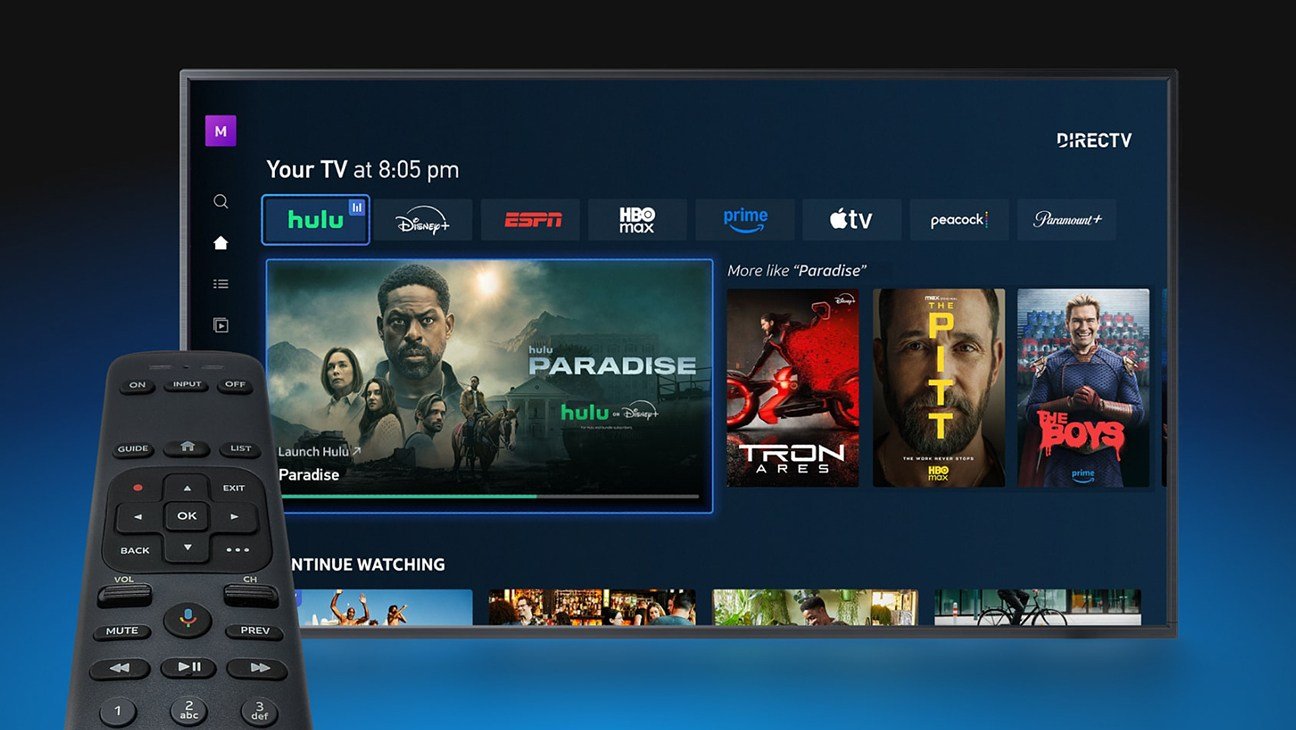
DIRECTV is emphasizing just how comprehensive its offerings are — and how comprehensive its plans can be — with discounts on a variety of premium add-ons.
For context, each of DIRECTV’s four streaming Signature Packages — ENTERTAINMENT, CHOICE, ULTIMATE and PREMIER — come with a varying number of television channels and streaming subscriptions already included. Customers then have the option to tack on additional networks and/or services not already part of their selected plan.
At their base level, for customers selecting a Gemini device, each of the four Signature Packages includes the Disney+, Hulu Bundle and ESPN Unlimited Plan1, The Premier package, DIRECTV’s top-tier package, also includes HBO Max, Cinemax, Paramount+ with Showtime and STARZ. Here’s where the promotion comes into play: New ENTERTAINMENT, CHOICE and ULTIMATE subscribers can claim three months of HBO Max, Cinemax, Paramount+ with Showtime, STARZ and MGM+ at no extra cost — a $185 value2 — just by signing up. Customers then have the option to keep or remove these add-ons by cancelling at any point within the three-month period.
As for Peacock, DIRECTV is running a simultaneous promotion that gives any Signature Package subscriber two free months of its “Movies Extra Pack + Peacock” — a $19.98 value — again, just by signing up3. Like the first promo, the add-on will renew at the then-prevailing rate (currently $9.99 per month plus tax) unless canceled at any time before the two-month mark. Both offers can be claimed in tandem, for over $200 worth of discounts.
Each of these months-long offerings serve as a cost-free opportunity for customers to see which subscription add-ons are most essential to their television watching experience. On top of these promotions, subscribers can, of course, learn how to take advantage of the limited-time offer of $25 to $40 off their first month of any Signature Package4.
Learn more about each plan’s specs and take advantage of limited-time promos now at Directv.com/affiliates.
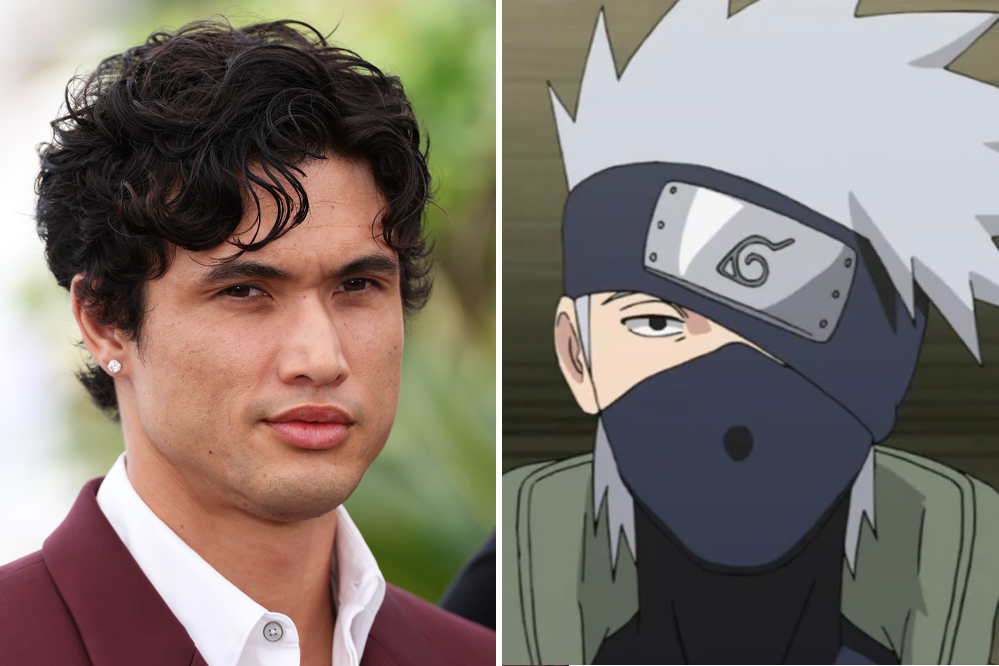
Charles Melton is in close talks to play Kakashi Hatake in Destin Daniel Cretton’s upcoming “Naruto” movie, Variety has learned.
The news comes amid speculation at D23 that Melton would join the “X-Men” cast. The global casting search for “Naruto” began last month to find the live action versions of Naruto, Sasuke and Sakura. The manga follows an adolescent ninja Naruto, who dreams of becoming his community’s protector and leader known as the village ninja.
Variety has reached out to Lionsgate for comment.
Melton was recently Emmy nominated for his role in “Beef” alongside Oscar Isaac, Carey Mulligan and Cailee Spaeny. He received critical acclaim for his work in Todd Haynes’ “May December,” which released in 2023, and is also known for starring in “Her Private Hell,” “Warfare” and “Riverdale.”
Cretton is coming off of his box office smash hit “Spider-Man: Brand New Day,” which has grossed over $800 million domestically, becoming the fastest film to ever hit the milestone.
The “Naruto” director got his start working in the indie film space with “Short Term 12,” which released in 2013 and starred Brie Larson, LaKeith Stanfield, Rami Malek and Kaitlyn Dever. After directing “The Glass Castle” and “Just Mercy,” he made the leap to big-budget studio films with “Shang-Chi and the Legend of the Ten Rings,” which released in 2021.
Avi Arad, Ari Arad and Emmy Yu will produce for Arad Productions with Jeremy Latcham. Cretton is producing alongside Jeyun Munford through his company, Hisako. Back in 2014, there was an attempt to get a “Naruto” movie off the ground with Michael Gracey attached as director.
The Kinéo Awards will toast a milestone 25th anniversary next month in Venice, Italy.
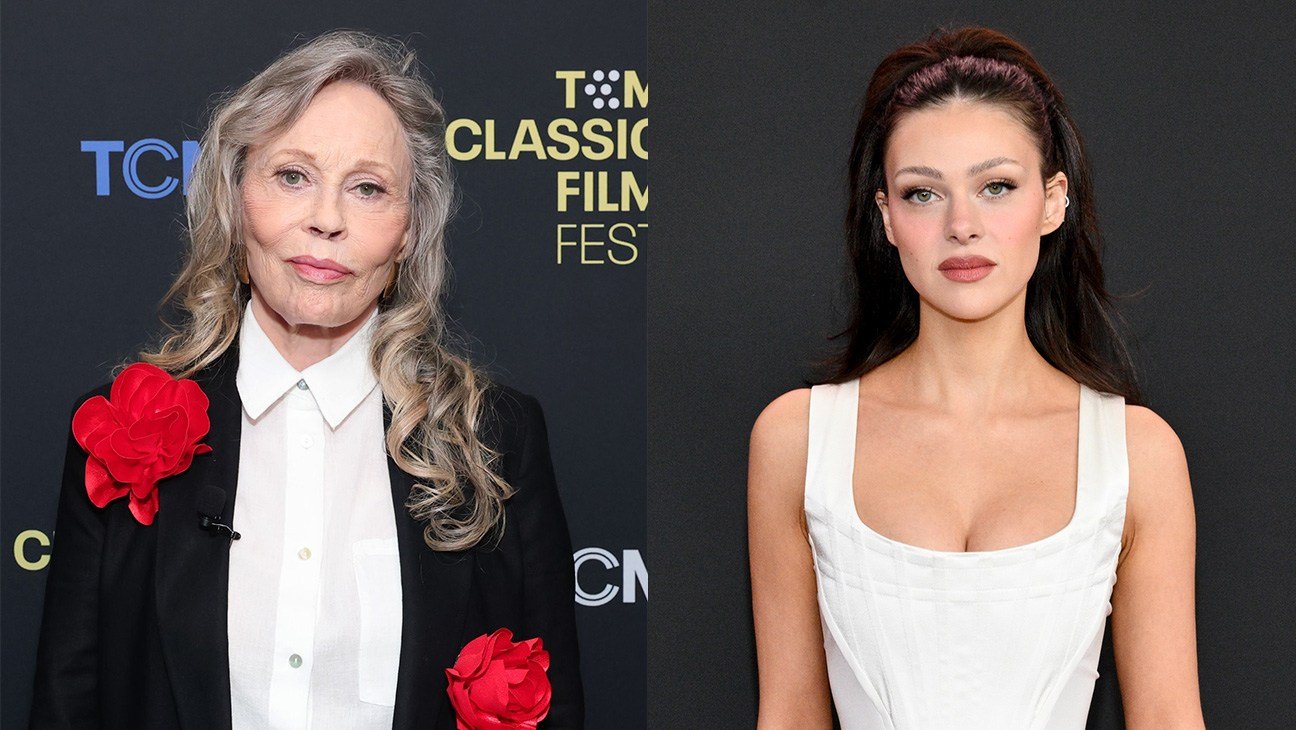
There ceremony is set to honor legendary Hollywood star and Oscar winner Faye Dunaway with a lifetime achievement award for her decades of work and a resumé that includes Bonnie and Clyde, Network, Chinatown, Mommie Dearest and more. Nicola Peltz Beckham has been plucked to receive a rising star award for her work as an actress, producer and budding filmmaker.
The honoree program unities Beckham and Dunaway once again after having worked together on the upcoming independent feature Prima, which marks the feature directorial debut of brothers Alessandro Morelli and Luca Morelli. Beckham wrote, directed and starred in Lola. Her resumé, which dates back 20 years, includes roles in The Last Airbender, Transformers: Age of Extinction, Bates Motel, Holidate, Welcome to Chippendales and The Beauty.
The ceremony — set to take place at Casa Cinema Giovani with a private dinner to follow at Hotel Ca’ Sagredoon Sept. 5 — was conceived by Kinéo Cultural Association president Rosetta Sannelli and launched in 2002. It is presented in partnership with the Ministry of Cultural Heritage and will take place during the Venice Film Festival, though it has no direct ties to the international gathering.
Drafted to host the affar are actress Tatiana Luter and Marcello Foti, the latter of whom serves as director of Centro Sperimentale delle Arti Contemporanee and Head of Communications at CSC – International Student Film Festival. The program will spotlight fashion designer Eleonora Lastrucci who will debut a surprise tribute to a film star through one of her haute couture creations. Helping to support the ceremony are WAMI, Consorzio di Tutela della DOC Prosecco and Venetian hair care brand My.Organics.
The Best Supporting Actress Award goes to Maria Gifuni, while the Best Actress Award honors Chiara Francini, one of the most beloved and versatile performers on the Italian scene. For the section dedicated to television and streaming series, the award goes to Raniero Monaco di Lapio, while Sara Lazzaro receives the Best Series Actress Award for her performance in Call My Agent Italia 3, following another successful season with La legge di Lidia Poët 3.
Other honorees include Paul Thomas Anderson’s Oscar winning One Battle After Another as best international film, Chiara Francini for best actress, Maria Gifuni for best supporting actress, Raniero Monaco di Lapio for best series actor, Sara Lazzaro for best series actress, Paolo Calvano for best child star, and Dinner with Dante for best short film. The Kinéo Awards will also shine a stronger light on international cinema by welcoming Turkish star Alp Navruz and Oka Giner from Mexico.
“On the occasion of the 25th anniversary of the founding of the Kinéo Award, established in 2002 at the MiBAC, we want to celebrate not only an important milestone, but also the continuity of a journey that has seen us grow alongside cinema and the audiovisual sector,” Sannelli said in a statement.
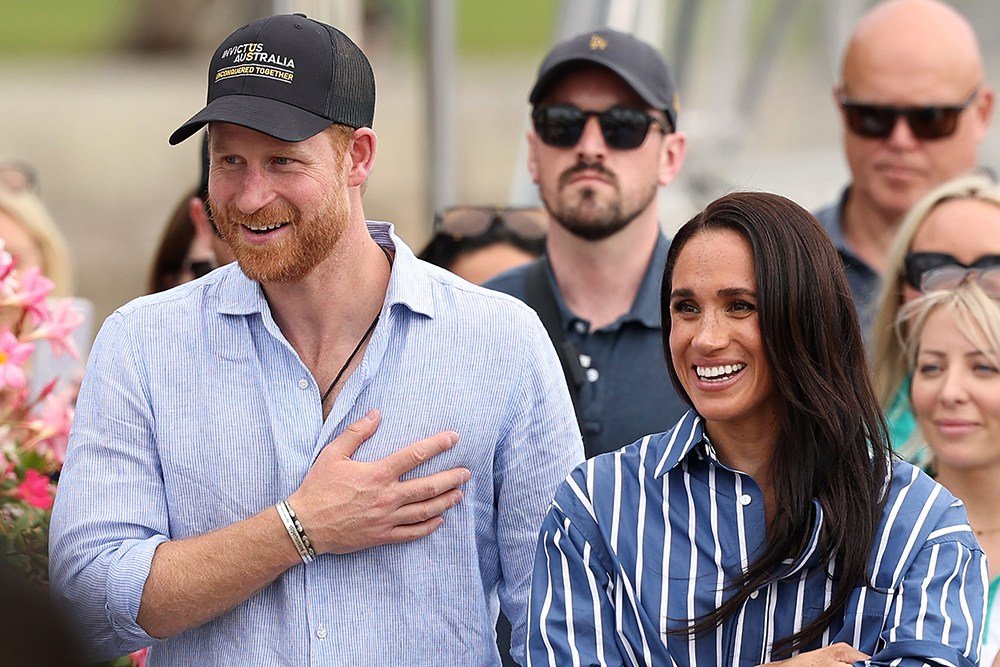
The Sussexes are coming home. In a shock announcement on Wednesday, it was revealed that Prince Harry and Meghan Markle are moving back to the U.K. for an “extended period” with their two young children after six years of living in California.
But after the pair’s dramatic exit from royal life in 2020, will England — and the rest of their family — welcome them back with open arms?
According to the BBC, Harry and Meghan’s decision to move back was made relatively recently, with King Charles only being informed of the news on Sunday. Their visit to the U.K. in July was a turning point, royal watchers believe, as they spent time with the King and also the family of Harry’s late mother Princess Diana, some of whom 7-year-old Archie and 5-year-old Lilibet met for the first time.
“I think they had a really good trip here in the summer,” Sky News royal reporter, Laura Bundock, tells Variety. “Harry isn’t homesick, but I certainly think he wants his kids to understand more about British history and his homeland.”
Their children’s education has also been a consideration for the move. The BBC said that Archie and Lilibet have both been enrolled in school in the U.K., and as most new terms start by mid-September, it’s expected that the family will settle in over the next couple of weeks.
Though the King has welcomed the move to spend more time with Harry and his family, the BBC reported that it was a surprise to him and he had no involvement in the decision. King Charles was diagnosed with cancer in 2024, and though his treatment is said to be going well, Harry admitted in a BBC interview last year that he wanted to reconcile with him, saying: “I don’t know how much longer my father has.”
Harry’s brother, Prince William, is a different story. The two’s relationship has been said to be severely damaged following the 2023 publication of Harry’s memoir, “Spare,” and the bombshell 2021 interview he and Meghan did with Oprah Winfrey in which they leveled allegations of racism and mistreatment against unnamed members of the royal family. “Their friendship circles and acquaintances overlap to some extent,” says Bundock. “But I think to say that this is a moment of great reconciliation between those feuding brothers is far from reality.”
Harry and Meghan’s announcement on Wednesday also made it clear that they will not be returning to their royal duties in any capacity now that they will be living in the U.K. They will live as private citizens — likely outside of London, according to the BBC — and continue their endeavors in production with Archewell as well as Meghan’s lifestyle brand As Ever. It’s possible they could expand these operations outside of the U.S., but they will stay headquartered in America. They also will not be selling their Montecito home, leaving the door open for an eventual return.
But as Bundock points out, when Harry is carrying out philanthropic endeavours in the U.K., it may not always be obvious to the casual observer that he is not technically there in a royal capacity. “When you’re looking at Harry, for example, on an Invictus [Games] engagement, it looks, to all intents and purposes, like a royal engagement. He is still a member of the royal family. He’s just not a working royal.” It’s a situation that may well cause tension within the royal households, particularly as the senior royals coordinate their diaries behind the scenes (to ensure no one steals the limelight from each other) in deference to the King.
While Harry and Meghan’s Hollywood ambitions were said to be a key reason behind their original move to California, Archewell Productions and its deal with Netflix has been the subject of scrutiny in recent years. Though the pact remains in tact, sources told Variety in a story about the couple’s deal with the streamer: “The mood in the building is, ‘We’re done.’” (In March, it was announced that the duo is developing a film adaptation of the Afghan war memoir “No Way Out: The Searing True Story of Men Under Siege” for Netflix.) Other lucrative opportunities have also fallen by the wayside, including a deal with Spotify reported to be worth $20 million that yielded just one show.
Then there’s the issue of security and privacy for the Sussexes while in the U.K. It has long been a sore spot for Harry that while in the country, he has not been given the official police protection afforded to working royals (Harry’s cousins do not get protection). In California, the family hired their own private security team.
Last year, Harry lost a legal battle for higher security protections in the U.K., and told the BBC: “I can’t see a world in which I would bring my wife and children back to the U.K. at this point.” Perhaps something has now changed, although U.K. Prime Minister Andy Burnham said on Thursday that he hasn’t been made privy to any decision on security matters — nor would he be as that is decided by the Royal and VIP Executive Committee, an independent body. “It’s a matter for Harry and for Meghan, and we wish them well in the move that they are making,” Burnham said (via BBC).
The couple’s move is also somewhat surprising as just last month Harry lost his long-running privacy case against Associated Newspapers, the publisher of the tabloid Daily Mail. He was among a group of high-profile figures, including Elton John and Elizabeth Hurley, who accused the publication of unlawful information gathering, including phone-hacking. Associated Newspapers strongly denied this, and ultimately a judge ruled that the plaintiffs failed to prove their claims. Along with the other claimants, he’s expected to have to pay a hefty sum, which will be decided at a hearing on a later date.
It’s one of several privacy lawsuits Harry brought against tabloids over the past few years concerning his treatment in the media, and with the couple back on U.K. soil, it’s possible that this could become an issue once again.
Bundock points out that the couple have not always helped themselves by airing their many grievances in public, whether it was their Oprah interview, their six-part Netflix series “Harry & Meghan” or Harry’s memoir, all of which contained deeply intimate details about life within the royal family, who for the most part remain beloved — or at least respected — in the U.K. “The way they’ve aired these very personal grievances so publicly caused absolutely catastrophic problems and created such suspicion and mistrust, not just within the family but within the wider public as well,” she says. “So they’ve got work to do, winning over everyone.”
CFTC Chair Michael S. Selig directed staff to explore crypto market structure rules using the agency’s existing authority.
Selig said he will direct staff to formally propose the rules if the Clarity Act remains stalled in Congress.
The potential framework could cover crypto exchanges, leveraged trading, and on-chain finance protocols.
Commodity Futures Trading Commission Chair Michael S. Selig has directed agency staff to begin developing crypto market structure rules, preparing the regulator to act if Congress fails to pass the Clarity Act.
Speaking Thursday at the inaugural meeting of the CFTC’s Innovation Advisory Committee, Selig said passing bipartisan market structure legislation remains his preferred path. If the bill remains stalled, however, he said the CFTC will use its existing authority to establish a regulatory framework for crypto markets, calling it “the most important step towards future-proofing this industry is passing this bipartisan bill.”
The Clarity Act would establish a federal framework for digital assets and clarify the CFTC and SEC’s roles in overseeing crypto markets. Selig said legislation would make those rules harder for a future administration to reverse.
“Passing Clarity is the surest way that we can prevent another Gary Gensler from running a rogue campaign of lawfare against the individuals and companies in this room today,” Selig said, referring to the former SEC chair who brought several costly lawsuits against crypto startups.
On Wednesday, President Donald Trump urged Congress to pass a “fair version” of the Clarity Act. However, if Congress fails to act, Selig said, the CFTC is prepared to move ahead on its own.
“If Clarity continues to stall because of Democrat obstruction, the CFTC will utilize its existing authorities to begin establishing a regime for crypto asset markets,” he said.
Selig has already directed staff to begin exploring what those rules could look like.
“To achieve this, I’ve directed the CFTC staff to begin exploring rules to codify a CFTC market structure for crypto assets using the agency’s existing authorities,” he said.
Under the framework outlined by Selig, current CFTC registrants and currently unregistered crypto exchanges could come under CFTC oversight and offer leveraged or margined crypto trading under rules tailored to digital asset markets.
Selig also directed staff to work with developers of on-chain finance protocols on how they could legally operate in the United States.
“I’ve also directed staff to engage with developers of on-chain finance protocols to establish ways in which developers can offer their protocols in a legal and compliant manner in the United States, future-proofing developer protections once and for all,” he said, referencing previous comments made by President Trump.
During the press conference with leading crypto executives on Wednesday, Trump also said Selig is working to bring decentralized perpetual futures exchange Hyperliquid into the United States.
Selig said the agency will give Congress more time to pass the Clarity Act before moving forward on its own.
“Rest assured, I will direct CFTC staff to move swiftly to propose these rules for the industry,” he said.
Daily Debrief Newsletter
Start every day with the top news stories right now, plus original features, a podcast, videos and more.
“Naruto” fans will have access to the popular anime franchise’s first-ever digital card game with Thursday’s worldwide launch of the officially licensed “Naruto Ninja Cards.”
Described as “a gamified card-collecting experience,” “Naruto Ninja Cards” lets app users collect the series’ most iconic characters in card form, uncover exclusive artworks, and enjoy real-time strategic activities with friends.
While the offering, the only free-to-play “Naruto” app on the App Store and Google Play, may seem like a small-scale project, the game has been five years in the making for Paris and Tokyo-based indie studio Sekai.
After launching as an anime-focused startup in 2021 and a few rounds of brainstorming and development talks, the initial four-person Sekai team set out to land the rights to make a “Naruto” app from Japanese broadcaster TV Tokyo. (There have been many unofficial “Naruto” apps and projects launched over the years, but few approved by the IP owner.) The network not only ended up partnering with Sekai, but also invested in the studio, marking its first investment in a Western company since it backed Crunchyroll.
“We spent a year and a half in Japan convincing the IP’s owners to trust us, and became the first foreign studio ever licensed to build this,” Samy Therain, cofounder and CEO of Sekai, says. “We’re giving our soul to this project. Half a million fans felt it, and showed up before we ever asked. Today’s launch is theirs.”
TV Tokyo/Sekai
“The Sekai team’s genuine passion for ‘Naruto’ is what truly resonates with fans worldwide,” TV Tokyo head of global distribution Hiroaki Saiki says. “I trust that their care, patience, and deep understanding of the series’ core spirit will drive the success of this product!”
Sekai’s investors also include Mike Shinoda of Linkin Park (a band whose music is closely tied to the “Naruto” fan-edit community), NBA All-Star Rudy Gobert, Skycatcher, Makers Fund and Alexis Ohanian’s fund 776.
According to Sekai, since “Naruto Ninja Cards” soft launched Feb. 5 the app has seen 500,000 downloads, 93% of which it says is from organic search. The team credits its early success to “never-before-seen hand-drawn artworks, Easter eggs hidden for those who know the series by heart, and updates shaped by fan feedback since day one.”
Though today is the worldwide launch for “Naruto Ninja Cards,” just a few years ago the Sekai team was mourning the project before it even got off the ground.
After months of grinding at licensing expos and networking events, a chain-reaction of high-profile introductions (including meetings with Reddit founder Alexis Ohanian, Crunchyroll founder Kun Gao and former Toei Animation boss Kanji Kazahaya) Therain says Sekai had its first sit-down with the TV Tokyo team in January 2022. Over the course of a year and a half living in Japan and months of discussion and negotiations and relationship-building with TV Tokyo, Therain says Sekai was “ghosted” by the network and didn’t know why.
TV Tokyo/Sekai
From here, Sekai plans to not only grow the “Naruto Ninja Cards” app, but also expand into additional anime-inspired AAA games and even live events.
“When they don’t reply to one email, you know something is wrong, and so that’s what happened. And for a month, we had no news,” Therain tells Variety. “So that’s why I flew. I flew again to Japan, and I wanted to get a chance to go to them. That’s why my hotel room was across the street from their office because I knew, when I’m there, I need to be available if they want to talk to me. I’m right across the street, and so we went there with two of my co-founders and we waited a bit.”
The rain says the Sekai team received guidance from industry insiders that this turn of events likely meant the deal was going to “fade away.” Then they learned “Naruto” author Masashi Kishimoto had not signed off on the project.
Sekai leadership team/Courtesy Sekai
“And then I get a call telling me it’s over,” Therain says. “Then I’m like, what can we do? It’s either we start with another IP from the ground up, and so it’s going to take a lot more time, or I don’t know — find something, do something.”
The Sekai team was at a loss, and Therain recalls calling his wife crying in the lobby of a hotel in Tokyo.
“The dream is over. It’s over. It’s just over. And she’s like, ‘What? Why? What happened?’ So I tell her, ‘The author said no,’” Therain says. “And you can’t talk to the author. You can’t get an audience with him. Once he says no, goodbye. And she’s like, ‘That’s great news!’ I’m like, ‘What didn’t you understand? The author said no.’ And she reminded me that the entire adventure was under the, let’s say the protection of Naruto, and our motto as a company was ‘Live your own shonen adventure’ or ‘Live like a shonen,’ which literally means when something goes bad, just fight for it.’”
The rain says his wife inspired him to keep trying and “so I just went home, and I wrote a letter to the author of ‘Naruto,’ not knowing if he would get it or read it or anything, I just put it on paper.”
“Because that’s what Naruto does. Naruto is famous for what we call talk no jutsu, which is literally the power of words,” Therain says. “And so, whenever he beats an enemy, it’s never with his fists. It’s after they exhausted all the weaponry and the magic and all this stuff. That’s when they start talking, and he turns the bad guy into a good guy because in ‘Naruto,’ no bad guy is bad entirely. You can turn anything into anything else. So I wrote on paper what ‘Naruto’ meant to me, every reason why I loved him, and how he changed my life, how he was there all the time, every time. And I ended it with [a part] which was exactly like Naruto: “I don’t know if you’re going to say like ‘Sorry, yeah,’ but no matter what happens, basically I will try again and again and again. Akiramenai, I will never give up because this is my ninja way. And this is what you taught me with ‘Naruto,’ Sensei.’”
The rain says he can’t disclose what exactly happened from there, but notes that after he sent the letter to TV Tokyo, the deal was approved by “Naruto” author Masashi Kishimoto.
“It was a beautiful loop, in a way, because I was in this moment where everything seemed lost, and I felt like Naruto, and I was listening to the music and I was crying because I was like, this is just reality matching with the dream,” Therain says. “So after that, the dream came true, basically.”
“Until the end of this year, it’s mainly two things: product iterations, to bringing more and more and more. On Discord, we have almost 1,410 people, and we’re known to reply to everyone to take into account what they ask for, to steer the product into the direction of what people really want, so there’s a lot of product shipping,” Therain says. “Obviously, we’re shipping a new set of cards every three months, and that’s a lot of work. So shipping more cards so that more people see their favorite characters that they can have, and they and they are happy about that. And then communication.”
The next part of the plan is “doing more stuff around ‘Naruto’ because our IP deal covers more.”
“So one of them is live events in stadiums like no one has ever seen before, and so we’re already working on that with people from Hollywood and backers,” Therain says. “But we really want to create events that will feel to people after they participated in these events that they can’t go to any other type of event ever again. We call that the ‘Super Bowl of Anime.’ So we really, really want to bring the epicness that we feel when we watch a Naruto fight to a real live stage, and that obviously involves pyrotechnic effects, holograms, and things like that. That’s very important to us.”
Bitcoin ($BTC), with its recent accelerated rise, is approaching the “golden cross” pattern, which is considered one of the key indicators of long-term bullish momentum in technical analysis.
Bitcoin’s price surged above $72,000, with gains exceeding 12% in the past week. This rise also pushed $BTC above its 200-day simple moving average (SMA), currently standing at $69,005.
Critical Threshold for Golden Cross in Bitcoin
A golden cross occurs when a shorter-term moving average crosses a longer-term moving average from below to above. For Bitcoin, the key indicators followed by the markets are the 50-day and 200-day moving averages.
If $BTC continues its upward trend and the 50-day SMA crosses above the 200-day SMA, a golden cross pattern will officially form. In technical analysis, this crossover is generally considered a signal that the long-term uptrend is strengthening.
The fact that Bitcoin is currently trading slightly above its 200-day SMA is also a noteworthy development for the market.
Why is the 200-Day Average Important?
The 200-day SMA (Short-Motion Moving Average) shows the average of Bitcoin’s closing prices over the last 200 trading days and is among the most closely followed technical indicators for determining the long-term direction of the market.
Bitcoin remaining above its 200-day moving average for an extended period can be interpreted as a sign that the overall market structure may shift from a bearish to an bullish trend. Conversely, a drop back below this level could signal a weakening of the bullish momentum.
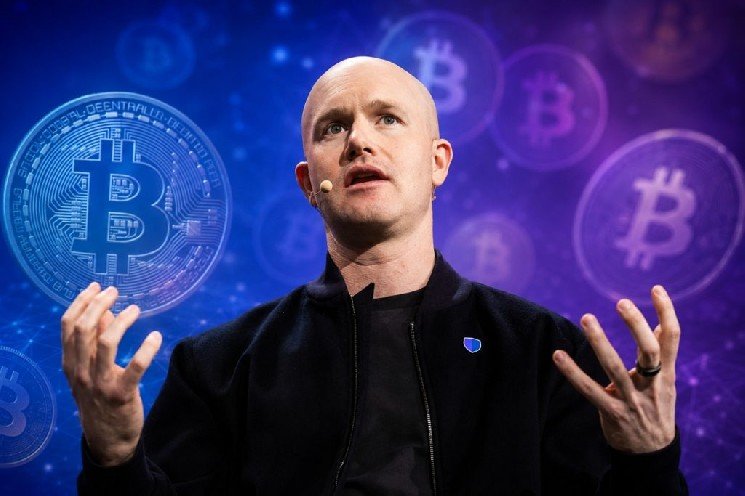
Coinbase CEO Brian Armstrong stated that Bitcoin ($BTC) could experience a strong upward trend in the coming years, adding that reaching the $300,000 to $400,000 range by 2030 is “very likely.”
Appearing on the Varney & Co. program on Fox Business Network, Armstrong shared his long-term expectations regarding the price of Bitcoin, while also drawing attention to recent developments in cryptocurrency regulation in the US.
Armstrong stated, “Looking ahead to the next few years, say by 2030, I think it’s very likely we’ll see Bitcoin at the $300,000 and $400,000 levels. We’ll see how it progresses after that.”
Bitcoin surged sharply, surpassing the $72,000 level, in the period following Armstrong’s statements. $BTC’s gains in the last 24 hours approached 10%, and market activity accelerated with the crypto-friendly statements from Washington.
Armstrong: There’s a Great Sense of Urgency in the Trump Administration
Coinbase CEO stated that he also attended a meeting held by US President Donald Trump at the White House on Wednesday with high-ranking figures from the cryptocurrency and traditional finance sectors.
According to Armstrong, one of the most important items on the meeting’s agenda was the long-debated CLARITY Act.
Armstrong said the following regarding the matter:
“Just yesterday, the chairman had a meeting with top regulators from the SEC and the CFTC. This was the main topic of discussion. There was a strong sense of urgency within this administration: to complete and enact CLARITY.”
Following the meeting, Trump also called on Congress to move forward with the Clarity Act, describing the legislation as a “very, very powerful” piece of law.
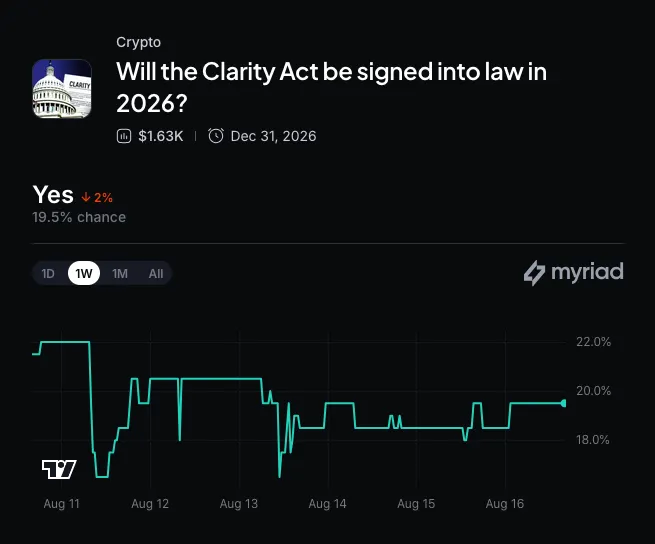
The bill, which was previously expected to be voted on in August, is now expected to be put to a vote in September following the delay.
The long-awaited CLARITY Act aims to create a comprehensive regulatory framework in the US that determines under what conditions digital assets are classified as securities, commodities, or stablecoins used for payment purposes.
The cryptocurrency sector has argued for years that the legal status of digital assets in the US needs to be more clearly defined. If the bill becomes law, it is expected that the jurisdiction of regulatory bodies such as the SEC and CFTC in the crypto market will also become clearer.
However, the CLARITY Act struggled to progress throughout much of 2026 due to ongoing debates between the banking sector and crypto companies regarding stablecoin yields.
Some banks have warned that crypto companies offering high returns to stablecoin holders could lead to a shift of deposits from traditional banks to crypto platforms.
Armstrong, however, said that not the entire banking sector was opposed to the bill.
The Coinbase CEO said, “There are actually many banks that have stated their support for the CLARITY Act. Most banks acknowledge that it gives them new powers and allows them to grow their businesses thanks to this new technology. That’s great. However, I can say that there are still a few banks that oppose it.”
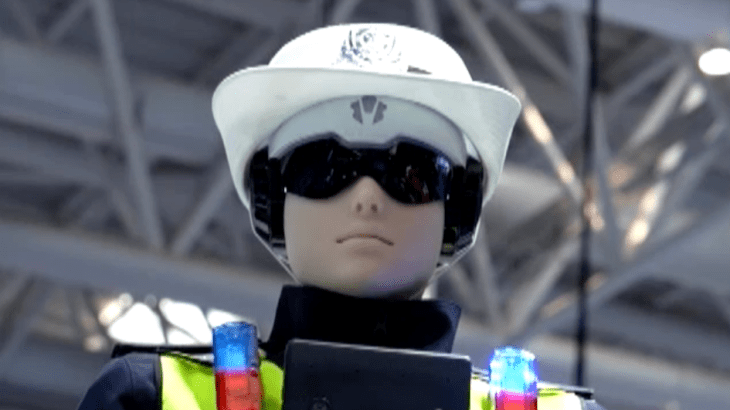
Humanoid robots are at the forefront of China’s race for technological supremacy at Beijing’s World Robot Conference. Al Jazeera’s Katrina Yu reports on how Chinese firms are racing US rivals as Beijing bets on humanoid robots to boost productivity.
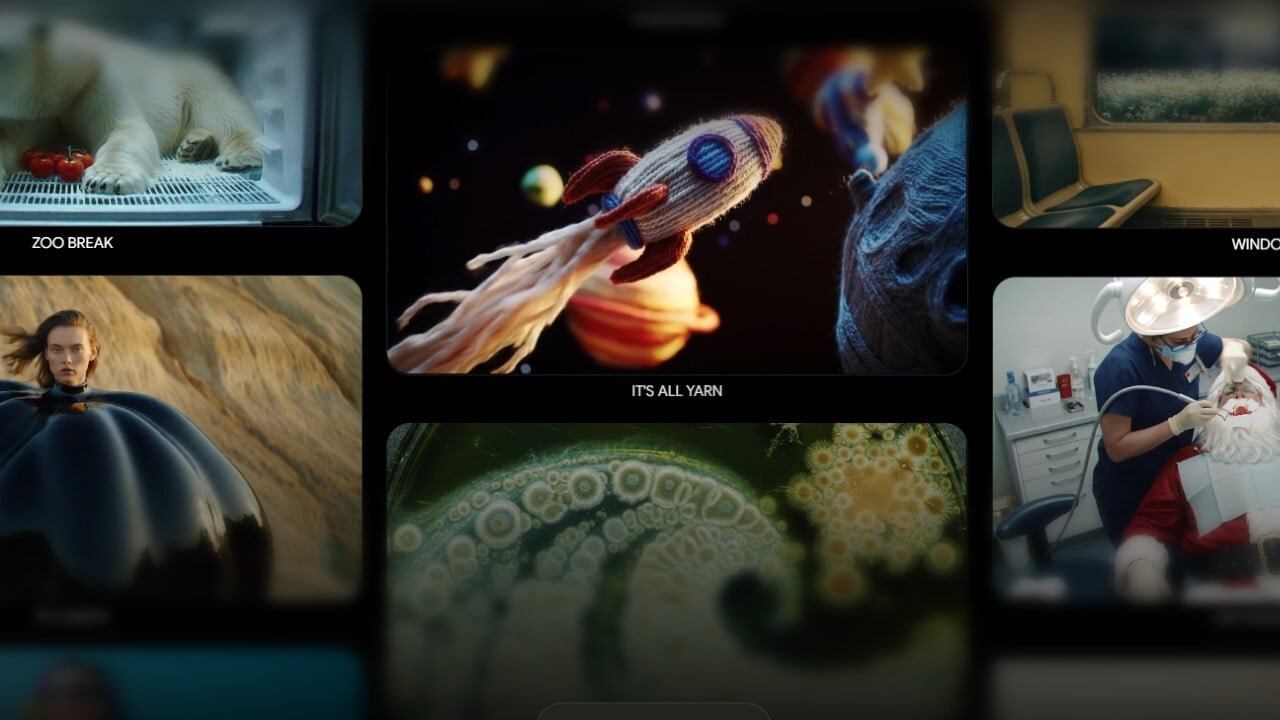
As a one-time aspiring filmmaker, I still like to play around with video editing software. Curious about what AI video generators can do for my movie-making experimentation, I gave Google Flow a try. But can it really replace traditional filmmaking? I had to test it out.
I learned that Flow can generate videos using text prompts or uploaded images. You describe every detail about the scene, camera movements, and angles, then add sound effects, background noise, and even speech. Google’s tool then creates a video with multiple clips; select the one you like, then build, extend, and fine-tune it from there. Here’s how my experiment went, and how you can create movie magic with Flow.
What You Need to Use Flow
You can use Google Flow with either a free account or one of the paid AI subscription plans. To provide access to Flow, Google doles out a certain number of credits per day or per month:
Free accounts: 50 credits per day (credits refresh daily, so you don’t have more than 50 credits to use at any one time)
Google AI Plus: 200 credits each month.
Google AI Pro: 1,000 credits each month.
Google AI Ultra ($100): 10,000 credits each month.
Google AI Ultra ($200): 25,000 credits each month.
The number of credits you chew up depends on the model you select and the duration of your videos. For the model, you can choose among Omni Flash, Veo 3.1 Quality, Veo 3.1 Lite, and Veo 3.1 Fast. The Omni Flash and Veo 3.1 Quality models generate higher-quality videos but take longer to run and use up more credits. The Veo Lite and Fast models are of lower quality but don’t take as long and use fewer credits. The credit allocation per model and duration works as follows:
Gemini Omni Flash: 15 credits for 4 seconds, 20 credits for 6 seconds, 25 credits for 8 seconds, 30 credits for 10 seconds. 40 credits to edit an uploaded video of any length.
Veo 3.1 Quality: 100 credits for 8 seconds of video.
Veo 3.1 Lite: 10 credits (5 credits for Ultra subscribers) to create a 4-second, 6-second, or 8-second video.
Veo 3.1 Fast: 20 credits (10 credits for Ultra subscribers) to create a 4-second, 6-second, or 8-second video.
Omni Flash and Veo 3.1 Quality are only available to paid accounts. However, free users can use Omni Flash in YouTube through the YouTube Shorts and YouTube Create app features at no extra cost. Paid subscribers are able to choose among all four models, but should still keep track of how many credits are used for each video. I have an AI Pro subscription, so I can tap into any of the models, though I’m careful not to bump up against my monthly limit of 1,000 credits.
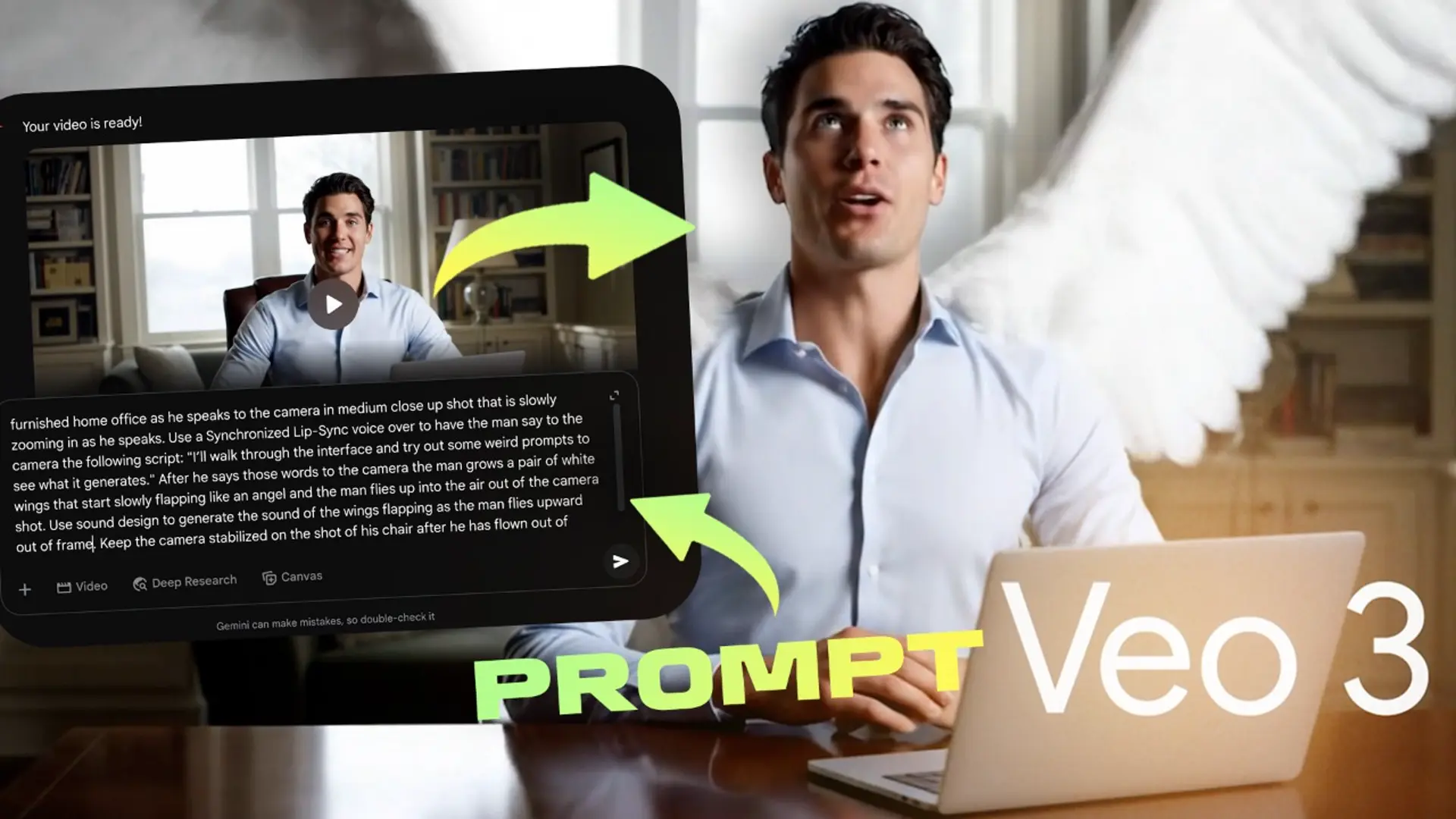
Google’s Veo 3 Helped Me Produce This Video
Set the Model and Number of Videos
You should be able to create your video from any desktop browser. Google recommends you use the Chromium-based Chrome or Edge, but I had no trouble using Firefox. Log in to the Flow website with your Google account, then click New project and select the Settings icon to the right of the prompt.
(Credit: PCMag / Google)
Here, you can change the number of videos generated and which model to use. If credits are at a premium, click 1x to create one video; otherwise, you can go for two. For the model, I typically use Veo Lite or Veo Fast to limit the number of credits used and then turn to a Quality model only for a video I want to publish or share. Certain models also allow you to choose the duration of the video.
(Credit: PCMag / Google)
Create a Video From a Prompt
Since I plan to describe the video using only text, I type what I want at the prompt. I’ll sometimes use an AI chatbot, such as ChatGPT or Gemini, to create a prompt for me based on details that I provide. After adding my description, I click the arrow to submit it. For this one, I submitted the following description:
Create a photorealistic and cinematic video capturing a tense, epic aerial battle high above New York City at midday. The shot is a dynamic tracking medium close-up following a determined female superhero in a sleek, dark blue and silver suit as she dodges an energy blast. Shimmering golden energy crackles around her clenched fists. Her adversary is a massive, insectoid robot with a glinting metallic carapace and multiple glowing red optical sensors, which transforms its limbs into plasma cannons. The bright, high-contrast sunlight casts sharp shadows, emphasizing the action-packed and dangerous confrontation against a backdrop of towering skyscrapers.
(Credit: PCMag / Google)
Flow then creates the number of videos I specified. I can click the video to play it. Hovering over any video displays a small toolbar in the upper right. From there, I can click the three-dot icon to download, rename, share, or delete the video. Click Done, and the video is saved to your library.
(Credit: PCMag / Google)
If you want to add music or dialogue, you’ll need to specify that in the prompt. For the music, I can just write something like “soft jazz music is playing in the background.” For the dialogue, I have to identify which character should be speaking and put the words in quotes. Here, I submitted the following prompt:
“A man and a woman are in a crowded department store. Soft jazz music is playing in the background. The man is kneeling on one knee and holding an engagement ring. He says to the woman: ‘Will you marry me?’ The woman says: ‘Sir, this is a Walmart.’”
(Credit: PCMag / Google)
Create a Video From an Image
You can also use still images to create your video, either by generating them within Flow or uploading them. To do this, New Project from the main screen, pick your model, then click the plus icon. At the media window, I clicked Upload media and picked the photo I wanted to use to create the video.
(Credit: PCMag / Google)
In this case, I chose a photo of me sitting in the captain’s chair of the Enterprise at a Star Trek set recreation. Since Flow is relying heavily on the still image, I can keep the description brief and simple. I submitted the description as follows:
A medium shot of a confident and determined male captain in his late 30s, sitting in the iconic command chair on the bridge of the Federation starship USS Enterprise. He is wearing a classic gold Star Trek captain’s uniform from the Original Series era, reminiscent of the one worn by Captain Kirk. The camera slowly pushes in on the captain’s face, capturing his focused gaze.
Based on the image and my description, Gemini created the video, which I could then play and control.
Recommended by Our Editors
(Credit: PCMag / Google)
Create a Video From a Video
You can also create a new video from a video stored in your Flow library or uploaded from your computer. I added my video by clicking the plus sign at the prompt, selecting Upload media, and then choosing the video from my PC. I next clicked on the plus sign again, selected the video, and clicked Add to prompt.
Here, I used a video of a large animated dinosaur model I had shot at a London museum. I kept the prompt simple and told Flow to create a video of a dinosaur wearing a Santa hat running rampant down a London street. In response, the AI generated a video using the dinosaur from the photo, but then expanded it to a London Street scene with Big Ben in the background.
(Credit: PCMag / Google)
Create a Character
You can also generate your own character to use in your videos. To do this, I selected Characters at the main screen. I was then able to choose one of the default characters, upload an image of a person or animal, or describe the character through text. I opted to upload an image of a goat. I was then asked to choose a name and voice for the character and describe how the character acts.
(Credit: PCMag / Google)
When I was finished creating my character, I started a new prompt, clicked the plus icon, and then chose the character from the media window. I then described the video I wanted with the description: “Professor Goat is lecturing in front of a classroom of students and is drawing a mathematical equation on a blackboard.” In response, it created a clever video with a goat man teaching math before a class of students.
(Credit: PCMag / Google)
Can Google Be Your Cinematographer?
While the videos all looked great, very cinematic, and stylish, AI is still imperfect and glitches do pop up. In my experience, Flow didn’t always follow every detail in the prompt. As one example, the mouths of characters sometimes didn’t move when speaking. With time and tweaking, I could probably fix those errors. Still, as a first attempt in each case, Flow turned out to be a fairly adept filmmaker.
About Our Expert
Lance Whitney
Contributor
Experience
I’ve been working for PCMag since early 2016 writing tutorials, how-to pieces, and other articles on consumer technology. Beyond PCMag, I’ve written news stories and tutorials for a variety of other websites and publications, including CNET, ZDNet, TechRepublic, Macworld, PC World, Time, US News & World Report, and AARP Magazine. I spent seven years writing breaking news for CNET as one of the site’s East Coast reporters. I’ve also written two books for Wiley & Sons—Windows 8: Five Minutes at a Time and Teach Yourself Visually LinkedIn.
I’ve used Windows, Office, and other Microsoft products for years so I’m well versed in that world. I also know the Mac quite well. I’m always working with iOS, iPadOS, watchOS, and Android on my various mobile devices. And these days, I write a lot about AI, so that’s become another key area for me.
My wife always jokes about all the tech products we have around the house, but I manage to put them to good use for my articles. I like Lenovo computers, so I own a couple of Lenovo desktops and several laptops. I have three MacBooks and a Mac mini. For my mobile life and work, I use an iPhone 16 Pro, iPad Pro, and iPad mini as well as an Apple Watch. But since I write about Android, I own several Android phones and tablets. Like any tech person, I have a cabinet full of cables, wires, and assorted mysterious gadgets. And when it’s time to take a break from writing, I have an old Xbox 360 and Nintendo Wii, both of which I use for exercise and fitness games.