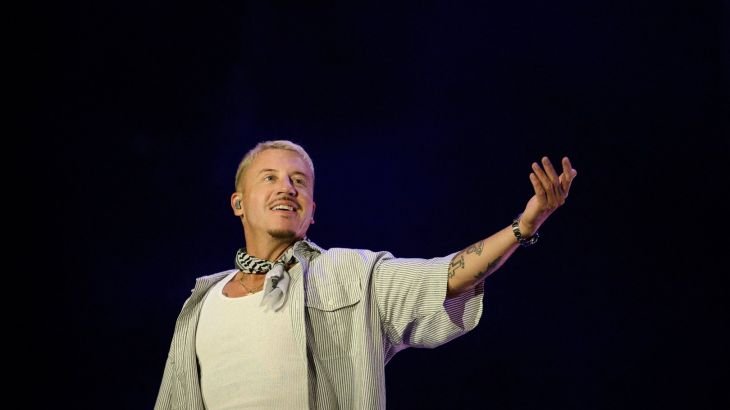
US rapper Macklemore is facing backlash from pro-Israel groups after saying ‘Free Palestine’ while opening for Ed Sheeran at a concert in New Jersey. The Israeli-American Council is petitioning for him to be dropped from the rest of the tour.
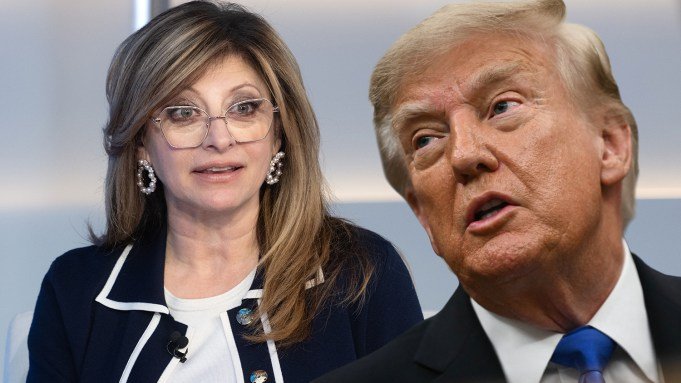
The assertions come Friday despite Bartiromo’s Hollywood attorney Bryan Freedman insisting the veteran Wall Street anchor is still “an employee” of Fox and threatening legal action. Adding to the burgeoning media mess surrounding the so-called “Money Honey,” Donald Trump had thrown serious shade on Fox for taking good pal Bartiromo off the air.
That shade could set the stage for yet another showdown between Trump and his once favorite media buddies at the Murdoch-ruled Fox.
“I can’t believe Maria Bartiromo is no longer going to have her great show(s) on FoxNews/Business,” Trump, a frequent Bartiromo guest, posted Thursday night, about 12 hours after Fox announced “effective today” that the Mornings With Maria host was out. “Three different shows, always number one. Maria is a total professional, and a true warrior. Her fans, of which there are many, will not be happy. God bless you, Maria!”
Bartiromo hadn’t been on the air for almost a month, with Deadline confirming that Fox brass had enough of the MAGA-friendly Bartiromo after they learned she passed corporate-guidance missives to the White House in recent months. However, carving her own way at Fox Business and Fox News for more than a decade, those communications were just the latest minefield that Fox execs feared could blow up in everyone’s faces.
“Her indiscretion was just the latest in a series of self-inflicted wounds,” a cable news insider says of Bartiromo and her close ties with Trump. “This has been a concern for a while, Maria being too cozy with the White House. She crossed a line, and she’s suffered the consequences.”
Weary of addressing allegations of similar conduct over the years by Sean Hannity and other Fox hosts, or Bartiromo’s contract specifics, the source added: “She’s no longer with Fox. Take that for what it is.”
Deadline hears that while there may be “technical truth” to Freedman’s remarks today that Bartiromo still works at Fox because of contracts and other paperwork, she is not returning to her Fox Business or Fox News roles — full stop.
Long a passionate defender of POTUS and offering him a platform over the years, Bartiromo’s apparent sharing of internal edicts with Trump administration officials, first reported by Status, made her pink-slipping inevitable.
Digging a little deeper and a few years back, the seeds of Bartiromo’s downfall were evident if you connect the red string.
In April 2023, Fox agreed to pay $787 million to settle a lawsuit filed by Dominion Voting Systems, one of the technology firms singled out in Fox’s coverage of the 2020 election results. Citied in volumes of court filings and the high-stakes trial that had just begun when Fox settled, Bartiromo was one of the main hosts on Fox promoting the false claims of irregularities with the election Trump lost and Joe Biden won. At the time, the top-rated Tucker Carlson was pulled off the air at Fox in a move that resulted in a Freedman-handled legal dust-up between Carlson and the media company.
No word from ex-Apprentice host Trump if Bartiromo is in the running to be the new White House Press Secretary, but sharp-elbowed lawyer Freedman says his client actually isn’t looking for a new job because she still has her old one.
“For many years, Maria Bartiromo hosted three number one rated television shows on Fox channels,” Freedman said Friday, as my colleague Dade Hayes noted earlier. “She has been, without question, one of the hardest working journalists throughout her award winning career.”
The lawyer for the likes of Carlson and Megyn Kelly, as well as Don Lemon, then unsheathed the knife that may lead to a bloody affair down the line.
“The irresponsible reports that have been published stating that Maria Bartiromo was fired or is no longer an employee of Fox are absolutely and unequivocally false,” Freedman said. “Make no mistake, we have the receipts and witnesses and they will come out whether through the courthouse or otherwise. Those reporting her firing or the incredulous facts supporting that fiction have exhibited a complete and utter reckless disregard for the truth.”
When Deadline asked Fox for a response to Freedman’s statement about his client’s employment situation, the company said: “the release speaks for itself.” The White House did not respond to Deadline’s request for comment.
A U.S. military dog named Valor was honored at the Pentagon for surviving a suicide bombing and saving 47 soldiers in 2023.
Rating:
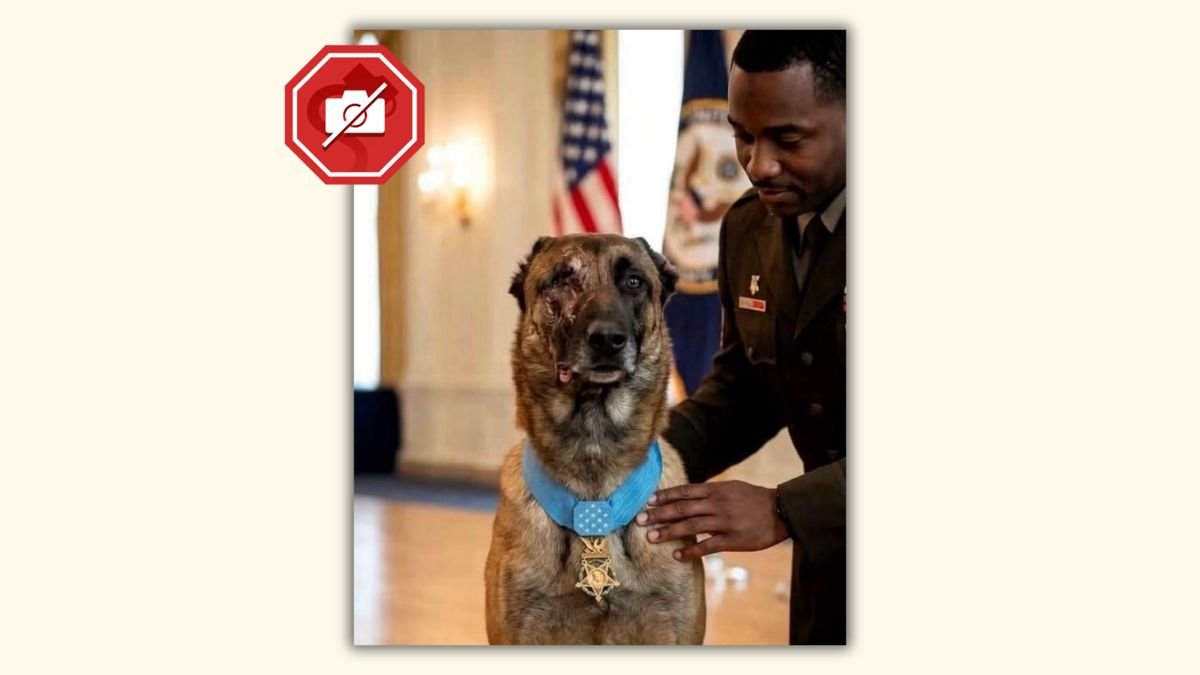
In 2026, people online repeatedly shared a tale framed as a true story about a heroic dog receiving an award for its military service at the Pentagon. For example, one Facebook post (archived) included an image depicting a dog with the right side of its face scarred — apparently K9 Valor — receiving the Congressional Medal of Honor.
The text of the post read:
This is K9 Valor. He saved 47 soldiers. He survived a suicide bomber, then went on to stop three more, fighting tooth against knife. In the end, he placed himself between an explosion and his handler.
The blast shattered half his face. He lost his left eye and ear. He was flown to Germany, where surgeons worked to rebuild his jaw.
At the Pentagon, he was honored with a standing ovation that lasted over eight minutes.
A version of the story shared on LinkedIn (archived) went into more detail than the others. That post described the dog, K9 Valor, being wounded by a suicide bomber at Kabul International Airport on Aug. 26, 2021. Even after being injured, Valor supposedly warned soldiers of a second bomb just in time for them to avoid the blast, and then charged and kill three insurgents trying to shoot wounded survivors. According to the post, Valor became the first dog to receive the Congressional Medal of Honor in May 2023.
This story, however, was fabricated out of whole cloth. There is no evidence of a K9 Valor present at the Kabul Airport suicide bombing or of a dog being awarded the Congressional Medal of Honor. Therefore, we’ve rated this claim as false.
Since even the less detailed versions of the claim shared an image of a dog receiving the Congressional Medal of Honor, Snopes first searched if a “Valor” or any other dog has received the medal. The Congressional Medal of Honor can be identified by its light blue ribbon with 13 stars and the unique design of the medal itself.
A blog post from the Congressional Medal of Honor Society said it welcomed just two new members to its ranks in 2023. Neither received the award in May and both were humans.
The organization Animals in War and Peace awards service animals medals for their duty, often in war. While many of its recipients are Belgian Malinois dogs like Valor apparently is, none of the organization’s award recipients have stories about suffering wounds from one bombing and immediately saving soldiers from a second. Its award ceremonies typically occur in March, not May, and at the U.S. Capitol, not the Pentagon.
Immediately after the suicide bombing at Kabul International Airport, U.S. officials reportedly believed a second bombing occurred nearby. The U.S. Department of Defense clarified the following day that it no longer believed there was a second explosion, and instead the attack was carried out by a single suicide bomber.
That would mean the events as described in the LinkedIn post couldn’t have happened, since there was no second bomb from which to save 47 soldiers.
Snopes has sent U.S. Central Command an email asking whether any dog with a similar story to the one here was present at the 2021 Kabul bombing. We will update this story if and when we receive a reply.
Images show signs of AI generation
The images shared with the posts showed signs of being generated or edited using artificial intelligence tools.
Some readers may have already noticed one piece of evidence: Even though the posts say Valor lost his left eye, the dog in the image used in the Facebook post above appears to be missing its right eye.
In another version of that same image, an insignia that doesn’t match any used in the U.S. military is visible on the arm of the service member’s jacket. His insignia shows four evenly spaced chevrons pointing up, but across the U.S. military the fourth line in insignias are separated from the others by a space and curve downward.
A Google SynthID check, a tool that checks for hidden watermarks Google AI adds to images and video, found that all or part of that image was edited or generated by Google AI.
Additionally, various posts used AI-generated images of different dogs that are supposedly K9 Valor. For example, the more detailed story from the LinkedIn post included an image of a different dog with both ears still present, despite Valor allegedly having lost his left ear. Again, a Google SynthID check found that the image was edited or generated by Google AI.
Snopes previously reported on this claim in June and July 2026. We’re reporting on it again due to continued interest in the claim.
Privacy-focused cryptocurrencies have outpaced the broader crypto market recovery, rising 213% since October 2025. According to data shared by on-chain analytics company Glassnode, privacy coins have been one of the strongest performing sectors in the market recently.
Bitcoin (BTC) is still 36% below its peak reached during the same period. The median performance of assets among the top 200 cryptocurrencies by market capitalization is also 58% behind its October 2025 high. In contrast, privacy coins have seen a 213% increase during this period.
The data shows that privacy-focused projects are distinctly diverging from other major sectors of the crypto market. Decentralized finance (DeFi), Layer 1, AI, real-world assets (RWA), memecoins, and Layer 2 categories have all yet to reclaim their peaks from October 2025.
The rise in privacy coins wasn’t limited to long-term performance alone. According to Glassnode data, the sector also gained 90% in value over the last 30 days, making it the highest-performing category in the crypto market.
This performance indicates a growing interest among investors in blockchain projects that provide transaction privacy and financial confidentiality. Privacy coins utilize technologies aimed at enabling user transactions to be conducted with a higher level of privacy.
However, the rapid rise of the sector also brings with it the risk of high volatility. The significant gains made by privacy-focused assets in a short period of time mean that price movements may be more erratic compared to other crypto sectors.
Glassnode’s data reveals that privacy coins are clearly diverging from other major crypto categories in the current market recovery.
APC Studios’boutique distributor About Premium Content (APC) has signed a number of key international broadcast deals ahead of this year’s Unifrance Rendez-Vous in Le Havre on French-language scripted and unscripted series “Blue Gold,” “Seasons” and “An Artful Imbrolio.”
The eight-part crime drama and family saga “Blue Gold” has been licensed to Walter Presents for the U.K. and Ireland, RTP in Portugal and Blue Play in Switzerland, joining U.S. streamer MHz Choice.
Produced by Authentic Prod (“Sam,” “Montmartre”) for France Télévisions the series is written by Marie-Anne Le Pezennec (“Dolmen”) and Ludovix Lacroix and directed by Hippolyte Dard.
Barbara Probst stars in ‘Blue Gold’
Courtesy of About Premium Content
Set in the 1980s in Provence, “Blue Gold” chronicles the saga of three women from three generations, Marie, Alice and Flore, and one decades-old buried secret. When a body is found and murders start piling up, Flore will have to solve the family puzzle by revealing the truth. Barbara Probst, Sylvie Granotier and Déborah Krey star.
The four-part “Seasons,” a French-language drama series produced by Windy Production for Arte, has been picked up by RTP in Portugal and RTBF Auvio for French-speaking Belgium. It previously sold to Radio Canada’s Ici Tou.TV Extra for French-speaking Canada.
‘Seasons’
Courtesy of About Premium Content
Beginning in August 1991 at the seaside resort of Les-Sables-d’Olonne, it follows Camille, 15, as she first meets the two best friends Martin and Alexandre on the beach and crashes into their lives like a comet. Perpetually torn between the two men, Camille will live a crazy love story with them over more than 30 years.
Nicolas Maury (“Call My Agent”) directed, co-wrote and stars in the show, co-written by Hélène Duchateau (“The Forest,” “Unfaithful,” “The Eclipse”). The series’ stellar cast includes Stéphane Caillard (“Flo,” “Marseille”), Lucas Bravo (“Emily in Paris,” “Ticket to Paradise”), Abraham Wapler (“Andor,” “Colours of Time”), Géraldine Pailhas, Martine Chevallie and Marysole Fertard.
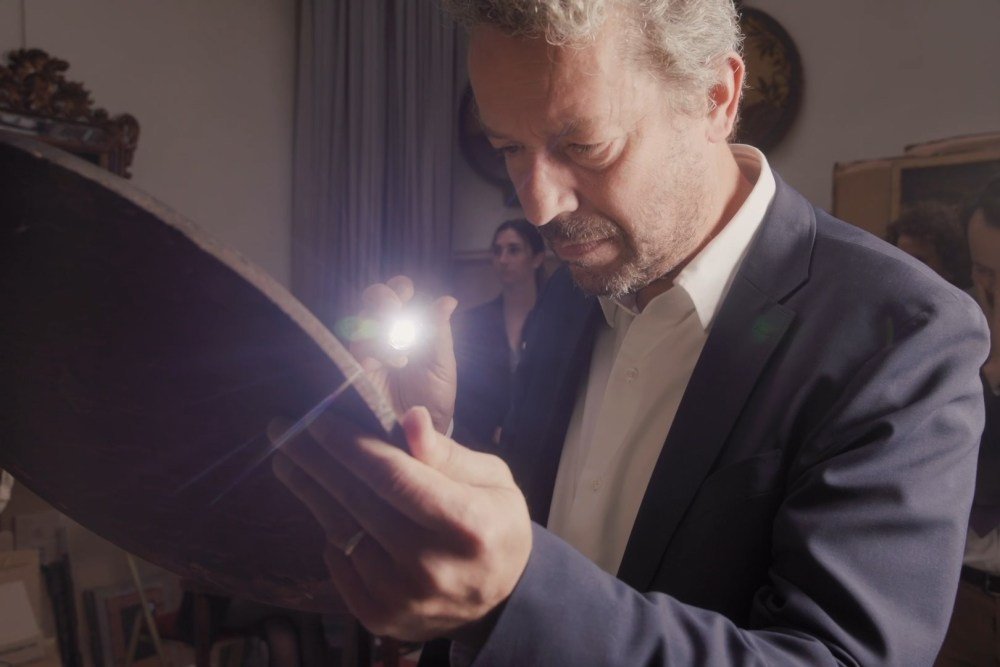
APC Stories’ three-part art investigation documentary “An Artful Imbroglio” went to Filmin in Spain and RTP in Portugal. Produced for Arte, the unscripted series, which is set in Paris, Rome, London and New York, sheds light on one of the art world’s greatest mysteries.
In the spring of 2014, a mysterious, anonymous letter triggered one of the biggest scandals in the art world: the alleged trafficking of fake old master paintings on an unprecedented scale. At the heart of this imbroglio unfolds a gallery of colorful characters, all revolving around an ultra-charismatic art dealer.
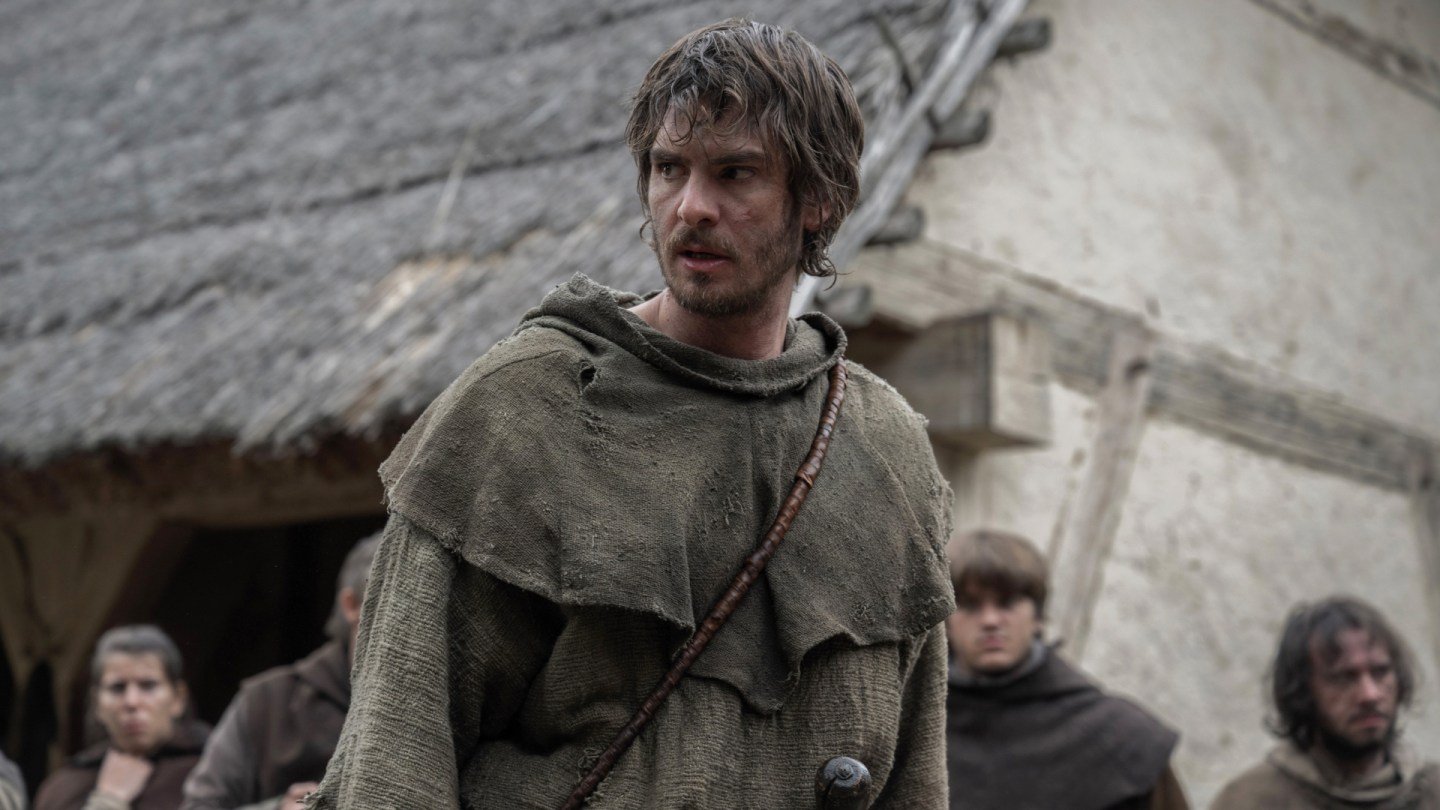
Andrew Garfield‘s character may be rebelling against a king in The Uprising, but he says billionaires are the ones who should also be “scared shitless” by the film.
During a recent Q&A, alongside director Paul Greengrass, Garfield explained why he hopes the film serves as a warning to the world’s richest. The Uprising, based on the uprising that inspired the legend of Robin Hood, sees Garfield’s character Ploughman form an army against the tyranny of King Richard II in a fight for justice.
“First, I hope they come and see it, for first thing,” the Artificial actor said when asked what he hopes audiences take away from the movie. “But secondly, I hope it’s galvanizing. I hope there’s some awakening that people feel, that they feel that their own, that we all feel like our own struggles are being reflected in the struggles of these characters from a distant time and place, and that it could be directive. And I hope that if any billionaires watch it, they’re scared shitless.”
The moderator later quoted one line from the film: “There will be no peace until we are healed.” In response, Greengrass noted the phrase is “true of today as it [was] 600 years ago, for sure.”
Garfield chimed in, adding, “I’m going to include the billionaires in that as well, because they’re the ones that might be the most soul sick. They’re the ones that might need the healing the most in a way.”
Though The Uprising is set in 14th-century England, the film’s themes about the abuse of power and dehumanization of the underclass seemed to resonate with Garfield.
“The truth of that period of time,” the two-time Oscar nominee told Esquire last month, “was that there were brutal conditions for working-class people, brutal taxation post-plague, incompetence in government, abusive practices, with the underclass being seen as sub-human creatures from the perspective of those in power.”
When asked whether those conditions could pertain to today’s world, Garfield said, “Yeah, here and in the United States, and all around the world.”
“One of the things that’s cool about this film is that it’s a bit of a Rorschach Test,” he continued. “A lot of differently politically aligned people will go, ‘Oh, it’s me!’ We get into really dicey territory — and to not see the [British far-right activist] Tommy Robinson stuff as anything but despicable is just ignorant — but I’m sure a bunch of people will look at this film and go, ‘England first! What about us?’ It’ll be very interesting in that regard.”
He later added, “What was inspiring and exciting in the making of [the film] was this possibility of justice, this possibility of healing.”
Indian filmmaker Anuparna Roy has been carrying Ameena’s story since childhood.
Ameena was a bonded laborer in Roy’s hometown, and something she once said about her marriage stayed with the director long after she grew up and moved away. That memory became the seed for “Lovers in the Blue Night,” which premieres in the Horizons competition at the Venice Film Festival a year after Roy’s debut feature, “Songs of Forgotten Trees,” made her the first Indian filmmaker to win the section’s best director prize.
International sales on the new film are being handled by Parallax.
Roy says “Songs of Forgotten Trees” was a personal story made under difficult funding conditions, built around two women who barely leave a single house. “Lovers in the Blue Night” widens that frame to four migrants moving through Mumbai; she also describes the production itself as far more professional this time, with deadlines and limitations she is still learning to work inside.
Asked whether she expected the new film to move into Venice’s main competition rather in Horizons, Roy says she dreamed of it rather than expected it, and that landing in the section again is no disappointment. She still considers herself a new director learning her craft alongside filmmakers she admires.
Ameena’s arc did not stay fixed to the facts that Roy remembered. She says her early instinct was rebellious, imagining the character finding real love and leaving her marriage behind. But that path stopped looking like simple freedom as the script developed. “That is also another loop — another loop of patriarchy,” Roy says, describing what looks from the outside like an escape into a happy ending.
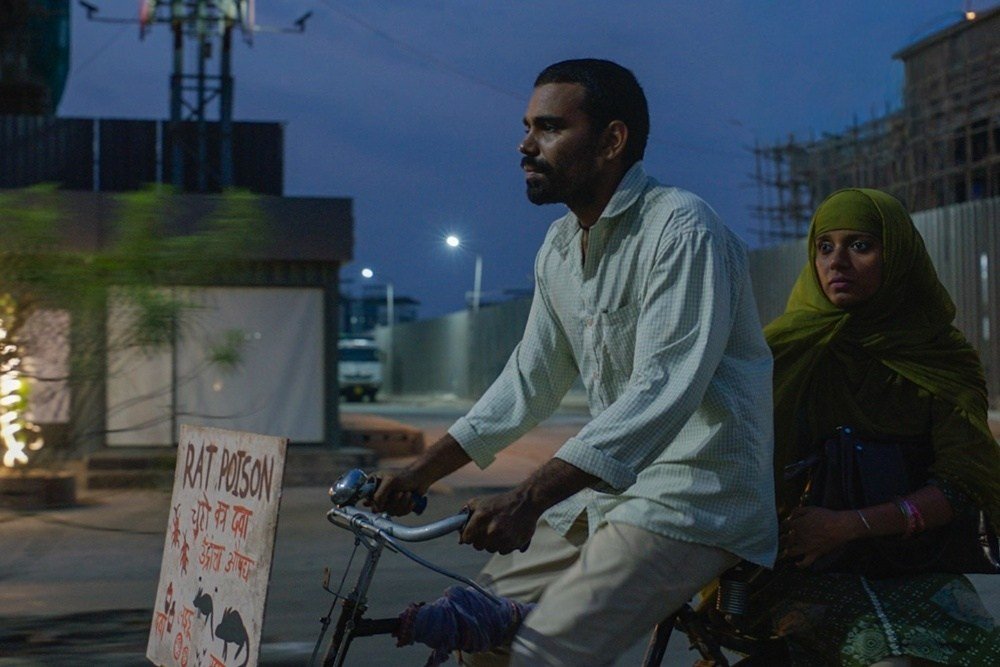
That refusal to let escape read as simple freedom extends to how Roy treats her characters’ circumstances more broadly. She wanted the migrants’ hardship to shape them without defining them entirely, resisting the idea that displacement should crowd out their ordinary desires for intimacy, jealousy or tenderness. Karim, a closeted gay man married to Ameena, and his lover Sukka, a man trying to break free of caste, sit at the center of that approach. Roy says she wanted a neutral, empathetic language for both men rather than exaggerating poverty or turning their struggle into ideology.
Roy frames love itself as a form of resistance for characters, who are punished for wanting things. “When you are lonely or displaced, even a small gesture of intimacy can begin to feel enormous,” she says, describing what she calls the illusion of love: a space where affection, longing, isolation, need and fantasy start to blur together, so that people fall for the possibility of a person as much as the person themselves.
One choice stands out. Karim produces rat poison and kills rats in wealthy Mumbai housing societies, a job Roy based on someone she saw doing the same work in the city’s Andheri East suburb. She calls the image of him coming home from that job to kiss another man “no less than revolutionary,” and says placing the two things side by side felt deeply political to her.
Displacement links this film to Roy’s debut. Both stories draw on floods Roy experienced growing up in a coastal region near the Bangladesh border, close to the Bay of Bengal, and both send their characters into exile from a destroyed home. Where her first film explored two women, this one turns to two men and the duality of bisexuality.
Upcoming stories include “In the Shadow in the Light,” a romantic feature about a dysfunctional marriage modeled partly on her parents, and an untitled project about a woman’s sexual transit.
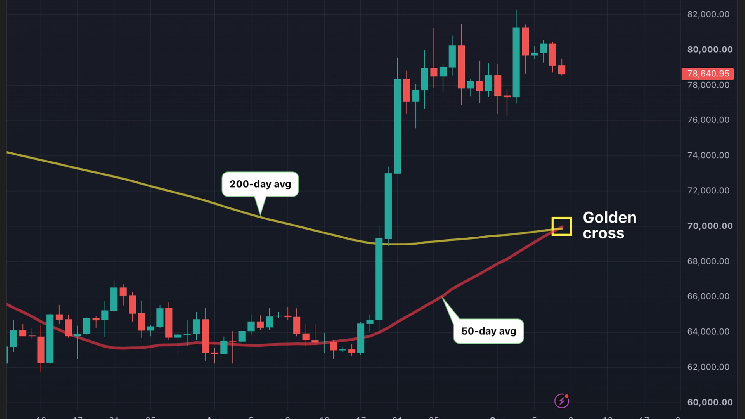
Bitcoin’s BTC$78,564.82 golden cross is live, confirming a widely-tracked bullish signal on the price chart. However, its record as a standalone indicator is mixed.
A golden cross occurs when an assets average price over 50 days, the so-called 50-day simple moving average, moves above its 200-day average. The crossover shows that short‑term momentum is finally overtaking the long‑term trend, setting the stage for a potential sustained rally.
This signal has previously triggered 12 times in bitcoin’s history, yielding a mixed long-term track record, as CoinDesk discussed in detail last week.
Only three out of the 12 historical crosses remained valid for a full year, generating a massive average return of 250% over those 12 months. Across the remaining nine measurable instances where three-month data was available, the signal produced a far more modest three-month average gain of 24.9%.
The latest golden cross, therefore, is far from a guarantee of long-term bullishness, as historical data shows the signal has triggered premature bull traps three times as often as it has sustained multi-year rallies.
As of this writing, bitcoin changed hands at $78,650, down 0.6% since midnight UTC, according to CoinDesk data.
Bitcoin’s golden cross history. (TradingView, CoinDesk)