Blog

  • ‘No Paradise If You Are Killed by a Woman’ Review: Iraq’s Oscar Submission Offers a Patriotic Anthem to the Kurdish Peshmerga’s Fight Against Islamic State

    ‘No Paradise If You Are Killed by a Woman’ Review: Iraq’s Oscar Submission Offers a Patriotic Anthem to the Kurdish Peshmerga’s Fight Against Islamic State

    The trope of the lone action hero with near-superhuman strength gets a gender switch in “No Paradise If You Are Killed By A Woman,” a visually impressive drama about a resourceful female Peshmerga sniper. Although selected as Iraq’s submission for the Best International Feature Oscar, the third fiction feature from Norwegian-Kurdish helmer Halkawt Mustafa (“Red Heart,” “El Clásico”) may fall between two stools for Western viewers: There’s not enough action for genre fans and the narrative’s blend of melodrama and earnestness may turn off highbrow arthouse viewers. But it’s a different story in MENA territories where Sony/Empire has already nabbed distribution rights. Regional and Kurdish diaspora audiences should appreciate the strong visual and technical craftmanship used in this harrowing tale.

    The narrative centers on Vyan (striking London-based Kurdish thesp Avan Jamal, impressive), a 24-year-old Kurdish émigré to Norway who is visiting Iraqi Kurdistan with her parents and younger sister Helin in 2014, when Islamic State (IS) launches an attack. Their parents are murdered and Vyan and Helin are sold as IS sex slaves. Ever resilient, Vyan manages to kill the man who bought her and make her way to Peshmerga territory. There, she joins an elite unit of female fighters as a sniper.

    As Vyan’s poetic voiceover narration states, Peshmerga means “before death” and its fighters enter combat out of strength, not out of fear. Certainly, Vyan is fearless. She reckons that she has killed more than 100 of the enemy in three years. Given that, as the title notes, IS fighters believe that there is “No Paradise If You Are Killed by A Woman,” it’s no wonder they have placed a million-dollar bounty on her head.

    After heroically preventing an IS suicide truck bomber in an armored vehicle from attacking her unit’s base, the heavily wounded Vyan returns to Norway to recover. There, a government official (Thorbjørn Harr) offers her a difficult choice: accept a new identity and government protection (they fear the fact that she is an IS target could endanger other Norwegian citizens) or be prosecuted for fighting for another country. Luckily, Norwegian civilians don’t have to worry. A phone call to the family’s old landline confirms that Helin remains trapped in Mosul, in the clutches of an IS fighter known as the Swedish sniper. Loyal Vyan prepares for what may be her final mission: to singlehandedly rescue her sister.

    The last half of the film feels as if it could easily be adapted into a tense video game as it follows Vyan silently creeping through tunnels and crawling through the aftermath of IS carnage. It certainly gives a more detailed picture of how a sniper operates, and the lonely patience required for the job, than Clint Eastwood’s “American Sniper” ever did. Vyan uses logic and the help of friendly Kurdish commander from the Iraqi government forces in Mosul to locate the IS snipers preventing civilians from leaving the devastated city.

    Research for multi-hyphenate Mustafa’s 2015 TV project “The Women ISIS Fears” and his time as a war photographer seeing strong female fighters inspired “No Paradise,” which he dedicates to his daughters. Like the helmer’s previous features, it proudly incorporates Kurdish customs and traditions, from the “singing” that Vyan’s rifle performs to the traditional tunes sung by her Peshmerga captain and the Kurdish commander in Mosul.

    Highlights of a polished technical package include the prowling camerawork of Norwegian DP John Erling H. Fredriksen and the film’s use of actual Mosul locations. The shocking ruins of what was once a thriving population center attest to a brutal military campaign to liberate the ancient city from IS. Also worthy of special mention in a film where the main character spends much of her time in silence is the tension-building sound design by Mattias Eklund and Jan Kasskawo.

  • Mexican National Admits to Laundering $4,000,000 Worth of US Drug Trafficking Proceeds via Crypto

    Mexican National Admits to Laundering $4,000,000 Worth of US Drug Trafficking Proceeds via Crypto

    A Mexican national could spend up to two decades in prison after pleading guilty to laundering $4 million worth of drug trafficking proceeds via crypto.

    The U.S. Department of Justice (DOJ) says Carlos Erick Vazquez Gonzalez, 48, earned $40,000 by working with various “money brokers” who had him collect drug profits earned in cities throughout the country.

    Gonzalez ended up securing $4 million worth of the drug profits in a crypto wallet. He quickly moved the digital assets to obscure their origins, then sold the crypto for US dollars in Mexico.

    The DOJ says Gonzalez then returned the cash to a “money broker” who arranged the pickup of drug proceeds in the US.

    The Mexican national’s sentencing is scheduled for December 17th. He faces a maximum penalty of 20 years in prison.

    US regulators also claim Mexican drug cartels employ crypto for multiple purposes beyond money laundering. In 2024, the Financial Crimes Enforcement Network (FinCEN) said Mexican drug traffickers were using digital assets to purchase fentanyl precursor chemicals, pill presses, die molds and other manufacturing equipment from Chinese companies.

    The cartels reportedly rely on Bitcoin (BTC), Ethereum (ETH), the top stablecoin USDT and the privacy coin Monero (XMR), among other crypto assets.

    FinCEN is an agency at the U.S. Department of the Treasury that polices money laundering and terrorism financing.

  • Macklemore Says His Call to ‘Free Palestine’ Is Not a ‘Criticism’ of Jewish People: ‘None of Us Will Be Free Until We Are All Free’

    Macklemore Says His Call to ‘Free Palestine’ Is Not a ‘Criticism’ of Jewish People: ‘None of Us Will Be Free Until We Are All Free’

    Macklemore is speaking out about his call to “Free Palestine,” which the rapper made while opening for Ed Sheeran on Friday night at New Jersey’s MetLife Stadium.

    “To all of my Jewish brothers and sisters: criticism of Israel, criticism of apartheid, being against genocide in no way is a criticism of you,” Macklemore said on Saturday night (via Newsweek). “My message is for peace; love for all human beings to be treated with dignity, respect, and equality.”

    He added, “So I say free Palestine, I say free Lebanon, I say free Cuba, I say free Congo, free Sudan, I say free all people in America living in fear of this terrorist organization, ICE. None of us will be free until we are all free.”

    During his Friday night set, Macklemore told the audience that he wanted the people in Gaza and the West Bank to know that he had not forgotten them: “I believe that every human being walking on this earth deserves exactly the same freedom.” The statement caused the Israeli American Council to release a petition that demands that the four-time Grammy winner be removed from the rest of Sheeran’s Loop tour.

    The petition reads, “This was an Ed Sheeran concert – not a political rally, not a protest, and not an activist event. The issue is not whether Macklemore has the right to hold political views. The question is where the line should be drawn when an opening act uses a global concert platform to advance a one-sided political agenda.”

  • Bitcoin daily transactions hit fourth-highest level in history

    Bitcoin daily transactions hit fourth-highest level in history

    Bitcoin has processed 893,391 transactions in one day, its fourth-highest daily total on record and a reading above the 99th percentile of its historical range.

    Bitcoin transaction count enters its historical top four

    Galaxy Research reported the milestone in a Sept. 7 post on X, placing the latest total among the most active days since Bitcoin began operating in 2009.

    “Yesterday was the 4th largest daily transaction count in Bitcoin’s history,” the firm said.

    At 893,391, the count also exceeded 99% of all daily readings recorded by the network, according to Galaxy’s data. The research firm did not identify a single event, application, or group of users responsible for the increase.

    Yesterday was the 4th largest daily transaction count in Bitcoin’s history. The daily transaction count of 893,391 is above the 99th percentile of its historical range. pic.twitter.com/ROm8TYgXwK

    — Galaxy Research (@glxyresearch) September 7, 2026

    YCharts recorded the same total and showed that daily transactions had risen from 723,854, representing an increase of about 23.4% in 24 hours. Compared with 441,035 transactions on the corresponding day a year earlier, activity had climbed by approximately 102.6%.

    The increase extends a recovery that was already visible earlier in 2026. Data based on Blockchair showed that Bitcoin processed 862,979 transactions on June 23, which ranked as the third-highest daily total at the time.

    June’s average reached 651,655 transactions per day, up 90% from the 342,866 average reported for June 2025. Bitcoin’s median daily count had fallen to 417,151 during 2025, an 18% drop from the 508,934 median registered in 2024.

    Earlier Blockchair figures placed April 23, 2024, at 927,010 transactions and Sept. 8, 2024, at 910,083. Galaxy’s updated fourth-place ranking for the 893,391 reading indicates that another session has since entered the top three.

    Small Bitcoin transfers have driven much of the increase

    Research from CryptoQuant has linked much of Bitcoin’s 2026 transaction growth to small transfers rather than a matching rise in the value moved across the network.

    Transfers below 0.01 $BTC accounted for about 80% of Bitcoin transactions in 2026, according to data cited by CoinMarketCap in August. Their share stood near 44% in 2023, meaning low-value transfers have nearly doubled their portion of the network’s daily activity.

    CryptoQuant head of research Julio Moreno said the economic value carried by the transactions remained small compared with their share of the total count. While the data shows that more transfers are reaching the blockchain, it does not establish that a similar increase has occurred in payment value, investment demand, or unique users.

    A July crypto.news examination of transaction-count limitations also found that raw totals can provide an incomplete picture when fees are low. Cheap transactions allow automated systems, applications, or a small number of users to generate substantial activity without moving a comparable amount of capital.

    Bitcoin transactions can also contain several inputs and outputs. A sender may pay more than one recipient in a single transaction, while exchanges and custodians may combine withdrawals through batching. Users can also move funds between addresses under their own control, so a transaction does not necessarily represent a payment between two separate people.

    Lightning Network payments are settled away from Bitcoin’s base layer until participants close or rebalance their channels. As a result, the 893,391 figure covers confirmed on-chain transactions rather than every payment made using Bitcoin-linked infrastructure.

    Network data shows volume and addresses moving differently

    Blockchain.com’s dashboard paired the 893,000 transaction reading with approximately 415,000 active addresses, down 10.7% from the previous period. The difference shows that transaction totals and address activity can move in opposite directions because one address may participate in several transfers.

    Transferred value reached about $3.36 billion, an increase of 33.8%, while total network fees stood near $191,073, down 8.1%, according to the same dashboard. Fee revenue therefore declined even as the number of confirmed transactions increased.

    BitInfoCharts separately showed an average transaction fee near 0.0000024 $BTC, worth about $0.19 at the recorded price, and a median transfer value of roughly $34.69. Its latest 24-hour window did not align exactly with the calendar-day period used by Galaxy, so the readings describe surrounding network conditions rather than the same fixed reporting period.

    The relationship between high transaction volume and modest fees depends partly on the amount of block space consumed by each transfer. A transaction with many inputs can use more data than a simple payment, while exchanges can reduce their footprint by placing several customer withdrawals in one transaction.

    Ordinals previously showed how a new type of activity could change Bitcoin’s transaction profile. During an earlier record in 2023, more than 307,000 Ordinals-related transactions were recorded in one day, according to Dune data cited at the time by Blockworks. Galaxy’s latest post did not attribute the September 2026 increase to Ordinals, Runes or another protocol.

    U.S. investors face different on-chain and ETF exposure

    For American investors, the importance of Bitcoin transaction activity depends on how they hold the asset. Buyers who use self-custody wallets create or receive on-chain transfers, while shareholders in U.S.-listed spot Bitcoin exchange-traded funds trade securities through brokerage accounts.

    An earlier Bitcoin ETF explainer detailed how fund creations and redemptions differ from ordinary exchange purchases. Buying an ETF share does not directly create a Bitcoin transaction for each investor because authorized participants, fund sponsors and custodians handle the product’s underlying settlement process.

    Daily blockchain totals cannot separate ETF-related custody movements from exchange withdrawals, individual payments, mining transfers, or wallet reorganizations. Transaction count also does not show whether a transfer represents buying or selling because the blockchain records movements between addresses rather than the purpose behind them.

    Recent activity among older wallets provides another example of the distinction. A September report on older holdings cited K33 Research data showing that nearly 890,000 $BTC moved during a seven-day period in early August, the highest seven-day active supply reading of 2026. Bitcoin was trading within one of its narrowest 30-day ranges since 2023 at the time, separating the on-chain movement from a major price breakout.

    U.S. tax rules also treat Bitcoin transactions according to their purpose instead of their appearance on the blockchain. The Internal Revenue Service states that moving digital assets between wallets or accounts owned by the same taxpayer is generally not a taxable event, while selling crypto, exchanging it for another asset, or using it to buy goods and services can produce a reportable gain or loss.

    Chainalysis estimated in August that the United States accounted for $112.6 billion of potentially taxable on-chain crypto activity during 2025. Its research placed the worldwide total above $457 billion but estimated that transactions within the reach of international reporting rules represented only 14% of the activity identified.

    Under IRS guidance, taxpayers must retain records showing the asset’s acquisition date, cost basis, disposal date, proceeds, and resulting gain or loss for taxable digital-asset transactions.

  • ‘China’s Nostradamus’ makes 5 grim predictions for 2027

    ‘China’s Nostradamus’ makes 5 grim predictions for 2027

    Chinese Nostradamus - Jiang Xueqin Picture: Youtube/Theo Von
    Jiang Xueqin has issued a bleak set of predictions for America (Picture: Youtube/Theo Von)

    A man known as ‘China’s Nostradamus’ has issued five rather bleak predictions for the United States in 2027, including a compulsory military draft and nationwide unrest. Oh, and a full-on economic collapse.

    Jiang Xueqin believes ‘all the ingredients for a civil war’ could be in place during 2027. However, he has clarified that he’s not predicting two rival armies fighting for control of the country.

    The Chinese-Canadian educator and presenter attracted attention after forecasting Donald Trump’s return to The White House. He made the prediction in May 2024, months before Trump won a second presidential term.

    Xueqin also said there was ‘a very strong likelihood’ the US would go to war with Iran. He claimed there was ‘absolutely no way’ America would win such a conflict.

    Chinese Nostradamus - Jiang Xueqin Picture: Youtube/Predictive History
    Xueqin has made five big predictions about what could happen next year in America (Picture: YouTube/Predictive History)

    His nickname compares him to Nostradamus, the 16th-century French astrologer whose writings have been credited with correctly predicting a number of major world events. Plenty of those supposed prophecies rely on extremely generous interpretation, but Xueqin’s latest claims leave rather less room for ambiguity.

    With 2027 approaching, he has turned his attention to what could happen next. If the man’s right, failing a Dry January by the second weekend may be the least of anyone’s problems…

    ICE will be given more power

    An Immigration and Customs Enforcement (ICE) agent holds a detainee as Danbury Emergency Medical Services (EMS) workers render aid outside a home in Danbury, Connecticut, U.S., August 27, 2026. REUTERS/Vincent Alban
    ICE will be given increased federal powers, according to Xueqin (Picture: REUTERS)

    Xueqin predicts that US Immigration and Customs Enforcement, better known as ICE, will be handed greater power by President Trump over the coming year.

    The federal agency is responsible for enforcing immigration laws and has played a central role in the Trump administration’s crackdown.

    ICE operations and the wider restrictions on immigration have already prompted protests across the country. Xueqin also believes the National Guard could be deployed in all major American cities in preparation for economic turmoil and a military draft.

    ‘Nationwide discontent and riots’

    People hold a banner as they attend the "March on Washington 2026: Defend the Vote" rally and march for voting rights, in Washington D.C., U.S., August 28, 2026. REUTERS/Leah Millis
    Mentions of a ‘civil war’ may sound scary, but the prediction is really for more civil unrest (Picture: REUTERS)

    Xueqin doesn’t claim to be clairvoyant, however. His forecasts are based on his interpretation of political and geopolitical events rather than any professed ability to see the future.

    He believes that ‘all the ingredients for a civil war’ will be in place during 2027.

    However, he isn’t forecasting a conventional conflict between two rival armed forces. Instead, he expects protests, riots and insurgencies to produce a period of ‘low level conflict’.

    He said: ‘I don’t mean actually two militaries fighting each other, but I’m saying like nationwide discontent and riots and protests and insurgencies.’

    The US will start military conscription

    Soldiers marching in line
    America does not currently have an active military draft but it might soon introduce it, according to Xueqin (Picture: Getty Images)

    His third prediction is that America will establish the framework for a national military draft during 2027. Xueqin believes it would be introduced to provide troops for a continuing and escalating conflict with Iran.

    A prediction published on his Predictive History website says: ‘The United States will use ground troops in Iran, requiring a national military draft. Men as young as 18 will be conscripted.’

    Explaining his forecast on the Jack Neal podcast, Xueqin said preparations may already have begun by next year. He said: ‘It is possible they’ve already passed legislation to create the national draft, or it’s possible that certain people have already been drafted.’

    The midterm elections ‘won’t go the way people expect’

    Alamy Live News. 3FDPY6C South Dennis, Massachusetts, USA. 1st Sep, 2026. Voting is underway in the Massachusetts primary election. Registered Republicans or Democrats must vote their partyA?s ballot in the primary. Unenrolled voters can vote in either primary. (Credit Image: ? Sue Dorfman/ZUMA Press Wire) EDITORIAL USAGE ONLY! Not for Commercial USAGE! This is an Alamy Live News image and may not be part of your current Alamy deal . If you are unsure, please contact our sales team to check.
    Americans will vote in the midterm elections in November, but the results could surprise a few people (Picture: Alamy Live News)

    Another of Xueqin’s predictions concerns the US midterm elections in November 2026, which will decide control of Congress. He believes there will be several surprises and that the result ‘will not be the way people expect it to work out’.

    He said: ‘I’m not saying they’ll be canceled, but what I’m saying is that right now, Donald Trump and the Republicans are trying to pass something called the SAVE America Act.’

    The proposed law would require people to provide proof of US citizenship when registering to vote. It would also introduce stricter voter identification and citizenship checks.

    Although Xueqin admitted that he was ‘not sure’ what the election result would be, he suggested it may make little difference to the direction of the country.

    He said: ‘It’s almost insignificant how the midterms turn out because it’s possible the Republicans stay, they maintain the House and the Senate. In which case Donald Trump continues his war.’

    Xueqin also claimed the result ‘won’t change the trajectory of the war’ because that course is ‘already set’.

    The economy will collapse

    Xueqin claims that a prolonged war could cripple the American economy (Picture: Getty Images)

    His final warning for 2027 is that a prolonged conflict with Iran could very well devastate the US economy, with consequences extending far beyond America. He believes committing ground troops for several years would prove particularly damaging.

    Xueqin said: ‘If America goes into Iran with ground troops, if it’s committed for four or five years, if America loses this war, it means the collapse of the American economy.’

    While discussing the conditions he believes could produce widespread civil unrest, he went further by claiming that ‘the global economy should have collapsed’.

    Whether Xueqin’s vision proves prophetic or joins the considerably larger pile of forecasts that never happened will become clearer over the coming year. For now, anyone planning a slightly quieter 2027 may wish to consult a different psychic.

  • Board of Peace touts progress as Palestinians’ situation worsens

    Humanitarian official Athena Rayburn dissects the Israeli tactics making life ‘untenable’ for millions of Palestinians.

    In this episode, Athena Rayburn, the executive director of the Association of International Development Agencies, describes what daily life has become in the occupied West Bank and the Gaza Strip.

    In Gaza, more than two million Palestinians have been corralled into about 104sq km (40sq miles), where Israeli forces consistently bomb them. Basic human requirements like clean water, food, electricity, medicine and durable shelter are hard to come by, with Israel imposing severe restrictions on humanitarian aid and groups. The United States-backed Board of Peace touts progress, but Rayburn tells host Steve Clemons that the situation on the ground has become “untenable and catastrophic”.

  • Crypto Networks Face 51% Attack Risks, Says KuCoin

    Crypto Networks Face 51% Attack Risks, Says KuCoin

    KuCoin recently raised alarms regarding the threat of 51% attacks in blockchain networks. This serious security concern arises when a single miner or mining pool gains control over the majority of a network’s hashrate, risking the integrity of transactions. If successful, such attacks can lead to double-spending and a breakdown of trust within the network. For further details, refer to KuCoin’s tweet.

    The Key Development

    Traders scanning the order books got a surprise when KuCoin highlighted the risks associated with 51% attacks. Such attacks could allow a miner to manipulate transaction history, raising concerns about the reliability of affected networks. The broader crypto market is already exhibiting mixed signals, making this warning particularly timely. Ensuring network resilience against such threats will be crucial for maintaining investor confidence in blockchain technology.

    The Essentials

    • KuCoin’s alert emphasizes the risks of 51% attacks prevalent in blockchain networks. The potential for a single miner to control majority hashrate poses severe security threats. Without proper safeguards, networks are vulnerable to transaction manipulation and double-spending. The tweet signifies the importance of community awareness in safeguarding blockchain integrity. As the crypto landscape evolves, maintaining robust security measures is essential.

    Market Pulse

    The crypto market currently reflects varying momentum, with some assets showing resilience while others struggle. KuCoin’s warning about 51% attacks adds another layer of complexity for traders navigating this landscape. While there are no immediate price changes to report, the implications of such security risks could influence market sentiment in the coming days.

    KuCoin is a prominent cryptocurrency exchange known for its wide range of trading options and services. Given the increasing reliance on blockchain technology, the exchange’s jurisdiction extends to ensuring user security and promoting awareness of potential risks. The emergence of threats like the 51% attack underscores the critical need for vigilance in the crypto space.

    What Comes Next

    What traders should watch next includes the reactions from major mining pools and blockchain networks in response to KuCoin’s warning. Analysts suggest monitoring hashrate distributions across networks to gauge vulnerability levels. If larger mining pools do not adopt protective measures, we may see increased scrutiny from regulators concerned about the integrity of blockchain operations. Overall, heightened awareness could lead to more robust security protocols, which traders will be keen to observe.

    This article is for informational purposes only and should not be considered as financial advice.

  • Maria Bartiromo’s Fox Exit “Self-Inflicted Wound”; Trump Praises “True Warrior” As Legal Threats & Accusations Of Host Sharing Insider Info Fly

    Maria Bartiromo’s Fox Exit “Self-Inflicted Wound”; Trump Praises “True Warrior” As Legal Threats & Accusations Of Host Sharing Insider Info Fly

    EXCLUSIVE: The coup de grâce that caused Fox to announce this week that Maria Bartiromo would “no longer be with” the conservative news outlet was a case of “very bad judgment” and a long time coming, sources say.

    The assertions come Friday despite Bartiromo’s Hollywood attorney Bryan Freedman insisting the veteran Wall Street anchor is still “an employee” of Fox and threatening legal action. Adding to the burgeoning media mess surrounding the so-called “Money Honey,” Donald Trump had thrown serious shade on Fox for taking good pal Bartiromo off the air.

    That shade could set the stage for yet another showdown between Trump and his once favorite media buddies at the Murdoch-ruled Fox.

    “I can’t believe Maria Bartiromo is no longer going to have her great show(s) on FoxNews/Business,” Trump, a frequent Bartiromo guest, posted Thursday night, about 12 hours after Fox announced “effective today” that the Mornings With Maria host was out. “Three different shows, always number one. Maria is a total professional, and a true warrior. Her fans, of which there are many, will not be happy. God bless you, Maria!”

    Bartiromo hadn’t been on the air for almost a month, with Deadline confirming that Fox brass had enough of the MAGA-friendly Bartiromo after they learned she passed corporate-guidance missives to the White House in recent months. However, carving her own way at Fox Business and Fox News for more than a decade, those communications were just the latest minefield that Fox execs feared could blow up in everyone’s faces.

    “Her indiscretion was just the latest in a series of self-inflicted wounds,” a cable news insider says of Bartiromo and her close ties with Trump. “This has been a concern for a while, Maria being too cozy with the White House. She crossed a line, and she’s suffered the consequences.”

    Weary of addressing allegations of similar conduct over the years by Sean Hannity and other Fox hosts, or Bartiromo’s contract specifics, the source added: “She’s no longer with Fox. Take that for what it is.”

    Deadline hears that while there may be “technical truth” to Freedman’s remarks today that Bartiromo still works at Fox because of contracts and other paperwork, she is not returning to her Fox Business or Fox News roles — full stop.

    Long a passionate defender of POTUS and offering him a platform over the years, Bartiromo’s apparent sharing of internal edicts with Trump administration officials, first reported by Status, made her pink-slipping inevitable.

    Digging a little deeper and a few years back, the seeds of Bartiromo’s downfall were evident if you connect the red string.

    In April 2023, Fox agreed to pay $787 million to settle a lawsuit filed by Dominion Voting Systems, one of the technology firms singled out in Fox’s coverage of the 2020 election results. Citied in volumes of court filings and the high-stakes trial that had just begun when Fox settled, Bartiromo was one of the main hosts on Fox promoting the false claims of irregularities with the election Trump lost and Joe Biden won. At the time, the top-rated Tucker Carlson was pulled off the air at Fox in a move that resulted in a Freedman-handled legal dust-up between Carlson and the media company.

    No word from ex-Apprentice host Trump if Bartiromo is in the running to be the new White House Press Secretary, but sharp-elbowed lawyer Freedman says his client actually isn’t looking for a new job because she still has her old one.

    “For many years, Maria Bartiromo hosted three number one rated television shows on Fox channels,” Freedman said Friday, as my colleague Dade Hayes noted earlier. “She has been, without question, one of the hardest working journalists throughout her award winning career.”

    The lawyer for the likes of Carlson and Megyn Kelly, as well as Don Lemon, then unsheathed the knife that may lead to a bloody affair down the line.

    “The irresponsible reports that have been published stating that Maria Bartiromo was fired or is no longer an employee of Fox are absolutely and unequivocally false,” Freedman said. “Make no mistake, we have the receipts and witnesses and they will come out whether through the courthouse or otherwise. Those reporting her firing or the incredulous facts supporting that fiction have exhibited a complete and utter reckless disregard for the truth.”

    When Deadline asked Fox for a response to Freedman’s statement about his client’s employment situation, the company said: “the release speaks for itself.” The White House did not respond to Deadline’s request for comment.

  • ‘Plaza Catedral’ Director Abner Benaim, Chile’s Daniela Vega and Alfredo Castro Board Fiction Series ‘School of the Americas’ (EXCLUSIVE)

    ‘Plaza Catedral’ Director Abner Benaim, Chile’s Daniela Vega and Alfredo Castro Board Fiction Series ‘School of the Americas’ (EXCLUSIVE)

    Panama’s Abner Benaim has boarded as a co-director of the fiction series “School of the Americas” (“Escuela de las Américas”), which will star two of Chile’s most internationally renowned thespians: Daniela Vega, who headed the Oscar-winning “A Fantastic Woman,) and Alfredo Castro, a Pablo Larrain regular who’s also starred in a slew of Latin American projects.

    The project has been selected for the Co-Production and Financing Forum at Madrid-based confab Iberseries & Platino Industria which takes place Sept. 29-Oct. 2.

    Benaim was an obvious addition to the project given its subject matter and setting. “School of the Americas” begins with an exhumation at the site of the 1983 El Jazmín massacre, which yields a graduation photograph of four commandos with their faces scratched out and a pendant stamped Fort Gulick, the U.S. military base in the Panama Canal Zone, site of the infamous U.S. Army School of the Americas.

    Panamanian-American human rights investigator Inés Vega recognizes the massacre’s signature: counterinsurgency doctrine taught at the School. When someone tries to kill her, the cold case turns personal. Tracking four graduates across three continents, she uncovers what the School really taught – and who is still protecting its legacy.

    Benaim joins co-director Oscar Godoy who also has close ties to Larraín, having been first AD on Larraín’s “The Count,” “The Club,” “Neruda,” “No” and “Tony Manero.” Godoy was recently second unit director on Fabula’s “Someone Has to Know,” which ranked among Netflix’s global top ten for non-English-language series.

    His feature “Ulysses” screened at a string of festivals, starting with the San Sebastián Film Fest and culminating at Chile’s Santiago Film Fest (Sanfic) where it won Best Chilean Film.

    Benaim, Panama’s most internationally renowned filmmaker, has represented his country three times at the Oscars, starting with his documentary “Invasion,” about the U.S. 1989 invasion of Panama, followed by “Yo No Me Llamo Rubén Blades” and “Plaza Catedral,” the latter making the Academy shortlist and earning Benaim a Premios Platino nomination for screenplay. His debut feature “Chance” remains the highest-grossing Panamanian film ever released.

    Its producers Seedling Media Productions (Panama) and La Panda Productions (U.S./Spain) are targeting 2028 for principal photography to begin, provided all the financing is in place.

    “The School of the Americas was a real school, located in the Panama Canal Zone; for half a century, it taught officers from across Latin America. We are not making a series about monsters — monsters are an alibi. We are making one about a curriculum: the fact that this was written down, graded and taught, and the men who graduated went home and became somebody’s father. Violence isn’t born. It’s taught,” said La Panda’s Guillermo Escalona, co-creator and executive producer alongside Brittany DeVries of Seedling Media.

    Escalona, a Spanish-American screenwriter-producer based in Los Angeles, co-founder of La Panda Productions, is the co-creator and co-writer, along with Rhayuela’s Federico Durán, of the late Colombian filmmaker Jaime Osorio Márquez’s posthumous feature “The Awakening.” The supernatural action thriller was completed by Durán and José Luis Rugeles (“Alias Maria” “Rebellion”) after the director’s death following which it world-premiered at the Guadalajara International Film Festival in April, with Latido Films handling sales.

    Based in Panama, Seedling Media Productions, founded in 2013 by DeVries, has a varied list of credits that include fiction and documentary features. Among them are crime thriller “Chacalería,” “I Really Love My Husband,” shot in Panama and premiered at SXSW in 2025 and documentaries “Dear Panamá,” “A World Without Orphans” and “Lost Kites,” winner of the Best Documentary Feature at the London Independent Film Awards.

    Currently, Seedling is producing “Against No One” (“Denuncia Contra Nadie”), a co-production with Guatemala supported by the Ibermedia Co-Production Fund. 

  • Festival Leaders Confront Growing Political Pressure at Lumiere Summit: ‘We Don’t Judge Artists by Their Passport’

    Festival Leaders Confront Growing Political Pressure at Lumiere Summit: ‘We Don’t Judge Artists by Their Passport’

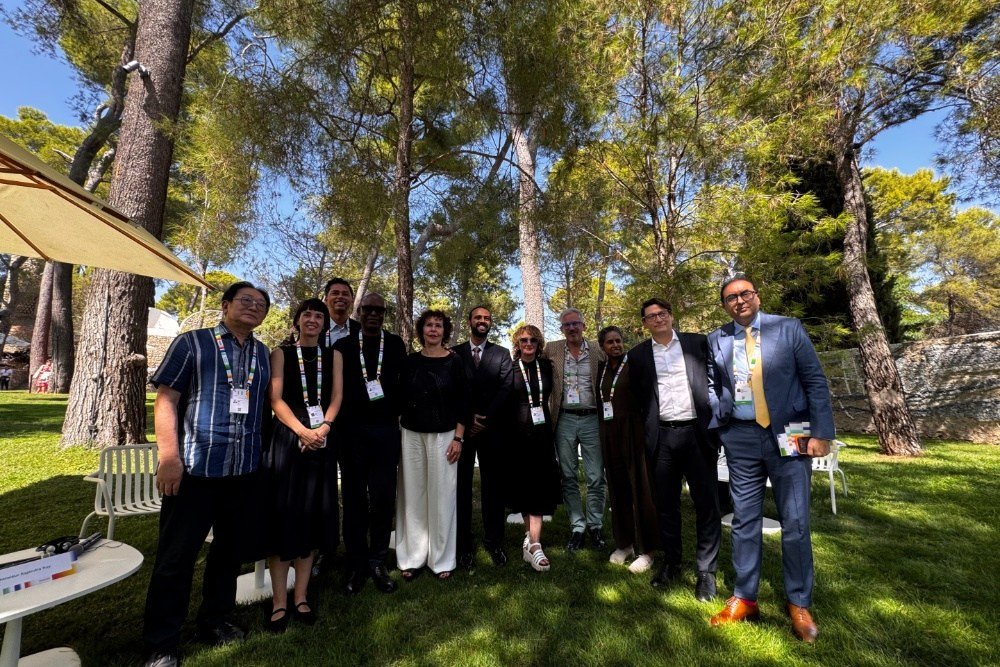
    Political pressure on film and television festivals emerged as a defining theme of a panel discussion Monday at the Lumière Summit in Saint-Paul-de-Vence, France, with Séries Mania general director Laurence Herszberg issuing the session’s most direct call for protection of programming autonomy.

    “We don’t judge artists by their passport, we judge them by their works,” Herszberg said.

    The panel, titled “Easy to Criticize, Impossible to Replace: Rethinking the Festival” and moderated by Rajendra Roy, chief curator of film at MoMA, brought together festival chiefs from Berlin, Cannes, Toronto, San Sebastián, Annecy, Mumbai, Durban, the Red Sea and South by Southwest. It covered three areas: audiences and community, how festivals relate to the media, and the mounting economic and political strains on festival leadership.

    Herszberg was direct on the political pressure facing her and her peers. “We feel more and more under pressure from different groups,” she said. “They might be politicians, they might be just people who disagree with the representation of some countries.” As general director of Séries Mania – a free-access festival with 1,500 seats – she said controlling who walks through the door is not possible. “We have to be protected, and we still have to go on and fight for the artists,” Herszberg said.

    Cameron Bailey, chief executive of the Toronto Film Festival, which launches its first formal market this year, echoed the sentiment. “Filmmakers are not their nations, and shouldn’t be treated as such by anyone,” Bailey said. He recalled joining TIFF as a programmer in 1990, “at a time when festivals felt like a completely free and open space.” Bailey pointed to TIFF’s Next Wave youth program – now 15 years old – as a long-term investment in building young audiences. “‘Obsession’ became one of the biggest sales at a film festival in a long, long time,” Bailey said, noting that Next Wave participants had championed the title. On the rationale for TIFF’s new market, Bailey said: “The market is also part of that ecosystem – I mean, a terrible way to put it would be that it’s the fertilizer of the ecosystem, but really, it’s what feeds” a constant supply of ambitious films.

    Berlinale festival director Tricia Tuttle, whose event drew 450,000 admissions last year, and was at the eye of a political storm, put audience development at the center of her contribution. “The answer for me to all of these challenges is to really think about audiences,” Tuttle said, adding that reaching people who are not yet passionate cinemagoers matters as much as serving those who are.

    Cannes president Iris Knobloch pointed to the breadth of her festival’s annual gathering – 40,000 accredited participants from 140 countries, with over 4,000 journalists in attendance. “For me, that is the real shining light on films and the talent all over the world,” Knobloch said.

    Faisal Baltyuor, chief executive of the Red Sea Film Foundation, said his organization’s last edition sold out every screening. “We have a lot of creative talents that need that boost to make it to the international stage,” Baltyuor said, noting that 11 films the Foundation supported appeared in Venice and eight were heading to Toronto.

    On the festival-press relationship, Peter Debruge – now director of the South by Southwest Film & TV Festival after a 20-year tenure at Variety, the last ten as chief critic – put the case for studio films serving discovery. “The studio-level films are the sizzle that brings the attention, the press, and the audiences to the discoveries,” Debruge said.

    Maialen Beloki, deputy director of San Sebastián, pointed to shrinking press resources as a structural problem. “Each year, media send less and less critics to the festival,” Beloki said. She added that the race to break news online carries its own cost. “We are losing our capacity to talk about the films with some time and with some respect,” Beloki said.

    Shivendra Singh Dungarpur, founding director of the Film Heritage Foundation and director of the MAMI Festival in Mumbai, said his screenings of restored films regularly attract between 1,000 and 1,400 people and that all MAMI events are free of charge. “I believe that a film festival has to be for everyone,” Dungarpur said. He described the MAMI Independent outreach initiative that partnered with a major cinema chain to bring independent films to cities across India ahead of the festival proper.

    Mickaël Marin, from the Annecy Animation Film Festival, said that since his appointment in 2018 he has worked to open Annecy to general audiences beyond its traditional professional base, including through a permanent exhibition space that opened last June. “We have a worldwide community of animation coming here in Annecy, from the school, from the student, up to the platform,” Marin said.

    Magdalene Reddy, director of the Durban FilmMart Institute, said the core challenge in Africa is not finding audiences but reaching them in the absence of sufficient cinema infrastructure. “For us, engaging with audiences is really going into the community,” Reddy said.

    When moderator Roy closed the session by asking whether festivals could survive without the American industry – demanding a yes or no – Reddy was the only panelist to answer no, while noting that her focus remains squarely on African content.