Members of Congress are drafting legislation that would create a 20% federal film and TV incentive — with bonuses that could bring it as high as 30% — after President Trump endorsed the idea last week.
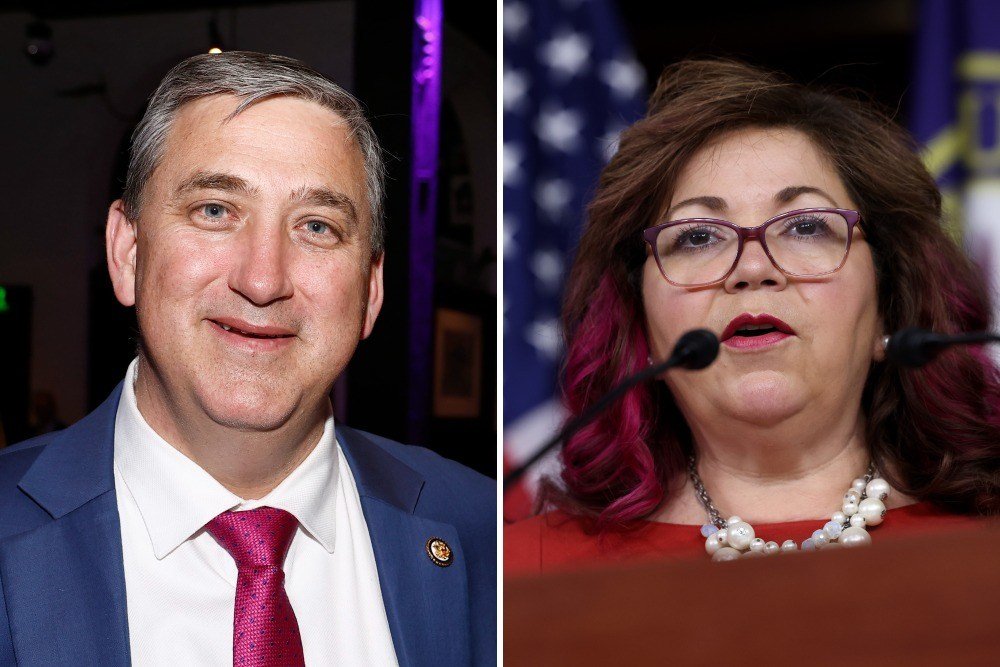
The bill is expected to be introduced this month, and perhaps as soon as the end of next week, according to sources familiar with the process. Rep. Nathaniel Moran, a Republican from East Texas, is working on the bill with Rep. Linda Sanchez, a Democrat from Whittier, Calif. Both serve on the House Ways and Means Committee, which is responsible for tax legislation.
Rep. Laura Friedman, a Democrat from Burbank, Calif., has also been working with Rep. Brian Jack, a Republican from the Atlanta suburbs, on the bipartisan effort.
For the last year, the Motion Picture Association and entertainment unions have been advocating for an incentive that would compete with generous subsidies from the U.K., Canada, Australia and scores of other countries. Trump threw his weight behind the idea in a Truth Social post on Aug. 31, a development expected to unlock Republican support on Capitol Hill.
The draft legislation broadly aligns with the MPA’s request. The bill would offer a base credit of 20% of all labor costs, both below-the-line and above-the-line. A wide range of productions would be eligible, including reality TV and animation in addition to films and scripted TV shows, according to sources familiar with the legislation. It would not include news or sports broadcasts.
The bill would also include four “uplifts” meant to attract political support. According to a source, the bill would allow producers to claim an additional five percent if they meet one of these four criteria:
film in a rural opportunity zone
make an independent production
bring a certain amount of filming back to the U.S. from abroad
spend at least $10 million in 10 different states in a year
Producers could claim up to two of those uplifts, for a maximum of 30%. The federal tax credit would stack on top of state incentives, meaning that productions could see a total subsidy of 60% or more depending on where they film.
Supporters have argued that the incentive will not just help Los Angeles and New York — where the bulk of production takes place — but will also boost rural areas that currently have little filming and little or no state tax incentive.
The hope is that spreading production around will broaden support, much the way the state incentives in California and New York attracted votes from rural lawmakers by offering a bonus for filming outside of Los Angeles and New York City, respectively.
California lawmakers have also pushed for a bonus for any production in an area that was recently declared a federal disaster zone. (All of Los Angeles County would qualify due to the 2025 fires.) That is not included in the latest draft.
The tax credit could be used to offset federal income tax, or be sold to another taxpayer to offset their tax liability. It would not be refundable.
The bill has yet to go to the Joint Committee on Taxation, which will get a score on how much it would cost — though it is safe to say it will run into the billions of dollars. In his post last week, Trump argued that the cost would be “made up tenfold by the money pouring into the Treasury’s coffers.”
The MPA is expected to issue a report in the coming weeks that would expound on that claim, arguing that production creates a ripple effect that benefits the local economy.
Some supporters of the measure are optimistic about getting it through Congress as part of a tax bill during the lame duck session after the November election, though it may be more likely to happen next year.
“I would be very happy for it to happen in the lame duck,” Friedman said in an interview last week. “I can’t promise that’s possible. We’re going to try not only to get this done quickly, but to have all our ducks in a row.”
Friedman said that the discussions took on a new momentum after Trump got involved.
“I can’t tell you the number of texts that have come in from people who have offered to help,” she said.
She declined to discuss the specifics of the legislation, but said she is working to build a coalition across the country behind the idea.
“Everyone in every state loves movies and television,” she said. “Everyone benefits by this product being made here.”
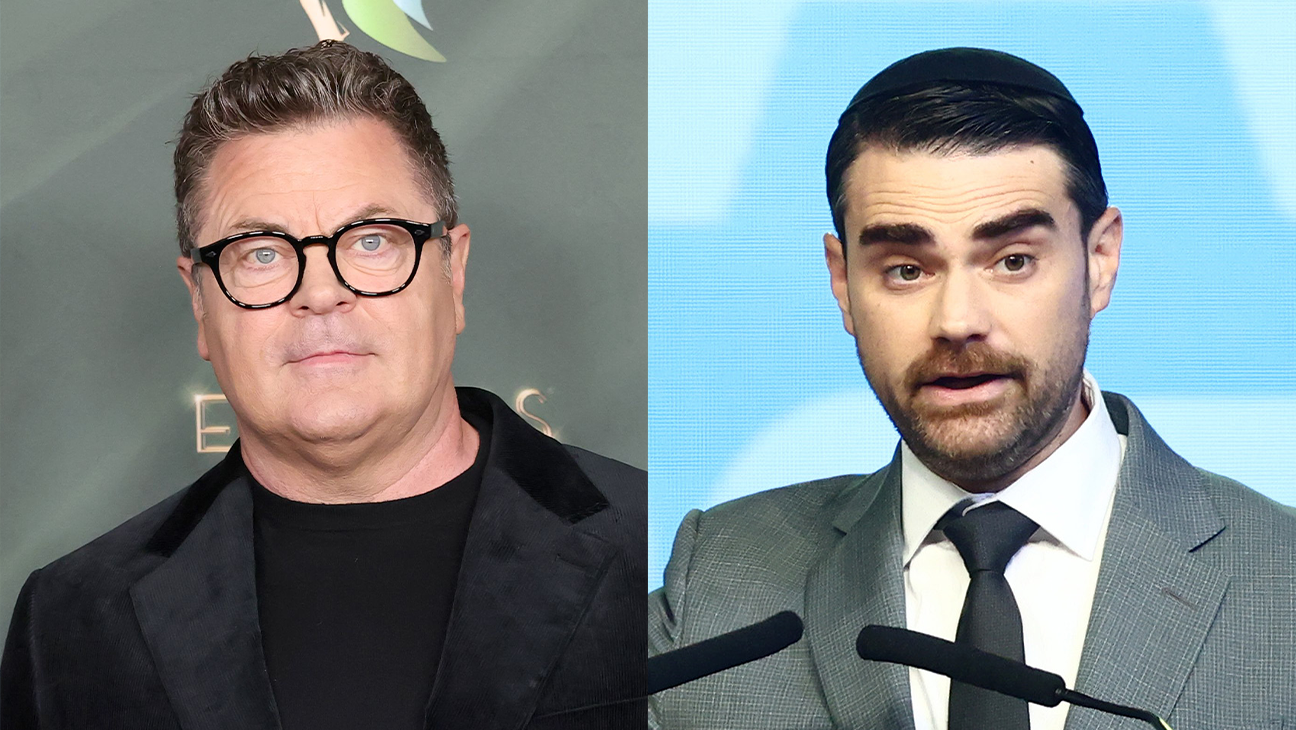
Nick Offerman is slamming Ben Shapiro for his “rampant homophobia” after the Daily Wire co-founder and political commenter criticized the actor’s gay role in The Last of Us.
During a recent appearance on the Talk Easy With Sam Fragoso podcast, host Sam Fragoso showed Offerman a clip of Shapiro attempting to recap his character’s storyline in HBO’s apocalyptic drama and calling him a “gay Ron Swanson,” referencing Offerman’s iconic Parks and Recreation character.
“So the entire plot of the episode is that Nick Offerman, but he actually plays Ron Swanson, but Ron Swanson who likes to nail dudes. So Ron Swanson, a libertarian who hates the government and lives in his basement and is a prepper, but also is gay,” Shapiro said during an episode of The Ben Shapiro Show. “Ron Swanson during the zombie apocalypse, he’s having himself a grand old time. For some reason, his town is completely not hit by any of the zombies at all. It’s like completely left alone. So he goes out and gets all these resources, and then he builds a nice fence around his place, and he sets up all of these booby traps. So if anybody shows up, whether they’re raiders, whether they’re zombies, they’re going to get killed. And then somehow another dude ends up falling into one of his traps and they meet and they bang and they end up becoming a couple.”
“It’s complete with sex scenes and the whole thing. The entire episode has no zombies, no real threat, and it is about two gay dudes who meet and have a relationship, in which one grows strawberries for the other, and then they die. But not being killed by zombies or under threat,” Shapiro added. “One dies; he gets cancer and he decides to essentially euthanize himself and gay Ron Swanson decides that he is also going to commit suicide at the same time because of Romeo and Juliet, or Romeo and Romeo in this particular case.”
Offerman, clearly shocked, said in response, “Holy shit… that’s crazy.”
“That’s the most Ben Shapiro I’ve ever seen, and there’s a very good reason for that. I mean, I don’t know what to say. I’m embarrassed for his reading comprehension. I think he got eight things wrong in his recap, besides his rampant homophobia,” the Voicemails for Isabelle actor continued. “That was insane.”
“That’s like a Joe Rogan clip or something that’s just so dumb and so wrong. But then it’s really upsetting to understand how powerful that probably is and how many people it’s reached and would be in agreement with it. They’d be like, ‘Oh no, not Ron Swanson,’ or whatever agreement they would have,” Offerman added.
In season one, episode three of The Last of Us, titled “Long, Long Time,” the show paused on the main storyline. Instead, the episode centered on a 20-year romance between Offerman’s character Bill, a paranoid survivalist, and an outsider named Frank (Murray Bartlett).
On my last morning in Telluride, halfway through breakfast at Butcher & Baker, Kenneth Branagh stopped at the table on his way to a Q&A for “Into the Breach,” the National Theatre documentary he produced. He had a story. A night earlier, he’d ridden the gondola up in pitch darkness with Willem Dafoe, Tom Hiddleston and Andrew Scott — four of the best actors alive, each with a film at the festival, sealed in one cable car with nothing to look at and nothing to do but talk. All anyone could hear was Dafoe. Branagh, laughing, called it “the wisdom of Willem.” A voice in the dark, no face attached.
I half-believed it until a few hours later, waiting out my flight at Montrose, when I ran into Hiddleston on his way back to the U.K. He told the same story, unprompted.
That’s the festival. The Telluriders have gone home, Venice wraps in a few days and we came down the mountain knowing more about this Oscar race than we did going up. Christopher Nolan’s mythological epic “The Odyssey” is still the one to beat. It won’t be a cakewalk. Here’s what else I carried down.
“The Debut” handed Julianne Moore and Paul Giamatti their moment.
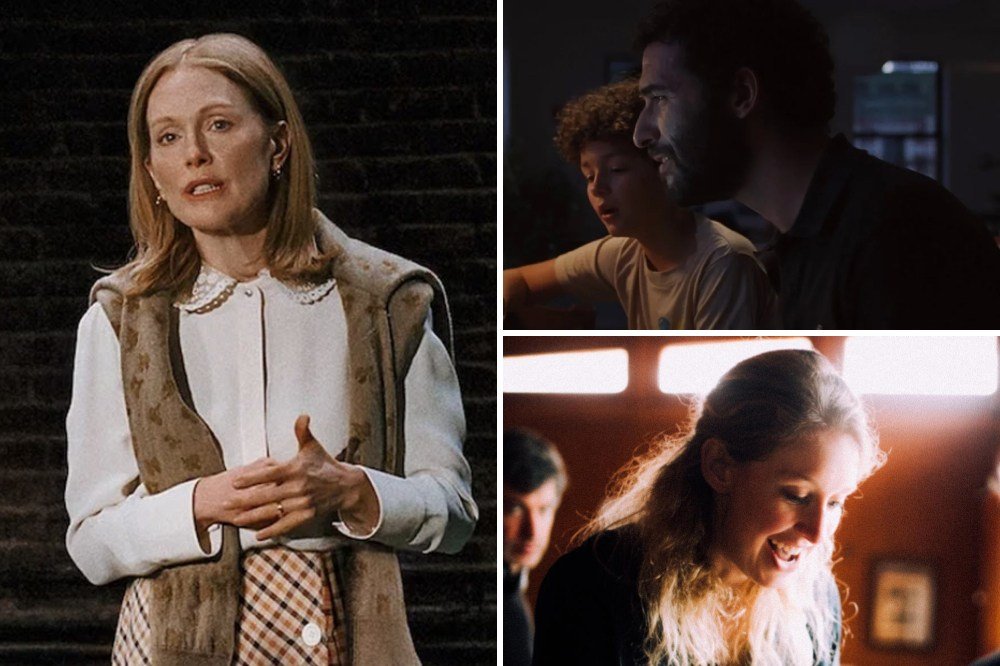
Jesse Eisenberg’s third feature behind the camera premiered Saturday night. By the next day, it was the hottest ticket in town. “The Debut” drops Moore’s Mona, a meek suburban homemaker who lands a bit part in a community theater musical, into the front of the best actress race. It’s the funniest, warmest thing she’s done in years. Giamatti, whom Eisenberg calls his “favorite actor,” plays the tyrant director shaping her. During one rehearsal scene between them — a master-class, no other word for it — the Telluride crowd applauded in the middle of the movie. You rarely see that happen once at a festival. It happened again before the credits.
Moore already has an Oscar for “Still Alice,” and she’s the one to beat. Giamatti is the sentimental story coming up underneath: twice nominated for “Cinderella Man” and “The Holdovers,” never a winner and here he is doing the loosest work of his late career in a supporting turn built to be embraced. Eisenberg wrote seven songs for the fictional show. The one they’ll push is “This City May Have Chewed Me Up (But It Hasn’t Spit Me Out),” which Moore performs, and it’s headed for a best original song campaign.
The festival’s best-kept secret came Sunday night, when ticket holders filed into the Werner Herzog Theatre with their phones locked away for “You Can See Everything,” the Elizabeth Holmes documentary Fielder co-directed with Lance Oppenheim, whose narrative feature “Primetime” premiered in Venice a day earlier. Holmes invites Fielder and his skeptical crew to film her in the 34 days before she reports to prison. The shoot spirals into a three-year descent. Portions are recreated with an A-list actor who is eligible for Oscar attention, though not SAG.
Now comes the hard part, which is the documentary branch, which has never embraced this kind of nonfiction filmmaking. Voters who prize the observational and the sincere tend to bristle at a movie where the filmmaker is this present and this implicated. The circus around Fielder guarantees the kind of coverage most nonfiction contenders would trade a lung for. Whether the branch rewards it is the whole question. Nobody has made a movie quite like this. Almost nobody has won an Oscar for one.
Jordan Firstman in “Club Kid”
A24
“Club Kid” has a real play for the old guard.
Jordan Firstman’s directorial debut had its North American premiere Friday, and its trajectory keeps getting more serious than anyone bet on. Firstman writes, directs and stars as Peter, a washed-up New York party promoter whose life on the dance floor stops cold when the 10-year-old son he never knew about (British newcomer Reggie Absolom) turns up at his door.
Strip away the club scene and the online-comedian brand, and you have a classically built story about a man child being handed a kid. I expected that this would struggle to appeal to the older industry demographic. I was wrong. In fact, it seems to register incredibly well with older Academy voters, at least the ones I chatted with on the mountain.
Veteran actor Colleen Camp, who first came to the festival in 1977, made the case for the film’s tonal control better than any campaign deck could. “I always say, always hire somebody funny to do something dramatic, because you’ll get so many interesting things,” she said at the post-screening Q&A. “And what he [Firstman] did in this movie is even in the most dramatic moments, they’re brilliantly ironic and they’re funny.”
Firstman described how his script reversed course on him over two years of writing. “I started the script from kind of a cynical place of looking around at the scene and just not feeling good about it — looking at the excessive drug use and the sex, and being a part of it and feeling bad about myself and feeling bad about my community,” he said. “What happened was that making this film in the community — we shot at real parties, in the queer spaces in New York — my empathy really opened up in the production of the film.” That shift is on the screen, and it’s what voters will feel without necessarily being able to name it.
By the end of the panel, it came down to one word, spoken loudly by Firstman: “love.”
“La Bola Negra”
‘La Bola Negra’ Carla Oset/Netflix
“La Bola Negra” commands the room.
Respect is the currency at that altitude, and Los Javis have it. Javier Calvo and Javier Ambrossi arrived off a Cannes run that ended with the directing prize, and the Telluride word-of-mouth only got louder. Chris Pine, Sofia Coppola, Rian Johnson and their Netflix stablemate Danny Boyle (“Ink”) all turned up for the screening.
Shot on 35 mm and inspired by the unfinished Federico García Lorca work of the same name, “La Bola Negra” moves across 1932, 1937 and 2017, tracing three generations of gay men through nearly a century of Spanish history.
A subtitled Netflix title the festival can’t stop buzzing about is exactly where you want to be heading into the international feature race, and the streamer is hunting well beyond that category. And even though stars Guitarricadelafuente and Penélope Cruz weren’t on the mountain, the film played so well, it shows it can exist in the awards echo chamber, without them (which says a lot).
“Wild Horse Nine”
Searchlight Pictures
“Wild Horse Nine” made the two-stop drop look easy.
Of the titles that ran the Venice-to-Telluride relay this year, Martin McDonagh’s landed with the most confidence. Searchlight Pictures’ “Wild Horse Nine” bowed in Venice competition on Sept. 3 to a 13-minute standing ovation, the Lido’s first real roar of the fall. Two days later, it turned up as Telluride’s surprise patron screening, timed to John Malkovich’s Silver Medallion tribute.
Malkovich was the biggest takeaway. Twice nominated and never a winner, he called the script the kind you see “every 25 years.” The double premiere vaulted him near the front of best actor, trailing only Matt Damon in “The Odyssey” and another Telluride player, Andrew Scott in “Elsinore.” Sam Rockwell, who won supporting actor for his last McDonagh outing, is back in that conversation, with the open question of whether Steve Buscemi joins him.
Kate O’Flynn, Paul Jesson and Marion Bailey in “Tender Loving Care”
Thin Man Films Ltd and Bleecker Street
“Tender Loving Care” is Mike Leigh in a minor key, and it wrecks you anyway.
If this is the last Mike Leigh film, and the final shot plays like a man who knows it might be, it’s a hell of a way to leave. “Tender Loving Care” follows two social workers and was built the usual Leigh way: no script, no plot, just months of assembling people until they exist.
Marion Bailey, who plays Birdie, figured out the assignment before the assignment existed. “I could see as he was going through, he was crossing off people and I thought, what’s the sort of person he’s looking for? And then it dawned on me — he’s looking for someone who has a sense of humor,” she said. “The ones he was crossing off my list were people who don’t have a sense of humor.” Then she added the part only a Leigh veteran gets to add: “You get a call from Mike to say, ‘Do you want to come on board? I don’t know what the part will be. I’m not sure how it’ll work out, but would you like to do it?’ Yes, please. You don’t even stop to think about it.”
The film’s dedication to Dick Pope hangs over it, and longtime producer Georgina Lowe explained how the succession happened. Lucy, who came up under Pope as a camera trainee on “Meantime” and operated on “Hard Truths,” took over the cinematography after a British Society of Cinematographers function where Pope received a posthumous lifetime achievement award. “I don’t think Mike heard this, but Pat turned to Lucy and said, ‘You should shoot the next one,’” Lowe said. “Simultaneously, Mike had thought that. It just made total sense.”
Paul Jesson gave the film its thesis in a single line, asking what a movie about caring for people means right now. “It’s also a good antidote to a world which, by and large, is being run by bullies and thugs,” he said. “The state of the world at the moment is pretty terrifying, really. A lot of people try to close their eyes, cover their ears and get on with their own private lives. And it’s hard to know what to do apart from that, other than look after the people they’re close to.” That’s the movie, and the campaign.
Andrew Scott in “Elsinore”
Anthony Dickenson
Everybody wrote a love letter to acting this year.
Step back from the horse race and the weekend had a through-line: acting itself, in films made largely by and for the people who do it. Two of the marquee titles orbit the same building. “Elsinore” is Andrew Scott as Ian Charleson in the last year of his life, holding on long enough to play Hamlet at London’s National Theatre. “Into the Breach,” the documentary Branagh produced, tells the story of that same theater, with Judi Dench, Anthony Hopkins, Gary Oldman and Ian McKellen around a table sorting out what the stage cost them and what it gave back. One film stages a great actor’s final bow. The other rounds up living legends to explain why it mattered.
“The Debut” is the same subject from the bottom of the ladder: Moore as a suburban nobody who discovers, in a community theater musical, that performing might be the truest thing she’s ever done and nearly comes apart proving it. A drama, a doc and a comedy, all circling what it costs to disappear into someone else.
The actors branch is the largest bloc in the Academy, and nothing moves a room of performers like a film that treats performance as life or death. Telluride just handed them three.
The gondola is the place to get honest polls.
Nothing tells you how ticket holders are responding to a movie like a gondola ride to or from the Chuck Jones Theatre. On a ride up Sunday morning, you get to listen to the festival unfiltered, which, of course, came with the secret screening speculation that swung from a Frank Ocean project to the eventual Fielder documentary. But then you get to hear about people’s reactions to the Bill Gates talk at Elks Park that half the car caught the tail end of, and the running argument over which “Martin McDonagh is the real Martin McDonagh.” (Whatever that means?)
One producer I chatted with had the most useful read of the weekend on “La Bola Negra,” which he claimed everyone kept calling too long. “I felt that it was long, but I was never bored,” he said. “I was pretty engaged. It felt pretty robust the whole time.” That distinction can matter most. It’s not about whether voters check their watches, but whether they mind. Turns out they don’t.
However, he was less forgiving elsewhere about “Fjord,” Cristian Mungiu’s Romanian Palme d’Or winner. “I didn’t think there was any character work between the two of them [Sebastian Stan and Renate Reinsve]. I didn’t get their relationship at all,” he said. “They got these incredible actors and it didn’t just match. I wanted to hear more about their beliefs. I wanted to get more into it, be challenged more. It left me a little cold.”
Interestingly, I spoke to someone else immediately after getting off the gondola who said “Fjord” is the best thing they’ve seen this year.
The pendulum can swing rapidly between voters and titles.
Other notes from the mountain
Stephen Beresford, who wrote “Elsinore,” lost his passport and couldn’t make it to Telluride. That didn’t stop his leading man from having a moment.
Andrew Scott had company for that reaction. After the screening, Oprah Winfrey, a Telluride regular this year behind Chai Vasarhelyi and Jimmy Chin’s “Everest: The Other Side,” found Scott outside and cried in his arms. If you want to know how a movie is landing on the mountain, watch for who’s weeping in the lobby or outside.
(That’s also “A Long Winter” writer and director Andrew Haigh weeping alongside them)
Winfrey also threw a party, and by the chatter, all anyone could talk about was who got the invite, who didn’t and how you could possibly get one. Spoiler alert: I wasn’t one of them.
Strategy’s $250 Bitcoin-themed Air Jordans have sold out, extending Michael Saylor’s treasury brand from Wall Street into consumer culture.
The shoes, launched Sept. 4 through Strategy’s online store, were sold out by Sept. 8, with all nine advertised sizes listed as unavailable. The company did not disclose how many pairs it offered or when inventory ran out.
The release pushes Strategy’s Bitcoin identity beyond its balance sheet and securities business into merchandise aimed directly at consumers.
The Saylor-led company holds 845,050 $BTC, equivalent to about 4.02% of Bitcoin’s fixed 21 million supply, making its association with the asset central to both its financial strategy and corporate identity.
Since dropping the MicroStrategy name in February 2025, Strategy has increasingly built its public image around Bitcoin, turning what began as a treasury allocation into the company’s defining feature.
Strategy turns Bitcoin into something customers can wear
The Air Jordans are the most prominent example yet of that branding effort.
Strategy describes the mid-top sneakers as inspired by the original Air Jordan 1, combining custom company branding with leather overlays, Nike Air cushioning, and the Air Jordan Wings logo. The store listed sizes ranging from 6.5 to 14 at $250 a pair.
They sit alongside a broader catalog built around the company and Saylor’s Bitcoin persona, including a $50 Bitcoin Strategy Game, a $125 Strategy hoodie, and a $35 organic cotton Saylor shirt.
The merchandise gives Strategy another way to capitalize on the audience built around its Bitcoin strategy without depending directly on MSTR shares, Bitcoin purchases, or the company’s expanding suite of preferred securities.
The Jordans’ sold-out status points to demand for premium products carrying that identity, though the undisclosed inventory makes the scale impossible to measure.
There is also an irony in how customers are being asked to buy into the Bitcoin brand.
Strategy’s storefront lists American Express, Apple Pay, Diners Club, Discover, Google Pay, Mastercard and Visa among its payment methods. Bitcoin does not appear among the displayed options.
That does not establish that Bitcoin cannot be used at checkout, since the published menu may not capture every possible payment method.
Still, the visible retail experience remains decidedly conventional: customers buying merchandise from the company holding more than 845,000 $BTC are presented with cards and mainstream digital wallets rather than Bitcoin itself.
For would-be buyers, inventory is the more immediate constraint. Strategy has not posted a restock date, leaving it unclear whether the Jordans were a limited promotional drop or the start of a broader effort to turn its Bitcoin identity into a recurring consumer business.
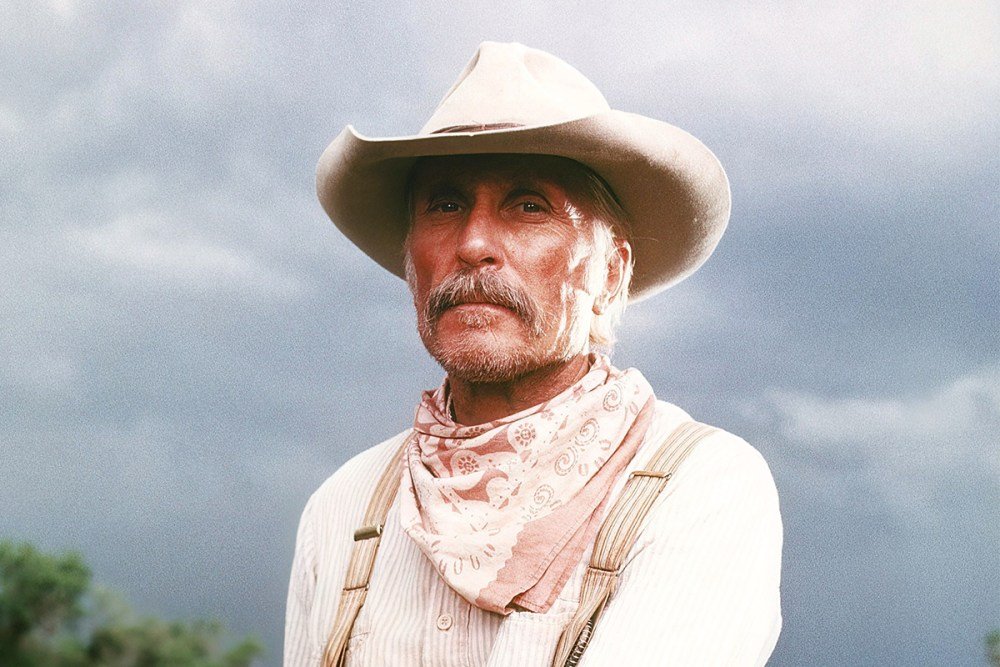
“Lonesome Dove,” which was originally adapted into an Emmy- and Golden Globe-winning CBS miniseries starring Robert Duvall in 1989, is getting a new take at Netflix. The streamer announced Tuesday that it had ordered “Lonesome Dove” to series, from co-showrunners Zoe Kazan and Jeb Stuart.
Kazan and Stuart were also the co-showrunners on Netflix’s upcoming limited series “East of Eden.” Kazan and Stuart were hired by Teton Ridge Entertainment, which holds the rights to “Lonesome Dove,” the Pulitzer Prize-winning western novel from author Larry McMurtry first released in 1985.
Here’s the logline: “Gus McCrae and Woodrow Call renew their spirit of adventure as they face an uncertain future, embarking on one final, perilous cattle drive from the Rio Grande to the untamed wilderness of Montana in pursuit of a dream that they have perhaps already outlived. These two former Texas Rangers lead an unforgettable cast of characters across the American west in this sweeping odyssey defined by unrequited longing, unbreakable friendship, brutal frontier justice, and an unwavering pursuit of a meaningful life.”
Kazan and Stuart will serve as co-showrunners/writers/executive producers, while EPs also include Thomas Tull, Jillian Share and Jen Gorton of Teton Ridge Entertainment; Jon Jashni; Diana Ossana; and Curtis McMurtry of the McMurtry Estate.
“’Lonesome Dove’ is one of the great American stories, and there was no question we wanted to follow Zoe and Jeb wherever they went next,” said Netflix head of scripted series, U.S. and Canada, Jinny Howe. “After ‘East of Eden,’ we know exactly what they’re capable of — the depth of character, the sweep of place, the emotional precision. This material deserves that level of care. In their hands, it’s going to be something extraordinary. We’re excited to partner with Teton Ridge to bring this legendary story to life.”
In a joint statement, Kazan and Stuart said that “we come to this material with love and respect, and can’t wait to hit the trail with Gus and Call and the rest of these beloved characters.” And Teton Ridge Entertainment president Jillian Share added: “‘Lonesome Dove’ is the kind of story that only comes along once in a generation. Its characters, scope and deeply human portrait of the American West have made it an enduring classic, and we see an extraordinary opportunity to bring Larry McMurtry’s world to a new generation of audiences.”
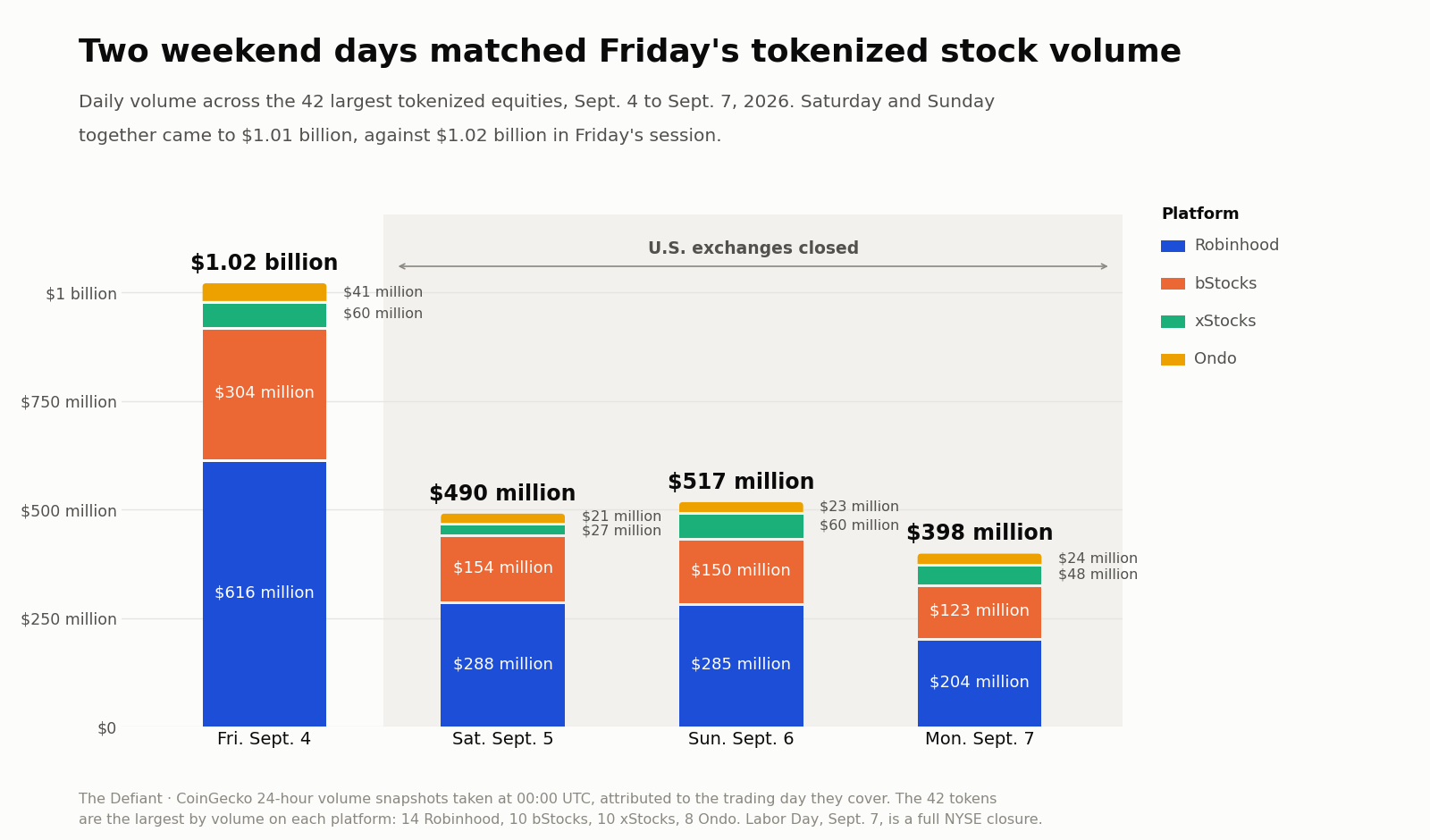
Tokenized stocks traded almost as much over the Labor Day weekend as they did on Friday, when U.S. exchanges were open, according to volume data from CoinGecko covering the 42 largest tokens across the four platforms that carry most of the sector’s activity.
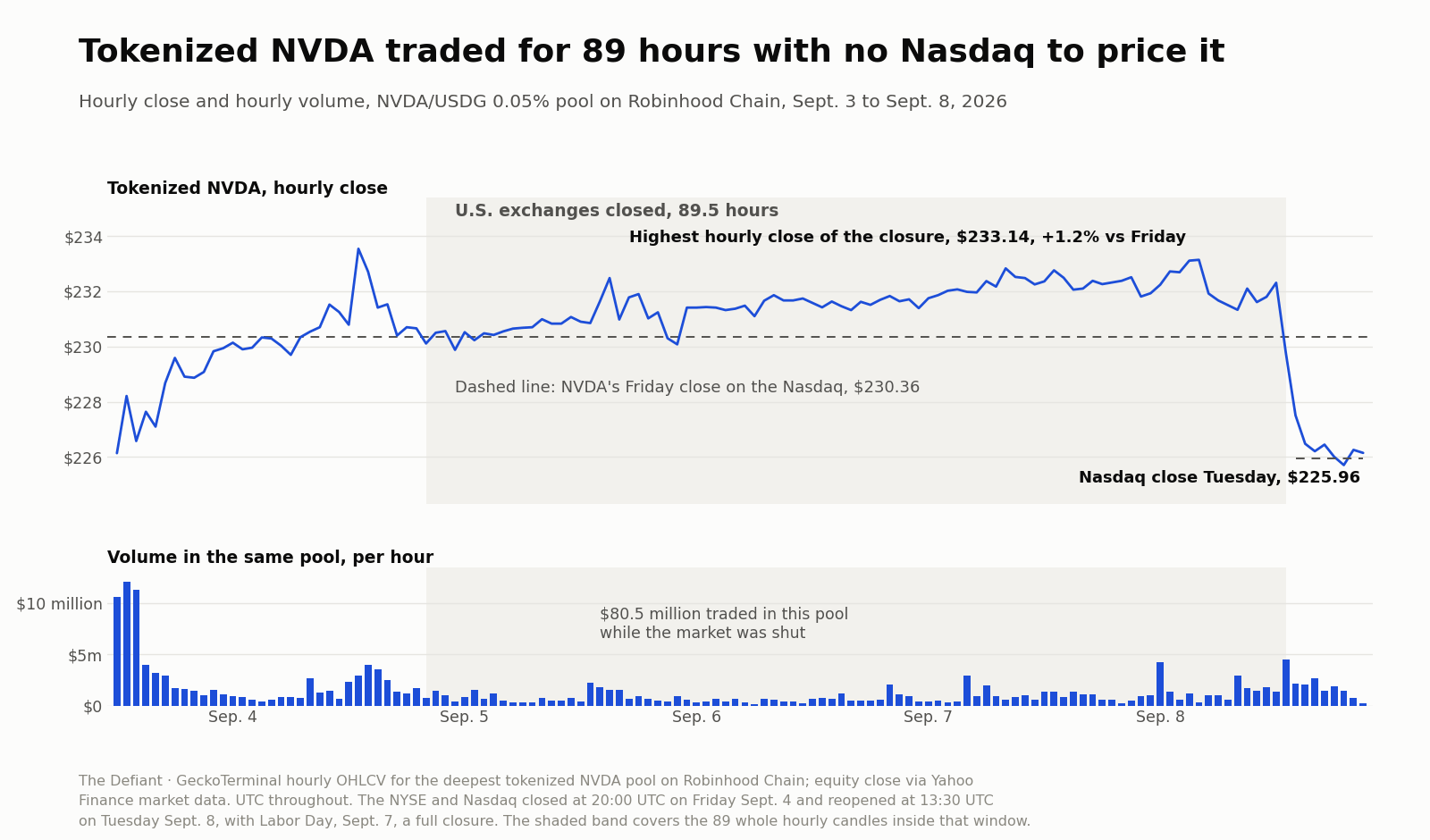
Weekend and holiday sessions are the functional case for putting equities onchain. The New York Stock Exchange closed at 4 p.m. ET Friday and did not reopen until 9:30 a.m. ET Tuesday, because Labor Day on Sept. 7 is a full closure — an 89-and-a-half-hour gap in which the same exposures kept trading onchain.
Saturday brought $490.3 million and Sunday $516.9 million, for a weekend total of $1.01 billion. Friday, with the cash market open all session, produced $1.02 billion across the same 42 tokens. Labor Day added $398.3 million, putting the three-day shutdown at $1.41 billion.
Robinhood Chain Took Half
Robinhood’s tokens accounted for $572.8 million of weekend volume, or 57% of the measured total, split $288.2 million Saturday and $284.6 million Sunday. Binance’s bStocks followed at $303.5 million, Backed Finance’s xStocks at $87.1 million and Ondo Global Markets at $43.8 million.
Robinhood leads on trading while holding the smallest book of the three largest platforms. Its tokenized equities are worth $133.2 million against Ondo’s $860 million and xStocks’ $631.2 million, rwa.xyz data shows, in a sector that holds $2.89 billion across 2.86 million holders. Robinhood Chain carried $1.61 billion of total decentralized exchange volume on Saturday, $1.51 billion Sunday and $1.51 billion on Labor Day, according to DefiLlama, with stock tokens a slice of it.
The Defiant reported in July that Robinhood Chain had passed Solana in tokenized stock volume on the strength of memecoin pairs. Those pairs are still running. A memecoin called AI, trading against tokenized NVDA, turned over $11.3 million across the two days out of a pool holding $22.4 million of liquidity, per GeckoTerminal.
One Nasdaq Token, $180 Million
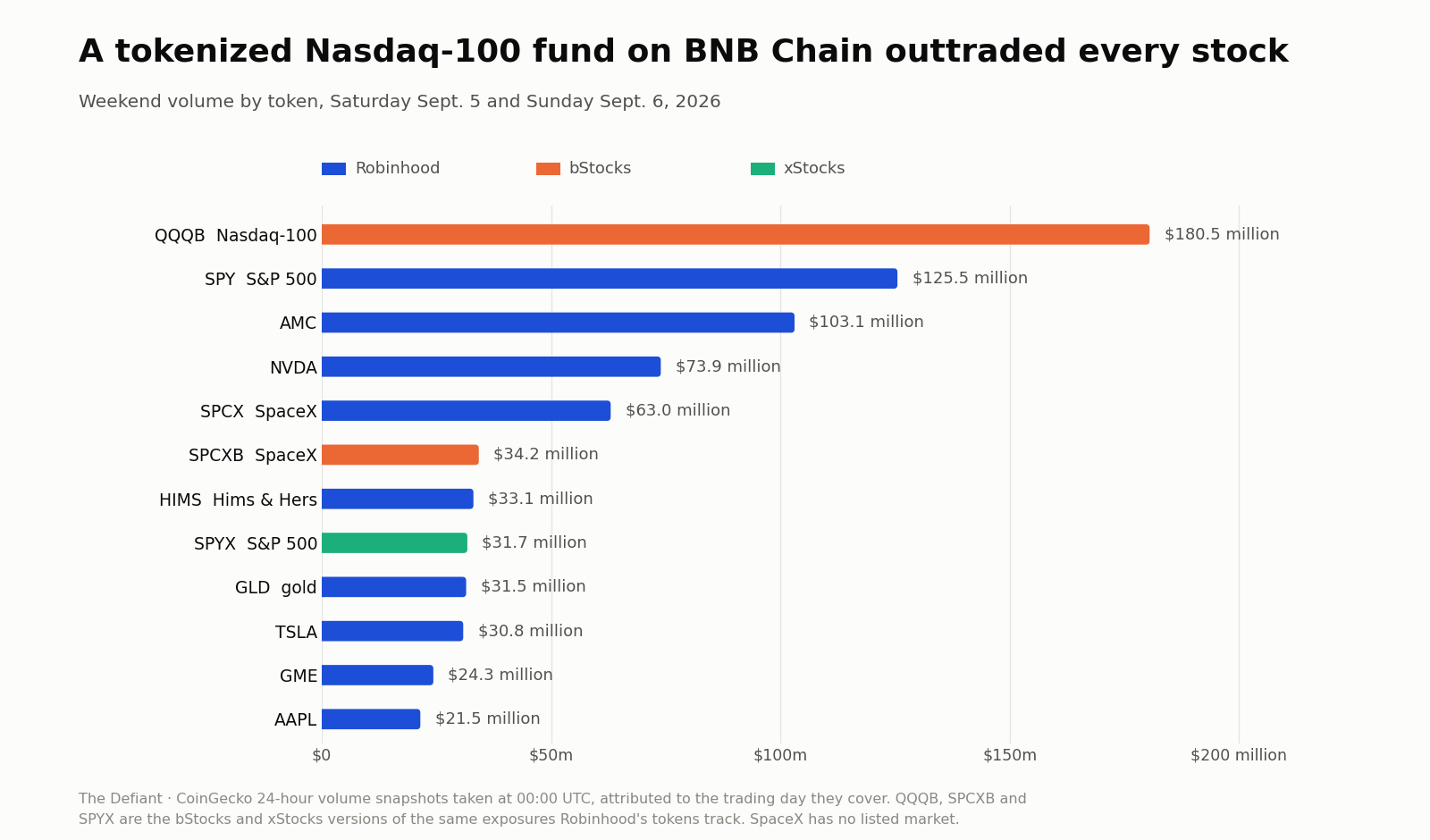
The most-traded instrument of the weekend was $QQQB, the bStocks version of the Invesco QQQ Trust, at $180.5 million — $88.9 million Saturday and $91.6 million Sunday. That is more than the xStocks and Ondo weekends combined.
CoinGecko tracks $1.34 million of circulating value in $QQQB against $87.8 million of 24-hour volume, or 65 times the token’s value in a day. Pricing is orderly, at $719.36 against QQQ’s $718.96 Friday close, so the turnover is not coming from a dislocation. $BNB Chain markets bStocks as convertible “with no fees,” tradable “24/7” and deployable on Venus, Lista DAO, PancakeSwap and Aster, the conditions under which a token can be recycled through pools indefinitely. The Defiant covered the bStocks launch in June.
$AMC Traded Through It
Robinhood’s tokenized $AMC Entertainment was the third-busiest name of the weekend at $103.1 million, and the weekend was its quiet stretch. On Friday the token did $232.6 million, the largest single-day figure in the sample, a day after $AMC Chief Executive Adam Aron demanded Robinhood halt the product and Robinhood chief legal officer Dan Gallagher told him to send his lawyers.
Volume ran $32.8 million Saturday and $70.3 million Sunday, then fell to $21.4 million on Labor Day. The token’s onchain market value is $6.6 million.
Indexes And A Rocket Company
After $QQQB and $AMC, the busiest weekend names were Robinhood’s SPY at $125.5 million, its NVDA at $73.9 million and its SpaceX token at $63 million, followed by the bStocks SpaceX token at $34.2 million, Robinhood’s HIMS at $33.1 million, the xStocks S&P 500 token at $31.7 million, Robinhood’s gold ETF token at $31.5 million and its TSLA at $30.8 million.
Grouped by underlying, Nasdaq-100 exposure led at $192.8 million and S&P 500 exposure at $157.2 million. SpaceX came third at about $102.7 million across three tokens, and it has no reference market at any hour of any day. The company is private, so its tokens have no closing price to converge to.
Hims & Hers was the weekend’s outlier on timing, with $26 million of Sunday volume against $7.1 million Saturday. Nine memecoins were trading against tokenized HIMS on Robinhood Chain as of late August, when one of them cornered more than half the token’s onchain float.
Prices Held Near Friday
Tokenized prices stayed close to Friday’s closes. The main tokenized NVDA pool traded between $229.18 and $233.52 on Saturday and $230.15 and $233.25 on Sunday, against NVDA’s $230.36 Friday close, a premium that never exceeded 1.4%. Tokenized HIMS ranged from $27.20 to $28.97 over the two days, against $27.71. In August, with a memecoin holding half its float, the same HIMS token printed $132.64 against a $28.84 equity.
Tuesday’s reopening went the other way for both names. NVDA closed at $225.96 and Hims & Hers at $28.03.
Kraken’s $385,010
Nearly all of the volume ran through decentralized exchanges. $QQQB trades $47 million on PancakeSwap V3, $42.2 million on Uniswap V4 and $19.6 million on $BNB Chain’s native venue, against $7.2 million on Binance itself, per CoinGecko’s ticker data, on a 24-hour snapshot. Robinhood’s SPY token splits $29.9 million across Uniswap V4, $15.4 million on Ramses V3 and $12.3 million on Uniswap V3, all on Robinhood Chain.
The xStocks S&P 500 token trades $10.3 million on Raydium’s concentrated-liquidity pools, $2.6 million on LBank and $385,010 on Kraken, one of the venues where xStocks first listed. Centralized exchanges take about 8% of $QQQB‘s tracked volume and 21% of the xStocks S&P 500 token’s; Robinhood’s SPY token has no exchange listing at all.
ONDO traded at $0.3845, up 0.6% over 24 hours. PONS, the launchpad token native to Robinhood Chain, was at $0.8304, up 14.5%.
The top $BNB Chain meme coins 2026 are developing in an ecosystem where low-cost transactions and dedicated launch platforms can make token creation easier. $BNB Chain already has established meme-launch infrastructure, including Four.meme.
MemeToro is entering this space with a different model. Instead of focusing only on token creation, it is building an open-source memecoin launchpad around an AI agent and public launch rules.
The project’s GitHub repository identifies $BNB Smart Chain as its initial target network. Its architecture is designed to connect AI-generated proposals with transparent blockchain execution.
What MemeToro’s Open Source Launchpad Does
MemeToro’s launchpad begins with the AI agent. The agent is designed to scan news, trends, culture, and market signals before producing a meme coin concept.
The project does not intend to stop at a name or image. Its launch-manifest architecture is designed to record evidence, reasoning, token details, funding parameters, and execution rules.
The current pipeline has already been tested in a dry-run environment. Development updates say it can collect signals, check evidence, apply risk controls, and generate a structured draft proposal.
This gives the platform a clear sequence:
Discover a trend
Generate a concept
Validate the evidence
Check launch rules
Prepare funding
Move toward deployment
The goal is to make each stage easier to inspect.
How Fair Launch Escrow Fits In
Fair-launch escrow is important because funding is one of the most sensitive parts of a new token launch. MemeToro’s planned system includes fixed-rate funding, wallet limits, funding thresholds, and automated steps for approved launches.
The project also uses validation rules that reject insider allocations. This supports the broader idea that participants should enter under published conditions rather than through hidden private deals.
The launch manifest can help define these rules before a token is deployed.
However, there is an important difference between a planned mechanism and a production mechanism. MemeToro’s current GitHub repository says its contracts are not implemented, audited, or production-ready.
That means users should not assume that every planned fair-launch protection is already active on mainnet.
Where MemeToro Fits Among $BNB Chain Meme Coins
The top $BNB Chain meme coins 2026 will compete across several areas. Community size matters, but so do liquidity, security, launch speed, token distribution, and technology.
MemeToro’s main competitive idea is that an AI agent can help discover meme opportunities while public contracts control the launch process. That is different from a launchpad that mainly provides token creation and trading infrastructure.
Its open-source approach also gives developers a way to inspect the architecture and contribute to the project. The repository is MIT licensed and includes the agent, planned contract structure, manifests, documentation, and security information.
The next important steps are testnet contracts, further development, and independent security reviews.
If those stages are completed successfully, MemeToro could have a clearer technical position within the $BNB Chain memecoin market. Until then, it remains an emerging project rather than an established leader. More Information on MemeToro ($MT) Presale Here:
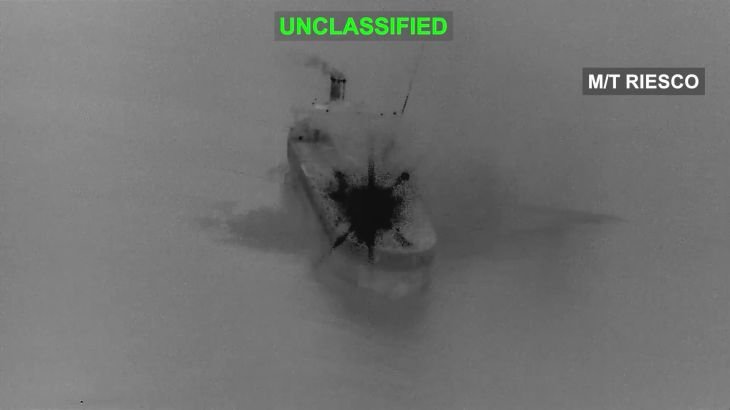
The US military has released video of its forces destroying what it says are five Iranian crude oil tankers. It’s the second series of direct US attacks on Iranian ships in days. CENTCOM claims the latest strikes are in retaliation for Iranian attempts to hit US warships.
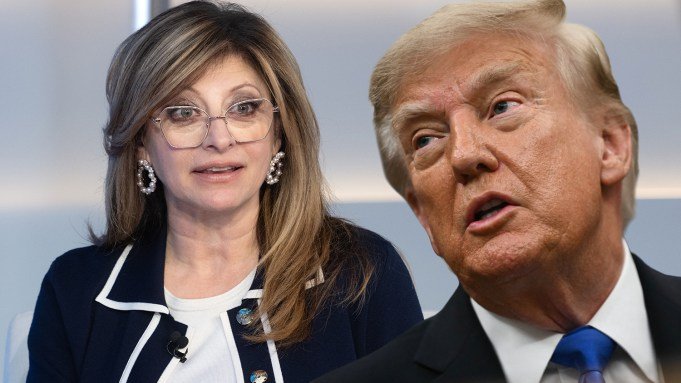
The assertions come Friday despite Bartiromo’s Hollywood attorney Bryan Freedman insisting the veteran Wall Street anchor is still “an employee” of Fox and threatening legal action. Adding to the burgeoning media mess surrounding the so-called “Money Honey,” Donald Trump had thrown serious shade on Fox for taking good pal Bartiromo off the air.
That shade could set the stage for yet another showdown between Trump and his once favorite media buddies at the Murdoch-ruled Fox.
“I can’t believe Maria Bartiromo is no longer going to have her great show(s) on FoxNews/Business,” Trump, a frequent Bartiromo guest, posted Thursday night, about 12 hours after Fox announced “effective today” that the Mornings With Maria host was out. “Three different shows, always number one. Maria is a total professional, and a true warrior. Her fans, of which there are many, will not be happy. God bless you, Maria!”
Bartiromo hadn’t been on the air for almost a month, with Deadline confirming that Fox brass had enough of the MAGA-friendly Bartiromo after they learned she passed corporate-guidance missives to the White House in recent months. However, carving her own way at Fox Business and Fox News for more than a decade, those communications were just the latest minefield that Fox execs feared could blow up in everyone’s faces.
“Her indiscretion was just the latest in a series of self-inflicted wounds,” a cable news insider says of Bartiromo and her close ties with Trump. “This has been a concern for a while, Maria being too cozy with the White House. She crossed a line, and she’s suffered the consequences.”
Weary of addressing allegations of similar conduct over the years by Sean Hannity and other Fox hosts, or Bartiromo’s contract specifics, the source added: “She’s no longer with Fox. Take that for what it is.”
Deadline hears that while there may be “technical truth” to Freedman’s remarks today that Bartiromo still works at Fox because of contracts and other paperwork, she is not returning to her Fox Business or Fox News roles — full stop.
Long a passionate defender of POTUS and offering him a platform over the years, Bartiromo’s apparent sharing of internal edicts with Trump administration officials, first reported by Status, made her pink-slipping inevitable.
Digging a little deeper and a few years back, the seeds of Bartiromo’s downfall were evident if you connect the red string.
In April 2023, Fox agreed to pay $787 million to settle a lawsuit filed by Dominion Voting Systems, one of the technology firms singled out in Fox’s coverage of the 2020 election results. Citied in volumes of court filings and the high-stakes trial that had just begun when Fox settled, Bartiromo was one of the main hosts on Fox promoting the false claims of irregularities with the election Trump lost and Joe Biden won. At the time, the top-rated Tucker Carlson was pulled off the air at Fox in a move that resulted in a Freedman-handled legal dust-up between Carlson and the media company.
No word from ex-Apprentice host Trump if Bartiromo is in the running to be the new White House Press Secretary, but sharp-elbowed lawyer Freedman says his client actually isn’t looking for a new job because she still has her old one.
“For many years, Maria Bartiromo hosted three number one rated television shows on Fox channels,” Freedman said Friday, as my colleague Dade Hayes noted earlier. “She has been, without question, one of the hardest working journalists throughout her award winning career.”
The lawyer for the likes of Carlson and Megyn Kelly, as well as Don Lemon, then unsheathed the knife that may lead to a bloody affair down the line.
“The irresponsible reports that have been published stating that Maria Bartiromo was fired or is no longer an employee of Fox are absolutely and unequivocally false,” Freedman said. “Make no mistake, we have the receipts and witnesses and they will come out whether through the courthouse or otherwise. Those reporting her firing or the incredulous facts supporting that fiction have exhibited a complete and utter reckless disregard for the truth.”
When Deadline asked Fox for a response to Freedman’s statement about his client’s employment situation, the company said: “the release speaks for itself.” The White House did not respond to Deadline’s request for comment.
KelpDAO recently faced a severe security incident, resulting in a loss of approximately $292 million. This attack occurred because KelpDAO relied solely on a single verifier, as reported by Fireblocks. This reliance on one point of verification has raised alarms about the security protocols in place. Enhanced measures will be crucial to prevent such incidents in the future, as outlined in Fireblocks’ 2026 Threat Report.
Inside the Move
The crypto market is currently navigating mixed signals amidst this alarming news about KelpDAO. In a tweet, Fireblocks revealed that attackers exploited a vulnerability by feeding false data to the only verifier trusted by KelpDAO. This incident underscores the critical importance of decentralizing verification processes to enhance security and protect assets. As blockchain technology continues to evolve, ensuring robust security measures will be paramount for all projects.
Key Details
KelpDAO lost approximately $292 million due to a security breach caused by a single verifier. The incident has raised concerns about reliance on singular verification systems. Fireblocks emphasizes the need for diversified verification methods to prevent future attacks. The breach serves as a reminder of the vulnerabilities present in blockchain projects. KelpDAO’s situation highlights the importance of thorough security audits and protocols.
Price Action Breakdown
Currently, the broader crypto market is experiencing fluctuations, with various assets displaying differing momentum. With KelpDAO’s recent breach, traders are likely to reassess their risk exposure and the security measures of protocols they engage with. The total volume for KelpDAO remains unreported, reflecting the uncertainty following the incident. This situation may prompt a reevaluation of security practices across the sector.
KelpDAO operates as a decentralized autonomous organization that facilitates governance and operations within its ecosystem. The recent attack falls under the jurisdiction of cybersecurity regulations, emphasizing the need for robust protective measures in blockchain technology to safeguard against similar vulnerabilities.
The Road Ahead
Traders should remain vigilant in monitoring developments related to KelpDAO and the overall security landscape within the crypto sector. Observing how KelpDAO responds to this breach could provide insights into the effectiveness of their revised security protocols. Additionally, the incident may influence regulatory scrutiny and compliance requirements for decentralized platforms moving forward.