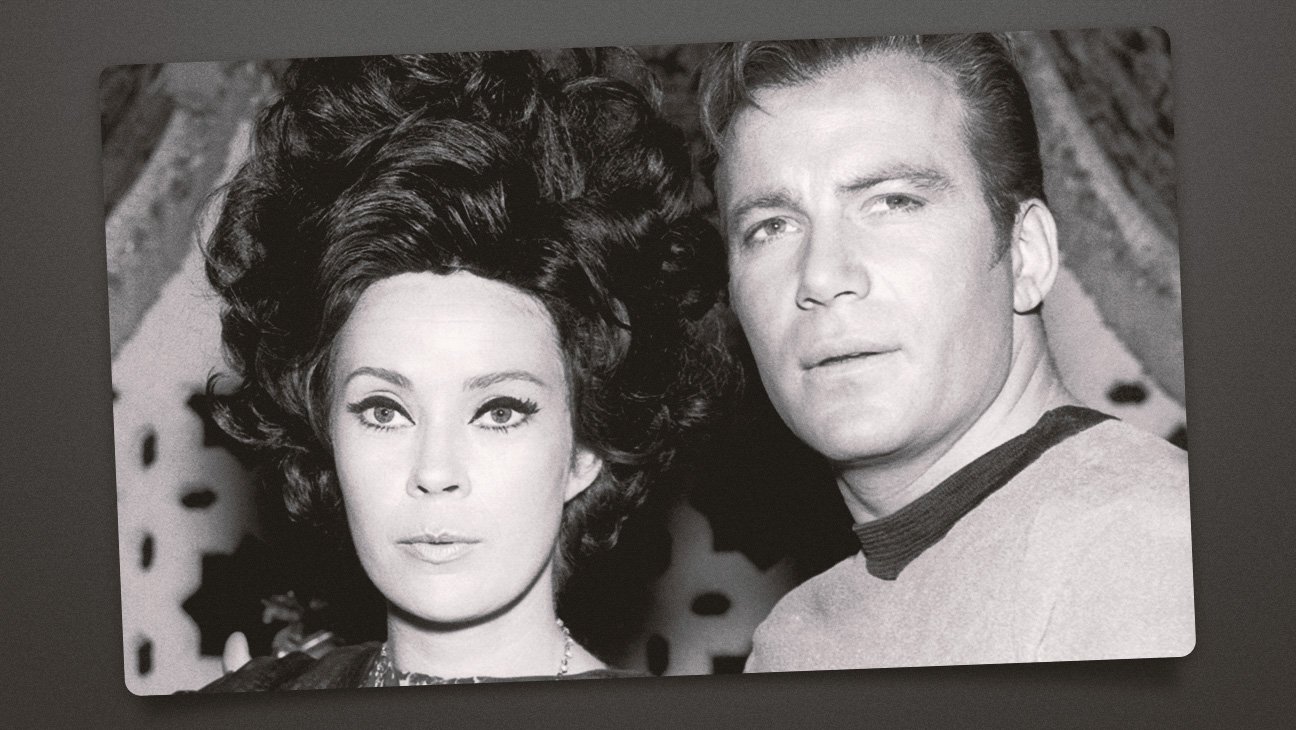
Antoinette Bower, the German-born British actress who starred on an Adam & Eve-like episode of The Twilight Zone and portrayed the seductive catlike alien Sylvia on an installment of Star Trek, has died. She was 93.
Bower died April 30 in an Eagle Rock senior retirement home in Los Angeles, her friend Carlotta Glackin — great niece of famed Golden Age character actor Edward Everett Horton — told The Hollywood Reporter.
On the big screen, Bower got top billing in the Filipino-shot horror film Superbeast (1972), played the wife of Leslie Nielsen and mother of Jamie Lee Curtis in the slasher classic Prom Night (1980) and was kidnapped by Charles Bronson in the action thriller The Evil That Men Do (1984).
For three seasons (1989-92), she recurred as the kind Fox Devlin, an associate of Winston Rekert’s Dr. Michael Terry, on the Canadian TV drama Neon Rider, set on a ranch in British Columbia for troubled and abused teens.
On the Rod Serling-penned, Ted Post-directed Twilight Zone episode “Probe 7, Over and Out,” which premiered in November 1963 during the anthology show’s fifth and final season, the statuesque Bower portrayed Eve Norda, a woman stranded on a distant planet. The only other person around is an astronaut named Adam Cook (Richard Baseheart).
Bower also was memorable as the villainous Sylvia opposite Theo Marcuse as Korob on the second-season Star Trek episode “Catspaw,” which premiered in October 1967.
Antoinette Alexandra Jane Bower was born to a German mother and English father on Sept. 30, 1932, in Baden-Baden, Germany.
Educated in England, she was a field language supervisor and welfare counselor in the late 1940s with the United Nations’ International Refugee Organization, which assisted millions of people left homeless across Europe and Asia following World War II.
Bower rejoined her family in Canada in 1953 and in Toronto landed a job with the fledgling Canadian Broadcasting Corp., where she worked in public affairs, wrote scripts and conducted interviews on live TV. She also did some acting, appearing in a 1958 TV adaptation of The Tell-Tale Heart and in 1959 on the syndicated series Hudson’s Bay.
She visited L.A. and in the early 1960s decided to stick around after landing an uncredited role in Marlon Brando’s Mutiny on the Bounty (1962) and guest-star parts on such shows as Adventures in Paradise, Alfred Hitchcock Presents, Hong Kong, Wagon Train, Thriller, Hawaiian Eye and Perry Mason.
Antoinette Bower with Richard Basehart in “Probe 7, Over and Out,” a 1963 episode of ‘The Twilight Zone.’
Courtesy Everett Collection
She remained quite busy through the early ’80s, showing up on Combat!, The Man From U.N.C.L.E., Burke’s Law, The Wild Wild West, I Spy, The Fugitive, The Invaders, The Big Valley, Bonanza, Mannix, Hawaii Five-O, Get Smart, Hogan’s Heroes, Mission: Impossible, The F.B.I., Columbo, Kojak and Murder, She Wrote and in the 1983 miniseries The Thorn Birds.
She pretty much left acting after her run on CTV’s Neon Rider.
About 10 years ago, Bower completed a documentary about chuckwagon racing in Canada that she shot, directed, edited and narrated after spending several summers with the participants.
Glackin noted that Bower, who studied carpentry at Santa Monica College, had been a valued Home Depot employee who custom-built cabinets and tall bookshelves at her home in Beverly Glen.
She added that Bower was still getting lots of fan mail from the Star Trek faithful and that William Shatner had emailed his condolences after learning of her death. (She was one of the 20 or so women to kiss Capt. Kirk on the show, according to this post.)
Bower wed Texas-born pop artist James Gill in 1963, but their marriage ended in divorce. She was pre-deceased by her half-brother, Roger.
A life celebration is scheduled for Sept. 26 in Pasadena.
At PCMag Deals, we’re always looking for ways to save you a buck (several in fact) on top-rated tech from big brands that our experts, with their 40-plus years of experience, have thoroughly tested in our labs and in real-life settings. The hardest part isn’t actually finding the lowest of the low prices; it’s making sure you find out about them before they sell out or return to full price.
Well, we’ve got an idea about how to fix that, and it’s our brand-new PCMag Deals text group. Every day (except for Sundays and holidays*), our shopping pros will send you our pick for the best electronics deal currently available. It could be anything from hundreds off a laptop to a new Apple product marked down for the first time to an all-time low price on some noise-canceling headphones.
And right below, you can scope out our sales hub for all of these top deals!
It’s summer. You’re outside. You need some tunes (and you want everybody to hear them). Might we suggest this Soundcore Boom 2 by Anker outdoor speaker? We gave it 4/5 “Excellent” score in our review calling out pros like powerful bass, LED lighting effects with vibrating radiators, and a customizable in-app EQ. Our resident audio expert, Tim Gideon, says, “If you’re in the market for a light-up speaker that you can safely take out on your boat or use by your pool, the Boom 2 offers a good blend of power and personality.” And now you can grab on for under $100 with today’s 30% discount.
If your TV ain’t so smart, well it’s time to wise it up so you can upgrade your viewing experience. But here’s how to do it on the cheap. The new Amazon Fire TV Stick 4K Select is marked 45% off today, bringing the price down to $22 (the cheapest we’ve seen it for is $18, so four bucks isn’t that much of a difference). With this device, you can now stream everything in rich, beautiful 4K Ultra HD. It also puts all of your streaming apps (like Prime Video, Netflix, YouTube, Disney+, Apple TV+, HBO Max, Hulu, Peacock, Paramount+) in one place. How convenient! You can even get some gaming in with Xbox Game Pass via cloud gaming (you’ll need a proper subscription and controller for that). And, of course, it includes Alexa voice remote. “Play Widow’s Bay…again.”
Soundcore (by Anker) is the brand to go if you’re looking for affordable earbuds and headphones that don’t cheap out on quality sound or ANC. And if you’re not sure whether you want earbuds wedged in your auditory canal or headphones covering up your ears, the open-ear V20i are the just-right middle ground that let in natural ambient sound. While we haven’t reviewed this particular pair, it does pack 16mm drivers for some serious bass. It’s also has an IP55 waterproof rating, making them sweat-proof as well (perfect for the gym or any other workouts). Plus you’re getting 36 hours of playtime on a single charge, and that ain’t bad. Also not bad (and kind of great actually) is the price tag. Today, for you, they’re just $28!
Looking to improve the quality of the Wi-Fi around your living? The TP-Link Deco 7 Pro BE63 is tri-band beast that boasts Wi-Fi 7 technology and 6GHz transmissions to bring speedy wireless networking to all those nooks and crannies in your home (aka, the dead zones). The Deco 7 Pro took home our Editors’ Choice award as well as “Best of the Year” product nod in our review. We loved ho easy it is to install and manage, the excellent throughput performance, the Multi-gig Ethernet ports, a USB port on each node, and the included HomeShield software. Our expert, John R.Delaney, went on to say, “Armed with Wi-Fi 7 technology, multi-gig connectivity, and a powerful quad-core processor, it rocked our performance tests, delivering some of the fastest throughput scores we’ve seen.” The only thing that rocks harder is today’s $100 off deal on a three-pack.
If you’re a PC gamer you’re not going to want to miss this one. In our review of the Asus ROG Harpe Ace Aim Lab Edition, the biggest complaint was about the price tag. Well, cutting 49% off the MSRP pretty much cancels out that issue. Our expert, Francisco Lahoz, put it best when he said, “The Harpe Ace makes an excellent addition to your desktop or laptop and to our Editors’ Choice lineup of esports mice.” He also loved the ultra-accurate sensor, onboard profile storage, high resolution, and included grip tape. If you’ve been waiting for a gaming mouse upper grade, you need to pull the trigger on this deal!
Here’s a bright idea. Saving a grand one of PCMag’s highest rated televisions. How highly rated, you ask? Well, in our review of the TCL 75QM8L, the set received a 4/5/5 “Outstanding” rating, an Editors’ Choice award, and a nod as the 2026 Lab Test Winner. That’s a whole lot of kudos, but why all the love? Quite simply, it’s the brightest mini-LED TV we’ve ever tested. Our expert, Will Greenwald, says, “The TCL QM8L proves that conventional mini-LED QLED technology is still the best way to go if you want a really luminous screen.” He also called out the strong off-angle viewing, particularly compared with RGB LED TVs the vibrant color, and excellent gaming performance as big time pros. Even at full sticker price, it delivers. But today today’s 33% discount bring the cost down by $1,000. What a deal! What an investment!
More TV Deals
*Deals are selected by our commerce team
Samsung Soundbar Deal
Samsung B-series Virtual:X Soundbar with Subwoofer
When you’re watching World Cup action, have you noticed that your TV’s sound maybe (probably) isn’t that great. If that’s the case, you should totally be in the market for a new soundbar, like the Samsung B-Series. This soundbar enhances vocal clarity using a dedicated center channel inside a 3.1 acoustic array to isolate spoken dialogue (no more subtitles for you). It’s wireless subwoofer employs Dolby Audio and DTS Virtual:X processing to map out a multidirectional spatial audio (that’s good). The soundbar also offer specialized cross-talk Voice Enhance filters, a low-noise hardware Game Mode, and concurrent dual-device Bluetooth Multi Connection pairing. And now you can grab it for just $199, which is 29% off the usual $279 MSRP. Movie nights and sporting events in your home are about to get a big time upgrade!
Canon is known for doing two things very well, cameras and printers. Our expert, M. David Stone (also know for his expertise when it comes to printers) named the Canon MegaTank G3270 “the best best all-in-one printer for basic use” from the brand. In his review, he gave this wireless inkjet model a 4/5 “Excellent” rating for being a, “touch above entry-level for a tank-based printer, thanks to its support for printing from mobile devices. A good fit for a home or home office, it offers a flatbed for scanning and a low running cost even for color pages.”
Have you seen SSD prices this year? They’re skyrocketing, with no end in sight! That’s why this Prime Day deal on the Samsung T9 Portable SSD is one that shouldn’t be missed. That 31% off is going to save you over $100 on 1TB. If you need some extra space for your desktop, your camera, or you gaming console, this might be the most affordable option out there at the moment. You know what’s cool about this one? The advanced thermal solution keeps the heat down even while performing at high speeds!
Recommended by Our Editors
More SSD Deals
*Deals are selected by our commerce team
Ecovacs Robot Vacuum and Mop Deal
Ecovacs Deebot X8 Pro Omni Robot Vacuum and Mop
Instant self-washing mopping, 167℉ hot water mop washing, hot air-drying, self-emptying
How much do we love this robo vac and mop? Well, our experts gave it a 4.5/5 rating, an Editors’ Choice award, and named it one of the “Best of the Year” products for 2025. We can’t give much more higher praise than that! In our review of the Ecovacs Deebot X8 Pro Omni Robot Vacuum and Mop we shouted out the battery life that lasts over two hours (nothing worse than your robo vac conking out and leaving a job unfinished).
Our expert, Andrew Gebhart, went as far to say that Deebot X8 is the best total package out there and, “near the top of its class at everything it does. It improves upon the previous generation with a redesigned mop to limit cross-contamination, a separate detergent compartment, an extendable side brush and mop, and the ability to climb small thresholds.” And now it’s an astonishing $400 off. This is a total can’t-miss-deal!
Microsoft Surface Pro Deal
Microsoft Surface Pro 2-in-1 Laptop
Snapdragon X Elite, 13-inch OLED touch, 16GB RAM, 512GB SSD, 14h battery, Copilot+ AI PC
You know how there are certain things you like to look at or work on with your laptop instead of your phone, or on a tablet instead of desktop? Then the Microsoft Surface Pro 2-in-1 Laptop/Tablet might be the thing to scratch all of those itches. Powered by Snapdragon X Plus (10 core) with that 13-inch OLED touchscreen display, this could soon become your “do everything” machine.
In his review, our expert, Brian Westover, calls the 2024 Microsoft Surface Pro, “a beautiful product that retains the legacy of one of the best-designed tablets ever made. The OLED display and detachable Flex Pro keyboard are genuinely exciting refinements to Microsoft’s already stellar tablet design.” And that was before this significant $500 price drop! A few other pros worth shouting out are the improved battery life up to 14 hours), and that slim, versatile design.
Note: keyboard is not included, but thanks to today’s savings that’s not as hard of a hit.
Summer’s here and that means backyard BBQs, camping trips, and the occasional blackout. Your best bet for all three of those events a portable power station. We found the Bluetti AC50B on a great deal today with a 35% discount that’ll save you $140 (just think of all the burgers you could buy with that). Weighing just shy of 15 pounds, this big battery lasts 3500+ cycles, which is almost a 10-year lifespan (making it a sound investment).
All it takes is 45 minutes for the AC50B to charge from 0 to 80% (that’s real quick) and just. under three hours to reach full capacity with a car charger (6 hours via solar). With six ports you can charge multiple smaller items at the same time like phones and tablets. It can even run a mini-fridge for up to three hours. Best of all, you can monitor power consumption via the Bluetti app.
Looking for some a bit bigger? Out experts gave the Bluetti Apex 300 and “Outstanding” 4.5/5 review as well as our Editors’ Choice award.
More of the Best Deals of the Week
Even More Amazing Deals
*Deals are selected by our commerce team
About Our Expert
John Mihaly
Managing Editor, Shopping & Deals
Experience
John Mihaly has been an editor at BuzzFeed, Thrillist, WWE, and FHM, and has written for publications such as Fatherly, TIME, Men’s Journal, SPIN, Blender, and others over the course of his 20-year career in media. When he’s not trying to find the best deals on consumer electronics, John is in the process of building a new house with his wife for their two young children, writing about and testing children’s toys and gear for parents, and playing with his dog Rocket, a five-pound, black and tan Pomeranian. John is generally into baseball, Big East basketball, comic books (never call them graphic novels), 80s movies, 90s music, biographies, and staying out of the sun.
Typing this from a 14-inch MacBook Pro with an M3 Chip, but at home, I’m using a MacBook Air with an M2.
When I’m on the go, I’ve got some 2nd-generation AirPods in my ears (which I got on sale for $69 this past Black Friday). I just like the way they fit better. When I’m listening to music around my home, I’m either wearing some Sony WH1000XM4 headphones or using various Sonos One SL or Roam speakers.
As much as I try to detach, my iPhone 16 Pro is always by my side, and I use an Amazon Fire HD tablet for reading digital comics, books, and newspapers. Like many, I’m the type of person who uses their tech until it breaks, then updates to whatever the latest thing is at the moment (then repeat).
You’re going to have to use more of your free Google storage whenever you back up your Android going forward.
As of July 7, Google now counts all forms of users’ data toward their 15GB free storage limit, not just images and photos uploaded to Google Photos and what is called ‘MMS data,’ which are photos and videos sent via text message. Now, additional data like your SMS messages, call history, and device settings will all be counted towards the limit. Luckily, Google estimates that the change to its rules should only bump up the average user’s storage needs by 40MB.
According to Google’s updated FAQ page, first spotted by 9to5Google, the change will first roll out to new Android users, followed by all users over the coming months.
Users are also set to receive new granular controls about what data they want to be backed up, toggling on and off whatever data types they want stored. These controls are set to roll out in the coming weeks.
If you’d like to limit what type of data gets stored, and you’re using a Pixel device, head to Settings, then Accounts and backup, then Google Backup, and head to Other device data. You can also try searching “backup” in your Settings app.
Recommended by Our Editors
If you are concerned about running out of storage space and you’d be interested in upgrading, Google One (Basic) gets you 100GB of total data storage, for $1.99 per month or $19.99 per year. If you’re hungry for even more data, you can get 200GB for $2.99 per month or $29.99 per year as part of the Standard subscription. Meanwhile, Google One’s Premium Subscription will get you 2TB of data for $9.99 per month or $99.99 per year.
It’s important to note that even if Google is tightening up its free storage limits, it’s still giving more away than Apple. Apple’s iCloud gives users just 5GB free.
About Our Expert
Experience
I’m a reporter covering weekend news. Before joining PCMag in 2024, I picked up bylines in BBC News, The Guardian, The Times of London, The Daily Beast, Vice, Slate, Fast Company, The Evening Standard, The i, TechRadar, and Decrypt Media.
I’ve been a PC gamer since you had to install games from multiple CD-ROMs by hand. As a reporter, I’m passionate about the intersection of tech and human lives. I’ve covered everything from crypto scandals to the art world, as well as conspiracy theories, UK politics, and Russia and foreign affairs.
If Word, Excel, or PowerPoint are part of your regular routine, a monthly Microsoft 365 subscription may feel like more than you need. For users who prefer a traditional desktop setup without extra cloud features or ongoing payments, Microsoft Office 2024 Home and Business provides a lifetime alternative with a permanent license for Mac or PC. Right now, the latest standalone version is available for $159.97 (MSRP $249.99).
Office 2024 includes the updated desktop versions of Word, Excel, PowerPoint, and Outlook. Once activated, the software runs locally on your computer, so there are no recurring payments or renewal reminders.
Because this is the latest release, performance and usability improvements are built in. Word includes enhanced writing assistance to help polish documents faster. Excel is optimized to manage larger spreadsheets more efficiently, which is helpful for budgeting, forecasting, or business tracking. PowerPoint adds upgraded recording and presentation tools, making it easier to turn slides into shareable content.
For professionals, small business owners, and anyone who prefers owning their software outright, this edition keeps things straightforward.
Prices subject to change. PCMag editors select and review products independently. If you buy through StackSocial affiliate links, we may earn commissions, which help support our testing.
About Our Expert
StackCommerce Team (Sponsored)
Experience
Products featured in these stories are selected by our partners at StackCommerce. If you buy something through links on our site, PCMag may earn an affiliate commission.
Disney+ may soon be getting a new free tier, according to new reports.
Disney’s chief product and technology officer Adam Smith allegedly discussed the possibility of enabling free-tier content during an internal company town hall earlier this week.
However, according to a source who spoke to Business Insider, the executive didn’t share a timeline for when the plans could be implemented. They also didn’t touch on what this free tier could ultimately look like or what content users will get.
Adding a fully-fledged free tier would make Disney+ fairly unique among the paid streaming giants. Though Apple TV+ and Paramount+ do offer some free sample episodes, services like Netflix and Prime Video offer no free content whatsoever at the time of writing.
Smith didn’t give a great deal of detail about why Disney is waiting until now to add free content, but we’re seeing more and more consumers shift to free streaming services, amid recent price hikes from streaming giants.
Data from Nielsen found that free streaming services like YouTube and Tubi represented 18.7% of US television watch time in April 2026, up roughly 11% year-over-year, from 16.8% in April 2025. Free streaming represented just 12.7% of watch time in April 2024.
Recommended by Our Editors
Disney has not officially commented on the reports. The streaming giant has been exploring new formats as of late. Disney+ rolled out a vertical short-form video feature, dubbed Verts, for the first time back in March. Disney said the feature’s personalized suggestions could help users discover more of its 100-year catalog of content.
In December 2022, Disney+ joined services like Netflix and Hulu in introducing a discount ad-supported tier, though a free tier is still unknown territory for the company.
About Our Expert
Experience
I’m a reporter covering weekend news. Before joining PCMag in 2024, I picked up bylines in BBC News, The Guardian, The Times of London, The Daily Beast, Vice, Slate, Fast Company, The Evening Standard, The i, TechRadar, and Decrypt Media.
I’ve been a PC gamer since you had to install games from multiple CD-ROMs by hand. As a reporter, I’m passionate about the intersection of tech and human lives. I’ve covered everything from crypto scandals to the art world, as well as conspiracy theories, UK politics, and Russia and foreign affairs.
Sofía has just finished her psychology studies in Valparaíso, Chile, and returns to her hometown, Valdivia. This return coincides with the discovery of a young girl’s body, which awakens buried memories of childhood in Sofía. She must decide whether to look beyond the rain and its veil to uncover a past that is painful and uncomfortable not only for herself but also for her whole community.
Director Valeria Sarmiento’s new film Behind the Rain world premiered in the Crystal Globe main competition of the 60th edition of the Karlovy Vary International Film Festival. Mixing beautiful black-and-white landscape images with the difficult subject matter of childhood sexual abuse, the movie is based on an original idea from Sarmiento and a screenplay that she worked on with the late Omar Saavedra Santis. The director of photography is Acácio de Almeida; the editor is Galut Alarcón.
The cast features Paula Prado, Cristián Arriagada, Aline Kuppenheim, Shlomit Baytelman, Chamila Rodríguez, Daniel Muñoz, Julio Milostich, Aimar Alarcón Rodríguez and Clara Vargas Arellano. Rodríguez is also the producer of the movie.
Sarmiento and Rodríguez, who have been collaborators since Secrets (2008), talked to THR, via an interpreter, about Behind the Rain and their hopes for the societal debate it could cause.
What inspired this story and led you to make a film about a very important, and also very heavy, topic?
ValeriaSarmiento The initial inspiration was that in our society, child abuse is sadly really common. And oftentimes, we are silent about it.
You worked on the screenplay with Omar Saavedra Santis. Was that his final film project, and how did he come on board?
Sarmiento Initially, I wanted to work on the film with my French and Swiss friends, but we did not really make any progress. When I met with Chamila, she suggested to go back to where it all started, which meant Chile. And that’s when I contacted Omar, who then he joined the team and developed my initial idea further.
Chamila, why did you want to work on this film – both as an actress and producer?
Chamila Rodríguez I was really intrigued by the artistic complexity, and I’ve been working with Valeria for 20 years. So, I had great trust in her. While we were working on our previous film, she started talking about this story, and it was very appealing to me, because I experienced something similar when I was a child. My experience of child abuse was hidden, and I never spoke about it until I was 40. Then; I finally started to speak about it, so I could really relate to the story. When she showed me the script, I immediately knew that I wanted to do it. I also see art, including film, as a way to exorcize demons, as a way to transform horrible things into something that’s more positive.
Your character isn’t necessarily the easiestpersonto be around…
Rodríguez Yes, my character is a lawyer who is really difficult to be with.
Behind the Rain has stunning black-and-white visuals, with color coming in only at the very end. Can you maybe talk about that choice?
Sarmiento I knew from the very beginning that the film was going to be in black and white, except for the ending, because I grew up seeing films with no color. I was born in 1948, so it took quite a time before I was able to see a color film. And the title also comes in here. My mother said to me that I have to look behind the rain in order to see all the colors and aspects, so that’s what I tried to do.
‘Behind the Rain,’ courtesy of KVIFF
How did you cast Paula Prado in the lead role?
Sarmiento It was not easy to find an actress who would be able to travel with us to Valdivia, because many actresses work in theaters, and they can’t really travel to go there. And when I found Paula, I immediately felt that she was the right person, that she would be the perfect one to convey the ideas of the film.
How was the whole experience on set?
Sarmiento The shoot was very harmonious.
Rodríguez It was. And it is a great pleasure to work with Valeria, because as a director, she’s really calm, and you can trust her. You feel safe, and she knows exactly what she wants. Also, Valdivia is a beautiful small town. Everything is close there, so from a technical point of view, it was really helpful and easy to work there.
What is your hope for the film and the discussions it can maybe create in society?
Sarmiento We hope the film will do exactly that.
Rodríguez Yes, because people have to talk about it. It’s like the abuse is hidden because children don’t have the words to be able to tell others about what’s been happening
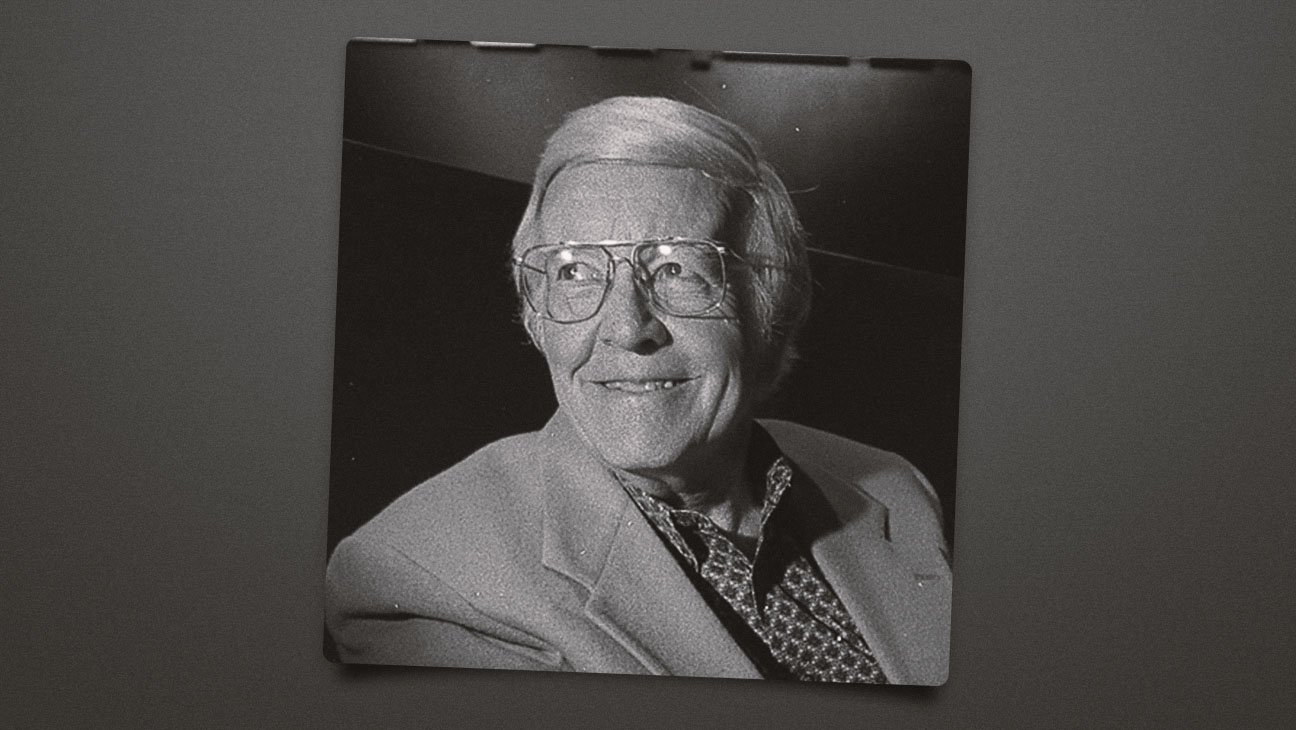
Don Iwerks, the Disney legend who spearheaded various camera and projection systems for the company’s parks and films, has died. He was 96.
Disney announced Iwerks died Thursday evening.
“It is with great sadness that we report that Disney Legend Don Iwerks has passed away at the age of 96,” reads a statement shared on Disney D23’s Instagram. “Iwerks was an innovator whose work brought The Walt Disney Company to new technological heights, aiding in perfecting the sodium vapor process used in 1964’s Academy Award®-winning Mary Poppins, developing the 360-degree Circle-Vision camera used to film America the Beautiful for Disney Parks, and implementing the projection system for the fan-favorite Star Tours attraction, among numerous other advancements. The achievements of Don Iwerks and his family have shaped Disney’s creative ethos and will forever be part of the company’s history.”
Born on July 24, 1929, Iwerks was the son of fellow Disney Legend Ub Iwerks, co-creator of Mickey Mouse (alongside Walt Disney himself). Iwerks began at Walt Disney Productions in 1950, when he was a special photographic processes laboratory technician. He was drafted into the Korean War but upon his return two years later returned to Disney.
Iwerks took on his role as a camera technician position in 1953, when he worked on his first feature 20,000 Leagues Under the Sea. He went on to lead the machine shop department, camera service department and technical engineering and manufacturing division.
The executive is particularly known for developing the 360-degree Circle-Vision camera; alongside Ub, he also helped develop the sodium vapor process.
After 35 years with Disney, he founded Iwerks Entertainment Inc. in 1986. The company was acquired by SimEx Inc. in 2001.
In 1997, Iwerks received the Gordon E. Sawyer Award from the Academy of Motion Picture Arts and Sciences’ Board of Governors, then named a Disney legend in 2009.
“Don embodied that rare combination of heart, ingenuity and passion that has always defined Disney,” Disney CEO Josh D’Amaro said in a statement. “Through his innovative contributions to some of our most iconic films and attractions, he helped create experiences that have delighted generations of fans around the world. All of us at The Walt Disney Company will miss him deeply, and we send our most heartfelt condolences to his family, whose enduring connection to Disney has helped shape its legacy for over a century.”
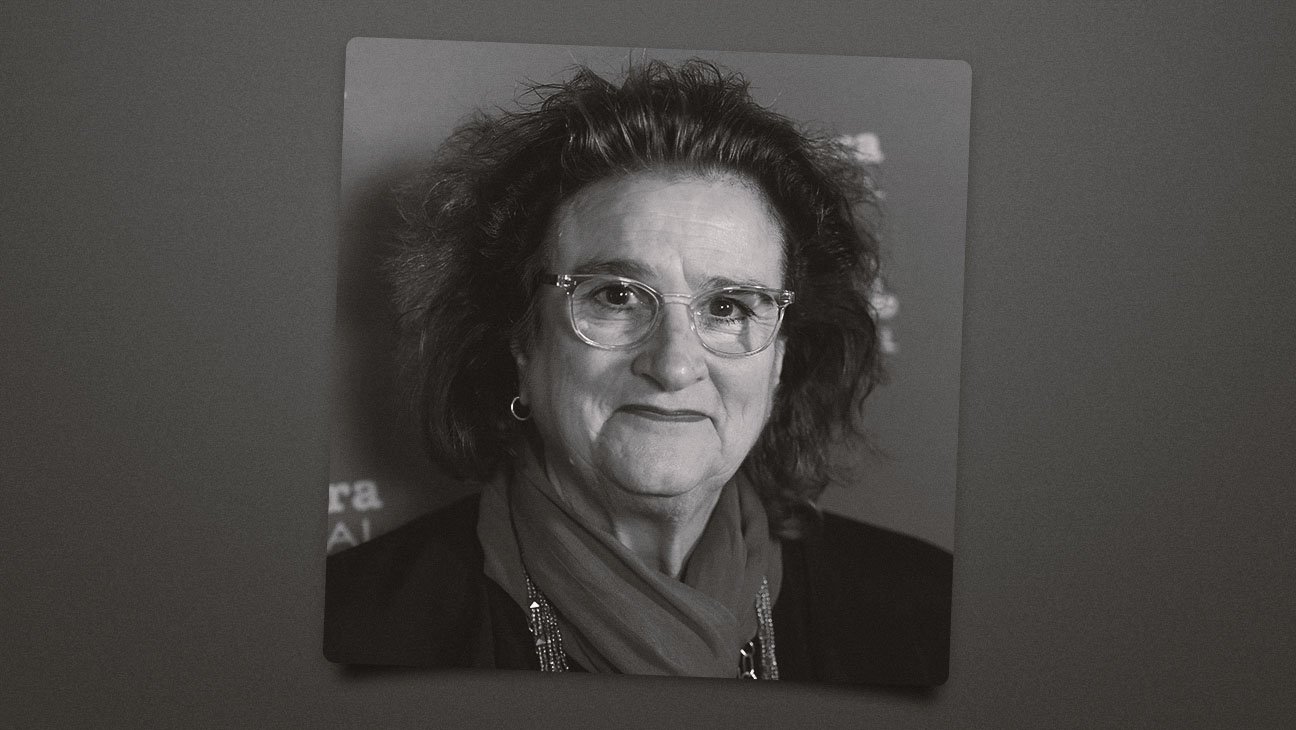
Barbara Ling, the production designer who turned back time and won an Oscar for re-creating 1969 Los Angeles for Quentin Tarantino’s acclaimed Once Upon a Time in Hollywood, has died. She was 73.
Ling died Thursday in Santa Barbara after a battle with cancer, a spokesperson for WME announced.
A Los Angeles native, Ling also tooled around her hometown for the present-day, Michael Douglas-starring Falling Down (1993), then reteamed with director Joel Schumacher to set up the fictional Gotham City for Batman Forever (1995) and Batman & Robin (1997).
In a career that spanned more than four decades, Ling served as the production designer on two 1991 classics, Oliver Stone’s The Doors and Jon Avnet’s Fried Green Tomatoes, on which she also was an associate producer.
She also teamed with director Scott Hicks on Hearts in Atlantis (2001), No Reservations (2007), The Lucky One (2012) and Fallen (2016).
Most recently, she worked on Marc Forster’s A Man Called Otto (2022), starring Tom Hanks, and on the blockbuster biopic Michael (2026), directed by Antoine Fuqua.
On Once Upon a Time in Hollywood (2019), Ling shared the Oscar for best production design with set decorator Nancy Haigh; the two had worked together once before, on the 1988 film Checking Out.
Tarantino’s “main thing from the moment we sat down was, ‘I want this to be real. I want to see. I want to smell and I feel that Hollywood. I don’t want to do green screen over here or have the digital interpretation. Let’s really change the billboards, and let’s put the real facades back on,’” Ling said in a 2019 interview.
“That is, to me, very exciting. It’s something we don’t do much of anymore. I knew that what he wanted was to encompass himself and the actors into an environment that you could feel is real. You’re not just staring at something that’s a piece of green screen where we piece together later. That was the starting ground of this.
“I had to go out and figure out where I could attach real things to. It was quite an engineering feat to do, particularly on Hollywood Boulevard, to say, ‘I want the Pussycat Theater back.’ To build those marquees, it’s added weight. These are old and fragile buildings that we were working with. We had to also work with engineers to make sure we weren’t going to pull the facade off once we rebuilt the old signs. It was laborious but well worth it.
“The night of the first shoot when all the neon lit up and the period cars came out and [Arianne Phillips’] costumes were out there, you absolutely believed you were in 1969 because everything was real. It was a movie filming a real street. We pretty much carried that theme through Westwood [to re-create the Bruin Theater] and everywhere we shot.”
After winning her Oscar, Ling lamented to reporters backstage that “L.A. is not a preservation city, never has been. Now there’s been a nonstop movement of apartment building and glass towers. … What we did will be impossible to do next year. It’s unfortunate. We hope this will bring some nostalgia back and stop things from being torn down.”
Born in August 1952, Barbara Claire Ling began her career designing sets and lighting for more than 200 theater, opera and musical productions. Among her early efforts was the 1981 HBO special The Pee-Wee Herman Show, taped at the Roxy in West Hollywood.
She made the leap to filmmaking when David Byrne enlisted her to design his directorial debut, True Stories (1986).
Her credits also included Heaven (1987), Less Than Zero (1987), V.I. Warshawski (1991), With Honors (1994) and Sydney Pollack’s Random Hearts (1999), among the films that demonstrated she was equally comfortable with period authenticity, contemporary realism and stylized fantasy.
Survivors include her wife, Lindsay, and their sons, Clay and Will.
For the area’s many elite runners, distance races can be as much about fueling and hydration strategies as they are about mileage build-up and training plans.
On race day, athletes dial in the amount of carbohydrates they are taking in via gels and sports drinks and they plan to the moment when said fueling must occur to optimize performance in a race setting. Nothing is left to chance.
Imagine, if you will, asking a crowd of runners not to stretch and limber up before the starter gun fires, but to take down a soft taco with seasoned beef and set out on an all-day run.
The idea is painfully (literally) simple. In order to be considered not a finisher but a “survivor” of the 50K event, one must run the approximately three miles between Napa’s two Taco Bell restaurants, eating a food item at nine of the 10 stops over a total of 31 miles.
Wait, there’s more.
While racers are allowed to pick and choose from the menu what might sit best in their gastrointestinal tract, there are two required food items. By stop No. 4, runners must have consumed at least one Chalupa Supreme or one Crunchwrap Supreme. By stop No. 8 (which is approximately 24 miles in) runners must have consumed at least one Burrito Supreme (think seasoned beef, onions, sour cream, cheese, beans, lettuce and red sauce) or one Nachos Bell Grande (same ingredients, just add chips).
Runners are asked to literally have receipts – in the form of wrappers from their orders.
As a journalist, I usually have many questions.
On this story it all boils down to just one. Why?
“We said, ‘Let’s plan something kind of silly, kind of dumb, and pretty fun and see what happens,” said Ryan Melendez, 31, of Vallejo.
Melendez is one of the three co-conspirators putting on the inaugural Napa Taco Bell 50K. He’s joined by Alec Villagomez, 30, of Napa and Jamie O’Sullivan, 49, of Napa. All three are elite runners with athletic resumes full of short, medium and long races. All three are training for the Javelina Jundred in October, a race so long it spans two days, not one.
But nary a one of them have done any mileage carrying a belly full of Chalupa.
“I think just the volume of food is going to be tough,” Villagomez said. “I think having a running stomach that is somewhat delicate, I’m worried about the volume of things I’m going to put in it. But there comes a kind of Zen moment and you have to be uncomfortable in a run and accept it.”
But distance runners are nothing if not optimistic folk. How could you lace up and run 50 kilometers (31 miles) and not hold a hopeful outlook? Hopeful that this pain will pass, that the next step will bring something better, that the finish line must be close?
So Villagomez said he’s banking on camaraderie and good cheer among his fellow runners to lift him in moments when the cheese and sour cream hit.
“In this race the discomfort will be a bloated stomach,” he said. “It’s going to be a hot day, the Taco Bell aspect, but I think it will be a lively atmosphere.”
See what I mean about optimistic?
Melendez, Villagomez and O’Sullivan — they go by Larry, Curly & Moe on some social media sign-up pages — did not invent this mayhem, but they loved the sound of it so much they decided to bring it to Napa where all three are active in the running community.
Call it a franchising effort.
“We all love Taco Bell and we all love running,” Villagomez said. “We have never tried the two together but we assume it would all go together. And then we’d see if we could get anybody to join us.”
So far, they have lured about 40 runners into their web.
The event started in Colorado. In October, the ninth running of the Denver Taco Bell 50K will be held. There, it’s a sweeping loop of the metro area with almost exactly the same rules as those adopted by the crew in Napa: 31 miles, nine stops, required items and bonuses if you can take down 2 liters of Mountain Dew Baja Blast and/or slather all items in Diablo sauce (and take a Diablo sauce shooter at the finish line).
Not familiar with the Baja Blast? Me neither, but I found this description on the interwebs: “Tastes like the back end of a Slurpee.”
What you are not allowed to imbibe? Pepto-Bismol, Alka-Seltzer and the like. This race is au naturel.
But pacers are allowed “for moral support and holding your hair if you must eject a Gordita.”
So popular has this adventure proven to be that sister events have popped up in Washington, D.C. and in the Twin Cities and in Southern California.
So why not Napa?
One “problem” (but what are ultra runners if not on-the-fly problem-solvers) was that the city only has two Taco Bell restaurants. So a sweeping loop route was out of the question.
But Melendez, Villagomez and O’Sullivan measured the distance between the Soscol Road Bell and the one on Jefferson Street. It was almost exactly a 5K (3.1 miles) between the two and runners could be funneled onto the Napa Valley Vine Trail for the majority of their miles.
But because the organizers don’t want runners with wobbly legs and wobblier stomachs out on the city streets all night, there is a 10-hour time limit for finishing and anyone on the course after 7 p.m. must wear a headlamp.
“Actually this is where there is a soft side to all of us,” O’Sullivan said. “We didn’t want anyone on the Vine Trail after 8 p.m. and we wanted a 10-hour cutoff.”
O’Sullivan was tasked with letting Taco Bell know of their plans. There is zero affiliation with the restaurants but organizers hope it might be considered a boon for business on a Saturday. Still, O’Sullivan wanted to cover their bases and be respectful.
“I don’t want anybody to be an unintentional victim, I don’t want anybody to be overworked,” he said. “This is going to be busy.”
So he set up a meeting with one of the managers. By O’Sullivan’s telling, what followed was in line with the whimsical feel of the event.
“I showed up with the waiver and the rules and the flier and she said, ‘I thought you were kidding,’” he said. “I was like, ‘No, I’m quite serious.’”
I showed up at said Taco Bell to confirm this story but did not hear back from the manager by my deadline.
Melendez, Villagomez and O’Sullivan might seem diabolical for staging such an event – they even planned a late 10 a.m. start to make sure it would be extra hot out there. But they are generous.
There is no fee for entry, just the cost of perhaps losing a sliver of dignity. They are also working out a Dine and Donate plan for each of the Taco Bells with funds going to the two elementary schools closest to the restaurants.
“This is our community,” O’Sullivan said. “We don’t want to create any negativity around this event.”
Plus, he figures that the back and forth nature of the route will mean less a crush of runners than a steady flow of customers. The route also means that athletes will see each other out there, be able to root each other on and offer support. And that is what the trio of organizers are going for.
“There is a saying, if you want to run fast, run by yourself, but if you want to run far, run with others,” Melendez said. “It’s community. For long endurance events, it’s very supportive and just great… definitely the community being able to share suffering experiences with yourself is really big.”
And Melendez, Villagomez and O’Sullivan say they already have a slew of folks signed up to volunteer on the course and outside the restaurants. They will be checking less for scofflaws (when I asked about the potential for cheating, O’Sullivan was appalled at the idea: “It’s totally honor system. That is one of the things we will tell the runners, ‘Are you really going to cheat on this? What is wrong with you?’”) than making sure runners are carrying water and standing upright.
“All of our volunteers are runners,” Villagomez said.
There are plans for a “vibe station” with music and good cheer for a needed morale boost when the build up of seasoned beef might get one down.
Organizers plan to have medals at the finish line for all survivors. To that end, there is a sign-up deadline on July 15.
But very clearly, completing this “race” isn’t about hanging a medal around your neck. It’s about something next-level, Villagomez said.
“We are hoping that everyone shows up and has a good time,” he said. “Anyone who shows up do the Taco Bell 50 is a champion of the heart.”
You’d recognize Apple’s iconic white earbuds anywhere. Or should I say everywhere, since everyone on the street seems to be sporting them. They’re common for a reason: AirPods look great, sound great, and round out the perfect iOS experience (as long as you’re an iPhone owner, that is). And at their usual $129.99 list price, they’re a pretty affordable pair of open-ear buds.
But if they were more affordable, that’d be the cherry on top. If you’re in need of a new pair of earbuds, you’re in luck—Walmart has the AirPods 4 on sale right now for $99, which is a solid 24% off the list price. Pocket that $30.99 in savings and put it toward your streaming apps, because you’re going to want to listen to these buds all day long.
Apple AirPods 4
H2 chip, IP54, 30 hours of battery life, Spatial Audio, Adaptive EQ, Siri support + Head Gestures
First things first, the model on sale does not have active noise cancellation—but you don’t need it if you’re just looking for fantastic-sounding daily drivers. The impressive base and crisp highs make up for it, plus neat Spatial Audio settings and Dolby Atmos support that make it sound like you just dropped by the recording studio with your favorite band. You can’t adjust your own EQ settings, but as long as you aren’t a strict audiophile, you’ll love Apple’s EQ presets in iOS.
Speaking of iOS, the AirPods 4 support Head Gestures, which means you can shake your head “yes” or “no” when Siri pops into your ears to share a notification. You can also summon the voice assistant by simply saying, “Hey, Siri.” Over time, she will familiarize herself with your specific movements to catch even the most subtle shake of your head.
In our in-depth review, PCMag expert Tim Gideon gave the famous buds an “Excellent” rating, praising their exceptional audio performance in an open-ear design and their status as Apple’s most affordable wireless buds. Take that affordable entry price and slash $30.99 off—that’s how cheap they can be yours today if you buy from Walmart.
Recommended by Our Editors
But if you’re looking for something with a little more pizazz, check out our experts’ list of the best wireless earbuds for 2026!