Saudi Arabia’s Red Sea Film Festival, the most prominent film event and market in the Arab world, has canceled its sixth edition that was scheduled to take place from Dec. 3 to 12.
The event will return in the fourth quarter of 2027 with a “renewed vision and a program that continues to celebrate cinema and filmmakers from Saudi Arabia, the region and around the world,” according to a press release.
“The decision follows a comprehensive review of a range of considerations relating to the timing of the next edition, including the logistical requirements involved in staging an international event of this scale,” the release continues. “It reflects the [Red Sea Film] Foundation’s commitment to ensuring the Festival takes place at the right time and under the right conditions to deliver the experience for which the Red Sea International Film Festival has become known.”
Earlier this year, the Saudi Arabian Formula One Grand Prix auto race, scheduled to take place at the Jeddah Corniche Circuit from April 17 to April 19, was canceled due to the fallout from the war in Iran.
Saudi Arabia is currently facing a sharp escalation in its conflict with Yemen’s Iran-backed Houthi rebels, who have targeted several Saudi cities. Last week, Saudi officials said they had shot down a Houthi drone near Mecca, Islam’s holiest city, which is located roughly 50 miles from Jeddah. The Houthis have been targeting oil production infrastructure in the Saudi kingdom, which supports Yemen’s government, and oil shipments on the Red Sea.
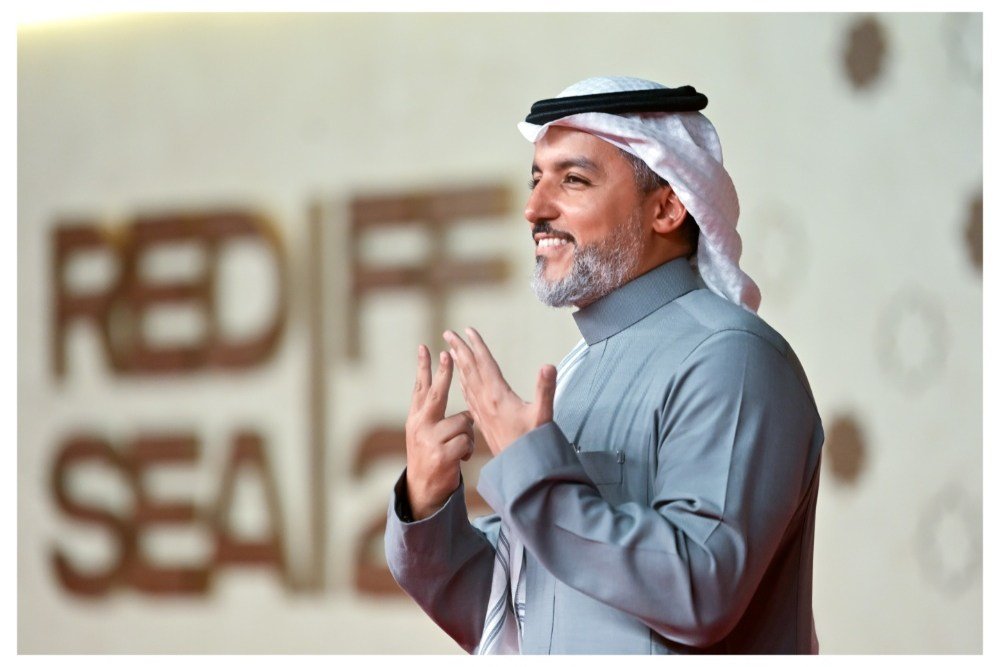
The decision to cancel the fest’s 2026 edition is believed to have been taken by Saudi Culture Minister Prince Badr Bin Abdullah Bin Farhan (pictured above).
The Red Sea fest and market was established in 2019, with its inaugural edition taking place in 2020, two years after Saudi Arabia lifted its 35-year ban on commercial movie theaters. The event has since grown to become a cornerstone of Saudi Arabia’s ambition to become a major international film and TV hub, which in turn is touted as a pole of the country’s 2030 strategy aimed at opening the country up and shifting the economy away from a reliance on oil.
Last year’s edition of the Red Sea Fest was also the first one held under the watch of Saudi Arabian film industry pioneer Faisal Baltyuor, who in May 2025 was appointed CEO of the Red Sea Foundation that oversees the festival as well as the Red Sea Fund and its year-round Red Sea Labs.
The Red Sea Fund and Red Sea Labs will continue despite the festival’s cancellation, Monday’s announcement stated, and year-round programming at Culture Square in Jeddah will be introduced in November to establish it as an “ongoing destination for film screenings, cultural events and specialized film industry programs.”
Sean Baker presided over the jury of a star-studded 2025 edition of the Red Sea Fest that kicked off with Dakota Johnson, Uma Thurman, Ana de Armas, Queen Latifah, Vin Diesel and Michael Caine among stars on the red carpet.
The Red Sea Film Festival’s film market, known as the Red Sea Souk, saw senior executives from major Hollywood players such as Netflix, Amazon, Disney and regional giant MBC head to Jeddah to take part in dozens of panels.
Sitting a year out will allow Red Sea Film Festival to undergo a necessary re-organization following the exit in June of its general manager, former Dubai Film Festival manager Shivani Pandya Malhotra, who had played an instrumental role in building the event from scratch. Her position remains to be replaced.
It is believed that Baltyuor’s vision for the fest going forward clashed with Pandya Malhotra’s mode of operation, according to sources.
Speaking at the recent Lumiere Summit in France, where global industry leader convened to explore the future of film, Baltyuor underlined in a speech that the Red Sea Film Festival Foundation “is not just a festival,” as he put it. “The foundation is building an ecosystem,” the Red Sea chief added, noting that he had just come from the Venice Film Festival where the selection comprised 11 films from the region supported by the Red Sea fund and that there were also eight Arab films supported by the fund in Toronto.
One big question is: where will the Arab films that had been slated to have their regional premieres at Red Sea (that is a prerequisite to get Red Sea funding) now get their Middle East fest launch?
The Marrakech Film Festival, which runs Nov. 20-28 — and also features a robust regional market — will certainly absorb some of these Arab titles. Other options for regional premieres will be the nascent new-format Doha Film Festival that will run Nov. 19-27, almost concurrently to Marrakech. Then there is also Egypt’s El Gouna Film Festival, running Oct. 15-23, and the Cairo Film Festival slated to take place Nov. 11-20.
Next year, the Red Sea Fest will have to compete with the revived Dubai International Film Festival that will hold its first edition starting Dec. 8, 2027.
Though the Red Sea Fest’s one-year hiatus is certainly bad news for the Arab film industry and for international film executives interested in doing business in Saudi, the pause will allow the event to be properly reconfigured according to the vision of Baltyuor. He has been a driving force in the Saudi film industry ever since a religion-related ban on cinema was lifted in late 2017, holding posts as the first head of Ithra Cinema, which is financed by Saudi Aramco Oil Company, and then by founding and running Saudi distributor CineWaves Films, which has the biggest library of Saudi films, as well as holding the post of CEO at Muvi Studios, the production arm of Saudi’s biggest cinema chain.
It’s officially the last New Music Friday of the summer, and artists did not play when it came to dropping fresh bangers. From A-list names and collaborations to highly anticipated albums, get your playlist ready and let’s have some musical fun.
Maluma & Shakira – AGUA
Shakira and Maluma reunite on “Agua,” their first major collaboration since 2018’s “Clandestino.” It marks their first merengue together, and they did not miss. The Colombian superstars turn up the heat and show off their chemistry and sexual energy in the spicy music video. Shakira looks incredible, per usual, as she flaunts her amazing body and signature dance moves.
CA7RIEL, Paco Amoroso, PinkPantheress, Fred again..–Sexy Magic
CA7RIEL, Paco Amoroso, PinkPantheress, and Fred again come together for “Sexy Magic,” which is featured on the long-awaited Grand Theft Auto VI soundtrack. CA7RIEL and Paco Amoroso are on fire, scoring 7 nominations at the Latin GRAMMYS, the second most after producer Edgar Barrera.
Piso 21, Micro TDH & Gangsta – Segunda Cita
Piso 21, Micro TDH & Gangsta will have you feeling flirty and ready for date night with “Segunda Cita.” It’s a powerhouse collaboration with all the artists seamlessly blending their sounds. It includes a sweet moment with Micro TDH celebrating their first collab with Piso 21, “Te VI’s” initiation into the billions club on Spotify.
Michelle Maciel – espresso martini
Mexican singer-songwriter Michelle Macielbegins a new chapter with her album La Gloria, a 13-track project that explores love, personal growth, and experimentation while blending corridos, reggaetón, and boleros. The album’s focus track, “Dolencias,” featuring Ana Gloria, brings the two artists together for a fun, dance floor-ready collaboration that highlights Maciel’s ability to move between genres.
Zulia – Birkin
Following the release of his album Ya No Me Importa Si Nadie Me Escucha, Venezuelan rising star Zulia drops “Birkin.” The singer has one of the most unique voices in music, with bold, sensual lyrics, and a smooth sound.
You may also like
Continue reading
Guaynaa- SE PARECE AL PAI
Puerto Rican singer Guaynaa gets into his salsa swag with “SE PARECE AL PAI.” The catchy track has incredible instrumentals, an infectious melody, and lyrics inspired by his own life as a father. It stars his wife, Lele Pons, and their daughter, Eloísa.
Rodrigo y Gabriela – Somos Como Tú
GRAMMY-winning Mexican guitar duo Rodrigo y Gabriela release their new album OurHome. They step into new territory with “Somos Como Tú,” their first-ever song featuring lyrics and vocals. The track explores migration, displacement, and the connections that unite people across cultures, marking a new chapter for the duo as they continue to expand beyond their signature acoustic sound.
Feid, Bad Gyal – DE DIOR XL
After postponing its release, Feid drops his new EP, EL GREEN PRINT: La Saga (Disc 2) – EL CLUB DE LAS 19 FLORES, the next chapter of his Green Print era. It includes collaborations with Vicente García, El Americano 4KT and Pirlo, Divino and Baby Ranks, Icon, Yandel, and Spanish star Bad Gyal.
Elvis Crespo, beele – PA´BAILAR
The one and only Elvis Crespo adds another collaboration with the new generation, this time with Beele. The genre-blending track has merengue, urban, and pop sounds with exciting instrumentals that will have you ready to move your hips.
MILEY – Let’s Get Married
Miley’s highly anticipated album Bass Persuades is here, and it’s beautiful. It’s the first album since dropping Cyrus and shows off the multifaceted sides of the singer. “Let’s Get Married” is a gorgeous track dedicated to her fiancé, Maxx Morando, and comes with an intimate music video starring the couple.
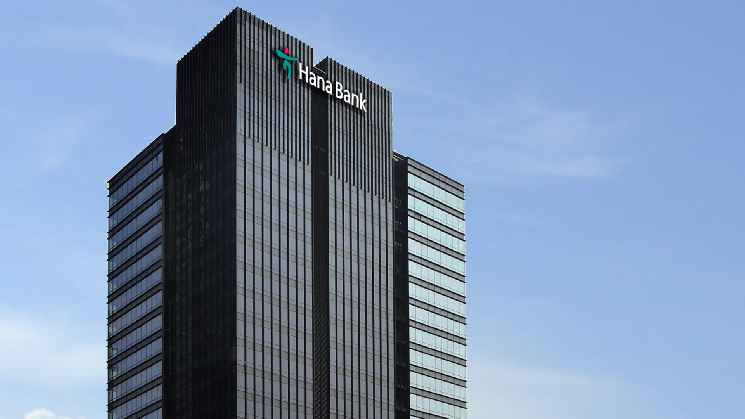
Hana Bank issued a $100 million digital bond through Euroclear’s blockchain settlement platform, completing the transaction the same day, the Yohnap Agency reported Monday.
This was the first time a Korean financial institution directly used the international depository’s distributed ledger infrastructure, the bank said, ranked second in South Korea with nearly $500 billion in client assets under management. Euroclear is a Brussels-based financial services company and one of the world’s largest central securities depositories (CSDs).
It shows how tokenization could make capital markets faster and more efficient. In this case, a traditional multi-day bond settlement process was replaced with same-day settlement on a distributed ledger.
“The $100 million digital bond issuance and implementation of T+0 settlement represent a significant step beyond simply diversifying our funding channels, as they bring blockchain technology into the capital market,” a Hana Bank official said, according to the Korea Herald. “We will continue to adopt advanced infrastructure and explore innovative funding solutions that meet the needs of global investors.”
Hana Bank and Euroclear did not immediately respond to a CoinDesk request for information.
The images offer a glimpse of what life (or lack thereof) is like on the Red Planet (Picture: Nasa)
Nasa has published a brand new ‘postcard’ picture of a sand ridge on Mars.
The new shots were taken by the agency’s rover, Curiosity Mars, while it was parked at a sandy geographical feature nicknamed ‘Chocolatal’.
The pair of photos were captured at 9.56am on August 29 and 5.39pm on September 2 – Mars time – and were merged together after being sent back to Earth, creating a larger landscape shot showing morning and evening on the Red Planet.
Colour was added to the picture to bring it to life, with the blue on the right side representing morning, while the yellow on the left depicts sunset.
Curiosity is currently scanning the lower foothills of Mount Sharp, a three-mile tall mountain within Mars’ 96-mile-wide Gale Crater.
The Mars Curiosity rover has been on the red planet looking for signs of microbial life since 2012 (Picture: Nasa/JPL-Caltech/MSSS et al. /S)
The crater’s rim is barely visible on the horizon of the picture, which was taken towards the hole’s floor.
The first image was taken on Curiosity’s 5000th Martian day, or sol, of its mission. A Martian day is around 39 minutes longer than a day on Earth.
Last month, Nasa released a panorama of 323 individual images taken by Curiosity’s mast camera between August 1 and 2 of a valley named ‘Valle Grande’.
Colour was again adapted to match the lighting conditions as they would be seen by the human eye on Earth.
The shot caught the rover’s tracks fading into the distance, showing where the robotic searcher had travelled through the valley.
Approximately the size of a car, the robotic rover was built by Nasa’s jet propulsion laboratory and is managed from Pasadena in California.
The rover has been on Mars since 2012 to find signs of microbial life.
Curiosity reached a milestone in August when it accumulated 1km of elevation as it climbed the slope of Mount Sharp.
It has also collected 42 powderised rock samples from holes drilled into the surface by its robotic arm.
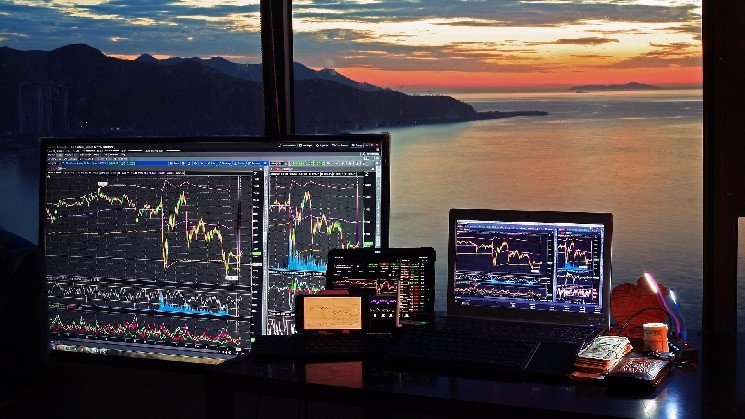
Crypto markets are demonstrating robust resilience to start the week, with bitcoin
BTC$83,915.85
approaching the $84,000 threshold, for the time being at least shrugging off the immediate hawkish sentiment from last week’s Federal Reserve rate hike, which pushed the benchmark target to 4.00%.
The macro calendar centers on midweek U.S. jobless claims and housing and durable goods figures. Meanwhile, cross-asset markets continue to digest the policy path following recent rate decisions from the Bank of Japan and Bank of England.
On the market structure front, attention centers on the SEC opening its tokenized securities pilot framework.
What to Watch
(All times ET)
Crypto
Sept. 22: The SEC’s conditional 5-year exemption window opens, allowing select institutional venues to begin pilot trading of tokenized stocks directly on public blockchains.
Macro
Sept. 24, 8:30 a.m.: Canada Retail Sales MoM for August est. -0.8% (Prev. 0.6%)
Sept. 24, 8:30 a.m.: U.S. Initial Jobless Claims for period ending Sept. 19 est. 201K (Prev. 196K)
Sept. 24, 10:00 a.m.: U.S. New Home Sales for August est. 700K (Prev. 739K)
Sept. 25, 8:30 a.m.: U.S. Durable Goods Orders MoM for August est. -0.3% (Prev. 1.1%)
Sept. 25, 10:00 a.m.: U.S. Michigan Consumer Sentiment Index Final for September est. 47.8 (Prev. 51.7)
Earnings
Token Events
Governance votes and calls
Lido DAO is voting on a proposal to authorize a contingent $LDO centralized-exchange liquidity market-making mandate—budgeting up to $1.5 million in recallable $LDO and 480,000 USDC, to maintain orderbook depth and prevent potential exchange delistings. Voting ends Sept. 21.
Uniswap Governance is holding a temperature check on extending its protocol fee collection and UNI burn infrastructure to Arc, an L1 network built by Circle. Voting ends Sept. 23.
CoW DAO is voting on a redesign of its solver quote competition, setting aside a dedicated quote reward budget equal to 10% of protocol revenue to improve price routing and order conversion. Voting ends Sept. 25.
Unlocks
Sept. 21: Canton
CC$0.1127
to unlock 0.38% of its circulating supply worth $17.17 million.
Sept. 22: TON (TON) to unlock 1.3% of its circulating supply worth $51.2 million.
Sept. 23: Humanity
H$0.07641
to unlock 14.7% of its circulating worth $20.8 million.
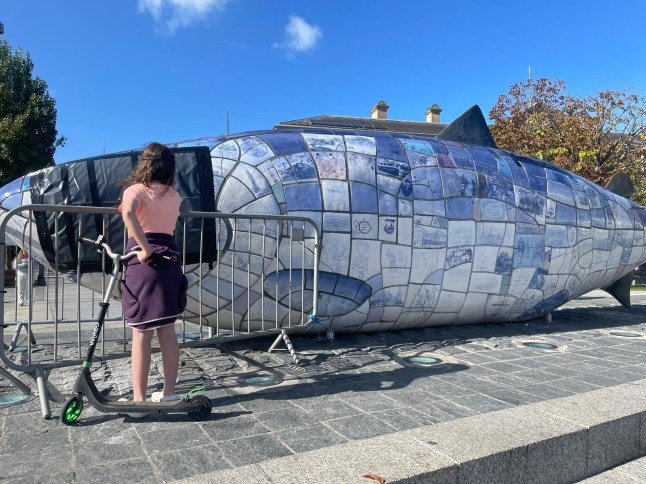
Damage was caused to the ‘Big Fish’ sculpture in an overnight incident in Belfast. (Picture: Jonathan McCambridge/PA Wire)
A man is set to appear in court for vandalising Belfast’s famous Big Fish sculpture.
The 44-year-old has been charged with criminal damage and possession of an offensive weapon in a public place after the attack left it with ‘significant damage’, police said.
He remained in custody this evening and is due to appear at Belfast Magistrates’ Court tomorrow (Monday).
The Police Service of Northern Ireland (PSNI) said they arrested a suspect after receiving reports that the sculpture, which is located in the Donegall Quay area of the city, was being damaged in the early hours of this morning (Sunday).
A social media image of it appeared to show that one side of it had been damaged around the eye.
A 44-year-old man has been arrested by police investigating the damage. (Picture: PA)
Sergeant Kelly, from the force, said: ‘Officers attended the scene, where it was noted that significant damage had been caused to the left eye of the sculpture.’
Sergeant Kelly added: ‘Our inquiries are ongoing and we would appeal to anyone with information to contact police using our witness appeal form.
‘Alternatively, you can call Crimestoppers anonymously on 0800 555 111.’
The PSNI said that as is usual procedure, all charges will be reviewed by the Public Prosecution Service.
CoinMarketCap’s cryptocurrency fear and greed index measured a level of 72. This value indicates that the trend of greed continues in the cryptocurrency market. The index is used to measure the general sentiment of market participants; a value closer to zero indicates extreme fear, while a value closer to 100 indicates extreme optimism.
According to CoinMarketCap data, the index being at 72 indicates that investor sentiment remains positive. However, it is noted that the indicator alone is not a tool for determining the future direction of the market and should be evaluated in conjunction with other market data.
The fear and greed indicator is calculated by combining different market and investor behaviors. The price movements of the top 10 cryptocurrencies by market capitalization play a significant role in the calculation. Market volatility is also among the index’s components.
CoinMarketCap also uses data from derivative markets in its calculations. Indicators such as the put/call ratio are used to assess investors’ risk-taking tendencies. The Stablecoin Supply Ratio (SSR) is also among the data included in the index calculation.
In addition, CoinMarketCap’s own search data is also used to measure investor interest. Thus, price movements, market volatility, derivatives data, stablecoin supply, and user searches are combined to create an indicator of overall market sentiment.
The index hovering around 72 indicates a significant level of optimism in the market during the current period.
The UN was created to help save the world from war. More than 80 years later, conflicts and atrocities continue. So what has the UN actually achieved, and what are the limits of its power? Al Jazeera’s Noor Wazwaz explains.
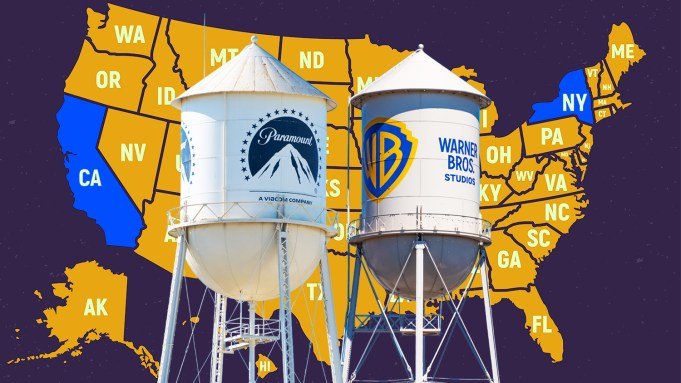
Whatever the true state of settlement talks this weekend among Paramount, a coalition of state Attorneys General and the Writers Guild of America to end the antitrust action over the $111 billion Warner Bros Discovery merger, the people against the deal from the beginning are not going quietly.
“As Trump tries to ban CNN from the White House, it would be a massive mistake to cave on the Paramount merger,” Sen. Elizabeth Warren (D-MA) said Saturday morning as the current WBD-owned CNN and MS Now journalists were denied access to the Executive Mansion. “The last thing we need is another Trump-controlled media conglomerate abusing its power to stomp out competition. This is a dangerous merger.”
Compared to Warren, the A-list-supported Block the Merger is truly angry and feeling betrayed.
“The rumored ‘deal’ to usher the Paramount-Warner Bros. merger forward is an insult to everyone who has stood up against this harmful transaction and to the hundreds of thousands of workers, journalists, and consumers who will be hurt if it goes forward,” the DC-based group told Deadline today of reported behind-closed-doors negotiations underway right now. “Let’s be very clear: an agreement based on unenforceable concessions is a win only for David Ellison. It is an L for everyone else.”
As leaks of talks between the AGs, led by California’s politically ambitious AG Rob Bonta, and the Ellison-run Paramount flooded the media late Friday, the possible L (loss) that BTM are spotlighting could include guardrails around CNN editorial independence, some selloffs and job assurances. The hope down on Melrose is such a deal would render moot the March 2, 2027, trial start date currently on the calendar in federal court — and all the financial and political blast radius that comes with it for the Trump-friendly Ellisons.
To that, with massive job, production and tax-revenue losses on the table, Paramount’s plan B for the last eight weeks has been to pressure Bonta from all sides to make a deal. Two days of court-ordered settlement talks have already been set for mid-October, but that’s procedural in the judicial system and widely expected to go nowhere fast.
Also, mid-October doesn’t quite line up with Ellison’s balance sheet.
Looking at an October 1 date in which a $7 million-a-day ticking fee to WBD shareholders begins, as well as a September 24 hearing on a Hail Mary desire for a $1.88 billion bond from the states and the WGA, Ellison’s crew has been leaking more than ever threats to exit California for a red state.
Even as the likes of outgoing California Gov. Gavin Newsom acknowledged privately at the recent Primetime Emmys that the Ellisons were being too heavy-handed, the multi-pronged pressure campaign seems to have paid off. Whereas Bonta once accused Paramount of “blackmail” with its threats and theatrical promises, the reelection-seeking AG now has his lieutenants in the room with Ellison’s execs.
The latest word on the wire is the parties could have an agreement before the official start of Yom Kippur this weekend.
Word is also out there that New York AG Letitia James isn’t as “in step,” according to a source, with Bonta as she was when it came to burying the hatchet with Paramount. There is also the wildcard of the WGA, which joined the AGs’ July 13 suit after filing an anti-merger action of its own.
“This is such bullsh*t,” an industry insider told Deadline this morning of the ParaBros talks. “Bonta should have called their bluff, instead he caved,” she added, noting such tactics are typical of Democratic politicians in the MAGA era.
Block the Merger, with its support from such names as Bryan Cranston, Hannah Einbinder, Bradley Whitford, W. Kamau Bell, Kristen Vangsness, Jane Fonda and Rati Gupta, wasn’t quite as blunt today in its statement, but the vibe was much the same.
“Thousands of industry leaders took a risk when they spoke out publicly about the harm the Paramount-Warner Bros. merger would cause,” said the outfit, which also counts Noah Wyle, Denis Villeneuve, Atsuko Okatsuka, Damon Lindelof and Sofia Coppola among its backers. Claiming that more than 75,000 people have joined them to tell the state AGs to stand strong including national leaders like Warren, the group said, “We know a bad deal when we see one. AG Bonta and his fellow state AGs should reject this deal, stand strong, and fully block the merger with no concessions.”
That mention of Warren may have greater significance this weekend than initially apparent. Like everyone else, Paramount is keenly aware of what the polls are projecting going into November’s midterms. If the midterms actually occur and if the new Congress is actually seated (two big ifs in America right now), a projected Democratic majority in the House and Senate have promised to probe and even break up mega media mergers.
Even with Oracle founder Larry Ellison the primary backer of his son’s ParaBros dreams, the even older Ellison’s net worth, which has been declining of late, may not be able to handle the strain of months and months of such probes. So perhaps it is the first week of November, not October 1, that is the calendar date the younger Ellison is hoping to beat this weekend.
Paramount has been in “no comment” mode for weeks since the Melrose lot got burned on allegations of leaks detailing past preliminary talks with Bonta’s gang.
Bonta’s office did not respond Saturday to Deadline’s request for comment on Warren and Block the Merger’s opposition to the talks.
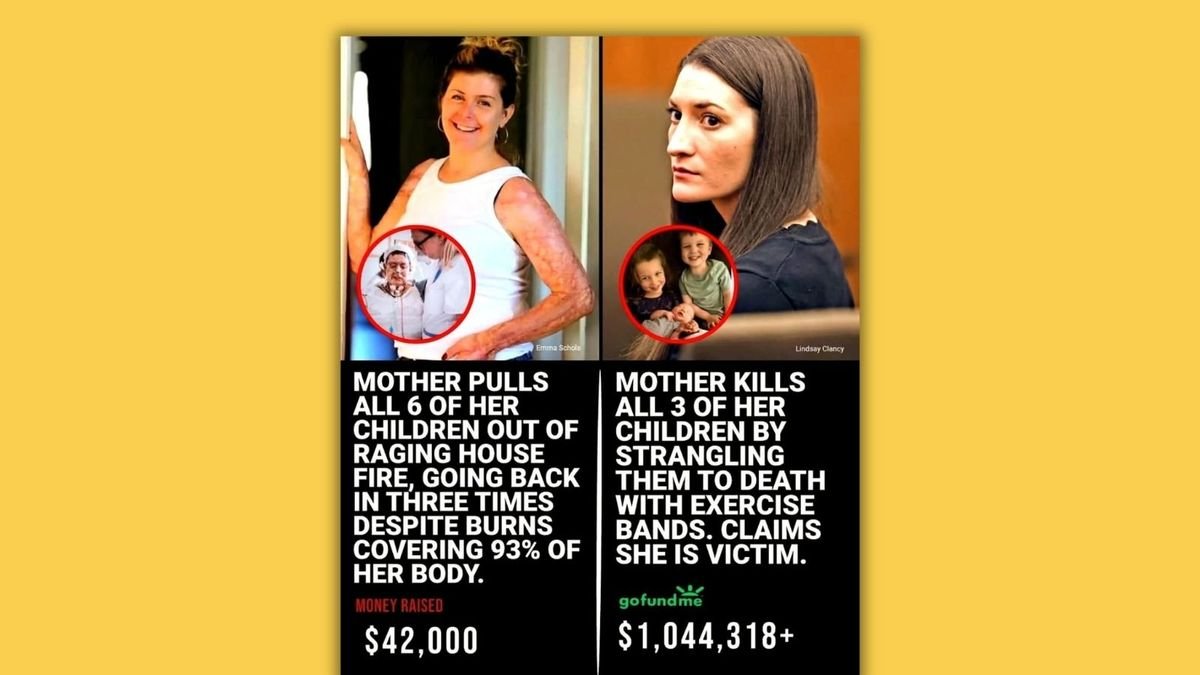
A meme accurately cites facts and fundraising figures in comparing prosecutors charging Lindsay Clancy with killing her three children, with Clancy receiving more than $1 million in fundraising, and the story of Emma Schols sustaining severe burns while rescuing her six children from a house fire, then receiving only $42,000 in fundraising.
Rating:
What’s True
The meme provides some factual information about both stories and, as of this writing, an accurate GoFundMe tally of donations earmarked to defray Clancy’s parents’ travel and housing costs as they attended the trial. Also, it’s true that a Swedish news outlet reported that a church deacon in that country organized a fundraiser equaling, at current currency conversion rates, about $42,000. However …
What’s False
… the meme omits additional fundraisers and sponsors who pledged to help rebuild Schols’ home, according to information found in the same Swedish news outlet mentioned above and her 2022 book.
In late summer 2026, people shared a meme pitting a story of heroism involving a mother named Emma Schols against that of Lindsay Clancy’s murder case.
Schols’ story of heroism, which involved saving her six children from a house fire and sustaining severe burns in the process, appears on the meme’s left side, with a fundraising figure of $42,000.
The right side features Clancy, the mother at the center of a highly-publicized Massachusetts murder trial — which ended in a mistrial on Sept. 4, 2026 — in which prosecutors charged her with killing her three young children, along with a purported GoFundMe fundraising figure exceeding $1 million.
On Sept. 15, an Instagram user posted (archived) the meme, which reads under photos of Schols: “Mother pulls all 6 of her children out of raging house fire, going back in three times despite burns covering 93% of her body. Money raised: $42,000.” Clancy’s caption reads: “Mother kills all 3 of her children by strangling them to death with exercise bands. Claims she is victim. GoFundMe: $1,044,318+.”
In sum, Schols’ book and news media outlets’ reporting confirm the meme features a few specific facts but also omits key information. For these reasons, we have rated the meme’s content as a mixture of true and false information.
Snopes emailed Kevin Reddington, Clancy’s attorney, and Schols to request comment.
Breaking down the Schols-Clancy meme
Schols, who lives in Sweden, saved all six of her children in a Sept. 3, 2019, house fire, taking three trips to remove all of them from the inferno. Her 2022 coauthored book, “Ärren bär jag med stolthet: branden i Edsbyn och livet efteråt,” which translates to “I Carry the Scars with Pride: The Fire in Edsbyn and Life Afterwards,” tells her harrowing story, including the fact that 93% of her body sustained burns, as the meme claims.
In September 2019, Swedish news media outlet SVT, quoting church deacon Christer Schwartz, reported Schols’ fundraising total at 400,000 Swedish krona, or at current exchange rates about $42,000. According to that report, Schwartz’s fundraiser was one of several on Schols’ behalf but no other figures were reported.
On top of Schwartz’s and other fundraisers, a February 2020 charity hockey match reportedly collected an additional 200,000 Swedish krona ($21,000). Schols says in her book that people and companies also initially pledged to sponsor the rebuilding of her house, though she adds some of those sponsors pulled out after she separated from her partner.
As for Clancy, The Associated Press, Reuters and other outlets reported she admitted strangling her children with exercise bands on Jan. 24, 2023, and pleaded not guilty to her initial charges, which included three counts each of first-degree murder, strangulation and assault and battery with a dangerous weapon. Prosecutors later dropped the strangulation charges, saying they were redundant to the murder charges.
The organizer of the Clancy case GoFundMe (archived), titled “The Musgrove Family Fund,” described the purported recipients of the fundraiser as Clancy’s parents, Mike and Paula Musgrove, citing their hotel, travel and relocation costs to stay close to their daughter over more than three years. The in-question meme does not mention Clancy’s parents, instead making the allegation that Clancy herself will one day collect the funds. At last check, the fundraiser had grown to more than $1.2 million with a goal of $3 million, bringing in more than 35,900 individual donations.
The meme adds that Clancy has claimed she’s the victim. During her criminal trial in summer 2026, Reddington, her attorney, said “there is evidence of lack of criminal responsibility” and suggested “a required finding of not guilty should be entered on the case.” He repeatedly argued Clancy suffered from postpartum psychosis, a disorder an estimated one or two in 1,000 women experience after giving birth that can include delusions, depression, hallucinations, insomnia, paranoia and other changes in behavior. Prosecutors, on the other hand, argued she knew what she was doing.
Schols’ harrowing rescue story
On Sept. 3, 2019, Schols awoke before 6 a.m. in her home to early-morning light shining through her window, with the faint memory of minutes earlier hearing some of her children playing in another room.
In Schols’ book, which we translated to English, she said her then-partner, Anders, was working a night shift, leaving her to sleep alone. She wrote of the morning, “Great, I think, now I have a few minutes to lie down and catch up before I have to start my morning routine.”
Moments later, the book recounts, she felt a very different sense of “fear, panic and desperation” when one of her children screamed from downstairs, “Help, mom, there’s a fire. There’s a fire in the TV room!”
She wrote, “To make sure all the children have woken up, I scream at the top of my lungs: ‘Everyone has to get out of the house!’”
In the minutes that followed, Schols first managed to guide her young children Albin and Oliwer out the front door, then looked for William, Melwyn and Nellie. After seeing William and showing Melwyn to safety, she made it to her youngest child, Mollie, who was standing in her crib with a full diaper.
Schols became unable to move from the flames covering her body. She wrote, “If I have managed to give birth to six children, I will swear to get six children out of this burning house,” and that she gathered strength, picked up Mollie and looked to escape. She described William as positioning a ladder they happened to have left out from a long-neglected painting job as their method of escape from the balcony.
Once outside, Schols described hearing her dog, Sally, inside making noises and thinking of her cat as well. A neighbor, seeing burns all over Schols’ body, told her it was too late to save her pets.
Several Swedish outlets publishednews of the fire on the same day.
Following extensive hospital stays for her burns and a period of rehabilitation, Schols returned home.
In her book, Schols wrote of Schwartz, the deacon, organizing the fundraiser following the fire. A Facebook post from days after the incident mentions Schwartz by name.
Schols said locals helped find clothes for her children, writing, “I am struck by the incredible care that exists in our country.” Other examples of that care included “Playing for Emma,” a charity hockey match organized in Schols’ honor in February 2020. Schols wrote about the match, as well as her family’s home insurance situation at the time of the fire:
On Sunday, February 2nd, a tribute match will be held for me, where the money raised will go to help me and my family get back on their feet. For all the years we have had home insurance, but just a month or so before the accident, we had, due to our financial situation, fallen behind on that particular bill. This fact is something I am ashamed of today. As I have been mulling this question over here in the hospital. This very month, when the house burns down, we were forced to skip that bill. What are the odds of that?
Later in December 2020, the Swedish Heroes Gala awarded Schols the title “Lifesaver of the Year.”
Near the end of her book, Schols wrote that some companies and people sponsoring the rebuilding of their former home pulled out after she and Anders separated.
To close her book, Schols thanked numerous locals and medical personnel, as well as her family, former partner and friends, saving a message for her children for last:
My biggest thanks go to William, Nellie, Melwin, Albin, Oliwer and Mollie. I may have saved your lives, but you are the absolute biggest heroes in this whole story. You are my everything and I love you with all my heart.
For further reading, we previously reported on other matters involving donations, including a rumor alleging prison inmates donated over $4,000 to a Kansas school district’s lunch debt.
Sources
Barry, Ellen. “A Troubled Mother Faces Murder Charges in Her Young Children’s Deaths.” The New York Times, 8 Feb. 2023, https://www.nytimes.com/2023/02/08/health/lindsay-clancy-child-murder-charges-massachusetts.html.
Bergström, Marie. “Så mycket samlades in under Playing for Emma: ‘Känns fantastiskt att kunna göra något.’” Söderhamns-Kuriren, 29 Mar. 2020, https://www.soderhamnskuriren.se/halsingland/sa-mycket-samlades-in-under-playing-for-emma-kanns-fantastiskt-att-kunna-gora-nagot/.
Casey, Michael, and Jennifer Peltz. “What to Know about the Lindsay Clancy Murder Trial.” The Associated Press, 27 Aug. 2026, https://apnews.com/article/lindsay-clancy-murder-trial-what-to-know-775003a75689cfde13750257849187ae.
“Children in Sweden.” Sweden.Se, 9 July 2026, https://sweden.se/life/society/children-in-sweden.
Cruz, Timothy J. “Duxbury Woman Arraigned in Murder of Her Three Children.” Plymouth County District Attorney’s Office, Plymouth County Office of the District Attorney, 7 Feb. 2023, https://plymouthda.com/wp-content/uploads/2023/02/DuxburyARR2.7.23.pdf.
Eriksson, Jan-Peter, and Emma Åhlström. “Dramatisk Räddning När Mamma Fick Ut Sina Sex Barn Ur Brinnande Villa i Edsbyn.” SVT Nyheter, 3 Sept. 2019, https://www.svt.se/nyheter/lokalt/gavleborg/brand-i-villa-i-edsbyn-pa-morgonen. Gävleborg.
Fagerström, John. “Mamma räddade sina sex barn från villabrand – blev svårt brännskadad.” Aftonbladet, 3 Sept. 2019, https://www.aftonbladet.se/a/zGbobb.
Kammerland, Erik. “Insamlingen till Edsbyfamiljen Förlängs – 400 000 Kronor Har Skänkts Hittills.” SVT Nyheter, 19 Sept. 2019, https://www.svt.se/nyheter/lokalt/gavleborg/insamlingen-ar-uppe-i-400-000-kronor-till-edsbyfamiljen. Gävleborg.
Khan, Melina. “What Could Happen to Lindsay Clancy after Trial Verdict.” USA TODAY, 24 Aug. 2026, https://www.usatoday.com/story/news/crime/2026/08/24/lindsay-clancy-verdict-what-happens-next/91382978007/.
Öhagen, Angelica. “Sexbarnsmamman Är Årets Livräddare: “Nu Känner de Igen Mig”.” Aftonbladet, 17 Dec. 2020, https://www.aftonbladet.se/a/2dvlV4.
Raymond, Nate. “Family Says Massachusetts Mother Who Killed Children Struggled with Mental Illness.” Reuters, 17 Aug. 2026, https://www.reuters.com/legal/government/massachusetts-woman-searched-online-postpartum-psychosis-days-before-killing-2026-08-17/.
Rev.Com. https://www.rev.com.
Schols, Emma, and Frida Funemyr. Ärren bär jag med stolthet: Branden i Edsbyn och livet efteråt. Norstedts, 2022. Google Books, https://www.google.com/books/edition/%C3%84rren_b%C3%A4r_jag_med_stolthet/cNMRzwEACAAJ.
“TV: Se höjdpunkterna från galan Playing for Emma – allt det bästa på under 15 minuter.” Hudiksvalls Tidning, 4 Feb. 2020, https://www.ht.se/halsingland/tv-se-hojdpunkterna-fran-galan-playing-for-emma-allt-det-basta-pa-under-15-minuter/.
Ungar, Laura. “What to Know about Postpartum Psychosis, Which Can Affect a New Mom’s Sense of Reality.” The Associated Press, 28 July 2026, https://apnews.com/article/postpartum-psychosis-baby-blues-e1dd28bee97a984f3d58132c4fbd2e28.
Yee, Curtis. “As It Happened: Deliberations in Lindsay Clancy Murder Trial End for the Day without a Verdict.” The Associated Press, 27 Aug. 2026, https://apnews.com/live/lindsay-clancy-trial-08-27-2026.
———. “Live Updates: Mistrial Is Declared in Lindsay Clancy Child Killings Case after Jury Deadlocks.” The Associated Press, 4 Sept. 2026, https://apnews.com/live/lindsay-clancy-trial-09-04-2026.