Blog

  • Eric Roberts Says Bob Fosse Made Him Spend the Night in the Real ‘Star 80’ Murder Apartment

    Eric Roberts Says Bob Fosse Made Him Spend the Night in the Real ‘Star 80’ Murder Apartment

    Eric Roberts still isn’t sure how he got through Star 80.

    Appearing on the latest episode of It Happened in Hollywood, the actor looked back on his experience making the 1983 film with director Bob Fosse — a process that was as methodical as it was, at times, deeply unsettling. One moment in particular has stayed with him.

    During production, Fosse insisted that Roberts spend the night in the actual apartment where Dorothy Stratten, the real-life Playboy Playmate of the Year from 1980, was murdered by her husband and manager, Paul Snider, the role Roberts was playing.

    “I didn’t want to go,” Roberts says on the podcast. “I told him, ‘I don’t want it.’ And he said, ‘No, you’re going to spend the night with it. Come on.’”

    The apartment, located off a busy highway, was noisy and impossible to ignore. Roberts says he didn’t sleep. The next day, he filmed one of the movie’s most difficult scenes.

    “That was Bob,” he says. “He wanted you to feel what it was.”

    Roberts’ path to Star 80 was far from straightforward. The year before production, he had been in a serious car accident that left him in a coma and caused lasting memory and coordination issues. At the time, he believed his acting career might be over. Then his manager passed him a script for Fosse’s next project, which had not yet widely circulated.

    “It didn’t grab me right away,” Roberts admits. “It felt very black and white. But it said ‘Bob Fosse’ on it, and that was enough.”

    He went in to audition, repeatedly. Roberts estimates he read for Fosse five or six times before getting a straightforward offer. “He never tipped his hand,” Roberts says. “Then one day he just asked if I wanted to make a movie. “

    Once cast, Roberts entered what he describes as an unusually immersive prep process.

    For roughly three months, Fosse walked him through key locations connected to the infamous true story, including the Vancouver Dairy Queen where Snider first met Stratten, her childhood home and the Playboy Mansion. Rehearsals were held in a church on Highland Avenue in Los Angeles, where Fosse taped out full set layouts on the floor.

    “He knew exactly what he was going to shoot,” Roberts says. “Every move, every piece of furniture, everything.” Fosse’s focus, Roberts adds, was on avoiding a one-dimensional portrayal of Snider.

    “He didn’t want a cartoon,” Roberts says. “He wanted someone real. And the truth is, people like that are all around us. “

    Later in the podcast, Roberts also shared a story from pre-production that he says he rarely tells.

    While staying at a motel with Fosse in West Los Angeles, he received a phone call that Fosse encouraged him to take. On the other end was the late director Peter Bogdanovich, also a former guest on It Happened in Hollywood, who had his own connection to Stratten.

    Bogdanovich had cast her in 1981’s They All Laughed, her leap into mainstream filmmaking, which had led to an affair between filmmaker and muse.

    The obsessive Snider hired a private investigator to follow Stratten. When he discovered she planned to divorce Snider and marry Bogdanovich, Snider murdered Stratten and killed himself. Bogdanovich is depicted in Star 80, renamed Aram Nicholas and played by Roger Rees.

    Adding the strange, sensational surreality of the real-life tragedy, on Dec. 30, 1988, the 49-year-old Bogdanovich married 20-year-old Louise Stratten, Dorothy’s younger sister, sparking a tabloid frenzy.

    “He asked me what I was getting paid, how I got the part,” Roberts recalls. “And then he suggested I leave the movie and that he might consider me for his version.”

    Bogdanovich was developing his own version of the murder, which became the memoir The Killing of the Unicorn, detailing the relationship between their love affair, the making of They All Laughed and her murder.

    Roberts describes Bodanovich’s tone as “condescending.” Meanwhile, Fosse, sitting nearby, urged him to keep the conversation going.

    “I just kept talking, Roberts says. “I told him I’d call him back. “

    He never did.

    When the call ended, Roberts says Fosse was “rolling on the floor laughing.”

    When Star 80 was released in November 1983, Roberts says the response from within the industry was notably muted.

    “They didn’t know how to react,” he says. “They were afraid to like it because it might say something negative about Hollywood. And they were afraid to hate it because it was a great film.”

    The movie received strong reviews but limited awards recognition. Roberts earned a Golden Globe nomination for best actor in a drama but was not nominated for an Oscar — something he acknowledges didn’t fully register until years later.

    “I didn’t even think about it at the time,” he says. “Then someone mentioned it, and I thought, ‘Oh. Maybe I should have been.’”

    Fosse died in 1987, four years after the film’s release, without directing another feature. Looking back, Roberts places Star 80 alongside All That Jazz as defining works.

    “Those are perfect movies,” he says. “Working with him, you realize real geniuses are rare. And they don’t work the way anyone else does.”

    You can listen to the full conversation on It Happened in Hollywood.

  • LayerZero Pins $292M KelpDAO Bridge Hack on North Korea’s Lazarus Group

    LayerZero Pins $292M KelpDAO Bridge Hack on North Korea’s Lazarus Group

    In brief

    • Attackers drained roughly $292M from KelpDAO’s cross-chain bridge on Saturday.
    • LayerZero, which powered the breached bridge, tied the hack to North Korea’s Lazarus Group.
    • The bridge itself wasn’t broken, but attackers corrupted the channel verifying it, Decrypt was told.

    The exploit that drained roughly $292 million from KelpDAO’s cross-chain bridge over the weekend was “likely” the work of North Korea’s Lazarus Group, specifically its TraderTraitor subunit, LayerZero said in a preliminary analysis on Monday.

    Attackers drained 116,500 rsETH, a liquid restaking token backed by staked ether, from the KelpDAO bridge on Saturday, setting off withdrawals across the decentralized finance sector that pulled more than $10 billion out of lending protocol Aave.

    The attack carried the markings of “a highly-sophisticated state actor, likely DPRK’s Lazarus Group,” LayerZero said, specifying the group’s TraderTraitor subunit.

    North Korea’s cyber operations run under the Reconnaissance General Bureau, which houses several distinct units, including TraderTraitor, AppleJeus, APT38, and DangerousPassword, according to an analysis by Paradigm researcher Samczsun.

    Among these subunits, TraderTraitor has been flagged as the most sophisticated DPRK actor targeting crypto, previously linked to the Axie Infinity Ronin Bridge and WazirX compromises.

    LayerZero said that KelpDAO had used a single verifier to approve transfers in and out of the bridge, adding that it had repeatedly urged KelpDAO to use multiple verifiers instead.

    Going forward, LayerZero said it will stop approving messages for any application still running that setup.

    A single point of failure

    Observers say the exploit exposed how the bridge was built to trust a single verifier.

    It was “a single point of failure, regardless of what the marketing calls it,” Shalev Keren, co-founder at cryptographic security firm Sodot, told Decrypt.

    A single compromised checkpoint was enough to allow the funds to leave the bridge, and no audit or security review could have fixed that flaw without “removing unilateral trust from the architecture itself,” Keren said.

    That view was echoed by Haoze Qiu, Blockchain Lead at Grvt, who argued that, “Kelp DAO appears to have accepted a bridge security setup with too little redundancy for an asset of this scale,” adding that LayerZero “also has accountability” given that “the compromise involved infrastructure tied to its validator stack, even if this was not described as a core protocol bug.”

    The attackers came within three minutes of draining another $100 million before a rapid blacklist cut them off, according to an analysis by blockchain security firm Cyvers. The operation was based on tricking a single channel of communication, Cyvers CTO Meir Dolev told Decrypt.

    Attackers tapped two of the lines the verifier used to check whether a withdrawal had actually occurred on Unichain, fed it a fake “yes” on those lines, then knocked the remaining lines offline to force the verifier to rely on the compromised ones.

    “The vault was fine. The guard was honest. The door mechanism worked correctly,” Dolev said. “The lie was whispered directly to the one party whose word opened the door.”

    But while LayerZero, whose infrastructure powered the drained bridge, pointed to Lazarus as the likely culprit, Cyvers stopped short of the same attribution in its own analysis.

    Some patterns match DPRK-linked operations in sophistication, scale, and coordinated execution, Dolev said, but no wallet clustering tied to the group has been confirmed.

    The malicious node software was engineered to erase itself once the attack finished, wiping binaries and logs to obscure the attackers’ trail in real time and in the post-mortem, he added.

    Earlier this month, attackers drained roughly $285 million from Solana-based perpetuals protocol Drift, in an exploit later attributed to North Korean operatives.

    Dolev noted that the Drift hack was “very different in terms of the preparations and execution,” but both attacks required long lead times, deep expertise, and significant resources to pull off.

    Cyvers suspects that the stolen funds have been transferred to this Ethereum address, aligning with a separate report from on-chain investigator ZachXBT which flagged it alongside four others. The attack addresses were funded through coin mixer Tornado Cash, per ZachXBT.

    Daily Debrief Newsletter

    Start every day with the top news stories right now, plus original features, a podcast, videos and more.

  • Morning Minute: DeFi’s Future in Question After $292M KelpDAO Exploit

    Morning Minute: DeFi’s Future in Question After $292M KelpDAO Exploit

    3,478.5543
    Morning Minute is a daily newsletter written by Tyler Warner. The analysis and opinions expressed are his own and do not necessarily reflect those of Decrypt. And check out our new daily news show covering all of the top stories in 5 minutes or less, downloadable on Apple Pod or Spotify.

    GM!

    Today’s top news:

    • Crypto majors fall then rebound as Iran tensions escalate; BTC at $75.4k
    • ETFs see $1.4B in inflows on the week, 2nd biggest week of year
    • DeFi TVL falls by $13B as KelpDAO exploit fallout worsens; AAVE -25%
    • Vercel CEO says “highly sophisticated” actors used AI for its exploit
    • Asteroid meme holds at $150M market cap after Elon says “ok” for SpaceX mascot

    🔴 $292M Kelp DAO Exploit Triggers Aave Bank Run, $9B Leaves DeFi in a Day

    Saturday at 17:35 UTC, an attacker sent a single crafted message to Kelp DAO’s LayerZero-powered cross-chain bridge.

    The bridge accepted it as legitimate and released 116,500 rsETH – roughly $292 million and 18% of total circulating supply—to a wallet that had been pre-funded through Tornado Cash ten hours earlier. No ETH ever changed hands on the other side. The rsETH was effectively minted from nothing. The attacker deposited it into Aave V3 and V4 as collateral, borrowed real wrapped ETH against it, and walked.

    Aave didn’t get hacked. Its contracts are fine. But it’s now carrying roughly $196M in bad debt it didn’t create, because rsETH had been whitelisted as ETH-correlated collateral—a faulty assumption.

    In the aftermath, TVL on AAVE dropped 25% from $26.4B to ~$20B in a single day and continues to fall by the day. Broader DeFi TVL fell by $13B. The AAVE token fell 30%.

    ETH depositors trying to withdraw found liquidity at zero, so they started borrowing stablecoins against their deposits to exit—a textbook bank run. SparkLend, Fluid, Upshift, and Lido all froze or paused rsETH exposure. rsETH holders on 20+ chains now have tokens of uncertain backing.

    Aave’s own statement Sunday said rsETH on Ethereum mainnet is “fully backed” but remains frozen “out of an abundance of caution.” But the damage has been done.

    DeFi users are re-evaluating the calculus. Does it make sense to risk exploits for average yield? And now every lending protocol has to reassess security. It will take time to rebuild from this, if it’s even possible.

    There have been $600M lost from DeFi via exploits in just the past 3 weeks. And the pace is accelerating…

    Key Details:

    • Kelp DAO’s LayerZero bridge was exploited Saturday for 116,500 rsETH (~$292M, 18% of supply); attacker minted unbacked rsETH and used it as Aave collateral to borrow real WETH; ~$196M in bad debt left on Aave; AAVE -30%; largest DeFi exploit of 2026
    • The contagion: Aave froze rsETH and WETH across Ethereum, Arbitrum, Base, Mantle, and Linea; TVL dropped $6.2B in one day; ETH depositors borrowing stablecoins to exit triggered a bank run dynamic; SparkLend, Fluid, Upshift, and Lido all froze rsETH exposure
    • The structural issue: LRT tokens like rsETH were whitelisted as near-ETH collateral on Aave, Compound, and Euler; this exploit assumes backing was intact at all times; it wasn’t; every DeFi lending protocol now needs to reassess liquid restaking token collateral risk

    🌊 BTC Hit $78K; Then Iran Closed Hormuz Again

    Friday was the most violent 24 hours in crypto markets since the war started.

    Iranian FM Araghchi posted that the Strait of Hormuz was “fully open to all commercial vessels.” Trump followed on Truth Social claiming Iran agreed to an “unlimited” suspension of its nuclear program and said a permanent deal was “mostly complete.”

    Bitcoin ran from $74.5K to $78,400 – its first print above $78K since February 4. Oil crashed nearly 10% to ~$82/barrel. The S&P 500 closed at a record 7,121. There were $600M+ in crypto short liquidations. The ETFs posted ~$800M+ in inflows, the biggest in months.

    The vibes were euphoric.

    By Saturday morning, tanker owners were receiving Iranian radio transmissions closing the strait. State media said Hormuz had returned to “strict management and control.” BTC pulled back to ~$74K giving back its recent gains, Oil rebounded to $90 and stock futures are red.

    And a return to war looks more likely than ever…

    📅 Saylor Wants to Pay STRC Dividends Twice a Month

    Strategy filed a preliminary proxy Thursday proposing to shift STRC dividend payments from monthly to semi-monthly.

    The annual rate stays at 11.5%, and the $1.2B total obligation is unchanged. Holders would just receive smaller checks every two weeks instead of one larger check per month. If approved, the first semi-monthly payment lands July 15.

    The reason this matters can be seen in the STRC price action over the past few months. Leading up to the dividend cut off date of the 15th, STRC trades at or above its $100 par with increasing volume until the 14th. Then it goes sub-par for a few weeks as traders no longer need to hold for the dividend. Around the 1st of the month, it hits $100 par again and the cycle repeats.

    Well with semi-monthly dividend payments, Saylor could potentially erase that 2-week period where STRC trades sub-par. That would mean more potential capital for him to use to buy Bitcoin – and a safer hold for those holding STRC.

    Assuming this goes through, expect Bitcoin to benefit (and maybe even bigly)…

    🚀 A Dying Girl’s Wish Made a Meme Coin Worth $175M

    Liv Perrotto was 15 years old when she died of cancer in January. Before she passed, she had designed a plush Shiba Inu named Asteroid that flew aboard SpaceX’s Polaris Dawn mission in 2024 as the zero-gravity indicator. Her dying wish was simple: she wanted Elon Musk to make Asteroid the official SpaceX mascot.

    Radio host Glenn Beck posted her story on X Thursday night. Elon replied “Will answer shortly” at 11:50 PM ET. That response alone was enough to send the ASTEROID meme coin to a $30M+ market cap.

    But traders anxiously awaited Elon’s response. On April 18 in the afternoon, they got it. Elon answered the girl’s questions for him and replied “OK” to the SpaceX final item, confirming Asteroid as the official SpaceX mascot.

    The token immediately sent to $100M+ in market cap within hours, reaching $190M+ overnight. It’s now trading near $155M.

    Now the question becomes—will Elon continue leaning in and actually make Asteroid Shiba the SpaceX mascot? Or was this a one off response?

    🌎 Macro Crypto and Markets

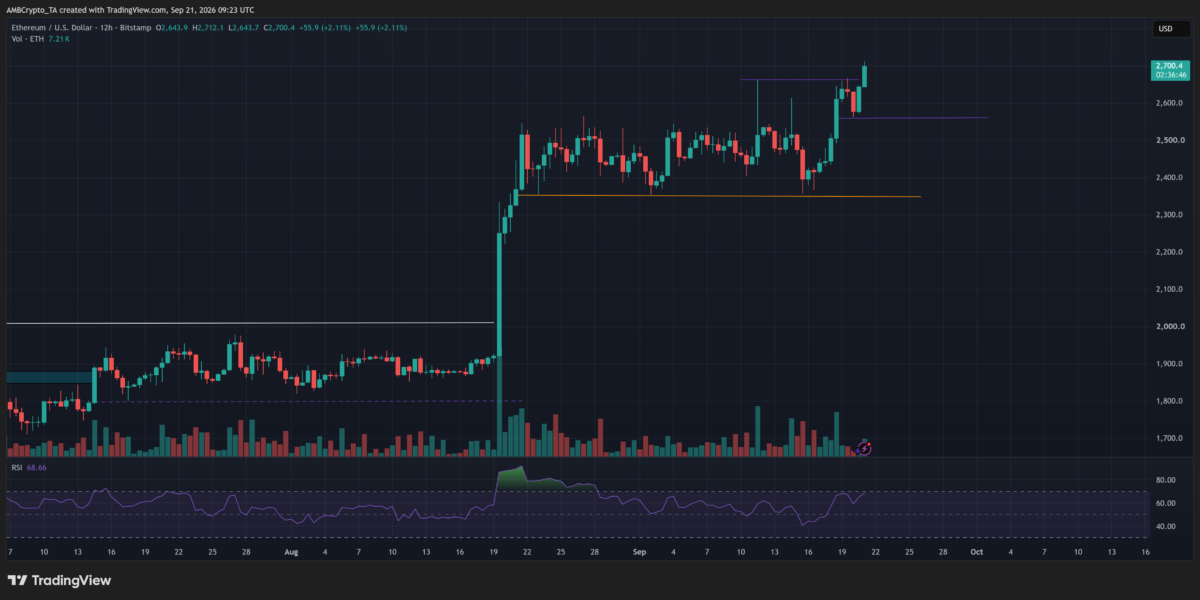
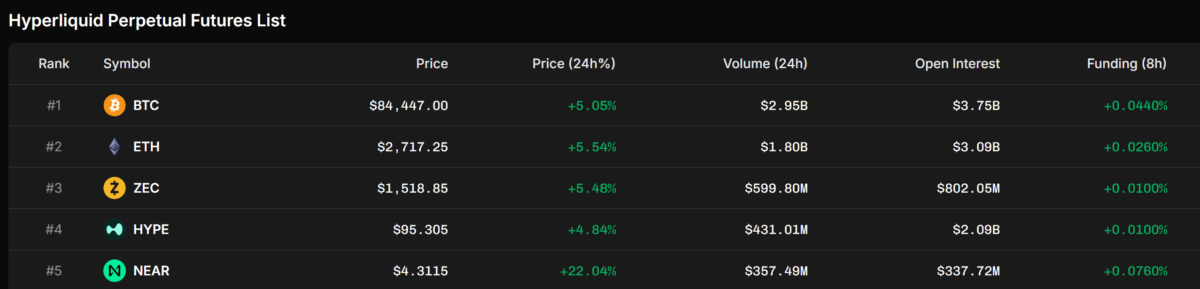
    • Crypto majors are red but rebounding after a big Sunday selloff; BTC -0.1% at $75.4k; ETH -1% at $2,316; SOL flat at $85; HYPE -4% at $41.30
    • SKY (+5%), CC (+4%) and M (+7%) led top movers
    • Oil +2% at $88; Gold even at $4,780
    • Stock futures red after record-breaking green streak
    • Vercel’s CEO confirmed a breach traced to a compromised third-party AI tool (Context.ai), which gave attackers access to internal Vercel environments via a hijacked Google Workspace account; CEO Guillermo Rauch called the actors “highly sophisticated” and said they may have used AI to accelerate the intrusion
    • Coinbase is deploying AI agents modeled after legendary former executives directly into Slack and email; “Fred” is based on co-founder Fred Ehrsam and acts as a strategic planning agent; “Balaji” is modeled after former CTO Balaji Srinivasan and is designed to challenge assumptions and spark innovation
    • Sam Altman’s World launched its biggest upgrade yetbringing iris-scan proof-of-human verification to Zoom, Tinder, and concert ticket sales; Tinder will show a “verified human” badge, Zoom gets a deepfake-detection feature called Deep Face, and Concert Kit lets artists reserve tickets for real humans to block scalper bots

    Corporate Treasuries & ETFs

    Meme Coin Tracker

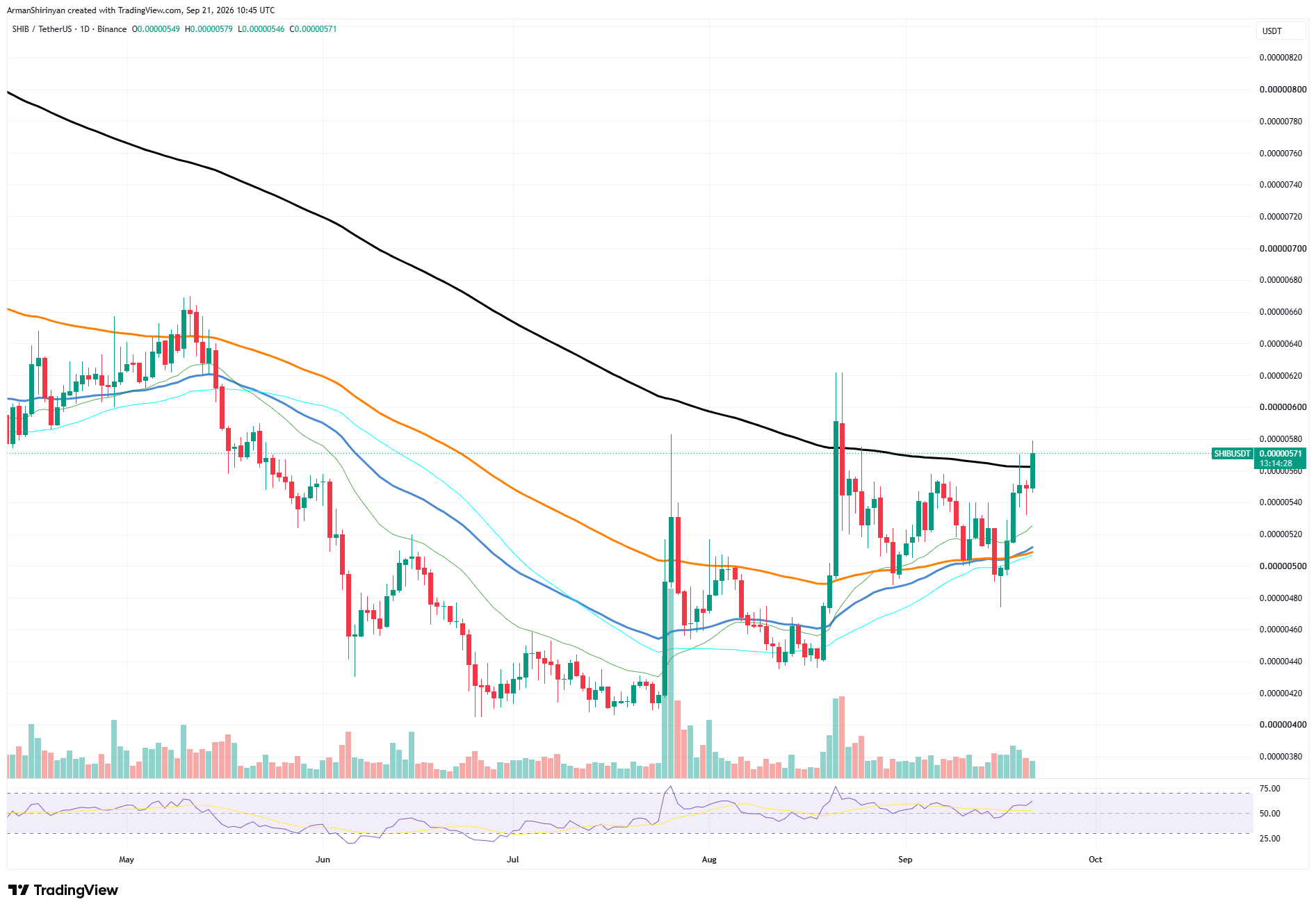
    • Meme leaders were green on the day and week; DOGE +1%, SHIB +31%, PEPE +1%, TRUMP +1%, PENGU +2%, SPX -1%, FARTCOIN -2%
    • Asteroid (+150x), Belief (+400%), Zerebro (+40%), and Griffain (+39%) led notable onchain movers

    💰 Token, Airdrop & Protocol Tracker

    • Creator Fun launched this wekend with a trading terminal, launchpad, AMM and more calling itself “The iPhone moment for Solana”; its CRX token at $13M
    • The RAVE token fell 90% after a ZachXBT investigation

    🚚 What is happening in NFTs?

    • NFT leaders rallied over the weekend but fell overnight; Punks -1% at 26.6 ETH, Pudgy -5% at 4.36 ETH, BAYC -6% at 7.85 ETH; Hypurr’s -1% at 386 HYPE
    • Normies (+20%) and Nakamigos (+15%) led notable movers
    • A PUNK token was airdropped to all Punk holders, soaring 200,000% to $10M in its first night of trading

    Daily Debrief Newsletter

    Start every day with the top news stories right now, plus original features, a podcast, videos and more.

  • Brunello Cucinelli Takes His Brand to the Big Screen With North American Release of ‘The Gracious Visionary’

    At the start of the new documentary “Brunello: The Gracious Visionary,” Brunello Cucinelli strolls through his vineyards at night, illuminated by dozens of small, contained fires that protect the vines from frost. He’s a man in his 70s, walking with ease and confidence through his domain — a world he spent decades crafting, curating and restoring.

    Last Tuesday, the fashion designer strolled in a very different location. He walked down the star-studded red carpet, flanked by his family, at the New York City gala screening, an exclusive event and celebratory dinner in advance of his documentary’s North American distribution by Blue Fox Entertainment.

    Again, Brunello was a man at ease in his surroundings, pleased to share the docufilm about his life and philosophies. There’s more to the entrepreneur than the wild success of the pullover cashmere sweaters he crafted beginning in 1978. For decades, he has intentionally fashioned a company based on his brand of humanistic capitalism and human sustainability.

    It’s a compelling story both in real life and in the film. Director Giuseppi Tornatore combines documentary storytelling and re-created flashbacks in “Brunello: The Gracious Visionary.” Friends, family, peers and celebrities speak about Brunello’s achievements alongside the re-creations.

    “I wanted Giuseppe to undertake this project because he is a poet, and I believe that poets are the greatest human beings on earth,” Brunello tells Variety. “Ultimately, my dream was for this film to serve as a testament to what my life, what our life, has been: a legacy to leave behind for our children, our grandchildren and all those who will come after us.”

    As the docufilm shows, Brunello spent his early years among a loving family, but emerged from a poor, rural farm existence in Umbria, Italy. He met his future wife Federica when they were teens, and she became his entrée into the world of fashion. Becoming the “King of Cashmere” with his eye-catching, durable pullovers, he has over time expanded his reach in both garments and his approach to running his company. As a young man, he overheard his father complaining bitterly about being treated badly in his factory job, which became a “turning point in my life,” in which he decided to live, and work, for human dignity.

    Federica’s small hamlet of Solomeo became Cucinelli’s home base — not just for his company, but where he could settle down. Over the decades, he’s devoted much of his wealth to preserving an earthquake-damaged castle, turning it into his company headquarters; along with developing parks, renovating a church, building a theater and creating a library with over 500,000 titles.

    Bringing their story to life, one Federica calls a “true fairytale,” shows what the couple of 54 years has achieved together. “This was intended to be, in a sense, our own personal monument to life — partly because Brunello and I met when we were very young,” she tells Variety. “I never would have imagined that we would one day see the story of our lives turned into a film.”

    Meanwhile, the environment in Brunello’s company is less that of a factory and more a creative hive, where workers receive higher-than-average pay and craft their garments in natural light, then share communal meals. To Brunello, the business was never only about making money — it was about creating a livable job environment, where his ideas about treating workers humanely could play out in real time.

    And over the years, the business has become a true family affair. While Federica runs the Brunello and Federica Cucinelli Foundation, their daughters Carolina and Camilla are vice presidents, who know precisely how to share the Cucinelli brand with the next generation. For the NYC gala screening, Carolina wore a “very feminine dress” and paired it with a “non-biker jacket.” Camilla’s gala outfit was created with an eye toward representing the company. “The concept was to feature, for example, a tuxedo with color-blocking rather than a solid, single color,” she tells Variety. “I felt it would effectively embody our philosophy.”

    The family patriarch hopes the company will continue with its mission long after he is gone, ideally in his adopted village of Solomeo. “We feel a profound sense of responsibility toward the company and the people who work alongside us every day. This is also, in part, the reason behind our choice to remain in our village and to raise our families right here in Solomeo,” Carolina tells Variety. “We were instilled with the concept of work as a noble pursuit: one free of coercion yet driven by a great passion inherited from our parents. We have embraced this philosophy and are now weaving it into our daily work, with the hope of carrying this company and its values forward into the future.”

    Possibly the docufilm will be the key to inspiring those next generations, and to convince them to stay the course regarding Brunello’s humanistic philosophy and vision. “One may inherit ownership, but never the actual capacity for entrepreneurship,” he allows. “Yet they truly love it and this whole idea of being here together, with the grandchildren … it all possesses a certain charm, a certain poetry. And so, I wanted this film, both for my grandchildren and for my daughters, to serve as a small living testament: a record of what we have, and of how we have lived.”

    The gala screening, held one day after Blue Fox Entertainment announced the July 24 North American theatrical release date, was also a callback to the past. The first Cucinelli store opened in the United States in the West Village in 2006. Today, the family reveres New York City — and not just as a mecca for fashion. “New York is a city that gives us so much energy and inspiration,” says Carolina. “Every time we visit, we truly take so much back home with us.”

    Ultimately, the founder’s wish is that “Brunello: The Gracious Visionary” will take its rightful place alongside other major achievements — the library, the town restoration, his speech at the G20 Summit in 2021 in which he urged leaders to consider themselves the “temporary guardians of Creation.”

    Brunello, who’s namedropped in “The Devil Wears Prada 2” and inspired an entire storyline in “Emily in Paris,” says the message of his docufilm is not just for people who share his last name. As with many things he does, it’s a message to share with the world.

    “Replace fear with hope,” he urges those who view the film. “Have a dream. Look up at the sky. The stars will be your source of inspiration…. Do not feel pressured to make everything work perfectly right away. Pursue your dream throughout your life. That is what I would love most of all. Hold fast to this ideal and strive to live as if you were the pro tempore custodians of humanity. Yes, yes we can do it.”

    The docufilm, produced by Brunello Cucinelli S.p.A. and MasiFilm in collaboration with RAI Cinema, opened in Italy on Dec. 9 and garnered more than $1 million during its limited seven-day run.


    “Brunello: The Gracious Visionary” opens in theaters in U.S. and Canada on July 24.

  • ‘Practical Magic 2’ Trailer: Nicole Kidman and Sandra Bullock Return for Magical Sequel 28 Years After Original

    ‘Practical Magic 2’ Trailer: Nicole Kidman and Sandra Bullock Return for Magical Sequel 28 Years After Original

    Nicole Kidman and Sandra Bullock are back for more magic.

    Warner Bros. has released the trailer for “Practical Magic 2” after it was debuted last week to attendees at CinemaCon, the annual convention for movie theater owners in Las Vegas. It will arrive in theaters this fall on Sept. 11.

    Directed by Susanne Bier, the sequel “returns to a world steeped in moonlit mischief and powerful ancestral magic, as the Owens sisters must confront the dark curse that threatens to unravel their family once and for all in a must-see cinematic event of fun, magic and mayhem.”

    In addition to Kidman and Bullock back as Sally and Gilly Owens, the cast includes Joey King, Lee Pace, Maisie Williams, Xolo Maridueña and Solly McLeod. Stockard Channing and Dianne Wiest are also back as Frances and Jet Owens, Sally and Gilly’s aunts, after starring in the original 1998 film.

    In the sequel, Sally has adult daughters now starting lives of their own, while Gilly has settled into a cozy life with a black cat. It doesn’t take long for trouble to find them — Pace’s mystery character pulls the sisters from their quaint New England town on a dramatic assignment.

    Akiva Goldsman and Georgia Pritchett wrote the sequel, which is based on the 2021 novel “The Book of Magic” by Alice Hoffman, the fourth in her “Practical Magic” book series. Denise DiNovi, Bullock and Kidman produce. Andrew Kosove, Broderick Johnson, Donald Sabourin and Hoffman serve as executive producers.

    Watch the trailer below.

    More to come…

  • JUST IN: U.S. President Donald Trump Makes a Statement on the Iran Ceasefire – “The Likelihood of an Extension Is Very Low”

    JUST IN: U.S. President Donald Trump Makes a Statement on the Iran Ceasefire – “The Likelihood of an Extension Is Very Low”

    US President Donald Trump, in a statement regarding the extension of the ceasefire agreement with Iran, said that under the current circumstances, extending the agreement is “quite unlikely.”

    Speaking ahead of the ceasefire, which is set to end Wednesday evening Washington time, Trump stated that conflict could be inevitable if an agreement could not be reached between the parties.

    Trump announced that US Vice President JD Vance would be traveling to Pakistan today and that negotiations would proceed within that framework. He maintained that the Strait of Hormuz would only be reopened after a formal agreement was signed, and stated that the talks with Iran were beneficial to all parties. The US President also indicated that he might want to participate in the talks personally, but did not think it was necessary.

    Related News Trading Volume Surges for 15 Altcoins in South Korea – XRP Tops the List

    Markets fluctuated following Trump’s remarks. The S&P 500 index extended its losses to 0.5%, while oil prices briefly rose by $1.

    On the other hand, statements from the Iranian side increased the uncertainty surrounding the negotiation process. Tasnim News Agency, known for its close ties to Iran, reported on April 20 that the Tehran administration’s decision not to participate in the talks remained unchanged. This indicated that diplomatic contacts between the parties had not yet made any concrete progress.

    Assessments on the issue also came from Europe. French President Emmanuel Macron criticized both the US and Iran for their stances on closing the Strait of Hormuz, arguing that both sides were taking the wrong approach.

    In addition, according to information reported by Axios, the US is preparing to host a new round of talks between Israel and Lebanon on April 23.

    *This is not investment advice.

  • Crypto Asset Company Bitmine Makes Largest Ethereum (ETH) Purchase in Four Months! Here Are the Details

    Crypto Asset Company Bitmine Makes Largest Ethereum (ETH) Purchase in Four Months! Here Are the Details

    Bitmine, a crypto asset-focused investment company, attracted attention with its large-scale purchases in the past week.

    The company achieved its fastest accumulation pace in the last four months, purchasing 101,627 Ethereum ($ETH) in just one week. This increase stands out as the largest weekly expansion recorded since the high-volume purchases last seen in the week of December 15, 2025.

    Bitmine’s total $ETH holdings have increased to 4,976,485. This amount represents approximately 4.12% of Ethereum’s total supply. Controlling an asset of this scale makes the company one of the leading players among institutional investors.

    Bitmine’s overall financial strength has also reached remarkable levels. The total value of the company’s crypto assets, cash reserves, and other investments is estimated at approximately $12.9 billion. This portfolio includes $1.12 billion in cash assets, 199 Bitcoin (BTC), a $200 million stake in Beast Industries, and approximately $107 million in investments in Eightco Holdings.

    Experts say Bitmine’s aggressive Ethereum accumulation strategy demonstrates the company’s strong long-term value expectation for $ETH. The increasing interest from institutional investors points to continued confidence in the future of the Ethereum ecosystem.

    *This is not investment advice.

  • ‘The Pitt’ Star Shawn Hatosy to Narrate Quinn Original Audio Drama ‘Yes, Chef’ (Exclusive)

    ‘The Pitt’ Star Shawn Hatosy to Narrate Quinn Original Audio Drama ‘Yes, Chef’ (Exclusive)

    The Pitt star Shawn Hatosy is going from the ER to the kitchen.

    Hatosy will star in Yes, Chef, a two-episode immersive audio romance for audio erotica app Quinn, The Hollywood Reporter can exclusively announce. Yes, Chef marks the latest Quinn Original series, the app’s produced romances that “complement Quinn’s thriving erotica creator community.”

    In Yes, Chef, Hatosy stars as Grant Reilly, a “seasoned executive chef of North & Vine, a restaurant fighting to maintain its Michelin star in an industry that’s rapidly evolving. After a viral negative review threatens the restaurant’s legacy, Grant’s business partner brings in rising culinary star Iris Adams to shake things up and take North & Vine from ‘classic’ to ‘relevant.’ As Grant and Iris work side by side, their differences spark undeniable chemistry.”

    Narrated directly to the listener, who will represent the role of Iris, Yes, Chef “immerses audiences in an intoxicating forbidden romance set in the high-stakes world of fine dining.”

    Securing Hatosy as a narrator is sure to make app fans happy given he’s been a top choice among listeners.

    “Shawn is one of our most requested narrators ever,” Caroline Spiegel, founder and CEO of Quinn, said in a statement. “With Yes, Chef, most of the story takes place inside the chaos of a Michelin-star kitchen. We wanted to emulate the high-pressure settings that fans love seeing Shawn in, and we couldn’t be more excited to have him step into this world with us.”

    Grant is wrestling with his identity and what that means. That really resonated with me, because I’ve been there. Then things happened in my career — like The Pitt — that changed my trajectory,” Hatosy said in a statement. “Grant isn’t feeling like he has a lot of value outside of the kitchen, but he starts to see through Iris, through her youth and vitality and what she brings. And by listening to her, really paying attention to her, he grows.”

    When asked about why working with Quinn made sense, Hatosy said in a statement, “I did my research, and I saw what the philosophy was. That really got me to pay attention.”

    Described as being “made by women, for the world,” Quinn was designed to help listeners be a main character in their fantasy, with stories putting female pleasure at the forefront. The app has recruited Hollywood stars to narrate the steamy stories including Chris Briney, Andrew Scott, Manny Jacinto, Tom Blyth, Jamie Campbell Bower, Victoria Pedretti, Jesse Williams, Lucien Laviscount, Thomas Doherty, Katherine Moennig, Heated Rivarly stars Hudson Williams and Connor Storrie, Costa D’Angelo and Tyriq Withers.

    Quinn founder Spiegel — sister of Snapchat founder Evan Spiegel — launched the app in 2021 and began enlisting Hollywood talent last year to help share audio erotica that “felt approachable and not intimidating.”

    “At first, we weren’t even sure if people would do it or people would like it,” Spiegel told THR. But in an AI-driven age, stars are able to take control of their erotic output. “It’s actually kind of nice to be like, ‘OK, I’ll do this. I’ll do it my way with my creative vision for how I want this to be,’ ” Spiegel said. 

    “There’s a huge catalogue of intimate scenes I’ve done over 25 or 30 years, and audiences have been taking that material and creating content. I don’t have any control over that,” Hatosy said. “With Quinn, it gave me an opportunity to step into this space with intention, and help shape this kind of new media in a way where I can participate and feel like we’re building something meaningful together.”

    On The Pitt, Hatosy plays night shift attending physician Dr. Jack Abbot. In addition to serving as a sounding board for Noah Wyle’s Dr. Michael “Robby” Robinavitch, as the close friends have talked about their respective mental health struggles in key scenes over the past two seasons, Abbot has become a fan favorite for his memorable friendly interactions with Supriya Ganesh’s Dr. Samira Mohan, who, it was recently announced, will be leaving the hit HBO Max series after season two. Speaking to THR ahead of The Pitt season two finale, Hatosy said Abbot “definitely has feelings” for Dr. Mohan and that he’ll “miss her,” but hopefully the two will stay in touch.

    Hatosy also previously talked to THR about the fan interest in his character, including his shirtless scene in season two.

    “I try to never take any of it seriously,” he said. “Yes, that episode really blew up and it’s weird. Certainly, it creates these lines where things can get a little complicated, like if I’m out in public with my family. I don’t want to be the guy who isn’t taking the picture with the fans because I know that it means something to them. Especially when I’ve talked to fans who are really moved by the show, I’ve had people say they were struggling and then watched Abbot not jump [off the roof]. But then when it comes to me and my pasty, flabby back out in the world, yeah, it can get a little weird. I just try and enjoy it.”

    Hatosy is repped by Trademark Talent and Paradigm. 

    Episode one of Yes, Chef releases on the Quinn app on April 21 with episode two premiering April 24.

    Shawn Hatosy in Yes, Chef

    Quinn

    Hilary Lewis contributed to this report.

  • Playoff Power Rankings: Where all 16 teams stand at top of first round

    Playoff Power Rankings: Where all 16 teams stand at top of first round

    Regular season record: 56-26

    OffRtg: 120.0 (2) DefRtg: 111.7 (4) NetRtg: +8.3 (4) Pace: 95.6 (30)

    First round series: Up 1-0 vs. Philadelphia

    There was no let-up for the Celtics, who never trailed in Game 1 and beat the Sixers by 32 points. They’re in the playoffs for the 12th straight year and they now have 20 playoff wins by at least 20 points over that stretch.

    The case for the Celtics: They were the only Eastern Conference team in the top five on both ends of the floor, and they were close (just a hair out of the top five on defense) before adding Jayson Tatum with 20 games to go. For the season as a whole, they had the point differential of a team that was 62-20.

    The Celtics have playoff-tested formulas for winning possessions on both ends of the floor, and with Tatum back, they’re better equipped to execute them. They can have him or Jaylen Brown on the floor for all 48 minutes, and their bench ranked in the top two in the league for the fourth straight year. Even before Tatum made his season debut, they had outscored their opponents by 13.2 points per 100 possessions in Brown’s 1,102 minutes off the floor.

    Defensively, the Celtics protect the rim nearly as well as the Thunder, having ranked third in opponent field goal percentage in the restricted area (64.0%) and first in the (lowest) percentage of their opponents’ shots (24.1%) that have come there.

    The case against the Celtics: We only have to go back to Games 1 and 2 of their last playoff series, when they blew two 20-point, second-half leads, to remember that this team can lose the plot. The Celtics were consistently purposeful with their possessions when they won the championship two years ago, but less so in other postseasons.

    The Celtics had the worst record (9-14) in games played between the top 10 teams in the league, having scored just 114.1 points per 100 possessions over those 23 games. They ranked last both in free-throw rate (20.7 attempts per 100 shots from the field) and the percentage of their shots (41%) that have come in the paint, so no other team is as dependent on jump shots.

    Something to watch in Game 2: 3-point defense. Among playoff teams, the Celtics had the highest opponent 3-point rate, with 45.1% of their opponents’ shots having come from beyond the arc. The Sixers had only 23 3-point attempts in Game 1, they connected on only four of the 23, and we can expect them to shoot more and more accurately on Tuesday.

    Next game: Tue. vs. PHI, 7 p.m. ET, Peacock

  • Kelp DAO Exploit Sparks Aave Liquidity Crunch, $6.2 Billion Withdrawal Panic

    Kelp DAO Exploit Sparks Aave Liquidity Crunch, $6.2 Billion Withdrawal Panic

    In brief

    • Aave users struggled to withdraw funds from Aave after attackers borrowed with stolen rsETH on the platform, spiking a core market’s so-called utilization rate.
    • The funds were plundered from a LayerZero-powered bridge, in what onlookers described as DeFi’s biggest exploit so far this year.
    • Early Sunday, DefiLlama’s 0xngmi said Aave had faced $6.2 billion in net withdrawals, while Spark’s monetsupply.eth pointed to “negative secondary effects.”

    Less than a day after attackers drained $291 million in crypto from infrastructure linked to decentralized finance project Kelp DAO, users on Aave, one of DeFi’s most battle-tested protocols, struggled to withdraw funds amid a liquidity crunch.

    A bridge that typically allows users to move an asset called rsETH from one network to another was exploited on Saturday, prompting Aave to freeze markets tied to the token, which attackers had used to borrow funds from the platform, the lending protocol said in an X post.

    Meanwhile, Kelp DAO said in an X post that it had “paused rsETH contracts” across Ethereum’s mainnet and several layer-2 scaling networks as it investigates suspicious activity.

    The attackers’ activity on Aave caused the so-called utilization rate of a core lending pool to spike to 100%, signaling that users who previously deposited Ethereum and wrapped Ethereum have been left with little to no liquidity to withdraw, Aavescan data showed.

    An hour before Aave locked down the markets, blockchain security firm PeckShield flagged a transaction showing 116,500 rsETH, worth $291 million at the time, flowing to a fresh wallet.

    The attackers didn’t abscond with rsETH that had been maliciously released from the bridge. Rather, they used Aave to borrow regular funds, creating “massive bad debt,” Francesco Andreoli, head of developer relations at Consensys and MetaMask, said in an X post. (Disclaimer: Consensys is one of many investors in an editorially independent Decrypt.)

    Aave’s governance token plunged to $90.13 on Sunday, a 16% decrease over the past day, according to CoinGecko. Ethereum fell 2% to $2,300 over the same period.

    As users struggled to withdraw from Aave, they began borrowing against their deposits in stablecoins, straining the liquidity further as a sign of “negative secondary effects,” said monetsupply.eth, the pseudonymous head of strategy at DeFi project Spark, in an X post.

    The Kelp DAO exploit and ensuing fallout on Aave prompted a massive wave of withdrawals from several DeFi protocols, even those that were unaffected, according to 0xngmi, the pseudonymous co-founder of data provider DefiLlama. On a net basis, users had yanked $6.2 billion from Aave alone by early Sunday, they said in an X post.

    With contagion appearing to spread, DeFi’s latest exploit provides “a lot of ammo” for critics skeptical of systems that seek to replace traditional financial intermediaries with code, Salman Banei, general counsel at Plume, a network focused on tokenization, said in an X post.

    Kelp DAO issues rsETH, a liquid staking token that allows users to earn Ethereum staking and EigenLayer restaking rewards. It acts as a tradeable “receipt” for Kelp DAO depositors. The Kelp DAO bridge was built on top of infrastructure designed by LayerZero, a protocol that allows DeFi applications to send messages and transfer assets across blockchains.

    Stacy Muur, a noted blockchain researcher, said in an X post that the exploit appeared to rely on a single point of failure. She wrote that a “phantom” message used by attackers essentially tricked Kelp DAO’s bridge into releasing rsETH on Ethereum without removing a corresponding amount of tokens from circulation on Ethereum layer-2 Unichain.

    Nonetheless, some onlookers were eager to find a path forward, including crypto entrepreneur and Tron founder Justin Sun. He attempted to negotiate, arguing that the attackers would ultimately struggle to spend the stolen funds.

    “How much [do] you want?” he asked them in an X post. “It’s simply not worth it to sacrifice both Aave and Kelp DAO and let them go down over this hack.”

    Daily Debrief Newsletter

    Start every day with the top news stories right now, plus original features, a podcast, videos and more.