Marileidy Paulino has added another record-setting victory to a remarkable 2026 season. The Dominican Olympic champion won the women’s 400 meters at ATHLOS London on September 18, clocking 48.73 seconds to establish a new meeting record at StoneX Stadium. Paulino launched a dramatic late charge to defeat Norway’s Henriette Jæger, who finished just five hundredths of a second behind in 48.78.
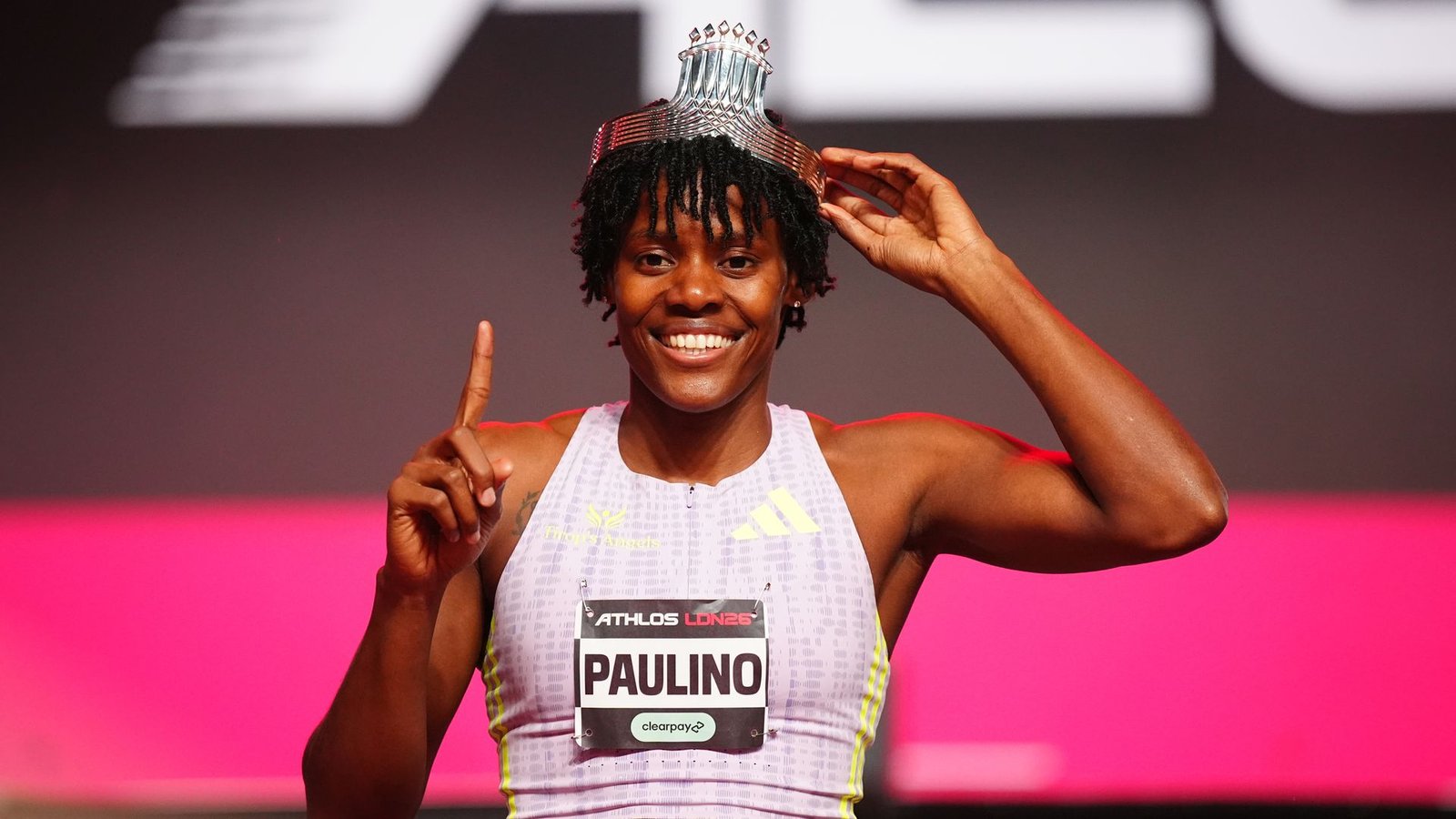
The victory earned Paulino first place at ATHLOS London and another signature crown moment at the women-focused track and field event.
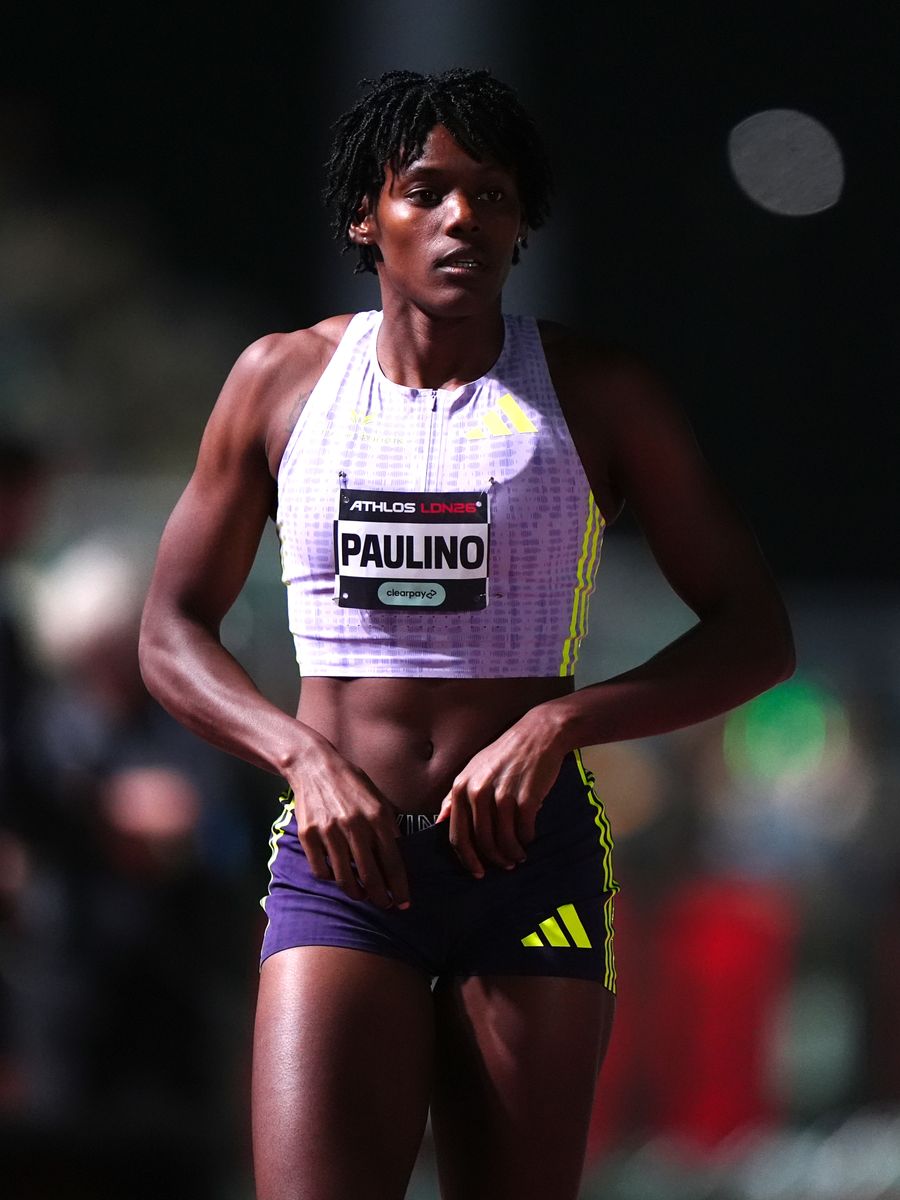
Marileidy Paulino of the Dominican Republic before the 400m during ATHLOS 2026 at the StoneX Stadium
But the 48.73 performance was significant for another reason. It marked Paulino’s 15th career 400-meter race under 49 seconds, tying the all-time record for the most sub-49 performances.
Marileidy Paulino Wins ATHLOS London 400m in 48.73
Paulino did not dominate the race from the opening gun. Jæger and Jamaica’s Nickisha Pryce started aggressively, with Jæger reaching the 200-meter point in 23.69 seconds. Paulino was running sixth at that stage, approximately half a second behind the Norwegian leader.
You may also like
Continue reading
Then the race changed and Paulino began closing the gap around the final bend. With 100 meters remaining, she had moved into third, but Jæger still held the advantage.
Marileidy Paulino of the Dominican Republic wins the 400m during ATHLOS 2026
Paulino continued gaining ground down the home straight before catching Jæger in the closing meters. She crossed the finish line in 48.73, with Jæger recording 48.78 and Pryce taking third in 49.39.
The margin between first and second was only 0.05 seconds.
Dominican Republic’s Marileidy Paulino (top) celebrates her victory ahead of Norway’s Henriette Jaeger (C) and Jamaica’s Nickisha Pryce in the women’s 400m final
Jæger’s performance was historic in its own right. Her 48.78 lowered the Norwegian national record and made her the fastest European woman over 400 meters in 30 years, according to European Athletics.
Marileidy Paulino Ties the All-Time Sub-49 Record
Paulino’s ATHLOS performance was more than another win. Her 48.73 marked the 15th time in her career that she has completed 400 meters in under 49 seconds, equaling the all-time record. Eight of those sub-49 performances have come during the 2026 season alone.
That consistency helps put the scale of Paulino’s season into perspective.
Marileidy Paulino of the Dominican Republic wins the 400m during ATHLOS 2026
The Dominican sprinter entered ATHLOS London undefeated in 2026 and extended that streak with her late-race victory. World Athletics described the result as another win in an unbeaten season, while Dominican reports noted that she completed her competitive year without a defeat.
It also continued Paulino’s success at ATHLOS. She won the inaugural ATHLOS NYC 400m in 2024 with a time of 49.59 seconds.
What Marileidy Paulino Won at ATHLOS London
ATHLOS London offered significantly increased prize money for the 2026 season. According to ATHLOS, first place in each event was worth $65,000, followed by $35,000 for second and $20,000 for third. The organization also continued its tradition of presenting winners with its Tiffany & Co.-designed crown.
The London competition was particularly significant for ATHLOS because it marked the event’s first international stop after launching in New York.
Dominican Republic’s Marileidy Paulino approaches the finish line to win the women’s 400m final during the World Athletics Ultimate Championship
The women-only professional track and field competition featured seven disciplines: the 100-meter hurdles, 100m, 200m, 400m, 800m, mile and long jump.
Paulino was joined on the winners’ list by several major track stars. Sha’Carri Richardson won the women’s 100m in 10.80 seconds, Gabby Thomas took the 200m in 22.13 and Olympic 800m champion Keely Hodgkinson won her event in 1:56.40.
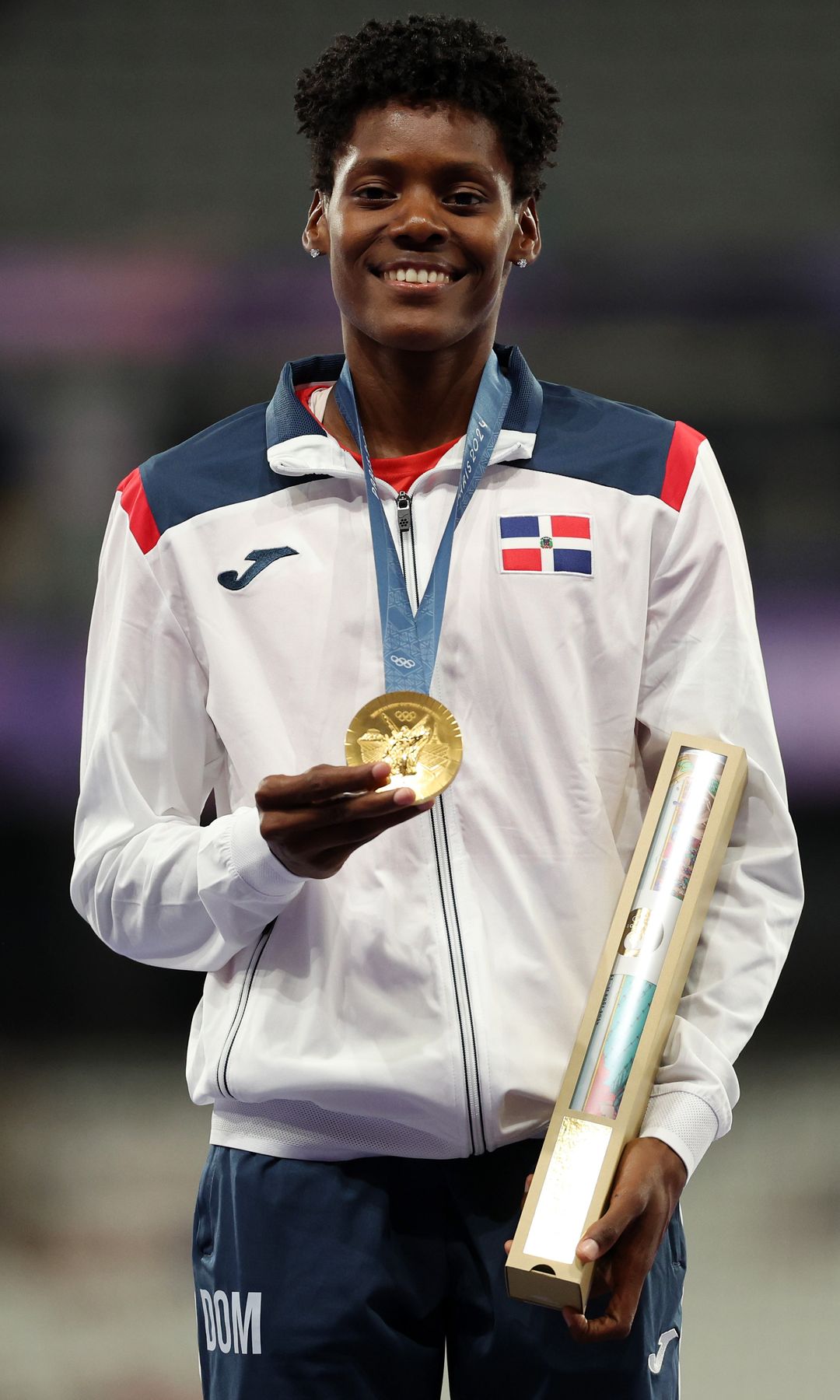
At the Paris 2024 Olympics, she won the women’s 400m gold medal in an Olympic-record 48.17 seconds. Her career has continued to build since then, with her 2026 campaign showing an extraordinary level of consistency below the 49-second barrier.
Solana’s blockchain is becoming a hub for innovation, particularly with the launch of a tokenized magazine based on the popular One Piece series. This initiative highlights the platform’s capability to revolutionize digital collectibles. Additionally, Raoul Pal will join the Breakpoint event to discuss the future of on-chain transactions, especially regarding the token supercycle. This growing interest in tokenization could bring new opportunities for Solana users.
The Latest
Recently, Phygitals launched a tokenized magazine tied to the One Piece franchise, leveraging Solana’s blockchain to transform how digital collectibles are created and traded. The Solana Foundation has also noted a surge in interest surrounding tokenized AI stocks, indicating a robust ecosystem that could attract more users and investors. Meanwhile, Solana co-founder Toly’s advocacy for the SGP 3 proposal aims to align incentives within the community while facing some pushback. These developments suggest a dynamic and evolving landscape for Solana as it continues to innovate.
What the Data Shows
The current market context shows mixed signals across the broader crypto landscape, with Solana’s unique offerings potentially standing out. Although specific volume data is not available, the excitement surrounding tokenized projects and AI stocks indicates a potential uptick in user engagement and interest. As the market adapts, Solana’s initiatives may lead to increased on-chain activity and participation from diverse user groups.
Solana is a high-performance blockchain platform designed for decentralized applications and crypto projects. Its jurisdiction encompasses various digital applications, making it a fitting choice for tokenization efforts. The platform’s capacity for scalability and speed attracts developers and businesses looking to leverage blockchain technology effectively.
What Traders Are Watching Next
Traders should keep an eye on Solana’s upcoming initiatives, particularly the outcomes of the Breakpoint event and the discussions around the token supercycle. The ongoing community debates regarding the SGP 3 proposal will likely influence sentiment and could lead to significant shifts in the ecosystem. As Solana expands its offerings, the market will be watching for increased adoption and engagement metrics.
This article is for informational purposes only and does not constitute financial advice.
Popular altcoin Avalanche (AVAX) is preparing for the Helicon update, which will bring significant changes to the network’s structure and staking economy.
According to the schedule announced by the Avalanche team, Helicon will be activated on the mainnet on September 22, 2026, at 6:00 PM Turkish time. The update was previously deployed on the Fuji testnet on July 28.
A total of six Avalanche Community Proposals will be implemented, including Helicon. These include a perpetual execution system for C-Chain, automatically renewing staking, a dynamic minimum gas fee, and a reduction in the minimum staking duration.
The update will also increase the expected uptime for validators and make changes to the staking reward curve. ACP-285, which will change the reward system, will be implemented gradually after Helicon is activated.
The continuous execution feature aims to increase C-Chain’s transaction capacity by allowing transactions to be prepared during idle times between blocks. The dynamic minimum gas price will also ensure that the fee floor is adjusted based on network demand.
Mainnet validators need to upgrade to AvalancheGo v1.15.0 before the hard fork. Validators that fail to update may not function properly on the network after Helicon is enabled.
A Facebook post accurately described 13 acts of kindness carried out by U.S. President Donald Trump before he ran for office.
Rating:
What’s True
Of the 13 reported acts of kindness in the Facebook post, nine were true, mostly true or probably true.
What’s False
Two of the claimed acts of kindness were false, and one was unproven. Lynne Patton, a former Eric Trump Foundation employee whom Trump appointed to roles in both of his presidential administrations, carried out one of the reported acts.
In September 2026, a Facebook post (archived) circulated online that listed 13 claimed “acts of kindness” that U.S. President Donald Trump purportedly carried out before running for office.
The introduction to the post read:
For thirty years before he ran for office, Donald Trump quietly paid mortgages, flew sick children across the country, and wrote checks to strangers who needed help. You will not find those stories on the evening news. So here they are.
Start with what people who knew him before politics say. He has never had a drink. He has never smoked. He has never used drugs. He built his business on long hours, and the people who worked for him will tell you he outworked all of them. Nobody called him a bigot until the day he announced for president. That timing tells you something about the accusation.
Of the 13 reported acts of kindness in the Facebook post, nine were true, mostly true or probably true, two were false and one was unproven. One of the alleged acts was actually carried out by Lynne Patton, a long-time employee of the Eric Trump Foundation whom Trump later appointed to roles in both of his administrations.
Given the above, we rate this claim a mixture of true and false or unproven elements. Below, we investigate each claim in the post.
Annabel Hill’s farm: True
In 1986, a Georgia widow named Annabell Hill was about to lose the family farm at a foreclosure auction. Trump saw her story on the news, picked up the phone, called the auction, and stopped the sale. Then he sent her the money to keep the farm.
Snopes investigated this claim in September 2026 and found it to be true. Accordingtoreporting at the time, Hill’s farm had been up for auction twice. Her husband, Leonard D. Hill, died by suicide in February 1986 to try to save the farm using the payout from his life insurance. That sum did not cover the debts, and his widow faced a second auction that September.
That was reportedly when Trump stepped in, called the bank to block a foreclosure auction and started fundraising for Hill. The fundraising was successful, with Trump himself covering at least $39,000 of the $170,000 needed. Because of the fundraising efforts, Hill’s family was able to keep the farm.
A private plane for Andrew Ten: True
In 1988, an Orthodox Jewish family in Los Angeles had a three-year-old son named Andrew Ten who needed treatment in New York. The boy could not survive without a full life-support setup, and no airline would carry it. His father asked Trump for help. Trump put the family on his own jet and got them there.
Snopes previously investigated this claim in 2015 and found it to be true based on a report published by the Jewish Telegraphic Agency in 1988 that said Ten’s father had appealed to Trump for help transporting his ill son to access medical treatment in the New York area.
The Times of Israel later reported that Ten died in 1998. In 2014, the Securities and Exchange Commission fined Ten’s father, Harold Ten, in an alleged scheme to “profit from the imminent deaths of terminally ill patients in nursing homes and hospice care.”
Trump sent plane to fly Marines: False
In 1991, two hundred Marines came home from Desert Storm to Camp Lejeune and found out the military had no aircraft to fly them the rest of the way to Florida. Trump’s airline, the Trump Shuttle, made two runs between North Carolina and Miami and got every one of them back to their families.
Snopes previously investigated this claim in 2016 and found it false. Though some Marines did fly from Miami to North Carolina on a Trump-branded plane after Operation Desert Storm in 1991, Trump did not own Trump Shuttle or its planes at the time because he had defaulted on the loans he used to buy the fleet. Rather, the military chartered some of the planes that still bore the Trump logo to fly the Marines without involvement from Trump.
A flat tire and a mortgage payment: False
In 1995, a passing driver in New Jersey pulled over to help change a flat on Trump’s limo. Trump asked what he could do in return. The man only wanted flowers sent to his wife. A few weeks later, the story goes, the flowers came with a note saying the couple’s mortgage had been paid off. People have been repeating that one for three decades.
This claim is an urban legend that Snopes first debunked in 1998. It has also circulated using other celebrities’ names. According to an Aug. 15, 1997, report in the Toronto Globe and Mail, an assistant at Trump’s New York office told the paper the story “isn’t true.”
Mar-a-Lago welcomed Black people and Jews: True
In 1996, Trump sued the town of Palm Beach, Florida. The town had been leaning on his Mar-a-Lago club for one reason. He let in Jewish members and Black members, and the older clubs did not. Abraham Foxman, who ran the Anti-Defamation League at the time, said Trump shined a light on the ugly side of Palm Beach that the glitter usually hid. Foxman also said other clubs started admitting Jews and Blacks after Trump forced the issue.
Snopes investigated a similar claim in 2016, finding it true that Trump allowed Black people and Jews to access Mar-a-Lago while other clubs in Florida did not. The Wall Street Journal reported in 1997 that after Trump sued Palm Beach alleging discrimination against his club because it admitted Black and Jewish members, other clubs had started to admit Jewish patrons.
However, the WSJ reported in April 1997 that Palm Beach denied it was discriminating against Mar-a-Lago because of its membership and that restrictions imposed on the club were part of a zoning matter. The outcome of the lawsuit was unclear.
Ultimately, Trump’s decision to allow Jewish and Black members turned out to also benefit his business, helping him fight Palm Beach’s restrictions and also allowing him to attract a different crowd than existing clubs already catered to.
According to the Wall Street Journal article, Foxman did speak the quote the Facebook post attributed to him, saying Trump “put the light on Palm Beach. Not on the beauty and the glitter, but on its seamier side of discrimination.”
Money for a girl with brittle bone disease: True
In 2000, Trump was watching Maury Povich and saw a little girl named Megan who lived with brittle bone disease. He said her attitude got to him. He called the show and sent her family a large check.
According to a recording of a Dec. 19, 2000, episode of “Maury,” the talk-show hosted by Povich, an 11-year-old girl named Megan and her mother received a check and video greeting from Trump.
The clip of the show Snopes viewed did not elaborate on Megan’s illness or the exact size of Trump’s check. During the clip, Trump called Megan “beautiful, inside and out” and told her to “keep up that attitude.”
Povich, when handing over Trump’s check to Megan, said Trump didn’t give out “chump change” and referenced “all those zeros” but did not say the exact amount.
In 2020, to mark the 30th anniversary of the Americans with Disabilities Act, Trump’s campaign shared a news release that highlighted several moments he reportedly supported Americans with disabilities. One of these highlights was about Megan and said she had brittle bone disease.
Jennifer Hudson stayed free at Trump hotel: Probably true
In 2008, Jennifer Hudson’s mother, brother, and nephew were murdered in Chicago. Trump moved Hudson and her family into his Chicago hotel at no charge and had his security team watch over them while they grieved.
Snopes previously investigated this claim in 2016. E! Online reported on Oct. 31, 2008, that Hudson checked into the Trump International Hotel & Tower on Oct. 24, following the murder of her mother, brother and nephew by her former brother-in-law.
The outlet reported that Trump himself was paying for the stay, something Trump also told People magazine on Nov. 10. It was unclear how long Hudson stayed at Trump’s hotel.
Hudson has never publicly refuted Trump’s claim that he paid for her stay or named herself or anyone else other than Trump as having paid.
A check for bus driver who saved woman from suicide: True
In 2013, a Buffalo bus driver named Darnell Barton saw a woman standing at the edge of a bridge. He stopped the bus, walked over, put an arm around her, and talked her back to safety. Trump read about it and mailed Barton a check, because he thought a man like that deserved a reward.
Snopes found this claim to be true in 2016. A Buffalo radio station reported photos from a ceremony on Nov. 7, 2013, during which Barton received the $10,000 check (archived) that Trump had promised on social media after Barton’s Oct. 18 rescue of an apparently suicidal woman he spotted while driving his bus.
Money for a Marine arrested in Mexico: True
In 2014, Marine Sgt. Andrew Tahmooressi spent seven months in a Mexican prison after he took a wrong turn at the border with legally owned guns in his truck. President Obama never placed the call to Mexico that the sergeant’s family begged for. Trump sent Tahmooressi a check for $25,000 to help him rebuild his life once he got home.
Snopes previously investigated this claim in 2018. We found at the time that Tahmooressi was arrested after he crossed the Mexican border while carrying guns and ammunition that he legally owned in the U.S. — but wasn’t permitted to carry in Mexico — and was imprisoned for seven months.
We could not substantiate his claims about abuse and mistreatment by Mexican authorities that also circulated at the time.
The House Committee on Foreign Affairs reported on Oct. 31, 2014, that Tahmooressi had been released from Mexican jail. Trump pledged (archived) on social media on Nov. 10, 2014, that he would send Tahmooressi a check for $25,000. We reported in 2016 that Trump made good on his promise the next day, writing to Tahmooressi:
You have served our country with fortitude and dignity, and we are fortunate to have someone like you as a brave Marine and protector of our wonderful nation. We are proud of you and I wish you and your family the very best for many years to come.
According to the House Committee on Foreign Affairs and reporting by the Los Angeles Times, Republican and Democratic politicians alike had pushed for Tahmooressi’s release. Any involvement or lack thereof by then-President Barack Obama was unclear.
College money for beauty queen’s son: True
In 2016, Melissa Young stood at a Trump rally in Wisconsin and cried while she thanked him. She had competed as Miss Wisconsin USA in 2005, then got sick with an illness that has no cure. During her worst stretch, a handwritten note arrived from Trump calling her the bravest woman he knew. She said the doors Trump opened for her ended up giving her Mexican-American son a full ride to college.
During a Trump campaign rally in Janesville, Wisconsin, on March 29, 2016, Young told the then-candidate that his organizations, including the Miss USA pageant and the since-defunct crowdfunding platform FundAnything.com, had helped secure her Mexican-American son a full ride to college.
Young, who competed as Miss Wisconsin in the Miss USA pageant in 2005, said she suffered from an incurable illness and that at one point when she was in hospital, Trump sent her a handwritten letter addressed to the “bravest woman I know.”
In 2016, Snopes reported on Young’s story and the open letter to Trump she posted on Facebook (archived) in July 2015. That letter explained that Miss USA 2005 Chelsea Cooley had started a fundraiser for Young’s son after attending the launch of FundAnything.com, which would allow him a full ride to college.
It was unclear whether Trump personally paid anything into Cooley’s fundraiser for Young’s son. (The claim does not say specifically that he did.)
Young posted (archived) on Facebook in August 2026 that her son would be a high school senior that coming school year.
Lynne Patton’s reply to claims Trump was racist: True
That same year, Lynne Patton, a Black executive at the Trump Organization, put out a video answering the people calling her boss a racist. She admitted she had fought addiction for years. She said the Trump family never pushed her out. They stood by her the whole way.
Patton, who was at the time the vice president of the Eric Trump Foundation, spoke at the July 20, 2016, Republican National Convention in Cleveland, Ohio. Before she took the stage, a five-minute video essay played in which Patton criticized “repeated and reprehensible” attempts to “align my boss and his family with racist hate-mongering groups campaigns and messaging” (time code 0:14).
Patton called the Trump family, “one of the most generous, compassionate and philanthropic families I’ve ever had the privilege of knowing” (time code 0:39).
Patton’s video essay and following appearance did not include mention of addiction. This part of the claim may have come from her later media appearances. For example, in April 2025, Patton discussed her history with cocaine addiction with Lara Trump, Eric Trump’s wife, on Fox News. During that interview, Patton also talked about how the Trump family had supported her through her addiction.
After Donald Trump won the 2016 presidential election, he appointed Patton to a role in the Department of Housing and Urban Development overseeing a region covering New York and New Jersey. During his second administration, Trump appointed Patton as deputy assistant to the president and director of minority outreach.
Patton previously served a suspension from government work for a violation of the Hatch Act, which regulates the partisan political activities of federal employees, during her time at HUD.
Cancer treatment for campaign volunteer’s father: Mostly true
Also in 2016, a young Illinois volunteer named Shane Bouvet told reporters that Trump had stepped in to cover his father’s cancer treatment. His father, Donald Bouvet, beat the cancer. Trump has stayed in touch with the family ever since.
Trump met with Bouvet and his father, Donald, on Feb. 9, 2018. The president said he had first read about Shane Bouvet in The Washington Post ahead of his January 2017 inauguration.
The Post reported at the time that Bouvet was a Trump supporter and volunteer social media coordinator for the Trump campaign in Illinois. The article noted that Bouvet’s father had cancer and that Bouvet and his mother both faced layoffs and difficulties finding well-paid work.
I said, “I’d like to meet him.” Nice young man, had a lot of difficulty. And I gave him some money for himself — $10,000. His father, Donald — good name — was suffering and really on a pretty final path toward losing his life with cancer. Shane took the $10,000, and, rather than spending it on himself, he gave it to his father. And his father went to a very good cancer clinic or hospital because he was at hospitals before and they didn’t do so well.
Trump continued:
And they did a fantastic job, and Donald is now cancer-free. And I think it’s an incredible story where a son would give 100 percent of the money to his father, who he loves, obviously.
As such, though Bouvet ended up spending Trump’s money on cancer treatment for his father, Trump suggested that was not how he intended the money to be spent when he gave it to Bouvet. It was unclear whether Trump remained in contact with the Bouvet family at the time of this writing.
Loans to Black entrepreneurs: Unproven
And there is a story that has floated around New York business circles for years. A Black business owner could not get a loan anywhere in the city. Someone told him to go see Trump. Trump lent him the money and told him to pay it back when he could. The man came back later with a check and said the business was doing well. Trump tore the check up.
Snopes could not determine the source of this rumor. An oft-cited source was the Joe Brown, a former TV judge, who appeared on a podcast in 2019. When asked on the podcast whether Trump was a racist, Brown said (time code 1:07:43):
I don’t think so. I have talked to a number of Black entrepreneurs who, back in the late ’80s and ’90s were, early ’90s, were trying to get financing. They couldn’t. Somebody told them to go check with Donald Trump. So they come back and tell me they got a loan from Donald Trump. He gave him a term loan: Show up with the interest in the principal [unintelligible] but they had to go see him in person. They independently relayed this tale that when they saw him he said, “That’s what you’re supposed to pay me, this is our agreement?” say “Yeah,” and then tore the check up, shook their hands and “Congratulations, now run your business.”
We found no evidence that Trump, his campaign or individual business owners had ever publicly confirmed giving or receiving such loans. We attempted to contact Brown to ask if he could put us in contact with Black business owners who received loans from Trump in the early 1990s. We also contacted the Trump Organization to ask about the rumor. We await replies to our queries.
‘1996: Trump Buys the Miss Universe Organization – 2016-11-09 – Donald Trump Through The Years’. Forbes, https://www.forbes.com/pictures/ejle45hiej/1996-trump-buys-the-mis/. Accessed 17 Sept. 2026.
Alcindor, Yamiche, and J. David Goodman. Trump Family Wedding Planner to Head New York’s Federal Housing Office. 16 June 2017, https://www.nytimes.com/2017/06/16/us/politics/trump-family-wedding-planner-to-head-new-yorks-federal-housing-office.html.
Andino, Gabe. ‘Remember That One Time Donald Trump Owned an Airline?’ NYC Aviation, 9 July 2015, https://www.nycaviation.com/2015/07/one-time-donald-trump-owned-airline.
Black White House Aide Returns after Suspension for Past Political Activity on the Job. 5 May 2025, https://www.semafor.com/article/05/05/2025/high-ranking-black-white-house-aide-returns-after-suspension-for-past-political-activity-on-the-job.
Bueno, Jacqueline. ‘Trump’s Palm Beach Club Roils the Old Social Order’. Wall Street Journal, 30 Apr. 1997, https://archive.ph/fPXLL#selection-273.0-276.0:~:text=In%20recent%20weeks,its%20chief%20officer.
Defending the USA. ‘Lynne Patton “The Trump Family That I Know” – A Black Female Trump Executive Speaks’. YouTube, 2 May 2016, https://www.youtube.com/watch?v=lxaKUo5naoY.
‘Donald Trump Shelters Jennifer Hudson’. People, 11 Nov. 2008, https://archive.ph/6WpiF.
Fox News. ‘Incoming Trump Official Shares Heartwarming Story of Overcoming Addiction’. YouTube, 6 Apr. 2025, https://www.youtube.com/watch?v=aJw_RlcI0yU&t=109s.
‘Guilty Verdicts in Jennifer Hudson Family Murder Trial’. BBC News, 11 May 2012. US & Canada. www.bbc.com, https://www.bbc.com/news/world-us-canada-18043638.
‘Hero Bus Driver Coaxes Woman from Edge of Bridge’. TODAY.Com, https://www.today.com/video/hero-bus-driver-coaxes-woman-from-edge-of-bridge-58856515627. Accessed 17 Sept. 2026.
Intervention By Trump Helps Stave Off Foreclosure Of Family Farm. 30 Dec. 2015, https://web.archive.org/web/20151230214756/https://www.apnewsarchive.com/1986/Intervention-By-Trump-Helps-Stave-Off-Foreclosure-Of-Family-Fawirerm/id-7b84fa6b5f9d67cd35f94363b48c03a4.
Interview: Donald Trump on Maury – December 19, 2000. vimeo.com, https://vimeo.com/388909587. Accessed 17 Sept. 2026.
‘Jennifer Hudson “Still in Shock” at Chicago Hotel’. E! Online, 31 Oct. 2008, https://www.eonline.com/news/66557/jennifer-hudson-still-in-shock-at-chicago-hotel.
Jouvenal, Justin. ‘In Donated Shoes and Suit, a Trump Supporter Comes to Washington’. The Washington Post, 18 Jan. 2017, https://archive.ph/3cTCd.
L. A. Times Archives. ‘Widow Gets Yule Gift of $187,000 to Save Her Farm’. Los Angeles Times, 23 Dec. 1986, https://www.latimes.com/archives/la-xpm-1986-12-23-mn-309-story.html.
LiveNOW from FOX. ‘FULL Donald Trump Rally in Janesville, Wisconsin – Count How Many Times He Says Motorcycle – FNN’. YouTube, 30 Mar. 2016, https://www.youtube.com/watch?v=_nvpHW5uZXw&t=2794s.
‘Orthodox Child with Rare Ailment Is Rescued Aboard Tycoon’s Jet’. Jewish Telegraphic Agency, https://www.jta.org/archive/orthodox-child-with-rare-ailment-is-rescued-aboard-tycoons-jet. Accessed 17 Sept. 2026.
Perry, Tony. ‘Marine Tahmooressi Is Released from Mexican Jail’. Los Angeles Times, 1 Nov. 2014, https://www.latimes.com/local/lanow/la-me-ln-tijuana-judge-orders-marine-to-be-released-from-jail-20141031-story.html.
Prince, Cathryn J. ‘For Tale of Jewish Child “Saved” by Trump, a Tragic End’. Times of Israel, 25 Aug. 2015, https://www.timesofisrael.com/for-tale-of-jewish-child-saved-by-trump-a-tragic-end/.
Remarks by President Trump During Visit with Shane Bouvet and Donald Bouvet. 9 Feb. 2018, https://web.archive.org/web/20180209203005/https://www.whitehouse.gov/briefings-statements/remarks-president-trump-visit-shane-bouvet-donald-bouvet/.
Right Side Broadcasting Network. ‘Full Speech: Lynne Patton at the Republican National Convention (7-22-16)’. YouTube, 20 July 2016, https://www.youtube.com/watch?v=ODZrY0V11e4.
‘SEC Announces Charges Against Brokers, Adviser, and Others Involved in Variable Annuities Scheme to Profit From Terminally Ill’. The Securities and Exchange Commission, 13 Mar. 2014, https://www.sec.gov/newsroom/press-releases/2014-50.
T, Jazzy. ‘IT’S DARNELL BARTON DAY IN BUFFALO [PHOTOS]’. Power 93.7 WBLK, 7 Nov. 2013, https://wblk.com/its-darnell-barton-day-in-buffalo-photos/.
‘”The Trump Family I Know” Video’. C-SPAN, 20 July 2016, https://www.c-span.org/clip/campaign-2016/the-trump-family-i-know-video/4612500.
The White House. ‘President Trump Announces Appointments to the White House Offices of Communications, Public Liaison, and Cabinet Affairs’. The White House, 25 Jan. 2025, https://www.whitehouse.gov/briefings-statements/2025/01/president-trump-announces-appointments-to-the-white-house-offices-of-communications-public-liaison-and-cabinet-affairs/.
Trump Campaign Press Release – President Trump Is Working to Empower and Protect Americans with Disabilities | The American Presidency Project. https://www.presidency.ucsb.edu/documents/trump-campaign-press-release-president-trump-working-empower-and-protect-americans-with#:~:text=In%202000%2C%20Donald%20Trump%20helped%20the%20family%20of%20an%2011%2Dyear%2Dold%20girl%20named%20Megan%20suffering%20from%20brittle%20bone%20disease%2C%20providing%20her%20family%20with%20a%20check%20after%20seeing%20her%20story%20on%20Maury%20and%20feeling%20personally%20touched. Accessed 17 Sept. 2026.
‘Trump Card’. Toronto Globe and Mail. 15 Aug. 1997, https://drive.google.com/file/d/1xvi1W5BjAy-ZaLivGdV2RafOoemfXnLp/view.
Brown, Bridget. “Live Updates: Trump Goes After Supreme Court for Rejecting His Push to Restrict Mail Ballots.” AP News, 15 Sept. 2026, https://apnews.com/live/supreme-court-mail-ballots-trump-news-updates-09-15-2026. Accessed 18 Sept. 2026.
“President Trump Adds His Own Name to the Kennedy Center.” NPR, 18 Dec. 2025, https://www.npr.org/2025/12/18/nx-s1-5648519/kennedy-center-name-change-trump. Accessed 18 Sept. 2026.
Semones, Evan. “Kennedy Center Closes Amid Financial Crisis and Trump Name Dispute.” Al Jazeera, 15 Sept. 2026, https://www.aljazeera.com/news/2026/9/15/kennedy-center-closes-amid-financial-crisis-and-trump-name-dispute. Accessed 18 Sept. 2026.
Sloan, Steven, and Ashraf Khalil. “Kennedy Center Board Votes to Close Over Finances and Trump Dispute.” AP News, 15 Sept. 2026, https://apnews.com/article/kennedy-center-closure-board-trump-ruling-1dfbfaac695f6817719477101b971a54. Accessed 18 Sept. 2026.
“The John F. Kennedy Center for the Performing Arts – Our Story.” Www.Kennedy-Center.Org, https://www.kennedy-center.org/our-story/. Accessed 18 Sept. 2026.
Travers, Karen, et al. “Trump Says Kennedy Center Could Be ‘Ripped Down’ If He Doesn’t Get ‘Recognition.’” ABC News, 17 Sept. 2026, https://abcnews.com/Politics/trump-kennedy-center-ripped-recognition/story?id=136513298. Accessed 18 Sept. 2026.
WEISSERT, WILL. “Trump Says He’s Firing Kennedy Center Board of Trustees Members and Naming Himself Chairman.” AP News, 8 Feb. 2025, https://apnews.com/article/trump-kennedy-center-board-chairman-firings-21cd0018c6e9f591d59becea8573d8c0. Accessed 18 Sept. 2026.
Taylor Swift will receive the inaugural MTV VMA Artist Director Honors at the 2026 MTV Video Music Awards.
CBS and MTV announced Monday that the singer-songwriter will be honored with the new award that recognizes “groundbreaking music artists whose work behind the camera has expanded the possibilities of music video and advanced the art of visual storytelling.”
Swift is recognized as the most-awarded act in VMAs history, having won four VMAs and nominated in the best director category seven times including for her videos and films “The Fate of Ophelia,” “Opalite,” “The Man,” “cardigan,” “willow,” “All Too Well: The Short Film,” “Anti-Hero,” “Bejeweled,” “Fortnight (feat. Post Malone),” “I Can See You (Taylor’s Version) (From The Vault),” “Karma (feat. Ice Spice)” and “Lavender Haze.”
“Across her work, Swift has brought an increasingly expansive approach to storytelling, creating interconnected narratives, cinematic worlds and recurring details that invite audiences deeper into each project,” MTV and CBS said in their announcement of the award. “The inaugural MTV VMA Artist Director Honors recognizes that body of work, while also underscoring the growing role artists play in shaping how their music is brought to life on screen.”
Going into the ceremony Swift is the second most nominated artist with nine nominations, behind Madonna‘s 11. Swift‘s nine nominations include artist of the year and video of the year with “The Fate of Ophelia.”
Snoop Dogg is set to host the VMAs, airing live from Los Angeles on Sunday at 7:30-9:30 p.m. ET/4:30-6:30 p.m. PT, marking the first time the awards show has taken place in the city in nearly a decade.
Madonna will open the show in her first time returning to the VMAs stage in 23 years. Other performers taking the stage on Sunday include Lisa, Shaboozey, Raye, Sienna Spiro, GENER8ION, Gunna and Yung Lean.
Nirvana will receive the Video Vanguard Award though details have not yet been made available regarding who will be accepting the award on the band’s behalf.
The VMAs will air on CBS and MTV and stream on Paramount+ (Premium) in the U.S. It also will be available globally the next day on Paramount+ and MTV.
The VMAs are produced by Gunpowder & Sky. Van Toffler serves as producer. Jesse Ignjatovic of Den of Thieves, Barb Bialkowski and Bruce Gillmer serve as executive producers, alongside Barry Barclay and Floris Bauer. Melanie Block serves as co-executive producer and Gary Lanvy as co-producer. Snoop Dogg is executive producer alongside producers Sara Ramaker and Jasmin Ratansi. Jen Proctor is executive talent producer.
BACARDÍ Rum, Dunkin’, The General Insurance, Gillette Venus, Spotify, Tide evo and Under Armour are the event‘s sponsors.
The AMC A-List theater subscription program now offers something more than free popcorn and drink size upgrades: the best seats at private American Film Market screenings in November.
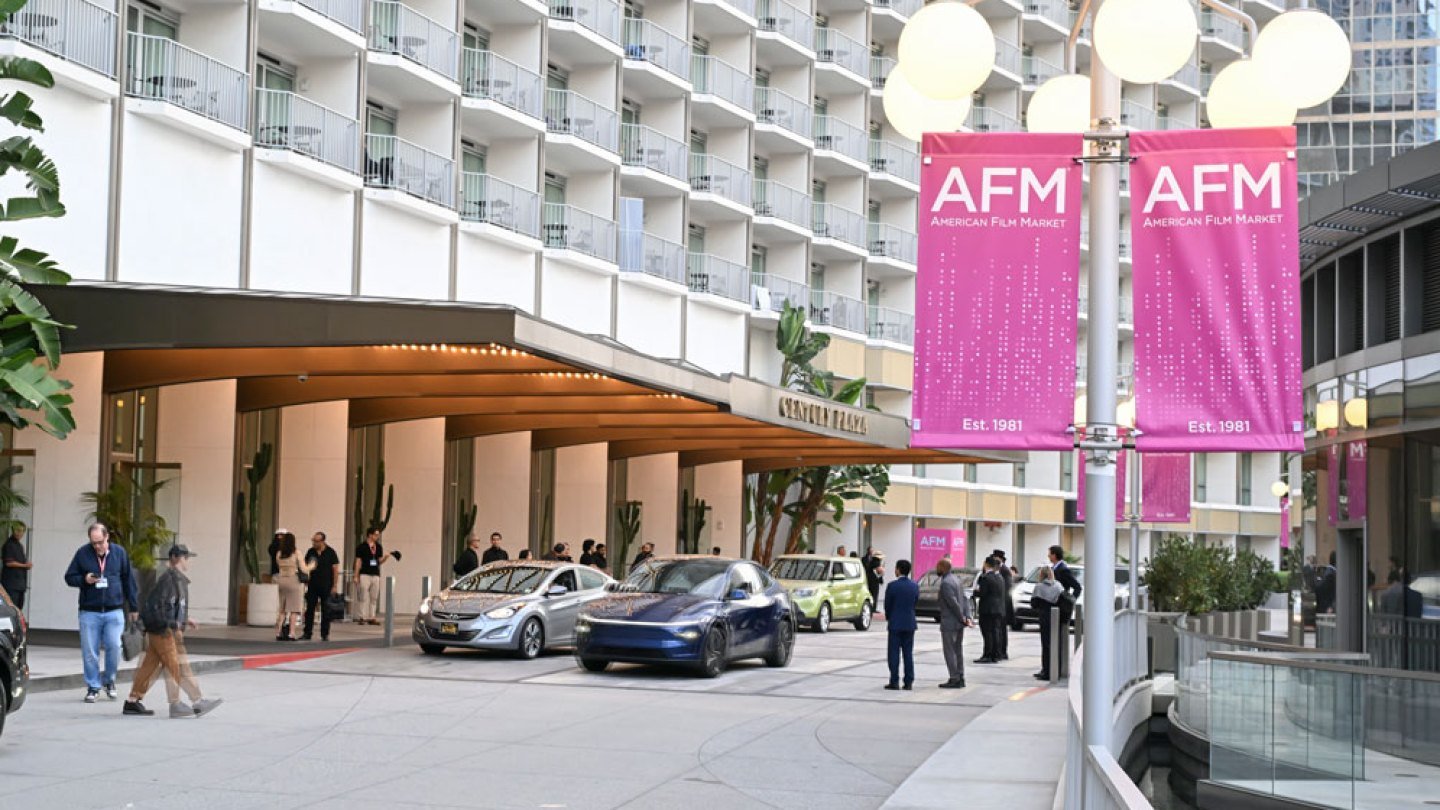
A partnership between AFM, AMC Theatres and the Los Angeles-based B-List Movie Club unveiled on Monday will see film fans attend private market screenings and slate presentations alongside industry buyers at the AMC Century City 15 multiplex, directly across from the AFM headquarters at the Fairmont Century Plaza.
As it expands its slate of market screenings in Century City for sales and production companies, the leading indie movie bazaar will look to AMC’s A-List subscribers and B-List Movie Club members to help film buyers gauge audience responses, whether hushed focus or laughter and cheering, ahead of possible acquisition and distribution deals.
Jackie Brenneman, president and CEO of the Independent Film & Television Alliance in a statement explained: “AMC A-List has become a powerful model for theatrical audience engagement, and our collaboration creates a unique opportunity for participating films to connect with frequent moviegoers and gain valuable audience response as they’re introduced to the global marketplace. Together with our expanded screening options, it’s another way we’re creating greater value for the companies and filmmakers who come to AFM.”
Opening up private AFM screenings to movie fans follows the indie business looking to diversify beyond traditional big-budget actioners at the multiplex. That includes high-concept genre plays like Backrooms and Obsession and concert movies that surprise by popping at the box office.
The AMC A-List program is aimed at avid moviegoers, and allows subscribing members to see Hollywood tentpoles and now upcoming movies being shopped to buyers at AFM.
“AMC A-List members are among the most passionate moviegoers in the industry, and we’re always looking for new ways to connect them with unique theatrical experiences. We’re excited to collaborate with AFM and engage communities like The B-List Movie Club to give movie fans access to special screenings, discover upcoming films, and experience content that isn’t typically available to general audiences,” Carrie Trotter, senior vp of marketing at AMC Theatres added in her own statement.
AFM will also this year expand its screening options with world and market premieres, slate showcases and other screenings with hospitality and concessions and red-carpet entrances by film talent during screenings from Nov. 10 to 13 at the AMC Century City. AFM’s 47th edition is now at 215 exhibiting companies looking to do business, including around pre-sales.
The finance, production, sales and distribution company list includes Gaumont, AGC Studios, Voltage Pictures, HanWay Films, Lionsgate, Neon and Embankment Films.
You probably weren’t going to buy a PC with a 4GB RX 9050 graphics card, but new test numbers from Hardware Unboxed and Toasty Bros should make sure of it. The GPU is over 25% slower than the 8GB version across a range of games at 1080p Medium/High; in many games, it barely breaks 60fps at 1080p Low.
We first heard that AMD was bringing back the aging 4GB GPUs in July, and initial performance tests were rough. Although we didn’t expect much, it’s always important to wait for well-produced third-party benchmarks with reproducible results. Unfortunately, now that we have them, it’s clear just how poor this new card’s performance is.
Hardware Unboxed pulled the 9050 4GB from a weak CyberPowerPC build and paired it with an AMD Ryzen 9800X3D and some GSkill Trident Z5 6000 memory. But even with that overpowered CPU/memory configuration, the card fell flat on its face.
In Forza Horizon 6, the 9050 only managed an average of 88fps at 1080p Medium. The 8GB version achieved an average of 129fps, while the Intel Arc B570 managed 116fps. In Resident Evil Requiem at 1080p Low, it just managed 64fps average, while the 8GB version achieved a much smoother 88fps.
In Lego Batman, however, the 9050 4GB achieved 123fps at Medium quality, which is very playable. But the 8GB version is up to 175fps average, showing what a huge disparity just an extra few gigabytes of VRAM can create, even at these lower settings and resolutions.
The Toasty Bros YouTube channel found much the same. Although not as comprehensive, their tests showed poor performance with the 9050 in the pre-built gaming system they purchased. In Forza Horizon 6, the game becomes very choppy outside the lowest settings, with a flashy warning for Low Video Memory and serious stutters to single-digit FPS at times.
Recommended by Our Editors
The one caveat they gave was that this still represents an upgrade over the AMD RX 6500 XT, but that’s a four-year-old card that was super-entry-level at the time and now sells for less than $100 second-hand. Anything released now should top that.
The 9500 4GB does, but it’s still hard to stomach that this card came as part of a near-$900 pre-built gaming PC in 2026. Spending that much should get you something that can play at 1080p high. You might be able to do that with this card in some older games, with upscaling doing some heavy lifting, but it doesn’t appear to be up to the task for anything else.
About Our Expert
Jon Martindale
Contributor
Experience
Jon Martindale is a tech journalist from the UK, with 20 years of experience covering all manner of PC components and associated gadgets. He’s written for a range of publications, including ExtremeTech, Digital Trends, Forbes, U.S. News & World Report, and Lifewire, among others. When not writing, he’s a big board gamer and reader, with a particular habit of speed-reading through long manga sagas.
Jon covers the latest PC components, as well as how-to guides on everything from how to take a screenshot to how to set up your cryptocurrency wallet. He particularly enjoys the battles between the top tech giants in CPUs and GPUs, and tries his best not to take sides.
Jon’s gaming PC is built around the iconic 7950X3D CPU, with a 7900XTX backing it up. That’s all the power he needs to play lightweight indie and casual games, as well as more demanding sim titles like Kerbal Space Program. He uses a pair of Jabra Active 8 earbuds and a SteelSeries Arctis Pro wireless headset, and types all day on a Logitech G915 mechanical keyboard.
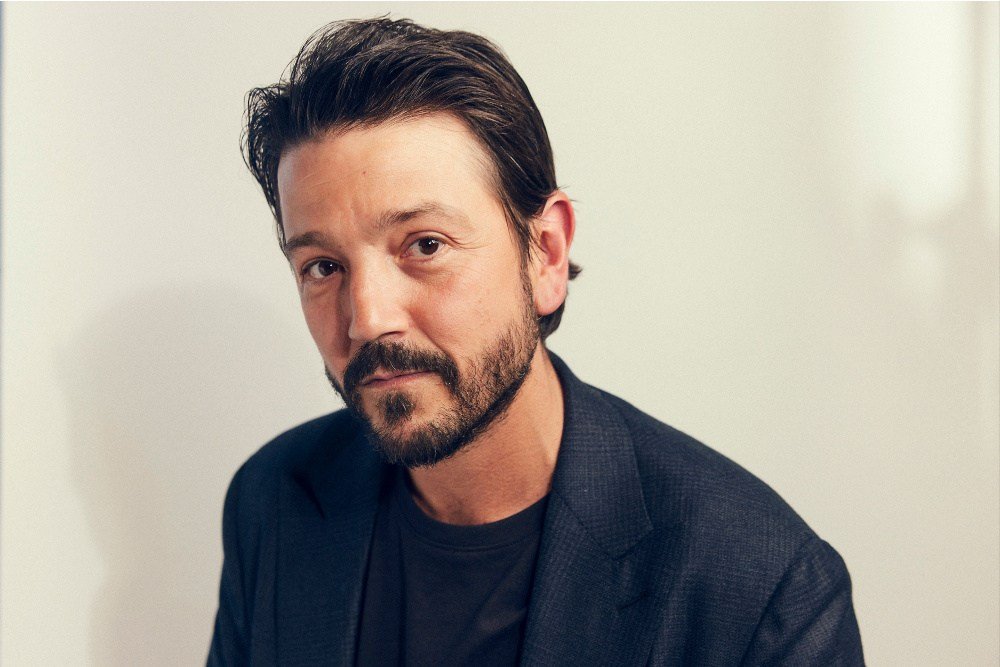
Diego Luna, who is at the San Sebastián Film Festival with his latest directorial project, “Ashes,” spoke about the differences between being on a festival run with an independent film and working on major Hollywood projects like “Andor.” Luna played the titular character in the Disney+ “Star Wars” spinoff, which ended with its second season last year. His work on the show earned him two Golden Globe nominations for best actor.
“When filming a movie, the challenges you face are the same whether it’s a massive production or a smaller one,” he said. “I think what really defines the projects is whether they champion a specific point of view. Then there’s the other kind of cinema, films that lack that vision, that seek only to please, and generally don’t let you be who you want to be. That’s the kind of cinema that gets forgotten very quickly.”
Luna mentioned how he is currently working hard to make sure “Ashes” is seen, and that audiences go to cinemas for the film. “With ‘Star Wars,’ it’s a different story,” he noted. “It’s the other way around. You come home, and something reminds you it’s already there. There is a level of attention, sure, but that becomes affection and a sense of companionship. It’s really lovely, and it spans generations. You encounter it in so many places and from so many angles: affection from people discovering it for the first time, and from others revisiting something that unlocks their childhood memories. It’s an experience I can’t compare to anything else, and it’s unlikely it’ll happen to me again.”
Courtesy of La Corriente del Golfo
“Ashes” premiered at the Cannes Film Festival earlier this year. It is adapted from a novel by Brenda Navarro and follows 21-year-old Lucila (Anna Díaz) and her brother Diego (Sergio Bautista) as they struggle to adjust to life in Madrid. Their mother (Adriana Paz) relocated to the city years ago in search of a better job, a decision that left her kids to grapple with feelings of abandonment and resentment. Speaking at the Variety Lounge last month, Luna emphasized how he made the film to bring forward a different perspective on immigration. “When we talk about migrants, we’re not thinking about what they left behind,” he said.
When an audience member asked Luna whether he believes more films about immigration should be made given the tense rhetoric around the subject worldwide—including Trump’s boost of ICE and Spain’s conflicts around Ceuta—the actor-turned-director said the question could have been asked 10 years ago, and will remain relevant a decade from now.
“It’s a story that keeps happening and will continue to happen unless we truly react,” he said. “The only certainty we have is that more and more people will move. There are multiple reasons for it today: violence, economic mobility, the climate crisis. It’as an endless list, but the fact remains that people will keep moving, and the issue lies on how we receive them. How do we welcome people? I think that’s where the chance for transformation lies, for us to change these encounters that are often so hostile for those who move.”
Luna said that it boils down to “curiosity” and caring about understanding the stories behind immigration. “Stories to which we are generally indifferent,” he noted, before adding that his home country showcases a particularly complicated dichotomy: “We rightly demand so much for Mexican migrants crossing the border to the north, but we are far from being the best version of ourselves when it comes to welcoming migrants from the south, from Central America.”
“It’s natural to sometimes feel uncomfortable with the presence of others, especially with the presence of something new,” he went on. “But I think cinema is a beautiful metaphor for understanding, which is something we need today. Cinema is a space that invites you not to lose a curiosity about people you don’t know. That curiosity, that desire to be closer to someone’s intimacy, allows you to be the best version of yourself. I believe that if you prioritize curiosity, understanding what brought someone here, what their story is, that initial discomfort will transform into generosity, into empathy.”
Asked by a Mexican film student whether budding directors should work in English or remain “faithful” to their Spanish-speaking roots, Luna said making films in Spanish gives native speakers “a very special freedom.” “You don’t have to move to make sure that your stories travel,” he said. “We are here in Spain, and I am a Mexican presenting my film. Pablo Larraín is Chilean, presenting an Argentinian film. You can remain who you are, and your films have the chance of travelling and connecting to audiences. It’s a beautiful freedom because you don’t have to move unless you want to.”
Sutton Foster charmed an appreciative audience on Saturday night at The Soraya in Northridge, California, with a nearly two-hour performance filled with show tunes and classics, backed by the Pacific Jazz Orchestra — with a surprise appearance by her romantic partner, Hugh Jackman.
Foster kicked off the show by introducing a few folks, including her music director and collaborator, Michael Rafter, who was on piano during the night, and Pacific Jazz Orchestra conductor Chris Walden. She then noted the importance and value of live shows: “We are all live humans, and this is a live orchestra, and you are a live audience. And we are so lucky that we get to gather and celebrate live music,” she said, to applause from the audience.
The Tony-winner sang several Cole Porter songs, including “I Get a Kick Out of You” and “Blow, Gabriel, Blow” from Anything Goes and “Don’t Look at Me That Way” (“It’s quickly becoming one of my favorites,” she said of the latter). She also sang Porter’s “Miss Otis Regrets,” which she noted she’d performed a dance number to when she was young. Marc Shaiman arranged the version she sang, which was based on a Bette Midler rendition, and Foster revealed that Shaiman connected her with Midler, who gave her approval to use that arrangement, much to Foster’s delight.
Foster also shared stories of her 9-year-old daughter, Emily (“She’s my favorite person that I’ve ever met”), and segued into urging the audience to live in the moment before singing “Life Is Just a Bowl of Cherries.” She also shared a funny description of her dad, who loves the Weather Channel and the Atlanta Braves, apparently tracks her flights and says humorous things to her, like: “You know, you can really tell when someone else does your hair and makeup.”
While Foster’s singing chops are nearly superhuman, she did have a moment that showed her more endearingly human side just before intermission. She ended the first “act” with “Anything Goes” from Anything Goes, noting that she knew “only one way to and an act one, and it’s with this song.” However, just a few bars into the song, she noted she had “this thing in my throat” and asked Walden and the musician to pause the music.
“I could feel it coming on, you know that thing when you get like a tickle in the back of your throat,” she told the audience, noting the moment was unplanned. “It feels super daunting to sing this song anyway, but not like this. … I’ve never had to do that, but I’m really glad I stopped. This is a lesson. It is OK to stop. I’ve got young performers here [in the audience]. You know what? it’s just a show.”
During the second half of the show, Foster performed a mash-up of “If I Were a Bell” from Guys and Dolls and “Singin’ in the Rain” from the musical of the same name as well as Duke Ellington’s “I Like the Sunrise,” among others.
But it was during “A Doodlin’ Song” that Jackman came out onstage, much to the delight of the crowd. After Foster sang the lyrics, “Why don’t you join the group? It’s better than being a party-poop,” Jackman then joined in, to loud applause. The couple, who have been dating for nearly two years, engaged in some fun onstage banter: “What are you doing?” she asked him. “You said you wanted me to join the group,” he replied. “No, you’re supposed to stay backstage? … Why do you have a microphone?” she asked him. “It’s 2026; everybody has a microphone,” he quipped.
After the song was over, Foster began, “So now that you’re onstage … ” to which he joked: “Yeah, do you want five or six numbers from me?” Jackman continued: “Well, I don’t know if a lot of people know this, but we sang this, and we’re gonna sing a song that we sang together many or a couple of times.”
Indeed, Jackman did stay to perform for another song — a complete surprise to the audience as it wasn’t listed in the program — with Foster. That song, “A Million Dreams,” from Jackman’s 2017 film The Greatest Showman, was something the couple workshopped together 12 years ago. “It took eight years for The Greatest Showman to be built, and I was a part of two of the workshops,” Foster said. “It was many years ago, so this is a song that we did sing together and we would love to sing it for you tonight.”
In a sweet moment, Jackman gave Foster a kiss before departing the stage. “I don’t know how we recover from that, so we’re just gonna end the show now,” Foster quipped of Jackman’s cameo. She thanked Jackman for coming out onstage with her “and singing and for getting my daughter Taco Bell today.”
Foster then sang “Meantime” before being given a standing ovation. She indulged the crowd in one last bonus tune: “Till There Was You,” from The Music Man. That musical, of course, had a revival on Broadway that debuted in 2022 and starred Foster and Jackman. The crowd happily obliged her request to sing along.
Foster’s performance kicked off The Soraya’s 2026-27 season, which marks its 16th season overall, and the first under new executive and artistic director Chad Hilligus. See the full schedule.
 © PA Images via Getty Images
 © PA Images via Getty Images
 © AFP via Getty Images
 © PA Images via Getty Images
 © AFP via Getty Images
 © PA Images via Getty Images
 © Getty Images
 © Getty Images
 © Getty Images