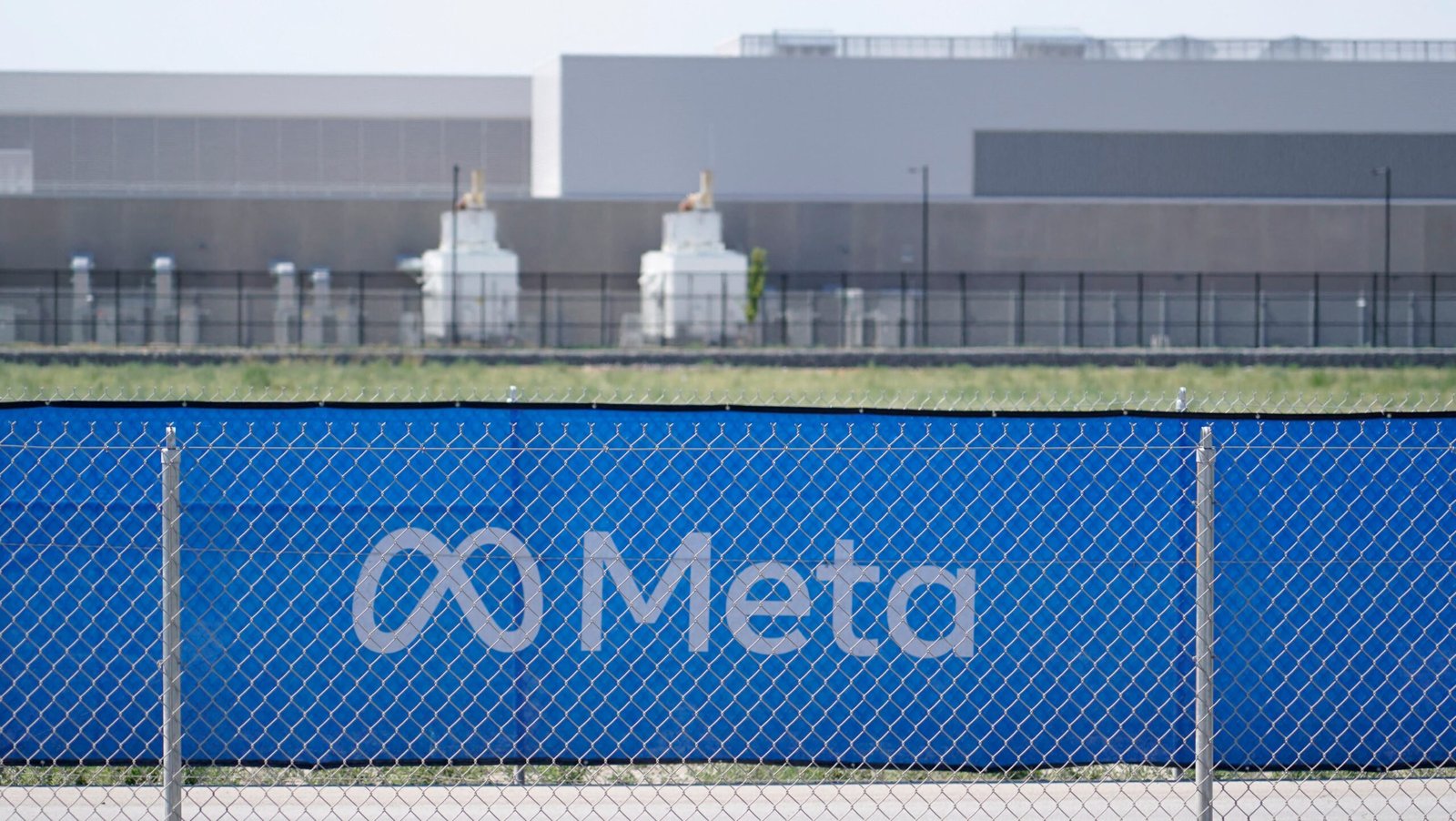
Meta is expanding its planned Hyperion data center project in Louisiana from 2 gigawatts of computing capacity to 5 gigawatts, according to Reuters. This leap in power will require a sizeable investment, almost doubling the initial planned $27 billion price tag to $50 billion.
Until the recent AI data center buildout, the largest data centers in the world were in the 10s to hundreds of megawatts. However, since project Stargate was announced in early 2025, ambitions have risen dramatically. Even in mid-2026, though, xAI’s twin Colossus and Colossus 2 data centers reportedly still provide only a combined 1 gigawatt of compute capacity. And Elon Musk has been selling some of that capacity to Anthropic.

Data center protests (Credit: Vuk Valcic/SOPA Images/LightRocket via Getty Images)
This raises two important questions about Meta’s plans: Can it even build a data center with a 5-gigawatt capacity, given the memory crunch, let alone cool or power it? Meta is also reportedly exploring the sale of its spare AI compute capacity. So, what will it do with this excess compute, unless it’s expecting an enormous expansion in its existing AI businesses?
In a memo to staff following recent layoffs, CEO Mark Zuckerberg said he is “optimistic about delivering personal superintelligence to everyone,” which is no small feat, compute-wise.
That said, OpenAI and Anthropic have absorbed hundreds of billions of investment to get where they are, and they’re still having to discount the AI compute they sell. Many of their biggest customers are cutting back on AI use, too.
Recommended by Our Editors
This is all assuming Meta’s mega data center project is even completed. The first promised 2 gigawatts isn’t expected to come online in full until 2030, with the additional 3 gigawatts potentially coming years after that. Data centers are also facing enormous political and community pushback due to their egregious use of local power and water resources.
Meta has said it will invest over $1 billion in local roads, water, and wastewater systems as part of the project, but environmental law firms are already looking to investigate its finances.
About Our Expert

Jon Martindale
Contributor
Experience
Jon Martindale is a tech journalist from the UK, with 20 years of experience covering all manner of PC components and associated gadgets. He’s written for a range of publications, including ExtremeTech, Digital Trends, Forbes, U.S. News & World Report, and Lifewire, among others. When not writing, he’s a big board gamer and reader, with a particular habit of speed-reading through long manga sagas.
Jon covers the latest PC components, as well as how-to guides on everything from how to take a screenshot to how to set up your cryptocurrency wallet. He particularly enjoys the battles between the top tech giants in CPUs and GPUs, and tries his best not to take sides.
Jon’s gaming PC is built around the iconic 7950X3D CPU, with a 7900XTX backing it up. That’s all the power he needs to play lightweight indie and casual games, as well as more demanding sim titles like Kerbal Space Program. He uses a pair of Jabra Active 8 earbuds and a SteelSeries Arctis Pro wireless headset, and types all day on a Logitech G915 mechanical keyboard.
Leave a Reply