More than 60 per cent of Nova Scotians have now shared their race and linguistic identities with the province’s Health Department, creating a dataset that will eventually be used to analyze — and ideally correct — inequities in the health-care system.
Sharon Davis-Murdoch has been advocating for this type of work for 26 years.
“When some of us are poorly served and are not as healthy as we should be … it certainly shouldn’t be something that is secret,” said Davis-Murdoch, a founding member and co-president of the Health Association of African Canadians.
“It is something that should be there to improve the system. What isn’t measured doesn’t count, and so we need to have it measured and it needs to count,” she said in an interview.
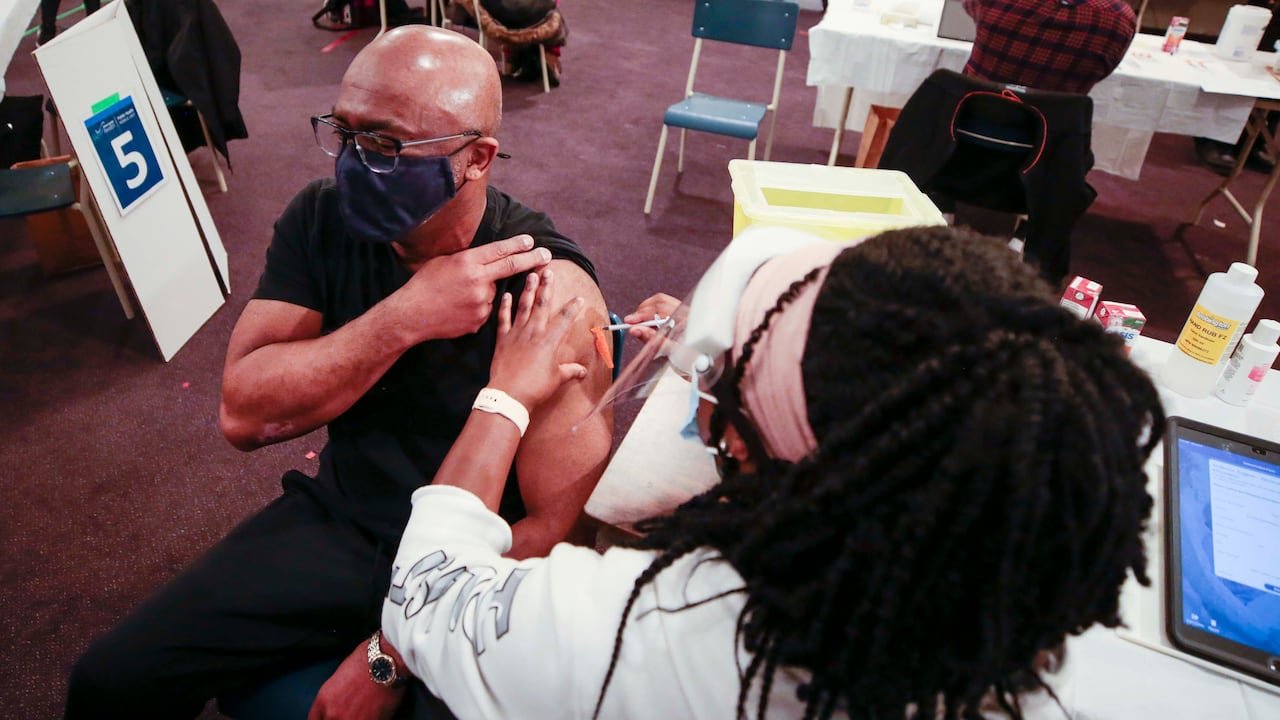
The province started collecting some race and linguistic data when it was administering COVID-19 vaccinations. Then, in 2022, it broadened the project, allowing people to opt in when renewing their health cards, or any time through an online form or by phone.
As of the start of November, nearly 695,000 people had volunteered their information.
“That’s a great number,” said Dr. Gaynor Watson-Creed, a public health physician and the associate dean of serving and engaging society in Dalhousie University’s faculty of medicine.
“I’m really pleased to hear that. And it means that Nova Scotians are paying attention and that they are seeing the value in this data collection effort,” she said in an interview.

Dr. Gaynor Watson-Creed is a public health physician and an associate dean at Dalhousie University’s medical school. She was previously Nova Scotia’s deputy chief medical officer of health. (Neil Benedict/CBC)
People can choose from 10 race categories: Indigenous, African Nova Scotian, African descent, Latin American, Middle Eastern, East Asian, Southeast Asian, South Asian, European descent or other. For language, they can choose English, French or other.
Rod Francis, executive director of equity and engagement for the Department of Health and Wellness, said the project stems from accounts of racism and discrimination in health care, including the dismissal of health concerns, and language and cultural barriers.
“This [data] will help us better understand where the barriers may exist,” he told CBC News.
Decisions about data governance
Francis said so far, the only work that’s been done on the data is cleaning it — that is, checking for duplicates, formatting problems or other errors. Before going any further, decisions have to be made about how to govern the data, he said.
“We are honouring our commitment and taking the time needed to engage, to listen and to be guided by community and to make sure that the information is used in a way that builds trust and results in a more equitable health care [system],” he said.

Sharon Davis-Murdoch is co-president of the Health Association of African Canadians. (Submitted by Sharon Davis-Murdoch)
Davis-Murdoch said she’s pleased some progress has been made, but she said the work that’s still to come needs to advance more quickly. With the rise of artificial intelligence and data sovereignty, she said decisions about how this data will be managed and used are urgent.
“It is time to get to where we need to be so that our people — our very capable and I think outstanding researchers, our community leaders, our communities — be involved in owning, understanding and moving to improve the health of all of us,” she said.
Further, she said, the information cannot be ethically collected and stored in the absence of a clear governance structure.
Francis said a governance table is in the early stages of development.
What will the data tell us?
The collection of self-declared race and linguistic health data is not yet commonplace in Canada, although Nova Scotia is one of a few provinces — including Manitoba and Prince Edward Island — that have begun to adopt the practice in recent years.
Manitoba has released some findings, including that Indigenous and Black patients wait longer for care in emergency departments.
In other countries, however, it is a more well-established practice. In the U.K., for instance, health-care data disaggregated by race has revealed disproportionate rates of a variety of physical and mental illnesses among Black, Asian and other minority groups.
Davis-Murdoch said that in Nova Scotia, the Black population has higher rates of several illnesses including diabetes, hypertension and some cancers.
“We know that anecdotally. We know that through our families and our lived experience,” she said.
The long history of slavery, discrimination and microaggressions “has taken a toll on our bodies,” said Davis-Murdoch.
Watson-Creed said the data is likely to validate those experiences. More than that, it will help the health-care system figure out how to improve, she said.
“The theory is one thing, but the data actually helps you see where the theory is meeting reality, and that’s really important for targeting change.”
Watson-Creed was Nova Scotia’s deputy chief medical officer of health when the race and linguistic data project began taking shape six years ago. She said she wasn’t involved in the “nuts and bolts” of developing it, but she contributed to the conversation about why the data matters.
“When we don’t have disaggregated data like that, we often make up why we are seeing the outcomes that we’re seeing. And so we may have an intervention related to what we’ve made up that actually misses the mark. That represents wasted opportunity and wasted resources,” she said.
But even with data in hand, she cautioned there is another way to miss the mark.
“The data by itself doesn’t constitute information or knowledge. It’s not until you put the data in front of the people that it represents that they can tell you, ‘This is what it actually means.’ They do that meaning making with the data.”
MORE TOP STORIES
Leave a Reply