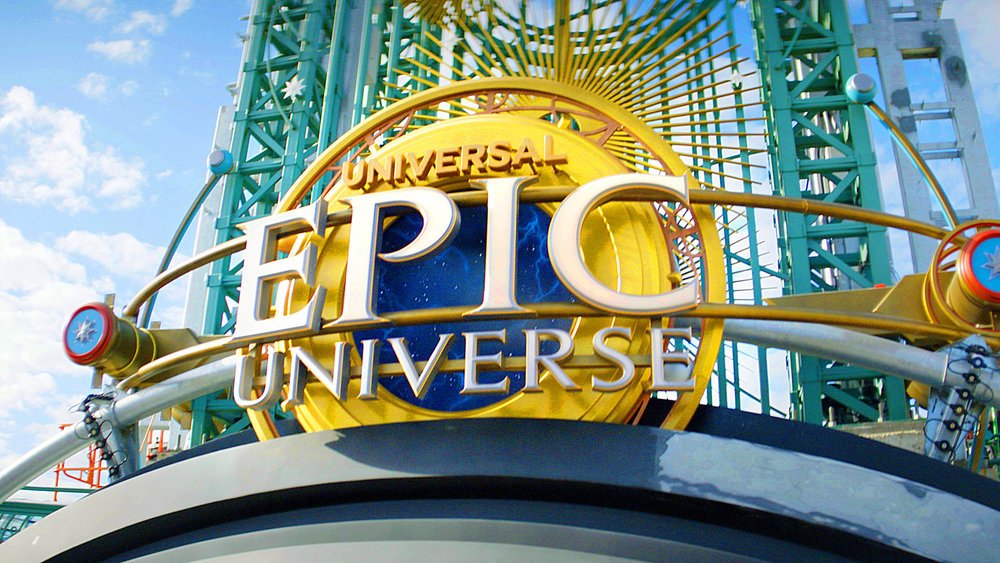
Showrunner and director John Marks recalls the first time he set foot in Epic Universe. It was late October 2024, six months before the theme park opened to the public. “It was bewitching,” he says. That very feeling is what he wanted to capture for viewers when he was pitched to shoot Peacock’s three-part series, “Epic Ride: The Story of Universal’s Theme Parks.” The series follows the theme park’s construction during those six months leading up to its opening day on May 22, 2025.
Marks knew he didn’t want to make a commercial. The theme park, which opened last May, marked the first major theme park debut in the U.S. in almost 25 years (Universal’s Islands of Adventure opened in 1999). Public excitement ran high, but behind the scenes, those six months were filled with challenges as everyone raced to meet the opening day deadline. “It was a ticking clock, and that clock was ticking loudly at the end of 2024,” Marks recalls.
The series kicks off with “The Build,” diving into the history of Universal Studios’ theme parks. Subsequent episodes focus on the park’s construction, weaving in its history and how Universal Pictures films tie into the attractions. Among the key talking heads are Vin Diesel, Bryce Dallas Howard, Universal’s chairwoman Donna Langley, and Steven Spielberg. For Marks, it was about finding the right voices to fit the “accordion” of storytelling. Diesel, whose “Fast & Furious” franchise is Universal’s biggest, was an obvious choice. Spielberg, a longtime Universal collaborator, was a no-brainer. Marks explains, “Spielberg crosses over from film into the parks. He’s been a partner going back to the 1970s with the first ‘Jaws’ ride.”
Beyond the big names, Marks wanted to highlight the creative minds behind the park’s creation. He included technical engineers, ride designers, and costume artists to tell their stories. “They could speak on what it’s like to create something that masses of people are going to experience and respond to emotionally. All of these creative artists faced incredible challenges.”
When Marks walked onto the grounds of Epic Universe that October, he brought cinematographer Philipp Friesenbichler with him. “I wanted him to come because I had a feeling we were going to see something that would make us hungry to show it to people,” Marks says. He continues, “I’ve never been to a place that vast, that creatively detailed, while it was still a work in progress. I’d never seen anything like that on camera, and I knew my cinematographer would see the same thing.
“What was beautiful about it was something utterly mundane: people in construction helmets walking around the most amazing, staggering roller coaster you’ve ever seen. When dusk hit and the lights came on, surrounded by mud, I thought, ‘I want people to feel what I’m feeling right now.’” That bewitching feeling became his North Star for storytelling. “It’s special to see a place like this. If you’re moved by it, you might want to come see it for yourself.”
Marks adds, “We felt the emotion of the people in the park who were making this – from the highest-level executive to the ride engineer inspecting the roller coaster. There was tremendous emotion around all of this. If we could capture that emotion, we could tap into the viewers’ emotions so they could feel why people spend years creating these parks. Hopefully, it would move people to want to come and see it all in person.”
With its first anniversary around the corner, Epic Universe has proven to be a massive success. Rumored to have cost $7.7 billion to build, the park involved thousands of people to bring its 750 acres to life.
Does Marks plan to do a follow-up? He hasn’t been asked yet, and he admits the documentary was “quite an undertaking.” Still, he reminds audiences that Epic Universe is an immersive storytelling world. “These places that tell these stories – they are the stories in and of themselves.”
Leave a Reply