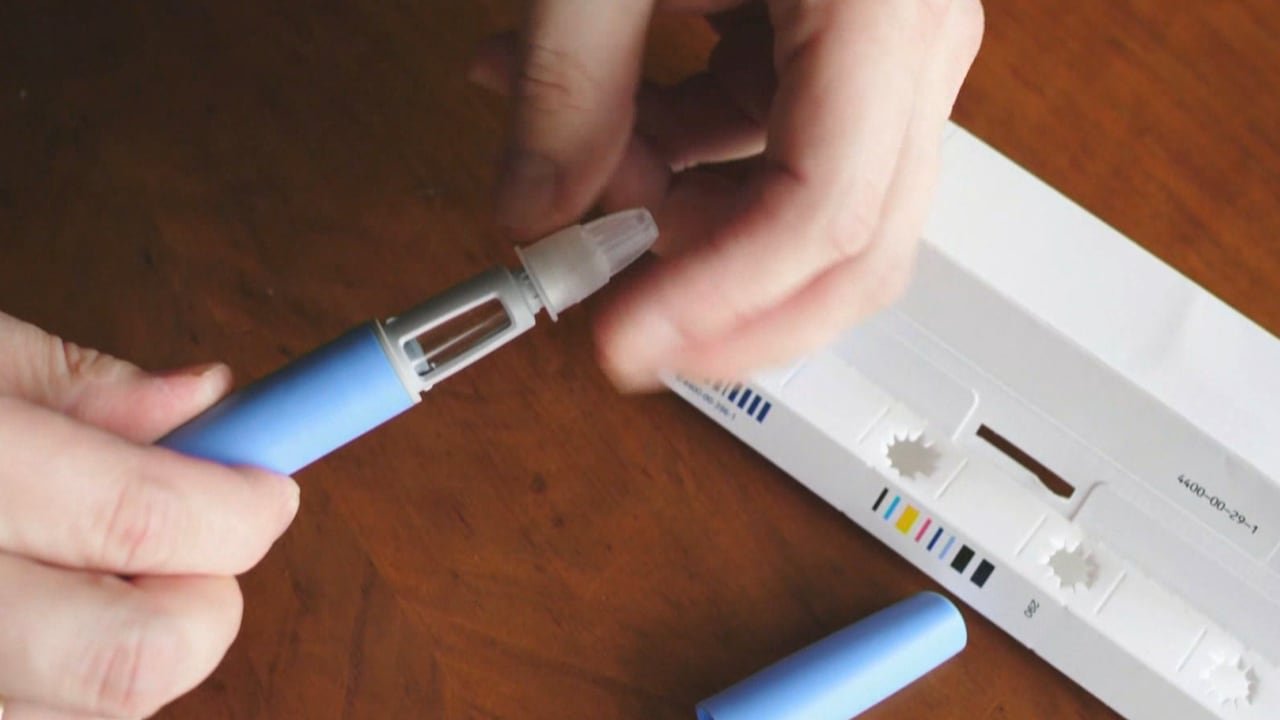
Health Canada has issued a public warning about the “very rare but serious” risk of vision loss tied to semaglutide GLP-1 drugs, best known by brand names such as Ozempic, Rybelsus and Wegovy.
On the heels of similar warnings in the U.S. and Europe, the federal department announced on Wednesday that it had completed its own safety review, which found a possible link between prescription semaglutide drugs and the risk of non-arteritic anterior ischemic optic neuropathy (NAION).
The condition causes sudden blindness or vision changes due to reduced blood flow to the optic nerve, which carries information from the eyes to the brain. It’s a permanent condition, with no known treatment.
“If you experience sudden vision loss or rapidly worsening eyesight while taking semaglutide … seek urgent medical attention,” the new warning reads.
‘Black veil over your eye’
Montreal resident Jeffrey Gilman, 71, welcomed the move from Health Canada, since he experienced near-total vision loss in one eye after just a few months of taking semaglutide as a diabetes treatment in 2024.
“I just woke up one morning and couldn’t see out of my right eye. I called my optometrist, who said come on in now. Like not tomorrow — now,” he recalled.
After seeing multiple specialists within just a few days, including ophthalmologists and neuro-ophthalmologists, Gilman was told there was “irreparable” damage to the optic nerve at the back of his right eye. He now has only 10 per cent vision in that eye and wishes he’d been aware of the potential risks.
“I’ve described it as almost like putting like a black veil over your eye and trying to see through it,” he told CBC News.
Multiple studies show links to vision loss
Both Health Canada and other international medical experts have stressed the rarity of NAION, even as millions of individuals around the world are now taking GLP-1 medications, including an estimated three million Canadians.
Yet multiple studies have also suggested there may be increased risk of the condition among those using these drugs, which are approved in Canada for a variety of uses, including chronic weight management and treating Type 2 diabetes.
“This is an extremely rare side effect — might be one in 5,000, one in 10,000 or even less common — and we need to be cautious until we know for sure,” said leading Canadian GLP-1 researcher and endocrinologist Dr. Daniel Drucker.
One headline-making 2024 study in JAMA Ophthalmology found a “potential risk” of NAION associated with prescriptions for semaglutide, but the researchers stressed more research was needed to assess causality.
Earlier this year, other observational research published in the British Journal of Ophthalmology found the risk of vision loss varied between semaglutide formulations, and was three times greater among men than women. The findings highlighted a “potential dose-dependent safety concern,” the authors wrote.
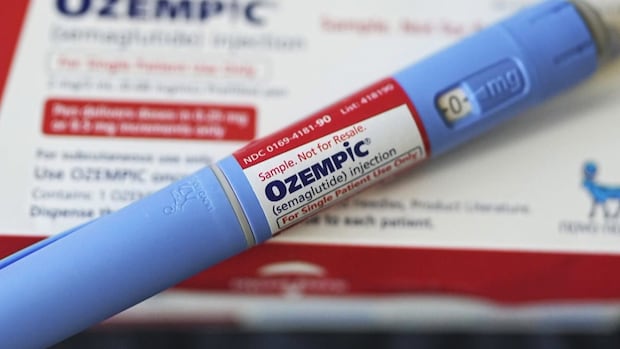
Researchers at the University of Toronto have found GLP-1 weight loss and diabetes drugs like Ozempic and Mounjaro double the risk of a severe form of vision loss among diabetics, affecting daily activities such as reading and driving.
Risk-benefit ratio may vary between patients
Given this growing body of research, Dr. Mahyar Etminan, a drug safety epidemiologist in the Regulatory Science Lab at BC Cancer Research Institute, told CBC News that patients should carefully weigh the possible risks and benefits of GLP-1 use with their physicians.
“When your sample size is very large, even a rare event — especially one as serious as this one — can be very significant,” he said following Health Canada’s announcement on Wednesday.
The risk-benefit ratio may be different depending on why people are using these drugs, Etminan added.
Drucker agreed, and encouraged patients to heed Health Canada’s caution.
“If you’re a casual user who has no other health problems and is trying to lose weight, maybe this is something that’s really important for you to balance against the benefit you’re going to achieve,” he said.
“On the other end, if you have serious health concerns with Type 2 diabetes or obesity, the numbers are overwhelmingly favourable for benefit.”

More people looking for a fast way to lose weight are turning to GLP-1s, even though that’s not what the drugs were originally designed for. For The National, CBC’s Lauren Pelley asks: Is this a risky new form of crash dieting, or is there a safe way to start and stop these medications?
Vision loss usually painless, sudden
NAION usually affects one eye at a time, Health Canada noted in its new notice, and often occurs as cloudy, blurry or worsened sight across part of the field of vision — usually in the lower half — of the affected eye.
Most people notice the vision loss when waking up, though it can also happen gradually over about two weeks.
“It is usually painless, though mild headaches or discomfort around the eye may occur,” the department’s warning adds.
So why does the condition happen?
Although it is not fully understood how semaglutide may contribute to NAION, Health Canada’s safety review explained that a “rapid drop in blood sugar levels following the use of semaglutide may cause swelling of the optic nerve and reduce its blood supply, especially in individuals with other risk factors.”
But Drucker said researchers might never be able to prove the exact mechanisms, or the role these drugs may play. NAION also occurs in individuals with diabetes, high blood pressure and high cholesterol.
“We probably will never have any clear causation,” Drucker said, “given the rarity of the condition.”
Health Canada recommended any Canadians experiencing sudden vision loss or eyesight changes while taking semaglutide GLP-1 drugs should quickly get medical attention, while health-care providers should urgently refer those patients for ophthalmological examination and discontinue semaglutide treatment if NAION is confirmed.
In cases where someone doesn’t have direct access to an ophthalmologist, Halifax-based optometrist Dr. Allison Scott, from the Canadian Association of Optometrists, said other specialists such as optometrists or emergency department physicians can provide a referral.
The notice applies to all types of prescription semaglutide drugs used in Canada, including brand names such as Ozempic, Plosbrio, Poviztra, Rybelsus and Wegovy, along with generic offerings such as apo-semaglutide injection, aspen-semaglutide, Dr. Reddy’s Laboratories Ltd. semaglutide injection, Sandoz semaglutide and Sevmia.
Leave a Reply