Trench coats, the perfect pair of jeans, a leather motorcycle jacket, a strand of pearls. In fashion, the most versatile items become the most iconic. The same goes for screenwriting.
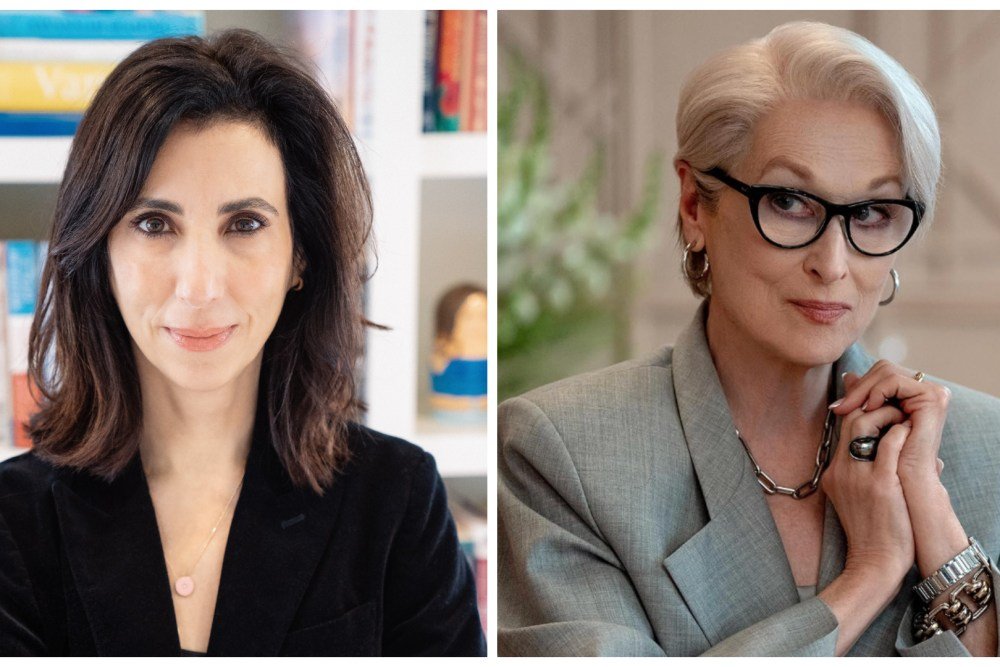
The magic trick of 2006’s “The Devil Wears Prada” was that it contained razor-sharp insights about the worlds of media and celebrity, packaged as a glossy fish-out-of-water story led by Meryl Streep and Anne Hathaway. Aline Brosh McKenna wrote that “sparkling” script, as Streep called it in her Golden Globes acceptance speech for playing the Anna Wintour surrogate Miranda Priestly, and returned as scribe for this weekend’s box office champ, “The Devil Wears Prada 2.”
Brosh McKenna brings us a portrait of modern media once again. Only this time, she paints a portrait of an industry mired in debt, battling for relevance and (mostly unsuccessfully) staving off acquisition by soulless tech oligarchs looking for another transaction. It’s a reality that many in Hollywood usually go to the movies to escape. But here, in the sequel, the screenwriter delivers audiences a tough reality that’s easier to swallow thanks to the nostalgia, humor and glamour that the first delivered in spades.
Variety caught up with Brosh McKenna over the film’s opening weekend to discuss the evolution of her beloved characters, the new players in publishing and the burden of celebrity cameos.
When did you start writing the sequel in earnest?
We first met with Meryl in May of 2024. I had some ideas I’d been working on for a bit, and we presented it to her. The first draft went to the actors beginning of January ’25.
So, a relatively quick turnaround for a sequel 20 years in the making.
It was a freight train. It was really fast. Then, the studio moved up our release date so postproduction was quick. David Frankel really rolled with it. He calls this film a “Polaroid movie.”
Getting Meryl was obviously the most important part. What idea set the whole thing in motion?
She mentioned she was open to hearing from us. I kept thinking about how much the world has changed since we did the first one. I would imagine these characters in this difficult time we’re all facing, and it made me laugh and caught my interest. There are so many changes in the culture and the economy, and this massive downward pressure on all these businesses from the top. It makes for a great story.
The sequel reflects the sad state of journalism – particularly the hard reality that lifestyle legacy publications like monthly print glossies are facing.
Someone who saw an early cut of the movie told me, “This is the funniest movie you can make about what’s happening in this business.” And it’s every business – the movies, pharmacies, hotels and restaurants. Everyone’s been turned upside down, so why wouldn’t it affect publishing, magazines and fashion? There were well established ways to make money and certain kinds of advertising, that just don’t exist anymore. And the move away from physical media has had an enormous impact on many businesses. This story isn’t a far walk from what’s happening in Hollywood and the wider world.
In the sequel, Runway is on the verge of being sold to a tech billionaire played by Justin Theroux. It feels like the movie has something to say about the way the oligarchs are reaching into every corner of our lives. There’s a poignant moment where Miranda Priestly is trying to get assurances that her magazine will continue to honor human artistry – like handmade couture, and articles written by people, not AI.
There’s a certain nihilism that Justin’s character represents. He just sees this giant wave coming in AI and thinks that we should submit to it. Miranda’s counterpoint is not a desire for her own ego, she really wants to lift up what she thinks is the best in beauty and accomplishment. He feels like, “If they go, they go.” It really depends on who owns the media company. There’s a difference between ones who own it because they want to make money from it, and the ones who own it because they want to burnish their reputation or have some cachet or go to parties with movie stars. For those people. these publications can be deleted at any time. They buy august institutions with no intention of maintaining them.
That brings us to Miranda’s intentions. She seems to have had an about-face with her values, but she has more to lose than ever. Why is she in this place?
We’ve seen a ton of “brand name” executives go through tremendous challenges since the last film. Miranda’s once-secure place in the culture is really challenged. In our world, we have fewer and fewer figures that unite us in terms of who we look to for inspiration, information and to set the trends. It’s much more diffuse now, and she knows that. Miranda has a big existential problem before we even see her reunite with Anne Hathaway [in the sequel].
Early reaction is that Miranda has been de-fanged in the sequel – but what struck me as true is how she treats Andy now that she’s a more formidable professional. Miranda still has venom, but she’s punching across, not down. Does that sound right?
I love exploring the balance between personal and professional relationships. It’s really easy when you’re younger. A lot of what the first movie is about is Andy thinking she’s supposed to have a certain type of mentorship from Miranda. Meanwhile, Miranda was far too busy to think about Andy at all. None of it is personal for Miranda, it’s a question of, “is this person going to help me stay where I need to be?” Miranda isn’t running some sort of empowerment summit.
I think you can say the exact same about Anna Wintour. There’s a reason she’s been around as long as she has.
I don’t process the story through the lens of Anna Wintour, in my mind it’s Miranda. In the first script, she was already scheming and now there’s a similar plot in the second. I don’t know that it correlates to real life.
But you had to be surprised by how much Anna has personally supported this sequel. The film got a Vogue cover and an original short film starring Anna and Meryl. It feels like the entire Vogue machine wrapped its arms around this movie, which wasn’t the case the first time around.
No, definitely not. I will say, Vogue started embracing the actors pretty early on. And we all understood that a movie that brings fashion front and center, even if it’s not the beat-by-beat portrayal they would have preferred, is welcome to a place like Vogue.
I was surprised that influencers weren’t a bigger part of this script. That industry runs on them now. There are a few cameos –
There are a ton! That’s the attention economy. You really have to know them. When we sketched out the cameos, we tried to figure out who would be in that world and at those parties. The gala in the beginning, at Miranda’s house in the Hamptons. There are so many more famous people than there used to be when I was a kid. You used to have to know everyone in People magazine. If you’re 25 now, there are a ton more famous people I haven’t heard of. And those who are famous to Gen X and Millennials, the young people haven’t heard of. There’s no longer a feeling of, “Well, everybody knows Walter Cronkite.”
It was delicious to see Tina Brown at Miranda’s Hamptons house in the film.
The thing about the cameos is, we start with a massive list of people and it comes down to, “Who is free all day on Tuesday?” We had many people working exclusively on finding the right people for those parts. And they’re all real sports. Whenever I ask someone to do something like this, I always explain to them that it’s going to be really boring. It’s a tedious day. They think they’re going to do it once and go home. They don’t realize they’re going to spend their entire day sitting in an uncomfortable chair being told to wait around, and then working for 30 seconds.
There’s a moment in the new film when Miranda is asked to call in a favor and have a superstar musician perform for free at an event. When it’s suggested, she says, “No. That cover almost killed me.” Every magazine writer in the world knows that feeling. And that performer winds up being Lady Gaga, who is a bit of a diva in this film.
I wrote this really mean scene and she was really excited about it. It’s obvious across this industry that Gaga is the nicest person. We had a lot of fun making her not nice.
The Met Gala is on Monday, which is obviously fortuitous timing for the film’s opening. In early screenings, many people noticed parallels between Justin Theroux and Emily Blunt and this year’s Met Gala patrons, Jeff and Lauren Bezos. What do you think?
Well, we already had a script and were making the movie when the rumors [of Bezos considering an acquisition of Conde Nast] started happening. It wasn’t inspired by anything. But, we did say, “Whoa,” when it happened.
How did it strike you when fans were disappointed that Adrian Grenier [Andy’s boyfriend in the first film] was not invited back, or Conrad Ricamora was cut from the sequel?
Sweet Conrad. Well, Adrien’s character Nate never came up. It’s been 20 years. We talked about it briefly, but she’s been all around the world and had a lot of relationships and didn’t settle down with him. Maybe they saw each other a few more times. I think they still follow each other on Instagram. But Andy wouldn’t be in touch with her college boyfriend. I’m very happy for the fans to have their own opinions, though.
Speaking of the first film, I still think one of the funniest and oddest characters is Doug, who Rich Sommer played. He was straight as an arrow, a corporate research analyst, and somehow knew more about fashion than anyone in that movie.
I have a lot of male friends, including David Frankel, who seem like they wouldn’t be interested in fashion — but they really are. In casual conversation they will name drop Ann Demeulemeester. I always thought that was funny. So that character [Doug], he was going to become rich. He’s very wealthy with three kids living outside, like, Chicago. It’s like straight guys who are into musical theater. That’s a whole other genre.
If Doug has a spiritual surrogate in the sequel, I think it might be Kenneth Branagh. He’s Miranda’s husband, plays a very small part, and still there’s an interesting throwaway line suggesting he’s an alcoholic. That he used to drink, and it was hard for Miranda. Why plant that seed?
I love that moment. It’s so brief and gives you a sense that there’s history there. He’s not just a glowey Prince Charming. Kenneth is just so dreamy. But I think the idea that they’ve had some bumps in the road, that’s why I love it. Never to be addressed before or after.
I have to ask, it was so unlikely we’d ever get a sequel to the first “Devil Wears Prada.” Do you think there’s a third story to tell?
Let’s see how this weekend goes. Call me on Monday. One foot in front of the other.
Leave a Reply