Let’s get this out of the way first: Comcast co-CEOs Brian Roberts and Mike Cavanagh told Wall Street analysts Monday that the proposed spinoff of NBCUniversal is “absolutely not” about setting each side of the company up for a sale.
Indeed, their argument is that the split will give each company a stronger hand to to play to cut deals or expand, splitting the debt load accordingly.
But that isn’t stopping Wall Street from salivating about what comes next. Deals may not happen in the next year or two (for tax purposes, if nothing else), but analysts see potential M&A for both the connectivity business, and the media and entertainment business.
As Wolfe Research analyst Peter Supino wrote Monday: “We doubt that this breakup will occur. Instead, we expect one or both Comcast units to merge with peers or competitors. We believe the breakup plan is strategic to Comcast because it is a legitimately good idea that also strengthens Comcast’s negotiating position with partners who will not want to wait 1-2 years for an otherwise completed spin-out to ‘season’ for tax purposes.”
Below, The Hollywood Reporter breaks down the assets of each side of the split, and what companies could pursue deals.
The New NBCUniversal
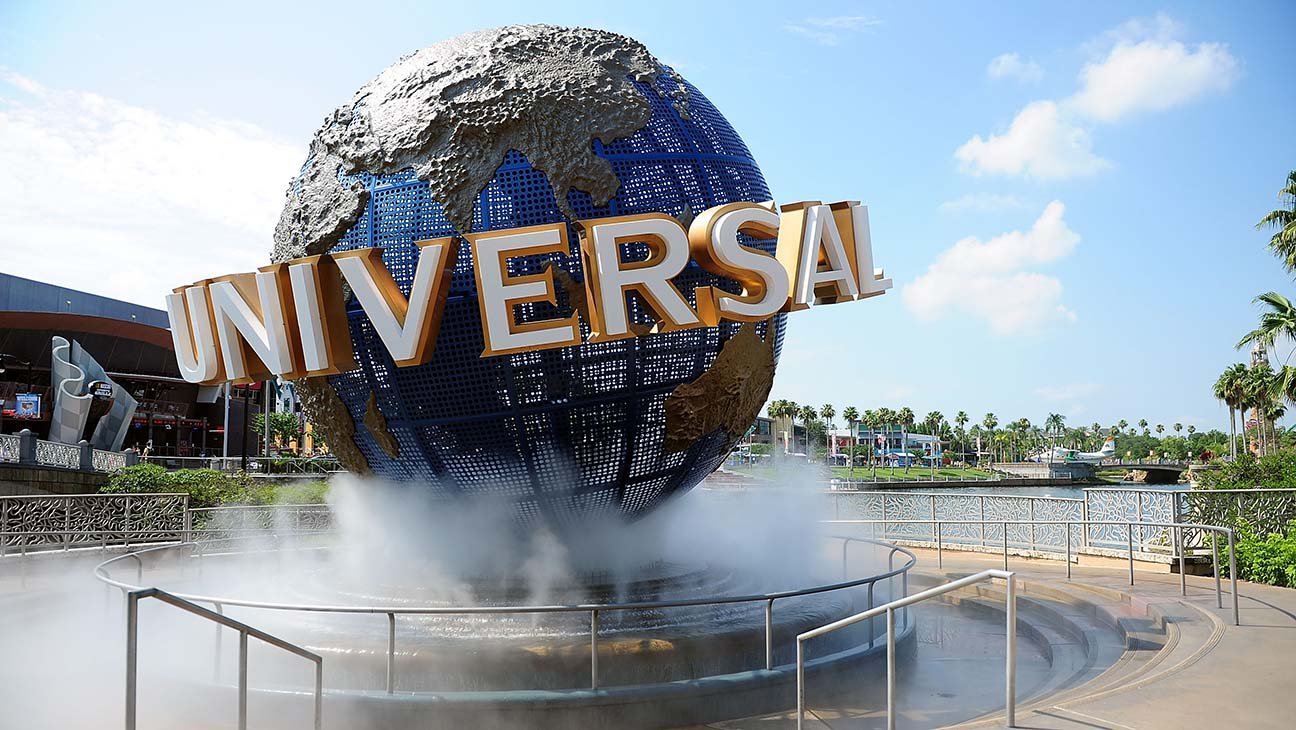
The post-spin NBCU will be led by CEO Mike Cavanagh, and include NBC, Peacock, Bravo, Telemundo, the NBCU film and TV studios, the Universal theme parks business, and the company’s Sky division in Europe (which includes some connectivity lines of business).
While NBCU will be a pure-play media company, it will still have some linear baggage in NBC, Bravo and Telemundo, which could dissuade some potential dealmakers.
Who Might Be a Buyer of New NBCU?
The market might seem frothy for media and entertainment, but aside from the high-profile pursuit of Warner Bros. Discovery, there hasn’t been a ton of dealmaking for studios or streamers (Roku is a platform, after all).
Netflix: The obvious name after its pursuit of WBD ended with the streaming giant folding its hand in favor of David Ellison’s Paramount. Rumors have rumbled for months that Netflix could eye an asset like NBCU as it seeks growth. The IP, while not as strong as WBD, is nonetheless better than Netflix’s current holdings, and experiences could change the narrative around Netflix’s growth, particularly with experiential seemingly in-demand right now.
That said, Netflix co-CEOs Ted Sarandos and Greg Peters have largely dismissed any major deals since WBD, citing that as a one-off opportunity. But if Netflix wants a game-changing IP deal, NBCU could fit the bill … though it may require divesting what linear assets it still holds.
Amazon: The tech giant is hungry for media, pouring billions into Prime Video, and it has pursued IP deals, as it did for MGM Studios. NBCU’s sports rights are exceptionally strong (NFL Sunday Night Football! The NBA! The Olympics!) and could turbocharge its efforts to become one of the top players in streaming.
Amazon has also been willing to engage, at a small scale, with linear assets, investing in the Yankees’ YES Network, if it gets them programming. But in an AI arms race, is Amazon really gunning for media assets if it comes at the expense of Nvidia chips or compute power? That is less clear.
Disney/Paramount/Fox: Look, there are strategic reasons why each of these companies could do a deal: Josh D’Amaro may want to establish his own footprint as a game-changing dealmaker; Lachlan Murdoch may want the same thing, scaling up Fox in content as it scales up in tech with Roku; David Ellison may want to consolidate another big studio and become the dominant force in entertainment.
But the truth is all of these deals are tough to fathom, given the tough legal road around broadcast rules, the already consolidating marketplace, and the realpolitik involved. And the debt load required for such a deal may be too much for any legacy media company to handle, given the debt they have already taken on for the mega-deals they are pursuing or have pursued.
Private Equity/Wildcard: The private markets are flush with cash, and that cash is particularly interested in things like the sports business. The glamour of the movie and TV business doesn’t hurt either, as does the growing experiences business. It isn’t crazy to think that an Apollo or Providence Equity could find a partner or two and pursue a deal, betting that they can executive a growth strategy.
What if new NBCU is a buyer? Cavanagh told Wall Street analysts that with the split “we have the freedom now to explore adjacent businesses where we have the right to play.” That certainly frames NBCU as a buyer, rather than a seller.
Video games are an intriguing possibility: Would NBCU consider a deal for Take-Two interactive, or Roblox?
Cavanagh is also said to be particularly bullish on experiences, and that could lead to some intriguing deal possibilities: Perhaps the struggling Six Flags could become a national home for NBCU-branded IP and attractions? Maybe a cruise line could be in play to catch up to Disney? Perhaps Sony or Lionsgate could become acquisition targets to try and catch to the bigger Paramount and Netflix? There seem to be real opportunities, should Cavanagh pursue them.
The New Comcast
The post-split Comcast will be led by CEO Michael Angelakis, and will include Comcast’s broadband internet business, its wireless communications business, and its cable TV business. It will also, presumably, hold the Comcast Spectator business, which owns Xfinity Arena in Philadelphia, and the Philadelphia 76ers, as well as the FreeWheel ad tech business.
Notably, post-spin Comcast will also hold a 19.9 percent stake in the new NBCUniversal, “which it intends to monetize in a tax-efficient manner over time.” In other words, a big chunk of NBCU that it will sell to help de-lever.
Who Might Be a Buyer of New Comcast?
There are a couple of obvious plays here: Scaling up a national cable company, a PE play, or a telecom outside seeking to become a connectivity giant.
SpaceX: Elon Musk has grand ambitions for SpaceX (after all his company told investors in its IPO that “we believe we have identified the largest actionable total addressable market (‘TAM’) in human history”), and connectivity is a big part of that story. Starlink is growing fast, and Comcast not only has wireless spectrum that could help that business, but a land-based broadband business that could complement it. That said, the AI trade is at play here: SpaceX has cut multi-billion dollar deals for AI companies like Cursor, and will likely need lots of Nvidia chips and other hardware to build out its planned mega data centers in space, so maybe Comcast is just a little too legacy for its tastes.
Charter: The cable TV giant is already nearing a deal to close its acquisition of Cox, which would make it the largest cable company in America. Acquiring Comcast would effectively make it the national cable company, giving it enormous ground-based scale to try and compete with SpaceX and the telecom giants. But Charter already has more debt coming in line for its Charter takeover, and the regulatory process for Comcast would be a nightmare to untangle (at the state level, if not the federal level), so maybe the juice isn’t worth the squeeze.
Verizon/AT&T/T-Mobile: Depending on who you ask, any one of the wireless giants could be an acquisition target for SpaceX… or a buyer to scale up and compete with them. All three have scale in wireless (where Comcast still needs work) and have a desire to scale up home and business broadband, (where it already is a power player). Verizon in particular is in need of a shakeup given its recent CEO shuffle, and creating a connectivity giant might be its ticket. Of course, once again regulations could be tough, and debt would be an issue … but those are negatives in any major deal of this size, and the telecom players might be hungry enough to go for it.
Private equity: TPG has taken over DirecTV and is milking the satellite TV giant for every ounce it can get. Comcast’s robust recurring revenue could be an appealing target for a PE firm seeking cashflow. It would take a healthy amount of debt for an LBO, but the revenue could be so appealing as to make it worthwhile.
The Brian Roberts Angle
One under-appreciated part of Monday’s announcement is that Brian Roberts, the co-CEO of Comcast (alongside Cavanagh) and son of Comcast founder Ralph Roberts, will not be CEO of either company. The company says that he will still be closely involved in both companies, and the deal includes dual-class voting shares that maintain the Roberts family’s control of both entities.
That means that any deal will need the approval of Roberts, which could elevate the premium that PE would play. Ellison, after all, had to persuade Shari Redstone to part with her family’s prize. Perhaps Roberts will need some persuading too?
Leave a Reply