Category: Technology

  • How to Watch the Liberty vs. Dream, Aces vs. Valkyries WNBA Semifinals Game 3 Live, Even for Free

    How to Watch the Liberty vs. Dream, Aces vs. Valkyries WNBA Semifinals Game 3 Live, Even for Free

    The NBA playoffs ended in June with the New York Knicks winning the championship for the first time in more than 50 years. Now it’s time for the WNBA to make history as the Las Vegas Aces continue their active postseason appearance streak. The Minnesota Lynx, meanwhile, had the chance to become the winningest team in league history, but they were eliminated by the New York Liberty.

    If you’re fresh off the FIBA Women’s Basketball World Cup, Caitlin Clark’s Indiana Fever have been eliminated, but there are still plenty of faces you’ll recognize from the US Women’s Basketball Team. Here’s what you need to know before tuning in.


    2026 WNBA Playoffs Game Schedule

    The WNBA playoffs run from September 27 to October 31. While every matchup in the NBA is a best-of-7 series, the WNBA holds a best-of-3 series in the first round, a best-of-5 series in the semifinals, and a best-of-7 series—for just the second year—in the finals, giving teams a lot less room to maneuver and recover. One bad night could mean the end of everything for your favorite team.

    The first round ended on October 2, with the New York Liberty, Atlanta Dream, Golden State Valkyries, and Las Vegas Aces advancing. The semifinals began October 4 and will continue through October 14, if a winner is crowned sooner. The WBNA Finals are scheduled to start on October 17.

    New York Liberty vs. Atlanta Dream – ATL leads 2-0

    • Game 3: Friday, October 9 @ 7:30 p.m. ET – ESPN 2

    • Game 4: Sunday, October 11 @ TBD – ABC

    • Game 5: Wednesday, October 14 @ TBD – ESPN

    Las Vegas Aces vs. Golden State Valkyries – GSV leads 2-0

    • Game 3: Friday, October 9 @ 9:30 p.m. ET – NBCSN/Peacock

    • Game 4: Sunday, October 11 @ TBD – NBC/Peacock

    • Game 5: Wednesday, October 14 @ TBD – NBCSN/Peacock

    WNBA Finals

    • Game 1: Saturday, October 17 @ 3:30 p.m. ET – NBCSN/Peacock

    • Game 2: Monday, October 19 @ 8:00 p.m. ET – USA/Peacock

    • Game 3: Thursday, October 22 @ 8:00 p.m. ET – USA/Peacock

    • Game 4: Saturday, October 24 @ 3:30 p.m. ET – NBC/Peacock

    • Game 5: Monday, October 26 @ 8:00 p.m. ET – USA/Peacock

    • Game 6: Thursday, October 29 @ 8:00 p.m. ET – USA/Peacock

    • Game 7: Saturday, October 31 @ 8:00 p.m. ET – USA/Peacock


    How to Watch the WNBA Playoff Games

    This year’s playoff schedule is tricky. It will be split across multiple networks and streaming services, even within the same series. ABC, ESPN, Prime Video, and USA carried the first round. ABC, NBC, NBCSN, Peacock, and ESPN will have the semifinals. NBC, USA, and Peacock will be options for the Finals. This means a single cable subscription or Live TV streamer might not be enough to watch everything.

    • DirecTV: DirecTV’s MySports base pack costs $45 per month for the first six months and offers ABC, ESPN, NBC, and USA.

    • Fubo: Fubo’s Sports plan costs $45.99 for the first month to watch games broadcast on ABC, ESPN, NBC, and NBCSN.

    • Hulu: For $90 per month, Hulu + Live TV lets you watch games on ABC, ESPN, NBC, and USA.

    • Peacock: Instead of a live TV service, you’d need to pay $10.99 per month for Peacock Premium to see the Wild Card Series games.

    • Prime Video: Prime’s $14.99 monthly or $139 annual cost grants subscribers access to the three first-round games on Amazon’s platform.

    • Sling: Sling’s $45.99-per-month Sling Orange plan will let you watch games on ESPN. Day Passes are also available for up to seven days. You’ll need the Orange $ Blue bundle for $60.99 to also watch games on USA.

    • YouTube TV: Though the standard plan for YouTube TV costs $83 per month, you can actually now pay for the cheaper $65 Sports package to see all games on ABC, ESPN, NBC, NBCSN, and USA.


    How to Watch New York Liberty vs. Atlanta Dream For Free

    If you don’t have a streaming subscription, you may be able to catch some of the action without spending a dime by signing up for a free video streaming trial. Here are your options:

    Recommended by Our Editors

    Unlock Your Streaming Service’s Full Catalog

    PCMag Logo

    Unlock Your Streaming Service’s Full Catalog


    Which Teams Are In the Playoffs?

    Unlike other sports leagues, the WNBA doesn’t care about conferences. Out of 15 teams, eight squads make it to the playoffs, regardless of where they come from. This year, there are an even four teams from the Eastern Conference and four from the Western Conference. Here they are, listed in order of seeding:

    1. Minnesota Lynx

    2. Golden State Valkyries

    3. Las Vegas Aces

    4. Atlanta Dream

    5. Indiana Fever

    6. Washington Mystics

    7. Dallas Wings

    8. New York Liberty


    Upgrade Your Streaming Experience

    If you decide to watch the WNBA Playoffs, there’s still time to get a big-screen television for viewing this beautiful game. Pro tip: Turn on your TV’s motion-smoothing option for the best picture while watching sports. Just remember to turn it off before watching other TV shows and movies to avoid the awful “soap opera” effect.

    About Our Expert

  • How to Watch the Tampa Bay Buccaneers vs. Dallas Cowboys Game for Free

    How to Watch the Tampa Bay Buccaneers vs. Dallas Cowboys Game for Free

    How to watch for free: The Buccaneers vs. Cowboys game will stream for free on 7Plus. You can use a VPN like ExpressVPN, our pick for location spoofing, to connect to a server in Australia and catch the match live for free. In the US, you may be able to watch with a streaming trial from Amazon Prime Video.


    It’s crazy to think that we’re almost halfway through NFL season, and season outlooks are already starting to solidify for certain teams. Heading into Week 5, the Buccaneers remain one of only five teams with no wins. They could really use a turnaround tonight. The Cowboys, meanwhile, sit at 2-2 and need another win if they want to keep up with the Giants and Eagles in the NFC East.

    Can Tampa Bay turn their disastrous season around? Will Dallas get an easy win before they face Philadelphia in two weeks? You won’t want to miss what happens next. Tonight’s Thursday Night Football matchup has a premium streaming option, but there are also two ways to catch the game for free.

    What Time Is the Tampa Bay Buccaneers vs. Dallas Cowboys Game?

    The Tampa Bay Buccaneers and Dallas Cowboys will go head-to-head on Thursday, October 8th at 8:15 p.m. ET at AT&T Stadium in Arlington, Texas.


    How to Watch the Tampa Bay Buccaneers vs. Dallas Cowboys Game

    Thursday Night Football games can be watched on Amazon Prime Video if you pay $14.99 per month or $139 per year for Amazon Prime. NFL+ also lets you watch local and primetime games from a phone or tablet for $6.99 per month or $49.99 per year.


    How to Watch the Tampa Bay Buccaneers vs. Dallas Cowboys for Free

    Don’t want to subscribe to another streaming service to watch the game? You could also sign up for a 30-day Amazon Prime Free Trial (just don’t forget to cancel in time!). Additionally, 7Plus will stream the game for free in Australia, and you may be able to access it using a virtual private network (VPN).

    A VPN lets you virtually travel the world by connecting to servers in other countries and spoofing your geographic location. This method should let you access geo-restricted content, such as NFL games broadcast outside of your direct market. We recommend using Express VPN, our top VPN pick for location spoofing. With servers across the globe, ExpressVPN lets you spoof your location and unlock the Tampa Bay Buccaneers vs. Dallas Cowboys game for free viewing.


    expressvpn logo


    Follow these steps to stream the Buccaneers vs. Cowboys game with a VPN:

    • Subscribe to a streaming-friendly VPN (like ExpressVPN).

    • Download the VPN app on your preferred device.

    • Connect to a server in Australia.

    • Visit 7plus (or another live streaming option) and start watching.

    Note: If you’re asked to add a postal code during sign-up, enter a postal code for the region where you want to connect your server to avoid disruption.

    The best VPN services that let you connect to a server in another region usually aren’t free. However, many VPNs also offer a free trial for first-time users. If you can take advantage of that, you’ll be able to watch a number of NFL games online without paying a dime.

    Stream All NFL Games With These 7 Services

    PCMag Logo

    Stream All NFL Games With These 7 Services

    About Our Expert

  • Like Bullying AI? Claude Now Stops Talking If You Take It Too Far

    Like Bullying AI? Claude Now Stops Talking If You Take It Too Far

    Anyone who repeatedly abuses AI tools may soon find Claude gives them the silent treatment.

    A new usage policy change from Anthropic notes how it will now crack down on “sustained and needless abusive or cruel behavior” toward its models. “The policy update is meant to apply only in extreme cases,” says Anthropic, “where users repeatedly act cruelly toward our models, with no discernible purpose.”

    You’d need to be particularly cruel with how you treat the models to get called out like this. It’s unclear why Anthropic chose to include these rules now, and whether it’s motivated by any particular behavior observed with its AI tools.

    Anthropic says Claude will now end conversations with persistently abusive users rather than banning them outright. It has yet to detail whether the most extreme users will be subject to a ban, or whether everyone will be able to return to normal usage in a new conversation.

    The usage policy doesn’t take effect until Nov. 12, but Claude’s ability to stop conversations is now active.

    This also won’t affect you acting frustrated or speaking honestly to Claude’s models. Anthropic says, “It does not apply to common versions of user frustration, pushback, dark creative themes, or model testing and research.”

    Recommended by Our Editors

    Other policy changes include various refinements to its wording around other misuses of Claude AI. This includes a new section to help define what it calls “deceptive activity” from both commercial and political perspectives, as well as greater clarity around restrictions on using Claude to develop weapons software.

    Outside the abusive behavior rules, Anthropic’s other changes focus on wording and clarity for users rather than introducing new policies.

    About Our Expert

  • What Does Amazon Know About You? How to Check Your Own Account

    What Does Amazon Know About You? How to Check Your Own Account

    Amazon data can tell a lot about you, especially if you regularly use its shopping, streaming, or other services. Launched back in May, the About You page details what Amazon thinks it has learned about you through your habits, and a recent viral post showed some odd assumptions.

    In a post on Threads, Amazon user Megan Montgomery found the section in the app said they had “flat buttocks,” along with other, more typical shopping habits. Montgomery isn’t sure where the detail came from, but another user suggested it may have been ripped from a product review posted on Amazon.

    The original post went viral, with many other users beginning to dig into what Amazon thinks about them.

    The section often shows knowledge such as which devices you own, where you live, how many people are in your home, what pets you have, and what you buy regularly. The same user had a section that said they “prepared for a Bluey-themed 2nd birthday celebration.”

    Other users posting to social media shared facts from their own profiles, such as “systematically expanding tool collection,” “prefers high-performance computer components,” and “reads fantasy romance novels extensively.”

    What Does Amazon Know About You?

    To check what Amazon has learned about you, you’ll need to have used its services regularly. One account that PCMag uses only intermittently for shopping returned zero results, as it hasn’t learned enough about the user.

    Head to the desktop version of Amazon, click Account, and look for the section titled Ordering and shopping preferences > Your Shopping preferences. At the bottom of the page is a section called Manage your information that should list multiple entries.

    Recommended by Our Editors

    The mobile app makes it even easier to find: go to Account > Shopping preferences > About you, and you’ll find the full list there.

    This data isn’t new for Amazon, but sharing it directly with buyers is a refreshing strategy for the online retailer. Amazon first launched the feature in May to help users edit their personal information and improve the retailer’s recommendations.

    About Our Expert

  • With RTX Spark and ‘Builder PCs,’ Microsoft and Nvidia Usher Personal Computing Into Its Agentic Era

    With RTX Spark and ‘Builder PCs,’ Microsoft and Nvidia Usher Personal Computing Into Its Agentic Era

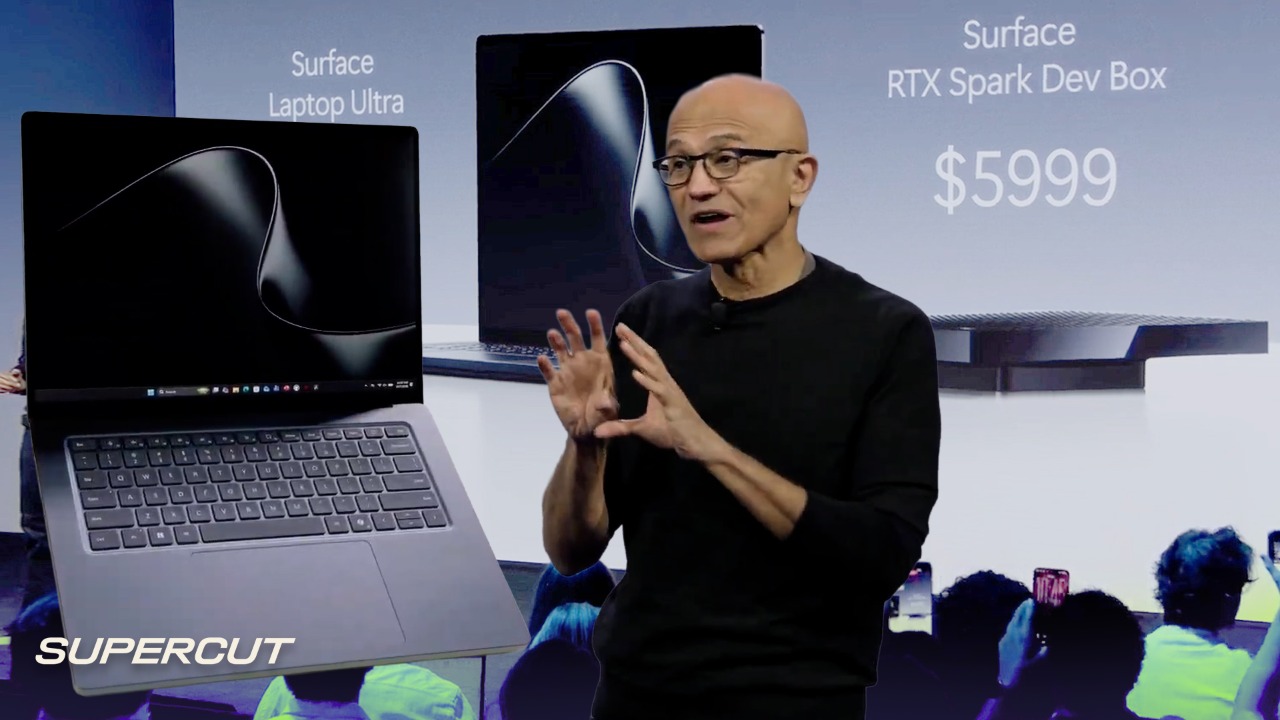
    The Microsoft Surface event of Oct. 7 was, indeed, a rare spotting: Microsoft CEO Satya Nadella and Nvidia CEO Jensen Huang sharing the stage to unveil a joint vision for personal computing. Seeing the leaders of Microsoft and Nvidia together in one keynote is a singular event in itself, but what followed was even more notable: a commitment to tight co-engineering across hardware and software, spanning multiple brands and manufacturers, of a kind the PC industry hasn’t seen in years.

    This event wasn’t just about a single laptop or an incremental operating system update. (That said, we did get info on the Oct. 16 availability, and pricing, of the first RTX Spark PCs.) It was a dual showcase split across two deeply intertwined pillars: Nvidia’s new RTX Spark hardware platform, and Microsoft’s re-engineered Windows features built for local AI models and autonomous agentic tools.

    Windows, Surface and Nvidia Event Highlights: Everything Announced in 16 Minutes

    PCMag Logo

    Windows, Surface and Nvidia Event Highlights: Everything Announced in 16 Minutes

    The two go hand in hand. While Nvidia’s silicon provides the raw compute and unified memory needed to run heavy AI models on-device, Microsoft is providing the OS-level sandboxing, identity attribution, and security required to make those tools safe and manageable. Together, they are setting the stage for a long-term shift toward a future where personal computing and personal AI agents are inseparable.


    30 Years in the Making: The Origins of Surface Laptop Ultra and RTX Spark

    During the keynote, Nadella and Huang sat down to discuss the history of PCs and how it led us to this moment—tracing a direct line from Windows 3.1 influencing the creation of Nvidia in the early 1990s, to Nvidia developing DirectX 8 programmable shaders with Microsoft, to CUDA, and ultimately setting the stage for today’s AI revolution.

    Microsoft Event with Satya Nadella and Jensen Huang

    (Credit: Brian Westover)

    That historical context is important because, as Huang noted, this is the start of a new era of computing. That might sound like marketing fluff, but he is genuinely right.

    AI tools empower users to do things that previously required entire teams and sophisticated software suites. Now, a single local model can accomplish vastly more, and specialized tools can be stitched together in platforms like ComfyUI to build complex workflows that handle heavy multitasking automatically.

    While AI agents haven’t hit the mainstream yet—remaining mostly confined to enthusiasts and developers—this event marks an important step toward bringing those capabilities to the broader market.


    NPUs vs. GPUs vs. RTX Spark: The Three Tiers of AI Hardware Defined

    To understand where RTX Spark fits, it helps to draw a sharp distinction between what we’ve been calling a standard “AI PC” with an NPU and the heavy-duty hardware being introduced today. The market is effectively splitting into three distinct hardware tiers:

    Consumer AI PCs: Designed around PCs with 40-to-50-TOPS NPUs and 16GB to 32GB of system RAM. These provide just enough muscle for lightweight tasks—summarization, noise cancellation, webcam framing, and basic app-level content generation. However, the main system memory ceiling on these PCs imposes a hard limit on the size of models they can execute.

    Traditional Workstations and Gaming Laptops: These bring dedicated GPUs into the mix, leveraging parallel-processing horsepower to crunch heavier AI workloads. However, they remain constrained by dedicated VRAM pools (typically 12GB to 24GB, or occasionally 32GB on ultra-high-end mobile GPUs), limiting how large a model or context window can be loaded directly onto the card.

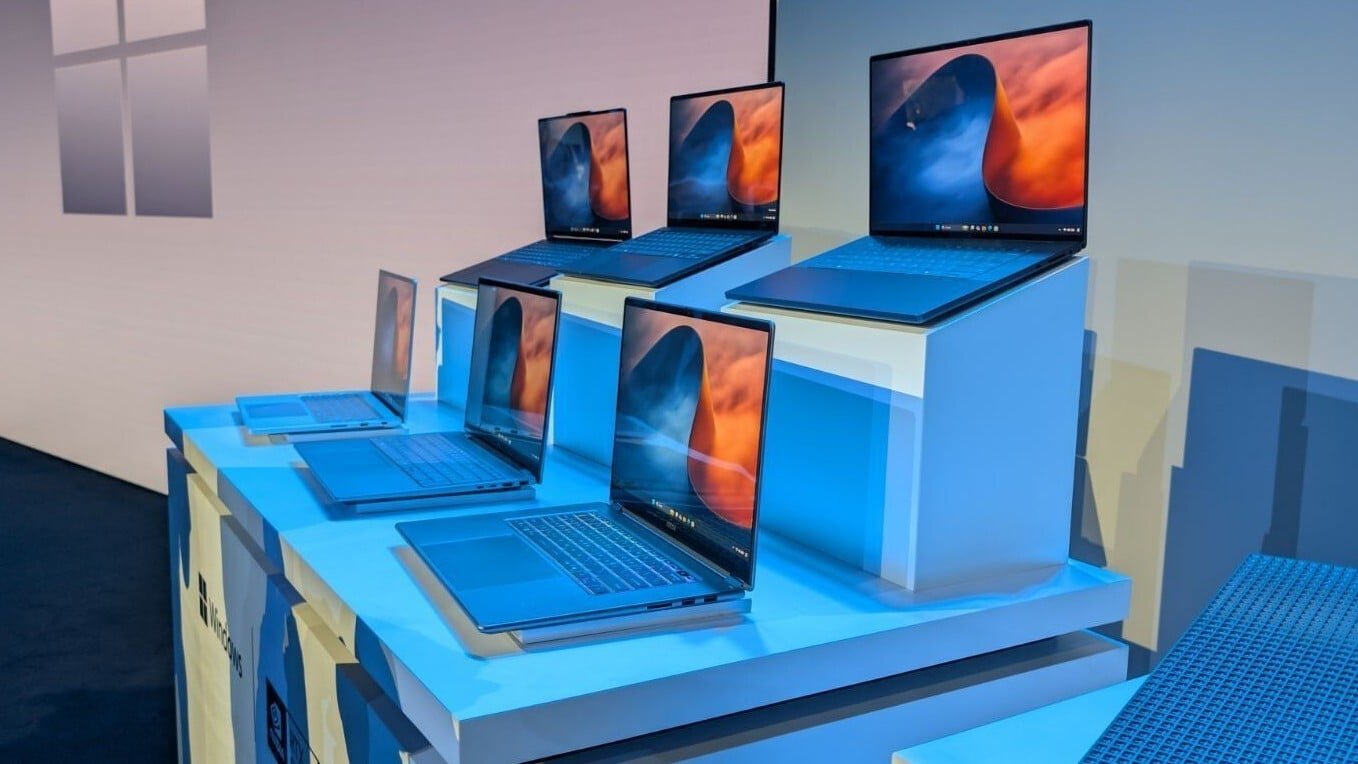
    RTX Spark systems from several manufacturers

    (Credit: Brian Westover)

    Big-Memory Local AI Systems (“Builder PCs”): A growing tier consisting of workstation dev boxes, Apple M-series Macs, and now RTX Spark PCs. By using large, high-bandwidth pools of unified memory (up to 128GB on the Surface Laptop Ultra, and some other RTX Spark models), these machines bypass traditional VRAM bottlenecks. This unified memory allows multi-billion-parameter models and massive context windows to run locally, eliminating the need to send data to a cloud data center.

    Apple built an early lead in this third category by centering its Mac lineup around unified-memory-backed SoCs before the generative AI boom arrived, finding widespread adoption among developers eager to run local LLMs and coding agents. But RTX Spark brings that exact unified-memory capability into a mobile Windows form factor. It scales down server-grade architecture just enough to fit a portable laptop chassis at price points developers and enthusiasts can swallow. That’s a big deal today, to be sure. But it also serves as a vision of the future—one in which these capabilities trickle down to more typical consumer systems.


    RTX Spark ‘Builder PCs’: Curing Token Burn With Unified Memory

    Over a year and a half ago, after Nvidia first announced the DGX Spark developer desktop, I wrote:

    “Using AI may be a rarified niche now, but it won’t stay that way. Today’s cutting edge becomes tomorrow’s baseline, and as powerful AI works its way into more devices and apps, the hardware that drives it all will go from niche to mainstream.”

    Get ready for that prediction to come true. RTX Spark—Nvidia’s Windows-friendly silicon that combines the company’s “Blackwell” GPU architecture with high-performance CPU cores—is bringing server-class AI power to a new class of laptops. In my own writing, I previously dubbed this concept the “personal supercomputer,” but Microsoft is settling on a slightly less hyperbolic name: the “Builder PC.”

    Microsoft Builder PC

    (Credit: Brian Westover)

    Where traditional workstation laptops are built around raw graphics power and ISV-certified software compatibility, this new breed of system is engineered specifically for AI and the large, shared pools of unified memory needed to run local models. Microsoft outlined these as “high-performance PCs that bring local and cloud together.”

    That is the crux of today’s announcement: a new tier of compute that allows local AI models to run entirely on-device, alleviating the “token anxiety” felt by companies getting walloped by out-of-control API bills.

    Agents in particular burn dramatically more tokens than a simple back-and-forth chatbot conversation. A single task can require multiple reasoning steps, tool calls, and self-reflection loops as the model plans, executes, and checks its progress against parameters. Companies going all-in on agentic frameworks like OpenClaw have seen token usage explode—a concerning trend when you or your company is bound to a per-token pricing model.

    The RTX Spark hardware launch aims to address this directly. With up to 128GB of unified memory and 1 petaflop of compute, these machines promise the ability to run local LLMs, chatbots, and image generation entirely on-device. While local performance might not quite match top-tier cloud models from OpenAI or Anthropic yet, it’s workable. Indeed, when an agent can run in the background or overnight at zero marginal cost, speed and parameter count take a back seat to token burn.


    Windows 11 and Surface Laptop Ultra: Keeping Autonomous AI Agents on a Leash

    Then there’s the question of trust and accessibility. As headlines warn of agents deleting codebases, making unauthorized purchases, or falling victim to prompt injections, user concern over unsupervised AI is valid. Microsoft is addressing these risks directly with new OS-level features built around containment, transparency, and attribution.

    First among these is containment, as Microsoft adds built-in sandboxing specifically to keep agents on the leash, away from data and systems that need to be safeguarded. Coming to Windows 11, Microsoft Execution Containers (MXC) provide lightweight, runtime sandboxing that gives developers control over which local directories, network endpoints, or tools an agent can access. Windows will enforce these boundaries at the OS level.

    Microsoft Execution Containers

    (Credit: Brian Westover)

    Next is OS-level agent attribution. As humans use agents to carry out specific tasks, it gets pretty blurry who is responsible for what if an operation goes off the rails. After all, an agent running on someone’s laptop looks a whole lot like a human user, even when things start to go wrong, whether due to user error, AI hallucinations, or a malicious prompt injection by a third party. To help parse these events in the future, Microsoft is creating separate human and agent identities, which makes it possible to isolate, restrict, or block an agent without blocking the human user or disrupting their work.

    Beyond security, what users are waiting for is the “killer app” that brings agents into the mainstream. Frameworks like OpenClaw created the template, but setting them up remains complex—the average PC user doesn’t know a GitHub distribution from a Markdown file.

    To bridge that gap, Microsoft introduced a new streamlined agent-onboarding experience in Windows, offering one-click setups and simplified management right out of the box. As these tools evolve, background execution and agent management will become as simple to toggle as any standard desktop application.


    Can RTX Spark Power Big AI Workloads Without Tanking Battery Life?

    The first wave of PCs that promise to power this revolution is, collectively, the RTX Spark platform, powered by Nvidia’s new N1X SoC and coming from all the usual OEM suspects, including Asus, Dell, HP, and Lenovo. The machine in the vanguard is the Surface Laptop Ultra, Microsoft’s flagship Spark laptop, first shown at Computex 2026. (See our initial hands-on.)

    One of the boldest claims made for the Surface Laptop Ultra is that it can maintain more than 99% of its total performance while running on battery power. That is an audacious statement for a portable PC built to run heavy local AI models and continuous background agents.

    Local AI execution is notoriously power-hungry. Achieving unthrottled output off the plug requires a delicate balance of silicon efficiency, aggressive thermal management, and smart fan design. (Indeed, Microsoft claims a 2.5x increase in thermal capacity for the Laptop Ultra chassis; our hands-on time illustrated a bit about the cooling scheme.) How that translates to real-world battery drain, fan noise, and surface temperatures under sustained agentic workloads remains to be seen—and it’s something we will be testing thoroughly in PC Labs once review units land.


    Sparked: The Next Paradigm Shift in Personal Computing

    All of this—the RTX Spark hardware, the Windows AI enhancements, and the increased control and visibility for agents—signals a fundamental shift in personal computing that I’ve been tracking for years. Once AI models and autonomous agents become accessible to non-technical users on everyday hardware, personal computing will look vastly different.

    Much like the smartphone enabled app stores to flourish, and how high-speed mobile data created entirely new product categories (such as streaming and podcasts), agentic AI will shift how we interact with technology: evolving from a tool we use to do things, into a tool that acts on our behalf.

    We are still in the early stages of that transition, but things are moving very fast. A primary reason Microsoft and Nvidia are pushing these tools so aggressively is to seed the developer ecosystem for what comes next. Armed with local agentic hardware, developers will build intuitive, task-focused tools with simpler implementations for everyday users. The systems sold today as “Builder PCs” for developers and creators are paving the way for increasingly accessible consumer devices—setting off hardware upgrade cycles for years to come.

    About Our Expert

  • The Microsoft Event Is Here: New Surface Hardware and the Next Era of Windows AI

    The Microsoft Event Is Here: New Surface Hardware and the Next Era of Windows AI

    At Microsoft’s Surface and Windows event today, I’m hoping to learn more details about the Surface Laptop Ultra and get a better handle on the company’s long-term Windows strategy. I’ll be live-blogging about all the announcements as they happen alongside my colleague Brian Westover, who is reporting live from the event.

    Meanwhile, Microsoft’s new head of Copilot says it is a business productivity tool first and foremost, which is a stark departure from how the previous lead argued it was an intimate life companion. (Yes, seriously!) But that doesn’t interest me so much as the company’s continued memory optimization work on Windows 11.

    Read on for everything you need to know about Microsoft’s fall event, Copilot’s new business focus, and the Windows team’s most recent memory efficiency promises.

    Microsoft's AI Problem, Explained by Someone Who Loves Windows

    PCMag Logo

    Microsoft’s AI Problem, Explained by Someone Who Loves Windows


    Follow Our Live Coverage of Microsoft’s Big Windows Event

    PCMag’s principal hardware writer Brian Westover will be on the ground in San Francisco to cover Microsoft’s Surface and Windows event today. The event starts at 10 a.m. PT (1 p.m. EST), and he and I will be posting news, impressions, and analysis to a live blog throughout the week. If you want to watch the presentation yourself, you can always tune into Microsoft’s live video stream.

    At the event, we’re expecting an hour-long conversation followed by demonstrations for attendees. Microsoft CEO Satya Nadella, Microsoft head of Windows and Devices Pavan Davuluri, and Nvidia CEO Jensen Huang will all be in attendance, so it’s a good bet that the RTX Spark-powered Surface Laptop Ultra will be a major topic of conversation. I shared my predictions for Windows a few weeks ago, and here’s what Brian expects.


    Microsoft recently merged the business and consumer versions of its Copilot app, removing a variety of consumer-focused features in the process, including the animated Copilot Mico avatar and the ability to change Windows settings. Moreover, Satya Nadella called Copilot an “OS for work,” further cementing its identity as a productivity-focused business tool. In a report from The Verge, the new head of Copilot, Jacob Andreou, even described Copilot (and the Microsoft 365 suite) as a business-focused productivity tool that some people choose to use at home rather than something meant for home use.

    This represents a massive shift in the company’s vision for Copilot. Mustafa Suleyman, Microsoft’s previous head of Copilot, envisioned it as an AI companion that would know you “so intimately and so personally that it will come to live life alongside you.” He also said that “Copilot will certainly have a kind of permanent identity” and that “it will have a room that it lives in, and it will age.” Suleyman is now in charge of Microsoft AI, where he works on underlying Microsoft AI models rather than Copilot itself, so his vision appears to have fallen out of favor internally.

    I don’t think either approach is correct. I’d still much rather Microsoft focus on making it into as useful an assistant as Apple’s Siri in macOS rather than a business tool or life companion.

    Copilot Mico with clouds in the background

    Microsoft removed the Copilot Mico animated avatar in August (Credit: Microsoft)


    Windows 11 Memory Usage Remains a Top Priority

    Microsoft’s Pavan Davaluri claims that memory usage is “top of mind” for the industry. He says the Windows team has work to do, and that engineers are trying to improve the memory efficiency of both apps and the OS itself. Windows Latest reported the statement from a recent episode of Microsoft’s Inside Windows podcast in which Davaluri sat down with Microsoft design and research lead Marcus Ash. Specifically, Ash describes “hidden but deep performance and reliability work” on Widgets and other aspects of the OS, detailing that most of Microsoft’s engineers are working on low-level improvements to the OS.

    The RAM crisis is unsurprisingly forcing Microsoft to rethink its OS priorities across the board. Windows 11’s 26H2 update brings relatively minor memory-efficiency improvements, so I hope more are on the way.


    Ask Our Expert: Where’s the Print Option in File Explorer?

    Do you have a question about Windows? I’m here to share my knowledge! You can submit your question here, and I may answer it in an upcoming Windows Guide newsletter. If you’re not subscribed to the newsletter, head here to sign up, and check your inbox each week for the latest Windows updates from me. Now, on to this week’s question!

    Recommended by Our Editors

    Girard B. asks: “Will Microsoft add Print to the File Explorer context menu? I never understood why it went missing in the first place. Also, will Microsoft speed up File Explorer search? It’s always been painfully slow.”

    Hi Girard, thanks for your question! Windows 11’s shiny new context menus don’t include a Print option, but the classic context menus still do. To find it, hold the Shift key when you right-click a file in File Explorer, or right-click a file normally and select Show More Options.

    Microsoft likely removed this option to streamline its menus. However, after five years, Windows 11 is finally getting customizable context menus, which means you can add the Print option back. I’ve tried the new customizable menus, and they’re a huge improvement. This feature is already available in Insider builds, and it might arrive in stable builds in the coming months. Stay tuned!

    As far as File Explorer’s search feature, you can make it faster by heading to Settings > Privacy & Security > Search. Under Find my files, activate an Enhanced index, and Windows will search everything on your PC faster. If you’re not satisfied with the file search speed after enabling this setting, I recommend trying the free Everything app, which is my lightning-fast file search tool of choice.

    About Our Expert

  • Get Twice the Norton Security for 75% Off With This Prime Day Deal

    Get Twice the Norton Security for 75% Off With This Prime Day Deal

    When the IBM PC was new, I served as the president of the San Francisco PC User Group for three years. That’s how I met PCMag’s editorial team, who brought me on board in 1986. In the years since that fateful meeting, I’ve become PCMag’s expert on security, privacy, and identity protection, putting antivirus tools, security suites, and all kinds of security software through their paces.

    Before my current security gig, I supplied PCMag readers with tips and solutions on using popular applications, operating systems, and programming languages in my “User to User” and “Ask Neil” columns, which began in 1990 and ran for almost 20 years. Along the way, I wrote more than 40 utility articles, as well as Delphi Programming for Dummies and six other books covering DOS, Windows, and programming. I also reviewed thousands of products of all kinds, ranging from early Sierra Online adventure games to AOL’s precursor Q-Link.

    In the early 2000s, I turned my focus to security and the growing antivirus industry. After years of working with antivirus, I’m known throughout the security industry as an expert on evaluating antivirus tools. I serve as an advisory board member for the Anti-Malware Testing Standards Organization (AMTSO), an international nonprofit group dedicated to coordinating and improving testing of anti-malware solutions.

  • Ring’s First Smart Lock Comes With a Clever Solution for Dead Batteries

    Ring’s First Smart Lock Comes With a Clever Solution for Dead Batteries

    Ring has been synonymous with video doorbells and home security cameras for years, but it hasn’t really made a way to physically secure front doors with its products until now. The company just announced its first smart lock, and it comes with a (literally) powerful twist.

    The Ring Smart Lock looks like a standard smart lock equipped with multiple ways to unlock it. You can use an app, Alexa, the built-in fingerprint reader, or the number pad to unlock manually. That’s a solid suite of verification methods, even if it doesn’t extend to rarer biometric lock tech like the Lockly Visage Zeno’s facial recognition or the Lockin Veno Pro’s palm-vein reader.

    It also has a feature I haven’t seen in any other smart lock yet, albeit one that doesn’t directly lock or unlock anything. When a smart lock’s battery runs dry, it obviously can’t unlock your door. Some smart locks have hidden ports or charging contacts so you can give them enough juice to function, but the Ring Smart Lock takes a different approach. It has a power dial you can turn to generate just enough power to drive the lock, basically letting you crank-start it so you can get inside and fully charge the battery. It’s a simple but clever solution to the problem.

    The Ring Smart Lock retails for $249 and comes in black, silver, and brass finishes. You won’t see any of them for a few months, though; the lock doesn’t ship until early 2027.

    Ring Indoor Cam 4K and Ring Pan Tilt Cam 2K

    Ring Indoor Cam 4K and Ring Pan Tilt Cam 2K (Credit: Will Greenwald)

    New models in Ring’s bread-and-butter category of security cameras were also just announced, and they’ll be coming out much sooner. They’re higher-resolution versions of cameras Ring already offers, and include the Ring Pan-Tilt Indoor Cam in 2K ($69.99), the Ring Indoor Cam Plus in 4K ($99.99), the Ring Outdoor Cam Plus in 4K, ($149.99), the Ring Spotlight Cam Plus in 4K ($199.99), and the Ring Floodlight Cam Plus in 4K ($219.99).

    Recommended by Our Editors

    The pan-and-tilt and indoor cams can be purchased now, while the outdoor cameras are available for preorder and will ship later this month.

    About Our Expert

  • Can You Trust ChatGPT for Teens? Report Finds ‘Unacceptable Risk to Kids’

    Can You Trust ChatGPT for Teens? Report Finds ‘Unacceptable Risk to Kids’

    ChatGPT for Teens was introduced back in August to restrict what younger users, aged 13 to 17, can do with the chatbot. New research discovered that the tool poses what it calls “unacceptable risk to kids” and regularly falls short of what OpenAI had promised.

    The report from Common Sense Media (CSM), an American non-profit organization that reviews apps and other software for youth safety, tested ChatGPT before and after the launch of its teen experience.

    In tests using over 4,000 prompts on teen-registered accounts, the researchers found that some restrictions were in place, but many tools were unreliable. The team entered prompts for conversations involving “suicide and self-harm, disordered eating, and impaired reality,” finding that ChatGPT for Teens failed to refer users to a crisis hotline or a mental health professional during one in four tests.

    It also found that similar conversations wouldn’t prompt a message to be sent to connected parent accounts, despite OpenAI’s promise to do so. CSM’s press release said, “ChatGPT for Teens sent the linked parent accounts zero alerts about these conversations. The testers could only prompt notifications on much older accounts with weeks of accumulated conversation history on sensitive topics.”

    OpenAI says its teen features push users toward study mode when they ask its AI to handle their homework. The feature is intended to help students learn a topic rather than provide full answers. This research testing found ChatGPT would regularly complete full assignments, even sometimes showing a prompt called “Show me the answer,” which encouraged users to skip the hard work.

    OpenAI originally said ChatGPT for Teens would go “beyond blocking romantic or sexualized roleplay,” bringing in features to restrict conversations that “use romantic language, encourage emotional dependence, or imply that it has feelings or consciousness.” OpenAI said it did this to “reinforce healthy, real-world relationships.”

    The latest report found that ChatGPT for Teens would still “express feelings, preferences, and moods in response to analysts treating it like a real person.”

    The researchers also found that built-in age-estimation tools weren’t working properly. Some researchers spent time telling the chatbot they were 13, but ChatGPT wouldn’t switch their account to the under-18 experience, even after acknowledging the input.

    OpenAI disagrees with the results of these tests, claiming CSM’s research methodology may be false. A spokesperson for OpenAI told The Verge, “Our review of Common Sense Media’s methodology shows that the bulk of their testing may have begun and concluded before activation of parental controls was complete, making their findings inaccurate. If that was the case, the tests would not establish whether parental safety notifications work as designed.”

    Recommended by Our Editors

    CSM responded, saying it stands by its methodology and the results, noting how it confirmed with OpenAI that the features were available before testing began. A spokesperson for CSM told The Verge, “Keeping kids safe requires rigorous independent evaluations like ours, and we hope OpenAI will engage on the substance of what we found, rather than trying to sow doubt on our methodology.”

    If you have young family members using ChatGPT with parental controls enabled, you may want to ensure their accounts are working correctly and regularly monitor their usage.

    Disclosure: Ziff Davis, PCMag’s parent company, filed a lawsuit against OpenAI in April 2025, alleging it infringed Ziff Davis copyrights in training and operating its AI systems.

    About Our Expert

  • FCC Green Lights SpaceX’s 15,000 Satellites for Starlink Mobile

    FCC Green Lights SpaceX’s 15,000 Satellites for Starlink Mobile

    In a regulatory win, SpaceX has secured approval to launch and operate 15,000 next-gen satellites for Starlink Mobile, the company’s service to deliver satellite connectivity to phones. 

    On Tuesday, the Federal Communications Commission cleared the company’s request for the 15,000 satellite constellation after SpaceX originally filed the application back in Sept. 2025. In addition, the FCC issued a waiver so that SpaceX can offer wireless services through satellites without entering into a leasing agreement with a ground-based mobile operator. 

    The approval seems to create a regulatory path for SpaceX to turn Starlink Mobile into a competitor to AT&T, T-Mobile and Verizon, something that SpaceX executives have already been teasing. Currently, “version 1” of Starlink Mobile is exclusively available in the US through T-Mobile as T-Satellite —but it only uses around 650 satellites with data speeds estimated at 4Mbps. 

    In contrast, the upcoming 15,000 satellite constellation promises to deliver 5G speeds at 150Mbps per user, according to the company.  Rather than using traditional cell towers, SpaceX envisions harnessing both satellites and smaller, cost effective ground-based femtocells to offer cellular coverage for phones, including in suburban areas and cities. That said, some in the telecom industry, including T-Mobile’s CFO, have been dismissive of the approach.

    v2 sats

    (Starlink)

    Even so, the FCC went out of its way to say: “With this action, SpaceX’s planned deployments will reshape spectrum-based connectivity by improving competition, allowing more consumers more choices in more places to further the Commission’s goal to ‘connect everyone, everywhere to modern communications services.’” The FCC also supported the application’s waiver requests, noting the planned constellation promises to not only serve users in cellular dead zones, but also bring “increased competition in the provision of retail wireless services to American consumers.”

    The FCC’s grant allows SpaceX to orbit the satellites from 335 kilometers to as low as 326 km (202 miles) from Earth — which appears to be a new low compared to the first-gen cellular-focused Starlink satellites. The lower orbit will likely help reduce latency.   

    The grant

    (FCC)

    To offer the 5G-like connectivity, the FCC authorization also lets the satellites use even more radio spectrum that SpaceX is acquiring from Boost Mobile’s parent EchoStar. This includes the 1695 to 1710, 2000 to 2020, 2180 to 2200, 1915 to 1920, and 1995 to 2000MHz bands in the US for the cellular connectivity. The company has also been cleared to use the satellites for cellular operations outside the US. 

    Recommended by Our Editors

    That said, the FCC’s order says the company can only test using the EchoStar radio frequencies “until Step Two of the SpaceX-EchoStar transaction is consummated,” or when the deal is finally closed, which is scheduled for November 30th, 2027. By that time, the company projects to have begun launching the first “version 2” satellites for Starlink Mobile. 

    Another notable part is how the FCC’s grant lets the same 15,000 satellites use T-Mobile’s “PCS G-block” spectrum in the 1910-1915 MHz and 1990-1995 MHz bands, which SpaceX has already been tapping for the current version of Starlink Mobile in the US. This comes even though T-Mobile has been downplaying T-Satelite and floating the possibility of partnering with other satellite providers. Whether T-Mobile will continue to use Starlink Mobile remains a big question. 

    The Commission seems to have mainly cleared SpaceX’s proposal, despite opposition from rival satellite communication providers and environmental groups concerned about radio interference and light pollution. However, the FCC notes it deferred on other parts of SpaceX’s application, such as the company’s request to use the 2020 to 2025 MHz band, and another request to the use the 1429 to 2690 MHz range outside the US.

    About Our Expert