The US national debt has officially surpassed $40 trillion for the first time in history, and it’s growing fast. Al Jazeera’s @EmmaWithrow explains how we got here, who America owes that money to, and why it matters.
Published On 21 Aug 2026

The US national debt has officially surpassed $40 trillion for the first time in history, and it’s growing fast. Al Jazeera’s @EmmaWithrow explains how we got here, who America owes that money to, and why it matters.
Published On 21 Aug 2026
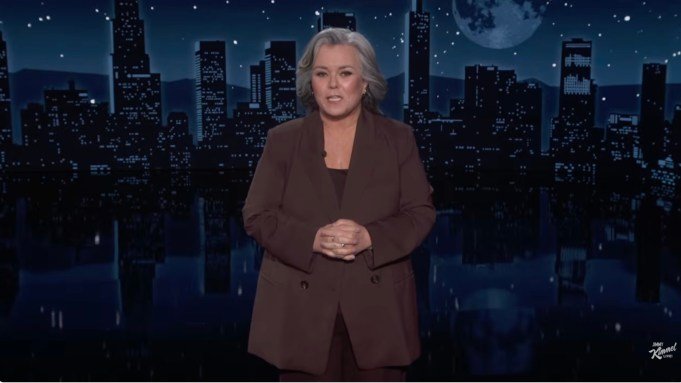
Rosie O’Donnell’s stint filling in for ABC late-night host Jimmy Kimmel has not gone unnoticed by the Trump White House.
On Friday, they issued a statement about the president’s longtime nemesis. “Rosie O’Donnell is a nasty woman and a total slob whose brain has been completely destroyed by Trump Derangement Syndrome,” said White House spokesman Davis Ingle.
O’Donnell finished up her week on Thursday with a parody of Danny Boy, including lines like this: Drop that Big Mac that we all know you are holding, because my dear, I worry for you so. Poor Donny boy, your polls, your polls are falling, your reflecting pool is green as Mountain Dew. Your wig’s a mess, your ballroom is appalling, and with Iran, you bit off more than you can chew.
She then urged him to resign and “make this country great again.”
On Wednesday, O’Donnell made a joke about Trump aide Natalie Harp: “You got to realize it’s time to hang up your wig and let Natalie tuck you in.” One of the bigger stories of the week has been the White House’s nuclear-level response to Democratic Sen. Jon Ossoff, who in a recent broadside against Trump said, “He wants to build his ballroom and travel with Natalie on their apparently defenseless flying palace gifted by the emir of Qatar.”
The O’Donnell-Trump feud goes way, way back, so the White House response, first reported by Entertainment Weekly, is not a huge surprise. Also of note: Her guest host stint came just as ABC was taking on the Trump administration over its attacks on Kimmel, The View and ABC News reporting. The network filed a First Amendment lawsuit against the FCC on Tuesday, claiming that the agency’s early review of its broadcast licenses is a Trump administration retaliation over its content.

The Supreme Court ruled that construction could continue on Donald Trump‘s White House ballroom, sidelining lower court orders to halt the project.
Chief Justice John Roberts signed an order on Friday that stays a preliminary injunction issued by a district court judge in April. The stay will be in effect “pending further order of the undersigned or of the court,” per the document. There was no explanation for the court’s reasoning.
The Trump administration asked for a stay as it faced a lower-court deadline on Friday to halt construction.
In April, U.S. District Judge Richard Leon, an appointee of George W. Bush, ruled that construction of the ballroom required congressional approval. He made an exception for below-ground construction of a below ground bunker for national security needs, as well as other elements to protect the president.
The Trump administration appealed, and construction was allowed to continue until there was a ruling from the D.C. Circuit Court of Appeals. In a 2-1 decision earlier this month, the appellate court affirmed that the president needed congressional approval.
“Each President is a temporary tenant, not the owner, of the White House and its Executive Residence,” the judges wrote. “The President has no—and claims no—constitutionally assigned authority over that property, which is designed and maintained for the use of all Presidents, current and future, and for the American people.”
The ballroom is perhaps the most cherished of all projects Trump has taken around the White House complex and in Washington, D.C. He has defended the ballroom project as long overdue, given the limited space of other entertaining facilities in the complex. Lately, he has also taken to referring to the construction as a “military complex,” as the administration’s legal team has argued that the entire project is needed for purposes of national security.
But the plaintiffs in the case, the National Trust for Historic Preservation, have argued that the administration cannot bypass congressional input for a project of such magnitude — 90,000 square foot. And from a design standpoint, the trust said that the project will dwarf the main residence of the White House, at 55,000 square feet, while disrupting to symmetry of the structure and the surrounding buildings.
“The Constitution vests Congress with sole and preclusive authority over federal property,” the National Trust’s legal team wrote in a Supreme Court filing.
They argued that an injunction was needed because the Trump administration has tried to “outrun judicial review,” with an accelerated construction timeline and a 250-person crew working 20 hours a day and seven days a week on the project. Essentially, the National Trust contended, the Trump administration was making the case that the ballroom construction was so far along that they were “on the brink of a fait accompli.” They noted that the administration has said that the project would be substantially complete by November.
Without obtaining congressional approval, Trump ordered that the East Wing of the White House be torn down last fall. Also demolished was an east colonnade and a garden dedicated to Jacqueline Kennedy, as well as a movie theater.
Trump has said that the ballroom would be funded by private donations, with corporations like Comcast and Amazon among the donors covering the costs. The Washington Post reported in June that the entire project was estimated to cost $600 million, with more than half coming from taxpayers, per a contractor’s project estimate.

The editor in chief of Stars And Stripes, the publication that covers the U.S. military and is partially funded by the U.S. government, said that he was was being fired following an interview he gave to CBS News Sunday Morning in which he talked of censorship being a “red line” for him.
Erik Slavin told the network on Friday that he was “being fired for stating in a CBS interview that censorship of news for service members would constitute a red line. The Pentagon‘s public affairs office has charged me with insubordination.”
“I stand by the principle that Stars and Stripes must remain editorially independent, as required by law and by the department’s own policies,” he said.
Also getting termination notices was publisher Max Lederer, who recently announced his retirement, and reporter Lara Korte, who also sat for the CBS News interview, which aired on Sunday Morning, per the network.
Korte posted on X, “Today, I was informed that the Department of Defense is firing me for insubordination after I told a CBS reporter that I work for Stars and Stripes – not the Pentagon, not any administration, and not any policy maker.”
A Pentagon official confirmed the separation notices, but the department declined to comment.
Published continuously since World War II, Stars and Stripes gets about half of its funding from the Pentagon and the remainder from advertising and subscriptions. It is set up to maintain its editorial independence from the military and government.
On Friday, Navy Capt. Bill Urban wrote in a notice posted on the Stars and Stripes website that he was the new military deputy to the publisher. He wrote that in meeting with the Office of the Secretary of War, he received “multiple assurances” that they were committed to “the editorial independence of Stripes.”
He wrote to staffers, “There are no external editorial curbs on our journalists searching out and reporting significant stories. Carry on and ignore the noise. Stay professional and committed to the highest journalistic standards.” He pointed to recent Stars and Stripes reports on the conditions of the USS Lincoln, and noted that there “was plenty of time between the initial report and the subsequent reporting for OSW to shut us down on the subject if they were not committed to our editorial independence.”
He also called for a bigger push into digital and social media. He wrote, “My vision for the future of Stars and Stripes is simple: More eyeballs on our content and more impact on our service members while maintaining the highest standard of professional journalism with the credibility that comes with editorial independence.”
The CBS Sunday Morning report detailed concerns that Pentagon was chipping away at the independence of the publication, including the rescinding of a federal regulation that Stars and Stripes operate “without news management or censorship.” The ombudsman, Jacqueline Smith, was fired in the spring, and she told the network she worried that “the endgame is turning Stars and Stripes into a public affairs propaganda machine.”
Mark Schoeff Jr., president of the National Press Club, said in a statement, “In firing the editor of Stars and Stripes, Pentagon leadership is making clear their view that the newsroom should exist not as an independent outlet whose reporting serves to benefit U.S. troops, but as a mouthpiece to parrot Pentagon talking points.”
He added, “Our service members deserve news and information they can trust, not narratives that are shaped solely by their own employer.”
Will Creeley, legal director of the Foundation for Individual Rights and Expression, called the firings “an ugly, un-American attack on our free press.”
“America’s brave servicemembers swore an oath to defend the Constitution. They deserve the free and independent press our Founders fought for 250 years ago, not Pravda-style propaganda.”
UPDATED with hearing date and FCC comment: A federal judge had ordered a hearing in ABC‘s First Amendment lawsuit against the FCC for sometime during the week of October 5.
But U.S. District Judge Loren L. AliKhan signaled that there would a hearing sooner than that if the FCC took action on its review of ABC station licenses.
The network is seeking a temporary restraining order to halt the FCC’s early renewal proceedings for broadcast licenses for the network’s eight owned stations. ABC claims in its lawsuit that the FCC’s regulatory action is Trump administration retaliation over its content, including late-night host Jimmy Kimmel and ABC News reporting.
The FCC has yet to take action, but in its lawsuit ABC suggested that the agency was close to issuing a hearing designation order, which would put the license renewals up to an administrative judicial process. The network said that such an action would in and of itself be punitive, as it will bog down the station renewals for an extended period of uncertainty.
The judge wrote in her order that if the FCC were to issue such a hearing designation order, she would hold a hearing on the TRO the next business day.
The judge also set a briefing schedule for next month, with the FCC’s defense due September 3, ABC’s reply on September 17 and the agency’s response by September 24.
The judge’s schedule aligns with that proposed by the FCC; ABC had requested a hearing as soon as Friday. But given the judge’s order, the FCC may hold off on any action as it would face an earlier hearing and as it seeks to dismiss the lawsuit.
An FCC spokesperson said, “We are pleased that the judge has now rejected Disney’s meritless attempt to rush into court. The court also sided with the FCC over Disney on the schedule going forward and has declined Disney’s request for an immediate injunction. The FCC will continue to follow the facts and the law wherever they lead.”
PREVIOUSLY, August 20 AM: ABC is proposing a hearing as soon as Friday on its request for a temporary restraining order in its First Amendment lawsuit against the FCC, while the agency signaled that it plans to challenge the litigation as premature.
The plans were laid out Thursday on in a joint status report from the parties, as requested by the federal judge in the case, Loren L. AliKhan.
The network sued the FCC on Tuesday, claiming that the agency’s order for an early renewal of its eight station broadcast licenses was highly unusual and part of a pattern of using regulatory threat to retaliate on content and news coverage the Trump administration disfavors. In the immediate term, they are asking for a temporary restraining order to halt the renewal proceedings, characterizing them as a threat that chills the network’s free speech rights.
In the filing, ABC’s legal team proposed a hearing for Friday or next week, on Aug. 24 and 25, and the FCC said that its lawyers would be available on those dates.
In the meantime, the FCC’s lawyers, calling ABC’s schedule “highly expedited,” proposed a briefing schedule for next month, and also wrote that they planned to file a motion to dismiss. They argued that the D.C. Circuit Court of Appeals, not the district court, had jurisdiction, and that the network had to allow the regulatory process to play out.
The agency’s legal team claimed that the network was trying to “circumvent an administrative proceeding followed by judicial review in a court of appeals.”
They wrote, “Although framed as a First Amendment retaliation claim, Plaintiffs’ chief concern appears to be the Commission’s exercise of its statutory authority to ensure that broadcast licensees operate in the public interest, and its conduct of an administrative process that could include (but has not yet been determined to require) a hearing on Plaintiffs’ license qualifications and, depending on the results of any such hearing, hypothetical future license revocations.”
In its lawsuit, ABC’s legal team indicated that they were taking action in anticipation of the FCC designating the license renewals for an administrative hearing, a potentially lengthy process that only added to the uncertainty of whether the stations’ licenses would be revoked.
In the latest filing, its legal team wrote that they have “raised a textbook First Amendment retaliation claim. Courts in this District have already recognized that such claims belong in federal court, not before the very agency accused of engaging in First Amendment retaliation.”
The network’s legal team argued that they have already “documented the irreparable harm [ABC is] suffering, and Defendants’ proposed solution would further exacerbate those harms.”
The network also referred to the potential of the FCC designating the license renewal for a hearing as “sanctions.” The FCC said that it would give the court 48 hours notice before doing so.
“Defendants effectively seek permission to impose draconian sanctions with only 48 hours’ notice, while continuing to hang the threat of those sanctions over Plaintiffs’ heads and remaining free to engage in other forms of retaliation,” the network’s lawyers wrote in the filing.
The FCC said that a hearing designation order would not be a “sanction,” but “would simply set in place a further administrative process in which Plaintiffs would have the opportunity to make their case.”
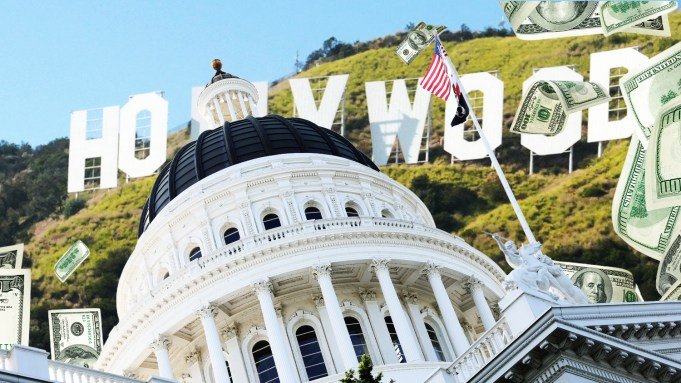
EXCLUSIVE: With a very hard out of less than two weeks, state legislators in Sacramento are either going to be Scrooge or Santa with California’s film and TV tax incentives for the near-moribund L.A. industry.
It’s a mixed result right now with a lot of good intentions, a lot of cooks in the kitchen and the legislative session ending on August 31. In the past few hours alone, with studios and indies panicked about effectively losing lucrative annual $750 million industry incentives by 2030, a mission to fix the mega-measure that’s already signed into law and caps out business and corporate tax credits over $5 million went from launch to being stuck on the legislative tarmac.
A deal was in place Thursday morning that would have carved out an exception for independent productions and some studio/streamer productions. In fact, with an anticipated backlash from Silcon Valley, the deal looked so done the MPA late last night circulated a talking points one-pager on it to stakeholders and media outlets. However, as the final language was being put in place by Assemblymember Rick Chavez Zbur’s office today, legislative leadership told the Hollywood Democrat they were now taking a “different approach,” I hear.
A move that pulled the plug, hard.
There are no definitive details on what that new approach is, or whether it could end as a fast-tracked trailer bill, a policy carve-out or something else. But sources tell me there were “indications” from Gov. Gavin Newsom’s “team” that Zbur’s proposal wasn’t what they had in mind.
Officially, probable 2028 POTUS candidate Newsom’s office did not have anything to say about any deal or the end of any deal on SB 122. Insiders privately are referring to the effort to fix the harms of SB 122 as a “work in progress.”
As elections for City Hall and a new governor heat up, that process may not land so well in SoCal.
Wildfire-ravaged City of Angels also has seen production flight from the home of Hollywood and around 50,000 film and TV jobs lost in the past four years. Even without projected big cutbacks from a merged Paramount and Warner Bros Discovery or a red state relocation by David Ellison if California Attorney General Rob Bonta and others don’t back down on their antitrust lawsuit, that blast radius has wiped out vendors and delivered a blow to the tax base.
Amidst all that, Zbur, whose District 51 spans all the way from Glendale to Santa Monica, says he is keeping up the fight against SB 122 with that August 31 drop-dead date front and center.
“We’re working very hard with the governor, legislative leadership and our partners in the Senate, and I’m optimistic that we are very close to reaching a solution that helps address the impact of SB 122 on California’s Film and Television Jobs Program,” the two-term member told Deadline today.
While staying mum about what went down earlier today and acknowledging the harsh calendar, Zbur — a lawyer in a past life — offered optimism that the legislative tax credits snafu could be fixed in the next week.
“Our priority throughout these negotiations has been protecting the thousands of workers and small businesses that depend on this iconic industry and preserving the progress we’ve made to bring production and good-paying jobs back to California,” he said. “There are still details being worked through, but I’m encouraged by where the conversations are and hopeful we can reach an agreement very soon.”

Filming in L.A.
Besides the limits of SB 122, which was enacted in June but has seen pushback from the likes of Tinseltown unions and CAA boss Bryan Lourd, there’s also the long-desired effort to enact a wide-ranging post-production tax credits program.
Offering a 35% incentive aimed at stiffening up jobs here and enticing post-production to relocate to the Golden State, AB 2319 is racing toward a vote in the state Senate by next week once the bill is in final shape.
All of which means what ends up on outgoing Gov. Newsom’s desk to be signed or vetoed by September 30 could prove an inflection or infection point for the entertainment sector.
California Assemblymembers Rick Chavez Zbur and Nick Schultz
Getty/Courtesy
“The next seven days are critical,” declared Assemblyman Nick Schultz, who is one of the primary pols behind the post-production tax credits legislation along with Sen. Ben Allen.
“We’re literally in the period of speak now and forever hold your peace,” added the Democratic rep of studio-heavy District 44. “There’s no more time to wait. Now is the time for Hollywood to activate and be as loud as they possibly can to get this thing passed.”
If everything goes to schedule, under the rules of the California Legislature, once final amendments are added to the bill, it has to sit “in print” for 72 hours. Then the legislation can head to a Senate floor vote – where it certainly has the votes, I hear.
RELATED: Editors Guild Offers Praise & Warning For California Post-Production Incentives Initiative
Earlier this year, state representatives talked about the post-production credit reaching up to $100 million in allocated incentives across VFX, scoring, mixing and more. That sky-high number is now more realistically envisioned at around $35 million for the first year.
Yet, as close as the post-production credit might be to being added to the incentives program administered by the California Film Commission, the reality is there is still no actual funding in place for it.
The borderline-baroque $352 billion state budget is so tightly wound with its zero-deficit demands that money for such a new credit is nowhere to be seen, no matter how hard Hollywood has advocated for it and, truth be told, desperately needs it to turn the job losses around.
RELATED: List Of Hollywood & Media Layoffs From Paramount To Warner Bros Discovery To CNN & More
“We are gratified that the Senate Appropriations Committee overwhelmingly voted in favor of a standalone post-production tax credit, and we are pushing hard for its broad bipartisan support in the Senate floor vote,” Editors Guild Local 700 president F. Hudson Miller states. “We need to make sure that AB 2319 is passed and also that it is fully funded.”
Like a true seasoned politician, the union leader went on to say: “Additionally, we are calling on lawmakers to defend the Film and TV Tax Credit Program 4.0, which would be devastated by the recently imposed caps on tax credits. All three moves are vital and essential to keeping film and TV jobs, and their positive economic effect, from leaving California.”
Said Schultz about the finances of the post-production flex: “Certainly, we would rather be in the spot where we have some funding and we’re going back to secure the rest of it. But versus like having absolutely nothing and having to go back fresh next year asking for some initial funding, we’re going to be going through this process of advocating and hopefully negotiating with the governor’s office between January and June of next year.”
Present deadlines in hand, a lot of this will end up with the next governor.
To that, Deadline reached out to both the campaigns of Steve Hilton and Xavier Becerra for comment on both the efforts to undo the tax credits cap and the ambitions for a post-comprehensive production credit. Neither the Republican and ex-Fox News host nor the Democrat and ex-Biden Cabinet secretary replied.
We will update if and when we do hear from them.
Washington’s new measures against the ICC have been widely condemned but welcomed by Israel.
The United States has issued more sanctions against the International Criminal Court (ICC), sparking condemnation from the United Nations and the European Union.
But it is just the latest pressure from Washington since the ICC issued a warrant for Israeli Prime Minister Benjamin Netanyahu for alleged war crimes in Gaza.
So is the future of the court in danger?
Presenter: James Bays
Guests:
Geoffrey Nice – Human rights lawyer who worked on ICC cases
Greg Swenson – Chairman of Republicans Overseas UK
Kenneth Roth – Visiting professor at Princeton University and former executive director of Human Rights Watch
Published On 20 Aug 2026
UPDATE: A federal judge orders a hearing in ABC‘s First Amendment lawsuit against the FCC for sometime during the week of October 5.
But U.S. District Judge Loren L. AliKhan signaled that there would a hearing sooner than that if the FCC took action on its review of ABC station licenses.
The network is seeking a temporary restraining order to halt the FCC’s early renewal proceedings for broadcast licenses for the network’s eight owned stations. ABC claims in its lawsuit that the FCC’s regulatory action is Trump administration retaliation over its content, including late-night host Jimmy Kimmel and ABC News reporting.
The FCC has yet to take action, but in its lawsuit ABC suggested that the agency was close to issuing a hearing designation order, which would put the license renewals up to an administrative judicial process. The network said that such an action would in and of itself punitive, as it will bog down the station renewals for an extended period of uncertainty.
The judge wrote in her order that if the FCC were to issue such a hearing designation order, she would hold a hearing on the TRO the next business day.
The judge also set a briefing schedule for next month, with the FCC’s defense due on Sept. 3, ABC’s reply on Sept. 17 and the agency’s response by Sept. 24.
The judge’s schedule aligns with that proposed by the FCC; ABC had requested a hearing as soon as Friday. But given the judge’s order, the FCC may hold off on any action as it would face an earlier hearing and as it seeks to dismiss the lawsuit.
PREVIOUSLY: ABC is proposing a hearing as soon as Friday on its request for a temporary restraining order in its First Amendment lawsuit against the FCC, while the agency signaled that it plans to challenge the litigation as premature.
The plans were laid out on Thursday on in a joint status report from the parties, as requested by the federal judge in the case, Loren L. AliKhan.
The network sued the FCC on Tuesday, claiming that the agency’s order for an early renewal of its eight station broadcast licenses was highly unusual and part of a pattern of using regulatory threat to retaliate on content and news coverage the Trump administration disfavors. In the immediate term, they are asking for a temporary restraining order to halt the renewal proceedings, characterizing them as a threat that chills the network’s free speech rights.
In the filing, ABC’s legal team proposed a hearing for Friday or next week, on Aug. 24 and 25, and the FCC said that its lawyers would be available on those dates.
In the meantime, the FCC’s lawyers, calling ABC’s schedule “highly expedited,” proposed a briefing schedule for next month, and also wrote that they planned to file a motion to dismiss. They argued that the D.C. Circuit Court of Appeals, not the district court, had jurisdiction, and that the network had to allow the regulatory process to play out.
The agency’s legal team claimed that the network was trying to “circumvent an administrative proceeding followed by judicial review in a court of appeals.”
They wrote, “Although framed as a First Amendment retaliation claim, Plaintiffs’ chief concern appears to be the Commission’s exercise of its statutory authority to ensure that broadcast licensees operate in the public interest, and its conduct of an administrative process that could include (but has not yet been determined to require) a hearing on Plaintiffs’ license qualifications and, depending on the results of any such hearing, hypothetical future license revocations.”
In its lawsuit, ABC’s legal team indicated that they were taking action in anticipation of the FCC designating the license renewals for an administrative hearing, a potentially lengthy process that only added to the uncertainty of whether the stations’ licenses would be revoked.
In the latest filing, its legal team wrote that they have “raised a textbook First Amendment retaliation claim. Courts in this District have already recognized that such claims belong in federal court, not before the very agency accused of engaging in First Amendment retaliation.”
The network’s legal team argued that they have already “documented the irreparable harm [ABC is] suffering, and Defendants’ proposed solution would further exacerbate those harms.”
The network also referred to the potential of the FCC designating the license renewal for a hearing as “sanctions.” The FCC said that it would give the court 48 hours notice before doing so.
“Defendants effectively seek permission to impose draconian sanctions with only 48 hours’ notice, while continuing to hang the threat of those sanctions over Plaintiffs’ heads and remaining free to engage in other forms of retaliation,” the network’s lawyers wrote in the filing.
The FCC said that a hearing designation order would not be a “sanction,” but “would simply set in place a further administrative process in which Plaintiffs would have the opportunity to make their case.”

Humanoid robots are at the forefront of China’s race for technological supremacy at Beijing’s World Robot Conference. Al Jazeera’s Katrina Yu reports on how Chinese firms are racing US rivals as Beijing bets on humanoid robots to boost productivity.
Published On 20 Aug 2026
Ashley Gold is joining Semafor as senior technology correspondent, taking on a key role in coverage including AI and global politics.
Gold joins from Axios, where she was senior tech policy reporter and co-authored the AI+ Government newsletter. She will start on Sept. 8 and report to Semafor’s senior Washington editor, Elana Schor.
Before Axios, Gold worked at The Information, Politico and the BBC. She’s broken stories on the Trump and Joe Biden executive orders on AI and Congress’ efforts to regulate social media, as well as the Department of Government Efficiency’s impact on technology and government.
Semafor launched in 2022, and has doubled the size of its Washington newsroom since then. Gold also will work with tech editor Reed Albergotti, who with other journalists has broken stories including Microsoft’s $10 billion investment in OpenAI and the Pentagon’s rift with Anthropic.
Semafor Editor in Chief Ben Smith said in a statement, “Technology is perhaps the most important policy area facing Washington — not to mention Brussels and Beijing. Ashley will help us own this coverage with the editorial judgment it deserves.” Gold said that she looks “forward to breaking big stories for Semafor’s global audience of decision-makers and working with some of the most talented journalists in Washington and the world.”