Israeli analysts describe confusion after US President Trump unexpectedly shifts from threatened strikes on Iran to talks.
Israeli analysts have described a sense of disappointment and confusion in the country after United States President Donald Trump’s claim that negotiations with Iran to wind down the war would continue.
Trump’s comments come despite his threats to launch a wave of strikes against Iran’s energy infrastructure, and denials from Iran that any negotiations are taking place.
Recommended Stories
list of 4 itemsend of list
Throughout the war, Israeli leaders have framed themselves as being at the forefront of the fight against Iran, with Prime Minister Benjamin Netanyahu frequently boasting of having convinced the US to join what he has repeatedly framed as an existential threat posed to Israel by Iran.
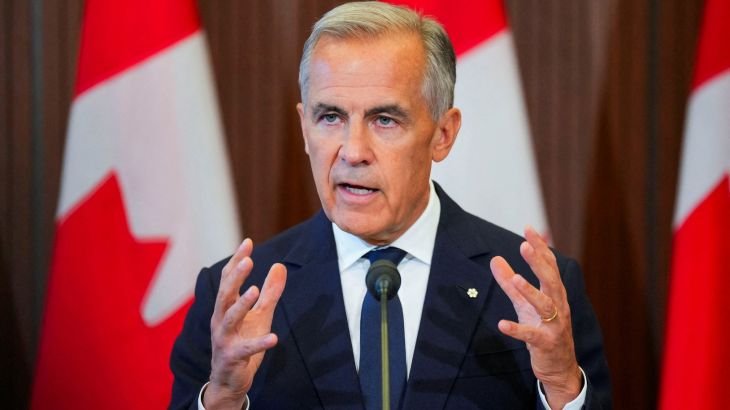
In a video statement released on Monday after Trump’s comments, Netanyahu said that the US president believed that it was possible to leverage “the mighty achievements obtained by [the Israeli military] and the US military to realise the goals of the war in an agreement … that will safeguard our vital interests”.
“In parallel, we continue to attack, both in Iran and Lebanon,” the prime minister added. “We are methodically dismantling the missile programme and the nuclear programme, and continue to hit Hezbollah hard.”
Despite that framing, many in Israel are acutely aware that the war was presented to the Israeli people at the outset as one that would likely overthrow the Iranian government and end the threat from the country. With the Islamic Republic still standing and deadly Iranian attacks hitting Israel in the last few days, talk of a negotiated end to the conflict is unsettling to many.
Former Israeli ambassador Alon Pinkas told Al Jazeera that, if Trump has pushed for negotiations over Netanyahu’s objections, it may be a sign that the US president is aware that “Netanyahu may have duped [Trump] on how quick and resounding a victory would be, and how viable regime change is”.
Political scientist Ori Goldberg said that Israel did not appear to have been consulted about negotiations beforehand, a stark rejection of Netanyahu’s efforts in convincing the US to entrench itself further in the war.
“Is it a defeat for Netanyahu? Hell, yes!” he told Al Jazeera from outside Tel Aviv. “It’s Trump essentially ditching Israel. For now, at least, we’ll still be able to destroy Lebanon and starve Gaza, but any idea that we’re a serious player that the US or any state would want to talk with has gone. Nobody wants to talk to us.”
Objectives achieved?
Netanyahu and his allies on Israel’s far right have placed great store in the support of the US president, whose 2024 US presidential election victory was celebrated by the Israeli prime minister and framed as marking a new period of closer Israel-US partnership.
However, Trump’s unpredictable behaviour, as well as the huge power imbalance between the two countries, has led to various periods of concern, such as when the US imposed a ceasefire on Israel in Gaza in late 2025, as well as ordering the cessation of its previous attacks on Iran in June 2025.
But given the outsized role of the US in Israeli politics, some analysts have suggested that even if it is true that Israel has been sidelined in any current negotiations, that does not negate the gains it has achieved in its fight against Iran.
“I don’t think there was any expectation that Israel would be involved in diplomatic efforts to end the war. Israel is no longer a country that does diplomacy,” Israeli political analyst Nimrod Flashenberg said from Berlin. “[But] I’m doubtful that Netanyahu was ever serious about regime change. If he was, he wouldn’t have sabotaged or even killed so many people inside the regime that could have brought that about.”
“If you assume, instead, that this was about downgrading Iran’s military capabilities, then he’s done that, and he’s done it in such a way that’s going to ensure the US’s long-term commitment to making sure it remains downgraded.”
Iran parliament speaker says US president using idea of talks to ‘escape quagmire in which US and Israel are trapped’.
Senior Iranian officials have denied that Iran held talks with the United States, just hours after US President Donald Trump claimed “very good and productive conversations” had taken place towards ending the war.
Iranian Parliament Speaker Mohammad Bagher Ghalibaf said in a social media post on Monday that “no negotiations have been held with the US”.
Recommended Stories
list of 3 itemsend of list
“Fakenews [sic] is used to manipulate the financial and oil markets and escape the quagmire in which the US and Israel are trapped,” Ghalibaf wrote on X.
That echoed earlier remarks from Iranian Foreign Ministry spokesman Esmaeil Baghaei, who also denied that any discussions with the US had taken place.
In comments shared by Iran’s official IRNA news agency, Baghaei said that “messages have been received from some friendly countries regarding the US’s request for negotiations to end the war”.
The denials come as the US-Israeli war on Iran has entered its fourth week, with the Israeli military saying on Monday that it had launched a fresh wave of attacks on the Iranian capital, Tehran.
Iran also has continued to fire missiles and drones across the wider Middle East and essentially shut the Strait of Hormuz, a critical Gulf waterway through which about one-fifth of the world’s oil and gas supplies transit.
That has sent global energy prices soaring and raised concerns about the war’s escalating toll on people around the world.
On Saturday, Trump had threatened to “obliterate” Iran’s power plants if the country did not open the Strait of Hormuz to all vessels within 48 hours.
But in an all-caps Truth Social post on Monday morning, the US president said he had instructed the US Department of Defense “to postpone any and all military strikes against Iranian power plants and energy infrastructure for a five day period” amid the purported talks with Iran.
He said the postponement was subject to “the success of the ongoing meetings and discussions”.
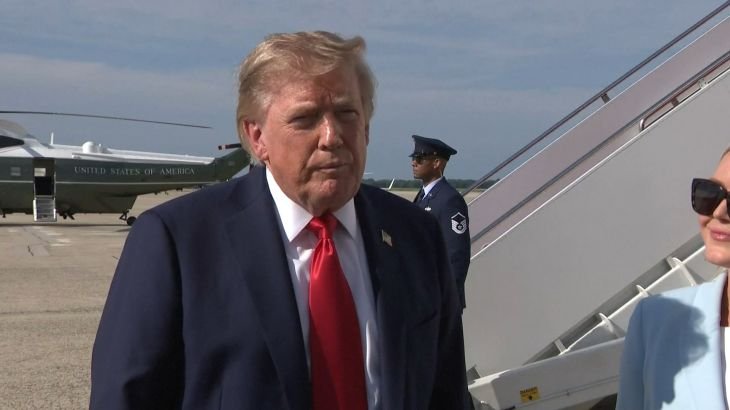
Separately, Trump also told reporters that the talks took place on Sunday. He said the US had been speaking with “a top person” in Iran, without specifying who exactly that person was.
“They want very much to make a deal. We’d like to make a deal, too,” Trump said. “We’re doing a five-day period, we’ll see how that goes. And if it goes well, we’re going to end up settling this. Otherwise, we’ll just keep bombing our little hearts out.”
Reporting from Tehran, Al Jazeera’s Ali Hashem noted that while Iran has denied that any talks have taken place, regional actors have been pushing for de-escalation.
“There are some messages that are being conveyed by regional players,” Hashem said.
“Everyone right now is trying to bring both sides back to a level where there is a possibility to start a kind of framework [for talks]. But how will this be reflected on the ground, how will this be demonstrated? This is the big question.”
Hassan Ahmadian, a professor at the University of Tehran, said Trump could be using the prospect of talks as a way to backtrack from his 48-hour ultimatum to strike Iran’s energy infrastructure, which would have further escalated the war.
“It seems that there are mediation efforts that started regionally, by Pakistan, Egypt and Turkiye, trying to find a way out of this standoff,” Ahmadian told Al Jazeera.
“But [Trump] going this heavy on this mediation effort speaks volumes to him trying to climb down … [from] the deadline he issued and the Iranian threat of retaliation that would have been really significant, according to the Iranians,” he said.
“He wanted to climb down, and this mediation effort, I think, was his way to [do it].”
Iran’s paralysis of the Strait of Hormuz has led to major disruption in global oil and gas supply and many countries have begun tapping into their strategic oil reserves to evade an economic crisis.
Since the US-Israeli war on Iran began on February 28, Tehran, whose territorial waters extend into the Strait, has blocked the passage of vessels carrying 20 percent of the world’s oil and liquified natural gas (LNG) from the Gulf to the rest of the world. The strait is the only waterway to open ocean available for Gulf oil and gas producers.
Recommended Stories
list of 3 itemsend of list
Last week, the price of Brent crude topped $100 a barrel compared to the pre-war price of around $65.
The United States Trump administration has tried and failed to re-open the strait. First, it called on Western nations to send warships to help escort shipping through the strait – an option all have declined or failed to respond to. Then, on Sunday, Trump gave Iran 48 hours to reopen the strait or face US attacks on its power plants.
However, on Sunday, Iran said it would hit back at power plants in Israel and those in the region supplying electricity to US military assets. And, on Monday, Iran said it would completely shut the Strait of Hormuz if US attacks on its energy infrastructure continue.
Following Iranian attacks on energy infrastructure across the Gulf over the past three weeks, countries including Saudi Arabia, UAE, Iraq and Kuwait have also cut their oil output, raising further concerns about global oil and gas supply.
On Monday, Trump appeared to backtrack on his Hormuz ultimatum when he ordered all US strikes on power plants in Iran to be paused for five days and claimed the US was holding talks with Iran. Iran has denied this.
In the face of chaos, on March 11, the 32 member countries of the International Energy Agency (IEA) agreed to release 400 million barrels of oil from their strategic emergency reserves – the largest stock draw in the agency’s history. It is far higher than the 2022 release of 182 million barrels of oil by the group’s members after Russia invaded Ukraine.
What are strategic oil reserves and which countries hold them?
What is a strategic oil reserve?
A strategic oil reserve or strategic petroleum reserve (SPR) is an emergency stockpile of crude oil which is held by the government of a country in government facilities.
This oil reserve can be drawn on in cases of emergencies like wars and economic crises. Governments generally buy the oil through agreements with private companies in order to keep their reserves filled.
According to the IEA, its members currently hold more than 1.2 billion barrels of these public emergency oil stocks with a further 600 million barrels of industry stocks held by private organisations but under government mandate to be available to supplement public needs.
Other reserves are also held by non IEA members like China.
Which countries have strategic oil reserves? Can they withstand the war in Iran?
China
Beijing is not an IEA member, but holds the world’s largest strategic oil reserve.
According to China’s Ministry of Ecology and Environment, Beijing “started a state strategic oil reserve base programme in 2004 as a way to offset oil supply risks and reduce the impact of fluctuating energy prices worldwide on China’s domestic market for refined oil”.
“The bases are designed to maintain strategic oil reserves of an equivalent to 30 days of imports, or about 10 million tonnes,” according to a 2007 report from Chinese state news agency Xinhua.
These strategic oil reserves are primarily located along China’s eastern and southern coastal regions such as Shandong, Zhejiang and Hainan.
China does not officially publish information about its crude inventories so it is not clear how much oil the country has in reserve. However, according to energy analytics firm Vortexa, in 2025, “China’s onshore crude inventories (excluding underground storage) continued to rise… reaching a record 1.13 billion barrels by year-end”.
According to data from Kpler, China bought more than 80 percent of Iran’s shipped oil in 2025. As the war in Iran escalates, therefore, Chinese companies such as refiner Sinopec have begun pushing for permission to use oil from the country’s reserves according to a Reuters report on Monday.
“We basically won’t buy Iranian oil, this is pretty clear,” Sinopec President Zhao Dong told a company results briefing in March, according to Reuters.
“We believe the government is closely monitoring crude oil and refined fuel inventories and market situations, and will advance policies at the appropriate time to support refinery productions,” he added.
US
Of the IEA members, the US holds one of the largest strategic oil reserves with 415 million barrels of oil. The stores are maintained by the US Department of Energy. It has confirmed that it will release 172 million barrels of oil from its SPR over this year as its contribution to coordinated efforts with the IEA.
On Friday, the Trump’s administration announced that it has already lent 45.2 million barrels of crude from the SPR to oil companies.
The US created its SPR in 1975 after an Arab oil embargo triggered a spike in gasoline prices which badly affected the US economy.
The reserves are located near big US refining or petrochemical centres, and as much as 4.4 million barrels of oil can be shipped globally per day.
The SPR currently covers roughly 200 days of net crude imports, according to a Reuters news agency calculation.
US presidents have tapped into the stockpile to calm oil markets during war or when hurricanes have hit oil infrastructure along the US Gulf of Mexico.
In March 2024, US President Joe Biden announced oil would be released from the reserve to ease pressure from oil price spikes following Russia’s invasion of Ukraine in February 2022 and amid subsequent sanctions imposed on Russian oil by the US and its allies.
Japan
An IEA member, Japan also has one of the world’s largest strategic oil reserves.
According to Japanese media Nikkei Asia, at the end of 2025, the country held about 470 million barrels of in emergency reserves which is enough to meet 254 days of domestic consumption. Out of this amount, 146 days worth of oil are government-owned, 101 days are owned by the private sector, and the remainder is jointly stored by oil-producing countries.
Japan set up its national oil reserve system in 1978 to prevent future economic disruptions following the global oil crisis in 1973. That oil crisis heightened Japan’s vulnerability and dependence on oil from abroad. The country remains one of the world’s largest oil importers, relying on fossil fuels from overseas for about 80 percent of its energy needs.
Japan’s reserves are primarily located in 10 coastal national stockholding bases with major storage sites in the Shibushi base in Kagoshima in southern Japan.
On March 16, Japan announced that it had begun releasing oil from its emergency reserves amid the global energy crisis sparked by the effective closure of the Strait of Hormuz.
Japanese Prime Minister Sanae Takaichi told journalists the country would unilaterally release 80 million barrels of oil from stockpiles amid supply concerns.
UK
As of February 26, according to the UK Department of Energy Security and Net Zero, the UK holds about 38 million barrels of crude oil and 30 million barrels of refined products, as strategic reserves. The reserves are thought to be able to last around 90 days.
The country established its reserves in 1974 following the oil crisis of the 1970s and also to meet its IEA obligations. Members of the organisation are required to maintain at least 90 days of net imports in reserve.
The UK’s strategic reserves are largely held by private oil companies, but are regulated by the government. Milford Haven in South Wales and Humber in northeast England are key locations of reserves.
The country is among the 32 IEA nations releasing oil from its reserve to address the oil crisis amid the war in Iran. The UK government will be contributing 13.5 million barrels as a part of the release.
EU
EU member nations including Germany, France, Spain and Italy, all IEA members, also hold strategic oil reserves.
Germany has 110 million barrels of crude oil and 67 million barrels of finished petroleum products which are held by the government and can be released in a matter of days, according to Germany’s economy ministry.
France reported about 120 million barrels’ worth of crude and finished products in reserve at the end of 2024, the most recent data publicly available. About 97 million barrels of that is held by SAGESS, a government-mandated entity, with a breakdown of about 30 percent crude oil, 50 percent gasoil, 9 percent gasoline, 7.8 percent jet fuel and some heating oil. Another 39 million barrels are held by the country’s oil operators.
On March 16, Spain approved the release of around 11.5 million barrels of oil reserves over 90 days to counter supply shortages caused by the effective closure of the Strait of Hormuz, Energy Minister Sara Aagesen told reporters. This is the country’s contribution to the IEA release. The country has around 150 million barrels of crude oil reserves in total.
Italy, by law, was holding about 76 million barrels of reserves, representing 90 days of Italy’s average net oil imports, in 2024.
Shutdown standoff forces US President Trump’s hand as airport queues spiral and security staff go unpaid.
Published On 22 Mar 202622 Mar 2026
Immigration enforcement agents will be deployed across major United States airports from Monday, President Donald Trump has announced, in an extraordinary move to ease a security crisis triggered by a prolonged political standoff in Washington.
Trump confirmed the plan in a social media post on Sunday, with his senior border official Tom Homan named to lead the effort.
Recommended Stories
list of 2 itemsend of list
This came after weeks of mounting chaos at airport security checkpoints and a day after Trump threatened the move unless Democrats backed down on a funding battle.
The crisis stems from Congress’s failure to renew funding for the Department of Homeland Security (DHS), the federal agency that oversees airport security.
Since February 14, tens of thousands of workers, including Transportation Security Administration (TSA) screeners responsible for passenger checks, have continued working without receiving paycheques.
More than 366 have since resigned, according to DHS, and unscheduled absences have more than doubled, leaving major airports struggling to cope.
“This loss significantly decreases TSA’s ability to meet passenger demand and leaves critical gaps in staffing, as each new recruit requires 4-6 MONTHS of training,” it said last week in a post on X.
Queues at Atlanta’s Hartsfield-Jackson and New York’s JFK airports stretched for hours at the weekend, with New Orleans advising passengers to arrive at least three hours before departure.
Union officials say some officers have taken on second jobs, while several airports have begun collecting food and gift cards for staff who can no longer make ends meet.
Homan said agents from US Immigration and Customs Enforcement (ICE), trained in law enforcement and immigration, not airport security, would take on supporting roles, such as monitoring exit lanes and checking identification, freeing TSA officers to focus on screening lines.
“I don’t see an ICE agent looking at an X-ray machine,” he acknowledged on Sunday, adding that a detailed plan for which airports and how many agents would be finalised by the end of the day.
Transportation Secretary Sean Duffy warned the situation was “going to get much worse” before it improves.
Democrats have refused to pass a full DHS funding bill unless the administration agrees to reforms of ICE. Their demands hardened after federal agents fatally shot two US citizens, Alex Pretti and Renee Good, during immigration raids in Minneapolis in January.
Democrat Senator Dick Durbin said his party had attempted nine times to pass emergency funding for DHS entities including the TSA, the US Federal Emergency Management Agency (FEMA), and the Coast Guard. Republicans have blocked each attempt, insisting on a single comprehensive funding package for the entire department.
House Democratic leader Hakeem Jeffries warned bluntly that deploying “untrained ICE agents” at airports risked repeating the conduct that had already cost lives.
In an unusual intervention, billionaire and Trump ally Elon Musk said he would “offer to pay” the salaries of TSA workers.
The United Kingdom has slammed “reckless Iranian threats” after missiles targeted a joint United States-UK military base located on the Indian Ocean island of Diego Garcia.
Iran, however, has denied the allegations that it was behind the launch of what US media outlets said were two ballistic missiles.
Recommended Stories
list of 4 itemsend of list
The US has not officially commented on the firing of the missiles at Diego Garcia, which is 4,000km (2,500 miles) from Iran.
The incident was reported after the US and Israel launched a war on Iran on February 28, one of whose goals, they said, was to degrade Iran’s nuclear and missile programmes.
Tehran has maintained its nuclear programme is for civilian purposes. The United Nations nuclear watchdog and US intelligence chief Tulsi Gabbard said Iran was not on the verge of making nuclear bombs. Contrary assertions were invoked to launch the current war.
Here is what we know about the alleged missile launch and what it means for the war:
Six US B-2 bombers and six Stratotanker refuelling planes are seen from a satellite on Diego Garcia island on April 2, 2025 [Handout/Planet Labs via AFP)
Was Diego Garcia airbase targeted by Iran?
An attempted targeting of the Diego Garcia joint military base by ballistic missiles reportedly happened between Thursday night and Friday morning, according to US media.
The Wall Street Journal and CNN reported that one of the missiles failed mid-flight while the other was hit by a US interceptor fired from a warship.
It is said to have happened just hours before UK ministers were to assemble in London to discuss the Iran war. At the meeting, the UK agreed to let the US use its military bases for collective self-defence, such as hitting Iranian missile sites used in attacks on shipping in the Strait of Hormuz.
UK officials did not provide any details of the attempted Diego Garcia strikes.
Muhanad Seloom, lecturer at the Doha Institute for Graduate Studies, told Al Jazeera that the reported Iranian attack “changes the calculus” of the war for the US.
“These missiles to Diego Garcia mean Iran has 4,000km-plus ballistic missiles, and that hasn’t been revealed before. All reports before that said Iran had a 2,000km [1,240-mile] range and not beyond that,” Seloom said.
“If you reverse the direction of these missiles, then they could reach London, so that changes the calculus not only for the US and its justification for the war but also for a reluctant London and European Union to join the war.”
A senior Iranian official told Al Jazeera that Tehran is not responsible for the alleged missile launch.
Earlier this month in an interview with the US broadcaster NBC, Iranian Foreign Minister Abbas Araghchi rejected US President Donald Trump’s assertion that Tehran had developed missiles capable of reaching US territory.
“You know, we have capability to produce missiles, but we have intentionally limited ourselves to below 2,000km of range because we don’t want to be felt as a threat by anybody else in the world,” Araghchi said on March 8.
Aniseh Bassiri Tabrizi, an associate fellow in the Middle East and North Africa Programme at Chatham House, said Iranian denials regarding attacks depend on their nature and their aftermath.
“I think the denial is different from the steps that Iran is taking on other fronts. Only a couple of instances when Iran denied an attack is when the strikes hit civilian infrastructure or some gas plants rather,” he told Al Jazeera.
Iran has denied attacks that Tabrizi believes would likely “provoke further action or retaliation potentially”. “It also constitutes a new crossing of a red line that it hasn’t crossed until now,” he said.
The targeting of the Diego Garcia airbase “is particularly sensitive because we know the distance of the missiles shot was more, much more than the 2,000km which Iran has previously said it kept its missiles to”.
“It signals the Iranian capability to reach far beyond 2,000km, and therefore, is something that is likely to provoke further concern and, therefore, response particularly from the UK but also from other countries,” he said.
US President Donald Trump, left, and British Prime Minister Keir Starmer meet during a state visit by Trump on September 18, 2025, in Aylesbury, Britain [Leon Neal/Pool via Reuters]
What has the UK said?
Foreign Secretary Yvette Cooper condemned “reckless” attacks by Iran after London insisted it would not be drawn into a wider conflict in the Middle East.
“Our approach to this conflict has been the same throughout. We were not and continue not to be involved in offensive action, and we’ve taken a different view from the US and Israel on this,” she said.
Cooper said Royal Air Force jets and other military assets were defending “our people and personnel in the region”. She added that any action to protect the Strait of Hormuz would amount to “collective self-defence”.
The strategic strait in effect has been blocked by Tehran, leading to a rise in global oil prices.
Meanwhile, Prime Minister Keir Starmer noted on Saturday that the UK would not use a base on Cyprus for Iran-related operations after a call with Cyprus President Nikos Christodoulides to discuss the base’s future.
Chief of the Israeli military’s General Staff, Eyal Zamir, visits commanders and troops in Gaza [Handout/Israel’s army]
How has Israel reacted to this?
Israel’s military chief, Eyal Zamir, claimed that Iran used “a two-stage intercontinental ballistic missile with a range of 4,000km” to target the US-UK base in Diego Garcia.
In a video statement, Zamir said: “These missiles were not intended to hit Israel. Their range reaches the capitals of Europe. Berlin, Paris and Rome are all within direct threat range.”
Israel, a close US ally, has long said Iran’s missile and nuclear programmes pose a threat and has for decades lobbied the US to intervene militarily. But successive US administrations had resisted the pressure to launch military strikes on Iran. Instead, Washington imposed wide-ranging sanctions on Tehran to deter it from developing nuclear weapons.
Washington and Tehran have not had diplomatic relations since shortly after Iranian students took over the US embassy in Iran in 1979 and held 66 Americans hostage in the wake of the Iranian Revolution that same year.
In 2015, then-President Barack Obama signed a deal to limit Iran’s nuclear programme in return for sanctions relief. But the landmark agreement was opposed by Israel. Trump, who succeeded Obama, withdrew unilaterally from the nuclear deal and slapped sanctions back on Iran.
In June, the US joined Israel in carrying out attacks on Iran during Israel’s 12-day war. The US hit key nuclear sites, and Trump claimed Iranian nuclear facilities were obliterated.
Israeli Prime Minister Benjamin Netanyahu continued his war rhetoric against Iran, even as Tehran and Washington started talks over the nuclear issue late last year. Netanyahu had lambasted Obama for failing to include Tehran’s ballistic missile programme under the 2015 deal. Tehran has ruled out bringing the missile programme to the negotiating table.
As the next round of talks was scheduled, the US and Israel attacked Iran three weeks ago, killing Supreme Leader Ali Khamenei. Oman, the mediator of the recent talks, said a deal had been “within reach”.
Analysts said Netanyahu convinced Trump to start the war, which legal experts said appears to breach the UN Charter’s prohibition on aggression.
They said Israel has been emboldened after its ongoing genocidal war in Gaza because it has not been held accountable for its war crimes. Israel’s military has killed more than 72,000 Palestinians and destroyed vast swaths of Gaza – home to more than two million Palestinians.
Netanyahu faces an arrest warrant for war crimes, but that has not stopped him from travelling repeatedly to the US.
Several senior members of Netanyahu’s cabinet have openly called for a “Greater Israel”, which envisions Israeli territory stretching from the Nile to the Euphrates River in Iraq.
A US B-1B Lancer awaits its next mission at a forward location in support of the US war in Afghanistan [File: Handout/US Air Force via AFP]
Why could Diego Garcia be a target?
The UK-US military airbase is home to nearly 2,500 mostly American personnel and has supported US military operations from Vietnam to Iraq, Afghanistan and strikes on Yemen’s Houthi rebels.
The airbase is part of the Chagos Islands, a remote archipelago in the middle of the Indian Ocean, south of the tip of India, and has been under British control since 1814.
The airbase has been at the centre of a dispute between Trump and Starmer over Britain’s plans to hand sovereignty of the Chagos archipelago to Mauritius in the wake of a ruling by the International Court of Justice.
Trump has lashed out at European allies for not joining the war on Iran, which has expanded across the Middle East. Trump also called Western allies “cowards” after NATO nations refused to join the war, which has caused a global spike in energy costs.
Elijah Magnier, a Brussels-based military and political analyst, said the missile launch on Diego Garcia reflects a deepening of Iran’s response to the war started by the US and Israel.
“The battlefield is expanding geographically, and if that happens, the control of escalation, which the Americans want, becomes much more difficult because new elements, new locations are becoming vulnerable,” Magnier told Al Jazeera.
“This is why the Americans will have to rethink all the strategy because Iran is not trying to win a conventional war – it can’t because the Americans are much more powerful – but it’s trying to change the cost of the equation,” he said.
“By threatening a distant target, it’s a signal that any continuation of the war will come with increasingly high risk.”
Iran’s parliament speaker warns country could ‘irreversibly destroy’ vital infrastructure across the region after Trump threatens to attack power plants if Strait of Hormuz is not opened.
Published On 22 Mar 202622 Mar 2026
Iran has threatened to hit energy sites in the Middle East after United States President Donald Trump threatened to attack its power plants if Tehran does not open the Strait of Hormuz.
Critical infrastructure and energy facilities in the region could be “irreversibly destroyed” should Iranian power plants be targeted, Iran’s Parliament Speaker Mohammad Bagher Ghalibaf said in comments posted on X on Sunday.
Recommended Stories
list of 4 itemsend of list
“Immediately after power plants and infrastructure in our country are targeted, vital infrastructure as well as energy and oil infrastructure across the entire region will be considered legitimate targets and will be irreversibly destroyed,” Ghalibaf posted.
Ghalibaf’s comments came after Trump on Saturday said the US will “obliterate” Iran’s power plants if it doesn’t open the Strait of Hormuz within 48 hours.
Qalibaf said regional infrastructure would become “legitimate targets” should Iran’s facilities be hit, and that its retaliation would increase the price of oil “for a long time”.
Earlier, a spokesman for the Iranian armed forces had said there would be retaliatory attacks on all US-linked energy and desalination facilities in the region if Iran’s power plants are hit.
Iran, which has effectively blockaded the Strait of Hormuz since the US and Israel attacked the country on February 28, says the key waterway is already open – except to the US and its allies.
The strait remains open to all shipping except vessels linked to “Iran’s enemies”, Iran’s representative to the International Maritime Organization was quoted as saying in Iranian media reports published on Sunday.
The closure of the strait, a narrow choke point that carries around a fifth of global oil and liquefied natural gas (LNG) supplies, has caused the worst oil crisis since the 1970s.
Iran has also retaliated with drone and missile strikes targeting Israel, along with Jordan, Iraq, and several Gulf countries, which it says are targeting “US military assets”, causing casualties and damage to infrastructure while disrupting global markets and aviation.
But the latest developments signal the war in the Middle East, now in its fourth week, could be moving in a dangerous new direction.
Israeli Prime Minister Benjamin Netanyahu on Sunday called on world leaders to join the US-Israel war on Iran.
Speaking from the site of the Iranian attack in the southern Israeli city of Arad, he claimed some countries were already moving in that direction, as he urged broader international involvement.
Netanyahu accused Iran of targeting civilians and claimed it had the capability to strike long-range targets deep into Europe.
Meanwhile, a Turkish diplomatic source told the Reuters news agency that Turkish Foreign Minister Hakan Fidan held separate calls with Iranian Foreign Minister Abbas Araqchi, Egyptian Foreign Minister Badr Abdelatty, European Union foreign policy chief Kaja Kallas, and US officials to discuss steps to end the war.
Trump threatens to hit Iranian energy sites if the Strait of Hormuz is not reopened within 48 hours; Tehran vows to retaliate.
Published On 22 Mar 202622 Mar 2026
United States President Donald Trump has threatened to “obliterate” Iran’s power plants if Tehran does not fully reopen the Strait of Hormuz within two days, as Israel launched new attacks on Tehran, with explosions reported in the east of the city.
Meanwhile, Iranian retaliatory attacks on Israel and regional countries have continued, with nearly 100 people injured in Iranian missile strikes on towns near an Israeli nuclear facility.
Israel had a “very difficult evening in the battle for our future”, said Prime Minister Benjamin Netanyahu after Iranian strikes hit the towns of Arad and Dimona.
Here is what you should know as the US-Israeli war on Iran enters day 23:
People look at a destroyed building in Tehran following an attack on March 21, 2026 [Alaa al-Marjani/Reuters]
In Iran
Israel launched new attacks on Tehran on Sunday, with explosions reported in the east of the city, following Iranian missile attacks on southern Israel.
Iran’s military threatened to attack all energy infrastructure linked to the US and Israel in the Middle East if its power plants are targeted, after Trump threatened new attacks.
The Iranian military announced intercepting a US-Israeli armed drone in the skies over Tehran before it could carry out any combat operations, according to the Tasnim news agency.
The Islamic Revolutionary Guard Corps (IRGC) claimed on Saturday its air defences shot down an Israeli fighter in Iranian airspace, the third such incident reported during the war. Israel did not confirm this.
Iran’s Atomic Energy Organisation said Israel and the US targeted the country’s Natanz nuclear site on Saturday in “criminal attacks”. Tehran also informed the International Atomic Energy Agency (IAEA) about the attack, which confirmed no unusual radiation leak.
Iran’s President Masoud Pezeshkian called on the BRICS alliance, currently chaired by India, to “play an independent role in halting aggressions against Iran”. He also proposed establishing a regional security framework of West Asian countries.
Iran’s state broadcaster noted the death toll from the US-Israeli attacks has now topped 1,500, according to the Ministry of Health, and at least 20,984 people were injured, with seven hospitals evacuated and 36 ambulances damaged.
In the Gulf
Saudi Arabia intercepted nearly 60 drones from Iran, officials said, a majority of them targeting the country’s Eastern province, which houses the country’s energy facilities and resources.
The Ministry of Defence also said three ballistic missiles were launched towards Riyadh province. It said it intercepted one of those, while the others fell in an uninhabited area.
Saudi Arabia declared many of the Iranian diplomatic staff, including its military attache, persona non grata, ordering them to leave the country within 24 hours, after Qatar did the same on Wednesday.
In Bahrain, Iranian missiles targeted US bases after Iran’s state broadcaster claimed earlier attacks on al-Minhad base in the United Arab Emirates and Ali al-Salem airbase in Kuwait, which host US and British forces.
Bahrain’s military said its air defences shot down 143 missiles and 242 drones fired by Iran during the war.
Qatar’s Ministry of Defence noted a search operation after one of its helicopters suffered a technical malfunction during a routine duty and crashed in the regional waters.
US President Donald Trump waves while boarding Air Force One at Joint Base Andrews in Maryland on March 20, 2026 [AFP]
In the US
Trump threatened to attack Iran’s energy sites in a post on Truth Social. “If Iran doesn’t FULLY OPEN, WITHOUT THREAT, the Strait of Hormuz, within 48 HOURS from this exact point in time, the United States of America will hit and obliterate their various POWER PLANTS, STARTING WITH THE BIGGEST ONE FIRST!” he wrote.
Trump claimed that the US is “weeks ahead of schedule” in its war on Iran and reiterated that Washington is not looking to make a deal with Iran, because “their leadership is gone, their navy and air force are dead, they have absolutely no defense”.
Trump repeated that Iran wants “to make a deal”; however, Iranian leaders have denied such earlier assertions.
Admiral Brad Cooper, commander of the US Central Command, says the US military has dropped multiple 5,000-pound (2,270kg) bombs on an underground facility along Iran’s coast that it used to store antiship cruise missiles, mobile missile launchers and other equipment, thus undermining its ability to threaten the Strait of Hormuz.
An Israeli Orthodox Jew inspects the site of an Iranian missile attack in Arad on March 22, 2026 [AFP]
In Israel
Iranian missile attacks broke through Israeli defences in the south of the country, making direct impacts in the cities of Dimona and Arad, wounding some 100 people. The IRGC said it targeted Israeli military installations and security centres in the cities of Arad, Dimona, Eilat, Beersheba and Kiryat Gat in its most recent missile salvo. Tehran claimed more than 200 people were killed in the attacks; Israel reported no deaths.
PM Netanyahu said he is “strengthening the emergency and rescue forces currently operating in the field” after the Iranian attack in southern Israel.
The IAEA said it is aware of reports of a missile impact in the Israeli city of Dimona, adding that there are no indications of damage to the nuclear research centre in Negev.
Israel’s Ministry of Education cancelled all in-person classes across the country for Sunday and Monday. Israel’s Home Front Command banned gatherings of more than 50 people in the country’s south until Tuesday.
Israel’s military says it struck more than 200 sites in Iran and Lebanon over the weekend, targeting missile launchers, air defence systems and military bases.
Israeli military spokesman said Israel’s air defence systems were activated during the attacks, but failed to intercept some of the missiles, even though they were not “special or unfamiliar”. The spokesman said the military would investigate and “learn from” the incidents.
Israel’s Ministry of Health said at least 4,292 injured people have been brought to hospitals since the start of the war.
In Iraq and Lebanon
Hezbollah said it fired a barrage of rockets at Israeli soldiers patrolling in southern Lebanon. Two Israeli reservists were wounded in another Hezbollah mortar attack in northern Israel.
The Islamic Resistance in Iraq said it carried out 21 attacks against US bases across the country and the region in the past 24 hours.
Three drones were intercepted near Erbil airport, resulting in a fire in the vicinity. Another drone crashed in the al-Sayyidah area, southwest of the capital, Baghdad, with four people injured.
A satellite view of Qeshm Island in Hormozgan province, Iran, within the Strait of Hormuz region on January 17, 2026 [Gallo Images/Orbital Horizon/Copernicus Sentinel Data 2026]
On the Strait of Hormuz
The UAE, Bahrain, the United Kingdom, France and Germany issued a joint statement, condemning what they described as Iran’s attacks on commercial vessels and civilian infrastructure in the Gulf.
The statement accused Iran of the “de facto closure” of the Strait of Hormuz and called for an immediate halt to threats, mine-laying, and drone and missile attacks.
Joint US-UK Diego Garcia base
The UK accused Iran of launching ballistic missiles at the joint US-UK Diego Garcia base in the Indian Ocean, but said the attack was unsuccessful.
A senior Iranian official told Al Jazeera that Iran was not responsible for the missile attacks on Diego Garcia.
Diego Garcia, which is about 4,000km (2,500 miles) from Iranian territory, is one of the two bases the UK has allowed the US to use for “defensive operations” in the war against Iran.
Tehran responds to Trump’s threat by saying all US energy infrastructure in the region will be targeted if Iran is attacked.
Published On 22 Mar 202622 Mar 2026
United States President Donald Trump has threatened to attack Iran’s power plants if freedom of navigation is not fully restored at the Strait of Hormuz within 48 hours, a dramatic escalation as the US-Israeli war on Iran continues for a fourth week.
The statement on Saturday came as Trump faces increasing pressure to secure the vital waterway that Iran has promised to keep closed to “enemy ships”, leading to soaring oil prices and plunging stock markets.
“If Iran doesn’t FULLY OPEN, WITHOUT THREAT, the Strait of Hormuz, within 48 HOURS from this exact point in time, the United States of America will hit and obliterate their various POWER PLANTS, STARTING WITH THE BIGGEST ONE FIRST,” Trump, who is in his Florida home for the weekend, wrote on Truth Social at 23:44 GMT.
He did not specify which plant he was referring to as the biggest.
Following Trump’s threat, the Iranian army said it would target all energy infrastructure belonging to the US in the region if Iran’s fuel and energy infrastructure were attacked.
Trump’s escalatory comments came barely a day after he talked about “winding down” the war that he launched alongside Israeli Prime Minister Benjamin Netanyahu on February 28, when the US and Iran were engaged in nuclear negotiations.
In a social media post on Friday, Trump said the US was “getting very close to meeting our objectives as we consider winding down our great Military efforts in the Middle East”.
Key waterway
Shipping traffic through the Strait of Hormuz, where a fifth of the world’s oil and gas passes through during peacetime, has virtually ground to a halt since the early days of the war.
Iran has said the Strait of Hormuz is open to all except the US and its allies, with Minister of Foreign Affairs Abbas Araghchi saying last week that he had been “approached by a number of countries” seeking safe passage for their vessels.
“This is up to our military to decide,” he told the US television network CBS, adding that a group of ships from “different countries” had been allowed to pass, without providing details.
The head of US Central Command, Admiral Brad Cooper, asserted on Saturday that Iran’s ability to attack vessels on the strait had been “degraded” after US fighter jets dropped 5,000-pound (about 2,300kg) bombs on an underground Iranian coastal facility storing antiship cruise missiles and mobile launchers earlier this week.
The strike also destroyed “intelligence support sites and missile radar relays” used to monitor ship movements, Cooper said.
Reporting from Washington, Al Jazeera’s Manuel Rapalo said there seemed to be a “gap between what the White House appears to want in the Strait of Hormuz and what the US military says they have already accomplished”.
“It is interesting, to say at the very least, to hear Trump talking about a major escalation, given the fact that we’ve been hearing throughout the course of the day how much damage the US has done, supposedly, to Iran’s ability to target oil tankers and vessels navigating through the strait.”
Former FBI chief Robert Mueller, who probed the alleged Russian interference in the 2016 United States election, has died at age 81.
“With deep sadness, we are sharing the news that Bob passed away” on Friday night, his family said in a statement Saturday.
“His family asks that their privacy be respected.”
Mueller was appointed as director of the FBI by then-President George Bush in September 2001, a week before the 9/11 attacks that would push him into the centre of a national crisis.
He became the key figure behind changing the FBI from combating crime to now countering national security risks following the attack on New York’s World Trade Centre.
In 2013, Mueller stepped down from the bureau and later by 2017 was appointed as special counsel to oversee the Justice Department’s probe into possible Russian interference in the election, which saw Donald Trump secure his first term over Democratic nominee, Hilary Clinton.
Following the announcement of his death, Trump took to his Truth Social platform to write: “Robert Mueller just died. Good, I’m glad he’s dead. He can no longer hurt innocent people!”
Oahu’s emergency office has ordered residents in the Waialua area to ‘leave now’ amid risk of road failures.
Published On 21 Mar 202621 Mar 2026
Heavy rains have prompted widespread evacuations on the north shore of the island of Oahu, as the state of Hawaii experiences its worst flooding in 20 years.
Early Saturday morning, Oahu’s Department of Emergency Management issued dire warnings for residents in communities like Waialua, part of the United States.
Recommended Stories
list of 3 itemsend of list
“Residents in the Waialua area are strongly urged to LEAVE NOW,” one message overnight read. “The remaining access road out of Waialua is at high risk of failure if rainfall continues.”
Already, evacuation orders are in effect for nearly 5,500 people in the region north of the state capital, Honolulu.
No deaths have been reported so far, but at least 200 people have been rescued as muddy, brown floodwaters engulfed streets and neighbourhoods. Ten people have been hospitalised with hypothermia after being plucked from the storm waters.
A youth camp run by the organisation Our Lady of Kea’au was also evacuated, and 72 adults and children were airlifted from the site as a precaution, according to officials.
Floodwaters destroy a home and topple trees in Waialua, Hawaii, on March 20 [Mengshin Lin/AP Photo]
More rain is expected to bear down on the Hawaiian islands over the coming days.
Governor Josh Green estimated that the damage could exceed $1bn in costs, and he described the floodwaters in some areas as “chest-level”.
“We’ve evacuated the whole region now,” Green said in a video statement on Friday. He emphasised that the Hawaii National Guard was out in force to help with emergency efforts.
“I’ve mobilised even more military reserves, and we have the troops coming in from Schofield [a military base] to help. The coastguard will be out there to do search and rescue if, God forbid, any of our loved ones have been washed away with housing.”
Of particular concern is the 120-year-old Wahiawa dam, which officials warned was “at risk of imminent failure”.
A 2022 document from the Hawaii Department of Land and Natural Resources identified the Wahiawa structure as “a high hazard potential dam, as a failure of the dam will result in probable loss of human life”.
Built in 1906 and reconstructed following a collapse in 1921, the dam was designed to increase local sugar production.
It was eventually acquired by the Dole Food Company, which has received four notices since 2009 about the dam’s deficiencies.
In April 2021, the food giant was fined $20,000 for failing to safely maintain the dam and its spillway. Experts at the time warned the dam might not be able to safely handle flooding, though representatives for Dole refuted the assessment.
“The dam continues to operate as designed with no indications of damage,” Dole said in a statement to The Associated Press.
The state of Hawaii passed a law in 2023 to acquire the dam, but the transfer is not yet complete.
On Friday, water levels at the earthen dam rose from 24 to 25.6 metres (79 to 84 feet), just 1.8 metres (6 feet) below its capacity.
Floodwaters in Haleiwa, Hawaii, submerge homes and roadways on March 20, 2026 [Craig Fujii/Honolulu Civil Beat via AP Photo]
The rising waters ravaging the state are considered some of the worst since the 2004 floods in Manoa, a neighbourhood of Honolulu.
Honolulu Mayor Rick Blangiardi estimated that hundreds of homes have been affected by the floodwaters, but that the full scope of the damage has yet to be assessed. He added that Oahu is expected to receive an additional 15 to 20cm – 6 to 8 inches – of rain over the next few days.
“There’s no question that the damage done thus far has been catastrophic,” Blangiardi said.