Eric Nshimiye, an American citizen, says the evidence against him consists of unreliable eye witnesses.
Boston, Massachusetts, United States – A United States federal court in Boston has begun hearing the case of a Rwandan-American accused of covering up his role in the 1994 genocide in Rwanda.
Prosecutors say Eric Nshimiye, a 55-year-old father of four and a US citizen, took part in a nationwide outbreak of genocidal violence against ethnic minority Tutsis by majority Hutu extremists in April 1994. More than 800,000 people were killed over about 100 days, in what has been called a genocide by the United Nations.
Recommended Stories
list of 3 itemsend of list
Investigators from the US Department of Homeland Security arrested Nshimiye at his home in Ohio in 2024, alleging he had lied to them in an interview about his time in Rwanda during the genocide. They also allege he committed perjury in a previous trial in 2019 in Boston when he testified on behalf of a friend who was also accused of perpetrating the genocide. Prosecutors say Nshimiye, a medical student at the time of the genocide in the town of Butare, himself took part in the killing and rape of Tutsis.
Hutus who took part in the violence “heeded calls by the government to terminate their neighbours,” Assistant United States Attorney Christopher Looney told the court on Tuesday, including Nshimiye in the group.
“He himself attacked Tutsis, and handed Tutsis over to be killed and raped,” Looney said.
During his 2019 testimony, Nshimiye denied being part of the genocide, and said he was not part of the pro-Hutu National Revolutionary Movement for Development and the Interahamwe, the paramilitary group blamed for most of the killings during the genocide.
Nshimiye faces charges of perjury and obstruction of justice for those denials. If convicted, the Trump administration could try to revoke Nshimiye’s citizenship.
Nshimiye, who is an ethnic Hutu, says he had gone to the capital, Kigali, on holiday before violence broke out. He says he never made it back to Butare because of the chaos engulfing the country in April 1994, and instead left the country as a refugee, eventually coming to the US and becoming a citizen in 2009.
At the opening of his case on Tuesday, Nshimiye, dressed in a dark blue suit, was calm and occasionally turned to smile at family and friends who came to support him. Since his arrest, authorities have kept Nshimiye without bail in a Boston-area federal jail.
Prosecutors plan to put more than a dozen witnesses on the stand, most flown in from Rwanda, who say they recall seeing Nshimiye participate in pro-Hutu political events before the genocide, and some who say they later saw him participate in genocidal violence in Butare.
His family says the events of 1994 are more complex than the simple narrative of Hutus killing Tutsis. Simply being an ethnic Hutu, Epa Bizimana, Nshimiye’s nephew, told Al Jazeera, should not be enough to convince a jury someone took part in the genocide.
“The jury is going to learn some things for the first time; Americans are going to learn something for the first time,” said Bizimana, who was 10 years old when he fled Rwanda with his family in 1994.
Defence lawyers told the court on Tuesday that Nshimiye was not part of the Hutus who participated in the genocide. They say the entire case against him is built on the accounts of eyewitnesses, some of whom were only able to identify him after repeatedly being shown his photo, and some of whom have a history of giving different testimony in trials of alleged genocidaires over the years.
Kurt Kerns, one of the defence attorneys, told the court that the prosecution’s case was based on evidence “that only reared its ugly head after Eric came to testify as a character witness, and 25 years after the genocide.”
Kerns said Nshimiye had never been implicated in domestic and international tribunals after the genocide, including the International Criminal Tribunal for Rwanda as well as an informal transitional justice system inside Rwanda, called gacaca, which tried more than a million people for their role in the atrocity.
A former gang leader accused of masterminding the 1996 drive-by shooting of hip-hop star Tupac Shakur has been sentenced to 40 years to life in prison.
Tuesday’s sentencing capped a 30-year-long cold case that rattled the golden era of rap music in the United States.
Recommended Stories
list of 3 itemsend of list
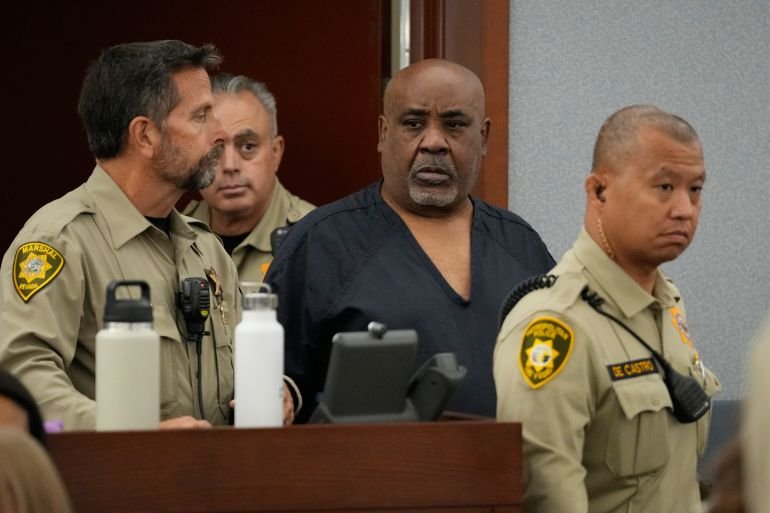
In August, Duane “Keffe D” Davis, a former leader of the South Side Compton Crips, had been found guilty of first-degree murder with the use of a deadly weapon.
Davis, 63, is the sole person charged in the death of Shakur, who died at the peak of his fame at age 25.
Judge Carli Kierny announced Davis’s sentence at a hearing in Las Vegas, Nevada, where she chided him for the murder.
“You don’t get to take a man from his family, you don’t get to take his very life, his whole future from him and just walk away from it, especially when that man is Tupac Shakur,” Kierny said. “The world never forgot about him and his death, and neither did Las Vegas.”
During the hearing, prosecutor Marc DiGiacomo said that whatever sentence the court imposes, Davis is “guaranteed to die” behind bars.
For nearly three decades, Shakur’s death remained one of the music industry’s most notorious unsolved mysteries, prompting endless debate over who did it and why.
Davis had long been a suspect, but investigators lacked evidence to pursue an indictment.
The investigative deadlock shattered after Davis publicly boasted about his involvement in media interviews. He also recounted his role in the murder in his 2019 memoir, Compton Street Legend.
Previously, Davis entered into a 2008 proffer agreement with federal law enforcement officers, granting him limited immunity for statements he made privately to investigators.
But by repeating his statements outside his meetings with investigators, prosecutors said Davis had effectively voided the agreement’s protections.
DiGiacomo said that Davis was trying to profit from a killing that he committed, and for that, he deserves the maximum possible sentence.
Shakur had been in Las Vegas for a Mike Tyson heavyweight fight on the night of September 7, 1996, when he was shot.
Investigators said the shooting took place roughly two hours after a confrontation between Davis’s nephew, Orlando Anderson, and Shakur’s entourage.
In his memoir, Davis accused Shakur and his friends of assaulting his nephew. He explained he then sought to retaliate, and he admitted to handing the murder weapon to two alleged accomplices, seated in the backseat of a white Cadillac, who then fired the fatal shots.
Shakur had been in the passenger seat of a black BMW, stopped at a red light, when his vehicle came under fire. He died six days later.
Davis is the only person who was in the Cadillac that evening who is still alive.
Members of Shakur’s family spoke at the sentencing, including his siblings Maurice “Mopreme” Shakur and Sekyiwa “Set” Shakur.
“This man’s life mattered,” Sekyiwa Shakur told the court, while her brother called the murder “devastating, heartbreaking and sad”.
Following the verdict, Chief Deputy District Attorney Binu Palal described the Shakur family as having to endure years of Davis “bragging about killing someone they loved”.
“They loved that man. And the arrogance that Mr Davis had in expressing his joy in killing that man ultimately was his undoing,” Palal said.
The ex-gang leader briefly addressed the court on Tuesday, asking the judge to order the return of property seized from his residence, including personal photographs.
When the judge asked if he wished to make any additional statements, Davis declined, stating, “No, I’m good.” He added that he would “appeal this case for sure”.
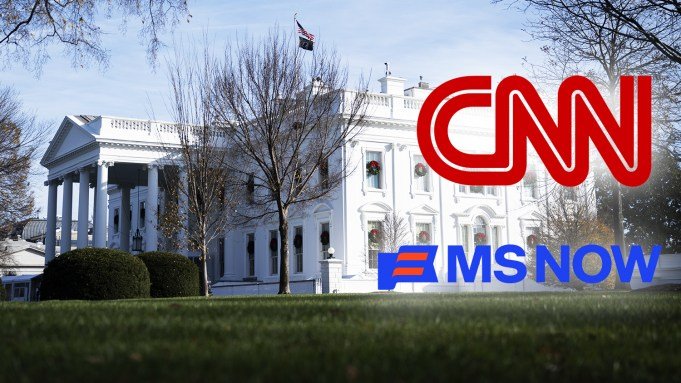
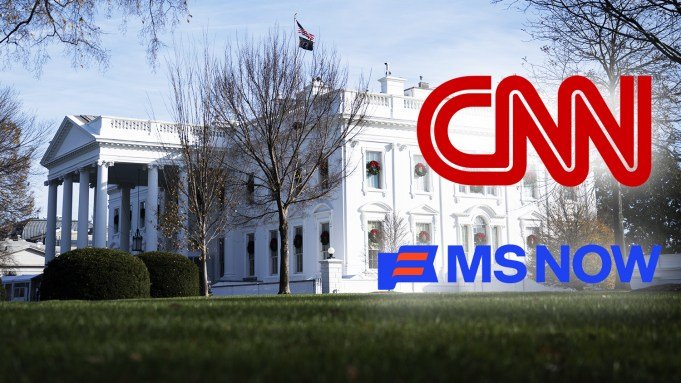
UPDATED, with additional comment: A federal judge prohibited the Trump administration from banning CNN, MS NOW and Politico from the White House grounds, granting the three outlets a preliminary injunction that ensures access for the foreseeable future.
U.S. District Judge Timothy Kelly, a Trump appointee, wrote in his opinion that the news outlets “are likely to succeed not only on their due process claim, but also on their two First Amendment claims.”
Kelly did caution that “no one should interpret the court’s decision to suggest that President Trump’s concerns about accuracy and fairness in the media’s reporting are unfounded, or that the government is powerless when its true aim is to protect national security when classified information is unlawfully disclosed.” But when it came to the blanket ban on the three outlets, the judge was unpersuaded by the government’s justifications.
Trump announced on Sept. 18 that he was barring CNN, MS NOW and Politico from access to White House grounds, complaining that they were “‘reporting’ fake news.”. A day later, their reporters who tried to enter the security checkpoint found their hard passes deactivated.
The news outlets sued, and Kelly issued a temporary restraining order halting Trump’s restriction on the outlets, something that forced the White House to restore the hard passes to dozens of reporters and other staffers. That TRO expired on Tuesday; the preliminary injunction means that the White House cannot enforce Trump’s ban in the long term, either until a trial or an appeal. The news outlets warned that the White House was likely to reimpose the ban absent further court intervention.
In defending the ban, the government cited national security reasons, although DOJ attorneys also argued that the news organizations did not meet “minimum requirements of professionalism.” While the DOJ pointed to stories published or aired that had to do with national security, they also cited as an example an MS NOW report that Trump aides considered an option of adding the president’s name to Ford’s Theatre. Trump later denied it.
In his 26-page opinion, Kelly cited D.C. Circuit precedents in that reporters had a right to due process before their hard pass is revoked.
“To put it mildly, [the news outlets] likely did not receive notice either of the conduct that would subject them to revocation of their hard passes, or of the magnitude of the revocation sanction itself,” the judge wrote.
The judge noted that some of the stories flagged by the White House were published earlier this year and written by reporters who later had their hard passes renewed. Then came Trump’s ban, and they were revoked. They included a CNN report from January 2026 on the top secret bunker being built beneath the East Wing, and an MS NOW story that quoted an anonymous White House official who said the president underestimated Iran’s willingness to resume the war.
The White House press office sent letters to the news organizations on September 22, informing them of the reasons and their ability to contest the action, but that was four days after the ban was implemented.
The judge also sided with the news outlets’ in their claims that Trump was engaging in retaliation and viewpoint discrimination in violation of the First Amendment.
“President Trump’s own comments suggest that he intended the revocation of Plaintiffs’ hard passes to alter their reporting on him, bolstering the case that his action here is sufficient to deter a reporter of ordinary firmness from reporting in the same way she had before. After explaining that he excluded Plaintiffs from the White House because they ‘purposely write negative news . . . to try and diminish the Republicans and a Republican administration,’ President Trump remarked that he is prepared to take ‘the ban . . . as far as you can,’ but that he would “love it” if they “could straighten themselves out.”
The judge added, “The record is clear that President Trump made the decision at issue. And his announcement of the ban and later remarks explaining the reason for it make this a straightforward conclusion: President Trump likely banned Plaintiffs from the White House because he believes that their reporting is generally inaccurate and biased against him.”
He also dismissed the government’s national security argument. He noted that there was “no evidence in the record” that he made the decision to revoke the passes for those reasons “from the get go, nor at any time has he directly stated that national security was the reason for his decision.”
The judge explained that because the D.C. Circuit has held that the White House press area is a “non public forum,” the government cannot limit access based on someone’s viewpoint.
The judge wrote that “it is likely that Plaintiffs were selected by President Trump for revocation of their access to the White House press area because he believes their coverage of him and his administration is generally inaccurate and biased—in other words, it was ‘an effort to suppress the speaker’s activity due to disagreement with the speaker’s view.’”
The judge also ruled that the news outlets should put up a nominal bond of $1.00 as the case moves forward.
Theodore Boutrous Jr., the lead attorney representing the news outlets, said in a statement, “When the president issued his ‘ban on the free press,’ he blatantly and explicitly violated due process and the First Amendment. Since then, the President has repeatedly, candidly, and consistently admitted in public that he banned our clients from the White House to punish reporting he doesn’t like and to try to force journalists to cover him in ways he prefers.”
Boutrous added, “The harm this ban did to our clients, the First Amendment, and the public as a whole is profound. The court was right to enjoin the White House from enforcing this ‘unconstitutional ban on the free press’ for the foreseeable future.”
The White House did not immediately respond to a request for comment.
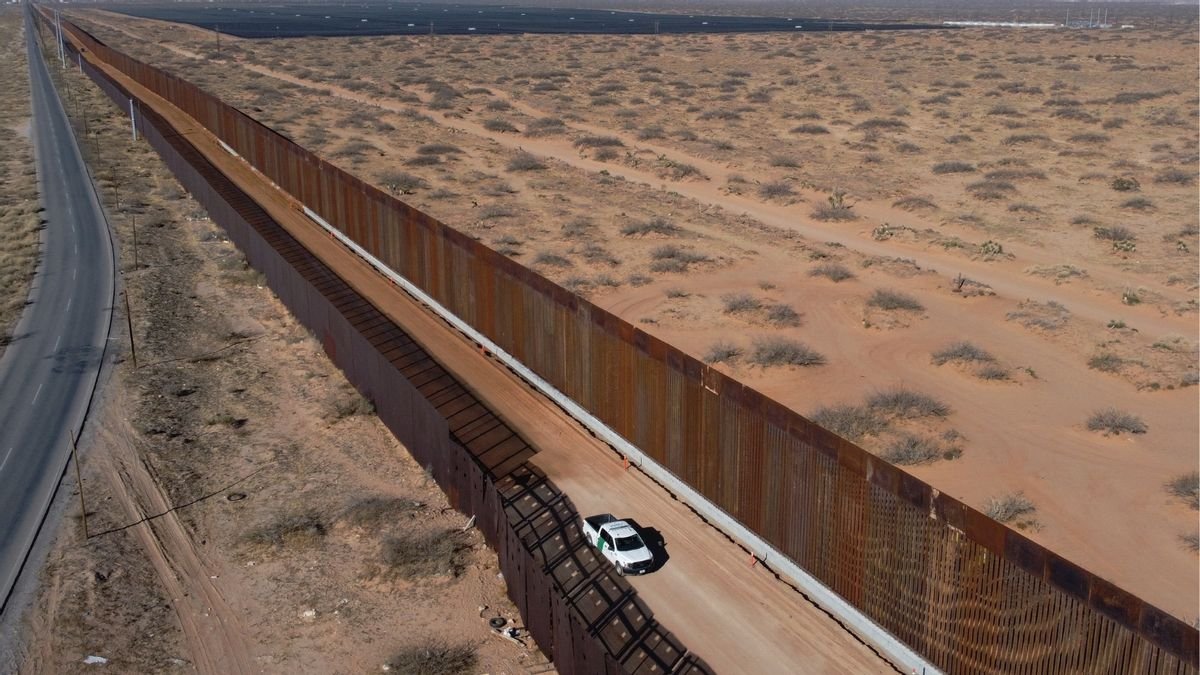
The U.S. Department of Homeland Security waived New Mexico water laws in an effort for the federal government to keep access to water wells for border wall construction, despite officials calling it “unconstitutional” amid lawsuits from the state.
Rating:
Rumors that the U.S. Department of Homeland Security allegedly illegally used water from New Mexico in order to aid in construction of its border wall circulated in October.
Specifically, peopleclaimed that DHS had issued a waiver to remove the state’s protections and ownership of the water wells despite ongoing disputes with land owners and lawsuits against the federal government’s actions regarding its construction plans.
The claim was true.
On Oct. 2, the Homeland Security Secretary Markwayne Mullin issued a directive — available to read on the Federal Register — that it was “necessary to waive certain laws, regulations, and other legal requirements in order to ensure the expeditious construction of barriers and roads in the vicinity of the international land border in the state of New Mexico.”
The directive further described the El Paso Sector, a Customs and Border Protection jurisdiction that includes all of New Mexico, as an “area of high illegal entry” to justify the move.
A spokesperson for CBP, which is part of DHS, told Snopes via email the agency was “coordinating with the State of New Mexico and the U.S. Department of Agriculture to develop a broader groundwater management strategy” and stressed the importance of how “water is required for road construction, concrete production, and dust suppression associated with border wall construction.”
They wrote that “CBP recently instructed the barrier construction contractor to pause on the installation of any new groundwater wells in collaboration with the State of New Mexico and as an initial step in minimizing or avoiding impacts to groundwater water resources,” adding they were committed to working with local landowners.
A spokesperson for New Mexico’s Office of the State Engineer told Snopes via email:
We have informed the CBP that all water used for the project must come from permitted sources, and we have instructed them in how to do that. To date, they have been unwilling to do so, and they continue pumping water from illegal wells. Therefore, while a pause in drilling new wells is a good first step, more must be done to ensure that New Mexicans’ water supply is not threatened by this project.
The agenda for a meeting of New Mexico’s Courts, Corrections and Justice Committee on Oct. 6 showed that Nathaniel Chakeres, general counsel at the New Mexico’s Office of the State Engineer, made a presentation regarding the illegal drilling and resulting waiver, which he called “unconstitutional.”
Searchlight New Mexico, an investigative journalism outlet, quoted Chakeres as telling the committee that “the water of New Mexico is owned by the public for appropriation by private parties. That’s in our constitution, and the federal government accepted that constitution when we became a state.” Snopes attempted to locate video of the committee meeting but was unable to.
The committee’s website appeared to host the minutes from its meetings for public review, but none were available for the meeting in question as of this writing.
In Chakeres’ presentation, as one local report pointed out, he “shared an image of an open well casing that sat roughly six inches above pooled surface water,” which meant “the next rain storm could send oil, gas or construction chemicals into the groundwater.”
That report, by Source New Mexico, quoted Chakeres as saying, “It’s appalling. We were shocked when we came out and saw this. No New Mexico drillers drill wells like this.”
New Mexico’s battle for water at the border
The battle between the state and the federal government’s attempts at border wall construction first made headlines in June when the government attempted to seize land belonging to a Roman Catholic diocese in New Mexico after the church refused to agree to an acquisition, leading to a lawsuit.
In August, the Office of the State Engineer threatened to revoke licenses of the companies contracted by the Trump administration for the border wall project.
One local news report wrote the officials had found multiple “unauthorized” wells in protected water basins, along with possible safety violations, with one that had the “imminent risk of groundwater contamination.”
CBP reportedly agreed to stop drilling following the voicing of these concerns, however, by the end of August, the state sued the federal government and the border contractors, citing that no formal effort was made to cease the drilling. The ongoing legal struggles led to the introduction of the waiver on Oct. 2.
When reached for comment, DHS also provided a statement from CBP Commissioner Rodney Scott that was first released in August, discussing an unrelated CBP project in southern Arizona in which the department is cutting through tribal land for construction. The department has not yet responded to a follow-up about what, if anything, the statement about the Arizona project has to do with the situation in New Mexico.
UPDATED, with additional comment: A federal judge prohibited the Trump administration from banning CNN, MS NOW and Politico from the White House grounds, granting the three outlets a preliminary injunction that ensures access for the foreseeable future.
U.S. District Judge Timothy Kelly, a Trump appointee, wrote in his opinion that the news outlets “are likely to succeed not only on their due process claim, but also on their two First Amendment claims.”
Kelly did caution that “no one should interpret the court’s decision to suggest that President Trump’s concerns about accuracy and fairness in the media’s reporting are unfounded, or that the government is powerless when its true aim is to protect national security when classified information is unlawfully disclosed.” But when it came to the blanket ban on the three outlets, the judge was unpersuaded by the government’s justifications.
Trump announced on Sept. 18 that he was barring CNN, MS NOW and Politico from access to White House grounds, complaining that they were “‘reporting’ fake news.”. A day later, their reporters who tried to enter the security checkpoint found their hard passes deactivated.
The news outlets sued, and Kelly issued a temporary restraining order halting Trump’s restriction on the outlets, something that forced the White House to restore the hard passes to dozens of reporters and other staffers. That TRO expired on Tuesday; the preliminary injunction means that the White House cannot enforce Trump’s ban in the long term, either until a trial or an appeal. The news outlets warned that the White House was likely to reimpose the ban absent further court intervention.
In defending the ban, the government cited national security reasons, although DOJ attorneys also argued that the news organizations did not meet “minimum requirements of professionalism.” While the DOJ pointed to stories published or aired that had to do with national security, they also cited as an example an MS NOW report that Trump aides considered an option of adding the president’s name to Ford’s Theatre. Trump later denied it.
In his 26-page opinion, Kelly cited D.C. Circuit precedents in that reporters had a right to due process before their hard pass is revoked.
“To put it mildly, [the news outlets] likely did not receive notice either of the conduct that would subject them to revocation of their hard passes, or of the magnitude of the revocation sanction itself,” the judge wrote.
The judge noted that some of the stories flagged by the White House were published earlier this year and written by reporters who later had their hard passes renewed. Then came Trump’s ban, and they were revoked. They included a CNN report from January 2026 on the top secret bunker being built beneath the East Wing, and an MS NOW story that quoted an anonymous White House official who said the president underestimated Iran’s willingness to resume the war.
The White House press office sent letters to the news organizations on September 22, informing them of the reasons and their ability to contest the action, but that was four days after the ban was implemented.
The judge also sided with the news outlets’ in their claims that Trump was engaging in retaliation and viewpoint discrimination in violation of the First Amendment.
“President Trump’s own comments suggest that he intended the revocation of Plaintiffs’ hard passes to alter their reporting on him, bolstering the case that his action here is sufficient to deter a reporter of ordinary firmness from reporting in the same way she had before. After explaining that he excluded Plaintiffs from the White House because they ‘purposely write negative news . . . to try and diminish the Republicans and a Republican administration,’ President Trump remarked that he is prepared to take ‘the ban . . . as far as you can,’ but that he would “love it” if they “could straighten themselves out.”
The judge added, “The record is clear that President Trump made the decision at issue. And his announcement of the ban and later remarks explaining the reason for it make this a straightforward conclusion: President Trump likely banned Plaintiffs from the White House because he believes that their reporting is generally inaccurate and biased against him.”
He also dismissed the government’s national security argument. He noted that there was “no evidence in the record” that he made the decision to revoke the passes for those reasons “from the get go, nor at any time has he directly stated that national security was the reason for his decision.”
The judge explained that because the D.C. Circuit has held that the White House press area is a “non public forum,” the government cannot limit access based on someone’s viewpoint.
The judge wrote that “it is likely that Plaintiffs were selected by President Trump for revocation of their access to the White House press area because he believes their coverage of him and his administration is generally inaccurate and biased—in other words, it was ‘an effort to suppress the speaker’s activity due to disagreement with the speaker’s view.’”
The judge also ruled that the news outlets should put up a nominal bond of $1.00 as the case moves forward.
Theodore Boutrous Jr., the lead attorney representing the news outlets, said in a statement, “When the president issued his ‘ban on the free press,’ he blatantly and explicitly violated due process and the First Amendment. Since then, the President has repeatedly, candidly, and consistently admitted in public that he banned our clients from the White House to punish reporting he doesn’t like and to try to force journalists to cover him in ways he prefers.”
Boutrous added, “The harm this ban did to our clients, the First Amendment, and the public as a whole is profound. The court was right to enjoin the White House from enforcing this ‘unconstitutional ban on the free press’ for the foreseeable future.”
The White House did not immediately respond to a request for comment.
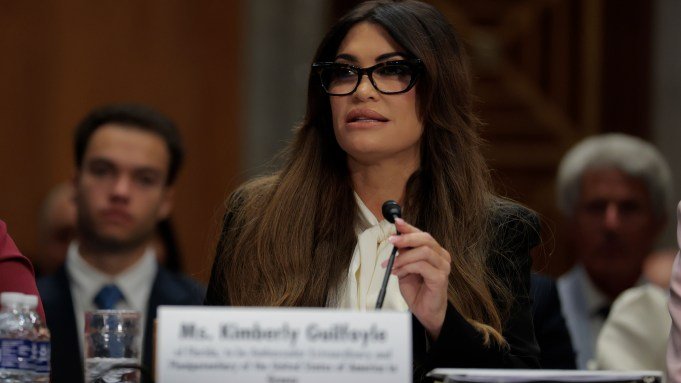
Kimberly Guilfoyle, the former Fox News host who became a high-profile figure in Donald Trump‘s orbit, resigned as U.S. ambassador to Greece following a bombshell Wall Street Journal report over alleged ethical misconduct.
Guilfoyle confirmed her exit in a post on X, shortly after the new White House press secretary, Katie Zacharia, told reporters that the administration had asked her to resign.
“While my time as Ambassador may be coming to an end, my commitment to President Trump, the America First movement, and the country I love will never end,” Guilfoyle wrote.
She also called the ethics allegations “false,” and wrote that she intended to “vigorously defend my name, my reputation, and my integrity. I have dedicated my professional life to fighting for justice, standing up for what is right, and defending the values that make America exceptional. I will not allow false accusations to define my decades of public service.”
The Journal reported last week on the contents of message exchanges between Guilfoyle and Eric Deters, a Trump donor. Deters provided text messages to the media, including one where she asked him to wire $100,000 directly to American Express to pay off a bill. Deters was seeking Guilfoyle’s help in accessing administration officials.
Trump told reporters that Guilfoyle “went to Greece. She was doing a good job, but we didn’t like what we were reading.”
Guilfoyle is the former fiance of Donald Trump Jr., but the engagement ended before Trump started his second term.
“She wasn’t a member of my family. She, I guess, dated my son a long time ago,” the president told reporters.
In 2020, Guilfoyle led the fundraising push to draw in bundlers to the Trump campaign, and even had a speaking slot at the Republican National Convention that year. She had previously had a well-established TV career, serving as co-host of Fox News’ The Five. She also is the former wife of California Governor Gavin Newsom.
The White House’s demand for her resignation dominated the headlines coming out of the first press briefing held by Trump’s new press secretary, Katie Zacharia. Appearing before reporters for the first time in the crowded briefing room, Zacharia spoke and answered questions for 14 minutes before ending the session. She told reporters that Trump would answer questions later, which he did as he set out on a three-day campaign swing.
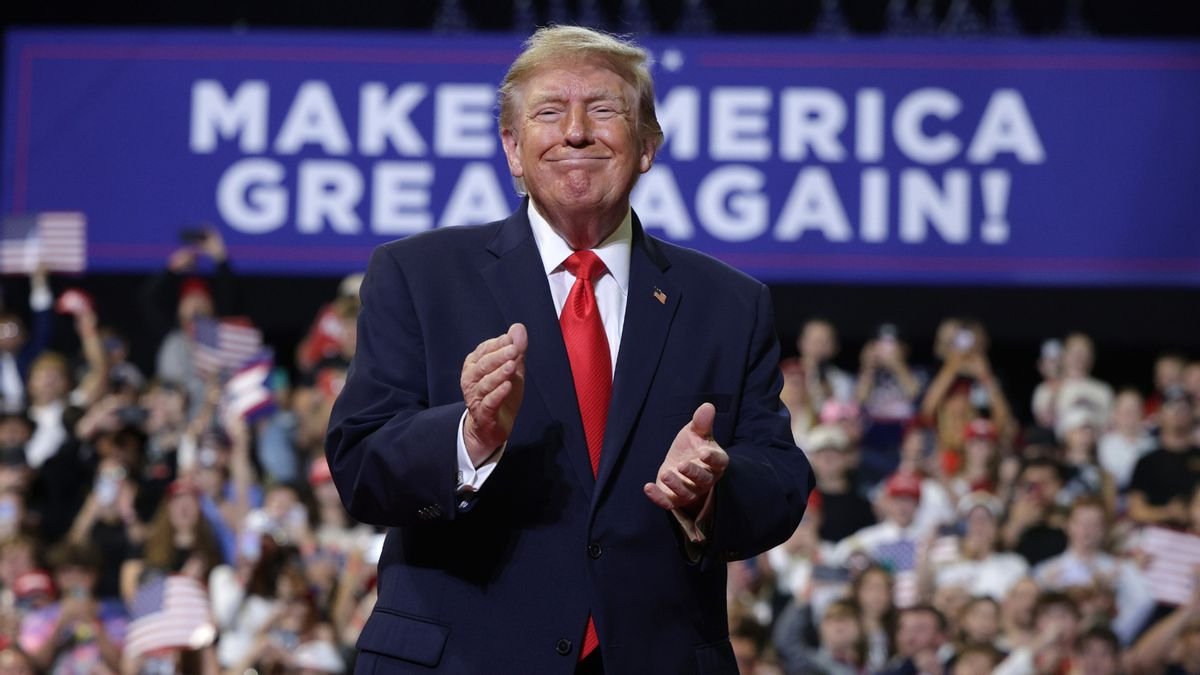
U.S. President Donald Trump said, “I will be the last Republican president” at a 2026 rally.
Rating:
Context
Trump made the remark as part of a longer speech at a Republican rally in Youngstown, Ohio, on Oct. 12. However, some posts omitted context clarifying that Trump was referring to a hypothetical scenario where Democrats control Congress and the White House, suggesting their policies would result in him being the last Republican president.
Ahead of the 2026 midterm elections, a rumor circulated that U.S. President Trump said he would be “the last Republican president.”
Peopleon X and Reddit shared the alleged quote, with some including a video clip. In the clip, Trump appeared to make the comment during a political rally.
The quote was correctly attributed to Trump.
However, some posts sharing the quote and accompanying video clip omitted context clarifying Trump’s meaning. He was referring to a hypothetical scenario where Democrats control both houses of Congress and the White House, suggesting their policies would result in him being “the last Republican president.”
The president made the comment during a speech at a rally in Youngstown, Ohio, on Oct. 12. At the rally, Trump endorsed incumbent Republican Sen. Jon Husted and the Republican candidate for governor, Vivek Ramaswamy, who are on the ballot for Ohio’s midterm elections.
Trump’s full speech can be viewed on C-SPAN. At the 1:02:00 mark, prior to the statement in question, Trump says, “We achieved more in two years than any other presidency in the history of our country, but now the radical-left Dumocrats want to burn it all down” — using a term he favors for the Democratic Party.
The president continued to criticize his opponents’ alleged voting record, saying, “Every single Dumocrat in Congress voted against our record tax cuts. They voted against no tax on tips. They voted against no tax on overtime, and they voted against no tax on Social Security for our great seniors.”
These comments, and others he made later, make it clear that Trump was theorizing he’d be the “last Republican president” if Democrats won key races in the midterm elections and subsequently took control of the White House.
The rest of his statement from the moment in question is as follows (emphasis ours):
They voted against voter ID, and they voted against proof of citizenship when you vote, so why did they do that? Because they want to cheat, OK? I saw a guy interviewed a week ago, a congressman, a Democrat. They said, why don’t you want to have somebody show their voter identification or proof of citizenship? “Uh, well, uh. Uh, it’s racist. That’s right. That’s right. It’s racist.” They come up with more s***, I mean it’s …
[applause]
“It’s racist. It’s racist.” They’re crazy. They voted against securing our border, and they want to have the border open. You know, if they get in, they’re going to open the border, and you’re going to have two more states: Washington, D.C., where Republicans get 3% of the vote, and Puerto Rico, where Republicans get 4%. So we’ll have four more senators. They want to have 23 people on the Supreme Court. They want to end the Senate, so you guys will be out of a job. What are you doing running? You’ll be out of a job based on them. They want to end the Senate.
They want to basically destroy our country and that’s what they want to do and if they get in, they will do that. They’ll be able to do that. You know, if they get in and you have a bad presidential election in the next because we have some very good people, but if you had a bad presidential or one of these lunatics got in, you will— Look at me right now. And you will say he’s going to be the last Republican president in the history of our country. I will be. I will be. I will be the last Republican president because they will add about 12 more electoral votes. They’ll add four more senators. They’ll add 10 more congresspeople, approximately. They’re going to rig the Supreme Court through … just a lot of people.
The GOP YouTube channel posted a livestream of the entire rally, including the other speakers. In that version, Trump’s statement begins at the 2:53:55 mark and matches the content of the C-SPAN clip.
UPDATED, with additional comment: A federal judge prohibited the Trump administration from banning CNN, MS NOW and Politico from the White House grounds, granting the three outlets a preliminary injunction that ensures access for the foreseeable future.
U.S. District Judge Timothy Kelly, a Trump appointee, wrote in his opinion that the news outlets “are likely to succeed not only on their due process claim, but also on their two First Amendment claims.”
Kelly did caution that “no one should interpret the court’s decision to suggest that President Trump’s concerns about accuracy and fairness in the media’s reporting are unfounded, or that the government is powerless when its true aim is to protect national security when classified information is unlawfully disclosed.” But when it came to the blanket ban on the three outlets, the judge was unpersuaded by the government’s justifications.
Trump announced on Sept. 18 that he was barring CNN, MS NOW and Politico from access to White House grounds, complaining that they were “‘reporting’ fake news.”. A day later, their reporters who tried to enter the security checkpoint found their hard passes deactivated.
The news outlets sued, and Kelly issued a temporary restraining order halting Trump’s restriction on the outlets, something that forced the White House to restore the hard passes to dozens of reporters and other staffers. That TRO expired on Tuesday; the preliminary injunction means that the White House cannot enforce Trump’s ban in the long term, either until a trial or an appeal. The news outlets warned that the White House was likely to reimpose the ban absent further court intervention.
In defending the ban, the government cited national security reasons, although DOJ attorneys also argued that the news organizations did not meet “minimum requirements of professionalism.” While the DOJ pointed to stories published or aired that had to do with national security, they also cited as an example an MS NOW report that Trump aides considered an option of adding the president’s name to Ford’s Theatre. Trump later denied it.
In his 26-page opinion, Kelly cited D.C. Circuit precedents in that reporters had a right to due process before their hard pass is revoked.
“To put it mildly, [the news outlets] likely did not receive notice either of the conduct that would subject them to revocation of their hard passes, or of the magnitude of the revocation sanction itself,” the judge wrote.
The judge noted that some of the stories flagged by the White House were published earlier this year and written by reporters who later had their hard passes renewed. Then came Trump’s ban, and they were revoked. They included a CNN report from January 2026 on the top secret bunker being built beneath the East Wing, and an MS NOW story that quoted an anonymous White House official who said the president underestimated Iran’s willingness to resume the war.
The White House press office sent letters to the news organizations on September 22, informing them of the reasons and their ability to contest the action, but that was four days after the ban was implemented.
The judge also sided with the news outlets’ in their claims that Trump was engaging in retaliation and viewpoint discrimination in violation of the First Amendment.
“President Trump’s own comments suggest that he intended the revocation of Plaintiffs’ hard passes to alter their reporting on him, bolstering the case that his action here is sufficient to deter a reporter of ordinary firmness from reporting in the same way she had before. After explaining that he excluded Plaintiffs from the White House because they ‘purposely write negative news . . . to try and diminish the Republicans and a Republican administration,’ President Trump remarked that he is prepared to take ‘the ban . . . as far as you can,’ but that he would “love it” if they “could straighten themselves out.”
The judge added, “The record is clear that President Trump made the decision at issue. And his announcement of the ban and later remarks explaining the reason for it make this a straightforward conclusion: President Trump likely banned Plaintiffs from the White House because he believes that their reporting is generally inaccurate and biased against him.”
He also dismissed the government’s national security argument. He noted that there was “no evidence in the record” that he made the decision to revoke the passes for those reasons “from the get go, nor at any time has he directly stated that national security was the reason for his decision.”
The judge explained that because the D.C. Circuit has held that the White House press area is a “non public forum,” the government cannot limit access based on someone’s viewpoint.
The judge wrote that “it is likely that Plaintiffs were selected by President Trump for revocation of their access to the White House press area because he believes their coverage of him and his administration is generally inaccurate and biased—in other words, it was ‘an effort to suppress the speaker’s activity due to disagreement with the speaker’s view.’”
The judge also ruled that the news outlets should put up a nominal bond of $1.00 as the case moves forward.
Theodore Boutrous Jr., the lead attorney representing the news outlets, said in a statement, “When the president issued his ‘ban on the free press,’ he blatantly and explicitly violated due process and the First Amendment. Since then, the President has repeatedly, candidly, and consistently admitted in public that he banned our clients from the White House to punish reporting he doesn’t like and to try to force journalists to cover him in ways he prefers.”
Boutrous added, “The harm this ban did to our clients, the First Amendment, and the public as a whole is profound. The court was right to enjoin the White House from enforcing this ‘unconstitutional ban on the free press’ for the foreseeable future.”
The White House did not immediately respond to a request for comment.
The claim that Ukrainian strikes on Russian bot farms caused right-wing or MAGA social media activity to decrease is unproven.
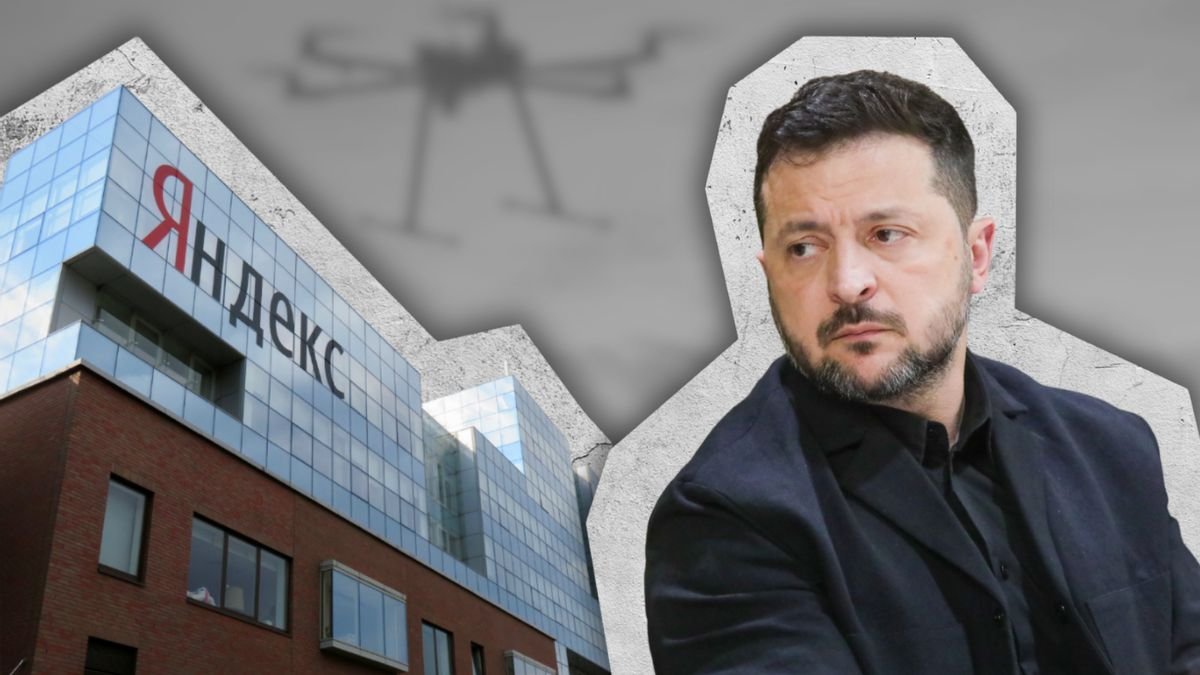
On Oct. 12, after the Russian technology giant Yandex reported that drone strikes damaged its servers in Sasovo, Kaluga and Vladimir, Ukrainian President Volodymyr Zelenskyy said he had seen “less hate, less division, and fewer provocations because there were fewer bots” online after the strikes.
However, Snopes found no credible evidence that Ukrainian strikes on Yandex servers starting on Oct. 8 took Russian propaganda bots offline. Social media posts that attributed changes in online activity on certain topics such as MAGA, the far-right German political party Alternative für Deutschland or various health-related topics failed to directly connect those changes to Russian bots.
Zelenskyy’s office reportedly told the BBC on Oct. 13 that he was “talking about the atmosphere on social media” rather than a fall in bot activity when he made the remarks about the effect of Ukrainian strikes.
Darren Linvill, an expert on the effects of foreign information manipulation and interference, told Snopes that Ukraine’s strikes had likely mainly affected legitimate, automated Yandex traffic rather than propaganda operations, which Russia often runs from overseas.
In early October, a claim (archived) circulated that Ukrainian strikes on Russian bot farms caused right-wing or MAGA social media activity to decrease.
Yandex, a Russian technology giant that provides search engine, email and cloud services and facilitates payments, ride hailing and food deliveries, confirmed on Telegram and to local media that drone strikes damaged its servers in Sasovo, Kaluga (archived) and Vladimir from Oct. 7 to 11. Work to restore services affected by the strikes continued on Oct. 13.
Ukrainian President Volodymyr Zelenskyy said on Oct. 12 that Ukraine had struck “Yandex data centers” and that “a lot of people” had seen fewer Russian bots on social media platforms as a result.
The Facebook page Occupy Democrats, which spread the claim about the consequences of Ukrainian strikes against Russian bots, wrote:
Zelenskyy might just have saved our democracy. The genius is brilliantly bombing Russian data centers linked to FAKE NEWS pro-MAGA bot farms in Moscow. Without them, Putin’s midterm influence will accidentally fall from a 30th floor window.
MAGA, an acronym for Make America Great Again, is a political movement supportive of U.S. President Donald Trump. The U.S. has previously accused Russia of using “bot farms” to create false social media accounts that spread disinformation in the U.S.
On Oct. 11, Tomáš Zdechovský, a member of the European Parliament, shared data (archived) he claimed showed a drastic decrease in online activity around Germany’s far-right Alternative für Deutschland political party in the days following the strikes. Other social media users claimed searches for various health-related topics (archived) and the number of social media accounts advocating for Alberta to seek independence from Canada (archived) also fell after Ukraine’s strikes.
Whether Ukrainian strikes on Yandex servers had indeed taken Russian bots that spread propaganda or misinformation offline was unproven at the time of this writing. As we will lay out below, social media users claiming a direct connection between Ukraine’s strikes and falling web traffic generated by Russian propaganda bots tended to identify correlation rather than causation.
Darren Linvill, who studies the tactics, strategies, and impacts of foreign information manipulations and interference at Clemson University, told Snopes via email on Oct. 13 that the Russian propaganda campaigns he studies do not use physical infrastructure within Russia for their efforts, meaning they would be unaffected by Ukraine’s strikes. Linvill, along with U.S. and international media, also said that a lot of the traffic that was affected by the strikes was likely legitimate, automated traffic, such as web crawlers that index Yandex’s search engine.
Data from the global internet infrastructure company Cloudflare shared by someaccounts (archived, archived) as proof of Russian “bot traffic” decreasing after Ukraine’s strikes showed graphs accounting for all automated traffic, not propaganda bot accounts specifically. Linvill described measuring a drop only in Russian propaganda bot accounts as “exceedingly difficult.”
Lacking credible proof that Ukrainian strikes on Yandex servers starting on Oct. 8 took Russian propaganda bots offline, we leave this claim unrated.
On Oct. 13, Zelenskyy’s office appeared to redefine his statement from the previous day that there was “less hate, less division, and fewer provocations because there were fewer bots” online after Ukraine’s strikes. The office reportedly told the BBC that Zelenskyy was “talking about the atmosphere on social media” rather than a fall in bot activity.
Snopes has contacted Zelenskyy’s office to verify this statement to the BBC.
Parsing the ‘evidence’ of falling Russian bot activity
Some social mediausers shared data from the global internet infrastructure company Cloudflare that they suggested showed that Russian bot traffic “dropped to nearly zero” after Ukraine’s strikes.
The data in question, called “Bot vs. Human Traffic,” tracked HTTP requests, which are messages that a client (this could be a browser or a mobile app) sends to a server. Cloudflare assesses HTTP requests a given client sends and scores them according to whether it thinks a human or a bot sent the request.
Cloudflare’s data showed that HTTP requests from Yandex bots dropped on Oct. 8 and again on Oct. 10, dipping to 0.3% of maximum levels. Bot requests had been at 88.2% of maximum levels the week before. Cloudflare’s data also showed that almost all (99.6%) of the HTTP requests sent by Yandex clients were automated, which Cloudflare described as being from bots.
It is important to note that “bot” in Cloudflare’s terminology is not just propaganda bots but any requests that the company classifies as automated. The technology publication Mashable and Euronews reported that Yandex’s automated traffic likely included web crawlers, which are tools that search engines use to keep their database of websites up to date. Mashable reported that damage to a Yandex’s data centers or servers would bring traffic such as web crawlers to a halt.
Linvill also credited the fall in “bot” traffic from Yandex to legitimate, automated traffic such as web crawlers not operating from damaged servers. He wrote that Cloudflare’s data did not suggest there was “a particular reason to believe the strikes would have a significant impact on social bot activity from Russia.”
Other claims about a decrease in Russian bot traffic failed to directly connect Russian bots to any perceived changes in online activity. For example, Zdechovský’s post presented a graph with no source that did not specify what it measured. Another post that claimed a decrease in Google searches for various health-related topics compared data across only two weekends, which was unlikely to be enough to establish and analyze a trend.
An account that claimed accounts calling for Alberta to seek independence from Canada “fell off the face of the earth” after Ukraine’s strikes provided no supporting evidence for the claim that linked it to Russian propaganda bots.
We contacted Zdechovský to ask for the source of his graph and await a reply.
Russian propaganda campaigns hard to track
According to Linvill, actually documenting a fall in Russian propaganda bot activity would not be straightforward. He wrote:
It would be exceedingly difficult to measure. You would first have to figure out what it was, exactly, you were measuring? There is no one path to influence and no one way malign propaganda is conducted. These efforts are run on global systems across a multitude of platforms and emanating from multiple actors even within the same country. They make it hard on purpose.
Linvill added that the Russian campaigns he followed did not use bots they ran themselves, instead paying for services run from outside Russia. He wrote: “It has clearly become important for Russia to outsource these services than to run them in house. It’s likely cheaper and easier, but also more secure and decentralized.”
In sum, readers should be cautious of blanket claims that Ukraine’s strikes on Yandex’s servers heavily affected Russia’s propaganda operation. While that may be the case, there was no credible evidence at the time of this writing directly linking strikes on servers to a fall in Russian propaganda activity online. Linvall suggested that Russian propaganda campaigns could come from overseas, meaning domestic strikes would not be effective against them, a point that Mashable’s reporting also made.
‘Faculty and Staff Profile’. Faculty and Staff Profile, https://www.clemson.edu/cbshs/about/profiles/darrenl. Accessed 13 Oct. 2026.
Irvine-Brown, Richard, et al. ‘Is Zelensky Right to Say Data Centre Strikes Have Taken down Russian Bots?’ BBC News, 13 Oct. 2026, https://www.bbc.co.uk/news/articles/c9y7l0pm8jkko.
‘ Justice Department Leads Efforts Among Federal, International, and Private Sector Partners to Disrupt Covert Russian Government-Operated Social Media Bot Farm’. U.S. Department of Justice, 9 July 2024, https://www.justice.gov/archives/opa/pr/justice-department-leads-efforts-among-federal-international-and-private-sector-partners.
The Sun. ‘LIVE: Ukraine’s Zelensky and Polish PM Tusk Open Warsaw Security Forum’. YouTube, 12 Oct. 2026, https://www.youtube.com/live/yqumX75NJNI?t=2392s.
Townsend, Chance. ‘Did Ukraine’s Drone Strikes on Yandex Data Centers Silence Russian Bots?’ Mashable, 12 Oct. 2026, https://mashable.com/tech/ukraine-strikes-yandex-data-center-bot-traffic-decline.
‘Ukrainian Strikes on Data Centres and Russian Bot Activity in Freefall’. Euronews, 12 Oct. 2026, https://www.euronews.com/2026/10/12/did-ukrainian-strikes-on-yandex-data-centres-cause-russian-bot-activity-to-plummet.
‘What Is a Web Crawler? | How Web Spiders Work’. Cloudflare, https://www.cloudflare.com/learning/bots/what-is-a-web-crawler/.