United States Homeland Security Secretary Markwayne Mullin has defended the planned livestreaming of Nidal Hasan’s execution, playing down warnings that images of his death by firing squad might be used as a propaganda tool for violent groups.
In an interview on Sunday with the CBS News show Face the Nation, Mullin framed the decision as part of President Donald Trump’s hardline approach to crime.
Recommended Stories
list of 3 itemsend of list
“I follow President Trump. He’s a commander-in chief of the country,” Mullin said, crediting the Republican leader with “restoring America values”.
Mullin also brushed aside concerns that the images of Hasan’s execution could be leveraged against the US.
“I don’t see an elevated risk at this point at all because of this,” Mullin said. “I think people need to understand, if you attack America, we will come after you, and we will make sure that the punishment fits the crime.”
Hasan, a former US Army major, was sentenced to death in August 2013 after being convicted of shooting and killing 12 unarmed active-duty soldiers and a retired serviceman at the Fort Hood military base in Texas.
The attack took place on November 5, 2009, when Hasan opened fire in a medical facility on the base where service members receive routine check-ups before deployment. The incident is considered one of the deadliest mass shootings to take place on a US military base.
Another 32 people were injured in the shooting. In the process of responding to the attack, police on the military base shot Hasan, leaving him paralysed from the waist down.
Critics have questioned the optics of broadcasting a firing squad killing of a man in a wheelchair. The livestreamed execution is scheduled for December 3.
But Mullin dismissed those concerns, arguing that viewership is optional. “Once again, no one has to watch it if they don’t choose to,” Mullin said.
Secretary of Defense Pete Hegseth had announced plans last week to livestream the upcoming execution, triggering a wave of criticism. But Trump on Saturday suggested he may reconsider the decision.
“There are two thoughts: Don’t show it and show it. Because, you know, by showing it, maybe other people won’t be doing what he did,” Trump told reporters outside the White House.
“So I’ll make a decision, ultimately. I know what the military would like to do, but we’ll make a decision.”
Former Army Major Nidal Hasan was sentenced to death for a 2009 mass shooting at Fort Hood, Texas [File: Bell County Sheriff’s Department via AP Photo]
Lawmakers on both sides of the aisle, however, have denounced the idea of a public execution.
In a Sunday morning appearance on NBC’s Meet the Press, Republican Senator Thom Tillis warned that broadcasting Hasan’s death would “put at risk” US lives.
“Terrorist organisations will use this as a recruiting tool. It will radicalise other people, and this is not who we are,” Tillis said.
“Look, the Fort Hood shooter should be put to death, but there’s a way to deal with this that’s proper, and there’s a way to deal with this that’s more improper than I have ever observed in my life.”
Tillis, whose term as senator ends in January, also directed criticism at Hegseth for what he suggested was reckless leadership.
“It’s another example of why Pete Hegseth and all of his bravado needs to get the hell out of the Department of Defense, because he is a failed leader,” Tillis said.
The senator was considered one of the deciding votes in Hegseth’s January 2025 confirmation vote, and he has since called his support for Hegseth’s cabinet nomination “the biggest regret” of his tenure.
Other Republicans echoed Tillis’s concerns about the livestream. Senator Lisa Murkowski of Alaska, for instance, compared the public execution with something she would expect “from terrorists and dictators”.
She also argued that Hasan has sought public attention, something he would receive in a broadcast execution.
“It would give this individual, who deserves no further notoriety, the martyrdom he seeks,” Murkowski added.
Republican Representative Tom Barrett of Michigan, a former military member, issued a statement on Friday explaining that he had trained at Fort Hood a year before the attack.
He also said he opposed the public execution, despite considering Hasan “evil”.
“Secretary Hegseth should seriously reconsider this decision,” Barrett wrote on X.
“Making a public spectacle out of an already tragic situation is unnecessary and does not serve a public interest.”
Military executions are extremely rare in the US and can only be approved by the president under the Uniform Code of Military Justice.
If the order against Hasan is carried out, he will be the first member of the US military to be executed since 1961.
US President Donald Trump has announced an immediate “energy ceasefire” between Russia and Ukraine, days after easing sanctions on Russian fuel to tackle soaring domestic and global fuel prices.
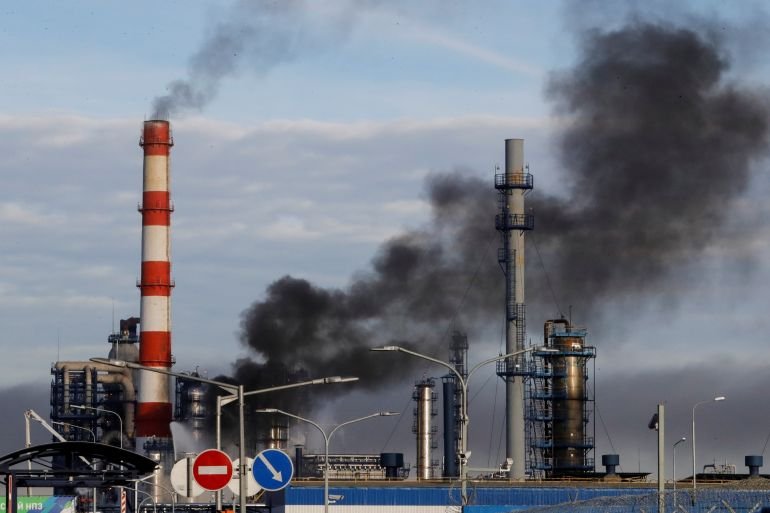
The energy truce, announced on Sunday, marks another shift in Washington’s approach to Russian energy, as the Iran-US war and recent Ukrainian strikes on Russian energy facilities disrupted global oil supplies and pushed up fuel prices. Trump has even asked Ukraine not to attack Russian oil facilities, as Moscow remains a major exporter of diesel.
Recommended Stories
list of 3 itemsend of list
The spike in diesel prices in recent weeks has particularly put pressure on Trump’s Republican Party ahead of November’s midterm elections. Surveys show Americans hold the Trump administration responsible for the soaring fuel prices amid the unpopular US war on Iran.
“Attacks on refineries and energy facilities have taken capacity out of an already stretched global fuel market, pushing up costs for transport, agriculture and businesses, with the pain ultimately passed on to consumers,” Susannah Streeter, chief investment strategist at Wealth Club, told Al Jazeera, referring to the mutual attacks on energy sites by Ukraine and Russia.
“A genuine ceasefire could help protect supplies and ease some of that pressure, particularly as winter approaches.”
However, she warned it was too early to call it a “diplomatic breakthrough”, citing Ukrainian President Volodymyr Zelenskyy’s statement that the energy truce came as a surprise to him.
Trump’s decisions have drawn criticism from US politicians and European allies, who warn that allowing Russian fuel back into global markets could provide Moscow with new revenue to finance its war in Ukraine. In March, the Trump administration gave a sanctions waiver to Russian seaborne oil.
So, why has Trump repeatedly changed his position on Russian energy, and what is behind his latest decisions?
What is the ‘energy ceasefire’ Trump announced?
On Sunday, Trump said Russia and Ukraine had agreed to immediately stop attacking each other’s energy infrastructure.
“Both parties have agreed. Do not break it!” he wrote on Truth Social, without providing further details.
Ukrainian President Volodymyr Zelenskyy said he was not aware of the energy truce, saying the deal was “news to me” but welcomed the announcement nonetheless.
However, he said Russian drones continued targeting Ukrainian energy facilities, including a power plant in Kharkiv, after Trump’s statement.
“We are waiting for the details of the conditions between the Americans and Russians, and we are waiting to see one specific step the Americans are ready to take,” Zelenskyy said on Monday during a video address to a security conference in Warsaw.
“This energy ceasefire, it can work, and it can become a major step towards ending the war if the Americans truly step in now and make sure Russians respect it.”
(Al Jazeera)
Ukraine has repeatedly targeted Russian oil refineries, arguing that energy revenues help fund Moscow’s war. Russia, meanwhile, has attacked Ukraine’s electricity and heating infrastructure throughout the four-year conflict.
Academic Alexey Muriaev has urged caution over Trump’s announcement, questioning whether an agreement has actually been reached, and if so, what it entails.
“Is it about suspending attacks on oil refineries? And if that’s the case, then the situation would be inadequate, because Ukraine’s oil refineries have already been taken out by Russia’s strikes beforehand,” Muraviev, senior research fellow in Defence and Strategic Studies at Edith Cowan University, told Al Jazeera.
“So, in this sense, it would mean effectively Ukraine suspending unilateral action against Russia’s oil refinery facilities.”
Muriaev also linked the announcement to Trump’s diesel agreement with Russian President Vladimir Putin, suggesting it may be a signal to Zelenskyy.
“Attacking Russian oil refinery capability would probably be interpreted by Washington as an attack on US economic interests,” he said, referring to the agreement on diesel exports through April 2027.
What’s the state of global oil prices?
The ongoing conflicts in the Middle East and Ukraine have continued to keep global oil markets under pressure.
On Monday, Brent crude, the international benchmark, fell to about $103.04 a barrel following Trump’s ceasefire announcement and Russian diesel deal, while US West Texas Intermediate crude traded at about $90.96.
However, prices remain elevated because of the US-Israel war on Iran, which began on February 28, and disruptions in the Strait of Hormuz, a key waterway through which one-fifth of the world’s oil supplies flow.
Recent attacks on Saudi oil installations and airports by Yemen’s Houthis and the fighting around the Red Sea and Bab al-Mandeb Strait have put further pressure on oil prices.
Ukrainian attacks on Russian refineries have compounded diesel shortages, affecting a fuel essential for the agriculture and trucking industries.
The crisis prompted the Group of Seven nations last week to agree to release 100 million barrels of emergency oil and diesel reserves. The G7 decision came after pressure from Trump.
How has the Trump administration zig-zagged between punishing and embracing Russian energy?
Washington’s approach to Russian energy has shifted repeatedly since Moscow launched its full-scale invasion of Ukraine in February 2022.
Under President Joe Biden, the US banned Russian oil and energy imports in March 2022, seeking to cut off revenue used to finance Moscow’s war.
But Washington simultaneously supported a G7 price cap on Russian oil, designed to restrict Moscow’s earnings without removing too much supply from global markets.
Moreover, the Biden administration also accepted India’s continued purchases of Russian crude to prevent global prices from rising.
After returning to power last year, Trump initially intensified pressure on Moscow. In August 2025, his administration imposed additional tariffs on Indian goods over New Delhi’s purchases of Russian oil.
(Al Jazeera)
Two months later, Washington sanctioned Russian energy giants Rosneft and Lukoil, accusing Moscow of failing to seriously pursue peace negotiations to end the war in Ukraine.
However, Washington’s approach took a dramatic turn this year. On March 5, Washington issued a 30-day waiver allowing India to buy Russian oil stranded at sea, as disruptions to shipping through the Strait of Hormuz amid US attacks on Iran threatened global supplies.
A week later, the Trump administration expanded the exemption, allowing countries worldwide to buy sanctioned Russian oil and petroleum products already loaded onto tankers, with the waiver lasting until April 11.
In September, Trump urged Ukraine to stop attacking Russian refineries, blaming the strikes for global diesel shortages.
On October 9, he announced an agreement with Russian President Putin for Moscow to release more than 300,000 tonnes of diesel immediately, with another 1.5 million tonnes to follow.
Why has Trump changed his position on Russian oil frequently?
Trump’s shifting public position on Russian energy reflects ongoing, and often competing, political and economic pressures.
“Trump is caught between his geopolitical ambitions and the domestic political consequences of expensive energy,” Susannah Streeter of Wealth Club, told Al Jazeera.
She said Washington was trying to pressure Moscow over its war in Ukraine while simultaneously allowing Russian fuel sales that could generate additional revenue for the Kremlin.
“The shift may deliver a short-term political gain if supplies increase and prices ease, but it could come at a longer-term diplomatic cost,” she said, adding that the benefits appeared limited while the Middle East war continued.
US diesel prices reached a record $6.52 per gallon in September, placing Trump under pressure ahead of the November 3 midterm elections.
However, according to academic Muriev, the US president’s public rhetoric should be distinguished from his administration’s actions.
“I don’t really see inconsistency in Trump’s approach because, apart from his public rhetoric, apart from his frequent media posting, there’s been a more steady approach on behalf of his administration,” he told Al Jazeera.
He pointed to discussions between Russian and American officials in August and September, suggesting that negotiations over the latest diesel agreement may have begun well before Trump’s announcement last Friday.
Muriev suggested the timing of the announcement could be politically motivated, allowing Trump to claim a victory on energy prices before the midterms.
Moreover, Moscow also has an interest in helping Trump retain political influence because his administration appears more willing to negotiate with Russia than former President Biden was. Trump has been relatively more accepting of the Russian position on the Ukraine war and has even blamed Zelenskyy for failing to end the war.
“For Putin, it’s not just about scoring immediate economic benefit, but also achieving longer-term political and strategic goals,” Muriev said, referring to other issues such as Iran, cybersecurity, space cooperation and nuclear arms control.
The energy crisis has also created contrasting consequences for American businesses.
While higher oil prices can boost revenues for US energy producers, they increase operating costs for businesses dependent on fuel.
Susannah Streeter said cheaper diesel could provide relief to trucking companies, farmers and manufacturers, although the additional Russian supplies were unlikely to make a significant difference while disruptions in the Middle East continued.
She also warned that frequent changes to sanctions could create uncertainty for companies making long-term investment and supply-chain decisions.
“If sanctions are relaxed, reimposed or changed at short notice, companies face greater uncertainty over sourcing, compliance and the risk of being caught on the wrong side of a policy reversal,” she said.
The Swedish academy says the academics’ models are ‘now used by central banks and governments around the world’.
Published On 12 Oct 202612 Oct 2026
The 2026 Nobel Prize in Economic Sciences has been awarded to US academics Robert Hall and Michael Woodford for their work on how monetary and fiscal policy can help stabilise fluctuations in the economy, according to the Royal Swedish Academy of Sciences.
The winners of the prestigious award, formally known as the Sveriges Riksbank Prize in Economic Sciences in Memory of Alfred Nobel and the final prize to be given out this year, were announced on Monday.
Recommended Stories
list of 4 itemsend of list
The two laureates developed new macroeconomic models that improve people’s ability to implement effective stabilisation policies, enabling fiscal and monetary policy measures that can reduce damaging swings in the economy.
“The laureates’ work has provided us with a stable theoretical foundation for the models that are now used by central banks and governments around the world,” John Hassler, chair of the Committee for the Prize in Economic Sciences, said in a statement.
“With them, we are better equipped to deal with shocks in the economy, such as energy crises or sudden changes in how much households consume.”
During the oil crises in the 1970s, the existing Keynesian models used to determine when and how measures should be implemented to tackle recessions or other economic fluctuations stopped working. Hall and Woodford then developed new tools to understand what policy responses could be the most effective.
“Rather than basing the models on statistical links between macroeconomic variables, such as inflation, production and consumption, they chose to build them on a microeconomic foundation,” the academy said. “This encompasses an understanding of how the total mass of individual households and businesses affect the economy through their actions.”
The economics prize, first awarded in 1969, is not part of the five original awards created in the 1895 will of industrialist and dynamite inventor Alfred Nobel, but was instead established by Sweden’s central bank.
The majority of previous laureates have been from the United States. Only three women have ever won, most recently Claudia Goldin in 2023 for her work on how gender has affected pay and employment over time in the US.
Last year’s winners – Joel Mokyr, Philippe Aghion and Peter Howitt – won for their work on “creative destruction” and how new technology and production methods can boost growth and living standards.
Like the other Nobel awards, the economics prize consists of a diploma, a gold medal, and a $1.2m cheque.
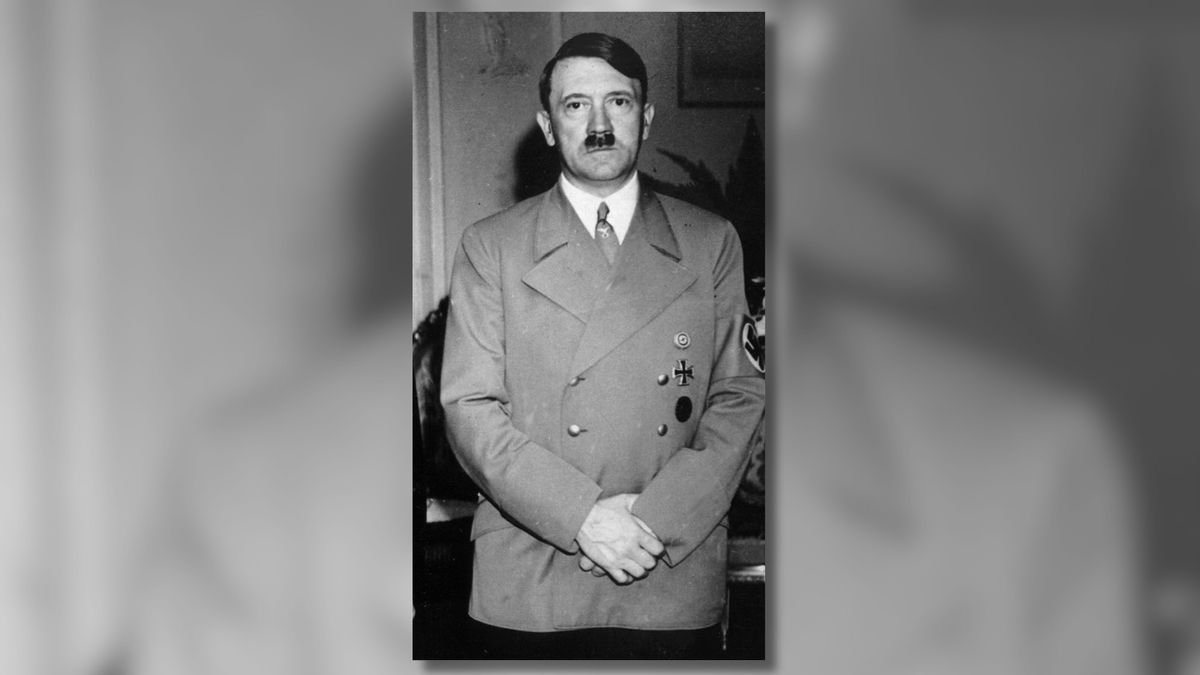
A black-and-white photo authentically depicts Adolf Hitler and other Nazi Party leaders inspecting a model of a triumphal arch planned for Berlin.
Rating:
In September 2026, a black-and-white photo spread widely purportedly showing Adolf Hitler and other Nazi Party officials inspecting a model of a triumphal arch they hoped to build in Berlin.
Beneath one Reddit post (archived), commenters compared the arch, which was never constructed, to U.S. President Donald Trump’s plan to construct a massive triumphal arch of his own in Washington, D.C., just outside the grounds of Arlington National Cemetery.
Snopes readers contacted us to determine whether the picture is real.
In short, the photograph is authentic.
Among the many unfinished projects of Nazi Germany was a plan to redevelop the capital, Berlin, and rename it “Germania.” Nazi Party chief architect Albert Speer was put in charge of the design and built a model of the planned city.
Among the buildings was a massive, triumphal arch. The black-and-white photo authentically shows Hitler inspecting the model, presumably designed by Speer.
Though the “Date taken” information reads Jan. 1, 1939, Alamy also says the picture is “undated.” Berlin is noted as the location. The “More information” caption reads:
Adolf Hitler inspects a modell of a planned triumphal arch. Adolf Hitler and other party functionaries inspect the modell of the triumphal arch, which was planned to be built after the end of the war in Berlin. Undated picture. Date created: 01/01/1939-31/12/1945
Snopes contacted Süddeutsche Zeitung to learn more about the photo’s history. A spokesperson for the paper said in a statement that it licenses images from its historical archives through Alamy. Therefore, the picture came from the archives of a reputable news publication.
Running the photograph through several tools that detect content generated using artificial intelligence software uncovered no signs that it was AI-generated.
A history of triumphal arches
Historians trace the history of triumphal arches back to ancient Rome. During the Roman Republic, the “triumph” was an extravagant parade the Roman Senate granted to a Roman general (and his army) following a particularly remarkable conquest. Three triumphal arches were built during this period, according to Britannica, but none survive.
During the imperial period, however, Roman emperors frequently declared triumphs for themselves (regardless of their military accomplishments), often building arches as a commemoration. There are three — the Arches of Titus, Septimus Severus and Constantine — still standing in Rome.
The Arc de Triomphe in Paris, built to commemorate the conquests of Napoleon Bonaparte, is one of many arches still extant around the world that pay architectural homage to the Roman triumphal arch. They are built for many reasons — New York City’s Washington Square Arch commemorated 100 years since George Washington’s inauguration, for instance, while New Delhi’s India Gate is a war memorial.
Trump first mentioned the idea of a triumphal arch in Washington, D.C., in October 2025. When CBS News asked who the arch was for, Trump pointed at himself and said “me.” The arch — which has been the subject of multiple lawsuits claiming its construction was not approved in the proper manner or could pose risks to aviation safety and emergency services — would stand 250 feet tall, commemorating the 250th anniversary of the United States.
The Nazis, art and architecture
The ideology of the Nazi Party, beyond the genocidal antisemitism, homophobia, racism, xenophobia and other assorted discriminatory practices, was built on a vision of completely remaking the nation of Germany. This remaking — or a “rebirth” — aimed to turn the state itself into a sort of religion, warping and twisting every aspect of society along the way.
Attendance at this metaphorical “church,” of course, was mandatory. “Disagreement is a sign of diversity,” Italian writer and philosopher Umberto Eco wrote in his 1995 essay, “Ur-Fascism.” Diversity, therefore, would not be tolerated under Nazism.
Part of this “spiritual” rebirth involved attempting to influence the nation’s arts and culture. In 1937, the Nazis ordered the confiscation of thousands of modern art pieces the party felt “insult[ed] German feeling.”
The Nazis then had the confiscated works exhibited for the public to see in Munich. The exhibition was called “Degenerate Art.”
The crusade against “degenerate art” also impacted architecture. The influential Bauhaus art school, pioneers in modern architecture, closed in 1933 on the orders of the Nazi regime. Speer, the architect (and Nazi Party member), quickly rose up the party’s ranks and found himself in Hitler’s inner circle.
While most of Speer’s designs for Germania were never constructed, at least one part of the vision remains. The “Schwerbelastungskorper,” German for “heavy load-bearing body,” is a massive concrete cylinder located in the Tempelhof neighborhood at the corner of General Pape Strasse and Loewenhardtdamm.
According to the structure’s Information Center website and The Guardian newspaper, it was built as a test for the planned triumphal arch’s northeast pillar, because engineers were concerned that Berlin’s swampy soil would not be able to hold the weight of the monumental structures. The cylinder was built in 1941, at least partially by prisoners of war.
Sources
‘Arlington County Takes Legal Action to Stop Trump’s 250-Foot-Tall Vanity Project’. Democracy Forward, 8 Oct. 2026, https://democracyforward.org/news/press-releases/arlington-county-takes-legal-action-to-stop-trumps-250-foot-tall-vanity-project/.
“Calls for Nazi Art in Munich to Be Taken Down.” Dw.Com, https://www.dw.com/en/calls-for-nazi-art-in-munich-to-be-taken-down/a-63368860. Accessed 28 Sept. 2026.
Connolly, Kate. “Story of Cities #22: How Hitler’s Plans for Germania Would Have Torn Berlin Apart.” The Guardian, 14 Apr. 2016. Cities. The Guardian, https://www.theguardian.com/cities/2016/apr/14/story-of-cities-hitler-germania-berlin-nazis.
Eco, Umberto. “Ur-Fascism.” The New York Review of Books, vol. 42, no. 11, 22 June 1995. www.nybooks.com, https://www.nybooks.com/articles/1995/06/22/ur-fascism/.
ParkPlanning – Triumphal Arch at Memorial Circle. https://parkplanning.nps.gov/projectHome.cfm?projectID=136973. Accessed 9 Oct. 2026.
Rennie, Daniel. “The Story Of Welthauptstadt Germania, Hitler’s Design To Raze Berlin And Rebuild It As A World Capital.” All That’s Interesting, 13 July 2025, https://allthatsinteresting.com/welthauptstadt-germania.
Severo, Arco di Settimio, et al. ‘Arco Di Settimio Severo’. Turismo Roma, 14 Feb. 2023, https://www.turismoroma.it/en/places/arco-di-settimio-severo.
‘The Bauhaus in Exile: What Happened After Its Closure in 1933’. Das Bauhaus-Archiv / Museum Für Gestaltung, https://www.bauhaus.de/en/discover/article/the-bauhaus-in-exile/. Accessed 9 Oct. 2026.
Tito, Arco di, et al. ‘The Arch of Titus’. Turismo Roma, 1 Dec. 2022, https://www.turismoroma.it/en/places/arch-titus.
‘Triumphal Arch – Washington, DC’. U.S. Commission of Fine Arts, 16 Apr. 2026, https://www.cfa.gov/system/files/meeting-materials/1-CFA-16APR26-1-EOP_DOI_Arch-pres%20%5BApr9%5D.pdf.
‘Von Berlin zu ”Germania”‘. Informationsort Schwerbelastungskoerper, https://schwerbelastungskoerper.de/von-berlin-zu-germania/. Accessed 9 Oct. 2026.
In September and October 2026, U.S. Senate candidate James Talarico, a Democratic Texas state representative, received treatment at a mental health facility in Ohio.
Rating:
In October 2026, a rumor spread that U.S. Senate candidate James Talarico, a Texas Democrat, had received treatment at a mental health care facility in Ohio.
The claim erupted after Talarico, a state representative, disappeared from the campaign trail for nearly 10 days. On Oct. 11, the candidate told Dallas NBC affiliate KXAS’s Phil Prazan in a video interview he’d been lying low at home due to a bout of influenza (archived).
Still, social media posts claiming he had actually been hospitalized at a mental health facility the whole time multiplied onFacebookand X, where one post said, for example, “the flu thing was a BIG FAT LIE” (archived):
Many Snopes readers emailed, asking us to verify whether the rumor was true.
As we outline below, we found no credible evidence to support the claim Talarico had received treatment at a mental health facility. Both the facility named in these rumors and Talarico himself denied the claim on social media. In addition, the timing of his alleged discharge didn’t match Talarico’s schedule. Snopes obtained visual evidence, which we reviewed but aren’t publishing due to privacy concerns, that Talarico was at his home in Austin every day for the entirety of his bout of flu.
For these reasons, we rate the claim false.
Two conservative influencers, Nick Sortor and Rhein Amacher, started the rumor, offering as evidence the recording of an alleged employee of the Lindner Center of Hope in Ohio appearing to say Talarico had just been discharged.
Both Talarico and the Lindner Center of Hope denied he had ever been treated there.
We reached out to Sorter and Amacher, as well as to Talarico and the Lindner Center of Hope, for clarity and we will update this report should we receive a response.
The rumor originated on X
The rumor spread less than a month before the election, at a time when almost all polls in Texas showed Talarico narrowly ahead of his Republican opponent in the race, Texas Attorney General Ken Paxton.
On Oct. 11, Sortor and Amacher posted a short audio recording on X of a phone conversation between a male voice asking for “James Talarico” and a female voice, allegedly that of someone who worked at Lindner Center for Hope, appearing to say he was discharged earlier that evening.
Sortor (archived) and Amacher (archived) posted within minutes of each other, just after 1 p.m. Eastern time. Both claimed Amacher had had the exchange with the purported employee. In his post, Amacher wrote that a person who he understood to be an employee of the center said Talarico had been discharged “within the previous 24-48 hours”:
I personally contacted @LindnerCtrHope in Mason, Ohio, to determine whether Talarico was or had previously been a patient.
During my recorded call, an individual identifying themselves as a female facility employee reportedly stated that Talarico was no longer a patient and had been discharged within the previous 24–48 hours.
In the recording, however, the person tells Amacher the patient was “just discharged this evening.” The recorded exchange went as follows:
ALLEGED EMPLOYEE: I do not find anyone with that name for the last four days that’s been discharged, and they’re not here in the building.
AMACHER: OK, so nothing for James Talarico?
ALLEGED EMPLOYEE: Um… let’s see, looks… well… this is what it’s today… Looks like he was just discharged this evening. That’s why I don’t have it.
Amacher’s post included a purported screenshot of a call log showing he had attempted to contact the facility three times that day: at 8:53 p.m., 8:56 p.m. and 8:59 p.m.
A subsequent X post by Amacher on Oct. 11 indicated the exchange took place “yesterday” — Oct. 10. We reached out to him for more details.
Talarico’s whereabouts on Oct. 9 and 10
On Oct. 9 — the day before Amacher’s alleged call — Talarico made an appearance at the Austin City Limits festival, as photographs on the reputable image bank GettyImagesshow.
The evening of Oct. 10, Talarico attended Kacey Musgraves’ concert in Dallas, according to a post by Talarico’s campaign at 2:30 a.m. Oct. 11, indicating the video had been shot in the hours before (archived):
Musgraves played in Dallas Oct. 10 and 11, according to the website of the venue, the American Airlines Center.
In a seeming attempt to justify the discrepancy between the time the alleged employee told him the patient was discharged and Talarico’s appearance in Austin the day before, Amacher posted again on X saying that the time of a patient’s discharge could be registered some time after the person has left the facility (archived):
Mental health facility denies Talarico was a patient
On Oct. 11, in response to the rumors, the Lindner Center of Hope posted on X to say Talarico had never been a patient (archived):
Talarico shared the post, adding that he has never been to Ohio (archived):
Further, Talarico spokesperson JT Ennis posted on X that the claim was a “lie” to “promote a pathetic conspiracy theory” (archived):
Lastly, Snopes obtained visual evidence of Talarico being at home every day from Oct. 1 to 8, the day before he went to the music festival in Austin.
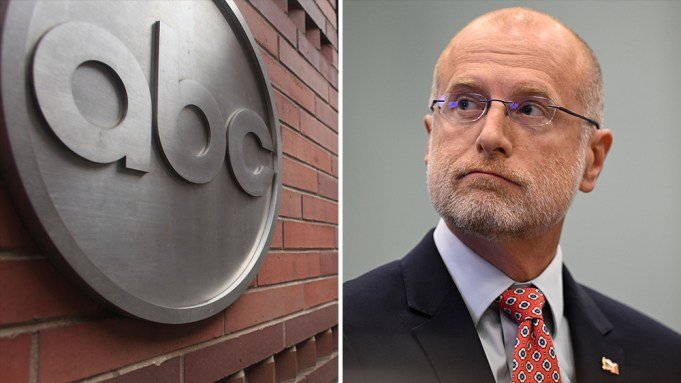
ABC‘s legal team told a federal judge on Monday that because the FCC ordered that it submit its station licenses for early renewal rather than a host of less-drastic options, the agency only underscored “their retaliatory motive.”
The network has asked a federal judge to halt the license review proceedings, arguing that it is a punitive action for First Amendment protected speech from the news division, late-night host Jimmy Kimmel and other content disfavored by Donald Trump.
When the FCC moved to an early renewal proceeding in April, it said that the unusual move was due to the lack of sufficient response by the network as part of an investigation into its diversity, equity and inclusion practices, which have been a target of the administration.
After a two-hour hearing last week, U.S. District Judge Loren AliKhan asked the FCC to submit an additional filing outlining the other options that were available to compel the network to comply with document requests.
In its filing on Friday, the FCC, represented by the U.S. attorney in Washington, D.C., said that the early renewal order was the “best tool for the task before the agency.”
The agency acknowledged that other options were available, including issuing administrative subpoenas, imposing monetary penalties and holding hearings.
“Asking whether the Commission might have chosen a different tool to combat Plaintiffs’ failure to provide complete responses in the anti-discrimination investigation does not address the operative question in this case: whether the agency lawfully elected to call for early renewal,” the government’s attorney argued in the filing.
Tools like administrative subpoenas and monetary penalties would require DOJ enforcement, the government attorney stated, while the agency launched an early renewal proceeding that included a public comment period.
In a filing on Monday, ABC’s legal team wrote, “Defendants’ own admissions leave no doubt as to why—Defendants sought to inflict maximal coercive pressure on the media company whose speech the Administration sought to curb, while deliberately evading judicial review.”
“Defendants’ excuses for not using a less intrusive tool to address the supposed discovery deficiency only underscore their retaliatory motive.”
The FCC has claimed that the D.C. Circuit has jurisdiction, not the district court, but that would likely require that the network wait until a decision was made on the license renewals. But Beth Wilkinson, who represented the network at last week’s hearing, warned that such a delay has the effect of chilling the network’s speech.
The network is seeking a preliminary injunction, but the judge has not said when she would issue a ruling.
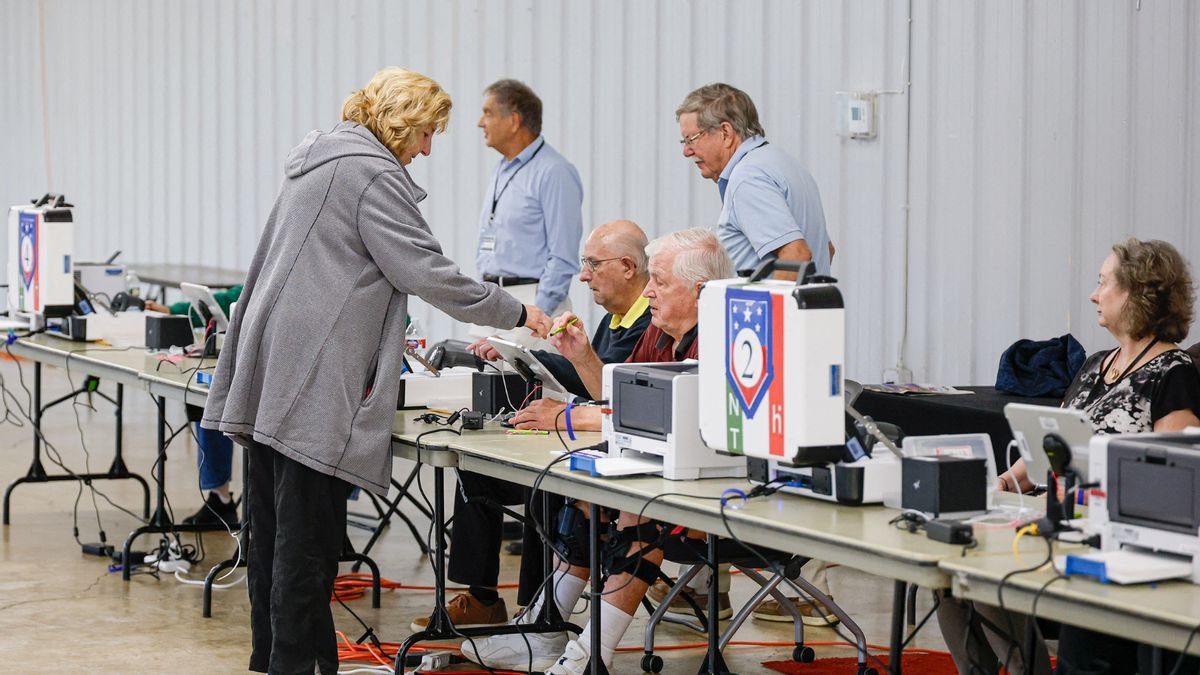
U.S. President Donald Trump’s administration declined to invite observers from Europe’s Organization for Security and Co-operation for the 2026 midterm elections, marking the first time the OSCE had not received an invitation to observe a federal U.S. election since 2002.
Rating:
In October, rumors circulated that U.S. President Donald Trump’s administration did not extend an invitation to the Organization for Security and Co-operation in Europe, an international body that aims to preserve democracy and human rights across the globe, to observe the 2026 midterm elections.
The OSCE explains that its goal in observing elections is to “assess the extent to which fundamental freedoms are respected in the campaign and if the elections are characterized by equality, universality, political pluralism, confidence, transparency and accountability.”
Social mediausers who shared the claim noted that it was the first time since 2002, when the OSCE first started observing U.S. elections, that the group had not received an invitation. One post featured an image of Trump with text reading, “Trump demands ‘secure’ elections, yet rejects independent scrutiny and offers no explanation. Perhaps security was never the point.”
The rumor circulated after Trump’s Department of Justice said it would deploy its own election monitors, sparking concerns from Trump’s opponents.
The claim was true.
In a statement posted to its website Sept. 23. the OSCE confirmed that the U.S. had not invited it to observe the 2026 midterm elections.
“The decision not to invite the OSCE to observe the 2026 midterm congressional elections in the United States is regrettable, particularly given the long-standing co-operation with the country in the field of election observation,” the organization said.
They wrote that the decision was “not in line with the 1990 Copenhagen Document,” which the group describes as an outline of basic human rights and freedoms that “broadens the scope of human rights matters to include election commitments” and “recognizes that the presence of international observers can enhance the electoral process.”
The OSCE confirmed in its statement that the 2026 midterms marked the first time it was not invited to observe a federal U.S. election since the group first began observing elections in the country in 2002. That year, the OSCE sent representatives to the Florida gubernatorial election.
The 2002 observation occurred after the contentious 2000 presidential election between George W. Bush and Al Gore that resulted in a recount in Florida. The matter ultimately ended up with the Supreme Court, and the United States didn’t see a president-elect officially declared until that December.
According to a 2004 article by the Commission on Security and Cooperation in Europe about the history of the U.S. inviting OSCE to observe elections, following its 2002 observation in Florida, OSCE observed the 2003 California gubernatorial recall election that actor Arnold Schwarzenegger won.
OSCE said it has observed 12 federal elections, including six midterms, since 2002.
The CSCE wrote in 2004 that the U.S. had formally invited observers to its elections in 1996, 1998, 2000 and 2002, noting that 2002 was the first election that OSCE had observed.
A White House official told Snopes via email that “no other nation has done more to advance the cause of human freedom and representative government” than the United States and added, “American elections will be administered, participated in, and observed by American citizens.”
The White House did not deny that it had declined an invite to OSCE observers and provided no explanation for departing from decades of precedent.
We reached out to the OSCE and the Justice Department for further comment and will update this article if we receive responses.
United States President Donald Trump has called for the removal of President Volodymyr Zelenskyy after blaming the Ukrainian leader for rising diesel prices, which have put pressure on the Republican Party ahead of the November midterm elections.
The criticism on Saturday came as tensions between the US and Ukraine have increased after Trump announced a diesel supply deal with Russia.
Recommended Stories
list of 3 itemsend of list
“I think it’s time for Ukraine to get a new president,” Trump told reporters at the White House on Saturday, saying Zelenskyy had hurt global diesel supplies with strikes on Russian refineries.
“He wants to make problems for our farmers, our ranchers with diesel fuel because Russia supplies a large portion of the diesel fuel throughout the world,” Trump added.
Zelenskyy on Sunday pushed back, vowing to continue striking Russian oil refineries. “Ukraine will be ready to stop striking Russian oil refineries if Russia stops striking our energy infrastructure,” Zelenskyy wrote on X.
“It is possible to stop strikes on energy infrastructure as early as today, but (Russian President Vladimir) Putin does not want to do so,” he said.
This is not the first time Trump has lambasted Zelenskyy. Their tense relationship goes back to Trump’s first term as president, when he pressured Zelenskyy to investigate his rival, Joe Biden, and his son, Hunter Biden.
Here’s a timeline of some of the occasions when Trump has been critical of Zelenskyy:
October 2026: In his remarks at the White House, Trump criticised Zelenskyy over the lack of a peace deal while demanding an end to Ukrainian strikes on Russian energy facilities.
“I said to him, ‘Do what you want. Don’t hit refineries. There’s plenty of targets. Don’t hit refineries.’ And he went out and he hit,” Trump said. “He better damn well stop.”
“I suggest they get a new leader who can make a deal because he could have made many deals, but for some reason, he never does,” Trump added.
Trump, who has been urging Zelenskyy to stop attacking Russian energy infrastructure for weeks, struck a deal with Putin on Friday to buy diesel from Russia in an attempt to reduce high fuel prices.
The deal marked a stunning reversal of years of Washington’s pressure on Russia over its full scale invasion of Ukraine.
Zelenskyy, meanwhile, said every additional $1bn Russia earns from exports would help pay for weapons components, drone upgrades, missile production and the recruitment of mercenaries.
Moscow would only be ready to stop when its ability to fight diminished, he added.
April 2025: On April 15 , Trump criticised Zelenskyy and implied Kyiv had started the war against Russia, saying the Ukrainian leader was “always looking to purchase” US missiles. “You don’t start a war against someone 20 times your size and hope people give you some missiles,” Trump said.
Then on April 23 , he criticised Zelenskyy for making “very harmful” statements after the Ukrainian president pushed back against the idea of ceding occupied Crimea to Russia in a potential peace deal.
Zelenskyy had ruled out ceding any territory, declaring, “There is nothing to talk about – it is our land, the land of the Ukrainian people”.
In a post on his social media platform, Trump accused Zelenskyy of stoking tension by “boasting” that Kyiv would not legally recognise ceding Crimea to Russia.
“This statement is very harmful to the Peace Negotiations with Russia,” Trump said, adding that Russia invaded the Crimean Peninsula and annexed it back in 2014 “without a shot being fired”.
“It’s inflammatory statements like Zelenskyy’s that makes it so difficult to settle this War,” Trump said. “He can have Peace or, he can fight for another three years before losing the whole Country.”
Despite the tension, the two leaders held a private meeting at the Vatican on April 26, 2025, during Pope Francis’s funeral.
Feb 28, 2025: During their fiery Oval Office meeting, Trump and Vice President JD Vance clashed with Zelenskyy over rare earth mineral agreements, security assurances and peace negotiations with Russia.
Trump warned Zelenskyy, “You’re either going to make a deal [on ending the war with Russia] or we’re out,” and accused the Ukrainian leader of having “disrespected” the United States and “overplayed his hand”.
The US president and Vance also berated Zelenskyy for lacking gratitude and refusing to compromise to end the war, with Trump arguing that Zelenskyy was unready for peace.
The meeting devolved into a shouting match and Zelenskyy departed the White House abruptly.
February 19, 2025: A month after returning to power for a second term, Trump called the Ukrainian president a “dictator without elections” and accused him of wanting to keep the “gravy train” of US military support going while Washington tries to end the war with Russia.
In a lengthy and scathing post on his social media platform Truth Social, Trump accused Zelenskyy of taking US money and embroiling the country in an endless conflict.
He later doubled down on those comments, telling an audience at an investment summit in Miami that Zelenskyy had “done a terrible job, his country is shattered, and millions and millions of people have unnecessarily died”.
“A dictator without elections. Zelenskyy better move fast or he’s not going to have a country left. Gotta move. Gotta move fast cause that war’s going in the wrong direction,” Trump said on stage at the Future Investment Initiative (FII) Institute summit.
“In the meantime, we’re successfully negotiating an end to the war with Russia. Something I’ll admit that only Trump is going to be able to do and the Trump administration – we’re going to be able to do it. I think Putin even admitted that,” he said.
“Biden never tried. Europe has failed to bring peace and Zelenskyy probably wants to, maybe he wants to keep the gravy train going. I don’t know what’s the problem, but he has been able. He’s very upset,” he added.
Trump had been critical of Biden’s financial and military support to Ukraine during the war. He had vowed to end the war within 24 hours of his taking office, but later said he was being “sarcastic”.
2024 Campaign trail: On the 2024 US presidential election campaign trail, Trump repeatedly criticised Zelenskyy for not trying hard enough to end Russia’s war on Ukraine. In September, at an election rally speech in North Carolina, Trump lashed out at Zelenskyy for refusing to negotiate, stating that even the “worst deal” or giving up a small amount of territory would be better than ongoing death and destruction.
July 2019: During his first term, Trump repeatedly urged Zelenskyy to work with Rudy Giuliani and the US attorney general to investigate Democratic political rival Joe Biden. That is according to a five-page memo summarising the July 25 call.
At the time of the call, the Trump administration was also withholding from Ukraine nearly $400m in congressionally approved security assistance, prompting speculation the US president was using the money as leverage to get his desired investigations.
Zelenskyy expressed willingness to look into new cases and cooperate with US investigations, though he and Ukrainian officials later maintained they did not feel directly threatened or pressured during the conversation itself.
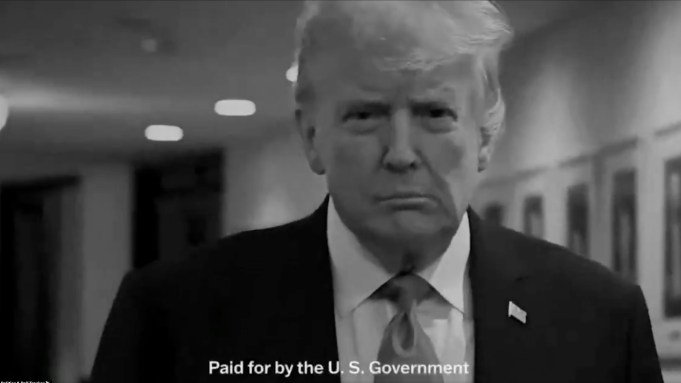
A federal judge ordered the Trump administration to stop running taxpayer-funded ads for at least 14 days, putting a halt to the spots that resemble campaign messaging.
U.S. District Judge Jennifer L. Rochon granted a temporary restraining order that prohibits Trump officials from using funds appropriated to the Department of Homeland Security for the ads. The order also will force the administration to cancel the rest of a $20 million purchase of ad time.
Common Cause, Robert Hunter, Service Employees International Union Local 32BJ and Empire State 32BJ SEIU PAC filed suit to halt the spots, arguing that the ads were overtly political yet were paid for with taxpayer funds. In one case, one of the ads that has been running was almost identical to one that was made for Trump’s 2024 campaign.
The plaintiffs “have demonstrated that they are likely to succeed on the merits, will suffer irreparable harm in the absence of an injunction, the balance of the equities tips in their favor, and an injunction serves the public interest,” the judge wrote.
The plaintiffs’ coalition said in a statement, “We are pleased the court acted swiftly to prevent more taxpayer dollars from being used for such blatantly unlawful political propaganda. There is no legal justification — and no precedent — for the president to use the machinery of the government and funds set aside by Congress for other uses to influence electoral outcomes that further his own agenda.”
In a filing before the judge issued her order, the Department of Homeland Security stated that the ads would not continue past Sunday.
Trump announced last week that his political action committee, MAGA Inc., would start funding the advertising campaign, but he did not say whether the federal government would be reimbursed for the costs already incurred.
The administration had previously argued that the ads were public service announcements, in line with past presidents. But past administrations produced PSAs to promote programs like the Affordable Care Act and initiatives like vaccinations against Covid.
A rumor spread in the fall of 2026 that the CIA offered eight months’ pay and benefits to employees who agree to quit. The rumor is not new. It first started to spread early in 2025, shortly after U.S. President Donald Trump took office for the second time.
The rumor stems from a Feb. 4, 2025, Wall Street Journal report that cited “officials” as saying the scheme was a “bid to bring the agency in line with President Trump’s priorities,” that is, downsizing the government. The report also said the CIA was “freezing the hiring for job seekers already given a conditional offer.”
Since then, further reporting has indicated that in May 2025, CIA Director John Ratcliff announced he intended to cut 1,200 jobs. More recently, in August 2026, an article from the Washington Post said many CIA employees who took the buyouts were still awaiting their retirement due to the sheer number of departures from the agency. The CIA does not release exact staffing numbers.
Snopes has not rated the claim because we have not yet independently verified the reporting. We have reached out to the CIA asking for information about the buyout scheme and its current status, and we will update this story if we learn more.
In October 2026, social media posts multiplied claiming the CIA offered eight months’ pay and benefits to employees who agree to quit.
Several posts on Facebook and X included a video of Fox News presenter Jesse Watters saying, “The Wall Street Journal has reported the CIA has reportedly just offered a buyout to its entire workforce” (archived):
The rumor stems from a Feb. 4, 2025, article from the Wall Street Journal that cited “officials” as saying the scheme was a “bid to bring the agency in line with President Trump’s priorities” — namely, downsizing the government. The story also said the CIA was “freezing the hiring of job seekers already given a conditional offer.”
The report also quoted an unnamed CIA spokesperson as saying “the move was part of an effort to ‘infuse the agency with renewed energy.’”
We could not corroborate the report independently, so we left it unrated.
We reached out to the CIA for more details on staffing plans and we will update this story should we receive a response.
Since the publication of the Wall Street Journal article, more reporting has appeared on the staffing situation at the CIA. Layoffs started as soon as March 2025, according to The Associated Press.
Further, in May 2025, the Washington Post reported that the agency’s then-new Director John Ratcliff had announced he wanted to slash 1,200 at the organization, which works to gather foreign intelligence.
“The CIA does not publicly disclose the size of its workforce, but it is believed to be about 22,000,” the report read. “It is unclear which parts of the spy agency would be most affected.”
Then, in August 2026, another story from the Washington Post said the intelligence agency was struggling to keep up with demands for retirements from former employees due to the sheer number of departures.
The agency “gave retirees two toll-free numbers to call if more than six months had passed since they’d received their final paycheck,” the article read. “One former official said she recently spoke to a colleague who retired in March and had just received their first, partial retirement check.”