Category: News

  • Anthropic vs the Pentagon: Why AI firm is taking on Trump administration

    Anthropic vs the Pentagon: Why AI firm is taking on Trump administration

    A row is simmering between the United States government and Anthropic, one of the tech companies that develops artificial intelligence (AI) tools for defence and civilian uses.

    According to recent reports, Anthropic’s Claude software was used in a US military operation, which resulted in the abduction of Venezuelan President Nicholas Maduro in January this year.

    US Defense Secretary Pete Hegseth has given the company until Friday to loosen its rules about how its AI tools can be used by the Pentagon, or risk losing its government contract, The Associated Press and Reuters news agencies reported on Tuesday, quoting unnamed sources.

    But Anthropic is refusing to back down over safeguards which prevent its technology from being used to conduct US domestic surveillance and to programme autonomous weapons which can hit targets without human intervention.

    What is Anthropic?

    Anthropic is an AI company founded in 2021 by former OpenAI executives.

    It was the first AI developer to be used in classified operations by the US Defense Department, which is housed at the Pentagon in Washington, DC.

    Anthropic is best known for building Claude, a popular large language model (LLM) and has rapidly become one of the most prominent AI development companies.

    LLM is a type of AI technology which generates text, visual or audio output similar to content created by humans after analysing massive datasets such as books, archives, websites, pictures and videos.

    For military and defence use, LLMs can summarise large volumes of text, analyse data, translate, transcribe and draft memos. In theory, they can also be used to support autonomous or semi-autonomous weapons systems, which can identify and hit targets without the need for human instruction. However, most AI companies have terms that prohibit this use.

    Anthropic positions itself as a “responsible” developer in the AI landscape. On its website, the company describes itself as a “Public Benefit Corporation” committed to the “responsible development and maintenance of advanced AI for the long-term benefit of humanity”.

    In November, the company alleged that a Chinese state-sponsored hacking group had manipulated the Claude code in an attempt to infiltrate about 30 targets globally, including government agencies, chemical companies, financial institutions and tech giants. Some of these attempts were successful.

    Earlier this month, Mrinank Sharma, an AI safety researcher at Anthropic, resigned from his position over concerns about the use of AI.

    In a statement posted on his X account on February 9, Sharma wrote: “The world is in peril. And not just from AI, or bioweapons, but from whole series of interconnected crises unfolding in this very moment.”

    “Moreover, throughout my time here, I’ve repeatedly seen how hard it is to truly let our values govern our actions. I’ve seen this within myself, within the organization, where we constantly face pressures to set aside what matters most, and throughout broader society too,” he added.

    Which other AI companies does the US military work with?

    The Pentagon announced last summer that it was awarding defence contracts to four AI companies – Anthropic, Google, OpenAI and xAI. Each contract is worth up to $200m.

    Anthropic was the first AI company to be approved for classified military networks, on which it reportedly works with partners like US software company Palantir Technologies, which has been criticised for its links to the Israeli military. Elon Musk’s xAI, which operates the Grok chatbot, says Grok is also ready to be used in classified settings, according to an unnamed senior Pentagon official, AP reported.

    But the Trump administration wants to be able to use the products of these AI companies without restrictions. Hegseth said his vision for military AI systems means that they operate “without ideological constraints that limit lawful military applications”, before adding that the Pentagon’s “AI will not be woke”.

    Why is Anthropic at odds with the Pentagon?

    Sources reported that at a meeting on Tuesday, Hegseth gave Anthropic CEO Dario Amodei until Friday, 5pm (22:00 GMT) to agree to provide Anthropic’s AI models for use on the Pentagon’s new internal network with fewer restrictions.

    Officials at the US Defense Department warned they could designate Anthropic a supply chain risk or use the Defense Production Act to essentially give the military more authority to use its products even if it doesn’t approve of how they are used, according to a person familiar with the meeting and a senior Pentagon official, neither of whom were authorised to comment publicly and spoke on condition of anonymity, AP reported.

    Amodei has also previously raised ethical concerns about unchecked government use of AI, including the dangers of fully autonomous armed drones and of AI-assisted mass surveillance that could track dissent.

    “A powerful AI looking across billions of conversations from millions of people could gauge public sentiment, detect pockets of disloyalty forming, and stamp them out before they grow,” he wrote in an essay last month.

    The person familiar called the tone of the Tuesday meeting “cordial” but said Amodei refused to budge on two key issues – fully autonomous military targeting operations and domestic surveillance of US citizens.

    In a podcast appearance on Tuesday in which he explained his refusal to give in to the Pentagon’s demands, Amodei reiterated his concerns around “autonomous drone swarms” – likely autonomous drones which can attack targets without human input – and mass surveillance.

    “The constitutional protections in our military structures depend on the idea that there are humans who would disobey illegal orders with fully autonomous weapons,” Amodei said, noting that autonomous drones would not be able to make such a distinction.

    The Pentagon objects to Anthropic’s ethical restrictions because military operations require tools which do not have built-in limitations, the senior Pentagon official said. The official argued that the Pentagon has issued only lawful orders and stressed that using Anthropic’s tools legally would be the military’s responsibility.

    How was Claude used in Venezuela?

    On January 3, US special forces abducted Maduro, who remains in US custody and faces trial on drugs and weapons charges in New York.

    US media reports revealed on February 14 that Anthropic’s Claude had been used in the operation to strike Caracas and capture Maduro.

    An unnamed Anthropic official approached by The Wall Street Journal declined to comment on whether Claude, or any other AI model, was used in any operation. However, the official did say that any use of Claude in the private sector or by the government would need to be in compliance with Claude’s usage policies.

    According to the usage policies listed on Anthropic’s website, Claude cannot be used for surveillance, the development of weapons or “inciting violence”.

    A total of 83 people, including 47 Venezuelan soldiers, were killed during the US special operation in Venezuela.

    US media have also reported that Anthropic has partnered with Palantir Technologies, whose tools are also used by the Defense Department and by federal law enforcement agencies.

    It is unclear how exactly Claude was used during the raid on Caracas in January, but AI tools can be used to control drones, analyse images and summarise intercepted communications.

    In July 2025, Francesca Albanese, the United Nations special rapporteur on human rights in the occupied Palestinian territory, released a report mapping the corporations aiding Israel in the displacement of Palestinians and its genocidal war on Gaza, in breach of international law.

    The report found that Palantir had expanded its support to the Israeli military since the start of its genocidal war on Gaza in October 2023.

  • Calls for justice grow after Israeli settlers kill another US citizen

    Calls for justice grow after Israeli settlers kill another US citizen

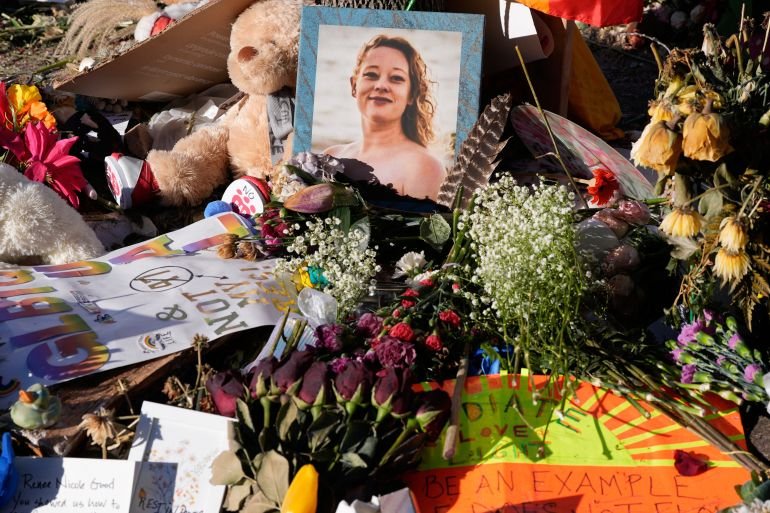
    Washington, DC – After Israeli settlers killed 19-year-old United States citizen Nasrallah Abu Siyam in the occupied West Bank last week, the US Department orf State said it “has no higher priority than the safety and security of Americans”.

    But, as the number of US citizens killed by Israel continues to mount, rights advocates say Washington’s failure to ensure accountability is driving a deadly cycle of impunity.

    Recommended Stories

    list of 3 itemsend of list

    Abu Siyam, who was shot dead in the village of Mikhmas near Jerusalem, is among at least 11 US citizens killed by Israeli settlers or soldiers since 2022.

    “It’s a joke. I don’t take these people seriously,” William Asfour, Chicago chapter coordinator for American Muslims for Palestine, said of the US government’s response to the latest killing.

    “If this is true, we would stop supplying Israel with weapons. We would hold these settlers, these terrorists, accountable. We would sanction them. We would have a weapons embargo.”

    Last year, Asfour helped lead calls for an independent, US-led investigation into the July killing of Khamis Ayyad, a father of five from Chicago, in a settler attack in the West Bank.

    But the US Department of Justice has not opened a probe into Ayyad’s death, and no one in Israel has faced charges over the incident.

    Similarly, there have been no charges for the killing of Sayfollah Musallet, a 20-year-old Florida man who was beaten to death by Israeli settlers last year.

    Other cases – going back to Rachel Corrie, a peace activist who was run over by an Israeli bulldozer in 2003 – have followed a similar pattern: US officials initially express concern but do not take decisive action to seek justice.

    “It’s a terrible cycle. We just continue to see how dehumanised we are,” Asfour, who is Palestinian American, told Al Jazeera.

    “If you truly cared about American citizens, whether domestically or abroad, you would take necessary actions. You can talk all you want, but we want to see action.”

    Mike Huckabee’s role

    Advocates say Washington could compel accountability simply by leveraging the large sums of aid it sends to Israel. The US has provided Israel with more than $21bn over the past two years alone.

    But US President Donald Trump has shown little indication that he plans to sanction Israel or suspend assistance.

    Rather, he said last May that it would not be his job to “use US policy to dispense justice” abroad, and he has moved to lift existing penalties against Israeli citizens.

    Shortly after returning to the White House last year, Trump revoked sanctions against violent settlers involved in well-documented abuses against Palestinians, including US citizens.

    Trump’s ambassador to Israel, Mike Huckabee, has also been a staunch defender of Israeli policies, while exerting little pressure – at least publicly – to ensure the protection of American citizens.

    For example, over the past week, Huckabee shared more than 40 posts on the social media platform X, many of them amplifying pro-Israel and anti-Muslim activists.

    Some also defended Israel’s genocidal war on Gaza. But none mentioned the shooting of Abu Siyam.

    Huckabee did issue a strongly-worded statement after Israeli settlers beat Musallet to death last year, saying that there “must be accountability for this criminal and terrorist act”.

    But the US government has not opened its own investigation or imposed any sanctions over the incident.

    The ambassador sparked anger last week when he suggested that he would approve of Israel taking over Egypt, Jordan, Lebanon, Syria, Iraq and parts of Saudi Arabia in accordance with his interpretation of the Bible.

    “It would be fine if they took it all,” Huckabee said in an interview with conservative commentator Tucker Carlson.

    When asked about the carnage in Gaza, Huckabee also argued that the Israeli army takes more measures to protect civilians than the US military.

    Asfour said that Huckabee’s public statements show a failure in his duty to protect US citizens and interests.

    “Are you representing the United States government, or are you a puppet for Israel?” Asfour said of the ambassador.

    A ‘green light’ for violence

    On Sunday, the American-Arab Anti-Discrimination Committee (ADC) called on the US government to take the necessary measures to ensure accountability for Abu Siyam’s recent shooting death.

    The civil rights group made a connection between the killing and Huckabee’s comment in support of Israeli expansionism. ADC said such a remark “signals permission and the green light for Israeli forces to use violence and empower settlers for further annexation and dispossession”.

    “The US Ambassador to Israel is engaging in empowering and allowing for actions that lead to the targeted lynching and killing of US citizens,” the ADC said in a statement.

    After Abu Siyam’s shooting, a US State Department spokesperson told Al Jazeera that the government was “aware of the death of an American citizen in the West Bank”.

    “We are closely monitoring the situation and stand ready to provide consular assistance,” the spokesperson added.

    But Charles Blaha, senior adviser at the rights group DAWN, who previously served at the State Department, questioned Washington’s commitment to the safety of its citizens of Palestinian descent.

    “The US State Department and the US Embassy in Jerusalem claim that protecting US citizens is their highest priority,” Blaha told Al Jazeera.

    “This is one of the first things the department teaches incoming diplomats. However, their failure to act on the killings of US citizens in the West Bank by settlers and Israeli security forces belies that claim and suggests that US citizens of Palestinian origin are not a priority.”

    Settler violence

    Settler violence in the occupied West Bank, which several former Israeli officials have described as “terrorism”, has been on the rise over the past few years.

    Armed and operating under the protection of the Israeli military, settlers frequently descend on Palestinian towns and farmland, burning property and assaulting those who come in their way.

    Such attacks, which have claimed the lives of three Palestinian Americans over the past year, have coincided with an Israeli government push to deepen control of the West Bank in what experts say amounts to de facto annexation of the illegally occupied territory.

    “The US government’s inaction in the face of violence by Israeli settlers has contributed to the atmosphere of impunity that fuelled Nasrallah Abu Siyam’s killing at the hands of Israeli settlers,” Blaha said.

    Ahmad Abuznaid, the executive director of the US Campaign for Palestinian Rights (USPCR), has also accused the US government of enabling Israeli abuses over the years.

    He cited the 1985 assassination of Palestinian American activist Alex Odeh in California, an incident that activists say US authorities failed to properly investigate. The perpetrators in that killing were suspected to be violent pro-Israel operatives.

    “From Alex Odeh to Abu Siyam, from occupied Palestine all the way here to the United States, the US government has refused to hold Israel accountable for its military and settler killings of Palestinian US citizens,” Abuznaid told Al Jazeera.

    “This is what history has shown us, and if the US government disagrees, they can gladly prove otherwise. Until then, we see it for exactly what it is.”

  • Influential economist Larry Summers to depart Harvard over Epstein ties

    Influential economist Larry Summers to depart Harvard over Epstein ties

    Release of documents show close relationship between high-profile economist and disgraced sex offender.

    Former United States Treasury Secretary Larry Summers says he will resign as a professor at Harvard University at the end of the semester after revelations of his close relationship with disgraced sex offender Jeffrey Epstein.

    Summers, a longtime influential figure in economic policymaking circles and a former president of Harvard, said on Wednesday that he would resign from teaching at the end of the academic year.

    Recommended Stories

    list of 3 itemsend of list

    “In connection with the ongoing review by the University of documents related to Jeffrey Epstein that were recently released by the government, Harvard Kennedy School Dean Jeremy Weinstein has accepted Professor Lawrence H Summers’ resignation from his leadership position as co-director of the Mossavar-Rahmani Center for Business and Government,” Harvard spokesperson Jason Newton said in a statement.

    Documents released as part of an effort to bring greater transparency to Epstein’s relationships with powerbrokers in politics, business and culture shed light on Summers’s extensive correspondence with Epstein, whom he once emailed asking for advice on wooing women.

    Summers, who has denied any wrongdoing and has not been charged with any crime, previously resigned from the board of the company OpenAI over his ties to Epstein, with whom he remained in contact as late as July 2019.

    “I take full responsibility for my misguided decision to continue communicating with Mr Epstein,” Summers said in a statement to US media after releases of Epstein files in November, at which time Harvard announced a review of those named in the documents, which were compiled during criminal investigations of Epstein.

    Documents released in December also showed that Summers had been designated as a successor executor in a 2014 draft of Epstein’s will, according to the student newspaper The Harvard Crimson. The paper reported that a spokesperson for Summers denied any knowledge of the matter.

  • US judge rules Trump policy of ‘third country’ deportations unlawful

    US judge rules Trump policy of ‘third country’ deportations unlawful

    US judge says that rapid deportation of migrants to countries other than their own violates due process.

    A United States federal judge has ruled that the administration of President Donald Trump had violated the law through the swift deportation of migrants to countries other than their own, without giving them an opportunity to appeal their removal.

    US District Judge Brian Murphy declared the policy invalid on Wednesday, teeing up a possible appeal from the Department of Homeland Security (DHS) to the Supreme Court.

    Recommended Stories

    list of 3 itemsend of list

    “It is not fine, nor is it legal,” Murphy wrote in his decision, adding that migrants could not be sent to an “unfamiliar and potentially dangerous country” without any legal recourse.

    He added that due process – the right to receive fair legal proceedings – is an essential component of the US Constitution.

    “These are our laws, and it is with profound gratitude for the unbelievable luck of being born in the United States of America that this Court affirms these and our nation’s bedrock principle: that no ‘person’ in this country may be ‘deprived of life, liberty, or property, without due process of law’,” Murphy said.

    The ruling is the latest legal setback in the Trump administration’s mass deportation campaign.

    Trump has long pledged to remove immigrants from the country who violate the law or are in the country without legal paperwork. But critics argue that his immigration crackdown has been marked by widespread neglect of due process rights.

    They also point out that some of the deportees have been in the country legally, with their cases being processed through legal immigration pathways like asylum.

    Murphy said in his ruling that the swift nature of the deportation obscures the details of each case, preventing courts from weighing whether each deportation is legal.

    “The simple reality is that nobody knows the merits of any individual class member’s claim because [administration officials] are withholding the predicate fact: the country of removal,” wrote Murphy.

    In the decision, Murphy also addressed some of the Trump administration’s arguments in favour of swift deportation.

    He highlighted one argument, for instance, where the administration asserted it would be “fine” to deport migrants to third-party countries, so long as the Department of Homeland Security was not aware of anyone waiting to kill them upon arrival.

    “It is not fine, nor is it legal,” Murphy responded in his decision.

    Murphy has previously ruled against efforts to swiftly deport migrants to countries where they have no ties, and over the past year, he has seen some decisions overturned by the Supreme Court.

    Noting that trend, Murphy said Wednesday’s decision would not take effect for 15 days, in order to give the administration the opportunity to appeal.

    Last year, for instance, the conservative-majority Supreme Court lifted an injunction Murphy issued in April that sought to protect the due process rights of migrants being deported to third-party countries.

    The injunction had come as part of a case where the Trump administration attempted to send eight men to South Sudan, despite concerns about human rights conditions there.

    Wednesday’s decision, meanwhile, stemmed from a class-action lawsuit brought by immigrants similarly facing deportation to countries they had no relation to.

    A lawyer for the plaintiffs, Trina Realmuto from the National Immigration Litigation Alliance, hailed Murphy’s latest ruling.

    “Under the government’s policy, people have been forcibly returned to countries where US immigration judges have found they will be persecuted or tortured,” Realmuto said in a statement.

    Realmuto added that the ruling was a “forceful statement” about the policy’s constitutionality.