Category: News

  • What was the Iran nuclear deal Trump dumped in search of ‘better’ terms?

    What was the Iran nuclear deal Trump dumped in search of ‘better’ terms?

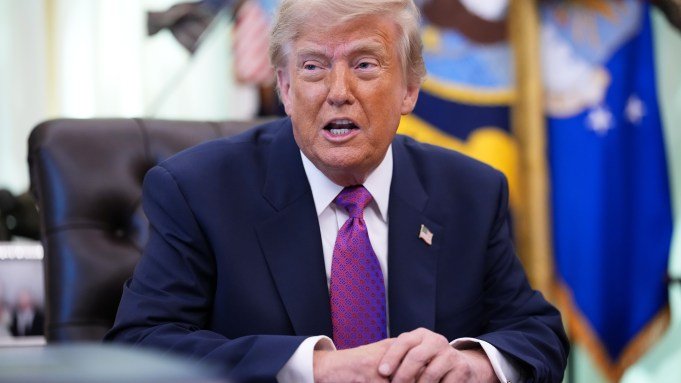
    United States President Donald Trump has said a nuclear agreement currently being negotiated with Iran will be “far better” than the 2015 Joint Comprehensive Plan of Action (JCPOA), which he withdrew from in 2018 during his first term in office.

    The original 2015 accord took roughly two years of negotiations to reach and involved hundreds of specialists across technical and legal fields, including multiple US experts. Under it, Iran agreed to restrict the enrichment of uranium and to subject itself to inspections in exchange for the relaxation of sanctions.

    Recommended Stories

    list of 3 itemsend of list

    But Trump took the US out of that pact, calling it the “worst deal ever”. Before the initial US-Israeli strikes on Iran at the end of February, the US had made new demands – including additional restrictions on Tehran’s nuclear programme, the restriction of its ballistic missiles programme and an end to its support for regional armed groups, primarily in Lebanon, Yemen and Iraq.

    Trump’s latest remarks come amid growing uncertainty about whether a second round of talks will proceed in the Pakistani capital Islamabad, as a two-week ceasefire between the US-Israel and Iran approaches the end in just a day.

    So, what was the JCPOA, and how did it compare to Trump’s new demands?

    What was the JCPOA?

    On July 14, 2015, Iran reached an agreement with the European Union and six major powers – China, France, Russia, the United Kingdom, the US, and Germany – under which these states would roll back international economic sanctions and allow Iran greater participation in the global economy.

    In return, Tehran committed to limiting activities that could be used to produce a nuclear weapon.

    These included reducing its stockpile of enriched uranium by about 98 percent, to less than 300kg (660lb), and capping uranium enrichment at 3.67 percent – far below weapons-grade of 90 percent, but high enough for civilian purposes such as power generation.

    Before the JCPOA, Iran operated roughly 20,000 uranium-enriching centrifuges. Under the deal, that number was cut to a maximum of 6,104, and only older-generation machines confined to two facilities, which were subject to international monitoring.

    Centrifuges are machines which spin to increase the concentration of the uranium-235 isotope – enrichment – in uranium, a key step towards potential bomb-making.

    The deal also redesigned Iran’s Arak heavy water reactor to prevent plutonium production and introduced one of the most intrusive inspection regimes ever implemented by the global nuclear watchdog, the International Atomic Energy Agency (IAEA).

    In exchange, Iran received relief from international sanctions which had severely damaged its economy. Billions of dollars in frozen assets were released, and restrictions on oil exports and banking were eased.

    The deal came to halt when Trump formally withdrew Washington from the nuclear deal in 2018, a move widely criticised domestically and by foreign allies, and despite the IAEA saying Iran had complied with the agreement up to that point.

    “The Iranian regime supports terrorism and exports violence, bloodshed and chaos across the Middle East. That is why we must put an end to Iran’s continued aggression and nuclear ambitions. They have not lived up to the spirit of their agreement,” he said in October 2017.

    He reimposed crippling economic sanctions on Tehran as part of his “maximum pressure” tactic. These targeted Iran’s oil exports, as well as its shipping sector, banking system and other key industries.

    The goal was to force Iran back to the negotiating table to agree to a new deal, which also included a discussion about Tehran’s missile capabilities, further curbs on enrichment and more scrutiny of its nuclear programme.

    What has happened to Iran’s nuclear programme since the JCPOA?

    During the JCPOA period, Iran’s nuclear programme was tightly constrained and heavily monitored. The IAEA repeatedly verified that Iran was complying with the deal’s terms, including one year after Trump announced the US’s withdrawal from the agreement.

    Starting in mid-2019, however, Iran began incrementally breaching the deal’s limits, exceeding caps on uranium stockpiles and enrichment levels.

    In November 2024, Iran said it would activate “new and advanced” centrifuges. The IAEA confirmed that Tehran had informed the nuclear watchdog that it planned to install more than 6,000 new centrifuges to enrich uranium.

    In December 2024, the IAEA said Iran was rapidly enriching uranium to 60 percent purity, moving closer to the 90 percent threshold needed for weapons-grade material. Most recently, in 2025, the IAEA estimated that Iran had 440kg (970lb) of 60-percent enriched uranium.

    What are Trump’s latest demands for Iran’s nuclear programme?

    The US and its ally, Israel, are pushing Iran to agree to zero uranium enrichment and have accused Iran of working towards building a nuclear weapon, while providing no evidence for their claims.

    They also want Iran’s estimated 440kg stock of 60pc enriched uranium to be removed from Iran. While that is below weapons-grade, it is the point at which it becomes much faster to achieve the 90 percent enrichment needed for atomic weapons production.

    Iran has insisted its enrichment effort is for civilian purposes only. It is a signatory to the 1970 Treaty on the Non-Proliferation of Nuclear Weapons (NPT).

    In March 2025, Tulsi Gabbard, the US director of national intelligence, testified to Congress that the US “continues to assess that Iran is not building a nuclear weapon”.

    On Sunday, Iranian President Masoud Pezeshkian, in a strongly worded statement, said Trump had no right to ⁠⁠”deprive” Iran of its nuclear ⁠⁠rights.

    INTERACTIVE- NPT
    (Al Jazeera)

    What else is Trump asking for?

    Restrictions on ballistic missiles

    Before the US-Israel war on Iran began, Tehran had always insisted negotiations should be exclusively focused on Iran’s nuclear programme.

    US and Israeli demands, however, extended beyond that. Just before the war began, Washington and Israel demanded severe restrictions on Iran’s ballistic missile programme.

    Analysts say this demand was at least partly triggered by the fact that several Iranian missiles had breached Israel’s much-vaunted “Iron Dome” defence system during the 12-day war between the two countries in June last year. While Israel suffered only a handful of casualties, it is understood to have been alarmed.

    For his part, Trump has repeatedly warned, without evidence, about the dangers of Iran’s long-range missiles, claiming Iran is producing them “in very high numbers” and they could “overwhelm the Iron Dome”.

    Iran has said its right to maintain missile capabilities is non-negotiable. The JCPOA did not put any limits on the development of ballistic missiles.

    However, a United Nations resolution made when adopting the nuclear agreement in July 2015 did stipulate that Iran could not “undertake any activity related to ballistic missiles designed to be capable of delivering nuclear weapons”.

    Ending support for proxy groups

    The US and Israel have also demanded that Iran stop supporting its non-state allies across the Middle East, including Hezbollah in Lebanon, the Houthis in Yemen and a number of groups in Iraq. Together, these groups are referred to as Iran’s “axis of resistance”.

    In May last year, Trump said Tehran “must stop sponsoring terror, halt its bloody proxy wars, and permanently and verifiably cease pursuit of nuclear weapons”, during a GCC meeting in Riyadh.

    Three days before the war on Iran began in February, during his State of the Union address to Congress, Trump accused Iran and “its murderous proxies” of spreading “nothing but terrorism and death and hate”.

    Iran has refused to enter a dialogue about limiting its support for these armed groups.

    Can Trump really get a new deal that is ‘much better’ than the JCPOA?

    According to Andreas Kreig, associate professor of Security Studies at King’s College, London, Trump is more likely to secure a new deal that closely resembles the JCPOA, with “some form of restrictions on enrichment, possibly with a sunset clause, and international supervision”.

    “Iran might get access to frozen assets and lifted sanctions much quicker than under the JCPOA, as it will not agree to a long drawn-out, gradual lifting of sanctions,” Krieg pointed out.

    However, he warned that the political landscape in Tehran has hardened. “Iran now is a far more hardline and less pragmatic player that will play hardball at every junction. Trump cannot count on any goodwill in Tehran,” he said.

    “The IRGC is now firmly in charge… with likely new powerful and tested levers such as the Strait of Hormuz,” he said, referring to the Islamic Revolutionary Guard Corps, which operates as a parallel elite military force to the army and has a great deal of political and economic power in Iran. It is a constitutionally recognised part of the Iranian military and answers directly to the supreme leader.

    Overall, Krieg stressed, the US-Israel war on Iran “leaves the world worse off than had Trump stuck to the JCPOA”, even if a new compromise is eventually reached.

    Moreover, since the revocation of the JCPOA, the US and Israel have waged two wars on Iran, including the current one. The 12-day war in June last year included attacks on Iran’s nuclear sites and killed more than 1,000 people.

    Attacks on Iran’s nuclear infrastructure have continued since the latest war began on February 28, including on the Natanz enrichment facility, Isfahan nuclear complex, Arak heavy water reactor, and the Bushehr nuclear power plant.

    Iran nuclear facilities

    Nevertheless, King’s College’s Krieg said there is still room for a negotiated outcome if Tehran and Washington scale back their demands.

    “Both sides can compromise on enrichment thresholds, and on temporary moratoriums on enrichments. But Iran will not surrender its sovereignty to enrich altogether, and the Trump administration will have to meet them halfway,” he said.

    “While the Iranians will commit on paper not to develop a nuclear weapon, they will want to keep R&D [research and development] in this space alive.”

    Economic incentives will be central, he added. “Equally, Iran would want to get immediate access to capital and liquidity. Here, the Trump administration is already willing to compromise.”

  • Kenya’s John Korir, Sharon Lokedi win Boston Marathon on record-breaking day

    Kenya’s John Korir, Sharon Lokedi win Boston Marathon on record-breaking day

    Korir broke the Boston Marathon record, finishing in in 2 hours, 1 minute, 52 seconds in the world’s fifth-fastest time.

    John Korir broke the Boston Marathon course ⁠⁠record ⁠⁠in a Kenyan sweep as compatriot Sharon Lokedi defended her title on a chilly day with a gusty tailwind.

    The defending champion rode a tailwind on Monday to the fastest finish in the race’s 130-year history, winning in 2 hours, 1 minute and 52 seconds. That was 70 seconds faster than Geoffrey Mutai’s then-world best in 2011, and the fifth-fastest marathon of all time.

    The top three men ⁠⁠beat the previous record.

    Korir said he knew he was on a record pace at the 25-mile (40km) mark, but he did not bother to check the clock as he crossed the finish line. He was informed of his accomplishment by Boston Athletic Association president Jack Fleming and jumped for joy.

    “When they told me I had run the course record, that’s when I started to be happy,” said the 29-year-old Kenyan, who last year joined his brother to become the first relatives to win the race. “I knew I would defend my title. But I didn’t know I could run that fast.”

    A relaxed Korir surged past Ethiopia’s Milkesha Mengesha at the 20-mile ‌‌(32.1km) mark to take control of the race. Korir ran alone for the final 6 miles (9.6km), breaking the record set in 2011 by compatriot Geoffrey Mutai in 2:03:02.

    Korir clocked his last mile of the race in four minutes and 26 seconds. Before crossing the finish line, he smiled broadly as he stuck out his tongue in a playful gesture.

    Apr 20, 2026; Boston, MA, USA; John Korir runs during the 130th Boston Marathon. Mandatory Credit: Natalie Reid-Imagn Images
    John Korir ran alone for the final 6 miles (9.6 kilometres) of the marathon [Natalie Reid/Imagn Images via Reuters]

    Meanwhile, Lokedi won the women’s race in two hours, 18 minutes and 51 seconds. She set the course record last year in 2:17:22.

    With about 5 miles (8km) to go, Lokedi had Loice Chemnung, also of Kenya, clinging to her pace. But then Lokedi dropped her rival ⁠⁠with a blistering surge, running mile splits under four minutes and 50 seconds in the last stage of ⁠⁠the race.

    “I was just like, ‘let me push it ⁠⁠and see how it goes,’” Lokedi said. “I left it all out there. That’s all I can say.”

    Kenyan women took the top four spots. Jess McClain placed fifth in 2:20:49, the fastest time ‌‌ever for an American woman at Boston.

    It was a chilly start to the 130th running of the race, with temperatures at 45F (7C) ‌‌on a clear day that offered a tailwind of up to 10mph (16km/h) to the runners.

    Kelvin Kiptum holds the marathon world record, with a 2:00:35 on the flatter Chicago course in 2023.

  • Trump’s Board of Peace holds Gaza reconstruction talks with UAE’s DP World

    Trump’s Board of Peace holds Gaza reconstruction talks with UAE’s DP World

    Israel has killed more than 700 people in Gaza since last year’s US-brokered ‘ceasefire’.

    Dubai-based logistics giant DP World has held talks with representatives linked to Donald Trump’s so-called “Board of Peace” over managing supply chains and infrastructure projects in Gaza, according to the Financial Times (FT) newspaper.

    The talks reportedly explored whether the state-owned company could partner with the group to oversee logistics for humanitarian aid and commercial goods entering the besieged Palestinian enclave.

    Recommended Stories

    list of 4 itemsend of list

    That would include warehousing, cargo tracking systems and security arrangements, the report said. Other proposals discussed reportedly included building a new port in Gaza or on Egypt’s nearby Mediterranean coast, as well as creating a free-trade zone inside the war-ravaged territory.

    The discussions form part of longstanding proposals by US officials to privatise much of the Palestinian territory’s services and infrastructure as part of their plans for a “new Gaza”.

    But critics have accused such plans of sidelining Palestinians, bypassing international institutions, including the United Nations, and risking legitimisation of the forced displacement of Palestinians from their land.

    The report comes as progress towards peace in Gaza has stalled. Israel continues to occupy large swaths of the enclave, while aid access remains heavily restricted despite a US-brokered “ceasefire” announced last October. Since then, Israeli attacks have killed more than 700 people and injured about 2,000, according to the Palestinian Ministry of Health.

    The FT said a draft proposal it reviewed described a vision for a “secure and traceable supply chain system” and a “port-led economic ecosystem”, alongside light industry and job-creation platforms.

    It was not clear who drafted the document or how far the talks progressed.

    A spokesperson for DP World told the newspaper they were not aware of any discussions. The United Arab Emirates’ Ministry of Foreign Affairs did not respond to FT’s request for comment.

    DP World, owned by the Dubai government, is one of the world’s largest port operators and says it handles about 10 percent of global trade daily across more than 80 countries.

    The company’s senior leadership was reshuffled after longtime chair Sultan Ahmed bin Sulayem stepped down in February following scrutiny over his links to the late convicted sex offender Jeffrey Epstein.

    Meanwhile, discussions linked to Gaza’s reconstruction have continued behind the scenes, including talks with companies in the security, finance and technology sectors, the FT said.

    A joint assessment by the European Union, UN and World Bank said Gaza will require $71.4bn for reconstruction over the next 10 years, including $23bn needed in the next 18 months.

  • Virginia redistricting vote: What polls suggest and what voters will decide

    Virginia redistricting vote: What polls suggest and what voters will decide

    Voters in Virginia head to the polls on Tuesday to decide on a measure that could redraw the state’s congressional map and potentially shift the balance of power in Washington.

    Major political figures, including former President Barack Obama and House of Representatives Speaker Mike Johnson, have weighed in on the high-stakes vote, with nearly $100m spent on campaigning around it.

    Part of a broader redistricting battle that began in Texas and spread nationwide, the vote may be the Democrats’ last chance this year to gain seats by changing district maps. The vote comes about six months before the 2026 midterm elections.

    Here is what we know:

    What is Virginia voting on?

    Virginia currently sends 11 members to the House. At the moment, six of them are Democrats, and five are Republicans, reflecting the state’s balance.

    Democrats now want to redraw the map to favour them in a way that could help them win up to 10 of the 11 seats. Under the proposal, most districts would be safely Democratic or lean towards the party, with only one strongly Republican.

    A breakdown would be:

    • Eight districts would be safely Democratic
    • Two would be competitive but lean Democratic
    • Only one would be safely Republican

    If approved, this could give the Democrats several extra seats in Congress, helping them win back or strengthen control of the House in Washington, where majorities are often decided by just a few seats.

    That would be a big political shift for the state, which was once closely contested but has become more Democratic-leaning in recent years.

    Supporters depart a campaign rally against Virginia Democrats' proposed state redistricting constitutional amendment
    Supporters depart a campaign rally against Virginia Democrats’ proposed state redistricting constitutional amendment [FILE: Ken Cedeno/Reuters]

    How would the vote work?

    Voters in Virginia can cast their ballots either early or on Election Day.

    Polling stations will be open across the state on Tuesday:

    • Polls open at 10:00 GMT
    • Polls close at 23:00 GMT

    Votes will be counted after polls close, with early results expected later that evening and fuller results overnight or the next day.

    What are voters being asked to decide?

    The proposed constitutional amendment is the only statewide contest on the ballot.

    It reads:

    “Should the Constitution of Virginia be amended to allow the General Assembly to temporarily adopt new congressional districts to restore fairness in the upcoming elections, while ensuring Virginia’s standard redistricting process resumes for all future redistricting after the 2030 census?”

    A “yes” vote would support allowing the General Assembly to redraw congressional districts before the midterms.

    A “no” vote would leave current boundaries unchanged until the next round of regularly scheduled redistricting after the 2030 census.

    What do the latest polls suggest?

    The result is expected to be close.

    A recent poll by State Navigate, a nonpartisan research group, suggests a small lead for supporters, with about 53 percent in favour and 47 percent against.

    Why do district lines matter so much?

    District lines decide how voters are grouped, which can shape who wins elections.

    Moving the lines can make a district more favourable to a Democratic or Republican win, by adding or removing neighbourhoods and communities that lean one way or the other.

    It can turn a close race into a safe seat, or the other way around. It affects which communities are kept together and who represents them.

    This process, often called gerrymandering, allows parties to draw maps that benefit them.

    In a closely divided state like Virginia, even small changes to the map can shift several seats and influence who holds power in Congress.

    A 2023 study by Harvard University researchers found that gerrymandering often creates “safe” seats for politicians, meaning their races are less competitive.

    In turn, those politicians become less responsive to the needs of their constituents, who become discouraged about voting as a result.

    Supporters pray during a campaign rally against Virginia Democrats' proposed state redistricting constitutional amendment
    Supporters pray during a campaign rally against Virginia Democrats’ proposed state redistricting constitutional amendment [Ken Cedeno/Reuters]

    When could new maps take effect?

    If approved, the new map could be used as early as the next election cycle, including the upcoming midterms, depending on legal approval.

    However, the plan could face legal challenges. Critics have questioned the ballot wording and the process used by lawmakers.

    The Virginia Supreme Court has allowed the vote to go ahead while reviewing those concerns.

    If it later finds that rules were broken, the results could be overturned, and the current maps would remain.

    Why this vote could shape power in Washington?

    A handful of seats could decide control of the US House.

    Republicans currently hold a narrow 218–213 majority, but Democrats are seen as competitive heading into the midterms.

    Political leaders have underscored the stakes.

    Hakeem Jeffries, the Democratic Party’s leader in the House, has pointed to Virginia as a crucial battleground, while Mike Johnson has said the result will be closely watched across the country.

    U.S. House Speaker Mike Johnson (R-LA) speaks during a campaign rally
    US House Speaker Mike Johnson (R-LA) speaks during a campaign rally [Reuters]

    What it means to control the US House

    The party with the majority (more seats) in Congress can:

    • Set the agenda, deciding which bills are brought up for debate
    • Control committees, including investigations and hearings
    • Pass legislation more easily (if they stay united)
    • Block bills from the minority party.

    The majority party also chooses the speaker of the House, who has major influence over what reaches the floor.

    Where else has this happened?

    Virginia’s redistricting vote is part of a larger political battle playing out in the US. Republicans in Texas, encouraged by Donald Trump, have redrawn district maps to strengthen their advantage, prompting similar efforts in other states.

    In rare cases, voters have been asked to decide directly, including in California last year and now in Virginia.

    In California, voters backed the changes despite concerns about fairness. Now it’s Virginia’s turn to decide.

    What Democrats are saying, and why?

    Democrats argue the plan is a response to Republican actions in other states, not just a power grab.

    Leaders like Obama had long opposed gerrymandering in principle, but have now backed the Virginia move, even releasing a video asking voters to go out and vote for the constitutional amendment.

  • CJ McCollum, Hawks rally late to shock Knicks in Game 2 of NBA playoffs

    CJ McCollum, Hawks rally late to shock Knicks in Game 2 of NBA playoffs

    Led by veteran guard McCollum, the Atlanta Hawks staged a late comeback to upset New York Knicks to tie their playoff series 1-1.

    CJ McCollum scored six of his ‌game-high 32 points in the final two-plus minutes on Monday night for the ⁠visiting Atlanta Hawks, ⁠who stormed back from an eight-point deficit in the last five minutes to stun the New York Knicks 107-106 in Game 2 of their ⁠Eastern Conference first-round series.

    The Hawks ended on a 15-6 run to even the best-of-seven series at a game apiece. Game 3 is scheduled for Thursday night in ⁠Atlanta.

    Recommended Stories

    list of 4 itemsend of list

    The Hawks, whose only lead before their concluding surge was at 36-35, trailed by as many as 14 points in the third quarter. Atlanta fell behind 100-92 when Jalen Brunson hit a floater with 5:26 left.

    The teams traded empty possessions before Atlanta scored ‌on its next three possessions to pull within 100-99 on Jalen Johnson’s layup with 3:25 remaining. McCollum drove past Brunson for the go-ahead layup with 2:08 left.

    New York’s OG Anunoby missed two free throws, and McCollum hit a short jumper, after which Brunson sank a 3-pointer to tie the score at 103-103. McCollum committed a turnover, and Brunson missed a mid-range jumper before McCollum put the Hawks ⁠ahead for good with a fadeaway jumper from the ⁠left baseline with 33.5 seconds left.

    Nickeil Alexander-Walker blocked Brunson’s shot and fed Johnson for a dunk to put the Hawks up 107-103 with 10.2 seconds left. Following a timeout, Brunson hit a 3-pointer that circled ⁠around the rim and went in, after which McCollum was fouled by Hart but missed both free throws.

    The Knicks had ⁠a timeout left, but they pushed the ball ⁠up the court, and Hart dished to Mikal Bridges, who missed a 12-foot attempt for the win from the left wing as time expired.

    The Hawks shot 72.2 percent (13-for-18) in the fourth, while the Knicks shot just 22.7 percent (5-for-22).

    Jonathan ‌Kuminga had 19 points off the bench for the Hawks, while Johnson (17 points) and Onyeka Okongwu (15 points) also got into double figures.

    Brunson scored 29 points for the ‌Knicks. ‌Hart recorded 15 points and 13 rebounds, while Karl-Anthony Towns had 18 points. Anunoby finished with 14 points, and Mitchell Robinson scored 13 points off the bench. Bridges added 10 points.

    CJ McCollum in action.
    CJ McCollum #3 finished with a game-high 32 points in Game 2 [Nathaniel S Butler/Getty Images via AFP]
  • Trump’s Labor Secretary Lori Chavez-DeRemer latest to leave administration

    Trump’s Labor Secretary Lori Chavez-DeRemer latest to leave administration

    Chavez-DeRemer is the third high-profile female official to leave the Trump administration after recent departures of Kristi Noem and Pam Bondi.

    US Secretary of Labour Lori Chavez-DeRemer will be leaving her post in the administration of President Donald Trump, the White House has said.

    Chavez-DeRemer is the third woman to leave the Trump administration since March, when the president fired Homeland Security Secretary Kristi Noem in the wake of federal immigration raids in Minnesota that led to the deaths of two protesters. Trump also ousted Attorney General Pam Bondi earlier this month.

    Recommended Stories

    list of 4 itemsend of list

    Chavez-DeRemer has done a “phenomenal job” protecting American workers and is set to “take a position in the private sector”, White House Director of Communications Steven Cheung said in a post on X late on Monday, announcing the labour secretary’s departure.

    “Keith Sonderling will take on the role of Acting Secretary of Labor,” Cheung added, referring to the current deputy labour secretary.

    While Cheung did not give a reason for Chavez-DeRemer’s departure, the New York Post reported in January that she was under investigation for “pursuing an ‘inappropriate’ relationship with a subordinate” and drinking in her office during the work day.

    Al Jazeera was unable to independently verify the allegations.

    From the beginning of her tenure, Chavez-DeRemer had some notable differences with other members of Trump’s inner circle.

    She had voiced support for the pro-union Protecting the Right to Organize Act (PRO Act), earning support for her nomination from some Democrats.

    Her appointment was also seen as favoured by Sean O’Brien, the president of the International Brotherhood of Teamsters, who notably spoke in support of Trump’s re-election campaign at the Republican National Convention in July 2024.

    However, as the labour secretary, Chavez-DeRemer’s positions have more closely aligned with the Trump administration’s overall anti-regulatory policies, according to US media outlets. During her tenure as secretary, the Labor Department stalled on responding to calls for limits on silica exposure from Appalachian coal miners suffering from the occupational black lung disease.

    Chavez-DeRemer is not the first top official to leave the Labor Department during Trump’s second term.

    In August 2025, Trump fired the director of the Bureau of Labor Statistics (BLS), Erika McEntarfer, who was appointed by previous President Joe Biden, after a report showed that hiring had slowed in July and was worse in May and June than had previously been reported.

    Chavez-DeRemer had supported the president’s move at the time.

    “I support the President’s decision to replace Biden’s Commissioner and ensure the American People can trust the important and influential data coming from BLS,” Chavez-DeRemer said in a post on X following McEntarfer’s removal.

  • Six women win 2026 Goldman prize, world’s top environmental award

    Six women win 2026 Goldman prize, world’s top environmental award

    First all-women cohort of winners hails from Colombia, Nigeria, Papua New Guinea, South Korea, the UK and the US.

    This year’s prestigious Goldman Environmental Prize has been awarded to six grassroots environmental activists from around the world for their efforts to fight climate change and save biodiversity.

    For the first time since the prize was created in 1989 by philanthropists Richard and Rhoda Goldman, all recipients of the award are women: Iroro Tanshi, from Nigeria; Borim Kim, from South Korea; Sarah Finch, from the United Kingdom; Theonila Roka Matbob, from Papua New Guinea; Alannah Acaq Hurley, from the United States; and Yuvelis Morales Blanco, from Colombia.

    Recommended Stories

    list of 4 itemsend of list

    Sometimes described as the “Green Nobel”, the Goldman Prize recipients are chosen from each of the world’s six primary regions. They each receive $200,000 in prize money.

    “While we continue to fight uphill to protect the environment and implement lifesaving climate policies – in the US and globally – it is clear that true leaders can be found all around us,” said John Goldman, vice president of the Goldman Environmental Foundation.

    “The 2026 Prize winners are proof positive that courage, hard work, and hope go a long way toward creating meaningful progress.”

    A young woman wearing a broad hat holds a fish next to a river, smiling
    Yuvelis Morales Blanco, winner of the 2026 Goldman Environmental Prize, shows a fish caught on a tour with fishermen along the Magdalena River in Colombia [Handout: Christian EscobarMora/Goldman Environmental Prize]

    Morales Blanco, the winner for the region of South and Central America, fought some of the world’s biggest oil companies to successfully stop the introduction of commercial fracking into Colombia.

    The 24-year-old grew up in a family of fishermen along the banks of the Magdalena River in the Afro-Colombian community of Puerto Wilches. “We had nothing but the river – she was like a mother who took care of me,” she said.

    She began organising protests after a major oil spill in 2018, which forced the relocation of dozens of local families and killed thousands of animals. Her activism, which made her a target for intimidation and forced her to temporarily relocate, helped halt projects and elevate fracking as an issue in Colombia’s 2022 election.

    Two of the other five recipients of this year’s prize have also focused their efforts on fighting fossil fuels, which are causing both global climate change and more localised pollution around the world.

    Borim, the winner for Asia who started the Youth 4 Climate Action organisation, won a ruling from South Korea’s Constitutional Court that the government’s climate policy violated the constitutional rights of future generations, the first successful youth-led climate litigation in the continent.

    Finch, Europe’s winner, told The Times newspaper she will use her prize money to keep fighting fossil fuels.

    Together with the Weald Action Group, she fought oil drilling in southeastern England for more than a decade, securing the “Finch ruling” from the Supreme Court in June 2024, stating that authorities must consider fossil fuels’ impacts on the global climate before granting permission to extract them.

    Two other recipients have fought against the destructive environmental impact of mining projects.

    Papua New Guinea’s Roka Matbob, winner for Islands and Island Nations, led a successful campaign that saw the world’s second-largest mining company, Rio Tinto, agree to address environmental and social devastation caused by its Panguna copper mine, 35 years after it was closed following an uprising.

    And the award recipient for North America, Acaq Hurley, from the Yup’ik nation in the US, successfully fought alongside 15 tribal nations to stop a mega- copper and gold mining project that threatened ecosystems in Alaska’s Bristol Bay region, including the largest wild salmon runs in the world.

    Meanwhile, Nigeria’s Tanshi, Africa’s winner, rediscovered the endangered short-tailed roundleaf bat and has been working to save its refuge, the Afi Mountain Wildlife Sanctuary, from human-induced wildfires.

  • ‘Predators’: Amnesty slams Netanyahu, Putin, Trump as human rights decline

    ‘Predators’: Amnesty slams Netanyahu, Putin, Trump as human rights decline

    London, United Kingdom – Israel, Russia and the United States are leading the destruction of global human rights, Amnesty International has said, describing the three countries’ leaders as “voracious predators” intent upon economic and political domination.

    “A global environment where primitive ferocity could flourish has been long in the making,” Agnes Callamard, the head of the global rights group, wrote in an annual report on the state of the world’s human rights that was released on Tuesday.

    Recommended Stories

    list of 4 itemsend of list

    In 2025, “sharp U-turns were taken away from the international order that had been imagined out of the ashes of the Holocaust and the utter destruction of world wars, and constructed slowly and painfully, albeit insufficiently, over these past 80 years,” she said.

    In a news conference on Monday in London, Callamard said that most governments tend to appease the “predators” rather than confront them.

    “Some even thought to imitate the bullies and the looters,” she said.

    Spain, however, which is an outlier in Europe for its criticism of Israel’s genocide against Palestinians in the Gaza Strip and US-Israeli attacks on Iran, “is standing above the double standard that is destroying the international system”, Callamard said.

    She argued that Israel’s Prime Minister Benjamin Netanyahu, US President Donald Trump and Russia’s President Vladimir Putin, who in 2022 sent his forces into neighbouring Ukraine, have had an “absolutely dramatic” impact on the world.

    Their conduct is “emboldening all of those that are tempted by similar behaviours,” said Callamard. “It is allowing for the multiplication of copycats around the world, and therefore what we are confronting now is much more aggressive and ferocious than what we had to confront three or four years ago.”

    ‘Authoritarian practices have intensified worldwide’

    Amnesty’s review of the state of the world’s human rights makes for grim reading, documenting attacks on fundamental civil liberties in most nations.

    “Authoritarian practices have intensified worldwide”, the report reads, before running through abuses alleged in countries from Afghanistan to Zimbabwe in 400 pages.

    Israel’s genocide in Gaza, Russia’s “crimes against humanity” in Ukraine, and the US-Israeli war on Iran were noted as examples of conflict in which international laws have been ignored.

    In a section on repression, the United Kingdom is blamed for cracking down on the Palestine solidarity movement and Palestine Action, the direct-action group that targets sites associated with the Israeli military and is currently fighting a legal battle against its UK proscription as a “terrorist” organisation.

    Afghanistan’s Taliban was responsible for further gender-based discrimination in 2025, the report noted, citing measures excluding women from education and work, while Nepalese authorities were said to have failed to investigate instances of gender-based violence against Dalit women.

    Amnesty’s report comes as multiple conflicts rage across the world.

    The US-Israeli assault on Iran has killed more than 3,000 people, while Israeli attacks in Lebanon have killed nearly 2,400. In Gaza, the confirmed number of people killed in Israeli attacks since October 2023 has surpassed 72,500 as the decimated territory is continually threatened by Israeli bombardment. In Ukraine, more than 15,000 have been killed since Russia’s full-scale invasion began more than four years ago.

    Conflicts in the Middle East are a “product of the descent into lawlessness, made possible by a vision of the world in which war-making and the killings of civilians are normalised”, said Callamard.

    “No effective steps have been taken against Israel for its repeated, constant violation of basic standards of humanity.”

    However, there is some room for optimism, Amnesty said.

    It listed moments of “resistance” such as Gen Z-led protests; the growing number of states joining South Africa’s case against Israel’s genocide at the International Court of Justice (ICJ); the International Criminal Court’s (ICC) crimes against humanity charges against former Philippine President Rodrigo Duterte; the Council of Europe’s special tribunal for the crime of aggression against Ukraine; and the ICC’s arrest warrant against two Taliban leaders for “gender-based persecution”.

  • Outcry grows over Israeli soldier smashing Jesus statue in Lebanon

    A photo of an Israeli soldier smashing a statue of Jesus Christ in Lebanon has sparked outrage in the United States, adding to the anger Israel is facing, including from parts of US President Donald Trump’s base.

    Although the incident is only one among a broad range of atrocities that Israel is accused of committing in the region in recent years, it garnered condemnations across the world and prompted a response from Israel’s Prime Minister Benjamin Netanyahu.

    In the US, where support for Israel was once unchallenged – especially in right-wing circles that purport to espouse Christian values – the desecration of the Christian religious symbol added fuel to the criticism that the Israeli government is facing from some Republicans.

    “You would never know it by consuming American corporate media, but this kind of incident is not rare,” said right-wing commentator Tucker Carlson, a former Trump ally.

    “The Israeli government has permitted its soldiers to behave like barbarians for decades, all while sucking up generous funding from the United States. The only difference between now and the past is that social media has exposed Israel’s behavior for the world to see,” Carlson wrote in his newsletter on Monday.

    ‘Horrific’

    Former Republican Congresswoman Marjorie Taylor Greene – who fell out with Trump over his hawkish foreign policy – highlighted that Israel receives billions of dollars in US military aid annually.

    “‘Our greatest ally’ that takes billions of our tax dollars and weapons every year,” she wrote in a comment on X in response to the photo showing an Israeli soldier taking a sledgehammer to the head of the statue of Jesus.

    Matt Gaetz, another former Republican congressman and Trump ally, said, “Horrific”.

    For his part, independent journalist Glenn Greenwald mocked how Christian Zionists may defend Israel over smashing the statue.

    “Christian Zionists: This Israeli soldier was absolutely justified in smashing the head of the Jesus Christ statue because Hezbollah and Hamas were hiding inside. We owe him our gratitude,” Greenwald wrote on X.

    The anger echoed growing scepticism of the close alliance with Israel in Trump’s “Make America Great Again” (MAGA) constituency.

    Trump is already facing pressure over joining Israel in starting a war against Iran, which sent oil prices soaring. Earlier on Monday, the US president addressed and denied claims that Netanyahu dragged the US into the conflict.

    Support for Israel in the US is at a historic low, recent public opinion polls show.

    While Israel still enjoys near-unanimous Republican support in Congress, that consensus is starting to fray, with dissent being expressed by the likes of Carlson, in part due to prolonged wars in the Middle East and attacks on Christians.

    Israel says it will investigate

    The desecration of the statue, which took place near the town of Debl in south Lebanon, according to local reports, prompted an unusually swift response from the highest level of the Israeli government.

    “I condemn the act in the strongest terms. Military authorities are conducting a criminal probe of the matter and will take appropriately harsh disciplinary action against the offender,” Netanyahu said in a statement on Sunday.

    Israel rarely holds its soldiers accountable for well-documented abuses in Gaza, the occupied West Bank and Lebanon, including sexual violence.

    Netanyahu, who has been evading an arrest warrant by the International Criminal Court (ICC) over war crimes charges in Gaza since 2024, went on to argue that Israel treats Christians better than any other country in the region.

    “While Christians are being slaughtered in Syria and Lebanon by Muslims, the Christian population in Israel thrives unlike elsewhere in the Middle East,” the Israeli prime minister claimed.

    “Israel is the only country in the region that the Christian population and standard of living is growing.”

    Lebanon has the largest per capita Christian population in the Middle East, and its president is a Maronite Catholic.

    Israeli Foreign Minister Gideon Saar joined Netanyahu in denouncing the desecration of the statue, saying that it is “entirely contrary” to Israeli values.

    But while Israel’s supporters tried to portray smashing the statue as an isolated mistake by one soldier, the incident reflects a pattern of Israeli attacks against houses of worship, including churches.

    In 2024, Israeli troops filmed a mock wedding between two soldiers at a church in Deir Mimas in Lebanon and vandalised the building.

    An Israeli tank demolished a statue of Saint George in the southern Lebanese village of Yaroun last year, as well.

    Israel has bombed Palestinian churches several times in Gaza since the start of its genocidal war in the enclave, including an attack that killed at least 18 people in 2023.

    Israel destroyed more than 1,000 mosques and three churches in Gaza during the war, according to local officials.

    Catholic leaders respond

    The Assembly of Catholic Ordinaries of the Holy Land denounced the attack on the statue on Monday.

    “This act constitutes a grave affront to the Christian faith and adds to other reported incidents of desecration of Christian symbols by [Israeli] soldiers in southern Lebanon,” it said in a statement.

    “It further reveals a disturbing failure in moral and human formation, wherein even the most elementary reverence for the sacred and for the dignity of others has been gravely compromised.”

    The incident came as Israeli soldiers pushed to completely destroy homes and civilian infrastructure in dozens of Lebanese villages in order to prevent residents from returning to them.

    “The outrage shouldn’t be about a destroyed statue of Jesus – abhorrent as that is,” Palestinian pastor Munther Isaac wrote in a social media post on Monday.

    “The real outrage is the targeting of civilians, the assault on human dignity, the devastation in Gaza and Lebanon. War is evil. We need Accountability.”

    The Council on American-Islamic Relations (CAIR) called on Trump and Congress to intervene and end Israeli violations after the destruction of the statue.

    “For years, our government has ignored and enabled persistent Israeli attacks on churches and Christians in Lebanon, Gaza, and elsewhere,” CAIR said.

    “Our message to American public officials is simple: If you continue sending more weapons and provide political cover for Israel’s rogue actions, you own what you see in this picture.”

  • D4vd charged with murder of 14-year-old Celeste Rivas Hernandez

    Singer faces first-degree murder and additional charges that could lead to life without parole or the death penalty.

    Singer D4vd has been charged in the United States with murder in the death of Celeste Rivas Hernandez, a 14-year-old girl who was last seen alive nearly a year ago.

    The 21-year-old musician, whose legal name is David Burke, ⁠faces first-degree murder and additional charges, including lewd acts with a minor and mutilation of a body. D4vd pleaded not guilty on Monday.

    Recommended Stories

    list of 2 itemsend of list

    The prosecutor said Rivas Hernandez’s dismembered and decomposed body was discovered in September inside an apparently abandoned Tesla linked to the singer.

    Authorities said the case includes special circumstances – lying in wait, committing crime for financial gain and the alleged killing of the witness in an investigation – making Burke eligible for life without parole or the death penalty.

    Los Angeles County District Attorney Nathan Hochman said prosecutors would decide later whether to seek the ‌death penalty.

    Burke was arrested at a home in Hollywood on Thursday and was being held without bail.

    The witness he is alleged to have killed is Rivas Hernandez, who could have given testimony about the sex crime allegations.

    Rivas Hernandez had disappeared in 2024, when she was 13. That was her age when, according to an allegation in a criminal complaint, the singer engaged in continuous sexual abuse of her for at least a year from September 2023 to September 2024.

    Hochman said authorities believed the girl went to D4vd’s Hollywood Hills home on April 23, 2025, and “was never heard from again”.

    Burke’s lawyers said on Monday that the evidence would show he is innocent.

    “The actual evidence in this case will show that David Burke did not murder Celeste Rivas Hernandez and he was not the cause of her death,” they said. “We will vigorously defend David’s innocence.”

    Court documents outline secret probe

    The singer had been under investigation by a Los Angeles County grand jury looking into the death.

    The probe was officially secret, but its existence, and his designation as its target, was revealed in February when his mother, father and brother objected in a Texas court to subpoenas demanding they testify.

    The 2023 Tesla Model Y was registered in the singer’s name at their address, according to court filings. Authorities did not publicly acknowledge him as a suspect until his arrest.

    Police investigators searching the Tesla in a tow yard found a cadaver bag “covered with insects and a strong odor of decay”, court documents said.

    Detectives partially unzipped a bag and found a head and torso.

    Investigators from the Los Angeles County Medical Examiner’s Office removed the bag and “discovered the arms and legs had been severed from the body”, according to court documents.

    A second black bag was found under the first, and dismembered body parts were inside it. No cause of death has been publicly revealed, and police got a judge to block the release of details of the autopsy.

    The court order was expected to be lifted after the charges.

    LAPD Chief Jim McDonnell walks past an image of Celeste Rivas Hernandez Monday
    Los Angeles Police Chief Jim McDonnell walks past an image of Celeste Rivas Hernandez [Damian Dovarganes/AP]

    Rising to fame

    D4vd gained popularity among Gen Z for his blend of indie rock, R&B and lo-fi pop. He went viral on TikTok in 2022 with the hit Romantic Homicide, which peaked at number 4 on Billboard’s Hot Rock & Alternative Songs chart.

    He then signed with Darkroom and Interscope Records, and released his debut EP, Petals to Thorns and a follow-up, The Lost Petals, in 2023.

    When the body was discovered, the singer continued his North American tour, but when reports of his possible involvement spread widely, he cancelled the final two shows and a European tour that was to follow.