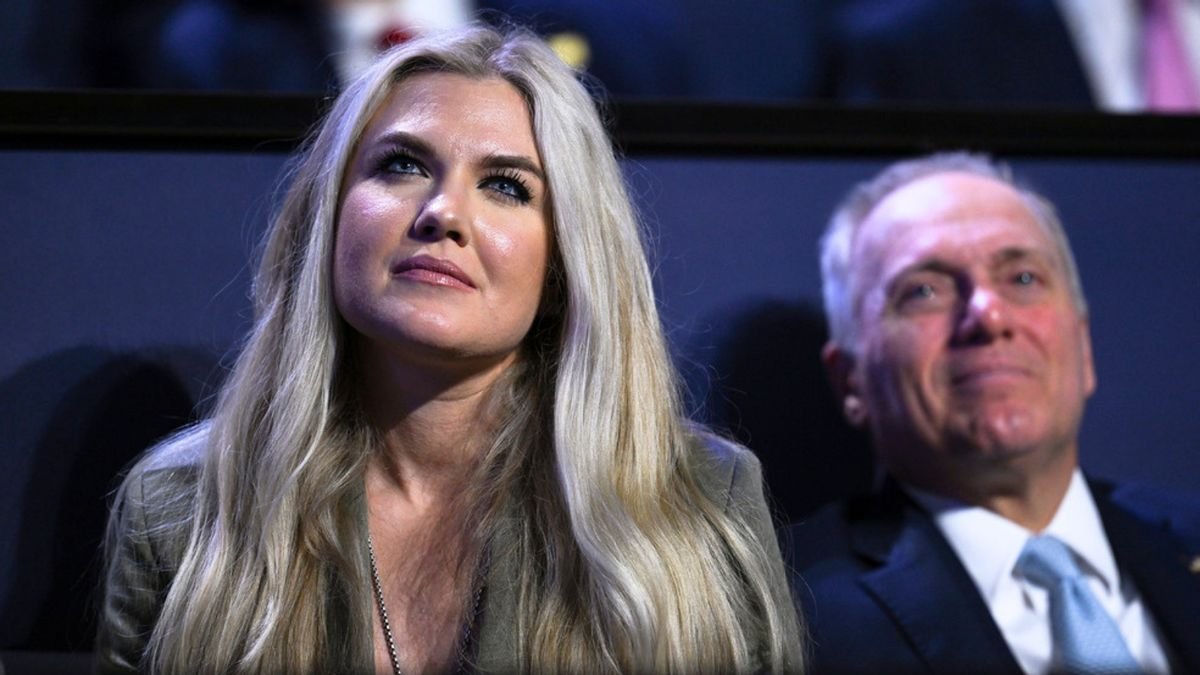
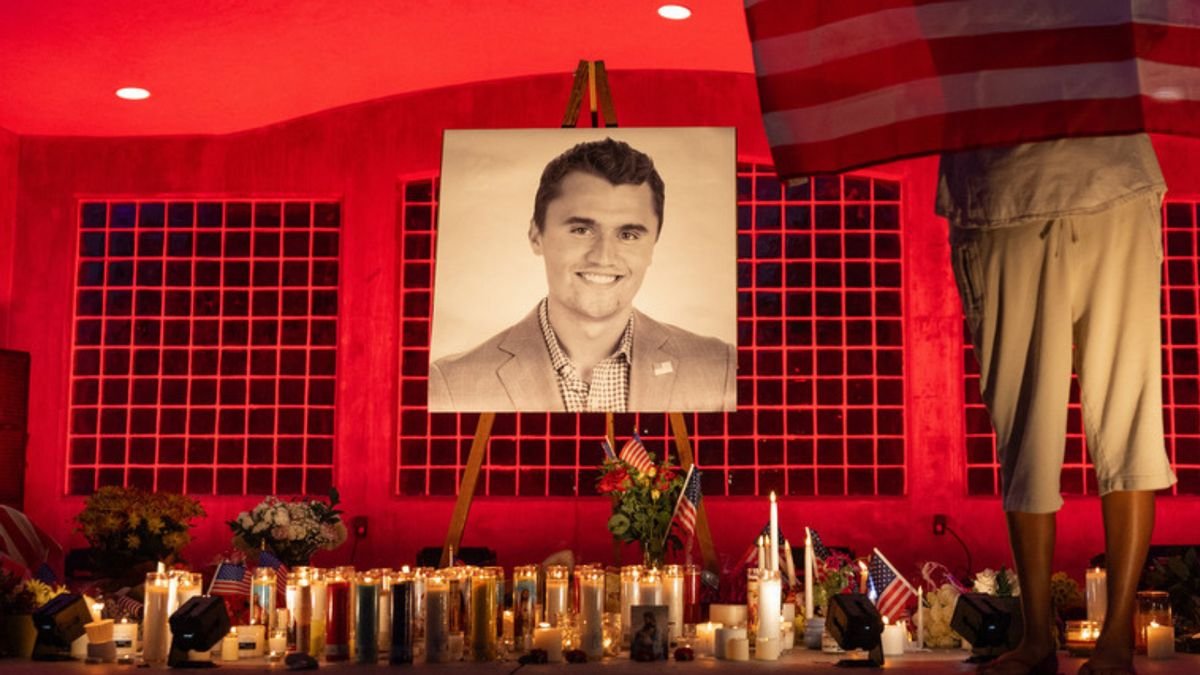
Shortly after Turning Point USA CEO Charlie Kirk was fatally shot in September 2025, his wife, Erika Kirk, announced she was pregnant with their third child.
Rating:
Months after Turning Point USA CEO Charlie Kirk was fatally shot on Sept. 10, 2025, a rumor circulated online that his widow, Erika Kirk, had announced she was pregnant shortly after her husband’s death.
The claim about her supposed pregnancy resurfaced (archived) about a year after Kirk’s killing, with many people online noting that the baby should have been born by then.
Some social media users speculated it was an example of the “Mandela Effect” — a phenomenon that occurs when people collectively misremember reality.
“Wait wasn’t erika kirk supposed to be pregnant or is that some kind of mandela effect?” one TikTok user asked in July 2026. The post (archived), which received more than 4.2 million views as of this writing, was captioned: “It’s been well over 9 months.”
Dozens of Snopes readers searched searched the site for answers.
While Erika Kirk has repeatedly talked about the two children she had with Charlie Kirk, there’s no evidence that she announced she was pregnant again after her husband was assassinated. The rumor has persisted since the shooting took place. We first looked into it in September 2025 and found no evidence that it was true.
In November 2025, during an interviewwith conservative commentator Megyn Kelly, Erika Kirk said that she and Charlie Kirk had wanted four children.
“I was praying to God that I was pregnant when he got murdered,” she said. “I was like, oh goodness, that would be the ultimate blessing out of this catastrophe.”
She did not confirm she was pregnant at any point during the interview.
Despite dozens of false claims — often generated using artificial intelligence tools — that Erika Kirk announced she was pregnant after her husband died, Snopes found no evidence in publicly availablesources that she made such an announcement.
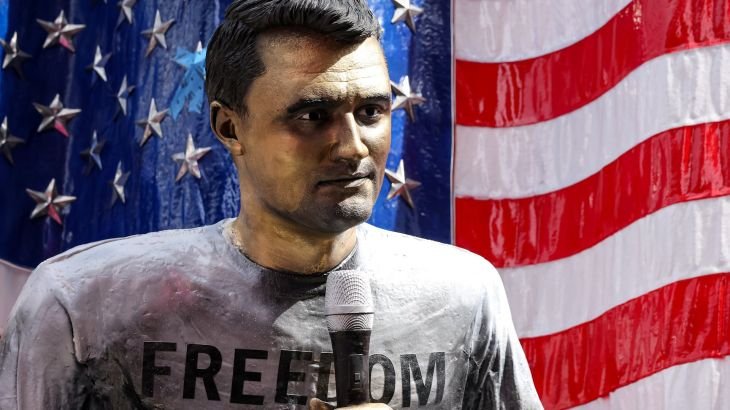
The unveiling of a bronze statue honouring Charlie Kirk in Times Square has sparked clashes between supporters and protesters. The life-size sculpture reportedly cost Italian-born artist Sergio Furnari $100,000 of his own money to make.
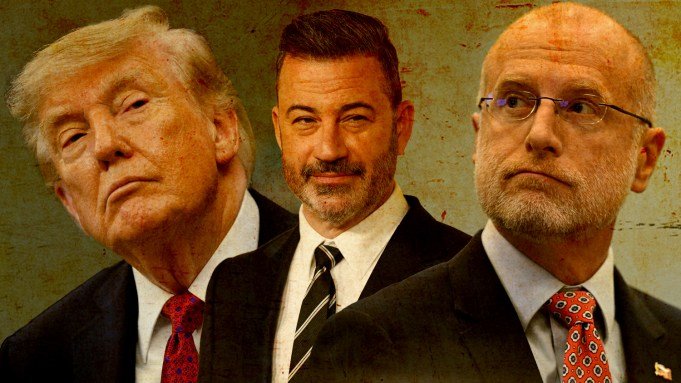
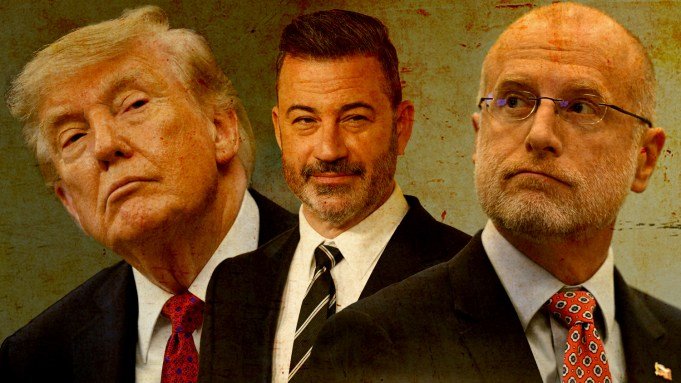
In the latest twist in the Jimmy Kimmel–James Talarico interview drama, the White House is now accusing the ABC late-night host and his network of spinning a fake tale of federal strong-arming.
Put another way, Team Trump insists there was never pressure put on Kimmel and ABC from the Trump administration to scuttle an interview with the poll-topping Texas Democrat and Senate hopeful.
“Jimmy Kimmel is play-acting — as he often does — to create a false narrative about this administration’s policies,” Assistant White House Press Secretary Davis Ingle said Thursday.
“Chairman Carr has not threatened him regarding interviewing James Talarico, or any other candidate.,” Ingle added of Carr, the FCC chairman, just before the second night of Donald Trump‘s GOP midterm convention aka pageant reconvenes. “Any media outlet blindly amplifying Kimmel’s egocentric delusion should insist on proof. Of which they will find none.”
ABC parent company Disney had no comment on the response from the White House when contacted by Deadline. The lack of response is unsurprising given that the company is the midst of an escalating legal and regulatory First Amendment clash with the FCC over station license renewals and charges of political thumbs on the scale.
Wednesday’s Jimmy Kimmel Live! monologue had some distinct déjà vu of what Stephen Colbert went through on CBS last year with Talarico, who is looking to flip the Lone Star state for the Dems for the first time in decades. The L.A.-based Kimmel revealed that an on-air sit-down with Talarico would not air on ABC tonight.
After naming off various political candidates including Trump, who Kimmel has talked to over the years, the Live! host put federal regulatory enforcement under the spotlight. “[The] FCC has threatened me, threatened our show, threatened our network, ABC, our affiliates, our local stations, based on simple, traditional editorial decisions,” Kimmel said. “Guest bookings, it would seem, they don’t like.”
“And so, out of consideration for our local stations, especially our ABC affiliates in Texas who would have to deal with this nonsense, my interview tomorrow with James Talarico will not air on television,” he stated. “It will be posted on YouTube instead.”
James Talarico
Brandon Bell/Getty Images
Interestingly, Talarico, who is in Los Angeles today and Friday for a series of deep-pocket Hollywood fundraisers, was not officially listed as a guest on Kimmel before the host made his announcement. In a separate interview with MS NOW’s Symone Sanders Townsend today on The Weeknight, Talarico called the Kimmel situation the “most dangerous form of cancel culture.” With the knowledge that much of the consumption of late-night shows actually happens online anyway, the candidate went on to say: “I’m still hopeful that we can have this interview on the air. So we’ll see what happens tonight.”
Between Trump in Texas and Talarico in California, we certainly will.
At the same time, with the wounds still fresh from Disney’s sudden sidelining of Kimmel for almost a week a year ago over affiliate fallout from a remark he made about the tragic assassination of conservative activist Charlie Kirk, there is a tendency for some to get lost in the weeds of this. There is also a tendency for some to start shouting about equal-time rules without a read of the fine print.
The equal time rule requires broadcasters that feature political candidates offer comparable airtime to rivals — if it is requested. Daytime and late-night talks shows have long operated under the assumption that they fell under an exemption for news and news interview programming. But in January, Carr issued guidance suggesting that such talk shows may not be free from the rule.
The equal time rule also is often misunderstood. It applies to political candidates in a certain cycle. So, for instance, Ted Cruz’s appearance on The View this week makes no difference because he’s not up for reelection this midterm.
Carr has argued that nothing is preventing late-night or daytime talk shows from featuring a political candidate as a guest. They just have to be prepared to offer time to rivals as well.
As ABC pushes back on Carr’s investigation of The View, the network’s argument is one of selective enforcement as the FCC chairman has not singled out other broadcasters, like conservative talk radio. The network has also pointed to a 2002 letter from the FCC confirming the show’s exemption from the equal time rule. The network also has characterized the equal time rule as unworkable, given that its stations may be on the hook not just for major party candidates but also third-party rivals.
Again, let’s see what happens tonight.
Worth noting that when the now axed Colbert’s interview with Talarico was shifted over to YouTube, it got a huge number of views and the candidate raised more than $2.5 million in just over 24 hours. That might be history worth repeating itself for the Texas Democrat, false narrative or not.
A screenshot authentically shows a social media post from U.S. President Donald Trump that said, “Unless Canada agrees to pay a 100% TARIFF on Niagara Falls, we will be turning off the tap to the falls. That’s right — NO WATER FOR CANADA!”
Rating:
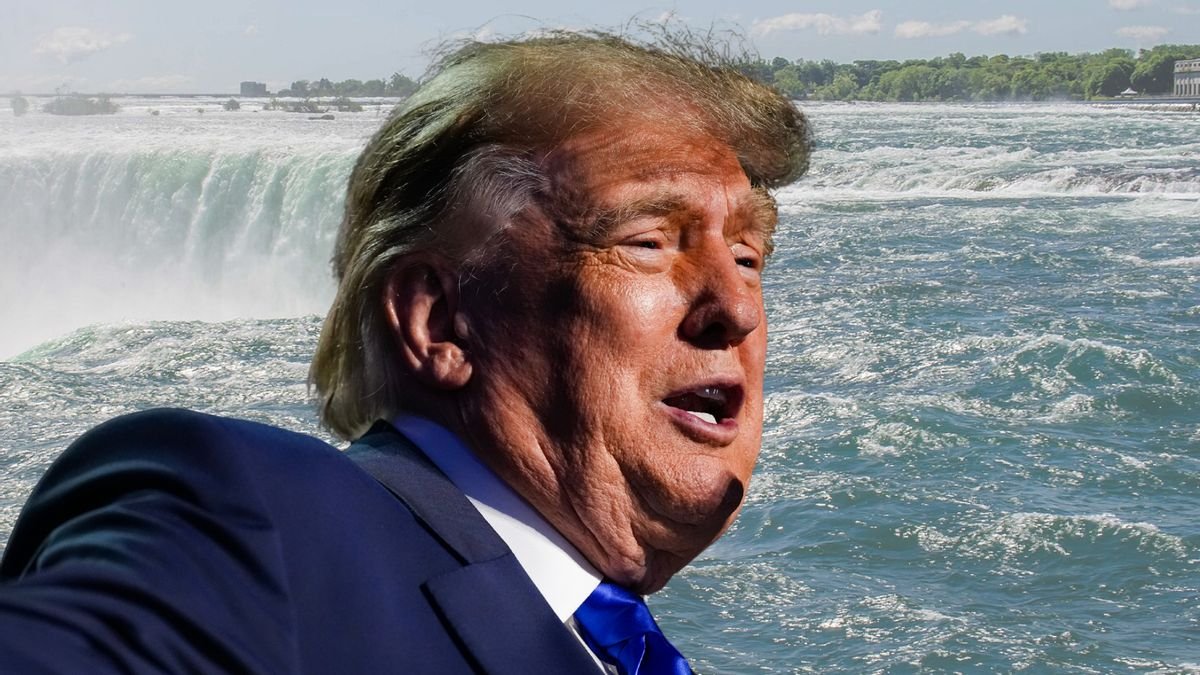
A rumor circulated online in September 2026 that U.S. President Donald Trump shared a social media post threatening to turn off the water to Niagara Falls, a natural landmark famously shared by the U.S. and Canada, unless Canada agreed to pay a “100% tariff.”
Peopleonsocial media shared a purported screenshot of a Truth Social post that appeared to show Trump complaining about trade relations with Canada. The text read (emphasis ours):
NO MORE FREE NIAGARA FALLS FOR CANADA! For far too long, Canada has been enjoying our water, our views, our tourists, and our great American waterfall — NIAGARA FALLS! They get the Canadian side, they take the mist, the water, and billions of dollars from tourism, all while treating the United States unfairly on trade, lumber, energy, and so many other things. It’s a total disgrace! Effective immediately, unless Canada agrees to pay a 100% TARIFF on Niagara Falls, we will be turning off the tap to the falls. That’s right — NO WATER FOR CANADA! We have the control. We have the valves. We can reduce the flow, or shut it down completely, and we will if necessary. Canada has been taking advantage of the United States for decades, getting a world-famous natural resource basically for free while insulting our country and making it harder for American businesses. That ends now! If they want the water, the mist, the tourism, and the beauty of Niagara Falls, they must pay 100% or they don’t get it. No more free rides, no more unfair treatment, and no more taking advantage of the United States. AMERICA FIRST! KEEP OUR WATER IN AMERICA! Thank you for your attention to this matter.
President DONALD J. TRUMP
The alleged post circulated online as Trump escalated an ongoing trade war with Canada, leading many Snopes readers to ask us whether it was real.
(@CoffinItUp on X)
The post was fake. Searches of the president’s Truth Social and X accounts, as well as an online archive of Trump’s Truth Social posts, revealed no such post.
Addtionally, searches of Bing, DuckDuckGo, Google and Yahoo returned no relevant results from reputable news outlets. If the president had really said he planned on “turning off the tap to the falls,” journalists with reputable news outlets such as The Associated Press or Reuters would have widely reported on it, and those search inquiries would have uncovered such evidence. That was not the case.
A reverse image search of the screenshot in question found only other social media accounts posting the same fake image.
The fake screenshot included a watermark for Real America’s Voice, a conservative media outlet that highlights community contributions. However, a search of ARV’s socialmediaaccounts and website revealed no mention of a Trump post discussing Niagara Falls.
The fake post circulated amid the United States’ trade war with Canada, which has led to tit-for-tat tariffs on goods from both countries.
It appeared the fake post was created to poke fun at these events, including a real social media post from Trump about renaming Lake Ontario to “Lake America.”
Snopes could not determine the origin of the fake post or whether it was intended as satire, but its tone and relevance to current events matched the style of other fake Trump posts with satirical origins.
Trump alone couldn’t simply “turn off the tap” for Niagara Falls, as its water is managed by the 1950 Niagara Treaty, which established a committee that “oversees the water flow over the Niagara Falls for display purposes” and “determines the amount of water available for generating power.”
For further reading, we fact-checked a claim that Trump posted an animated video of himself repeatedly hitting Canadian Prime Minister Mark Carney with a hockey stick.
U.S. President Donald Trump has promised $5,000 to every American adult if the Republicans win majority control of the Senate and House of Representatives in the 2026 midterm elections.
Rating:
Context
Trump has floated similar ideas before that have not led anywhere as of this writing. Furthermore, the president cannot unilaterally give Americans government money without congressional approval, nor is it clear how he would pay the approximately $1.2 trillion cost.
As the 2026 midterm election season kicked off, social media users claimed U.S. President Donald Trump said he would give every American adult $5,000 if Republicans win majority control of the government.
The claimspreadonX and Reddit. Many of the posts included clips of Trump appearing to make such a promise. Other posts suggested that such a promise would amount to bribery.
Trump did, in fact, make this pledge during the Sept. 9 Republican National Committee midterm convention in Dallas, Texas, with the added condition that Americans would have to spend the money in the United States. As such, we have rated this claim as true.
Shortly after Trump’s comments, Vice President JD Vance suggested in a Fox News interview that U.S. tariff revenue could pay for the so-called “Trump dividend” (see 5:50). However, credible estimates suggest the United States hasn’t made anywhere near enough through tariffs to cover such a dividend.
While Congress signed off on one-time cash payments to Americans under the first Trump administration amid the COVID-19 pandemic, the president has floated similar ideas during his second term that have not materialized as of this writing. For example, he said he “loved” the idea of paying Americans a percentage of any money saved by the short-lived Department of Government Efficiency, or DOGE. The president also said on Truth Social in November 2025 that he would pay a “dividend of at least $2,000” to “everyone.”
Multiple readers asked us if the “Trump dividend” counted as bribing people to vote, or paying for votes, which is illegal under federal law. Vance defended the dividend idea against such allegations during his Fox News interview (see 5:28).
“The president is saying, if you keep it going, to the American people — if you keep us in power and allow us to continue to do these things, then you will share in some of the benefit of this incredible wealth that we are creating in the United States of America,” he said at 6:25.
Defenders of the proposal may also say that the dividend is akin to politicians’ promises to cut taxes or offer varying benefits if they win. Without more details about how this proposal would actually work in practice, it’s impossible to say if a court would consider it bribery. Legal experts are reportedly skeptical that the pledge itself was illegal.
In an emailed statement, the White House did not answer any of our questions requesting additional details about the dividend idea. Instead, spokesperson David Ingle said:
The doomers and naysayers have consistently doubted President Trump: when he pledged to create the historic Trump Accounts, lowered prescription prices with Most Favored Nations, secured the border with no crossings, cleaned up our streets, ended taxes on tips, grew real wages, renegotiated broken trade deals, and reshored key manufacturing back to the United States. President Trump has consistently proven his doubters wrong, drawing a clear contrast with the Democrats’ record of historic inflation, unfettered illegal immigration, skyrocketing crime, and weakness on the world stage. With the continued support of the American people, President Trump will keep delivering real results.
Trump’s promise
Trump’s full speech at the Republican National Committee midterm convention is widely available online through reputable news outlets such as The Associated Press.
Here’s what he said about cash payments, starting at 57:10:
If the Republicans win the House of Representatives and the United States Senate — both of them — because of our economic —tremendous economic success, like, in history, we’ve never had anything like what’s happening. But because of our tremendous strength and success, economically, I will issue a dividend to every adult citizen in the United States of America for $5,000. Very much like a successful company will do a cash distribution to its shareholders, or like last year, when I gave our great members of the military $1,776.
[…]
But the only condition on the payment of this dividend that we’re going to be making — so it’s $5,000 to every adult. The only caveat I have is that the dividend we’re making must be spent in the United States of America. We don’t want you going to Canada to spend the money. We don’t want you going to China, to Germany. You gotta spend the
In other words, if the Republicans win — if you win — we might not win. The reason the Democrats don’t do that, is because they don’t do tariffs. They don’t take in money. All they know is poverty and how to ruin our country, but we’re making a fortune. So, if the Republicans win, you win with us and you get $5,000. It will be called the ‘Trump dividend.’
The Associated Press has issued guidance to retain the name “Lake Ontario” to refer to one of the Great Lakes, despite Donald Trump‘s order to designate the body of water as “Lake America” amid the trade war with Canada.
“The Associated Press will refer to Lake Ontario by its original name, including the name Trump has chosen when relevant,” a spokesperson for the news organization said in a statement. “As a global news agency that disseminates news around the world, the AP must ensure that place names and geography are recognizable to broad audiences.”
The AP’s guidance is below:
“Lake Ontario, Lake America “U.S. President Donald Trump has signed an executive order to rename Lake Ontario to Lake America. The border between the United States and Canada runs through Lake Ontario. Trump’s order only affects how the United States government refers to the body of water. Canada, as well as other countries and international bodies, are not required to recognize the name change, and Canada has said it will not. Lake Ontario has carried that name for more than 400 years. Refer to it by its original name. If it is relevant to the story, acknowledge and explain the name Trump has chosen.”
The guidance is significant because AP style is still widely accepted across the news industry.
Last year, the AP issued similar guidance after Trump issued an executive order renaming the “Gulf of Mexico” as the “Gulf of America.” The AP said that it would stick with the original name, but refers to Trump’s chosen name when relevant.
Although Trump issued an executive order to change the name of Lake Ontario, the change was not recognized by Canada. There are other geographic areas that are referred to by multiple names, but the AP says that it “strives to use terms recognizable to the broadest audience.”
Apple and Google changed the name to Lake America after Trump’s executive order.
After the AP declined to change the name to Gulf of America last year, the Trump administration barred the AP from its press pools. The AP sued and, although a district court judge found the administration’s actions a violation of the First Amendment, a decision is pending on appeal.
Janelle Rodriguez, who has been a key figure in building streaming platform NBC News Now and also has overseen NBC Nightly News and breaking news and specials, is departing the network.
Rodriguez, who has served as executive vice president of programming, wrote in a memo to staffers pn Thursday, “I’ve spent a long time thinking about what comes next, and I’ve decided to leave now to pursue it. It’s the right moment.” She did not go into details of her next move. She has been with the network for 12 years.
Rodriguez also oversaw the anchor transition of NBC Nightly News from Lester Holt to Tom Llamas. The network has noted thta it has narrowed the ratings gap with ABC News’ World News Tonight and has won the 25-54 demo on certain weeks.
Rebecca Blumenstein, NBC News president, editorial, said in a memo to staffers that Catherine Kim would become executive vice president, editorial and content, and expand her duties to include NBC News Now and specials, adding to oversight over digital and newsgathering. Kim will continue to lead digital publishing, digital docs, social, the network’s Here’s the Scoop team and Decision Desk, as well as work in partnership with exec VP David Verdi leading bureaus and newsgathering.
Matt Carluccio will get added duties overseeing editorial units, including business, health, investigations and climate, and will continue to lead editorial initiatives like Common Ground and Business in America, as well as the weekend editions of Today. He will report to Blumenstein and Libby Leist, the executive vice president of Today and lifestyle.
In addition, Matt Frucci, the executive producer of NBC Nightly News, will report to Blumenstein.
Blumenstein wrote in a memo that the changes “will build on the significant progress we’ve made over the past year bringing NBC News closer together — connecting the strength of our coverage, talent and teams across broadcast, streaming and digital.”
She credited Rodriguez for playing a central role in building NBC News Now into “the leading streaming news service it is today and helping lead NBC Nightly News, Specials and some of our most significant coverage.”
In the latest twist in the Jimmy Kimmel and James Talarico interview drama, the White House is now accusing the late night host and his network of spinning a fake tale of federal strong-arming.
Put another way, Team Trump insists there was never any pressure on Kimmel and ABC from the MAGA administration to scuttle an interview with the poll topping Texas Democrat and Senate hopeful.
“Jimmy Kimmel is play-acting—as he often does—to create a false narrative about this administration’s policies,” Assistant Press Secretary Davis Ingle said Thursday.
“Chairman Carr has not threatened him regarding interviewing James Talarico, or any other candidate.,’ the White House’s Ingle added of the Brendan Carr just as the second night of Donald Trump‘s mildly covered GOP midterm convention AKA pageant prepares to begin. “Any media outlet blindly amplifying Kimmel’s egocentric delusion should insist on proof. Of which they will find none.”
ABC parent company Disney had no comment on the response from the Executive Mansion when contacted by Deadline. The House of Mouse response is unsurprising given that they are the midst of an escalating legal and regulatory First Amendment clash with the FCC over station license renewals and charges of political thumbs on the scale.
After naming off various political candidates including Trump, who Kimmel has talked to over the years, the Live! frontman put federal regulatory enforcement under the spotlight. Kimmel added: “FCC has threatened me, threatened our show, threatened our network, ABC, our affiliates, our local stations, based on simple, traditional editorial decisions. Guest bookings, it would seem, they don’t like.”
“And so, out of consideration for our local stations, especially our ABC affiliates in Texas who would have to deal with this nonsense, my interview tomorrow with James Talarico will not air on television,” Kimmel stated “It will be posted on YouTube instead,’ he concluded of the chat with the man who might flip the Lone Star state for the Dems for the first time in decades.
James Talarico
Brandon Bell/Getty Images
Interestingly, Talarico, who is in LA today and Friday for a series of deep pocket Hollywood fundraisers, was not listed officially as a guest on Kimmel before the host made his announcement. In a separate interview with MS NOW’s Symone Sanders Townsend on The Weeknight today, Talarico called the Kimmel situation the “most dangerous form of cancel culture”. In the knowledge that much of the watching and consuming of late nighters actually happens online anyway, the candidate went on to say: “I’m still hopeful that we can have this interview on the air. So we’ll see what happens tonight.”
Between Trump in Texas and Talarico in California, we certainly will.
At the same time, with the wounds still fresh from Disney’s sudden sidelining of Kimmel for almost a week a year ago over affiliate fallout from a remark he made about the tragic assassination of conservative activist Charlie Kirk, there is a tendency for some to get lost in the weeds of this. There is also a tendency for some to start shouting about equal time rules without a read of the fine print.
The equal time rule requires broadcasters that feature political candidates offer comparable airtime to rivals — if it is requested. Daytime and late-night talks shows have long operated under the assumption that they fell under an exemption for news and news interview programming. But in January, Carr issued guidance suggesting that such talk shows may not be free from the rule.
The equal time rule also is often misunderstood. It applies to political candidates in a certain cycle. So, for instance Ted Cruz’s appearance on The View this week makes no difference because he’s not up for reelection this midterm.
The FCC’s Carr has argued that nothing is preventing late night or daytime talk shows from featuring a political candidate as a guest. They just have to be prepared to offer time to rivals as well.
As ABC pushes back on Carr’s investigation of The View, the network’s argument is one of selective enforcement, as the FCC chairman has not singled out other broadcasters, like conservative talk radio. And the network has pointed to a 2002 letter from the FCC confirming the show’s exemption from the equal time rule. The network also has characterized the equal time rule as unworkable, given that its stations may be on the hook not just for major party candidates, but third party rivals as well.
Again, let’s see what happens tonight.
Worth noting that when the now axed Colbert’s interview with Talarico was shifted over to YT, it got a huge number of views and the candidate raised over $2.5 million in just over 24 hours. That might be a history worth repeating itself for the Texas Democrat — false narrative or not.
In 2026, some families of 9/11 victims signed a petition aimed at excluding New York City Mayor Zohran Mamdani from the 25th-anniversary commemoration ceremony of the attacks.
Rating:
Context
Some social media posts sharing the claim suggested that the petition represented the views of all of the families of the 2,976 people killed in the 9/11 terrorist attacks. There was no evidence that’s true.
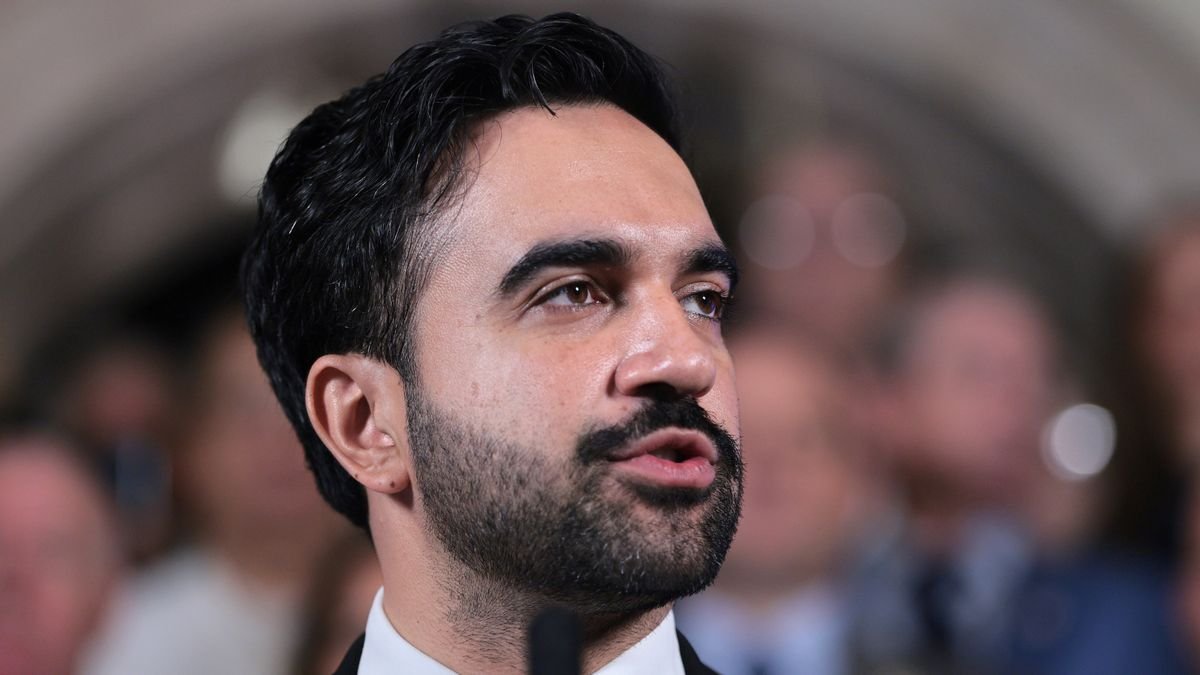
In September 2026, as the 25th anniversary of the 9/11 terror attacks neared, a claim (archived) circulated online that some families of 9/11 victims had signed a petition aimed at excluding New York City Mayor Zohran Mamdani from the 25th-anniversary ceremony commemorating the attacks.
For example, an X user shared a video of people gathering at New York City Hall and wrote:
A growing coalition of 9/11 victims’ families, first responders, and elected officials are calling on Mamdani to skip the Memorial Ceremony this Friday
An online petition urging organizers to block or reconsider Mamdani’s attendance has garnered over 100,000 signatures
Despite this Mamdani has reaffirmed his commitment to attend
Claims circulated after the New York Post reported (archived) on a petition it said sought to “ban” Mamdani from the 9/11 anniversary commemoration.
That petition was real and had more than 100,000 signatures at the time of this writing. Giovanni Galante, whose wife died in the 9/11 attacks, started the petition, which asked organizers of the 25th-anniversary commemoration ceremony to “carefully consider whether Mr. Mamdani’s participation would align with the intention of the ceremony and the expectations of the families most directly affected by the tragedy.” Meryl Mayo-Marshall, whose husband died on 9/11, also told local media she had signed the petition and shared her comments in a Facebook post.
On Sept. 8, New York City councilmember Joann Ariola posted photos (archived) of a group of 9/11 victims’ families handing the petition in at city hall.
Given the above, we’ve rated the claim that some families of 9/11 victims signed a petition aimed at excluding Mamdani from the ceremony as true.
Contrary to what some posts suggested, there was no evidence that the petition and its request to consider excluding Mamdani from the 9/11 commemoration ceremony represented the views of all of the families of the 2,976 people killed in the 9/11 terrorist attacks. In July, Galante reportedly estimated that up to 7,500 relatives of victims had signed the petition, but he told the self-described progressive Substack newsletter Popular Information that his estimate was not based on the actual list of signatories.
Snopes contacted Galante to request confirmation of the information he gave to the New York Post and Popular Information but did not receive a response by the time of publication. We also contacted Cheri Sparacio, a 9/11 victim’s wife who reportedly helped organize the petition, to ask about her involvement and await a reply.
When asked about the petition, a spokesperson from the 9/11 Memorial and Museum that was organizing the 25th- anniversary commemoration ceremony told Snopes in an emailed statement:
We have intentionally worked to keep the commemoration free of politics because remembering those we lost on 9/11 should never be a partisan issue. Government officials from across the political spectrum, including every sitting president, governor, and mayor since 9/11, have attended the ceremony simply to bear witness — they do not deliver remarks and are asked to remain in a designated area.
The spokesperson did not reply to questions about whether the museum invited Mamdani to the ceremony and, if so, whether it would consider rescinding that invitation or asking him not to participate.
At the time of this writing, Mamdani had told reporters he expected to attend the ceremony. He told (archived) WCBS on Sept. 7:
What I want this week to be a focus on is on the families whose loved ones were stolen from them 25 years ago in the horrific act of terror of September 11th, and a focus also on the first responders who gave everything they could to this city and to the people who came together to try and help their fellow New Yorkers. And so, in the days to come, my focus will be on attending events that memorializes that incredible courage. And I will be there on Friday at the memorial just as I was last year.
Petition objects to Mamdani’s opinions, associations
According to the petition, family members of 9/11 victims were concerned about Mamdani’s “public positions, associations, and responses to rhetoric” that they perceived as not respectful of the victims, not recognizing the gravity of the 9/11 attacks and said failed to reject the “ideologies that contributed to such violence.”
The petition said that Mamdani had not condemned the phrase “Globalize the intifada,” which it said “many interpret as endorsing or normalizing violence.”
In a June 29, 2025, interview on NBC’s “Meet the Press,” then-Democratic candidate Mamdani repeatedly sidestepped requests to condemn the phrase, instead saying that it was not “language I use” but that the role of a mayor was not “to police speech.”
The petition noted other examples of Mamdani’s alleged lack of respect for 9/11 and its victims, including alleged political influence from his father, whose academic work has analyzed the rise and impact of suicide bombers and terrorism.
The petition also said Mamdani had “praised” the Brooklyn imam Siraj Wahhaj. Mamdani faced criticism fromRepublicans after meeting with Wahhaj in October 2025 (archived, archived, archived).
Wahhaj, who has denied any terrorism links, once appeared on a court-ordered list of “unindicted persons who may be alleged as coconspirators” in the 1993 World Trade Center bombings, according to Andrew C. McCarthy, the lead prosecutor in the case. McCarthy wrote in October 2025 that prosecutors never alleged that Wahhaj was “a co-conspirator in the World Trade Center bombing or the overarching terrorism conspiracy.” He described the kind of list in which Wahhaj was included as “overly inclusive.”
Mamdani defended his meeting with Wahhaj to journalists, saying Wahhaj had previously met with other New York City mayors. Mamdani appeared to suggest that critics were placing undue emphasis on the fact that he and Wahhaj are both Muslims.
The petition also objected to Mamdani’s appointment (archived) of Ramzi Kassem as New York City’s chief counsel. Kassem represented Ahmed Muhammed Haza al-Darbi, who pleaded guilty to terrorism-related offenses involving a 2002 al-Qaida attack on a French-flagged oil tanker off the coast of Yemen. Al-Darbi later became the only prisoner released from the Guantánamo Bay detention camp during the first administration of U.S. President Donald Trump.
For further reading, Snopes has investigated a number of claims about the 9/11 attacks.
Calder, Rich. Exclusive | Families of 9/11 Want to Ban Mamdani from 25th Anniversary. 25 July 2026, https://nypost.com/2026/07/25/us-news/families-of-9-11-want-to-ban-mamdani-from-25th-anniversary/.
Durante, Tom. ‘Mamdani Asked About 9/11 Victims Families’ Effort to Ban Him’. Mediaite, 27 July 2026, https://www.mediaite.com/media/news/mamdani-confronted-over-9-11-victims-families-campaign-to-ban-him-from-25th-anniversary-ceremonies/.
Legum, Judd. The Truth about the Viral 9/11 Petition Targeting Mamdani. 28 July 2026, https://popular.info/p/the-truth-about-the-viral-911-petition.
Mamdani, Mahmood. Good Muslim, Bad Muslim: America, the Cold War, and the Roots of Terror. Potter/Ten Speed/Harmony/Rodale, 2005.
Marking the 25th Anniversary | National September 11 Memorial & Museum. https://www.911memorial.org/marking-25th-anniversary. Accessed 31 July 2026.
NBC News. ‘Asked to Condemn the Phrase “Globalize the Intifada,” Mamdani Says Mayors Shouldn’t “Police Speech”‘. YouTube, 29 June 2025, https://www.youtube.com/watch?v=ggV2SeiGrVw.
‘Please Sign to Support Honoring the Memory of Those Lost on September 11th with Dignity.’ Change.Org, https://www.change.org/p/please-sign-to-support-honoring-the-memory-of-those-lost-on-september-11th-with-dignity. Accessed 31 July 2026.
Savage, Charlie. ‘U.S. Transfers First Guantánamo Detainee Under Trump, Who Vowed to Fill It’. New York Times, 2 May 2018, https://archive.ph/gsO8I#selection-461.48-463.30.
‘Siraj Wahhaj and the 1993 World Trade Center Bombing . . . Again’. National Review, 19 Oct. 2025, https://www.nationalreview.com/corner/siraj-wahhaj-and-the-1993-world-trade-center-bombing-again/.