Was Ilhan Omar’s suspected attacker on her ‘payroll,’ as CBS allegedly reported? Don’t be fooled
Feb. 1, 2026
Read More

Feb. 1, 2026
Read More

UPDATED, with additional comment: A federal judge prohibited the Trump administration from banning CNN, MS NOW and Politico from the White House grounds, granting the three outlets a preliminary injunction that ensures access for the foreseeable future.
U.S. District Judge Timothy Kelly, a Trump appointee, wrote in his opinion that the news outlets “are likely to succeed not only on their due process claim, but also on their two First Amendment claims.”
Kelly did caution that “no one should interpret the court’s decision to suggest that President Trump’s concerns about accuracy and fairness in the media’s reporting are unfounded, or that the government is powerless when its true aim is to protect national security when classified information is unlawfully disclosed.” But when it came to the blanket ban on the three outlets, the judge was unpersuaded by the government’s justifications.
Trump announced on Sept. 18 that he was barring CNN, MS NOW and Politico from access to White House grounds, complaining that they were “‘reporting’ fake news.”. A day later, their reporters who tried to enter the security checkpoint found their hard passes deactivated.
The news outlets sued, and Kelly issued a temporary restraining order halting Trump’s restriction on the outlets, something that forced the White House to restore the hard passes to dozens of reporters and other staffers. That TRO expired on Tuesday; the preliminary injunction means that the White House cannot enforce Trump’s ban in the long term, either until a trial or an appeal. The news outlets warned that the White House was likely to reimpose the ban absent further court intervention.
In defending the ban, the government cited national security reasons, although DOJ attorneys also argued that the news organizations did not meet “minimum requirements of professionalism.” While the DOJ pointed to stories published or aired that had to do with national security, they also cited as an example an MS NOW report that Trump aides considered an option of adding the president’s name to Ford’s Theatre. Trump later denied it.
In his 26-page opinion, Kelly cited D.C. Circuit precedents in that reporters had a right to due process before their hard pass is revoked.
“To put it mildly, [the news outlets] likely did not receive notice either of the conduct that would subject them to revocation of their hard passes, or of the magnitude of the revocation sanction itself,” the judge wrote.
The judge noted that some of the stories flagged by the White House were published earlier this year and written by reporters who later had their hard passes renewed. Then came Trump’s ban, and they were revoked. They included a CNN report from January 2026 on the top secret bunker being built beneath the East Wing, and an MS NOW story that quoted an anonymous White House official who said the president underestimated Iran’s willingness to resume the war.
The White House press office sent letters to the news organizations on September 22, informing them of the reasons and their ability to contest the action, but that was four days after the ban was implemented.
The judge also sided with the news outlets’ in their claims that Trump was engaging in retaliation and viewpoint discrimination in violation of the First Amendment.
“President Trump’s own comments suggest that he intended the revocation of Plaintiffs’ hard passes to alter their reporting on him, bolstering the case that his action here is sufficient to deter a reporter of ordinary firmness from reporting in the same way she had before. After explaining that he excluded Plaintiffs from the White House because they ‘purposely write negative news . . . to try and diminish the Republicans and a Republican administration,’ President Trump remarked that he is prepared to take ‘the ban . . . as far as you can,’ but that he would “love it” if they “could straighten themselves out.”
The judge added, “The record is clear that President Trump made the decision at issue. And his announcement of the ban and later remarks explaining the reason for it make this a straightforward conclusion: President Trump likely banned Plaintiffs from the White House because he believes that their reporting is generally inaccurate and biased against him.”
He also dismissed the government’s national security argument. He noted that there was “no evidence in the record” that he made the decision to revoke the passes for those reasons “from the get go, nor at any time has he directly stated that national security was the reason for his decision.”
The judge explained that because the D.C. Circuit has held that the White House press area is a “non public forum,” the government cannot limit access based on someone’s viewpoint.
The judge wrote that “it is likely that Plaintiffs were selected by President Trump for revocation of their access to the White House press area because he believes their coverage of him and his administration is generally inaccurate and biased—in other words, it was ‘an effort to suppress the speaker’s activity due to disagreement with the speaker’s view.’”
The judge also ruled that the news outlets should put up a nominal bond of $1.00 as the case moves forward.
Theodore Boutrous Jr., the lead attorney representing the news outlets, said in a statement, “When the president issued his ‘ban on the free press,’ he blatantly and explicitly violated due process and the First Amendment. Since then, the President has repeatedly, candidly, and consistently admitted in public that he banned our clients from the White House to punish reporting he doesn’t like and to try to force journalists to cover him in ways he prefers.”
Boutrous added, “The harm this ban did to our clients, the First Amendment, and the public as a whole is profound. The court was right to enjoin the White House from enforcing this ‘unconstitutional ban on the free press’ for the foreseeable future.”
The White House did not immediately respond to a request for comment.
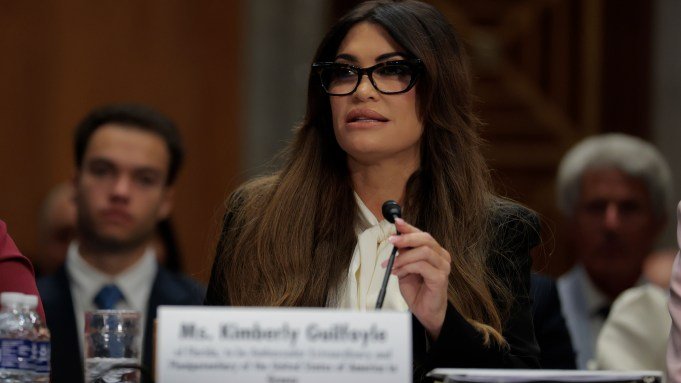
Kimberly Guilfoyle, the former Fox News host who became a high-profile figure in Donald Trump‘s orbit, resigned as U.S. ambassador to Greece following a bombshell Wall Street Journal report over alleged ethical misconduct.
Guilfoyle confirmed her exit in a post on X, shortly after the new White House press secretary, Katie Zacharia, told reporters that the administration had asked her to resign.
“While my time as Ambassador may be coming to an end, my commitment to President Trump, the America First movement, and the country I love will never end,” Guilfoyle wrote.
She also called the ethics allegations “false,” and wrote that she intended to “vigorously defend my name, my reputation, and my integrity. I have dedicated my professional life to fighting for justice, standing up for what is right, and defending the values that make America exceptional. I will not allow false accusations to define my decades of public service.”
The Journal reported last week on the contents of message exchanges between Guilfoyle and Eric Deters, a Trump donor. Deters provided text messages to the media, including one where she asked him to wire $100,000 directly to American Express to pay off a bill. Deters was seeking Guilfoyle’s help in accessing administration officials.
Trump told reporters that Guilfoyle “went to Greece. She was doing a good job, but we didn’t like what we were reading.”
Guilfoyle is the former fiance of Donald Trump Jr., but the engagement ended before Trump started his second term.
“She wasn’t a member of my family. She, I guess, dated my son a long time ago,” the president told reporters.
In 2020, Guilfoyle led the fundraising push to draw in bundlers to the Trump campaign, and even had a speaking slot at the Republican National Convention that year. She had previously had a well-established TV career, serving as co-host of Fox News’ The Five. She also is the former wife of California Governor Gavin Newsom.
The White House’s demand for her resignation dominated the headlines coming out of the first press briefing held by Trump’s new press secretary, Katie Zacharia. Appearing before reporters for the first time in the crowded briefing room, Zacharia spoke and answered questions for 14 minutes before ending the session. She told reporters that Trump would answer questions later, which he did as he set out on a three-day campaign swing.

U.S. President Donald Trump said, “I will be the last Republican president” at a 2026 rally.
Trump made the remark as part of a longer speech at a Republican rally in Youngstown, Ohio, on Oct. 12. However, some posts omitted context clarifying that Trump was referring to a hypothetical scenario where Democrats control Congress and the White House, suggesting their policies would result in him being the last Republican president.
Ahead of the 2026 midterm elections, a rumor circulated that U.S. President Trump said he would be “the last Republican president.”
People on
The quote was correctly attributed to Trump.
The president made the comment during a speech at a rally in Youngstown, Ohio, on Oct. 12. At the rally, Trump endorsed incumbent Republican Sen. Jon Husted and the Republican candidate for governor, Vivek Ramaswamy, who are on the ballot for Ohio’s midterm elections.
Trump’s full speech can be viewed on C-SPAN.
The president continued to criticize his opponents’ alleged voting record, saying, “Every single Dumocrat in Congress voted against our record tax cuts. They voted against no tax on tips. They voted against no tax on overtime, and they voted against no tax on Social Security for our great seniors.”
These comments, and others he made later, make it clear that Trump was theorizing he’d be the “last Republican president” if
The rest of his statement from the moment in question is as follows (emphasis ours):
They voted against voter ID, and they voted against proof of citizenship when you vote, so why did they do that? Because they want to cheat, OK? I saw a guy interviewed a week ago, a congressman, a Democrat. They said, why don’t you want to have somebody show their voter identification or proof of citizenship? “Uh, well, uh. Uh, it’s racist. That’s right. That’s right. It’s racist.” They come up with more s***, I mean it’s …
[applause]
“It’s racist. It’s racist.” They’re crazy. They voted against securing our border, and they want to have the border open. You know, if they get in, they’re going to open the border, and you’re going to have two more states: Washington, D.C., where Republicans get 3% of the vote, and Puerto Rico, where Republicans get 4%. So we’ll have four more senators. They want to have 23 people on the Supreme Court. They want to end the Senate, so you guys will be out of a job. What are you doing running? You’ll be out of a job based on them. They want to end the Senate.
They want to basically destroy our country and that’s what they want to do and if they get in, they will do that. They’ll be able to do that. You know, if they get in and you have a bad presidential election in the next because we have some very good people, but if you had a bad presidential or one of these lunatics got in, you will— Look at me right now. And you will say he’s going to be the last Republican president in the history of our country. I will be. I will be. I will be the last Republican president because they will add about 12 more electoral votes. They’ll add four more senators. They’ll add 10 more congresspeople, approximately. They’re going to rig the Supreme Court through … just a lot of people.
The GOP YouTube channel posted a livestream of the entire rally, including the other speakers. In that version, Trump’s statement begins at the 2:53:55 mark and matches the content of the C-SPAN clip.
For further reading, we fact-checked a claim that the Trump administration declined to invite election observers to the midterms.

UPDATED, with additional comment: A federal judge prohibited the Trump administration from banning CNN, MS NOW and Politico from the White House grounds, granting the three outlets a preliminary injunction that ensures access for the foreseeable future.
U.S. District Judge Timothy Kelly, a Trump appointee, wrote in his opinion that the news outlets “are likely to succeed not only on their due process claim, but also on their two First Amendment claims.”
Kelly did caution that “no one should interpret the court’s decision to suggest that President Trump’s concerns about accuracy and fairness in the media’s reporting are unfounded, or that the government is powerless when its true aim is to protect national security when classified information is unlawfully disclosed.” But when it came to the blanket ban on the three outlets, the judge was unpersuaded by the government’s justifications.
Trump announced on Sept. 18 that he was barring CNN, MS NOW and Politico from access to White House grounds, complaining that they were “‘reporting’ fake news.”. A day later, their reporters who tried to enter the security checkpoint found their hard passes deactivated.
The news outlets sued, and Kelly issued a temporary restraining order halting Trump’s restriction on the outlets, something that forced the White House to restore the hard passes to dozens of reporters and other staffers. That TRO expired on Tuesday; the preliminary injunction means that the White House cannot enforce Trump’s ban in the long term, either until a trial or an appeal. The news outlets warned that the White House was likely to reimpose the ban absent further court intervention.
In defending the ban, the government cited national security reasons, although DOJ attorneys also argued that the news organizations did not meet “minimum requirements of professionalism.” While the DOJ pointed to stories published or aired that had to do with national security, they also cited as an example an MS NOW report that Trump aides considered an option of adding the president’s name to Ford’s Theatre. Trump later denied it.
In his 26-page opinion, Kelly cited D.C. Circuit precedents in that reporters had a right to due process before their hard pass is revoked.
“To put it mildly, [the news outlets] likely did not receive notice either of the conduct that would subject them to revocation of their hard passes, or of the magnitude of the revocation sanction itself,” the judge wrote.
The judge noted that some of the stories flagged by the White House were published earlier this year and written by reporters who later had their hard passes renewed. Then came Trump’s ban, and they were revoked. They included a CNN report from January 2026 on the top secret bunker being built beneath the East Wing, and an MS NOW story that quoted an anonymous White House official who said the president underestimated Iran’s willingness to resume the war.
The White House press office sent letters to the news organizations on September 22, informing them of the reasons and their ability to contest the action, but that was four days after the ban was implemented.
The judge also sided with the news outlets’ in their claims that Trump was engaging in retaliation and viewpoint discrimination in violation of the First Amendment.
“President Trump’s own comments suggest that he intended the revocation of Plaintiffs’ hard passes to alter their reporting on him, bolstering the case that his action here is sufficient to deter a reporter of ordinary firmness from reporting in the same way she had before. After explaining that he excluded Plaintiffs from the White House because they ‘purposely write negative news . . . to try and diminish the Republicans and a Republican administration,’ President Trump remarked that he is prepared to take ‘the ban . . . as far as you can,’ but that he would “love it” if they “could straighten themselves out.”
The judge added, “The record is clear that President Trump made the decision at issue. And his announcement of the ban and later remarks explaining the reason for it make this a straightforward conclusion: President Trump likely banned Plaintiffs from the White House because he believes that their reporting is generally inaccurate and biased against him.”
He also dismissed the government’s national security argument. He noted that there was “no evidence in the record” that he made the decision to revoke the passes for those reasons “from the get go, nor at any time has he directly stated that national security was the reason for his decision.”
The judge explained that because the D.C. Circuit has held that the White House press area is a “non public forum,” the government cannot limit access based on someone’s viewpoint.
The judge wrote that “it is likely that Plaintiffs were selected by President Trump for revocation of their access to the White House press area because he believes their coverage of him and his administration is generally inaccurate and biased—in other words, it was ‘an effort to suppress the speaker’s activity due to disagreement with the speaker’s view.’”
The judge also ruled that the news outlets should put up a nominal bond of $1.00 as the case moves forward.
Theodore Boutrous Jr., the lead attorney representing the news outlets, said in a statement, “When the president issued his ‘ban on the free press,’ he blatantly and explicitly violated due process and the First Amendment. Since then, the President has repeatedly, candidly, and consistently admitted in public that he banned our clients from the White House to punish reporting he doesn’t like and to try to force journalists to cover him in ways he prefers.”
Boutrous added, “The harm this ban did to our clients, the First Amendment, and the public as a whole is profound. The court was right to enjoin the White House from enforcing this ‘unconstitutional ban on the free press’ for the foreseeable future.”
The White House did not immediately respond to a request for comment.

In early October, a claim (archived) circulated that Ukrainian strikes on Russian bot farms caused right-wing or MAGA social media activity to decrease.
Yandex, a Russian technology giant that provides search engine, email and cloud services and facilitates payments, ride hailing and food deliveries, confirmed on Telegram and to local media that drone strikes damaged its servers in Sasovo, Kaluga (archived) and Vladimir from Oct. 7 to 11. Work to restore services affected by the strikes continued on Oct. 13.
Ukrainian President Volodymyr Zelenskyy said on Oct. 12 that Ukraine had struck “Yandex data centers” and that “a lot of people” had seen fewer Russian bots on social media platforms as a result.
The Facebook page Occupy Democrats, which spread the claim about the consequences of Ukrainian strikes against Russian bots, wrote:
Zelenskyy might just have saved our democracy. The genius is brilliantly bombing Russian data centers linked to FAKE NEWS pro-MAGA bot farms in Moscow. Without them, Putin’s midterm influence will accidentally fall from a 30th floor window.
MAGA, an acronym for Make America Great Again, is a political movement supportive of U.S. President Donald Trump. The U.S. has previously accused Russia of using “bot farms” to create false social media accounts that spread disinformation in the U.S.
On Oct. 11, Tomáš Zdechovský, a member of the European Parliament, shared data (archived) he claimed showed a drastic decrease in online activity around Germany’s far-right Alternative für Deutschland political party in the days following the strikes. Other social media users claimed searches for various health-related topics (archived) and the number of social media accounts advocating for Alberta to seek independence from Canada (archived) also fell after Ukraine’s strikes.
Whether Ukrainian strikes on Yandex servers had indeed taken Russian bots that spread propaganda or misinformation offline was unproven at the time of this writing. As we will lay out below, social media users claiming a direct connection between Ukraine’s strikes and falling web traffic generated by Russian propaganda bots tended to identify correlation rather than causation.
Darren Linvill, who studies the tactics, strategies, and impacts of foreign information manipulations and interference at Clemson University, told Snopes via email on Oct. 13 that the Russian propaganda campaigns he studies do not use physical infrastructure within Russia for their efforts, meaning they would be unaffected by Ukraine’s strikes. Linvill, along with U.S. and international media, also said that a lot of the traffic that was affected by the strikes was likely legitimate, automated traffic, such as web crawlers that index Yandex’s search engine.
Data from the global internet infrastructure company Cloudflare shared by some accounts (archived, archived) as proof of Russian “bot traffic” decreasing after Ukraine’s strikes showed graphs accounting for all automated traffic, not propaganda bot accounts specifically. Linvill described measuring a drop only in Russian propaganda bot accounts as “exceedingly difficult.”
Lacking credible proof that Ukrainian strikes on Yandex servers starting on Oct. 8 took Russian propaganda bots offline, we leave this claim unrated.
On Oct. 13, Zelenskyy’s office appeared to redefine his statement from the previous day that there was “less hate, less division, and fewer provocations because there were fewer bots” online after Ukraine’s strikes. The office reportedly told the BBC that Zelenskyy was “talking about the atmosphere on social media” rather than a fall in bot activity.
Snopes has contacted Zelenskyy’s office to verify this statement to the BBC.
Some social media users shared data from the global internet infrastructure company Cloudflare that they suggested showed that Russian bot traffic “dropped to nearly zero” after Ukraine’s strikes.
The data in question, called “Bot vs. Human Traffic,” tracked HTTP requests, which are messages that a client (this could be a browser or a mobile app) sends to a server. Cloudflare assesses HTTP requests a given client sends and scores them according to whether it thinks a human or a bot sent the request.
Cloudflare’s data showed that HTTP requests from Yandex bots dropped on Oct. 8 and again on Oct. 10, dipping to 0.3% of maximum levels. Bot requests had been at 88.2% of maximum levels the week before. Cloudflare’s data also showed that almost all (99.6%) of the HTTP requests sent by Yandex clients were automated, which Cloudflare described as being from bots.
It is important to note that “bot” in Cloudflare’s terminology is not just propaganda bots but any requests that the company classifies as automated. The technology publication Mashable and Euronews reported that Yandex’s automated traffic likely included web crawlers, which are tools that search engines use to keep their database of websites up to date. Mashable reported that damage to a Yandex’s data centers or servers would bring traffic such as web crawlers to a halt.
Linvill also credited the fall in “bot” traffic from Yandex to legitimate, automated traffic such as web crawlers not operating from damaged servers. He wrote that Cloudflare’s data did not suggest there was “a particular reason to believe the strikes would have a significant impact on social bot activity from Russia.”
Other claims about a decrease in Russian bot traffic failed to directly connect Russian bots to any perceived changes in online activity. For example, Zdechovský’s post presented a graph with no source that did not specify what it measured. Another post that claimed a decrease in Google searches for various health-related topics compared data across only two weekends, which was unlikely to be enough to establish and analyze a trend.
An account that claimed accounts calling for Alberta to seek independence from Canada “fell off the face of the earth” after Ukraine’s strikes provided no supporting evidence for the claim that linked it to Russian propaganda bots.
We contacted Zdechovský to ask for the source of his graph and await a reply.
According to Linvill, actually documenting a fall in Russian propaganda bot activity would not be straightforward. He wrote:
It would be exceedingly difficult to measure. You would first have to figure out what it was, exactly, you were measuring? There is no one path to influence and no one way malign propaganda is conducted. These efforts are run on global systems across a multitude of platforms and emanating from multiple actors even within the same country. They make it hard on purpose.
Linvill added that the Russian campaigns he followed did not use bots they ran themselves, instead paying for services run from outside Russia. He wrote: “It has clearly become important for Russia to outsource these services than to run them in house. It’s likely cheaper and easier, but also more secure and decentralized.”
In sum, readers should be cautious of blanket claims that Ukraine’s strikes on Yandex’s servers heavily affected Russia’s propaganda operation. While that may be the case, there was no credible evidence at the time of this writing directly linking strikes on servers to a fall in Russian propaganda activity online. Linvall suggested that Russian propaganda campaigns could come from overseas, meaning domestic strikes would not be effective against them, a point that Mashable’s reporting also made.
For further reading, Snopes previously published a guide to spotting bots on social media.
DeepL.com provided translations from Russian to English.
‘Bot Scores’. Cloudflare Docs, 26 Aug. 2026, https://developers.cloudflare.com/bots/concepts/bot-score/.
‘Bot Traffic From’. Cloudflare, https://radar.cloudflare.com/bots/as13238?dateRange=7d.
‘Faculty and Staff Profile’. Faculty and Staff Profile, https://www.clemson.edu/cbshs/about/profiles/darrenl. Accessed 13 Oct. 2026.
Irvine-Brown, Richard, et al. ‘Is Zelensky Right to Say Data Centre Strikes Have Taken down Russian Bots?’ BBC News, 13 Oct. 2026, https://www.bbc.co.uk/news/articles/c9y7l0pm8jkko.
‘ Justice Department Leads Efforts Among Federal, International, and Private Sector Partners to Disrupt Covert Russian Government-Operated Social Media Bot Farm’. U.S. Department of Justice, 9 July 2024, https://www.justice.gov/archives/opa/pr/justice-department-leads-efforts-among-federal-international-and-private-sector-partners.
The Sun. ‘LIVE: Ukraine’s Zelensky and Polish PM Tusk Open Warsaw Security Forum’. YouTube, 12 Oct. 2026, https://www.youtube.com/live/yqumX75NJNI?t=2392s.
Townsend, Chance. ‘Did Ukraine’s Drone Strikes on Yandex Data Centers Silence Russian Bots?’ Mashable, 12 Oct. 2026, https://mashable.com/tech/ukraine-strikes-yandex-data-center-bot-traffic-decline.
‘Ukrainian Strikes on Data Centres and Russian Bot Activity in Freefall’. Euronews, 12 Oct. 2026, https://www.euronews.com/2026/10/12/did-ukrainian-strikes-on-yandex-data-centres-cause-russian-bot-activity-to-plummet.
‘What Is a Web Crawler? | How Web Spiders Work’. Cloudflare, https://www.cloudflare.com/learning/bots/what-is-a-web-crawler/.
‘What Is HTTP? Understanding HTTP Requests’. Codecademy, https://www.codecademy.com/article/what-is-http. Accessed 13 Oct. 2026.
‘Работа ЦОД “Яндекса” во Владимире остановлена после атаки БПЛА’. Interfax.ru, 11 Oct. 2026, https://www.interfax.ru/russia/1121647.

On Oct. 11 U.S. President Donald Trump posted on Truth Social that Ukraine and Russia had “agreed” to an “energy ceasefire” in their war. Such an agreement would means neither country would attack the other’s energy sites.
The ceasefire appeared to be news to Ukraine and Russia, however, with Trump unable to provide any evidence that the two countries had actually reached such an agreement.
Numerous posts claimed Trump had not actually managed to get the countries to agree. When a reporter pointed out to Trump that both sides said they had not agreed, Trump replied: “Well, they agreed. You know why? Because I said, ‘You agree.’ That’s why.”
It wasn’t clear whether Russia had or hadn’t agreed to a ceasefire before Trump’s announcement, but news reports stated that Russia violated the ceasefire shortly after. Ukrainian President Volodymyr Zelenskyy said he didn’t know about the supposed ceasefire agreement beforehand but would support it only if Russia agreed to follow it.
“Even after yesterday’s messages from [Trump] … Putin attacked our gas infrastructure,” Zelenskyy told Fox News. “When we speak about energy ceasefire, it means only one thing: that they don’t attack our energy infrastructure and we don’t respond on their energy infrastructure.”
Snopes reached out to the Russian Foreign Ministry to seek comment on Trump’s announcement and a response to Ukraine’s accusations that Russia violated the ceasefire. We will update this story as we get more information. Kremlin spokesperson Dmitry Peskov told the media on Oct. 12 that “contacts are ongoing.”
Snopes has covered a great deal of misinformation about the Russia-Ukraine war since Russia invaded the former Soviet republic on Feb. 22, 2022.
Kremlin Relishes in U.S.-Russia Diesel Deal and Trump’s Criticism of Zelenskyy. The Associated Press, 12 Oct. 2026, https://www.pbs.org/newshour/amp/world/kremlin-relishes-in-u-s-russia-diesel-deal-and-trumps-criticism-of-zelenskyy. Accessed 13 Oct. 2026.
Kullab, Samya. “Zelenskyy Says Russia Strikes Energy Facilities despite Trump Claim of an Energy Ceasefire.” The Associated Press, 12 Oct. 2026, https://apnews.com/article/russia-ukraine-energy-strikes-trump-ceasefire-6fdef6ff4d033b379c74e1d62183d078. Accessed 13 Oct. 2026.
Lee, Jessica. “Ukraine War 2-Year Anniversary: Looking Back on Viral Misinformation.” Snopes, 24 Feb. 2024, https://www.snopes.com//collections/ukraine-russia-war-anniversary/. Accessed 13 Oct. 2026.
“President Trump Gaggles with Press Upon Departure from the White House, Oct. 12, 2026 .” YouTube, The White House, 12 Oct. 2026, https://www.youtube.com/watch?v=HEWlaWY9Qcs. Accessed 13 Oct. 2026.
Ravid, Barak. “Trump Claims Russia and Ukraine Agree to Energy Ceasefire.” Axios, 11 Oct. 2026, https://www.axios.com/2026/10/11/trump-russia-ukraine-energy-ceasefire-zelensky. Accessed 13 Oct. 2026.
Siddiqui, Usaid. “‘Energy Ceasefire’: What’s behind Trump’s Love-Hate Ties to Russian Oil?” Al Jazeera, https://www.aljazeera.com/news/2026/10/12/energy-ceasefire-whats-behind-trumps-love-hate-ties-to-russian-oil. Accessed 13 Oct. 2026.
Miniature organs being sent into space for the very first time may soon help scientists understand how spaceflight impacts certain organs and may accelerate aging.
In a joint effort by researchers from Mount Sinai, NASA and aerospace company Space Tango, these mini organs will be exposed to the increased radiation and microgravity astronauts face in space, especially on long-duration missions.
“If people are going to be living and working in space, then we need to understand what’s going to happen to them,” David Sachs, assistant professor of surgery at the Icahn School of Medicine at Mount Sinai, told ABC News. “But also, because it’s interesting as a model of accelerated aging for studying people on Earth.”
The mini organs launched aboard commercial resupply mission CRS-35 on Tuesday morning from Cape Canaveral Space Force Station in Florida. They are expected to arrive at the International Space Station (ISS) on Thursday.
Astronauts age faster in space because microgravity and radiation exposure negatively affect multiple body systems.
The miniature organs offer researchers a unique opportunity to simulate aging in a much shorter period of time to understand disease and develop treatments.

Miniature organs being sent to space for the first time in a joint effort by researchers from Mount Sinai, NASA and aerospace company Space Tango.
Blanchard Laboratory at the Mount Sinai Health System
“Six months in space … is equivalent to about 10 to 20 years of aging on Earth,” Kevin Costa, associate professor of surgery at the Icahn School of Medicine at Mount Sinai, told ABC News.
Sachs and Costa are sending up to 16 miniature hearts to the ISS to test how they respond to electrical signals and monitor how they may react to near-zero gravity.
Mount Sinai’s Cardiovascular Research Institute sent individual heart cells to the ISS in 2023, confirming they could survive in the weightless environment.
The technology, which is integrated into a miniature laboratory called CubeLab, was developed by Space Tango and simulates the natural environment in the human body.
“[It is] slightly bigger than a shoebox, and it is a fully automated, miniaturized system,” Gentry Barnett, chief technology officer at Space Tango, told ABC News.
As part of the new effort, the team is sending miniature brains, called miBrain, to the ISS. Around the size of a peppercorn, the miBrains reflect models of healthy and diseased brains.
By exposing them to the space environment, scientists can see how mini-brains respond and better understand why living in space accelerates aging.
Though the mini organs are not full-sized human organs, the researchers say they are good substitutes, cost-effective and don’t take up much of the limited space aboard the space station.
They also believe discoveries made in space can translate to uses in everyday medical care.
The microgravity environment uniquely allows researchers to study what happens to humans with a sedentary lifestyle or prolonged bed rest, which isn’t easily simulated on Earth, Sachs explained.
“[The research is] translating to stuff in space, but it’s also translating back to the research we do in the laboratory to help people with Parkinson’s and Alzheimer’s disease,” Joel Blanchard, associate professor of stem cell biology and regenerative medicine and neuroscience at the Icahn School of Medicine at Mount Sinai, told ABC News.

Miniature organs being sent to space for the first time in a joint effort by researchers from Mount Sinai, NASA and aerospace company Space Tango.
Blanchard Laboratory at the Mount Sinai Health System
Lisa Carnell, the director of the biological and physical sciences division at NASA, told ABC News that these experiments serve as a starting point for future research beyond low Earth orbit, including to the moon and beyond.
“We sent Apollo astronauts out there over 50 years ago, but the techniques and the way that we can actually do assessments to understand what’s happening has come a long way since then,” Carnell said.
NASA plans to return astronauts to the moon’s surface in 2028 and build a permanent base in the next decade. The agency and private space company SpaceX have also discussed sending humans to Mars in the not-so-distant future.
“We’re making leaps, not incremental research, by taking biology to space, because you’re seeing changes that you cannot see on the ground in ways you’ve never seen it before,” Carnell added.
Dr. Allen Chang is a geriatric medicine subspecialist at Dalhousie University and a member of the ABC News Medical Unit
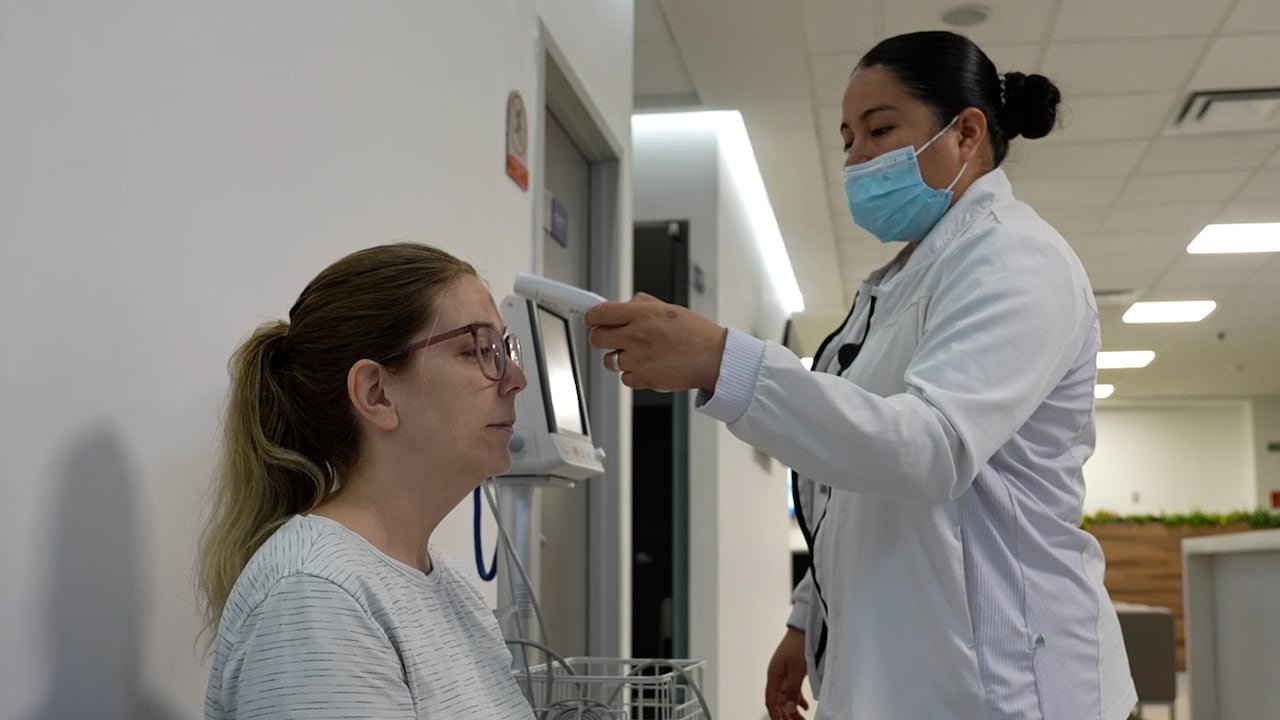
Noelle Menu, 37, says the pain began to darken her reality at a pivotal moment in her life — once she and her husband decided to try for kids, when she was 26.
She stopped taking her birth control, which she had been on for a long period, and said she began experiencing pain she’d never had before.
The pain came to define and limit her life, she said, and it seemed nothing could relieve it. She suffered through delays in diagnosis, as well as emergency room visits, a hysterectomy and being placed on waitlists stretching years to see specialists and receive treatment.
At that point, it was “literally destroying my life,” she said, “and to hear it’s about three to four years to see somebody here, I was just so emotional, so devastated.”
Soon, she realized: “We can’t deal with it in Canada.”
So Menu and her husband pulled from their savings and went into debt to seek private treatment at EndoGlobal in Tijuana, Mexico, which cost about $35,000 including airfare, a multi-day hotel stay and other costs.
It’s a journey some Canadian women suffering from endometriosis are taking because they feel their health-care system has failed them.
The condition affects one in 10 women, and Canada is doing a “poor” job at providing them care, according to a November 2025 report by the House of Commons health committee — and in addition to causing undue pain, the lost productivity due to the disorder costs the Canadian economy some $2.5 billion a year.

Noelle Menu, a Calgary woman living with Stage 4 endometriosis, says doctors dismissed and misdiagnosed her for years, even after multiple surgeries and thousands of dollars spent on private health care. After being told she’d have to wait 30-40 months to see a specialist, Menu says she and her husband drained their funds to travel to Tijuana, Mexico, for surgery, at a cost of about $35,000.
Endometriosis is a chronic condition where tissue similar to the lining of the uterus begins to grow and spread to other parts of the body. This tissue thickens and breaks down according to a woman’s menstrual cycle, and can cause severe inflammation, scarring and pain during periods.
It can take an average of five years to be diagnosed with endometriosis in Canada, the parliamentary committee found, while some people have waited for up to 20 years before doctors linked their pain to the disease.
Even after that, it can take, on average, between six to 18 months to see a specialist and up to 24 months for surgery, it said.
It can be difficult to diagnose because its symptoms can resemble other conditions, and the level of reported pain sometimes doesn’t match detectable tissue growth.

Some people on P.E.I. living with endometriosis say they’ve been waiting a long time to get the specialized treatment they need. For some, it’s been years. CBC’s Gwyneth Egan has more.
The report found that gender bias plays a significant role in those issues — along with a taboo around discussing menstrual issues, it is often assumed that this kind of pain is “just part of being a woman.”
Menu, a supply-chain systems adviser, said she was forced to reduce her workday in half because of the pain. Sometimes, she could barely make it through to the evening.
“This disease is just debilitating for some women, and I really wish there was more awareness around it and that doctors would take us women seriously.”
Days before her flight, she told CBC News, “It’s hard to be so hopeful just because of the previous surgeries I’ve had, but I’m feeling a lot more hopeful this time.”
Dr. Jorge Zavala is one of the founders of EndoGlobal, and he says endometriosis mimics cancer in the way that it spreads, without being as destructive.

Dr. Jorge Zavala, one of the founders of EndoGlobal, which operates out of Hospital Cyntar, says there is a general lack of awareness around endometriosis among doctors who don’t necessarily know what to look for in a patient to get to an accurate diagnosis. (Alessandro Molatore/CBC)
Zavala said doctors generally lack awareness about the condition, which is why diagnoses can take so long.
“As a doctor, if you’re not trained in something, you’re not going to be able to diagnose it. It could be poking your eye, but if you are not trained to see it, you’re not going to see it,” said Zavala.
Vanessa Papiernik, 42, says it took about 30 years for her to arrive at her diagnosis — and it came with a cancer scare.
Papiernik, a veterinarian in Victoria, said she suffered through nine months of “significant” and “debilitating” pain until she landed an appointment for a colonoscopy.
“I was purely in survival mode,” said Papiernik.

Vanessa Papiernik, 42, undergoes pre-surgery exams at the EndoGlobal treatment centre at Hospital Cyntar. She says it took about 30 years for her to arrive at her endometriosis diagnosis and it came with a cancer scare. (Alessandro Molatore/CBC)
She would take Advil, put on maternity clothes because of the bloating and strap a heating pad around her waist to go to work.
“I would push the pain aside, but as soon as I got home, I would realize, ‘Wow, this is very dangerous, what I’m going through right now.’”
Her colonoscopy found a mass. For two weeks as she waited for the biopsy results, she feared it was cancer; her sister had died from colon cancer 10 years earlier. However, the results showed it was endometriosis that had infiltrated through the layers of her colon.
She was referred to a centre in Vancouver, but faced a one-year wait to see a specialist, plus another year for surgery, said Papiernik.
“Living like this for two years was just not an option for me,” she said.

The post-surgery recovery floor at the EndoGlobal centre, at Hospital Cyntar in Tijuana. (Alessandro Molatore/CBC)
She eventually booked a trip to the same centre as Menu, landing the same week the Calgary woman was scheduled for her own procedure.
There were more than 30 Canadian women receiving treatment there within the same timeframe, said Papiernik.
“We need to really come face to face with the fact that this is, to some extent, it’s discrimination against women,” said Dr. Nicholas Leyland, president of Obstetricians and Gynaecologists of Canada.
“If this were happening with the same degree of pain in a male, it would have been fixed a long time ago.”
Leyland said that there are not enough specially trained gynecologists in Canada to deal with “the complex surgical issues,” and that the condition requires a multidisciplinary approach to care, including psychologists and physiotherapists.
The House of Commons report’s top recommendation called on Ottawa to “develop a national action plan on endometriosis” to deal with the “gaps and barriers that hinder awareness, diagnosis and treatment.”
The federal government responded saying that Statistics Canada would gather data on conditions like endometriosis; the agency has been collecting responses since Sept. 28 and will do so till Jan. 15, 2027.
The Canadian Institute of Health Research has also invested $4.9 million in endometriosis research between 2020 and 2025, Ottawa said.
Shortly before her procedure, Menu said doctors in Mexico found a large mass that threatened to block her bowels and send her into septic shock. She said she was two weeks away from emergency surgery.
“For me to hear that I could have been in emergency surgery and my specialist appointment [in Canada] was a 30- to 40-month wait…. It makes me so mad,” said Menu, in a late-September interview with CBC News after her surgery.
With the help of her husband, Menu took a walk around the post-surgical floor, which has about 14 beds.
Most of her neighbours were Canadian women. They greeted each other as they passed.
“I was just so grateful that they were able to find everything,” said Menu.
“I’m on the other side of it now. I’m really happy for that.”
The barrage of spending comes as Republicans fight to overcome Trump’s declining popularity and cost of living concerns.
Published On 12 Oct 2026
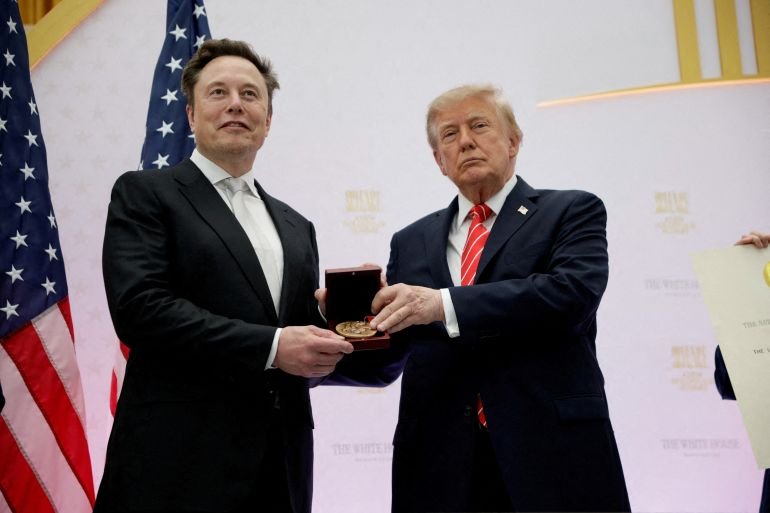
Elon Musk, the trillionaire tech mogul and backer of far-right causes, has reportedly spent $366m since last year to buoy the Republican Party in the United States midterm elections.
The New York Times first reported on Monday that Musk has spent $276m since July alone, including $158m for a super PAC focused on Republican Senate candidates, making him the largest single donor this year.
list of 3 itemsend of list
Musk is considered a close ally of President Donald Trump, the leader of the Republican Party, and was a special government adviser to the White House last year.
Musk’s political action committee, America PAC, has confirmed the spending totals. In a statement to The New York Times, a spokesperson framed the record amount as necessary to defend Congress from a Democratic takeover during the midterm races.
“These robust investments have allowed the GOP apparatus to get its message out so Republicans can have a fighting chance to defy history,” America PAC spokesman Andrew Romeo told the Times.
The barrage of spending by Musk comes as Republican candidates are fighting to overcome Trump’s low popularity and rising concerns about the cost of living among US voters.
Democrats are hoping to capitalise on voter dissatisfaction with Trump’s tenure to seize control of Congress, where Republicans currently hold majorities in both the House of Representatives and the Senate.
The influence of wealthy donors and PACs has long been the subject of criticism. Opponents argue that such spending distorts US politics in favour of powerful interests.
Musk became the world’s first trillionaire in June, when his aerospace company SpaceX made its initial public offering (IPO) on the Nasdaq stock exchange.
The tech entrepreneur had previously said that he planned to step back from his involvement in US politics, stating in May that he had “done enough” and did not have plans for large spending efforts.
Still, Musk has leveraged his tech holdings and wealth to support right-wing groups around the world.
Last year, for instance, politicians in Germany accused Musk of trying to meddle in the national election. Musk has been a vocal backer of the Alternative for Germany (AfD) party, which has been accused of adopting a discriminatory stance on immigration and other issues.
Voters in the US will head to the polls on November 3 to cast their ballots in the midterms, which will decide key state and local races, as well as congressional majorities.
The Republican Party is considered to have a sizeable financial advantage over the Democrats ahead of the race, with heavy spending from groups such as MAGA Inc, a pro-Trump super PAC named for the president’s “Make America Great Again” movement.
As of August, MAGA Inc reportedly had $416m in its coffers. The tracking site AdImpact found that it had spent $22m over the past month alone on the tight race unfolding for the open Senate seat in Texas.
Trump has also increased his campaign activities, hosting a string of rallies in the final weeks before the election to help Republicans push their message.
But Democrats appear confident that the Republicans’ spending advantage will not be enough to counter the effects of growing dissatisfaction with Trump.
“Republicans are hoping to buy these elections, injecting tens of millions into races to try and outrun their unpopular candidates, unpopular president and unpopular economy,” said Lauren French, a spokesperson for Democrats’ Senate Majority PAC.