Category: News

  • Indonesia, US sign ‘major’ defence cooperation agreement

    Indonesia, US sign ‘major’ defence cooperation agreement

    Signing of defence partnership follows reports that Washington is seeking overflight access in Indonesia for US military planes.

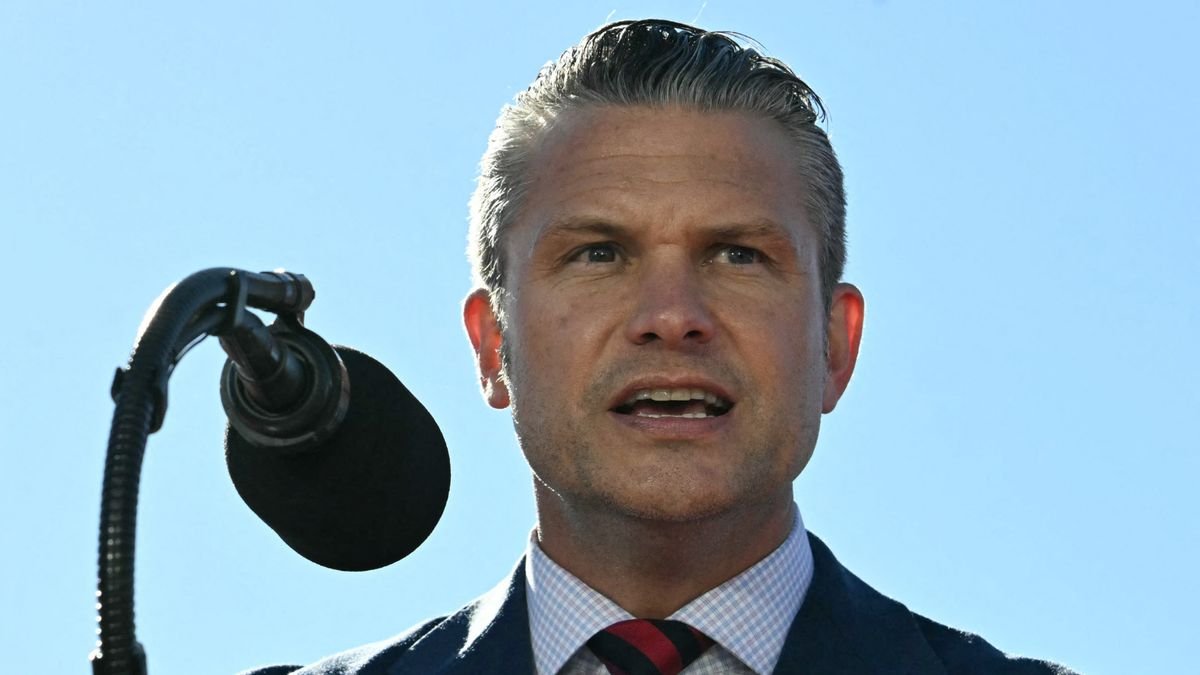
    ⁠US ⁠Secretary of Defense Pete Hegseth ⁠has hailed the establishment of a “major defence cooperation partnership” with Indonesia, saying it underscores the “strength and potential” of ties with Jakarta to maintain stability in the Asia Pacific region.

    Hegseth hosted Indonesian Minister of Defence Sjafrie Sjamsoeddin at the Pentagon on Monday, where the deal was signed.

    Recommended Stories

    list of 4 itemsend of list

    “This [partnership] signifies the strength and potential of our security relationship… bolsters regional deterrence, and advances our shared commitment to peace through strength,” Hegeseth said, according to a Defense Department statement.

    The US defence secretary also said Washington and Jakarta’s security relationship was “active and growing”, noting that both countries’ armed forces participate in more than 170 military exercises together each year.

    A joint statement on the new partnership said the two sides had agreed to work on co-developing “sophisticated asymmetric capabilities, pioneering next-generation defence technologies in the maritime, subsurface and autonomous systems domains”, and improving operational readiness.

    “We are here as Indonesian delegates… with very great enthusiasm to continue to develop our defence relationship, [which] should be enduring for our next generation in Indonesia and the United States of America,” Sjafrie was quoted as saying.

    “We’re working on behalf of mutual respect and mutual benefit to enhance [the] value of our national interests,” he added.

    The signing of the partnership comes a day after reports in Indonesia that both countries are discussing a proposal to ⁠give US military aircraft access to Indonesian airspace.


    The US is seeking “blanket” overflight access for military aircraft through Indonesian airspace, several ‌media outlets reported on Sunday, adding that Indonesian President Prabowo Subianto had approved the proposal.

    Responding to the reports, the Ministry of Defence in Jakarta said in a statement that the two countries are still discussing a “Letter of ⁠Intent”, and only a preliminary draft on overflight was being discussed internally. The draft is neither final nor binding, the ⁠ministry added.

    Control over Indonesian airspace belongs to Indonesia, the Defence Ministry added, saying that deals ⁠with other countries would protect Indonesia’s sovereignty and adhere to Indonesian law.

    “The deal is not final. It is not legally binding. It cannot be used as a basis for official government policy,” Defence Minister Sjafrie’s spokesman, Rico Ricardo Sirait, told the Jakarta Globe.

    “Authority, control, and oversight over Indonesian airspace rest entirely in our country. Any potential regulation shall guarantee Indonesia’s full authority to approve or reject any activity in national airspace,” he told the news outlet.

    Prabowo is due to meet his French counterpart, Emmanuel Macron, in Paris on Tuesday, just a day after he held talks with Russia’s Vladimir Putin about oil, the government in Jakarta said, according to the AFP news agency.

    Last month, Prabowo’s government announced fuel rationing and mandated a day-per-week work-from-home policy for civil servants to conserve energy stocks as prices surge amid the US-Israel war on Iran.

  • World faces food ‘catastrophe’ if Strait of Hormuz disruption persists: FAO

    World faces food ‘catastrophe’ if Strait of Hormuz disruption persists: FAO

    Global agriculture is highly exposed to the waterway blockage, risking higher commodity prices and food inflation.

    A prolonged disruption in the Strait of Hormuz could result in a global food “catastrophe”, the Food and Agriculture Organization (FAO) has warned, as shipments of critical agricultural inputs remain blocked in the key waterway due to the US-Israel war on Iran.

    Food prices have not risen yet because existing stocks are absorbing the shock, the United Nations body’s chief economist, Maximo Torero, said in an interview on Monday, alongside David Laborde, director of FAO’s agrifood economics division.

    Recommended Stories

    list of 3 itemsend of list

    But if traffic through the strait does not resume, the shocks to energy and fertiliser markets will translate into higher commodity and retail prices later this year and into 2027, Laborde added.

    Exports of 20 to 45 percent of key agrifood inputs rely on sea passage through the Strait of Hormuz, according to the FAO.

    “We are in an input crisis; we don’t want to make it a catastrophe,” said Laborde. “The difference depends on the actions we take.”

    “Right now, we don’t have a food crisis because we have food availability,” Torero added, noting that the increase in gas and oil prices has not translated yet into higher costs for bread and wheat, for example, thanks to ample supplies coming out of a good harvest season. “But this is now,” the economist said.

    Fertilisers

    Nearly half of the world’s traded urea – the most widely used fertiliser – and large volumes of other fertilisers are exported from Gulf countries via the Strait of Hormuz, making global agriculture highly exposed to any disruption there.

    Recent disruptions to gas supplies and shipping have already forced fertiliser plants, which use natural gas to manufacture fertiliser, in the Gulf and beyond to shut or cut their output.

    Should traffic continue to stall in the chokepoint, farmers will be forced to produce with less fertiliser or increase the cost of their product, Torero said.

    “This is why it’s so essential that the ceasefire continue and is so essential that it is not just a ceasefire, but also that vessels start moving,” he said. “The clock is ticking.”

    Torero added that poorer countries were most exposed because planting calendars meant delays in access to key inputs could quickly translate into lower output, higher inflation and slower global growth.

    Iran has brought traffic through the strait to a near-total halt in response to attacks from the United States and Israel, which launched a war on Tehran on February 28, killing Supreme Leader Ayatollah Ali Khamenei.

    The move has triggered a global energy crisis, doubling at times the prices of oil and gas compared with pre-war levels.

    Over the weekend, Iranian and US representatives held a 21-hour marathon negotiation to reach an agreement for a permanent ceasefire, but failed to achieve a breakthrough.

    US President Donald Trump then decided to impose a naval blockade on the strait. He said the navy would hunt down and interdict ships in international waters that had paid Iran a toll to traverse the strait.

    Later, the US military said it would block all maritime traffic entering and exiting Iranian ports, including those in the Gulf and the Gulf of Oman.

  • Iran slams YouTube ban on pro-Iranian group’s Lego-style AI videos

    Iran slams YouTube ban on pro-Iranian group’s Lego-style AI videos

    Iran’s Foreign Ministry spokesman says the move aims to ‘suppress the truth about their illegal war on Iran’.

    Iran has condemned a ban imposed by YouTube on a pro-Iranian group that releases Lego-style artificial intelligence videos after posting one lampooning United States President Donald Trump and declaring “Iran won” last week.

    Explosive Media said on X last week that YouTube suspended its account for “violent content”, while the group’s other online accounts appeared unaffected.

    Recommended Stories

    list of 4 itemsend of list

    “Seriously! Are our LEGO-style animations actually violent?” Explosive Media asked, in its post on Friday.

    Ministry of Foreign Affairs spokesman Esmaeil Baghaei said the ban was a move to suppress “the truth” about the US-Israel war on Iran.

    “In a land that proudly hosts Pixar, DreamWorks Animation, and The Walt Disney Company, an independent animated YouTube channel – which had organically grown by depicting U.S. aggression & warmongering, and garnered millions of viewers – was abruptly shut down!! Why?!” he posted on X on Monday.

    Baghaei added: “Simply to suppress the truth about their ‘illegal war’ on Iran and shield the American administration’s false narrative from any competing voice.”

    Meme videos on Trump

    Explosive Media, a group of pro-Iran creators that describes itself as independent but is widely suspected of having ties to the Iranian government, has produced a series of such videos that have racked up millions of views during the conflict.

    “The way to crush imperialism has been shown to the world. Trump surrendered. IRAN WON,” read the caption of its video on X after the two-week ceasefire agreement was announced on April 7.

    “TACO will always remain TACO,” it added, referring to the acronym “Trump always chickens out”.

    Another clip on X depicted Trump – caricatured with an oversized yellow head and a flaming backside – holding a sign that read: “VICTORY! I am a loser.”

    Explosive Media, whose videos often tap into US popular culture, seems to be portraying Trump as old, isolated, and prone to childish tantrums, seemingly disconnected from reality.

  • Brazilian ex-intelligence chief detained by US immigration authorities

    Brazilian ex-intelligence chief detained by US immigration authorities

    Brazilian media reports that Alexandre Ramagem fled the country after being convicted for involvement in a coup plot.

    Brazilian media have reported that the country’s former intelligence chief, Alexandre Ramagem, has been detained by immigration authorities in the United States, where he had fled after being convicted in connection with a coup plot on behalf of former right-wing President Jair Bolsonaro.

    CNN Brazil reported that Ramagem was arrested by US Immigration and Customs Enforcement (ICE) on Monday, citing Brazilian Federal Police and the Ministry of Justice and Public Security. The Brazilian outlet Globo reported that the arrest took place in Florida.

    Recommended Stories

    list of 3 itemsend of list

    The Brazilian government has sought the extradition of Ramagem, who was sentenced to 16 years in prison for his involvement in efforts to keep Bolsonaro in power after he lost the country’s 2022 election to leftist challenger Luiz Inacio Lula da Silva.

    Reports state that Ramagem fled Brazil in September, illegally crossing the border into Guyana before taking a plane to the US.

    Globo reported that the Brazilian embassy in Washington, DC filed documentation with the US Department of State seeking his extradition on December 30, 2025.

    Paulo Figueiredo, a political ally of Bolsonaro who lives in the US, said the detention was not related to Brazil’s extradition request.

    “Ramagem was not arrested, but detained following a police approach in Orlando, initially for a minor traffic infraction and, subsequently, referred to ICE – a common procedure in Florida,” Figueiredo said in a social media post.

    He added that Ramagem has a pending asylum application and is optimistic that he will be released “as soon as possible” rather than deported.

    Al Jazeera is not able to verify the reason for Ramagem’s arrest by US authorities.

    Bolsonaro himself is currently serving a 27-year prison sentence after being convicted in September.

    His trial was depicted by Bolsonaro’s allies as a political witch hunt, and sparked the ire of US President Donald Trump, who placed large tariffs on Brazil and called for the trial to be thrown out. Trump later relaxed some of those tariffs following improved relations with President Lula.

  • Bernie Sanders vows to push resolution to block US weapons to Israel

    Bernie Sanders vows to push resolution to block US weapons to Israel

    Bill is unlikely to pass in Republican-controlled US Senate, but it could test waning support for Israel among Democrats.

    United States Senator Bernie Sanders has promised to advance a resolution to block bombs and bulldozers to Israel, testing support for the US ally in Congress amid the war with Iran.

    Sanders said on Monday that he will “force the vote” on the measure later this week – a legislative process of bringing a bill to the floor of the Senate without the approval of the majority leader.

    Recommended Stories

    list of 3 itemsend of list

    “This week, I will be forcing a vote on legislation to block the sale of nearly half a billion dollars worth of bombs and bulldozers to the Israeli military,” Sanders wrote on X.

    “The extremist Netanyahu government that has committed genocide in Gaza does not need more military support from American taxpayers,” he said, referring to the administration of Israeli Prime Minister Benjamin Netanyahu.

    The resolution is unlikely to pass in the Republican-controlled Senate, but it will gauge the level of support Israel has among Democrats, who have been increasingly angry over the US-Israel war on Iran and the ongoing atrocities in Gaza and the occupied West Bank.

    Sanders put forward a similar bill in July of last year, but it failed in a 27-70 vote. Still, Palestinian rights advocates said at the time that the tally reflected an erosion in the pro-Israel bipartisan consensus in Washington.

    A majority of Senate Democrats backed the 2025 resolution.

    Since then, US public support for Israel has continued to nosedive, according to polls, especially among young people and Democrats.

    A Gallup poll in February suggested that only 46 per cent of Americans have favourable views of Israel. Only 17 percent of Democratic respondents said they sympathise more with Israelis than Palestinians.

    The US provided Israel with more than $21bn in military aid in the first two years of Israel’s genocidal war on Gaza.

    The abuses in Gaza and the war on Iran, which saw US President Donald Trump join forces with Israel to start the conflict without congressional authorisation, have intensified scepticism of the unconditional support for Israel in the US.

    On Monday, J Street – a prominent liberal Zionist group that describes itself as pro-Israel and pro-peace – called for the first time for phasing out US aid to the Israeli military.

    “The war in Gaza, rising extremist Jewish terror in the West Bank and the US-Israel war with Iran have highlighted the need for a fundamental reassessment of the US-Israel security relationship,” the group said in a statement.

    J Street also urged applying US laws, which restrict security assistance to foreign countries over rights abuses, consistently to Israel.

    Rights advocates say successive US administrations have breached the law and overlooked Israeli violations to ensure a continuous flow of weapons to Israel.

  • US judge dismisses Trump’s $10bn lawsuit against WSJ over Epstein story

    Dismissed lawsuit follows Wall Street Journal’s report on a letter allegedly signed by Trump for Epstein’s 50th birthday.

    A United States federal judge has dismissed US President Donald Trump’s $10bn defamation lawsuit against the Wall Street Journal and its owner Rupert Murdoch over a story on Trump’s ties to Jeffrey Epstein.

    Miami-based ‌US District Judge Darrin Gayles said on Monday that Trump did not meet the “actual malice” standard that public figures must clear in defamation cases.

    Recommended Stories

    list of 3 itemsend of list

    That means public figures must prove not only that a public statement about them was false, but also that the media outlet or person who made the statement ‌acted with reckless disregard for the truth or should have known that it was false.

    “This complaint comes nowhere close to this standard,” Gayles wrote. “Quite the opposite.”

    The judge noted that reporters from the Wall Street Journal (WSJ) reached out to Trump for comment beforehand and printed his denial. That allowed readers to decide for themselves what to conclude, cutting against Trump’s assertion that the newspaper acted with actual malice, the judge said.

    Gayles said Trump could file an amended version of ⁠the lawsuit by April 27.

    In ⁠his lawsuit, Trump called a birthday greeting that he allegedly sent to Epstein, a convicted sex offender, a “fake”. The US president sought $10bn for what he called damage to ‌his reputation. News Corp’s Dow Jones & Company, the WSJ’s parent company, defended the accuracy of its July ‌17, ‌2025 article.

    Trump filed the lawsuit after promising to sue the paper almost immediately after it put a new spotlight on his well-documented relationship with Epstein by publishing an article that described a sexually suggestive letter that the newspaper said bore Trump’s signature and was included in a 2003 album compiled for Epstein’s 50th birthday.

    A birthday letter that US President Donald Trump allegedly wrote to sex offender Jeffrey Epstein more than 20 years ago is seen as presented by the Democrats in the U.S. House of Representatives on their X account September 8, 2025. The letter, the existence of which was reported by the Wall Street Journal in July, appears to have been signed by Trump, but he has denied doing so and has said the card does not exist, and the White House has denied its authenticity. Handout via REUTERS
    A birthday letter that US President Donald Trump allegedly wrote to sex offender Jeffrey Epstein more than 20 years ago is seen as presented by Democrats in the US House of Representatives on their X account on September 8, 2025 [Handout via Reuters]

    The letter was subsequently released publicly by the US Congress, which subpoenaed the records from Epstein’s estate.

    The ruling marks yet another blow in the Trump administration’s efforts to manage fallout over its release of the Epstein files and the president’s attempts to use the legal system to curb reporting that he finds critical of him.

    The White House didn’t immediately respond to a request by AP for comment.

  • What do we know about sea mines in and around the Strait of Hormuz?

    What do we know about sea mines in and around the Strait of Hormuz?

    The United States military says its warships will conduct an operation to clear mines laid by Iran in the Strait of Hormuz.

    In a statement released on Saturday, Central Command (CENTCOM), which has responsibility for US military operations in the Middle East, said the mission would be undertaken by guided missile destroyers USS Frank E Peterson and USS Michael Murphy and would aim to establish a “safe pathway” for the free flow of global commerce after Iran’s near-closure of the waterway since the war the US and Israel launched on Iran on February 28.

    On Wednesday after the announcement of a two-week ceasefire to allow for talks between the US and Iran, Iran’s Islamic Revolutionary Guard Corps (IRGC) released a map of the Strait of Hormuz showing what it said was a safe route for ships to follow through the strait.

    The map appears to direct ships farther north towards the Iranian coast and away from the traditional route closer to the coast of Oman.

    Alternative routes through the Strait of Hormuz have been announced by Iran's Islamic Revolutionary Guard Corps (IRGC), providing new entry and exit pathways for maritime traffic.
    ‘Safe’ routes through the Strait of Hormuz have been announced by Iran’s IRGC, providing new entry and exit pathways for maritime traffic [Screengrab/ Al Jazeera]

    In a statement, the IRGC said all vessels must use the new map for navigation due to “the likelihood of the presence of various types of anti-ship mines in the main traffic zone”.

    The stakes are high. One-fifth of the world’s oil and liquefied natural gas (LNG) supplies had been shipped through the Strait of Hormuz before the war. Even a single mine, experts said, is enough to compel operators to assume a wider threat, in effect invalidating insurance and shutting down their use of the waterway.

    INTERACTIVE - Strait of Hormuz - March 2, 2026-1772714221
    (Al Jazeera)

    What are sea mines, and how do they work?

    Naval mines have been described as the most cost-effective weapons in modern warfare. According to an analysis by the Philadelphia-based Foreign Policy Research Institute (FPRI), sophisticated modern mines can be manufactured for tens of thousands of dollars, yet they can impose economic and strategic costs that are orders of magnitude higher.

    Iran’s stockpile is estimated by maritime analysts to number 2,000 to 6,000 mines, a significant portion of which are produced domestically. These weapons generally fall into three categories, based on how they interact with their targets:

    • Contact mines: These are traditional designs, such as the M-08, which date back to World War I. They are moored to the seabed and detonate upon physical contact with a ship’s hull.
    • Bottom (influence) mines: Models like the Maham-2 rest on the seafloor and are triggered by the acoustic, magnetic or pressure signatures of passing vessels, making them significantly harder to detect than moored varieties – and more dangerous than contact mines because the ship doesn’t even need to touch the mine to trigger an explosion.
    • ‘Smart’ and rocket mines: More advanced systems, including reportedly imported Chinese EM-52 rocket mines, remain moored on the seabed at depths of up to 200 metres (656ft). When they detect a ship sailing overhead, they release a rocket that strikes the vessel’s underside.

    Where are sea mines placed in the strait?

    There is no clear answer. The Iranians have not officially disclosed whether or where they have placed mines, stating only that there may be mines in the strait. The fact that US warships are currently searching for mines suggests Washington does not know the location of possible mines either.

    If deployed, however, military analysts at the Washington Institute for Near East Policy noted that the placement of these mines is likely to have been strategically calculated to exploit the geography of the Gulf, forcing international traffic into narrow, vulnerable channels.

    As the map released by the IRGC last week showed, Iran is clearly directing shipping traffic to travel much closer to its coast than it had done before.

    Speaking to Al Jazeera, Alexandru Cristian Hudisteanu, a retired Romanian naval officer and MARSEC (the North American three-tiered maritime security system) professional, explained that in wargaming scenarios, systematic mining is used to deny access to specific water spaces. “For a strait, one example would be to mine the whole width of the passageway or to deny a section of the actual strait,” Hudisteanu explained.

    But he warned that the physical location of mines matters less than the psychological effect they induce. “The mined area does not have to be everywhere to be everywhere in the minds of those who must transit it,” he said.

    INTERACTIVE - US naval blockade of Iran’s ports - APRIL 13, 2026-1776092129
    (Al Jazeera)

    Can the US counter Iranian mine-laying operations?

    The political tensions surrounding the Strait of Hormuz have reached a fever pitch. In early March, a senior IRGC adviser declared the strait “closed” to enemies while permitting select vessels to pass.

    US President Donald Trump has asserted that US forces have destroyed “all” 28 Iranian mine-laying boats. Trump warned of consequences “at a level never before seen” if the mines are not removed.

    While CENTCOM has confirmed striking 16 Iranian vessels in an initial wave of attacks, the destruction of an entire mine-laying fleet remains unverified by independent sources.

    How easy is it to clear sea mines?

    The process of clearing mines – known as mine countermeasures (MCM) – is slow, methodical and high risk. It involves “mine hunting”, using high-resolution sonar to find individual mines, and “minesweeping”, using mechanical or magnetic systems to trigger them.

    However, the US Navy is facing what experts call a “mine gap”. The FPRI’s analysis detailed how institutional neglect had led to the retirement of dedicated MCM assets just months before this war. The Navy decommissioned its last four Avenger-class MCM ships in Bahrain in September. Additionally, the MH-53E Sea Dragon helicopters, long the backbone of airborne minesweeping, were phased out in August, it reported.

    The current US strategy relies on small combat ships built for coastal operations and fitted with MCM mission modules. However, only one of these vessels, the USS Canberra, is currently available in the region.

    “MCM units tend to be good at one single job and lousy at anything but minimal point defence,” Hudisteanu told Al Jazeera. He explained that while conducting clearance, these vessels are “virtually sitting ducks” for coastal missiles or fast attack craft, requiring a massive protective screen of destroyers and aircraft to operate.

  • Pakistan eyes narrow window to resuscitate US-Iran talks after breakdown

    Pakistan eyes narrow window to resuscitate US-Iran talks after breakdown

    Islamabad, Pakistan – More than 12 hours of face-to-face negotiations between the United States and Iran ended without agreement in Islamabad on Sunday, leaving a fragile two-week ceasefire as the only barrier between diplomacy and a return to war.

    Pakistan, which spent weeks positioning itself as a mediator and succeeded in bringing both sides into the same room, emerged with its role intact. But officials acknowledge the harder phase now begins — getting American and Iranian negotiators back into talks before their differences explode into full-fledged war again.

    Recommended Stories

    list of 4 itemsend of list

    “Pakistan has been and will continue to play its role to facilitate engagements and dialogue between the Islamic Republic of Iran and the United States of America in the days to come,” Pakistan’s Deputy Prime Minister and Foreign Minister Ishaq Dar said in a statement after the conclusion of the talks.

    The talks, the highest-level direct engagement between Washington and Tehran since the 1979 Islamic Revolution, faltered over differences surrounding Iran’s nuclear programme.

    “The simple fact is that we need to see an affirmative commitment that they will not seek a nuclear weapon, and they will not seek the tools that would enable them to quickly achieve a nuclear weapon,” said US Vice President JD Vance, who led the American delegation alongside special envoy Steve Witkoff and US President Donald Trump’s son-in-law Jared Kushner.

    However, Vance left a narrow opening for the resumption of talks.

    “We leave here with a very simple proposal, a method of understanding that is our final and best offer. We’ll see if the Iranians accept it,” Vance said, tapping the podium for emphasis, before ending his brief remarks, which lasted for less than five minutes.

    Pakistani and Iranian sources confirmed that the Iranian delegation met senior Pakistani officials later on Sunday before departing for Tehran, though details of those discussions remain unclear.

    What is clear is that Pakistan isn’t giving up yet.

    Washington’s red lines

    US officials said that Iran had entered negotiations misreading its leverage, believing it held advantages that, in Washington’s assessment, it did not.

    .
    US Vice President JD Vance speaks during a news conference after meeting with representatives from Pakistan and Iran, on Sunday, April 12, 2026, in Islamabad, Pakistan [Jacquelyn Martin/Pool via Reuters]

    According to these officials, Vance spent much of his time during the talks correcting what they described as Iranian misperceptions about the US position — asserting that no deal would be possible without a full commitment on the nuclear issue.

    Officials also suggested that Trump’s subsequent announcement of a blockade in the Strait of Hormuz was not an impulsive reaction, but a pre-planned step aimed at removing the waterway as an Iranian bargaining tool and forcing the nuclear issue back to the centre of any future talks.

    But the US officials, speaking on background, also acknowledged that the gulf in the positions between Washington and Tehran that they failed to bridge extended to issues beyond Iran’s nuclear programme.

    In essence, they said, the two sides failed to agree on six key points: ending all uranium enrichment; dismantling major enrichment facilities; removing Iran’s stockpile of highly enriched uranium; accepting a broader regional security framework involving US allies; ending funding for groups Washington designates as “terrorist” organisations, including Hamas, Hezbollah and the Houthis; and fully reopening the Strait of Hormuz without tolls.

    Hours after the talks ended, Trump acknowledged partial progress, but underscored the central impasse.

    “The meeting went well, most points were agreed to, but the only point that really mattered, NUCLEAR, was not,” he wrote on Truth Social.

    “Effective immediately, the United States Navy, the Finest in the World, will begin the process of BLOCKADING any and all Ships trying to enter, or leave, the Strait of Hormuz,” Trump said. “Iran will not be allowed to profit off this Illegal Act of EXTORTION.”

    Iran has effectively controlled access to the Strait of Hormuz, through which roughly 20 percent of global oil supplies pass, since the US-Israeli attacks began on February 28.

    Iran’s Islamic Revolutionary Guard Corps (IRGC) has imposed what analysts describe as a de facto toll system, requiring vessels to secure clearance codes and transit under escort through a controlled corridor.

    The disruption has pushed oil prices above $100 per barrel at times, unsettling global markets and placing sustained pressure on energy-importing countries across Asia and Europe.

    Tehran has framed its control of the strait as both a security measure and a key negotiating lever, one it has shown little willingness to relinquish without a broader settlement.

    Tehran’s point of view

    Iran’s account of the breakdown differed sharply.

    In a post on X early on April 13, after returning to Tehran, Iran’s Foreign Minister Abbas Araghchi said his country had engaged in “good faith”, only to face shifting demands.

    Pakistani Prime Minister Shehbaz Sharif meets with Iranian Parliament Speaker Mohammad Bagher Ghalibaf, as delegations from the United States and Iran are expected to hold peace talks, in Islamabad, Pakistan, April 11, 2026. Pakistan's Prime Minister Office/Handout via REUTERS THIS IMAGE HAS BEEN SUPPLIED BY A THIRD PARTY. BEST QUALITY AVAILABLE. REFILE - ADDING NATIONALITY 'PAKISTANI PRIME MINISTER SHEHBAZ SHARIF'.
    Iranian Parliament Speaker Mohammad Bagher Ghalibaf, left, meets with Pakistani Prime Minister Shehbaz Sharif, right, in Islamabad on April 11, 2026 [Handout/Prime Minister’s Office via Reuters]

    “When just inches away from an Islamabad MoU, we encountered maximalism, shifting goalposts, and blockade,” he wrote. “Zero lessons learned. Good will begets good will. Enmity begets enmity.”

    The reference to an “Islamabad MoU”, a memorandum of understanding, was the clearest public signal yet that the two sides had come closer to a formal agreement than either government had previously acknowledged.

    Iran’s Parliament Speaker Mohammad Bagher Ghalibaf, who led the country’s delegation, said his team had proposed “forward-looking initiatives”, but failed to secure trust.

    “Due to the experiences of the two previous wars, we have no trust in the opposing side,” he wrote on Sunday.

    Foreign Ministry spokesperson Esmaeil Baghaei also pointed to partial progress but unresolved differences.

    “On some issues we actually reached mutual understanding, but there was a gap over two or three important issues and ultimately the talks didn’t result in an agreement,” he said.

    Tehran’s key demands, including an end to Israeli strikes on Lebanon, the release of $6bn in frozen assets, guarantees on its nuclear programme and the right to charge vessels transiting the Strait of Hormuz, remained unmet.

    Iran’s ambassador to Pakistan, Reza Amiri Moghadam, however, offered a more measured view — suggesting that Tehran was not closing the window on talks.

    “The Islamabad Talks is not an event but a process,” he wrote in his message on X on Sunday. “The Islamabad Talks laid the foundation for a diplomatic process that, if trust and will are strengthened, can create a sustainable framework for the interests of all parties.”

    Pakistan’s balancing act

    For Pakistan, analysts say, the outcome represents a setback but not a failure.

    Officials were careful to describe the talks as “an important opening step in a continuing diplomatic process”, stressing that issues of such complexity cannot be resolved in a single round.

    The emphasis, they said, was on keeping the channel open.

    Muhammad Obaidullah, a former Pakistan Navy commodore who has served in Iran as a diplomat, said expectations of a breakthrough were always unrealistic.

    “The mere fact of bringing both parties face to face is a significant diplomatic achievement in itself,” he told Al Jazeera. “The diplomacy is not dead.”

    Ishtiaq Ahmad, professor emeritus of international relations at Quaid-i-Azam University in Islamabad, went further.

    “The talks did not collapse; they concluded without agreement but with a defined US offer on the table and the channel still intact,” he said.

    “Pakistan’s role was to move the crisis from escalation to structured engagement, which it achieved. The absence of convergence reflects structural differences between the US and Iran, not a failure of mediation.”

    Both Trump and Iranian officials have praised Pakistan’s Prime Minister Shehbaz Sharif and Chief of Army Staff Field Marshal Asim Munir for their efforts to secure the ceasefire, and for hosting the talks in Islamabad. That, say analysts, suggests that they remain open to further Pakistan-brokered negotiations.

    Sahar Baloch, a Germany-based scholar of Iran, said that trust remains Pakistan’s most valuable asset.

    “The real test of credibility is not preventing breakdowns, but remaining relevant after them,” she said.

    U.S.-Iran peace talks in Islamabad
    A man walks past a billboard announcing peace negotiations as delegations from the United States and Iran hold high-level talks in Islamabad, Pakistan, April 11, 2026 [Asim Hafeez/Reuters]

    Fragile ceasefire

    The immediate threat to Pakistan’s role comes from the evolving situation in the Strait of Hormuz and in Lebanon.

    Iran has already warned that continued Israeli strikes on Lebanon could render negotiations meaningless. Iran’s President Masoud Pezeshkian has framed such attacks as a direct challenge to the ceasefire.

    Trump’s blockade announcement now adds pressure from a second front.

    Ahmad, a former Pakistan chair at Oxford University, warned that a collapse of the truce would sharply narrow diplomatic options.

    “If the ceasefire collapses, the immediate consequence is the loss of the diplomatic window,” he said. “A second round becomes far more difficult because both sides would return to negotiating under active escalation, where positions tend to harden rather than converge.”

    Obaidullah drew a historical parallel with the US naval quarantine of Cuba during the 1962 missile crisis. What if China were to use its own ships to import Iranian oil? Would the US attack them?

    “The world will again be watching who blinks first,” Obaidullah said. “However, it may turn into a far greater conflict if neither side does.”

    The Cuban Missile Crisis of October 1962 brought the US and the Soviet Union to the brink of nuclear war, after Washington discovered Moscow had installed nuclear missiles on Cuban soil, within striking distance of the American mainland.

    The US blocked the Soviets from providing more equipment to Cuba, and eventually, a diplomatic settlement was reached, with the Soviets agreeing to withdraw the missiles in exchange for a US pledge not to invade Cuba.

    Baloch, the Berlin-based scholar, agreed that the situation remains volatile.

    “The ceasefire risks becoming more symbolic than substantive,” she said. “But paradoxically, escalation can sometimes force a return to talks, even if under more urgent and less favourable conditions.”

    What is the road ahead?

    Pakistan’s room for manoeuvring is also shaped by its economic fragility.

    The disruption in the Strait of Hormuz has driven up energy prices, compounding pressures on an economy already under strain before the conflict.

    Ahmad said this creates both urgency and limits.

    “Economic exposure, especially to energy shocks and external financing, creates urgency for Pakistan to prevent a prolonged conflict,” he said.

    “But it also reinforces a constraint: Pakistan cannot afford escalation with either side. Its leverage is not coercive; it is positional. It comes from being the only channel acceptable to both sides, not from the ability to impose outcomes,” Ahmad said.

    Eight days remain until the end of the initial two-week truce, a window Pakistani officials said privately represents a genuine opportunity for further technical and political alignment, if both sides choose to use it.

    Ahmad suggested that any breakthrough would depend on creating a sequence of steps acceptable to both sides.

    “The US is asking for early nuclear commitments; Iran is asking for guarantees and relief first,” he said.

    Pakistan’s role, he added, would be to help “structure this sequencing, keep both sides engaged, and prevent breakdown at each stage”.

    Islamabad won’t be the one drafting a deal itself, he emphasised, noting, “At this point, maintaining the channel is as important as the substance of the deal itself.”

  • Trump’s threat to blockade Hormuz: Why it’s the latest major escalation

    Trump’s threat to blockade Hormuz: Why it’s the latest major escalation

    United States President Donald Trump’s blockade of the Strait of Hormuz after talks in Islamabad between Washington and Tehran ended without a deal is a substantial escalation in the war on Iran, analysts say.

    In a social media post on Sunday, Trump said the US Navy “will begin the process of BLOCKADING any and all Ships trying to enter, or leave, the Strait of Hormuz”.

    Recommended Stories

    list of 3 itemsend of list

    The blockade began at 10am Washington, DC, time (14:00 GMT) on Monday.

    Trump’s comments have raised concerns about the status of the two-week ceasefire between the US and Iran announced last week.

    Chris Featherstone, a political scientist at the University of York, told Al Jazeera that Trump’s threat to blockade the Strait of Hormuz is “absolutely an escalation” in the US and Israel’s war on Iran.

    “Trump is using the threat of the blockade as a tool in the negotiations with Iran. Trump has said Iran holds no cards, and this attempt to leverage a blockade on Iran would constitute an attempt to further pressure Iran to comply with US goals in the negotiations,” he said.

    What could the blockade look like? Here’s what we know:

    What sort of blockade is the US threatening?

    Shortly after the US and Israel began strikes on Iran on February 28, Iran essentially took control of the Strait of Hormuz, a vital chokepoint for the global energy market. Before the war began, 20 percent of the world’s oil and liquefied natural gas (LNG) supplies were shipped through the strait.

    After the Pakistan-brokered ceasefire came into force on Wednesday, Tehran confirmed it would allow shipping through the Strait of Hormuz for the duration of the two-week agreement, easing a disruption that had sent global oil and gas prices soaring.

    However, it has been unclear whether Iran has been collecting fees for passage during the ceasefire. During the war, only a few ships from specific countries considered friendly to Iran and those that paid tolls were granted safe passage.

    After weekend talks in Pakistan ended without a deal, Trump threatened to blockade the Strait of Hormuz and also accused Iran of “extortion”. He added that the US Navy would hunt down and interdict ships in international waters that had paid Iran a toll to traverse the strait.

    Later, the US military said it would block all maritime traffic entering and exiting Iranian ports, including those in the Gulf and the Gulf of Oman.

    The US ‌military’s Central Command (CENTCOM), which has responsibility for operations in the Middle East, told the Reuters news agency that the US ⁠military ⁠will enforce a blockade in the Gulf of Oman and ⁠the Arabian Sea east of the Strait of ⁠Hormuz and it will apply to all vessels regardless of flag.

    “Any vessel entering or departing the blockaded ⁠area without authorisation is subject to ⁠interception, diversion and capture,” it said.

    “The blockade will not impede neutral transit passage ‌through the Strait of Hormuz to or from non-Iranian ‌destinations.”

    Iran’s armed forces, however, said the US “imposition of restrictions on the movement of vessels in international waters is an illegal act and amounts to piracy”.

    Jason Chuah, professor of maritime law at City St George’s, University of London, and the Maritime Institute of Malaysia, told Al Jazeera that Washington’s actions wouldn’t be a classic blockade but a case of “sanctions with warships doing the bidding of President Trump”.

    “It would be much more like a steady pattern of stopping, boarding and seizing vessels thought to be linked to Iran, essentially sanctions enforcement at sea,” he said.

    INTERACTIVE - US naval blockade of Iran’s ports - APRIL 13, 2026-1776092129
    (Al Jazeera)

    Chuah said the legality of such a blockade by the US is “tricky”.

    “The United States is not a party to the United Nations Convention on the Law of the Sea, but that does not mean it is free to blockade as it sees fit,” he said. “The basic rules about freedom of navigation and passage through key waterways are widely accepted as customary international law, so they bind states whether they’ve signed the treaty or not.”

    He added: “Now, if you want to call something a blockade in legal terms, you’re really in the territory of the law of armed conflict at sea – think the San Remo Manual on International Law Applicable to Armed Conflicts at Sea. That, however, assumes you’re in an actual armed conflict, that you’ve declared the blockade, that it’s effective and that it’s applied even-handedly to neutral ships. That framework sets a high lawfulness bar for blockades.”

    Chuah said that even if Trump uses sanctions as a justification for Washington’s actions regarding Iranian ports, it does not fully resolve the legal issues.

    “Even quite robust domestic sanctions don’t automatically give you the right under international law to stop foreign ships on the high seas without consent or backing from the United Nations Security Council. At best, sanctions may justify why you act but not always where you can act,” he said.

    Will other countries join the US in the blockade?

    So far, only the United Kingdom has clearly stated that it will not join Trump’s blockade of Iranian ports.

    In an interview with BBC 5 Live on Monday, British Prime Minister Keir Starmer said he is focusing on reopening the Strait of Hormuz “as quickly as possible” to reduce global energy prices.

    “We’re not supporting the blockade, and all of the marshalling diplomatically, politically and capability, … that’s all focused, from our point of view, on getting the strait fully open,” he said.

    Meanwhile, China has urged calm on all sides.

    Keeping the critical waterway safe, stable and unimpeded serves the common interests of the international community, Ministry of Foreign Affairs spokesperson Guo Jiakun said, adding that China stands ready to work with all sides to safeguard energy security and supplies.

    Featherstone noted that one of the standout features of the US-Israel war on Iran has been how many US allies, such as the UK, have been unwilling to get involved.

    “Given this blockade would be occurring in the midst of the negotiations over a ceasefire, risking the talks falling apart, it’s unlikely any allies would want to get involved now,” he said.

    “As with other elements of this war, the [US] administration hasn’t outlined the purpose of this potential blockade. US allies will likely want to know the purpose of the blockade before they commit and risk reprisals,” he added.

    How could a US blockade hurt Iran?

    Even though Iran has become accustomed to US sanctions and has continued to function during the war, a blockade like this could inflict more damage on Iran’s economy.

    The unified command of the Iranian armed forces has said ports in the Gulf and the Sea of Oman are “either for everyone or for no one”, state broadcaster IRIB reported.

    “The Armed Forces of the Islamic Republic of Iran consider defending the legal rights of our country a natural and legal duty and, accordingly, exercising the sovereignty of the Islamic Republic of Iran in the territorial waters of our country is the natural right of the Iranian nation,” IRIB quoted Iran’s military as stating.

    “Enemy-affiliated vessels” will not have the right to pass through the Strait of Hormuz while other vessels will be allowed passage, subject to regulations by Tehran, the statement said.

    “The criminal US’s imposition of restrictions on the movement of vessels in international waters is an illegal act and amounts to piracy.”

    If the security of the ports is threatened, no port in the region “will be safe”, the statement said.

    Reporting from Doha, Qatar, Al Jazeera’s diplomatic editor James Bays said Washington’s blockade may seek to hit the Iranian economy, which has been doing well despite the war by continuing to get its oil supply through the Strait of Hormuz.

    “It’s almost a race to the damage on Iran’s economy, a country that’s had sanctions since 1979, that’s very economically resilient although it has deep economic problems,” he said.

    Featherstone said Iran is relatively used to the US having a stranglehold on its economy.

    “Iran has experienced enormous US sanctions for decades, and for most of that time, the US sanctions regimes have prevented any nation that trades with the US from trading with Iran,” he said.

    “However, after the extent of the US and Israeli strikes on Iran, this would impact their ability to rebuild,” he added.

    What will happen to Iranian mines in the strait?

    On Wednesday, the Islamic Revolutionary Guard Corps (IRGC) released a map of the Strait of Hormuz showing a safe route for ships to follow through the strait, avoiding mines it has laid.

    The map appears to direct ships farther north towards the Iranian coast and away from the traditional route closer to the coast of Oman.

    In a statement, the IRGC said all vessels must use the new map for navigation due to “the likelihood of the presence of various types of anti-ship mines in the main traffic zone”.

    In his Truth Social post on Sunday about the blockade of the Strait of Hormuz, Trump said US forces will begin clearing the mines that Iran has placed in the strait and added that NATO countries like the UK would help in the process.

    But on Monday, Starmer told BBC 5 Live that while the UK has “minesweeping” capacities, it would not get involved in “operational matters”.

    Meanwhile, Japan said it has yet to decide whether to deploy its Self-Defence Forces for minesweeping operations in the Strait of Hormuz.

    Chief Cabinet Secretary Minoru Kihara told reporters that Japan is urging progress towards a comprehensive understanding between the US and Iran.

    “What is most important is that de-escalation, including securing the safety of navigation through the Strait of Hormuz, is actually achieved,” Kihara said, according to the Kyodo News agency.

    Alternative routes through the Strait of Hormuz have been announced by Iran's Islamic Revolutionary Guard Corps (IRGC), providing new entry and exit pathways for maritime traffic.
    ‘Safe’ routes through the Strait of Hormuz have been announced by Iran’s IRGC, providing new entry and exit pathways for maritime traffic [Screengrab/Al Jazeera]

    What does Trump’s blockade mean for shipping in the strait?

    During the US-Israel war on Iran, Tehran has allowed a small number of ships from certain countries it considers “friendly nations”, such as India, China, Japan, Turkiye and Pakistan, to pass through the strait.

    Some vessels that also paid a toll to Iran were allowed to pass. At least two tolls for ships are believed to have been paid in Chinese yuan in what appears to be a strategy to weaken the US dollar and avoid US sanctions. China, which buys 80 percent of Iran’s oil, already pays Tehran in yuan.

    On Friday, Iran said it was considering a proposal to charge future tolls in its own currency, the rial.

    Chuah told Al Jazeera that the effects of Washington’s blockade of Iranian ports would spill over quickly to Indian, Chinese, Japanese, Turkish and other countries’ shipping.

    “You don’t have to be Iranian to get caught up in it [the blockade]. If there’s any Iranian link in the cargo, financing or ownership chain, you’re suddenly in the risk zone,” he said.

    He warned that insurance premiums will likely rise, making global banks nervous. He said the global tanker market will also start to fragment into separate risk tiers.

    “The moment interdictions begin, neutral shipping starts to feel a lot less neutral,” he said.

    He added that the bigger picture of such a blockade is also worrying.

    “If major powers start routinely stopping ships based on who they’re linked to rather than where they are or what they’re doing, that chips away at the stability of the whole system.
    The real issue isn’t just Iran – it’s what this does to the rules everyone else relies on,” he said.

  • Iran’s army says US plan to blockade Hormuz ‘amounts to piracy’

    Iran’s army says US plan to blockade Hormuz ‘amounts to piracy’

    The US restrictions on maritime navigation and transit in international waters are illegal, Iranian military says.

    The Iranian military says an announced naval blockade on vessels by the United States in international waters would be illegal and amount to piracy, warning that no Gulf ports would be safe if its own were threatened.

    The US military said it would begin a blockade of all Iranian ports on Monday at 14:00 GMT, after talks between the warring sides in Pakistan collapsed.

    Recommended Stories

    list of 4 itemsend of list

    President Donald Trump also announced on social media that the US would blockade the strategic Strait of Hormuz trade route, which he has been demanding that Tehran fully reopen.

    An Iranian army statement on Monday said if the security of Iran’s “ports in the waters of the Persian Gulf and the Arabian Sea is threatened, no port in the Persian Gulf and the Arabian Sea will be safe”, referring to the Gulf, which is also known as the Arabian Gulf.

    “The restrictions imposed by criminal America on maritime navigation and transit in international waters are illegal and constitute an example of piracy,” said the statement issued by the Iranian military’s central command centre, Khatam al-Anbiya, that was read on state television.

    The weekend’s failed talks dashed hopes of a swift deal to permanently end the war that has killed thousands and thrown the global economy into turmoil since it began in late February.

    Despite the threats, the ceasefire between the US, Israel and Iran that entered into force last week has been holding with no indication that there would be an immediate resumption of the war.

    Traffic through the Strait of Hormuz, a key route for global oil and gas shipments, has been heavily restricted since the start of the war, with Iran allowing only a few vessels serving friendly countries such as China.

    Oil prices, which had tumbled with the truce, jumped almost 8 percent on Monday, with both key WTI and Brent contracts, which are benchmarks, topping $100 a barrel.

    The US Central Command said the planned blockade would be enforced “impartially against vessels of all nations entering or departing Iranian ports and coastal areas, including all Iranian ports on the Arabian Gulf and Gulf of Oman”.

    The military forces would not impede vessels transiting the Strait of Hormuz to and from non-Iranian ports, it added.

    In a lengthy social media post on Sunday, Trump said his goal was to clear the strait of mines and reopen it to all shipping, but that Iran must not be allowed to profit from controlling the waterway.

    China, US allies condemn move

    China, Washington’s great power rival and a big importer of Iranian oil, also criticised the US plan.

    “The Strait of Hormuz is an important international trade route for goods and energy, and maintaining its security, stability, and unimpeded flow is in the common interest of the international community,” Ministry of Foreign Affairs spokesman Guo Jiakun said, urging Iran and the US not to reignite the war.

    Among Washington’s NATO allies, much criticised by Trump for their reluctance to follow him to war, Spain’s Defence Minister Margarita Robles said the planned naval blockade “makes no sense”.

    “It’s one more episode in this whole downward spiral into which we’ve been dragged,” she said.

    In a BBC radio interview, United Kingdom Prime Minister Keir Starmer said Britain will not join the US blockade, adding that the UK “is not getting dragged” into the US-Israel war on Iran.