The audio version of this article is generated by AI-based technology. Mispronunciations can occur. We are working with our partners to continually review and improve the results.
Lawyers are asking a Quebec Superior Court judge to authorize a class-action lawsuit against American fruit giant Driscoll’s.
It comes after CBC News reported on allegations that the company had sent millions of pounds of berries to Canada with non-compliant levels of chemical residues between 2022 and 2024.
The lawsuit was lodged on behalf of a Quebec woman who consumes Driscoll’s berries.
The filing alleges the American multinational fails to inform consumers who purchase its berries of the presence of pesticide residues or other chemical substances exceeding the maximum limits permitted in Canada.
“The failure to disclose this crucial information regarding berries marketed in Quebec is compounded by misleading representations concerning these products,” lawyers wrote.
The suit seeks to cover any individual who purchased Driscoll’s brand berries — including strawberries, raspberries, blackberries or blueberries — since Jan. 1, 2022.
“Through these proceedings, the plaintiff seeks to represent all class members in order to obtain a reduction in their obligations and punitive damages aimed at denouncing and penalizing the company’s highly reprehensible practices.”
In Quebec, it could take at least a year for a judge to determine if a lawsuit meets the legal criteria for authorization.
Driscoll’s denies allegations
The allegations made by former Driscoll’s employee David Harada sparked concern about food safety among Canadians.
The Canadian Food Inspection Agency (CFIA) confirmed to CBC News it conducted several inspections on Driscoll’s berries sold in grocery stores across the country between 2022-24 and found chemical levels above the legal limit in Canada.
The chemicals include bifenthrin, iprodione and captan: fungicides and insecticides.
However, the CFIA says the inspections did not lead to recalls, or a corrective action was implemented and the investigations were closed.
Harada sued the company in California for unlawful retaliation after he alleges he was retaliated against for speaking up about his findings.
Driscoll’s denies the allegations in Harada’s lawsuit, saying, “at all times, Driscoll’s took any concerns David raised seriously. We investigated the allegations he raised, followed the facts, and addressed any issues that needed to be addressed.”
Driscoll’s has said that it amended its controls to comply with Canadian standards, adding the company has never knowingly shipped products it believed to be unsafe.
In response to the proposed class action, Driscoll’s says it’s aware of its filing in Quebec and disputes the allegations.
“[Driscoll’s] welcomes the opportunity to address these claims through the legal process, where the underlying facts, data, and expert analysis can be fully examined,” the company wrote in an email to CBC.
“We are confident that Canadians will see that Driscoll’s maintains comprehensive food safety and compliance programs and that the allegations do not reflect the reality of how our business operates.”
The company adds it invests significant resources to ensure the safety and quality of its berries.
“For more than 100 years, we have worked to earn the trust of consumers by communicating responsibly about our products and growing practices, and we remain committed to earning the trust of Canadian consumers every day through safe, high-quality products and compliance with Canadian laws and regulations.”
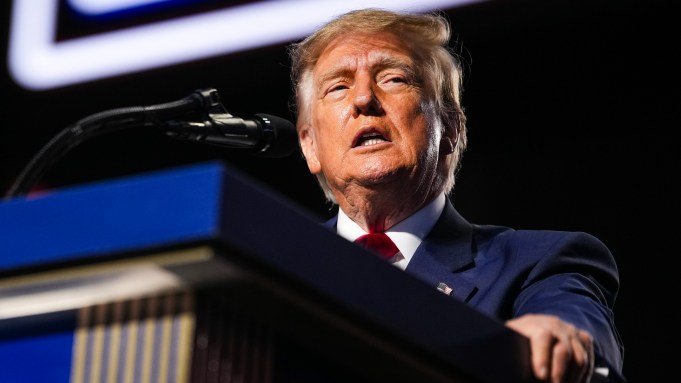
The Justice Department argued that Donald Trump can legally ban CNN, MS NOW and Politico from the White House because he determined that they didn’t meet the “minimum requirements of professionalism.”
Last month, a federal judge granted the three outlets a temporary restraining order that forced the White House to reinstate dozens of their reporters’ hard passes. The outlets are now asking the judge to extend that 14-day order for a longer term via a preliminary injunction, claiming that Trump’s ban is a violation of their First and Fifth amendment rights.
U.S. District Judge Timothy Kelly, a Trump appointee, has said that he is bound by the precedent set in In a 1977 D.C. Circuit opinion, Sherrill vs. Knight, in which the judges ruled that “the protection afforded newsgathering under the First Amendment guarantee of freedom of the press requires that this access not be denied arbitrarily or for less than compelling reasons.”
In a court filing on Friday, the DOJ claimed that the Sherrill case still would allow for the president to restrict the three outlets from accessing the White House grounds because the White House has a “compelling interest.”
The DOJ lawyers claimed that the Sherrill decision does not “prevent the President from concluding that bona fide journalists would identify sources instead of relying on anonymous sources, commit to factual accuracy, and provide the White House an opportunity to comment, rather than ‘perform their duties in a way that … interfere[s] with the White House’s daily operations.’ …At a bare minimum, it is a significant violation of decorum to publish classified and sensitive national security information.”
The news outlets’ legal team has rejected that assertion, writing in a filing earlier this week that Trump’s “statements also make clear he implemented the ban to coerce more favorable coverage from CNN, MS NOW, and Politico, and to deter other journalists and news organizations from newsgathering and reporting that the President might view as negative. And his administration has continued to retaliate against Plaintiffs even after the temporary restraining order, only underscoring that Defendants’ motive is to punish and chill journalism they dislike.”
Even as access to the White House grounds has been reinstated, the White House has continued to restrict CNN from coverage of TV pool assignments, including travel with Trump on Air Force One.
The outlets’ lawyers, led by Theodore Boutrous Jr., also noted that Trump and other White House officials “overlooked that the First Amendment protects reporting on matters affecting national security.”
Kelly has set a hearing for Thursday on the news outlets’ motion for a preliminary injunction.
In granting a TRO, Kelly concluded that the White House failed to provide due process to the news outlets.
The DOJ has pointed to letters sent to the outlets as evidence that they were given due process. But those letters were sent on Sept. 22, four days after Trump’s ban was started.
The judge also has noted that some of the objectionable stories cited by the DOJ do not have to do with national security. Kelly wrote in his order that “even the justifications provided to Plaintiffs after this case was filed are ambiguous about the true purpose of the revocations: while Defendants’ letters to Plaintiffs mention national security concerns, they purport to identify reporting that ‘threatened national security and/or spread falsehoods’ leaving open the possibility that all the stories fall into the later bucket, rather than the former.”
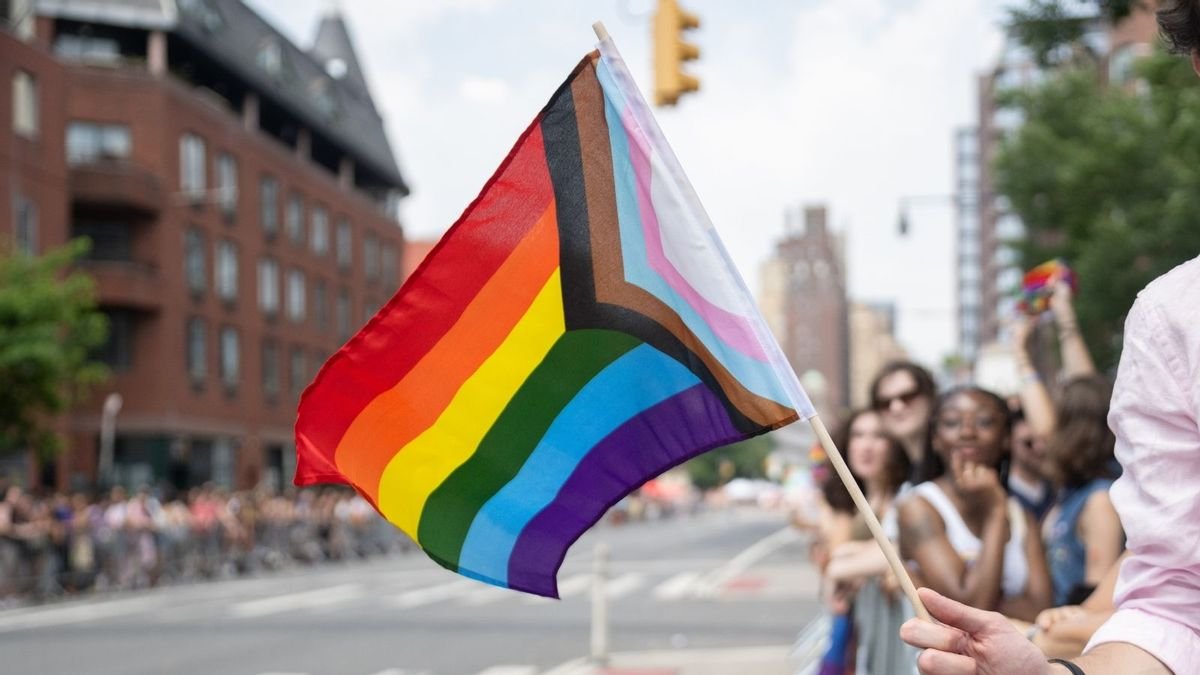
A school district recently fired a California teacher for forcing her students to recite the U.S. Pledge of Allegiance while facing an LGBTQ+ pride flag, as social media posts claimed in late 2026.
Rating:
What’s True
The Newport-Mesa Unified School District in Costa Mesa, California, announced it placed a teacher — whom it did not identify — on administrative leave for posting a video of herself saying the U.S. flag made her “uncomfortable” and suggesting to one student, possibly jokingly, that he recite the Pledge of Allegiance to a pride flag displayed on her classroom wall. However …
What’s False
The video was recorded in 2021, a fact some people omitted from their “breaking” social media posts in 2026. No evidence showed the teacher, who taught English at Back Bay High School, “forced” any students to pledge allegiance to the pride flag, as was falsely claimed in memes and posts using fake, AI-generated images.
What’s Undetermined
A district spokesperson said at the time, “The teacher is no longer in the classroom. We follow due process and our investigation continues.” The statement didn’t identify the teacher by name, nor did it specify whether she departed the school because she resigned or because she was fired. People who claimed she was fired didn’t offer evidence to support it.
A rumor that a California school district fired a teacher for forcing students to recite the Pledge of Allegiance while facing an LGBTQ+ pride flag circulated online in September 2026.
For example, on Sept. 29, a Facebook user posted a meme (archived) showing three images of a woman smiling, laughing and wearing a rainbow-striped shirt and jacket. Pride flags also appeared on the wall in the background. The meme read, “A California teacher has been fired after forcing students to pledge allegiance to the pride flag. Do you believe she deserved to be fired?”
We found these posts contained a mixture of truth, falsehood, speculation and artificial intelligence.
The Newport-Mesa Unified School District in Costa Mesa, California, did once announce (archived) it had placed a teacher — whom it did not identify — on administrative leave for posting a video in which she could be heard saying the U.S. flag made her “uncomfortable” and suggesting to one student, possibly jokingly, that he recite the Pledge of Allegiance to a pride flag displayed on the classroom wall.
However, this all took place in 2021, a fact some people omitted from their “breaking” social media posts in 2026. No evidence supported the claim that the teacher, who was reportedly named Kristen Pitzen and worked as an English teacher at Back Bay High School, “forced” any students to pledge allegiance to the pride flag. Images used in the above meme and otherposts that supposedly depicted the educator were in fact AI-generated and inauthentic.
At the time of the incident, a district spokesperson said, in part, “The teacher is no longer in the classroom. We follow due process and our investigation continues.” The statement didn’t identify Pitzen by name, nor did it specify whether she departed the school after submitting a resignation or whether she was fired. People who posted the claim she was fired didn’t share evidence that the district had terminated her employment.
Via Messenger, Snopes contacted an account possibly belonging to Pitzen to ask questions. We will update this article if we receive further information.
Here are the facts
On Aug. 27, 2021, an educator — reportedly Pitzen, who was listed at the time as an English teacher for Back Bay High School in Costa Mesa — allegedly shared a video on her personal TikTok account in which she said she had packed her classroom’s U.S. flag away and appeared to indicate she didn’t intend to display it again.
In the clip, she laughed when recalling a story in which a student said her class was reciting the Pledge of Allegiance without a flag, then pointed the camera at a pride flag on her wall. She said she told him, “We do have a flag in the class that you can pledge your allegiance to.” She laughed at several moments during the video, suggesting she may have been at least partly joking. No students or other staff were visible in the clip.
People then reposted the video and named Pitzen as its originator, with some X users organizing and calling forherfiring that same day. Some users claimed her (now-defunct) TikTok handle on the account on which she shared the video and other clips was @mrsgillingsworth. We could not independently verify whether she truly owned the handle or if the videos originated from a different account.
In the video, she says the following:
Ok, so during third period, we have announcements and they do the Pledge of Allegiance. I always tell my class, “Stand if you feel like it. Don’t stand if you feel like it. Say the words if you want. [You] don’t have to say the words.” So, my class decided to stand but not say the words. Totally fine.
Except for the fact [laughing] that my room does not have a flag. It used to be there but I took it down during COVID because [whispering] it made me uncomfortable. And I packed it away and I don’t know where and I haven’t found it yet. [laughing] But my kid today goes, “Hey, it’s kind of weird that we just stand and then, you know, we say it to nothing.” And I’m like, “Oh, well, you know I’ve gotta find it. Like I’m working on it. I got you.” [laughing, shaking head]
In the meantime, I tell this kid, “We do have a flag in the class that you can pledge your allegiance to.” And he like looks around and he goes, “Oh, that one?” [laughing, pointing to pride flag]
Following a wave of social media backlash, someone posted on the district’s Facebook page the next day — a Saturday — posting (archived) that a teacher had been placed on administrative leave after causing “alarm and concern related to saluting the American flag.” The post did not identify Pitzen by name.
(Newport-Mesa Unified School District – NMUSD via Facebook)
On the following Monday, Aug. 30, the district reportedly published a statement saying the teacher (still not identified) was “no longer in the classroom.” The statement appeared in news articles, including in the Los Angeles Times:
We are aware that one of our teachers posted a video on her personal social media that caused alarm and concern related to saluting the American flag. We assure you that we take matters like this seriously. Showing respect for our nation’s flag is an important value that we instill in our students and an expectation of our employees. The teacher is no longer in the classroom. We follow due process and our investigation continues.
Via email, district spokesperson Annette Franco confirmed the authenticity of the statement. We also asked whether the district fired the teacher mentioned in their statement — or whether the educator resigned. Without naming the teacher, Franco told us, “I can confirm that she is no longer with the District.” We also requested comment from current Back Bay High School principal Scott Mazurier, who started at the school in 2024 and was not present during the incident. We will update this article if we receive more details.
The school district’s policies include information about “patriotic exercises,” including “the reciting of the Pledge of Allegiance.” One part of the policy documentation says, “Individuals may choose not to participate in the flag salute for personal reasons.”
“Back Bay and Eastbluff to Welcome New Principals.” Newport-Mesa Unified School District, 16 May 2024, https://web.nmusd.us/departments/public-information/news/details/~board/nmusd-news/post/back-bay-eastbluff-principals-scott-mazurier-daphne-eby.
“CA Teacher ‘Uncomfortable’ with U.S. Flag Would Rather Have Students Pledge to Pride Flag.” WSET, WKRC, 31 Aug. 2021, https://wset.com/news/nation-world/ca-teacher-uncomfortable-with-us-flag-would-rather-have-students-pledge-to-pride-flag.
“Ceremonies And Observances.” GAMUT Online, Newport-Mesa USD | AR 6115 Instruction, 8 Sept. 2009, https://web.archive.org/web/20210830213520/http://www.gamutonline.net/district/newportmesa/DisplayPolicy/597434/.
Gleeson, Scott. “Teacher Removed from Class after Suggesting Student Pledge Allegiance to LGBTQ Pride Flag.” USA TODAY, 2 Sept. 2021, https://www.usatoday.com/story/news/education/2021/09/02/california-teacher-removed-after-urging-student-pledge-lgbtq-flag/5693430001/.
@iluvdj274. “Posted on Newport Mesa School District about Kristin Pitzen Aka …” X, 30 Aug. 2021, https://x.com/iluvdj274/status/1432560564924866560.
KTLA 5 Digital Staff, et al. “O.C. Teacher Investigated after Joking about Pledging Allegiance to Pride Flag Instead of American.” KTLA5, 30 Aug. 2021, https://ktla.com/news/local-news/o-c-teacher-investigated-after-joking-about-pledging-allegiance-to-pride-flag-instead-of-american/.
Nguyen, Lilly, and Sara Cardine. “Newport-Mesa Unified School District, Teacher under Fire for Social Media Post Rejecting Flag.” Los Angeles Times, Daily Pilot, 31 Aug. 2021, https://www.latimes.com/socal/daily-pilot/news/story/2021-08-30/newport-mesa-unified-school-district-teacher-under-fire-for-social-media-post-rejecting-flag.
“On Friday Evening, One of Our Teachers Created a Personal Social Media Post …” Facebook, Newport-Mesa Unified School District – NMUSD, 28 Aug. 2021, https://www.facebook.com/NMUSD/posts/4302990113070915.
Robinson, Alicia. “Newport-Mesa District Investigating Teacher’s TikTok about Saying Pledge to Pride Flag.” Orange County Register, 30 Aug. 2021, https://www.ocregister.com/2021/08/30/newport-mesa-district-investigating-teachers-tiktok-about-saying-pledge-to-pride-flag/.
“Staff Directory.” Internet Archive Wayback Machine, Back Bay/Monte Vista High School, 18 June 2021, https://web.archive.org/web/20210618114317/https://backbay.nmusd.us/staff.
Yurcaba, Jo. “Teacher Faces Backlash for Suggesting Student Pledge Allegiance to Pride Flag.” NBC News, 30 Aug. 2021, https://www.nbcnews.com/nbc-out/out-news/teacher-faces-backlash-suggesting-student-pledge-allegiance-pride-flag-rcna1817.
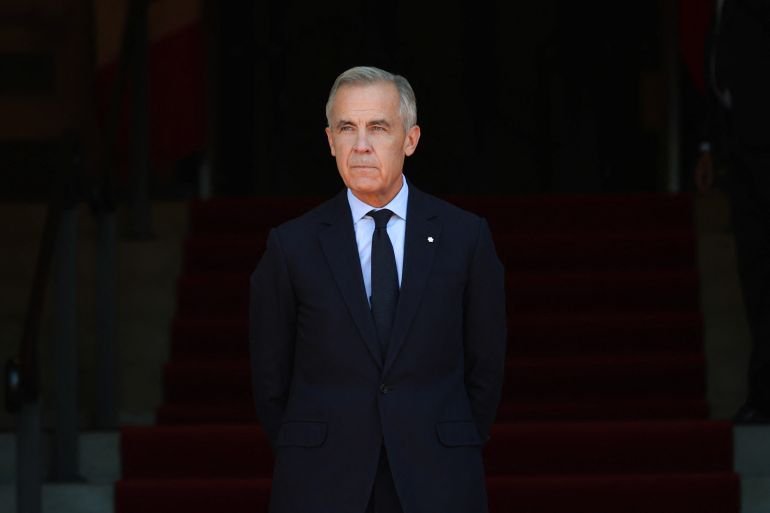
Toronto, Canada: As Canadian Prime Minister Mark Carney races to make the country less dependent on the United States, attract billions in new investment and get major projects built faster, his economic overhaul is running into resistance from a group that says it wants many of the same things: organised labour.
The latest clash, over the right to strike, comes after months of mounting pressure on Ottawa from Washington, DC.
Recommended Stories
list of 4 itemsend of list
US President Donald Trump, since taking up a second term in office last year, has imposed steep tariffs on Canadian goods and weakened trade agreements – perilous moves as Canada has historically sent close to 80 percent of its exports to its southern neighbour. He has repeatedly piled on with the tariff threats to make Canada the 51st US state.
Canada has responded with retaliatory tariffs, while a broader movement to “Buy Canadian” has taken hold. The hockey-inspired “elbows up” — meaning a readiness to defend against an opponent — has become a national rallying cry.
With trade talks stalled since August, Carney has moved with urgency to shore up the economy and invite new investments. Last month, he announced Bill C-39, known as the Building Canada Strong Act, promising to bring “speed, certainty and predictability” to investors.
Along with measures to speed up approvals for major projects, the bill would also give Ottawa clearer powers to intervene in legal strikes and lockouts in federally regulated workplaces — a provision that has put Carney on a collision course with unions.
Canada’s largest unions have come together against the changes. The largest, the Canadian Union of Public Employees (CUPE), had its national executive go as far as voting to defy the bill’s proposed limits on the right to strike if it passes Parliament without amendments.
CUPE National President Mark Hancock credited Carney’s handling of Trump and said the union’s 800,000 members, who work everywhere from hospitals to schools to municipal services, want to be part of “Team Canada”.
“But at what cost?” he said in an interview with Al Jazeera.
A fight over the right to strike
The controversy centres on Section 107 of the Canada Labour Code, which already gives the Labour Minister broad powers to step into disputes if needed to maintain “industrial peace”, end work stoppages and force the two sides into a binding arbitration.
Beginning in 2024, Ottawa used the provision eight times to intervene in disputes involving airlines, Canada’s two largest railways, three major ports and Canada Post and again during the Air Canada dispute in 2025 when flight attendants went on strike.
Unions have challenged the use of that law in court and had hoped the proposed C-39 would restrict, if not repeal, that clause while businesses wanted it strengthened.
The bill does neither. Instead, it introduces two conditions that the government would have to fulfil first before turning to Section 107.
Before stepping in, the government would have to appoint a special mediator, wait for a public report and consider whether a work stoppage is hurting the “national interest”.
Once a strike or lockout is underway, the minister could direct the Canada Industrial Relations Board to get operations running again and impose a binding process, such as arbitration.
A protester carries an effigy depicting Canada’s Prime Minister Mark Carney as people march to protest against the Canada Investment Summit in Toronto in September [File: Carlos Osorio/Reuters]
The government says those steps put clearer guardrails around a power that already exists, and Carney has said the bill “absolutely reinforces the right to strike”, according to the Canadian Broadcasting Corporation.
Unions have rejected this defence, pointing out that the meaning of “national interest” would ultimately be decided by the minister. They also argue that the prospect of government intervention is bound to change what happens at the bargaining table.
“The political lesson that employers will draw from it is simple,” Larry Savage, a professor of labour studies at Brock University, told Al Jazeera. “Hold out long enough, emphasise the economic damage, and then Ottawa will remove the union’s leverage for you.”
Disruption, Savage said, is precisely what gives a strike its power. “Every effective strike is disruptive,” he said.
Unions say they have already seen employers expect Ottawa to intervene.
Teamsters Canada alleges the Canadian National Railway (CN) and the Canadian Pacific Kansas City (CPKC) railroad companies were counting on Ottawa to step in when they locked out thousands of workers in 2024. Section 107 was invoked within hours.
“Companies have gotten used to the idea that if there is a labour dispute, they can just wait for the government to intervene,” Christopher Monette, Teamsters Canada’s director of public affairs, told Al Jazeera.
CUPE said it saw a similar dynamic at Air Canada in August 2025. Hancock said bargaining stalled after more than 10,000 Air Canada flight attendants voted overwhelmingly to strike because the airline was “expecting the government of Canada to step in and end the strike” — an account Air Canada disputed.
Less than 12 hours after workers walked out, Ottawa invoked Section 107. Air Canada CEO Michael Rousseau later told BNN Bloomberg the airline had expected the provision to be enforced and did not expect a strike.
“That was why they didn’t have a strategy on how to deal with the strike,” Hancock said.
Building Canada faster
The fight over the right to strike is also part of a much bigger argument taking shape around Carney’s economic agenda: Who gets a say in how Canada should change, and how quickly, in the name of making itself less vulnerable to the US?
Critics accuse Carney of using the economic threat from the US to push through changes that go well beyond responding to Trump’s trade war.
New Democratic Party leader Avi Lewis has accused him of using the “fear and disorientation around the trade war to push through a series of unpopular measures that he did not run on, has no mandate for and would never get away with under normal circumstances”.
A protester carries an effigy depicting Canada’s Prime Minister Mark Carney outside the Canada Investment Summit in Toronto [File: Carlos Osorio/Reuters]
That tension was on display in Toronto just a week before C-39 was introduced. Inside Canada’s first national investment summit, hundreds of global investors met with government officials and executives as Carney pitched a country ready to build.
Outside, hundreds of protesters marched through downtown towards the summit’s opening gala under the banner “The Many vs The Money”. The rally brought together labour, Indigenous, environmental and migrant-rights groups, with signs and speeches taking aim at everything from fossil fuel and military projects to AI and the use of public money to attract private investment.
For unions, C-39 has sharpened that debate, pitting the government’s promise of greater certainty for investors against workers’ ability to exert pressure through strikes.
But Jim Stanford, an economist and director of the Vancouver-based Centre for Future Work, questions how much of an economic threat strikes actually pose.
While work stoppages can be costly for individual companies, Stanford said, “It is very, very rare that you would see a noticeable and sustained impact on GDP, employment or incomes.”
Production and transportation are often delayed rather than permanently lost, he added, with businesses catching up once work resumes.
Stanford also questioned the idea that strikes are driving away investment, noting that more than 95 percent of collective bargaining ends without a work stoppage and saying there is “no empirical evidence whatsoever” that strikes have reduced investment.
“This is more of the government giving some icing on the cake for business. It’s not that this has to happen or else our investment won’t work,” he said.
There is also an economic cost to weakening the right to strike, Stanford argued. Workers need bargaining power to win higher wages, which can support consumer spending, productivity and worker retention.
“It may seem like labour peace is a good thing, but if it means that a worker’s share of the pie shrinks, then this actually hurts the economy.”
For labour leaders, that’s where Carney’s economic push goes too far.
“Canada’s unions are part of Team Canada. We have our elbows up,” Canadian Labour Congress President Bea Bruske said in a statement. “But we can’t have our elbows up against Trump with our hands tied at the bargaining table.”
Savage said the government’s “Team Canada” rhetoric risks treating workers’ bargaining power as a national liability.
“I don’t think Canada becomes stronger by telling workers in ports or railways or airlines that their rights have to be surrendered whenever employers invoke competitiveness or the national interest,” he said.
Smit Machchhar recalls mid-air disaster after co-pilot’s attack on flydubai flight to Tel Aviv.
Published On 2 Oct 20262 Oct 2026
Indian pilot Smit Machchhar, who was stabbed by his co-pilot in an alleged attempt to crash a Flydubai flight to Tel Aviv, has shared a public account of how he managed to open the cockpit door and let passengers take control of the plane despite his injuries.
Speaking on Friday from a hospital bed in Abu Dhabi via video call with Indian Prime Minister Narendra Modi, Machchhar said that he knew the aircraft was going down as he lay bleeding on the floor.
Recommended Stories
list of 3 itemsend of list
“I had suffered so many injuries that I had collapsed. At that time, I could feel that the aircraft was going down. I knew this was the last push, that the door was right there,” he said in a nearly 10-minute video released on the prime minister’s social media channels.
He added: “I was being hit even then, but I just opened the door and everyone came in.”
Machchhar, who has 17 years of aviation experience, including 11 as a captain, said that experience helped him grasp what was happening even while wounded.
He told Modi he had recited a Hindu devotional prayer during the ordeal.
“I know God himself saved me,” he said, in an emotional exchange with Modi, who is from the same home state of Gujarat.
Modi praised Machchhar’s bravery, saying his presence of mind had saved lives and the reputation of Indian pilots.
Machchhar said he allowed passengers and crew to overpower the co-pilot and let a second pair of Flydubai pilots take control and land the plane in Tabuk, Saudi Arabia.
The Flydubai flight was carrying 174 people as it briefly plunged around 17,000 feet (5,180 metres) before it was brought back under control.
UAE presidential adviser Anwar Gargash has called the incident a “terrorist act”, while Israeli Prime Minister Benjamin Netanyahu said the co-pilot had undergone “Islamist radical indoctrination” and appeared “suicidal”.
US President Donald Trump has warned that Iran would be “hit very hard” if found to be linked to the attack.
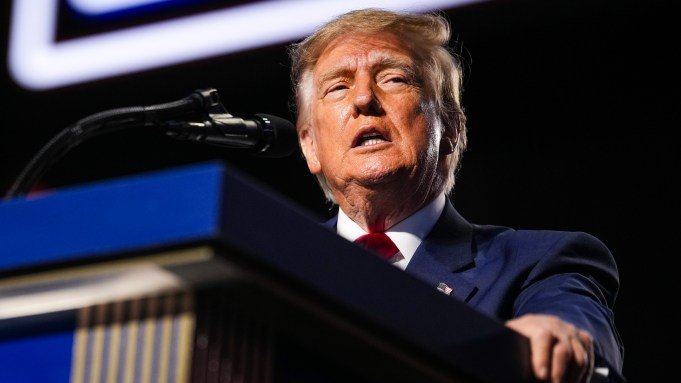
The Justice Department argued that Donald Trump can legally ban CNN, MS NOW and Politico from the White House because he determined that they didn’t meet the “minimum requirements of professionalism.”
Last month, a federal judge granted the three outlets a temporary restraining order that forced the White House to reinstate dozens of their reporters’ hard passes. The outlets are now asking the judge to extend that 14-day order for a longer term via a preliminary injunction, claiming that Trump’s ban is a violation of their First and Fifth amendment rights.
U.S. District Judge Timothy Kelly, a Trump appointee, has said that he is bound by the precedent set in In a 1977 D.C. Circuit opinion, Sherrill vs. Knight, in which the judges ruled that “the protection afforded newsgathering under the First Amendment guarantee of freedom of the press requires that this access not be denied arbitrarily or for less than compelling reasons.”
In a court filing on Friday, the DOJ claimed that the Sherrill case still would allow for the president to restrict the three outlets from accessing the White House grounds because the White House has a “compelling interest.”
The DOJ lawyers claimed that the Sherrill decision does not “prevent the President from concluding that bona fide journalists would identify sources instead of relying on anonymous sources, commit to factual accuracy, and provide the White House an opportunity to comment, rather than ‘perform their duties in a way that … interfere[s] with the White House’s daily operations.’ …At a bare minimum, it is a significant violation of decorum to publish classified and sensitive national security information.”
The news outlets’ legal team has rejected that assertion, writing in a filing earlier this week that Trump’s “statements also make clear he implemented the ban to coerce more favorable coverage from CNN, MS NOW, and Politico, and to deter other journalists and news organizations from newsgathering and reporting that the President might view as negative. And his administration has continued to retaliate against Plaintiffs even after the temporary restraining order, only underscoring that Defendants’ motive is to punish and chill journalism they dislike.”
Even as access to the White House grounds has been reinstated, the White House has continued to restrict CNN from coverage of TV pool assignments, including travel with Trump on Air Force One.
The outlets’ lawyers, led by Theodore Boutrous Jr., also noted that Trump and other White House officials “overlooked that the First Amendment protects reporting on matters affecting national security.”
Kelly has set a hearing for Thursday on the news outlets’ motion for a preliminary injunction.
In granting a TRO, Kelly concluded that the White House failed to provide due process to the news outlets.
The DOJ has pointed to letters sent to the outlets as evidence that they were given due process. But those letters were sent on Sept. 22, four days after Trump’s ban was started.
The judge also has noted that some of the objectionable stories cited by the DOJ do not have to do with national security. Kelly wrote in his order that “even the justifications provided to Plaintiffs after this case was filed are ambiguous about the true purpose of the revocations: while Defendants’ letters to Plaintiffs mention national security concerns, they purport to identify reporting that ‘threatened national security and/or spread falsehoods’ leaving open the possibility that all the stories fall into the later bucket, rather than the former.”
The audio version of this article is generated by AI-based technology. Mispronunciations can occur. We are working with our partners to continually review and improve the results.
A Toronto hospital network is set to greatly expand its unique permanent housing program that largely serves homeless people who visit hospital emergency departments an inordinate amount of time.
The University Health Network’s Dunn House has seen great success in the early days for its 51 residents, a model that will expand to help 300 people.
The modular build opened in Toronto’s west end in 2024. Federal and provincial governments, along with the city, announced earlier this year they would help build a similar 54-unit building, dubbed Spring House, which is geared to seniors who are struggling with homelessness.
Now, the plan is for three more buildings in Toronto.
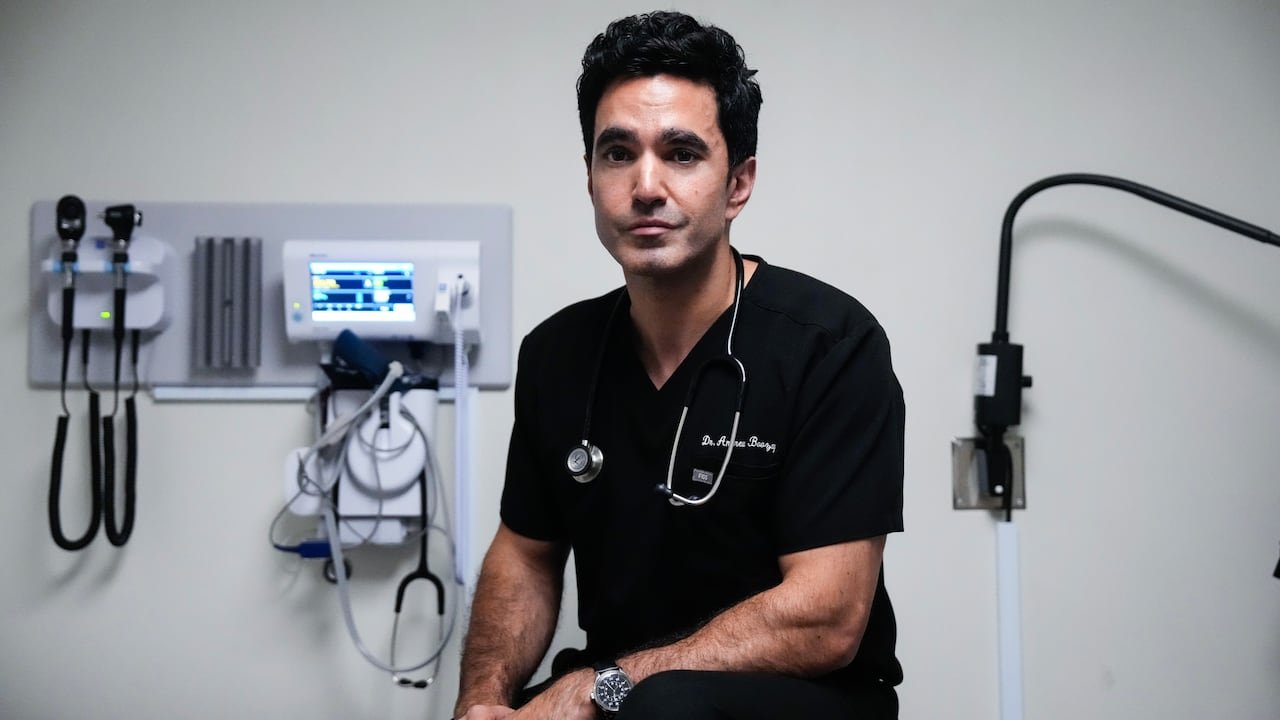
“It gives me a lot of hope that we can rally behind a solution that is more humane and cost-effective,” Dr. Andrew Boozary, the executive director of the Gattuso Centre for Social Medicine at UHN, said in an interview.
Preliminary data has shown that 48 residents of Dunn House visited emergency rooms 52 per cent fewer times a year after they moved in, along with a 79 per cent drop in the length of their hospital stays when they were admitted.
The 48 patients racked up $2.1 million in hospital costs over 12 months before moving into Dunn House, and in the year after the hospital saved $1.66 million.
Housing project has direct access to doctors, nurses
The project will again be a partnership between the federal and provincial governments, along with the city and the hospital.
The federal government will invest more than $25 million to get the third building up and running, with units for about 80 people. The City of Toronto will contribute $19 million while UHN Foundation will pony up $20 million for the broader build.
The province is set to provide support for health services and health-care workers.
The housing project features direct access to doctors, nurses and a host of other health professionals with the goal of improving their health and alleviating pressure on the hospital.
“Investing in the Dunn House model is critical to solving the housing crisis across the continuum,” federal Housing and Infrastructure Minister Gregor Robertson said in a statement.
Thomas Limshalm, a resident at Toronto’s Dunn House, is photographed in a common area at the medical housing initiative on Wednesday, Sept. 30, 2026. (Chris Young/The Canadian Press)
The Canadian Press has previously spoken to more than a dozen residents, all of whom loved their new homes. Many said they have since turned their lives around, some have weaned themselves off drugs and got jobs while others have returned to school.
The homes are permanent so residents do not have to leave when their health improves.
Dunn House helps people ‘stay off the street,’ mayor says
It’s a win for the city, said Toronto Mayor Olivia Chow.
“The Dunn House model is working. It’s helping people build stable lives, access vital resources, and stay off the street and out of the emergency room,” she said in a statement.
The city is looking to invest a further $27 million in the project, which will be subject to council approval.
“It’s not sensationalist to say that this is going to be matters of life and death,” Boozary said.
“When you look at the data in the country that people who are chronically unhoused live half as long as the general public, that they’re losing 20 to 30 life years, that a chronically unhoused woman in Toronto’s average life expectancy is 42, it’s a moral failure and it’s damning.”
The audio version of this article is generated by AI-based technology. Mispronunciations can occur. We are working with our partners to continually review and improve the results.
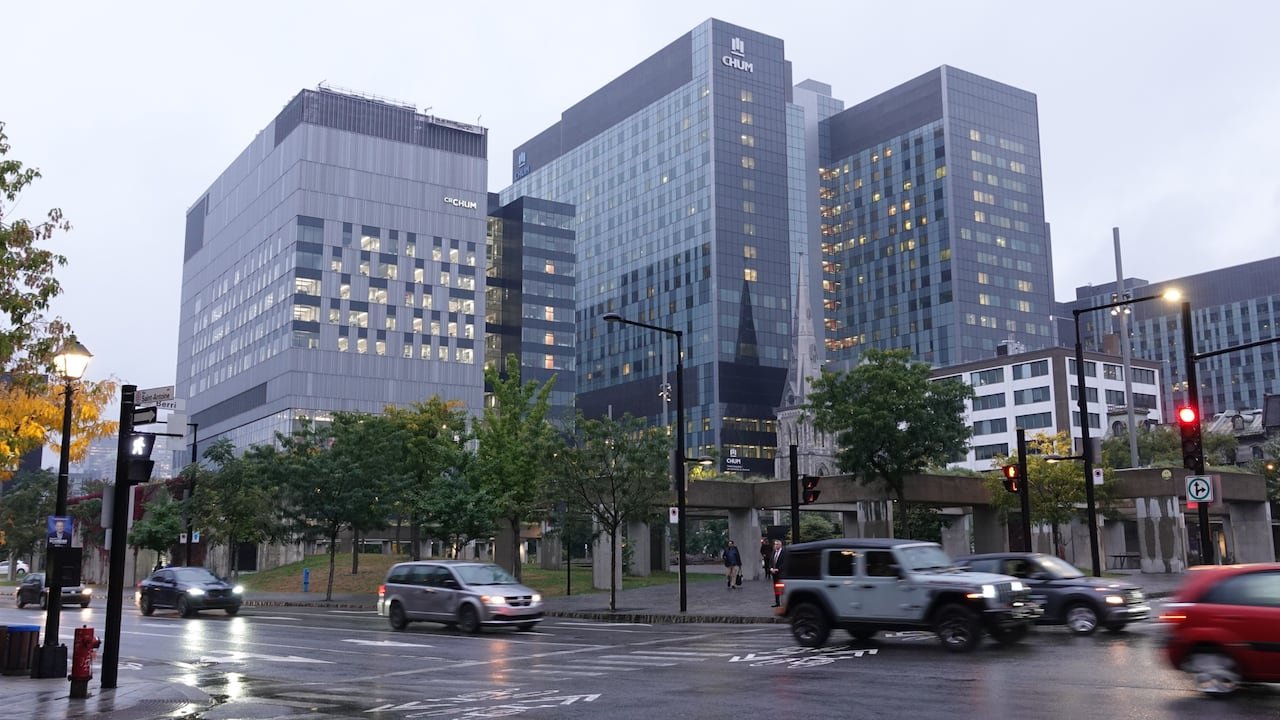
A Montreal hospital has lifted emergency isolation measures after a suspected Ebola case was determined to be a false alarm, officials said.
The female patient arrived at the Centre hospitalier de l’Université de Montréal (CHUM) late Thursday afternoon exhibiting signs of the deadly disease.
Earlier in the day, Irène Marcheterre, a spokesperson for the CHUM, said that as soon as the suspicious symptoms were identified, the hospital immediately enacted its required isolation protocols.
She said all necessary safety measures were put in place, and insisted there was no risk to the public.
Just before 8 p.m., another spokesperson, Ellen Caracas, told CBC News that the patient tested negative for Ebola and emergency protocols were lifted.
The suspected case came amid an ongoing and deadly Ebola outbreak in the Democratic Republic of Congo, where thousands have died in recent months.
Marcheterre could not confirm whether the patient had recently travelled from the region, stating she did not know the woman’s travel history.
The audio version of this article is generated by AI-based technology. Mispronunciations can occur. We are working with our partners to continually review and improve the results.
Lisa Driscoll, a woman who stole other people’s nursing credentials to gain employment in Newfoundland on multiple occasions, has once again avoided sentencing.
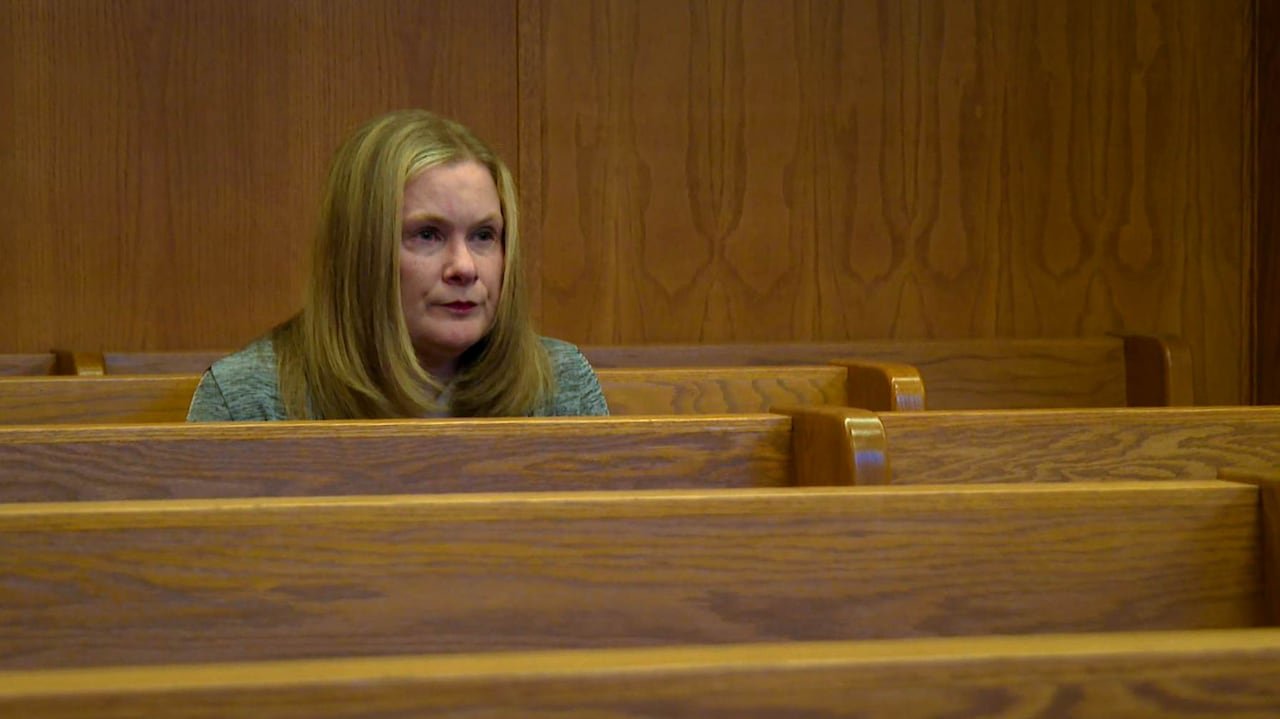
She was a no-show in provincial court on Thursday in St. John’s after being ordered by Judge Bruce Short at her last appearance to be there in person. In a twist of fate for the convicted fake nurse, the judge was also absent from the courtroom on Thursday.
Judge Paul Noble presided over the appearance on Short’s behalf. Driscoll’s new lawyer, Philip Warren, was asking for an adjournment regardless, saying Driscoll claimed to be sick and was either in the hospital, or on the way to the hospital.
“This is the sixth request for a postponement,” Crown prosecutor Deidre Badcock said before pulling out her notebook to quote Short from the last appearance in July.
“He said, ‘You be here unless it is life or death,’” Badcock read. “‘The court has given you great leeway and ample opportunity to comply and you continue to not. You will not get any further appointments or adjournments. You will be sentenced on Oct. 1.’”
But that wasn’t the case.
Badcock then asked the judge for an arrest warrant, saying the only way Driscoll will be present for her sentencing is if she is held in custody until her next court date.
“I just find it really harsh, I really do,” Warren said.
Noble decided against issuing a warrant for Driscoll’s arrest, instead making an order that she be present in person for her next appearance.
Badcock said it’s become routine for Driscoll to seek delays, without providing any evidence to support her applications for adjournment.
“I trust what [Warren] says his client has told him, but I don’t trust anything his client tells him because we’ve consistently been told she’s in the hospital, or she’s having surgery or she’s having X or having Y. And she has not been able to produce a single piece of paper, not even a printout from her actual online health-care app, which we all have.”
The case will be called again on Oct. 7 at 9 a.m. to find a new date for sentencing.
Driscoll first pleaded guilty to her charges on May 12, 2025.
She’s fired two lawyers in 2026, which also led to significant delays.
Driscoll used fake names, licences to get jobs
Lisa Driscoll, who also went by the name Lisa Strickland at times, was convicted of criminal negligence causing death in relation to the 2017 death of her four-year-old son in Ontario.
That conviction and subsequent prison sentence left her unable to pass a code of conduct check in Ontario.
Driscoll came back to Newfoundland, where she hails from, and used the legitimate licence number of a licensed practical nurse with a similar name to get a job at Chancellor Park, a nursing home in St. John’s, in March of 2021.
While working there, Driscoll used the same stolen licence to get a second job at Kenny’s Pond retirement home in St. John’s.
Alarm bells were raised when Driscoll applied for another job with Lane’s Retirement Homes in July of 2022. The College of Licensed Practical Nurses got a call from a representative of the company, looking to check her licensing information. They found none of her information matched the information of the person who held the legitimate licence in the system.
Police began investigating, and reached out to the province’s health authority, which confirmed it also had a job application on file from Driscoll in which she used the licence number of another nurse with a similar name.
After being fired from her positions in St. John’s and while the investigation was still ongoing, Driscoll was discovered to be working at a retirement home in Gander — this time as a travel nurse.
Driscoll was accused of stealing medication from that home in Gander, but was acquitted in March of 2026.
Medical experts urge getting a flu vaccination soon, before influenza starts spreading widely — and to get up to date on protection against other fall respiratory viruses, too. Updated COVID-19 shots are available now, plus shots for people especially vulnerable to another winter risk called RSV.
While these infections make many people feel miserable for a few days before they recover, every year flu alone causes hundreds of thousands of hospitalizations in the U.S. and kills tens of thousands.
Vaccination isn’t “a guarantee that we’re going to prevent illness. But just like the seat belt in your car, it decreases risk” of the worst outcomes, said Dr. Ryan Stanton of the American College of Emergency Physicians.
Fall vaccine advice usually comes from the Centers for Disease Control and Prevention and its independent advisory panel. But this year that panel, which influences state and insurance vaccine policies, is caught in a court battle and the CDC hasn’t updated its flu advice.
Now doctors’ groups are filling the gap: the American Academy of Pediatrics, American Academy of Family Physicians, American College of Obstetricians and Gynecologists, and the Infectious Diseases Society of America have posted vaccination guidelines for their patient populations plus the scientific evidence behind them.
Here’s what to know:
Just about everybody starting at age 6 months needs flu vaccination, the medical societies agree. But flu is particularly dangerous for people 65 and older, pregnant women, young children and people of any age who have chronic health problems, including asthma, diabetes, heart disease and weak immune systems. The last two flu seasons brought unusually high numbers of child deaths, the vast majority of them in unvaccinated kids.
The vaccines don’t block all flu infections, but they do help prevent the worst outcomes, decreasing older adults’ hospitalizations by 31% last year, according to the Vaccine Integrity Project, a public health group based at the University of Minnesota.
Three “enhanced” flu vaccines are designed to better protect seniors. The American Academy of Family Physicians urges them to choose one — “but do not delay your vaccination if that one’s not available,” said AAFP’s Dr. Sarah Nosal.
The Food and Drug Administration recently approved a new choice for people ages 50 and older, the first flu vaccine made with the same mRNA technology that was key to ending the COVID-19 pandemic. One study found Moderna’s mFlusiva was 27% more effective against symptomatic illness among 50- to 64-year-olds than a standard shot.
The shot-averse could choose a nasal spray, FluMist, if they’re ages 2 to 49 and meet other health criteria.
COVID-19 shots once were recommended for just about everyone by federal health agencies, but like last year, the FDA has only formally approved them for higher-risk people — those ages 65 and older or younger people with at least one health condition that increases their risk.
Still, the family physicians recommend all adults get a COVID-19 vaccination, especially seniors and those with other risk factors. Adults 65 and older should get a fall dose and then a second dose six months later, as immunity wanes over time, Nosal said.
The American Academy of Pediatrics recommends a COVID-19 shot for all children ages 6 months to 23 months, and for older kids with high-risk conditions. It also supports vaccination for any child whose parent wishes it.
With millions of shots administered, there’s no evidence that coronavirus vaccination during pregnancy increases the risk of miscarriage or other problems, “so please get the vaccine,” said ACOG’s Dr. Christina Davidson.
Depending on age, people can choose a shot from Moderna, Pfizer, or the only non-mRNA version from Novavax and Sanofi.
Just like with flu vaccines, these shots are better at preventing severe disease than mild cases. The Vaccine Integrity Project said last fall’s COVID-19 shots cut the risk of hospitalization by 53% in seniors and slashed emergency room visits for very young children.
Common side effects for flu and COVID-19 vaccines are mild and temporary, such as sore arms, fatigue, headaches, muscle aches, and mild fever. They occurred somewhat more often with the new mFlusiva than with standard flu shots.
While pediatricians and some clinics offer both flu and coronavirus shots, they’re available for most ages through pharmacies. For example, Walgreens says it now offers both shots for ages 3 and older, no prescription needed.
Medicare covers the fall shots and most private health insurers say they plan to continue doing so through 2027. If you want to choose mFlusiva, the new Moderna flu option, make sure to double check that your insurance covers it.
Flu experts say October is best, although vaccinations will remain available through the fall — just remember it can take two weeks for protection to kick in. COVID-19 cases rose in the late summer and usually do again around the winter holidays. Some experts say it’s also OK to time the coronavirus shot a few weeks ahead of an event you wouldn’t want to miss because of illness, like a special trip or get-together.
RSV, or respiratory syncytial virus, typically is a cold-like nuisance during the fall, winter and early spring. But it can be severe, even life-threatening, for infants and older adults.
The family physicians recommend a one-time vaccination for adults 75 and older, people 50 to 74 who are at increased risk, or younger people with weak immune systems.
It’s also recommended during late pregnancy to protect infants born during RSV season. Separately, the pediatricians recommend a vaccine-like medication for those infants whose moms weren’t vaccinated and some other high-risk babies.
___
The Associated Press’ health and science coverage receives financial support from the AP Fund for Journalism and private foundations. AP is solely responsible for all content. Find AP’s standards for working with philanthropies, a list of supporters and funded coverage areas at AP.org.