Category: News

  • Trump ramps up pressure on US Republicans to end US clock switching

    Trump ramps up pressure on US Republicans to end US clock switching

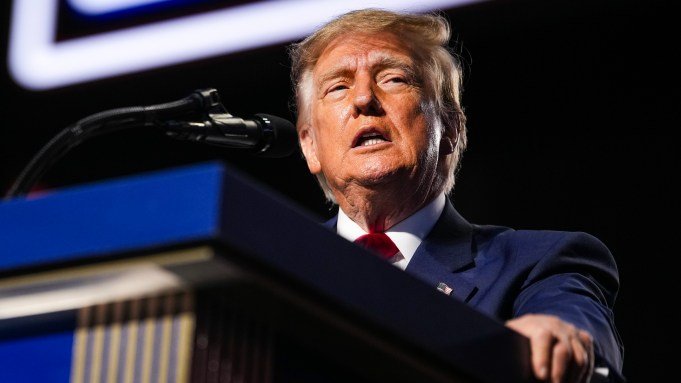
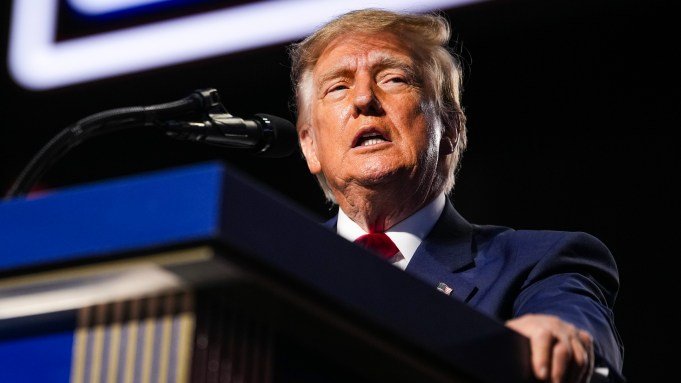
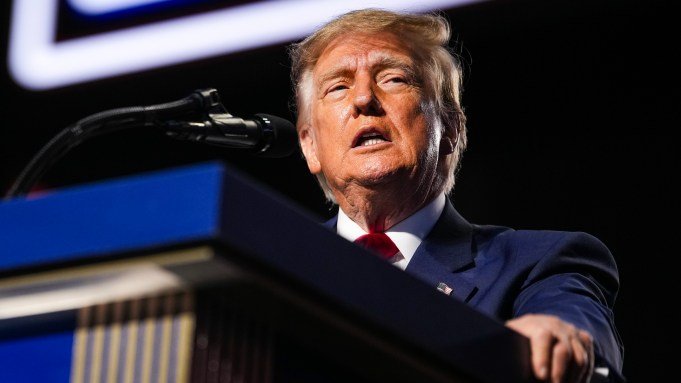
    United States President Donald Trump has increased the pressure on US Senate Republicans to make Daylight Saving Time permanent, singling out one of the body’s members for stalling legislation to end the twice-a-year changing of clocks.

    In a social media post on Saturday, Trump blasted US Senator Tom Cotton for “holding up” the Sunshine Protection Act, which Trump has personally opted to call the “No More Changing of Clocks Act”.

    Recommended Stories

    list of 3 itemsend of list

    “For some reason, Tom is stopping the Bill and, in the Senate, it’s very easy to do, it only takes one!” Trump wrote on his Truth Social account about the Arkansas Republican. “It should pass overwhelmingly, in a Bipartisan fashion”.

    “Nobody wants to spend their precious time running all over the place, turning Clocks back twice a year and, having sunshine in the afternoon is better than early in the morning!” he added.

    Trump went even further, publishing what he claimed was Cotton’s phone number as he implored Arkansas residents to pressure him. The move echoed a moment during the 2016 Republican presidential primaries, when then-candidate Trump gave out US Senator Lindsey Graham’s number after the former rival criticised him.

    FILE - Sen. Tom Cotton, R-Ark., speaks to reporters at the Capitol in Washington, June 2, 2026. (AP Photo/J. Scott Applewhite, File)
    US Senator Tom Cotton speaks to reporters at the US Capitol in Washington [File: J. Scott Applewhite/AP Photo]

    Al Jazeera called the number listed in Trump’s post, but an automated message stated the voicemail box was full. Cotton’s spokesperson and the White House did not respond to requests for comment.

    The president has routinely pushed Senate Republicans to pass legislation mandating year-round daylight saving, which would end Americans’ decades-long practice of changing their clocks twice a year to increase daylight hours. On Friday, Trump urged the US Senate to approve the bill, which passed the US House in July by a 308-117 vote.

    Cotton has previously opposed the bill, arguing in a US Senate floor speech last year that farmers, construction workers, commuters and children heading to school would begin their days in the dark during the winter.

    Trump disputed that argument in a separate post on Saturday, saying the bill “would be a very nice and easy WIN for the Republican Party”.

    “If Tom Cotton were putting Arkansas first, he would give them an extra hour of daylight and, more importantly, they wouldn’t have to run all over their houses, farms, workplaces, and everywhere else, twice a year, having to change their Clocks, and often forgetting to do so”, Trump wrote.

    Trump, an avid golfer, also highlighted what he considered to be another selling point of the bill: the North American Professional Golfers’ Association (PGA) tour.

    “The PGA TOUR, as an example, needs more Daylight in the afternoon in order to finish their Tournaments”, he wrote in a post, which included a letter from PGA Tour CEO Brian Rolapp supporting the bill. “Likewise, regular Golfers, Tennis Players, Hunters and, perhaps more importantly, Farmers who want more Daylight to play or work.”

    The US president, who spent part of Saturday at his golf club in Sterling, Virginia, indicated in a subsequent post that he had received personal feedback on the proposal: “I don’t know about anyone else, but a table full of very distinguished people just told me that they HATE, immediately after a mandatory time change, going home at night – and it’s DARK. It’s depressing!”

    In 1974, the US Congress briefly adopted year-round daylight saving time in response to the country’s energy crisis. But Congress repealed the law less than a year later over safety concerns as children commuted to school before sunrise.

    US senators left Washington this week and have no set plans to return until after the November 3 midterm elections.

    Some members, such as Senator John Kennedy, weren’t optimistic that Senate Republican Leader John Thune would bring the bill up for a vote before polling day.

    “It’s dead as disco,” the Louisiana Republican told Reuters this week of Trump’s push to make daylight saving time permanent. “My sense is it would have trouble passing … I don’t think the leader is going to bring it up.”

  • DOJ Argues CNN & Other Outlets Can Be Banned From White House If Trump Determines They Didn’t Meet “Minimum Requirements Of Professionalism”

    DOJ Argues CNN & Other Outlets Can Be Banned From White House If Trump Determines They Didn’t Meet “Minimum Requirements Of Professionalism”

    The Justice Department argued that Donald Trump can legally ban CNN, MS NOW and Politico from the White House because he determined that they didn’t meet the “minimum requirements of professionalism.”

    Last month, a federal judge granted the three outlets a temporary restraining order that forced the White House to reinstate dozens of their reporters’ hard passes. The outlets are now asking the judge to extend that 14-day order for a longer term via a preliminary injunction, claiming that Trump’s ban is a violation of their First and Fifth amendment rights.

    U.S. District Judge Timothy Kelly, a Trump appointee, has said that he is bound by the precedent set in In a 1977 D.C. Circuit opinion, Sherrill vs. Knight, in which the judges ruled that “the protection afforded newsgathering under the First Amendment guarantee of freedom of the press requires that this access not be denied arbitrarily or for less than compelling reasons.”

    In a court filing on Friday, the DOJ claimed that the Sherrill case still would allow for the president to restrict the three outlets from accessing the White House grounds because the White House has a “compelling interest.”

    The DOJ lawyers claimed that the Sherrill decision does not “prevent the President from concluding that bona fide journalists would identify sources instead of relying on anonymous sources, commit to factual accuracy, and provide the White House an opportunity to comment, rather than ‘perform their duties in a way that … interfere[s] with the White House’s daily operations.’ …At a bare minimum, it is a significant violation of decorum to publish classified and sensitive national security information.”

    The news outlets’ legal team has rejected that assertion, writing in a filing earlier this week that Trump’s “statements also make clear he implemented the ban to coerce more favorable coverage from CNN, MS NOW, and Politico, and to deter other journalists and news organizations from newsgathering and reporting that the President might view as negative. And his administration has continued to retaliate against Plaintiffs even after the temporary restraining order, only underscoring that Defendants’ motive is to punish and chill journalism they dislike.”

    Even as access to the White House grounds has been reinstated, the White House has continued to restrict CNN from coverage of TV pool assignments, including travel with Trump on Air Force One.

    The outlets’ lawyers, led by Theodore Boutrous Jr., also noted that Trump and other White House officials “overlooked that the First Amendment protects reporting on matters affecting national security.”

    Kelly has set a hearing for Thursday on the news outlets’ motion for a preliminary injunction.

    In granting a TRO, Kelly concluded that the White House failed to provide due process to the news outlets.

    The DOJ has pointed to letters sent to the outlets as evidence that they were given due process. But those letters were sent on Sept. 22, four days after Trump’s ban was started.

    The judge also has noted that some of the objectionable stories cited by the DOJ do not have to do with national security. Kelly wrote in his order that “even the justifications provided to Plaintiffs after this case was filed are ambiguous about the true purpose of the revocations: while Defendants’ letters to Plaintiffs mention national security concerns, they purport to identify reporting that ‘threatened national security and/or spread falsehoods’ leaving open the possibility that all the stories fall into the later bucket, rather than the former.”

  • ‘SNL’ Cold Open Goes Full MAGA Midterms Desperation With Hegseth’s “Schlong Donkeys”, Trump’s Rambles & A Sad VP

    Just a month away from the volatile midterms and a president way down in the polls, there was once again a plethora of political material ripe for this week’s SNL cold open, and the NBC late-nighter went full MAGA, with some Mitch McConnell on the side.

    Played by Mickey Day, the wheelchair bound 84-year-old Kentucky senator offered a premature “Live from New York” before being cut off by RNC ad consultants desperate to turn things around for the GOP. To that, there was a “He tricked us” (in Spanish) Marco Rubio, portrayed by the always on point Marcello Hernández, and a 2028 J.D. Vance (Jeremy Culhane) that no one wanted to actually put in a spot.

    Then there was Colin Jost’s Pete Hegseth, putting the fun in whack job Defense Secretary once again.

    “What’s up, schlong donkeys?” the Saturday Night Live Weekend Update co-anchor began in what might have been one of the greatest campaign ads ever (we’re talking 1954 Daisy level) if it was real. “Now listen up, okay, because I need all you patriots at home to do the gayest thing ever and vote. Thanks to me, the military finally has its priorities and sexuality straight.”

    Tossing in some slam poetry, Jost’s Hegseth added: “In conclusion, vote, I guess. And remember, even if you’re stationed overseas, you can still vote by mail, which is the only by mail I’m cool with.”

    Of course, this being a MAGA parody and being SNL, the joke had to go further. Having said that, unlike many too-long cold opens, this semi-morbid midterm skit work at the extra length – entirely because POTUS came to cook, base loathing and all.

    “I’m President Trump and I approve this ramble,” started a typically and wonderfully unhinged James Austin Johnson.

    Drawing from the fiction that is so much of Trumpland’s facts, he added in the fake ad: “We’re getting mogged out there, but not for long because I have a solution. If the Republicans win, I’ll give everyone $5,000, and that is not a bribe because I have no intention of following through on that promise.’

    “So, just pretend I’m on the ballot, okay? You have to use something called imagination. Imagination makes a MAGA nation. Wow, that’s pretty good. I can already see that written on the back of an obese woman’s booty shorts in dirty, disgusting Myrtle Beach. What a hell all this country is! It’s full of awful people.”

    Perhaps, but not in tonight’s spot-on cold open.

    Delayed a tad again on the West Coast like last week’s season opener thanks to college football, tonight’s SNL is the second show of the 52nd season.

    Verity star Dakota Johnson is hosting SNL for the third time. Coming off a big box office start for the Collen Hoover thriller, Johnson is joined by Turnstile as musical guest, the Maryland rockers’ SNL debut. Next week will see one-time dumped cast member Shane Gillis back for his third time hosting. The October 10 show will see the much-acclaimed Rosalía returning for her third SNL appearance.

  • Can I get AI face? Plastic surgeons say AI-generated inspiration is more than meets the eye

    Dr. Ian MacArthur is accustomed to dealing with new trends in cosmetic surgery, but he’s starting to see more patients coming into his Ottawa clinic with expectations that aren’t entirely realistic.

    Some clients, he says, bring in “fairly stylized” images generated with artificial intelligence, seeking results that may not even be “physically possible.”

    The experiences he’s had so far motivated him to share a few cautionary thoughts on his Instagram page.

    But it’s a trend that plastic surgeons are dealing with more often.

    The British Association of Aesthetic Plastic Surgeons (BAAPS) recently warned about the rise of “AI face” — flawless, AI-enhanced images of patients’ own faces that they believe can be recreated surgically.

    The concern, says the organization’s president, is that AI could also lead some people to put their desire for an unachievable look ahead of their own safety and well-being.

    “The less realistic the image, the more dangerous that becomes if someone says, ‘Yes, I can do it,’” Dr. Nora Nugent told CBC News.

    More than meets the AI

    BAAPS surveyed about half its roughly 350 members about how often they’re seeing instances of AI face during consultations, Nugent said, with about 15 per cent of them responding that it’s happening more often.

    It’s not that people are asking for anything unusual, she says. It’s that the chatbot may have made other enhancements that it doesn’t immediately disclose, such as a sharpened jawline or smoothed-out skin.

    CBC News uploaded a photo of a journalist’s face to three commonly used generative AI platforms — the free versions of OpenAI’s ChatGPT, Google Gemini’s Nano Banana and Anthropic’s Claude — and prompted them to show the outcome of a rhytidectomy (a facelift).

    Claude would not complete the task, responding that it wouldn’t generate “realistic manipulated images of actual people.”

    Nano Banana did complete the task. When prompted, the chatbot explained that in addition to simulating the rhytidectomy, it also reduced loose neck skin and applied dermatological treatments like laser resurfacing or a chemical peel. (It also appeared to shave off facial hair).

    It would not, however, create a medical before-and-after image comparison, encouraging consulting with a certified plastic surgeon for a realistic assessment.

    ChatGPT did not hesitate to produce a visualization, as well as a side-by-side comparison. Like Nano Banana, it actually simulated multiple procedures — including what appeared to be an eyelid lift, brow lift and neck lift. ChatGPT said it smoothed out the forehead.

    The chatbot did not immediately recommend consulting with a surgeon but later said the outcomes depend on one’s anatomy, goals and doctor.

    Pixels, not human tissue

    Nugent says it’s important for anyone seeking cosmetic surgery to know that AI can’t account for an individual’s anatomy.

    “[AI] works in pixels, not human tissue,” she said.

    “Some tissue intrinsically is stronger, has more collagen, maybe thicker skin, and will hold a lift better,” she said, adding that there are limits to “what’s structurally safe to do” with a person’s face.

    “If you make a nose too small and too narrow, that person won’t be able to breathe properly through their nose,” she said. “If you take too much skin from an eyelid, someone can’t close their eyes properly and that creates a medical problem.”

    On top of that, a patient’s age, weight and lifestyle are also factors in the outcome.

    WATCH | Real doctors appearing in AI deepfakes peddling unreal medical advice:

    AI deepfakes of prominent Canadian doctors are coming for your money

    Health officials are warning Canadians about hyper-realistic AI deepfake videos of prominent doctors selling products or pushing bad advice. Victims are urged to contact the Canadian Anti-Fraud Centre, but doctors warn the videos are hard to take down.

    Nugent says people can likely recognize the “more extreme changes” as unrealistic.

    “But it’s the mild to middle changes that they might think are realistic,” she said.

    Karen Rowa, a psychiatry and behavioural neurosciences professor at Hamilton’s McMaster University, says it could also worsen problems for those who struggle with their appearance or have body dysmorphic disorder.

    AI chatbots tend to “please the person they’re talking to,” she says. Asking them to fix something a person doesn’t like about their face or body may “reinforce a problem that may not actually exist.”

    An unachievable risk

    Dr. Michael Weinberg says he hasn’t consulted any patients who have used generative AI tools to simulate their cosmetic surgery outcomes, but he’s not entirely against the idea.

    Weinberg, a plastic surgery division lead at Ontario’s Trillium Health Partners, says AI may help a patient visualize their own goals in advance of an appointment. A surgeon can then help them determine what’s possible and what’s not.

    He says plastic surgeons have already been using digital 3D simulation tools in their consultations for some time — for procedures like breast augmentations or eyelid lifts.

    “If it’s used wisely and judiciously with realistic results, then it is great because it can show you what you can look like,” he said.

    What he worries about is doctors who overpromise on what can be achieved — whether it’s due to inexperience, pressure from the patient or unscrupulous business practices.

    “There’s a lot of bad plastic surgeons,” he said, and a patient’s desire to meet AI-generated expectations may lead them to seek less reliable options if they’re told that their goals aren’t achievable by a more responsible doctor.

    He says “tourist plastic surgery” is another issue, with some people travelling abroad for aesthetic procedures.

    That comes with a big risk, Weinberg says, of returning with the “absolute worst complications” that can require additional surgeries and months of care.

    LISTEN | Just how dangerous is AI — and what we should do about it:

    Front Burner33:35Why are AI leaders calling for a slow down?

    But Ottawa surgeon MacArthur says most patients are reasonable and aren’t looking to go to any extremes. He says those who turn to AI tools may be doing so because they want to better communicate their wishes.

    As long as he’s clear with them about what is achievable, he says, they’re generally understanding. But he does think some people have unrealistic expectations, and that AI could “be like gasoline on the fire.”

    WATCH | Can we pause the rapid development of AI?:

    Why slowing the AI race won’t be easy

    Silicon Valley tech CEOs are calling for a slow down of artificial intelligence development — but is that even possible? For The National, CBC’s Ashley Fraser looks at what it would take to pace the AI race and why experts say it won’t be easy.

  • US and Australia suspend diplomatic operations in Brazil before election

    US and Australia suspend diplomatic operations in Brazil before election

    Security threats prompt US and Australia to suspend diplomatic operations in Brazil before pivotal election day.

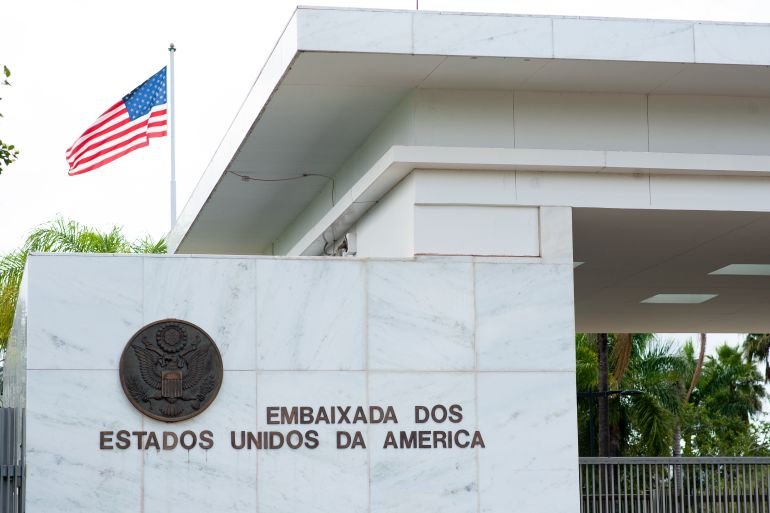
    The United States has suspended consular services in Brazil, prompting Australia to close its embassy in the Brazilian capital, two days before Brazil’s presidential election on Sunday.

    In a statement released on Thursday, the US embassy said it would suspend consular services starting on Friday and advised American citizens seeking assistance not to visit its embassy, consulates or other diplomatic facilities.

    Recommended Stories

    list of 3 itemsend of list

    The statement cited security concerns but gave no further detail on the nature of the threat or any link to the election.

    The US State Department said it was working closely with Brazilian counterparts to address the security concerns, adding that embassies and consulates routinely issue alerts about local threats and developments.

    Australia’s ambassador to Brazil, Sophie Davies, said on social media that the Australian embassy would also close on Friday, citing the US alert, and advised Australians to avoid US diplomatic facilities.

    Brazil’s federal police said they carried out preventive search and seizure warrants in Sao Paulo and the Federal District, the administrative region surrounding the capital, Brasilia, as part of an investigation into suspected plans that could threaten US diplomatic facilities.

    Police said the operation followed cooperation with foreign intelligence agencies, but that investigators had found no evidence corroborating the initially reported threat, nor identified any suspects linked to criminal organisations.

    An investigation was continuing after the seizure of communications equipment, according to the police.

    The closures came two days before the Brazilian presidential election, which pits incumbent Luiz Inacio Lula da Silva, who is seeking re-election, against Senator Flavio Bolsonaro, son of former President Jair Bolsonaro. Jair Bolsonaro is serving a 27-year sentence for attempting a coup.

    If neither candidate wins more than 50 percent of the vote on Sunday, a runoff will be held on October 25.

    Edinho Silva, president of Lula’s Workers’ Party, called the closures “unprecedented”, saying: “It makes no sense at all. It’s one of Trump’s ways of trying to influence Brazilian public opinion.”

    Lula’s allies have pointed to US tariffs and an effort by Washington to send officials to Brazil to “discuss electoral integrity” as evidence of foreign interference.

    Brazilian intelligence officials briefed French and German delegations in Brasilia this month on what they described as US and Russian interference in the race.

    US President Donald Trump has publicly praised Flavio Bolsonaro, a close ally, without formally endorsing him, saying he is “watching that election very closely”.

  • G7 to release 100 million barrels of oil and diesel, will it curb prices?

    G7 to release 100 million barrels of oil and diesel, will it curb prices?

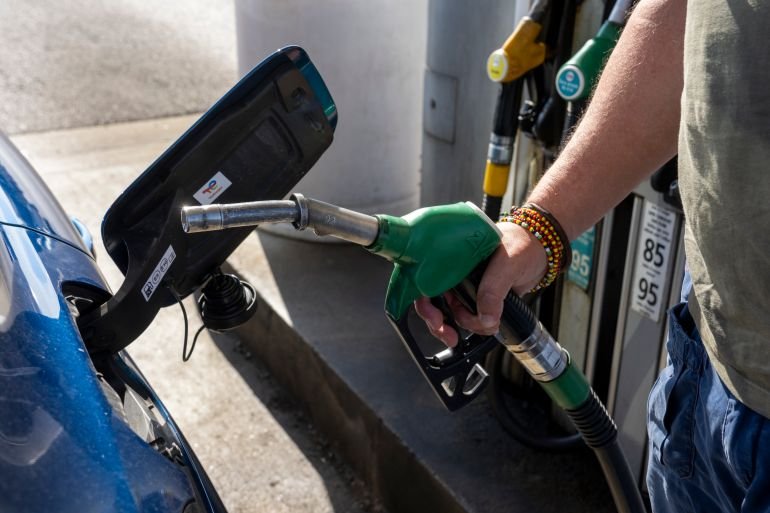
    The Group of Seven (G7) countries have agreed to release 100 billion barrels of crude oil and diesel from emergency reserves over several months in an effort to reduce soaring energy prices after pressure from United States President Donald Trump.

    The US and Israel’s war on Iran, as well as Russia’s war on Ukraine, have triggered a spike in global oil and diesel prices.

    Recommended Stories

    list of 3 itemsend of list

    “The emergency release by G7 members will put some downward pressure on prices, particularly global diesel prices. However, the impact would be short-lived given that this is just a temporary solution to the supply crunch,” Hamad Hussain, a climate and commodities economist at Capital Economics, told Al Jazeera.

    Oil prices ‌jumped on Thursday and settled up more than $4 a barrel. Global diesel prices also hit a record high last Friday with the average price for a gallon (3.79 litres) of diesel at $6.50, up from $5.61 a month earlier, according to the American Automobile Association (AAA).

    In a statement on Thursday, the G7, which includes Canada, France, Germany, Italy, Japan, the United Kingdom and the US, with the European Union also represented, said there will also be a “substantial diesel release within the first 20 days” and discussions over “additional diesel releases as necessary” will be held in the coming days.

    Will the G7’s energy release stabilise the global energy market?

    Here’s what we know:

    What has the G7 announced?

    After a video conference of G7 leaders chaired by French President Emmanuel Macron on Friday, the group said in a joint statement: “Taking into account commitments that have already been fulfilled, we will implement our commitments with a coordinated release through the IEA of 100 million barrels.”

    Earlier this week, the International Energy Agency’s (IEA) Executive Director Fatih Birol said that members had released about two-thirds of the 400-million-barrel agreement.

    The G7 energy release will begin immediately and last for four months and will include a substantial diesel release for 20 days. It is not clear how many oil and diesel stocks each member of the group will release.

    “We will convene in the context of the IEA in the coming days to discuss the possibility of additional diesel releases as necessary,” the statement said.

    “We will coordinate maintenance schedules across G7 refineries to prevent simultaneous capacity shutdowns and temporarily increase utilization rates where feasible,” it added.

    The G7 also urged member countries to refrain from imposing export restrictions on energy products among themselves.

    Earlier this week, the Trump administration had threatened to impose a ban on US diesel exports and also pressured Europe to release its emergency diesel stocks to help ease soaring diesel prices.

    Why are oil and diesel prices so high?

    Global energy prices have been soaring due to the US and Israel’s war on Iran, which has disrupted energy exports from the Gulf. Meanwhile, Ukraine’s attacks on Russian energy installations have also disrupted global energy supplies.

    The former head of the International Energy Agency’s Oil Industry and Markets Division, Neil Atkinson, told Al Jazeera that there are three key factors contributing to the decline in global diesel supply.

    First, “there isn’t diesel coming out of the Middle East to Europe, and Europe took quite a lot of diesel from Saudi Arabia and from Kuwait”.

    Second, “Russia has now ceased to export diesel at all” due to “the attacks by Ukraine on Russian refineries”.

    “And China is no longer exporting diesel,” he added.

    “We’re in a situation where demand remains relatively high and is likely to stay high because of the agricultural harvesting season.”

    According to data from the Joint Organizations Data Initiative (JODI) and the Organization of Petroleum Exporting Countries (OPEC), the US is the world’s largest producer and exporter of diesel. It produces about 240.5 million tonnes and exports around 1.26 million barrels of diesel per day.

    Russia is the world’s second-largest diesel exporter, supplying 783,400 barrels per day (bpd) to the global market. Saudi Arabia is the world’s second-largest producer of diesel at 58.4 million tonnes, but it consumes a large portion of its diesel domestically.

    Will the G7 energy release bring prices down?

    After the G7 announcement, French President Macron, who had co-chaired the meeting, said the group’s move to release the oil will “bring down the prices of petroleum products, particularly diesel”.

    The price of Brent crude, the international benchmark, briefly dropped below $100 a barrel after the G7 announcement, but rose to about $102 in the evening.

    Naeem Aslam, chief investment officer at Zaye Capital Markets, told Al Jazeera that the G7 energy release was “very much needed”, but the group’s announcement was just to ease off pressure on the energy market.

    “The actual structure changes about who is going to release [the energy stocks] and what and where the bans will be lifted, remains an important component in terms of the market,” he said.

    Aslam added that by Sunday night, especially before the markets open, the added pressure on energy prices will come off. “But going into Monday morning … we could potentially see the reversal in the market,” he added.

    Atkinson, the energy expert, said the G7’s fuel release is welcome but “doesn’t deal with the fundamental problem that the global supply remains lower than normal”.

    Atkinson told Al Jazeera that “seven months after this war started in the Middle East, we are still in a situation where the global supply of crude oil or products remains significantly below pre-war levels”.

    “We are now in a situation where the focus is on end use of products, mainly diesel, which is what we’re talking about here,” he added.

    What has Trump said?

    Soaring diesel prices have been a source of tension for the Trump administration and Republicans who fear this will cost them votes in the upcoming November midterm elections.

    Last week, Trump pressured Ukraine to stop attacking Russian diesel facilities amid the war.

    Then, on Thursday this week, the US president told reporters that his administration “may” ask European countries to release diesel stocks, shortly after Treasury Secretary Scott Bessent urged Europe to “immediately” tap its reserves.

    Trump also threatened to ban US diesel exports if Europe did not release emergency diesel stocks.

    But on Friday, Trump told reporters at the White House that Washington would not impose a diesel export ban. He said the plan was never really on the table.

    “Europe has a lot of diesel, and they’re going to be making a major world contribution, and so are we. And we’re not going to be doing the export ban. We’re going to be doing what we’re supposed to do,” Trump said.

    “Trump is scared by diesel prices above $6, which is a price jump of 70 percent compared to before he started the war. This is likely to get worse with US diesel inventories at their lowest seasonal level since records began in 1982.

    “So if there is not enough diesel being produced because of the US-Israeli war on Iran, and diesel reserves have been used up, the only way to bring more diesel to the US market is by exporting less,” Frederic Schneider, a nonresident senior fellow at the Middle East Council on Global Affairs, told Al Jazeera on Friday.

    After the G7 announcement, Trump wrote on his Truth Social platform: “Europe has just agreed to release a massive amount of their heavily stocked Diesel Oil. The process will begin immediately.”

    The White House is also reportedly preparing an executive order to tackle record-high US diesel prices that could be unveiled as early as next week, two people familiar with the process told the Reuters news agency.

    Schneider noted that countries are also concerned about high energy prices since diesel and gasoline are important for economies and fulfil different roles.

    “While gasoline fuels cars, diesel fuels anything from trucks, freight trains, ships, tractors, harvesters, construction machinery, mining equipment and backup generators. This means gasoline is used more by consumers while diesel is mostly used by producers, meaning a diesel price shock spreads into the price of almost everything else, most prominently food, building materials and anything delivered by truck,” he added.

    Farmers are hit twice because diesel prices are rising at the same time as fertiliser prices, both of which have been pushed up by the closure of the Strait of Hormuz.

    “A higher diesel price therefore acts like a tax on production and logistics, while higher gasoline prices act like a tax on consumers directly. Like higher gasoline prices, higher diesel prices risk stagflation by pushing up inflation while simultaneously squeezing margins in transport and agriculture, meaning central banks find [themselves] in a dilemma between cutting rates [helping producers] and raising rates [cutting inflation],” he said.
  • DOJ Argues CNN & Other Outlets Can Be Banned From White House If Trump Determines They Didn’t Meet “Minimum Requirements Of Professionalism”

    DOJ Argues CNN & Other Outlets Can Be Banned From White House If Trump Determines They Didn’t Meet “Minimum Requirements Of Professionalism”

    The Justice Department argued that Donald Trump can legally ban CNN, MS NOW and Politico from the White House because he determined that they didn’t meet the “minimum requirements of professionalism.”

    Last month, a federal judge granted the three outlets a temporary restraining order that forced the White House to reinstate dozens of their reporters’ hard passes. The outlets are now asking the judge to extend that 14-day order for a longer term via a preliminary injunction, claiming that Trump’s ban is a violation of their First and Fifth amendment rights.

    U.S. District Judge Timothy Kelly, a Trump appointee, has said that he is bound by the precedent set in In a 1977 D.C. Circuit opinion, Sherrill vs. Knight, in which the judges ruled that “the protection afforded newsgathering under the First Amendment guarantee of freedom of the press requires that this access not be denied arbitrarily or for less than compelling reasons.”

    In a court filing on Friday, the DOJ claimed that the Sherrill case still would allow for the president to restrict the three outlets from accessing the White House grounds because the White House has a “compelling interest.”

    The DOJ lawyers claimed that the Sherrill decision does not “prevent the President from concluding that bona fide journalists would identify sources instead of relying on anonymous sources, commit to factual accuracy, and provide the White House an opportunity to comment, rather than ‘perform their duties in a way that … interfere[s] with the White House’s daily operations.’ …At a bare minimum, it is a significant violation of decorum to publish classified and sensitive national security information.”

    The news outlets’ legal team has rejected that assertion, writing in a filing earlier this week that Trump’s “statements also make clear he implemented the ban to coerce more favorable coverage from CNN, MS NOW, and Politico, and to deter other journalists and news organizations from newsgathering and reporting that the President might view as negative. And his administration has continued to retaliate against Plaintiffs even after the temporary restraining order, only underscoring that Defendants’ motive is to punish and chill journalism they dislike.”

    Even as access to the White House grounds has been reinstated, the White House has continued to restrict CNN from coverage of TV pool assignments, including travel with Trump on Air Force One.

    The outlets’ lawyers, led by Theodore Boutrous Jr., also noted that Trump and other White House officials “overlooked that the First Amendment protects reporting on matters affecting national security.”

    Kelly has set a hearing for Thursday on the news outlets’ motion for a preliminary injunction.

    In granting a TRO, Kelly concluded that the White House failed to provide due process to the news outlets.

    The DOJ has pointed to letters sent to the outlets as evidence that they were given due process. But those letters were sent on Sept. 22, four days after Trump’s ban was started.

    The judge also has noted that some of the objectionable stories cited by the DOJ do not have to do with national security. Kelly wrote in his order that “even the justifications provided to Plaintiffs after this case was filed are ambiguous about the true purpose of the revocations: while Defendants’ letters to Plaintiffs mention national security concerns, they purport to identify reporting that ‘threatened national security and/or spread falsehoods’ leaving open the possibility that all the stories fall into the later bucket, rather than the former.”

  • ‘SNL’ Cold Open Goes Full MAGA Midterms Desperation With Hegseth’s “Schlong Donkeys”, Trump’s Rambles & A Sad VP

    Just a month away from the volatile midterms and a president way down in the polls, there was once again a plethora of political material ripe for this week’s SNL cold open, and the NBC late-nighter went full MAGA, with some Mitch McConnell on the side.

    Played by Mickey Day, the wheelchair bound 84-year-old Kentucky senator offered a premature “Live from New York” before being cut off by RNC ad consultants desperate to turn things around for the GOP. To that, there was a “He tricked us” (in Spanish) Marco Rubio, portrayed by the always on point Marcello Hernández, and a 2028 J.D. Vance (Jeremy Culhane) that no one wanted to actually put in a spot.

    Then there was Colin Jost’s Pete Hegseth, putting the fun in whack job Defense Secretary once again.

    “What’s up, schlong donkeys?” the Saturday Night Live Weekend Update co-anchor began in what might have been one of the greatest campaign ads ever (we’re talking 1954 Daisy level) if it was real. “Now listen up, okay, because I need all you patriots at home to do the gayest thing ever and vote. Thanks to me, the military finally has its priorities and sexuality straight.”

    Tossing in some slam poetry, Jost’s Hegseth added: “In conclusion, vote, I guess. And remember, even if you’re stationed overseas, you can still vote by mail, which is the only by mail I’m cool with.”

    Of course, this being a MAGA parody and being SNL, the joke had to go further. Having said that, unlike many too-long cold opens, this semi-morbid midterm skit work at the extra length – entirely because POTUS came to cook, base loathing and all.

    “I’m President Trump and I approve this ramble,” started a typically and wonderfully unhinged James Austin Johnson.

    Drawing from the fiction that is so much of Trumpland’s facts, he added in the fake ad: “We’re getting mogged out there, but not for long because I have a solution. If the Republicans win, I’ll give everyone $5,000, and that is not a bribe because I have no intention of following through on that promise.’

    “So, just pretend I’m on the ballot, okay? You have to use something called imagination. Imagination makes a MAGA nation. Wow, that’s pretty good. I can already see that written on the back of an obese woman’s booty shorts in dirty, disgusting Myrtle Beach. What a hell all this country is! It’s full of awful people.”

    Perhaps, but not in tonight’s spot-on cold open.

    Delayed a tad again on the West Coast like last week’s season opener thanks to college football, tonight’s SNL is the second show of the 52nd season.

    Verity star Dakota Johnson is hosting SNL for the third time. Coming off a big box office start for the Collen Hoover thriller, Johnson is joined by Turnstile as musical guest, the Maryland rockers’ SNL debut. Next week will see one-time dumped cast member Shane Gillis back for his third time hosting. The October 10 show will see the much-acclaimed Rosalía returning for her third SNL appearance.