The audio version of this article is generated by AI-based technology. Mispronunciations can occur. We are working with our partners to continually review and improve the results.
Scientists Karl Deisseroth, Peter Hegemann and Georg Nagel won the 2026 Nobel Prize in Physiology or Medicine for “discoveries concerning light-gated ion channels and optogenetics,” the award-giving body said Monday in Stockholm.
Optogenetics “makes it possible to switch on, or off, the activity of individual nerve cells in a living brain,” said Thomas Perlmann, secretary general of the Nobel Assembly at Karolinska Institutet.
“This method is now being used in laboratories around the world to reveal the brain’s mysteries,” he said.
Deisseroth, a 54-year-old American, Hegemann, a 71-year-old German, and Georg Nagel, a 73-year-old German, were all surprised to learn they had won, Perlmann said.
“All three said the same thing, that they thought it was absolutely wonderful to receive the prize with the other two, and they call them … friends. That it’s such an honour to receive them together. So that’s something they conveyed,” Perlmann said.
The Nobel Prizes come with a prize amount of 12 million Swedish crowns ($1.7 million Cdn), which the three scientists will split. Deisseroth is based at Stanford University in California, with Hegemann at Humboldt University in Berlin and Nagel at Germany’s University of Wurzburg.
In clinical trials, researchers are restoring vision to people blinded by a condition called retinitis pigmentosa by inserting a light-sensitive protein in the retina.
Researchers also hope optogenetics could improve cochlear implants, allowing more precise stimulation of the auditory nerve than current electrical devices.
Advancements over decades
In the early 1990s, Hegemann investigated how the alga Chlamydomonas reacts to light in half a millisecond. He hypothesized that a single protein captured light and acted as an ion channel. Nagel tested this by injecting Chlamydomonas genes into frog eggs, discovering channelrhodopsin-2 — an ion channel that opens when exposed to light.
In 2003, they published that this protein could be introduced into human and hamster cells to generate electrical impulses using light. In 2005, Deisseroth demonstrated the technique in rat nerve cells, and the method was named optogenetics a year later.
Prizes for chemistry and physics will be awarded Tuesday and Wednesday, literature on Thursday and the peace prize on Friday. The economics prize will be announced Oct. 12.
The Nobel Prize was created by wealthy Swedish chemist and entrepreneur Alfred Nobel, who in his will dictated that the bulk of his estate should be used to fund “prizes to those who, during the preceding year, have conferred the greatest benefit to humankind.”
A bust of Alfred Nobel in the Nobel Forum in Stockholm on Oct. 5, 2026. (Tom Little/Reuters)
Nobel is best known as the inventor of dynamite, but also wrote poetry and drama and could speak Russian, French, English and German by the age of 17. The five original prize categories reflect the interests closest to his heart.
Nobel died in 1896, with the first prizes bearing his name following five years later.
The Nobel prizes are presented to the laureates on Dec. 10, the anniversary of Nobel’s death.
On the surface, Nick Cholmsky looked like a thriving teenager.
Growing up in Ottawa, he says he was athletic and heavily involved in basketball, had friends and a close relationship with his family.
But underneath all that he says he was deeply depressed. The symptoms began in middle school and became much worse by Grade 11.
At 16, he had begun entertaining suicidal thoughts.
Nick Cholmsky, who grew up in Ottawa, experienced depression as a teen. He says online messaging encourages boys and men to stay silent about their psychological struggles. (CBC)
Even as his depression and anxiety grew stronger, Cholmsky believed he couldn’t say anything, because “being a man” meant pushing negative thoughts down, and that any sign of weakness would cause him shame.
“Looking back, so much of that [congenial attitude] was for sure just a performance, me acting the way I thought I was supposed to act as a man,” said Cholmsky, now 21.
There’s a common problem everywhere and it’s how men and boys are feeling. And they are not feeling great.– Federal Health Minister Marjorie Michel
Earlier this year, the federal government reported on a wide range of data showing that the mental health of young men has deteriorated since 2012. Between 2012 and 2022, the number of men aged 15 to 24 who self-reported mood disorders increased from 11 per cent to 16 per cent, while self-reported generalized anxiety disorders increased from four per cent to 10 per cent.
Those who reported their mental health as “very good” or “excellent” plummeted from 70 per cent to 52 per cent in that same time period.
A separate report shows that men are three times as likely as women to commit suicide and that it’s the second-leading cause of death in boys aged 15 to 34 (after unintentional injuries).
“There’s a common problem everywhere and it’s how men and boys are feeling. And they are not feeling great,” federal Health Minister Marjorie Michel told CBC News.
“There is a lot of anxiety [about] their role as men and boys.”
Social media use, gambling major issues
Research implicates a variety of factors in men’s depression, most prominently social isolation, social media use and online sports betting.
Data from the Canadian Medical Association Journal shows a huge rise in young men calling helplines with gambling addictions. (Health Canada reports men are three times more likely than women to have a gambling problem.)
Canada legalized single-event sports betting in 2021. In 2022, Ontario became the first province to allow private companies to operate alongside government-regulated industry.
A separate report released this month by the Institute for Clinical Evaluation Sciences (ICES) showed that since 2022, emergency room visits for gambling disorders had doubled — largely with young men showing up in a psychological crisis, such as suicidal ideation or psychosis, as a result of gambling losses.
“The gambling stats didn’t surprise me at all when I heard them,” said Cholmsky. “I saw kids in middle school gambling.”
WATCH | Investor and podcast Scott Galloway on male potential:
Scott Galloway on male potential
U.S. investor and podcaster Scott Galloway talks to CBC News about the impacts of the manosphere and the loss of ‘off-ramps to the middle class,’ and how young men are being impacted.
Whether the stress is the result of gambling or something else, Cholmsky says online messaging encourages boys and men to stay silent.
“When I was going through some of my worst mental health times, I was online a lot and it was really the height of Andrew Tate,” Cholmsky said.
The U.S.-born Tate is one of the best-known influencers in the manosphere, famous for espousing strict rules for being an alpha male, such as maximizing fitness, maintaining control over relationships and emotions and making as much money as possible.
He retains a large following despite being in U.S. detention on multiple criminal charges, including sex trafficking.
“[Tate’s] message, and a lot of that manosphere messaging for boys, is ‘be a man, be tough, make lots of money,’” Cholmsky said.
There are also trends like “looksmaxxing.” Influencer Braden Peters, also known as Clavicular, has amassed a huge following telling young boys sometimes to smash their own faces with hammers to be more conventionally beautiful. His content has more than 40 million likes. Peters was charged with rape last month.
Experts warn dangerous role models like this can have real-world impacts.
“The manosphere is radicalizing young boys who don’t know where they fit — and that should concern us all,” said John Oliffe, Canada research chair in men’s health promotion at the University of British Columbia.
Oliffe says this was “amplified” by the earliest parts of the COVID-19 pandemic when global lockdowns increased isolation and the loss of social connection. Vulnerable teenagers often found themselves lost online.
“There continues to be a whole world of pain in some of that unregulated content,” Oliffe said.
John Oliffe, Canada research chair in men’s health promotion at the University of British Columbia, says the radicalizing effects of the manosphere should worry us all. (Nav Rahi/CBC)
Adam Kunder, a 33-year-old former firefighter who lives in Toronto, says he also felt he needed to keep his problems quiet. He suffered mental health issues and hit “rock bottom” before beginning to find help in the summer of 2024.
“As a man, you think you are supposed to be strong, push any bad feelings down, suppress depression or sadness or fear,” he said.
Kunder says he has lost multiple friends to suicide and says you never would have known they were suffering.
Gender roles and ‘toxic masculinity’
Kunder said the world is changing in ways that are becoming confusing for many men.
The emphasis on women’s parity in the labour force and society, as well as a greater acceptance of non-traditional gender identities, has upended expectations.
“At one point we knew we were supposed to be the provider and protector, and the idea of ‘toxic masculinity’ wasn’t a thing,” he said.“I think men are really trying to figure out what it means to be a man in today’s world.”
WATCH | Why manosphere influencers appeal to young men:
Why ‘manosphere’ influencers are appealing to young men
Critic Amil Niazi joins Commotion with Elamin Abdelmahmoud to discuss Louis Theroux: Inside the Manosphere, a documentary about the online world of toxic masculinity, and examine the rising popularity of “manosphere” influencers among young men.
Oliffe pointed to other troubling patterns for young men.
“There are increasing lower rates of boys heading to universities, and very serious challenges in male-dominated industries such as construction, that as a society, we should not ignore.”
Oliffe said that while the trades offer good careers, they often see high rates of substance use and mental health issues, as the necessary physical labour and harsh working environments can “heighten these risks.”
Oliffe said that in the last decade, there has been “low government investment in men’s mental health.”
“I think the theme of silence is a very regrettable period in history, where on one side we talked about equity and inclusion, and then in effect ostracized 50 per cent of the population,” Oliffe said.
Health Minister Michel said that when she brought this issue to the federal cabinet, she was met with some resistance. Some colleagues told her it took “courage” to broach the mental health of boys and men, given it could even be politically risky to talk publicly about the issue.
“I said ‘courage’? This is not courage. We are ministers of health, it is our job to take care of the entire population,” she said.
“Men don’t know how to ask for help. And when they are struggling, they don’t know how to express it.”
Government strategy to come by early 2027
The federal government will soon launch its first-ever mental health strategy for boys and men.
The agency told CBC that some of what they hope to invest in will be “mentorship, peer support, sport and recreation,” while “promoting healthy relationships, positive social norms and safer online environments.”
Toronto resident Adam Kunder says he feels it’s his duty ‘to show up for men who are suffering and to hear them out and just let them know it’s all OK.’ (CBC)
For Robert Whitley, a men’s health expert and professor of psychiatry at McGill University in Montreal, part of the problem is the way society now views masculinity.
“Traditional masculinity has been denigrated in the popular mind whether it’s through the media, through influencers, through commentators,” he said. “The problem sometimes is a lack of masculinity.”
He says there’s a need for positive male role models.
“I’ve said many times before, it’s not a crisis of masculinity, there’s a crisis of mentorship,” said Whitley.
For example, data from Statistics Canada shows only 25 per cent of teachers across elementary and high school systems in Canada are men. And at the organizations that step in to fill the mentorship gap — like the Big Brothers and Big Sisters of Canada — 70 per cent of volunteers are women.
“We’re getting young men who are getting to the age of 18, 19, 20, who have never had a male role model in their lives,” Whitley said.
Kunder and Cholmsky both say their mental health began to recover after they started asking for help, and they’re now working to be role models for other young men.
“I feel like it’s my duty in a way to show up for men who are suffering and to hear them out and just let them know it’s all OK,” said Kunder, who coaches and works with other men.
Last month in Ottawa, Cholmsky was awarded top 21 under 21 for his work in mental health advocacy and challenging “harmful stereotypes around masculinity and mental health.”
“We all need to be doing our part to talk about this stuff,” he said.
The Justice Department argued that Donald Trump can legally ban CNN, MS NOW and Politico from the White House because he determined that they didn’t meet the “minimum requirements of professionalism.”
Last month, a federal judge granted the three outlets a temporary restraining order that forced the White House to reinstate dozens of their reporters’ hard passes. The outlets are now asking the judge to extend that 14-day order for a longer term via a preliminary injunction, claiming that Trump’s ban is a violation of their First and Fifth amendment rights.
U.S. District Judge Timothy Kelly, a Trump appointee, has said that he is bound by the precedent set in In a 1977 D.C. Circuit opinion, Sherrill vs. Knight, in which the judges ruled that “the protection afforded newsgathering under the First Amendment guarantee of freedom of the press requires that this access not be denied arbitrarily or for less than compelling reasons.”
In a court filing on Friday, the DOJ claimed that the Sherrill case still would allow for the president to restrict the three outlets from accessing the White House grounds because the White House has a “compelling interest.”
The DOJ lawyers claimed that the Sherrill decision does not “prevent the President from concluding that bona fide journalists would identify sources instead of relying on anonymous sources, commit to factual accuracy, and provide the White House an opportunity to comment, rather than ‘perform their duties in a way that … interfere[s] with the White House’s daily operations.’ …At a bare minimum, it is a significant violation of decorum to publish classified and sensitive national security information.”
The news outlets’ legal team has rejected that assertion, writing in a filing earlier this week that Trump’s “statements also make clear he implemented the ban to coerce more favorable coverage from CNN, MS NOW, and Politico, and to deter other journalists and news organizations from newsgathering and reporting that the President might view as negative. And his administration has continued to retaliate against Plaintiffs even after the temporary restraining order, only underscoring that Defendants’ motive is to punish and chill journalism they dislike.”
Even as access to the White House grounds has been reinstated, the White House has continued to restrict CNN from coverage of TV pool assignments, including travel with Trump on Air Force One.
The outlets’ lawyers, led by Theodore Boutrous Jr., also noted that Trump and other White House officials “overlooked that the First Amendment protects reporting on matters affecting national security.”
Kelly has set a hearing for Thursday on the news outlets’ motion for a preliminary injunction.
In granting a TRO, Kelly concluded that the White House failed to provide due process to the news outlets.
The DOJ has pointed to letters sent to the outlets as evidence that they were given due process. But those letters were sent on Sept. 22, four days after Trump’s ban was started.
The judge also has noted that some of the objectionable stories cited by the DOJ do not have to do with national security. Kelly wrote in his order that “even the justifications provided to Plaintiffs after this case was filed are ambiguous about the true purpose of the revocations: while Defendants’ letters to Plaintiffs mention national security concerns, they purport to identify reporting that ‘threatened national security and/or spread falsehoods’ leaving open the possibility that all the stories fall into the later bucket, rather than the former.”
Just a month away from the volatile midterms and a president way down in the polls, there was once again a plethora of political material ripe for this week’s SNLcold open, and the NBC late-nighter went full MAGA, with some Mitch McConnell on the side.
Played by Mickey Day, the wheelchair bound 84-year-old Kentucky senator offered a premature “Live from New York” before being cut off by RNC ad consultants desperate to turn things around for the GOP. To that, there was a “He tricked us” (in Spanish) Marco Rubio, portrayed by the always on point Marcello Hernández, and a 2028 J.D. Vance (Jeremy Culhane) that no one wanted to actually put in a spot.
Then there was Colin Jost’s Pete Hegseth, putting the fun in whack job Defense Secretary once again.
“What’s up, schlong donkeys?” the Saturday Night Live Weekend Update co-anchor began in what might have been one of the greatest campaign ads ever (we’re talking 1954 Daisy level) if it was real. “Now listen up, okay, because I need all you patriots at home to do the gayest thing ever and vote. Thanks to me, the military finally has its priorities and sexuality straight.”
Tossing in some slam poetry, Jost’s Hegseth added: “In conclusion, vote, I guess. And remember, even if you’re stationed overseas, you can still vote by mail, which is the only by mail I’m cool with.”
Of course, this being a MAGA parody and being SNL, the joke had to go further. Having said that, unlike many too-long cold opens, this semi-morbid midterm skit work at the extra length – entirely because POTUS came to cook, base loathing and all.
“I’m President Trump and I approve this ramble,” started a typically and wonderfully unhinged James Austin Johnson.
Drawing from the fiction that is so much of Trumpland’s facts, he added in the fake ad: “We’re getting mogged out there, but not for long because I have a solution. If the Republicans win, I’ll give everyone $5,000, and that is not a bribe because I have no intention of following through on that promise.’
“So, just pretend I’m on the ballot, okay? You have to use something called imagination. Imagination makes a MAGA nation. Wow, that’s pretty good. I can already see that written on the back of an obese woman’s booty shorts in dirty, disgusting Myrtle Beach. What a hell all this country is! It’s full of awful people.”
Perhaps, but not in tonight’s spot-on cold open.
Delayed a tad again on the West Coast like last week’s season opener thanks to college football, tonight’s SNL is the second show of the 52nd season.
Verity star Dakota Johnson is hosting SNL for the third time. Coming off a big box office start for the Collen Hoover thriller, Johnson is joined by Turnstile as musical guest, the Maryland rockers’ SNL debut. Next week will see one-time dumped cast member Shane Gillis back for his third time hosting. The October 10 show will see the much-acclaimed Rosalía returning for her third SNL appearance.
The audio version of this article is generated by AI-based technology. Mispronunciations can occur. We are working with our partners to continually review and improve the results.
Dua Lipa in the streets of Italy. Charli XCX at her wedding. Singer Clairo snapping selfies. Heated Rivalry stars Connor Storrie and Hudson Williams out on the town.
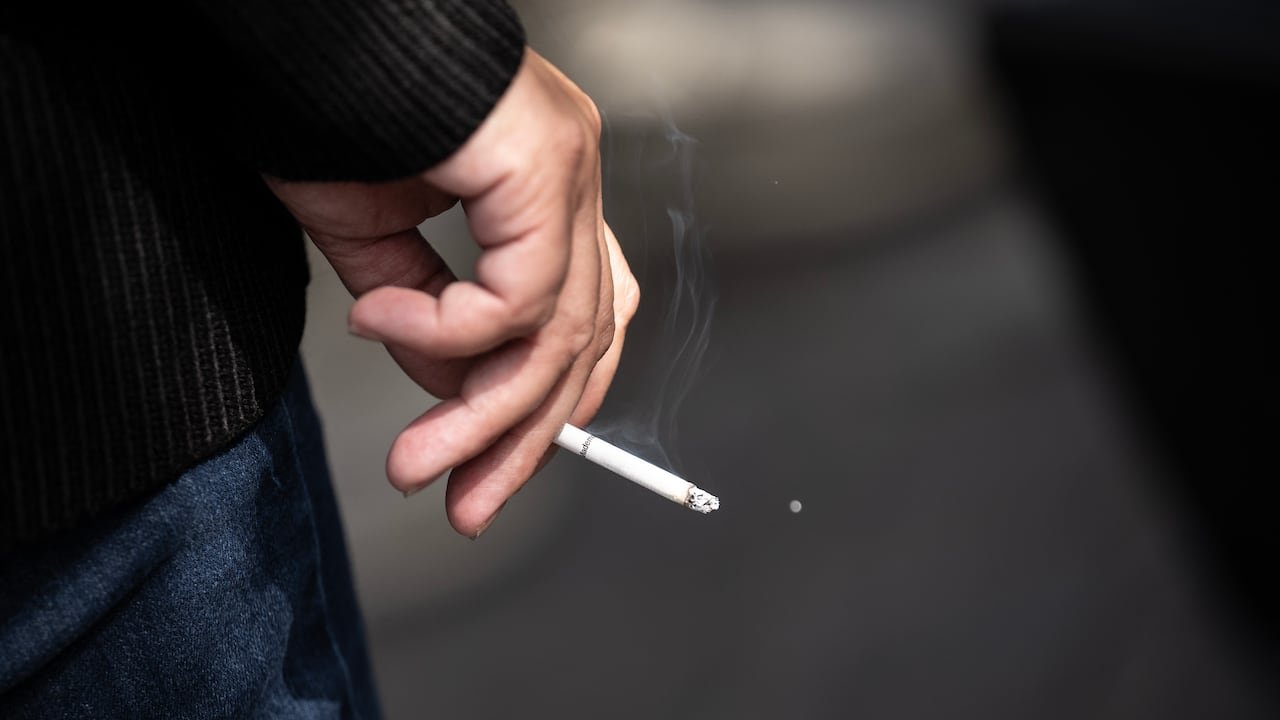
These are just a few of the world’s biggest celebrities who’ve recently appeared in dozens of photos on Instagram and TikTok, looking impossibly cool while doing something notoriously unhealthy: smoking cigarettes.
“It’s almost like they’re glamorizing smoking again,” said Carolyn Baglole, an associate professor with McGill University’s department of medicine.
But even with celebrities caught puffing and influencers hyping the habit, data suggests tobacco use has long been trending downward. Still, if we want it to stay that way, experts say online content glamourizing the habit shouldn’t be ignored.
WATCH | Many people don’t realize just how bad smoking is:
Global study found many people don’t understand the dangers of smoking
A global study led by a University of Waterloo researcher found that many smokers worldwide are still unaware of the dangers of tobacco use. The study followed around 240,000 people from 46 countries over two decades. Geoffrey Fong, the principal investigator of the International Tobacco Control Policy Evaluation Project and a professor at the University of Waterloo, explains his research.
No amount of smoking is safe: experts
Dedicated accounts to smoking culture have popped up online, including @cigfluencers, which boasts more than 100,000 followers on Instagram and posts pictures of celebrities smoking.
Like the one that jokingly declares cigarettes don’t count if you smoke them with your morning coffee or overseas. In another video, a woman defends influencer Alix Earle for smoking a cigarette with the caption, “Let a girl smoke a cheeky cig!” In another, the content creator says cigarettes don’t count “if you’re in the middle of writing.”
However, experts warn that this is the kind of behaviour that can lead to addiction.
“Nicotine is so highly addictive,” said Rob Cunningham, a senior policy analyst with the Canadian Cancer Society. “A small number of cigarettes can lead to addiction and cravings.”
According to Health Canada, tobacco use is the leading preventable cause of premature death in the country, and can lead to more than 40 debilitating and potentially fatal illnesses, including cancers and heart disease.
Though some of these posts may be facetious or played off as jokes, experts told CBC News no amount of smoking is safe.
“Even smoking socially, you don’t want to risk a nicotine addiction,” Baglole said. “If that happens and you become a life-long smoker, the risk of developing a chronic disease such as lung cancer, is so much higher.”
The instagram account @cigfluencers has more than 100,000 followers and posts content of celebrities smoking, like this image of Charli XCX smoking with her new husband while wearing her wedding dress. (Instagram/@cigfluencers)
Jared Oviatt is a smoker who runs the @cigfluencers account. Despite the popularity of his content, he previously told CBC Life that he doesn’t believe we’re in a smoking renaissance.
“I don’t see the comeback of cigarettes in celebrity culture as a true return to smoking as a mainstream habit,” Oviatt said.
“Are we seeing it more often? Yes. However, I also think we’re already nearing the peak of that trend.”
Smoking on a downward trend
Cunningham confirmed that smoking isn’t on the rise, at least not yet.
“So far, we have not seen an increase in smoking and that’s good,” he said.
Recent data from the Centre for Addiction and Mental Health shows a significant downward trend between 1999 and 2025. For students in grades 7-12 in Ontario, smoking tobacco cigarettes decreased from 28.4 per cent in 1999 to 3.5 per cent by 2025.
According to the federal government, smoking rates have steadily declined across the country. About 300,000 Canadians who smoked in 2023 reported that they quit smoking in 2024, with just 11 per cent of adult Canadians reporting smoking that year.
“We want to keep that trend going downward,” Baglole told CBC News. “I would hate to see that trend reversed in any way and in any age demographic. Smoking is just so bad for you.”
WATCH | U.K. lawmakers introduce tobacco ban for everyone born in 2009 onwards:
U.K. lawmakers approve lifetime tobacco ban for anyone born in 2009 or after
A new law in the United Kingdom will ban purchasing tobacco smoking and vaping products to everyone born on or after Jan. 1, 2009, meaning affected age groups face a lifetime ban. The law is due to receive royal assent next week.
Cunningham says the habit damages teeth, skin and causes bad breath.
“It’s also very costly once you’re addicted,” he said. In Canada, a pack of cigarettes can cost anywhere from $14 to $26 Cdn.
He also warned that the content on social media that glamourizes smoking is harmful.
“The positive depictions by influential people on social media is extensive and concerning,” he said.
“Actors or influential people or celebrities do have influence — outsized influence — on the people they’re exposed to.”
Cunningham says he believes celebrities and influencers have a responsibility to protect their fans.
“They wouldn’t want their kids or grandkids to smoke, and they should realize their behaviour can influence vast numbers of young people.”
The Justice Department argued that Donald Trump can legally ban CNN, MS NOW and Politico from the White House because he determined that they didn’t meet the “minimum requirements of professionalism.”
Last month, a federal judge granted the three outlets a temporary restraining order that forced the White House to reinstate dozens of their reporters’ hard passes. The outlets are now asking the judge to extend that 14-day order for a longer term via a preliminary injunction, claiming that Trump’s ban is a violation of their First and Fifth amendment rights.
U.S. District Judge Timothy Kelly, a Trump appointee, has said that he is bound by the precedent set in In a 1977 D.C. Circuit opinion, Sherrill vs. Knight, in which the judges ruled that “the protection afforded newsgathering under the First Amendment guarantee of freedom of the press requires that this access not be denied arbitrarily or for less than compelling reasons.”
In a court filing on Friday, the DOJ claimed that the Sherrill case still would allow for the president to restrict the three outlets from accessing the White House grounds because the White House has a “compelling interest.”
The DOJ lawyers claimed that the Sherrill decision does not “prevent the President from concluding that bona fide journalists would identify sources instead of relying on anonymous sources, commit to factual accuracy, and provide the White House an opportunity to comment, rather than ‘perform their duties in a way that … interfere[s] with the White House’s daily operations.’ …At a bare minimum, it is a significant violation of decorum to publish classified and sensitive national security information.”
The news outlets’ legal team has rejected that assertion, writing in a filing earlier this week that Trump’s “statements also make clear he implemented the ban to coerce more favorable coverage from CNN, MS NOW, and Politico, and to deter other journalists and news organizations from newsgathering and reporting that the President might view as negative. And his administration has continued to retaliate against Plaintiffs even after the temporary restraining order, only underscoring that Defendants’ motive is to punish and chill journalism they dislike.”
Even as access to the White House grounds has been reinstated, the White House has continued to restrict CNN from coverage of TV pool assignments, including travel with Trump on Air Force One.
The outlets’ lawyers, led by Theodore Boutrous Jr., also noted that Trump and other White House officials “overlooked that the First Amendment protects reporting on matters affecting national security.”
Kelly has set a hearing for Thursday on the news outlets’ motion for a preliminary injunction.
In granting a TRO, Kelly concluded that the White House failed to provide due process to the news outlets.
The DOJ has pointed to letters sent to the outlets as evidence that they were given due process. But those letters were sent on Sept. 22, four days after Trump’s ban was started.
The judge also has noted that some of the objectionable stories cited by the DOJ do not have to do with national security. Kelly wrote in his order that “even the justifications provided to Plaintiffs after this case was filed are ambiguous about the true purpose of the revocations: while Defendants’ letters to Plaintiffs mention national security concerns, they purport to identify reporting that ‘threatened national security and/or spread falsehoods’ leaving open the possibility that all the stories fall into the later bucket, rather than the former.”
Just a month away from the volatile midterms and a president way down in the polls, there was once again a plethora of political material ripe for this week’s SNLcold open, and the NBC late-nighter went full MAGA, with some Mitch McConnell on the side.
Played by Mickey Day, the wheelchair bound 84-year-old Kentucky senator offered a premature “Live from New York” before being cut off by RNC ad consultants desperate to turn things around for the GOP. To that, there was a “He tricked us” (in Spanish) Marco Rubio, portrayed by the always on point Marcello Hernández, and a 2028 J.D. Vance (Jeremy Culhane) that no one wanted to actually put in a spot.
Then there was Colin Jost’s Pete Hegseth, putting the fun in whack job Defense Secretary once again.
“What’s up, schlong donkeys?” the Saturday Night Live Weekend Update co-anchor began in what might have been one of the greatest campaign ads ever (we’re talking 1954 Daisy level) if it was real. “Now listen up, okay, because I need all you patriots at home to do the gayest thing ever and vote. Thanks to me, the military finally has its priorities and sexuality straight.”
Tossing in some slam poetry, Jost’s Hegseth added: “In conclusion, vote, I guess. And remember, even if you’re stationed overseas, you can still vote by mail, which is the only by mail I’m cool with.”
Of course, this being a MAGA parody and being SNL, the joke had to go further. Having said that, unlike many too-long cold opens, this semi-morbid midterm skit work at the extra length – entirely because POTUS came to cook, base loathing and all.
“I’m President Trump and I approve this ramble,” started a typically and wonderfully unhinged James Austin Johnson.
Drawing from the fiction that is so much of Trumpland’s facts, he added in the fake ad: “We’re getting mogged out there, but not for long because I have a solution. If the Republicans win, I’ll give everyone $5,000, and that is not a bribe because I have no intention of following through on that promise.’
“So, just pretend I’m on the ballot, okay? You have to use something called imagination. Imagination makes a MAGA nation. Wow, that’s pretty good. I can already see that written on the back of an obese woman’s booty shorts in dirty, disgusting Myrtle Beach. What a hell all this country is! It’s full of awful people.”
Perhaps, but not in tonight’s spot-on cold open.
Delayed a tad again on the West Coast like last week’s season opener thanks to college football, tonight’s SNL is the second show of the 52nd season.
Verity star Dakota Johnson is hosting SNL for the third time. Coming off a big box office start for the Collen Hoover thriller, Johnson is joined by Turnstile as musical guest, the Maryland rockers’ SNL debut. Next week will see one-time dumped cast member Shane Gillis back for his third time hosting. The October 10 show will see the much-acclaimed Rosalía returning for her third SNL appearance.
Washington, DC – Democrats have the momentum; Republicans are surging in defence and cash.
That narrative has emerged ahead of the United States midterm elections in November, as races across the country enter their final stretch.
Recommended Stories
list of 3 itemsend of list
With control of the US House of Representatives and the US Senate at stake, Democrats begin October with a surprisingly rosy outlook as more congressional seats are seen as in play.
Republicans, meanwhile, appear to be in damage control, pouring millions of dollars into races once seen as secure victories while injecting more funding into a handful of marquee showdowns.
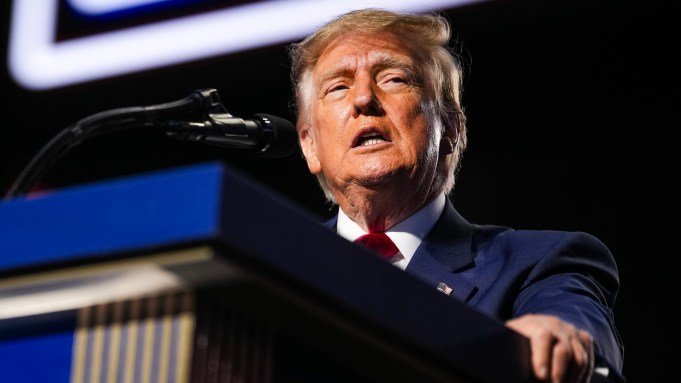
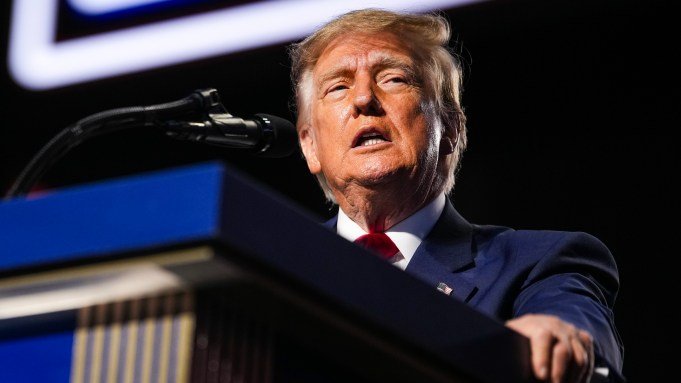
The party’s standard bearer, President Donald Trump, who has embraced the notion of the election being a referendum on his leadership, enters the final month with staggeringly low approval ratings.
The most recent Associated Press-NORC polling, released on Thursday, showed Trump with 31 percent approval, the lowest during either of his two terms. Only 26 percent of respondents approved Trump’s handling of the economy, dipping two points below his predecessor, former President Joe Biden’s lowest rating on the topic.
Surveys continue to show voters rank the economy as their top issue, with topics like gas prices, made higher by the US-Israel war with Iran, dominating their concerns. Immigration and corruption have also regularly ranked high.
“The broad stroke is that Americans are disappointed, bordering on angry that President Trump hasn’t delivered on the core promises he made when he won re-election,” according to Henry Olsen, a senior fellow at the conservative Ethics and Public Policy Center in Washington, DC.
House looking solid for Dems
Political trackers have long projected Democrats will take control of the US House of Representatives in the November 3 vote.
Winning a majority in the 435-member chamber from Republicans would give the party renewed legislative power to assert leverage over Trump, while launching investigations into his administration’s dealings. Top Democrats have already signalled that probes into Trump’s family business dealings would be top priorities.
Two election non-partisan prediction authorities, the Cook Political Report and the University of Virginia’s Sabato’s Crystal Ball, have recently assessed that the likelihood of Democrats taking the House has only increased.
The Cook Political Report recently shifted 15 House races in the direction of Democrats, moving some considered “toss-ups” to “leans Democrat” and some previously considered “lean Republican” to “toss-ups”.
One such shift was for a Texas border district represented by Republican Monica De La Cruz. Her district was emblematic of a wider Latino shift towards Trump in 2024. Once seen as holding the advantage over her challenger, Democrat Bobby Pulido, Cook now rates her race as a “toss-up”.
All told, the political analysis clearinghouse now predicts Democrats are on track to win 5 to 15 House seats.
Senate in play
With 30 days left to go, “there’s much more drama in the Senate than the House races”, according to Kyle Kondik, the managing editor at Sabato’s Crystal Ball.
Once considered a pipe dream for Democrats, who need a net gain of at least four seats to win a slim majority, the 100-member chamber has moved within a more comfortable striking distance.
Unlike in the House, where every seat is up for re-election, only 35 Senate seats are up for grabs in this cycle, creating a far narrower pathway to control.
“The trajectory of the polling since Labor Day (September 7) has generally been that a bad Republican environment is just getting worse,” Kondik said, adding that “the Senate just seems to get more and more competitive as the cycle has gone on”.
To be sure, the quality of polling can vary across the country, with Kondik cautioning that gauging the political temperature of the Midwest has been particularly challenging for pollsters.
Still, in North Carolina, former Democratic Governor Roy Cooper is expected to trounce former Republican National Committee chairman Michael Whatley in the race for a Senate seat currently held by Republicans. Top conservative donors have already begun to divert funds from the contest.
Surveys have consistently shown Democrats leading in three other races for seats currently held by Republicans: Democrat James Talarico against Republican Ken Paxton in Texas; Democratic challenger Sherrod Brown against Republican incumbent Senator John Husted in Ohio; and Democratic Mary Peltola against Republican Dan Sullivan in Alaska.
Races for Republican held seats in Iowa, between Republican Ashley Hinson and Democrat Josh Turek, and in Maine, between Republican incumbent Susan Collins and Democratic challenger Troy Jackson, remain separated by less than one point, according to Real Clear Politics polling averages.
Democrats, meanwhile, have consistently led in polling in Senate races in Georgia, New Hampshire and Michigan for seats the party currently holds.
Big money in the race
For Republicans, salvation could be in the spending, with this year’s race continuing a US phenomenon of small fortunes poured into politics.
All told, at least $4bn had been spent on gubernatorial and congressional midterm advertising buys as of September 17, putting the race on track to become “perhaps the most expensive midterm on record”, according to Michael Franz, co-director of the Wesleyan Media Project.
Republicans entered September with a considerable funding edge. The Republican National Committee had $125.6m on hand, with the Democratic National Committee trailing far behind with $16.9m and $17.6m in debt.
When accounting for the three major committees associated with both groups, the Republican Party had $233.4m in cash, according to a CNBC analysis, while the Democratic Party had $130.4m.
Trip Yang, a Democrat strategist based in New York City, told Al Jazeera such spending can be deployed to help boost a candidate’s name recognition or to tear down a competitor.
According to AdImpact, Republicans and their allies were set to spend $888m on advertising from mid-September to election day, with Democrats and their supporters set to spend $666m.
The firm found pro-Republican ad spending would be particularly pronounced in the key Senate races in Ohio, Texas and Michigan, outpacing Democratic spending by at least $24m in each state.
Trump’s unpopularity, Yang said, means “Republicans spending millions or hundreds of millions of dollars improving their candidates’ images by itself may not be enough”.
“If you’re a little bit handicapped because your president is so toxic, you try to spend your hundreds of millions of dollars attacking the Democrats to make it more of a food fight,” he said.
A New York Times analysis estimated by the end of August at least $1bn in so-called “dark money” had been poured into the midterms. The term refers to spending where the donor’s identity is shielded, typically through nonprofit and shell-company donations to Super PACs.
Industry groups, including those supporting Crypto, AI and online betting firms, are expected to be top spenders in key races, although their support tends to cut across partisan lines.
Trump, meanwhile, has pledged to spend between $400m and $500m from his MAGA Inc Super PAC, though it has so far spent about $15m to support Paxton’s Senate bid in Texas.
Pro-Paxton ad reservations far outpaced Talarico in September, according to AdImpact data analysed by NPR, with $94m spent compared with $30m to support the Democrat.
The Trump factor
Trump has pledged to spend the final days before the election in non-stop campaign mode, after urging supporters during his Republican Midterm Convention in Dallas, Texas, to “vote like I’m on the ballot”.
His plan to criss-cross the country for rallies underscores a “base turnout” strategy meant to energise voters already loyal to the party, according to conservative analyst Olsen.
“But the Republican problem is a persuasion problem with people in the middle,” Olsen said. “[Trump’s campaigning] might help with some turnout … but their real problem is persuasion, and it’s not something that’s going to help with that in the slightest.”
Polls have spelt trouble for Republicans when it comes to swaying independents, with a PBS News, NPR and Marist poll from September 23 showing unaffiliated voters breaking for Democrats at 57 percent compared with 32 moving towards Republicans.
US President Donald Trump participates in a midterm election rally for Oklahoma Republican gubernatorial candidate Mike Mazzei at the Choctaw Event Center in Durant, Oklahoma, US, October 1, 2026. [Nick Oxford/Reuters]
The scenario has created a dilemma for some top Republican candidates over whether to break from the president on his most controversial actions, according to Lee Miringoff, the director of the Marist University Institute for Public Opinion.
Senate candidates Ashley Hinson in Iowa, Jon Husted in Ohio and Mike Rogers in Michigan all recently put daylight between themselves and Trump on the war with Iran.
One Republican House candidate, Representative Maria Elvira Salazar, has criticised Trump’s aggressive immigration enforcement policies as she seeks to rally Latino voters in South Florida.
Trump, in turn, reposted a social media message calling Salazar a “backstabber”.
“You need to have, you know, something else going for you other than endorsement of Trump,” said Miringoff. “Some Republicans are starting to have self-preservation kick in because they’re concerned.”
What can change?
Achieving a wide-scale shift in public opinion remains a tall order for Republicans in the final stretch of the race.
Many of the defining issues are unlikely to change before November, with Trump signalling a possible escalation with Iran following the vote as he has downplayed the prospect of short-term affordability relief.
At the same time, the US president has also not ruled out actions that rights groups say could upend voter turnout. Most recently, he refused to commit to not invoking the Insurrection Act or declaring a state of emergency surrounding the vote during an interview with Time magazine.
Miringoff said he believed that the “potential for more than just a marginal shift is there”, as he assessed some Democratic candidates have struggled to present clear visions beyond opposition to Trump.
“The result isn’t formed in concrete,” he said, “to the degree that there’s going to be a lot of money still spent.”
Analyst Olsen saw less remaining wiggle room for the party.
“Republicans have the time and the resources to change the outcome with respect to a few close Senate races,” Olsen said. “But to change direction, they would need something that would be apocal.”
The state’s governor said Frank Strada would step down as an independent review examines what went wrong.
Published On 3 Oct 20263 Oct 2026
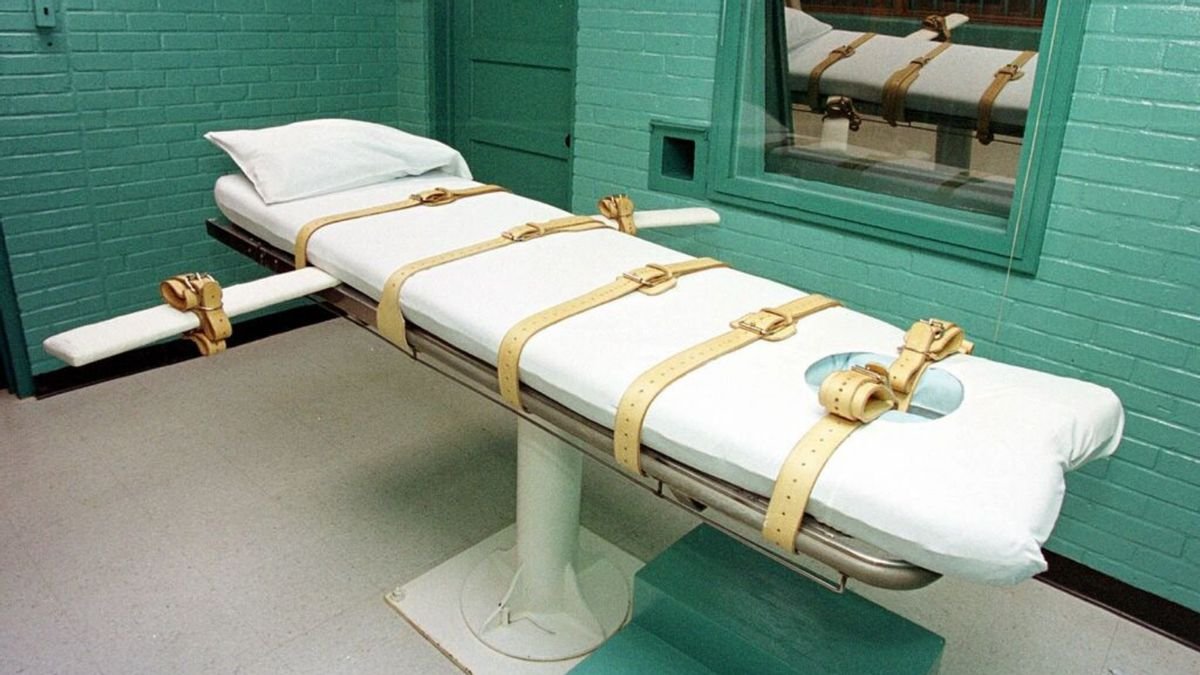
The official in charge of the prison system in the US state of Tennessee has resigned just days after overseeing the botched execution of Christa Pike.
The state’s governor, Bill Lee, announced on Saturday that Tennessee Department of Correction Commissioner Frank Strada would step down from his role later this month, a decision Lee described as necessary after the stunning failure.
Recommended Stories
list of 3 itemsend of list
“Commissioner Strada has served with integrity, and I appreciate his willingness to put the interests of Tennesseans first during this difficult moment”, Lee said in a statement. “I have accepted his decision to step down and am grateful for his commitment to ensuring a smooth leadership transition”.
A replacement for Strada was not announced.
Strada, who started his role in Tennessee three years ago, previously served as a top official in Arizona’s corrections department where multiple executions on his watch faced complications. He said he was resigning “in the best interest of Tennesseans” as an independent review examines what went wrong.
“I believe this review is entirely appropriate and necessary, and I look forward to doing everything I can to help determine exactly what occurred,” Strada said in a statement that defended his department’s handling of Pike’s execution.
Pike was transported from prison to hospital on Wednesday after surviving two injections of the drug pentobarbital, which Tennessee uses to execute prisoners.
Strada’s resignation was “justified”, Pike’s lawyers said in a statement. “But it does nothing to help Christa now.”
“What happened to her Wednesday reflects a systemic failure that goes far beyond any one person,” they wrote. “We hope the Governor’s call for a full, independent review will expose the profound problems within Tennessee’s entire death penalty system.”
In a court filing on Friday, Pike’s lawyers said she had been placed on a ventilator and intubated as medical staff worked to clear the drug from her system. They argued problems with the IV lines caused the pentobarbital to flow into her body instead of her bloodstream.
“Apparently at no point did any member of the execution team realise that the IV lines were not correctly placed or that the veins had blown and that the pentobarbital was, in whole or in part, entering Ms Pike’s body,” they wrote in the filing.
Pike was 18 years old when she was sentenced to death for the torture and murder of another young woman in 1995, becoming one of the youngest women to be sent to death row.
Lee has suspended all executions for the remainder of the year while the state investigates.