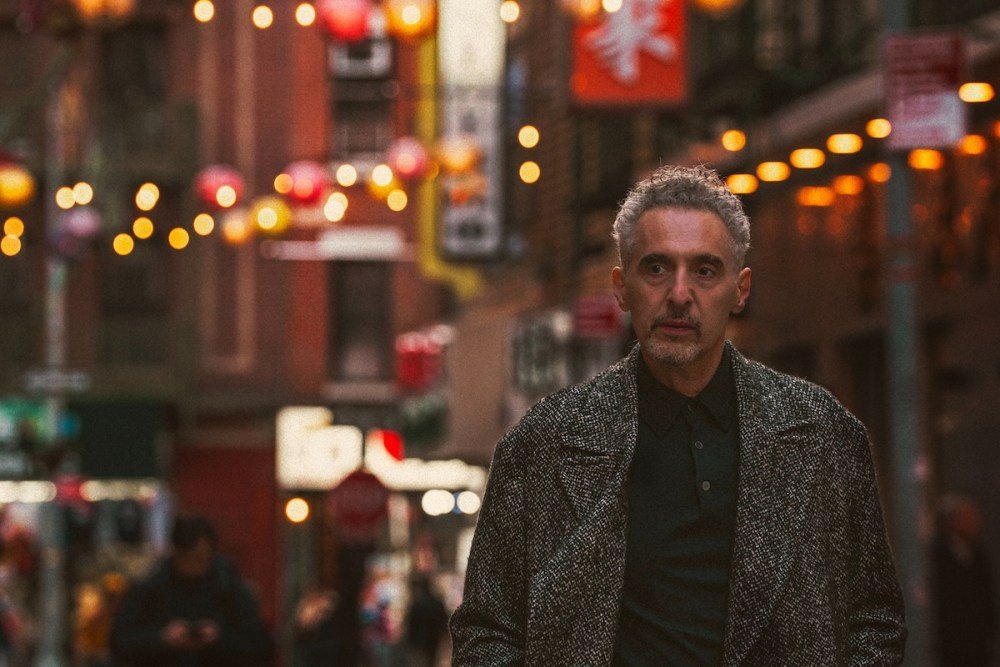
Forty years into a career that has made him one of American cinema’s most recognizable character actors, John Turturro has a Cannes best actor prize, an enviable résumé and exactly zero Oscar mornings when his name was read aloud with the words “and the nominees are.”
Sony Pictures Classics is determined to end the drought with his work in the acclaimed “The Only Living Pickpocket in New York,” which premiered at Sundance last January and made its fall festival bow at Telluride this weekend, where the film and Turturro’s invigorating turn as an aging pickpocket are drawing acclaim.
Turturro, 69, has been making the rounds in the Colorado mountains, attending Q&As and a Saturday night dinner hosted by Sony Pictures Classics, where writer-director Noah Segan mingled with press and industry attendees.
Turturro has spent four decades operating in the space reserved for actors everyone recognizes and almost nobody thinks of as an Oscar nominee. He has worked with masters of cinema such as the Coen brothers, Spike Lee and Robert Redford and has appeared opposite everyone from Tom Hanks to Adam Sandler. He’s played gangsters, professors, detectives, eccentrics, husbands, fathers and men who seem to have wandered into the wrong movie and somehow made it better.
And yet, the Academy has never invited him to the party.
And it’s not like he hasn’t been close. Turturro won best actor at Cannes for the Coen brothers’ “Barton Fink” in 1991. Three years later, his combustible Herbie Stempel in Robert Redford’s “Quiz Show” collected Golden Globe and SAG Award nominations, the kind of precursor support that usually precedes an Oscar bid. But each time, the industry seemed to look elsewhere.
The television world has been kinder. His weary defense attorney in “The Night Of,” HBO’s 2016 crime drama, drew Emmy, Golden Globe and SAG Award nominations. His tender, unraveling Irving Bailiff on “Severance,” Apple TV’s dystopian workplace thriller, has since earned him two Emmy nominations, the most recent lost to his own castmate Tramell Tillman in 2025.
“The Only Living Pickpocket in New York” can change that.
In a similar vein to Richard Jenkins’ first career nomination for the 2007 drama “The Visitor,” Turturro can be the overdue veteran to finally see his name in lights. Segan’s Sundance breakout, acquired by SPC for a fall release, gives Turturro something four decades of great supporting performances never could: a movie that he leads, one that lives and dies on him.
He plays Harry Lehman, an analog thief operating in a city where the very concept of pickpocketing has become obsolete. Wallets increasingly contain less cash, phones have replaced maps and tickets and two-factor authentication has made the modern world almost aggressively hostile to the old-fashioned criminal. Harry is clinging to a disappearing profession while caring for his ailing wife, Rosie.
While that metaphor is hardly subtle, it’s also part of its appeal. Harry is not simply a thief whose trade is dying; he’s a man confronting his own obsolescence.
SPC calls it the finest performance of Turturro’s career. Distributor hyperbole is usually best treated as campaign copy. But here, it resonates. Turturro has never been an actor who needed to announce himself. He slips into other people’s scenes, finds the detail nobody else thought to play and then, almost imperceptibly, becomes the most interesting person in the room. The Academy has rewarded that instinct repeatedly, just not when Turturro has been the person standing at the center of the frame.
As an awards campaign, the studio is following a familiar formula: a beloved, never-nominated veteran finally gets a leading role worthy of his gifts. But the strongest version of the pitch is not “Give John Turturro an Oscar.” It is “Look at what John Turturro has been doing all along.”
The Academy has historically responded to overdue narratives, particularly when the performance provides a credible reason to act on the sentiment. Turturro has the résumé, the festival pedigree and the late-career showcase that can turn years of admiration into a voting impulse.
“The Only Living Pickpocket in New York” is a movie about a man whose skills belong to another era, trying to prove they still have value. The meta-text is impossible to miss. Turturro’s awards case makes essentially the same argument about the actor himself.
It also helps to have Steve Buscemi in the cast, who could mount his own first awards run for “Wild Horse Nine,” along with the best awards campaigner this side of the sun, Jamie Lee Curtis, who delivers a killer one-scene wonder.
Like a lot of SPC films, neither the movie nor Turturro may seem the loudest voice in the room right now and plenty of pundits will write it off early, especially once precursors start rolling in. But as the studio has shown with titles like “The Father,” “Parallel Mothers” and “I’m Still Here,” the ground game and striking when it matters most, is what wins these campaigns.
And Turturro may not even be the film’s only awards story. Segan, long a familiar face in front of the camera, wrote and directed “The Only Living Pickpocket in New York” himself and a spare, mournful original like this one is exactly the kind of writer-director calling card the original screenplay race tends to reward. It happens more than voters remember. “Frozen River,” another SPC sleeper, paired Melissa Leo’s lead nomination with a surprise original screenplay nod for writer-director Courtney Hunt and “Nebraska” did the same for Bruce Dern and scribe Bob Nelson. If the film connects with voters, Segan’s script could ride in alongside its star.
The best actor field, notably, is shaping up to be incredibly crowded. Heading into the fall festivals, pundits had already penciled in the likes of Matt Damon (“The Odyssey”), Ryan Gosling (“Project Hail Mary”) and Sebastian Stan (“Fjord”), and Venice and Telluride added John Malkovich (“Wild Horse Nine”) and Andrew Scott (“Elsinore”) to the conversation. SPC will have to make noise without overselling a performance whose appeal lies in its subtlety. But if the campaign can persuade voters to see Harry not as a novelty but as the culmination of everything Turturro has spent a career doing, the narrative becomes difficult to ignore.
Let’s see if this pickpocket can steal some hearts along the way.
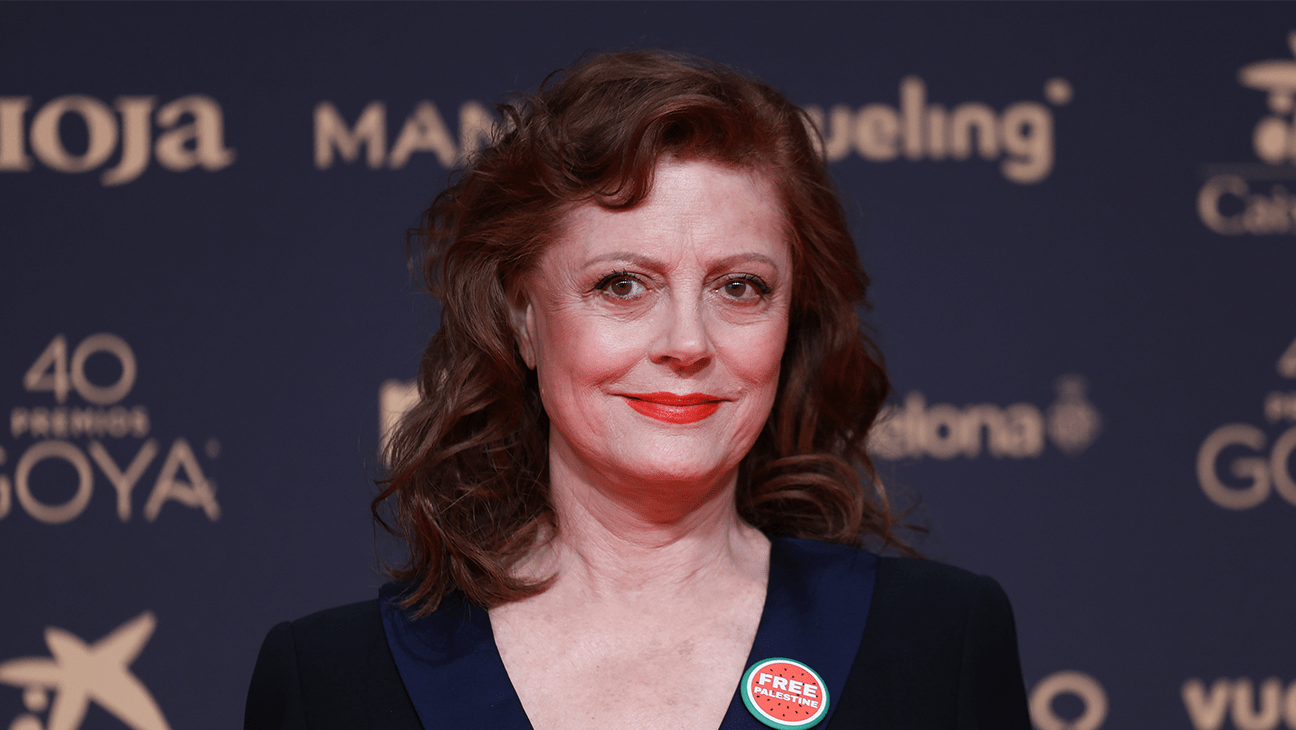
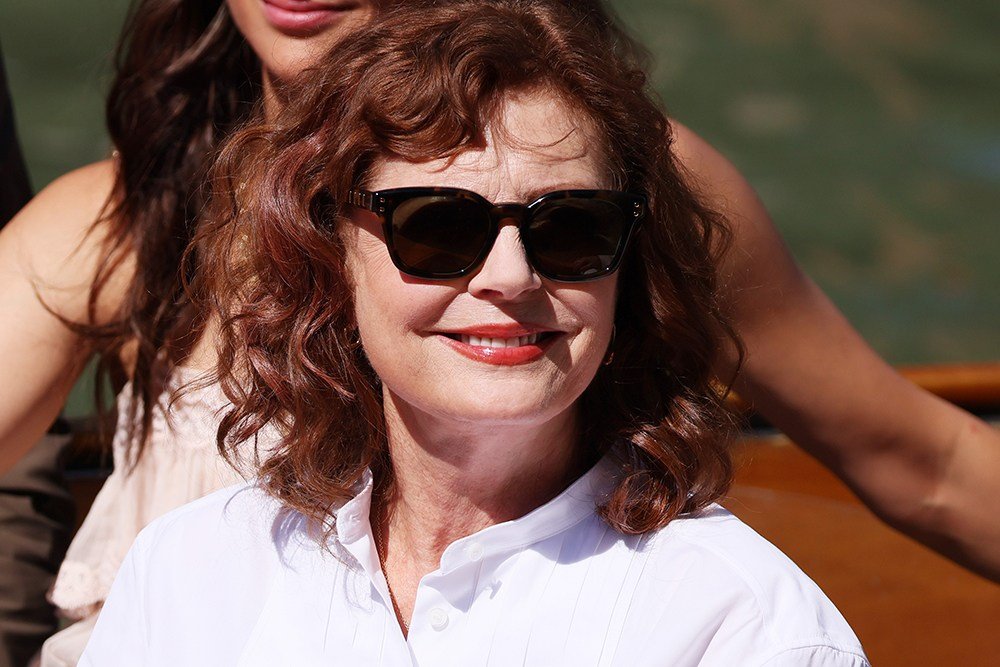
Susan Sarandon says she’s lost out on movie roles due to her support of Palestine.
At the Venice Film Festival on Sunday, Sarandon was asked if she thinks that the “mood [is] changing” in Hollywood as it pertains to the conflict in Gaza.
“I think that the narrative has completely changed,” she responded, according to videos posted online. “There’s a lot of things that people are aware of now.”
She continued: “In terms of the power structure, I’ve still had movies taken away recently, because there are agencies that are telling people not to hire me still. But that’s the power structure. I think within the people, certainly internationally, I feel welcome. So it depends. If it’s a major studio, I think there is, not just with me, but with other people, that have been told that that is impossible, in terms of being able to do this film, I thank Andrea for that, because he didn’t listen to the warnings.”
Sarandon was referring to made the remarks at a press conference at the Venice Film Festival. She’s there representing the movie The Echo Chamber, an Italian production directed by Andrea Pallaoro, whom she was referring to above.
Sarandon went on: “So I think, yes, there has been a change in terms of understanding of the situation, and I think the general public, but there are still very strongly held positions within my industry that are held by Zionists and who have not relaxed their feelings towards me. But I found my family, I found my people, and I’m OK.”
She was greeted with applause after she finished answering the question.
In November 2023, Sarandon caused an uproar over controversial remarks made at a pro-Palestinian rally in New York City’s Union Square.
“There are a lot of people afraid of being Jewish at this time, and are getting a taste of what it feels like to be a Muslim in this country, so often subjected to violence,” Sarandon told attendees, pointing to American Jews fearful over rising antisemitism.
A few days later, United Talent Agency dropped Sarandon, who’d been a client since 2014.
“Recently, I attended a rally alongside a diverse group of activists seeking to highlight the urgent humanitarian crisis in Gaza and call for a ceasefire. I had not planned to speak but was invited to take the stage and say a few words,” she wrote. ““Intending to communicate my concern for an increase in hate crimes, I said that Jewish Americans, as the targets of rising antisemitic hate, ‘are getting a taste of what it is like to be Muslim in this country, so often subjected to violence.’ This phrasing was a terrible mistake, as it implies that until recently Jews have been strangers to persecution, when the opposite is true. As we all know, from centuries of oppression and genocide in Europe, to the Tree of Life shooting in Pittsburgh, PA, Jews have long been familiar with discrimination and religious violence which continues to this day. I deeply regret diminishing this reality and hurting people with this comment. It was my intent to show solidarity to the struggle against bigotry of all kinds, and I am sorry I failed to do so.”
Sarandon stars in The Echo Chamber with Alicia Vikander and Luca Marinelli. She plays a retired rock singer lured out of retirement in the movie, which had its premiere Sunday at the Venice fest.
“It’s a terrific role for Sarandon, whose screen career kicked off 51 years ago with the landmark musical Rocky Horror [Picture Show], and whose singing here, on a handful of original songs by Clément Ducol and Émilie Gassin, has a lovely, unforced sense of broody introspection and yearning,” The Hollywood Reporter film critic Sheri Linden wrote in her review. of the film The scenes between her and Marinelli are charged with vulnerability, each character balancing honesty and self-protection, both actors conveying whole lifetimes through the most nuanced shifts in body language and gaze.”
Netflix wants the “ink” to dry on its Oscar prospects.
Danny Boyle made his first trip to Venice with “Ink,” his adaptation of James Graham’s stage sensation, which opened the 83rd edition in competition before moving through Telluride and Toronto, with the streamer giving it a December theatrical release and a January streaming date.
The early temperature is reading warm. “Ink” drew a four-minute standing ovation on opening night in Venice, and the reactions filtering out of Telluride have been buzzing across the mountains, the kind of enthusiasm and respect a Netflix campaign is built to amplify.
The subject is an origin myth of modern media: Rupert Murdoch’s 1969 acquisition of a dying tabloid called The Sun and the rapid transformation that followed. Graham, adapting his own Tony-nominated play, approaches the story with the mechanics of a heist. Boyle supplies the velocity.
The central question is not simply how Murdoch built a newspaper. It is how two men helped invent the modern attention economy that shapes all of our lives today.
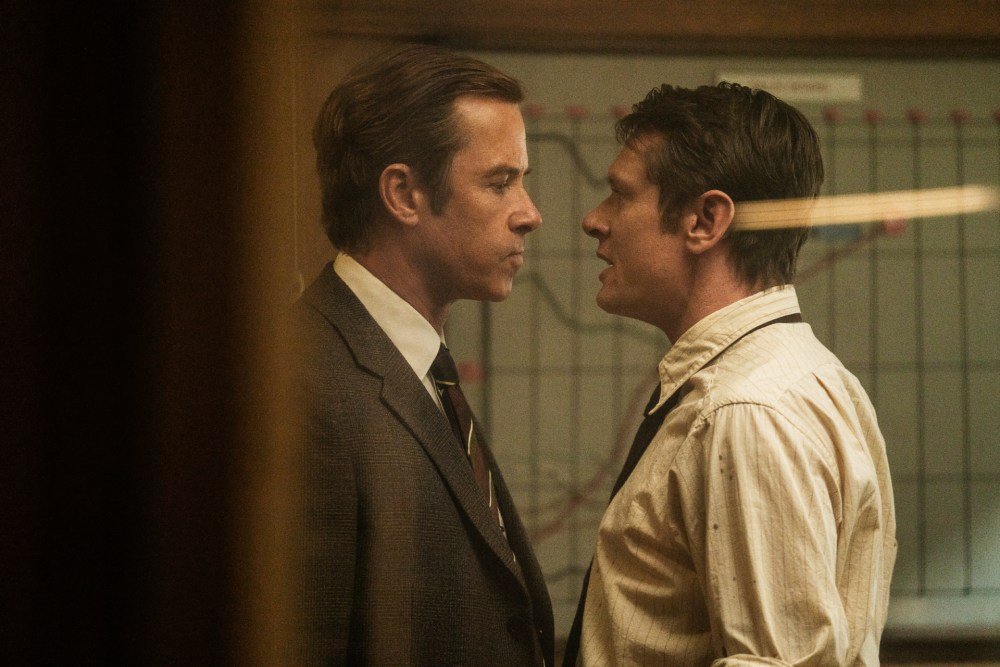
Guy Pearce plays a brash, thirty-something Murdoch, an outsider with a chip on his shoulder and a plan for disrupting Fleet Street. Jack O’Connell plays editor Larry Lamb, the working-class newspaperman Murdoch pushes past every line the establishment believes cannot be crossed.
Both actors have obvious awards narratives, but two very different categories to break into.
Pearce arrives two years after his first Oscar nomination, a supporting actor bid for “The Brutalist,” which gives him the benefit of recent Academy recognition. And the role could hardly be more of the moment. Murdoch is a figure many hold responsible for the fractured, combustible information environment the U.S. is living through right now and there is a particular charge in watching an actor humanize the young man who lit the fuse. That timeliness is the kind of thing that fuels an Oscar campaign.
O’Connell arrives with something different: momentum. Between “Sinners” and the “28 Years Later” films, he is coming off a stretch that has significantly raised his visibility. Being a hot commodity right now, and perhaps even a package deal with Pearce in voters’ minds, could give him a fighting shot in a very crowded best actor field.
We have seen roles like Pearce’s cakewalk to nominations before, purely on the nature of the part, even when pundits wrote them off early. Look at the run of real-life figures who landed supporting bids: Jon Voight in “Ali” (2001), Matt Damon in “Invictus” (2009), Kenneth Branagh in “My Week with Marilyn” (2011), Christopher Plummer in “All the Money in the World” (2017), Sam Rockwell in “Vice” (2018), J.K. Simmons in “Being the Ricardos” (2021) and Jeremy Strong in “The Apprentice” (2024).
Pearce may not have the most screen time, but he is memorable in every frame. O’Connell has the more obvious breakout narrative and, as the story’s beating heart, the showier dramatic arc.
Two performances from one film can coexist comfortably in an awards campaign, but they can also create a strategic problem. The distributor must establish why both actors are essential without letting voters perceive one as stealing oxygen from the other.
Guy Pearce as Rupert Murdoch and Jack O’Connell as Larry Lamb in “Ink”
Netflix
There is also a screenplay story here, and a recent precedent worth studying.
Graham is adapting his own acclaimed play, which puts “Ink” in the adapted screenplay conversation and on a path that “One Night in Miami” walked in 2020. That film, too, launched at Venice and Kemp Powers turned his own stage work into an adapted screenplay nomination while the movie also landed an acting nod for Leslie Odom Jr. A playwright translating his own material, a festival launch and a performance the industry embraces: the template is right there.
But Netflix will look to check even more boxes.
Beyond the two actors, “Ink” is built to contend in the crafts. Its production design, by Carson McColl and Gareth Pugh, rebuilds a vanished Fleet Street. Fin Oates cuts the film with a fragmented, kinetic energy that recalls the associative style Hank Corwin brought to Adam McKay’s “The Big Short” and “Vice.” Johnnie Burn, the Oscar-winning sound designer of “The Zone of Interest,” lends the film one of the most decorated ears in the business. And composer Daniel Pemberton supplies an original score with the propulsion Boyle’s movies demand, capping a bombastic year that also includes “Project Hail Mary.”
Netflix has the resources to make all of those cases.
The larger question is whether the company has the bandwidth. Its fall slate is stacked, with “La Bola Negra,” “The Adventures of Cliff Booth,” “Possible Love,” “Gentle Monster” and “The Mosquito Bowl” all angling for the same oxygen. “Ink” will have to compete not only against rival distributors but against Netflix’s own contenders for screeners, headlines, events, Q & As and voter attention. The Venice-Telluride-Toronto sequence helps enormously, giving the movie the sort of early critical footprint that can turn an awards campaign into a sustained conversation.
And Boyle’s presence adds another narrative. As the Oscar-winning filmmaker behind “Slumdog Millionaire,” he brings such a distinctive visual and kinetic signature that the fall circuit was an obvious place for the film to bow.
The James Graham connection gives “Ink” a larger cultural context. His work has repeatedly mined the intersection of power, institutions and public life, from politics to journalism. “Ink” arrives in a media environment in which the questions surrounding Murdoch’s influence feel less like history than an origin story for the world audiences inhabit now.
That resonance is the film’s best weapon, and the campaign will not have to manufacture it.
“Ink” argues that we are all still living in the paper they printed.
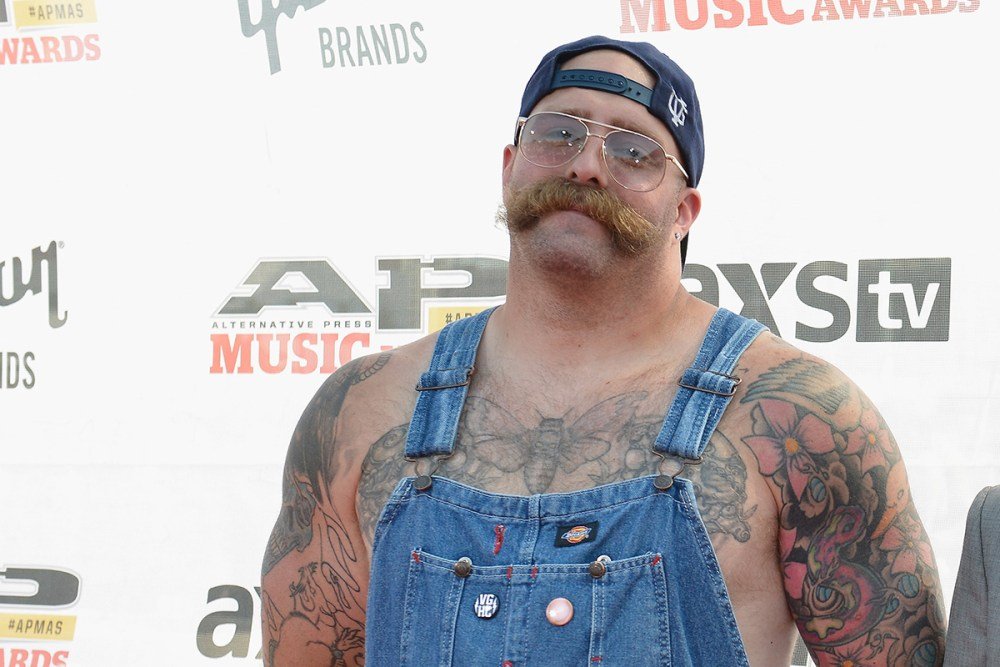
Andy “The Butcher” Williams, a professional wrestler who played guitar with the bands Every Time I Die and Atomic Rule, died Saturday night after collapsing at the end of his match in Millvale, Pennsylvania. He was 48.
Williams was rushed to the hospital but did not survive. The rest of the match was called off after the medical emergency.
His most recent promoter All Elite Wrestling released a statement, saying “All Elite Wrestling is saddened to learn of the passing of Andy Williams, aka The Butcher. A trailblazing musician with ETID and Atomic Rule, Williams made a successful transition into the world of professional wrestling and was incredibly respected by his peers both in and out of the ring. Our condolences go out to Williams’ family, friends and fans.”
Williams had been competing alongside his tag-team partner Jesse Guilmette, “The Blade” at Enjoy Wrestling’s Five Years event.
The New York native co-founded the Buffalo, N.Y. metalcore band Every Time I Die in 1998, and the group released nine albums before splitting up in 2022. His new band Atomic Rule was set to tour the West Coast in November with GWAR, and earlier on Saturday he had posted, “Update of the work we’ve been putting in! So stoked to share all this with you! We feel like we’ve finally found our feet planted to this beautiful earth and now we’re running full speed!”
He started wrestling on the independent circuit in 2015 at the age of 37, and joined All Elite Wrestling in 2019, performing as the Butcher. Williams and Guilmette’s contracts with All Elite expired in June, and they returned to independent wrestling.
Danish filmmaker May el-Toukhy, one of the two female directors competing for the Golden Lion this year, in Venice with a sharp, searing analysis of the women thrown to the wolves in the aftermath of World War II.
Women Unknown — Scandinavian in both its aesthetic and precision — was always going to be about class, complicity and survival. For a brief period, it was even going to focus on the Reformation witch hunts, before el-Toukhy found herself a little bored by the perpetrators. “The reasons they were hunting these women were just not that interesting,” she laughs to The Hollywood Reporter.
Inspired by a newspaper picture dated from the 1940s of a woman sitting with a swastika painted on her back, el-Toukhy and co-writer Maren Louise Käehne soon turned their attention to the women whose bodies became a battlefield during the Second World War; those who found themselves with no choice but to fall into the arms of soldiers from occupying armies, and suffered severe consequences — hunted down, publicly shamed and punished for the rest of their lives.
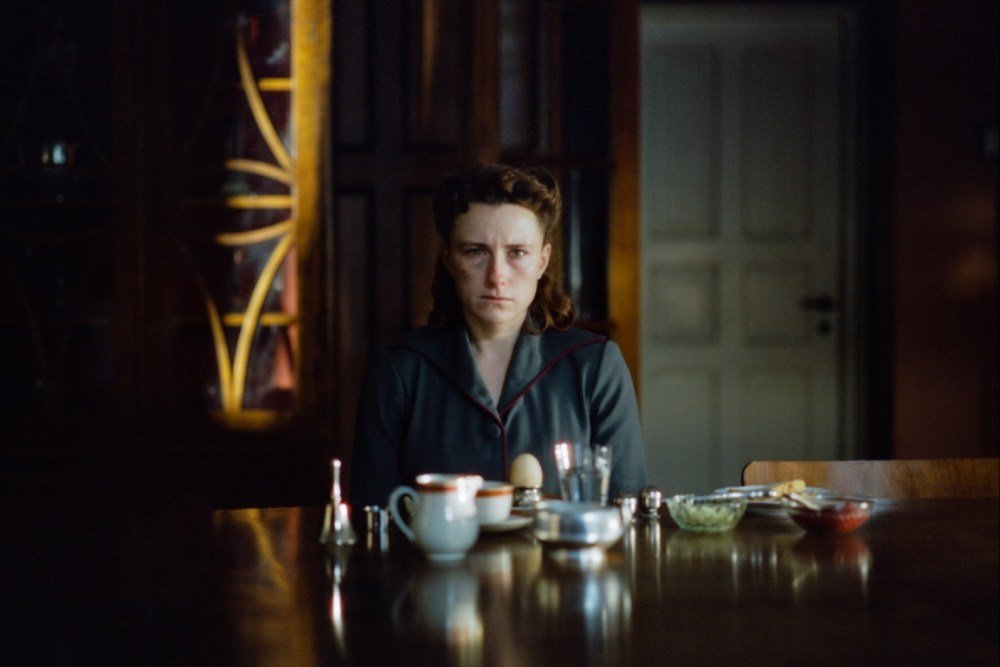
Woman Unknown is backdropped by a Danish city free from Nazi occupation, mere months after World War II has ended. It tells the story of Marie (Mathilde Arcel), a young nanny and housemaid about to marry her wealthy, older, and widowed employer, Christian (Carsten Bjørnlund). But Marie guards a shameful secret. During the war, she was in an intimate relationship with a German soldier. Now Marie’s past threatens to catch up with her, and she is forced to do everything in her power to preserve her new status as lady of the house in post-war anarchy.
It is as much about resistance and patriotism in a euphoric, liberated Europe as it is about the chastisement of women and their sex lives. El-Toukhy is adamant that this is a story about the female experience. “There have been so many films about the Second World War, and that is true. But they’re all based mostly on men’s experiences and recollections of war. So that really energized me,” she says. “Let’s just do another 100 films about the women in this time period, and then we can say we’re over and done with it, you know?”
A co-production between Denmark, Sweden and Latvia, financing the film wasn’t the tallest hurdle — but el-Toukhy has learned to be economical with her resources at a time when filmmaking costs have never higher. With her third feature film, following Long Story Short (2015) and Queen of Hearts (2019), she comes to the Lido buoyed by the hope that Woman Unknown will produce debate. El-Toukhy spoke to THR about the far-and-wide casting search for Marie, why she feels she’s already won before even stepping foot in Italy and whether those nerves have begun to kick in: “I’ve worked 16 hours a day for more than a year. I’ve spent all my savings. I’ve used every part of me to make this film and all the resources, all the muscle power I have. I can’t really do any more, so therefore I feel okay.”
I’m curious about this period of Danish history, and whether you learned about it at school. Why use it as a backdrop for this film?
After my last film, I thought I was going to do a film on the witch hunts after the Reformation, in the middle of [the] 1500s, and so I started researching that subject matter. But I found it quite hard to engage with the perpetrators because the reasons they were hunting these women were just not that interesting. (Laughs.) At that time, me and my co-writer were slowly moving away from that idea, and then while we were moving away from that idea, some photos got republished in the newspaper with a woman who was sitting on a bench with a swastika painted on her back. And she [had been] assaulted in these photographs. Those [were] the propaganda photos that were produced in 1943. So we were reminded of that issue.
It is something that we do learn in school here. It’s part of the curriculum — to deal with the First World War, Second World War, the events between the two wars and the aftermath, but often the aftermath here, in schools, would be focused on the politics, the collaboration the Danish government chose at that time and also the resistance movement. We didn’t spend too much time in school dealing with or talking about [or] debating the destiny of these women. I’m always interested in investigating something that takes a lot for me to engage in; that’s difficult material. Where there’s no black and white, but everything is gray.
And you chose to depict that woman in that photograph in the film.
Yeah. In the propaganda photos, they were reproducing this image of a woman who has been assaulted, but then when I started digging, [I found] an archive [of them]… I think what’s interesting about the situation itself is it’s a societal, structural mob mentality. It’s fellow citizens who are punishing these women. It doesn’t come from the government. The government actually tried to remove these women from the streets — to protect them — but they didn’t manage very well. And sometimes, even on the way to a camp, a woman would be assaulted, even though she was supposed to be protected by the government. For me, it was quite important to really show an audience what this feels like. They didn’t get killed, these women, but their souls were hurt and they were stigmatized and traumatized for life.
How did you find your way to Marie as a character, and her story?
I think there’s a class aspect in the story that I’m very drawn to, and also I had that thematic base in my last film. She’s a young woman who is moving away from the area she knows and her family and takes a job in a big city. [She] probably feels protected by living in a big city compared to being at home where she can be more exposed. She’s a woman who is struggling to survive. I might not agree with some of her actions, but I completely understand where that survival instinct comes from, and the idea that she wants to protect what she’s fought to obtain.
Mathilde Arcel as Marie in ‘Woman Unknown’
Venice Film Festival
What went into that casting search for Marie, and why was Mathilde right for it? As the title suggests, she’s very elusive for much of the film, up until her unraveling.
I always have quite extensive casting processes, partly because I come from theater, but also because I really enjoy [it]. Casting a lead is, for me, like casting a creative partner. So I have to fall in love with the gaze of that person and their take on the character, and therefore I do many rounds and many callbacks. I did that with Mathilde as well, and some of it was improv, some of it was table readings, some of it was written scenes. I think what’s fantastic about Mathilde is that she has so much mystery to her and the way she’s chosen to interpret the character inspired me as a writer-director. That collaboration is key for me, and therefore I spend a lot of time figuring out which direction I want to go [in]. I’ve really enjoyed working with her, and I think she’s extremely talented.
So mysterious but so expressive too.
Yes, yes.
One of the themes that stood out to me was complicity and what it means to be complicit when that head-down mentality is still so entrenched and the hangover of the war so menacing. What were you trying to speak to in this context?
The film is not so much [about] giving answers to what’s right and wrong, but to debate what’s right and wrong, or what’s possibly right and what’s possibly wrong. It’s all a bit murky and muddy. Throughout the development of the film, it’s been quite important for me to to not tell the audience — or the readers, in the development of the script — what they should think, but create a situation where the audience can dive into that discussion with themselves or the people they’ve watched the film with.
And it’s not only in that time, because I think it’s present also today — in many conflicts. It’s quite hard to to say that it’s just one thing, and the ability to contain two opposite thoughts at the same time is quite hard. Both can be true, and that’s my ambition with the film. Obviously, I have my own opinion about what’s going on in the film, but I think it’s quite important for me as a storyteller that there is room for reflection for the audience.
It’s also very much a female-driven story. Do you think this is a period of history for women that isn’t depicted on screen enough? Is it an underrepresented story you’re telling?
When I first started the process of developing the script with my co-writer, I would pitch the idea when people ask me: “What are you doing? What are you working on right now?” I started to semi-pitch it, just to see how people would react and what they respond to. And I could see that they would glaze over. (Laughs.) They would have this empty gaze, because I think there have been so many films about the Second World War, and that is true. But they’re all based mostly on men’s experiences and recollections of war. So that really energized me.
Yes, there have been a lot of films about this period [of history], but let’s just do another 100 films about the women in this time period, and then we can say we’re over and done with it, you know? The invisibility of women is everywhere, and certainly in cinema and in our films. So I don’t think we’re finished with the period, but it also sparked the idea of trying to make this film look different than a classical period piece, and to constantly disrupt the idea of a classical period piece. So that’s been an ongoing process of developing and shooting and in post[-production].
How long did it take you to get this film off the ground? I know it’s a co-production which must have helped.
The process has been long, but not too long. I did my last film, then once it had premiered at Sundance and had the festival run and premiered in Denmark, I started to develop this film — first with the witch idea and then turning to these horizontal collaborators. Then COVID happened… I worked intensively on the script, and we [were in a place where we] could start the financing. But the financing part of it hasn’t been that difficult in the sense that we’ve had a lot of yeses. We’ve had so many people wanting to do this film. The problem in European cinema is that we don’t get very far with the money we get. There’s been an increase of costs after COVID, everything has gone up, and so we have to work faster in every part of the process. That’s been the challenge with this film, not so much getting the money, but getting far enough with the money we managed to get.
What did it mean to you to find out this would be premiering in competition in Venice?
I’m delighted that it’s part of this historic festival and that also this theme gets to be exposed for a European audience. I think it’s very important that we keep reminding ourselves of our past and these stories, so that we understand and we analyze and we debate to be able to handle the present and the future differently — if possible. I don’t think it is. But I’m really happy, [Venice is] the best place to be for European film right now.
I’m excited. I have this place inside of me where I can go after I’ve made a film. I’ve spent all the time I possibly could on this film. I’ve worked 16 hours a day for more than a year. I’ve spent all my savings. I’ve used every part of me to make this film and all the resources, all the muscle power I have. I can’t really do any more, so therefore I feel okay. Slightly anxious, and I think that’s only natural.
There must be a really liberating feeling of finally being able to send it out into the world.
Yeah. And I think getting into the festival and being in competition, I’ve already won.
How can exposure in Venice help a filmmaker like yourself and your career?
[Festivals are] important for the arthouse [films] because it’s a market. It’s also a place where you, as a filmmaker, can create new relationships that you can build on later down the line. But for me, it’s really about the audience that’s there. Through a festival, you can access an audience if you have enough buyers that take the film and they then distribute it around the world. And I think it’s quite important for me as a filmmaker to cling on to [the audience], because it’s so easy to be distracted by other things that are equally nice and shiny and attractive. But especially the way we finance film in Scandinavia, where it’s publicly funded, I think it’s really important that these films find their audience. None of us have that crystal ball where we can look into it and say, “Okay, if I put this person into a film with this theme and shoot…” But that’s really the hope for me, that this film will find its audience.
Are you already thinking about the next one?
I can’t help thinking about the next and the next and the next, especially when I go cycling or walking or hiking. But I don’t have that much spare time right now. So, most of my energy is channelled into promoting this film. I’m in the service of this film still.
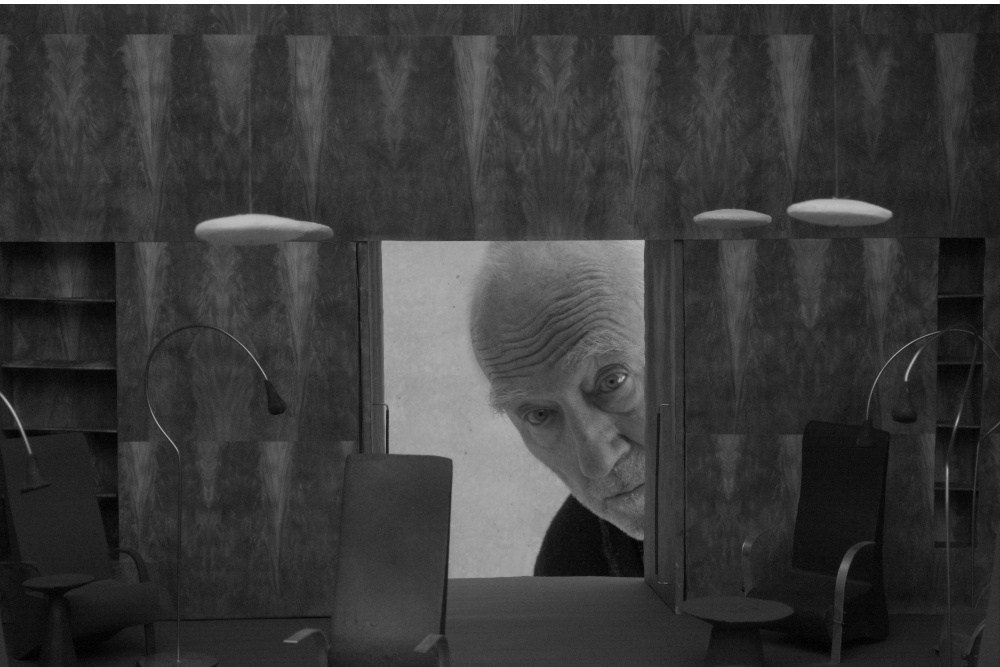
The screen is usually a canvas, but it becomes a window to an enormous room in Wim Wenders’ latest 3D documentary, “From Inside Out – The Architecture of Peter Zumthor.” Within that room unfolds the tale of the Swiss architect of the title, told in occasionally laborious ways. It spends much of its two-hour runtime teaching you how to watch it, and like your average high school class, you might not see the value of its instruction until it eventually comes in handy. In that vein, Wenders presents some magnificent things in the film’s final third, sensations which emerge like Zumthor’s own views on the function of his buildings, which he ties to human experience, understood by its inhabitants gradually, and then all at once — from the inside out.
Beginning with shots of concave corners and convex, monolithic surfaces, “From Inside Out” engenders curiosity before taking academic detours. These come courtesy of Zumthor himself, whom we first meet as a ghostly projection upon sleek, minimalist surfaces, emanating from the 1980s. Like the Holocaust survivors whose poetry populated the walls in Wenders’ “Anselm” — his 3D retrospective on the works of sculptor Anselm Kiefer — Zumthor’s words become inseparable from each room the camera explores, and each building the architect believes ought to feel at one with its surroundings.
We eventually meet Zumthor in the present: an unassuming man in his eighties, whose descriptions of form, function and fluidity often repeat themselves, but whose sincerity and wisdom are hard to shake. As the film explores houses, museums and other Zumthor commissions, the architect’s use of light and natural materials becomes as important as the theoretical people he intends to fill each space — or, in the case of complicated restorations, the people who inhabited them decades ago. Wenders depicts these ghosts of past and future through dramatizations of curious travelers, whose whispering voiceover offers scattered thoughts on where they stand.
There’s a tinge of humor, too, in Zumthor’s stubbornness when designing someone’s home, as the conceptual clashes with the preferential. However, the architect eventually gives way to use and function first, despite valuing the aesthetics at hand (not to mention, his collaborations with local artisans). It isn’t long before Wenders introduces the idea that Zumthor’s spaces are only as important as what goes inside them, when he first contrasts old and contemporary footage of museums he designed, each filled with deeply personal art installations — some of them about war.
Zumthor himself doesn’t have the most interesting personal history — at least, not as far as this film is concerned — so Wenders’ exploration can come off as superficial at first. However, this ends up part and parcel of the structure. It echoes the feeling of approaching a marvelous building from afar, and entering its sterile lobby, before slowly discovering its mischievous secrets.
Although some scenes and enactments can meander, they give way to a moving triptych of projects whose presentation feels, in a way, climactic. One is a home deeply personal to Zumthor. Another is a Nordic installation built in tribute to women killed in witch trials, which feels terrifying to walk through — a kind of infinitude accentuated by Franz Lustig’s 3D cinematography. And the third is arguably Zumthor’s magnum opus: his sprawling, amoebic construction housing the permanent collection at the Los Angeles County Museum of Art, whose planning and completion the doc depicts in detail.
By the time the building is finished (and visited by a number of filmmakers, including Ava DuVernay and Werner Herzog), Wenders’ camera moves in tandem with Zumthor’s own abstract notions of the art pieces needing to feel horizontally equal, with none being granted more or less importance than any other. The sprawling gallery seems to have no beginning or end. Its bends extend endlessly, revealing pockets and side rooms with rough, exposed concrete contrasting the gilded grandeur of the pieces on display.
It takes a while to realize this, or at least to internalize it, but the film’s own architecture is not dissimilar, with what feels like winding segues that add up to an experience of fluid expanse, of great wandering, and ultimately, of soulful appreciation. Certainly, no one is beholden to a film this demanding, but Wenders wields his 3D camera to craft a perfect marriage of subject and form, filling echoing spaces with art and stories much like Zumthor’s architecture does — until eventually, you leave with a new appreciation of the physical world, and your place within it.
The film was the unanimous pick of Iraq’s official National Selection Committee for the Academy Awards, mandated by the state ministry of culture.
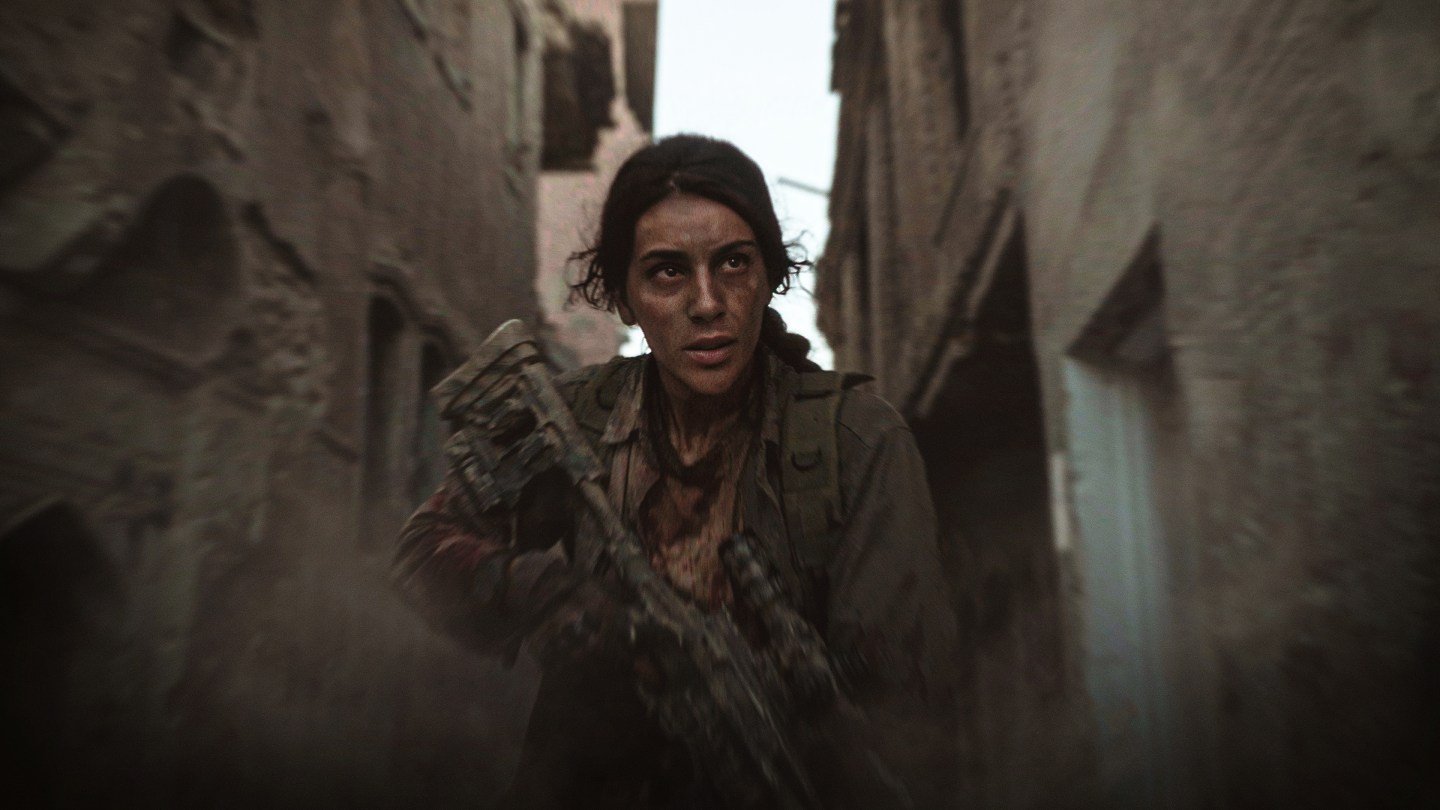
The film follows Vyan, a Kurdish sniper who has survived war by suppressing her emotions. When she learns that her younger sister, missing since the ISIS assault in 2014, may still be alive, she returns to Mosul, determined to rescue her. Avan Jamal (The Exam) stars as Vyan, alongside Norwegian actor Thorbjørn Harr. The main cast also includes Kanar Sarchl and Kader Jalal.
Mustafa, who was born in Iraqi Kurdistan and fled to Norway as a child, said the film was inspired by his encounter with a female Peshmerga sniper during the 2014 frontline battles, as female Kurdish fighters countered Islamic State attacks.
The director’s previous films include Hiding Saddam Hussein, a documentary about the farmer who hid the Iraqi dictator for 235 days in 2003, Iraq’s 2016 Oscar submission The Classic, and the 2015 documentary The Women ISIS Fears, which also looked at the world of female Kurdish fighters.
No Paradise If You Are Killed by a Woman was filmed on location in Mosul. Hene Films produced the film in co-production with La Media and The Chimney Pot. True Colours is handling international sales.
The film will have its world premiere out of competition at the Venice Film Festival on Monday.
The Academy of Motion Picture Arts and Sciences will announce the 15 films on the best international feature film shortlist on Dec. 15. The five nominees will be announced Jan. 21, 2027. The 99th Academy Awards ceremony will take place on March 14, 2027.
In “Woman Unknown,” May el-Toukhy takes a closer look at women accused of having relationships with German soldiers during World War II.
“When we started to build a story about a ‘horizontal collaborator,’ we realized that, during and after the war, the female body became part of national identity. But in Denmark, it wasn’t really explored.”
Initially, she wanted to make a film about the witch hunts after the Reformation in the 1500s.
“It was difficult to relate to the perpetrators because many of them were just maniac. And I’m interested in ambiguity,” she says. Then, she came across an old newspaper photo of a woman with a swastika painted on her back.
“You can find very similar stories that are thousands of years old. The shaving of a woman’s hair or her public shaming for ‘sharing’ her body is a very old concept. Even today, it’s still happening in many armed conflicts.”
Still, this suffering tends to be ignored by historians. The title of her film references that silence as well.
“I was inspired by Belarusian writer Svetlana Alexievich who wrote ‘The Unwomanly Face of War.’ She gathered these testimonies from women who talked about having their periods in war zones, hiding in sheds, and giving birth. It’s rare to have such recollections of the female experience during or after the war,” says el-Toukhy.
For Marie, a housemaid and a nanny, the future looks bright: she’s about to marry her wealthy employer. But in the weeks leading up to liberation in 1945, she must do her best to survive and ensure that her secrets don’t catch up with her.
“Our main character wants to remain unknown, but we haven’t told stories about these women either. When you see their photographs in the archives, they’re often labeled ‘unknown woman.’ Also because people didn’t care.”
Ironically enough, “Women Unknown” has already made headlines because of Venice’s decision to include only one female director in the main competition. The festival later added documentary “Naza,” co-directed by Rachel Szor.
“Obviously, I’m delighted to have been invited to this historic festival. But I would have loved to be in the company of more female directors in the competition. I do believe it’s a structural problem,” notes el-Toukhy.
“We discussed how the idea of publicly shaming women is an old concept. Not having enough films by women is also an issue that goes way back. It’s reflected in the budgets we work with and the talent that wants to be involved. Even journalists talk about male directors differently than they talk about women. I’ve never heard a female director called a ‘genius’ – and I read many articles about male geniuses.”
What’s the solution?
“Everyone has to chip in and be a part of it. I will now have a chance to discuss this issue through my film, which is rather aptly called ‘Woman Unknown’. I’m happy to do so, even though the circumstances surrounding me being in the main competition are what they are.”
“We have a lot of work to do in order to change that.”
May el-Toukhy is interested in new solutions. As previously announced by Variety, she’s also part of the new Dogma 25 movement. You can find the full manifesto here.
“It’s always healthy to disrupt your process as a filmmaker,” she says.
“Dogma 25 is very much about how we make films. Even though I heard many yeses while making this film, I still feel like I had to run much faster. That that kind of sprint doesn’t necessarily benefit the result.”
She adds: “The way we have to work is almost unbearable. You finish a film and you’re completely stressed out and exhausted. I could make another big European arthouse drama in the future – I’m not saying goodbye to that format. I just think we really need to rethink the way we make movies.”
As in her previous films, el-Toukhy doesn’t care much for typically likable protagonists. In “Queen of Hearts,” she followed a woman who seduced her teenage stepson. In “Woman Unknown,” Marie makes questionable choices as her carefully built facade threatens to collapse.
“It would be a betrayal to my sisters around the world if I only portrayed women as saints. It’s important that we tell stories about complex women in a nuanced way, just as we do with male characters. That rings truer to life.”
She wanted to stick to a female perspective throughout the story.
“Early on, we made a rule that we would never reproduce the male experience of war. [Marie] goes out of the house, but the streets represent danger. People are celebrating and there’s euphoria, chaos and vigilantisms. Her safe space is at home, but then insecurity and danger move in. Suddenly, there’s no safe space anymore.”
For the longest time, no one dared to criticize “the liberators” and their brutal methods.
“It would have been harder to tell this story 25 years ago when those generations were still alive. Some audience members will still be shocked or angry because their grandfather was part of the resistance movement, which became very strong in Denmark right up to the liberation. But not everyone should have been a part of it.”
“It’s important to have discussions about what actually happened so that we don’t recreate false narratives. It’s hard to change the direction you’re going in if you’re not looking back.”
Susan Sarandon said she’s “still had movies taken away recently” over her outspoken support of Palestine.
At the Venice Film Festival press conference for her new film “The Echo Chamber” on Sunday, Sarandon was asked if she thinks the narrative is changing in Hollywood when it comes to the conflict in Gaza. In 2023, the Oscar winner was dropped by her agency UTA after comments she made at a pro-Palestinian rally and said earlier this year she felt she was shunned by the industry for calling for a ceasefire in Gaza.
“I think that the narrative has completely changed in terms of historical relevance of Palestine and the ties of Zionists with America and our politics. That has been a major revelation for people. How much money the United States gives to Israel, nobody really understood that,” Sarandon began.
“I’ve still had movies taken away recently because there are agencies that are telling people not to hire me still,” she continued. “But that’s the power structure. I think within the people, certainly internationally, I feel welcome.”
“The Echo Chamber” hails from Italian director Andrea Pallaoro and filmed in Italy and Belgium. Sarandon stars in the romantic drama, which was Bernardo Bertolucci’s final screenplay, alongside Luca Marinelli and Alicia Vikander.
Sarandon said that Pallaoro was told not to work with her but did so anyway. “I thank Andrea for that, because he doesn’t listen to the warnings,” she said.
“There has been a change in terms of the general public, but there are still positions in my industry that are held by Zionists who have not relaxed their feelings towards me,” Sarandon concluded. “But I found my family, I found my people and I’m OK.”
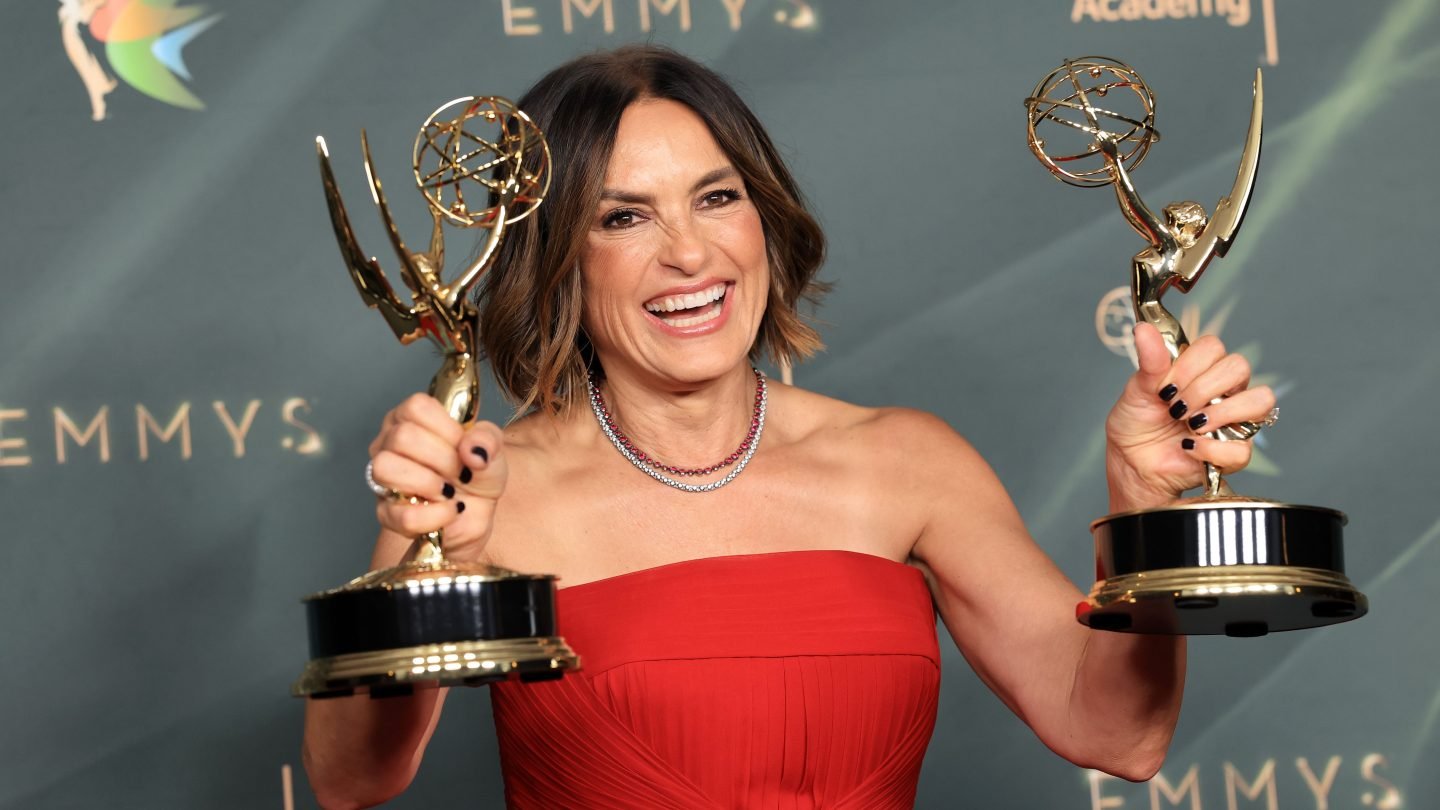
The star, who is helming the Primetime Emmys on Sept. 14, took home two prizes at the Creative Arts Emmys for My Mom Jayne: A Film By Mariska Hargitay. She landed wins for directing for a documentary/nonfiction program and for outstanding documentary or nonfiction special; the night brings Hargitay’s career Emmy total to three, after she won best actress for Law & Order: Special Victims Unit in 2006.
“It feels extraordinarily new and it’s deeply meaningful for me to have gone into a completely different arena, and to be recognized like this is really beyond my wildest dreams,” she told reporters backstage of how these two trophies compare to her one from two decades ago.
Hargitay also spoke about this particular moment in her career, where she’s living by the motto of “I just say yes. I said yes to Broadway and I said yes to hosting the Emmys — when they called me, I thought it was a joke, and then I went, ‘Why not?’”
“It’s a year of firsts and a year of saying yes and not limiting myself or not being governed by fear. Like, what would I do if I wasn’t afraid? What if it all works out?” she continued. “I’m in that place right now of going, ‘I’ll figure it out.’ I’m really happy right now.”
She also gave a hint at her mindset heading into the main show, admitting, “It’s been a big week, this hosting the Emmys is no joke,” teasing that NBC “undersold it to me” and told her it would just be two days of rehearsal, which was “a lie.” However, she expressed how excited she was to be working with The Late Show with Stephen Colbert writing team on her material and added, “I just can’t believe at this place in my life — my third act is starting and it’s pretty awesome.”