Category: Entertainment

  • ‘Happy Feet’ Broadway Musical in the Works

    ‘Happy Feet’ Broadway Musical in the Works

    Broadway looks set to get a Happy Feet musical based on George Miller’s Oscar-winning animated feature about singing and dancing Emperor penguins.

    Tony-winning Michael Arden is on board to direct a live stage version being developed by Tony Award-winning producer Dori Berinstein (Legally Blonde, The Prom). The Broadway-bound musical, based on Miller and Warner Bros. Pictures’ 2006 foot-tapping, CG-animated musical movie, also has on its creative team book writer Douglas Lyons and a choreography team that includes tap dancer Ayodele Casel, Lauren Yalango-Grant and Christopher “Cree” Grant (The Lost Boys, Parade). 

    The Broadway musical now in development will feature toe-tapping songs from the original movie and its dance-driven soundtrack, the project’s producers said. The original film and its sequel went on to gross over $847 million worldwide. 

    The design team for Happy Feet musical also includes a host of other Tony award winners, including set designer Dane Laffrey, costume designer Susan Hilferty, lighting designer Natasha Katz, along with puppet designer Basil Twist orchestrator/ co-arranger Kenny Seymour and music supervisor/co-arranger Jackson Teeley.

    The musical is being produced with Warner Bros. Theatre Ventures, whose upcoming projects include adaptations of Crazy Rich Asians, Practical Magic and the current Broadway productions of  The Lost Boys and  Dog Day Afternoon. 

    Mark Kaufman, executive vp and chief content officer of Warner Bros. Theatre Ventures, will be a creative consultant, while Miller is a consulting producer. General Management of the Happy Feet musical is by Wagner Johnson Productions.  

    Happy Feet won the Academy Award for best animated feature film in 2007. The movie featured a star-studded voice cast, including Elijah Wood, Brittany Murphy, Hugh Jackman, Robin Williams and Nicole Kidman, among others. Its sequel, Happy Feet Two, debuted in 2011.

  • ‘Together’ Filmmaker Michael Shanks Teams with Adam McKay for Mystery Sci-Fi Comedy (Exclusive)

    ‘Together’ Filmmaker Michael Shanks Teams with Adam McKay for Mystery Sci-Fi Comedy (Exclusive)

    Michael Shanks, the filmmaker behind last year’s cult horror fave Together, has teamed up with Adam McKay, the multi-faceted writer-director-producer behind movies such as Vice and Don’t Look Up, for a mystery project.

    Sony Pictures has picked up an untitled sci-fi comedy that will be written by Shanks that has McKay attached to direct.

    McKay is producing the feature with Todd Schulman via the duo’s Hyperobject Industries banner.

    Andrew Mittman, who is one of the executive producers on Wednesday and involved in the development of Tim Burton’s remake of B-movie classic Attack of the Fifty Foot Woman, is also producing via his 1.21 Pictures. The company’s Kai Dolbashian will exec produce. The two worked in the same capacity with Shanks on Together.

    Details on the project are being kept under wraps but it is described as a sci-fi comedy.

    Shanks got his start making YouTube and online shorts before making his feature directorial debut with Together, the unique body horror that starred Dave Franco and Alison Brie. The movie premiered at the 2025 edition of the Sundance Film Festival where it sparked a bidding war, with Neon ultimately picking it up in a $17 million deal.

    His next film is due to be a feature project titled Hotel, Hotel, Hotel, Hotel, a mind-bending sci-fi thriller set up at A24 and whose script, which he wrote, was on the 2021 Black List. The project was the first team up for the writer-director with McKay and Schulman, who are among those producing Hotel.

    McKay, whose films run the genre gamut from Anchorman: The Legend of Ron Burgundy and Talladega Nights to The Big Short and Vice to episodes of Succession and Winning Time: The Rise of the Lakers Dynasty. He last directed 2021’s Don’t Look Up, a satire with an A-list cast that became one of Netflix’s most watched movies.

    Hyperobject remains a busy banner. Among its upcoming projects is a mini-series centered on Jeffey Epstein, based on the book Perversion of Justice: The Jeffrey Epstein Story by Julie K. Brown, with Laura Dern on board to star.

    Shanks is repped by WME and Untitled. McKay is repped by CAA and Johnson Shapiro.

  • Judge Rules Trump’s Order to End Funding for PBS, NPR Was an Illegal First Amendment Violation

    Judge Rules Trump’s Order to End Funding for PBS, NPR Was an Illegal First Amendment Violation

    A federal judge ruled that President Donald Trump‘s executive order last year to end funding for PBS and NPR public media violated the First Amendment.

    In a ruling Tuesday, U.S. District Judge Randolph Moss of the District Court for D.C. said Trump’s executive order to cease funding for NPR and PBS is unlawful and unenforceable. The judge wrote that the First Amendment right to free speech “does not tolerate viewpoint discrimination and retaliation of this type.”

    “It is difficult to conceive of clearer evidence that a government action is targeted at viewpoints that the President does not like and seeks to squelch,” Moss wrote.

    Trump’s order defunding PBS and NPR “singles out two speakers and, on the basis of their speech, bars them from all federally funded programs… Although there are many lawful reasons that the government might decline to make ‘a valuable governmental benefit’ available to someone, punishing disfavored private speech is not one of them.”

    Moss also noted that Trump’s order canceled federal funding for public media “without regard to whether the federal funds are used to pay for the nationwide interconnection systems, which serve as the technological backbones of public radio and television; to provide safety and security for journalists working in war zones; to support the emergency broadcast system; or to produce or distribute music, children’s or other educational programming, or documentaries.”

    A copy of the ruling is available at this link. Moss was nominated to the bench by President Obama.

    Variety has reached out the White House for comment.

    Both NPR and PBS had sued Trump over his executive order suspending U.S. federal funding for public media. Trump’s order, issued May 1, 2025, alleged the public-media organizations engaged in “biased and partisan news coverage” and instructed the board of the Corporation for Public Broadcasting to “cease direct funding to NPR and PBS” to the “maximum extent allowed by law.”

    CPB shut down in January 2026 after 58 years following the funding cuts. In July 2025, Congress approved Trump’s rescission package, eliminating $1.1 billion in funding for public broadcasting that had been approved for the next two years. After Congress approved the defunding of CPB, Trump celebrated in a post on Truth Social, writing that Congress had cut funding from “ATROCIOUS NPR AND PUBLIC BROADCASTING, WHERE BILLIONS OF DOLLARS A YEAR WERE WASTED. REPUBLICANS HAVE TRIED DOING THIS FOR 40 YEARS, AND FAILED….BUT NO MORE. THIS IS BIG!!!”

    In a statement about Tuesday’s ruling, PBS said, “We’re thrilled with today’s decision declaring the executive order unconstitutional. As we argued, and Judge Moss ruled, the executive order is textbook unconstitutional viewpoint discrimination and retaliation, in violation of longstanding First Amendment principles. At PBS, we will continue to do what we’ve always done: serve our mission to educate and inspire all Americans as the nation’s most trusted media institution.”

    Katherine Maher, president and CEO of NPR, said: “Today’s ruling is a decisive affirmation of the rights of a free and independent press — and a win for NPR, our network of stations, and our tens of millions of listeners nationwide. The court made clear that the government cannot use funding as a lever to influence or penalize the press, whether as a national news service or a local newsroom. Public media exists to serve the public interest — that of Americans — not that of any political agenda or elected official.”

    Maher added that NPR and its member stations “will continue delivering independent, fact-based, high-quality reporting to communities across the United States, regardless of the administration of the day.”

    NPR also provided a statement from the attorney who represented the organization, Theodore Boutrous, partner at Gibson, Dunn & Crutcher. “Today’s ruling is a significant victory for the First Amendment and for freedom of the press,” Boutrous said. “The district court’s decision bars the government from enforcing its unconstitutional Executive Order targeting NPR and PBS because the President dislikes their news reporting and other programming. As the court expressly recognized, the First Amendment draws a line, which the government may not cross, at efforts to use government power—including the power of the purse—‘to punish or suppress disfavored expression’ by others. The Executive Order crossed that line.”

  • ‘The Super Mario Galaxy Movie’ Review: Frenetic and Disappointing Sequel is a Threadbare Adventure That’s All Video-Game Easter Eggs

    ‘The Super Mario Galaxy Movie’ Review: Frenetic and Disappointing Sequel is a Threadbare Adventure That’s All Video-Game Easter Eggs

    In “The Super Mario Galaxy Movie,” we meet Yoshi, a cuddly green dinosaur in pink boots who looks like a plastic bath toy and will eat just about anything (he’s voiced in a babyish coo by Donald Glover). We also meet an army of Lumas, the icky-adorable iridescent stars in designer colors who are the cousins of Lumalee from “The Super Mario Bros. Movie” — but Lumalee had a funny Debbie Downer vibe, whereas the new ones are just generic glowstick mascots saying “Mama!” The mama they’re referring to is Princess Rosalina (Brie Larson), the adoptive mother of the Lumas (how did that happen? Why ask why?), who happens to be the sister of Princess Peach (Anya Taylor-Joy). In the opening scene, Rosalina is kidnapped by a giant shape-shifting droid that whisks her to outer space, where the entire movie takes place — and I mean that it really is set in space, since it never settles on a planet, or anywhere else, long enough to give you a satisfying sense of locale.

    That droid is being controlled by Bowser Jr., who is like a tiny plushie version of his father — and who, as voiced by Benny Safdie, comes off as a kiddie Wallace Shawn pipsqueak tyrant. He’s got daddy issues, of course, but will resolve them, since Bowser (Jack Black) hasn’t gone away. He’s just very small (that happened when he got zapped at the end of the first film), and he’s now rather chastened, to the point that he actually becomes a friend of our heroes for a while and never even sings one song (that’s right — there is no sequel to “Peaches” in this movie). Then Bowser gets big again and reunites with his son, and the two agree to rule the universe together (or something), but somehow two Bowsers add up to less of a wowser than one. 

    I should mention that the film also includes the grouchy Toad (Keegan-Michael Key) and his fellow denizens of the Mushroom Kingdom, plus the Honey Queen (Issa Rae), who rules the Honeyhive galaxy, and Wart (Luis Guzmán), who might just as well be called the Frog King, as well as the artesanía-decorated residents of what appears to be a Mexican village in the red desert, plus a giant bee, Rob the Robot (who has a funny moment when he gets stuck on saying the letter “rrrrrrrrr….”), a full-on T. rex and a giant purple dragon, plus Fox McCloud (Glen Powell), a swaggering pilot who’s like Han Solo crossed with Rocket from the “Guardians of the Galaxy” films.

    Did I mention that Mario (Chris Pratt) and Luigi (Charlie Day), those valiant mustached Brooklyn plumbers, are in “The Super Mario Galaxy Movie”? They most definitely are, though they often feel like an afterthought. They’re on their own disparate galaxy quest, trying to stop the Bowsers, and to help Princess Peach rescue her captive sister. She and Mario have a mutual crush thing going on, but that’s kind of an afterthought too, since the romance isn’t built into the movie’s storyline. Nothing is, really. Not a single one of these characters, including Mario and Luigi, occupies the center of “The Super Mario Galaxy Movie.” And that’s because the movie has no center.

    The film keeps throwing things at you. It’s an orgy of video-game Easter eggs, but while that’s all clearly designed to appeal to young gamers, I don’t mean that the film replicates the experience of playing one of the Super Mario Bros. games. The first movie actually did — and managed, at the same time, to be a miraculously entertaining transmutational story for kids and adults alike. It was one of the best animated films in years.

    “The Super Mario Galaxy Movie” is one of the worst. It has the same directors, Aaron Horvath and Michael Jelenic, and the same screenwriter, Matthew Fogel, but despite flashes of imagistic dazzle, it almost seems like these talented artists have been body-snatched. It feels like the Nintendo suits took over this time. “The Super Mario Galaxy Movie” is full of scenes of running, leaping, chasing, falling through the air, falling into lava, fighting and more fighting, but nothing in the movie is sustained. It’s a mad jumble, an eager product-tie-in mess. It’s one of the only animated features I’ve seen since the “Pokémon” films that seems to be wearing its Easter eggs on the outside.      

    “The Super Mario Bros. Movie” had a center, and a great one, in the presence of Bowser, who Jack Black played as a leering supervillain who was also a debauched romantic. The entire plot of the movie spun out of his love for Princess Peach, and Black’s vocal performance was a delectable weave of monomania and insecurity. I realize that the filmmakers didn’t just want to repeat what they did the first time. But they should have gone bigger. And the fact that Black never gets to sing a song is going to disappoint a galaxy’s worth of fans. Instead, the two Bowsers wind up seeming rather innocuous: just another double cog in the film’s machinery of eye candy in all directions.

    “The Super Mario Galaxy Movie” is frenetic in such an impersonal way that it feels like the entire film should be put on Ritalin. Yet it may well be that as a commercial enterprise, this more-is-more Easter-egg hunt of a movie will clean up exactly as it’s designed to. The film treats its story as a threadbare adventure, a mere throwaway, because it’s so focused on those little pings of recognition for gamers. And that’s quite a comedown. After several decades of dreadful video-game films, “The Super Mario Bros. Movie” and, last year, “A Minecraft Movie” were proof positive that the big-screen adaptation of a game could be wild — and, in a phantasmagorical way, classical — fun. Let’s hope “The Super Mario Galaxy Movie” doesn’t herald a return to the days of video-game movies as spectacular and overstimulated chaos.

  • ‘Boy Erased’ Author on the “Humiliation” of Supreme Court Gay Conversion Therapy Ruling

    ‘Boy Erased’ Author on the “Humiliation” of Supreme Court Gay Conversion Therapy Ruling

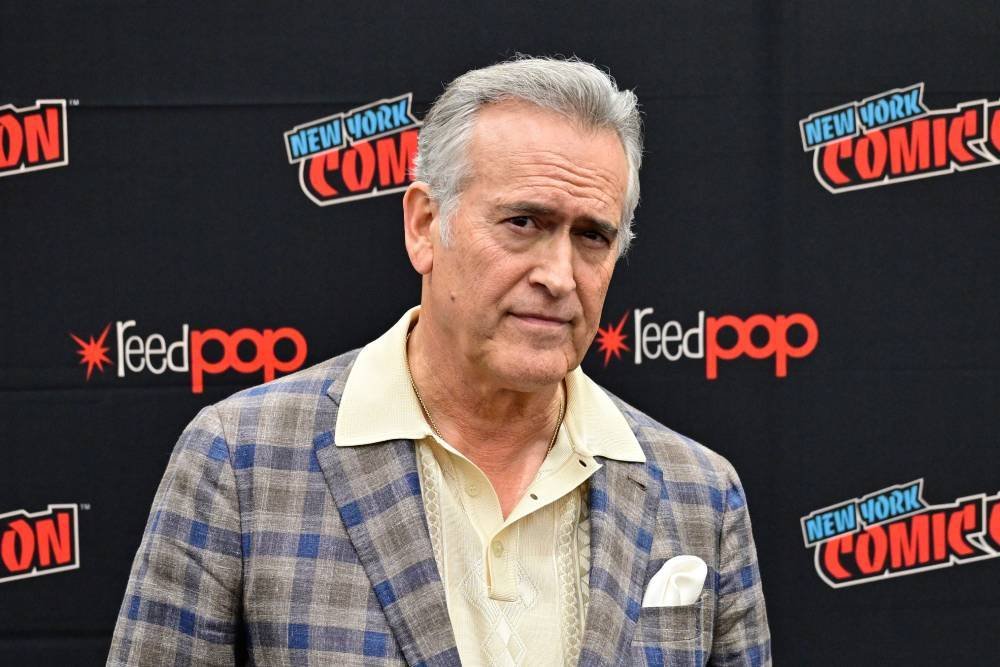
    Garrard Conley woke up today to learn the Supreme Court issued an 8-1 ruling limiting states’ ability to ban conversion therapy for minors, framing the practice as protected speech.

    He was not OK.

    When Boy Erased was published in 2016, Conley’s account of being forced into conversion therapy read like something from another era. The son of a Baptist pastor in Arkansas, Conley was 19 when he was given an ultimatum: attend a church-run program designed to “cure” his homosexuality or lose his family.

    What followed, as he recounts in the memoir, was a system built on confession, control and psychological pressure. He was subjected to six months of “therapy” sessions that demanded he invent sexual histories; assigned bible verses as punishment. At Love in Action, the program he ultimately entered, he attended exercises that mapped “sins” across family trees or required participants to scream at imagined versions of their parents. Teenagers were grouped with adults dealing with everything from marriage issues to more extreme behaviors — including pedophilia — all under the doctrine that “every sin is equal.”

    His book was later adapted into a feature in 2018, directed by and starring Joel Edgerton, who played the closeted therapist who oversaw his “conversion.” Lucas Hedges played a loosely fictionalized version of Conley, while Nicole Kidman played his mother.

    Conley, meanwhile, became one of the most visible chroniclers of conversion therapy’s harms, his advocacy helping fuel legislative bans across much of the country. The Hollywood Reporter spoke to Conley shortly after the Court released its historic decision.

    Take us back to the beginning. What was Love in Action?

    So in 2004, after I was outed to my parents, my father gave me an ultimatum: attend the program or lose connection to my family, my friends, my community. I was 19 — legally an adult — but this kind of thinking was something I’d grown up with in the church.

    Conversion therapy doesn’t always look like a facility. Before I ever got to Love in Action, I spent six months in one-on-one talk therapy with someone connected to the program. He told me to reveal any sexual fantasies I’d had, in as much detail as possible. His response was always to be disgusted. He would give me a set of Bible verses to memorize for the next session. After a while, it felt like I had to make things up, because he was always suspicious — always suggesting I must have been hooking up with men in public restrooms. These were not things that were in my brain at the time.

    And then you went to the program itself.

    Love in Action had a scheduled two-week program called “The Source.” But they wanted you to stay much longer. They were encouraging my parents to put my college tuition toward conversion therapy instead and have me drop out.

    The program used a 12-step model based on Alcoholics Anonymous to lead people out of what they called “the sin of homosexuality.” We had what were called “rap sessions.” We were placed with people dealing with bestiality, pedophilia, marriage issues, gender confusion, all under the idea that every sin is equal in the eyes of God.

    The man who ran the camp, John Smid — who rather famously came out years later and is now married to his husband — his credentials, when my mother finally thought to ask, were that he’d been a marriage counselor and had worked with Alcoholics Anonymous.

    There was also an arts and crafts component.

    There was. We did what were called genograms — something that real therapists use, a kind of family tree showing patterns of trauma across generations. But in our version, next to your family members, you would write things like “AB” for abortion, a dollar sign for gambling, an “H” for homosexuality. It was meant to show how the sins of the fathers were responsible for why we were there.

    And then one day, we were asked to make masks. We were told to show what we presented to the outside world — and then the ugly part inside.

    Sounds like a RuPaul’s Drag Race challenge.

    (Laughs.) I know, right? Every time I talk about this, it’s just so absurd now with this distance. I really think that if people weren’t completely destroyed by it, they could have made excellent drag queens. You definitely learn to think on your feet.

    What was the breaking point for you?

    There was something called the lie chair. You were asked to sit across from an empty chair and imagine your father in it, and to tell him how much he hurt you, how much you hated him. The assumption, based on some very watered-down Freud, was that I was gay because my father had been too distant and my mother too close. They were obsessed with how much male touch you received growing up. In any other context, it would have been wonderful. Not in this one.

    I’d read 1984 in high school. And I remember thinking, “They’re asking me to hate my father. This is a Christian institution. They want me to hate him so I can be cured.” So when they told me to perform this exercise in front of everyone, I said, “I don’t hate him. I feel really confused about why I’m here and I don’t know why you’re making me do this stupid exercise.” And they said, “You’ve been lying the whole time. You haven’t been applying yourself.”

    I got so angry that I stormed out and demanded my belongings back. They take everything when you arrive, your phone, your wallet, to look for what they call “false images.” I said, “I need my phone back.” They said, “Only in an emergency.” I said, “It is an emergency.” I took the phone into the hallway and called my mom.

    Tell me about this morning.

    I thought I was prepared for the ruling. I’d read all the documents. I’d been involved. But when I saw it in print, what it actually felt like was humiliation. It felt like being told that all of the work — all of it — was somehow unnecessary.

    I called my mom and told her. She hadn’t seen the news yet. She said: “I’m just so mad.” And then she said something I couldn’t have put better myself: “What happened to you was speech. And speech does harm — especially from people you put your trust in.”

    The ruling was 8-1, including two of three liberal justices.

    That hurt more. When I read through the decision, it felt like reading an alien language. Not because it’s difficult, but because I can’t follow the logic. They’ve framed this as a speech case rather than a question of medical regulation. And what that tells me, reading between the lines, is that they’re treating the identity of gay, lesbian, and trans people as an idea that’s up for debate, rather than a scientific truth. Because of that, they’re willing to call this a belief issue.

    You’ve been careful about the word “torture.”

    I’m careful because I’m not saying every conversation in which someone explores their sexuality constitutes torture. But what I experienced was torture. And I think when someone — especially a licensed professional — tells you, over and over again, that what you’re experiencing is not true, that is a different thing. It closes a door on a person. It doesn’t give them options. It tells them there is only one way to be a healthy human being.

  • Why Mazda Is Making Movies Now (Exclusive)

    Why Mazda Is Making Movies Now (Exclusive)

    Can movies move Mazdas? The automaker is betting that they can.

    The car company is launching a new version of its CX-5 SUV, and used this year’s Academy Awards to launch a film-themed campaign that it plans to bring to video platforms like YouTube, TikTok and Hulu, with CMO Brad Audet telling The Hollywood Reporter that it is thinking about bringing it to movie theaters as well.

    The premise? “5 Sides of the CX-5,” with director Paul Hunter developing five short films (as well as shorter trailer versions) based on five classic film genres: Romance, action, sci-fi, musical and horror. Jessamie Waldon-Day stars in each film (alongside a CX-5, of course).

    It’s an intriguing campaign that leverages the reach of broadcast during one of its marquee events (the Oscars), the breadth and depth of digital distribution, and the familiarity and emotional resonance of film.

    “The CX-5 competes in a highly competitive category where virtually every couple of months there’s an all new something,” Audet says. “So we couldn’t just come out with another standard automotive spot, we really needed to do something that that broke through.”

    Audet says that the target demographic for the CX-5 is female and multi-dimensional, which led to the “aha moment” where his team honed in the film genres as an anchor point for the campaign. The timing of the launch, with coincided with the Oscars and allowed for members of the Film Academy’s Academy Gold mentorship program to help with production, was a coincidence.

    But with any marketing effort, particularly one that leans on creating original programming that can stand on its own, is complex and risky. The brand and product need to be featured prominently (the CX-5 campaign includes a different feature of the car in each film), and Audet notes his own initial hesitation with the horror genre.

    “I think first and foremost, we had to land the entertainment value, and then obviously the car and the car’s features had to be prominent within each one of those stories,” Audet says. “I think it was a bit of an iterative process.”

    Credit, he says, goes to Hunter, who crafted both the films and their trailer counterparts.

    “I think most importantly, he saw the potential of the idea and really brought the the idea to life in the five stories, and did a really spectacular job,” Audet says. “He understood the role of the car in the storytelling, as the heroines’ companion in this and the enabler.”

    “You have to really commit to the story,” Hunter says. “What’s important is that everything felt lived in, and it was important that everything felt true and honest to to each moment, so that every sort of turning point or every scene had to force you forward into a new scene.”

    “No matter what the the the stories were, the genres, we never wanted it to feel like we were asking more or pushing too hard,” he adds. “The stories are built around Mazda, but we didn’t want it to feel like it was necessarily pushing like in a traditional commercial.”

    Mazda has released the action and romance films already, with the horror and musical films viewable for the first time below.

    So what does an automaker do, now that it has five short films representing five of the movie business’ key genres? Well, it goes to the movies. Audet says that the automaker is thinking of supporting what appears to be a strong 2026 film slate, and placing its films in the previews, likely in front of titles that share similar genres or themes.

    “Certainly there’s a lot of lot of eyeballs on film over the summer, and looks like this will be a good summer movie season,” he says. “So I think that’ll be one of our key initiatives.”

    You can watch the “5 Sides of CX-5” films, below.

  • Judge Rules Trump’s Order to End Funding for PBS, NPR Are Illegal First Amendment Violations

    Judge Rules Trump’s Order to End Funding for PBS, NPR Are Illegal First Amendment Violations

    A federal judge ruled that President Donald Trump‘s executive order to end funding for NPR and PBS public media was violated the First Amendment.

    In a ruling Tuesday, U.S. District Judge Randolph Moss of the District Court for D.C. ruled Tuesday that Trump’s executive order to cease funding for NPR and PBS is unlawful and unenforceable. The judge wrote that the First Amendment right to free speech “does not tolerate viewpoint discrimination and retaliation of this type.”

    “It is difficult to conceive of clearer evidence that a government action is targeted at viewpoints that the President does not like and seeks to squelch,” wrote Moss, who was nominated to the bench by President Obama. A copy of Moss’s ruling is available at this link.

    Variety has reached out the White House for comment.

    Both NPR and PBS had sued Trump over his executive order suspending U.S. federal funding for public media in an executive order on May 1, 2025. Trump’s executive order alleged the public-media organizations engaged in “biased and partisan news coverage” and instructed the board of the Corporation for Public Broadcasting to “cease direct funding to NPR and PBS” to the “maximum extent allowed by law.”

    more to come

  • Darren Abbott Replaces John Matts as Hallmark Media President After Less Than a Year

    Darren Abbott Replaces John Matts as Hallmark Media President After Less Than a Year

    Somebody send this guy a congratulatory greeting card.

    Darren Abbott has been named president of Hallmark Media, replacing the company’s former president John Matts less than a year into Matts’ tenure at that level. Now Abbott will be responsible for “shaping, operationalizing, and driving the ever-evolving business into the future, while continuing to oversee the ways in which consumers interact with Hallmark’s widely beloved content, products, and experiences,” according to Hallmark.

    Abbott was already the company’s chief brand officer. He now adds ad sales, distribution, and research under his purview, which previously included oversight of programming, creative product development, marketing and PR, licensing and brand partnerships.

    In his prior role, Abbott launched a Christmas cruise, a Christmas activation near Hallmark headquarters and the new 90-minute live, traveling stage show featuring Hallmark Stars, aptly-titled Hallmark Stars Live. He also developed Hallmark+.

    “Darren is a deeply admired and respected leader with a proven track record of creating moments and opportunities that are uniquely and distinctly Hallmark. From fostering each brand touchpoint to elevating how we work with advertisers, distributors, and all external partners who help us deliver on our brand promise, Darren is uniquely suited to build a future where Hallmark continues to bring joy, positivity, and connection to fans and consumers everywhere,” said Hallmark president & CEO, Mike Perry, to whom Abbott will continue to report.

    Abbott has been with Hallmark for nearly 30 years, so maybe check the Anniversary section of the aisle as well.

    Matts had been Hallmark’s chief operating officer at the time of his promotion; he joined the company in 2022 as its chief financial officer.

  • Broadway Box Office: ‘Just In Time’ Hits $2 Million For Jonathan Groff’s Final Week

    Just In Time pulled in more than $2 million last week, its highest tally yet, as Jonathan Groff played his final performance in the musical on March 29. 

    The show, which chronicles the life of singer Bobby Darrin, has been trending up for the past several weeks, as fans flocked to the show ahead of Groff’s departure, but reached last week’s high as the average ticket price also jumped up to $362.22. Fans were also spotted camped out in front of the Circle in the Square theater in the nights leading up to the show, for a chance at rush tickets the next day. Ryan Reynolds and Blake Lively were reported attendees at the last show.

    Matthew Morrison takes over the role for a few weeks starting April 1, with Jeremy Jordan set to take over starting April 21. But it remains to be seen whether they’ll have the same box office draw as Groff. 

    Just In Time was the third-highest grossing show of the week, with Harry Potter and the Cursed Child as the highest grossing, bringing in $2.6 million, followed by Hamilton with $2.3 million. The Lion King was the next highest, with $1.9 million, with Wicked as the fifth highest, bringing in $1.8 million. 

    Five shows, The Rocky Horror Show, Titanique, Fallen Angels, Beaches, A New Musical and The Lost Boys, began previews last week amid the spring rush. Rocky Horror, starring Luke Evans, Stephanie Hsu, Rachel Dratch and more, and The Lost Boys, a musical adaptation of the vampire movie, both played to 100 percent capacity, with Rocky bringing in $460,121 across its first four previews and The Lost Boys bringing in $489,214 across its first two shows. Beaches had a somewhat less auspicious start, with capacity at 88 percent and grossing $217,743 across its first two previews. 

    Five more shows were in the midst of previews last week, including Cats: The Jellicle Ball, which brought in $901,045 in its first eight-show week and Dog Day Afternoon, starring Jon Bernthal and Ebon Moss-Bachrach, which had a strong showing of $1.3 million last week, across eight previews, ahead of its March 30 opening. The play received largely critical reviews Monday night, but the impact of those on the starry show remains to be seen.

  • NBCU Television Chairman Pearlena Igbokwe and Apple Services VP Oliver Schusser Join Variety’s Entertainment Marketing Summit

    NBCU Television Chairman Pearlena Igbokwe and Apple Services VP Oliver Schusser Join Variety’s Entertainment Marketing Summit

    Variety has announced additional speakers for the 2026 Entertainment Marketing Summit, presented by Deloitte, on April 22 in Los Angeles. Speakers will include NBCU Television Chairman Pearlena Igbokwe; Apple’s VP of Music, TV, Sports, Podcasts, and Beats, Oliver Schusser; supermodel and entrepreneur Ashley Graham and Netflix Games President Alain Tascan. 
     
    Igbokwe, Chairman, Television Studios, NBC Entertainment & Peacock Scripted, will participate in a keynote conversation with Cynthia Littleton, Co-Editor-in-Chief of Variety, speaking about the excitement for NBC as it celebrates its 100th year anniversary as a storied TV brand. 
     
    Schusser, VP Music, TV, Sports, Podcasts, and Beats at Apple, will speak to Variety reporter Steven Horowitz in a keynote conversation about Apple’s vision for connecting with audiences, hot off its wildly popular Bad Bunny Superbowl Halftime Show. 
     
    Graham will join Natasha Bolouki, Partner and Agent, UTA, to chat about “The Power of Partnership,” moderated by Jennifer Maas, Senior TV Business and Games Reporter, Variety
     
    Tascan joins Wenny Katzenstein, Managing Director, Technology, Media and Telecommunications, Deloitte Consulting LLP, U.S. in the fireside chat “Leveling Up Fandom: How Games Extend Entertainment IP,” moderated by Variety’s Maas. 
     
    In other newly added highlights, CAA Senior Leader Brent Weinstein will moderate the fireside chat “Mythical Momentum!,” a look into how Rhett & Link’s Mythical has driven consistent innovation and growth spanning three decades, featuring Dennis Ortiz, Principal, Deloitte Consulting LLP and Jacob Moncrief, COO, Mythical. 
     
    “The next chapter of entertainment marketing will likely be defined by how well brands turn audiences into participants,” said Stephanie Dolan, U.S. Entertainment Leader, Deloitte Consulting LLP. “The combination of storytelling, data, and real-time feedback is transforming fandom from something you observe into something you actively shape. As platforms expand and expectations evolve, marketers have an opportunity to build deeper, more personalized connections. With Deloitte’s 20th annual Digital Media Trends report launching this week, we’re excited to bring fresh insights to the event and collaborate with industry leaders to help shape the future of entertainment marketing.” 

    Additional speakers, with more soon to be announced, include the following: 

    • Blair Rich, Chief Marketing Officer, Legendary Entertainment 
    • Rebecca Kearey, EVP, Head of International Marketing, Distribution & Business Operations, Searchlight Pictures 
    • Brett Hyman, Founder and CEO, NVE Experience Agency 
    • Jill Steinhauser, Group SVP, Platform Monetization & Partnerships, Warner Bros. Discovery 
    • Gina Igwe, VP, Brand & Consumer Marketing, DoorDash 
    • Sharhzad Rafati, CEO, RHEI 
    • Ben Fielder, Head of Enterprise Sales, West Coast, SlackAdapt 
    • Christie Sclater, SVP, Global Marketing, Clinique Global 
    • Jason Eskin, SVP, Digital Marketing, The Walt Disney Studios 
    • Edvin Dapcevic, Global Head of Media & Entertainment, Discord 
    • Jay Tucker, Executive Director, Center for Media, Entertainment and Sports, UCLA Anderson School of Management 
    • Karen Barragan, CMO, Blumhouse 
    • Darren Schillace, President, Marketing, Fox Entertainment 
    • Tara Lipinski, Olympic Gold Medalist and Sports Analyst 
    • Shareef O’Neal, Influencer and Creative Director, Shaq Brand 
    • Leah Kateb, Chief Creative Officer & Re-Founder of Skylar 

    Speakers join previously announced programming including keynote conversations featuring Pam Abdy, Warner Bros. Motion Picture Group Co-Chair and CEO, and Tina Knowles, businesswoman, fashion designer, art collector, philanthropist and activist. 

    Deloitte is the presenting partner of the summit. Please see Deloitte’s website for a detailed description of its legal structure.  NBCUniversal is a Premier Partner of the event, with supporting partners Discord, StackAdapt, & Vizio. Get your ticket today at variety.com/entmar.