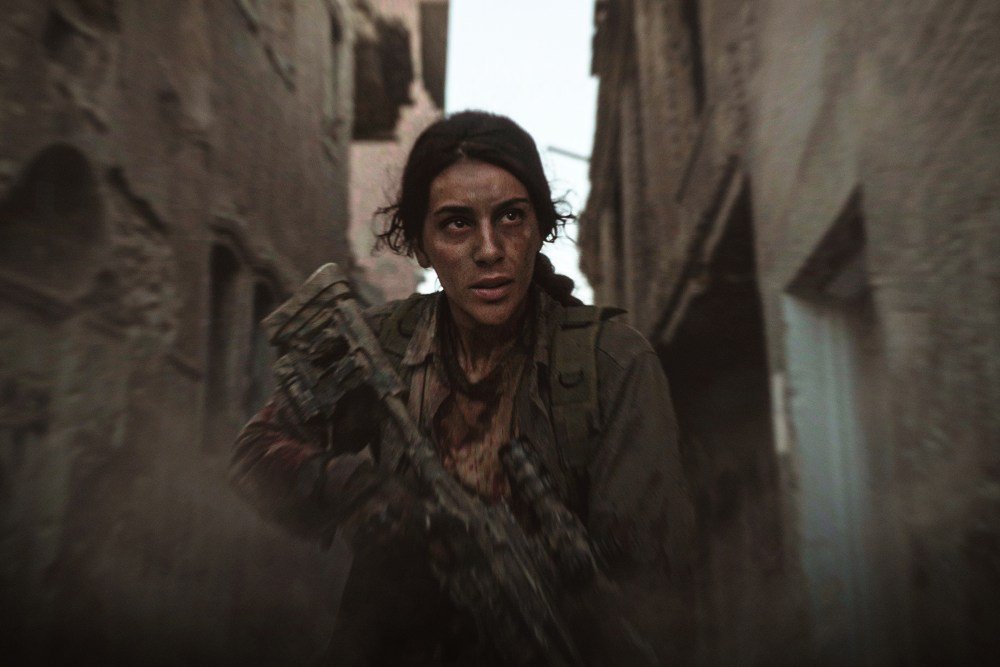
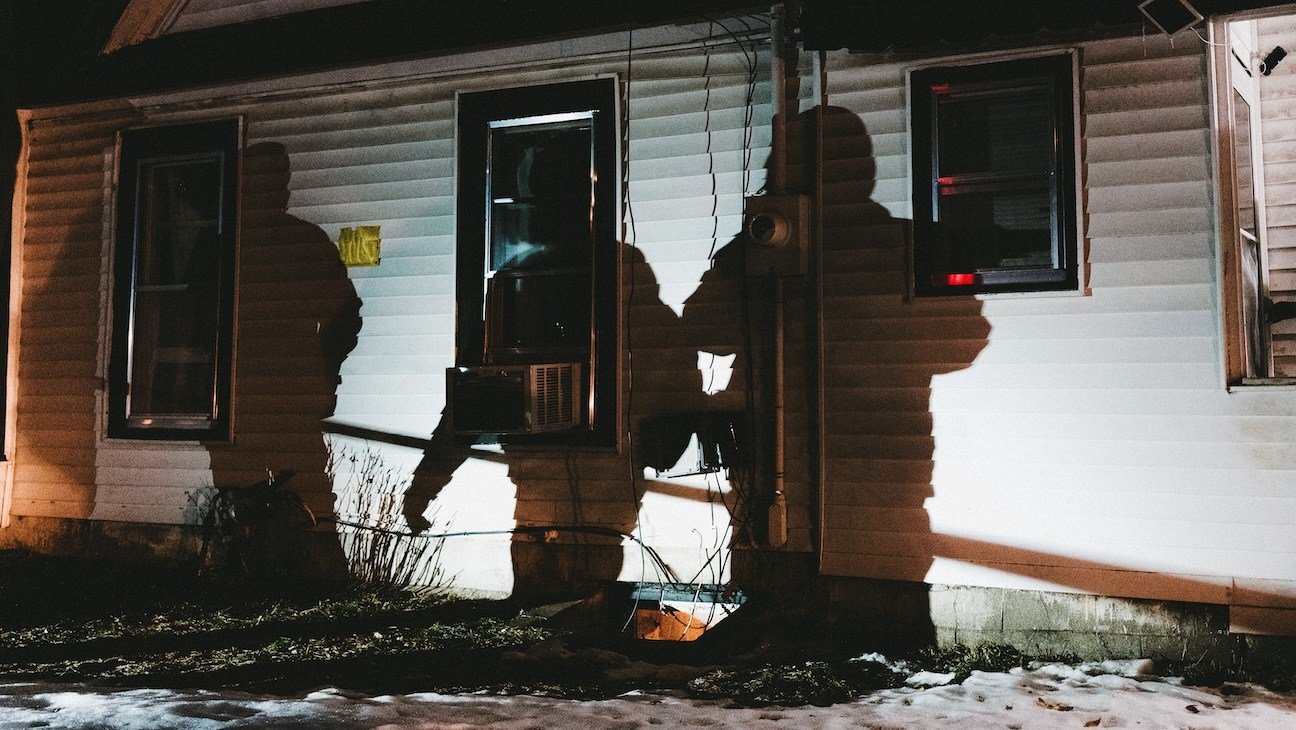
The trope of the lone action hero with near-superhuman strength gets a gender switch in “No Paradise If You Are Killed By A Woman,” a visually impressive drama about a resourceful female Peshmerga sniper. Although selected as Iraq’s submission for the Best International Feature Oscar, the third fiction feature from Norwegian-Kurdish helmer Halkawt Mustafa (“Red Heart,” “El Clásico”) may fall between two stools for Western viewers: There’s not enough action for genre fans and the narrative’s blend of melodrama and earnestness may turn off highbrow arthouse viewers. But it’s a different story in MENA territories where Sony/Empire has already nabbed distribution rights. Regional and Kurdish diaspora audiences should appreciate the strong visual and technical craftmanship used in this harrowing tale.
The narrative centers on Vyan (striking London-based Kurdish thesp Avan Jamal, impressive), a 24-year-old Kurdish émigré to Norway who is visiting Iraqi Kurdistan with her parents and younger sister Helin in 2014, when Islamic State (IS) launches an attack. Their parents are murdered and Vyan and Helin are sold as IS sex slaves. Ever resilient, Vyan manages to kill the man who bought her and make her way to Peshmerga territory. There, she joins an elite unit of female fighters as a sniper.
As Vyan’s poetic voiceover narration states, Peshmerga means “before death” and its fighters enter combat out of strength, not out of fear. Certainly, Vyan is fearless. She reckons that she has killed more than 100 of the enemy in three years. Given that, as the title notes, IS fighters believe that there is “No Paradise If You Are Killed by A Woman,” it’s no wonder they have placed a million-dollar bounty on her head.
After heroically preventing an IS suicide truck bomber in an armored vehicle from attacking her unit’s base, the heavily wounded Vyan returns to Norway to recover. There, a government official (Thorbjørn Harr) offers her a difficult choice: accept a new identity and government protection (they fear the fact that she is an IS target could endanger other Norwegian citizens) or be prosecuted for fighting for another country. Luckily, Norwegian civilians don’t have to worry. A phone call to the family’s old landline confirms that Helin remains trapped in Mosul, in the clutches of an IS fighter known as the Swedish sniper. Loyal Vyan prepares for what may be her final mission: to singlehandedly rescue her sister.
The last half of the film feels as if it could easily be adapted into a tense video game as it follows Vyan silently creeping through tunnels and crawling through the aftermath of IS carnage. It certainly gives a more detailed picture of how a sniper operates, and the lonely patience required for the job, than Clint Eastwood’s “American Sniper” ever did. Vyan uses logic and the help of friendly Kurdish commander from the Iraqi government forces in Mosul to locate the IS snipers preventing civilians from leaving the devastated city.
Research for multi-hyphenate Mustafa’s 2015 TV project “The Women ISIS Fears” and his time as a war photographer seeing strong female fighters inspired “No Paradise,” which he dedicates to his daughters. Like the helmer’s previous features, it proudly incorporates Kurdish customs and traditions, from the “singing” that Vyan’s rifle performs to the traditional tunes sung by her Peshmerga captain and the Kurdish commander in Mosul.
Highlights of a polished technical package include the prowling camerawork of Norwegian DP John Erling H. Fredriksen and the film’s use of actual Mosul locations. The shocking ruins of what was once a thriving population center attest to a brutal military campaign to liberate the ancient city from IS. Also worthy of special mention in a film where the main character spends much of her time in silence is the tension-building sound design by Mattias Eklund and Jan Kasskawo.
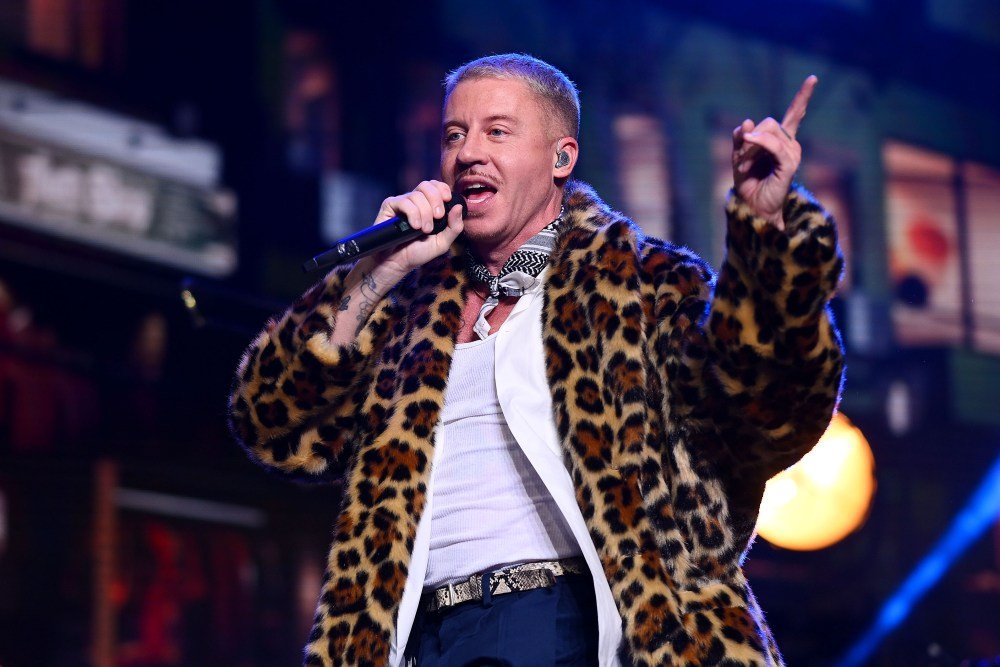
Macklemore is speaking out about his call to “Free Palestine,” which the rapper made while opening for Ed Sheeran on Friday night at New Jersey’s MetLife Stadium.
“To all of my Jewish brothers and sisters: criticism of Israel, criticism of apartheid, being against genocide in no way is a criticism of you,” Macklemore said on Saturday night (via Newsweek). “My message is for peace; love for all human beings to be treated with dignity, respect, and equality.”
He added, “So I say free Palestine, I say free Lebanon, I say free Cuba, I say free Congo, free Sudan, I say free all people in America living in fear of this terrorist organization, ICE. None of us will be free until we are all free.”
During his Friday night set, Macklemore told the audience that he wanted the people in Gaza and the West Bank to know that he had not forgotten them: “I believe that every human being walking on this earth deserves exactly the same freedom.” The statement caused the Israeli American Council to release a petition that demands that the four-time Grammy winner be removed from the rest of Sheeran’s Loop tour.
The petition reads, “This was an Ed Sheeran concert – not a political rally, not a protest, and not an activist event. The issue is not whether Macklemore has the right to hold political views. The question is where the line should be drawn when an opening act uses a global concert platform to advance a one-sided political agenda.”
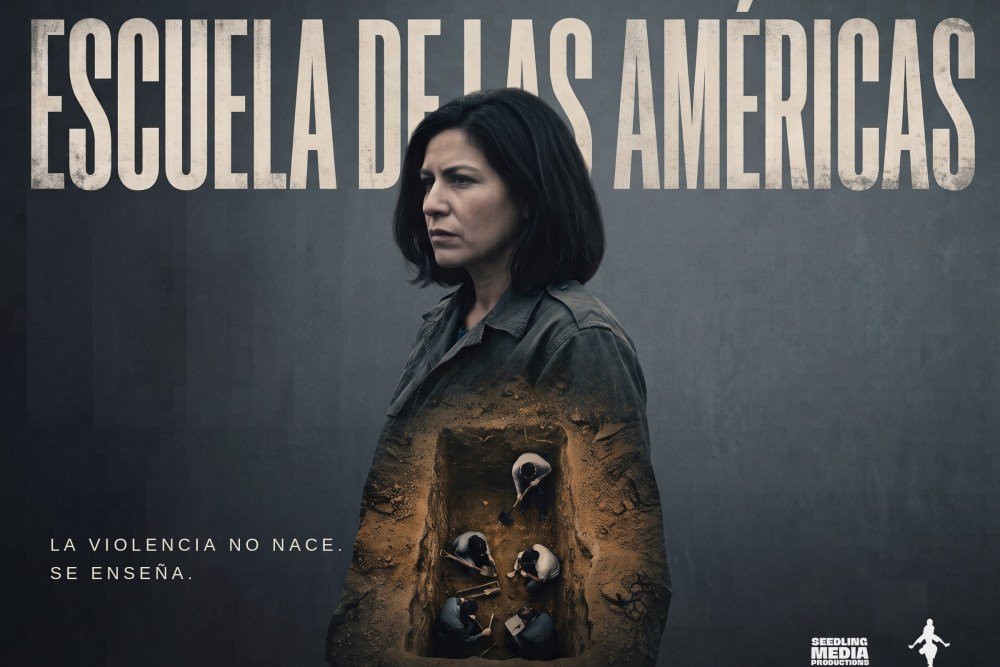
Panama’s Abner Benaim has boarded as a co-director of the fiction series “School of the Americas” (“Escuela de las Américas”), which will star two of Chile’s most internationally renowned thespians: Daniela Vega, who headed the Oscar-winning “A Fantastic Woman,) and Alfredo Castro, a Pablo Larrain regular who’s also starred in a slew of Latin American projects.
The project has been selected for the Co-Production and Financing Forum at Madrid-based confab Iberseries & Platino Industria which takes place Sept. 29-Oct. 2.
Benaim was an obvious addition to the project given its subject matter and setting. “School of the Americas” begins with an exhumation at the site of the 1983 El Jazmín massacre, which yields a graduation photograph of four commandos with their faces scratched out and a pendant stamped Fort Gulick, the U.S. military base in the Panama Canal Zone, site of the infamous U.S. Army School of the Americas.
Panamanian-American human rights investigator Inés Vega recognizes the massacre’s signature: counterinsurgency doctrine taught at the School. When someone tries to kill her, the cold case turns personal. Tracking four graduates across three continents, she uncovers what the School really taught – and who is still protecting its legacy.
Benaim joins co-director Oscar Godoy who also has close ties to Larraín, having been first AD on Larraín’s “The Count,” “The Club,” “Neruda,” “No” and “Tony Manero.” Godoy was recently second unit director on Fabula’s “Someone Has to Know,” which ranked among Netflix’s global top ten for non-English-language series.
His feature “Ulysses” screened at a string of festivals, starting with the San Sebastián Film Fest and culminating at Chile’s Santiago Film Fest (Sanfic) where it won Best Chilean Film.
Benaim, Panama’s most internationally renowned filmmaker, has represented his country three times at the Oscars, starting with his documentary “Invasion,” about the U.S. 1989 invasion of Panama, followed by “Yo No Me Llamo Rubén Blades” and “Plaza Catedral,” the latter making the Academy shortlist and earning Benaim a Premios Platino nomination for screenplay. His debut feature “Chance” remains the highest-grossing Panamanian film ever released.
Its producers Seedling Media Productions (Panama) and La Panda Productions (U.S./Spain) are targeting 2028 for principal photography to begin, provided all the financing is in place.
“The School of the Americas was a real school, located in the Panama Canal Zone; for half a century, it taught officers from across Latin America. We are not making a series about monsters — monsters are an alibi. We are making one about a curriculum: the fact that this was written down, graded and taught, and the men who graduated went home and became somebody’s father. Violence isn’t born. It’s taught,” said La Panda’s Guillermo Escalona, co-creator and executive producer alongside Brittany DeVries of Seedling Media.
Based in Panama, Seedling Media Productions, founded in 2013 by DeVries, has a varied list of credits that include fiction and documentary features. Among them are crime thriller “Chacalería,” “I Really Love My Husband,” shot in Panama and premiered at SXSW in 2025 and documentaries “Dear Panamá,” “A World Without Orphans” and “Lost Kites,” winner of the Best Documentary Feature at the London Independent Film Awards.
Currently, Seedling is producing “Against No One” (“Denuncia Contra Nadie”), a co-production with Guatemala supported by the Ibermedia Co-Production Fund.
Political pressure on film and television festivals emerged as a defining theme of a panel discussion Monday at the Lumière Summit in Saint-Paul-de-Vence, France, with Séries Mania general director Laurence Herszberg issuing the session’s most direct call for protection of programming autonomy.
“We don’t judge artists by their passport, we judge them by their works,” Herszberg said.
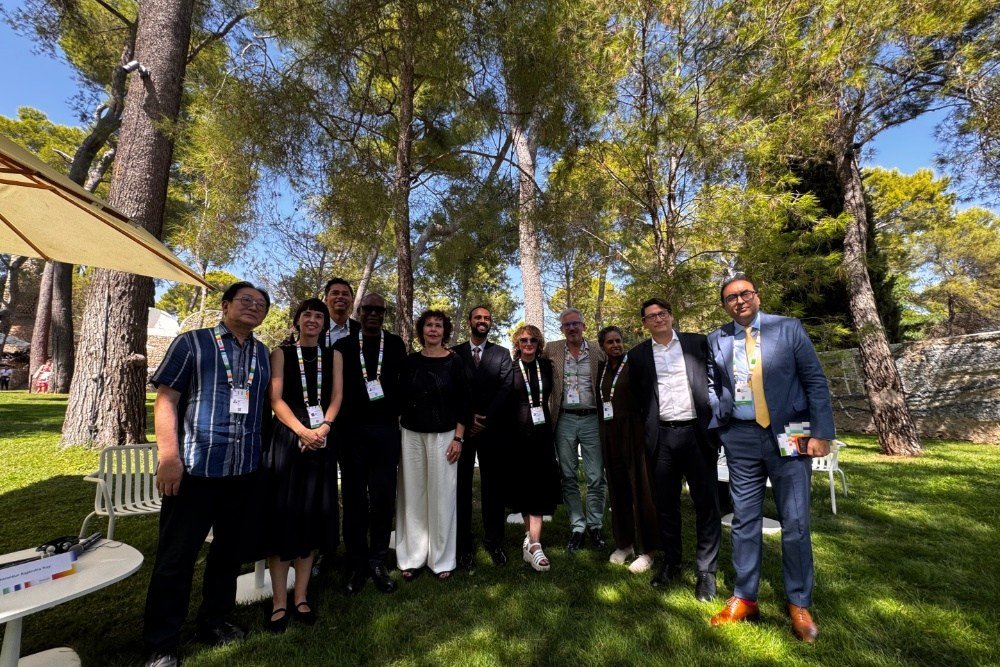
The panel, titled “Easy to Criticize, Impossible to Replace: Rethinking the Festival” and moderated by Rajendra Roy, chief curator of film at MoMA, brought together festival chiefs from Berlin, Cannes, Toronto, San Sebastián, Annecy, Mumbai, Durban, the Red Sea and South by Southwest. It covered three areas: audiences and community, how festivals relate to the media, and the mounting economic and political strains on festival leadership.
Herszberg was direct on the political pressure facing her and her peers. “We feel more and more under pressure from different groups,” she said. “They might be politicians, they might be just people who disagree with the representation of some countries.” As general director of Séries Mania – a free-access festival with 1,500 seats – she said controlling who walks through the door is not possible. “We have to be protected, and we still have to go on and fight for the artists,” Herszberg said.
Cameron Bailey, chief executive of the Toronto Film Festival, which launches its first formal market this year, echoed the sentiment. “Filmmakers are not their nations, and shouldn’t be treated as such by anyone,” Bailey said. He recalled joining TIFF as a programmer in 1990, “at a time when festivals felt like a completely free and open space.” Bailey pointed to TIFF’s Next Wave youth program – now 15 years old – as a long-term investment in building young audiences. “‘Obsession’ became one of the biggest sales at a film festival in a long, long time,” Bailey said, noting that Next Wave participants had championed the title. On the rationale for TIFF’s new market, Bailey said: “The market is also part of that ecosystem – I mean, a terrible way to put it would be that it’s the fertilizer of the ecosystem, but really, it’s what feeds” a constant supply of ambitious films.
Berlinale festival director Tricia Tuttle, whose event drew 450,000 admissions last year, and was at the eye of a political storm, put audience development at the center of her contribution. “The answer for me to all of these challenges is to really think about audiences,” Tuttle said, adding that reaching people who are not yet passionate cinemagoers matters as much as serving those who are.
Cannes president Iris Knobloch pointed to the breadth of her festival’s annual gathering – 40,000 accredited participants from 140 countries, with over 4,000 journalists in attendance. “For me, that is the real shining light on films and the talent all over the world,” Knobloch said.
Faisal Baltyuor, chief executive of the Red Sea Film Foundation, said his organization’s last edition sold out every screening. “We have a lot of creative talents that need that boost to make it to the international stage,” Baltyuor said, noting that 11 films the Foundation supported appeared in Venice and eight were heading to Toronto.
On the festival-press relationship, Peter Debruge – now director of the South by Southwest Film & TV Festival after a 20-year tenure at Variety, the last ten as chief critic – put the case for studio films serving discovery. “The studio-level films are the sizzle that brings the attention, the press, and the audiences to the discoveries,” Debruge said.
Maialen Beloki, deputy director of San Sebastián, pointed to shrinking press resources as a structural problem. “Each year, media send less and less critics to the festival,” Beloki said. She added that the race to break news online carries its own cost. “We are losing our capacity to talk about the films with some time and with some respect,” Beloki said.
Shivendra Singh Dungarpur, founding director of the Film Heritage Foundation and director of the MAMI Festival in Mumbai, said his screenings of restored films regularly attract between 1,000 and 1,400 people and that all MAMI events are free of charge. “I believe that a film festival has to be for everyone,” Dungarpur said. He described the MAMI Independent outreach initiative that partnered with a major cinema chain to bring independent films to cities across India ahead of the festival proper.
Mickaël Marin, from the Annecy Animation Film Festival, said that since his appointment in 2018 he has worked to open Annecy to general audiences beyond its traditional professional base, including through a permanent exhibition space that opened last June. “We have a worldwide community of animation coming here in Annecy, from the school, from the student, up to the platform,” Marin said.
Magdalene Reddy, director of the Durban FilmMart Institute, said the core challenge in Africa is not finding audiences but reaching them in the absence of sufficient cinema infrastructure. “For us, engaging with audiences is really going into the community,” Reddy said.
When moderator Roy closed the session by asking whether festivals could survive without the American industry – demanding a yes or no – Reddy was the only panelist to answer no, while noting that her focus remains squarely on African content.
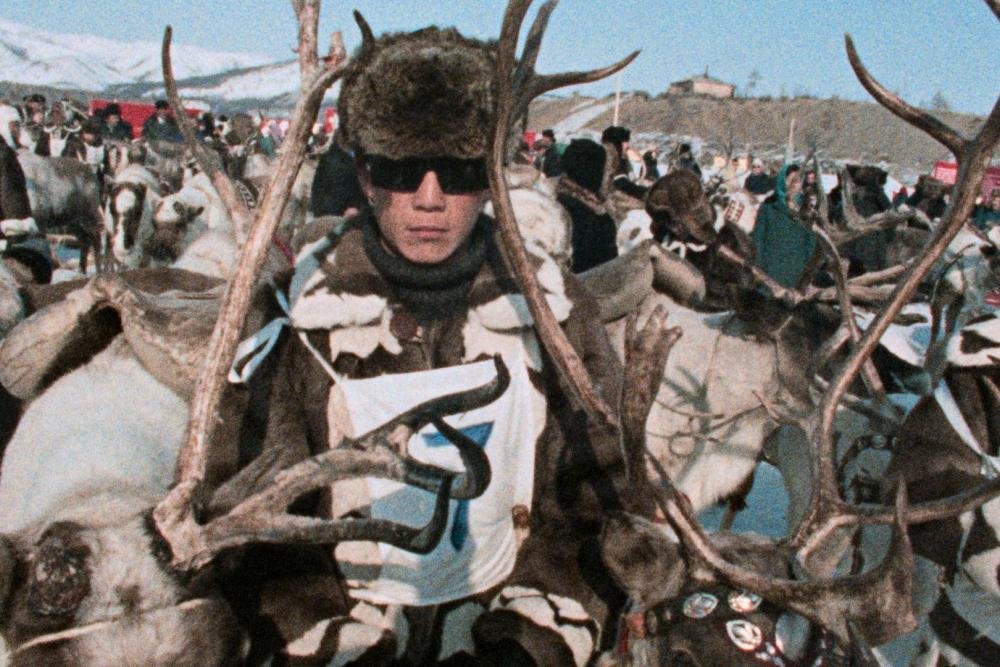
In the early 1970s, Italian film crews spread out across the USSR, capturing a vast, multicultural empire few had ever seen in such diversity. From urban commuters to village fêtes, Baku trawlers to Siberian reindeer herders, the cameramen aimed to capture the Soviet polity at a time when Westerners had a gray, monolithic image of what lay behind the Iron Curtain. Granted official permission, they managed to resist any push towards propaganda, even finding ways to slyly critique a system that proclaimed regional autonomy but controlled everything from the Kremlin. While planned as a monumental, multi-chapter TV series, only a few episodes wound up being broadcast on Italian TV, just once, following which the endeavor lay forgotten in the archives. If ever there was a project for Sergei Loznitsa, this was it.
In “Imperium,” working with 60 hours of 16mm, the master documentarian organizes this journey along geographic lines, starting in Moscow and heading east, then doubling back through “the Stans” and the Baltic republics until ending in what was then Leningrad. As with Loznitsa’s past films of this type, some snippets of conversation and music have been added, but otherwise the footage has simply been restored and edited together. What’s revealed is an immense state whose distinct regions still managed to hold onto unique traditions, notwithstanding an incessant centralized proclamation of unity.
While “Imperium” can be engrossing, its nearly three-hour running time is felt more than in Loznitsa masterpieces like “Maidan” and “State Funeral.” Perhaps that’s because in those films, one feels the force of history pushing us forward, inexorably heading to a watershed moment whose impact continues to resonate across the decades. With “Imperium,” the motivation is clear yet the concept is more diffuse. It’s also a film which will likely resonate best with those of us old enough to recall how the Soviet Union was discussed in the West at the time, a decade before Ronald Reagan’s “Evil Empire” remark — which simply gave a reductivist Star Wars moniker to the anti-communist propaganda suffusing American-driven global discourse since the end of the Second World War. For Loznitsa, of course, his interest is inside the country rather than how it was perceived from abroad, though it will be impossible for most audiences to separate the two.
The film kicks off with a classic parade in Red Square for the 24th Congress of the Central Committee of the Communist Party, with banners touting the same slogans from the previous forty years about production targets being met ahead of schedule. Next comes the GUM department store and window displays with tuxedos, shiny patent leather shoes and beaded handbags, making us wonder who in early 1970s Moscow was buying such luxury goods. Commercialized religion makes its first appearance with a lively trade in Christmas decorations, one of many reminders that despite an official policy of atheism, certain traditions were allowed to persist. (Vladimir Putin, of course, has done an even better job in harnessing religion to his oligarchic dictatorship.)
From the capital the footage moves east, where consumer goods are far more difficult to obtain. In Suzdal, an old woman washes clothes in an ice hole; shots of Vladimir show a town seemingly unchanged from pre-Revolutionary days; further south, residents come out for a winter carnival whose roots must date long before Leninism arrived. As the cameramen spread east, local customs become stronger: Bactrian camel races near the Mongolian border, reindeer sleds in the Sakha Republic. It’s here in Siberia where the footage most forcefully critiques Soviet policy, as a group of young Caucasian Russians (in classic 1970s fashion) play guitar and sing Russian songs, the local Yakut population looking on from the sidelines, discontented observers of this not-so-subtle form of colonialism.
The greatest takeaway from “Imperium” is just how stubbornly resistant centuries-old traditions were to the Soviet push towards uniformity. People still attended mosques in Bukhara and churches in Etchmiadzin, they held on to ways of life that had not been collectivized by Stalinist dictates. Today, however, rampant capitalism and the internet have changed Russia’s social landscape far more than anything Lenin or Brezhnev could have imagined, turning stubbornly multicultural populations that boldly resisted homogeneity into consumers looking West for their acquisitions.
It’s interesting to imagine what might have happened had Italian TV screened the majority of these films upon release. A sense of what life was really like in the Soviet Union was hard to come by then — in the U.S., a 1977 National Geographic publication “Journey Across Russia: The Soviet Union Today” was the first populist corrective to the sense of a uniform society of collectivized proletariat.
Italy, with its strong communist party, had a different problem, too often refusing to acknowledge Politburo abuses. An interesting companion piece to “Imperium” would be Federico Ferrone and Michele Manzolini’s 2013 documentary “The Train to Moscow: A Journey to Utopia,” also consisting of found footage but earlier, when a party supporter from Emilia Romagna discovered that life in the USSR wasn’t all solidarity and freedom. At the time, his Italian colleagues censored his revelations. All empires peddle utopias, but why do so many people believe them?
This year’s San Sebastian International Film Festival has unveiled a slew of top talent for its Film Talks slate.
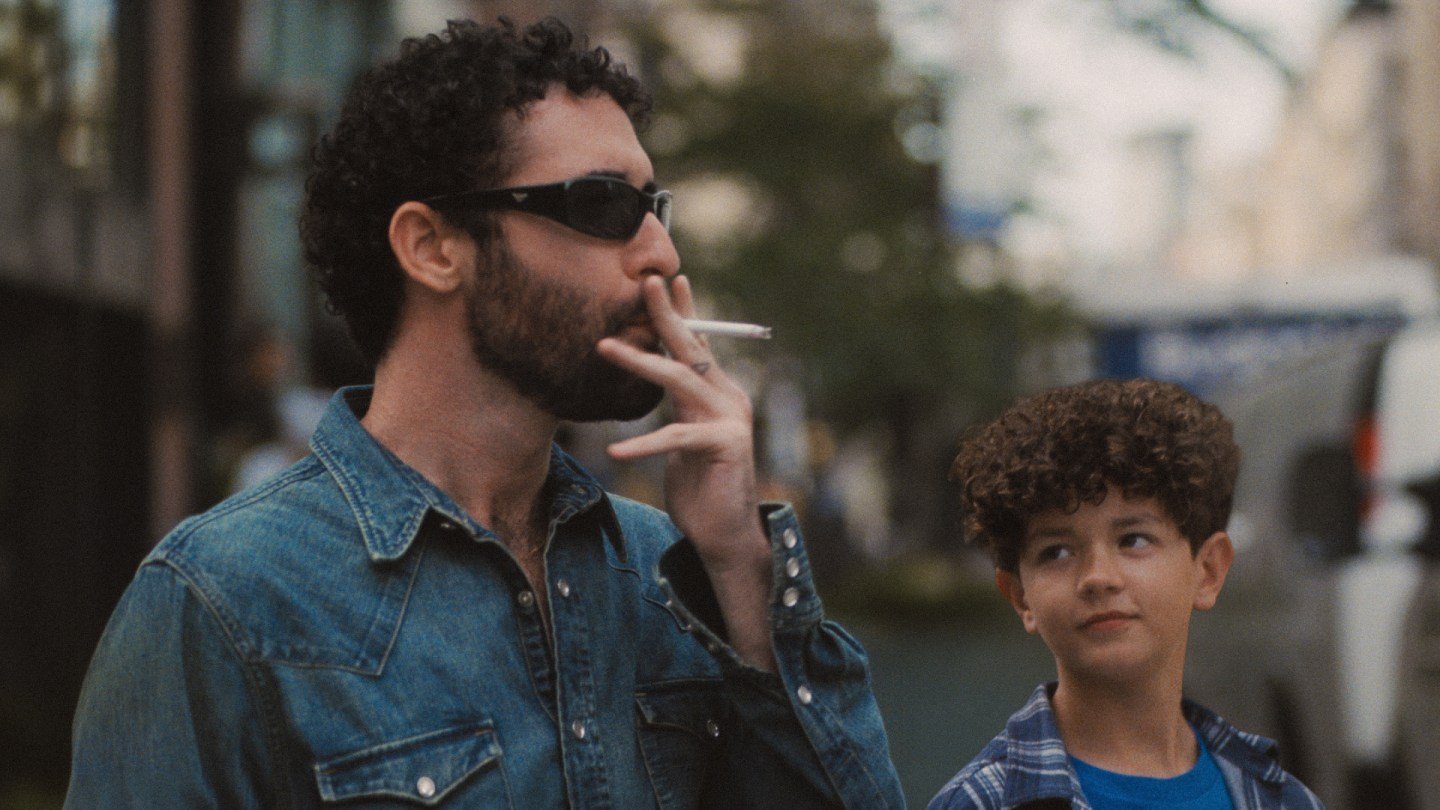
Among the high-profile names reflecting on their creative processes and films in a sit-down discussion will be San Sebastian jury president Ira Sachs, Club Kiddirector-star Jordan Firstman and Josephine‘s Beth de Araújo.
Filmmaker and Andor actor Diego Luna will also make an appearance, alongside Argentine filmmaker Benjamín Naishtat, Naëmi Ada, Fernando Postigo, Peter Decherney, Angelica Cantisani, Vanja Kaludjercic, Andrea Queralt, Maialen Franco, Beatriz Mbula, Dagmary Olívar Graterol, Wendy Espinal, Lucía G. Romero, Daysi Cruz Cid, Eva Montoya, Xixi Sofía Yen Chen, Herminia Loh, Cecilia Barriga, Antxón Gómez, Enric Pastor, Fran Araújo, Aina Clotet, Javier Ferreiro, Tiagx Vélez, Lluís Garau, Afioco Gnecco, Gloria Saló, Fleur Dopheide and Victoria Cazalla.
“The talks will also look at issues such as inclusion and anti-racist attitudes in the audiovisual world, the new narratives and authorships, creative residencies and international creation labs, the transformative power of the cinema and design and art direction,” said the festival. “They will also analyse the new ways of narrating family relationships, the body as a narrative device and the challenge of audiences, algorithms and audiovisual distribution.”
San Sebastian’s opening film is Ghost Song from Fatih Akin. A number of buzzy projects are premiering in and out of competition, such as from Mike Leigh (Tender Loving Care), Pablo Larraín (My Sad Dead) and Jaime Lorente (The Bad Son).
Competition highlights include Milo from director Nicole Garcia (Oran), a French drama featuring Marion Cotillard and Lurker star Théodore Pellerin; and In My Father’s Room, the directorial debut of Japanese novelist Maha Harada.
Prolific German filmmaker Werner Herzog and British star Naomi Watts are receiving the fest’s Donostia Awards this year.
In August 2026, a claim spread that McDonald’s lost a lawsuit against the TV chef Jamie Oliver, who — according to posts — proved that the fast food chain’s food was “unfit for human consumption” because it was “highly toxic.” The claim is unproven.
Snopes previously investigated a variation of this claim in 2018 and 2026. We found then and now that Oliver said in a 2011 TV program that beef trimmings used for a product he called “pink slime” were “not fit for human consumption.” We found no evidence that he specifically called McDonald’s food “unfit for human consumption” or “toxic,” as the posts suggested.
The American Meat Institute, a trade association that represents processors of meat and poultry, said in 2012 that beef trimmings used to make “pink slime,” which it calls Boneless Lean Beef Trimmings, were edible.
However, because we could not access a full version of the “Jamie Oliver’s Food Revolution” episode where Oliver discussed “pink slime” to see if he specifically mentioned McDonald’s, we leave this claim unrated.
Snopes will update this report if, or when, additional information surfaces. We contacted Oliver and McDonald’s to ask whether Oliver has ever called the fast food chain’s food “unfit for human consumption” or “toxic” or whether McDonald’s ever lost a lawsuit involving Oliver and are waiting for responses.
A claim (archived) circulated on Facebook in August 2026 that fast food chain McDonald’s lost a lawsuit against the TV chef Jamie Oliver after Oliver proved its food was “unfit for human consumption” because it was “highly toxic.”
For example, one Facebook user wrote:
McDonald’s loses lawsuit against chef Jamie Oliver, who proved that the food they sell is unfit for human consumption because it is highly toxic.
Chef Jamie Oliver won a lawsuit against the world’s largest fast-food chain. Oliver demonstrates how hamburgers are made.
According to Oliver, fatty cuts of meat are “washed” with ammonium hydroxide and then used to fill the hamburger patties. Even before this process, the TV presenter says, this meat was unfit for human consumption.
Oliver, a radical activist chef taking on the food industry, says: “We are talking about meat that is sold as dog food and then served to humans. Aside from the quality of the meat, ammonium hydroxide is harmful to health.” Oliver calls it “the pink slime process.” What sane person would put a piece of meat soaked in ammonium hydroxide into a child’s mouth?
The claim contained three parts: that McDonald’s sued Oliver, that Oliver made the comments about “pink slime” and that Oliver’s alleged comments were specifically about McDonald’s.
We found no evidence inonlinesearches (archived, archived, archived) that McDonald’s ever lost a lawsuit involving Oliver. AFP Fact Check reported in December 2021 that Oliver had never taken legal action against McDonald’s.
According to an excerpt of a 2011 episode of his program “Jamie Oliver’s Food Revolution,” Oliver said that the meat used to produce a specific type of beef product that the celebrity chef called “pink slime” was “not fit for human consumption.”
McDonalds reportedly ceased using “pink slime,” which is also known as Boneless Lean Beef Trimmings, in their food in 2011, as we noted in 2018 when we fact-checked a previous version of this claim. Oliver did not mention McDonald’s specifically in excerpts of the 2011 episode of “Jamie Oliver’s Food Revolution” that Snopes reviewed.
However, because we could not access a full version of the “Jamie Oliver’s Food Revolution” episode in question to see if it mentioned McDonald’s, we leave this claim unrated.
Snopes contacted Oliver and McDonald’s to ask whether McDonald’s ever lost a lawsuit involving Oliver, whether Oliver had ever proved McDonald’s food was “unfit for human consumption” or “toxic” and to ask whether McDonald’s used Select Lean Beef Trimmings in 2026. We await replies to our queries.
Oliver’s allegations
In the first episode of the second season of his program “Jamie Oliver’s Food Revolution,” in which Oliver attempted to reform school lunches and fight obesity in the U.S., the celebrity chef held a demonstration where he showed children and adults where on a cow different cuts of meat came from.
According to a segment of the episode (archived) that an internet user uploaded to YouTube in 2016, after spray-painting prices on a live cow to show where various cuts were found, Oliver then addressed what happened to the remainder of the animal.
He said (time code 00:01), “The public loved seeing that, that, equalling a steak. They never for a minute thought I would clear all the meat and cuts away and introduce them to a new world of food. It’s called pink slime.”
Oliver added (time code 00:12), “When you’ve broken down a whole beast, you’re left with trimmings. You know, in my industry, we call those trimmings [BLEEP].”
Speaking to a crowd of people, Oliver described the trimmings used for “pink slime” as (time code 00:36) “not fit for human consumption.”
Oliver went on to say that processing plants took trimmings that were “not fit for human consumption,” separated the meat from the fat, killed harmful bacteria using ammonium hydroxide and sold the end product, which he called “pink slime,” as human-grade food. Ammonium hydroxide is a watery solution that can be used to regulate acidity in food or in hair dye or cosmetics.
In an excerpt from the program included in a 2012 CBS report, Oliver said (time code 00:32), “We’re taking a product that would be sold at the cheapest form for dogs, and after this process we can give it to humans.”
(Snopes could not locate a complete video of the “Jamie Oliver’s Food Revolution” episode in question. The clips we have found online appeared genuine and did not indicate any signs of possible manipulation.)
FDA says ammonium hydroxide ‘generally safe’
Around 11 months after Oliver’s episode discussing “pink slime” aired, the American Meat Institute President J. Patrick Boyle issued a statement to say that Boneless Lean Beef Trimmings was “a safe, wholesome and nutritious form of beef” that helped prevent food waste by utilizing trimmings that would otherwise go to waste.
The institute is a trade association that represents processors of meat and poultry.
Boyle’s statement said, similarly to Oliver’s demonstration, that processing Boneless Lean Beef Trimmings involved first separating the meat from the fat and using “food grade ammonium hydroxide gas” to destroy bacteria before blending the product into foods like ground beef.
However, he denied claims that the trimmings used to create Boneless Lean Beef Trimmings were not edible. The statement said:
Some recent media reports created a troubling and inaccurate picture, particularly in their use of the colloquial term ‘pink slime.’ The fact is, BLBT is beef. The beef trimmings that are used to make BLBT are absolutely edible. In fact, no process can somehow make an inedible meat edible; it’s impossible. In reality, the BLBT production process simply removes fat and makes the remaining beef more lean and suited to a variety of beef products that satisfy consumers’ desire for leaner foods.
The U.S. Food and Drug Administration, which regulates ammonium hydroxide use in food, says the ingredient is “generally recognized as safe.” This was also the case when we last reported on these claims in 2018.
In sum …
While Oliver did call the cuts of meat used for Boneless Lean Beef Trimmings “not fit for human consumption” and claimed (time code 00:59) the product was “admitted to being in at least 70% of ground beef products” in a 2011 program, the episode excerpts Snopes reviewed did not show him specifically accusing McDonald’s of using the product or calling the fast food chain’s products toxic.
McDonald’s said in a 2013 statement it had not used Boneless Lean Beef Trimmings in its products since 2011.
We found no evidence that McDonald’s had lost a lawsuit involving Oliver since then. Given the prominence of McDonald’s and Oliver, such a lawsuit would have been widely reported by reputable sources. That was not the case.
While the FDA generally recognizes ammonium hydroxide, which is used to process Boneless Lean Beef Trimmings, as safe, reporting by the publication Food Safety News claimed that fast food giants like McDonalds, Taco Bell and Burger King had all stopped using the product by January 2012.
Both ABC, which broadcast Oliver’s program, and Oliver himself have faced lawsuits over their coverage of the product.
ABC settled out of court in 2017 in a $1.9 billion defamation lawsuit brought by Beef Products Inc., a producer of Boneless Lean Beef Trimmings, over Oliver’s program and other stories the network had reported about the product in March and April 2012.
A man who Beef Products Inc. laid off after negative press heavily affected the company’s sales sued Oliver, ABC and other defendants in 2012. He dropped the case in 2013.
Such Brave Girls star Freddie Meredith has joined the cast of Saturday Night Live UK ahead of its season two premiere.
Fresh off his Edinburgh Fringe Festival debut with comedy show Need a Light?, nominated for the best newcomer award, the Brit joins the returning SNL UK ensemble: Hammed Animashaun, Ayoade Bamgboye, Larry Dean, Celeste Dring, George Fouracres, Ania Magliano, Annabel Marlow, Al Nash, Jack Shep, Emma Sidi and Paddy Young.
Meredith, also known for his performance in Channel 4’s Big Boys, most recently featured in Kat Sadler’s twisted female-driven comedy Such Brave Girls on the BBC. He plays Josie’s embarrassingly needy and oblivious husband, Seb.
Among his comedy heroes are Jamie Demetriou, Tim Key, Tina Fey, Nathan Fielder, Kristen Wiig, Steve Coogan, Steve Carrell and Julia Davis. Meredith said about joining the show: “It will undoubtedly inform everything I do for the rest of my career, and I can’t wait for the experience.”
“I trained at drama school and began working professionally in theater,” Meredith added about his background. “Over time, I found myself increasingly drawn to comedy and started doing stand‑up alongside my acting work, and that naturally led me into making short sketches online.”
The next season of SNL UK is set to kick off on Sep. 12 with host Jeff Goldblum and musical guest CMAT. Broadcast live each week, the U.K. spinoff of NBC’s hit sketch series will once again welcome a different celebrity host and musical guest for every episode, alongside topical sketches, live music performances and a British take on the iconic Weekend Update segment.
Last season’s celebrity hosts included Tina Fey — in a premiere that accrued an audience of over 220,000 — as well as Jamie Dornan, Riz Ahmed, Jack Whitehall, Nicola Coughlan, Aimee Lou Wood, Hannah Waddingham, and Ncuti Gatwa.
SNL mastermind Lorne Michaels serves as executive producer on the show, and James Longman is lead producer.
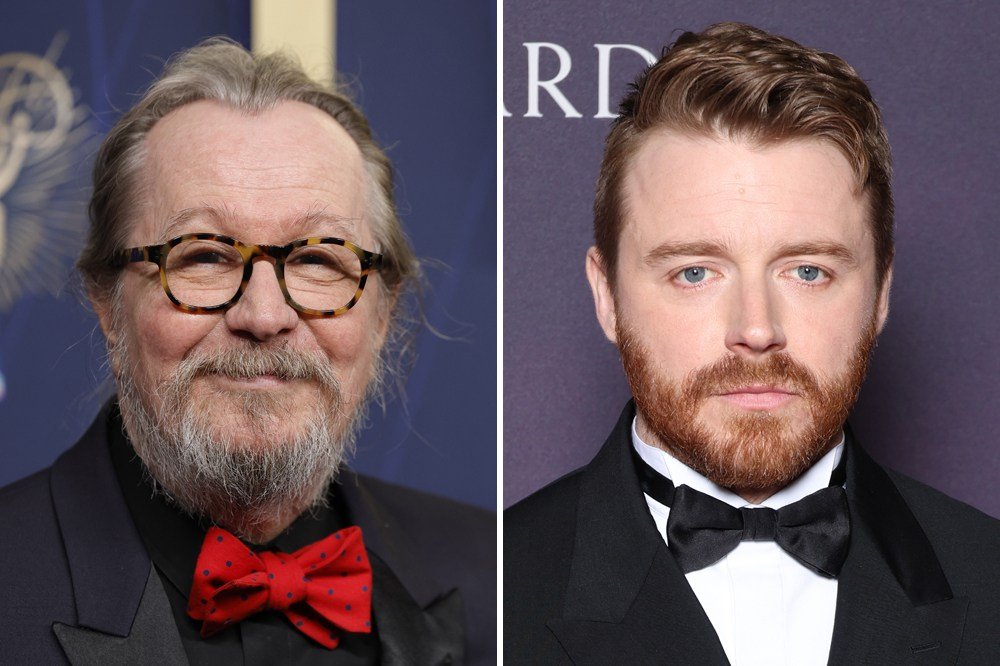
Gary Oldman‘s connection to the world of James Bond may be unknown, but the actor claims to have some key information about the casting of the next 007.
According to the Oscar-winning acting icon, the hotly-disputed and widely-debated hunt to find the next superspy is over, and he’s hoping his “Slow Horses” co-star Jack Lowden is the name ready to be unveiled.
“It’s been rumored that [Lowden] is on the shortlist,” Oldman said in an interview with Canada’s “The Morning Show.” “We’re going to find out pretty soon, aren’t we? Because they have picked him. They have made their choice, but they have not announced it yet. So my fingers are crossed for Jack.”
Wild rumors have swirled for years over who is set step to step into the blood-splattered brogues of Daniel Craig, but with the next film set to go into production next year, speculation has ramped up considerably.
While nothing has been confirmed as the casting is kept under arguably the tightest wrap of any film production, Callum Turner, Jacob Elordi, Aaron Taylor-Johnson, Harris Dickinson and Lowden have all been reported as among those in the final running. Variety wrote that there had been interest in Louis Partridge, while stage star Tom Francis had reportedly auditioned. Amazon MGM has repeatedly refused to discuss anything about who has or hasn’t been considered for the role.
Denis Villeneuve is set to direct the next Bond film, which is being written by “Peaky Blinders” creator Steven Knight.
Last month, Lowden’s wife Saoirse Ronan threw down the gauntlet to Bond producers about her being involved in the next film, telling Empire that she was “dead serious” about playing a Bond villain. “I think it would be really interesting, having a young female villain,” she said. “Especially for girls and women, to see someone who can just take all that pent-up anger and direct it somewhere, there’s something interesting in that dramatically. So I would love to do more of that.”
Oscar-winning filmmaker Laura Poitras spoke bluntly at the Venice Film Festival Monday about the motivations behind her latest project, They’re Here, a 25-minute documentary that viscerally chronicles the Minneapolis resistance movement to ICE’s paramilitary occupation last year.
“We believed in a sense of urgency in documenting this,” Poitras said of the film origins. “What we’re seeing in the United States is a nightmare, and we feel what’s happening in the mainstream media is that this kind of violence is being normalized. We believe very strongly in the power of cinema to denormalize this violence and to show what’s happening, so that you can feel the sense of terror.”
They’re Here is Poitras’s first project since her Nan Goldin documentary All the Beauty and the Bloodshed, which won the festival’s Golden Lion in 2022 and later earned an Oscar nomination. Poitras previously won the best documentary Oscar in 2015 for Citizenfour, her landmark account of Edward Snowden and his NSA surveillance disclosures.
Poitras co-directed They’re Here with Minneapolis-based journalist and documentarian Rachel Lauren Mueller. Told in the style of dystopian sci-fi cinema, the film starts in a picturesque wintry American Midwest landscape — but this is Trump’s America in 2025, where masked men are soon shown abducting children, as residents hide in the trunks of cars to safely get to work. Elsewhere, everyday American vacationers mill about at Minneapolis’ airport, gazing out the windows at shackled prisoners being dragged onboard planes nearby.
They’re Here draws on dashcam footage, crowdsourced data visualizations and ground-level footage to reconstruct the resistance network and the cat-and-mouse surveillance tactics used by residents and ICE’s masked agents.
“We were using the genres or language of dystopian cinema or horror to take us closer to reality, not to take us further away, and not to make fiction from reality,” Poitras explained in Venice. “This actually is the reality — the reality is a nightmare. The entire country is under attack, and immigrants are living in fear throughout the United States right now.”
“Over the two Trump terms, we’ve seen that things have gotten more extreme, but people become used to certain things,” added Mueller. “So I think the real role of this film is to shake that up a bit — to change things from a space of intellectualization about these numbers and these images that we see, and to have it become more visceral again.”
Poitras explained that the doc, like the resistance movement at its heart, emerged from a sense of solidarity with the immigrants who had made Minneapolis their home.
“It came from a real sense of, ‘These are our neighbors, and we don’t want them stolen from us. We want these people to stay safe,’” she said.
She also sees causes for both hope and despair in the Trump administration’s response to Minneapolis’ resistance, which she described as a “great success.”
“At the end of the film, we say how these tens and hundreds of thousands of residents responded, and that ICE removed 80 percent of its agents. So there was a real response to this kind of resistance, which I think we can all take hope from,” she explained. “At the same time, ICE has a budget of $70 billion, which is just an astronomical amount of money. Additionally, in the last two months, 90,000 people were abducted. So it’s this is a record high that has happened in June and July. So ICE is absolutely still active. Their tactics just look very different now.”
They’re Here is screening in Venice Open – Out of Competition, the festival’s nonfiction and special-presentation strand, and will have its world premiere in the Sala Grande on Monday afternoon. The film was produced by Mueller, Poitras and longtime Poitras collaborator Yoni Golijov, with ARTE France serving as co-producer. Submarine Entertainment Sales is handling U.S. sales.