Category: Entertainment

  • Belgian Royalty Series ‘King of Hearts’ Secures Key VRT Backing (EXCLUSIVE)

    Belgian Royalty Series ‘King of Hearts’ Secures Key VRT Backing (EXCLUSIVE)

    Enterprising Flemish broadcaster VRT has boarded the historical coming-of-age drama series ‘King of Hearts’ from Giles Coulier, whose company, De Wereldvrede, is behind such hits as 2019 series “War of the Worlds” and Prix Europa winner, “Albatros.”

    As continental royalty series hit ratins and sales – think “Maxima” – “King of Hearts,” currently in development, has been selected to participate in the inaugural Euro-Atlantic Co-Pro Pitch program to be held at the Iberseries & Platino Industria confab in Madrid.

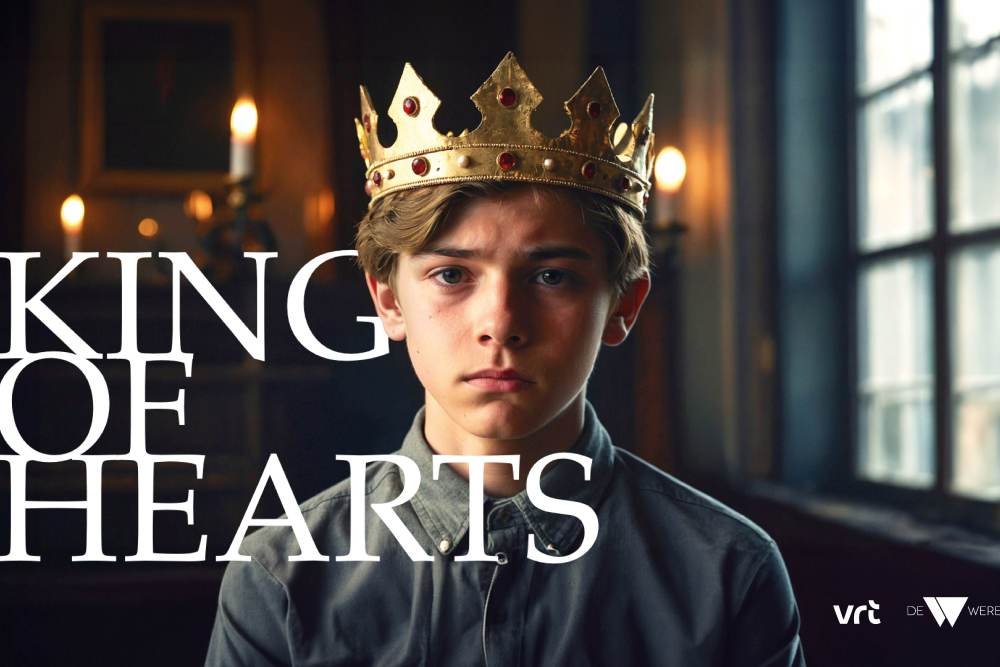
    Based on real events, the drama centers on Baudouin, introverted and insecure, who is made King before he is ready for the task. As Belgium descends into crisis and his family fractures around him, he is forced to confront the man and leader he wants to become. Under mounting pressure, he learns to make difficult choices, challenge his father’s influence and forge his own beliefs. But with power comes a darker temptation: to control others as he himself was once controlled.

    Later in life, he tries to protect his nephew Filip from the same painful path he went through. But he slowly realizes how hard it is to become a better man than the father who raised him.

    “We are thrilled we can once again work on a fiction series that sheds light on an important chapter in our recent history. As a public broadcaster, we believe it is essential to tell these stories, but always through emotionally compelling, surprising and strong storytelling,” said Elly Vervloet, VRT international drama expert.

    “’King of Hearts is the coming-of-age story of King Baudouin, who, as a young and unprepared prince, had to ascend the throne at a politically very delicate moment for our country and the whole world. We see him struggle to find his own voice, torn between power and responsibility, manipulated by people around him with their own agendas. We are thrilled that the producers and creators of De Wereldvrede approached us with this story, so that we can develop it further together into an ambitious and emotionally resonant series. We hope to bring some strong international partners on board to bring this fascinating story to audiences far beyond Belgium.”

    For producer Gilles De Schryver, who co-founded De Wereldvrede with Coulier in 2013, “King of Hearts” is by nature an international story. “It moves between Brussels, Leopoldville, Rome and Madrid, intertwining Belgium’s monarchy with Congolese independence, Cold War geopolitics and Catholic influence. It is designed as a high-value prestige drama with global story reach and appeal only an international co-production can deliver.”

    The project has secured script funding from the Flanders Audiovisual Fund (VAF), with a further VAF application pending.

    According to the partners, De Wereldvrede’s “mission is to produce high-quality fiction for an international market, with a strong emphasis on the creator’s vision and a bottom-up production approach.”

    The company broke through with the TV series “The Natives” (CANVAS), followed by Coulier’s feature film “Cargo,” which screened at numerous international festivals. Their short films have also earned recognition, including “Stephanie,” an official Cannes selection and winner of the Ensor for Best Short Film, and the series “Lockdown,” which won an award at Canneseries. “Roomies” (2022) received international acclaim.

    In 2024, the features “Holy Rosita” and “Julie Keeps Quiet” premiered internationally, earning numerous festival selections and awards. “Julie Keeps Quiet” premiered at Cannes Critics’ Week and was selected as Belgium’s official Oscar entry. Both films won five Ensor Awards.

    In October 2025, the second season of “Roomies,” by Kato De Boeck and Flo Van Deuren, premiered at Film Fest Gent to five-star reviews.

    Nathalie Teirlinck’s second feature, “Jonah Was Here,” is currently in post-production, while Pieter Van Hees’ latest film, “Alors on Danse,” is in advanced development and scheduled to shoot in summer 2027.

    De Wereldvrede is also developing several other projects, including the feature films “Harvest,” “The Right to Say Goodbye” and “Dirty Kids,” as well as the fiction series “Recidive” and “Beats of Love.”

    The 6th Iberseries & Platino Industria runs September 29 to October 2, 2026.

  • ‘Sumo: Spirit Weighs Nothing’ Review: A Handsome Ode to an Oft-Disrespected Sport

    ‘Sumo: Spirit Weighs Nothing’ Review: A Handsome Ode to an Oft-Disrespected Sport

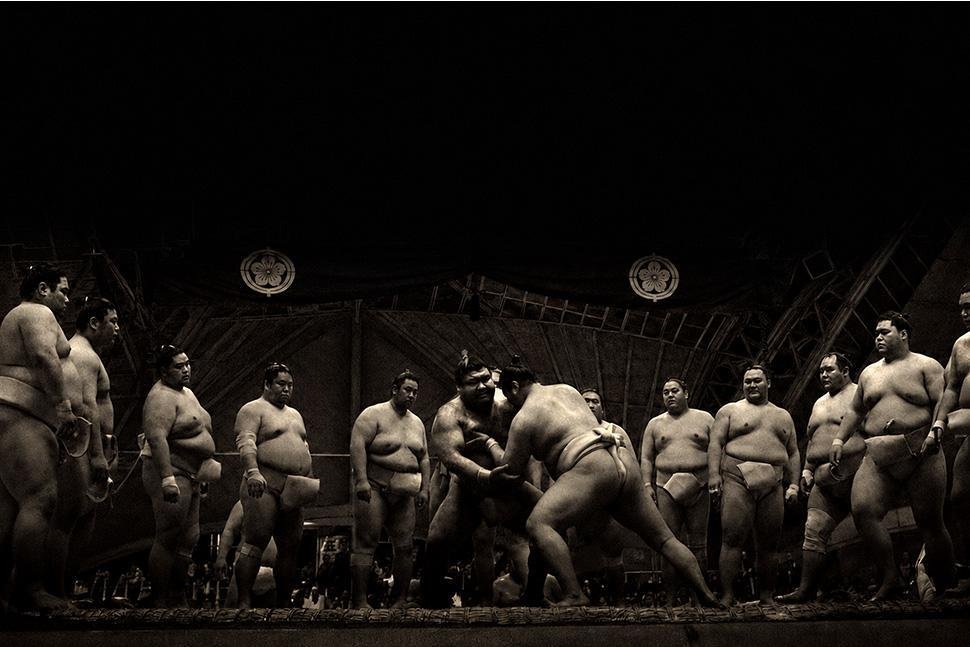
    The title of “Sumo: Spirit Weighs Nothing” is the closest that Erik Shirai‘s documentary comes to a joke at the expense of its subject: sumo wrestling, the Japanese sport largely known in the western world for the ample size and minimal clothing of its practitioners, and not an awful lot beyond that. In all other respects, however, this stately, artfully produced film aims to act as a corrective to such cheap, culturally insensitive perceptions. Examining as it does the motivations and ambitions of a number of sumo wrestlers, from grand masters to rising stars, through a solemnly respectful lens, the doc finds humanity and even beauty in what can all too easily be comically framed on screen.

    Indeed, the approach of Japanese-American docmaker Shirai (who previously probed a very different Japanese institution in his popular 2015 doc “The Birth of Saké”) is so respectful as to feel a touch sanitized: smoothed-out and simplified for the benefit of Western viewers, to whose perspective the film is mostly tailored. More unsavory aspects of the sport — including controversies over hazing and match-fixing, not to mention its ongoing exclusion of women from competition and ceremonies — are swept aside, while the compelling fact of its declining popularity in Japan is only passingly addressed. Only before the closing credits roll is it revealed how few yokozuna (the name given to men achieving the highest rank in sumo) this century have been homegrown, as Mongolia and the U.S. step into the breach.

    Shedding more light on such matters would provide a richer context for the film’s reverent celebration of sumo tradition, but many viewers will still find it an illuminating and exquisitely mounted study, ennobling the sport with the sheer, studied splendor of its imagery, captured alternately in atmospherically high-contrast monochrome and tea-stained sepia tones. Produced by ESPN Films, it will doubtless find a dedicated broadcast and streaming viewership following its premiere as the opening film of Venice’s audience-oriented Spotlight competition.

    Early on, the camera observes a group of rookie wrestlers, training at the Tokyo stable of 62-year-old Master Sakaigawa, as they collectively recite a pledge to the sport: “We shall uphold our responsibility and duty to to sumo; we shall uphold a strong heart, kindness and courage.” This is followed by a droll shot of trainees all putting their freshly laundered thongs out to dry: For all its earnestness, the film is not without offhand humor. In the house of Sakaigawa, we meet Hiradoumi, a 24-year-old upstart tipped for big things in the ring (or dohyō, to use its proper term), and a great hope for continued Japanese representation in the sport’s top tier. In the same stable, and younger still, is teenager Yonezawaryu, still learning the ropes, and battling doubts over his long-term commitment to sumo after witnessing firsthand the extreme, potentially fatal, physical toll it takes on the body.

    At the opposite end of the career scale is Mongolian-born Terunofuji, who at the time of filming was the only practicing yokozuna in sumo, a 10-time title winner considering retirement after 14 years in the sport, five of them at the very top. He is spoken of as a veteran, positively godly in status, though he’s only 33 years old. Age, however, doesn’t mean quite what it does to civilians in a realm where so much transformational strain is placed on the body, and Terunofuji’s is beginning to fail him. “By doing sumo, I’m cutting my lifespan by 10 to 20 years,” he frankly admits, before likening the travails of the professional wrestler to those of a soldier going to war. He’s now married with a son — it’s hard not to wonder if, at the end of his reign, he thinks it was all worth it.

    It’s one of a few questions that this handsome, sober documentary is too polite to ask. But it does convey the grand, challenging physicality of sumo, which to many of its students qualifies as an answer in itself. There’s also a thoughtful focus here on the pain and labor that goes into building and maintaining these extraordinary bodies — shot, by Shirai and fellow DP Hiroshi Hara, in awed chiaroscuro portraits that line up with the men’s view of themselves as warriors of a kind, leaving far behind many racist, cartoonish depictions of yore.

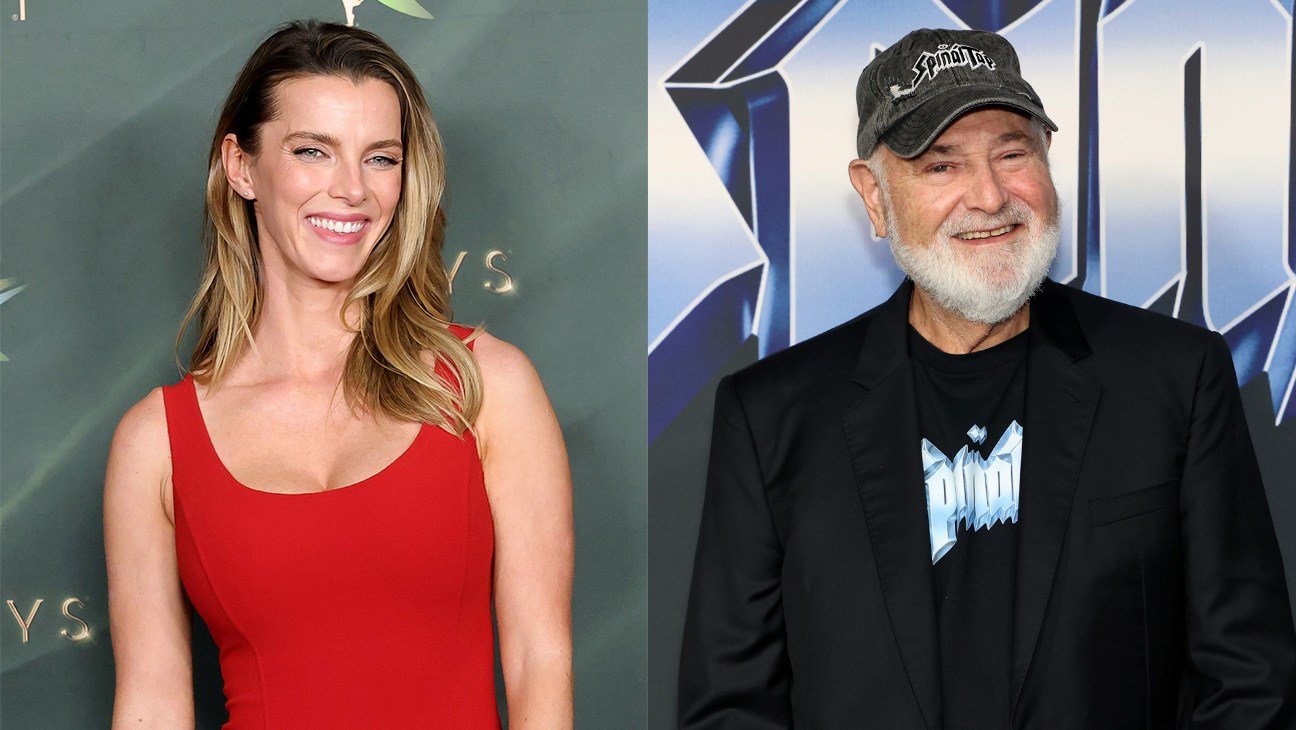
  • Rob Reiner and Betty Gilpin Win 2026 Emmys for Guest Actor and Actress in a Comedy Series

    Rob Reiner and Betty Gilpin Win 2026 Emmys for Guest Actor and Actress in a Comedy Series

    Rob Reiner and Betty Gilpin have won the awards for best guest actor and guest actress in a comedy series at the 2026 Creative Arts Emmys.

    Reiner won for his role in The Bear, which he was nominated for posthumously. The legendary actor and his wife, Michele Reiner, were found brutally murdered in their Los Angeles home last December. Their son, Nick Reiner, has been charged with and pleaded not guilty to to the murders.

    “It’s appropriate to stand for this one,” presenter Wendi McLendon-Covey said to the crowd, who gave the win a standing ovation. “I know we all wish Rob could be here tonight.”

    Gilpin took home the award for her role in Apple’s Widow’s Bay. Her speech was a highlight of the night as it was told in poem form. She began with a shoutout to her date, former Glow co-star Alison Brie.

    Two other guest acting awards were given out earlier in the evening. The award for guest actress in a drama series went to Shailene Woodley for her work in Paradise. It marked the show’s first Emmy win. Ernest Harden Jr. took home the award for guest actor in a drama series for his role in The Pitt.

    The Creative Arts Emmys take place over two days, usually a week ahead of the Primetime Emmys show. This year, the typically below-the-line-centric portion of the awards featured five categories that were previously given out during the Primetime ceremony. Among those were best supporting actor and actress in a limited or anthology series. Sunday’s awards were not televised live. Instead, Saturday and Sunday’s awards ceremony will air together on Saturday, Sept. 12. The 78th Emmy Awards, hosted by Mariska Hargitay, will air live on NBC on Sept. 14.

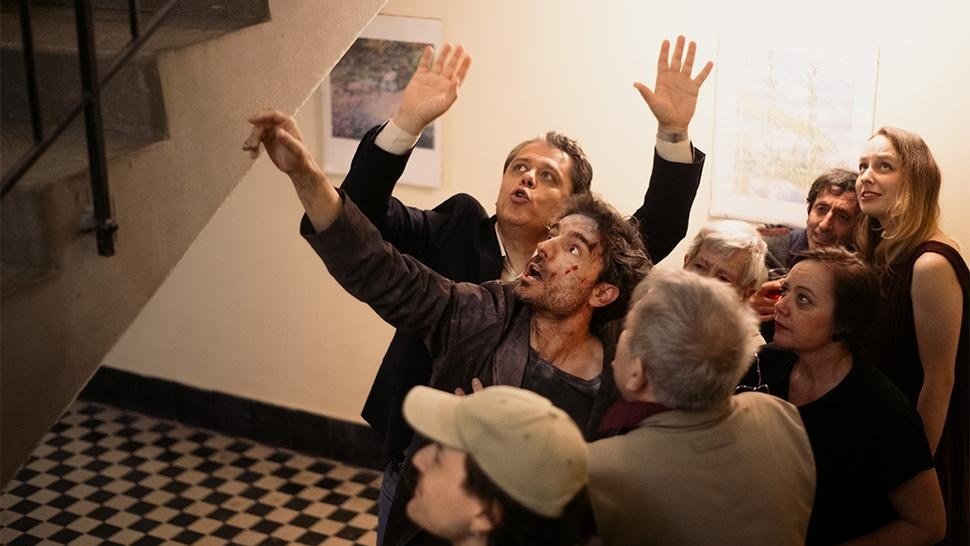
  • ‘Ground Floor’ Is a Political Parable Full of Apathy, Absurdity – and Mold (Exclusive Clip and Chat)

    ‘Ground Floor’ Is a Political Parable Full of Apathy, Absurdity – and Mold (Exclusive Clip and Chat)

    Franz Kafka and Don Quixote would feel right at home watching Ground Floor (Földszint), the new film from Hungarian auteur Gábor Reisz. But former Hungarian Prime Minister Viktor Orbán would very likely not be amused.

    Back in 2023, Reisz’s Explanation for Everything, a dramatic look at the culture wars, won the best film award in Venice’s Horizons (Orizzonti) program. Now, he is back at the Venice Film Festival, this time in the Venice Spotlight section, with a sharp social and political satire. Ground Floor is a deep dive into a quixotic journey into an existential crisis that is full of absurdity, dark humor, political metaphors and mold – yes, mold!

    The film, world-premiering at Venice on Thursday, Sept. 10, stars Ádám Tompa (Blue Heron) as Kristóf, a failed artist who, on a single day on which he and his wife want to go on a lake holiday, learns that he will become a father and discovers strange black mold in their apartment. To the exasperation of his wife, the usually apathetic man is spurred into rare action to solve the mold issue. He doesn’t even really know the people in the building. Can he fix the mold emergency and change things for the better?

    Or, as a logline for Ground Floor puts it: “Which will break down faster – the building where Kristóf lives, or the apathy from which he awakens to find himself at the forefront of a tragicomic domestic revolution?”

    Rodrigo Crespo, Bettina Józsa, Tünde Bacskó, György Gazsó, Juli Kindl, Éva Tímár and Marcello Fonte also star in Ground Floor, which Reisz co-wrote with Éva Schulze (Explanation for Everything) and Zsófi Reisz-Varga. Kristóf Becsey handled the cinematography, while Reisz and Schulze edited the film with Dávid Jancsó and Ilka Janka Nagy. Films Boutique is handling sales.

    THR can exclusively premiere a clip from Ground Floor. Watch the scene that puts Kristóf on his unusual journey.

    Now that you have seen a first teaser for the film, here is how Reisz describes key inspirations and themes he wanted to explore, and his take on just how Hungarian Ground Floor is.

    Where did the idea to set the film in an apartment building that is threatened by mold and other issues, which is clearly a metaphor or a fable for the bigger world, come from?

    Reisz Actually, the basic idea came from my producer Júlia Berkes. She could imagine a movie which was set in a building residents’ meeting. Maybe you don’t know about residents’ meetings. It’s really specific to our [country]. Every Hungarian could easily relate because in every apartment building, you need to go to this meeting twice a year. And you can’t imagine how absurd this kind of meeting is because everything is about the apartment, the staircase, the cleaning stuff, how to spend money. So, usually there are a lot of arguments.

    When she told me about this idea, my answer was, “Okay, let’s go with this, and I will try to think about it.” It was 2024 when we talked about the story, and I felt that in Hungary, the [political] system and the atmosphere were in such bad shape that I could not think about anything else but how the building idea was connected to how it is living in Hungary. So, that was the starting point.

    And black mold is something that always sounds terrible to people because it’s really expensive to get rid of. You talked about the metaphorical part. From the very beginning, it was so clear that if we shoot something in an apartment building, it’s, of course, somehow about Hungary in a small version, in a microcosm.

    Can you tell me a bit more about the atmosphere in the country that you found so bad?

    Around the middle of the scriptwriting process, we realized with my co-writer Éva Schulze that the basic problem is the apathy of society. This is the main reason that I wanted to make this film to, a little bit, generate a revolution or something like this, even if it sounds naive. But I think the mission of every form of art, also of filmmaking, is to talk a little bit about the problems and somehow generate a change in society.

    It’s funny because I heard one year before Béla Tarr atar died that somebody asked him if he feels he changed anything with his amazing filmography, and he answered no, he didn’t think so – maybe just a little bit.

    How would you describe the tone of Ground Floor compared with Explanation for Everything?

    Our previous movie was a social drama, and maybe a few parts were a little bit funny. And with this movie, I found it was so dark that we felt we needed to get a little bit lighter. Of course, the Hungarian humor is a little dark. It’s maybe connected to English humor and Czech humor.

    With the government change in Hungary, are you feeling a bit more optimistic?

    I think I am a little bit optimistic. We actually changed the ending of the movie. The shooting started in March, and the election was on April 12. During the editing process, I always check with my co-writer. And we started to discuss the end because the original end was really dark. There wasn’t any sunrise. So the sunrise idea came later, from my optimistic part. It’s not too much because I’m not absolutely optimistic. I just have a tiny little hope. [The country], like the house is still in the same shape. So, you need to do a lot of work.

    Are you working on a new movie?

    With the political change in the election, there will be a new [film funding] system in Hungary. We haven’t had any public money for ages. If you know that you won’t have more than 200,000 euros ($233,000) for a film, then you cannot think high concept. But I hope that now we can start with a blank page and just write what we want to write.

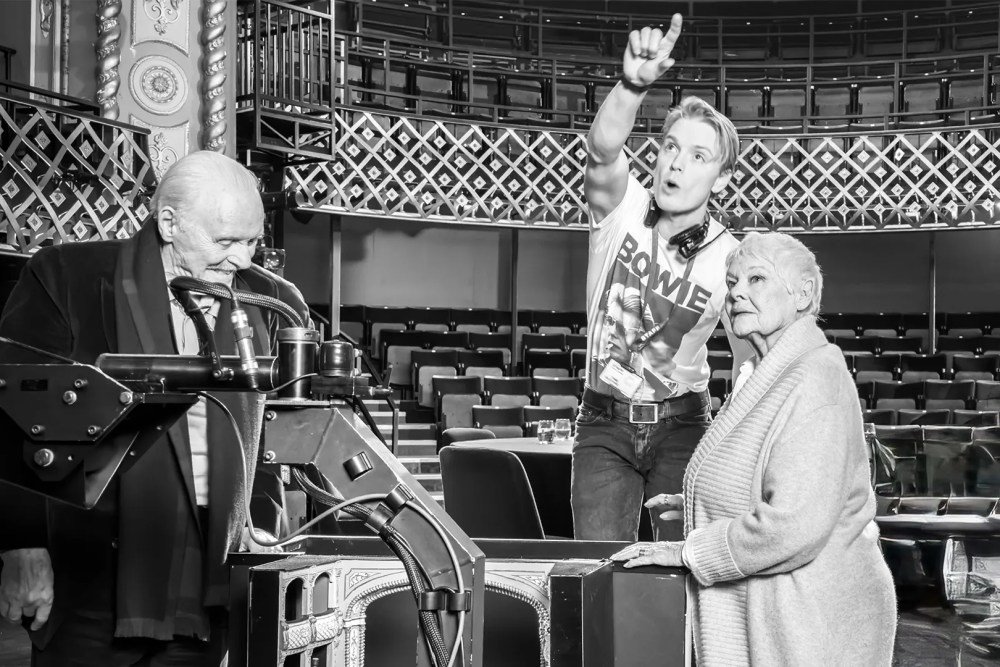
  • ‘Into the Breach’ Review: Star-Studded British Theater Doc Needs More Time to Serve Its Sprawling Subject Matter

    ‘Into the Breach’ Review: Star-Studded British Theater Doc Needs More Time to Serve Its Sprawling Subject Matter

    The self-professed “story of a theatrical revolution and how it shaped a nation,” Freddie Fox’s documentary “Into the Breach” attempts to chronicle the impact that British theater has exerted on art, culture and politics over the last century. Assembling a roundtable of acting legends that includes Judi Dench, Anthony Hopkins, Gary Oldman and co-producer Kenneth Branagh, Fox injects anecdotes and insights into a history lesson written by Richard Fullerton that, for better or worse, invites more curiosity than it satisfies. Suffice it to say that these are performers who are not only full of great stories but know how to tell one. Yet the film’s obligation to historical detail renders slightly bland what could have been a tasty trip through 20th-century theater.

    Backtracking to the beginning of the 1900s, Fox catalogues the major players who defined, and in many cases changed, British theater: Lilian Baylis, Derek Jacobi, John Gielgud, Paul Robeson, Claire Bloom, Laurence Olivier, Joan Plowright, Richard Burton — the list is considerable. Baylis, a producer and manager, pioneered Shakespeare at the Old Vic theatre in Waterloo, the eventual site of London’s storied National Theatre. Among the performers who became famous on its stage were Gielgud (an eventual EGOT winner) and Olivier, as well as Michael Redgrave and Ralph Richardson. Later came theater director Peter Hall, impresario Andrew Lloyd Webber and performers such as Peter O’Toole, Helen Mirren and Stephen Rea.

    As Fox charts their accomplishments, the panel looks back at their professional and personal intersections with them, from compliments to rebuffs. As necessary as the broader context may be, it’s the personal stories, big and small, that resonate and reveal the most. Gielgud was arrested in 1953 for homosexuality at a time when it was illegal in Britain, and he feared that it would ruin his career; his transgression was reported by the press, and it took the support of his costar Sybil Thorndike to help him go out on stage that night. Rather than a rebuke, Gielgud received a standing ovation, highlighting the almost transcendent affection that some of these performers generated from their fans. Meanwhile, despite treating Hopkins with cheeky kindness early in the future Oscar winner’s stage career, Olivier earned a reputation for cruelty.

    Further, rivalries like the one between the British theater community’s two pillars, the National Theatre and the Royal Shakespeare Company, could probably provide enough material for a film on its own. While the National Theatre Company, founded by Olivier, focused heavily on classic material, the RSC, created by Peter Hall, took chances on a wide variety of challenging contemporary and even avant-garde material. Hall being named director of the National Theatre in 1973 was a devasting blow to Olivier, but the film moves on fairly quickly in order to ensure it covers what is, admittedly, a lot of material. Plowright’s adulation of her husband Olivier is sweetly affecting, but let’s hear more about the many young actors, themselves now household names, whom he dismissed or dressed down in their nascent years.

    Fox traces the community’s sociocultural impact with moderate efficacy — not just the introduction of plays like John Osborne’s “Look Back in Anger,” which marked a shift in focus on working-class characters, but the campaigning and promoting for gay rights by figures like Ian McKellen. Former prime minister John Major, for example, recounts how a meeting with McKellen over the issue permanently changed his perspective, leading to new legislation. (McKellen, on the other hand, remembers identifying that Major was the only straight person in the room where they met, even if his counterpart wasn’t aware.) Stephen Rea’s Irish acting troupe, meanwhile, explored the complexities of the Troubles in their work, spotlighting the conflict in new ways. And British theater was a receptive community for African American actor Paul Robeson to demonstrate his incomparable stage presence after he struggled to find work in the U.S.

    Extraordinarily, but perhaps unsurprisingly, many of the roundtable participants are able to recall meaty chunks of dialogue from plays they did decades before, and cheerfully deliver them here to the admiration of their colleagues — who in several cases were present to witness their original performances. Upon remembering Hopkins playing Lambert LaRue in “Pravda,” a role that reportedly helped him land the part of Hannibal Lecter in “The Silence of the Lambs,” Oldman says, “I knew I was in the presence of the one of the greatest performers of the 20th century.” With a laugh, Oldman also rhapsodizes about his acting heroes all being drunks, but the net result of the conversation is a thumbnail master class in inspiration and perspiration, about how these individuals became great actors.

    Though the film provides an overview of a century in this community and the cultural evolution of an art form, overall that’s all it can do given its single-serving running time. Give us a docuseries or an extended cut, please: There are so many different threads to follow – past or present — that, again, probably deserve their own films, or at least more of a direct focus. Thatcherism and its devastating effect on the theater community at the same time as the rise of Lloyd Webber-style spectacle certainly merits a more incisive look than it receives here. On top of the history itself, not simply sitting a camera in front of these acting legends — including some no longer around like Plowright — to hear as many stories as they would share about their life and work feels a bit like a missed opportunity. Ultimately, “Into the Breach” covers a topic of undeniable importance. But it doesn’t go into it deeply enough.

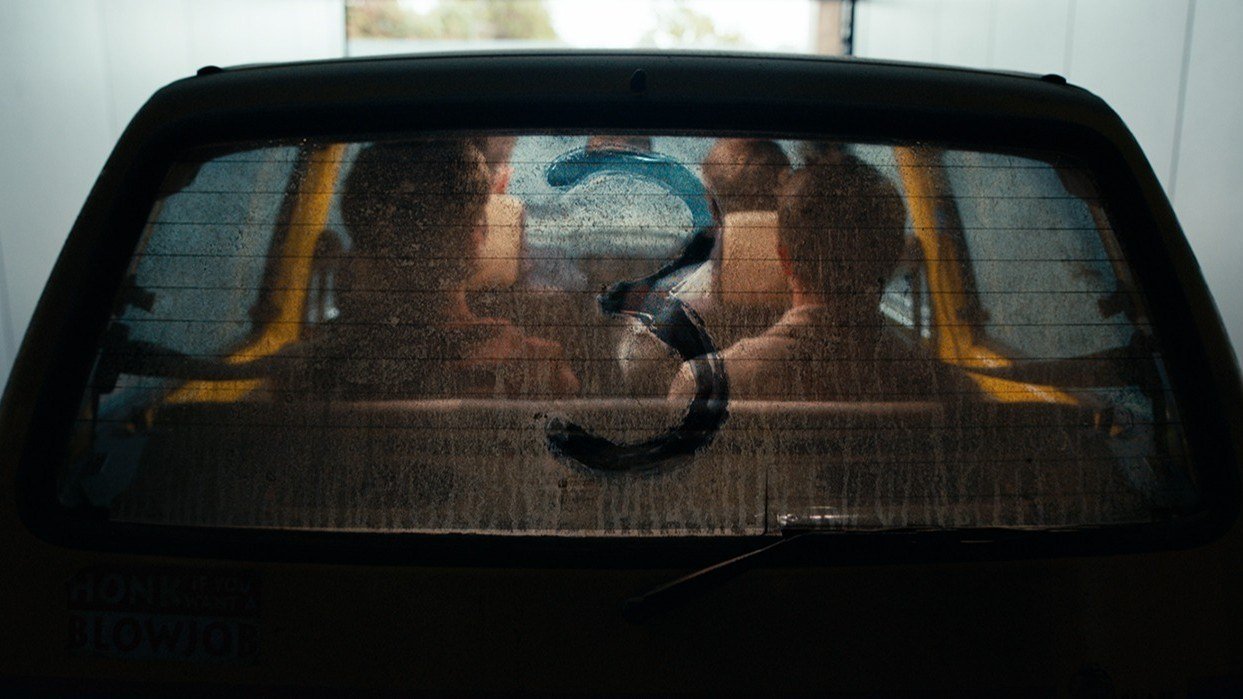
  • ‘The Inbetweeners 3’ Movie Is a Go at Netflix With Original Lead Cast

    ‘The Inbetweeners 3’ Movie Is a Go at Netflix With Original Lead Cast

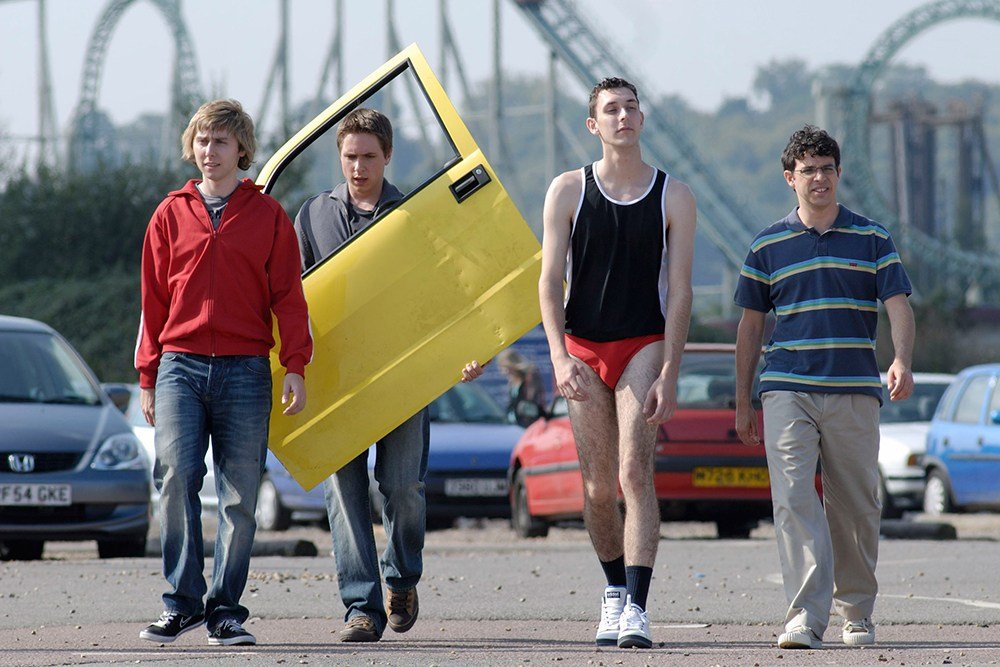
    If you’ve never loved anything before, apart from a car or a sandwich or The Inbetweeners, this news is for you! Netflix unveiled on Monday that a third movie in the raunchy franchise is moving ahead, with production beginning on Monday in the U.K. on The Inbetweeners 3, which the streamer described as “a continuation of the hugely popular sitcom and its two record-breaking films.”

    Simon Bird, James Buckley, Blake Harrison and Joe Thomas will reprise their roles as the protagonist trio Will McKenzie, Jay Cartwright, Neil Sutherland and Simon Cooper who get into all sorts of misadventures. And The Inbetweeners creators Damon Beesley and Iain Morris are back to write and direct the film.

    The film is produced by Claire Jones alongside Banijay’s Patrick Holland and Fudge Park Production’s Mark Lesbirel. Caroline Levy, Caroline Leddy, Phil Gilbert, Suzanne Knight, Tom Jordan, Farhana Bhula, Iain Morris and Damon Beesley serve as executive producers.

    “It’s been super-fun hanging out with our friends again, and we’re going to work hard every week to ensure there are no problemos making this new film for humans,” said Beesley and Morris.

    The coming-of-age sitcom was originally broadcast on Channel 4 between 2008 and 2010, following the misadventures of suburban teenager Will McKenzie and his friends Simon Cooper, Neil Sutherland and Jay Cartwright at the fictional Rudge Park Comprehensive as they navigated school life, friendship and failed sexual encounters.

    Over three seasons, the series set ratings records for the British broadcaster and won multiple awards. Two Film4-backed movies followed, released in 2011 and 2014, respectively. The first one set a record for the biggest opening weekend for a U.K. comedy at the time of its release, with the sequel also breaking records.

    Talk about a third Inbetweeners movie has been a recurring feature over the years. Last year, rights holder Banijay U.K. unveiled a deal with creators Morris and Beesley via their production firm Fudge Park Productions. That was seen as a strong sign of an eventual return of the hit comedy, with Netflix now officially its home.

  • ‘You Can See Everything’ Review: Nathan Fielder’s Documentary About Elizabeth Holmes Is a Shameless, Fascinating, Reality-TV-Eats-Its-Tale Look at Entitled Duplicity

    ‘You Can See Everything’ Review: Nathan Fielder’s Documentary About Elizabeth Holmes Is a Shameless, Fascinating, Reality-TV-Eats-Its-Tale Look at Entitled Duplicity

    In a world where Lindsay Clancy can inspire an onslaught of sympathetic voyeuristic fascination, why not Elizabeth Holmes? Earlier tonight, the screening of an unannounced mystery movie at the Telluride Film Festival generated every bit as much pre-screening buzz as any of the big movies programmed here. And when the film was revealed to be “You Can See Everything,” a 174-minute documentary, co-directed by the cult comedian Nathan Fielder, about Elizabeth Holmes, the former CEO of Theranos who is now serving an 11-year prison sentence after being convicted of defrauding her investors, the sensation of “WTF? I’ve got to watch this!” did not subside as the movie went on. It only intensified.

    “You Can See Everything” is just about the furthest thing from a “pure” documentary you’ve seen. That’s part of its appeal — it’s a one-of-a-kind reality-TV-as-hangout-movie psychodrama circus. Yet it’s been made with a spirit of true inquiry, driven by Fielder’s acidly quizzical personality (as an onscreen interviewer, he’s got the most drop-dead deadpan since Steven Wright), and it gets its hooks in you.

    Fielder isn’t here to throw open the question of Elizabeth Holmes’ guilt. He wants to know what made her tick. But why, you may ask, is the comedian behind shows like “The Curse” and “The Rehearsal” making a three-hour movie about the woman who became America’s youngest self-made female billionaire by convincing the world that she’d created a revolutionary new means of blood testing? Holmes, after her conviction, stayed out of the public eye, but shortly before her prison sentence was set to begin she decided she wanted someone to document her last days of freedom. Maybe she wanted to have her say?

    Whatever the motivation, Fielder, who has often operated in a nether zone between fiction and reality, was looking for a project to collaborate on with Lance Oppenheim, a documentarian he’d become friendly with. And so, with the support of A24, and without quite knowing what they were after (or, by their own admission, what the hell they were doing), the two of them stepped into the breach. Thirty-five days before the start of Holmes’ prison sentence, in 2023, they brought a camera crew to the spacious wood-paneled beachside home in Del Mar where she was living with her partner, the California hotel heir Billy Evans, and their two children (including an infant daughter). Fielder was there to hang out, observe, and interview Holmes, trying to get inside her mind. That proved to be a weirder and wilder journey than anyone might have imagined.

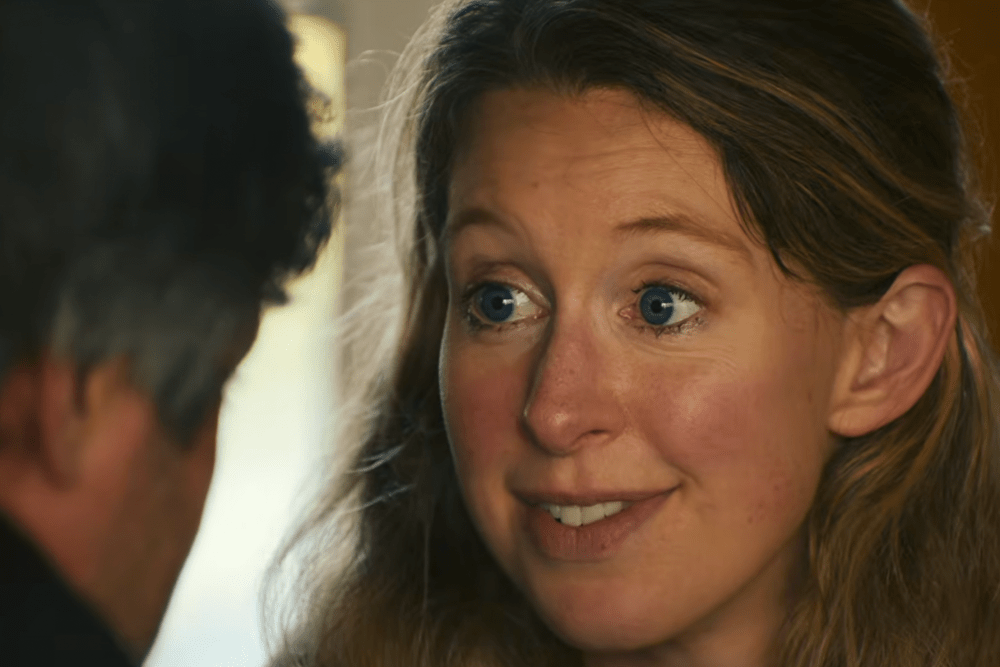
    The Elizabeth Holmes we see has a winsome soft presence, with a Cupid’s-bow grin and eyes that beam without blinking too much. She resembles the ’80s and ’90s actress Kim Greist, and has a manner that’s disarming in its gentleness. Yet when Fielder asks about the crimes she was convicted of, she pleads a strange kind of ignorance. She claims she did nothing wrong, and it’s clear she believes it. But how is that possible?

    In 2015, Holmes had become a celebrity entrepreneur, based on the $9 billion valuation of her health technology company, Theranos — a company that turned out to have been built on a complete scam. For a brief time, Holmes convinced the world that she’d developed a revolutionary device for blood testing that required very small volumes of blood, such as the amount you’d get from a pinprick. She convinced top-drawer investors (including Rupert Murdoch and Larry Ellison) to pour millions of dollars into the company. For credibility, she assembled a board of directors that included such ancient luminaries as George P. Shultz, Henry Kissinger, and James Mattis. There was only one problem: the “revolutionary” technology didn’t exist.

    Numerous experts, starting with the Stanford medical professor Phyllis Gardner, told Holmes that her idea wouldn’t work; you couldn’t mine voluminous amounts of data from just a few droplets of blood. But Holmes, along with her business partner, Ramesh “Sunny” Balwani (who was also her romantic partner), sold the deception anyway. For a short while they were quite “successful” at it, though in hindsight it’s clear that the castle in the air they built — all spun out of the trendy idea that medical science could be democratized — was destined to crash and burn. Because it was all made up! Holmes had spun the pinprick idea out of her own fear of needles. This was her fantasy, elevated into an invention that didn’t actually exist.

    So how can she defend herself now? What she tells Fielder, with an implacable conviction that suggests a belief in her own narrative that’s nothing short of monomaniacal, is that the device patented by Theranos, which she sold as “the iPod of health care,” could, in fact, host any blood test that existed. The only thing they hadn’t quite worked out was the chemistry that would go into the tests. In other words, the device was based on the projection of a technology that didn’t exist yet. But the more Holmes talks to Fielder, the more he teases out her unhinged rationale, which is: The device works fine! We just had to figure out that pesky chemistry stuff! The strange thing is that Holmes has such a corporate mindset that she treats the chemistry stuff…that hadn’t been invented yet…as just another glitchy small problem that could easily be solved. (Have the solution on my desk Monday morning!)

    She believes her version of reality. But Fielder, who is not taken in by any of this (his questions remain rigorous in their skepticism), at one point gives vent to his impish side by showing Elizabeth and Billy the famous Abbott and Costello routine “Who’s on First?” When it ends, he tries to get Holmes to explain what the joke is (that “Who” is the first baseman’s name, but the name sounds like a question — hence the routine’s glorious verbal slapstick). And she can’t do it; she can’t grasp the joke. It’s not just that she lacks a sense of humor (though frankly, she kind of does). It’s that she’s got the malignant narcissist’s need to have words mean only what she decrees them to mean. She can’t hear any other meaning. Hence: her device did “work,” and still does (it can run any test!). That’s why she and Bobby, years after her conviction, are still pitching Theranos to other investors (as if anyone would go near her). This is a highly rarefied level of delusional thinking.

    Holmes says to Fielder that she’s never told a lie in her life. Her whole vibe is “sincerity.” (Though it’s also one of passive-aggressive unbroken-eye-contact creepiness.) The lesson of her legal case isn’t just that she was found guilty of defrauding investors, but that her faulty device, had it been put on the market, would have hurt people. That’s why the real question “You Can See Everything” is asking isn’t: Is she guilty? Rather, it’s: What makes people like Elizabeth Holmes tick? (And how many of them are out there?) Fielder and Elizabeth and Bobby sit down to watch the 2022 Hulu miniseries “The Dropout,” which was based on the case, with Amanda Seyfried giving a pointed performance as Holmes. Holmes suggests that the series is a TV-movie crock. But is it?  

    The documentary’s first half ends with Holmes saying goodbye to her family and going off to the minimum-security Bryan Prison in Texas. The prison won’t allow anyone to interview her, so that’s more or less the last we’ll see of her. And we’ve pretty much gotten the skinny on her, which is that she has a brick wall standing between herself and the truth, and an indifference to the harm she might have caused, that borders on the sociopathic. So what is there left to discover?

    Plenty, it turns out. With Holmes out of the picture, Fielder needs someone to sustain her presence. So he calls Amanda Seyfried, who sits and watches the scene we’ve just seen of Holmes sitting and watching Seyfried portray her. Are you feeling the meta of it all? That sounds gimmicky, but as the documentary goes on, and Fielder creates transcripts of things that Holmes has spoken (including a phone chat he has with her in prison), who better to read the transcripts — to turn this reality into theater, and by doing so to turn it back into reality — than Amanda Seyfried? She gives an increasingly accurate performance as Holmes, getting inside her head, to the point that Seyfried starts to sympathize with her, at least when it comes to what a glowering aggro control freak Holmes’ partner Bobby is. As Bobby continues to make himself accessible to the filmmakers, exposing his dark side at every turn, I was afraid the movie might use him to create a kind of toxic excuse for what Holmes did.

    But part of the jaunty power of “You Can See Everything” is that the film never mounts an apologia for Elizabeth Holmes. Bobby may be repugnant in his cockiness, and in the way he takes control of Holmes’ image, allowing the iconic photograph of her making the “OK” sign to be used on billboards, tweeting out hostile tweets under her name, and striking a deal with the A24 executives — yes, there’s a meeting with them in the movie, at which point we’re either in meta heaven or hell — that will give him some of the profits from the movie. Does Holmes know about the deal? No. But she claims to want it that way. Her grand assertion is that she never cared about the money. And yet the money — the value of her company — became the very core of her identity. “You Can See Everything” overlaps reality, performance, deception, and mental illness, and by the end it brings you to the enigmatic space where every one of those things meet.
  • ‘The Inbetweeners’ Original Lead Cast Confirmed for Netflix Reunion Movie as Production Kicks Off in U.K.

    ‘The Inbetweeners’ Original Lead Cast Confirmed for Netflix Reunion Movie as Production Kicks Off in U.K.

    The original lead cast of cult Brit teen comedy series “The Inbetweeners” are officially back for the upcoming reunion movie at Netflix, which the streamer has confirmed is now in production.

    First reported last month, the new film has now been given the title “Inbetweeners 3,” following on from the hit show’s two record-breaking spin-off features.

    Simon Bird, James Buckley, Blake Harrison and Joe Thomas will reprise their roles as Will McKenzie, Jay Cartwright, Neil Sutherland and Simon Cooper, with “The Inbetweeners” creators Damon Beesley and Iain Morris returning to write and direct the film.

    “It’s been super-fun hanging out with our friends again, and we’re going to work hard every week to ensure there are no problemos making this new film for humans,” said the directors.

    The film will be produced by Claire Jones alongside Banijay’s Patrick Holland and Fudge Park Production’s Mark Lesbirel. Caroline Levy, Caroline Leddy, Phil Gilbert, Suzanne Knight, Tom Jordan, Farhana Bhula, Morris and Beesley will serve as executive producers.

    Originally broadcast on E4 in the U.K. between 2008 and 2010, “The Inbetweeners” followed the misadventures of suburban teenager MacKenzie (Bird) and his friends Cooper (Thomas), Sutherland (Harrison) and Cartwright (Buckley) at the fictional Rudge Park Comprehensive as they navigated school life, friendship, male bonding, lad culture and failed sexual encounters. It was originally conceived as a more realistic counterpoint to fellow hit Brit teen show “Skins.”

    After three seasons, two hit movies followed, released in 2011 and 2014 respectively. The first set a record for the biggest opening weekend for a U.K. comedy at the time of its release while the sequel also broke box office records.

    The news comes less than a year after rights holders Banijay U.K. revealed that it had struck a deal with Morris and Beesley and their Fudge Park Productions that, at the time, they said “paves the way for the return of the hit comedy title.”

  • ‘La Bola Negra’ Fever Hits Telluride: “Let’s Make the Gayest War Movie Ever”

    ‘La Bola Negra’ Fever Hits Telluride: “Let’s Make the Gayest War Movie Ever”

    It was hard for La Bola Negra to make much noise over the whole of Cannes, if only because the gay Spanish epic did not premiere until the very end of the film festival — at which point, it promptly emerged as one of its clear breakouts. Directed by creative (and, previously life) partners Javier Ambrossi and Javier Calvo — known colloquially as Los Javis — the film earned strong reviews, was acquired by Netflix in a splashy deal, and won the festival’s coveted best-director prize (in a tie with Fatherland’s Pawel Pawlikowski). It was a smash hit, at least for those who remained on the Croisette in those final days.

    So Telluride, where La Bola Negra made its North American premiere this weekend, has represented the moment for the movie to prove itself as a true word-of-mouth hit. It’s done that and more. On gondolas and in line for premieres, around cafés and passersby on Colorado Avenue, it’s among the films I’ve heard about the most — a sweeping emotional experience that doubles as a deftly ambitious and subversive exploration of Spanish queer history.

    The filmmakers, alongside star Carlos González, gathered on Sunday for a post-screening Q&A (moderated by yours truly) at the Palm Theater on the town’s western edge, where they met an electric response. As Calvo summed up the grand vision behind the movie: “Let’s give all the straight people the war movie they want, but let’s give our community the love story that they want — why can’t we have it all?”

    (From left) Interpreter Lorna Silva, star Carlos González, directors Javier Calvo and Javier Ambrossi, and moderator David Canfield at Telluride’s North American premiere of La Bola Negra on Sunday.

    Vivien Killilea/Getty Images

    La Bola Negra, loosely adapted from Alberto Conejero’s play La piedra oscura, tells its story in three separate timelines that gradually converge. The 1937 section is drawn most directly from Conejero’s work (Conejero also co-wrote the screenplay), set during the Spanish Civil War. The modern strand, set in 2017, follows a young man named Alberto (González) investigating his family history while negotiating complex relationships with his partner (Julio Torres) and mother (Lola Dueñas). And the final third, taking place in 1932, marks La Bola Negra’s most audacious gambit: It imagines the entirety of Federico García Lorca’s great unfinished work, also called La Bola Negra (translated to The Black Ball) — its themes of lust, shame and legacy rippling through the stories that follow.

    Made for under $15 million, the Spanish-language drama offers immense scope, which was by design. “We thought, ‘Let’s make the gayest war movie ever,’” Ambrossi said. “That’s the politics behind this. And no one told us to change it a bit. And now, here we are.” The movie was made, per Calvo, with reverence for great war films like Apocalypse Now, using minimal CGI and making the most of every practical location, extra and visual effect they had at their disposal. La Bola Negra was also shot on 35mm, and brought in starpower via small but pivotal roles for Glenn Close and Penélope Cruz (whose mere mention elicited loud applause from the audience). 

    The movie’s emotional pull is anchored by a bracing examination of gay identity, of what’s inherited and passed on between generations. “It made me understand the importance of art in a physical way — the things that come to us, the pieces of art from past generations that tell us about who we were and what happened to us,” Calvo said of Lorca’s work. “At a time when art is being questioned, we have to remind ourselves that it speaks the best language.” 

    “He represents the war, all the dead…in our country that remains hard to talk about,” González added, noting that when he was taught García Lorca in school in Spain, the legendary writer’s sexuality was never discussed. 

    La Bola Negra lifts the veil on that silence — immersing audiences in its impassioned, maximalist filmmaking. “It’s very visceral. This is the black ball that is inside all of us as LGBTQ+ members of the community,” Ambrossi said. “We’ve been rejected.” La Bola Negra offers the chance, he then explained, to be seen. 

    **

    Netflix will release La Bola Negra in theaters on Oct. 16 before streaming 47 days later on Dec. 2, the longest theatrical-exclusive window in the company’s history.

  • ‘Spider-Man: Brand New Day’ Topping Box Office for Sixth Weekend in a Row

    ‘Spider-Man: Brand New Day’ Topping Box Office for Sixth Weekend in a Row

    After the fireworks of the summer, the season comes to an end with a sleepy weekend at the box office, at least in terms of new entries like By Any Means and Onslaught.

    Sony and Marvel’s Spider-Man: Brand New Day is expected to be No. 1 for its sixth weekend in a row, with roughly $22 million over the four-day frame. The Destin Daniel Cretton-directed feature just crossed $900 million domestically, making it only the second film ever to do so, behind 2015’s Star Wars: The Force Awakens, which stands as the all-time domestic holder at $936 million. Brand New Day should pass that record soon to become the all-time domestic leader. Globally, Brand New Day has surpassed $2.33 billion, making it the No. 3 movie of all time behind Avatar and Avengers: Endgame, after passing up Avatar: The Way of Water.

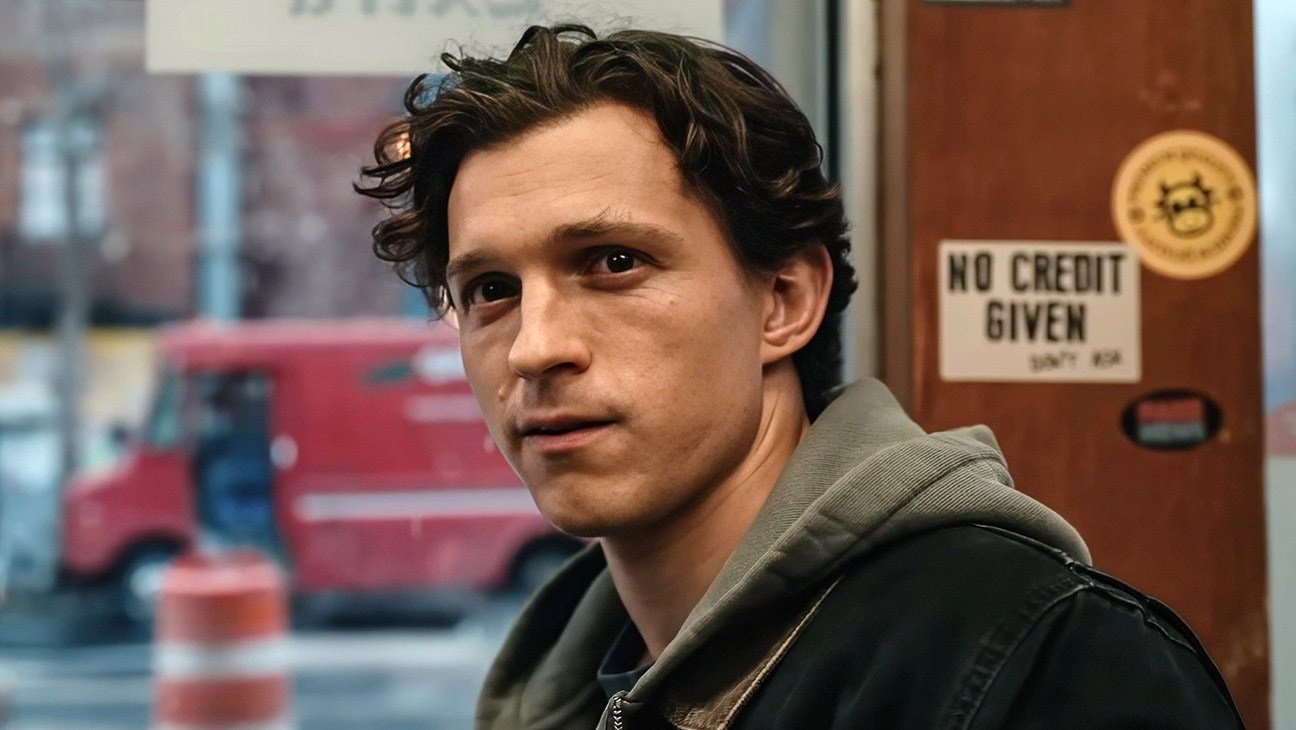
    Christopher Nolan’s The Odyssey, now in its eighth weekend and also starring Brand New Day star Tom Holland, will come in at at No. 2 with around $16.4 million, which would put it at $588.1 million domestically through Monday for the Universal title.

    Coyote vs. Acme is expected to come in third with $15 million for the four days. Its three-day number is estimated to hit around $11.3 million with a very strong hold, declining just around 27 percent after the much-talked about movie bowed to $15 million last weekend. Warner Bros. Discovery famously shelved the film, with distributor Ketchup Entertainment rescuing it after a fan outcry.

    This weekend’s newcomers include By Any Means, filmmaker Elegance Bratton’s true-life crime drama starring Yahya Abdul-Mateen II as an FBI agent sent into 1960s Mississippi to investigate the killings of civil rights leaders and Mark Wahlberg as a mob hitman he must work with on the case. Paramount is distributing the film, which was made and financed by Hammerstone. It’s expected to bring in around $9.2 million for the four days.

    Onslaught, the modestly budgeted movie from A24 and filmmaker Adam Wingard, brought in $782,000 on Friday and is expected to end the weekend in the $2.3 million range. It stars Adria Arjona as a military vet who must protect her daughter from killer super soldiers. It stands at 54 percent on Rotten Tomatoes.

    It’s a comedown from a year ago, when Weapons ruled the Labor Day box office, bringing in $48.7 million over the four days and cementing Zach Cregger as a top filmmaker. Amy Madigan would go on to win the best supporting actress Oscar for her portrayal of Aunt Gladys, with a prequel now in the works.

    This story was originally published on Sept. 5 at 8:48 a.m. It has been updated with the latest Sunday estimates.