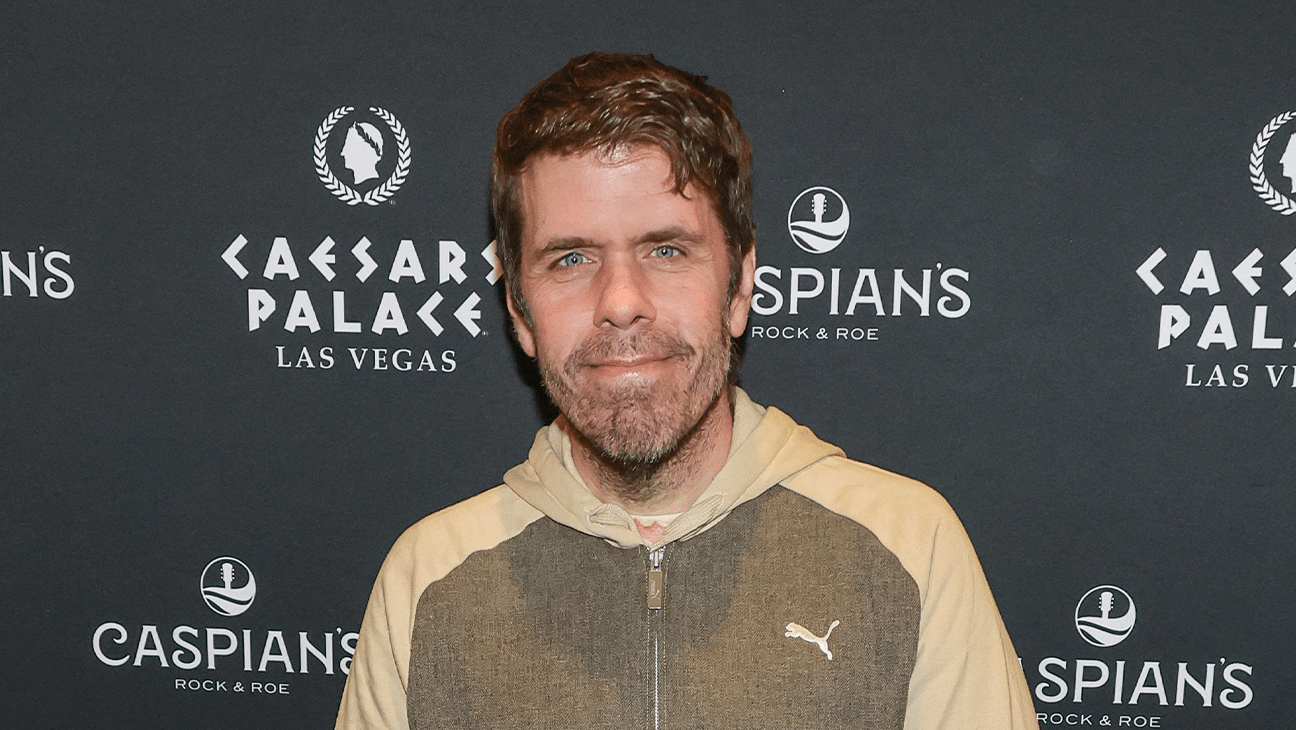
Perez Hilton was hospitalized and is receiving medical care after the celebrity gossip blogger appeared to be harming himself on a TikTok livestream on Tuesday night.
In graphic clips reposted on social media, Hilton, appearing manic, could be seen in the livestream covered in blood, using an object to cut himself repeatedly.
While not naming Hilton specifically, the Miami-Dade County Sheriff’s Office said it had received “multiple calls regarding an individual who was livestreaming acts of self-harm on social media.” Deputies then located this person’s residence, arrived on the scene and spoke with family members before they “tactically disengaged while continuing to monitor the situation and providing the needed support to his family.”
“In many incidents involving a person experiencing a mental health crisis or actively harming themselves, deputies prioritize de-escalation by creating time, distance and opportunities for communication,” the statement continued. “Unless there is an immediate threat to others, slowing the situation and utilizing crisis intervention techniques can reduce the likelihood of a suicide-by-cop encounter and minimize the risk of injury to the individual, deputies and the public.”
The Sheriff’s Office said the individual was “safely recovered” and taken to a Miami-area hospital, where he’s receiving medical attention. Mental health professionals are also on the scene providing support and resources to the person’s family.
Local news station NBC6, which had reporters at the scene, later reported that a man, believed to be Hilton, was seen being taken away in an ambulance.
Dante Rusciolelli, the CEO of the management company that represents Hilton, Golden Artists Entertainment, said in a statement obtained by NBC News on Wednesday that the company does “not have any additional confirmed information to share regarding Perez Hilton’s condition.”
“Our focus remains on Perez’s health, recovery and the privacy of both him and his family during this incredibly difficult time,” he said. “We are grateful for the outpouring of concern and support from fans, friends and members of the media. We respectfully ask that everyone continue to honor his privacy while he receives the care he needs.”
Also on Wednesday, Hilton’s team and family posted a statement to his website saying they “can confirm that Perez is receiving medical care, and our family’s focus right now is on his well-being.”
“Many of you have reached out with concern for Perez, and we are incredibly grateful for the overwhelming outpouring of love, support, and prayers,” the statement reads. “We kindly ask that you respect Perez’s privacy, as well as the privacy of his family, during this difficult time. If and when we are able to share any updates, we will do so with everyone as soon as we can. Thank you for your compassion, understanding, and continued support.”
Earlier this year, Hilton shared in a lengthy Instagram video that he was hospitalized for three weeks after initially battling the flu before developing “an ulcer, and then a perforation and then sepsis,” he said at the time.
“The sepsis just kept working and my body kept falling apart,” Hilton explained in the video in March. “Then one night with rapid response came ’cause my heart got out of control. They had to put me on heart medications. And then I developed another infection in the hospital.”
He added, “It was just such a slow process. I mean, two weeks of just sickness and then another week of getting better before I was released. And that last week was hell because I had already been in the hospital two weeks by then. I was like, ‘I just wanna go home. I just want to be with my babies.’” Perez is a single father of three children.
Once he was released from the hospital and sent back home, Hilton said he had time to reflect and came to the realization “that God presented Himself to me” during the challenging experience.
“It was real and this has been life-changing. I’m so grateful,” he added at the time. “I’m excited to start taking the kids to church every week. And to just know that God is real. … I don’t have to hope to believe. I know now.”
Aug. 5, 10:56 a.m. This story has been updated with a statement from the Miami-Dade County Sheriff’s Office and Hilton’s personal rep.
Aug. 5, 12:12 p.m. This story has been updated with a statement from Hilton’s team and family.
Hilary Lewis contributed to this report.
This story was originally published on Aug. 4 at 7:47 p.m.
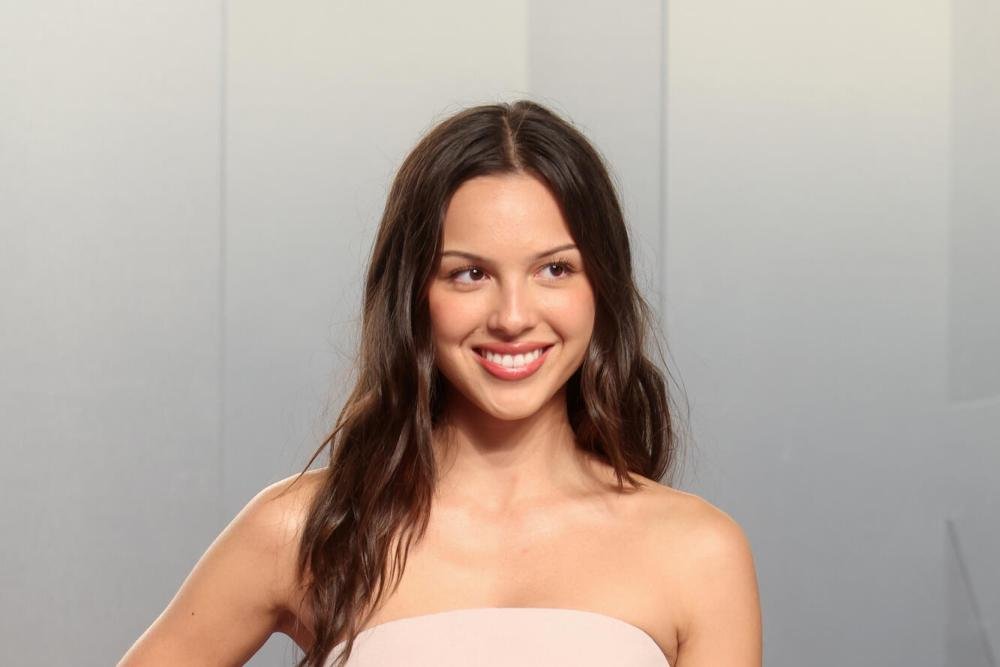
The superstar singer was in a dance video posted to the Instagram and Twitter accounts of Daisy Chain Fields, her upcoming all-woman music festival. Text on the video, set to her song “My Way,” says, “Learning that nearly 30 Planned Parenthood health centers have closed since President Donald Trump signed a law ‘defunding’ Planned Parenthood,” as Rodrigo and other women stand looking serious. But then they break out dancing as the text switches to, “But we’ll never stop fighting for sexual and reproductive health care!!!”
Rodrigo has been an active supporter of Planned Parenthood during her career, receiving the organization’s Catalyst of Change Award in 2025.
Meanwhile, she has also been critical of Trump, calling out the White House on social media in June when they used her song to promote ICE, saying, “What they’re doing is so awful and barbaric and cruel. I am really sad to be in a country that thinks that’s OK.”
President Trump signed the One Big Beautiful Bill Act into law on July 4, 2025, which defunded Planned Parenthood and cut federal Medicaid funding as well, making it more difficult for women to afford health care.
Trump apparently changed his mind on Planned Parenthood, as he threw his support behind the organization at a 2016 press conference, saying, “Look, Planned Parenthood has done very good work for many, many — for millions of women. And I’ll say it, and I know a lot of the so-called conservatives, they say that’s really … cause I’m a conservative, but I’m a common-sense conservative.”
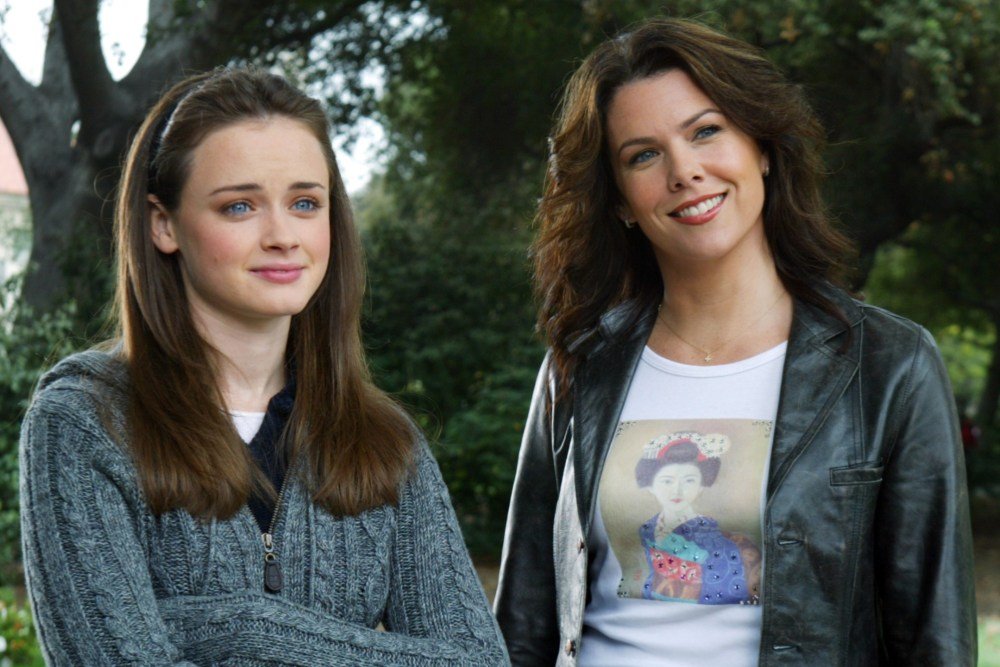
An official documentary about “Gilmore Girls,” the beloved seven-season family dramedy that premiered in 2000, is currently in production and set to debut on HBO Max. Per the official logline, the untitled film is told from the perspective of series creator Amy Sherman-Palladino alongside her husband, executive producer Daniel Palladino, and “reveals how the show eclipsed expectations to become a cross-generational phenomenon by unpacking the unique alchemy of the creators, cast, crew and collaborators. The film includes never-before-seen outtakes, behind-the-scenes footage and script pages.”
Along with the Palladinos, the documentary will feature Lauren Graham, who starred in “Gilmore Girls” as Lorelai Gilmore, plus additional key cast and crew.
Bonni Cohen serves as director on the documentary, which is produced by Sony Pictures Television’s This Machine, led by R.J. Cutler, in association with Warner Horizon Unscripted Television. Executive producers include Cutler, Jane Cha Cutler, the Palladinos, Mark Blatty, Elise Pearlstein and Trevor Smith. Cohen and Melissa Robledo serve as producers.
“Gilmore Girls” was produced by Warner Bros. Television and aired on the WB for its first six seasons before moving to the CW for its seventh and final season from 2006 to 2007. Along with Graham, the cast included Alexis Bledel as Lorelai’s daughter, Rory Gilmore, as well as Melissa McCarthy, Keiko Agena, Yanic Truesdale, Scott Patterson, Kelly Bishop, Edward Herrmann, Liza Weil, Jared Padalecki, Milo Ventimiglia, Sean Gunn, Chris Eigeman and Matt Czuchry.
While the Warner Bros. production is the first authorized documentary about “Gilmore Girls,” an unauthorized project called “Searching for Stars Hollow” was announced to be in the works in 2025 with Bishop, Padalecki, Chad Michael Murray and more set for interviews.
A few years ago German writer-director Felix Randau (Iceman) got what sounded like an interesting proposal from France: to direct episodes of a miniseries about Felix Kersten, the former massage therapist of Nazi SS leader Heinrich Himmler.
“When I got back to Berlin and read their concept, I really liked it,” he recalls. “But there was this one special sentence in it that said, ‘If Steven Spielberg had known about Felix Kersten, he would have shot a film about Felix Kersten and not about Oskar Schindler.’ I knew that Steven Spielberg struggled for, I don’t know, about 10 years before he started shooting Schindler’s List, and he’s a smart guy who has a lot of assistance. So I became suspicious and started my own research, going to the archives and reading a lot of books and stuff.”
In the process, he realized that Kersten’s legacy is much less clear-cut. “I figured out that the story the French guys wanted to shoot was a hero story, a superhero story,” Randau tells THR. “But I felt you simply cannot do it.” He soon started focusing his work energy elsewhere.
The result is his new film, I Is Another (Ich Ist ein Anderer), which world premieres on Friday, Aug. 7 in the Piazza Grande program of the 79th edition of the Locarno Film Festival in Switzerland. Set in 1952, the film sees a journalist ambush Kersten and his wife on a train because she has doubts about the heroic narrative that he has been presenting about himself — one that might even get him the Nobel Peace Prize. What starts as a normal interview quickly turns into a psychological cat-and-mouse game. Is Kersten a hero or an impostor? Or could he maybe be both?
“Every story has three sides,” Randau says in a director’s note. “Yours. Mine. And the truth…”
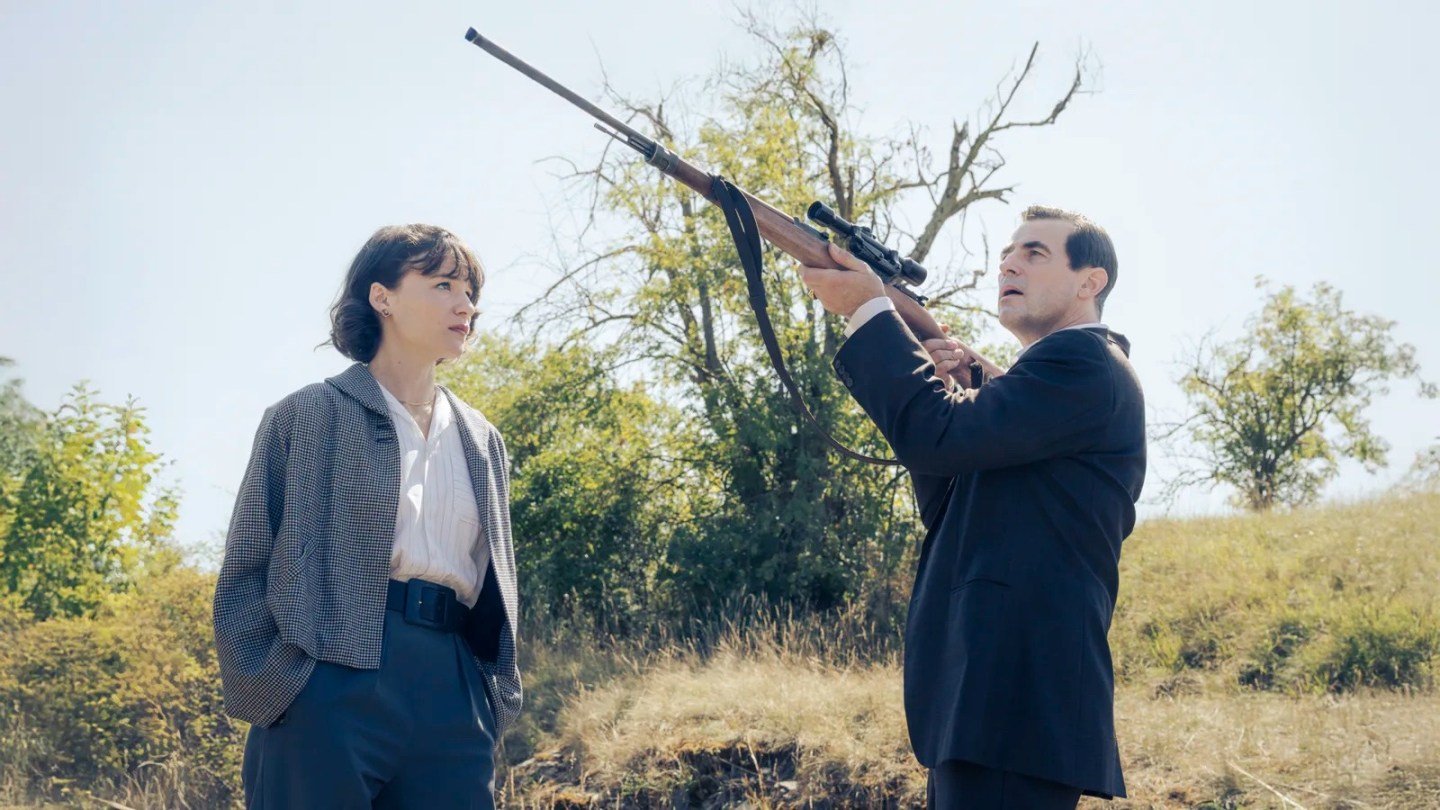
To explore all these complex themes, I Is Another features a cast of big European names, led by Danish star Claes Bang (The Square, Bad Sisters, Home) as Felix Kersten, Austria’s Valerie Pachner (The Stories, Fantastic Beasts: The Secrets of Dumbledore, Four Minus Three) as journalist Hedda, fellow Austrian Susanne Wuest (Sound of Falling) as Kersten’s wife Irmgard, German actor Timocin Ziegler as Hedda’s husband Winfried, and Germany’s Martin Müller as Himmler.
Felix Randau, courtesy of Felix Randau
The film, whose cinematographer was Sebastian Thaler, was edited by Joana Scrinzi. Beta Cinema is handling international sales.
For writer-director Randau, I Is Another is much more than a post-war film — and much more timely. “Of course, it’s a period movie, but it has a lot to do with our present time,” he tells THR. “It’s about truth and the question: what is truth? Nowadays, there are no more fundamental agreements about anything, so truth has become quite a flexible thing. And that’s very dangerous, as we all can see. So, I Is Another is a movie about that.”
Indeed, the themes of truth and image that the movie explores seem tailor-made for the social media age. “If Felix Kersten was alive today, he would be deep into all this social media shit, I’m pretty sure,” Randau acknowledges.
But he highlights the ambiguities and shades of gray that he sees in Kersten that the writer-director wanted to also showcase in I Is Another. “He was a narcissist. He was an opportunist,” says Randau. “But I think he also was a hero somehow because he saved some lives. Not thousands, as he said, but he saved some lives. And I think he saved lives not for good reasons. He wanted to save his own ass, I think.”
Where in the film’s facts turn to fiction doesn’t really matter much, according to the filmmaker, because much of how people feel about Kersten depends on whether they focus on his autobiography or facts and stories told by others. “All the scenes with Himmler and Kersten are from Kersten’s autobiography,” Randau explains. “So they are, I think, all fake, but it is his truth. All the other stuff, the journalist and the train ride and stuff like that, is invented. It’s fiction. But somehow it’s also true.”
Director Felix Randau and stars Claes Bang and Valerie Pachner during the shoot for ‘I Is Another,’ courtesy of Anke Neugebauer/ostlicht/Wega
Of course, to bring the story of Kersten and the themes that I Is Another explores to life, Randau needed a strong cast. “I’m really proud of our casting,” he tells THR. “They all were great and added so much.”
Randau reached out to Bang first to cast him as Kersten. The Danish star had never heard about the massage therapist. “I did not know about any of this until Felix brought it to me, and it’s quite interesting because it seems to be a story that everybody’s quite fascinated by when you retell it,” the star tells THR in a Zoom chat during a break from filming the Netflix series Assassin’s Creed. “It’s a story that’s really gone under the radar, even if it’s a quite crazy one.”
The team may have spent quite a few years getting the financing for the movie together, but the actor remained up for it throughout. “Ever since he brought it to me, I’ve been really into it and really wanted to do it,” Bang recalls. “I really felt strongly about this. So I stayed with it, and we managed to make it last summer. We had to do it quite fast because there wasn’t a massive budget. I think we had 24 shooting days altogether, which is a stretch for something like this. Everybody really put in a massive effort. Everybody was so devoted to it, and that is something that I will carry with me.”
How did he think about Kersten and what was key for portraying the character? “It’s really hard to find out what is actually the truth here,” Bang observes. “But what’s interesting is that if this guy hadn’t been so preoccupied with his legacy, then we would have had no story to tell. It’s only because it seems that after the war, he was not quite content with the credit he was given for what he had done, and therefore he started perhaps exaggerating.”
For the Danish star, Kersten’s story is about the human need for validation: “Ultimately, Kersten wants the Nobel Peace Prize because that would validate him. That whole thing of not being able to just trust yourself and knowing that you have done your bit seems weird and wild.”
Claes Bang as Felix Kersten and Martin Müller as Heinrich Himmler in ‘I Is Another,’ courtesy of Anke Neugebauer/ostlicht/Wega
Courtesy of Anke Neugebauer/Ostlicht Filmproduktion/Wega Filmproduktion
The fact that a prominent world leader has been desperately hoping (some might say whining) for a Nobel Peace Prize is not lost on Bang. “Obviously, we have Trump at the moment who is seeking the exact same validation. I mean, he also so desperately wants the Nobel Peace Prize. I know that the parallel is too much. But actually it’s more about … when can we just trust ourselves and know in our hearts ‘I have done my bit.’ Why can’t we just find our inner peace?”
Adds Bang: “What intrigued me, and that’s probably also something that I can really relate to and recognize in myself because I really very often wonder, ‘Why do I need that bloody validation from everywhere else? Why do I need the reviews to say that I’m great? Why do I need people to come up to me and say, Wow, that was a great movie.’ Why isn’t it just enough for me just to be whatever I am?”
In case you wonder: Bang and his director on I Is Another weren’t at all concerned with him trying to look like the real-life Kersten, which he doesn’t — at all. “That is not the story we’re trying to tell here. We’re trying to tell a story of the journey of a soul,” the star emphasizes. “This is not the wax museum of Madame Tussauds. So that was never important.”
Pachner was game for the role of the journalist immediately. “I loved the title, and the film’s themes were something I felt I could really connect with,” she tells THR. “It’s this idea of what you tell yourself and others about yourself, and how that can be very far from the truth. And what is the truth? Felix Randau also plays with our own idea of what’s true and right. And there is this autobiography that Felix Kersten wrote and how people took it as fact just because he wrote it. So, yes, the film is set after the Second World War, but with talk about fake news, it also feels very modern.”
Valerie Pachner as journalist Hedda and Claes Bang as Felix Kersten in ‘I Is Another’
Courtesy of Anke Neugebauer/Ostlicht Filmproduktion/Wega Filmproduktion
She adds that the character of Hedda is more complex than she may appear. “I was really happy to explore that because it felt so rich,” says Pachner. “It’s not this young journalist who is just this good girl who wants to get to the bad guy. She has her own very twisted and dark story. I’m so happy when I get to play a woman where not everyone says, ‘Oh, she’s so nice.’”
In fact, Pachner enjoyed teasing that her character isn’t sure who she is or wants to project to be either, very much like Kersten. “As Hedda, I didn’t know who I was,” she shares. “Is me another? Who is I? Or maybe I just want to be different. And I think she really wants to be. That struggle tells us that maybe she and Kersten are not that different.”
Pachner had never met any of the other cast members, but she felt a natural chemistry with them once shooting got underway. “We all enjoyed doing the scenes with the four of us, the two couples,” she says. “It just flowed. These weird relationships were kind of there, and there was such a rich history behind Hedda’s relationship with her husband. The Kerstens play these weird mind games with the younger people. I enjoyed working with all of them so much. They’re all really, really great actors.”
Wuest was also fascinated by the themes explored by the film, and couldn’t help but notice parallels to our current moment. “I feel that the timing of the film is so spot on for so many reasons,” she says. “First of all, it’s all about the image you create of yourself, and how manipulative that is. It’s like on social media where it’s not only about the ego; it’s about selling something all the time. And the film is about the questions of who do we want to be and how do we want to be perceived from the outside. That has become more important than creating a community, which I think is very toxic. I think it is a dead end.”
Director Felix Randau and stars Claes Bang and Valerie Pachner during the shoot for ‘I Is Another,’ courtesy of Anke Neugebauer/ostlicht/Wega
She adds that the movie also ties in with a troubling political trend that’s been on the rise throughout the world: “The second thing is the rise of all the right-wing radical politicians and ideologies again, which I think go hand-in-hand with this me, me, me culture. The film tells a story about that and perspective. You have at least three, if not four or five, different perspectives. You have the perspective of Felix Kersten. You have the perspective of the journalist who’s trying to get to him. You have the perspective of his wife. You have the perspective of the poor journalist’s husband. And then you have the perspective of the audience who also has a take on it. Plus, then you have the perspective of the person who tells the story, which is the director. So there are a lot of layers.”
Wuest concludes that I Is Another is much more timely than audiences may at first expect: “We live in very strange times, and I think the film covers and mirrors that.”
As mentioned before, the Kerstens of I Is Another look nothing like the real-life couple, and Wuest lauds director Randau for “allowing different ideas to happen.” Such as when they were trying out different looks for Irmgard.
Says Wuest: “I was putting on makeup, and we were discussing what she could look like. I thought her prime was in the 1930s, maybe in the 1940s even. And people tend not to change hairstyles every decade. We keep the hairstyles we grow up with. And because this story is being told by Felix Karsten, we get to see his memory and his idea of everything. So, Felix Karsten and his wife don’t see each other the way they really look, but more like this Hollywood couple. I really love that the film twists these things and ideas.”
The tech giant and the entertainment giant have inked what they are calling a “first-of-its-kind” content sharing deal, which will allow TikTok videos from Disney fans to live on both of their streaming platforms.
The deal bears a striking similarity to last year’s short-lived announcement with OpenAI to fold videos from Sora into Disney+… but without the whole AI-generated angle. Creators who opt-in to the program will gain access to Disney assets (think photos and videos featuring Disney characters and IP). A “thoughtfully curated” selection of videos will live on both TikTok and in Verts on Disney+.
The companies also say that they “will enable best-in-class creators to unlock special rewards and provide them with increased visibility, access to exclusive events and career development pathways,” making it a two-way street of engagement. The partnership will launch in the U.S. in the next couple months, with plans to eventually bring it to other markets.
“The best storytellers are fans first,” said Asad Ayaz, chief marketing and brand officer for Disney. “That has always been true at Disney, and today, fans are celebrating our stories in entirely new ways. This collaboration creates a new bridge between the stories we tell and the creativity they inspire, giving creators a bigger stage to share what they’ve made, and audiences more to discover on Disney+ every day.”
“Creators are at the heart of everything we do at TikTok. Their creativity extends the life of films and shows into conversations that fans discover and share,” added Dawn Yang, global head of entertainment for TikTok. “Together with Disney, we’re bringing the authentic creator expression of the TikTok community to Disney+, inviting audiences to experience the shared creativity that makes fandom so powerful.”
The deal will inevitably turbocharge Disney’s Verts offering, with the company teasing the possibility of creator content there when it launched in March. Vertical video has become a top priority for streamers, recognizing that consumers who watch videos on their phones are just not likely to turn it sideways in most use cases. Peacock, HBO Max, and Netflix have all also rolled out enhanced vertical video offerings in recent months.
But the Disney-TikTok tie-up also recognizes the role that creators are playing in fandom, with fand of characters and IP, be it Marvel Star Wars or Moana, often turning to social video platforms to dissect, discuss and celebrate those characters and worlds.
The U.K. Advertising Standards Authority has ruled that outdoor poster ads for “Lee Cronin’s The Mummy” breached its code by presenting an image that gave “a realistic impression of a dead child,” while clearing companion TV and streaming spots for the same campaign.
The ASA investigated four issues stemming from several complaints about ads for the Warner Bros Entertainment U.K. Ltd. cinema release, seen in April this year. The regulator upheld one complaint and rejected the other three in a ruling published Aug. 5.
“The ASA received 30 complaints, many of whom believed the ads were distressing for children and adults,” the ASA said.
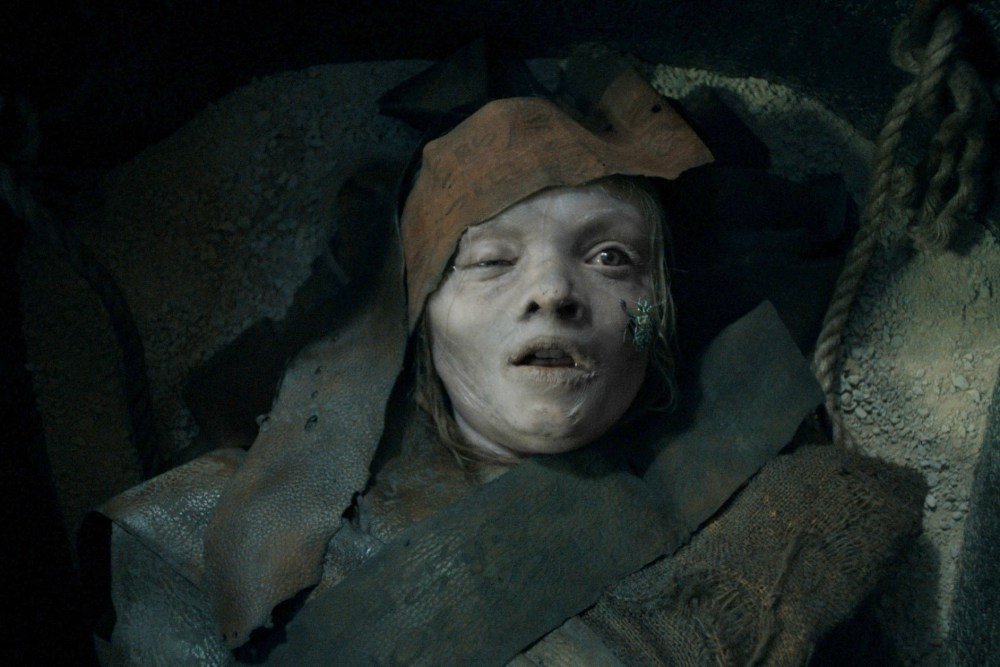
Posters on the London Underground and at outdoor sites showed a close-up of a mummified female figure with grey, ashen skin, cracked lips and one eye swollen shut, wrapped in material resembling a shroud and inscribed with hieroglyphic-style symbols.
The ASA said the figure’s features gave “a realistic impression of a dead child” and that the material wrapped around her added to that impression. Because the posters ran in untargeted locations, including on the London Underground and at a site visible from a children’s nursery, the regulator concluded the imagery was likely to distress young children who saw it. It ruled the posters unsuitable for outdoor display in that form, finding them in breach of CAP Code rules 1.3 and 4.2.
Warner Bros. had argued the poster’s neutral expression, open eye and absence of a sarcophagus or restraints were deliberate choices meant to reduce distress, and noted the studio’s outdoor buying policy of keeping horror titles at least 100 metres from schools – a standard that does not extend to nurseries.
The ASA ordered that the poster ads “must not appear in the form complained of” and directed Warner Bros. to keep future marketing likely to frighten young children away from places where they would see it.
The ruling cited BCAP Code rules 1.2, 4.1, 4.10, 5.1 and 32.3, and CAP Code (Edition 12) rules 1.3, 4.1 and 4.2.
The ASA rejected a separate complaint that the posters trivialized child loss or ongoing global conflicts, finding that text identifying the image as promotion for a film provided sufficient context, even if some viewers found it distasteful.
The campaign also included a TV ad and a matching Prime Video ad depicting a family receiving a call about a daughter who had gone missing eight years earlier, with the father questioning what she was doing in a 3000-year-old sarcophagus. On-screen text read, “Some Things Are Meant to Stay Buried.” Both ran with a post-7:30 p.m. scheduling restriction cleared by Clearcast.
The ASA found the TV and streaming ads were unlikely to cause serious distress and that their scheduling restrictions were sufficient to limit exposure to young children, rejecting complaints that they should have been kept off air later or targeted more precisely on Prime Video. It also noted Clearcast’s data showing an average children’s index of 31 across the TV placements – well below the industry baseline of 100 that represents typical child viewership, indicating the actual child audience was low. No further action was required for the TV and streaming ads.
“Lee Cronin’s The Mummy” released in the U.K. on April 17 and grossed $2.9 million.
The Walt Disney Co. reported its fiscal Q3 earnings early Wednesday, with films like Toy Story 5, streaming, and its lucrative experiences division powering its results.
The company missed Wall Street expectations for revenue, but beat them in operating income and earnings per share, with stronger-than-expected theme park performance helping to bolster its bottom line.
The company also teed up some big changes coming to its divisions, teasing a plan to turn Disney+ into “a comprehensive membership ecosystem,” with the first elements of that vision rolling out early next year.
Meanwhile, the company’s lucrative consumer products segment will move from being part of Disney’s experiences division and into its entertainment division: “We believe this shift will have strategic and operational benefits by bringing the monetization of our IP through consumer products closer to the studios that create that IP,” the company writes.
Disney reported revenue of $25.2 billion, up 7 percent from a year ago, with segment operating income of $5.5 billion, up 21 percent from a year ago.
In entertainment, revenues were $11.3 billion with operating income of $1.68 billion. In streaming, SVOD entertainment revenue (Disney+ and Hulu minus ESPN) was $712 million, a sharp increase from a year ago, and a signal that streaming is becoming more reliably profitable.
The company did note that The Mandalorian and Grogu and the live action Moana “underperformed” at the box office, but argued that “these franchise investments contributed to value creation beyond their theatrical releases.” Toy Story, for example, has generated more than $16 billion for Disney as a franchise, it said.
In experiences, revenues were $10 billion, up 10% from a year ago, with operating income of $3 billion, up 20%. That was despite market concerns around theme parks, especially with Universal recently reporting lower than expected results. The company said that international visitors are still down at its park, but they made up for it with domestic attendance and annual passholders.
In sports, the NBA Finals helped power ESPN, with revenues of $4.5 billion, up 4 percent, though operating income fell 17 percent to $858 million due to higher NBA rights costs.
Disney also said that it would use the cash from the $1.2 billion sale of its A+E stake to do stock buybacks, and elaborated a bit on how it expects to use artificial intelligence:
“With AI, it isn’t simply about efficiency. We use it first and foremost to enhance a creative process that will always be human-centered, artist-driven, and creator-led,” the company writes. “We’ve cultivated the world’s richest portfolio of IP and production experience across a century of filmmaking, giving us an advantage that our peers and no new entrant can quickly replicate.”
Disney posted mixed results for the June 2026 quarter, as Disney+ and Hulu continued to boost profits and the theme parks division turning in solid performance. And Disney CEO Josh D’Amaro revealed his latest move to restructure the media conglomerate’s operations: He’s moving most of consumer products out of Disney Experiences and into the entertainment unit.
In a letter to shareholders accompanying the earnings results Wednesday, Disney CEO Josh D’Amaro said that starting in the first quarter of fiscal 2027 (which runs October-December 2026) Disney will be moving “much” of its consumer products business results from the experiences segment to the entertainment segment. That means that sales for merchandise for “Avengers: Doomsday,” for example, would fall under entertainment revenue and put the bulk of the consumer products biz under Disney Entertainment’s studios group. The consumer products business accounted for $1.1 billion in revenue this quarter, the strongest year-over-year growth in five years.
“We believe this shift will have strategic and operational benefits by bringing the monetization of our IP through consumer products closer to the studios that create that IP,” D’Amaro, who previously ran Disney Experiences before stepping into the CEO job in March, wrote in the letter to shareholders. “Additionally, we believe this presentation will better reflect the returns our Entertainment segment is generating from the content it produces and make our Entertainment segment more comparable to peer reporting methodologies.”
On the streaming front, revenue from Disney+ and Hulu was up 11% for the April-June quarter, to $5.53 billion — and operating income in the entertainment streaming segment more than doubled, to $712 million, compared with $329 million in the year-earlier period. Disney said overall streaming subscription revenue was up 15%, to $4.7 billion, and ad sales increased 3%. The company no longer discloses total subscriber figures on a quarterly basis.
In the letter, D’Amaro also outlined some AI developments at the company, including the Parks division’s recently implemented large-scale use of Disney’s proprietary AI tool, J.A.R.V.I.S.
“We made our J.A.R.V.I.S. AI tool available to our more than 2,000 Imagineers earlier this year, giving them instant access to over 70 years of institutional knowledge,” D’Amaro wrote. “We’re using AI-powered digital twins and simulation tools to design and stress-test new attractions, including leveraging these tools for the Abu Dhabi park. And we’re applying AI to simplify the booking and planning journey for our guests, while equipping our cast members with AI-assisted tools to better serve guests in the moment.”
Disney continued to tout the blockbuster success of “Toy Story 5” in the latest quarterly earnings results, revealing the film’s release has also led to the franchise as a whole reaching more than 2 billion hours streamed on Disney+ and record consumer products sales.
Overall, Disney reported net income of $2.63 billion on $25.2 billion in revenue, with adjusted EPS of $2.06 (up from $1.51 with the exclusion of income tax and one-time impairment and severance charges) for the quarter ended June 27. Revenue was up 7% year over year while net income increased 28% (without those favorable exclusion, income was down 48%) for the period, which is Disney’s Q3 of fiscal 2027. Wall Street analysts on average forecast earnings per share (EPS) of $1.85 on $25.4 billion in revenue for the three months ended June 30 (Disney’s Q3 of fiscal 2026), according to data provider LSEG.
Total segment operating income was up 21% to $5.6 billion. Free cash flow came in at $3.1 billion.
Following recent layoffs, D’Amaro noted that Disney remains “highly focused on reducing costs across the enterprise to create incremental capacity to invest for growth and are evaluating a variety of levers, including reductions in labor and SG&A.” The CEO says the company is “mid-stream in this work” and “will provide future updates on our progress.”
Previously, Disney had set an $8 billion goal for share repurchases in fiscal 2026, which ends in September. With the confirmation of the sale of Disney’s 50% stake in A+E Global Media to an affiliate of co-owner Hearst, Disney said it will use the approximately $1.2 billion in cash from the sale to increase its total share repurchases for the year to at least $9 billion.
Disney took a $812 million impairment charge during the quarter due to its investment in A+E. Severance costs for the quarter were $88 million.
Overall, Disney’s entertainment segment (which includes film and TV studios and networks as well as the streaming business) revenue was up 6% to $11.3 billion for the quarter. The division continued to receive a boost from the acquisition of a large stake in Fubo last fall, which it combined with the Hulu live TV business. The addition of Fubo contributed a 4% lift in subscription and affiliate fees revenue, which was up a total of 12%.
Ad sales for the entertainment division were down 1% on lower rates. Content sales decreased 6% due to a decrease in TV/video-on-demand and home entertainment distribution sales.
On the movie front, Disney praised “Toy Story 5” for surpassing $1 billion in global box office, bringing the franchise’s lifetime global box office to more than $4 billion, while downplaying recent releases “Star Wars: The Mandalorian and Grogu” and the live-action “Moana” movie, both of which “underperformed our box office expectations,” Disney said.
ESPN revenue for the quarter was up 4% to $4.5 billion. Ad sales increased 5% on higher impressions. Operating income declined 17% to $858 million, a larger drop than the 14% that Disney previously estimated due to a double-digit percentage increase in programming expenses, including the timing of new rights agreements, on the close of the NFL Network deal. “Contributing to the lower-than-expected operating income were four-game sweeps in early rounds of the NBA Playoffs and the impact of a network carriage dispute,” Disney said.
Disney Experiences, which currently houses theme parks, cruises and consumer products, saw June quarter revenue of $10 billion (up 10%) and operating income of $3 billion (up 20%).
Attendance at Disney domestic parks grew 3% from April-June. Disney World in particular experiencing a “stand-out quarter, with healthy core attendance increases from domestic tourists and annual passholders, and effective summer promotions and new experiences that further supplemented growth,” though Disney notes it has “continued to face headwinds from international attendance at our domestic parks.”
For the July-September quarter, the company expects total segment operating income of approximately $4.9 billion, with the inclusion of financial results from a 53rd week of operations.
“Our strong fiscal Q3 results and reiterated full-year outlook reinforce our confidence that we are uniquely well positioned,” D’Amaro said in the letter to shareholders. “Decades of IP investment have built deep fan connections that translate into strong financial results. Our accelerating global guests growth at Experiences, ‘Toy Story 5’s’ theatrical and consumer products success, and strong ESPN viewership gains all helped expand our consumer reach this quarter. Together, our results show a unique ability to engage consumers at scale, both digitally and physically, even amid macro uncertainty.”
Also Wednesday, Disney struck a content deal with TikTok that will let the app’s creators (initially in the U.S.) make shorts tied to characters and stories from Marvel, Pixar, Star Wars, FX and other properties. The resulting creator videos will be available on both TikTok and on Disney+ in the form of “Verts,” the company’s vertical video format.
Prateek Kuhad, the Indian singer-songwriter known for hits including “Cold/Mess” and “Kasoor,” will make his feature film acting debut in “Drowning” (“Doobna” in Hindi/Urdu), Marginal MediaWorks has revealed.
Directed by Dar Gai and shot on location in New Delhi, the film marks Marginal’s first fiction feature produced in South Asia, in partnership with Los Angeles-based label D36 and Mumbai-based Jugaad Motion Pictures.
Kuhad plays Tarush, an indie musician in Delhi who lands one breakout hit and then can’t escape the grip of a criminal record label boss. Marginal founder and CEO Sanjay M. Sharma is producing with the company’s head of film, Milan Chakraborty, D36 co-founder and CEO Abhi Kanakadandila, and Jugaad co-founders Dheer Momaya and Gai, from a story the group developed jointly.
“The film is like if the Safdie brothers mixed John Carney’s ‘Once’ and Lars von Trier’s ‘Dancer in the Dark’ in the blender that is the contemporary music scene in Delhi,” Sharma said.
For Kuhad, the project grew out of an earlier collaboration with Gai, who directed the video for his song “Cold/Mess.” “Ever since Dar directed the video for ‘Cold/Mess’ I hoped we would find more ways to work together,” Kuhad said. “So when Abhi and Sanjay brought the idea for a film inspired by my song ‘Drown,’ I was immediately intrigued.”
Kuhad’s “Cold/Mess” reached No. 1 on Spotify India and was featured on former U.S. President Barack Obama’s year-end playlist; the Gai-directed video was later named Rolling Stone’s Music Video of the Year. His third album, “Full Moon Chamber,” arrived July 10 via Atlantic Records, following a run of sold-out headline tours across North America, Europe, the U.K., Asia and the Middle East. He is repped by CAA and Big Bad Wolf India, with Everyday Rebellion handling worldwide management.
Gai’s credits include “Three and a Half,” which streams on Netflix worldwide after a stellar festival run; her second film, “Namdev Bhau: In Search of Silence,” played at Busan, BFI London and Palm Springs. Jugaad’s “Last Film Show” was shortlisted for the international feature Oscar. “With Doobna, I wanted to make a film that feels like life right now: real, funny, tragic, chaotic, and impossible to escape, impossible to press a reset button,” said Gai, a Ukrainian native long based in Mumbai.
Kanakadandila, whose D36 roster spans South Asian-descent artists in the U.S., U.K., India and Pakistan, framed the film as a response to a gap he sees in how the region’s music culture reaches screen. “India has a singular relationship between music and cinema, but there’s a fundamental mismatch between the spirit of the contemporary scene and the format of traditional Bollywood,” he said.
The film is the anchor of a South Asia-focused push within Marginal’s broader international slate, which also includes projects in Korea, Japan, Vietnam, Thailand, Europe and Canada. “This is a trillion dollar market, two billion people, more English speakers than the United States itself, and the fastest growing, digitally connected, and largest youth population in the world,” Sharma said. “Just as we’ve seen Korean culture, food, fashion, music and cinema resonate around the world, a similar wave is coming from South Asia.”
Marginal has produced more than a dozen features in just over five years, including Tribeca 2025 Audience Award runner-up “The Rose: Come Back to Me,” Tribeca Jury Prize winner “Cypher,” and the recently released horror title “Camp.”
If you purchase an independently reviewed product or service through a link on our website, The Hollywood Reporter may receive an affiliate commission.
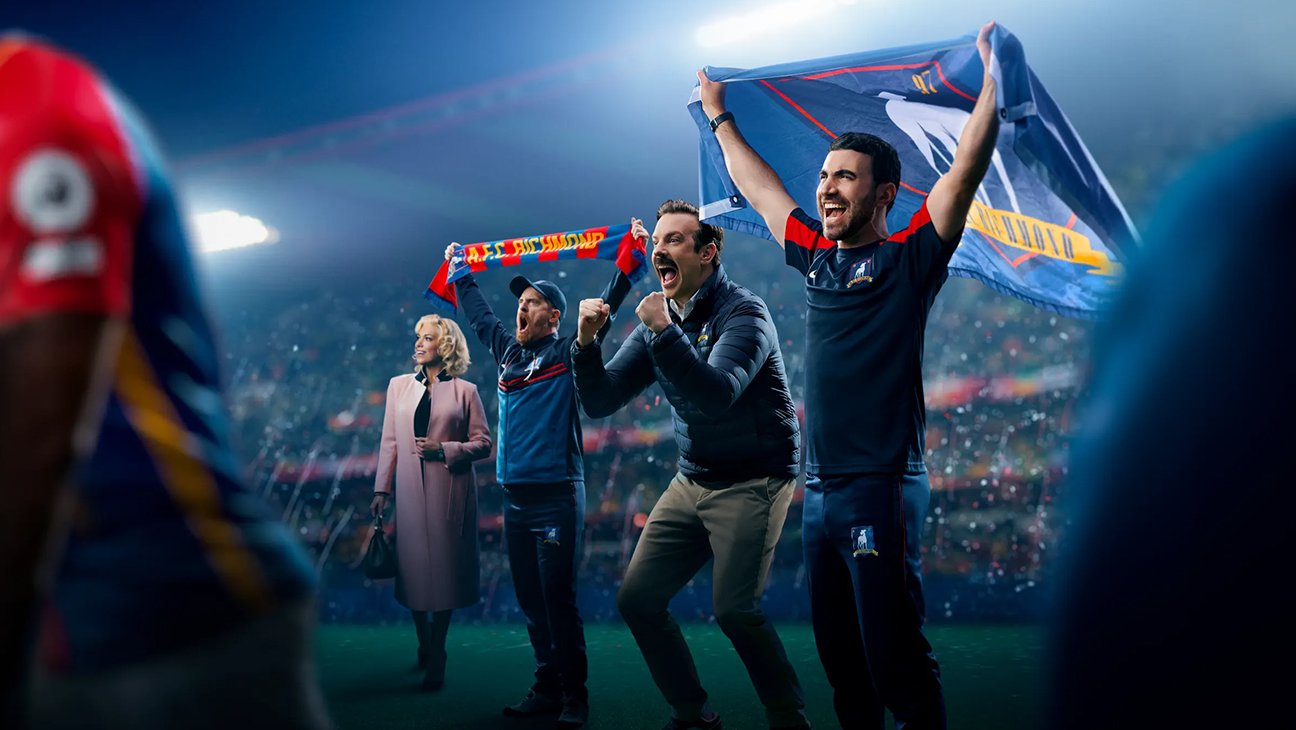
In May 2023, Ted Lasso aired its season three finale, titled “So Long, Farewell,” marking what was supposed to be the series’ culmination. Cut to August 2026: The Jason Sudeikis-led comedy-drama is back for its fourth season. The 10-episode season premieres Aug. 5 on Apple TV, with remaining episodes dropping weekly on Wednesdays. Following a seven-day free trial for new subscribers, Apple TV is $12.99 per month. Apple TV is also home to seasons one, two and three.
When and Where to Watch Ted Lasso Season Four Online: Premiere Date, Air Time
While the new season of Ted Lasso technically premieres on Wednesday, Aug. 5, Apple TV has been known to drop shows as early as 6 p.m. PT/ 9 p.m. ET the night prior (Tuesday, Aug. 4, in this case). The remaining nine episodes in season four will drop weekly on Wednesdays, leading up to the Oct. 7 finale.
Apple TV Free Trial, Streaming Deals
Apple TV comes out to $12.99 per month following a seven-day free trial period. This means new subscribers can binge seasons one through three (available on-demand) and catch the latest episode of season four at no cost.
In addition to other hit shows like Severance and The Morning Show, Apple TV is home to live sports coverage including Friday Night Baseball, Major League Soccer and, thanks to a five-year streaming deal that kicked off for its 2026 season, Formula 1.