On today’s episode of “Daily Variety” podcast, Variety’s Corbin Bolies reports from Las Vegas where he is covering the AI4 conference with a slew of top leaders and true believers. The excitement around generative AI is still as hot as the temperature in Sin City, but the polarizing effect of the technology is evident as well, Bolies reports.
Mann’s focus is on guiding the creative community to an understanding of “just how people can navigate this conversation in a way that amplifies filmmaking and creativity, while keeping humans at the forefront in this era of AI slop,” Bolies explains. “You have Hollywood studios and creatives afraid of just what AI’s impact on the industry can be, from both the models that are trained and scraping their copyrighted work to generated content that people fear may take the place of traditional films and traditional TV shows.”
Flawless focuses on tools that help filmmakers more easily handle dubbing of content for various markets. Mann emphasizes the benefits of that AI tech can offer in handling certain post-production functions that can otherwise be very costly.
“When people hear the word AI, their first thoughts are the extremes, and Scott’s hoping that Flawless and other filmmakers who are working in the same space as him can break through that noise and show that AI can be additive to Hollywood and helpful while keeping humans and creatives working in partnership with them,” Bolies says.
The AI4 conference, held at the Venetian Las Vegas, casts a wide net on AI’s impact well beyond entertainment and content creation. Bolies says the coming wave of robotic devices will be capable of mind-blowing functions.
“I’ve seen at least three different types of humanoid robots today alone — one that looks straight out of Will Smith’s [2004 thriller] ‘I, Robot,’ ” he says. “They looked a little freaky to me, but it just shows what the mobility of these robotics are. We’ve seen AI on a software level, but on a hardware level, that’s going to be a big impact.”
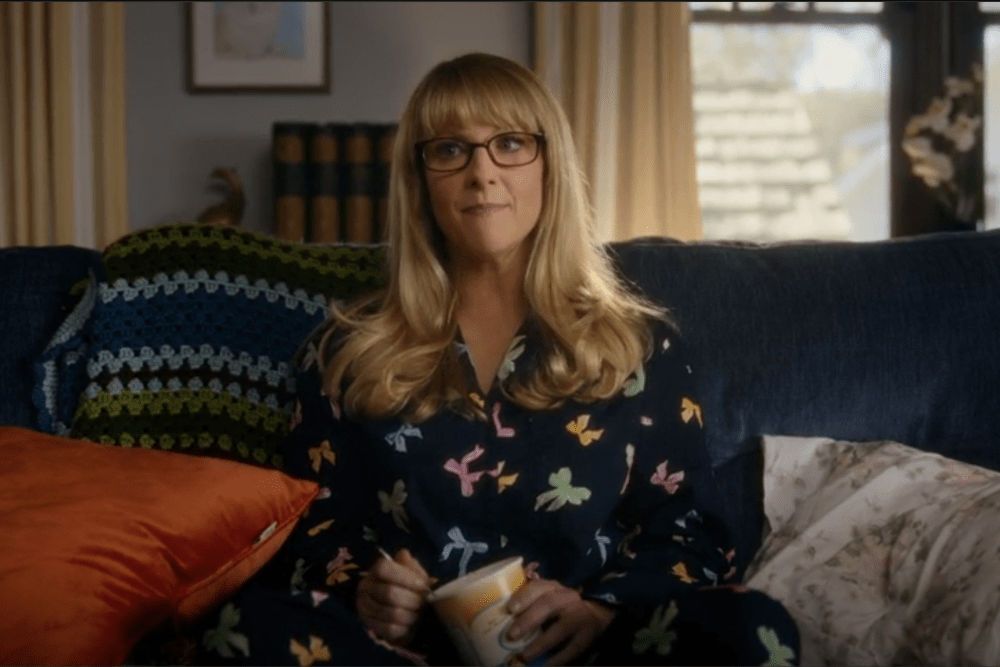
Things get witchy in Episode 3 of “Stuart Fails to Save the Universe,” and a scary, 60-foot Bernadette (Melissa Raush) makes a guest appearance.
The aptly titled episode, “Spoiler: Bert Is Magic,” kicks off with Bert (Brian Posehn) tied at the stake and about to be burned alive. Then he begs for it to rain — and it does. That’s the first sign that in this universe, Bert really is a wizard with magical powers. He can turn regular Coke into Diet Coke at the flick of a wrist, and hocus pocus up a cute puppy.
Back in the comic book store (in this case, it’s called “The Wizard’s Sleeve” and more like a store filled with powerful, spellbinding books), Stuart (Kevin Sussman) tries to explain to the Denise (Lauren Lapkus) from last week’s universe what is exactly going on with the machine that’s transporting them across the multiverse.
Kripke (John Ross Bowie), who had seen Bert on the stake, makes his way back to the store. “Stuart, we have to leave here. The people in this world think science is evil.” Cracks Stuart: “How’s that different from our world?”
Because this universe doesn’t obey the laws of physics, Kripke realizes they need magic to make the teleportation machine work. They ask Alexa where they can find someone to help — and up pops a little demon named, of course, “Alexa” (played by Louis Mustillo). Alexa points them to Bernadette Rostenkowski, “master sorceress.”
At first, it seems like normal Bernadette from “The Big Bang Theory.” She says she’s out of business, because the “Wizards Guild of America claimed I used my powers while we were on strike.” She tells them about a reversal spell that could get her powers back — but she needs the “blood of an innocent.” Having had just one girlfriend, Stuart works.
Bert is back at the store, and turns Kripke into a penguin as revenge for leaving him at the stake. But then they’re interrupted by Wil Wheaton, who’s a wizard in this universe. He shows up to warn Stuart not to trust Bernadette. (Wheaton, of course, was frequently seen on “The Big Bang Theory” playing himself.) Turns out Bernadette is actually a demon. Bert and Wil get into a sorcery battle — and Bert wins. At the same time, Bernadette makes her potion and turns into a 60-foot monster, destroying Pasadena. She wants to rule the universe and take the machine — but Bert, with his powers, manages to get the four of them out just in time.
“I remember a while ago getting a call from Chuck [Lorre] and he shared what the premise was, and I remember him saying that ‘you would be Bernadette, but not really, just a different version of Bernadette. So it’d be extremely different from anything you ever played.’ ” Rauch tells Variety. “And then he told me the cast, and I was just absolutely ecstatic. Because I love Kevin and Lauren and Brian and John so much, both as human beings and also just fans of theirs as actors. I think each of them is just a comedic laser in their own right.”
In reprising Bernadette with a twist, Rauch says, “it was just so wonderful to not only be able to step back into Bernadette’s sensible loafers and her glasses, but then to be able to have this new layer to Bernadette. It sort of made some sense in this alternate universe. There’s always been this edge to Bernadette. So the fact that they then cranked that up a million notches, and now she’s also a demon, just tickled me.
“I just thought it was so fun to play,” she adds. “And my gosh, the fact that I get to play 80 feet tall when I’ve barely reached five feet in real life, is very thrilling. I’ve never done that sort of motion capture before. Just the scale of everything that they did there is truly extraordinary. They built an entire miniature city of Pasadena that I was able to walk through and crush and pick up little versions of people and yell at them. It was a blast.”
Rauch says she wore a motion capture suit for the scene and “got a real high from it. Now I feel like I just want to walk around and crush things. I felt very powerful!”
Only Murders in the Building showrunner John Hoffman wouldn’t mind if the show went on forever.
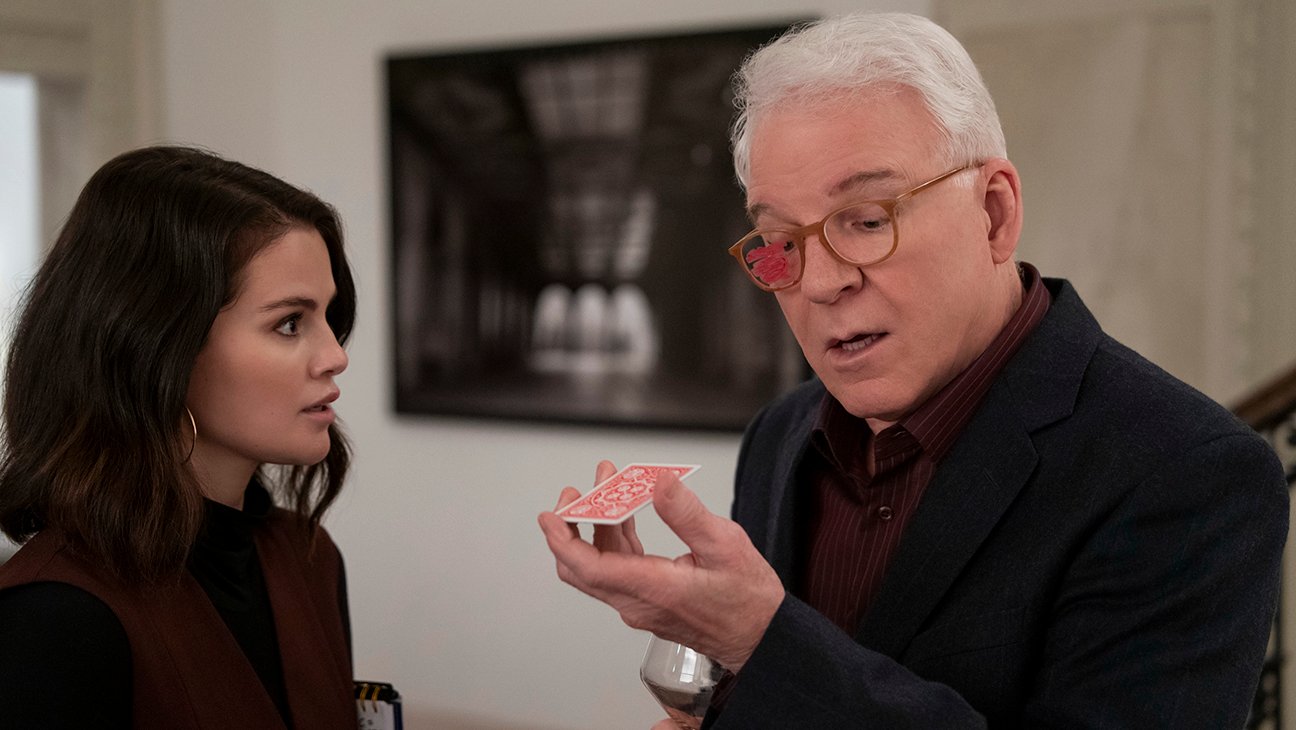
The true-crime comedic mystery, starring Martin Short, Steve Martin and Selena Gomez, nabbed five Emmy nominations for its fifth season, including one for outstanding comedy series — a nod it’s received every year since its first season in 2021.
“Many people have asked, ‘How long are you going to stay with that show?’ ” Hoffman tells The Hollywood Reporter. “I’m like, ‘Until they want to stop.’ No one’s doing anything without me because I just love this group.
“Each season, there has always been that drive in me to say, ‘No, we’ve done that.’ ‘No, that’s not fresh,’ or, ‘That thing doesn’t subvert,’ ” Hoffman continues. “All of that comes up, so I just keep pushing that way just naturally as a writer and director however I can.”
For season six, Hoffman and the Only Murders in the Building creative team are pushing the story overseas to London, a risk for a show whose niche and clever conceit is also conveniently its title.
Whether the show could survive traveling to a wholly different backdrop had been an obstacle Hoffman had wanted to tackle since early in the series’ run, he says.
“There’s no way around a certain understanding of needing to freshen up a show. I mean, how many murders can be in one building?” Hoffman says. “It felt like the right time. I love the idea of however we can broaden the reach of the show and put the trio in new situations, new landscapes for a moment.”
For five seasons of the critically acclaimed show, its titular building and the New York City skyline have been critical to its DNA. In upping the ante for its sixth season, Hoffman says the team knew it was important to keep that tone and spirit in the show.
“There’s no question it’s a New York show, even as we jump to London for an entire season,” Hoffman says. “It’s been really interesting to look at the show anew in this way after five seasons and yet also see what we can hold on to.
“The spirit of the show and the center of it and the emotional hook and how it feels, surprisingly, still feels like our show, and there isn’t a shift that takes us out too much,” he adds. “So that part is always the driving force, wherever the case takes them, whether it’s New York or some other place. I will happily report that London has been incredible for us.”
One way the show has always managed to keep things fresh is by adding new guest stars to the cast and giving them plenty in the script to play with. Jane Lynch, Nathan Lane, Paul Rudd, Da’Vine Joy Randolph, Matthew Broderick and Meryl Streep have all been nominated for past guest roles on the show.
The next time Short, Martin and Gomez appear onscreen, they’ll be joined by iconic British film and TV actors, including David Tennant, Jodie Whittaker, Jim Broadbent, Martin Freeman and Olivia Colman.
“I watch the show get deeper, richer, funnier, crazier and just marvel at it and then watch everyone else come aboard and sink into an ensemble when they’ve been the stars of their own things,” says Hoffman. “They find their way here and they’re brilliant, elevating your material and everything else around them, and the vibe around the set changes and, boy, I would not say no to that.”
This story first appeared in an August stand-alone issue of The Hollywood Reporter magazine. To receive the magazine, click here to subscribe.
The Fast & Furious franchise may be stuck in neutral, but Louis Leterrier is charging full speed ahead.
The French filmmaker behind Fast Xand its long-gestating follow-up, Fast Forever, is releasing the genre-blending thriller, The Last House, on Aug. 7 via Netflix. He’s also about to wrap production on a sci-fi action thriller called Liminal for Apple. On top of those features, the fourth season of Lupin, the Netflix series he co-showruns, drops in October. He even launched a production company known as Carrousel Studios with his Lupin lead, Omar Sy, and The Last House EP, Thomas Brenski.
The Last House chronicles the Delgado family — led by Wagner Moura’s Jason and Greta Lee’s Ann — as they try to raise their two children inside their house that has been mysteriously sealed shut, leaving them with no way out. One might assume that a film set almost entirely within a single residential home would be far easier to pull off than the globe-trotting spectacle of the Fast franchise and the constant management of its massive movie star ensemble. Yet Leterrier says the genre exercise about coexistence and mercy was the most challenging film of his career.
“The Last House was the most difficult film I’ve ever done. You have no idea. It was awful,” Leterrier tells The Hollywood Reporter. “I tried to make everything practical. We built a real house … and a whole neighborhood on stage. And as the movie evolves, the house evolves. So it was very technical and very difficult, but I loved every second of it. I love it now [that we’re done]. Every day, the cast and crew looked at each other and were like, ‘Oof, this is a tough one.’”
As for the 11th, and series-capping, installment of the Fast Saga, Leterrier insists he’s still attached regardless of his busy schedule. As has been widely reported, he confirms that Fast Forever’s budget remains the biggest hurdle.
When Furious 7 (2015) and The Fast of the Furious (2017) became billion–dollar grossers — largely due to China driving nearly $400 million-worth of ticket sales — the creative team continued to up the ante, adding more and more ambitious sequences, as well as star power. However, the last three entries, including the spinoff Hobbs & Shaw, have regressed to an average around $730 million worldwide, and China’s attendance, in particular, has fallen 45 percent to 65 percent. Thus, the producers have to find a creative way to split the difference given how unpredictable the box office is these days.
In any event, Leterrier is eager to get started despite not reading a script yet, but he also can’t spin his wheels until the Fast brain trust and studio get their ducks in a row.
“I can’t wait, but I also cannot wait. Directors don’t idle well, so I have to direct [other projects until then]. I love this franchise, and I hope we get to finish in the best way possible,” Leterrier says. “I’m contracted. [If] we go, we go. We’re lucky to be having a great year [at the box office], but it’s different now. Movies have evolved and tastes have evolved and the box office has evolved. So we have to align our budgetary needs to the reality of the box office. We know that, and it’s fine. Everybody does that. It’ll be fine.”
Below, during a conversation with THR, Leterrier also discusses the inspirations behind The Last House, as well as its format shift from 35 mm to digital midway through the piece.
****
We last spoke for Fast X, and you obviously went all over the world to film that movie. Did the rigor of that globe-trotting production make a contained movie like The Last House all the more appealing?
Yeah, absolutely. But I didn’t know that my wish would become a nightmare. The Last House was the most difficult film I’ve ever done. You have no idea. It was awful.
How come?
Because I tried to make everything practical. We built a real house with wild walls and a liftable ceiling, and we could light it easily. It was one-way concrete and wood. We built a whole neighborhood on stage. The garden, rain and animals were real. There was one dog, but the rest were wild animals that acted like wild animals. And as the movie evolves, the house evolves. So it was very technical and very difficult, but I loved every second of it. I love it now [that we’re done]. (Laughs.) Every day, the cast and crew looked at each other and were like, “Oof, this is a tough one.”
Director Louis Leterrier and star Wagner Moura on the set of The Last House
Chris Baker/Netflix
Most directors start their careers with something tied to a single location, but you did two decades of globe-trotting before finally doing a contained movie.
We’re better when given a box, and I literally gave myself a box. If you’re given parameters that are a little contained, you think about your shots and the acting a bit more or a bit differently. Obviously, I do this whenever I work on a big canvas, but it’s not as compromised. You have to trust your savviness and your instinct a little bit more than just putting five cameras on something and going.
I had to be very specific on this one because it was smaller and the budget was much smaller. It’s one of the smallest movies I’ve made, but it needed to be to make my first very personal movie. This one spoke to me when I read the first act. The script is quite different from the final movie, but when I read it, I was like, This movie is talking about me as a human being, as a father, as a family member and as a member of society. So I was willing to let go of the super giant production to go a little tighter.
What were your points of reference?
I wanted to capture that feeling of a dark 1980s Amblin or Spielberg movie: Close Encounters of the Third Kind,Poltergeist and E.T. These movies spoke about us, and they certainly spoke to me because I experienced the world through giant screens. So I tried to capture that feeling with this one — and by mixing formats.In the [intimate character-driven] first half of the film, we used spherical lenses on 35mm [à la E.T.], and then anamorphic C-series lenses on digital in the [more adventurous] second half.
The Last House makes the COVID pandemic look like a staycation. The Delgado family are literally stuck inside their house, and they have to survive on what they already have on hand. Did the writer Matthew Robinson birth this script during the pandemic?
I think the first act was born shortly after the pandemic. Matthew Robinson wrote it during a two-week fever dream. So the first act stayed pretty much the same, but then it evolved a little bit. I didn’t want to make a COVID movie, but I did want to make a movie that spoke about our universal experience during the pandemic. The first month was surviving physically and feeding yourself and trying to protect yourself. But it very quickly evolved into surviving psychologically, mentally and emotionally. I think we’re still reeling from it. As a society, we don’t interact the way we used to interact before COVID. That’s where our movie begins, and we can jump through the exposition much quicker to get to the characters.
Noah Alexander Sosnowski as Graham, Wagner Moura as Jason, Greta Lee as Ann, Riley Chung as Ruth in The Last House
Chris Baker/Netflix
As I was watching, I kept wondering if you shot sequentially because the story and structure really support that ultra-rare scenario. I’ve since learned that you did actually shoot in order. Was that a requirement for you?
It would’ve been impossible to do it otherwise because we only had one house. It was shot in sequence, but we planned it backwards. We peeled back layer after layer. Again, because I’m an insane person, I was all about the practicality of everything. I didn’t want anything to be brought into the house later that wasn’t in the house at the beginning. So I couldn’t come up with an act two idea, such as, Let’s put a car here or a bike there. Everything that they use and consume had to be seen from the start.
We consulted survival experts to calculate how much wood they could remove from the walls to heat themselves or build something they needed over the course of [six or seven] years. And everything in the house worked. The hunting traps were built practically out of Dyson vacuum cleaners and skateboards. We could literally go hunting if we wanted. We didn’t, obviously, because those wild animals were fine, but the traps worked perfectly. Everything was just done so perfectly. Our production designer, Kevin Jenkins, and his team worked so hard at making the house and the contents of the house so perfectly real.
Thanks to Jane Petrie’s costume department, the sweatshirt that Greta Lee wears in the beginning becomes something else in the middle and then becomes a fishing line at the end. We had one sweater, and we just took it apart.
Not to mention, our poor actors had to gain weight and then lose weight and muscle to feel really weak. Then they had to gain weight again and be aged up. All of that stuff took a toll on them, but they did it willingly and amazingly.
Fast Forever, or Fast 11, has taken so long that you’ve made two other movies in that time. Are you still going to wait it out? Or have you run out of patience?
No, I love Fast. I worked very hard in coming up with the idea for the end and everything. I was so lucky to be a part of the franchise. So I can’t wait, but I also cannot wait. Directors don’t idle well, so I have to direct. (Leterrier snaps fingers a few times to signify how he needs to keep directing projects.) I created a studio in Europe. We wrote and shot a season of Lupin, my show in Europe. I did two movies [The Last House and Liminal], and I’m doing another one. So I cannot wait. But I love this franchise, and I hope we get to finish in the best way possible.
So it’s a maybe at this point in time?
No, I’m contracted. [If] we go, we go. We’re lucky to be having a great year [at the box office], but it’s different now. Movies have evolved and tastes have evolved and the box office has evolved. So we have to align our budgetary needs to the reality of the box office. We know that, and it’s fine. Everybody does that. It’ll be fine.
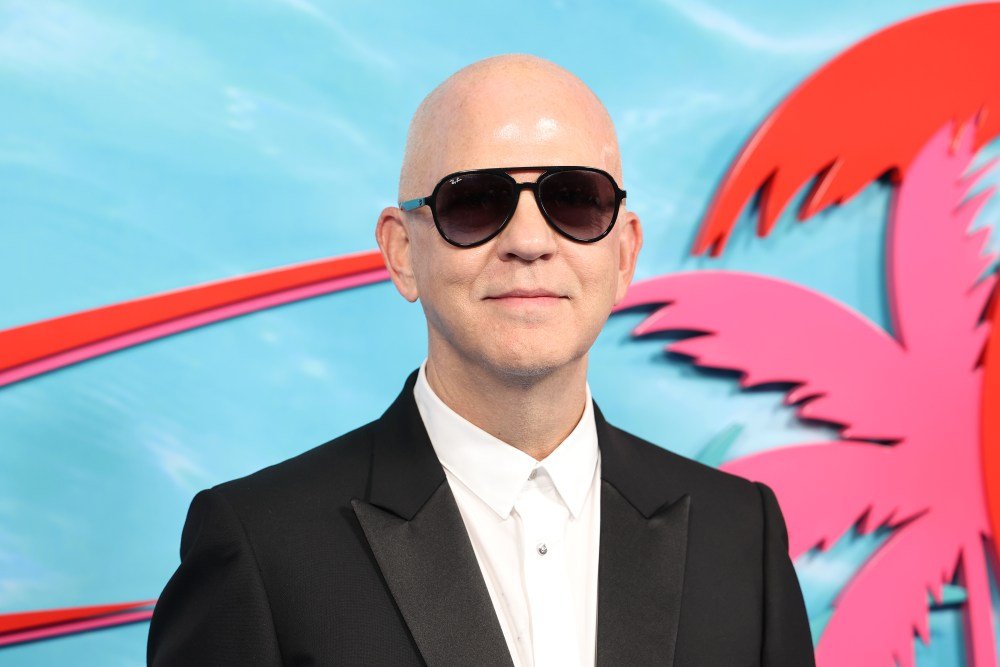
FX’s “The Shards,” Ryan Murphy‘s adaptation of the Bret Easton Ellis thriller novel, is a love letter to Los Angeles. Filming there, he told his producers, was a non-negotiable.
“We shot it in L.A. and, of course, it could have shot in Canada,” the showrunner told Variety at “The Shards” New York premiere on Monday night. “I could have made it for cheaper, but I said absolutely not. My partners were like, ‘Great, let’s roll up our sleeves and make it work.’ And we did.”
Hollywood, once the epicenter of American film and television productions, has been grappling with production fleeing California in search of more competitive tax incentives. Despite recent efforts from state and city officials to increase tax incentives, Los Angeles production volume dropped 3.1% in the second quarter of 2026.
During a rare interview with Variety, Murphy explains why he “demanded” his next two projects shoot in Los Angeles, and how he was “very conscious” about the way sex was portrayed in “The Shards.”
Well, that’s interesting because one of the first things I did was “Nip Tuck.” It’s funny, I directed the pilot and worked on all the episodes, so I don’t consider that there’s a lot of sexual content in it.
What I like about this show is that it has a lot of romantic relationships that turn into romantic triangles. At the heart of the show, there are several strong romances that — in success — would carry on over three seasons. But I was very aware, and I made it about that idea. So, I think the key is not a lot of graphic-ness, but then you see something like “Heated Rivalry,” which was done so beautifully. And everyone’s obsessed with it.
The key is that it’s not about the sexual content; it’s about whether [the audience] likes the characters and what they’re doing. This show is different than [“Heated Rivalry”]. This is a high school show: first times, first kiss, first break-up. So I think that generation of young people will like it for that reason. I hope so, but I was very conscious about that when I was making it.
Homer Gere stars in “The Shards.” He just had a breakout role in “Euphoria.” Is that where you found him?
No, I did not know Homer. He auditioned, and I saw his audition. We auditioned close to 500 people for these parts [over] many, many months. He just gave an incredible audition. I mixed and matched him with the cast. All of these actors earned those parts. I would never have dug them up.
You watched “Euphoria,” though?
Well, afterward, when we were shooting [“The Shards”]. And I’m friends with Sam Levinson. [Gere] had just done one episode, but he was cast before I knew about “Euphoria.” I thought, “Well, good for Sam. Homer’s a star and a great actor.” What Homer did in that show was incredible. Very brave. People had a lot of opinions about that, as they do. But no, I had my own relationship independent of seeing that show. But I watched that show as a fan. I love that show. I always have. It’s incredible.
The biggest Hollywood story of the year is the Paramount-Warner Bros. merger. Do you feel confident that creators will continue to thrive amid the potential industry consolidation?
Well, I think they will always continue to thrive, right? There have been many of those [mergers] in our history. The thing that I’m very conscious about and would like to protect is the jobs. Keep the jobs, and more specifically, my next tranche of work is bringing filming back to Los Angeles. It’s ridiculous. It’s a travesty. I think the mayor [Karen Bass] could do a much better job than she’s done, for one.
That’s also on the filmmakers to figure out the economic troubles and how to make things in L.A. so that our crews and cast can sleep in their home city, go home and have meals with their families. I have two things shooting, and they’re both going to be in L.A. I demanded that. I made that work economically. The most important thing to me is that it’s up to the individual showrunners and filmmakers to say, “Hey, we want this.” In my experience, as long as you can figure out a will, there’s a way. And they’re the first people to say, “Great, we’d love for it to shoot in L.A.”
I don’t think that’s the obstacle. It’s always the tax credits. The tax credit in L.A. should be better. It should be made more interesting and inviting to the studios. That starts with the government. I’ve spoken to the governor about this. He’s a friend, Gavin [Newsom]. He agrees. I haven’t spoken to Mayor Bass about this. I’d love to, but I think start there. Do that. That’s what matters.
I think they’re making progress. Do you have faith they can pull it off and bring back more productions?
I hope so. I started working in Hollywood in 1995. There’s nothing more haunting than walking on those beautiful soundstages that are ghost towns. It’s upsetting, and it doesn’t have to be that way. Everybody wants to shoot in L.A.
And this show is a love letter to L.A.
Right. And we shot it in L.A. Of course, it could have shot in Canada. I could have made it for cheaper, but I said absolutely not. My partners were great about that. They were like, “Great. Let’s roll up our sleeves and make it work.” And we did.
Another week, another turn of the screw in the Paramount–Warner Bros. Discovery merger — aka David Ellison vs. the creative community. Microdramas may be all the rage in Hollywood, but they’ve got nothing on what’s currently playing out in state attorneys general offices, C-suites and op-ed pages.
With a host of players lining up on both sides of the deal and the AG’s picking up a major victory this week in their case against the merger, The Hollywood Reporter thought it a good moment for two staffers covering the story, Steven Zeitchik and Alex Weprin, to sit down and talk about it.
Steven Zeitchik: Well, it’s been an eventful week. The judge basically handed the AGs major leverage by setting the trial all the way in March instead of in the fall, which will cost Par (and gift WB shareholders) hundreds of millions of dollars in penalty fees, I think it’s about $7 million per day. This puts tons of pressure on Ellison to make a deal, doesn’t it?
Alex Weprin: I think they will need to try and figure out what they can do to get a settlement done. The AGs want structural remedies, and I wonder if there are enough things they could divest to appease them. Basic cable channels? There are ways to do that. Film studios? I’m not so sure.
SZ: Ya, I think the question is what the floor is for the AGs and what the ceiling is for Ellison, and do they overlap. I feel like he’d probably be willing to part with a Nick or MTV to get it done since he’s really more of a film guy, but would that be enough for Rob Bonta et al? There are also theatrical commitments beyond just words but not sure how that would work. A CNN divestiture would be a big political win but as you’ve noted the AG’s have staked their case on consolidation, not political speech. They can still spin it though as “diversity of voices” or some such. Settlements have a way of healing all wounds.
AW: I think Paramount needs CNN more than just about any of the other cable assets — it is simply more profitable and more stable than the other WBD cable channels. The cost savings from merging CBS and CNN could also be significant. If the antitrust case is based on pay-TV channel penetration, they could probably carve out a nice chunk of channels, and maybe just keep CNN and a couple more to keep everything below the limits.
SZ: Yeah I can’t see Ellison being at all willing to part with it. But how far does he go to fight — does he want a messy trial and billions in shareholder penalty fees or are is he incentivized to make it go away quicker? Would he settle for an ombudsman/oversight board? Selling a minority stake? It’s hard to see where there’s common ground here, and the AGs are feeling their oats.
AW: I think he’d be thrilled with an oversight board, I just can’t imagine that would appease the AGs. They may smell blood in the water. And again, cable TV is in many ways easier because the past year has seen spinoffs and sales, so you can imagine how it would work. He wants the Warners film studio, there’s no obvious structural remedy there, right?
SZ: I don’t see how the studio gets taken out of this. Some commitment to a certain number of movies would be the only possible solution but how do you enforce that governmentally and is it even legal? Part of the problem here is that the critics are opposed to consolidation but consolidation is why he’s doing this! So I don’t see how you make everyone happy. The other chip of course is HBO. That’s obviously a huge one for the creative community — the crown jewel and big buyer — and one they would be THRILLED to see not go with Ellison. But is there any way he lets that go? Maybe if he was really, really, in a gun to his head situation. Maybe.
AW: I think HBO and HBO Max are the key gaining streaming scale for them, so I think it is a must have for him. The good news for Ellison is that the AG’s case is so focused on basic cable that they don’t even touch HBO, which would make it an odd chess piece to play. I think that AMC and Regal Cinemas CEOs, meanwhile, are angling for a binding commitment to make a minimum of 30 movies per year for an extended period of time. There is precedent: When Comcast acquired NBCUniversal, they agreed to certain conditions for seven years.
SZ: Interesting re: Comcast, I’d forgotten about that. And yeah, the Max+Plus juggernaut is a real selling point for him. Honestly that’s the rare case where I think the whole need-to-compete-with-the-tech-guys argument holds water. With the number of subs each has (though there’s probably a fair bit of overlap) the combined Max-Paramount Plus really would be a pretty staunch competitor to Netflix, Amazon and Disney+ (and I guess a surging Peacock and Apple to a rather, um, lesser extent). So basically if we had to predict it feels like a few cable channels get spun off and the studio commits to a theatrical floor of some kind and both sides call it a win. Who wins in that scenario? Is the creative community appeased? Should they be?
AW: I don’t think there’s any scenario that appeases the creative community, but selling off a bunch of cable channels (maybe or maybe not including CNN) would be a start, and a binding commitment to 30 films for an extended period would please the theater owners. The issue for writers, actors, etc is that it will still mean one less buyer for their wares, and that is a harder nut to crack. Here’s a wildcard: What if they … cut a deal with Netflix? Maybe sell Netflix the film distribution division, one of the WBD sub-studios, some IP? Maybe sell some cable channels to Versant or private equity?
SZ: Wow, Netflix coming back in for anything meaningful would be a true — dare I say — Game of Thrones-like twist. It’s hard to imagine the creative community being appeased by THAT, since they were even more worried about Netflix than they were Par given the former’s anti-theatrical stance. But it would certainly address monopoly/consolidation fears. As for the cable channels to private equity, that would technically be a win but I think of the be-careful-what-you-wish-for variety.
AW: Movie theaters have been battered since COVID, and this is the first good year since then. I think they fear the merger falling through and one or both companies not having the capacity to produce as many movies as they did, I think they fear the merger being completed without any binding commitments around a minimum number of films. A binding deal for a minimum of 30 films for an extended period (maybe seven years, the length of the Comcast commitments) could give them a runway to try and salvage their businesses.
SZ: It’s certainly a lot more attractive for a studio to make that commitment now than it was seven months ago when the deal was announced and before the big box office rebound. Let’s pivot quickly to the other part of the story this week — the allies. You mention Regal and AMC. The CEOs of those companies just came out in favor of the deal. Not a huge surprise to me — they are reading tea leaves and angling for favorable terms. What do you make of that? And what do you make of the gambit — pretty transparent it seems to me — to get people like Ari Emanuel to sing Par’s praises and show “hey, not all Democrats oppose this!” (Just the major ones in Congress, many of the AGs and many of their biggest donors in Hollywood).
AW: Ari is obviously in business with Paramount (and everyone else, to be fair), and he has clearly been a consigliere to Ellison in recent years. No doubt many of his clients oppose the merger, and as an agent he must be cognizant of the competition factor. But, yes, he is out there as a well-known Democrat (albeit one who is also friendly with Trump) supporting the deal.
SZ: I’m just not sure having people with obvious skin in the game — Chris Wallace is another one, a RedBird advisor and guy who may well want to get back on CNN who wrote a pro-merger column for THR this week — coming out in favor of the deal achieves anything strategically. Ellison also wrote that NYT op-edmaking his case. If anything I feel like seeing all these foot soldiers out there stumping for it could backfire for Ellison, make opponents — and there are so many in the creative community — feel like the deal is rigged. Anyway should be an interesting few coming weeks. Or is it years? I’m losing track.
AW: My suspicion is that if both sides are open to structural remedies, we will know more sooner rather than later. But either way it would make a great starting point for a Succession spinoff series.
SZ: That could be the new HBO’s first greenlight! Great chatting as always.
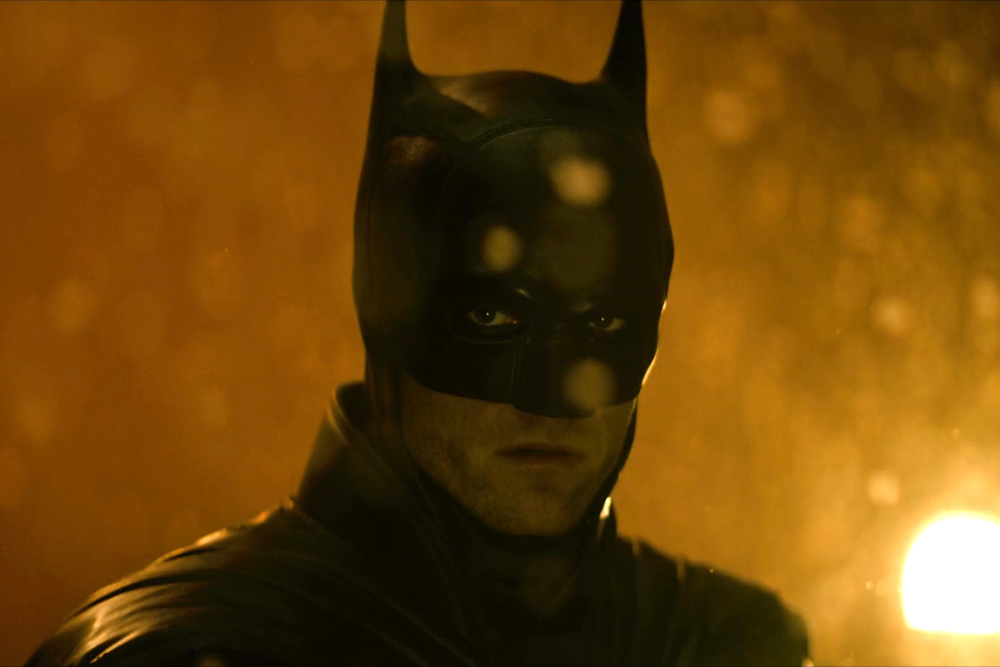
DC Studios co-chief James Gunn is putting to bed one of the more popular online rumors about the upcoming “The Batman 2,” directed by Matt Reeves and once again starring Robert Pattinson as the Dark Knight. Social media has been convinced that Reeves is filming “The Batman 2” and “The Batman 3” back to back, alleging this is one of the reasons his sequel to 2022’s “The Batman” spent so many years in development. Not so fast.
Gunn was asked on Threads to confirm or deny the rumor about two “Batman” sequels shooting back to back, to which he bluntly answered: “I can deny.”
It’s not uncommon in Hollywood for studios to shoot sequels back to back as one huge production. This is how “The Matrix Reloaded” and “The Matrix Revolutions” were filmed after the blockbuster success of the “The Matrix,” for instance, as were “Pirates of the Caribbean: Dead Man’s Chest” and “At World’s End” following the huge reception for “The Curse of the Black Pearl.” Marvel shot “Avengers: Infinity War” and “Avengers: Endgame” as one production over the course of an entire year.
Warner Bros. recently delayed the release of “The Batman 2,” which is now in production in London. The movie will open in theaters on Feb. 18, 2028, nearly six years after the March 2022 opening of “The Batman.” Joining Pattinson in the long-delayed sequel are Scarlett Johansson and Sebastian Stan, plus Charles Dance, Brian Tyree Henry and Sebastian Koch. Reeves co-wrote the sequel’s screenplay with Mattson Tomlin. Plot details remain under wraps, as do the roles being played by the film’s supporting cast.
“The Batman Part II” was originally supposed to open Oct. 2, 2026, before Warner Bros. delayed it to Oct. 1, 2027. Moving the film to 2028 gives Reeves additional time in post-production.
Screenwriter Eric Roth (“Forrest Gump,” “Dune: Part One”), Brian Kavanaugh-Jones (“Longlegs,” “A Complete Unknown”), Andrew Upton of his and Cate Blanchett’s production company Dirty Films (“The New Boy”) and Anne Peters are on board as executive producers of the fable-like tragicomedy “The Present Times.”
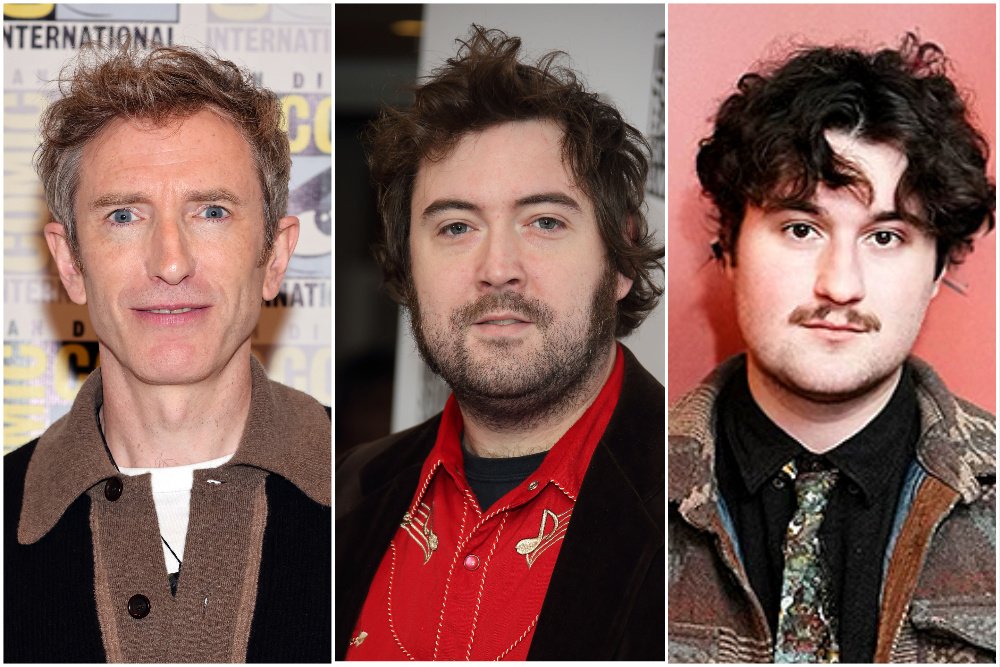
The upcoming feature film, directed by Noah Stratton-Twine, stars Daniel Weyman, who plays Gandalf in “The Lord of the Rings: The Rings of Power,” and standup comedian and actor Nick Helm (“Uncle”).
Weyman and Helm play embittered paparazzi Roy and Ian, respectively, who face the consequences of their intrusive profession when confronted by an immoral scheme and an otherworldly presence.
Joining them in the cast are Paul Kaye (“Game of Thrones”), Raffey Cassidy (“The Brutalist”), Emma McDonald (“Moonhaven”) and Jay Simpson (“Chernobyl”), supported by an ensemble that includes Ada Player (“The Running Man”), Os Leanse (“Artificial”), Ivy Freeman-Attwood (“Elden Ring”), Nish Nathwani (“Surge”) and Luke Rollason (“Supergirl”) — who starred as the lead in Stratton Twine’s first feature “Two Big Feet.”
Stratton-Twine describes the film as “an ode to both Britain’s wealth and history of championing character actors, larger-than-life performances in often ludicrous yet wholly innate and resonant scenarios, and London as a singular and diverse cinematic city, prior and still championed by heroes of mine like Mike Leigh.”
This is the third feature written, directed, edited and scored by Stratton-Twine, who is currently touring his co-directed effort “The Peril at Pincer Point,” which received the Neon Auteur Award at SXSW 2026 and is set to play at Fantasia, Edinburgh Intl. Film Festival and many others, having since screened and won awards at Fantaspoa and Sydney Film Festival.
Also featured in the cast are Kim Durham, Anna Acton, Bron Weigh, Richard Keep, Corinna Marlowe, Ignatius Upton, Andrew Upton, Andi Da Silva, Andre Lillis, Oxa Hazel, Sabira Stanisavljevic, Kenichiro Thomson and Jack Redmayne, who previously led Stratton-Twine’s “The Peril at Pincer Point.”
“The Present Times” is produced by Dashiell Upton, Lev Petrov, Jake Kuhn and Timofey Stolov. Casting by Marta Nogeura. Cinematographer Murray Zev Cohen returns for his third collaboration with Stratton-Twine. The production companies are Right Off Films and Gittes-Cross Pictures.
We’ve found a precious 40 minutes away from the hustle and bustle of press day for season four of ITV‘s Trigger Point at London’s Soho Hotel. Tucked into the corner of one of its underground bars, McClure speaks to The Hollywood Reporter while her co-stars — Eric Shango, Natalie Simpson, Maanuv Thiara among them — dutifully pose for photos and laud the latest work of show creator Daniel Brierley.
McClure, returning as the no-nonsense bomb disposal expert Lana Washington in another high-octane, watch-behind-your-hands instalment, is taking us through her early years at Nottingham’s Television Workshop, a Midlands-based film, TV, and theatre training school for kids from working-class backgrounds. She had initially eyed a career in professional dance and landed a place at the prestigious Italia Conti academy. But her family couldn’t afford the tuition. She stayed with the Television Workshop until the age of 21.
I halt the conversation early on to ask if what I’ve read online — that McClure was mentored at the Workshop by The Odyssey breakout Samantha Morton, a fellow Nottingham native — is true. The actress is quick to clarify: “That isn’t correct. Sam is a huge part of the Workshop, and my word, I mean, even now, the gigs that she’s in,” she says, alluding to the latest Christopher Nolan hit, wide-eyed with awe. “[But] we never crossed over. I actually didn’t know her while I was in the Workshop.” The pair would, later in their respective careers, meet at odd events. “You gravitate to each other if you’re both from Nottingham or the Workshop,” explains McClure, who was proudly born and raised in the English city (she has resisted the industry-induced pressure to relocate to the capital — a decision we’ll come to later).
It was only when both of them were leading Dominic Savage’s I Am… series that McClure and Morton ended up “having a long chat on the phone.” They’ve stayed in touch, and McClure certainly calls her peer “an icon of the Workshop, and of the acting world.” But, contrary to what the internet purports, this friendship didn’t blossom until well beyond the Nottingham Television Workshop, which McClure remains a devoted patron of.
And while Morton’s face currently graces thousands of cinema screens across the world, it is Vicky McClure who is known far and wide here in Britain. She has steadily risen through the ranks for two decades now to become one of the most prolific actors in the country, famed for her forthright characters and becoming, frankly, a legend of the U.K. police procedural (Line of Duty, Broadchurch, to name a few).
With Trigger Point continuing to pull in millions of viewers — season three’s seven-day consolidated average came in at 5.1m last year — and a hotly anticipated Line of Duty return imminent, McClure, now 43, enters a chapter of her career marked by prolificacy, freedom, and industry-wide reverence.
Vicky McClure (center) in 2006’s ‘This Is England.’
IFC Films/Courtesy Everett Collection
Her starring role aged 23 as Lol Jenkins in Shane Meadows’s 2006 film This Is England, and in the Channel 4 sequel mini-series This Is England ’86, This Is England ’88 and This Is England ’90 from 2010 to 2015, is what she considers her long-awaited big break. “But I went straight back to the office,” McClure tells THR about her job at a house valuation company. “There’s just an illusion that once you’re in a film or you’re in something, that’s it. Onward you go,” she continues. “I’d train new people, then I sort of went into the HR department, looked after things like the vending machines, the post, a wide variety. I was even fire warden at one point, which I think has done me well for drifting into Lana,” she laughs. “That was my thing. I’d go off and do This Is England, and then I’d come back.”
She worked at the business for eight years, and in that time, starred in a film directed by Madonna, Filth and Wisdom (2008). “We always think people care more than they do,” McClure says when asked what her office mates thought of the Madonna gig. “You know what I mean? They go, ‘Oh, amazing. That’s cool. Well, we’re having lunch.’”
The reality is, while McClure was shooting with mega-stars, she was also getting told “no” a lot. “I learnt very quickly to stop telling people when I had an audition because nine times out of 10, I never got the job,” she admits. She recalls going up for roles in Peaky Blinders and Sarah Gavron’s 2015 Suffragette film. “That was one of those moments,” she says about feeling particularly heartbroken by the Suffragette casting, which eventually went to Carey Mulligan, Helena Bonham Carter, Anne-Marie Duff and Meryl Streep. “I wasn’t really that bothered about learning too much at school. I’d missed out on lots of history, so Jonny [Owen, McClure’s husband, also an actor and producer] sat down with me and we talked about the suffragette movement in great detail. I started getting really attached to this world and these characters.”
Over time, she nailed the accent — “at the Workshop, it wasn’t like you trained to do accents, you just did them” — but eventually, nothing came of it. “They’re a bit naughty,” she says. “Sometimes casting directors can do that thing where they go, ‘So you’re available for those dates?’ Come on, guys. That’s basically a: ‘Let’s shake hands and roll the cameras!’”
Still, on TV especially, McClure gradually made a name for herself with small roles in Five Daughters, The Body Farm and True Love. Then, in 2012, Jed Mercurio’s Line of Duty hit BBC Two. The series, about an anti-corruption unit inside a fictional police force, accrued a cult following around the world. Perhaps for the first time, McClure, as the driven, undaunted Detective Constable (later Sergeant and Inspector) Kate Fleming, was getting her flowers.
“I don’t think I felt fame throughout This Is England,” she ponders. “People were really respectful of that show, and it was such an ensemble piece that it didn’t belong to just one person. It was a really special show… [And] I think Line of Duty [is too]. It’s not a fluke because Jed’s writing is obviously impeccable, but it’s all down to the audience, and if they start tuning in and if they show [interest], then you’re in a good spot. But there’s every chance it can go [the other way], and shows do, don’t they?” says the veteran of British broadcast television, likely well acquainted with the graveyard of BBC and ITV shows haunting various streaming platforms. “No one watches them, and then a few years later, there’s this weird surge where everyone starts watching them again.”
When the news of Line of Duty‘s season seven broke last year, it certainly wasn’t a surprise to McClure. “We’d never closed the door,” says Mercurio’s star. “Me, Jed, [co-stars] Martin [Compston] and Aidy [Adrian Dunbar] meet up for a curry at least a couple of times a year. We’ve always had a sociable time when we make the show,” she continues, “and I think that comes across. We always said, ‘Oh, it’d be a shame if [season six] was the last one,’ because we felt like we had a really different experience [during] COVID… So then it was a case of: How are the stars going to align? We’ve all been lucky to get other gigs. Of course, Jed’s busy. He’s got to write it. We knew when he started to pick up his pen again…” she pauses, flashing a grin.
(L-R) Martin Compston, Adrian Dunbar, Vicky McClure in ‘Line of Duty.’
Courtesy Everett Collection
It is interesting, McClure adds, that Line of Duty is predominantly a cast of working-class people, “written by Jed, who grew up in a working-class family in Birmingham,” she says. “And it plays out on screen — you have accents and you have characters that are able to tap into certain flaws. Relationships were formed that are so long-lasting. Martin and Aidy are family now. I adore them both. So [hiring working-class talent] works. People need a bit more belief in those lives and characteristics.”
McClure has been a champion of opening doors for working-class creatives her whole career. Her work with the Television Workshop is testament to that, though she isn’t content yet — by any means. “London should not be the center of the universe. For anything,” she says. “Don’t get me wrong, it’s an amazing city. But there is Nottingham, Birmingham, Manchester, Glasgow… The world’s a beautiful place, but with the industry in tow, it can’t all be London central. It has been and it still is, for so many years. And it’s just not serving anyone now.”
When I put to her that there has been something of a production boom outside of the capital — in Wales, Scotland, and Northern Ireland — she maintains that while shoots are there, all of the really important get-togethers still happen in London. “It’s really naive of us to think that people can just afford that horrendous train fare or the petrol, or whatever it may be, [and] to just up and leave to get to that meeting. And I remember it was tricky for me. To get here and go, ‘I need to grab a sandwich and a cup of tea’ or something. It’s expensive.” McClure knows from first-hand experience that thousands of young actors will miss out on network-building because they can’t pay London rent: “It’s a very privileged space, a very privileged industry.”
And even when the long-hoped-for acclaim arrives, the quote-unquote “fame” comes with unwanted side effects. “I don’t want to sit here and go, ‘It’s been a problem for me,’” concedes McClure, who says that staying in Nottingham has made showbiz a more liveable place — literally — for an actor of her calibre. “I like to do things here and there. When I get nice invitations, if I can make them, and it’s something I want to do, I’ll go, and the paps [paparazzi] will do what they’ll do. You can kind of control it, to a degree. You can choose to put yourself out there a bit more — and sometimes you need it. You need the promotion to help whatever business it is you’re trying to sell.”
This is the more pragmatic side to McClure. With a BAFTA and a handful of wildly popular shows under her belt, you can’t deny it: She knows the ropes. “It’s a business and I’m in my mid-40s now,” she continues. “I’m a bit wiser, a bit longer in the tooth. I can see what things are, and you’re less naive. I’m not Hollywood. I feel Hollywood talking to The Hollywood Reporter,” she says, smiling again, though admitting she’s never even been to L.A. (Tinseltown may yet come knocking — McClure’s next film, Kenneth Branagh’s The Last Disturbance of Madeline Hynde, sees her next to Jodie Comer, Patricia Arquette and Michael Sheen.) “I think when I’m on my deathbed,” she continues, “I won’t be worrying about my career.”
What might McClure be more concerned with? Her charity work, for one — in 2019, she formed Our Dementia Choir following her late grandmother’s Alzheimer’s diagnosis. The organization was the subject of a BBC documentary, led by McClure, and over the years the group has performed in front of tens of thousands, including at Nottingham’s Splendour Festival. She also has a production company co-founded with her husband, Build Your Own Films, backed by All3Media and committed to nurturing projects “rich in subject matter, diversity and representation.”
McClure in a first-look image of Lana Washington from season four of ‘Trigger Point.’
ITV1
Right now, however, it’s more Trigger Point on the telly for McClure. Releasing soon, the new season promises a deeper look into Lana’s trauma and, as you might have guessed, some pretty explosive drama. “There’s no joke to her job. It is life and death,” McClure says about returning to everyone’s favorite Expo. “We feel like we’ve seen it all in Trigger Point. Different types of scenarios.” She stops. Eye contact. “You haven’t seen it all.” She says this season’s writing team had a lot of fun concocting more dire situations for the Met Police bomb squad. “And we really own that. If there’s anyone that can go out with a bang, it’s Trigger Point. This is the bomb show.”
She remembers reading a Times paper describing the series as “Scooby-Doo on acid.” It was meant to be, according to McClure, a bit of a diss. She loved it. “It is Scooby-Doo on acid!” she beams. Most importantly, this Nottingham native is given the opportunity to take on the fearless Lana Washington once more, and it’s exactly where Vicky McClure wants to be. “I love it when she has one of them ‘fuck you’ moments. I always slip in a few more fucks than I probably should!”
Catch McClure in the brand new series of Trigger Point, coming soon to ITV1 and STV.
Warner Bros. Discovery would like you to focus on its second quarter 2026 streaming revenue — up 9 percent to $3.1 billion — because the box office was ugly.
Theatrical revenue dropped 46 percent from the comparable quarter last year as Supergirl and The Bride bombed. Making matters worse, their comps were to Q2 2025 hits A Minecraft Movie and Sinners.
WBD’s advertising revenue sunk 22 percent as Turner continues to feel the sting of no NBA. TV/streaming programming highlights in the June quarter included Euphoria, House of the Dragon, The Pitt, and the final season of Hacks.
Wall Street forecast Warner Bros. Discovery would record $9.21 billion in quarterly revenue. Another miss: WBD reported total revenues of $8.717 billion; net income was $100 million.
And yet, Paramount Skydance still wants it.
The process — and the drama — continues for David Ellison’s $111 billion takeover of WBD. There have been regular calls emanating from the U.S. and abroad to block the deal. It was originally supposed to be Netflix that bought the “WB” piece of “WBD,” but Ellison swooped in with an even bigger check and a promise to absorb the company in its entirety.
A coalition of a dozen states are attempting to block Paramount/WBD; the case will go to trial in March 2027. Meanwhile, beginning Oct. 1, 2026, Paramount Skydance must begin paying a ticking fee of $7 million per day to WBD shareholders. The ticking fee is only paid out if the deal closes.
Ellison believes the opposition is politically motivated and centers on his potential oversight of CNN’s editorial content. He already controls CBS News, which has undergone many changes since Ellison’s Skydance merged with Paramount Global.
“The issue is whether I can be trusted as a steward of Warner’s CNN. There has been speculation about my politics, my loyalties, my intentions,” he wrote in a recent New York Times op-ed. “Unfortunately, I can’t give anyone a view into my heart and mind, but I can share this: I have regularly voted for candidates of both parties; I hold some views that would be called conservative and others that would be called liberal, just like most Americans; and when it comes to our news operations, I do not aspire to lead these companies to bend their newsrooms to my views. I believe that news should be based on facts and truth.”
There were no updates provided on the pending deal within Warner Bros. Discovery’s earnings report.