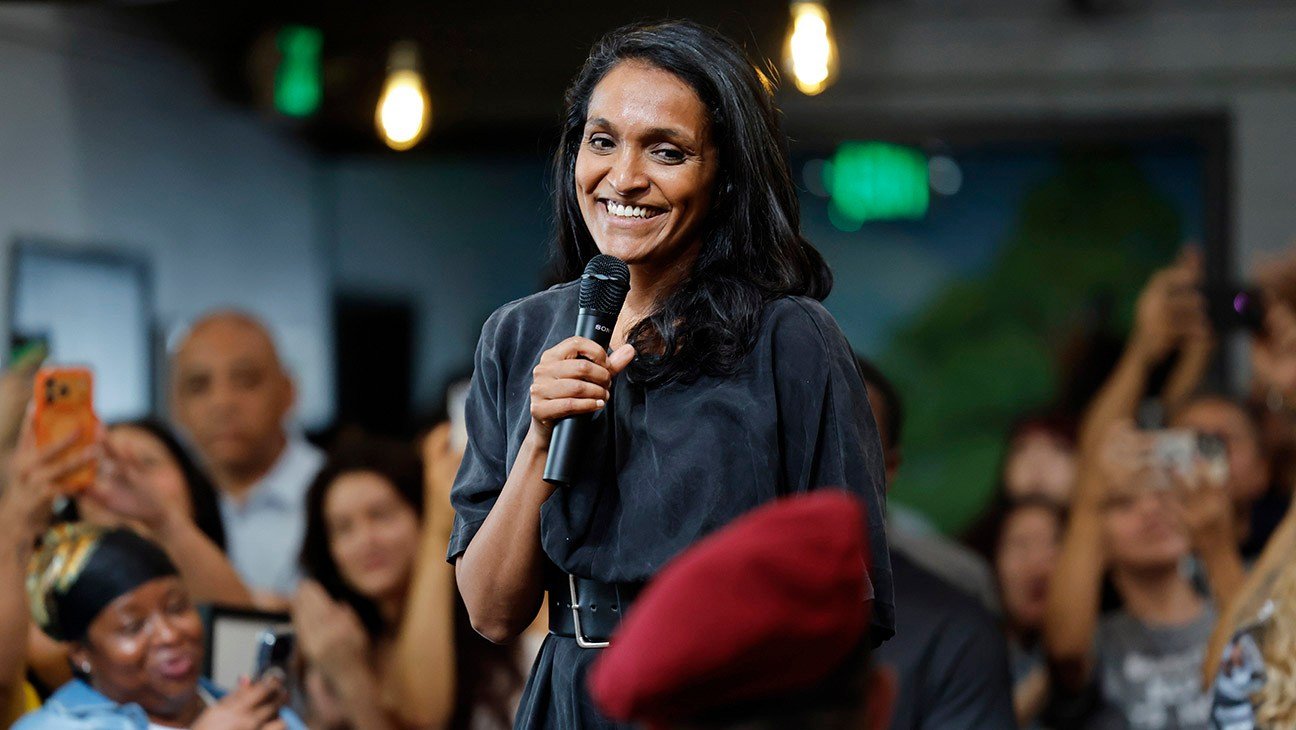
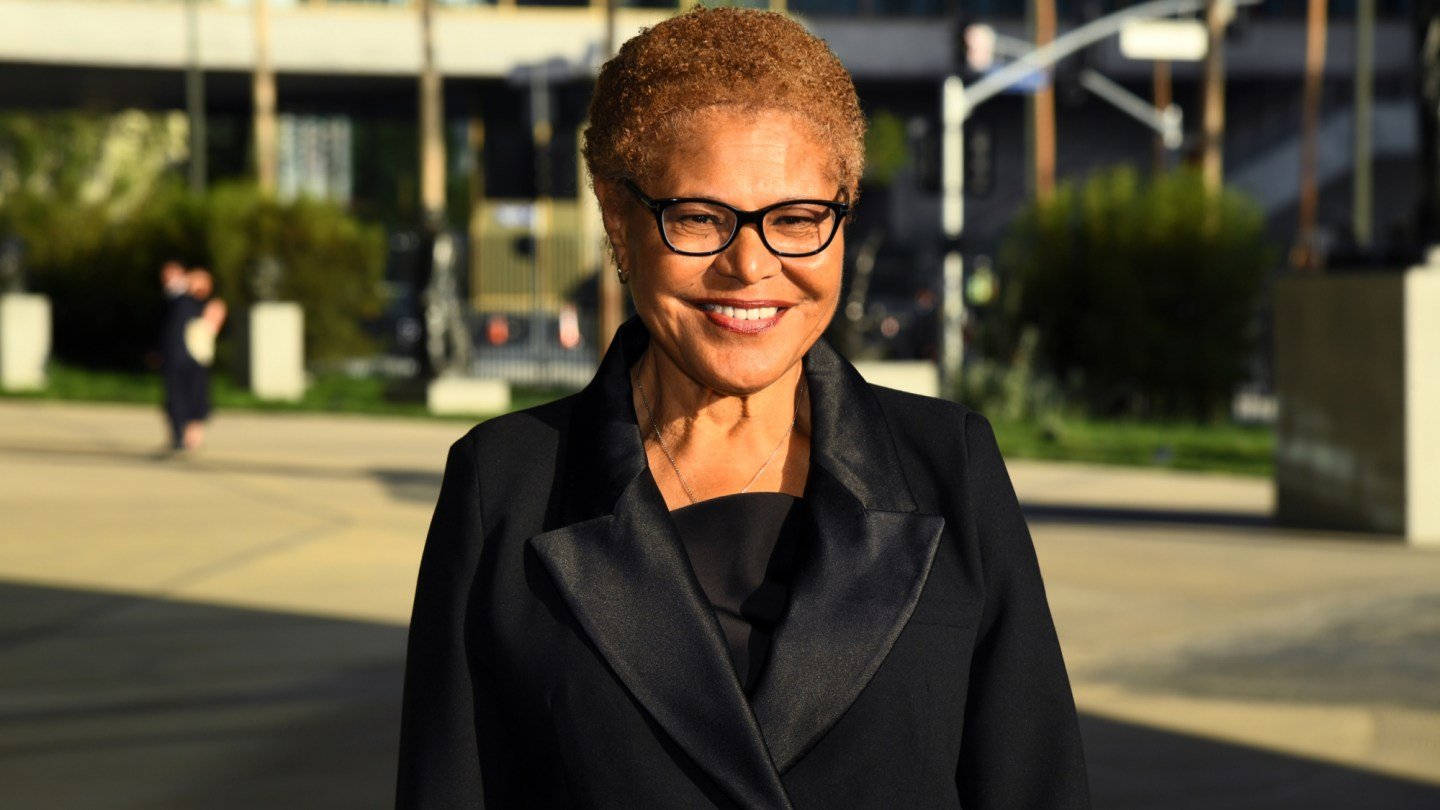
The sitting L.A. councilmember reiterated her support for California Attorney General Rob Bonta‘s antitrust suit to block the $111 billion deal in a statement to The Hollywood Reporter on Thursday.
“Los Angeles’ film industry is already in crisis. The Paramount–Warner Bros. Discovery merger would deepen it, costing an estimated 4,500 film and television jobs, more than 10,000 jobs regionwide, and billions of dollars in economic activity, according to a new County report,“ Raman said. “This is a bad deal for entertainment workers and a bad deal for Los Angeles. That’s why I support Attorney General Rob Bonta’s antitrust lawsuit and stand with the workers fighting this merger.“
The Councilmember added, “Paramount’s threat to leave California unless the lawsuit is dropped is an attempt to strong-arm our state. Serious questions about this merger’s legality should be decided in court, not through corporate threats.”
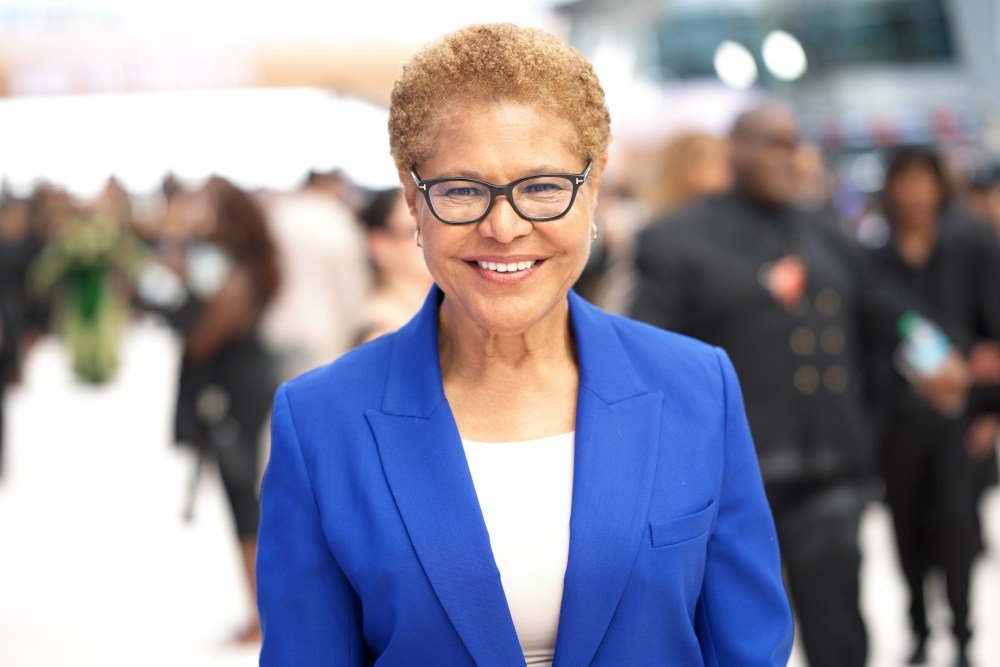
Raman‘s statement arrived on the same day that sitting Mayor Karen Bass held a press conference calling for a hasty resolution to the standoff between Bonta and Paramount Skydance. “It is time for all parties to come to the table. The continued uncertainty is not good for workers, not good for productions and not good for the future of this industry,“ Bass said.
The sitting mayor added that any solution must include enforceable commitments to keep Paramount and Warner Bros. based in L.A. and to retain jobs, film and TV shoots and investment in California.
In saying so, Bass followed the lead of movie theater trade group Cinema United and the unions the Directors Guild of America and IATSE, which also have recently asked the parties in the lawsuit to come together quickly and hash out their differences to avoid any further industry disruption.
Raman and Bass are set to go toe-to-toe in the general election in November. While Bass has gained the support of some Hollywood crew unions and industry figures like J.J. Abrams and Samuel L. Jackson, Raman — whose husband Vali Chandrasekaran was a writer-producer on 30 Rock and Modern Family — has her own deep bench of Hollywood supporters, especially amongst writers and comedians.
The mayoral candidates‘ statements on the Paramount-Warner Bros. Discovery deal arrived just one day after the L.A. Department of Economic Opportunity and CVL Economics released a report detailing how thousands of jobs are at risk as a result of the proposed merger.
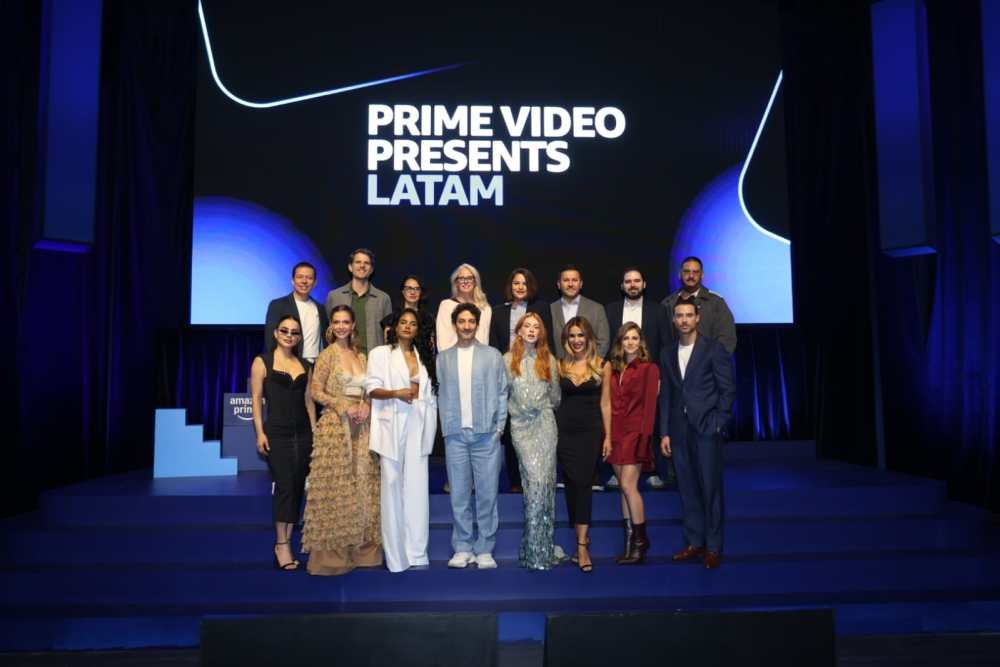
Prime Video has unveiled a landmark $2 billion-plus investment plan in Latin American entertainment spanning 2027 to 2030 in a concerted bid to increase viewership and engagement.
The move comes in what is considered the second fastest growing region for streaming in the world, with Netflix the clear frontrunner.
At an inaugural showcase event in Mexico City led by top execs, the streaming giant announced a massive commitment that entails doubling its original local programming by 2030, expanding its live sports coverage, digital stores and local creative infrastructure across Mexico, Brazil, Argentina, Colombia and Chile.
It also plans to grow third-party streaming subscriptions, rentals and purchases to six new territories – Costa Rica, Dominican Republic, Guatemala, Paraguay, Peru and Argentina – which will not require a Prime membership to purchase or subscribe.
Furthermore, it is also investing in behind-the-camera crew training via programs like “Brasil no Set” and a new physical/post-production skills initiative with Mexico’s SAE Institute.
“What’s happening in Latin America right now is extraordinary — the talent, the stories, the audiences. Today we’re matching that energy with more than $2 billion through 2030 across original and licensed programming and sports. What excites me most is the breadth; this isn’t a bet on one country or one genre. It’s an investment in the entire region, across every way fans engage with Prime Video. This region deserves this level of ambition and we’re delivering it,” said Kelly Day, VP of International, Prime Video.
The company plans more than 25 new titles in 2027 alone, including scripted series, films, unscripted and reality formats while in live sports programming, it has expanded its NBA coverage, bolstered its Brazilian football rights and clinched a flagship four-year deal for 38 home matches of the Mexico National Team starting in September.
“Our job is to find stories that are undeniably local and make them undeniably universal,” said Javiera Balmaceda, head of international originals for Latin America, Canada, and Australia, Prime Video & Amazon MGM Studios. “This slate — from a forbidden love story on the polo fields of Punta del Este to an unsolved crime that still divides Brazil — is proof that when you trust Latin American storytellers with ambition and resources, the world pays attention.” Among its recent bets was its most ambitious show to date, the Chilean limited series “The House of the Spirits,” directed by Francisca Alegria, Fernanda Urrejola and Andres Wood.
In Mexico, an alliance with By Invitation Only and leading acting schools brought together aspiring talent for a professional development workshop, giving participants the opportunity to perform directly for casting directors and agents. Scholarships were also provided to students from low-income backgrounds.
“We’re not just producing programming in Latin America, we’re investing in talent and creative partnerships that will help shape the future of Latin American storytelling,” said Tomás Tejero, regional lead, Latin America & Canada, Prime Video. “What we announced today goes beyond what audiences see on screen. It reflects a broader vision for the region and our long-term investment in everything that happens behind it.”
Upcoming 2026 releases include Argentina Original movie “Barreda,” the third season of “Betty La Fea: Más Fea Que Nunca,” both premiering Aug. 28; docuseries “Los Tinelli S2,” premiering Sept. 30; “El Juicio,” a Mexican thriller inspired by true stories, starring Eugenio Derbez and Pedro Alonso, premiering Sept. 11; Brazil Original docuseries “Marília Mendonça: Sentimento Louco,” premiering Oct. 16; as well as “LOL: Last One Laughing” Argentina S3, hosted by Marcelo Tinelli and “Lo Único que te pido,” a Chilean movie, both premiering later this year.
The Toronto Film Festival has unveiled its final Summit lineup for its inaugural TIFF: The Market event, launching in September.
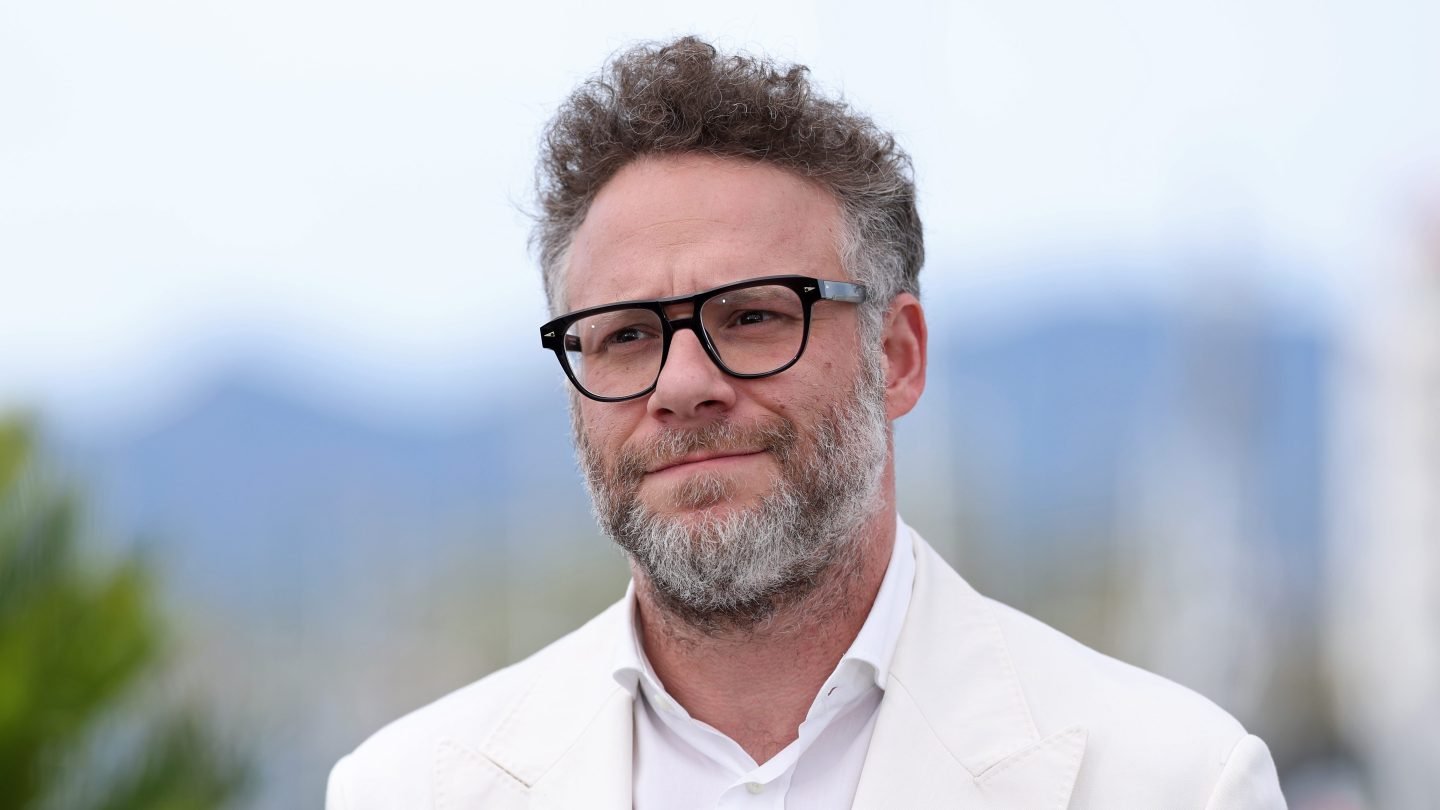
Actor and director Seth Rogen, actor Colman Domingo, Slumdog Millionaire director Danny Boyle and Nigerian media mogul Mo Abudu join the roster of speakers headed to Toronto for the Sept. 10 to 16 run for TIFF: The Market.
Rogen and Boyle will appear as part of the Visionaries program, presented by The Hollywood Reporter, which earlier announced Gary Oldman as one of its speakers. And the Dialogues program is adding Hirokazu Kore-eda, Yeon Sang-ho, Kat Sandler, Rick Hansen, Amber Midthunder, Broderick Johnson, Brad Kane and Cody Lightning to its own lineup.
And the Perspectives section will include a session with Clint Bentley, Greg Kwedar and Colman Domingo talking about equity and parity in indie film, and another about global sales led by CAA’s Roeg Sutherland and FilmNation’s Glen Basner. There’s also a fireside chat with Club Kid director Jordan Firstman.
In all, the TIFF: The Market will include over 70 sessions and events. “Our aim was to reflect the big questions and opportunities facing the industry,” Charles Tremblay, head of TIFF: The Market, said in a statement. “Giving delegates the diverse perspectives they need to navigate the shifting global dynamics was also a key part of our strategy; we’re thrilled to see how well it’s all come together.”
After years of informal dealmaking in Toronto, TIFF will launch its first fully fledged content market at next month’s event and to run alongside the festival. The Market aims to become an official market in Toronto to go beyond film content to serve as a one-stop shop for buying and selling television, gaming and immersive formats.
The Toronto Film Festival is set to run Sept. 10 to 20.
If you purchase an independently reviewed product or service through a link on our website, The Hollywood Reporter may receive an affiliate commission.
On Aug. 18, Peacock implemented its fourth price hike in four years, increasing subscription rates across all plans and tiers. So, whether you still need to see Curry Barker’s Obsession or are eager to binge all 51 seasons of SNL ahead of its fall 2026 return, we’re hooking you up with the little-known ways to save big on Peacock — or even get it for free.
Does Peacock Have a Free Trial?
Yes and no. While the service doesn’t offer a free trial directly, fans can enjoy free Peacock access through partner subscriptions, including DirecTV, Instacart+ and Walmart+. More on each option below.
Best Peacock Deals 2026: Get Peacock Free With DirecTV
Starting with the standout promotion, customers who sign up for one of DirecTV’s signature packages — Entertainment, Choice, Ultimate or Premier — can claim two months of the Movies Extra Pack + Peacock at no cost. Plus, DirecTV offers a five-day free trial for any plan, meaning new members can stream Peacock (and everything else the packages have to offer) at no cost during the trial period.
Here’s exactly how to claim the offer: Select your preferred signature package, then opt to add “Movies Extra Pack + Peacock Premium” where it instructs you to pick your add-ons. As indicated, you’ll automatically get two months of the Movies Extra Pack + Peacock included in your subscription (click here to see everything the add-on offers on top of Peacock). After two months, unless cancelled at any time, DirecTV’s Movies Extra Pack + Peacock will renew monthly at the then-prevailing rate.
Best Peacock Deals 2026: Get Peacock Free With Instacart+, Walmart+
Streamers can also get free Peacock access through partner subscriptions, including Instacart+ and Walmart+, which both include Peacock Premium in their membership. Since Instacart+ offers a 14-day free trial, members can stream Peacock at absolutely no cost during that two week period. Alternatively, Walmart+ offers a 30-day trial for $1, giving nearly free access to Peacock for one month.
Best Peacock Deals 2026: Peacock Student Discount, Young Adult Discount (Age 18-24)
For younger audiences, the NBCUniversal streamer not only offers a year-long student discount, but it also extends the same 54 percent price drop to users ages 18 to 24, officially called the Peacock Young Adult Discount. After 12 months, the plan auto-renews at the then-current annual rate. This accounts for an even larger savings than before Peacock’s Aug. 18 price hike because the student rate did not increase alongside Peacock’s standalone packages.
Best Peacock Deals 2026: Apple TV and Peacock Bundle
On Oct. 20, 2025, the Apple TV and Peacock Bundle launched, meaning customers can now bundle the two services and save. Bundle options include Apple TV and Peacock Premium ($14.99 per month), and Apple TV and Peacock Premium Plus ($19.99 per month). Since Apple TV is currently $12.99 per month on its own, these bundles represent a discount of 40-plus percent. As with the student discount, this accounts for an even larger savings than before Peacock’s Aug. 18 price hike because these bundle prices did not increase alongside Peacock’s standalone packages.
This bundle is a smart choice for Formula 1 fans as the 2026 season marks the start of F1 and Apple TV’s five-year streaming deal, where Apple TV is the exclusive U.S. home for every practice, qualifying, sprint and race.
Best Peacock Deals 2026: Mastercard
Save on a Peacock Subscription Through Mastercard
Mastercard users can also save on a Peacock subscription.
Right now, eligible World or World Elite Mastercard holders can get a statement credit of $3 per month if they pay for Peacock Premium or Premium Plus with their card. The offer expires Dec. 2027.
Best Peacock Deals 2026: Annual Subscription vs. Monthly
At the back half of 2025, Peacock added a lower-priced Select tier, now $8.99 per month (up from $7.99), which includes current seasons of NBC and Bravo shows and select shows from the broader NBCUniversal library. This is in addition to the more popular ad-supported Premium tier, now $12.99 monthly (up from $10.99), and the ad-free Peacock Premium Plus package, now $19.99 per month (up from $16.99). For the best bang for your buck, opt for the annual plans (now between $89.99 and $199.99), which offer 12 months for the price of 10. See below for more on each plan.
Peacock Plans: Premium vs. Premium Plus
Both Peacock Premium and Premium Plus packages include access to over 80,000 hours of movies and TV show episodes, including brand-new and Oscar-winning films; next-day access to NBC and Bravo series such as Love Island,Vanderpump Rules and the entire Real Housewives franchise; and both new and past seasons of Peacock original series.
Peacock Premium also has over 50 channels and live sports, including MLB Sunday Leadoff, Premier League, Sunday Night Football and WWE. It was also the streaming home of the Women’s World Cup and the U.S. Gymnastics Championship.
Peacock’s Premium Plus tier includes all of the above, plus your local NBC channel live, no ads (except on select live TV shows) and the ability to download select titles to watch offline later.
Additional Details on Instacart+
Get Peacock for Free Through Instacart
Want to get Peacock for free? If you’re looking to cut the cord and expand your binge-watching library while saving time on grocery shopping, Instacart is offering one of the best free deals on Peacock.
The ad-supported Peacock Premium plan (reg. $12.99 per month or $129.99 annually) is included for free with Instacart+ memberships, which offers unlimited free delivery on orders over $35, lower service fees, 5 percent credit back on eligible pickup orders and other perks for $9.99 per month or $99 per year with annual billing. Instacart says the service pays for itself if you order twice per month.
Instacart+ users get free access to Peacock’s ad-supported Premium plan for as long as their membership is in effect and the offer is available. The deal doesn’t apply to existing Peacock accounts, and you cannot use the offer to upgrade to Peacock’s Premium Plus, which has fewer ads.
Neutrogena, the popular cosmetics and skin care brand, has issued a statement following the death of Hayden Panettiere, who served as a spokesperson and brand ambassador for the company for nearly a decade during the height of her career. Panettiere’s death ignited widespread backlash against Neutrogena across social media due to comments the actor made about the company wanting to fire her because she had spoken up about her battle with postpartum depression.
“We are deeply saddened by Hayden Panettiere’s passing,” Neutrogena said in a post on Instagram. “For more than a decade, Hayden was a valued member of our Neutrogena community. We are proud to have partnered with her and understand that we made her feel unsupported during a very difficult time. This is not what Neutrogena stands for or who we want to be.”
The company statement continued: “Hayden’s courage in sharing her challenges helped inspire important conversations and awareness. We are making a significant investment to a long-standing community health partner to help give more women access to the support they need, including care for postpartum depression. We will share more details with this community when plans are in place.”
Panettiere alleged in her 2026 memoir, “This Is Me: A Reckoning,” and in several interviews promoting the book that Neutrogena tried to end their longterm partnership because she spoke publicly about the postpartum depression she endured after the birth of her child, Kaya. Panettiere explained on the “On Purpose” podcast that Neutrogena said discussing such a matter publicly violated their “morals clause.”
“Of all the things, too, that they would fire me over, this was the last thing I thought they would fire me over,” Panettiere said. “When I got that call that Neutrogena wanted to fire me over that, and my representative at the time said, ‘That’s illegal. You can’t do that.’ And even though she saved the day, that year, I knew that that was going to be it. I was not going to be invited back the next year.”
Panettiere’s death inspired calls on social media for a boycott against Neutrogena. The death is currently under investigation, with the DEA recently joining the probe. Police have said there were “not any signs of foul play or suspicious circumstances.”
The mayor, who is running for reelection this year, previously opposed the $111 billion deal unless it avoided loss of jobs. But in a news conference on Thursday, Bass urged Paramount Skydance and California attorney general Rob Bonta to come to a quick settlement on the antitrust lawsuit from 12 state regulators that is currently challenging the transaction.
“While there are varying perspectives on the proposed transaction, today we are united around one clear message: It is time for all parties to come to the table. The continued uncertainty is not good for workers, not good for productions and not good for the future of this industry,“ Bass said in a press conference.
Bass added, “Too many productions are at a standstill, which means Angelenos are out of a job and they’re not getting paid. As mayor, I cannot stand by as the job security of thousands of hardworking union members is being put at risk. That is why we are calling on Paramount, Attorney General Rob Bonta and all relevant parties to come together, engage directly and in good faith and work urgently to find common ground and keep our vital industry in Los Angeles.”
The remarks arrived one day after a report from the L.A. Department of Economic Opportunity and CVL Economics estimated that thousands of corporate, creative and production jobs will be at risk if the merger goes through. The report also pegged potential lost waves at $1.26 billion and lost economic value at $2.78 billion.
Her statements prompted a sharp rebuke from the Writers Guild of America West union, which is opposed to the merger and has filed its own lawsuit to stop it. “We are disappointed that Mayor Bass has chosen to join Paramount’s pressure campaign on public enforcers, to push through a merger that is being rightfully challenged as illegal and will lead to job losses in the entertainment industry,“ the union said in a statement on Thursday. “Her statement comes on the heels of a county report estimating thousands of jobs will be lost if the merger proceeds.“
The union continued, “Industry workers deserve a mayor who believes in upholding the law and protecting the working people of Los Angeles, not serving the interests of powerful corporations.”
Bass‘ remarks arrive as several major entertainment organizations have similarly called for a hasty settlement. Cinema United, the movie theater trade organization, once vociferously opposed to the merger, backed off on Tuesday and called for a settlement to avoid industry uncertainty. The previous week two unions, the Directors Guild of America and IATSE, also asked both sides of the antitrust lawsuit to come together and hash out a deal before the scheduled trial date of March 2027.
IATSE‘s political division in California previously endorsed Bass in her run for mayor, citing her frequent communication with the union and efforts to boost production in L.A.
Los Angeles Mayor Karen Bass urged California attorney general Rob Bonta and Paramount to resolve their differences and work “urgently” to find a resolution to the 12-state antitrust lawsuit that is blocking Paramount’s takeover of Warner Bros. Discovery.
“While there are varying perspectives on the proposed transaction, today we are united around one clear message: It is time for all parties to come to the table,” Bass said at a press conference Thursday.
She continued, “The continued uncertainty is not good for workers, not good for productions and not good for the future of this industry. Too many productions in L.A. are now at a standstill, which means Angelenos are out of a job and they’re not getting paid.”
Bass, a Democrat, said that any settlement among the parties “must include meaningful and enforceable commitments to keep Paramount and Warner Brothers Discovery in L.A. as well as maintaining jobs, productions and investments in L.A. and California.”
“This is not about taking sides,” the mayor said. “This is about fighting for Los Angeles, standing up for our union workers, keeping Paramount here, and protecting the future of this industry. L.A. has been home to the entertainment industry for generations, and we intend to do everything we can to keep it here.”
At Thursday’s press conference, Bass said, “As mayor, I cannot stand by while the job security of thousands of hardworking union members is being put at risk. That is why we are calling on Paramount, attorney general Rob Bonta, and all relevant parties to come together, engage directly and in good faith, and work urgently to find common ground and keep our vital industry in Los Angeles at a time when film and television production is already facing significant challenges.”
Not mentioned by Bass in her remarks: a report issued Wednesday by Los Angeles County that estimates the Paramount-Warner Bros. Discovery merger could eliminate about 4,500 film and TV jobs over three years. The report said the combination of the two companies would accelerate the downturn in L.A. production, which has already cost 52,000 jobs over the last four years.
Bass joins fellow Democrat Xavier Becerra, who is the frontrunner in the race for California governor. Becerra recently said a settlement between Paramount and the state AGs would be the best outcome in the current legal standoff. “I hope it settles” before the case goes to trial, Becerra said at a Politico conference on Aug. 11. “It is easier to stand in a conference room and settle than it is to stand in a courtroom.”
The 12 states, led by Bonta, sued in federal court in July to block Paramount’s takeover of Warner Bros. Discovery. The states allege the proposed merger will illegally reduce competition in the markets for theatrical and blockbuster films, as well as basic cable TV. Paramount agreed to pause the WBD merger until after the case goes to trial, which is scheduled for March 2, 2027. But Paramount wants to resolve the legal matter as soon as possible, not least of which is because it will being incurring a $7 million daily “ticking fee” payable to Warner Bros. Discovery shareholders starting Oct. 1 until the merger closes.
Last week, in a statement, Paramount CEO David Ellison said his company has “offered commitments and concessions and remain open to working constructively with the state AGs to find a path forward in the interest of our employees and the creative community in California and across the world.” Bonta, meanwhile, has said that the only acceptable terms of a settlement would be “structural” remedies (like divestitures or keeping certain business operations separate) rather than “behavioral” ones, such as Paramount’s pledge to release more than 30 movies to theaters with a 45-day window.
Bass on Thursday said time was of the essence to find a path to allow Paramount and Warner Bros. to merge. “We cannot afford prolonged uncertainty that delays investment, puts production on hold, and creates greater instability for thousands of workers and families,” she said. “Any resolution must put workers and the long-term health of our entertainment industry at the center.”
Bass said, “It is not by accident that L.A. is the entertainment capital. We have unparalleled talent, unlimited creativity, a skilled workforce, and the highest amount of production space in the world. Today, we are speaking up to project to protect this legacy.”
The Writers Guild of America, which also has sued to block the Paramount-Warner Bros. merger, slammed Bass’s comments. The union accusing the mayor of joining “Paramount’s pressure campaign on public enforcers.”
“We are disappointed that Mayor Bass has chosen to join Paramount’s pressure campaign on public enforcers, to push through a merger that is being rightfully challenged as illegal and will lead to job losses in the entertainment industry,” the WGA said in a statement. “Her statement comes on the heels of a county report estimating thousands of jobs will be lost if the merger proceeds. Industry workers deserve a mayor who believes in upholding the law and protecting the working people of Los Angeles, not serving the interests of powerful corporations.”
The WGA statement continued: “Paramount has created a false choice for entertainment industry workers: The company argues that enforcing antitrust law hurts us by creating uncertainty, which is of their own making as the company attempts to dominate the industry. We reject the claim that beleaguered industry workers must choose the possibility of a job today, in exchange for the certainty of job losses tomorrow.”
Variety has reached out to Bass’ office for comment.
Meanwhile, Paramount filed a motion with the court on Monday seeking to force the states and the WGA to post a $1.88 billion bond to cover the company’s losses related to the WBD merger delay. Bonta’s office said Paramount was seeking a “do-over” on its agreement to delay the Warner Bros. Discovery merger until after the antitrust trial.
Longtime TV exec Chuck Saftler, who helped build FX into the powerhouse it is — having joined the company in 1993, prior to its before its June 1994 launch date — is departing the company after nearly 33 years. The well-regarded Saftler most recently served as head of acquisitions for Disney networks including ABC, Freeform, FX and Nat Geo.
Before that, he headed business operations for ABC, Freeform and FX Networks, while leading library and acquisitions for the group’s networks. He was also FX Networks president of programming strategy.
“After more than 32 years with Disney, I have made the decision to step down from my role as I consider a new professional chapter,” Saftler wrote in a memo to staffers on Thursday. “It’s hard to put into words what these three decades have meant to me. I had the extraordinary opportunity to help build FX from its earliest days and then to take on new leadership roles across Disney Entertainment Television. I’m incredibly proud of what we built, the stories we told and, most of all, the people I had the privilege of doing it with.”
Saftler first helped launch FX when it was focused on live, original programming under the “TV made fresh daily” banner. Soon, the network shifted gears and focused on acquisitions of popular dramas like “The X-Files,” and then turned to the original programming arena. Meanwhile, Saftler built up the network’s acquired film and TV libraries. He also helped launch the Fox Movie Channel, where he was general manager.
During the 2000s, Saftler focused much of his attention on buying the network window to theatrical features, as well as off-network series. In 2013, he struck a landmark $750 million cable syndication and VOD deal to bring “The Simpsons” library to FXX — while also building out a platform for viewers to find “Every Simpsons Ever.” That deal eventually led to the franchise finding a home on Disney+.
Before FX, Saftler was an executive with KTLA Los Angeles. Earlier in his career, as an exec with Columbia Pictures TV, he helped devise the blueprint for the TV syndication of “Seinfeld” and “Married … With Children.”
Beyond TV, Saftler is known for his love of live music — and his professional photography skills, documenting some of the biggest concerts and artists in the business.
A Knight of the SevenKingdoms wastes no time letting its viewers know this isn’t just another Game of Thrones show.
In the opening scene, we meet our protagonist, Ser Duncan the Tall, his eyes full of determination as he’s about to set out on his hero’s journey, seeking out glory larger than this world might expect of a simple hedge knight.
The franchise’s iconic theme song is starting to play, the loud warrior drums about to give way to that ubiquitous melody. And then, suddenly, Ser Dunk is bent over a tree, shit exploding from his backside just after the track halts.
Music plays a key role here, as the show used the old theme as a sort of sacred cow to be sacrificed, further giving way for something else to come.
“Some of the intention on that was to say we’re doing a different thing musically here,” A Knight of the Seven Kingdoms composer Dan Romer says. “There are a lot of intentions here, but one was to say, ‘That was the old music of Game of Thrones. This is the music of A Knight of the Seven Kingdoms.’ “
Music has long been a crucial part of Game of Thrones’ world-building, and that’s no different for the latest offshoot, a much smaller-stakes affair than what we’ve gotten used to in our time in Westeros, the fictional continent on which GoT is set. This story doesn’t focus on the violent politics of jockeying for the Iron Throne or the world-ending threats beyond the wall in the North. Instead, it hones in on the small folk who are often caught in the cross fire or merely bearing witness to what the Great Houses are doing.
Romer says that when he first started working on the series, showrunner Ira Parker and his team had been editing a lot of it to spaghetti Western cowboy music. They liked the overall vibe it created but knew the sounds of low tremolo guitars and more modern drum kits wouldn’t work in this Middle Ages setting.
“The assignment sort of became, ‘Let’s make a Venn diagram where we have cowboy music on the left and music that could exist in Westeros on the right. What is this in-between spot?’ ” Romer says. “It was a small amount of sounds, which was exciting. It’s really exciting to have a limited palette and to kind of have bumpers around your creativity.”
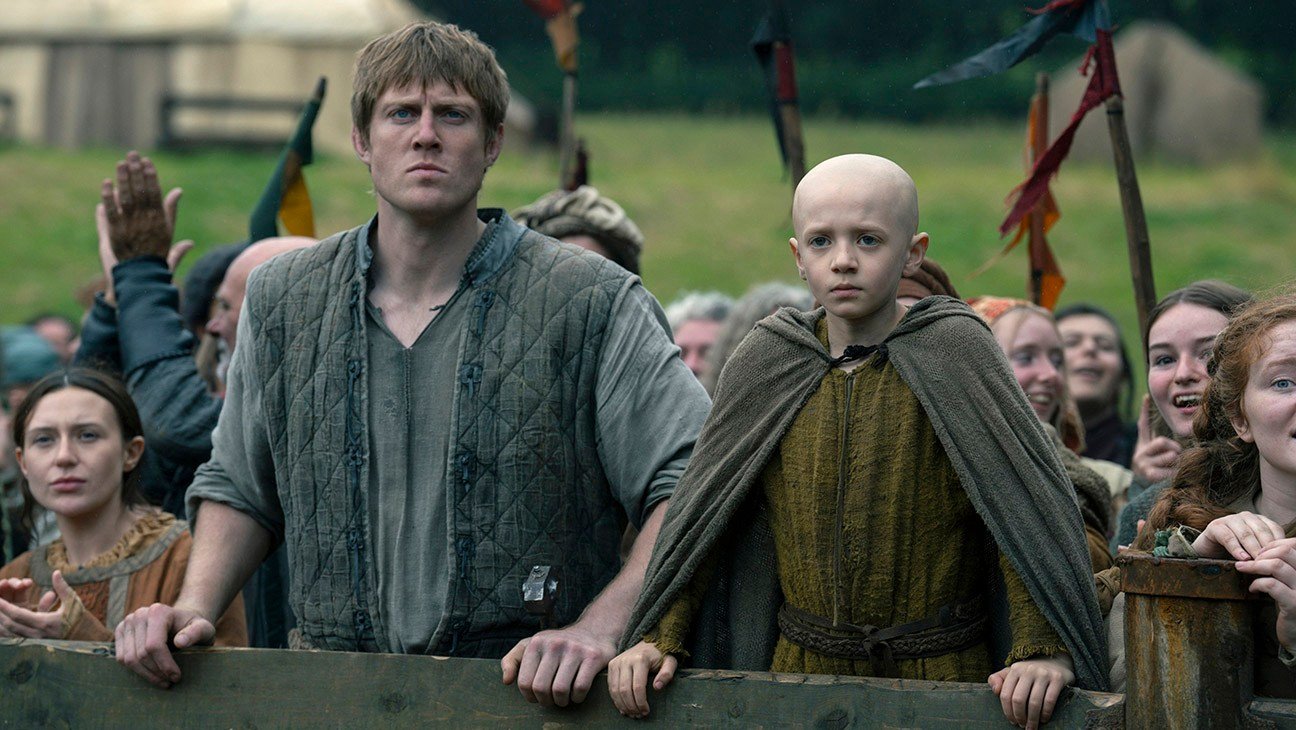
Peter Claffey (left) and Dexter Sol Ansell as Dunk and Egg in HBO’s A Knight of the Seven Kingdoms.
Steffan Hill/HBO
The result was a bit more intimate, with swelling strings that alternate between sounding orchestral or like bluegrass fiddles, and guitars, both lute-like (with strings that are plucked), and like Willie Nelson’s infamous nylon-string classical acoustic guitar Trigger that he strums with a flatpick. “Quieter Accommodations,” arguably the most whimsical song in the Game of Thrones canon, pairs acoustic guitar with a whistle fit for a cowboy cooking his dinner by the fireside.
“Getting the emotion of whimsy was one of the main goals of this score,” Romer says. “The whistle has been around for as long as humanity. We don’t use it a lot in the score, but it does go back to that idea of being both Western and Westeros. Whistling, I think, in any genre of music becomes fair game.”
The score reflects a warmer Westeros. Some songs, like “The Luck Is Ours Alone,” are dainty and beautiful and more hopeful than one may expect out of such a violent world. Romer avoided being too referential in his score, wanting a “complete clean slate harmonically and melodically,” he says. The main theme was used only twice — once for the first- episode gag and a second time in a climactic closing moment in episode four.
“We tried to keep it to those two spots, then otherwise, let’s just see how much of a left turn we can take in the same world,” Romer says. “Obviously, it’d be hard to do like an EDM score in a Game of Thrones property, but we felt that we could take the direction of the score pretty far.”
Romer says the most challenging part of developing the music was finding the proper melody for Duncan, recalling that he sat with Parker extensively to find what felt right.
“Ira was very insistent that he didn’t want it to be something expected, and when I happened upon the first six notes, then he was like, ‘OK, I love that. Now what would you do next if this was a traditional piece of score?’ ” Romer recalls. “So I did the next six notes, and he said, ‘That’s what I don’t want. What’s the opposite of that?’ So I started doing some funny things with timing and tonality, and then we found that second phrase. The melody got to a pretty close place in that first session, and then throughout the process for the first two episodes, it got honed in.”
Beyond Romer’s soundtrack, A Knight of the Seven Kingdoms further broke the GoT mold using a couple of needle drops: Kenny Dorham’s jazzy “Alone Together” and Tennessee Ernie Ford’s country-western classic “Sixteen Tons.” Those modern tracks certainly break any rules established by the Venn diagram that defined Romer’s score, but he says it still stuck the landing.
“I found out about the needle drops when I was already making the music, and I was so pumped when I saw it,” Romer says. “We’d discussed replacing the jazz needle drop at the beginning of episode six with score, but there’s nothing in this world that could hit this emotion the way it was being hit [with the needle drop]. It’s a fantastic beginning to the episode, and I’m really glad we did it.”
While the official soundtrack was of course a major lift, Romer’s diegetic background music was quite the undertaking as well. Romer says he wrote more than a dozen fiddle pieces to play across the season’s six episodes, and, by his own estimate, about half the music he made for the show was for the background scenes.
“That’s what helps create the world,” he says.
Romer and the Knight of the Seven Kingdoms team took more than their share of creative swings in developing the show. Their decisions added a refreshing layer to a franchise some argue was in need of a restart. But did he have any fears of ticking off one of the biggest and most devout fan bases in pop culture by changing its sonic identity too much?
“Of course there’s a bit of that. The original Game of Thrones score is just so incredible, but the fact that we were doing something so different from the original score made me feel a lot more comfortable and excited to experiment in that world,” Romer says. “A good franchise can experiment with different kinds of music. They can experiment with different kinds of cinematography, different kinds of storytelling. As long as it’s done with thought and care for the original material, it can be really great.”
This story first appeared in an August stand-alone issue of The Hollywood Reporter magazine. To receive the magazine, click here to subscribe.
If you purchase an independently reviewed product or service through a link on our website, The Hollywood Reporter may receive an affiliate commission.
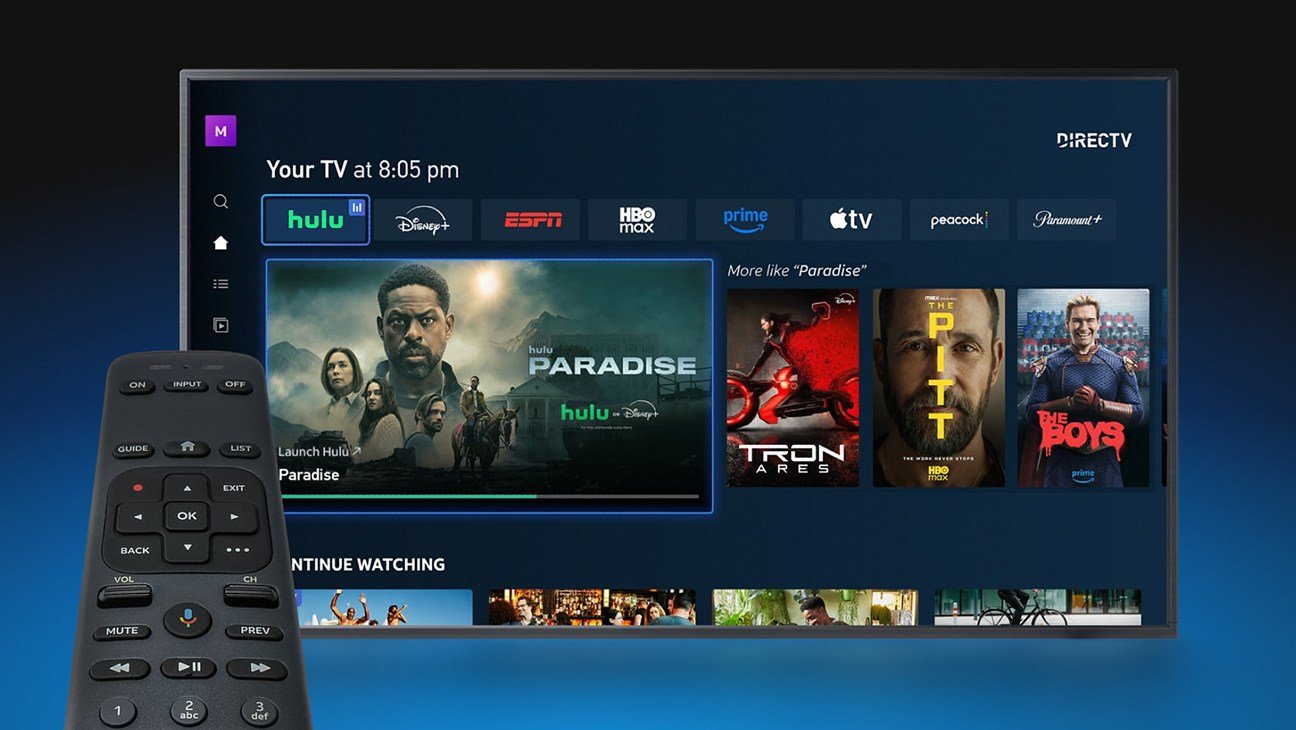
DIRECTV is emphasizing just how comprehensive its offerings are — and how comprehensive its plans can be — with discounts on a variety of premium add-ons.
For context, each of DIRECTV’s four streaming Signature Packages — ENTERTAINMENT, CHOICE, ULTIMATE and PREMIER — come with a varying number of television channels and streaming subscriptions already included. Customers then have the option to tack on additional networks and/or services not already part of their selected plan.
At their base level, for customers selecting a Gemini device, each of the four Signature Packages includes the Disney+, Hulu Bundle and ESPN Unlimited Plan1, The Premier package, DIRECTV’s top-tier package, also includes HBO Max, Cinemax, Paramount+ with Showtime and STARZ. Here’s where the promotion comes into play: New ENTERTAINMENT, CHOICE and ULTIMATE subscribers can claim three months of HBO Max, Cinemax, Paramount+ with Showtime, STARZ and MGM+ at no extra cost — a $185 value2 — just by signing up. Customers then have the option to keep or remove these add-ons by cancelling at any point within the three-month period.
As for Peacock, DIRECTV is running a simultaneous promotion that gives any Signature Package subscriber two free months of its “Movies Extra Pack + Peacock” — a $19.98 value — again, just by signing up3. Like the first promo, the add-on will renew at the then-prevailing rate (currently $9.99 per month plus tax) unless canceled at any time before the two-month mark. Both offers can be claimed in tandem, for over $200 worth of discounts.
Each of these months-long offerings serve as a cost-free opportunity for customers to see which subscription add-ons are most essential to their television watching experience. On top of these promotions, subscribers can, of course, learn how to take advantage of the limited-time offer of $25 to $40 off their first month of any Signature Package4.
Learn more about each plan’s specs and take advantage of limited-time promos now at Directv.com/affiliates.