Category: Entertainment

  • Arte President Bruno Patino Issues Industry-Wide Alert: AI Has Now Pushed Us Into a ‘Relationship Economy,’ the Only Way Forward Is ‘Coalition’

    Arte President Bruno Patino Issues Industry-Wide Alert: AI Has Now Pushed Us Into a ‘Relationship Economy,’ the Only Way Forward Is ‘Coalition’

    Amongst growing conversation on conglomeration, the shifting landscape of global media and restrained freedom of speech, the leading documentary festival CPH:DOX chose “Media Sovereignty: Rethink, Envision, Redefine” as the theme for its second-ever CPH:SUMMIT. This year’s event gathers politicians, innovators, researchers and documentary professionals to discuss the future of the audiovisual industry, focusing specifically on the state of information, technology and shifting notions of truth. In the opening keynote, president of public broadcaster Arte France Bruno Patino provided a bleak yet piercingly precise evaluation of the industry today.

    During the Summit’s welcome speeches, Doc Society’s Beadie Finzi presented the audience with a report generated by AI bot Claude predicting what the industry would look like in 2030. The result was ghastly: public broadcasters would become “a shadow” of what they once were to evolve into “merely commissioning entities”; documentary would be split between costly prestige and cheap creator-led, with no in-between; and the information environment would become flooded, with “tiny audiences who care” clustering “tightly around a tiny number of deeply trusted brands.”

    Most worryingly, the “real loss by 2030” would be that of “shared commons.” Finzi’s AI-generated report warned that, in just four years, the idea that a society could have a common information experience would be “largely gone” and rebuilding it “will take longer than losing it did.”

    Patino was then invited on stage to directly respond to Claude’s predictions. As a seasoned journalist, writer, media analyst and a close observer of recent developments in AI, the exec offered a sharp insight into how rapidly developing technology is contributing to the crumbling of our understanding of media. Below, you will find the keynote speech’s main points:

    Pull behavior replaced by push era

    Patino says that, for a long time, citizens went “directly to the media,” which he called a “pull behavior.” People online would actively seek information, accessing online newspapers and trusted sources in search of whatever was going on in the world. With the advance of social media and algorithm-based platforms, the exec said we have now entered a “push era.” “People wait for content to reach them, not the other way around. This is a major change.” 

    Power and saturation

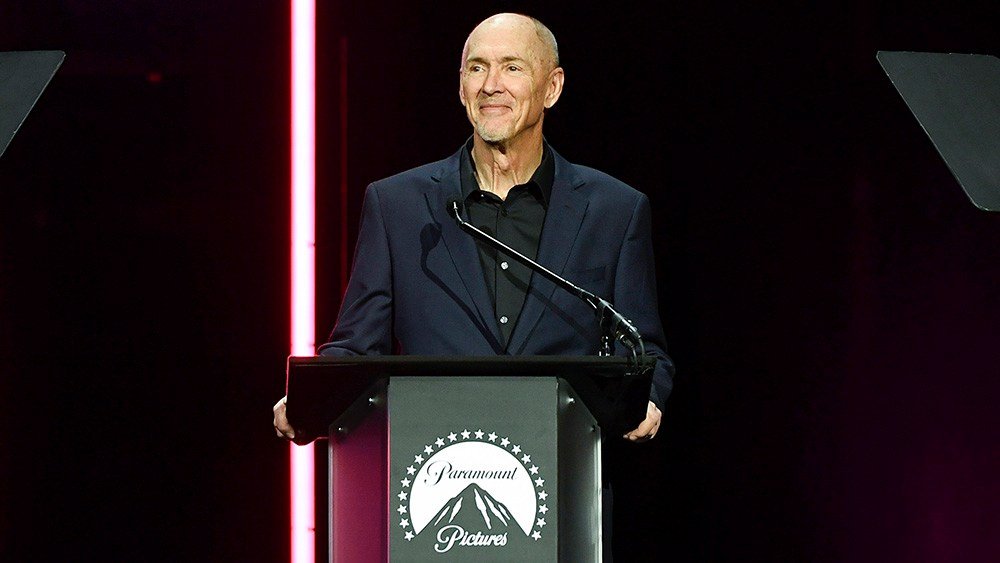
    In that push landscape, what has evolved is a scenario in which there are two main industry dynamics: saturation and power. “The very notion of scale is changing,” said Patino. “Global players are gaining weight and [becoming] more powerful than ever. Just look at the recent acquisition of Warner Brothers by Paramount in the United States. Everybody is competing to become the global interface and control the relationship with saturation.” Thanks to AI, the expert said that our content production is now “nearly limitless.” “Content can be produced faster, cheaper and in greater quantities than ever before.” 

    “These two dynamics could have similar consequences,” he went on. “First, the industrial standardization of content due to the power increase. Second, the technological standardization of content due to less diversity. And that leads us to the paradox of our industry: We’re producing more content than ever before, but diversity is shrinking at the end of the day.”

    Getty Images

    Fragmentation as our primary relationship to reality

    Patino alerted audiences to how three crucial ideas in our understanding of modern culture are now threatened: “First, the idea that culture is the source of both individual and collective emancipation. Second, the idea that fact-based information shared with the widest audience contributes to the democratic [process]. And third, the idea that public broadcasting is a form of collective solidarity.” 

    He said that the third transformation is “not only about our industry” but the “very world we’re living in, in which the legitimacy of the European social and cultural model fought for after World War II is being questioned.” To Patino, the worst case scenario is “a world in which AI determines the citizen’s place in society, deciding the information, the culture and the entertainment [they] have access to. In such a world, fragmentation becomes our primary relationship to reality.”

    The relationship economy

    That risk of fragmentation did not come from nowhere, added the exec. It’s the direct consequence of the “broader history of the digital revolution.” Patino outlined three ages since the revolution, with the Age of Access coming first with the advent of the internet, then the Age of Propagation, which started in 2007 and introduced notions such as “algorithm, viral, visibility, social media,” and “the rise of the attention economy.” 

    With the introduction of AI, we have now entered the Age of Implication. “An era where everything becomes blurred between human and machine, authentic and synthetic, reality and fiction.” “The age of social media changed the place of truth,” continued the expert. “Media no longer speak directly to citizens; they speak to an agent who then speaks to citizens. The risk is that these agents become the primary mediator of our relationship to society, to information, to culture, to entertainment.”

    This, Patino said, is what he calls the Relationship Economy. “There’s a growing risk of invisibility for diverse voices or narratives about the real world, either because those narratives will never be proposed to audiences or because they will be drowned in the age of content.”

    David Borenstein accepts the Documentary Feature award for “Mr. Nobody Against Putin” onstage during the 98th Oscars at Dolby Theatre on March 15. (Photo by Kevin Winter/Getty Images)

    Getty Images

    Coalition: the future of Europe

    The Relationship Economy creates “a major consequence for our professions,” said Patino. “There is a growing risk of invisibility for diverse voices and for narratives about the real world, either because those narratives will never be proposed to audiences or because they will be drowned in the flood of content. For us in Europe, this created a whole challenge.”

    “The first challenge is discoverability: How can our content be found in the age of AI when AI is controlled by U.S.-based giants? The second challenge is production itself. Our very logic of production is increasingly tied to U.S.-based platforms. Europe cannot produce acts of comparable power in these fields.”

    The question, Patino said, is simple: Is there another logic besides sheer power? “Faced with the power of these platforms, Europe must rely on the strengths of coalitions.” “This is, overall, a political choice. Europe remains the most effective geopolitical, social and cultural framework for rethinking identities, narratives and spaces.”

    Speaking on that, Patino said he believes Arte can become “the missing name in the European broadcasting system.” The exec brought up how Arte federates a network of 14 public broadcasters, has programs available in seven languages, and maintains strong ties with the creative ecosystem across Europe. Giving his speech the day after the Oscars, Patino brought up Arte’s hand in two big winners: “Mr Nobody Against Putin” and “Sentimental Value.”

    “Our ambition is not to build a mega structure, not even to create a European Netflix,” he added. “Our goal is much simpler: to give real substance to the European network. An alternative built on curiosity, discovery and openness.”

  • ‘Basic’ Review: Ashley Park and Leighton Meester in a Fun, Fizzy Comedy About the Perils of Googling Your Boyfriend’s Ex

    ‘Basic’ Review: Ashley Park and Leighton Meester in a Fun, Fizzy Comedy About the Perils of Googling Your Boyfriend’s Ex

    There are two types of people in the world: Those who’ll admit to looking up their partner’s exes on social media and those who are lying. Basic, Chelsea Devantez’s expansion of her own 2020 short, builds itself around this embarrassing but universal truth. Following a brokenhearted woman whose obsession with her ex’s ex comes to a head one lemon-drop-fueled night, the comedy serves tragically relatable laughs all the way into some genuine (if hardly groundbreaking) wisdom.

    In Ingrid Goes West fashion, our early introduction to Gloria (Ashley Park) is of her lying in the dark, furiously scrolling through Instagram posts by the impeccably dressed Kailynn (Leighton Meester), apparently a model-pretty influencer clad in flashy dresses or tiny bikinis. Emphasis on furiously: Gloria’s internal monologue swings between imagining Kailynn’s perspective in the most mocking tone she can muster and bitterly picking her apart for being vain, vapid and, above all, basic.

    Basic

    The Bottom Line

    Hardly basic.

    Venue: SXSW Film Festival (Narrative Spotlight)
    Cast: Ashley Park, Leighton Meester, Taylor John Smith, Nelson Franklin, Kandy Muse, Ashley Nicole Black, Kenzie Elizabeth
    Director-screenwriter: Chelsea Devantez

    1 hour 28 minutes

    Kailynn is the ex-girlfriend of Nick (Taylor John Smith), who’s none too thrilled when he wakes in the middle of the night to find his current girlfriend fixating on his old one. When Gloria refuses to let it go, Nick kicks her to the curb. One 6 a.m. pit stop for vodka and Totino’s pizza rolls later (“Don’t witness me,” she mutters to the cashier), Gloria’s back at her own place, sobbing into pints of melted ice cream.

    The first act of Basic is a whirlwind, not dissimilar to the experience of anxiously flicking through a TikTok FYP in search of answers to questions you can’t quite articulate. Devantez hops between Gloria’s narration of Kailynn’s feed, flashbacks to Gloria’s childhood, flashbacks to her happier days with Nick, Gloria’s imagined flashbacks of Kailynn’s relationship with Nick, and Gloria’s actual present-day reality so rapidly that past, present, reality and fiction blur into one another. If the frenzied tone is fitting for Gloria’s mental state, it’s also exhausting to watch.

    But just when Basic threatens to feel like too much, it makes an intriguing pivot. Certain that Kailynn has been sleeping with Nick, Gloria pounds back some liquor and puts on her hottest going-out top to confront the homewrecker in person. But the Kailynn she finds hosting trivia at a local bar isn’t what she, and we, have come to expect.

    The real Kailynn is not some pampered influencer but a struggling comedian (and a pretty funny one, to Gloria’s great annoyance). She’s also something of a girl’s girl — enough, at least, to volunteer to take a very sloshed Gloria home because “There’s a special place in hell for women who let drunk women go home alone” and, she quips, she’s destined for the hell reserved for women who watch daddy porn.

    After a thrilling detour into Kailynn’s own perspective (“The best revenge isn’t living well. It’s this,” she gloats when she sees how jealous Gloria is), Basic mellows into something like an odd-couple buddy comedy, as the route back to Gloria’s winds through drag night at a cocktail bar, grilled cheese sandwiches at an all-night hole in the wall, and an impromptu skateboarding lesson and photoshoot.

    Is it a bit of a cliché that each woman eventually realizes the other is more complicated than she’d assumed from scouring Yelp reviews and Venmo histories? Sure. Is it predictable that they come to see they have more in common than not, including a self-sabotaging fear of romantic betrayal and an appreciation for the soothing power of Zoloft? Probably. Is it anything all that revolutionary to conclude, as Basic eventually does, that one’s dating history is not to be repudiated but embraced as part of what makes a person who they are? Nah.

    But does Basic ever stop being a blast? Also no. It’s simply fun to hang with Kailynn and Gloria as they bicker about which one of them is the real bitch and, relatedly, whether “bitch” is an offensively outdated term or a coolly outdated one. Or to watch Gloria, whom Kailynn correctly diagnoses as having few friends, blossom as she’s brought into Kailynn’s tight-knit circle (including Ashley Nicole Black, Kandy Muse and Kenzie Elizabeth). Theirs is the kind of evening that comes only rarely but that you treasure when it does, when stepping out of your ordinary life helps you see it from a fresher, clearer perspective.

    Basic‘s two leading ladies do much to sell the unexpected delight. As seen in films like Joy Ride, Park has a knack for making the most over-the-top comedy feel grounded in something believable. Her performance of Gloria’s paranoia and post-break-up blues might go hilariously big — she never whispers when she can shout or weeps prettily when she can sob noisily — but there’s real vulnerability coursing underneath. And Meester is perfectly cast as both the shallow dream girl of Gloria’s imagination and the earthier, wryer, sadder woman she turns out to be.

    The pair are great fun to watch together, and certainly share more interesting chemistry with each other than either does with Nick, who, as played by Smith, is exactly the handsome blank slate he needs to be and not much more. At times, I found myself wishing the film might borrow a page from Ariana Grande’s “Break Up With Your Girlfriend” video, and ditch the dude entirely in favor of their feisty feminine chemistry.

    I don’t think it’s any big spoiler to say it doesn’t. But as Basic is here to remind us, these moments of human connection matter — even when they don’t always lead to some big romantic happily ever after.

  • Zendaya Reacts to Viral AI Wedding Photos With Tom Holland: “Many People Have Been Fooled”

    Zendaya Reacts to Viral AI Wedding Photos With Tom Holland: “Many People Have Been Fooled”

    Zendaya is finally addressing those wedding rumors that her longtime stylist, Law Roach, ignited earlier this month.

    The Emmy-winning actress stopped by Jimmy Kimmel Live! on Monday night to promote her and Robert Pattinson’s upcoming film, The Drama. However, she couldn’t avoid the elephant in the room.

    While she didn’t exactly confirm whether she and Tom Holland had already gotten married, when host Jimmy Kimmel asked if she had seen all the recent headlines, Zendaya quipped, “Really? I haven’t seen any of them.”

    The host also brought up the viral fake AI photos of her and Holland’s wedding that have been circulating on social media in recent weeks.

    “Many people have been fooled by them,” the Euphoria star confessed in response. “While I was just out and about in real life, people were like, ‘Oh my God, your wedding photos are gorgeous,’ and I was like, ‘Babe, they’re AI. They’re not real.’”

    Zendaya also confirmed that “many people” close to her also thought the AI photos were real, and were actually mad because they thought they didn’t get an invite to her and Holland’s wedding.

    Earlier this month, Roach made headlines when he said during an interview with Access Hollywood at the 2026 Actor Awards that the famous couple’s wedding already happened.

    “The wedding has already happened. You missed it,” he said at the time. When asked, “Is that true?” Roach confirmed, “It’s very true,” with a laugh.

    Reports about the longtime couple getting engaged first surfaced in January 2025, after Zendaya attended the Golden Globes last year, wearing a diamond sparkler on her ring finger. TMZ later confirmed via sources that the pair were engaged.

    At the time, TMZ reported that the proposal was also low-key and private, and happened at some point between the Christmas and New Year’s holidays in 2024.

    Zendaya and Holland’s love story reportedly began while playing Peter Parker and MJ, respectively, in the Spider-Man franchise. They starred in three films together — Spider-Man: Homecoming (2017), Spider-Man: Far From Home (2019) and Spider-Man: No Way Home (2021) — and will also appear in the upcoming Spider-Man: Brand New Day.

    They’re also both starring in Christopher Nolan’s The Odyssey, which hits theaters on July 17.

  • Adam Schiff to Hold Hearing on Hollywood Jobs With Noah Wyle and IATSE’s Matt Loeb

    Adam Schiff to Hold Hearing on Hollywood Jobs With Noah Wyle and IATSE’s Matt Loeb

    Sen. Adam Schiff will hold a field hearing on Friday in Burbank with “The Pitt” star Noah Wyle and IATSE President Matt Loeb, as he looks to build support for a federal film incentive.

    Schiff is also expected to focus on the job impact of the merger of Paramount and Warner Bros.

    “There are many pressures facing the entertainment industry workforce – from generous tax incentives offered by other countries, to the potential merger of two of Hollywood’s biggest studios,” Schiff said in a statement.

    “The Pitt” is often highlighted as a success story for California’s production incentive. The show is set in Pittsburgh but films on the Warner Bros. lot in Burbank, and has received $24.5 million in state tax credits to do so.

    For the last year, Schiff worked to gather sponsors in Congress for a federal production incentive that layers on top of state-level subsidies. The International Alliance of Theatrical Stage Employees, which represents 160,000 entertainment workers, is also a key supporter of increased tax incentives to preserve domestic production.

    The hearing also includes Jax Deluca, executive director of the Future Film Coalition, a group of independent film professionals. The group has launched a website, BlocktheMerger.com, that urges state attorneys general to seek an injunction to prevent the Paramount-Warner Bros. deal from going through.

    In a press release, Schiff argued that the U.S. film and TV industry is facing intense competition from foreign countries’ incentive programs.

    Schiff raised the issue with Ted Sarandos, co-CEO of Netflix, at a Senate hearing in February. Sarandos was on Capitol Hill to defend his company’s $83 billion deal to acquire Warner Bros., which has since fallen apart. Paramount is now in line to acquire the studio in a deal valued at $111 billion.

    As of now, no one from either Paramount or Warner Bros. is slated to testify at the hearing in Burbank.

    “I look forward to hearing directly from industry leaders and experts on the state of the industry, what we need to do to compete, and how this proposed deal would impact workers as we seek to strengthen film and television production in California and the United States,” Schiff said.

    Jim Acosta, the former CNN correspondent who now runs an independent media platform, is also expected to testify. Acosta has been highly critical of the Paramount deal, calling it a “MAGA-friendly” corporation and warning that CBS and CNN could end up “pumping out propaganda every day saying how great Donald Trump is.”

  • Noah Kahan Makes SXSW Laugh and Cry With Netflix Doc About Depression and Body Dysmorphia: ‘It’s Easy to Shut These Things Away’

    Noah Kahan Makes SXSW Laugh and Cry With Netflix Doc About Depression and Body Dysmorphia: ‘It’s Easy to Shut These Things Away’

    At SXSW, Noah Kahan debuted a beautiful and revealing documentary about his struggles with fame, depression and body dysmorphia.

    “I recommend sandwiching it between a couple MrBeast videos to soften the blow,” he joked after the screening. “It’s pretty depressing. It’s definitely not like a party piece.”

    That being said, the film — titled “Noah Kahan: Out of Body” and out on Netflix on April 13 — is surprisingly funny, with the Austin audience at the Paramount Theatre laughing out loud throughout the screening. Director Nick Sweeney captured the singer-songwriter from playing tiny venues before the pandemic to writing “Stick Season,” an ode to his home state of Vermont that made him so famous he headlined Fenway Park in 2024.

    “Out of Body” sees Kahan opening up about his disordered eating and body dysmorphia, saying he has struggled with his body image for 15 years. He admitted after the screening that it was “really difficult” for him to watch the film.

    “They asked questions that I was really scared to ask myself for a long time,” Kahan said of Sweeney and the producers. “It’s easy to shut these things away and to compartmentalize them. And when you have a documentary made about yourself, you have no choice but to confront those really secret fears.”

    He hopes to destigmatize talking about mental health, and he started the nonprofit The Busyhead Project to make therapy more accessible.

    “When I was a kid, I would look up ‘artists with antidepressants,’ ‘artists with depression,’ and I’d be so disappointed because I couldn’t find anybody that said, ‘Hey, I’m struggling with this too,’” Kahan said. “So when I would find an artist that was talking about what they were going through that I was going through at the same time, it felt like I just found religion. And my ultimate hope was that somebody watching this movie could feel like they have never heard somebody say that before, and they can start to confront that with themself.”

    The film sees Kahan traveling between cities on tour, as well as his native state of Vermont and his current home in Nashville with his wife, Brenna. Before playing Fenway Park and Madison Square Garden, the artist gets vulnerable about his fears that his career might have already peaked. After the surprise smash success of “Stick Season,” where does Kahan go next? The film answers that question by leaving off on footage from the recording studio, with Kahan laying down vocals on the 2026 single “The Great Divide,” which earned him his first No. 1 on Billboard’s Hot Rock & Alternative Songs chart.

    And “Out of Body” pulls on heartstrings as it shows the Kahan family watching their own home videos and confronting family trauma. In one particularly devastating scene, Kahan sings “Forever” backstage for a teen girl undergoing leukemia treatment. Her name, Zuza Beine, appears in the credits under “In Loving Memory Of.”

    Much of the documentary, too, focuses on Kahan’s family life and his relationship with his divorced parents and siblings.

    “After we watched this documentary as a family, we all grew so much closer,” he said. “It brought us together, and that first week after watching it, every conversation that we were weren’t able to have before became commonplace.”

    In the film, Kahan talks about having guilt for being “selfish” toward his parents, and he apologizes to them for airing their family’s “dirty laundry” in his song lyrics. The documentary forced him to have difficult conversations with his family that he otherwise might not have had.

    “It’s really cathartic to see that maybe I’m not as bad as I think I am, and maybe I didn’t do as wrong as I thought I did. That was really important to go through,” Kahan said.

    “I wish that everyone in this room could have a documentary made about their lives,” he added, causing the audience to laugh. “I really do. It’d be a very expensive exercise, but it just brought us together.”

    He continued, “You never really question how you treat each other and what your family looks like and what the context of your life means. Getting a chance to see it like this is a miracle. It’s an amazing opportunity to grow closer to people that you love and that you want to understand more.”

    If there’s one thing he hopes audiences take away from “Out of Body,” it’s this: “You might never have that conversation with your mom or dad. You might never get that chance to say sorry or I love you, or any iteration of those comments. … I hope that you guys have those hard conversations, because we don’t have a lot of time here. It’s really important that the people we love know how we feel.”

  • Jane Fonda Wishes She Delivered Robert Redford Oscars Tribute Instead of Barbra Streisand: “I Have More to Say”

    Jane Fonda is playfully teasing Barbra Streisand, who attended the 2026 Oscars to pay tribute to her late co-star and friend Robert Redford.

    “I want to know how come Streisand was up there doing that for Redford?” Fonda quipped during an interview with Entertainment Tonight at the Vanity Fair Oscar Party on Sunday night. “She only made one movie with him; I made four! I have more to say.”

    Streisand took to the stage during the award show’s In Memoriam segment to honor Redford, who died in September last year at age 89. During her emotional tribute, the legendary singer performed a section of “The Way We Were,” the title track of Sydney Pollack’s 1973 romantic drama, which starred Redford and Streisand.

    “Now, Bob had real backbone on and off the screen,” the Funny Girl actress also said of the late actor in her speech. “He spoke up to defend freedom of the press, protect the environment and encouraged new voices at his Sundance Institute — some of whom are up for Oscars tonight, which is so great. He was thoughtful and bold. I called him an intellectual cowboy who blazed his own trail. … I miss him now more than ever, even though he loved teasing me.”

    While the 80 for Brady actress didn’t get to deliver her own tribute during the Oscars telecast, she took a moment while chatting with ET to share a few heartfelt words about Redford.

    “I was always in love with him,” Fonda said with a laugh. “The most gorgeous human being and such great values. And he did a lot for movies, he really changed movies, lifted up independent movies.”

    Redford and Fonda were frequent collaborators throughout their respective careers, having co-starred in 1960’s The Tall Story, 1966’s The Chase, 1967’s Barefoot in the Park and 2017’s Our Souls at Night.

    At the time of the Butch Cassidy and the Sundance Kid star’s death, both Fonda and Streisand took to their respective Instagram accounts to remember the actor.

    “Bob made a real difference in all good ways,” Fonda wrote in part. “He represented an America we must now fight to protect. He revolutionized independent film making and made us swoon in so many movies. I am very sad today. Cried all morning. But luckily I can think back on so many joyful, laughter-filled moments when his practical jokes would crack me up. I feel so lucky to have made one of his first big movies with him, Barefoot in the Park (I fell madly in love with him on that one) and his last (the aforementioned Souls at Night).”

    Streisand shared at the time, “Every day on the set of The Way We Were was exciting, intense and pure joy. We were such opposites: he was from the world of horses; I was allergic to them! Yet, we kept trying to find out more about each other, just like the characters in the movie. Bob was charismatic, intelligent, intense, always interesting — and one of the finest actors ever. The last time I saw him, when he came to lunch, we discussed art and decided to send each other our first drawings. He was one of a kind and I’m so grateful to have had the opportunity to work with him.”

    The 98th Academy Awardshosted by O’Brien, were held on Sunday at the Dolby Theatre at Ovation Hollywood. Find the full list of winners here, and check out the red carpet arrivals.

  • Custom Prenups, Liposuction and Luxury Vacations: What’s Inside “Everyone Wins” Nominee Gift Bags

    Distinctive Assets — the L.A.-based entertainment marketing company founded by Lash Fary and credited for hosting the official Grammy Awards backstage gifting lounge — makes sure that there are no sore losers at the end of awards season.

    The company distributes “Everyone Wins” nominee gift bags to 25 lucky nominees from the acting and directing categories (though the effort is not affiliated with the Academy in any way), including stars like Michael B. Jordan, Timothee Chalamet, Emma Stone, Jessie Buckley, Teyana Taylor, Rose Byrne, Elle Fanning, Jacob Elordi and more. The gifts are “in no way based on need,” Fary is quick to point out, adding that they simply want to add a little pizzazz to the times.

    “We are acknowledging these amazing nominees while elevating and showcasing small businesses, minority-owned brands, female entrepreneurs and companies that give back at a time when everyone can use a little more fun and frivolity,” said Fary.

    That “fun” is estimated at around $350,000 in value as the bags are filled with a variety of luxe vacations, pricey products and makeover services like smile upgrades and body-sculpting liposuction. Per Fary, more than $200,000 of the value comes from trips including one offer for a luxury Costa Rican villa experience from Essence of Dreams.

    Other highlights: Japanese-made luggage sets from Asia Luggage, Danucera Sculpt & Lift waitlisted facial at Rescue Spa, Dr. Simi x Farmacias Similares multivitamins and flavored wellness gummies, nutritional products from Glymate, HydroJug Travelers, comfort slides from OOFOS, body-sculpting liposuction experience from ArtLipo, Ballet’s cryptocurrency storage, Beboe cannabis products, remedies from Beekeeper’s Naturals, a smile makeover package from Beverly Hills Dental Arts, a super villa experience in Ibiza for up to 16 guests from Can Nemo, THC-microdosed liquid packets from Cann Social Tonics, a residential interior design package from CBespoke, self-care spa experience from DESUAR, an electric flosser from Flaus, a seven-day retreat at Golden Door, a GROHE Euphoria 140 shower head, arctic villa getaway with views of the Northern Lights from Hideout Villas, skincare from the Swiss brand INSTYTUTUM, a portrait experience from LIGHT MVMNT STUDIO, small batch handcrafted Suavecito Añejo Tequila, Supergoop! SPF, a custom prenuptial agreement from Trusted Prenup and divorce attorney Jim Sexton, facial rejuvenation procedures from plastic surgeon Dr. Konstantin Vasyukevich, Vital Proteins collagen peptides and more.

    “The ‘Everyone Wins’ Gift Bag has become known as the ultimate consolation prize. Win or lose, the nominees have touched our lives with their incredible performances and artistry. This is a small token of our esteem that we hope will be enjoyed and shared,” offered Fary.

    A look at the contents inside Distinctive Assets’ “Everyone Wins” nominee gift bag for 2026. “The ‘Everyone Wins’ gift bag has become known as the ultimate consolation prize,” said Fary.

    Credit: Olivia Rakowski of LIGHT MVMNT STUDIO/Courtesy of Distinctive Assets 

  • Middle East Broadcaster MBC Group Posts 28.5% Revenue Jump as Streaming Side Expands

    Middle East Broadcaster MBC Group Posts 28.5% Revenue Jump as Streaming Side Expands

    Leading Middle East broadcaster MBC Group reported a 28.5% year-on-year increase in revenue to SR 5.4 billion ($1.43 billion) for the full fiscal year 2025, and an 8.1% yearly net profit to SR 437.5 million ($116.66 million) boosted by double-digit growth of its Shahid streaming service.

    MBC, which besides Shahid operates 19 free-to-air channels across the Middle East and North Africa, came under direct Saudi ownership last September when Saudi Arabia’s Public Investment Fund (PIF) acquired a 54% stake for roughly $2 billion.

    In a statement, MBC Group chairman Waleed Al Ibrahim called the deal, under which PIF has become its majority shareholder, “a defining milestone in the Group’s evolution, reinforcing alignment with national priorities and establishing a stable, long-term ownership framework anchored in the Kingdom’s long-term economic vision.” He also said the group’s 2025 results reflect “the strength and resilience of our operating model and the relevance of our assets across broadcasting, digital platforms and production.”

    MBC’s Broadcasting and Other Commercial Activities (BOCA) segment, which is its largest earner, saw revenues of SR2.83 billion ($750 million) in 2025, an increase of 16.8% year-on-year. But BOCA net profit dropped to SR492.9 million ($131 million) in 2025 from SR533.2 million ($ 142 million) in 2024, “partly due to non-core content write-downs and the absence of non-recurring income recorded the previous year,” the statement said.

    Shahid, which in 2025 benefited from a password-sharing crackdown and a groundbreaking bundling deal with Netflix, delivered a 28.2% year-on-year revenue rise to SAR 1.38 million ($360,000) supported by unspecified subscriber growth across the MENA region and in international markets.

    On the production side, MBC Studios had a prolific scripted and unscripted slate throughout the year, boosting its position as the region’s leading content producer. A significant portion of its 2025 slate was produced in Saudi Arabia. Key productions included Arabic adaptations of “The Voice” and “Top Chef,” as well as Pan-Arab series “Aser,” “Al Dariya,” “Trad,” “Aysheen Ma’Ana” and “Share’ Al A’sha.” MBC were also among the producers of Tunisian director Kaouther Ben Hania’s Oscar-nominated feature “The Voice of Hind Rajab.”

    “Despite ongoing geopolitical uncertainty, our business continues to demonstrate the resilience of our operating model as we manage with discipline while investing selectively in content and platform,” said MBC Group CEO Mike Sneesby in the statement. “With strong audience momentum entering Ramadan and a more integrated operating model now in place, we remain well positioned to navigate near-term uncertainty while delivering sustainable long-term value.”

  • Teyana Taylor Confronts ‘Very Rude’ Man Who ‘Shoved’ Her at Oscars: ‘I Don’t Tolerate Disrespect, Especially When It’s Unwarranted and Unprovoked’

    Teyana Taylor Confronts ‘Very Rude’ Man Who ‘Shoved’ Her at Oscars: ‘I Don’t Tolerate Disrespect, Especially When It’s Unwarranted and Unprovoked’

    One Battle After Another” star Teyana Taylor had an argument at the Oscars with a man she claims shoved her. In a viral video, the best supporting actress nominee is seen scolding a man in a crowd of people.

    “You’re a man putting your hands on a female,” she says in the video, then repeatedly tells the man that he’s “very rude.” She told someone next to her that “he literally shoved me” and “he damn near shoved” another woman.

    “Everybody’s having a good time. But when you shove me, it’s a different story,” Taylor explains to a woman next to her. “Do not touch me, do not shove me.”

    TMZ spoke with Taylor later in the night, and she explained that the man was a security guard but the situation is “all good.”

    “Security was just doing a lot,” she said. “There’s always that one, but I’m perfectly fine. I’m happy. There’s nothing to wonder. The first thing people do is definitely make assumptions. But at the end of the day I just don’t tolerate disrespect, especially when it’s unwarranted and unprovoked.”

    Taylor lost the best supporting actress category to “Weapons” star Amy Madigan, but “One Battle After Another” was the big winner at the Oscars, taking home a leading six awards. The Paul Thomas Anderson film won best picture, director, casting, adapted screenplay, editing and supporting actor for Sean Penn. In addition to her Oscar nomination, Taylor also picked up supporting actress nods at the Actor Awards, BAFTAs, Critics Choice and won at the Golden Globes.

  • For Trump’s FCC Chairman, Trolling Liberals Is the Point in His Threat to Pull Licenses of TV Networks That Air ‘Fake News’ About Iran War

    For Trump’s FCC Chairman, Trolling Liberals Is the Point in His Threat to Pull Licenses of TV Networks That Air ‘Fake News’ About Iran War

    Over the weekend, Brendan Carr, the Trump-appointed FCC chair, scored another win in an area he seems to believe is a key part of his job: rage-baiting the libs.

    Carr on Saturday posted a message on X that he knew would stir outrage on the left. He strongly implied the FCC would not renew licenses of broadcasters that perpetrated “hoaxes and news distortions” in their coverage of the Trump administration’s Iran war. Carr quoted Trump’s complaint about media reports that five U.S. Air Force plans were struck and damaged at a base in Saudi Arabia by an Iranian missile strike.

    “Broadcasters that are running hoaxes and news distortions — also known as the fake news — have a chance now to correct course before their license renewals come up,” Carr wrote on March 14. “The law is clear. Broadcasters must operate in the public interest, and they will lose their licenses if they do not.”

    Carr continued: “And frankly, changing course is in their own business interests since trust in legacy media has now fallen to an all time low of just 9% and are ratings disasters. The American people have subsidized broadcasters to the tune of billions of dollars by providing free access to the nation’s airwaves. It is very important to bring trust back into media, which has earned itself the label of fake news.”

    Never mind that the news about the five damaged Air Force planes was first reported by the Wall Street Journal — a news outlet the FCC has no jurisdiction over. Forget for a moment that the FCC does not regulate national TV networks or their news programming: The agency has the narrow authority to license local broadcast stations. Also, disregard the reality that any charge the FCC lodged against a local broadcast company about alleged “news distortion” would be tied up in bureaucratic proceedings for months or even years — before it even reached a court, where it would be presumably vigorously challenged, as explained in this CNN article.

    Meanwhile, the FCC’s “news distortion” rule is inarguably outdated. It was first adopted in 1949, when broadcast radio and TV were dominant gatekeepers in the distribution of news. Today, that is certainly not the case. And “broadcast” networks today are multiplatform publishers — whatever they publish and stream on the internet is not even under the FCC’s direct authority. (Note that “The Late Show With Stephen Colbert” released its interview with Texas State Rep. James Talarico on YouTube after CBS didn’t broadcast it on local TV airwaves because the network’s lawyers feared retribution from Carr’s FCC over the “equal time” rule — resulting in the Talarico interview receiving massive views.)

    So why is Carr, who knows all of this, putting forth a straw-man argument threatening unspecified broadcasters about unspecified “fake news” reports, as determined by Carr’s perception of what that means?

    Carr is doing this kind of saber-rattling, even if it amounts to empty threats, to provoke those on the left into frothy outrage over government censorship — and thereby reinforce the narrative that he and the FCC are doing their job to reshape media coverage in a way that discourages what the MAGA-sphere sees as left-wing bias. Carr revels in the characterization that he is Trump’s “attack dog” against the media.

    Sen. Elizabeth Warren (D-Mass.) was among those who took Carr’s bait. “Constitutional law 101: it’s illegal for the government to censor free speech it just doesn’t like about Trump’s Iran war. This threat is straight out of the authoritarian playbook,” she wrote Saturday on X.

    In response, Carr again adopted the posture that he’s not censoring anybody and that he isn’t against free speech — he’s just against “fake news,” and he’s just doing his job to hold spectrum licensees accountable to the “public interest” standard. Carr, replying to Warren, wrote, “No one has a First Amendment right to a license or to monopolize a radio frequency; to deny a station license because ‘the public interest’ requires it ‘is not a denial of free speech,’” citing a Supreme Court decision quoting its 1943 ruling in NBC v. United States. Does broadcasting news that five U.S. planes were damaged by an Iranian attack run counter to “the public interest”? Carr suggests that it is because the president claims it’s false.

    “The Left Explodes after Carr Warns Broadcasters about ‘Hoaxes and News Distortions,’” says the headline on the Monday edition of Policyband, penned by longtime D.C. communications policy watcher Ted Hearn. Undoubtedly, this is just the sort of things Carr was hoping for.

    Of course, it’s another case of a Trump appointee catering to an audience of one: Donald Trump.

    Trump, in a post Sunday on Truth Social, gave an atta-boy to Carr about the FCC chairman’s threat to rescind the licenses of “fake news” broadcasters — and for good measure he threw in a jab at another favorite target, late-night TV hosts.

    “I am so thrilled to see Brendan Carr, the Chairman of the Federal Communications Commission (FCC), looking at the licenses of some of these Corrupt and Highly Unpatriotic ‘News’ Organizations,” Trump wrote. “They get Billions of Dollars of FREE American Airwaves, and use it to perpetuate LIES, both in News and almost all of their Shows, including the Late Night Morons, who get gigantic Salaries for horrible Ratings, and never get, as I used to say in The Apprentice, ‘FIRED.’”

    Trump claimed that “The five U.S. Refueling Planes that were supposedly struck down and badly damaged, according to The Wall Street Journal’s false reporting, and others, are all in service, with the exception of one, which will soon be flying the skies.” (The Journal did not report that the planes were “struck down”; it said they were “struck and damaged.”)

    Trump also alleged that “Iran, working in close coordination with the Fake News Media,” produced and distributed AI-generated imagery showing the U.S.S. Abraham Lincoln aircraft carrier “burning uncontrollably in the Ocean. Not only was it not burning, it was not even shot at — Iran knows better than to do that!” Trump didn’t indicate which news outlets were allegedly guilty of falsely reporting that; it is unclear whether any U.S. outlet did inaccurately report that the carrier had been hit as initially suggested by Iran’s Islamic Revolutionary Guards Navy. But, Trump said, “those Media Outlets that generated it should be brought up on Charges for TREASON for the dissemination of false information!”