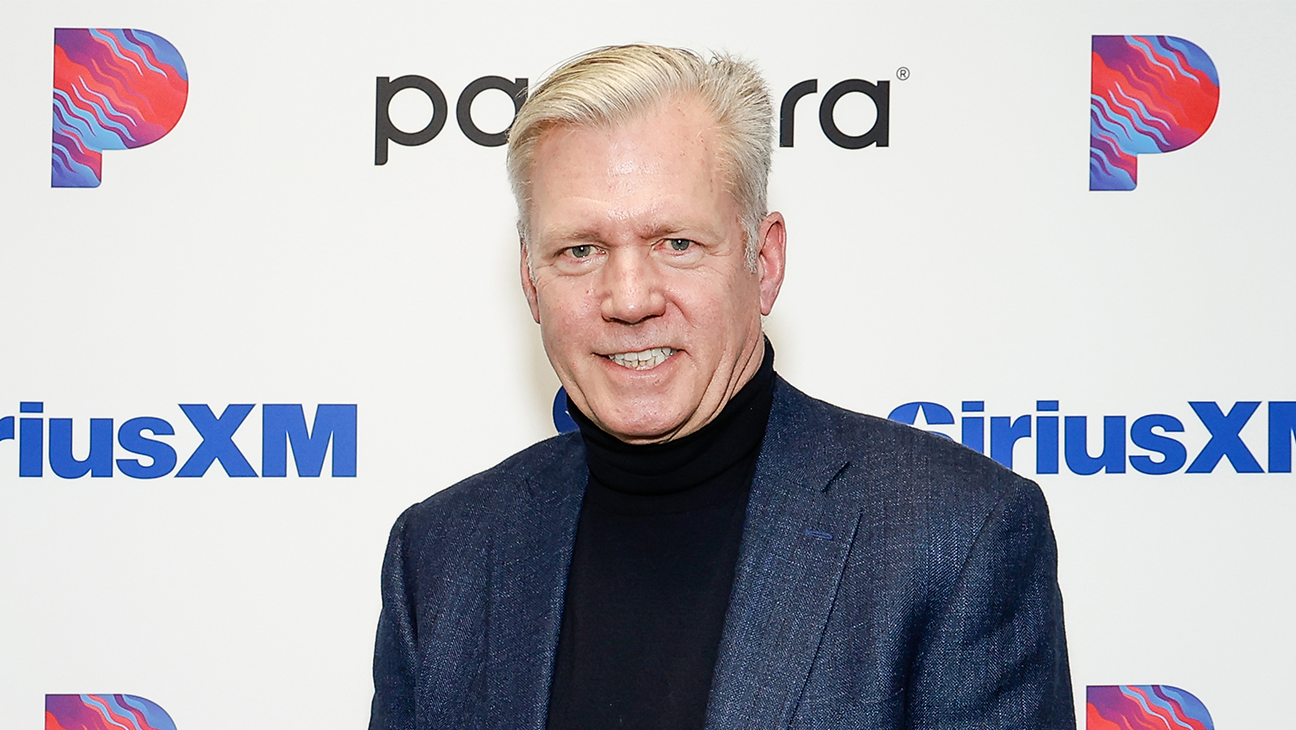
During an interview on Fox News’ Jesse Watters Primetime Thursday evening, the former To Catch a Predator host said he went to the indie production studio and distributor’s office earlier in the day for a private screening of the film, but ended up leaving without seeing it.
“The lawyers at A24 wanted me to sign away my rights to my name, image and brand, essentially, as well as any potential legal rights that would come out of the movie,” Hansen alleged. “I couldn’t sign that, so they didn’t show me the film. I went all the way over there. … But who’s going to sign something like that?”
He added that it was a “very restrictive agreement” and that he “had never seen anything quite like it.”
The Hollywood Reporter learned that Hansen was asked to sign a standard NDA a week in advance that all preview audiences must sign in order to watch an unreleased A24 film. It’s mostly to prevent spoilers and protect the studio’s IP.
Hansen noted to Jesse Watters that his “lawyers had already seen” the NDA before he arrived at A24’s offices.
When asked by the host what A24 might be worried about, the veteran journalist replied, “I don’t know! I haven’t seen the film. If you look at the trailer, obviously it’s a very dramatized version. They had told me that it’s fictionalized in many aspects. I know other people have seen it who didn’t sign an NDA, and yet they wanted me to sign it.”
Primetime, which stars Pattinson as the Dateline NBC correspondent, chronicles the intense production, ethical dilemmas and media sensationalism behind To Catch a Predator, which ran from 2004 to 2007.
During an interview with podcaster Annie Elise last week, Hansen questioned “Hollywood’s motive” behind the movie directed by Lance Oppenheim, but refused to judge the film until he’s seen it.
“A couple months ago, they came and said, ‘Hey look, we’re doing this, we’d like you to have some sort of consideration in terms of helping us with this,’” he said. However, Hansen noted that the film was already made before “they” reached out to him.
“As a reporter, it’s sort of silly for me to talk about something that I haven’t seen yet,” he added. “My suspicion is that they used my name because it helps in a commercial enterprise.”
Primetime, also starring Merritt Wever, Skyler Gisondo, Phoebe Bridgers, Matthew Maher and Bokeem Woodbine, hits theaters on Sept. 25.
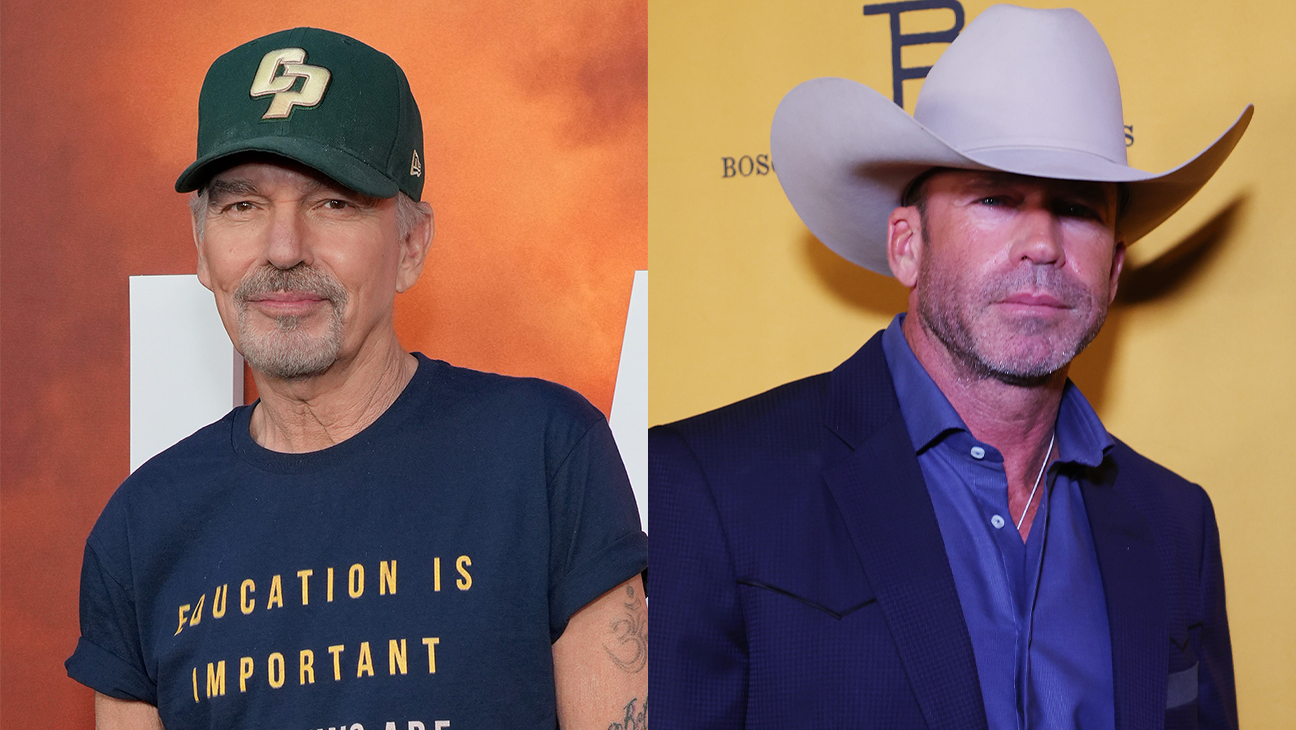
During a recent interview withTown & Countryfor a cover story about Sheridan, the Landmanstar said, “Hollywood wasn’t nice to Taylor. There’s something about being an outsider that drives you.”
Prior to building his television empire, which includes hit shows from Yellowstone and Mayor of Kingstown to Landman and Special Ops: Lioness, Sheridan was a struggling actor living in L.A.
“I was homeless twice,” he said. “I lived in my car. Sometimes I’d go to Ojai, just somewhere where I could safely sleep. I did that for six months.” Despite the challenges, Sheridan said he “chose to sleep in my car” rather than giving up on his dream.
However, after spending roughly two decades as a working actor, appearing on shows like Sons of Anarchy and Veronica Mars, his dream slightly changed when he pivoted to screenwriting — ultimately changing his life.
Sheridan told The Hollywood Reporter during a 2023 cover story, “Hollywood will tell you what you’re supposed to do if you listen. If you’re banging your head against the wall for 20 years trying to be an actor, maybe you shouldn’t be an actor. But the first thing I ever wrote [the pilot for Mayor of Kingstown in 2011] got me meetings at every major network, at every agency. I had multiple people trying to buy it.”
Once he gathered enough money from his early hits, such as Yellowstone, Sheridan decided to return to Texas, where he spent most of his childhood. He started buying up land and now owns more than 250,000 acres of ranchland across Texas, which includes his Four Sixes (6666) Ranch and Bosque Ranch.
Thornton told Town & Country, “I think the ranch community in Texas accepted Taylor 100 percent because he’s not phoning it in. He doesn’t go to the tourist cowboy shop and get an outfit. This is the real thing.”
Sheridan now spends most of his time in Texas, as he often invites castmembers to come to his ranch for meetings rather than going back to L.A. The ranching empire he’s built has also given him a creative edge, influencing the stories he writes that audiences love.
“When I lived in Los Angeles, everything I saw was the same and I didn’t learn anything in my day-to-day life,” Sheridan previously told THR. “Here, I get to experience so much. I heard 25 iconic pieces of dialogue today. Most of my great lines I heard someone else say, or some version of it. I’m banking story all the time.”
The Goop founder and Oscar-winning actress is leaning in on the swirl surrounding her supposed dinner with OpenAI chief Sam Altman by posting a series of faux invites in honor of various bold-faced yet fictional characters. “Gwyneth Paltrow invites you to a private, off-the-record al fresch dinner at her home in honor of M3GAN,” reads the first in a carousel of images shared with her 9.2 million Instagram followers. Other characters she’s welcoming to the table: Samantha Jones (Kim Cattrall’s Sex and the City character), Shrek, Jessica Rabbit (of Who Framed Roger Rabbit fame) and Chanty Beluga (a meme queen created by L.A.-based comedian and actor Courtney O’Donnell).
“We’re serving swordfish burritos, cheddar foam lattes on request,” wrote Paltrow in the caption of the new post, which was shared Thursday afternoon as word continued to spread online about this alleged dinner. First reported by Puck’s Matthew Belloni, Paltrow is said to be hosting Altman for an off-the-record dinner at her Amagansett home on Saturday, Aug. 29.
Neither Paltrow nor Altman has confirmed the validity of the invite or whether the dinner party is really happening, but a reporter from BBC Verify posted on X that the invite itself had “likely” been created using OpenAI tools.
I don’t know if Gwyneth Paltrow is actually hosting an event for Sam Altman, but I do know that this purported invitation card that’s been going viral is likely AI-generated.
It’s not the first time Paltrow has gone viral for her association with an AI company. Following the kiss cam controversy at a Coldplay concert involving senior executives at Astronomer, Paltrow partnered with the tech data company as a “very temporary spokesperson” to poke fun at the scandal in a commercial that traveled far and wide.
She’s also reportedly invested in several AI-forward start-ups and her Goop Kitchen signed a lease at 405 Howard Street in San Francisco as part of an expansion for the fast-casual empire. The ground floor unit is in a building that serves as part of the massive headquarters for top AI company Anthropic.
If Paltrow actually hosts Altman to break bread outside her home, she would be part of a larger trend among Hollywood actresses promoting or at least endorsing the use of AI, like Reese Witherspoon and Sandra Bullock.
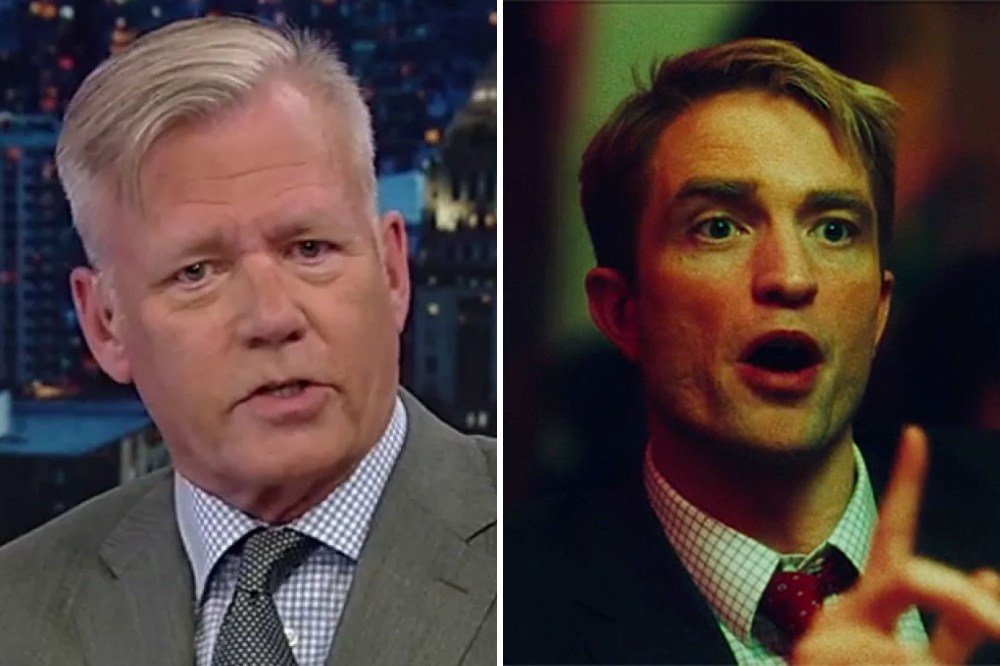
The 66-year-old veteran journalist went to the offices of indie distributor A24 to watch the Lance Oppenheim film, in which he is played by Robert Pattinson, before it bows at the Venice Film Festival. But he left without seeing it.
The former “To Catch a Predator” host went on Fox News’ “Jesse Watters Primetime” to say he showed up at the studio’s offices for a 10 a.m. private screening of “Primetime” on Thursday. The Pattinson-led drama is built around Hansen’s run atop the hidden-camera franchise. But Hansen claims he walked away after refusing to sign a legal agreement he describes as unlike anything he has encountered in four decades on the beat.
A source close to A24 said Hansen was asked to sign a standard NDA that all preview audiences must adhere to for an unreleased film — mostly to prevent spoilers and protect the studio’s IP.
“The lawyers at A24 wanted me to sign away my rights to my name, image and brand essentially, as well as any potential legal rights that would come out of the movie,” Hansen claimed during the appearance. “I couldn’t sign that, so they didn’t show me the film. I went all the way over there.”
Pressed by Watters on whether he walked in without legal cover, Hansen says his attorneys had already reviewed the paperwork and advised against signing. “Of course not,” he says when asked if he put his name to anything without a lawyer present. “This was a very restrictive agreement. I’ve never seen anything quite like it.”
The agreement Hansen describes would be a much larger legal matter than a standard screening NDA, and would not be asked of other individuals screening the film — including press and third-party marketing agencies.
The account marks a sharp turn from where Hansen left things only days earlier. Speaking on the “Serialously With Annie Elise” podcast, he said A24 was setting him up with a private screening “in the next week or so,” after which he would render a verdict on the film and how he felt about the depiction of his career.
Robert Pattinson as Chris Hansen in A24’s “Primetime.”
Courtesy of A24
Hansen says he cannot say what the studio might be worried about, because he still has not watched a minute of the picture. “I haven’t seen the film,” he says. “If you look at the trailer, obviously it’s a very dramatized version. They had told me that it’s fictionalized in many aspects. I know other people have seen it who didn’t sign an NDA, and yet they wanted me to sign it.”
In the trailer and other marketing materials for the film, the indie distributor has labeled “Primetime” as “inspired by true events” and has not characterized it as a biopic of Hansen or his life.
Hansen is careful to note he is not chasing a payday. “I have no financial stake in this film,” he says, adding that no one from the production paid him or brought him aboard as a consultant. He learned the movie existed, he says, the way he has learned most things across a long career. “I’m just a working reporter, and I’m not learned in the sophisticated ways of Hollywood. But I find stuff out,” Hansen says. “I’ve been an investigative reporter for four decades, so I knew this was going on.”
His frustration, he suggests, is less about the film than the timing of the outreach. “I get a call today saying, ‘Well, you know, everybody’s concerned. They want you to be happy with the film,’” Hansen says. “Well, then why didn’t you tell me about it when you started shooting the film?”
“Primetime” opens in theaters Sept. 25 following its world premiere in competition at the Venice Film Festival. Directed by Oppenheim in his narrative feature debut and written by Ajon Singh, the movie follows Hansen in 2006 as “To Catch a Predator” makes the leap from “Dateline NBC” segment to its own primetime block. Pattinson stars and produces through his Icki Eneo Arlo banner, with a supporting cast that includes Merritt Wever, Skyler Gisondo, Phoebe Bridgers and Bokeem Woodbine. Former NBCUniversal chief Jeff Zucker appears as himself.
“To Catch a Predator” ran from 2004 to 2007 as a recurring “Dateline NBC” investigation, pairing Hansen and a camera crew with decoys posing as minors to confront men who arrived at sting houses. The franchise was canceled after a 2006 Texas operation in which Rockwall County assistant district attorney Louis Conradt died by suicide as authorities and the show’s crew closed in on his home.
For now, it looks like Hansen will have to see the movie the way the rest of the country will, with a paid theater ticket. Asked what he would say to Pattinson, he reaches, inevitably, for the line that made him famous. “Take a seat right over there,” Hansen says.
If you’re terminally online, you’ve probably found yourself swept up in this year’s exhausting discourse over creative license and beloved IP.
When the now well-received Lanterns premiered its official trailer earlier this year, a vocal subset of fans objected to the premise of taking the ring-powered space cops of the Green Lantern Corps and grounding these colorful, cosmic superheroes in small-town Nebraska for a desaturated, Taylor Sheridan-esque riff on True Detective. Earth’s first Green Lantern, Hal Jordan, played by Kyle Chandler, also drew criticism for being portrayed as an older, messier iteration of the most famous intergalactic peacekeeper rather than the more idealized version in his prime.
Concurrently, Christopher Nolan’s modernized adaptation of Homer’s ancient Greek poem, The Odyssey,endured endless kvetching prior to becoming the highest-grossing film of his storied career. Some found fault with the use of American accents instead of British ones, something Hollywood has long conditioned audiences to hear in sword-and-sandal epics. Others argued that the characters should be speaking with Greek accents or even in an ancient Greek dialect to honor the source material’s roots in Greek mythology. Additional gripes, among many others, targeted the use of the word “dad,” the Greek soldiers’ anachronistic armor and two casting choices that together accounted for less than ten minutes of screen time.
Resident Evilwriter-director Zach Cregger — who delivered two of the most unique genre films this decade, Barbarian and the Oscar-winning Weapons — has also taken a great deal of flak for having the audacity to tell a new story that’s set inside the world of the popular video game franchise. Hardcore Resident Evil devotees contend that he should have just made an original movie if he didn’t want to meaningfully engage with the existing characters and stories. Cregger maintains that his goal was to capture the experience of playing the games he himself loves.
If anyone understands fan backlash and demands for adaptational fidelity, it’s Lanterns‘ Emmy-winning co-creator Damon Lindelof. He’s worked across a wide range of existing IP, including Watchmen, Star Trek, Star Wars, Alien, World War Z and The Leftovers. He also co-created Lost, a series that is bound to be revisited or reinterpreted by someone else down the road. Having lived on both sides of the equation, he has heard every possible reaction to his work, from effusive praise to deep-seated contempt.
“We all just have to acknowledge that there’s a level of hubris involved in taking on any of this preexisting IP. But it is called adaptation. Source material is supposed to change and evolve [by definition],” Lindelof tells The Hollywood Reporter. “As a consumer and as someone who’s making this stuff, there’s almost a responsibility to take risks. I don’t think anybody wants to see you be completely and totally vigilant to the source material because then it isn’t an adaptation at all. Shouldn’t we be beyond this conversation by now?”
While some of these perpetual controversies are generated with financial and/or political incentive in mind, Lindelof notes that such grievances are partially tied to Hollywood’s habit of returning to the same wells. And though consumers claim to want more brand-new experiences like Obsession, the numbers continue to show that branded entertainment still rules the day.
“There is a fundamental grumbling and annoyance that we’re still telling the same stories over and over and over again. But at the same time, we’re hungry for something new,” Lindelof says. “And because we don’t want to resolve or acknowledge that paradox in ourselves, we throw it onto the culture. It manifests itself in conversations about whether or not Odysseus is having enough sex.”
Thus, until the audience behavior truly shifts away from franchise stories, barring a few outliers each year, creators like Lindelof will keep utilizing creative license to reimagine the familiar in the most compelling ways possible.
“Nobody who does what we do goes to bed at night, saying, ‘All that I care about is whether or not I pissed off the fans.’ They go to bed at night, going, ‘Did I do anything worthwhile creatively? Did I put anything authentically emotional into this story that people can relate to?’” Lindelof says. “And the fact that we have to do it inside familiar IP most of the time is the cost of doing business.”
Below, during a conversation with THR, Lindelof and fellow Lanterns co-creator Tom King also discuss the inspiration behind the traumatic backstory of aspiring Green Lantern, John Stewart (Aaron Pierre), as well as the challenge King currently faces in adapting his 2017 Mister Miracle comic book run for animation.
***
It’s nothing new, but the discourse this year surrounding adaptations and source material has been as insufferable as it’s ever been. Whether it’s Lanterns or The Odyssey or Resident Evil, there’s been so much bellyaching over creative license. Some of it is manufactured and disingenuous, but why do you think there’s so much resistance to change when it’s been proven that people rarely want more of the same?
DAMON LINDELOF I love the frame on the question. I love how insufferable [the discourse] is, and at the same time, it feels like it’s such a vital conversation. In the case of TheOdyssey, which is millennia-old, or GreenLantern [comic series], which is on the right side of the century mark, our engagement in these works generates a high level of passion. But the other level of it is this weird conceptual framework of ownership, and that’s where it becomes insufferable. There’s a direct corollary to the amount of time that you spend ingesting something or thinking about something or talking about it with your friends or communities. You begin to feel like a proprietary interest in protecting it.
So I think we all just have to acknowledge that there’s a level of hubris involved in taking on any of this preexisting IP. But to your point, it is called adaptation. I don’t have my dictionary handy, and while I’m sure there are multiple definitions of adaptation, the one that resonates the most for me is that source material is supposed to change and evolve. [Writer’s Note: To his point, here’s another definition: Something that is changed or modified to suit new conditions or needs.]
The fandom will also watch the new HarryPotter trailer and be like, “This just looks exactly like HarryPotter.” And then the other side of the fandom is like, “Thank God, this is exactly what I want. This is what I love about Harry Potter.” When you try to split that difference and say, “How can we do something original inside something that is iterative [and/or] older than God?” — that is always the $64,000 question. I should probably add inflation.
The answer, particularly in the case for Tom and I, is that we identify primarily as fans. We were fans of this content long before we got the opportunity to make it. You don’t start from a place of, What would I do? You start from a place of, What would excite me? What would I hate? Then you always come to an answer that’s going to have some risk involved. As a consumer and as someone who’s making this stuff, there’s almost a responsibility to take risks. It’s not just for the sake of taking them; you’ve got to earn them. I don’t think anybody wants to see you be completely and totally vigilant to the source material because then it isn’t an adaptation at all.
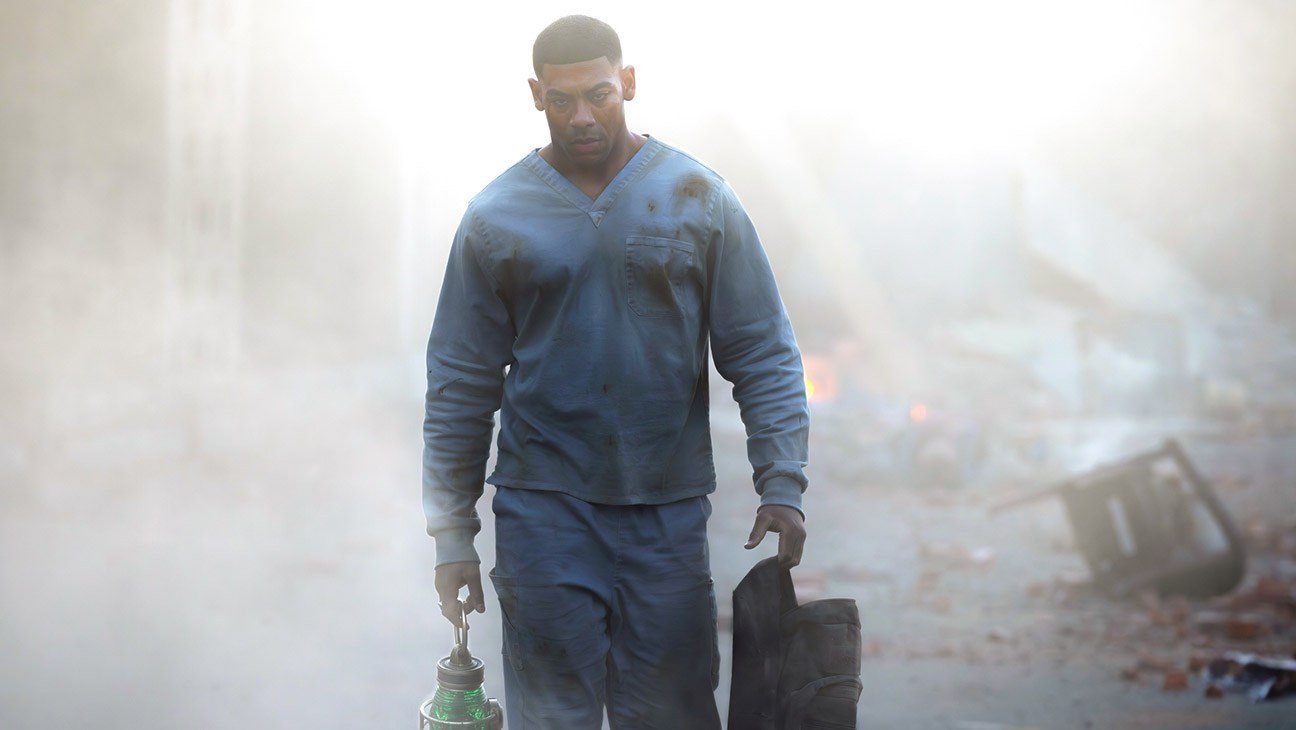
Aaron Pierre ‘s John Stewart in Lanterns
John Johnson/HBO Max
Tom, what’s your take on this tug of war?
TOM KING To me, at the end of the day, it’s quality. And that’s such a stupid answer. Clueless, which is an adaptation of Jane Austen’s Emma, is completely different. It almost has nothing to do with it, but it’s such a good movie on its own. When you look into it and you see the Jane Austen of it all, you’re like, Oh my God, that’s an amazing adaptation. So adaptations have to do two things at once: they have to stand on their own and they have to talk to the old material. If they can’t stand on their own, then what you’re going to see is how you misinterpreted the old material. So quality, quality, quality is always just the apex of everything.
When artists or bands cover well-known songs, the whole point is to hear their twist on the material. Nobody expected Johnny Cash’s “Hurt” to be a carbon copy of Nine Inch Nails’ original, so it’s puzzling to me why movie and TV adaptations are held to a different standard.
LINDELOF I hard agree. I also don’t even know if they’re being held to any standard at all. There is a fundamental grumbling and annoyance that we’re still telling the same stories over and over and over again. But at the same time, we’re hungry for something new. And because we don’t want to resolve or acknowledge that paradox in ourselves, we throw it onto the culture. It manifests itself in conversations about whether or not Odysseus is having enough sex.
KING So you do open my emails. Good.
LINDELOF & KING (Laugh.)
LINDELOF But I do find the conversation much more exhilarating on the outside than from the inside. Also, look at the movies and television shows that are generating the most interest and the most eyeballs. It’s disproportionately a retelling versus a telling. So when something fresh and original like Backrooms or Obsession comes along, it’s the exception to the rule versus the rule. All of us are completely and totally overwhelmed by the familiar.
Nobody who does what we do goes to bed at night, saying, “All that I care about is whether or not I pissed off the fans.” They go to bed at night, going, “Did I do anything worthwhile creatively? Did I put anything authentically emotional into this story that people can relate to?” And the fact that we have to do it inside familiar IP most of the time is the cost of doing business. But I don’t disagree with you. Shouldn’t we be beyond this conversation by now?
KING I’m working on MisterMiracle now, this animated series within the DC Universe. It’s me adapting myself, but it’s myself from ten years ago.
LINDELOF The fans will get to say, “You ruined it!”
KING (Laughs.) As a comic book writer, I’ve been to ten years of conventions where people tell me about the parts they loved and hated in the book. So I’ve been arguing with myself from ten years back, being like, Oh my God, you wrote that well, or, You wrote that terribly. I’m hearing those fans from conventions in my head, and I’m hearing my own instincts as a creator who’s learned a ton since then, including by watching Damon create. So all of this is entirely on my mind, and I’m trying to produce something that both honors and elevates the original on a new medium.
Cairo Cash Lee as Young John Stewart in Lanterns
John Johnson/HBO Max
John Stewart’s (Aaron Pierre) traumatic backstory seems like it has both of your fingerprints all over it.
LINDELOF & KING (Laugh.)
Actually, I could say the same thing about Hal. He has a little bit of Dogen (Hiroyuki Sanada’s Lost character) in his background. In the case of John, though, had one of you been dabbling in Swiss folklore at the time?
LINDELOF In truth, a lot of that came from Vanessa [Baden Kelly], who wrote the [third] episode. Justin Britt-Gibson, as well. He was in our writers’ room, and we previously worked on a StarWars movie that we never got to make. I don’t know how familiar you are with comic-book John’s myriad backstories and introductions, but it was this idea of trying to honor the inconsistency of his comic book legacy with some new ideas of our own. Obviously, I was really proud to be in this room. This is not a show that I ran; Chris Mundy ran it impeccably. So it felt like I was batting around .175 in terms of the ideas that I was throwing out. But the more exciting part of the job was hearing other ideas from the other writers and going, “Yes, that.” So when it came to John’s origin story, Tom pitched the dad and the apples, and that was very early in the pilot we wrote with Chris. But working backwards from that and saying, “Alright, how did we get here?” — a lot of that heavy lifting came from Vanessa.
KING Yeah, I remember us going, “This is a father story.” And she was like, “No, this is a mother story.”
LINDELOF She was like, “Enough of the bad dads.”
*** Lanterns is now airing new episodes on HBO/HBO Max every Sunday until Oct 4.
It’s a big day for Cameron Diaz fans as her next feature sets its Netflix release date.
The streaming service announced Thursday that director Jake Szymanski’s action-comedy movie Bad Day is set to begin streaming Dec. 11. Diaz leads the cast that also includes Danielle Brooks, Rhenzy Feliz, John Higgins, Mark Duplass, Jessica Belkin, Ed O’Neill, Rob Corddry, Ayden Mayeri, Ben Schwartz, Retta, Emma Pearson, P.J. Byrne, Sherry Cola, Edi Patterson and Beck Bennett.
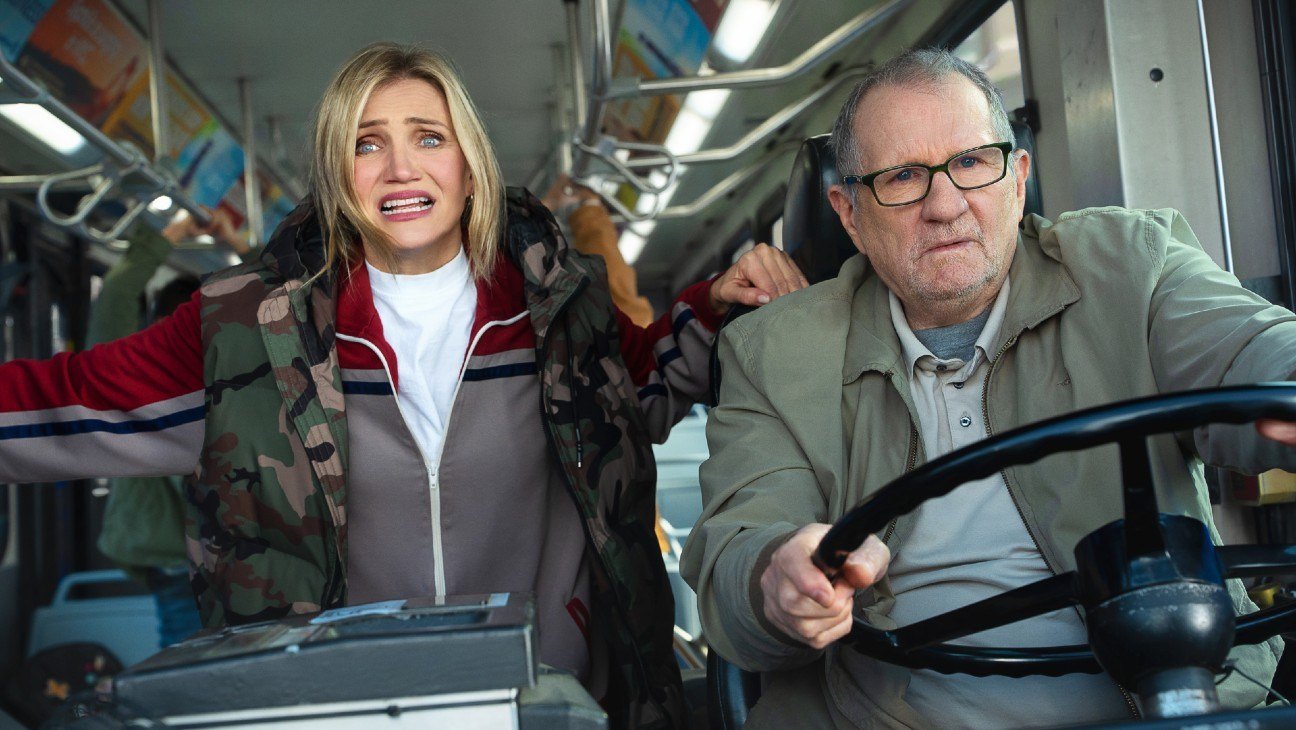
Bad Day sees Diaz starring as a single mom who endures the toughest day of her life while striving to keep a promise to her daughter.
Szymanski (Jury Duty) helmed the film from a script by Laura Solon. Beau Bauman produces for Good One Productions, with Solon and Mark Moran executive producing. First-look images from the project can be seen above and below.
Cameron Diaz in Bad Day.
Courtesy of Netflix
Diaz, who is known for such movies as There’s Something About Mary and Charlie’s Angels, took a 10-year break from lead acting roles before returning to the craft to star in Netflix’s 2024 feature Back in Action, opposite Jamie Foxx.
“I don’t know how I view it. It’s hard to say,” the actress told Empire at that time about her outlook on continuing her career. “If I say it then it becomes this thing. I reserve the right to say no to doing a movie ever again, and I reserve the right to say yes if I decide to. I’m not defining anything. I’m just open to whatever makes sense for me and my family at any given moment.”
Plenty of British children’s stories have managed to catch on with American audiences via their cinematic adaptations, from Mary Poppins to Charlie and the Chocolate Factory to Paddington. The latest entry to cross the pond is unlikely to reap similar success despite the presence of Claire Foy and Andrew Garfield in leading roles and a supporting cast featuring some of England’s finest thespians. Adapted from Enid Blyton’s 1943 novel, which was part of a three-book series, The Magic Faraway Tree proves so relentlessly twee and sugary that all but the youngest viewers will find themselves at risk of a diabetic coma.
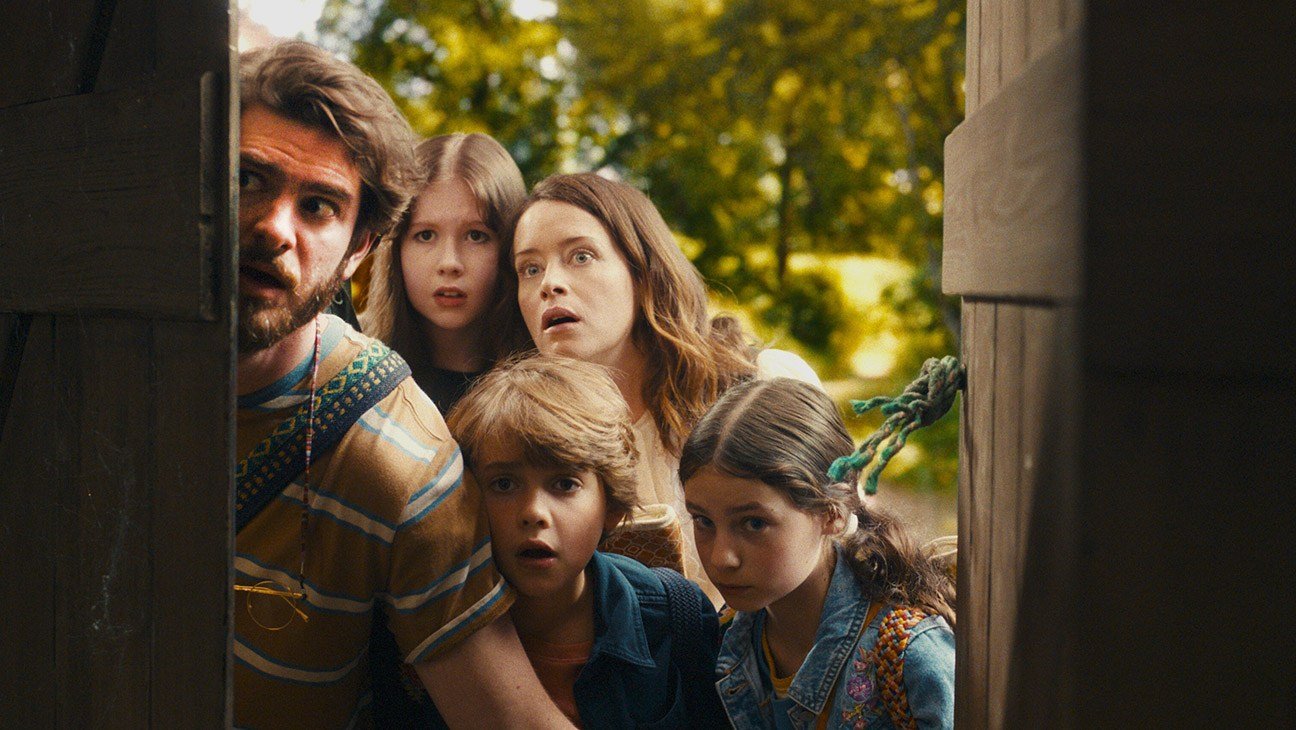
Foy and Garfield play Polly and Tim, a married couple who decide to decamp from their London home when Polly resigns from her job at a manufacturing company after said company installs spying technology in the smart refrigerator — voiced by Judi Dench, of all people — that she’s invented. So they take off with their kids to the rural countryside, renting a dilapidated barn and creating a tomato farm to fulfill Tim’s dream of marketing his homemade pasta sauce.
The Magic Faraway Tree
The Bottom Line
Too imaginative for its own good.
Release date: Friday, August 21 Cast: Claire Foy, Andrew Garfield, Nonso Anozie, Nicola Coughlan, Delilah Bennett-Cardy, Billie Gadsdon, Phoenix Laroche, Dustin Demri-Burns, Jessica Gunning, Hiran Abeysekera, Mark Heap, Pippa Bennett-Warner, Oliver Chris, Lenny Henry, Michael Palin, Simon Russell Beale, Jennifer Saunders, Rebecca Ferguson Director: Ben Gregor Screenwriter: Simon Farnaby
Rated PG,
1 hour 50 minutes
The decision doesn’t sit well with their three children: smartphone-obsessed Beth (Delilah Bennett-Cardy), who is horrified to discover that their new home doesn’t include electricity and running water, let alone Wi-Fi; and younger siblings Joe (Phoenix Laroche) and mostly silent Fran (Billie Gadsdon). “I don’t understand, have we gone back in time?” Joe plaintively asks.
Their feelings change when Fran has an encounter with Silky (Nicola Coughlan of Bridgerton), an exuberant fairy, who invites her to join her for tea at the Magic Faraway Tree. There, a newly verbal Fran meets a variety of bizarre characters including the aptly named Moonface (Nonso Anozie); the Saucepan Man (Dustin Demri-Burns), who’s clad in kitchen paraphernalia; Dame Washalot (Jessica Gunning of Baby Reindeer), who, yes, does a lot of scrubbing; and Mr. Whatzisname (Oliver Chris), who, you guessed it, has memory issues.
Not so magical complications ensue, with the overstuffed proceedings eventually involving such other fantastical characters as the Birthday Elves, who offer each of the children one wish (Joe asks to be turned into his favorite Minecraft character, which is presumably an update from the original story); Mr. Oom Boom Boom (Mark Heap), who has the handy ability to reverse the wishes; and the Know-Alls (Michael Palin, Lenny Henry, Simon Russell Beale, all virtually unrecognizable under mounds of facial hair).
It’s all, as you can imagine, more than a bit much, and by the time the villainess Dame Snap (Rebecca Ferguson, whose giant lopsided wig probably required her to see a chiropractor between takes) comes along, you find yourself rooting for her. Indeed, it’s the most acerbic characters who prove the most endearing, especially the children’s grandmother played by British national treasure Jennifer Saunders, who practically makes a meal out of her disgusted exclamation, “Unemployed!”
Screenwriter Simon Farnaby has plenty of experience with this sort of material, having co-written the screenplays for Paddington 2 and Wonka, but he doesn’t bring similar wit to these proceedings. He also shows up briefly as a friendly farmer who provides the opportunity for a labored gag in which he confuses “Wi-Fi” for “wifey.” And while Foy is appealing as the indefatigable mother, Garfield leans too heavily into manic cutesiness as the endlessly chirpy father who at times seems less grown-up than his children. The story’s ultimate message about the kids learning to forego their electronic devices to embrace the joy of friends and family also seems a bit ironic, considering the film’s future as an electronic babysitter.
The Magic Faraway Tree is most notable for the imaginative costume and make-up designs for its outlandish characters and the brightly colored, pastel visuals that give you the feeling you’re looking at an oversized children’s book. But even the distinctive look becomes wearisome after not too long. By the time the film is over, you’ll be longing for some refreshing monochrome.
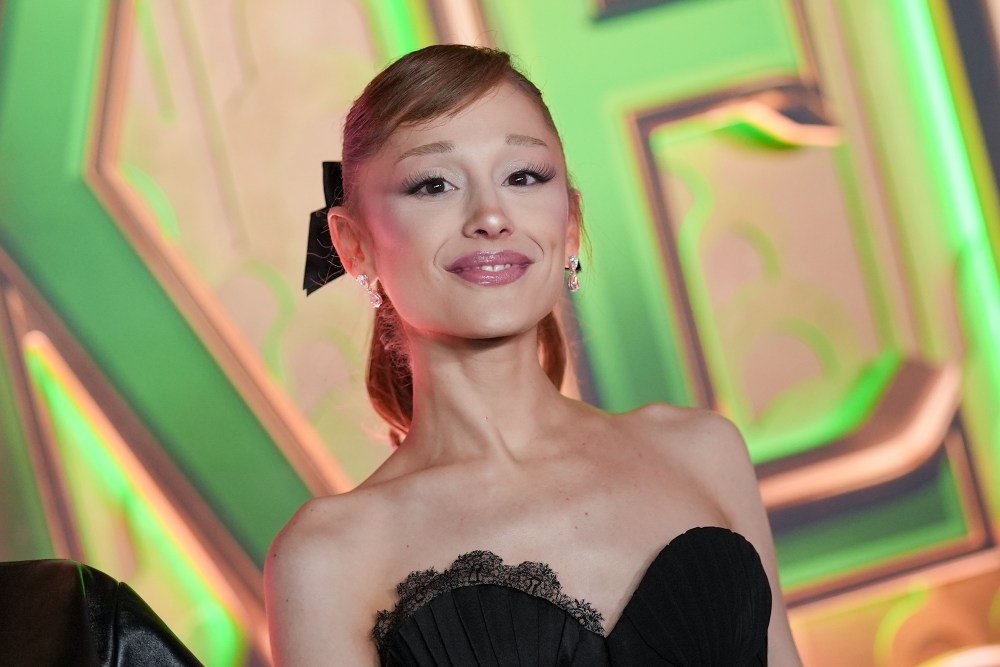
Ariana Grande has once again spoken out against the Trump administration for using one of her songs in a post on social media, this time for setting “We Can’t Be Friends (Wait For Your Love)” as the soundtrack for a post on the Team Trump TikTok account.
Team Trump posted a video earlier on Thursday of the President walking to a podium with text laid at the top of the clip: “Me and my truth we sit in silence… Men can’t have babies and should never compete in women’s sports.” The caption for the post reads, “This shouldn’t be controversial! #trump #arianagrande #maga.”
Grande took to the comment section to decry their use of her 2024 hit, writing, “Never use my music again. Also, your truth is false.”
This marks the second time in two months that Grande has fired back at the administration for using one of her tracks on socials. In June, the White House used a version of her 2024 song “Bye” in a TikTok post that depicted ICE agents arresting and handcuffing people. Grande commented, “Please do not ever use my music in relation to this barbaric, inhumane, heinous nonsense. Fck ice,” she wrote. Grande’s team had the sound removed from the post, though the one that uses “We Can’t Be Friends” still features the track.
Grande is among a long list of musicians who have either spoken out against or had their songs removed from White House and Trump posts. Taylor Swift and Bad Bunny recently had their tracks nixed from posts, while Noah Kahan took a more pointed approach in late July after the White House used the song “American Cars” on Instagram. “Would never approve of my music being used in support of you or this administration,” wrote Kahan.
A representative for the White House did not immediately return Variety‘s request for comment.
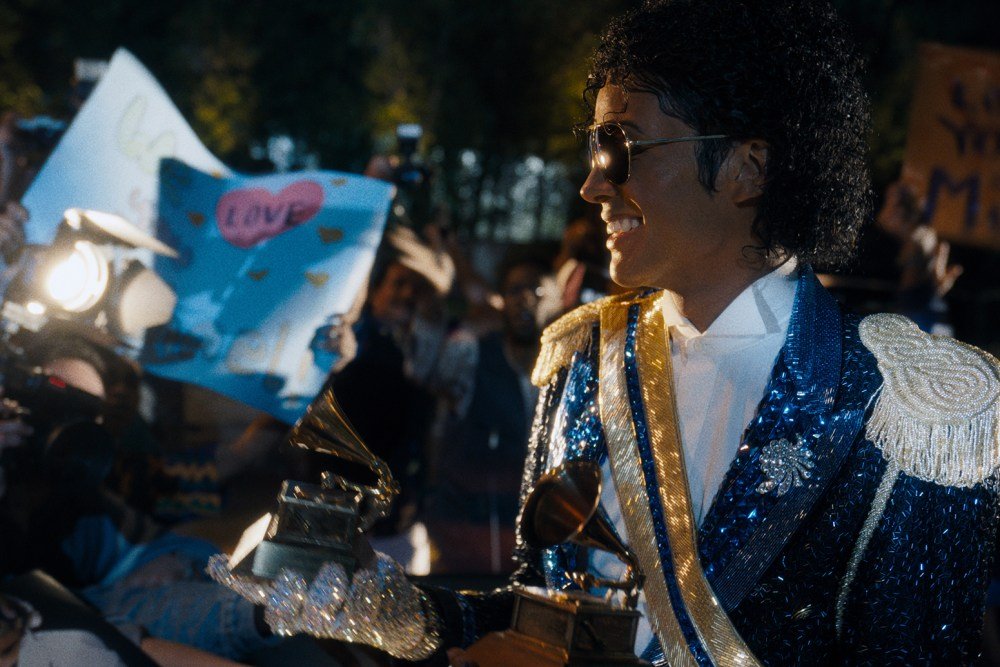
Michael Jackson’s nephew Jaafar Jackson says that while he doesn’t have much say in how the screenplay is written, he tells GQ Middle East that he hopes the sequel will give more insight into Michael’s perspective.
“It’s someone else’s story,” Jaafar Jackson said. “It’s someone else’s idea of what it is, and it’s mainly driven by an agenda. And that’s really the issue we’ve been having as a family – not having Michael’s voice being heard. I think that’s very, very important, especially in the late years.”
The biopic rocked the box office this summer, surpassing $1 billion in global ticket sales. But the film only chronicles the first half of the icon’s career. It ends with the 1987 release of “Bad,” before the singer received his first allegation in 1993. Jaafar Jackson says the two-part feature provides an opportunity for a deeper understanding of Michael and his circumstances.
“This first film focuses on Michael from his roots,” Jackson said. “So you get that idea of who he was before he had all the success and became the icon that people are familiar with, you understand who he was as a human being first, because at the end of the day, that’s who he was in the ’90s until he passed. He never changed that purity, that sense of always wanting to find the good in other people. And no matter all the stuff he went through, how he was treated, what things were said about him, he never stopped treating people with kindness. He never stopped believing in and wanting to look for the good in people… even though he was broken, his heart still stayed the same… I hope that this is felt in the second movie.”
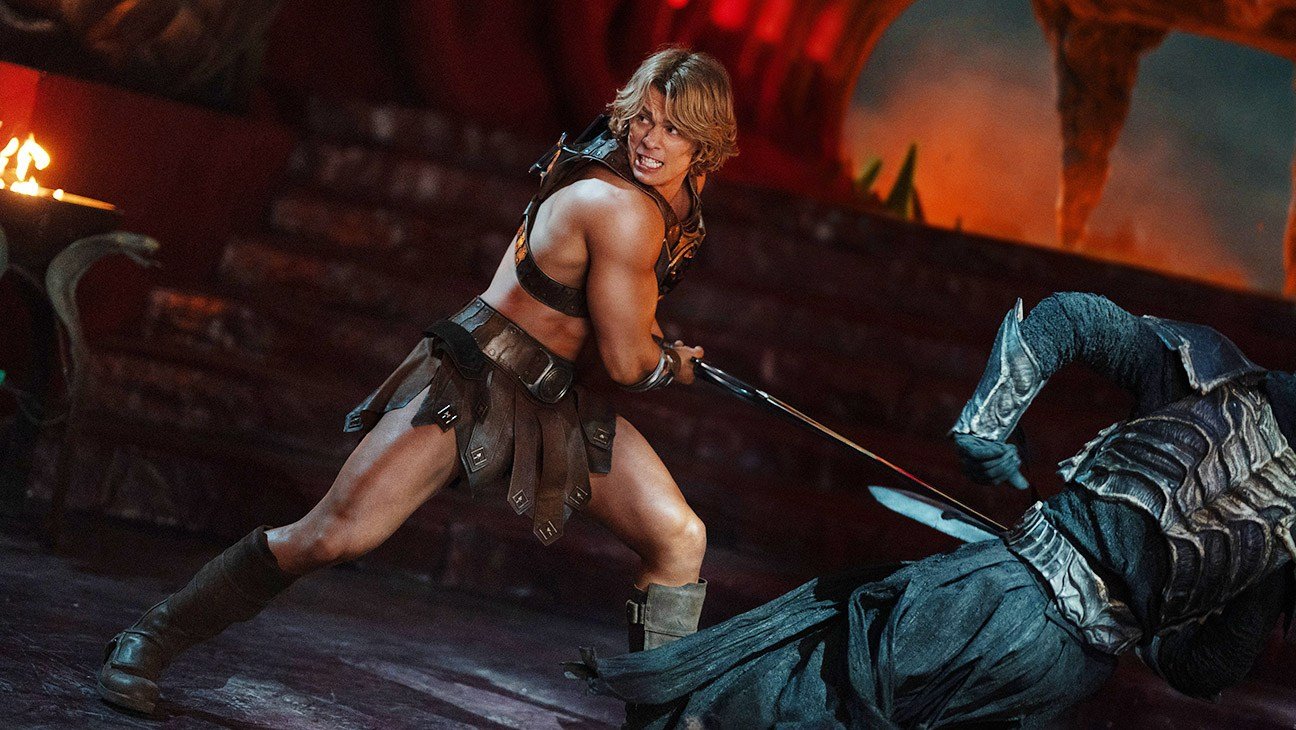
After an underwhelming box-office take in movie theaters, Masters of the Universe found a softer landing in its streaming debut.
The movie based on the 1980s cartoon series and toys scored the No. 1 overall ranking in Nielsen’s streaming ratings for July 20-26, its first week of streaming. It debuted July 22 on Prime Video, less than weeks after its theatrical premiere; it has made a little under $114 million worldwide at the box office against a $170 million budget. Masters of the Universe scored 1.17 billion minutes of watch time for the week and was one of just two titles to cross the billion-minute threshold.
The other was The Big Bang Theory, which had 1.12 billion minutes of viewing time on HBO Max. The comedy scored an all-time high in viewing time for the second straight week, beating the previous frame’s 1.08 billion minutes.
The top two original titles for the week were Will Ferrell’s Netflix comedy The Hawk (944 million minutes) and Prime Video’s action comedy Ride or Die (922 million), starring Octavia Spencer and Hannah Waddingham. The Hawk declined slightly week to week, while Ride or Die ticked up by about 6 percent.
The debut of King of the Hill‘s 15th season pushed the animated series back onto the charts with 658 million minutes of watch time, 70 percent of which (about 461 million minutes) came from the new batch of episodes. Netflix’s Ransom Canyon (751 million minutes) also returned to the rankings with the premiere of its second season.
Netflix’s Kevin Hart comedy 72 Hours placed second behind Masters of the Universe on the movies top 10 with a solid 791 million minutes for its premiere week.
Nielsen’s streaming ratings cover viewing on TV sets only and don’t include minutes watched on computers or mobile devices. The ratings only measure U.S. audiences. The top streaming titles for July 20-26, 2026, are below.